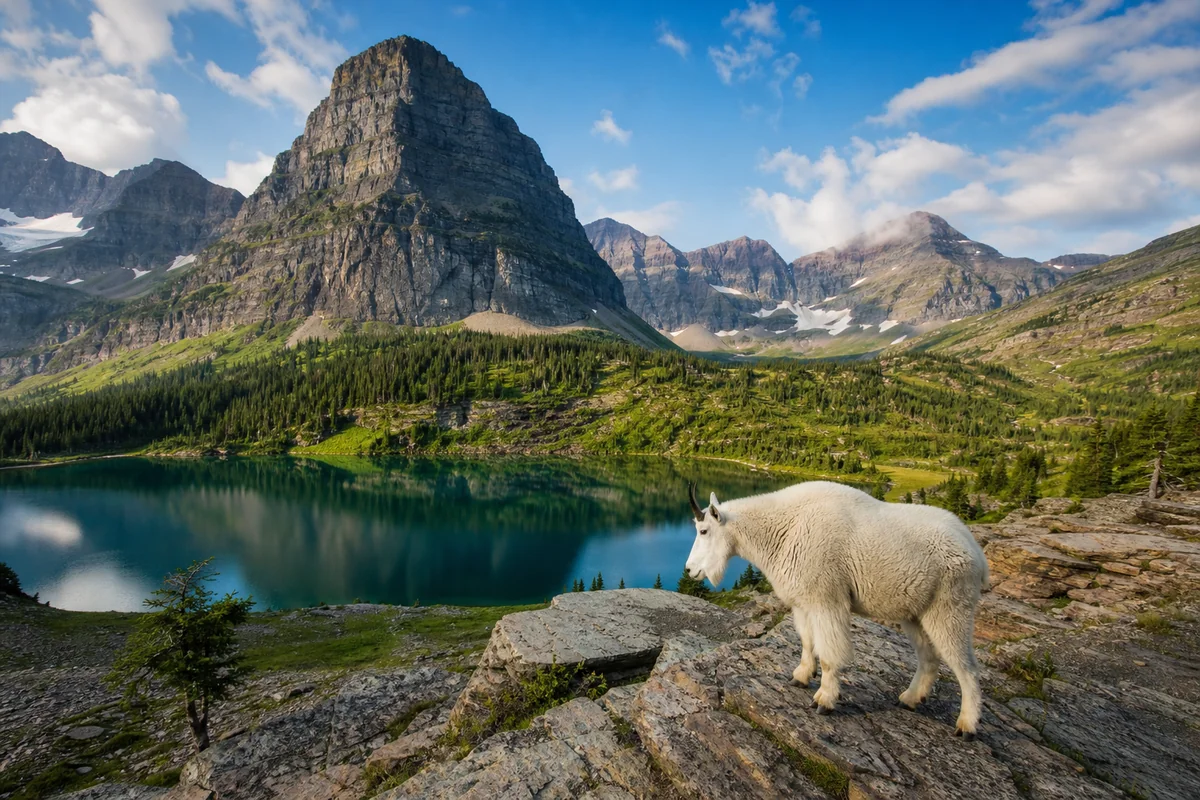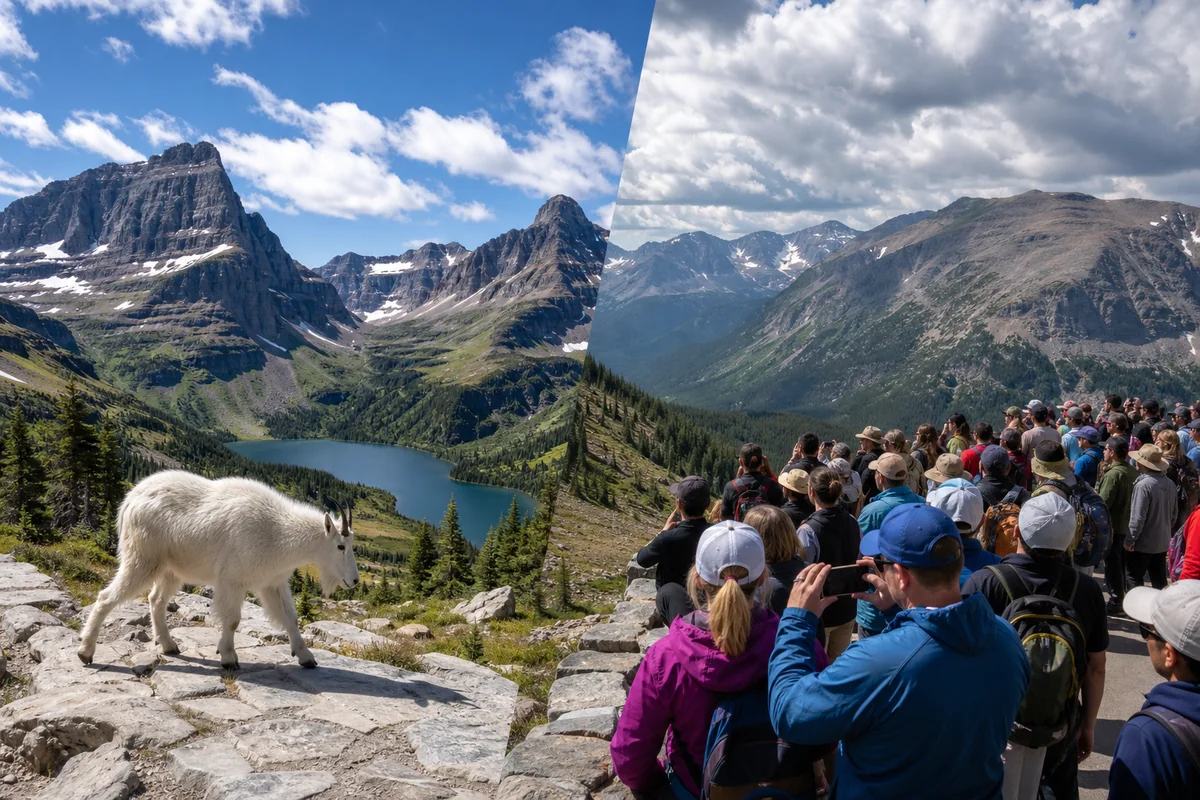
Standing at Logan Pass in Glacier National Park last July, watching a mountain goat casually stroll past stunned tourists while the sun painted the peaks in shades of gold, I understood why Montana calls itself “Big Sky Country.”
It’s not marketing—it’s an understatement. After spending the better part of three years exploring this state’s hidden valleys, quirky towns, and jaw-dropping wilderness, I can tell you that Montana isn’t just a destination; it’s an experience that fundamentally changes how you see the American West.
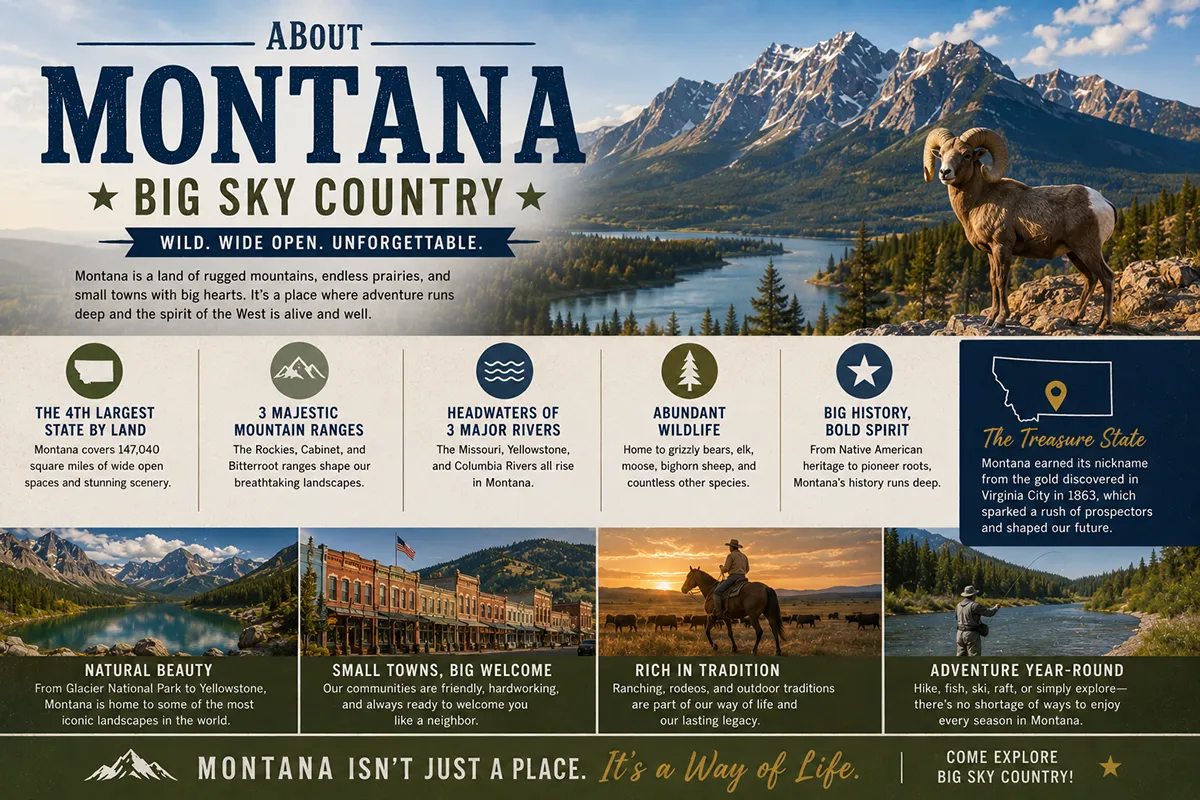
- Montana is the 4th largest US state but only has about 1.1 million residents—more cows than people
- Best time to visit: June-September for warm weather; December-March for skiing
- Two main regions: mountainous west and prairie east, each offering completely different experiences
- Glacier National Park and Yellowstone (northern entrance) are the marquee attractions
- Budget at least 7-10 days to properly experience the state’s vastness
- Cell service is unreliable outside major towns—download offline maps before you go
Liked this article?
Add Roaming Montana as a preferred source so you see more of our articles and guides on Google.
What Makes Montana Different From Other Western States
I’ve traveled extensively through Colorado, Wyoming, and Idaho, and while they’re all spectacular, Montana has a quality that’s hard to articulate until you experience it. There’s a rawness here, an untouched feeling that’s increasingly rare in the American West.
During my first road trip through Montana in 2019, I drove for nearly three hours on Highway 200 without seeing another vehicle. Not a farmhouse, not a gas station—just endless rolling grassland meeting an impossibly wide sky. That kind of isolation sounds intimidating, but it’s actually liberating.
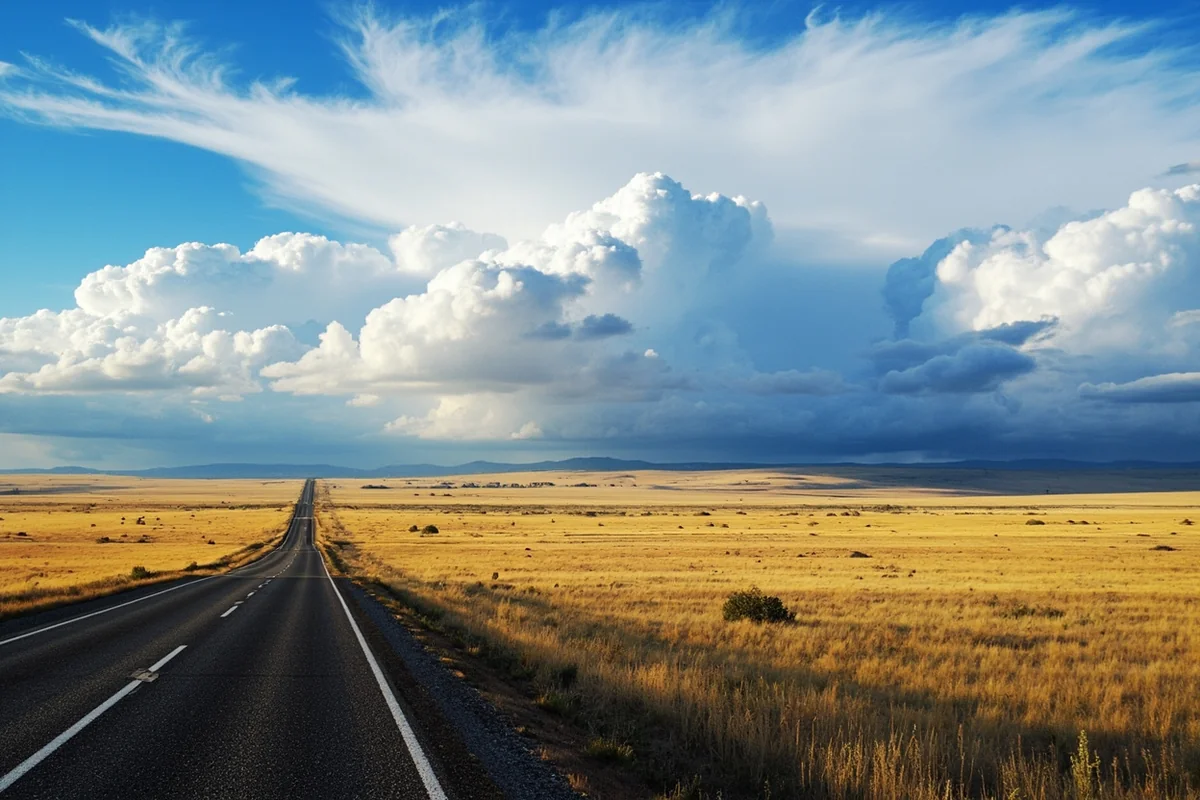
The state spans 147,040 square miles, making it larger than Germany. Yet only about 1.1 million people live here. To put that in perspective, there are more people in San Jose, California than in the entire state of Montana.
This means that whatever you’re seeking—whether it’s world-class fly fishing, uncrowded hiking trails, or small-town charm—you’ll likely find it without fighting through tourist hordes (Glacier’s Going-to-the-Sun Road in July being the notable exception).
Understanding Montana’s Geography: West vs. East
Here’s something most travel guides gloss over: Montana is essentially two completely different states divided by the Continental Divide. Understanding this distinction will fundamentally shape your trip planning.
Western Montana: Mountains, Forests, and Iconic Parks
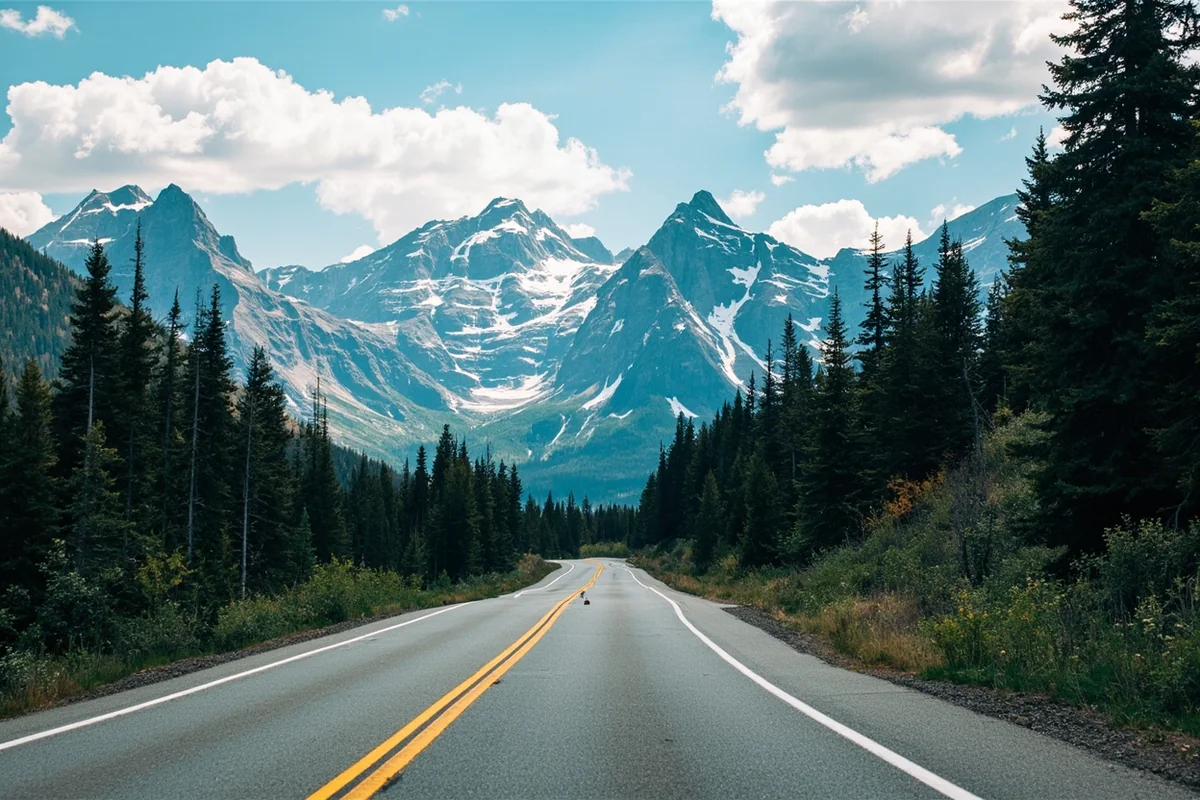
When most people picture Montana, they’re imagining the western third of the state. This is where you’ll find the dramatic mountain ranges, dense evergreen forests, and crystal-clear rivers that define the Rocky Mountain experience.
Glacier National Park dominates the northwest corner, and it deserves every bit of its reputation. I’ve visited three times now, and each trip reveals something new—a hidden waterfall, a meadow explosion of wildflowers, a black bear munching berries just off the trail.
Missoula serves as the cultural hub of western Montana. This university town (home to the University of Montana) has a vibrant arts scene, excellent restaurants, and a progressive vibe that surprises many visitors.
On my last visit, I spent an afternoon at the Kettlehouse Brewing Company watching locals discuss everything from climate policy to fly patterns for the Clark Fork River.
The Bitterroot Valley south of Missoula offers stunning mountain scenery without the crowds. I spent a week there last September and had entire trailheads to myself.
The small towns of Hamilton, Stevensville, and Darby each have their own character, with antique shops, local diners, and friendly residents who genuinely want to chat.
Flathead Lake, the largest natural freshwater lake west of the Mississippi, sits just south of Glacier. The cherry orchards along its shores produce some of the best fruit I’ve ever tasted.
If you visit in late July, stop at any roadside stand—you’ll pay a few dollars for cherries that would cost triple in any grocery store.
Eastern Montana: Prairie, Dinosaurs, and Cowboy Culture
Most visitors skip eastern Montana entirely, which is a mistake I made on my first two trips. On my third visit, I dedicated five days to exploring the eastern prairies, and it completely changed my understanding of the state.
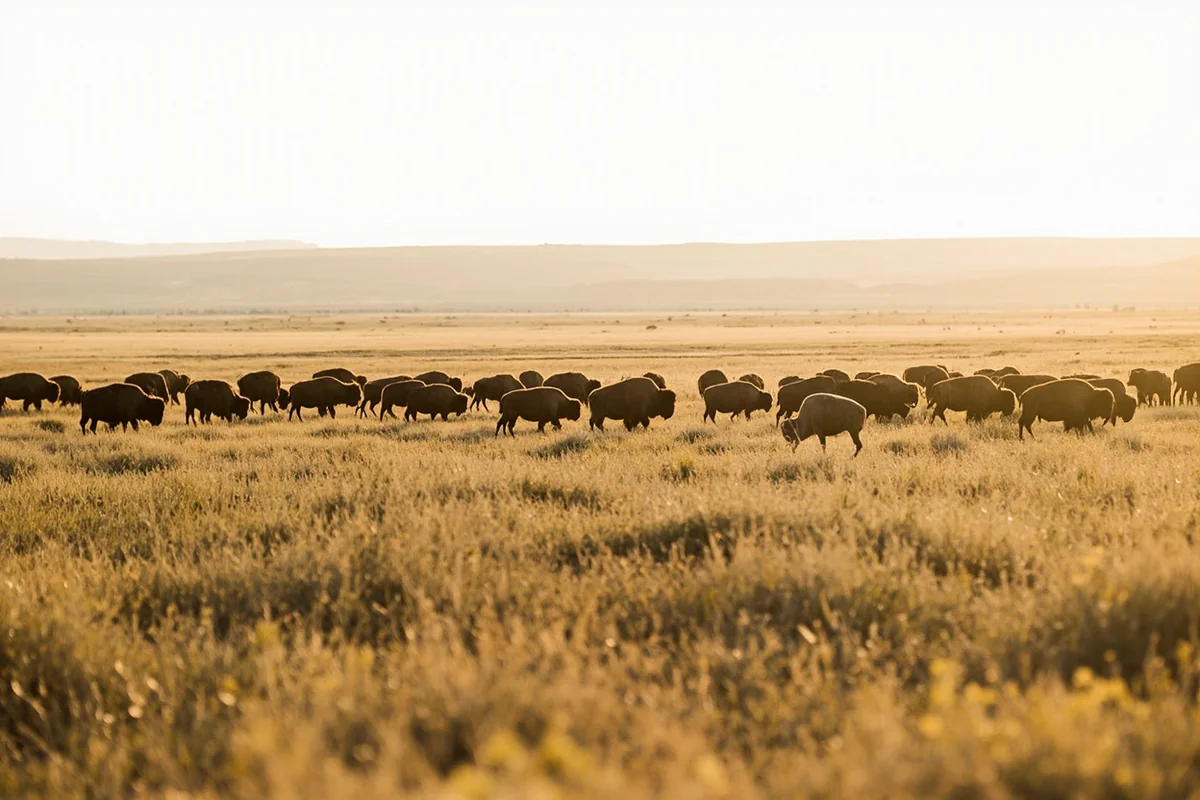
This is cattle country, vast and open, where the sky truly dominates the landscape. The Charles M. Russell National Wildlife Refuge covers over a million acres and offers some of the best wildlife viewing in the lower 48.
During a dawn drive through the refuge last May, I counted over 200 elk, dozens of pronghorn antelope, and a lone wolf trotting along a ridgeline.
The town of Lewistown sits almost exactly in Montana’s geographic center and makes an excellent base for exploring the region. It’s authentic in a way that feels increasingly rare—not a tourist town pretending to be Western, but an actual working community where ranching remains the primary industry.
Makoshika State Park near Glendive is Montana’s largest state park and a paleontologist’s paradise. The badlands formations look like they belong in Utah, and dinosaur fossils literally erode out of the hillsides. I found a triceratops bone fragment on a guided hike there—the paleontologist leading the tour said it happens regularly.
When to Visit Montana: Seasonal Breakdown
Timing matters enormously in Montana. The wrong season can mean closed roads, dangerous conditions, or missing the experiences you came for.
| Season | Weather | Pros | Cons |
|---|---|---|---|
| Summer (June-Aug) | 70-85°F days, 40-50°F nights | All roads open, longest days, best hiking conditions | Peak crowds at Glacier, higher prices, afternoon thunderstorms |
| Fall (Sept-Oct) | 50-70°F days, 30-40°F nights | Stunning fall colors, fewer tourists, elk bugling season | Some high-altitude roads close by October, shorter days |
| Winter (Nov-March) | 20-35°F days, -10 to 15°F nights | World-class skiing, dramatic landscapes, lowest prices | Many attractions closed, challenging driving conditions, extreme cold |
| Spring (April-May) | 45-65°F days, 25-35°F nights | Baby animals, waterfalls at peak flow, emerging wildflowers | Unpredictable weather, muddy trails, many roads still closed |
My honest recommendation? Late June through mid-September offers the most reliable experience for first-time visitors. The Going-to-the-Sun Road in Glacier typically opens fully by early July (though this varies yearly—I’ve seen it open as late as July 13), and the weather is generally cooperative.
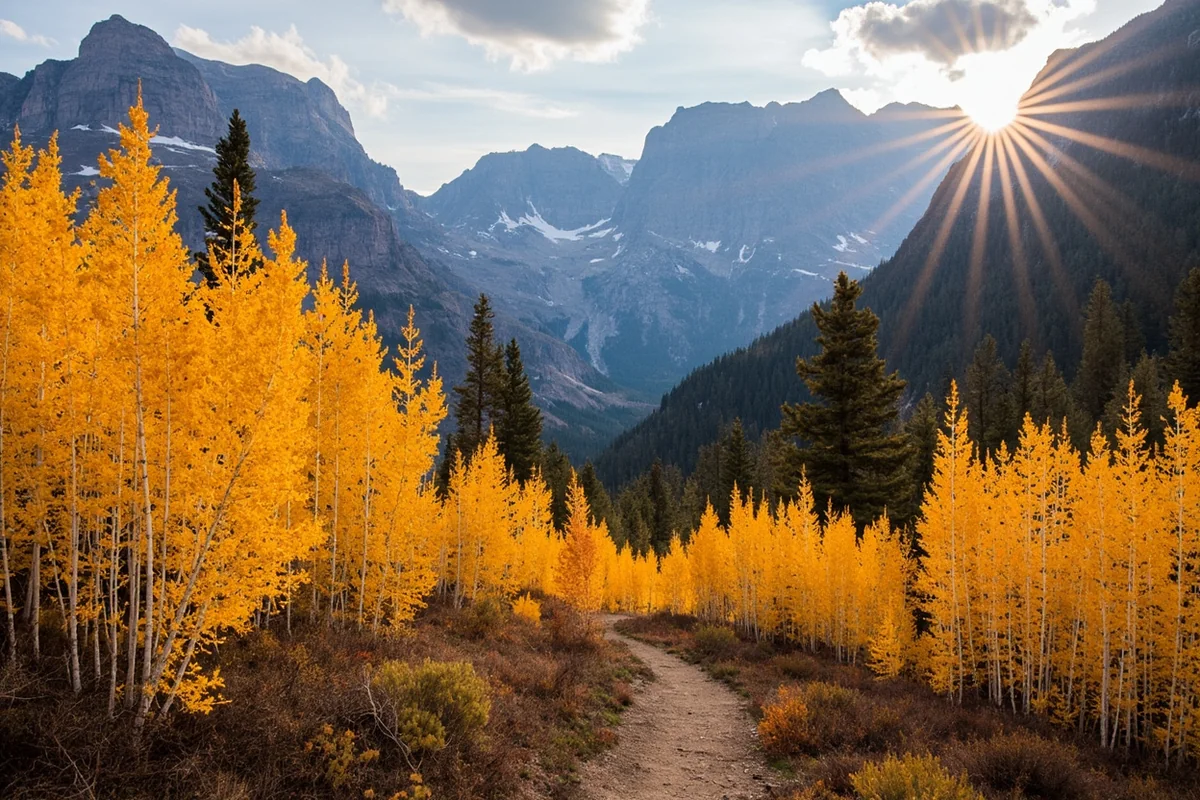
If you’re specifically visiting for wildlife, consider September. The summer crowds thin dramatically after Labor Day, elk begin their mating season (the bugling echoing through mountain valleys is otherworldly), and the aspen and larch trees start turning gold.
Essential Montana Destinations
Glacier National Park: The Crown of the Continent
I’ve been fortunate to visit most of America’s major national parks, and Glacier remains my favorite. The combination of accessible alpine terrain, pristine lakes, and abundant wildlife creates an experience that’s hard to match anywhere in the world.
The Going-to-the-Sun Road is the park’s signature experience—a 50-mile engineering marvel that crosses the Continental Divide at Logan Pass (6,646 feet). I recommend driving it at least twice: once for the views, once to stop at the pullouts and short trails you’ll inevitably want to explore.
Timing matters for this road. By 9 AM in July, the Logan Pass parking lot fills completely. When I visited last summer, I started my drive at 6 AM from the west side, reached Logan Pass by 7:30, and had almost two hours of peaceful hiking before the crowds arrived.
The Many Glacier area on the park’s east side offers what I consider the park’s best hiking. The Grinnell Glacier trail is strenuous but rewards you with views of one of the park’s remaining glaciers—a sobering reminder of climate change, as the park had 150 glaciers in 1850 and now has fewer than 30.
Pro tip: The Two Medicine area sees far fewer visitors than Many Glacier or the Going-to-the-Sun corridor. I spent a full day there on my last trip and encountered maybe 30 other hikers total. The boat ride across Two Medicine Lake, combined with the hike to Twin Falls, makes for a perfect moderate day.
Yellowstone’s Northern Gateway
While Yellowstone National Park technically sits mostly in Wyoming, Montana claims the northern entrance—and honestly, it’s the best way to experience the park. The town of Gardiner sits right at the famous Roosevelt Arch, and the Lamar Valley just inside the park offers the continent’s best wolf watching.
I spent three days based in Gardiner last October, and the Lamar Valley experience alone justified the trip. With a spotting scope (rentable in town if you don’t own one), I watched a wolf pack take down an elk from a safe distance of about half a mile. Brutal, yes, but witnessing that kind of wild behavior changes your understanding of these animals.
The drive from Livingston to Gardiner through Paradise Valley deserves mention too. The Yellowstone River parallels the road, and I’ve seen more bald eagles along this stretch than anywhere else in Montana.
Big Sky and the Gallatin Canyon
Big Sky Resort has grown from a sleepy ski area into a four-season destination. The skiing is genuinely excellent—over 5,800 acres of terrain with surprisingly short lift lines compared to Colorado resorts. I skied there for a week last February and never waited more than five minutes for a lift, even on a Saturday.
Summer brings different opportunities. The Gallatin River running through the canyon offers world-class whitewater rafting and fly fishing. I took a half-day rafting trip with Geyser Whitewater last July—the Class III-IV rapids provided genuine thrills without being terrifying.
The town of Big Sky itself feels purpose-built for tourism (because it was), but that’s not necessarily bad. The restaurants are solid, the lodging options range from budget to luxury, and the access to outdoor activities is unmatched.
Bozeman: Montana’s Boom Town
Bozeman has transformed dramatically over the past decade. When I first visited in 2015, it felt like a typical college town. Now it’s Montana’s fastest-growing city, with a thriving food scene, craft breweries on seemingly every block, and home prices that have longtime residents grumbling.
The growth hasn’t ruined its charm, though. Main Street still feels authentically Western, the Museum of the Rockies houses one of the world’s premier dinosaur fossil collections, and the surrounding mountains provide endless recreation opportunities.
I recommend spending at least two nights in Bozeman. The restaurant scene deserves exploration—Blackbird Kitchen for Italian, Feed Café for breakfast (be prepared to wait on weekends), and any of the downtown breweries for après-hike refreshments.
Helena: The Overlooked Capital
Montana’s capital city rarely appears on tourist itineraries, which is a shame. Helena’s historic Last Chance Gulch—where gold was discovered in 1864—now serves as a charming pedestrian downtown with local shops and restaurants.
The Cathedral of St. Helena is genuinely stunning, modeled after Vienna’s Votive Church. I wandered in during a random Tuesday afternoon and spent half an hour simply admiring the stained glass.
The Gates of the Mountains, a limestone canyon on the Missouri River just north of Helena, offers a boat tour that follows the Lewis and Clark expedition route. When I took the tour last August, we spotted mountain goats on the cliff faces and a bald eagle nest with two juveniles.
Practical Planning Information
Getting There and Around
Montana has several airports, but Bozeman Yellowstone International (BZN) typically offers the best combination of flight options and central location. Missoula International (MSO) works well if you’re focusing on Glacier and western Montana, while Glacier Park International (FCA) in Kalispell puts you closest to the park.
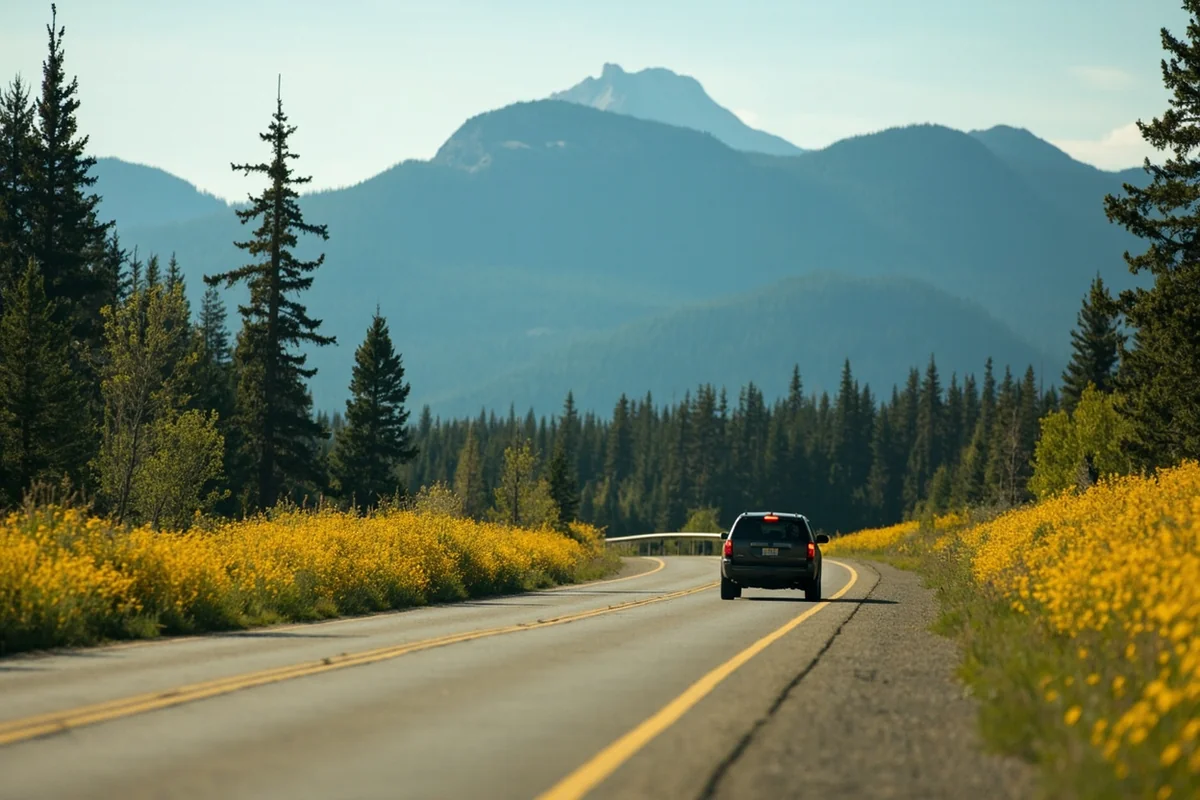
Here’s the reality: you absolutely need a car in Montana. Public transportation is essentially nonexistent outside of extremely limited options in a few cities. I’ve tried to explore Montana without a car exactly once, and it was an exercise in frustration and expensive rideshares.
Rental car prices vary wildly by season. I’ve paid as little as $35/day in April and as much as $180/day in July. Book early for summer visits—by May, the best rates and vehicle options are often gone.
Where to Stay
Accommodation styles in Montana run the full spectrum. Here’s what I’ve learned through trial and error:
Hotels and Motels: Standard chain hotels exist in larger towns, but Montana excels at independent motels with character. The Murray Hotel in Livingston, where I stayed during my Yellowstone trip, dates to 1904 and has hosted everyone from Buffalo Bill to Anthony Bourdain.
Vacation Rentals: Airbnb and VRBO options abound, particularly in destination areas. I rented a cabin outside Whitefish for a week and it provided the perfect base for Glacier exploration—a full kitchen for preparing breakfast and packing lunches saved significant money.
Guest Ranches: For a quintessential Montana experience, consider a guest ranch. I spent four nights at a working ranch in the Madison Valley, riding horses through sagebrush meadows, helping move cattle (mostly watching), and eating communal meals with the family and other guests. It’s not cheap, but it’s unforgettable.
Camping: Montana has exceptional camping, from developed campgrounds to dispersed camping on national forest land. Glacier’s campgrounds book up the moment reservations open (typically six months ahead), so plan accordingly. I’ve had better luck finding last-minute spots in national forest campgrounds just outside the park boundaries.
Budgeting for Montana
Montana isn’t cheap, particularly in summer and around major attractions. Here’s a realistic daily budget based on my experiences:
Budget Travel: $80-120/day (camping or hostels, self-catering, free hiking)
Mid-Range: $200-300/day (modest hotels, restaurant meals, some paid activities)
Comfortable: $400-600/day (nice hotels, dining out, guided experiences)
Gas deserves special mention. Distances are vast, and prices in remote areas can be $0.50-1.00 higher per gallon than in towns. I make it a habit to fill up whenever I’m below half a tank in rural Montana—you never know when the next station might be 80 miles away.
Montana Culture and People
Montanans are genuinely friendly, but it’s a reserved friendliness rather than the effusive welcome you might experience in the South. People will help you if you need it and chat if you initiate, but they generally respect personal space and quiet.
The state has a strong libertarian streak that crosses traditional political lines. “Live and let live” isn’t just a phrase here—it’s a practiced philosophy. You’ll find gun shops and cannabis dispensaries on the same Main Street, sometimes next door to each other.
The Native American presence in Montana is significant and worth understanding. Seven reservations cover substantial portions of the state, representing twelve tribal nations. The Blackfeet Reservation borders Glacier National Park’s east side, and many park guides and employees are tribal members. Taking time to learn about indigenous history and contemporary culture enriches any Montana visit.
I attended a powwow on the Crow Reservation last summer—it was open to the public and completely transformed my understanding of living Native culture. The dancing, regalia, and community atmosphere were extraordinary. Check tribal websites for public events during your visit.
Wildlife Watching Tips
Montana offers some of North America’s best wildlife viewing, but doing it responsibly requires knowledge and patience.
Bears: Both black bears and grizzlies live in Montana, particularly in the western mountains. Carry bear spray (purchase or rent in gateway towns), know how to use it, and make noise on trails. I’ve encountered bears three times in Montana—all from safe distances, all without incident because I followed protocols.
Moose: More dangerous than bears, statistically. I came around a corner on a trail in Glacier and found myself 30 feet from a cow moose with a calf. I slowly backed away, kept trees between us, and waited until they moved on. Never approach a moose, especially with calves.
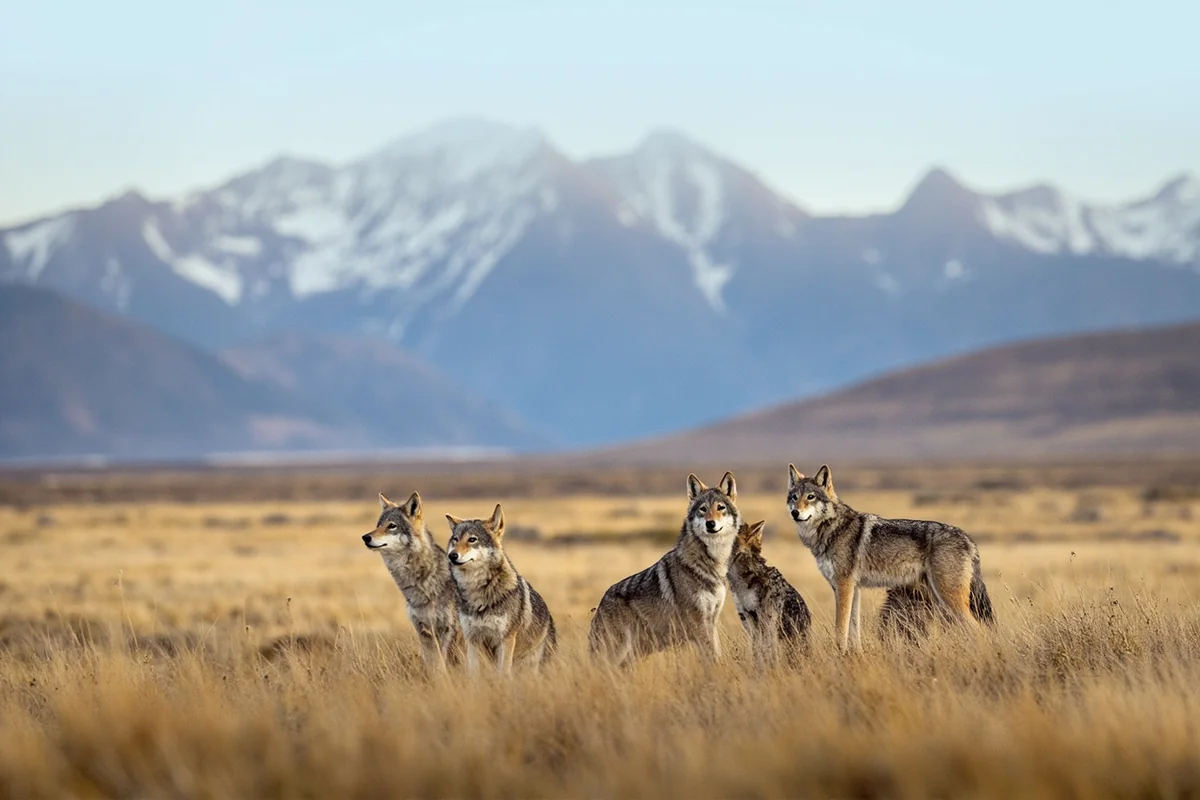
Wolves: The Lamar Valley in Yellowstone offers the best wolf watching, but I’ve also seen wolves in the Paradise Valley and heard them howling outside Glacier. Dawn and dusk are prime times.
Bison: Yellowstone’s bison look docile but injure more visitors than any other animal in the park. The minimum safe distance is 25 yards—use a telephoto lens, not your legs.
Food and Drink
Montana’s food scene has evolved dramatically. While you can still find plenty of steak-and-potatoes restaurants, farm-to-table dining has taken hold in cities like Bozeman, Missoula, and Whitefish.
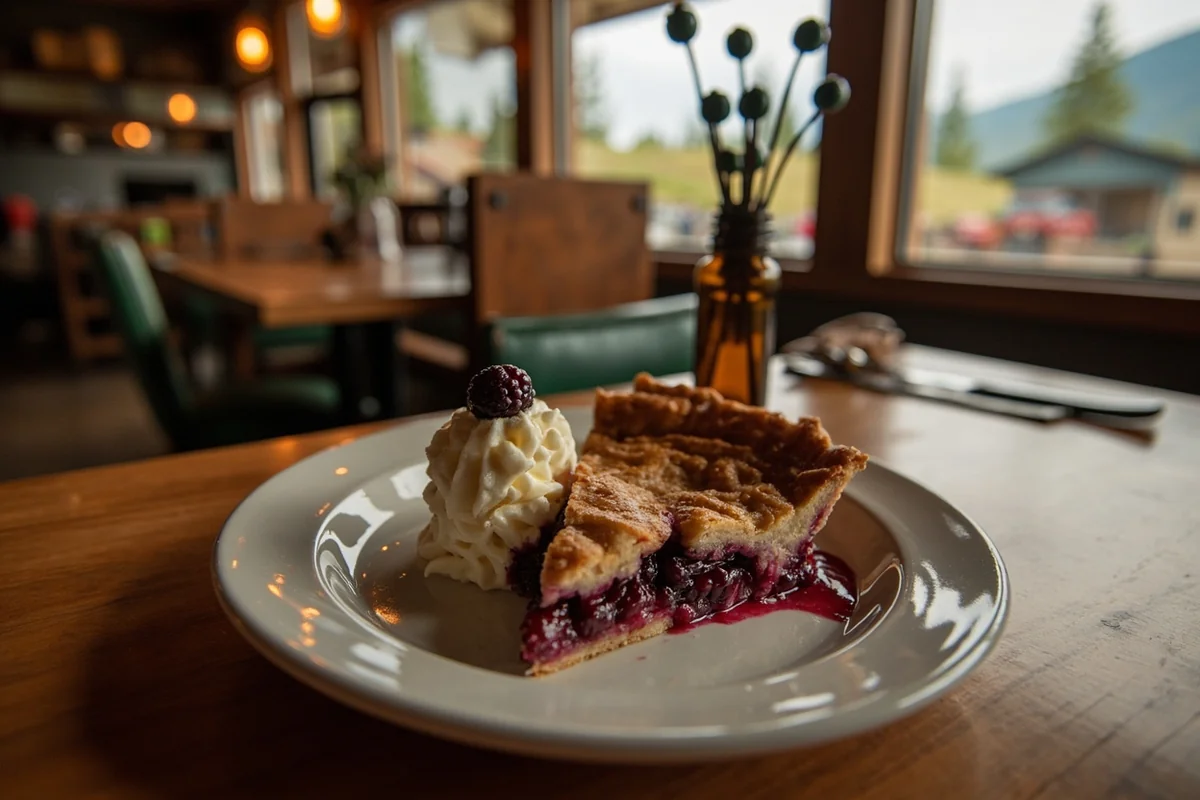
Huckleberries deserve special mention. This wild berry grows only at high elevations in the Northern Rockies, and Montanans are obsessed with it. Huckleberry pie, huckleberry ice cream, huckleberry jam—I’ve even had huckleberry barbecue sauce. It’s all delicious. The Polebridge Mercantile, a remote general store outside Glacier, makes legendary huckleberry bear claws that justify the rough road to get there.
Craft beer thrives in Montana. Missoula alone has a dozen breweries, and even small towns often have at least one. My favorites include Draught Works in Missoula, Bozeman Brewing Company, and Great Northern Brewing in Whitefish.
Packing Essentials
Montana’s weather changes rapidly, even in summer. I’ve experienced snow in July at high elevations and 90°F heat in valleys on the same trip. Layers are essential.
My Montana packing non-negotiables include:
- Rain jacket (not just water-resistant—actually waterproof)
- Warm fleece or down layer
- Sturdy hiking boots (broken in before your trip)
- Bear spray (purchase locally—you can’t fly with it)
- Binoculars (wildlife viewing transforms with decent optics)
- Offline maps downloaded to your phone
- Physical road atlas (GPS fails in remote areas)
- Sunscreen and sunglasses (high elevation means intense UV)
Final Thoughts on Planning Your Montana Trip
After dozens of trips to Montana over several years, my strongest advice is this: don’t try to see everything. The state is simply too vast, and rushing from attraction to attraction means missing what makes Montana special—the moments between destinations.
Some of my favorite Montana memories happened when I wasn’t “doing” anything. Watching the sunset paint the Mission Mountains pink from a random pullout. Chatting with a rancher about his family’s hundred-year history on the land. Sitting by the Yellowstone River with a book, watching pelicans fish.
Build buffer time into your itinerary. Leave room for the flat tire, the unexpected wildlife sighting, the local who tells you about the hot spring nobody knows about. Montana rewards those who let it unfold at its own pace.
This state changed something in me. That might sound dramatic, but standing in genuine wilderness—the kind where help isn’t coming if something goes wrong, where you’re truly on your own with the mountains and sky—recalibrates your perspective on what matters. Montana offers that experience to anyone willing to seek it.
Start planning, but hold your plans loosely. Big Sky Country has a way of revealing exactly what you need, often in ways you never expected.
Frequently Asked Questions
What is the best time of year to visit Montana for outdoor activities?
The best time to visit Montana depends on your interests—June through September offers ideal conditions for hiking, fishing, and exploring Glacier National Park, while December through March is perfect for skiing at Big Sky or Whitefish Mountain Resort. I personally love late September when the crowds thin out, fall colors peak, and elk bugling echoes through the valleys.
How many days do you need to explore Montana properly?
I recommend at least 7-10 days to experience Montana’s highlights without feeling rushed, especially if you want to visit both Glacier National Park and Yellowstone’s Montana entrance. If you’re short on time, 4-5 days works for focusing on one region, but Montana’s vast landscapes—the state spans over 550 miles east to west—reward slower, more immersive travel.
Is Montana an expensive state to visit for travelers?
Montana travel costs vary significantly by season and location, with summer lodging near Glacier National Park running $200-400 per night, while off-season rates drop to $80-150. Budget travelers can camp for $10-35 per night at state and national park campgrounds, and groceries cost about 5-10% more than the national average due to Montana’s rural location.
What should I pack for a trip to Montana in summer?
Pack layers even in summer because Montana temperatures can swing 40 degrees in a single day, dropping into the 40s at night even when afternoons hit 85°F. I always bring sturdy hiking boots, bear spray for backcountry trails, sunscreen, a rain jacket, and long pants for mosquito protection near lakes and rivers.
Do I need a car to travel around Montana?
Yes, a car is essentially required for exploring Montana since public transportation is extremely limited outside of a few shuttle services in national parks. The distances between attractions are significant—it’s 340 miles from Glacier National Park to Yellowstone—and many scenic byways and trailheads are only accessible by personal vehicle.
Is Montana safe for solo travelers and families?
Montana is one of the safest states for travelers, with low crime rates in tourist areas and welcoming small-town communities throughout. The main safety considerations are wildlife encounters—always carry bear spray in the backcountry—and weather preparedness, as mountain conditions can change rapidly and cell service is unreliable in remote areas.
What are the must-see destinations in Montana for first-time visitors?
First-time visitors should prioritize Glacier National Park’s Going-to-the-Sun Road, the charming mountain towns of Whitefish and Bozeman, and the stunning Missouri River Breaks for a taste of Montana’s diversity. If time allows, add Flathead Lake—the largest natural freshwater lake west of the Mississippi—and a scenic drive through the Paradise Valley south of Livingston.