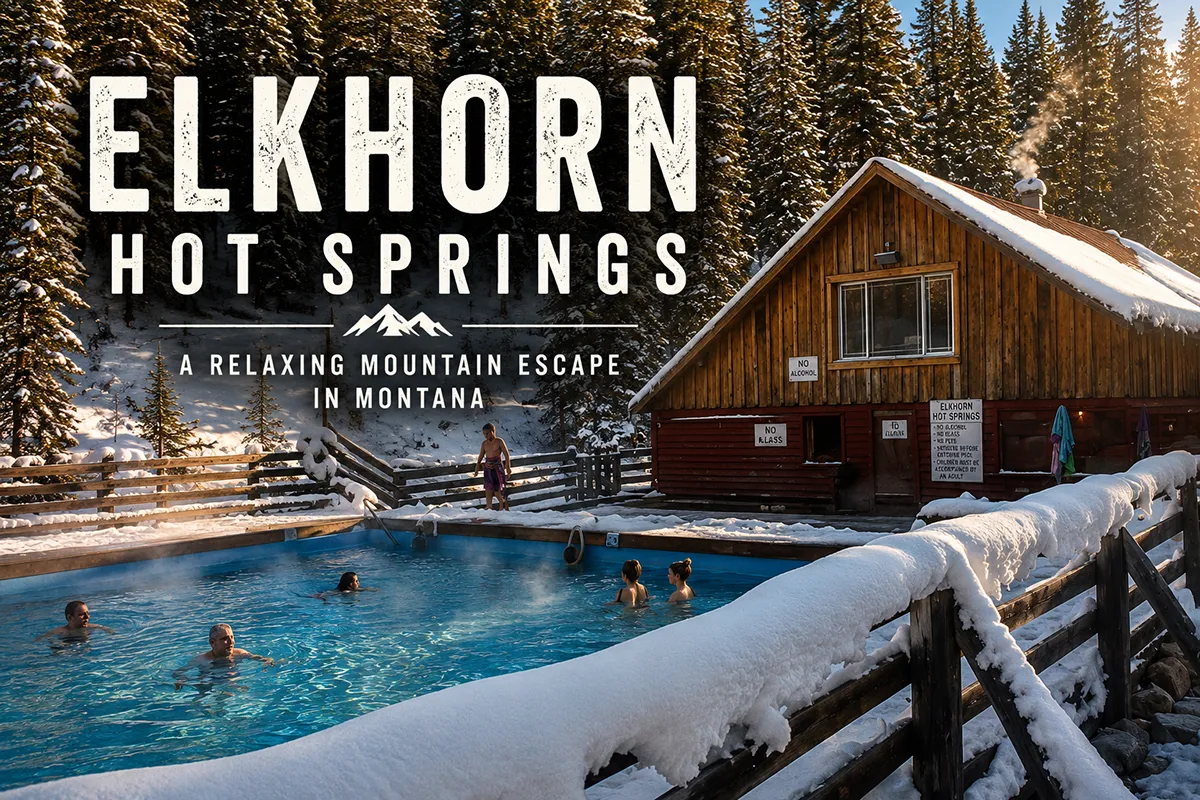
The first thing I noticed when I arrived at Elkhorn Hot Springs wasn’t the steam rising from the pools or the smell of pine — it was the silence. At 7,400 feet in the Pioneer Mountains, with snow dusting the surrounding peaks and not another car in sight, I realized I’d found something increasingly rare among Montana hot springs: a place that feels genuinely untouched by modern tourism.
See my Montana ski resorts guide for regional context on Maverick and other southwestern Montana ski options.
- Elkhorn Hot Springs sits at 7,400 feet in the Grasshopper Valley of the Pioneer Mountains, Beaverhead-Deerlodge National Forest, near Polaris, MT — Montana’s highest hot springs resort, in operation since 1918
- Three soaking options: two outdoor mineral pools (95–102°F) plus an indoor Grecian sauna (104–106°F) — all chemical-free, no chlorine added
- Accommodations cover every budget: dormitory rooms (~$50/night), rustic cabins ($80–200+), and lodge rooms — breakfast included with cabin stays
- Day soaking: $8–10/person; no sulfur smell; clothing required
- Crystal Park (gem digging), Bannack State Park (ghost town), and Maverick Mountain (ski area with Ski & Stay packages) are all within 30–40 miles
- Address: 339 Hot Springs Road, Polaris, MT 59746 | Pool House: (406) 834-3434 | Lodge: (406) 834-3551
Liked this article?
Add Roaming Montana as a preferred source so you see more of our articles and guides on Google.
Why Elkhorn Hot Springs Stands Apart
I’ve soaked in hot springs across Montana — from the more developed Bozeman Hot Springs to the boutique feel of Quinn’s Hot Springs Resort — and Elkhorn occupies its own unique category. This isn’t a place you visit for spa treatments or swim-up bars.
You come here to disconnect. Completely.
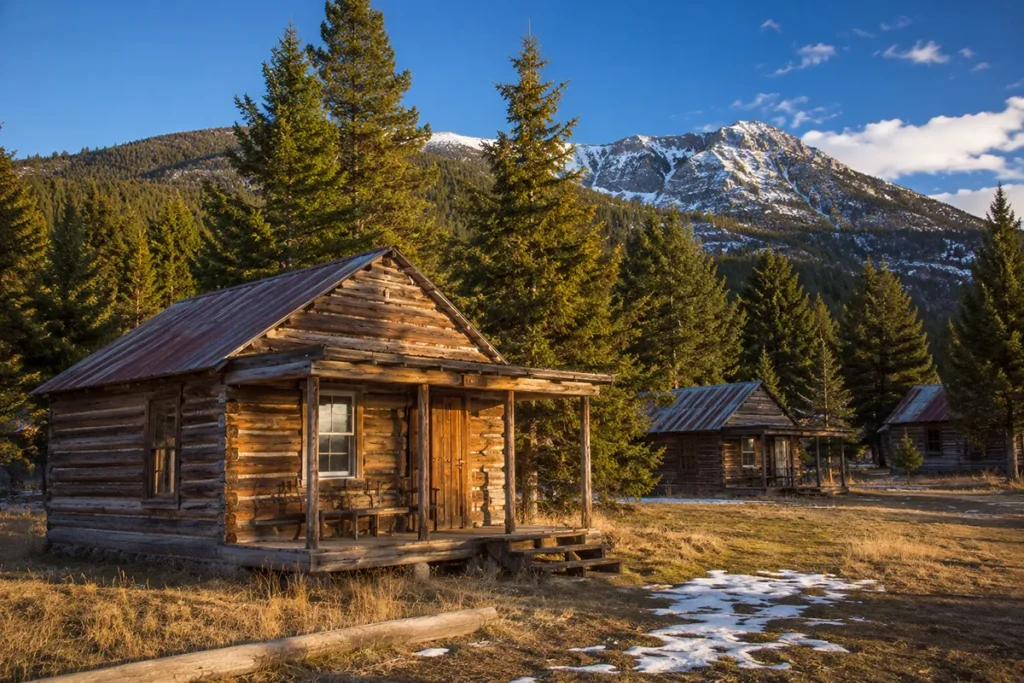
The resort has operated continuously since 1918. The hot springs pools were first built that year; the lodge followed in 1921, built by Jack Brown; and the cabins went up through the 1920s and ’30s. Walking around the property during my visit last September, I could feel that history in the weathered log buildings and the hand-painted signs.
What makes Elkhorn genuinely special is its commitment to staying unpretentious. The pools are simple outdoor soaking basins in a mountain meadow, the food is straight-up Montana comfort cooking, and the cabins have barely changed in a hundred years.
And honestly? That’s exactly why people keep coming back. For the best natural hot springs in Montana, Elkhorn is the benchmark for rustic authenticity.
Getting to Elkhorn: The Pioneer Mountains Scenic Byway
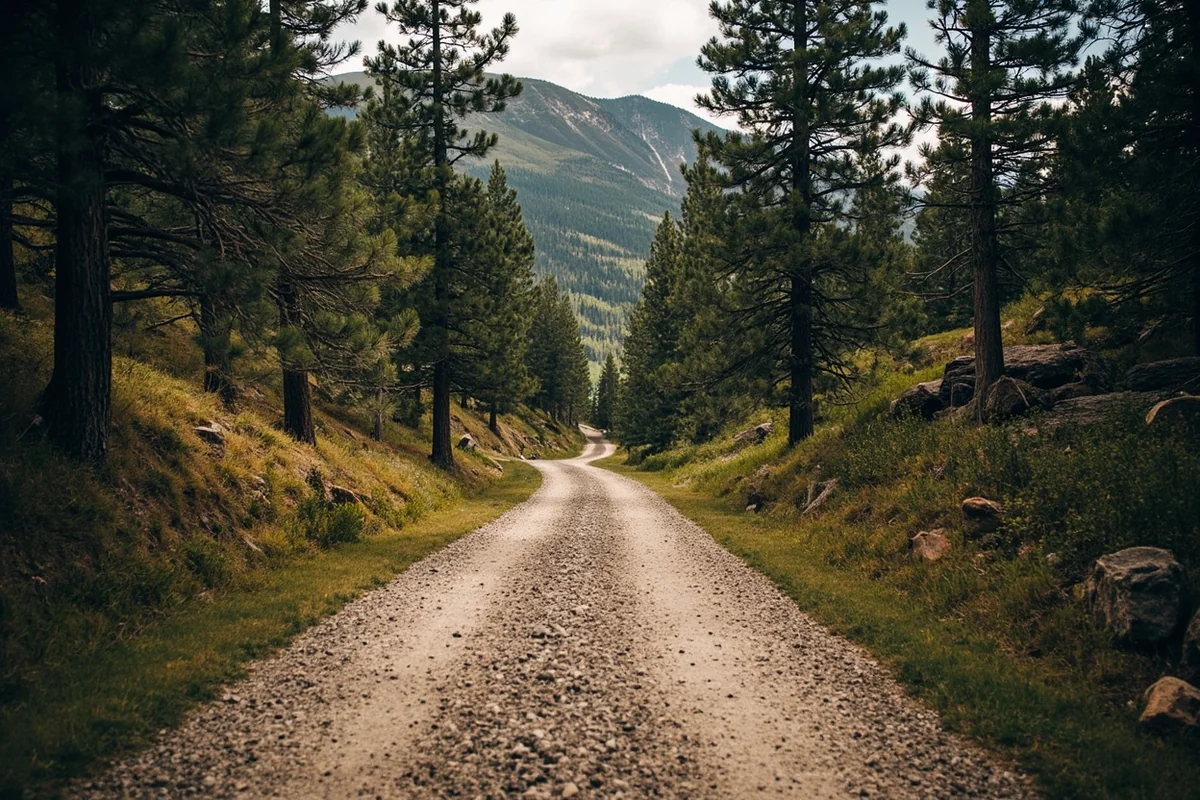
Let me be honest about the drive — it’s not for everyone, but the road itself is one of the most beautiful drives in southwestern Montana.
Elkhorn Hot Springs sits at 339 Hot Springs Road, approximately 40 miles southwest of Dillon, Montana and 13 miles north of Polaris. It lies within the Beaverhead-Deerlodge National Forest, nestled in the Grasshopper Valley just north of the Idaho border.
The Pioneer Mountains Scenic Byway
Here’s what the current map apps won’t tell you: Elkhorn Hot Springs sits directly on the Pioneer Mountains National Scenic Byway — one of Montana’s designated scenic driving routes.
The byway runs between Polaris on the south end and Wise River on the north end, passing through the heart of the Pioneer Mountains with views that would command entrance fees in other states.
The byway itself is a summer-only road (typically June through October depending on snowpack), which is useful to know if you’re planning a spring or fall visit.
From Dillon, head north on I-15, then take Highway 278 west for about 22 miles to the Wise River-Polaris Road junction.
Turn north on Forest Road 484 (the byway), and follow it approximately 13 miles to Elkhorn. Coming from the north, take I-15 to Wise River, then pick up the byway heading south — this approach offers stunning views of the Pioneer Mountains the entire way.
From Butte, Montana, the most direct route is about 90 miles via I-15 south to the Highway 278 exit — roughly two hours in good conditions.
GPS can be unreliable in this area, and cell service cuts out about five miles before the resort. Download offline maps before you leave pavement.
Road Conditions by Season
| Season | Conditions | Vehicle Needed |
|---|---|---|
| Summer (Jun–Sep) | Dusty but manageable, watch for washboard | Any vehicle with decent clearance |
| Fall (Oct–Nov) | Snow possible early at this elevation | AWD recommended |
| Winter (Dec–Mar) | Snow-packed and icy sections | 4WD/AWD + snow tires or chains |
| Spring (Apr–May) | Mud season, can be soft or impassable | Call ahead; high clearance essential |
The drive from Dillon takes approximately 1.5 hours. Don’t rush it — I counted three mule deer and what I’m fairly certain was a moose in a willow-choked creek bottom on my way in.
The Hot Springs: Three Soaking Options
This is where the current page on most Elkhorn guides falls short — they describe two pools and leave out the third soaking option entirely. Elkhorn actually has three distinct soaking experiences, all fed by the same natural mineral spring.
The source spring emerges from the hillside at approximately [verify current source temp with resort] and flows by gravity into the pool system at a rate fast enough that no chemicals — no chlorine, no additives — are ever required. The water cleans itself through continuous flow. For hot springs visitors wary of chemical treatments, this is a significant distinction.
And one more thing worth stating clearly up front: Elkhorn’s water has no sulfur smell. Unlike some Montana hot springs where the rotten-egg odor is part of the experience, the water at Elkhorn is odor-free — a genuine selling point that surprises first-time visitors.
Outdoor Pool 1 (Cooler)
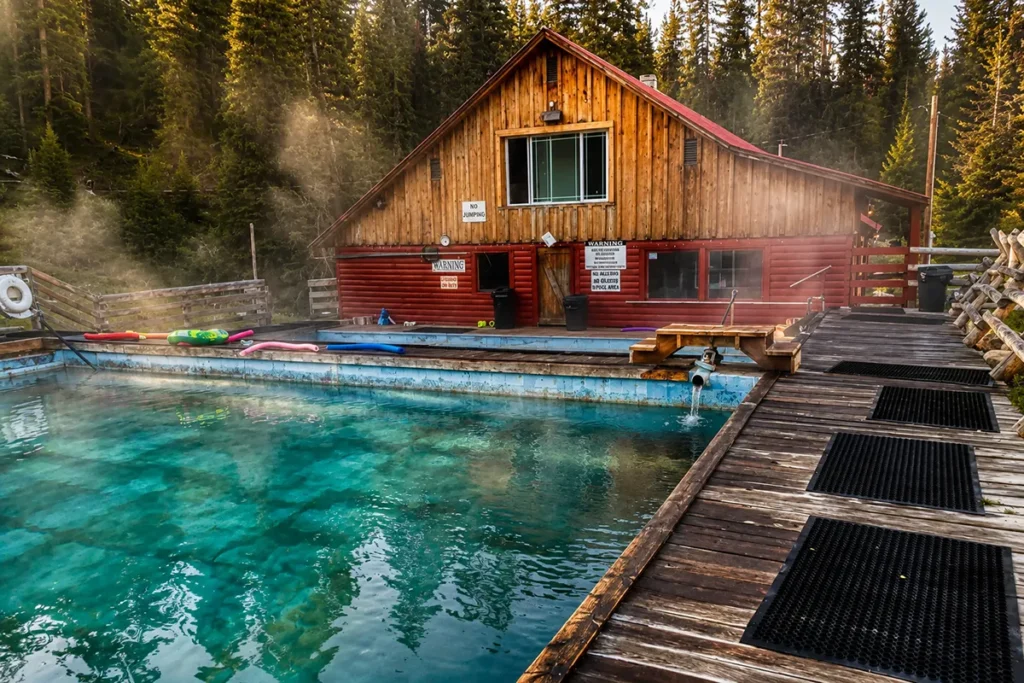
The lower outdoor pool maintains temperatures in the 95–100°F range — perfect for longer soaks, families, or anyone heat-sensitive. During my visit, I spent most of my time here watching the sun drop behind the Pioneer Mountains. The pool accommodates around 8–10 people comfortably, and on a weekday I often had it entirely to myself.
Outdoor Pool 2 (Warmer)
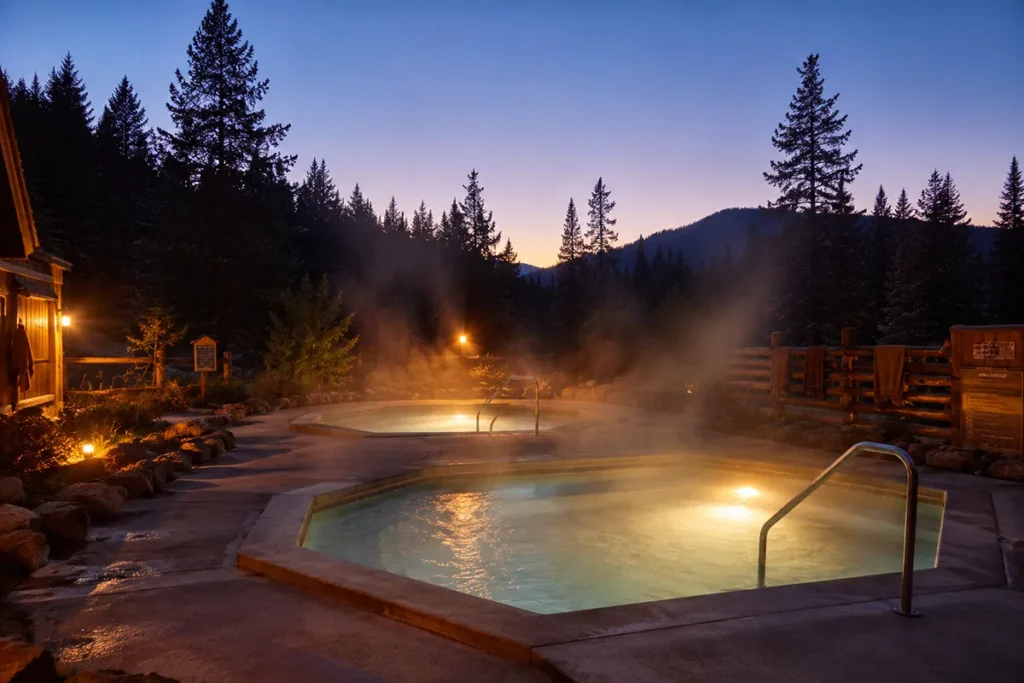
The upper outdoor pool runs a touch hotter, typically in the 100–102°F range. After a day of hiking in the surrounding wilderness, this is where the heat really penetrates tired muscles. Slightly smaller, fitting 4–6 people.
Both outdoor pools are simple concrete construction with steps for entry. No fancy tilework. No jets. What you get instead: mineral-rich water, clean mountain air, and mountain views that no amount of money could improve.
The Indoor Grecian Sauna
This is Elkhorn’s third and often least-known soaking option — and the hottest. The indoor Grecian-style wet sauna is fed by the same natural spring water and runs 104–106°F. It’s housed in a small pool house adjacent to the outdoor pools.
The sauna is particularly popular in winter, when soaking outdoors in colder air while your body stays submerged in hot mineral water is the main event — but many guests slip in and out of the indoor sauna between outdoor soaks year-round as a way to escalate the heat before cooling down in the lighter-temperature outdoor pools.
If you haven’t experienced a natural hot spring sauna before, Elkhorn’s is an excellent introduction. The water quality is the same as the pools; the temperature is simply turned up.
Pool Rules and Policies
- Clothing required — bathing suits mandatory; no nudity
- No glass at the pools or pool house
- Towel service available (you don’t need to bring your own, though it’s smart to anyway)
- Children welcome; the cooler outdoor pool is the family-friendly option
Accommodations: Four Ways to Stay
The current page covers two accommodation types. Elkhorn actually has four distinct options ranging from Montana’s most budget-friendly overnight soaking experience to comfortable cabin stays that include breakfast.
Dormitory Rooms (Most Budget-Friendly)
The original 1918 lodge building has a second floor of dormitory-style rooms — the most affordable accommodation at any Montana hot spring resort.
Rates start as low as $50/night, making this genuinely accessible for solo travelers and budget-conscious visitors.
Rooms are private (not shared-dorm style), located above the restaurant with electricity and rustic character intact. Pool access is included in all overnight rates.
Rustic Cabins (Most Popular)
Elkhorn has 10 cabins ranging in size from two-person retreats to larger units sleeping 8+. All cabins have electricity, refrigerators, and wood stoves for heat. Most do not have running water — bathroom facilities are in the main lodge, with a vault toilet closer to some cabins for nighttime convenience.
A note about firewood: Firewood for the wood stoves is available for purchase on-site for an additional fee. Plan ahead — you’ll want a warm cabin when returning from late-night pool sessions.
Breakfast is included with cabin stays: the lodge serves a hot buffet-style breakfast every morning. On a cold morning in the Pioneer Mountains, coming in from an outdoor soak to a hot breakfast might be the most Montana thing I’ve ever experienced.
Cabin rates start around $80–100/night for smaller units and run $150–200+ for larger configurations accommodating families or groups.
Lodge Rooms
Eight rooms in the main lodge provide slightly more modern comfort — electricity, standard lighting, and convenient access to the restaurant and pools. Still rustic in character, but without the outhouse variable. Lodge rooms book up quickly on weekends; reserve well ahead.
Online Booking
Elkhorn now offers online reservations via cloudbeds.com in addition to phone booking. For stays during peak summer or holiday weekends, online booking is the most reliable way to secure your preferred cabin.
I still recommend a quick call afterward to confirm cabin preferences and get specific questions answered — staff can clarify exactly which cabins have indoor plumbing and which don’t, saving surprises on arrival.
Phone House: (406) 834-3434 | Lodge: (406) 834-3551
Dining at the Lodge
The lodge serves breakfast, lunch, and dinner during open hours — and since there are zero other dining options within a 30-minute drive, you’ll want to plan meals around the kitchen schedule.
The menu is straightforward Montana comfort cooking: burgers, steaks, elk burger, breakfast plates, homemade soups, and hearty daily specials. Beer and wine are available at the bar.
Portions are mountain-sized. After spending a day between pools and trails at 7,400 feet, that’s exactly right.
If you have dietary restrictions, call ahead. The menu isn’t extensive and vegetarian options were limited when I visited, though the staff accommodated modifications when asked.
Activities: Beyond the Pools
Elkhorn’s location in the Pioneer Mountains opens up one of southwestern Montana’s most varied outdoor recreation areas. Most visitors underestimate how much is within reach.
Coolidge Ghost Town Trail
Starting from or near the resort, this moderate 2-mile hike leads to the remains of Coolidge — an old silver and lead mining town that operated in the late 1800s and early 1900s.
The crumbling buildings, rusted equipment, and eerie silence tell the story of Montana’s boom-and-bust mining era better than any museum exhibit.
I explored it on my second morning and spent nearly two hours poking through the ruins. For a deeper dive into Montana’s ghost town landscape, see my Montana ghost towns guide.
Crystal Park: Dig for Real Gemstones
One of the most distinctive experiences in southwestern Montana sits just a few miles up the byway past Elkhorn.
Crystal Park is a 220+ acre site of decomposed granite within the Beaverhead-Deerlodge National Forest where visitors can spend the day digging for quartz crystals and other minerals using provided hand tools — and keep everything they find. The $5/vehicle entry fee funds ongoing site maintenance.
I spent a morning here during my last visit and left with a bag full of double-terminated quartz crystals that still sit on my desk. It’s surprisingly addictive, and genuinely family-friendly. For context on Montana’s gemstone landscape, see my guide to gemstone mining in Montana.
Bannack State Park: Montana’s Most Famous Ghost Town
About 30 miles from Elkhorn, Bannack State Park preserves Montana’s first territorial capital — a gold rush town that boomed in the 1860s and is now one of the best-preserved ghost towns in the American West.
Over 60 historic structures still stand, and the park offers self-guided and ranger-led tours through the original main street, hotel, church, gallows, and Meade Hotel that housed Montana’s first governor.
Bannack is the kind of place that rewards slow wandering. I’ve been multiple times and find something new each visit. It’s worth combining with an Elkhorn overnight — Bannack in the morning, pools in the afternoon. See my Montana ghost towns guide for the full Bannack coverage.
Big Hole River: World-Class Fly Fishing
The Big Hole River is one of the most celebrated fly fishing rivers in Montana — arguably in the American West.
It flows through the Big Hole Valley just west of the Pioneer Mountains and is known for its native Arctic grayling population, the only self-sustaining wild grayling fishery outside of Alaska in the continental US. Brown and rainbow trout fishing is also exceptional throughout the season.
Several access points are within 30–45 minutes of Elkhorn. A Montana fishing license is required; check current Montana FWP regulations for any special restrictions on the Big Hole, which are sometimes in place to protect the grayling population.
Maverick Mountain: Ski & Stay Packages
Maverick Mountain is Elkhorn’s primary winter partner — a small, uncrowded downhill ski area in the heart of the Beaverhead National Forest, about 18 miles from Elkhorn.
Maverick has no lift lines in the conventional sense, lift ticket prices are a fraction of what Montana’s larger resorts charge, and the snow quality benefits from the Pioneer Mountains’ reliable snowpack.
Elkhorn and Maverick Mountain offer joint Ski & Stay packages — combining lift tickets with cabin or lodge accommodation and hot springs access.
If you’ve ever wanted to ski fresh powder all day and soak in hot mineral water the same evening at 7,400 feet, this package delivers it at a price that would make a Whitefish or Big Sky trip blush.
See my Montana ski resorts guide for regional context on Maverick and other southwestern Montana ski options.
Cross-Country Skiing: 12km of Groomed Trails
Elkhorn operates its own 12-kilometer groomed cross-country ski trail system within the Beaverhead-Deerlodge National Forest, typically from Thanksgiving through the end of March. The trail network follows a marked cloverleaf design with several loop options:
- Comet Mountain loop — the signature longer route with panoramic Pioneer Mountain views at the summit
- Elkhorn Mine loop — historical route past the remains of the old mining operation
- Lower meadow loops — ideal for beginners and for morning warm-up laps
No trail fee is charged for cross-country skiing. The resort grooms trails approximately weekly; call ahead for current grooming conditions.
Rental equipment is available on-site. The combination of groomed Nordic skiing directly from your cabin, followed by the hot pools and sauna, is what Elkhorn’s loyal winter regulars drive hours to experience.
Snowmobiling
The Polaris area anchors approximately 100 miles of groomed snowmobile trails maintained for the region’s snowmobile community.
Elkhorn is directly accessible from these trail systems, making it a popular overnight destination for snowmobilers doing multi-day rides through the Pioneer Mountains.
Note that snowmobiles are not permitted on the resort’s cross-country ski trails — the trail systems are kept separate.
Fishing, Hiking, and Wildlife
Several high-mountain lakes and creeks in the Pioneer Range hold excellent trout fishing. Elkhorn Creek runs near the resort. The surrounding national forest has well-established hiking corridors for day trips and backpacking.
Wildlife is abundant: mule deer browse near the cabins at dawn, moose are occasional visitors in the willows, elk bugle through the valley in September, and black bears are active through the late summer berry season. Store food properly in designated areas and carry bear spray on any trail beyond the resort perimeter.
One piece of genuine local color worth setting expectations on: cattle range freely on and around the resort grounds. They’re part of the landscape here in the Grasshopper Valley. Don’t be surprised if you wake up to a moo outside your cabin window — it’s extremely Montana.
Comparing Elkhorn to Other Montana Hot Springs
After visiting most of Montana’s hot springs, here’s where Elkhorn sits on the spectrum.
For luxury and spa treatments: Look at Chico Hot Springs Resort (Paradise Valley) or Quinn’s Hot Springs Resort (Clark Fork). Both deliver polished experiences with full resort amenities.
For similar rusticity with easier access: Norris Hot Springs near Bozeman has that back-to-basics charm, live music nights, and a paved road to the door. Great entry point for the hot springs curious.
For completely undeveloped soaking: Potosi Hot Springs — hike in, no facilities, natural pools only.
For historic character with more amenities: Symes Hot Springs Hotel in Hot Springs town offers National Register of Historic Places character with running water and modern comforts.
Elkhorn occupies the specific middle ground between Potosi’s rawness and a developed resort: real infrastructure, real food, real history — but no WiFi, no cell service, no luxury add-ons. That combination is genuinely rare.
For the full ranking across the state, see my guide to the best natural hot springs in Montana.
Pet Policy
Elkhorn Hot Springs is pet-friendly, but with specific rules that are worth reviewing before you arrive. The resort maintains a dedicated pet policy page on their official website (elkhornhotsprings.com/pet-policy/) with current restrictions.
As of my last visit, dogs were welcome in cabin areas but not permitted in the pool or sauna zones. Always call ahead to confirm current pet policy if you’re planning to bring an animal — policies at small, family-run resorts can change seasonally.
Best Times to Visit
For the full state-wide seasonal breakdown, see my best time to visit Montana guide. For Elkhorn specifically:
Summer (June–August): Easiest road access, full Pioneer Mountains Scenic Byway open, longest pool hours. Crystal Park is fully operational. Wildflowers in July are spectacular. The most crowded season, but “crowded” at Elkhorn still means sharing a pool with a handful of guests on a weekend.
Fall (September–October): My personal favorite window. Crowds thin after Labor Day. Aspen and larch turn gold through the Pioneer Mountains in late September — one of Montana’s most underrated fall spectacles. Evening temperatures make hot soaking especially appealing. The Scenic Byway may close by mid-October depending on early snowfall.
Winter (November–March): Demanding but magical. Ski & Stay packages with Maverick Mountain. Twelve kilometers of groomed Nordic trails. A hundred miles of snowmobile trails. And the hot pools and sauna at night in the snow. Proper vehicle and driving skills are non-negotiable. Shorter pool hours and occasional closures during severe weather.
Spring (April–May): Mud season makes spring the trickiest. The access road can be soft or briefly impassable during peak snowmelt. Late May is usually safe, and the landscape coming alive with minimal crowds makes it worthwhile for the patient traveler.
What to Pack
Essentials for any visit:
- Swimsuit and towel (or use towel service — but having your own is smarter)
- Flip-flops or water sandals for walking between pools and buildings
- Warm layers — mountain evenings are cold even in summer at 7,400 feet
- Headlamp or flashlight — essential for nighttime navigation to/from pools
- Cash — card processing can be unreliable; bring enough for meals and fees
- Snacks and water — the lodge has set hours; having backup food is smart
- Entertainment (books, cards, games) — no WiFi, no cell service
- Camera — the night sky here on a clear night is extraordinary
Add for winter stays:
- Snow boots and insulated waterproof footwear
- Hand and toe warmers
- Extra blankets (backup for if the fire goes down overnight)
- Snow traction devices or chains for your vehicle
- Emergency car supplies (shovel, traction boards, jumper cables)
Tips for First-Time Visitors
Call before you go. Hours change, cabins book up, and the road can close without much notice. (406) 834-3434 for pool questions; (406) 834-3551 for lodge and cabin bookings.
Check your cabin’s plumbing status when booking. Some cabins now have partial or full bathroom facilities; others remain outhouse-only. This varies by cabin and by renovation status — ask specifically which you’re getting.
Arrive before dark. The final miles of gravel road require attention. Arriving in daylight lets you take in the Pioneer Mountains and navigate safely.
Learn to use the wood stove before you need it. Ask staff for a brief demonstration. The stove is your heat source — starting your first fire at 11pm when you’re cold is not the ideal learning environment. Firewood is available for purchase at the resort.
Embrace the disconnection. Cell service ends five miles out. Tell someone your plans and return time before you lose signal, then put the phone away and let Elkhorn do its thing.
Expect the cattle. Free-roaming cattle are part of daily life in the Grasshopper Valley and wander the resort grounds. This is local color, not a problem — but it does mean watching your step on the paths and not leaving cabin doors open.
Don’t try to cram in too much. Elkhorn rewards stillness. Pool, meal, hike, pool again, dinner, pool under the stars. That’s the right schedule.
Practical Information
| Detail | Information |
|---|---|
| Official address | 339 Hot Springs Road, Polaris, MT 59746 |
| Pool House phone | (406) 834-3434 |
| Lodge phone | (406) 834-3551 |
| elkhornhotspringsresort@gmail.com | |
| Online booking | cloudbeds.com (or call lodge direct) |
| Elevation | 7,400 feet |
| Location | Beaverhead-Deerlodge National Forest, Grasshopper Valley |
| Distance from Dillon | ~40 miles southwest (~1.5 hours) |
| Distance from Butte | ~90 miles (~2 hours via I-15 + Hwy 278) |
| Outdoor pools | 95–102°F, no chemicals, no sulfur odor |
| Indoor Grecian sauna | 104–106°F, same mineral water |
| Day soak fee | ~$8–10/person (cash preferred) |
| Dormitory rooms | From ~$50/night (above restaurant) |
| Cabin rates | ~$80–200+/night; breakfast included |
| Lodge rooms | 8 rooms; comparable rates to cabins |
| Cabins | 10 total; electricity, refrigerator, wood stove |
| Clothing policy | Required — bathing suits mandatory |
| Pets | Allowed (see resort’s pet policy page) |
| WiFi / Cell | None — download maps before departing |
| Payment | Cash preferred; cards accepted (unreliable signal) |
| Hours (general) | Mon–Thu 8am–10pm; Fri–Sat 8am–11pm; Sun 8am–10pm [verify seasonally] |
| Scenic Byway | Pioneer Mountains National Scenic Byway (summer only) |
Is Elkhorn Hot Springs Right for You?
Elkhorn isn’t for everyone, and that’s exactly what makes it special.
If you need reliable WiFi, a spa menu, and modern hotel amenities, look into other options. Symes Hot Springs Hotel in Hot Springs has historic charm with more comfort.
Wild Horse Hot Springs provides private soaking with cabin accommodations. Broadwater Hot Springs near Helena offers a modern facility experience.
But if you want genuine disconnection — if you want to read by kerosene light, stoke a fire at midnight, and soak under stars so numerous you lose count — Elkhorn delivers something increasingly difficult to find.
For travelers exploring southwestern Montana’s hot springs options, also consider Big Medicine Hot Springs and for RV-based trips through the region see the Montana hot springs RV guide.
When I drove back down that gravel road and regained cell service outside Polaris, I felt both ready to re-enter normal life and already nostalgic for those quiet days in the Grasshopper Valley. That’s the Elkhorn effect. And it’s worth the drive.
Frequently Asked Questions
Where exactly is Elkhorn Hot Springs located?
Elkhorn Hot Springs is located at 339 Hot Springs Road, Polaris, MT 59746 — approximately 40 miles southwest of Dillon, Montana, and 13 miles north of Polaris in the Grasshopper Valley of the Pioneer Mountains. The resort sits within the Beaverhead-Deerlodge National Forest on the Pioneer Mountains National Scenic Byway at an elevation of 7,400 feet.
What soaking options does Elkhorn Hot Springs have?
Elkhorn has three soaking options: two outdoor mineral pools (one running approximately 95–100°F, the other 100–102°F) and an indoor Grecian-style wet sauna running 104–106°F. All three are fed by the same natural geothermal spring, and none require chemical treatment — the continuous water flow keeps the pools clean without chlorine.
Does the water at Elkhorn Hot Springs smell like sulfur?
No. Elkhorn’s hot spring water is sulfur-free, which means no rotten-egg odor. This distinguishes it from some other Montana hot springs. The water has a clean, mineral character without any unpleasant smell.
How much does it cost to soak at Elkhorn Hot Springs?
Day soaking costs approximately $8–10 per person (children slightly less). Cash is preferred as card processing can be unreliable. Overnight guests receive unlimited pool access included with their accommodation rate.
What types of accommodation does Elkhorn Hot Springs offer?
Four accommodation types: dormitory-style rooms above the restaurant (from ~$50/night), rustic log cabins (10 total, from ~$80/night, includes breakfast), and lodge rooms (8 total, similar pricing to cabins). Most cabins have electricity and wood stoves but limited or no running water; some cabins have been upgraded with partial or full bathroom facilities. Always ask which type you’re booking.
Is breakfast included at Elkhorn Hot Springs?
Yes — a hot buffet-style breakfast is included with cabin stays. The lodge restaurant prepares breakfast each morning for overnight cabin guests. Dormitory and lodge room guests should confirm current meal inclusion when booking.
What nearby attractions are within reach of Elkhorn Hot Springs?
The four signature nearby attractions recommended by the resort itself: Crystal Park (gemstone and crystal digging, 220+ acres, $5/vehicle, a few miles further up the byway); Bannack State Park (Montana’s best-preserved ghost town, ~30 miles away); Maverick Mountain ski area (~18 miles, with Ski & Stay packages); and the Big Hole River (world-class fly fishing for trout and native Arctic grayling). Coolidge Ghost Town is a short hike directly from the resort area.
What are the cross-country skiing conditions at Elkhorn?
Elkhorn maintains approximately 12 kilometers of groomed cross-country ski trails within the Beaverhead-Deerlodge National Forest, typically from Thanksgiving through late March. Trails follow a marked cloverleaf with routes to Comet Mountain and the old Elkhorn Mine. No trail fee is charged; rental equipment is available on-site. Grooming is done approximately weekly — call ahead for current conditions.
Is Elkhorn Hot Springs pet-friendly?
Yes — Elkhorn is pet-friendly, though specific rules apply (pets are generally not allowed in the pool area). Check the resort’s current pet policy at elkhornhotsprings.com/pet-policy/ or call the lodge at (406) 834-3551 before bringing an animal, as policies can be updated seasonally.
What is the best time of year to visit Elkhorn Hot Springs?
Fall (September–October) for golden larch forests and thin crowds; Winter (November–March) for the skiing-and-soaking combination with Maverick Mountain; Summer (June–August) for easiest access and the Pioneer Mountains Scenic Byway being fully open. Spring is the trickiest due to mud season on the access road. See my best time to visit Montana guide for broader seasonal context.
How do I get to Elkhorn Hot Springs from Butte?
From Butte, take I-15 south approximately 55 miles to the Highway 278 exit (near Dillon). Follow Highway 278 west for about 22 miles to the Wise River-Polaris Road junction, then take Forest Road 484 (the Pioneer Mountains Scenic Byway) north approximately 13 miles to the resort. Total distance from Butte is roughly 90 miles — about two hours in summer conditions. In winter, add time and ensure your vehicle has AWD or 4WD with snow tires.