Standing in the silence of Bannack’s abandoned streets last October, I could almost hear the ghostly echo of prospectors’ boots on wooden boardwalks.
This former territorial capital—now a ghost town frozen in time—reminded me that Montana’s history isn’t something you read about in dusty textbooks.
It’s something you walk through, touch, and feel in your bones.
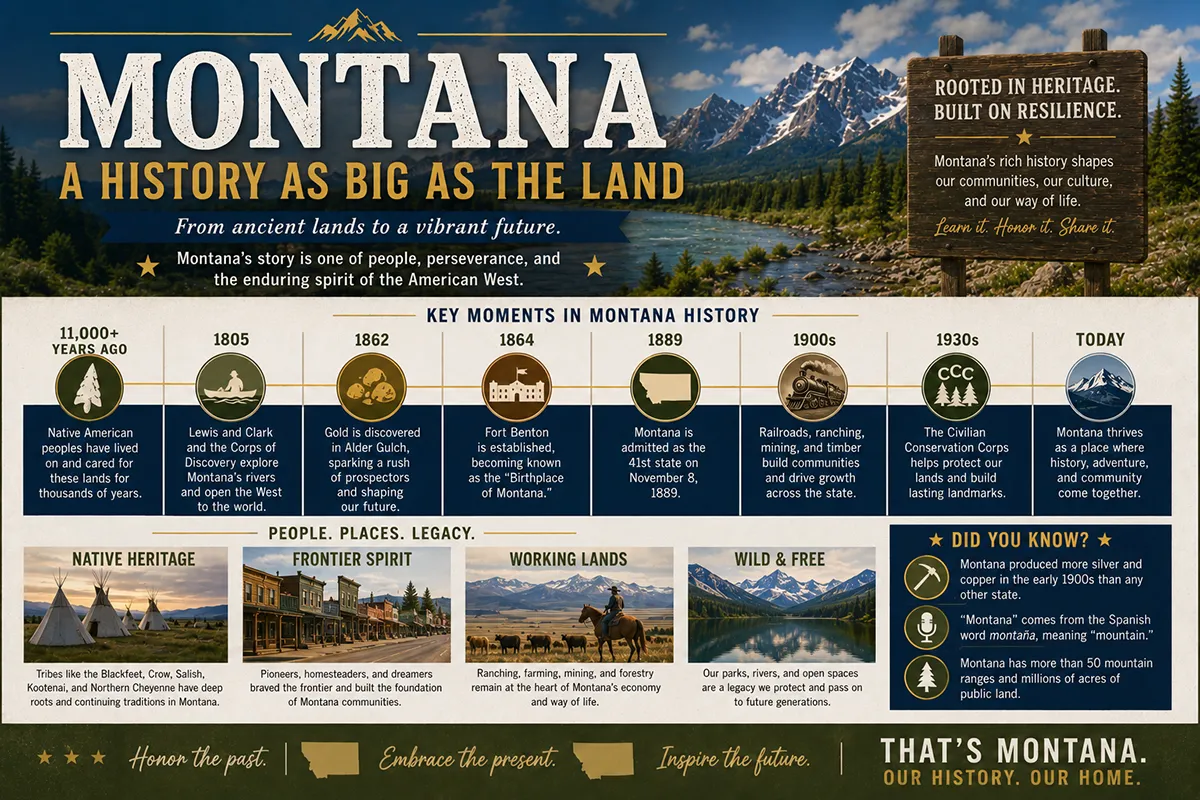
- Montana’s history spans over 12,000 years, from ancient Indigenous cultures through gold rush booms to copper king battles
- Must-visit historic sites include Bannack Ghost Town, Little Bighorn Battlefield, and the World Museum of Mining in Butte
- The state has 7 federally recognized tribes whose history and culture remain central to Montana’s identity
- Ghost towns like Garnet, Virginia City, and Granite offer authentic glimpses into frontier life
- Best times to explore historic sites: May-September for ghost towns, year-round for museums
- Budget 3-5 days minimum to experience Montana’s major historical destinations
Liked this article?
Add Roaming Montana as a preferred source so you see more of our articles and guides on Google.
Why Montana’s History Hits Different
I’ve visited historic sites across America, but Montana offers something unique: scale without crowds and authenticity without polish.
When I explored Fort Benton’s old town during my visit two summers ago, I was one of maybe a dozen visitors wandering streets that once served as the “birthplace of Montana.”
The state’s history isn’t sanitized or Disney-fied. Bullet holes still mark saloon walls. Mining headframes still stand sentinel over hillsides. Battlefields remain largely unchanged from the day of conflict.
This rawness creates an emotional connection that manicured historic sites simply can’t replicate.
Before Montana Was Montana: Indigenous History
Long before European explorers set foot in the region, the land we call Montana was home to diverse Indigenous nations for over 12,000 years.
Understanding this history isn’t just academically important—it’s essential for anyone wanting to truly know this place.
The Original Montanans
Montana is currently home to seven federally recognized tribes: the Blackfeet, Crow, Northern Cheyenne, Assiniboine, Gros Ventre, Sioux, and Salish-Kootenai (which includes the Confederated Salish, Kootenai, and Pend d’Oreilles peoples). Each has a distinct history, language, and culture.
When I visited the Blackfeet Reservation last summer, my guide explained that his ancestors had lived in what’s now called Glacier National Park for countless generations. The peaks we admire as tourists are sacred sites with names and stories predating English by millennia.
Where to Experience Indigenous History Today
The Museum of the Plains Indian in Browning became one of my favorite Montana stops. Located at the edge of the Blackfeet Reservation, it houses an extraordinary collection of traditional clothing, artwork, and artifacts.
I spent three hours there during my visit, completely absorbed by the intricate beadwork and the stories behind each piece. The museum staff, many of whom are tribal members, shared insights you won’t find in any guidebook.
The Chief Plenty Coups State Park near Pryor offers another powerful experience. This was the home of the last traditional chief of the Crow Nation, and walking through his preserved residence gave me chills.
His grave site overlooks the valley where he spent his final years, and the interpretive center does an exceptional job explaining Crow history without oversimplification.
For a more immersive experience, I recommend timing your visit to coincide with one of Montana’s many powwows. The North American Indian Days celebration in Browning each July is one of the largest in the Northwest.
Lewis and Clark: Following the Trail
The Lewis and Clark Expedition passed through Montana in 1805-1806, and the state offers more miles of their trail than any other. I’ve traced portions of their route multiple times, and each trip reveals something new.
Key Lewis and Clark Sites
Pompeys Pillar National Monument near Billings preserves the only remaining physical evidence of the expedition—William Clark’s signature carved into sandstone on July 25, 1806. When I climbed the stairs to see it last fall, I was struck by how small and humble it is.
Just a name and a date scratched into rock, yet it connects directly to one of America’s greatest adventures.
The Lewis and Clark National Historic Trail Interpretive Center in Great Falls deserves at least half a day. I initially planned a quick two-hour visit and ended up staying until closing.
Their exhibit on the portage around the Great Falls—an 18-mile trek that nearly broke the expedition—helped me understand the sheer physical challenge these explorers faced.
The Gates of the Mountains
Meriwether Lewis named this stretch of the Missouri River “the gates of the rocky mountains” on July 19, 1805. When I took a boat tour through here during my last trip, I understood exactly why.
Massive limestone cliffs rise 1,200 feet straight up from the water. The narrow canyon feels like passing through a portal, and it probably looked identical when Lewis’s canoe slipped through over two centuries ago.
The boat tours run from Memorial Day through September, and I strongly suggest going early in the morning when the light hits the canyon walls just right.
The Gold Rush Era: Montana’s Wild Beginning
Gold changed everything. When prospectors discovered gold at Grasshopper Creek in 1862, Montana’s transformation from wilderness to territory happened almost overnight.
Bannack: Where Montana Began
I’ve visited Bannack Ghost Town three times now, and it remains my favorite historic site in the state. This collection of over 60 preserved structures served as Montana’s first territorial capital, and walking its streets feels like stepping into a sepia photograph.
The town’s history is colorful in the extreme. Its sheriff, Henry Plummer, was secretly the leader of a gang of road agents who robbed and murdered travelers. The vigilante justice that followed resulted in multiple hangings, including Plummer’s own in 1864.
During Bannack Days each July, volunteers in period costume bring the town to life. I attended in 2022 and watched blacksmithing demonstrations, participated in gold panning, and ate sourdough biscuits cooked over an open fire.
Virginia City and Nevada City
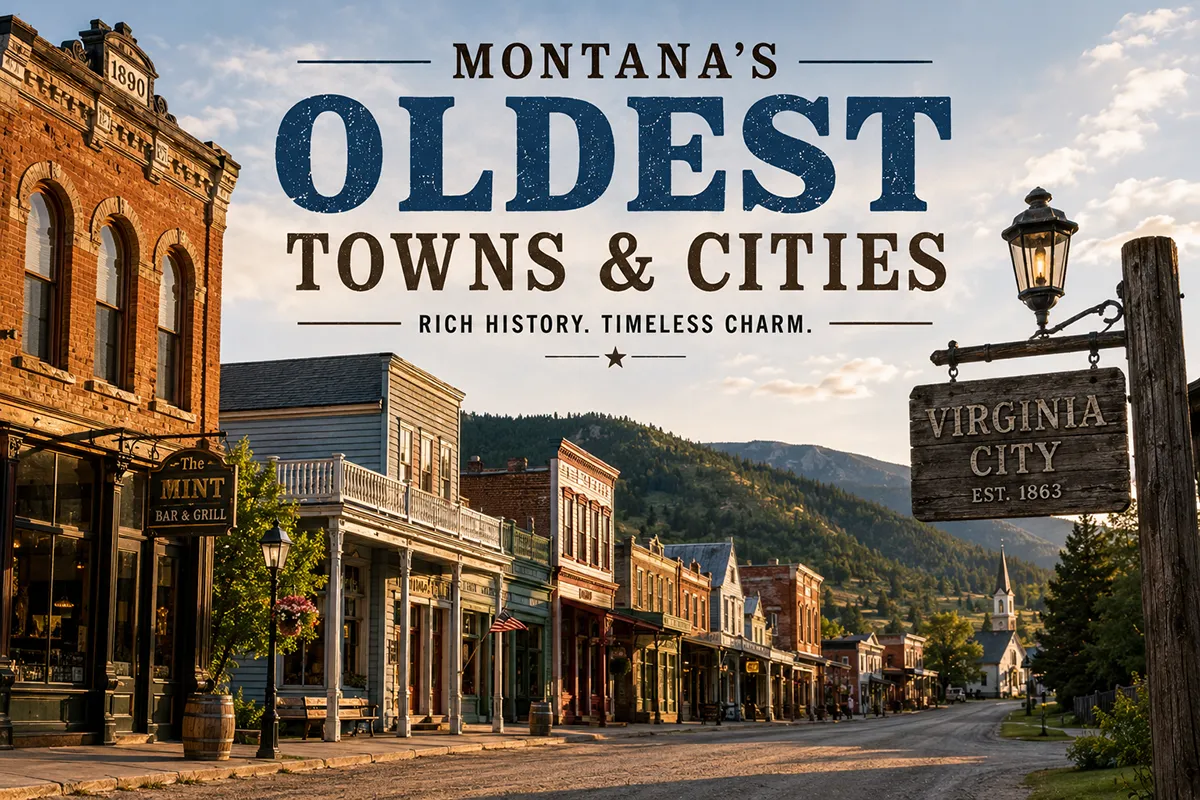
These twin towns in Madison County offer perhaps the best-preserved gold rush architecture in the American West. Unlike Bannack, Virginia City never completely died—about 190 people still live there year-round.
Walking down Wallace Street, I passed the original Wells Fargo office, the Content Corner general store (still operating since the 1860s), and numerous saloons that have served whiskey for over 150 years.
Nevada City, a mile down the road, functions as an open-air museum with over 100 historic buildings. The collection includes structures relocated from across Montana, creating a concentrated frontier experience.
I recommend taking the narrow-gauge Alder Gulch Short Line Railroad between the two towns. The 20-minute ride on vintage rail cars passes old mining operations and offers commentary on local history.
| Ghost Town | Best For | Access | Season |
|---|---|---|---|
| Bannack | Most authentic atmosphere | Paved road, easy | Year-round, limited winter access |
| Virginia City | Living history, amenities | Paved highway | May-September best |
| Garnet | Remote, photogenic ruins | Gravel road, moderate | May-December |
| Granite | Industrial mining history | Rough road, high clearance needed | June-September only |
| Elkhorn | Two iconic buildings | Gravel road, moderate | May-October |
Butte: The Richest Hill on Earth
No Montana history trip is complete without Butte. This former copper mining capital was once the largest city between Chicago and San Francisco, and its story encapsulates American industrial ambition at its most extreme.
Understanding Butte’s Scale
When I first drove into Butte, I wasn’t prepared for the Berkeley Pit. This former open-pit copper mine is now a toxic lake over a mile wide and 1,780 feet deep. Viewing platforms let you look into this environmental disaster, and it’s simultaneously horrifying and fascinating.
The pit represents both the incredible wealth extracted from this hillside and the environmental cost of that extraction. It’s a complicated legacy that Butte residents navigate daily.
The World Museum of Mining
I spent an entire day at this museum during my last visit and could have easily stayed longer. Built around the Orphan Girl Mine, it includes the Hell Roarin’ Gulch outdoor exhibit—a recreated 1890s mining town with over 50 buildings.
The underground mine tour was the highlight. Descending into the cold, dark tunnels helped me understand what miners faced daily. Our guide, a third-generation Butte native, shared family stories of mining life that made the history personal.
Uptown Butte Historic District
Butte’s uptown area contains one of the largest National Historic Landmark Districts in the country. The architecture reflects the city’s boom years—ornate Victorian buildings, grand hotels, and elaborate bars.
I recommend starting at the Butte-Silver Bow Visitor Center to pick up a walking tour map. The Copper King Mansion, former home of mining magnate William Andrews Clark, offers tours that reveal the obscene wealth the copper kings accumulated.
Don’t miss the Mai Wah Museum in the old Chinatown district. Butte’s Chinese community played a crucial role in mining and railroad construction, and this museum preserves their often-overlooked story.
The Battle of the Little Bighorn
On June 25-26, 1876, Lieutenant Colonel George Armstrong Custer led the 7th Cavalry against a coalition of Lakota Sioux, Northern Cheyenne, and Arapaho warriors near the Little Bighorn River. The result was the most significant Native American victory in the Plains Indian Wars.
Visiting the Battlefield
I’ve been to the Little Bighorn Battlefield National Monument twice, and it affects me profoundly each time. The landscape remains largely unchanged—the same rolling hills, the same river valley, the same Big Sky overhead.
White marble markers dot the hillsides where soldiers fell. Red granite markers, added in 1999, honor the Native American warriors who died. Walking among them, the scope of the battle becomes viscerally real.
Making the Most of Your Visit
I strongly recommend arriving early and taking the ranger-led tour. During my last visit, the ranger was a Crow tribal member who provided perspectives I’d never encountered in history books.
The Indian Memorial, dedicated in 2003, offers a Native viewpoint that balances the traditional cavalry-focused narrative. Its design—a circular earthwork with spirit gate sculptures—represents the interconnectedness of all peoples affected by the battle.
Allow at least three hours. Visit the visitor center museum first to understand the context, then walk or drive the battlefield loop. The Last Stand Hill site, where Custer and his immediate command fell, is especially moving.
The Railroad Era: Connecting Montana to the World
Railroads transformed Montana from an isolated frontier territory into an integrated part of the national economy. The tracks that crossed the state brought settlers, carried away resources, and created the towns we visit today.
Fort Benton: The End of the Line
Before railroads, Fort Benton served as the head of navigation on the Missouri River. Steamboats carrying supplies traveled over 2,300 miles from St. Louis to this small Montana outpost.
Walking along Fort Benton’s levee during my visit, I tried to imagine the chaos of peak shipping season—hundreds of people, mountains of freight, and the constant noise of commerce. The Museum of the Upper Missouri does an excellent job recreating this atmosphere.
The town’s Grand Union Hotel, originally built in 1882, has been restored and still operates. I stayed there on a recent trip, and sleeping in those high-ceilinged rooms felt like time travel.
Railroad History Sites
The Museum of the Rockies in Bozeman has excellent railroad exhibits, but for dedicated rail enthusiasts, I recommend the Historical Museum at Fort Missoula. Their outdoor exhibits include a restored railroad depot and vintage rail cars.
In Great Falls, the Malmstrom Air Force Base Museum occupies the original Great Falls railroad depot—a beautiful building worth seeing even if military history isn’t your primary interest.
Homesteading and the Settling of the Plains
Between 1909 and 1923, over 100,000 homesteaders flooded into Montana’s plains, lured by railroad advertising promising “free land” and easy farming. Most failed within a decade.
Understanding the Homestead Era
When I drove through north-central Montana last summer, abandoned farmsteads dotted the landscape like scattered bones. These simple structures—usually a small house, a barn, and maybe a windmill—testify to dreams that didn’t survive Montana’s harsh reality.
The Upper Missouri River Breaks National Monument contains dozens of these homestead remnants. A kayak trip down the Wild and Scenic portion of the Missouri passes sites where families tried to make a go of farming in an unforgiving land.
The Homesteader Experience Today
The Pioneer Town museum in Scobey offers the best immersion into homestead-era life I’ve found in Montana. This collection of over 35 buildings includes homes, schools, churches, and businesses from the settlement period.
During Pioneer Days each June, volunteers in period costume demonstrate everything from threshing grain to blacksmithing. I attended on a recommendation from a local, and it exceeded my expectations completely.
In Great Falls, the History Museum contains a thoughtful exhibit on the homestead boom and bust. They don’t sugarcoat the failure rate or the hardships faced by these settlers.
Montana’s Military History
From frontier forts to Cold War missile silos, Montana’s military history spans the entire arc of American expansion and global power projection.
Fort Missoula
Established in 1877, Fort Missoula served various military purposes including housing the 25th Infantry Bicycle Corps—African American soldiers who tested bicycles as potential cavalry replacements. Their 1897 ride from Missoula to St. Louis covered 1,900 miles.
The fort later served as an internment camp during World War II, holding both Japanese Americans and Italian nationals. The Historical Museum at Fort Missoula addresses this troubling chapter honestly.
I spent most of a rainy afternoon exploring the museum’s 30+ buildings, which include a one-room schoolhouse, a fire lookout tower, and the original fort structures.
Cold War Sites
Montana’s strategic location made it crucial during the Cold War. At one point, over 200 Minuteman missile silos dotted the state’s prairies—enough nuclear firepower to end civilization.
The Malmstrom Air Force Base Museum in Great Falls tells this story, though access to the base requires advance registration. I found the exhibit on daily life at remote missile sites particularly interesting—young airmen isolated in underground bunkers, responsible for apocalyptic weapons.
Practical Planning for History Travelers
After years of exploring Montana’s historic sites, I’ve developed some strategies that might help your trip.
Best Times to Visit
Most outdoor historic sites are best visited between May and September. Ghost towns at elevation—like Garnet and Granite—may have roads closed by snow until late June.
However, some sites shine in the off-season. I visited Bannack during a late October snowstorm, and the atmosphere of those abandoned buildings against white snow was unforgettable.
Suggested Itineraries
Three Days (Southwest Montana Focus)
- Day 1: Butte (World Museum of Mining, Berkeley Pit, uptown walking tour)
- Day 2: Bannack Ghost Town, Dillon (county museum)
- Day 3: Virginia City, Nevada City, Alder Gulch
Five Days (Comprehensive History Tour)
- Day 1: Great Falls (Lewis and Clark Center, Giant Springs)
- Day 2: Fort Benton, Upper Missouri Breaks
- Day 3: Little Bighorn Battlefield, Pompeys Pillar
- Day 4: Butte (full day)
- Day 5: Bannack, Virginia City
Insider Tips
Many historic sites in Montana are run by volunteers or have limited staffing. Call ahead to confirm hours, especially in shoulder seasons. I’ve arrived at “open” sites to find them unexpectedly closed multiple times.
Bring layers. Even in summer, old buildings and mine tours can be cold. The underground tour at the World Museum of Mining stays around 50 degrees year-round.
Talk to locals. My best Montana history experiences have come from tips shared by museum docents, café owners, and random people I’ve met. Montanans are proud of their state’s story and usually happy to share it.
Why Montana History Matters to Today’s Traveler
History tourism isn’t just about looking at old stuff. It’s about understanding how places came to be—the decisions, accidents, tragedies, and triumphs that shaped the landscapes we now visit.
In Montana, that history is unusually accessible. You can touch the same rocks Lewis and Clark touched. You can walk streets that haven’t changed since the 1860s. You can stand on battlefields where the American story took dramatic turns.
When I’m in Montana, I feel connected to that past in ways that are hard to articulate. Maybe it’s the scale of the landscape, which makes human endeavors seem both heroic and humble. Maybe it’s the preservation of sites that other states have paved over or bulldozed.
Or maybe it’s just that Montana still has enough space for ghosts to linger.
Whatever draws you to Big Sky Country, I hope you’ll make time for its history. Those stories—Indigenous, pioneer, industrial, military—are still being told in museums, ghost towns, battlefields, and roadside markers across the state.
All you have to do is show up and listen.
Frequently Asked Questions
What are the most important historical sites to visit in Montana?
I’d prioritize Little Bighorn Battlefield National Monument, the Grant-Kohrs Ranch National Historic Site, and Virginia City’s preserved ghost town. These sites cover Montana’s Native American heritage, ranching legacy, and gold rush era within a manageable driving distance of each other—Little Bighorn to Virginia City is about 250 miles.
When is the best time to visit Montana’s historic ghost towns?
Late May through September offers the best weather and full access to ghost towns like Bannack, Garnet, and Virginia City. I recommend visiting in June or September to avoid peak summer crowds while still enjoying mild temperatures between 60-80°F and longer daylight hours for exploring.
How much does it cost to visit Montana’s historical museums and landmarks?
Most Montana historical sites are surprisingly affordable—expect $5-15 per adult for museum entries like the Montana Historical Society Museum in Helena. National historic sites like Little Bighorn charge $25 per vehicle, and many ghost towns like Bannack State Park only cost $8 for a day-use pass.
Can I visit Native American historical sites and reservations in Montana?
Yes, Montana has seven reservations welcoming respectful visitors to cultural centers and historic sites. The Museum of the Plains Indian in Browning and the People’s Center on the Flathead Reservation offer authentic perspectives on tribal history—I recommend calling ahead to check for cultural events or guided tour availability.
What should I bring when exploring Montana’s historic mining towns?
Pack sturdy walking shoes since ghost towns have uneven terrain and original wooden boardwalks. I always bring layers even in summer because old buildings lack climate control, plus a flashlight for dim mine tour interiors, sunscreen for high-altitude exposure, and plenty of water since many sites lack modern amenities.
How long do I need to explore the Lewis and Clark Trail through Montana?
To meaningfully experience Montana’s 700-mile stretch of the Lewis and Clark National Historic Trail, budget at least 4-5 days. Key stops include the Gates of the Mountains, Pompeys Pillar with Clark’s original signature, and the Lewis and Clark Interpretive Center in Great Falls—rushing through means missing the landscape context that makes the journey meaningful.
Is Virginia City Montana worth visiting compared to other Western ghost towns?
Virginia City stands out because it’s a living ghost town with over 100 original buildings still intact from the 1860s gold rush. Unlike abandoned sites, you can ride a historic train, watch period reenactments, and explore authentic Victorian storefronts—I found it more engaging than completely deserted ghost towns, especially for families.
Sources
- https://mt.gov/discover/brief_history.aspx
- https://www.mbmg.mtech.edu/Pubs/Lewis-Clark/main.asp
- https://www.umt.edu/this-is-montana/columns/stories/gold-western-montana.php
- https://www.umt.edu/this-is-montana/columns/stories/montana-statehood-part1.php
- https://mhs.mt.gov/education/Elementary/Chap4.pdf
- https://www.umt.edu/this-is-montana/short-notes/stories/events-shaped-montana.php
- https://mhs.mt.gov/education/Textbook/Chapter6/chapter6.pdf