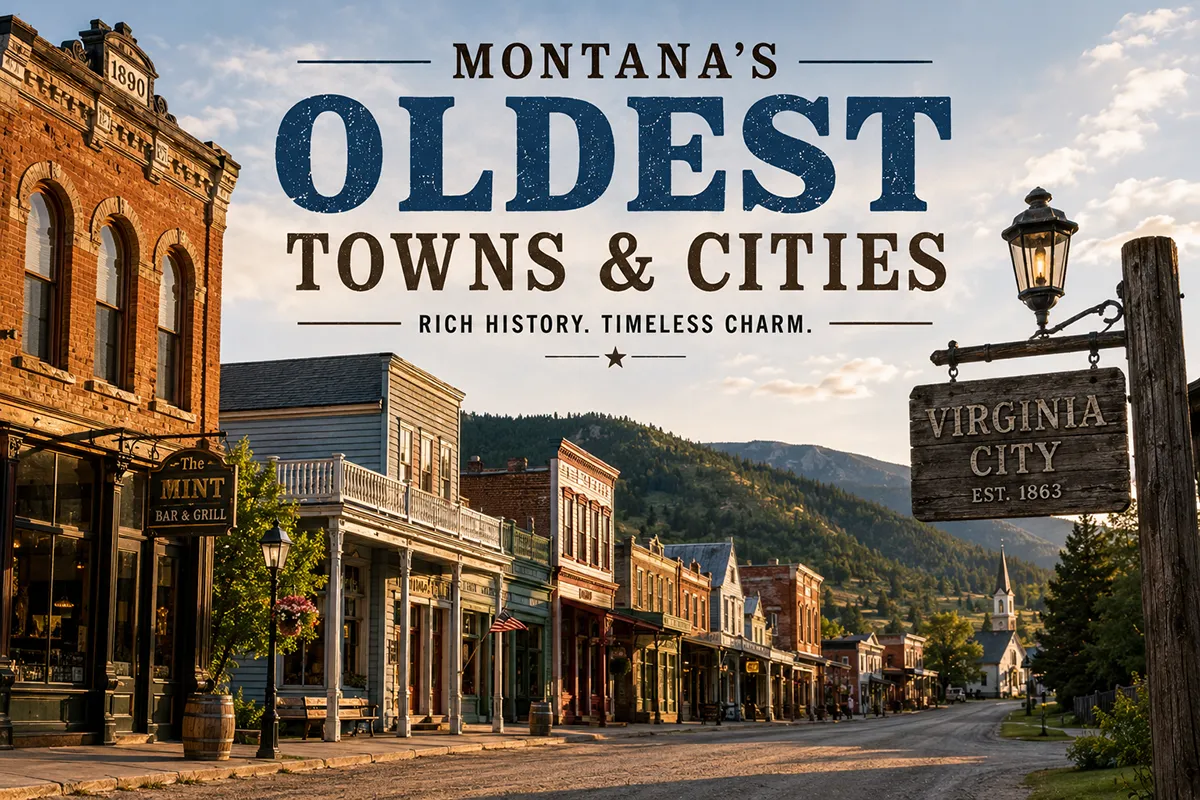
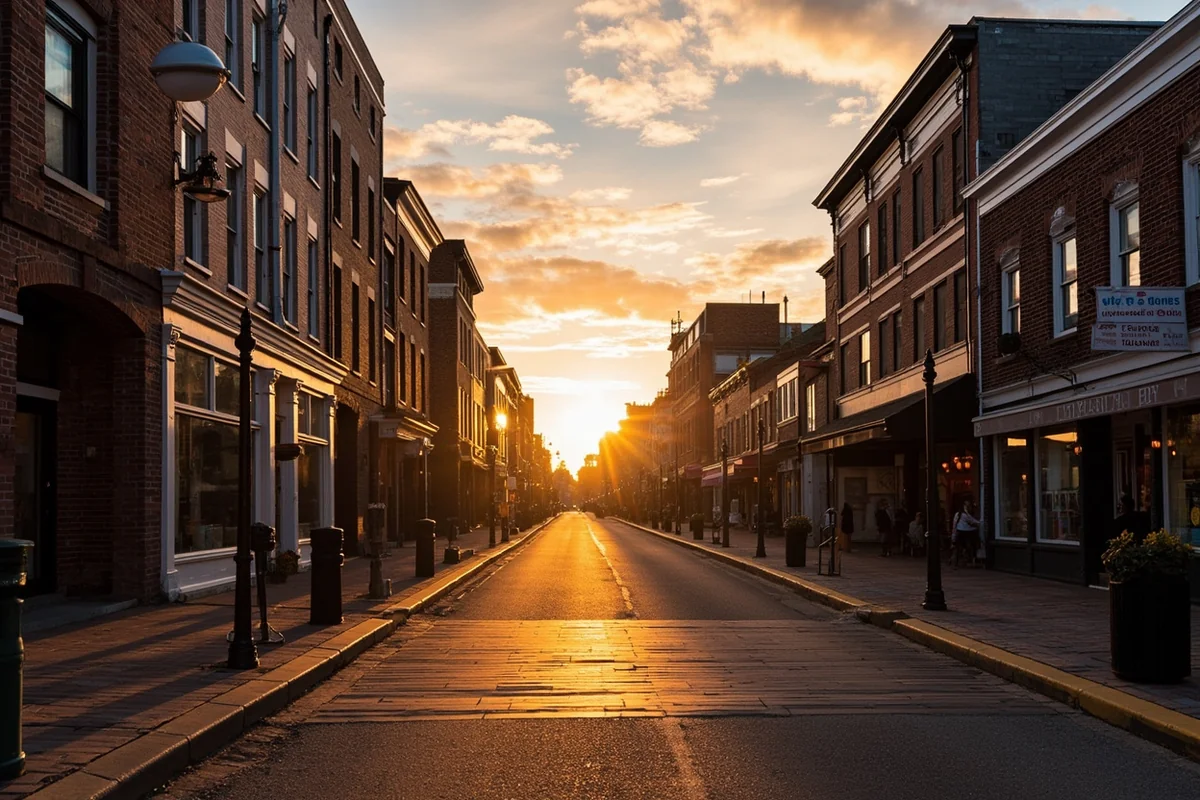
Standing on the wooden boardwalk in Virginia City last September, I watched the morning sun cast long shadows across buildings that haven’t changed much since the 1860s.
The creaking boards beneath my feet were the same ones that gold miners, outlaws, and hopeful pioneers walked across more than 150 years ago.
There’s something deeply moving about exploring Montana history through its oldest towns—places where the Wild West isn’t a theme park attraction but an authentic, preserved reality.
- Fort Benton (1846) claims the title of Montana’s oldest continuously inhabited town, originally a fur trading post
- Virginia City and Nevada City preserve the 1860s gold rush era better than almost anywhere in America
- Bannack, Montana’s first territorial capital, is now an authentic ghost town you can explore
- Best time to visit: June-September for full access to historic sites and walking tours
- Budget 4-7 days to properly experience Montana’s oldest settlements along a historic road trip route
- Many sites are free or under $10 admission—exceptional value for history lovers
Liked this article?
Add Roaming Montana as a preferred source so you see more of our articles and guides on Google.
Why Montana’s Oldest Towns Matter to Modern Travelers
Most people come to Montana for Glacier National Park or Yellowstone, and I get it—those places are spectacular. But during my travels across Big Sky Country, I’ve discovered that the state’s historic towns offer something those natural wonders simply can’t: a tangible connection to the people who shaped the American West.
These aren’t reconstructed tourist villages. They’re real places where real history happened, often preserved through benign neglect rather than Disney-style development.
When you understand how Montana got its name and why settlers risked everything to come here, walking through these old towns becomes a profoundly different experience.
Fort Benton: Montana’s True Oldest Town (Founded 1846)
I’ll admit I underestimated Fort Benton before my visit. A small town of about 1,400 people along the Missouri River? How much could there really be to see?
Turns out, quite a lot.
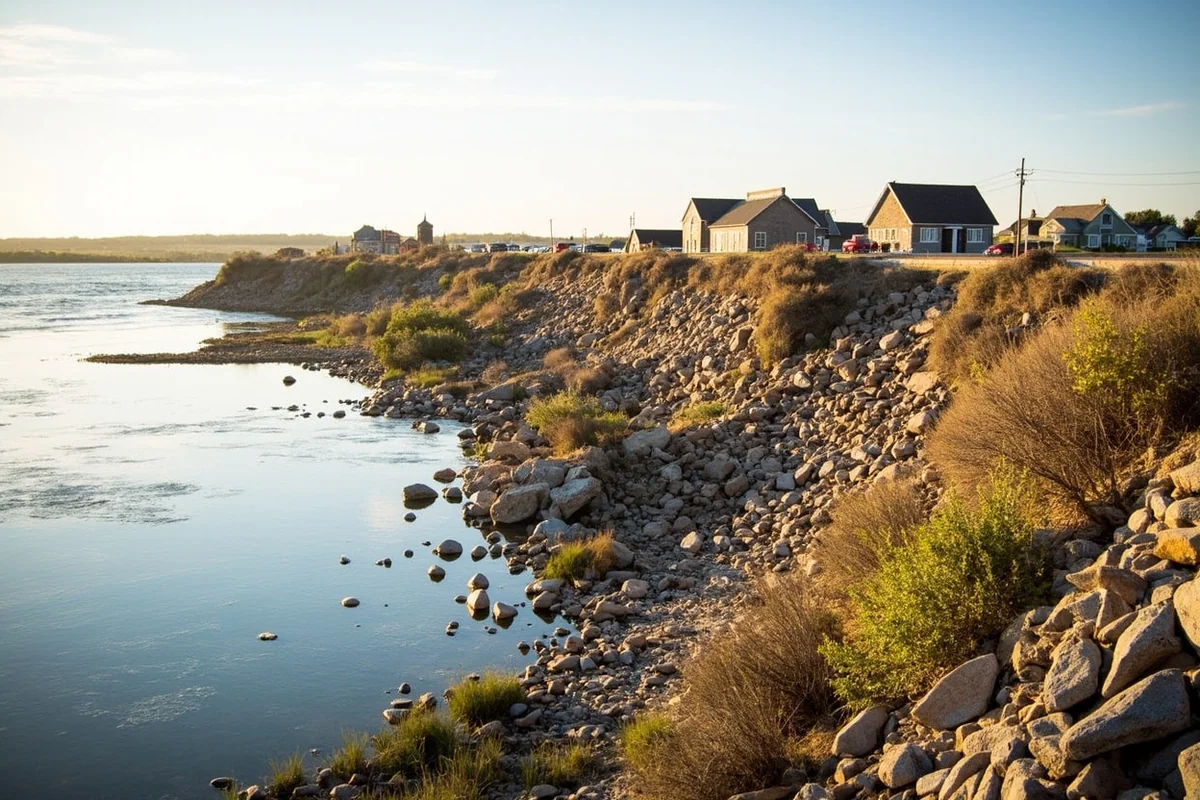
Fort Benton holds the distinction of being Montana’s oldest continuously inhabited settlement, established as a fur trading post by the American Fur Company in 1846—nearly two decades before Montana became a territory.
What Makes Fort Benton Special
Walking along the levee during my visit in early June, I was struck by how the Missouri River still dominates the town’s identity. The same waterway that brought steamboats loaded with supplies and hopeful travelers still flows past those original stone trading post ruins.
The Museum of the Northern Great Plains surprised me with its depth. I spent three hours there when I’d budgeted one. The agriculture exhibits connect directly to Montana’s pioneer legacy, showing how the fur trade gave way to cattle ranching and wheat farming.
Don’t miss the Old Fort Benton itself—the original adobe and stone structures have been partially reconstructed, and standing inside the old trading room, I could almost hear the negotiations between trappers and Native Americans that shaped the region’s economy.
Practical Tips for Visiting Fort Benton
| Detail | Information |
|---|---|
| Best Time to Visit | Late May through September |
| Time Needed | Half day minimum, full day recommended |
| Museum Admission | $5 adults, free for kids under 6 |
| Where to Stay | Grand Union Hotel (historic, on the levee) |
| Nearby Attractions | Missouri River breaks, Decision Point |
The Grand Union Hotel deserves special mention. Built in 1882, it’s been beautifully restored and sleeping there genuinely feels like stepping back in time—though thankfully with modern plumbing.
Virginia City and Nevada City: Frozen in the 1860s Gold Rush
No discussion of Montana’s oldest towns would be complete without Virginia City and Nevada City, twin settlements that represent the Montana gold rush better than anywhere else I’ve experienced.
When gold was discovered at Alder Gulch in 1863, these two towns exploded almost overnight. At its peak, Virginia City had around 10,000 residents and served as Montana’s territorial capital from 1865 to 1875.
Virginia City: The Living Ghost Town
I call Virginia City a “living ghost town” because unlike Bannack (more on that later), people still live and work here. The population hovers around 200 year-round, but the town maintains over 100 original structures from the 1860s.
During my last visit in August, I spent two full days exploring and still felt like I barely scratched the surface.
The boardwalks are original in many places—you can feel the unevenness of boards worn by thousands of boots over 160 years. I made the mistake of wearing flip-flops my first day and nearly twisted an ankle. Wear sturdy shoes.
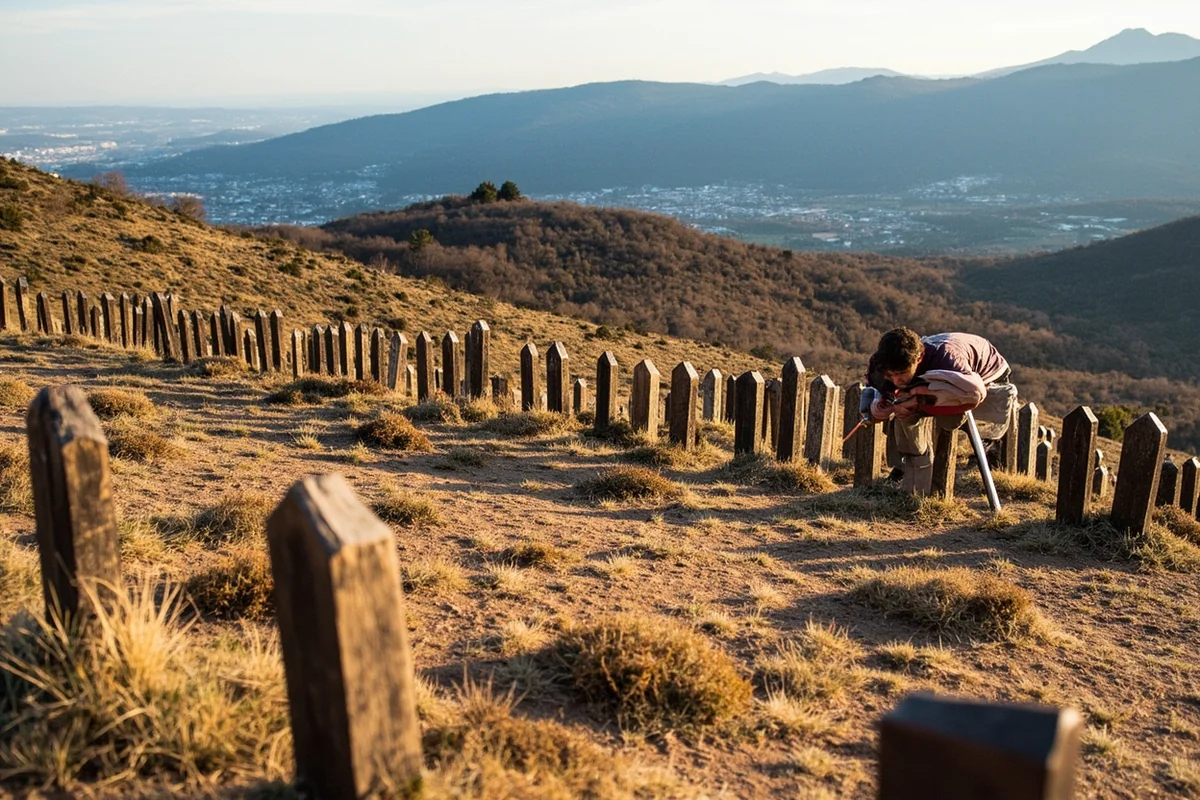
Boot Hill Cemetery hit me harder than expected. Reading the headstones of road agents hanged by vigilantes in 1864, the violent reality of frontier justice becomes uncomfortably real. These weren’t movie villains—they were actual people, some barely out of their teens.
The Fairweather Inn, where I stayed both nights, was built in 1863 and claims to be haunted. I didn’t see any ghosts, but the creaking floors at 3 AM definitely made me wonder.
Nevada City: The More Authentic Sister
Just a mile and a half west of Virginia City, Nevada City feels even more like stepping through a time portal. The Montana Heritage Commission has assembled one of the most impressive collections of historic buildings in the American West here.
What I love about Nevada City is that many structures were relocated from abandoned mining towns across Montana. It’s like a greatest hits album of frontier architecture.
The music hall offers summer performances that I highly recommend. Watching a melodrama in a 150-year-old theater, complete with audience participation (cheer the hero, boo the villain), was genuinely delightful.
The Alder Gulch Short Line Railroad
The narrow-gauge train connecting Virginia City to Nevada City runs seasonally, and I think it’s worth the $10 fare. The 20-minute ride follows the original route through Alder Gulch, passing abandoned mine tailings that still litter the landscape.
The conductor on my trip shared stories about the gulch’s history that weren’t in any guidebook. Ask questions—locals here love sharing their knowledge.
Bannack: Montana’s First Territorial Capital
Bannack holds a special place in my heart because it’s where I first truly understood what a ghost town could be. Unlike tourist-oriented ghost towns in other states, Bannack State Park maintains the site in a state of “arrested decay”—original buildings are preserved but not over-restored.
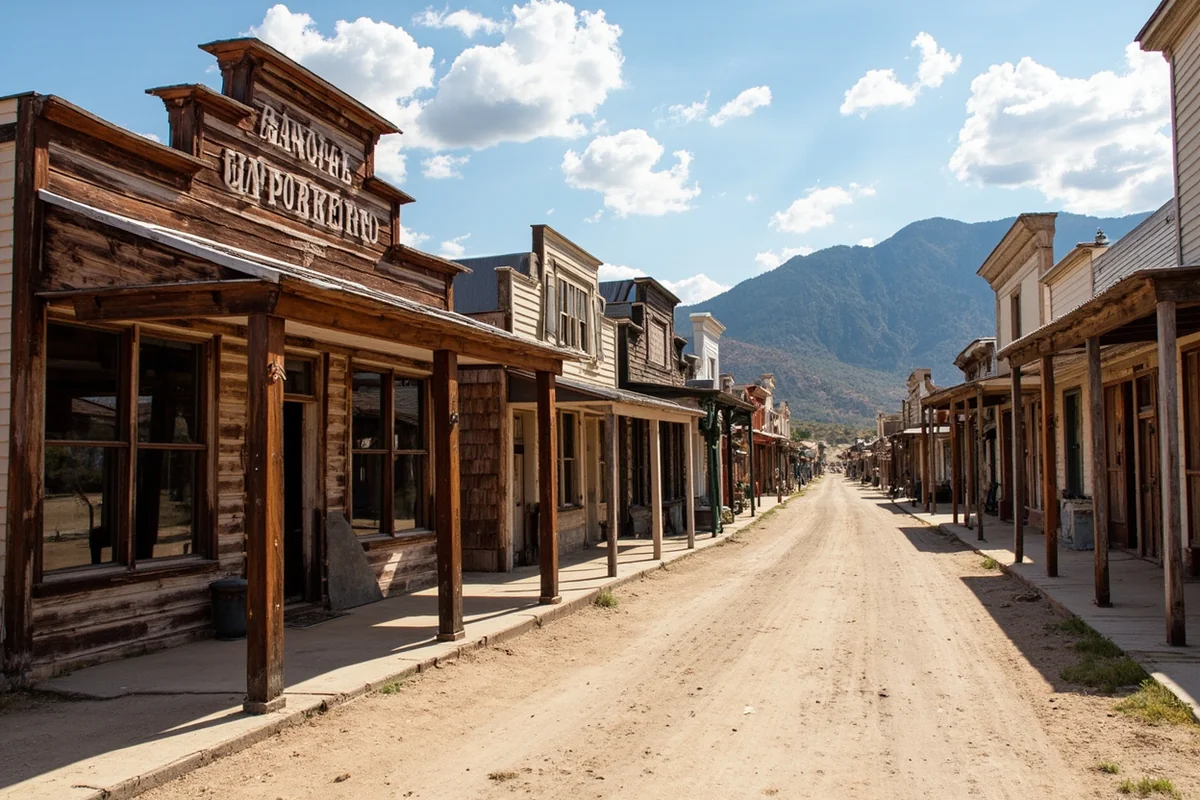
Gold was discovered at Grasshopper Creek in 1862, and Bannack quickly grew to become the first capital of Montana Territory in 1864. By the 1870s, the gold was largely played out, and the town’s decline was swift and permanent.
Walking Through History at Bannack
When I visited Bannack on a quiet Tuesday morning in September, I had the entire town nearly to myself. The silence was profound—just wind through the empty buildings and the occasional call of a meadowlark.
You can enter most of the 60+ surviving structures. I spent considerable time in the old hotel, imagining the miners and travelers who once passed through. The Meade Hotel’s second floor still has wallpaper peeling from the walls, a poignant reminder of the families who once called this place home.
The jail is appropriately small and claustrophobic. Standing inside, I thought about the notorious sheriff Henry Plummer, who was hanged here in 1864 by vigilantes who accused him of leading a gang of road agents. Whether he was guilty remains debated by historians.
Bannack Days Festival
If you can time your visit for the third weekend of July, Bannack Days brings the town back to life with reenactors, blacksmithing demonstrations, and period activities. I attended two years ago and found it educational without being cheesy.
The breakfast offered by local volunteers—cooked over open fires using period recipes—was surprisingly delicious. Expect biscuits, gravy, and coffee strong enough to strip paint.
Helena: From Last Chance Gulch to State Capital
Helena’s origin story is quintessentially Montana. In 1864, four discouraged prospectors decided to try one last spot before giving up their search for gold. They called it “Last Chance Gulch,” and their persistence paid off spectacularly.
Today, Helena serves as Montana’s state capital, and while it’s a modern city, traces of its 1860s origins remain visible throughout the downtown core.
Historic Helena Walking Tour
I recommend starting at Reeder’s Alley, a collection of small brick buildings constructed in the 1870s that now house restaurants and shops. The narrow passages between buildings give you a sense of how densely packed early Helena was.
The Original Governor’s Mansion offers guided tours that I found fascinating. Built in 1888, it housed Montana’s governors until 1959 and showcases the wealth that mining brought to the territory.
Last Chance Gulch itself is now a pedestrian mall, but historical plaques along the route help you imagine when this same ground yielded over $3.6 billion in gold (adjusted for inflation).
The Cathedral of St. Helena
Even if you’re not religious, the Cathedral of St. Helena is worth visiting. Modeled after the Cologne Cathedral in Germany and completed in 1924, it features stunning stained glass windows imported from Bavaria.
I spent a quiet hour inside during my last visit, appreciating both the architecture and the ambition it took to build something so magnificent in what was still a relatively small frontier city.
Butte: The Richest Hill on Earth
Butte’s history is written in the landscape itself. The Berkeley Pit—a massive open-pit copper mine filled with toxic water—dominates the town’s eastern edge, a stark reminder of the industrial forces that shaped this place.
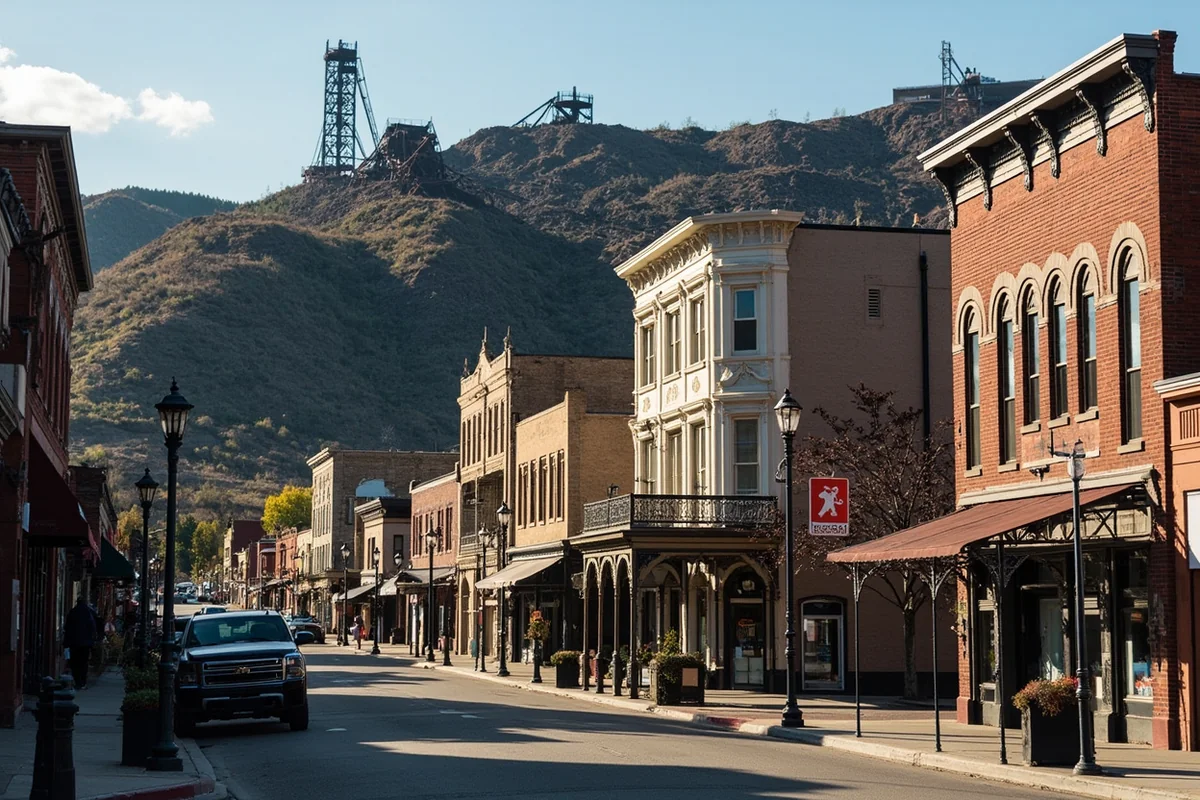
While technically founded in 1864 as a gold camp, Butte’s real boom came with copper mining in the 1880s. At its peak in 1920, Butte was the largest city between Chicago and San Francisco, with over 100,000 residents.
Uptown Butte Historic District
Walking through Uptown Butte, I was struck by the sheer ambition of the architecture. These weren’t frontier shacks—they were grand Victorian buildings, opera houses, and hotels that rivaled anything in Eastern cities.
The World Museum of Mining sits on an actual former mine site and includes a reconstructed mining town called Hell Roarin’ Gulch. The underground mine tour gave me a visceral understanding of what key historical events in Montana meant for the workers who lived through them.
Mai Wah Museum in Chinatown tells the often-overlooked story of Asian immigrants who came to Montana’s mining towns. The exhibits are small but powerful, and the guides shared stories that complicated my understanding of frontier life.
Butte’s Food Scene
Butte’s mining heritage created a surprisingly diverse food culture. Cornish pasties, brought by immigrant miners from Cornwall, remain a local specialty. I tried several during my visit, and Gamer’s Café makes my favorite—beef and potato filling with a perfectly crimped crust.
The Montana culinary heritage comes alive in Butte’s historic restaurants and bars, many of which have been serving miners (and now tourists) for over a century.
Missoula: Where Five Valleys Meet
Missoula’s founding in 1860 as a trading post called Hellgate Village makes it one of Montana’s oldest settlements, though the modern city feels decidedly younger than places like Virginia City.
The town’s name comes from a Salish word meaning “by the cold, chilling waters,” referring to the Clark Fork River that runs through town.
Historic Missoula Highlights
The Missoula area has deep connections to Montana’s fire history, including the devastating 1910 Big Blowup that killed 85 people and burned three million acres across Montana and Idaho. The smokejumper center offers tours that connect this history to modern firefighting.
Fort Missoula, established in 1877, now houses several museums. I found the Historical Museum at Fort Missoula particularly worthwhile, with exhibits covering everything from early timber industry to the internment of Italian and Japanese Americans during World War II.
The Carousel for Missoula downtown is a modern creation, but it was built entirely by volunteers using traditional hand-carving techniques. It’s a lovely example of how communities can honor historical craftsmanship.
Deer Lodge: Frontier Justice and Prison History
Deer Lodge claims to be Montana’s oldest incorporated town (1862), though several others dispute this title. What’s undisputable is the town’s fascinating collection of historic sites.
The Old Montana Prison, operational from 1871 to 1979, offers tours that I found both fascinating and disturbing. Walking through the cell blocks where prisoners spent decades, I couldn’t help thinking about the harsh realities of Montana state prison history.
The Grant-Kohrs Ranch National Historic Site preserves one of the largest and best-preserved 19th-century cattle ranches in the country. Rangers lead tours through the main house and outbuildings, sharing stories about the harsh winter of 1886 that devastated Montana’s open-range cattle industry.
I recommend combining Deer Lodge with a visit to Georgetown Lake or Philipsburg for a full day trip from Butte.
Stevensville: The Oldest Town in Montana?
Here’s where historic claims get complicated. Stevensville stakes its claim as Montana’s oldest town based on St. Mary’s Mission, established by Jesuit priests in 1841—five years before Fort Benton.
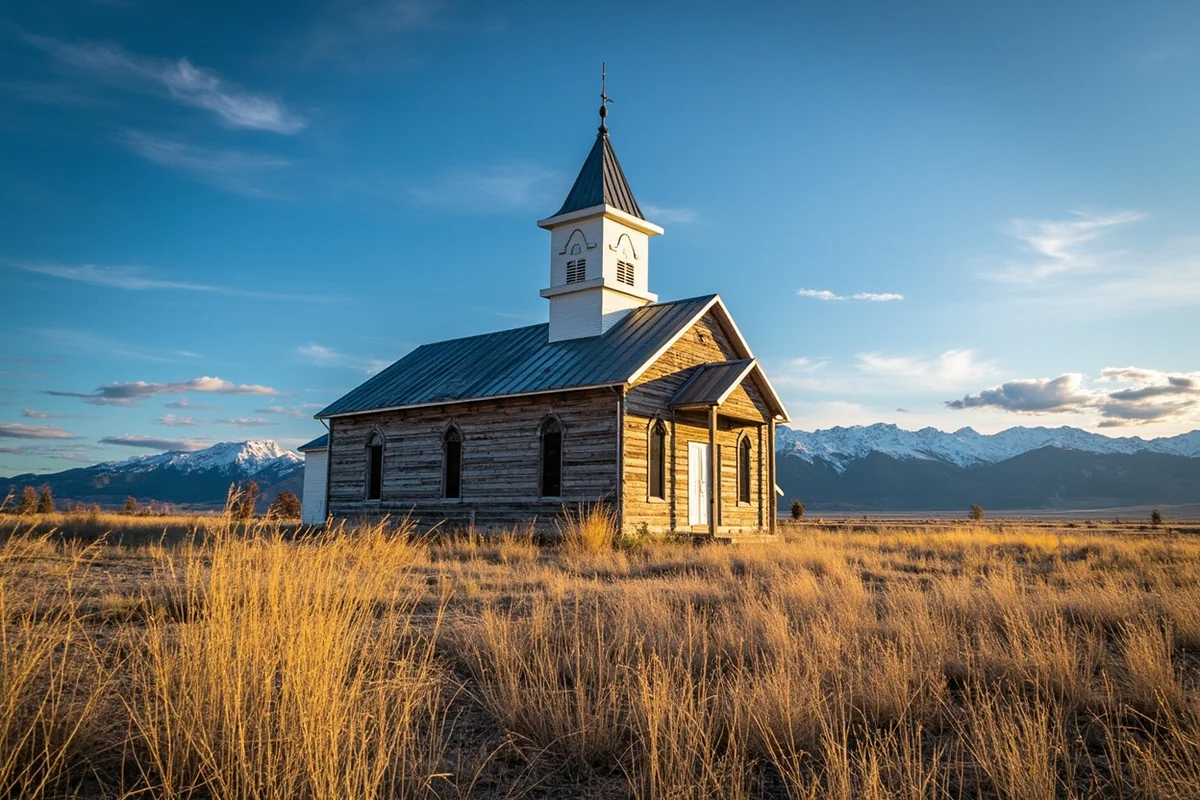
Whether you consider a mission the same as a “town” is up for debate, but the historical significance is undeniable. Father Pierre-Jean De Smet’s mission represented the first permanent Euro-American settlement in what would become Montana.
Visiting St. Mary’s Mission
The mission complex includes the original chapel, Father Ravalli’s cabin, and a small museum. During my visit, the volunteer guide shared stories about the complex relationship between the missionaries and the Salish people that went far beyond the simplified narratives I’d learned elsewhere.
Chief Victor’s cabin, relocated to the mission grounds, offers a Native American perspective on these early contacts. The interpretive signs do a decent job of presenting multiple viewpoints, though I wish they went deeper.
Stevensville itself is a charming small town with several good restaurants and antique shops. I had an excellent lunch at Mission Bistro before continuing south to the Bitterroot Valley.
Planning Your Historic Montana Road Trip
After multiple trips focused on Montana’s oldest towns, I’ve developed what I consider an optimal route for history-focused travelers.
Suggested 7-Day Itinerary
Day 1-2: Missoula and the Bitterroot Valley
Start in Missoula, explore Fort Missoula and downtown, then drive south to Stevensville and St. Mary’s Mission. Overnight in Hamilton or return to Missoula.
Day 3: Deer Lodge
Visit Old Montana Prison, Grant-Kohrs Ranch, and the town’s other museums. This is a full day easily. Continue to Butte for overnight.
Day 4-5: Butte and Anaconda
Explore Uptown Butte, Berkeley Pit, and the mining museums. Day trip to Anaconda if time permits. The smelter stack there—visible for miles—stands as an enormous monument to the copper industry.
Day 6: Virginia City and Nevada City
Drive south through the Big Hole Valley to Virginia City. Spend the afternoon and evening exploring both towns. Stay at the Fairweather Inn or similar historic lodging.
Day 7: Bannack and Beyond
Morning at Bannack State Park (about 45 minutes from Virginia City), then continue to your next destination—perhaps Bozeman or back toward Missoula.
Adding Fort Benton
Fort Benton sits several hours north of this route, so including it requires either a separate trip or an extended itinerary. From Great Falls, it’s about 45 minutes—an easy day trip if you’re visiting Glacier National Park.
Best Times to Visit Montana’s Historic Towns
I’ve visited these places in every season, and each has advantages.
Summer (June-August): All sites fully open, longest hours, best weather. Also the most crowded, though “crowded” in Montana terms means sharing a boardwalk with maybe 20 other people.
Fall (September-October): My personal favorite. Fewer visitors, beautiful colors, most sites still open. September temperatures in southwest Montana hover around 60-70°F—perfect walking weather.
Winter (November-March): Many historic sites close or operate limited hours. However, Virginia City decorated for Christmas is magical if you can handle cold temperatures. The worst Montana winters can make travel challenging, so plan accordingly.
Spring (April-May): Shoulder season with unpredictable weather. Many sites reopen in May. Mud can be an issue on unpaved roads.
Unexpected Discoveries in Montana’s Old Towns
Some of my best experiences in Montana’s historic towns came from things I didn’t plan.
In Virginia City, I stumbled into a conversation with a retired miner at the Bale of Hay Saloon who had worked the underground mines in Butte during the 1970s. His stories about working conditions and union politics were more vivid than any museum exhibit.
At Bannack, a park ranger showed me a recently discovered inscription carved into a building that researchers were still trying to interpret. Being present for that kind of ongoing historical investigation made the past feel genuinely alive.
The connections between Montana’s history and broader American narratives constantly surprise me. Learning about Montana missile silos alongside gold rush towns reminded me how this state has continuously played outsized roles in national history.
What These Towns Teach Us
After years of visiting Montana’s oldest towns, I’ve come to see them as more than tourist attractions. They’re laboratories for understanding how communities form, flourish, and sometimes fail.
Virginia City’s survival as a near-ghost-town for decades before preservation efforts began shows how historical value isn’t always immediately recognized. Butte’s ongoing struggle with environmental contamination from mining demonstrates that the costs of resource extraction outlast the profits.
The diverse people who built these towns—Chinese immigrants, Cornish miners, Salish and other Native peoples, fortune seekers from across the globe—remind us that the American West was never as homogeneous as popular culture suggests.
Standing in any of these places, I’m struck by the audacity of the people who came here. They traveled thousands of miles to an unknown land, endured brutal winters, and built communities from scratch.
Whatever drew them—gold, land, opportunity, escape—their legacy remains visible in these remarkable old towns. And spending time in these places, I think, helps us understand not just where Montana came from, but something essential about the American experience itself.
Whether you’re a serious history buff or simply curious about the past, Montana’s oldest towns offer experiences you simply can’t find anywhere else. The boardwalks may creak, the buildings may lean, but the stories they hold are worth every mile of the journey to find them.
If you’re interested in understanding more about the region’s deeper past, including Montana’s major earthquakes that have shaped the landscape these towns sit upon, or curious about why Montana’s 406 area code became a point of state pride, the history here extends far beyond the visible remnants of frontier life.
Frequently Asked Questions
What is the oldest town in Montana and when was it established?
Bannack is Montana’s oldest town, established in 1862 following a major gold discovery at Grasshopper Creek. I’ve visited this remarkably preserved ghost town, and walking through its 60+ original structures feels like stepping directly into the 1860s gold rush era. It’s now a state park located about 25 miles southwest of Dillon.
What are the best historic towns to visit in Montana for Old West history?
Virginia City, Nevada City, and Bannack top my list for authentic Old West experiences in Montana. Virginia City was the territorial capital and still has boardwalks and preserved buildings from the 1860s, while Nevada City features an outdoor museum with over 100 historic structures. Fort Benton, established in 1846, is another must-see as the oldest continuously inhabited settlement in Montana.
What is the best time of year to visit Montana’s oldest towns and ghost towns?
Late May through September offers the best weather and ensures all historic sites are fully open with guided tours available. I recommend visiting in June or September to avoid peak summer crowds while still enjoying comfortable temperatures in the 70s. Keep in mind that Bannack State Park is open year-round, but many Virginia City attractions close from October through May.
How much does it cost to visit historic towns like Virginia City and Bannack Montana?
Bannack State Park charges $8 per vehicle for Montana residents and $10 for non-residents, making it an affordable day trip. Virginia City’s attractions vary, but expect to spend $20-40 per person for train rides, live shows, and museum entries. I budgeted around $100-150 per day including meals at historic saloons and lodging in period-style hotels.
Can you stay overnight in Montana’s historic mining towns?
Yes, Virginia City offers several overnight options including the historic Fairweather Inn and Victorian-era vacation rentals ranging from $90-200 per night. Bannack hosts popular ghost walks and overnight camping events during Bannack Days in July. For a unique experience, I recommend booking a cabin at Nevada City’s open-air museum where you can sleep surrounded by 1860s buildings.
What should I bring when exploring Montana’s oldest towns and ghost towns?
Pack comfortable walking shoes since most historic towns have uneven boardwalks and dirt streets, plus layers since Montana temperatures can swing 30 degrees in a single day. I always bring sunscreen, a refillable water bottle, and cash since some smaller historic sites don’t accept cards. A good camera is essential for capturing the authentic Old West architecture and stunning mountain backdrops.
How far apart are Montana’s historic towns and can I visit multiple in one day?
Virginia City and Nevada City are only 1.5 miles apart, so you can easily explore both in a single day. Bannack is about 65 miles west of Virginia City, roughly a 90-minute drive through scenic ranch country. I recommend planning a 3-4 day road trip to properly experience Fort Benton, the mining towns near Butte, and the Bannack-Virginia City corridor without feeling rushed.