

There’s a particular moment that hooks every Montana hot springs visitor: the first time you lower yourself into 102°F mineral water while snow is actively falling on your shoulders.
After years of soaking my way across this state — from the historic Chico pools in Paradise Valley to the primitive Jefferson River channels near Whitehall — I’ve come to believe Montana’s geothermal landscape is one of the most underrated travel resources in the American West.
This guide profiles 15 Montana hot springs worth knowing about, from full-service resorts to wilder primitive soaks. Each entry tells you what to expect, when to go, and how it compares to the others.
- Montana has 15+ accessible hot springs split between developed resorts (Chico, Fairmont, Quinn’s, Bozeman, Lolo, Yellowstone Hot Springs, Symes, Broadwater, Elkhorn, Norris), rustic cabin retreats (Wild Horse, Big Medicine, Potosi), and primitive natural soaks (Renova — with caveats, Nimrod — a warm spring, Gigantic Warm Springs).
- Boiling River in Yellowstone is permanently closed. The June 2022 flood altered the river channel and destroyed the soaking area; NPS has no reopening timeline. Yellowstone Hot Springs in Corwin Springs, six miles north of Gardiner, is now the closest legitimate soak experience to the park’s north entrance.
- Best overall introduction: Chico Hot Springs Resort for first-timers.
- Best for families with amenities: Fairmont Hot Springs Resort between Butte and Anaconda — Olympic-size pools and a 350-foot waterslide.
- Best for local atmosphere: Norris Hot Springs — single wooden-decked pool with live music weekends.
- Best primitive: Potosi Hot Springs cabin retreat near Pony.
Liked this article?
Add Roaming Montana as a preferred source so you see more of our articles and guides on Google.
A Quick Update for Returning Visitors: Boiling River Is Closed
If you’ve visited Montana’s hot springs scene in past years, you may remember Boiling River — the spot just inside Yellowstone’s north entrance where hot thermal water mixed with the cold Gardner River to create natural soaking pools.
Boiling River was permanently altered by the June 2022 Yellowstone flood. The river changed course, the soaking pools were destroyed, and the access path was washed out.
The National Park Service has stated swimming is no longer possible there, and there is no announced plan or timeline to reopen the soaking area. Pre-2022 articles still recommending Boiling River are out of date.
The legitimate replacement experience is Yellowstone Hot Springs at Corwin Springs, just six miles north of Gardiner along the Yellowstone River. Profile below.
How to Use This Guide
I’ve organized the 15 hot springs into four categories that match how visitors actually plan trips:
- Major developed resorts (full amenities, day-use available, often overnight lodging)
- Rustic resort and cabin retreats (smaller-scale, more atmospheric)
- Primitive natural soaks (free or low-fee, no facilities)
- Warm springs and adjacent water experiences
For each spring, I note location, water temperature, what you’ll find on arrival, and where it links to broader Montana road trips. For deeper detail on any single spring, the linked dedicated post has full directions, pricing, and travel logistics.
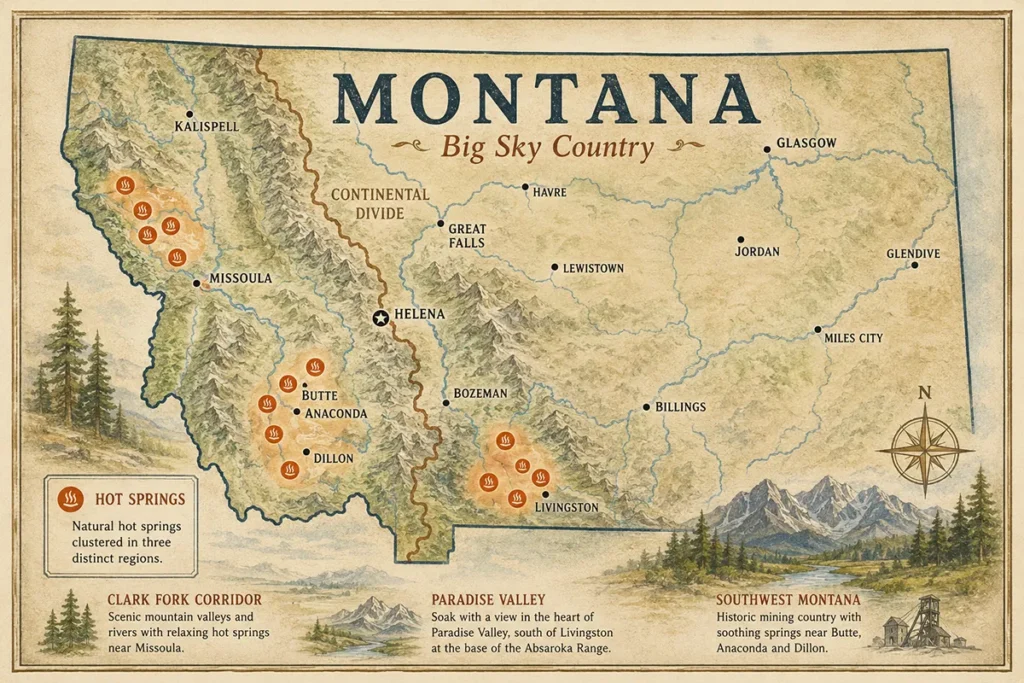
Category 1: Major Developed Hot Springs Resorts
1. Chico Hot Springs Resort — Paradise Valley
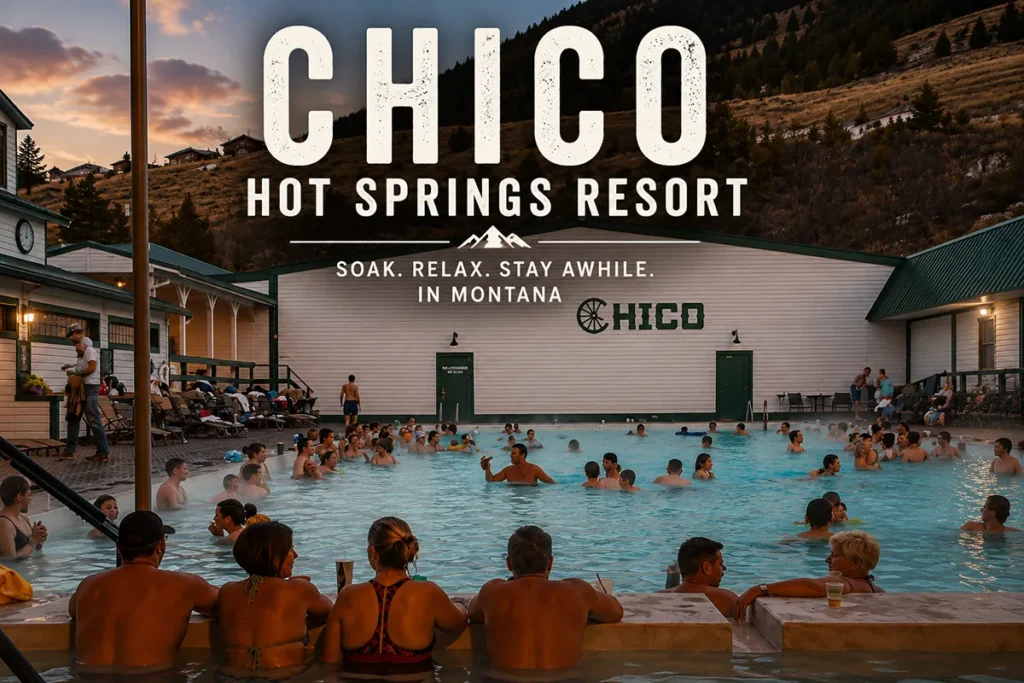
If you only visit one Montana hot springs resort, make it Chico. Located in Pray, about 30 miles south of Livingston, Chico Hot Springs Resort has operated since 1900 and remains the gold standard for the historic-Montana resort experience.
Two open-air mineral pools, an excellent restaurant (the prime rib is locally legendary), a saloon that becomes a regional gathering place on weekends, full lodging, and proximity to Yellowstone’s north entrance.
The pools maintain a comfortable 96°F main and a hotter ~103°F upper pool. Day-use access is reasonably priced and the pools open at dawn for early birds.
I recommend Chico for first-time Montana hot springs visitors and for anyone wanting the most “polished” version of the experience without losing the authentic Western feel. Booking overnight in summer requires planning months ahead.
2. Fairmont Hot Springs Resort — Between Butte and Anaconda
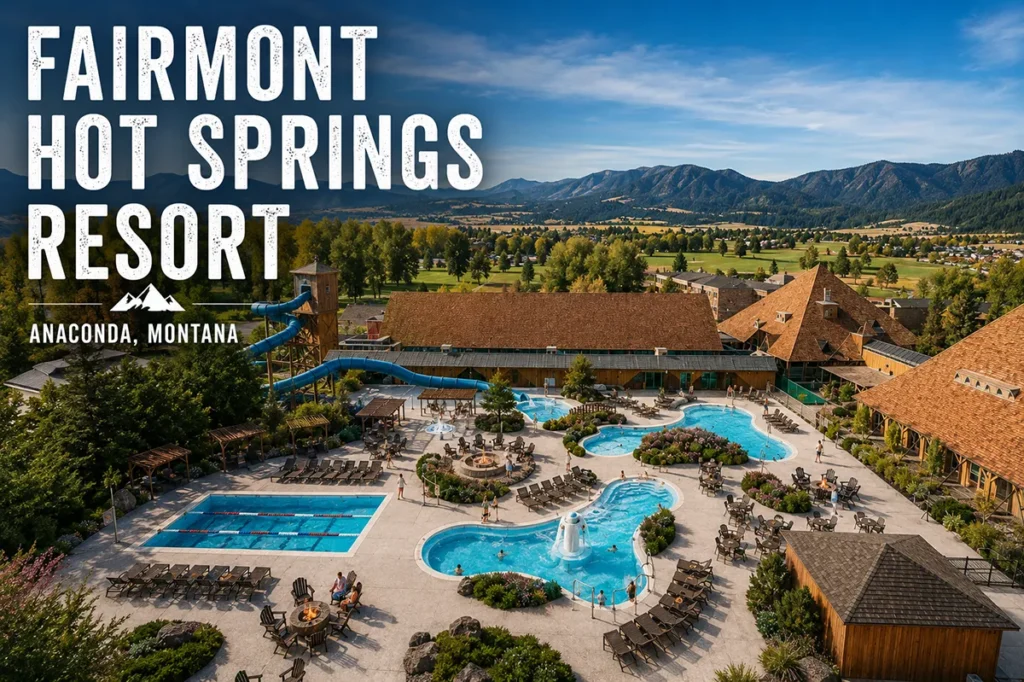
The single biggest omission from many Montana hot springs guides. Fairmont Hot Springs Resort, located between Butte and Anaconda, is one of Montana’s largest developed hot springs facilities — with two Olympic-size pools (one indoor, one outdoor) and an enclosed 350-foot, five-story waterslide that’s the centerpiece for family visits.
The source water emerges at about 160°F and is cooled to a range of 88–104°F depending on which pool you’re in. Full resort amenities include lodging, dining, a golf course, and an RV park.
Fairmont is the best Montana hot springs option for families with kids who want both soaking and active fun. It’s also a strong pick for visitors based in Butte or Bozeman who want a developed full-day experience.
3. Yellowstone Hot Springs — Corwin Springs (near Gardiner)
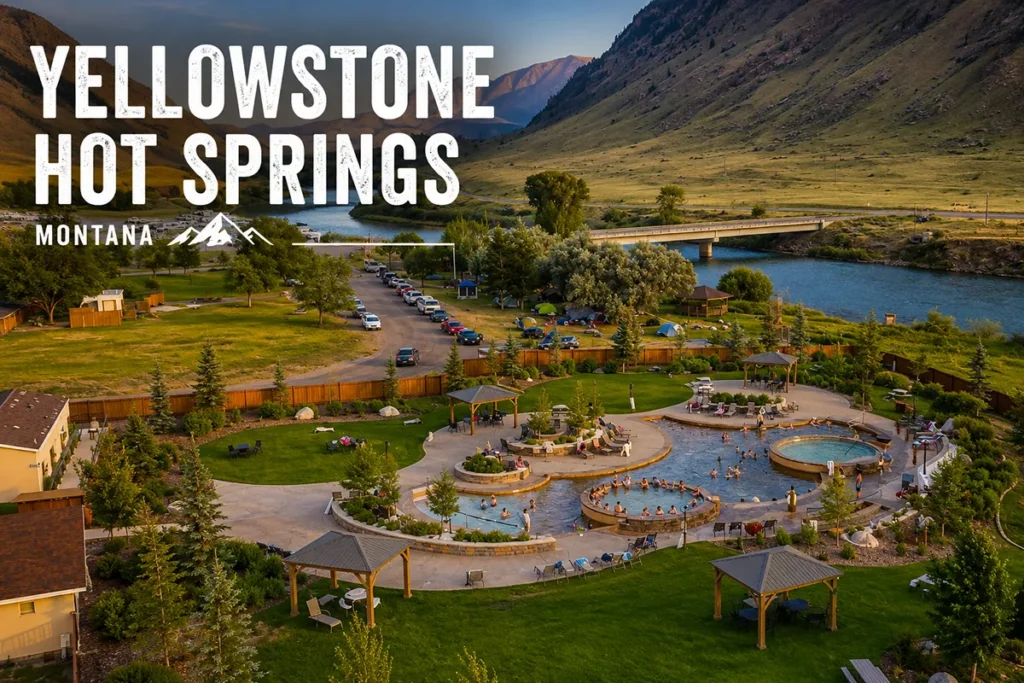
This is the legitimate post-Boiling-River alternative. Yellowstone Hot Springs sits about six to eight miles north of Gardiner at the southern end of Paradise Valley, on the bank of the Yellowstone River.
The current resort opened in 2018 as a major modernization of the historic Corwin Hot Springs site (the original Corwin Springs sanitarium dates to 1909).
Today’s facility includes three pools — a hot pool at 103–105°F, a main pool at 98–100°F, and a cold plunge at 60–65°F. The water flows through continuously rather than being chlorinated. Lodging includes suites, cabins, and an RV park.
The setting is genuinely beautiful — the Absaroka Range rises to the east, the Gallatin Range to the west, and the Yellowstone River runs alongside. For anyone planning a Yellowstone north-entrance trip, this is the answer to “where do we soak now that Boiling River is gone.”
4. Quinn’s Hot Springs Resort — Paradise, MT (Clark Fork Corridor)
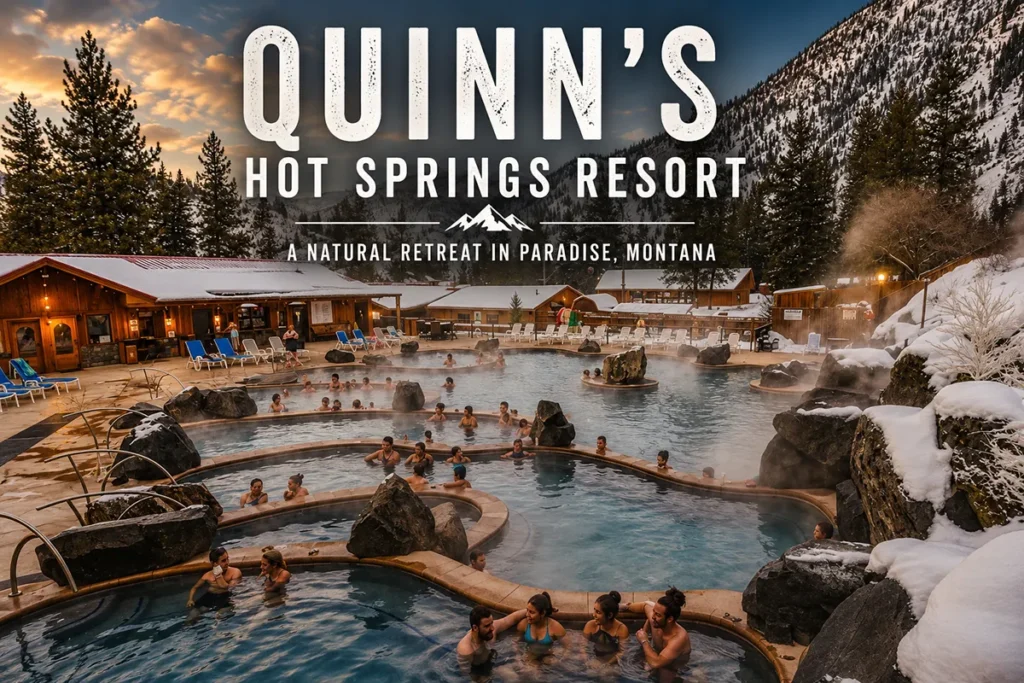
Located along the Clark Fork River about 70 miles northwest of Missoula, Quinn’s Hot Springs Resort features seven pools at varying temperatures (roughly 90–106°F), an on-site restaurant and lodge, and one of the most scenic resort settings in Montana.
The drive up Highway 200 along the Clark Fork is half the experience — particularly in fall when the cottonwoods turn gold.
Quinn’s is large enough to accommodate substantial crowds without feeling cramped, and the temperature variety across multiple pools means everyone in your group can find a comfortable soak.
5. Lolo Hot Springs — West of Missoula
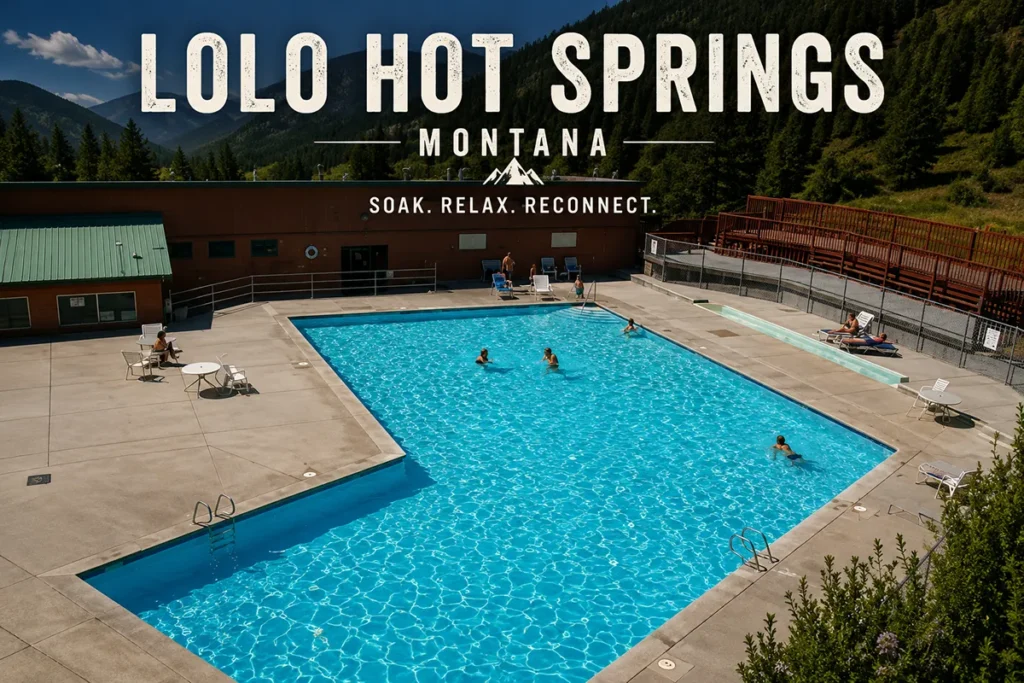
About 25 miles west of Missoula on Highway 12, Lolo Hot Springs carries genuine historical significance — Lewis and Clark documented these springs in their 1805 journals.
The modern facility includes both indoor and outdoor pools, an on-site restaurant and bar, and RV camping. The water has a distinctly sulfurous mineral character, more pronounced than at most other Montana springs. Lolo serves as an ideal base for exploring Lolo Pass and the Bitterroot Range.
6. Bozeman Hot Springs — Just Outside Bozeman
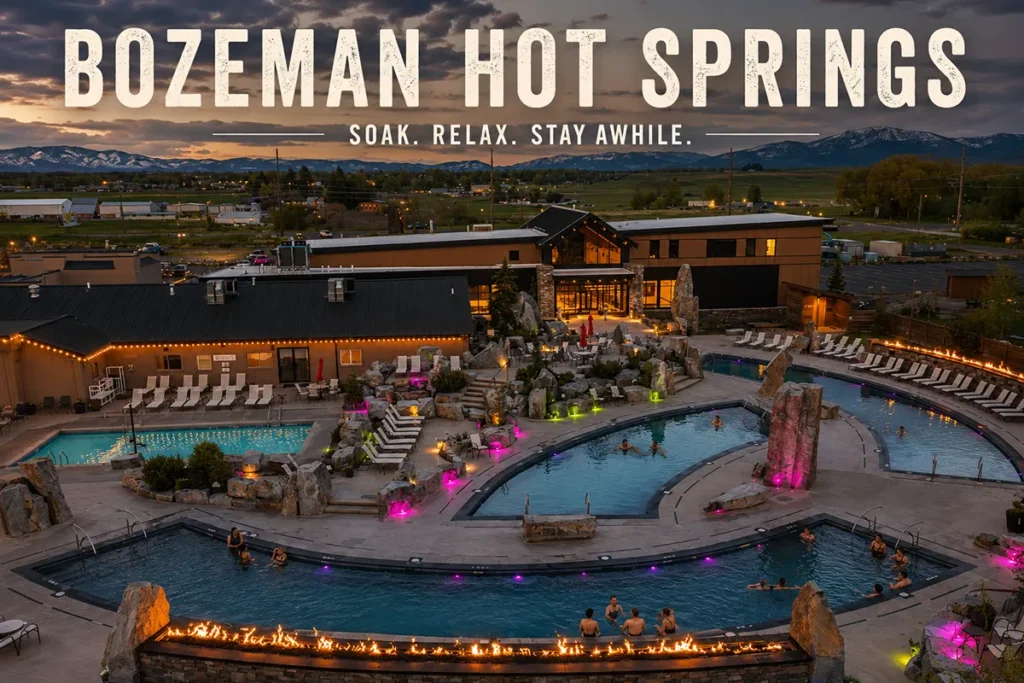
Located on Highway 191 just outside Bozeman, Bozeman Hot Springs is the most amenity-heavy hot springs facility in the state — twelve pools at varying temperatures (from a 59°F cold plunge to a 106°F hot pool), saunas, a fitness center, and private soaking rooms available for rental.
This isn’t the place to come for wilderness atmosphere, but it’s the most reliable option for groups with diverse temperature preferences and for athletes seeking contrast therapy. Open late into the evening, which matters when you’re arriving from a long day of hiking or skiing.
7. Elkhorn Hot Springs — Pioneer Mountains
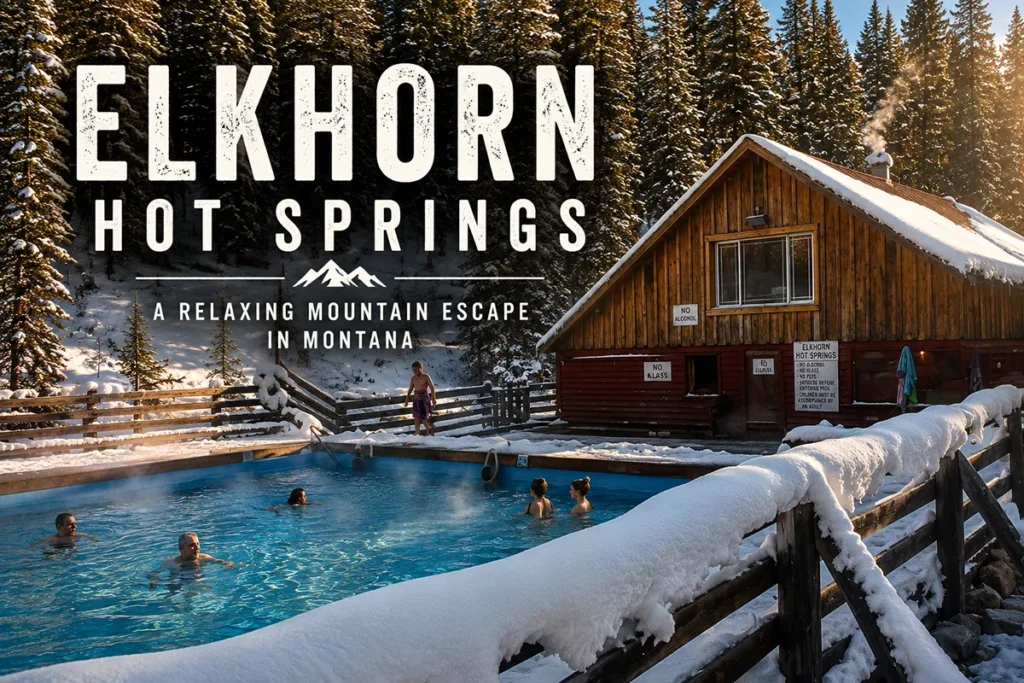
Tucked in the Pioneer Mountains southwest of Butte at about 7,400 feet elevation, Elkhorn Hot Springs is the high-elevation outlier of Montana’s developed hot springs. The drive up from Dillon is itself a spectacular alpine experience.
Elkhorn operates as a rustic lodge with basic cabins, indoor and outdoor pools, and the natural source emerging at 150°F+. The cooling process means different parts of the pools sit at different temperatures — you essentially shop for your ideal warmth by moving around.
The September visit when the larches turn gold across the Pioneer Mountains is one of Montana’s best hot springs experiences for anyone who can time it right.
8. Norris Hot Springs — Madison Valley
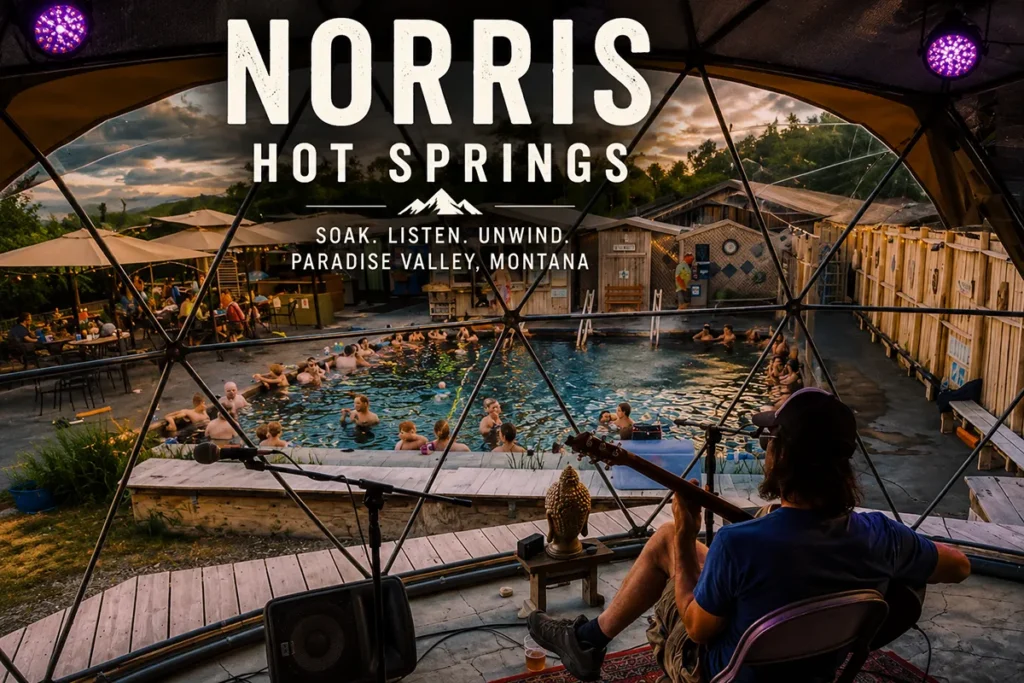
About 35 miles west of Bozeman near the tiny town of Norris (between Bozeman and Three Forks), Norris Hot Springs is the quintessential Montana community soak — a single wooden-decked pool fed by a 120°F source, cooled to a comfortable 106°F.
The weekend live music program is what makes Norris distinctive. Local and regional musicians play a small stage adjacent to the pool, drawing a mixed crowd of ranchers, artists, and visiting fly fishers.
The on-site wood-fired pizza is genuinely good. No alcohol in the pool itself; cell service is essentially nonexistent.
9. Broadwater Hot Springs — Helena
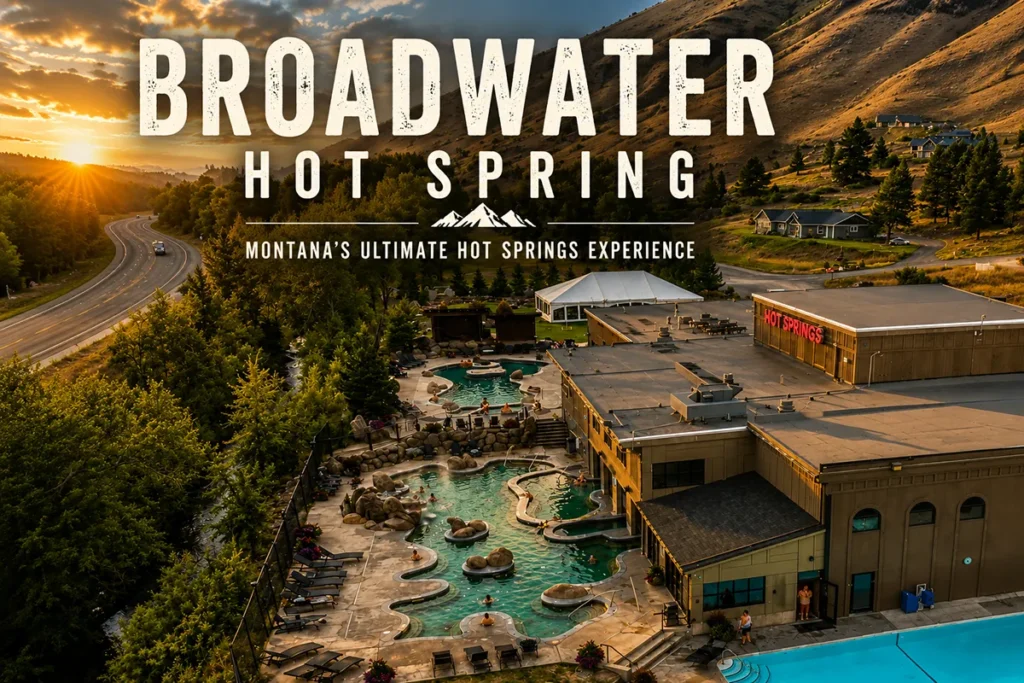
Broadwater Hot Springs, just west of downtown Helena, offers a developed hot springs experience year-round with multiple outdoor pools, a bar and grill, and easy city access.
It’s the natural choice for anyone basing in Helena or passing through on a Montana road trip — particularly in winter when you want a guaranteed warm soak without committing to a long drive.
10. Symes Hot Springs Hotel — Town of Hot Springs, MT
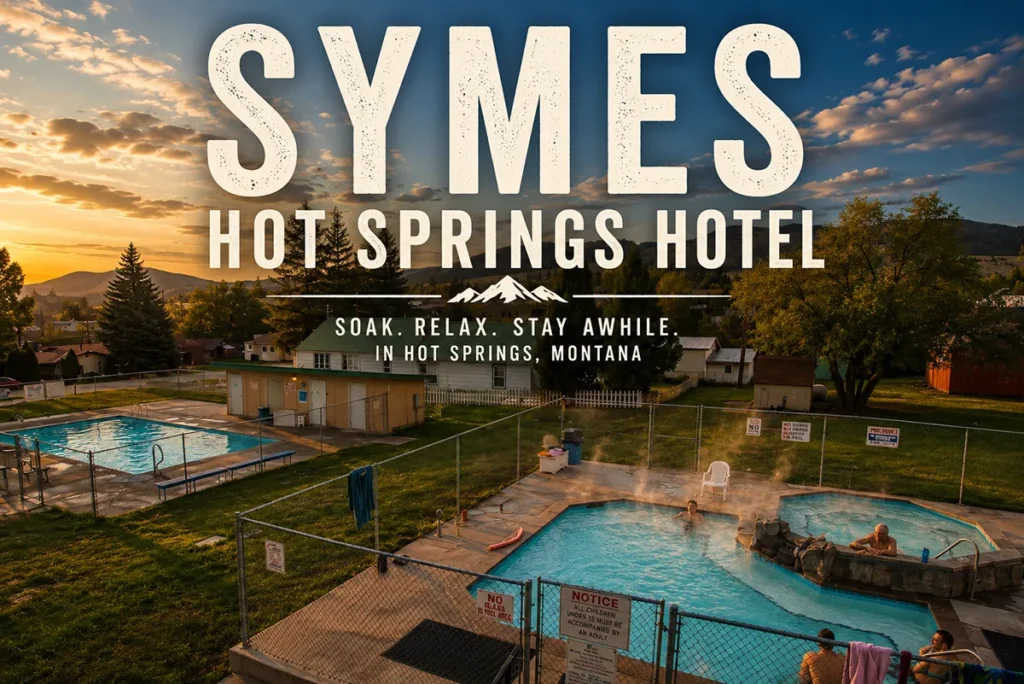
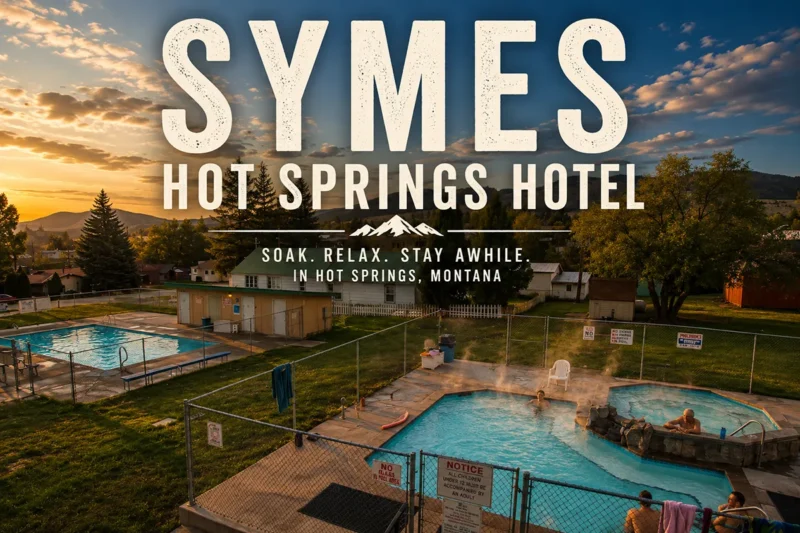
The historic Symes Hot Springs Hotel in the town of Hot Springs (yes, that’s the actual town name) on the Flathead Reservation has been welcoming guests since 1928.
Symes Hot Springs Hotel maintains that 1920s lodge atmosphere — the kind of place where the original architectural details feel like part of the soaking experience.
Multiple outdoor and indoor pools at varying temperatures, basic hotel rooms, on-site dining. Symes is the cornerstone of the Hot Springs, Montana hot springs cluster and one of the most underrated lodging-and-soaking experiences in the state.
Category 2: Rustic Resort and Cabin Retreats
11. Potosi Hot Springs — Pony (Tobacco Root Mountains)
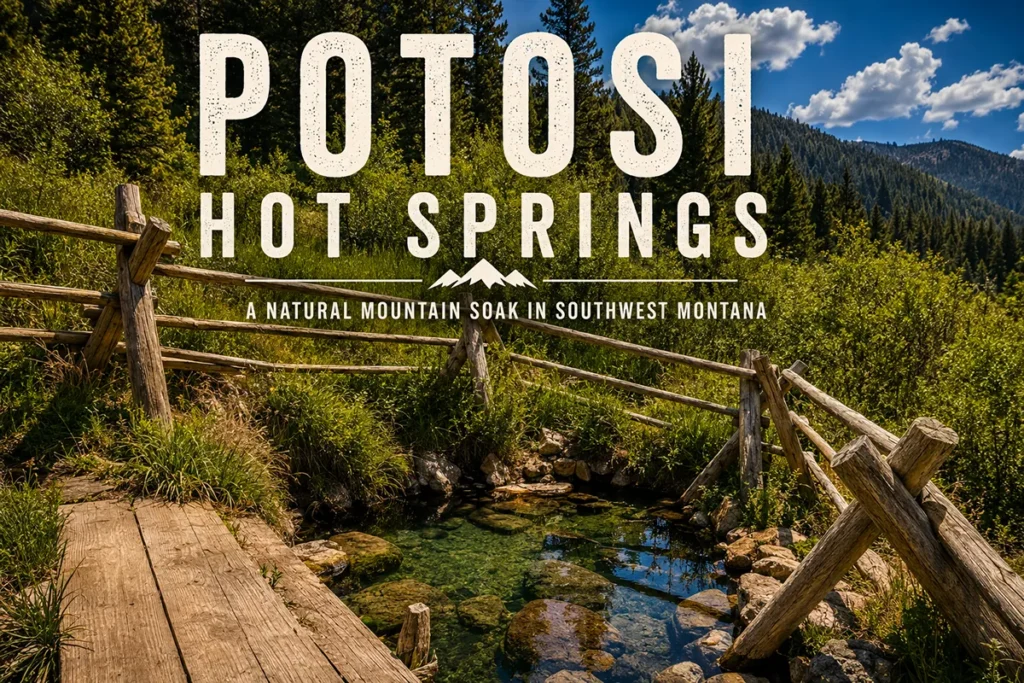
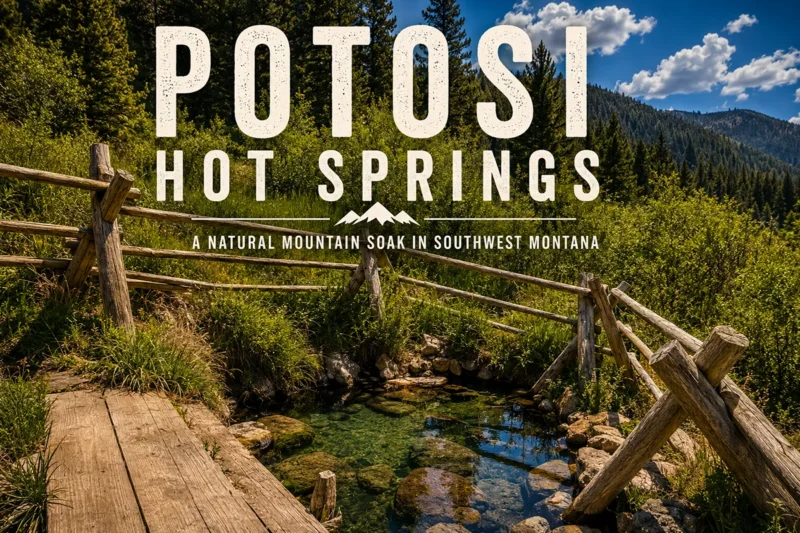
Potosi Hot Springs is a private cabin retreat near Pony, Montana, in the Tobacco Root Mountains. Unlike many primitive springs in the area, Potosi is fully developed — cabin guests have access to a mineral pool and outdoor space in a forested setting.
Worth knowing: Potosi typically operates as a guests-only resort, not a day-use facility. If you want the primitive-feeling experience without legal access uncertainty, booking a Potosi cabin is the safer alternative to the more contested nearby options (see Renova below).
12. Wild Horse Hot Springs — Town of Hot Springs
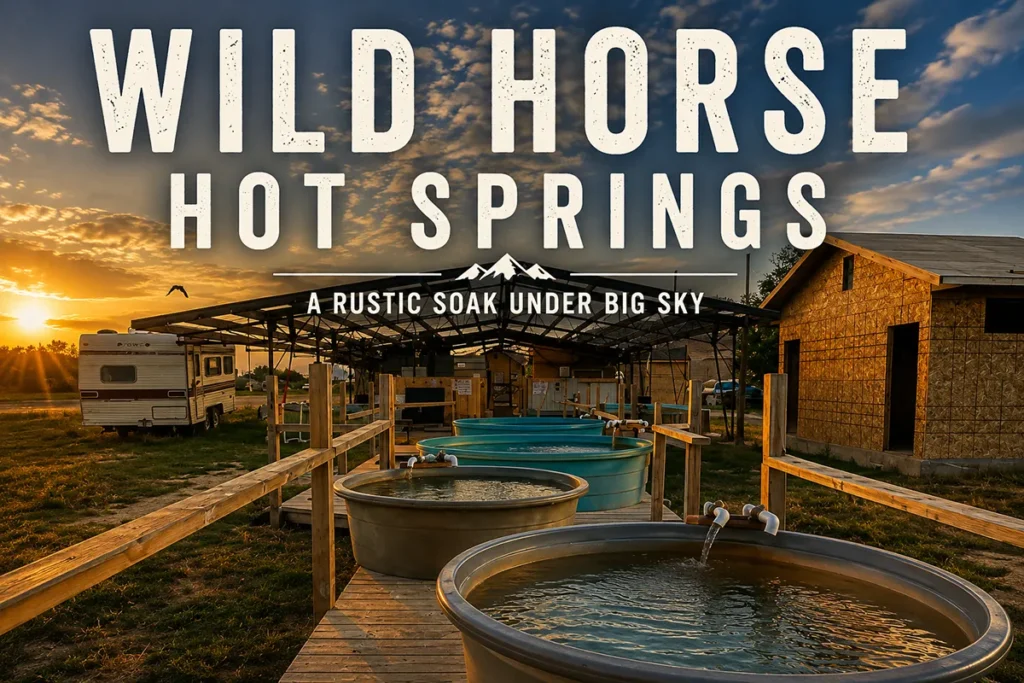
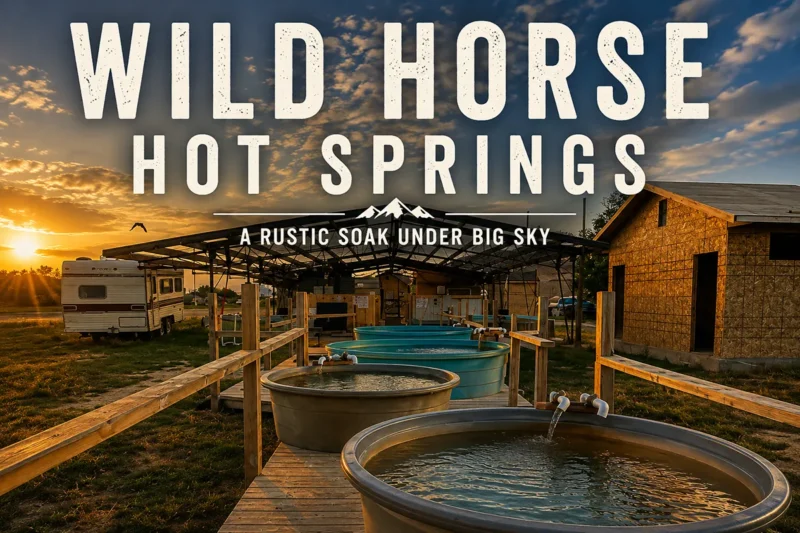
Wild Horse Hot Springs in the town of Hot Springs offers a different soaking model — small private soaking rooms with individual artesian plunge tubs. Guests rent a room and have it to themselves for the duration of their soak.
This format makes Wild Horse particularly good for couples, families, or anyone who prefers their soaking in private rather than communal. Day use and overnight options available.
13. Big Medicine Hot Springs — Camas (Flathead Reservation)
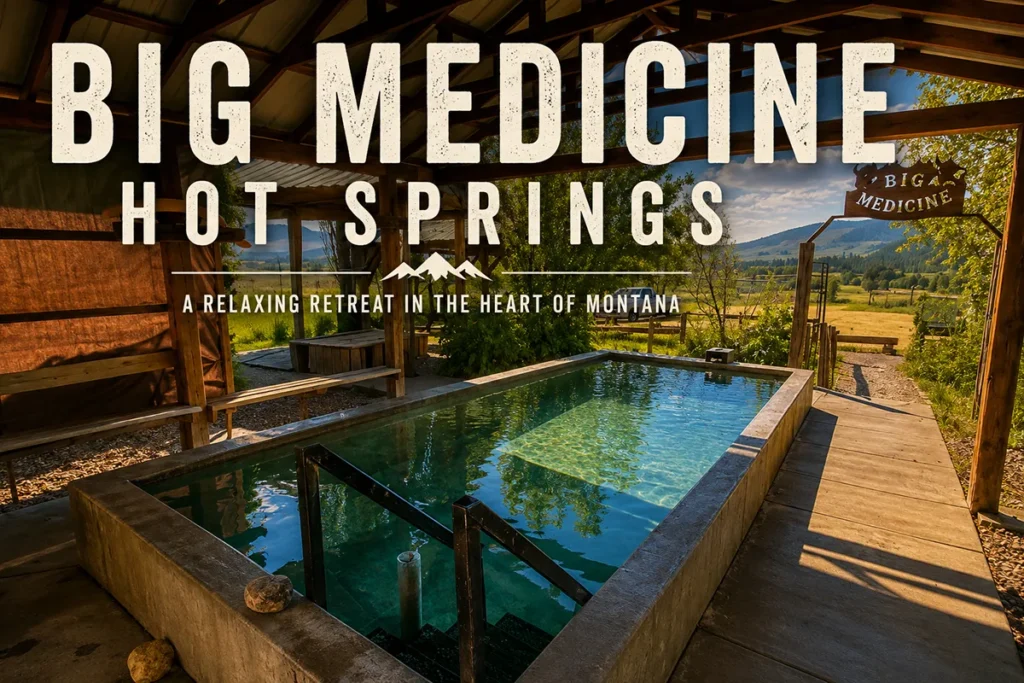
Big Medicine Hot Springs near Camas on the Flathead Reservation has historical significance as a sacred Native American site. The facility offers private soaking pools in a rustic setting, with access governed by reservation visitor policies. Visiting requires respect for the cultural significance of the location.
Category 3: Primitive Natural Soaks
14. Renova Hot Springs — Whitehall Area (Read Access Notes)
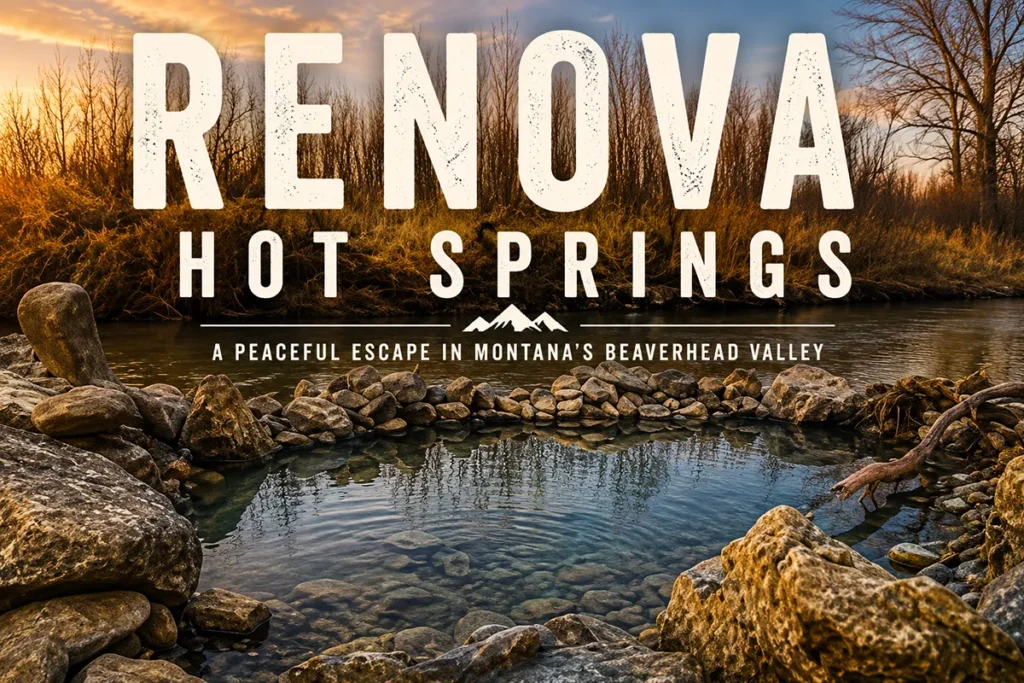
Renova Hot Springs, located on a side channel of the Jefferson River about 10–12 miles south of Whitehall at the foot of the Tobacco Root Mountains, is the most-discussed primitive hot springs in Montana — but with critical access caveats every visitor needs to understand.
The two rock-walled pools sit in the Jefferson tributary riverbed and offer source temperatures of 110–122°F. When river flows are right (typically late July through September at ~700 CFS), the pools become some of the best primitive soaks in the state.
Important: Madison County Sheriff’s Office has declared Renova “off-limits” to the public, and the access trail crosses private land owned by five separate owners. Visitors face potential trespassing risk depending on the route taken. Read the full Renova post for the detailed access reality before deciding to visit.
Nimrod Hot Springs — Off I-90 East of Missoula (Warm Spring, Not Hot)
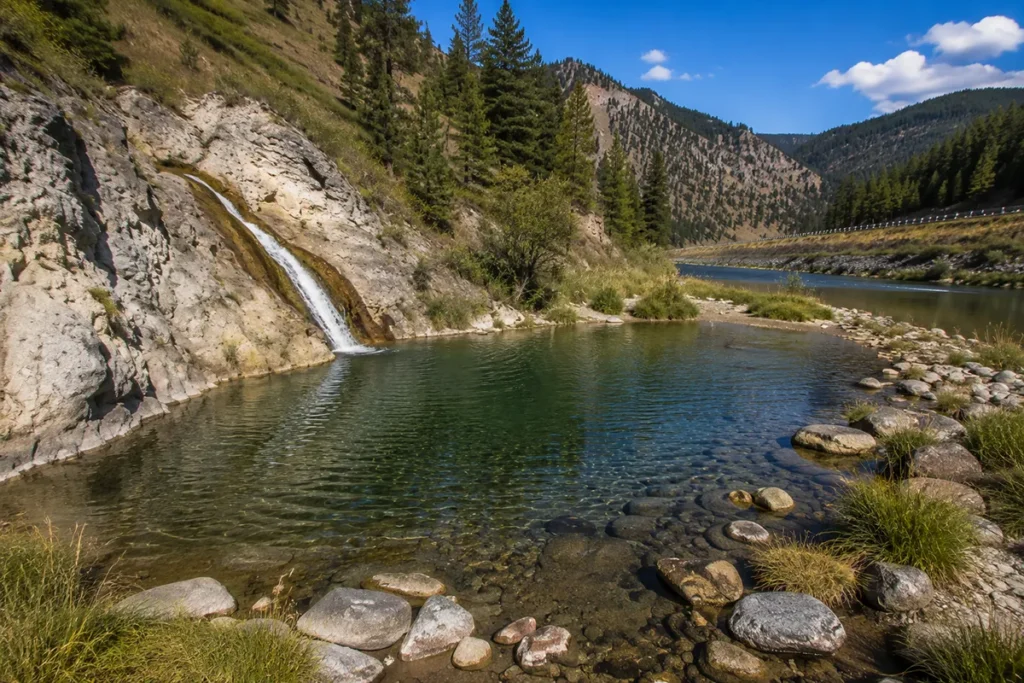
Worth knowing about but not strictly a “hot” spring. Nimrod Hot Springs is a 70°F natural turquoise pool tucked into the Clark Fork River canyon off I-90 Exit 138 (Bearmouth), about 35–40 miles east of Missoula. The pool is deep enough for cliff jumping and features a small underwater cave.
If you’re expecting a hot soak, this isn’t it — the water is more swimming hole than soak. But if you’re looking for one of Montana’s most unusual primitive water features within an easy detour from Missoula, Nimrod delivers something genuinely different. Privately owned by the Czorny family; pack out everything.
Category 4: Warm Springs and Adjacent Experiences
15. Gigantic Warm Springs — Near Great Falls
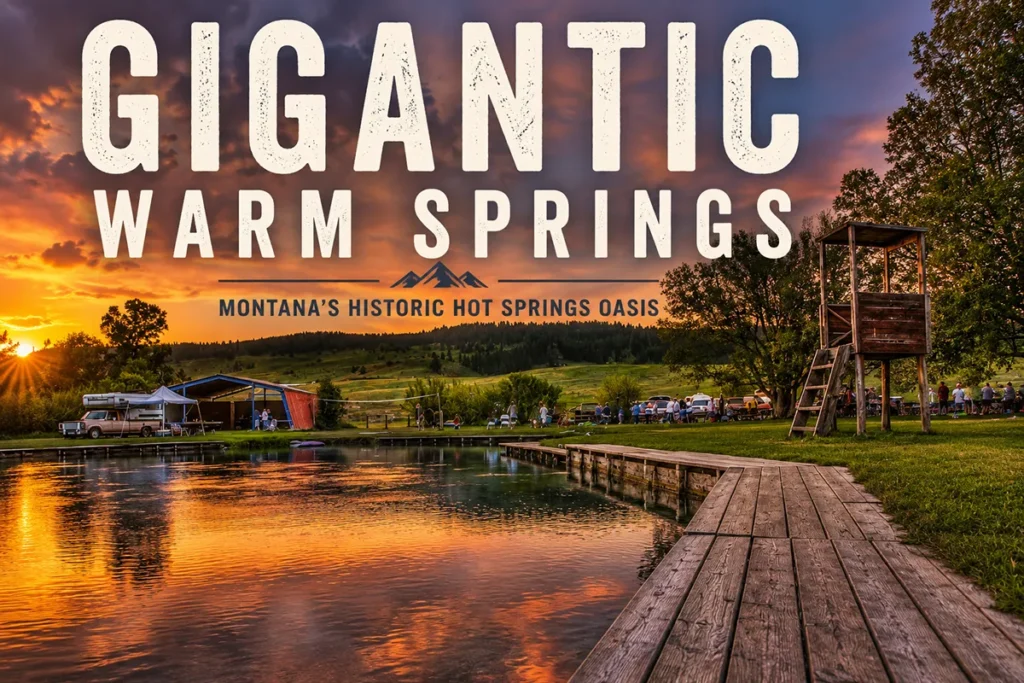
Gigantic Warm Springs is a large warm-water pool — closer in temperature to a swimming pool than a true hot spring soak, but with the geothermal character that distinguishes it from manufactured pools.
A solid family option in central Montana, particularly for travelers passing through who want a non-intense water experience.
Sub-Hubs and Specialty Lists
For deeper categorization within Montana’s hot springs landscape:
- Best natural hot springs in Montana — focused exclusively on the primitive/natural side of the list
- Montana hot springs RV resorts — the resorts that combine hot springs with RV camping (Yellowstone Hot Springs, Quinn’s, Lolo, Symes, Fairmont, Elkhorn)
Seasonal Guide: When to Soak
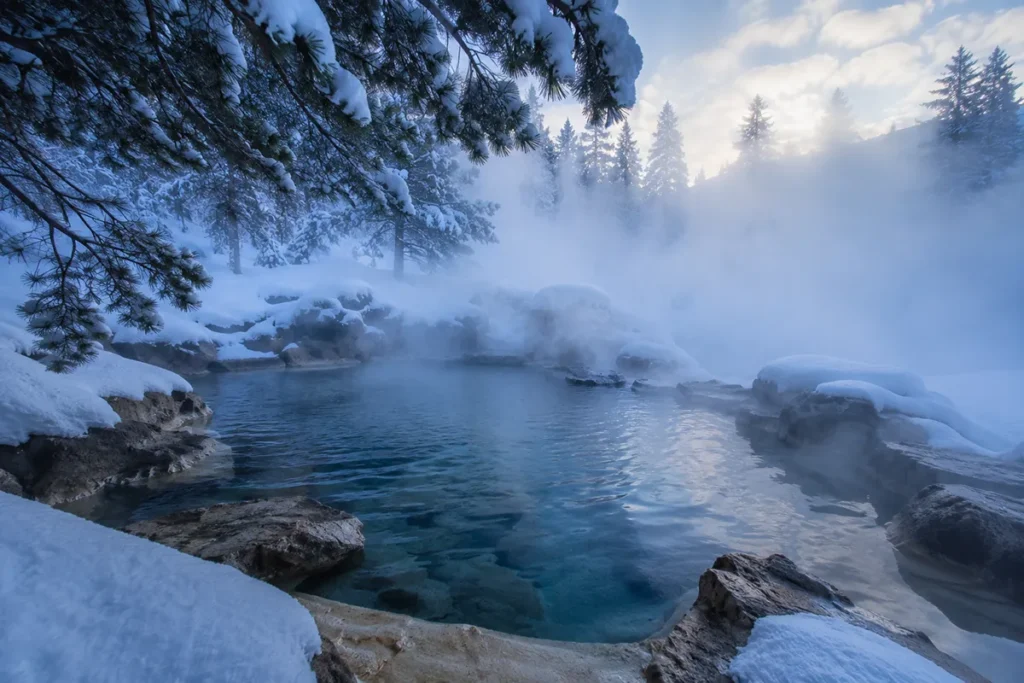
Winter (December–March) — Peak Visual Experience
The contrast of steaming water against snow-covered landscapes is unmatched. Bozeman Hot Springs, Chico, Quinn’s, Yellowstone Hot Springs, Fairmont, and Broadwater all operate full winter hours. Some primitive options become inaccessible due to snow on access roads.
Bring serious cold-weather gear for the walk between car and pool. A robe or oversized fleece you can throw on immediately is invaluable. See our Montana winter weather guide for the broader cold-season context.
Spring (April–May) — Mixed Conditions
Crowds thin as ski season ends. Mountain access opens gradually. Snowmelt can dilute primitive springs to lukewarm temperatures. Best for developed resorts; risky for primitive options.
Summer (June–August) — Peak Crowds and Long Days
Long daylight allows evening soaks, but crowds peak at popular resorts. Arrive at opening time or visit midweek for the best experience. Bug pressure can be significant at primitive springs — see our bug season guide.
Fall (September–October) — The Sweet Spot
My favorite hot springs season in Montana. Crowds drop sharply after Labor Day, weather remains generally pleasant, and the fall colors (especially the western larch in late September) create spectacular backdrops. Elkhorn Hot Springs at peak larch is genuinely magical.
For broader season planning, see best time to visit Montana.
What to Bring
After years of trial and error, the kit I now travel with:
- Water shoes — essential at primitive springs with rocky pool edges
- Quick-dry microfiber towel — regular towels stay wet and cold
- Robe or oversized fleece — for the brutal transition between pool and car
- Headlamp — for evening soaks and walking out
- Insulated water bottle — hydration matters more than you’d think
- Dry-clothes bag — keeps your post-soak outfit dry while you’re in the pool
- Sunscreen — UV at Montana elevations is intense even in mild weather
- Hand warmers in winter
- Cash — some smaller springs and rural locations have inconsistent card readers
- A trash bag for primitive springs — pack out everything you brought and ideally what others left
Etiquette That Keeps These Places Open
Several Montana hot springs (Renova being the most prominent example) have access issues directly traceable to visitor behavior. The places that remain open and welcoming do so because most visitors treat them with care. Some non-negotiables:
Keep the volume down. Natural settings amplify sound. Music — especially Bluetooth speakers — destroys the experience for everyone else.
Shower first at developed springs. The signs aren’t suggestions. Sunscreens, oils, and lotions affect the water chemistry for everyone behind you.
Don’t move rocks in natural springs. Thermal systems are delicate; the people who built the soaking pools knew what they were doing.
No glass, ever. Broken glass at a primitive spring is dangerous and can effectively close access.
Don’t post precise GPS coordinates on social media. This single behavior has accelerated the closure of more Montana primitive hot springs than anything else.
Pack out everything — including, when possible, what others left behind.
Suggested Itineraries
The Bozeman Loop (2–3 Days)
A focused trip out of Bozeman hits some of the state’s best soaks within easy driving distance:
- Day 1: Norris Hot Springs in the afternoon for live music; overnight in Ennis or Bozeman.
- Day 2: Drive south to Chico Hot Springs in Paradise Valley; overnight at Chico or push down to Gardiner.
- Day 3: Yellowstone Hot Springs in Corwin Springs; return to Bozeman via Bozeman Hot Springs for a final soak.
The Southwest Montana Loop (3–4 Days)
Centered on Butte and the southwest hot springs cluster:
- Day 1: Fairmont Hot Springs Resort between Butte and Anaconda; explore Butte’s mining history.
- Day 2: Drive south through the Big Hole Country to Elkhorn Hot Springs in the Pioneer Mountains.
- Day 3: Loop east through Renova (if access is currently open and you’ve read the caveats) or Potosi cabin retreat near Pony.
- Day 4: Return via Norris or Bozeman Hot Springs.
The Western Montana Corridor (3 Days)
For travelers based in Missoula:
- Day 1: Lolo Hot Springs west of Missoula for a Lewis-and-Clark historical soak.
- Day 2: Drive northwest to Quinn’s Hot Springs Resort in Paradise; overnight at Quinn’s.
- Day 3: Detour to Symes Hot Springs Hotel in the town of Hot Springs; loop back to Missoula via Wild Horse if you want a private soak.
The Yellowstone Add-On (2 Days)
Adding hot springs to a Yellowstone trip:
- Day 1: After park exploration, soak at Yellowstone Hot Springs in Corwin Springs for an evening experience.
- Day 2: Drive north to Chico Hot Springs for the full Paradise Valley resort experience before continuing your road trip.
For comprehensive broader planning, see our Montana trip planning guide and things to do in Montana hub.
Safety Considerations
Heat-related illness is the most common medical issue at hot springs. Don’t soak more than 20 minutes at a time in hotter pools without a break; drink water between sessions; never soak alone if you’ve been drinking.
Hydration matters more than you’d expect. The combination of hot water, sun exposure, and Montana’s dry air dehydrates you faster than at home.
Bacterial concerns exist in any natural thermal water. Naegleria fowleri (the “brain-eating amoeba”) is rare in Montana’s cooler natural springs but the risk isn’t zero. Never submerge your head in primitive springs; avoid soaking with open wounds.
Slips on mineral deposits are a leading cause of injury. Move slowly, wear water shoes, and use handrails at developed springs.
Wildlife encounters are real at backcountry primitive springs. Bears, moose, and rattlesnakes all use the same water sources you do. Make noise on approaches and be aware of your surroundings.
Frequently Asked Questions
Is Yellowstone’s Boiling River still open?
No. Boiling River, the popular soaking area where hot thermal water mixed with the Gardner River near Yellowstone’s north entrance, was permanently altered by the historic June 2022 flood. The river changed course, the soaking pools were destroyed, and the access path was washed out. The National Park Service has stated swimming is no longer possible there, and there is no announced reopening timeline. The legitimate replacement experience is Yellowstone Hot Springs at Corwin Springs, six to eight miles north of Gardiner on US-89.
What is the best hot spring in Montana for first-time visitors?
Chico Hot Springs Resort in Paradise Valley is the most popular recommendation — it combines historic atmosphere, two outdoor pools, excellent food, and reasonable accessibility from Bozeman. For visitors who want even more amenities (especially families with kids), Fairmont Hot Springs Resort between Butte and Anaconda has Olympic-size pools and a 350-foot waterslide.
What hot springs are closest to Bozeman, Montana?
The closest developed options are Bozeman Hot Springs (just outside town on Highway 191) and Norris Hot Springs (~35 miles west). Within an easy day trip: Chico Hot Springs Resort (~50 miles south) and Yellowstone Hot Springs at Corwin Springs (~80 miles south via Livingston). Fairmont, in southwest Montana, is roughly 2 hours west on I-90.
What hot springs are closest to Missoula?
Lolo Hot Springs (~25 miles southwest on Highway 12) is the closest developed option. Quinn’s Hot Springs Resort is about 70 miles northwest in the Clark Fork corridor (in Paradise, MT — not east, as some sources mistakenly say). Nimrod Hot Springs (a warm spring, ~70°F) is about 35–40 miles east of Missoula off I-90 Exit 138 (Bearmouth).
Are there free hot springs in Montana?
Yes, though the legal access situation varies. Renova Hot Springs near Whitehall is the most prominent primitive option, but Madison County Sheriff has declared it off-limits and the access trail crosses private land — read the dedicated post for the full access reality. Nimrod Hot Springs off I-90 is free and on private land where access is tolerated. Several wild springs in remote backcountry areas exist but the responsible approach is to research current legal access before any visit.
Is Jerry Johnson Hot Springs in Montana?
No. Jerry Johnson Hot Springs is in Idaho, just over the Lolo Pass divide off US-12. Some Montana travel sources mistakenly list it; it’s actually outside Montana’s border.
What is the best season for Montana hot springs?
Winter offers the visual peak — steam against snow, pristine landscapes — but requires cold-weather logistics for the pool-to-car transitions. Fall (September–October) is the underrated sweet spot — fewer crowds, pleasant weather, fall colors. Summer brings long evenings but the biggest crowds. Spring can be variable, with primitive springs sometimes diluted by snowmelt runoff.
Are Montana hot springs family-friendly?
Most developed resorts are. Fairmont Hot Springs Resort is the most family-oriented, with its waterslide and Olympic-size pools. Chico Hot Springs, Lolo Hot Springs, Bozeman Hot Springs, and Yellowstone Hot Springs all accommodate families. Primitive springs generally aren’t appropriate for young children due to variable temperatures, slippery rocks, and the lack of facilities.
Do I need reservations for Montana hot springs?
Day-use access at most developed springs is first-come, first-served. Overnight lodging at any of the resorts requires advance booking — particularly Chico Hot Springs, which sells out months ahead for summer weekends. Some smaller venues (Norris, Potosi) have very limited capacity and benefit from calling ahead in peak season.
What is the hottest natural hot spring in Montana?
Source temperatures vary. Elkhorn’s source emerges at over 150°F before cooling. Renova’s source is 110–122°F. Norris’s source is around 120°F. By the time the water reaches a soakable pool, most Montana hot springs settle into the 100–106°F range — the temperature that experienced soakers find comfortable for extended sessions.

Wild horse has both communal and individual tubs