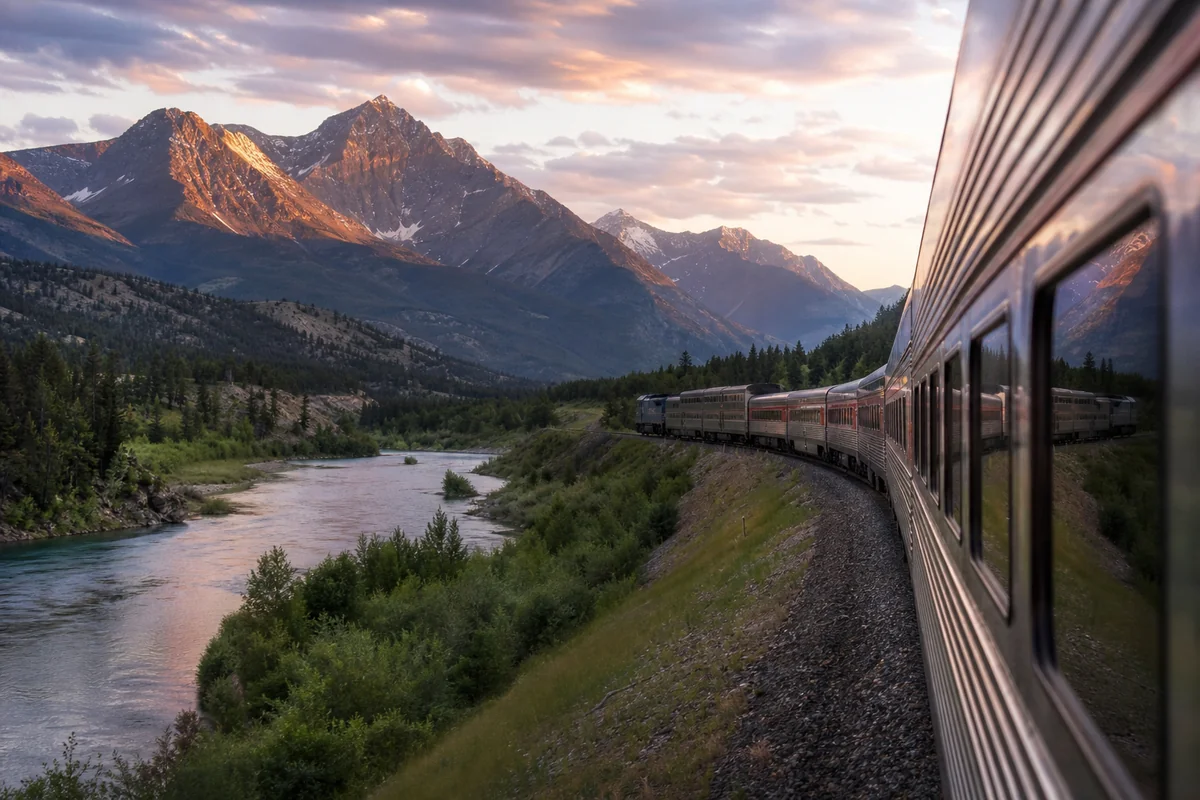
The whistle cut through the pre-dawn darkness somewhere west of Havre, and I pressed my face against the cold window of my Amtrak sleeper car, watching the silhouette of the Rocky Mountain Front materialize against a pink Montana sky.
That single moment—sipping terrible coffee while gliding past terrain that would take hours to drive—convinced me that train travel in Montana isn’t just transportation. It’s an experience that fundamentally changes how you see this state.
If you’re building your Montana Transportation Guide and haven’t considered rail travel, you’re missing one of the most scenic and historically significant ways to experience Big Sky Country.
While most visitors focus on Montana airports for getting here, the railroad offers something entirely different—a chance to slow down and actually absorb the landscape.
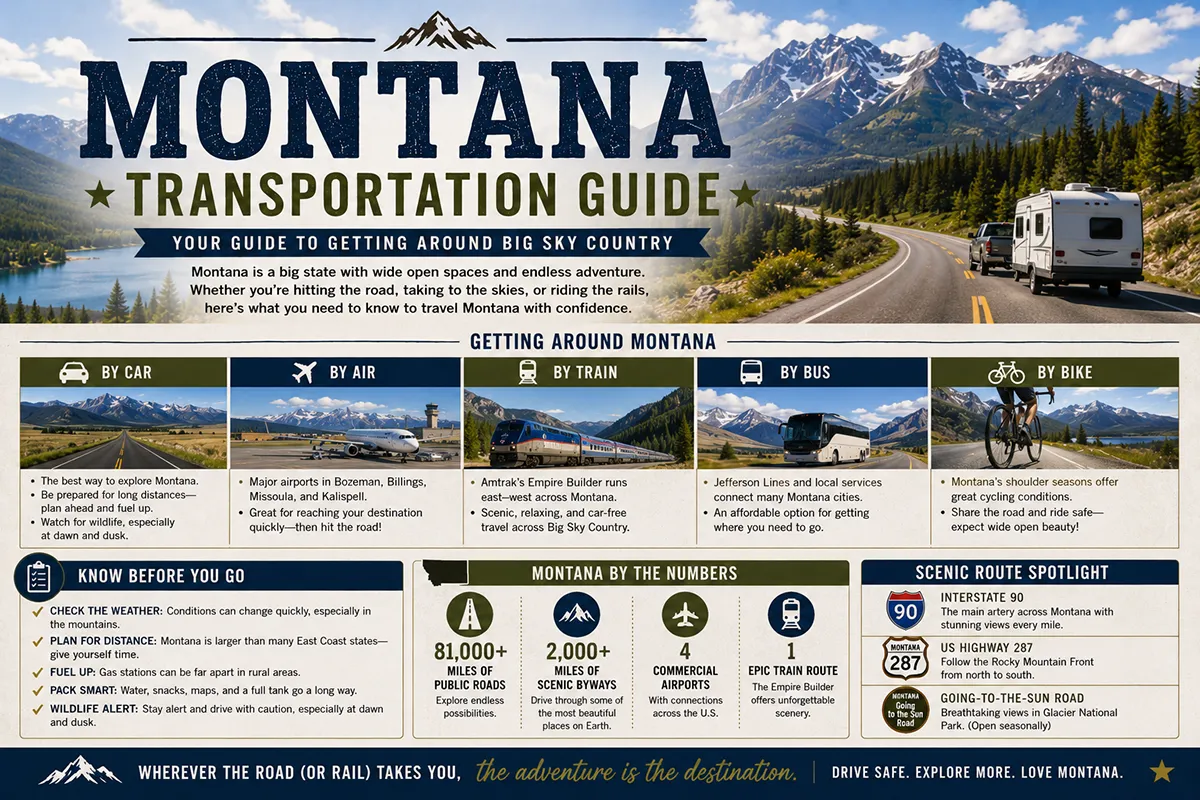
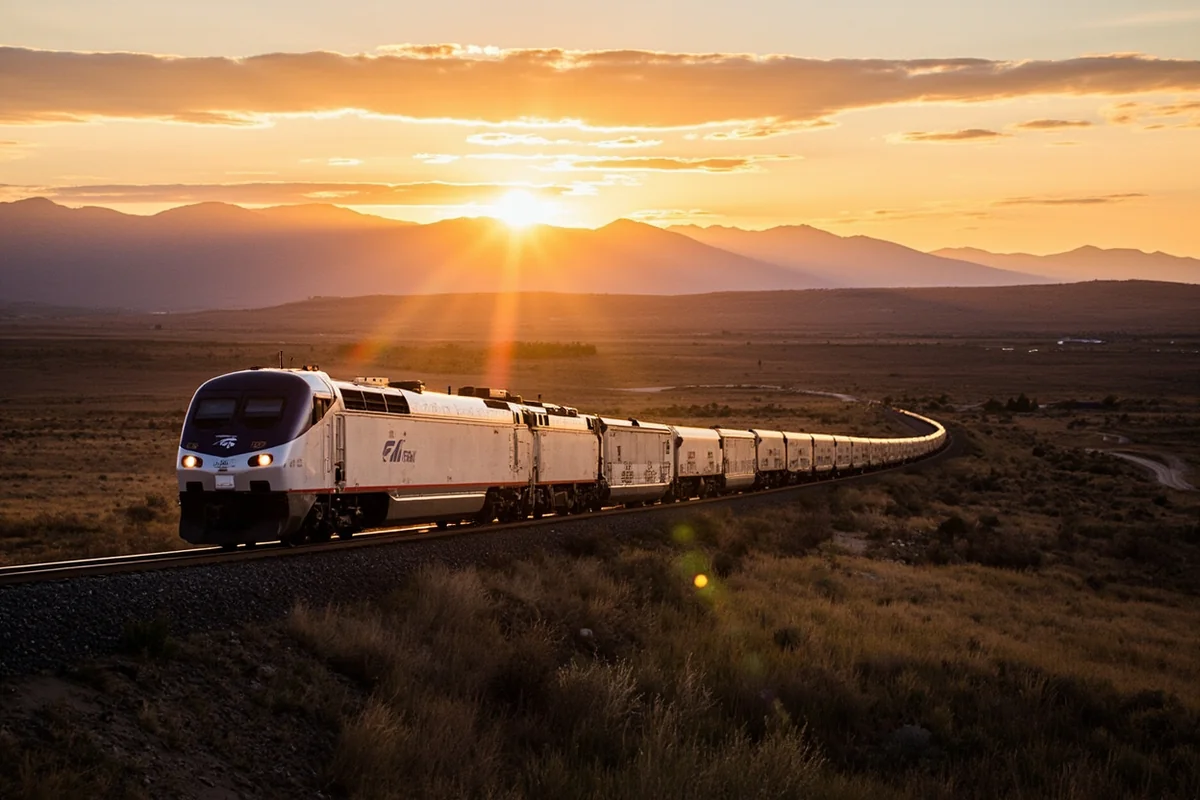
- Amtrak’s Empire Builder is Montana’s only long-distance passenger train, crossing 550+ miles of the state with 12 stops
- Best stations for boarding: Whitefish (most scenic starting point), East Glacier Park (summer seasonal), and Havre (Hi-Line access)
- Book sleeper cars 6+ months ahead for summer travel; coach seats usually available 2-3 weeks out
- Charlie Russell Chew-Choo and other scenic railways offer shorter excursion experiences
- Expect delays—Amtrak runs on freight lines, and 2-4 hour delays are common
- Winter travel requires flexibility; snow and cold can cause significant schedule changes
Liked this article?
Add Roaming Montana as a preferred source so you see more of our articles and guides on Google.
Understanding Montana’s Railroad Heritage
You cannot understand Montana without understanding its railroads. Full stop.
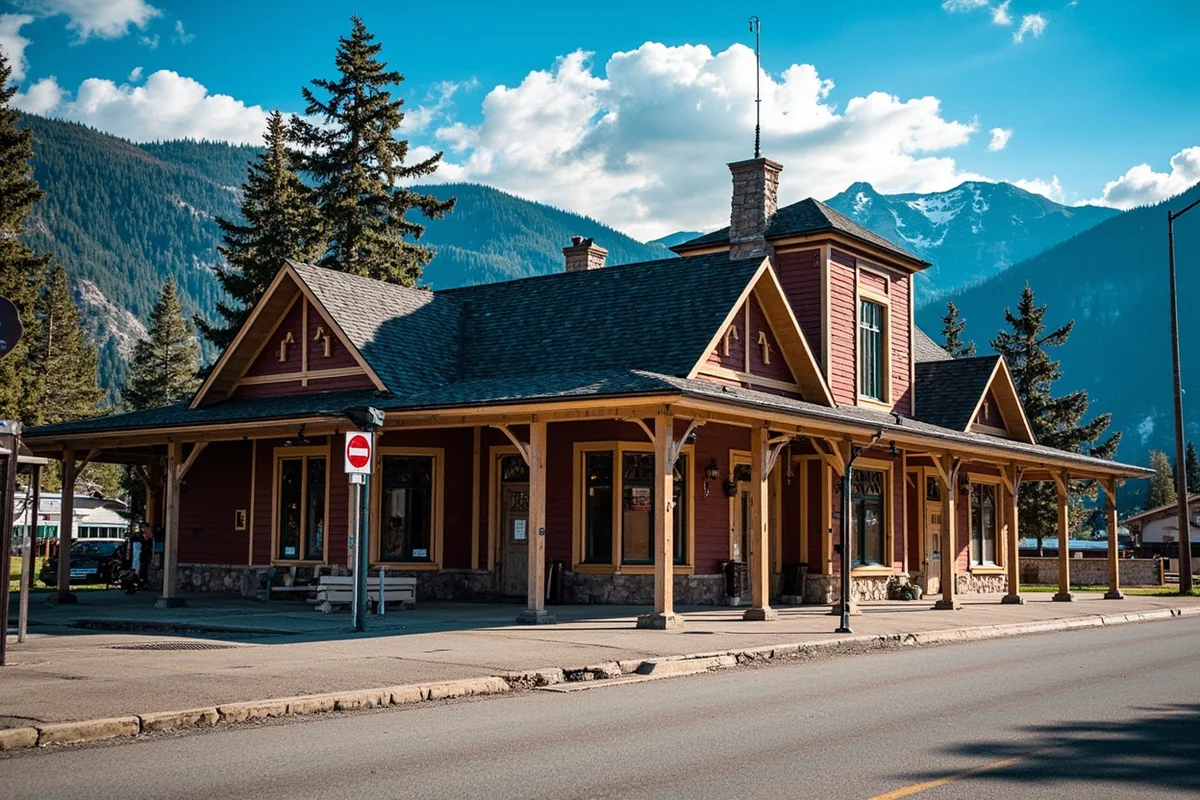
When I first started exploring the state seriously about eight years ago, I kept stumbling across abandoned depots, old rail grades converted to trails, and small towns that existed only because the railroad put them there. The Great Northern Railway literally created many of the communities along Montana’s Hi-Line—that stretch of U.S. Highway 2 that traces the northern border of the state.
During my most recent trip last October, I spent time in Havre specifically to understand this history. The Havre Beneath the Streets tour (which I highly recommend) shows how the railroad shaped everything from Chinese immigration patterns to the underground economy of early frontier towns.
James J. Hill, the railroad baron who built the Great Northern, chose this northern route deliberately. He wanted to serve agricultural communities and connect them to markets in the Pacific Northwest. That decision in the 1880s and 1890s created the Montana we know today.
Why This Matters for Modern Travelers
Here’s the thing most travel guides won’t tell you: Montana’s current Amtrak route follows almost exactly the same path the Great Northern established over 130 years ago.
When you board the Empire Builder today, you’re not just taking a train—you’re traveling along a route that determined where hundreds of thousands of people would live, work, and build communities. The towns you pass through, from Cut Bank to Wolf Point, exist because of this railroad.
I find that context makes the journey far more meaningful. You’re not just passing through empty landscape; you’re moving through layers of American history.
The Empire Builder: Montana’s Passenger Train Lifeline
Let me be direct: if you want to travel by train in Montana, your main option is Amtrak’s Empire Builder. There’s no other long-distance passenger rail service in the state.
The Empire Builder runs daily between Chicago and Seattle/Portland, crossing Montana’s entire northern tier. It’s named after James J. Hill—that railroad baron I mentioned—who was nicknamed the “Empire Builder” for his role in developing the American Northwest.
I’ve ridden this train five times now, in different seasons and different accommodations. Here’s what I’ve learned.
The Route Through Montana
The train enters Montana near the tiny town of Bainville, close to the North Dakota border, typically around 4:30 AM if it’s running on time (more on delays later). From there, it travels 553 miles across the state, exiting near Troy into Idaho around 8:30 PM.
That means roughly 16 hours of Montana scenery—if you’re doing the complete crossing.
The train makes 12 stops in Montana:
| Station | Approximate Time (Westbound) | Notes |
|---|---|---|
| Wolf Point | 6:00 AM | Fort Peck Reservation access |
| Glasgow | 6:53 AM | Largest Hi-Line town east of Havre |
| Malta | 8:00 AM | Great Plains Dinosaur Museum |
| Havre | 9:35 AM | Major stop; food available nearby |
| Shelby | 11:35 AM | Connection to I-15 |
| Cut Bank | 12:14 PM | Blackfeet Reservation access |
| Browning | 12:54 PM | Museum of the Plains Indian |
| East Glacier Park | 1:18 PM | Seasonal (May-Oct); park access |
| Essex | 2:26 PM | Flag stop; Izaak Walton Inn |
| West Glacier | 3:00 PM | Main Glacier NP entrance |
| Whitefish | 3:34 PM | Most popular boarding point |
| Libby | 5:42 PM | Kootenai National Forest access |
For comprehensive information about specific facilities at each location, check out our detailed guide to Montana train stations.
What I Actually Experienced on the Train
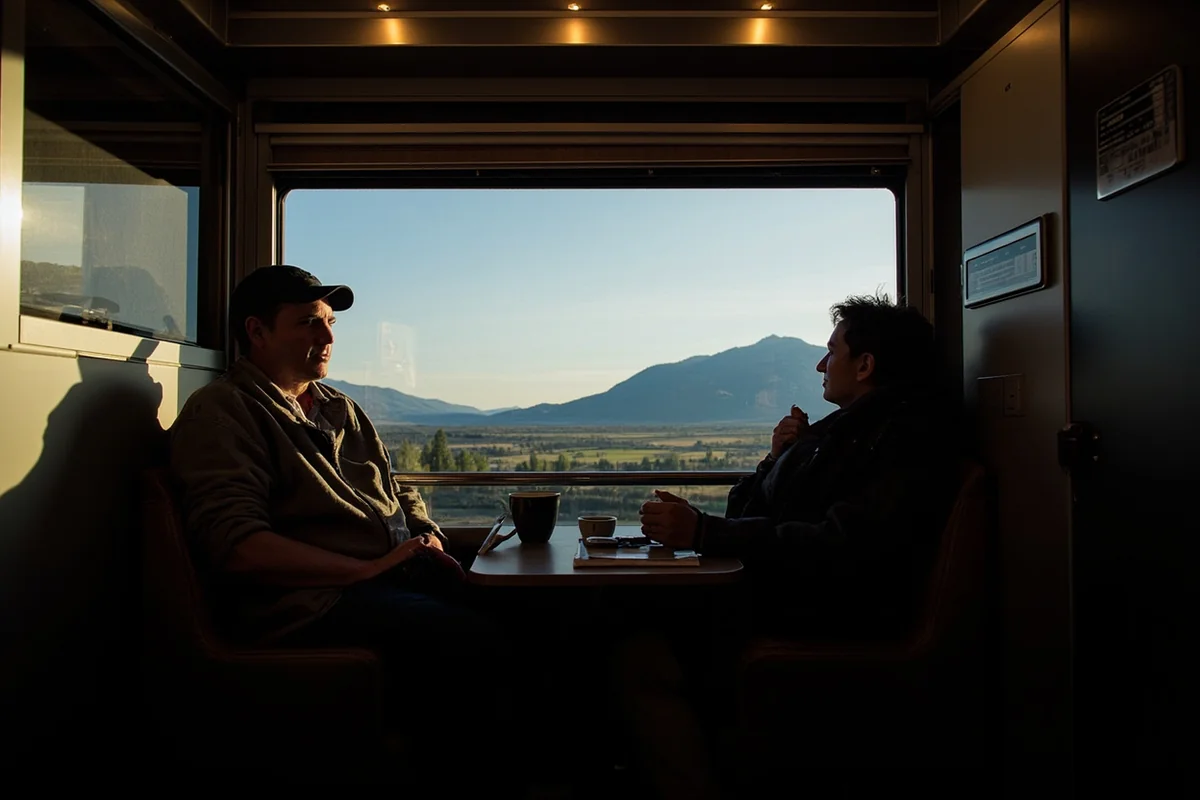
Last summer, I took the Empire Builder from Whitefish to Havre—essentially reversing the westbound journey to experience the Hi-Line during daylight hours.
The eastbound schedule works better for scenery in summer. You board in Whitefish around 9:30 PM and wake up to plains sunrise, then spend the entire day crossing the Hi-Line before reaching North Dakota in the evening.
But I specifically wanted to see the stretch between Whitefish and the Rocky Mountain Front in daylight, so I booked westbound.
Here’s my honest assessment: the scenery between Whitefish and Essex is legitimately spectacular. The train climbs through thick forest, crosses the Middle Fork of the Flathead River multiple times, and skirts the southern boundary of Glacier National Park. During my July trip, I spotted a black bear from the observation car near Marias Pass.
The stretch across the Hi-Line is more subtle. Rolling plains, wheat fields, small towns that flash past in seconds. It’s beautiful in an understated way, but if you’re expecting constant drama, you’ll be disappointed.
What I found fascinating was watching the light change across those plains—the way afternoon shadows create texture on seemingly flat land. But I’ll admit, some passengers in my car got bored and retreated to the café car.
Accommodations: Coach vs. Roomette vs. Bedroom
I’ve tried all three. Here’s the truth.
Coach: The seats are larger than airplane seats, and they recline significantly. For a short segment (say, Whitefish to Shelby), coach is totally fine. I’ve done overnight stretches in coach too, and while I slept, it wasn’t great sleep. You’ll share the car with everyone from college students to families with small children. Bring a neck pillow and earplugs.
Roomette: This is my preferred option for overnight travel. You get a tiny private compartment with two seats that convert into bunk beds. The beds are narrow—I’m 5’10” and fit fine, but my 6’3″ friend said it was tight. The huge advantage is privacy and guaranteed sleeping space. Meals in the dining car are included, which adds significant value.
Bedroom: Honestly? Unless you need the space or private bathroom, I don’t think it’s worth the premium over a roomette. The bedroom is basically twice the roomette size with an enclosed toilet and shower. I tried it once and appreciated the space but couldn’t justify the price difference for solo travel.
Booking Strategy: How to Actually Get Tickets
Here’s where I see people make expensive mistakes.
Amtrak uses dynamic pricing, similar to airlines. Prices can double or triple for popular dates. During my booking research last May for summer travel, I watched Whitefish-Havre roomette prices jump from $289 to $567 in two weeks.
My recommendations:
Book sleeping accommodations 6+ months in advance for any summer travel, especially anything involving Glacier National Park stations. The East Glacier Park and West Glacier stops are only open May through October, and they fill fast.
Coach seats are easier to get. I’ve successfully booked coach travel 2-3 weeks out, even in summer. But check availability early anyway.
Eastbound vs. westbound matters for pricing. I’ve noticed slightly lower prices on eastbound trains departing Montana, possibly because demand is higher for Seattle-to-Montana travelers.
Use Amtrak’s flexible fare if your plans might change. Standard fares now allow cancellation for credit, but flexible fares offer full refunds. Given how often train delays affect Montana travel, this flexibility has value.
Sign up for Amtrak Guest Rewards. I’ve accumulated enough points over five trips to earn a free coach segment. The program isn’t as generous as airline miles, but it’s free money left on the table otherwise.
The Reality of Delays (Please Read This)
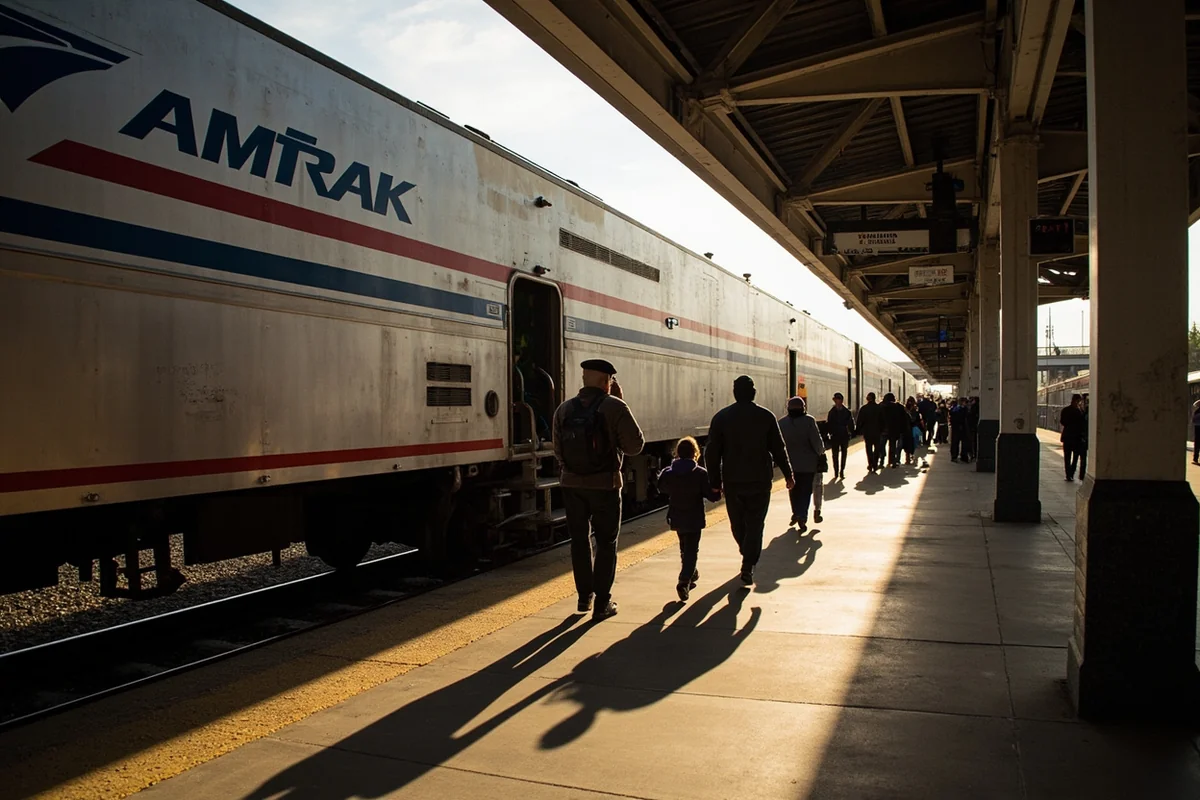
I need to be honest with you: the Empire Builder is frequently late. Sometimes very late.
During my October trip, the train arrived in Havre 3 hours and 47 minutes behind schedule. In conversations with the conductor, he told me delays of 2-4 hours are common, and delays exceeding 6 hours happen several times per month.
Why? Amtrak doesn’t own the tracks. The Empire Builder runs on BNSF Railway freight lines. When a freight train and a passenger train need the same track, freight often gets priority—despite regulations technically favoring passengers.
How to plan around this:
Never schedule a tight connection on arrival. If your train is supposed to arrive at 3:34 PM, don’t book a 5:00 PM dinner reservation or hotel shuttle. Build in at least 4 hours of buffer.
Don’t book flights for the same day as train arrival. I’ve read horror stories of people missing flights because their train was delayed 8+ hours. If you’re flying out of a Montana airport, arrive by train the day before.
Download the Amtrak app. It provides real-time tracking that’s reasonably accurate. I check it obsessively when I have a train trip planned.
Consider delays part of the experience. This sounds like a cop-out, but honestly? Some of my best train memories involve delay-related adventures. When we were stopped for 45 minutes outside Cut Bank, I got into a fascinating conversation with a retired rancher heading to see his grandkids in Seattle.
Scenic Excursion Railways: Shorter Train Experiences
If you don’t want to commit to long-distance Amtrak travel, Montana offers several excursion railways that provide train experiences in shorter doses. For those exploring public transportation options in Montana, these scenic railways offer a fun alternative to traditional transit.
Charlie Russell Chew-Choo
This is my favorite Montana train experience, and I recommend it enthusiastically.
Operating out of Lewistown in central Montana, the Charlie Russell Chew-Choo runs dinner trains through the scenic Judith Basin. I took the fall foliage excursion last September, and it exceeded my expectations.
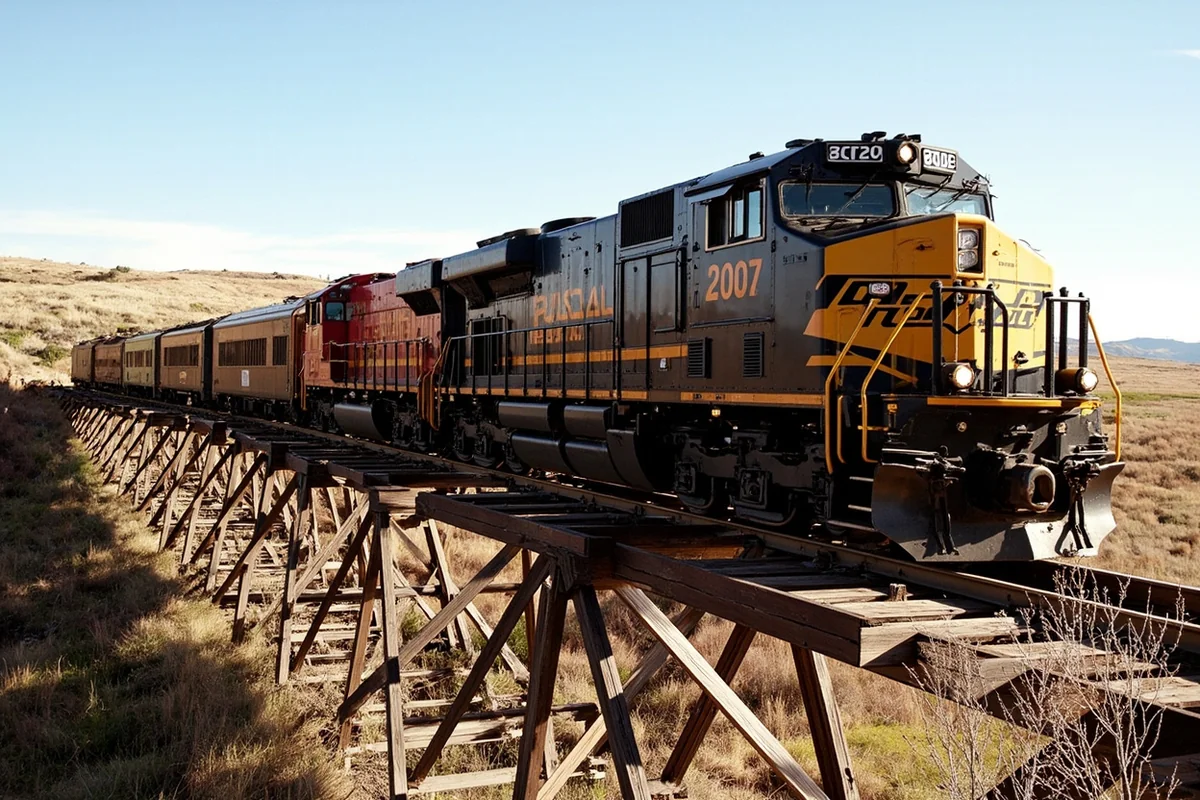
The experience lasts about 3.5 hours. You board vintage rail cars, enjoy a multi-course dinner served by costumed staff, and roll through some genuinely beautiful Montana landscape. During my trip, we crossed several wooden trestles and passed through a tunnel carved directly through rock.
What surprised me was the quality of the food. I expected typical “tourist train” fare—generic and overcooked. Instead, I had excellent prime rib with locally sourced vegetables. The onboard entertainment was hokey (train robbery reenactment) but fun.
The train runs seasonally, with different themed excursions throughout the year. Murder mystery dinners, holiday trains, and special event runs all attract different crowds. Book early—they sell out.
Alder Gulch Short Line
Near Virginia City, this tiny railroad offers a different experience entirely. It’s a narrow-gauge heritage railway running only about 1.5 miles between Virginia City and Nevada City.
I wouldn’t call this transportation—it’s more of a historical amusement. But if you’re already visiting the Virginia City historic district (which you should; it’s fascinating), the train ride adds to the atmosphere.
The train uses restored 1910-era equipment and chugs along slowly enough that you could probably walk faster. Kids love it. Adults will appreciate it more if they’re genuinely interested in railroad history.
Museum Railway Equipment
Several Montana museums feature static railway displays worth visiting if you’re a train enthusiast:
The Montana Rail Link Railway Historical Society in Missoula maintains equipment and historical records. I spent an afternoon there researching for this article and found their collection surprisingly comprehensive.
The Museum of the Rockies in Bozeman has railroad-related exhibits as part of their broader Montana history collection. Not exclusively focused on trains, but worth including if you’re already visiting their dinosaur exhibits.
The Historical Museum at Fort Missoula includes railroad artifacts related to the timber industry and early Missoula development.
Using the Railroad Strategically for Your Montana Trip
Here’s where I can offer genuinely useful planning advice based on multiple Montana trips.
For Glacier National Park Visitors
The East Glacier Park and West Glacier stations make the Empire Builder a legitimate transportation option for visiting the park. I’ve done this twice.
Option 1: Fly into Kalispell, train out
Fly into Glacier Park International Airport, spend several days in the park, then take the Empire Builder east. This works especially well if you’re continuing to destinations like Minneapolis or Chicago.
During my August trip two years ago, I flew into Kalispell, rented a car for four days of park exploration, returned the car in Whitefish, and boarded the eastbound train. The rental car one-way drop fee was less than I expected ($75), and the train journey added something memorable to the trip.
Option 2: Train both directions
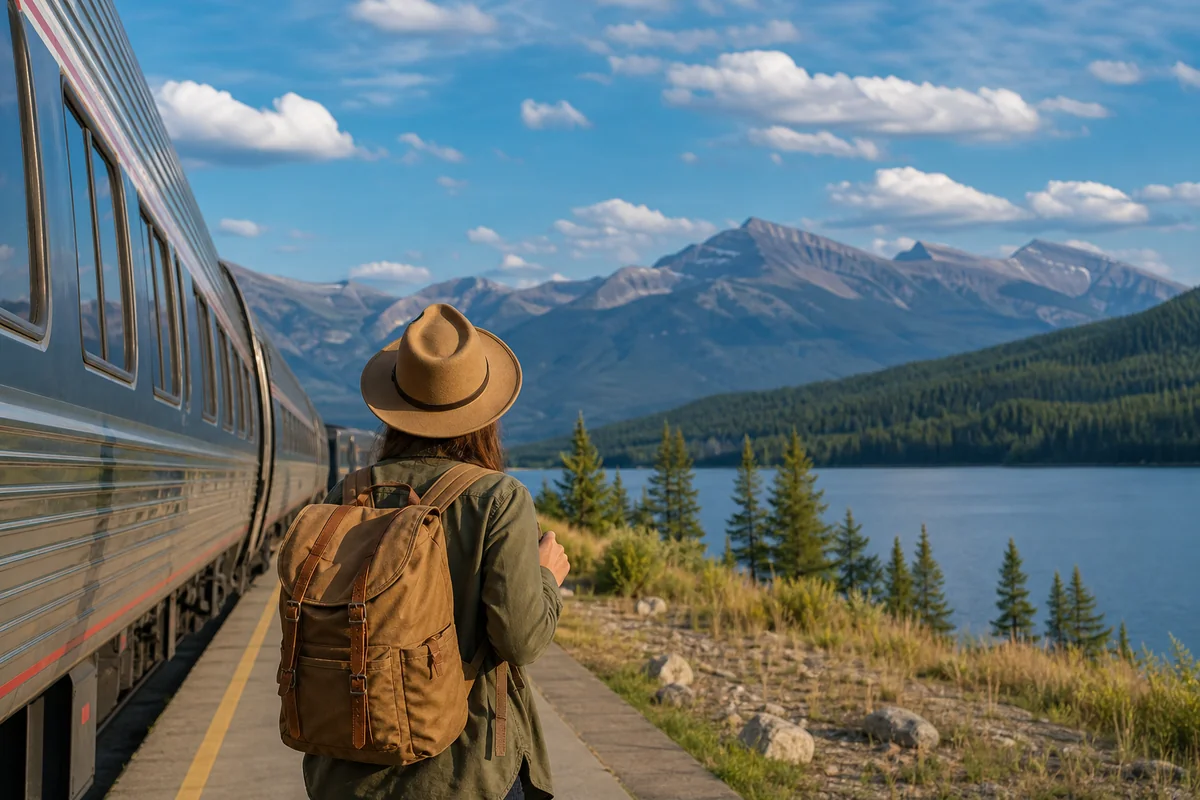
If you’re traveling from Seattle or Portland, the train delivers you directly to the park’s doorstep. The West Glacier station is about half a mile from the park entrance. East Glacier Park station is steps from the historic Glacier Park Lodge.
The challenge here is exploring Montana without a car. Inside Glacier, the free shuttle system helps, but it doesn’t run early or late in the season when train stations are still open. You might need to arrange taxi or shuttle service for some park activities.
For Hi-Line Exploration
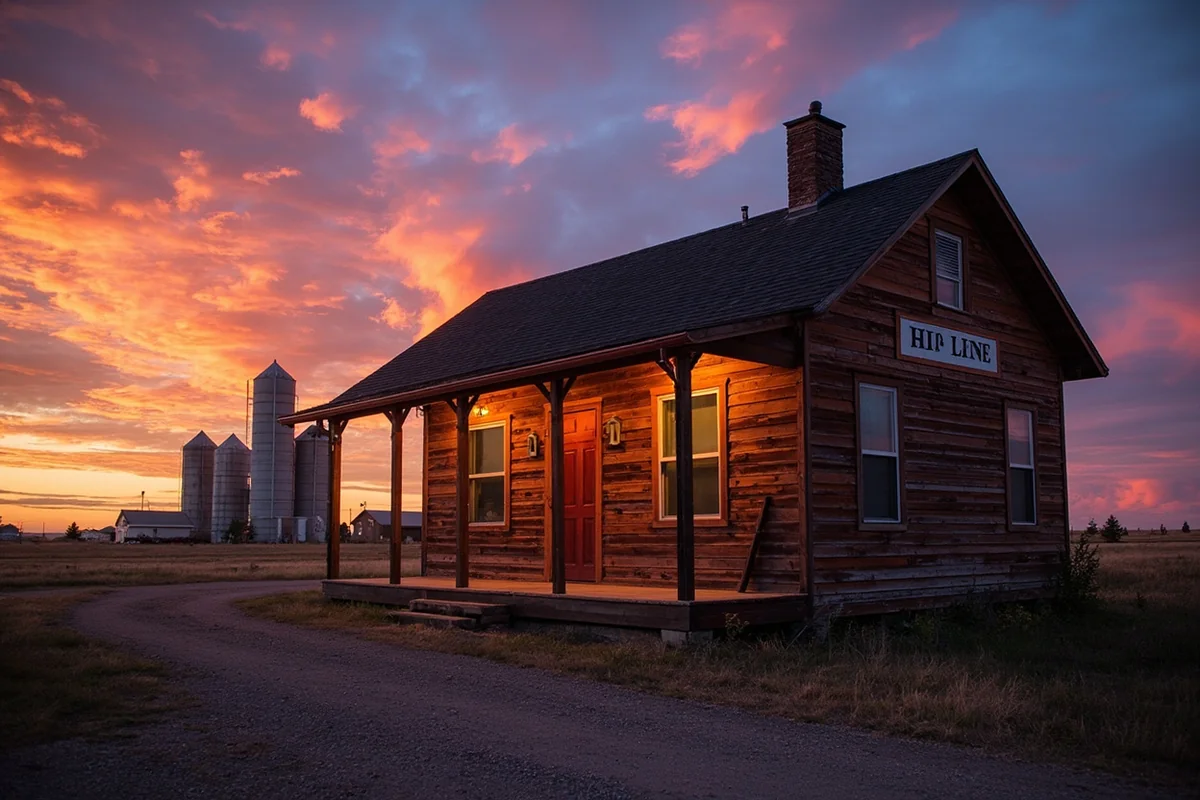
Most tourists completely ignore Montana’s Hi-Line—that string of small towns along Highway 2. I think this is a mistake.
The Hi-Line offers authentic small-town Montana experiences that feel increasingly rare. Fort Peck Lake, the C.M. Russell Wildlife Refuge, and the Bears Paw Mountains are all accessible from Hi-Line communities.
Using the train to hop between Hi-Line towns is actually practical. Havre, Glasgow, and Wolf Point all have stations with reasonable schedules. You could spend two days in Havre exploring Beaver Creek Park and the Havre Beneath the Streets tour, then train to Glasgow for Fort Peck Dam.
The challenge is schedule flexibility. With only one train daily in each direction, you’re committing to at least a full day in each town. For some travelers, that’s limiting. For others, it forces the kind of slow travel that reveals a place’s true character.
Combining Train and Other Transportation
Montana’s transportation network requires some creativity. The train works best as one component of a larger plan.
I typically combine train travel with rental cars or, in some cases, rideshare services in larger towns. Whitefish has Uber availability that’s reliable enough for getting between the train station and downtown hotels.
For travelers interested in electric vehicle travel in Montana, note that you can rent EVs in larger cities and use the train for portions of your journey where driving infrastructure is limited.
Winter Train Travel: Special Considerations
I’ve taken the Empire Builder through Montana twice in winter. Both experiences were dramatically different from summer travel.
The positives: Fewer crowds. Significantly lower prices. Stunning winter scenery when weather cooperates. On my January trip, fresh snow coated everything between Essex and Whitefish, and the frozen Flathead River was gorgeous.
The negatives: Weather delays can be severe. My January trip experienced an 11-hour delay due to blizzard conditions in North Dakota. Winter schedules mean most Montana scenery happens in darkness—the train crosses the state’s most beautiful sections in pitch black.
If you attempt winter train travel, pack as if you might get stranded. Bring food, medications, and warm layers. Ensure your lodging reservations are flexible. Assume delays will happen and build your schedule accordingly.
The train itself stays warm—Amtrak does heat the cars adequately—but I recommend having a good blanket in coach regardless.
Practical Tips From Experience
Let me share some concrete advice that’s made my Montana train trips better:
Bring your own food for coach travel. The café car exists, but options are limited and overpriced. I pack sandwiches, fruit, and snacks. For sleeping car passengers, dining car meals are included and surprisingly decent—though reservation slots fill up.
Sit on the south side westbound, north side eastbound for the best Glacier National Park views. This positions you toward the park side as you cross Marias Pass.
The observation car gets crowded at scenic points. During my July trip, the car was standing-room-only between Essex and Whitefish. Arrive early for good seats, or wait until the crowds thin.
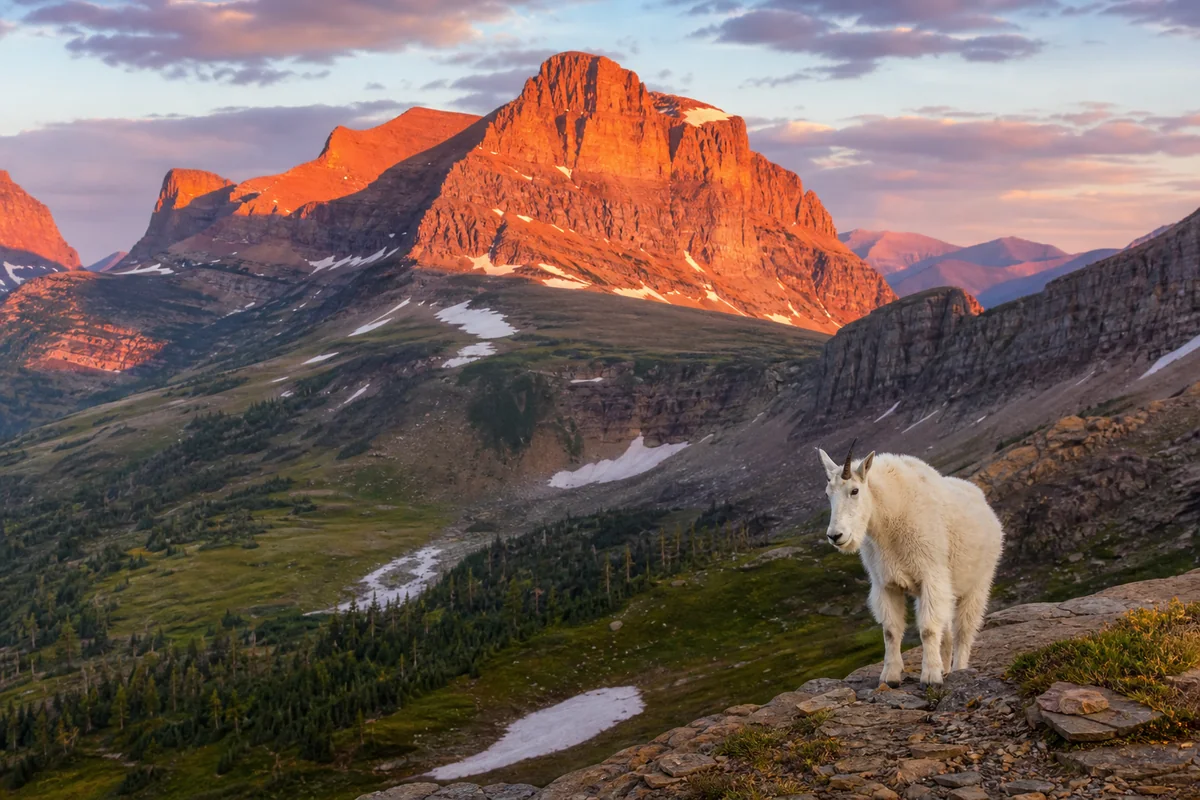
Bring binoculars. I’ve spotted deer, elk, bears, eagles, and various waterfowl from the train. Good optics make wildlife viewing much better.
Download entertainment. Cell service is spotty to nonexistent across much of the Hi-Line. I load podcasts and e-books before departure.
Talk to people. This might be the best tip I can offer. Train travel attracts interesting folks—retirees taking bucket-list trips, international tourists, railroad enthusiasts who know incredible historical details. Some of my best Montana memories come from train conversations.
The Economics: Is Train Travel Worth It?
Let me run through real numbers from my most recent booking research.
Whitefish to Havre (about 4 hours):
– Coach: $67-$89
– Roomette: $289-$450
– Bedroom: $450-$650
Chicago to Whitefish (about 30 hours):
– Coach: $150-$290
– Roomette: $650-$950
– Bedroom: $1,100-$1,500
Compare that to flights. Chicago to Kalispell averages $300-$450 round trip, and the journey takes about 5 hours with connections.
The train is rarely cheaper than flying. It takes dramatically longer. If pure transportation efficiency is your goal, flying wins.
But that’s not why people take trains.
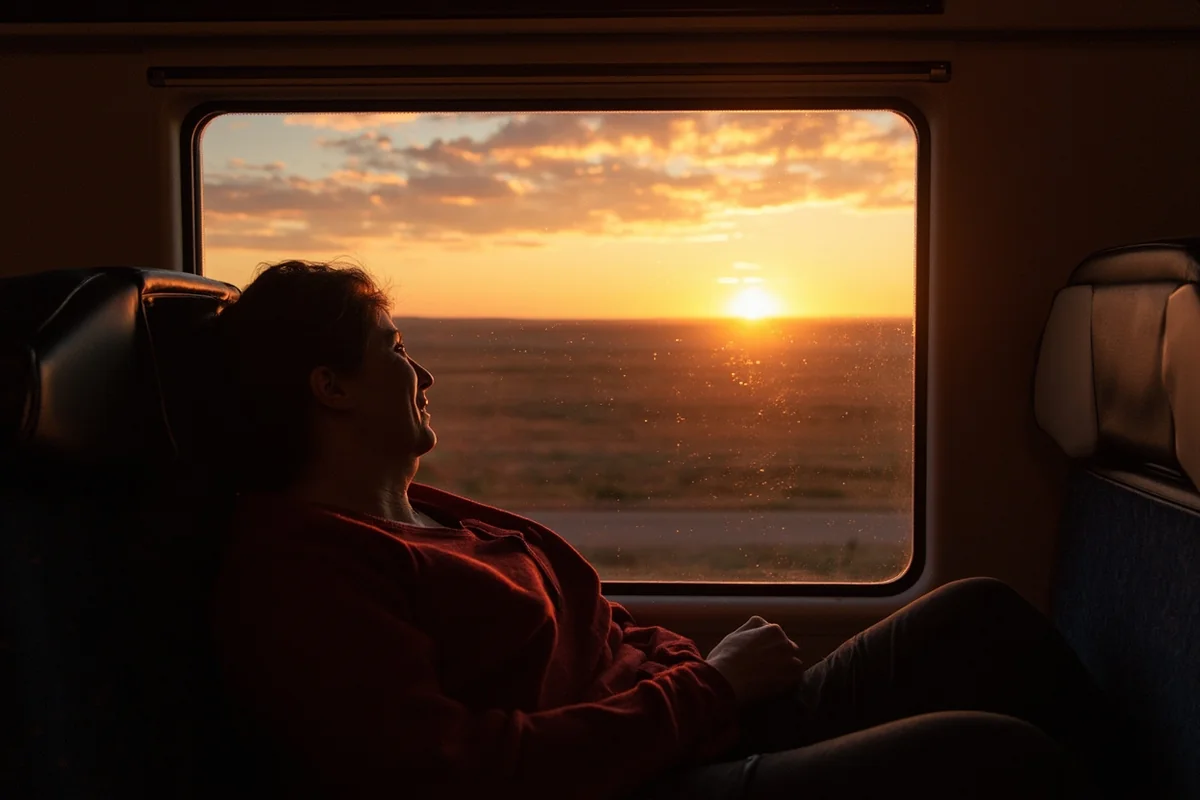
The value lies in the experience—watching landscape evolve, meeting fellow travelers, stepping off the speed treadmill for a while. I find train journeys restorative in ways that flying never achieves.
For my money, the sweet spot is combining train travel for part of a trip while flying the rest. That creates memorable experiences without requiring excessive time commitment.
Future of Montana Rail Travel
I want to end with some thoughts on where Montana rail travel might be heading.
There’s been talk for years about restoring the southern route across Montana—the old Milwaukee Road and Northern Pacific lines that served Missoula, Bozeman, and Billings.
This would be transformative for Montana tourism. Imagine boarding a train in Chicago and stepping off in downtown Bozeman, steps from world-class skiing and Yellowstone access.
Currently, this remains aspirational. No funded plans exist as of my last research. But I’ve attended public meetings where enthusiasm runs high, and organizations like All Aboard Montana continue advocating for expanded service.
The Biden administration’s infrastructure law included historic levels of Amtrak funding. Whether Montana sees any benefit remains to be seen, but there’s more momentum for passenger rail expansion than I’ve witnessed in decades of following this issue.
For now, the Empire Builder remains Montana’s rail lifeline. It’s imperfect—delays frustrate, schedules limit flexibility, and the route only serves northern Montana. But it offers something irreplaceable: a way to experience this vast state at human pace, connected to over a century of transportation history.
When I’m on that train, somewhere between Browning and East Glacier Park, watching the Rocky Mountain Front rise into view, I always think the same thing: this is how Montana was meant to be seen. Not rushed past at 80 miles per hour on the interstate, but savored, slowly, with time to actually absorb what you’re witnessing.
That’s worth some inconvenience.
Frequently Asked Questions
Can you travel across Montana by train as a tourist?
Yes, Amtrak’s Empire Builder route crosses northern Montana with stops in towns like Whitefish, East Glacier Park, and Havre. I found it to be one of the most scenic train rides in the US, covering about 550 miles through Montana with stunning views of Glacier National Park and the Rocky Mountains.
How much does a train ticket across Montana cost on Amtrak?
Amtrak tickets through Montana typically range from $80-$200 for coach seats depending on how far in advance you book and your specific route. If you want the full experience, a roomette sleeper car upgrade runs $300-$600 extra but includes meals and a bed for the overnight journey.
What historic railroad towns in Montana are worth visiting?
Livingston, Butte, and Missoula all have rich railroad heritage with preserved depots and museums worth exploring. I especially recommend the Livingston Depot Center, which showcases Northern Pacific Railway history in a beautifully restored 1902 station designed by the same architects who built Grand Central Terminal.
What is the best time of year to ride the train through Montana?
Summer months from June through August offer the longest daylight hours to enjoy mountain scenery, though trains can sell out quickly near Glacier National Park. I prefer September when fall colors emerge, crowds thin out, and you can still catch spectacular views without booking months in advance.
Are there any scenic excursion railroads or tourist trains in Montana?
The Charlie Russell Chew Choo dinner train near Lewistown offers a 56-mile round trip through central Montana ranchland with prime rib dinners and occasional train robbery reenactments. For history buffs, the Nevada City and Virginia City narrow-gauge railroad provides short rides through authentic Old West mining towns during summer months.
Can I take Amtrak to Glacier National Park from major US cities?
Absolutely, the Empire Builder runs daily from Chicago, Minneapolis, Seattle, and Portland with direct stops at East Glacier Park and West Glacier stations right at the park boundaries. From Chicago, expect roughly a 27-hour journey covering over 1,100 miles, making it a memorable alternative to flying into Kalispell.
What should I bring for a long-distance Montana train trip?
Pack layers since train cars vary in temperature, plus a neck pillow, snacks, and a portable charger since outlets can be limited in coach. I always bring binoculars for wildlife spotting along the Hi-Line and download offline entertainment since cell service disappears for stretches across rural Montana.
Sources
- https://www.mdt.mt.gov/rail/
- https://www.mdt.mt.gov/publications/plans/railroad-info.shtml
- https://leg.mt.gov/content/Committees/Interim/2019-2020/Transportation/Committee-Topics/HJR34/Montana-Rail-Map.pdf
- https://mslservices.mt.gov/geographic_information/data/datalist/datalist_Details.aspx?did=%7B2142F609-D6C4-4521-A653-F99163F9F248%7D