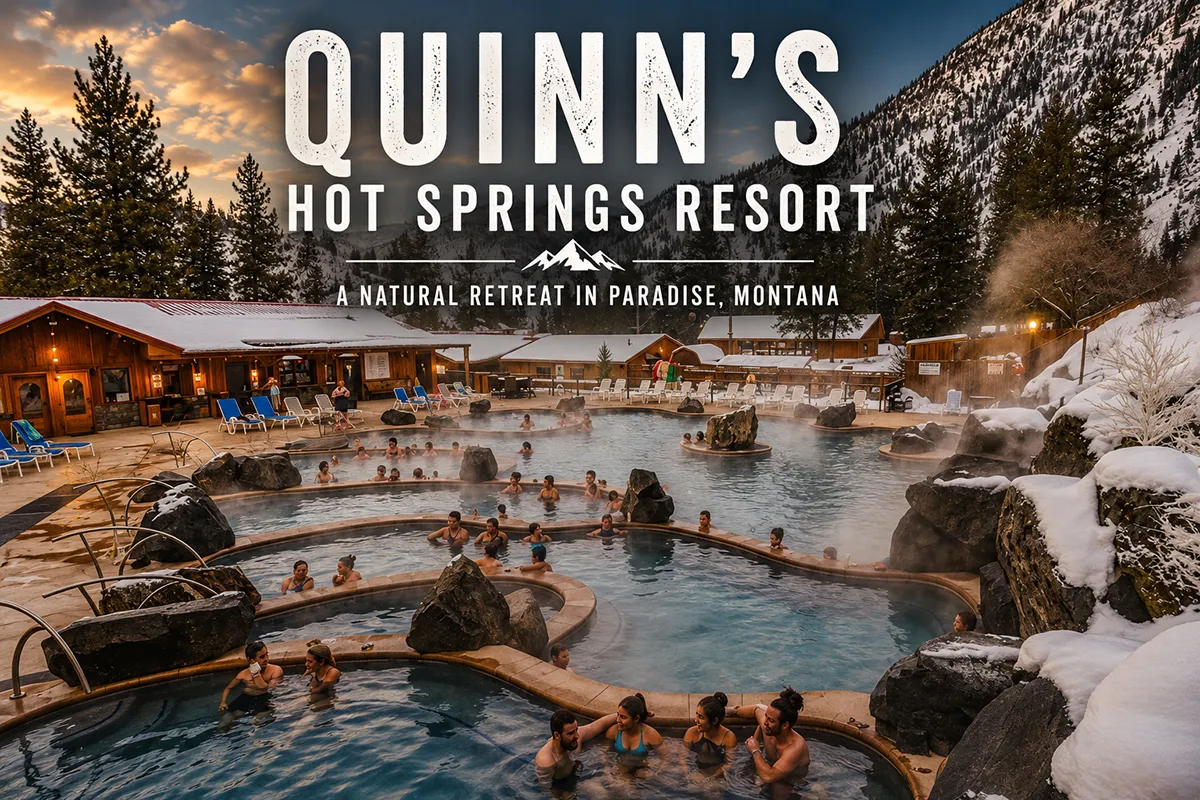
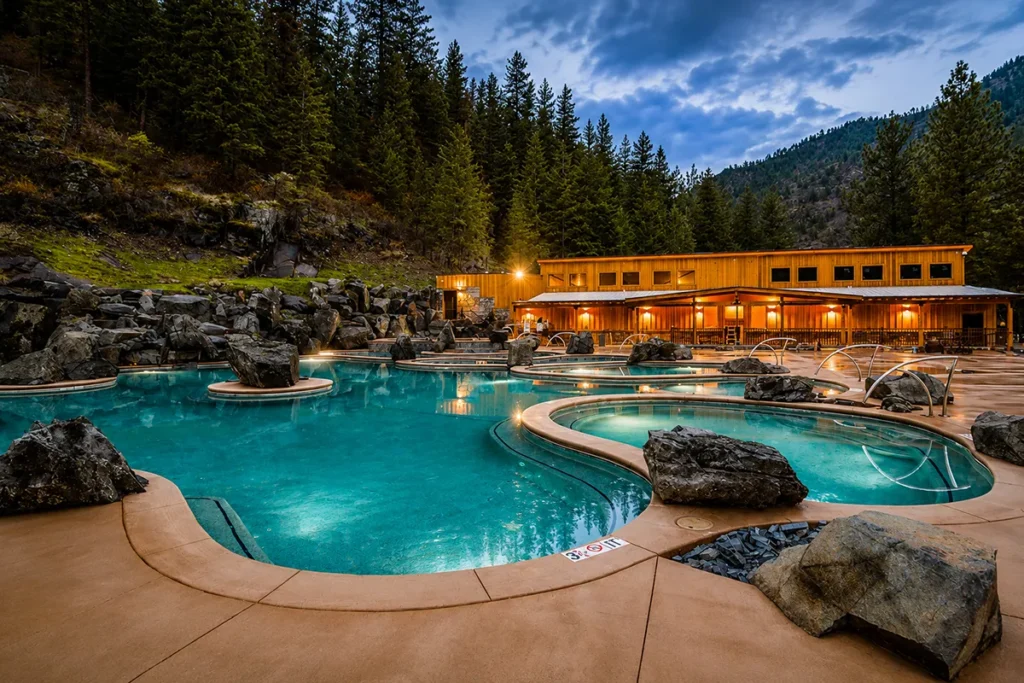
The steam rose off the water as I sank into Quinn’s main pool at dusk, the Clark Fork River rushing just beyond the wooden fence, and I understood immediately why locals call this corner of Montana “Paradise” — because it genuinely is.
I’ve soaked in dozens of Montana hot springs over the years, from developed resorts to remote backcountry pools.
Quinn’s Hot Springs Resort occupies a unique space in that spectrum: it’s polished enough to feel like a real getaway, yet rustic enough that you never forget you’re deep in Montana’s wild northwestern corner.
- Quinn’s Hot Springs Resort sits in Paradise, Montana — about 90 minutes west of Missoula along Highway 135
- Six natural hot spring pools ranging from 98°F to 106°F, including adults-only options
- Day-use passes available, but overnight guests get extended pool hours (7am-11pm)
- On-site Harwood House Restaurant serves surprisingly excellent food for a remote location
- Best visited weekdays or off-season (September-May) to avoid crowds
- Budget around $200-350/night for lodging plus $10-15 for day-use pool access
Liked this article?
Add Roaming Montana as a preferred source so you see more of our articles and guides on Google.
Getting to Quinn’s: The Drive Is Part of the Experience
Let me be honest — Quinn’s Hot Springs isn’t on the way to anywhere. You don’t stumble upon it accidentally.
The resort sits in the tiny community of Paradise, Montana, population roughly 200 on a generous count. During my last visit in late September, I drove west from Missoula on Interstate 90, exiting at St. Regis before heading north on Highway 135 along the Clark Fork River.
That final stretch of Highway 135 is spectacular. The road hugs the river through a narrow canyon, with steep forested hillsides rising on both sides. I passed exactly three other vehicles in the 20 minutes it took to reach Quinn’s.
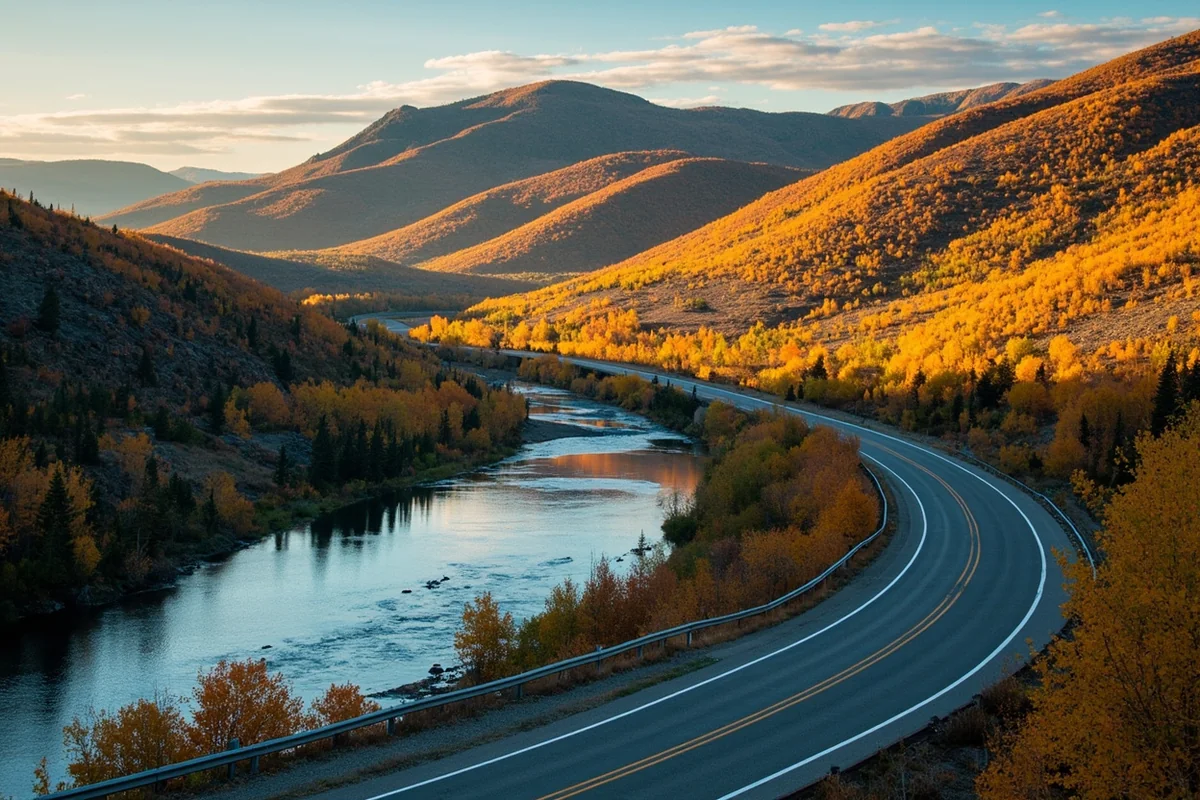
From Missoula, expect about 90 minutes of total drive time. If you’re coming from Spokane, it’s roughly two hours heading east.
There’s no public transportation option — you’ll need your own vehicle. The road is paved and well-maintained year-round, though I’d recommend checking conditions during heavy winter storms.
The Hot Springs: Six Pools Worth Understanding
Quinn’s natural hot springs water emerges from the ground at approximately 120°F before being cooled to comfortable soaking temperatures across six distinct pools. Each has its own character, and after multiple visits, I’ve developed strong opinions about which ones deserve your time.
The Main Pool
This is Quinn’s flagship — a large rectangular pool maintained around 102°F. It’s the social hub where most visitors congregate, especially families.
I find the main pool best for casual conversation and meeting other travelers. During my September visit, I chatted with a retired couple from Oregon who’d been coming annually for fifteen years.
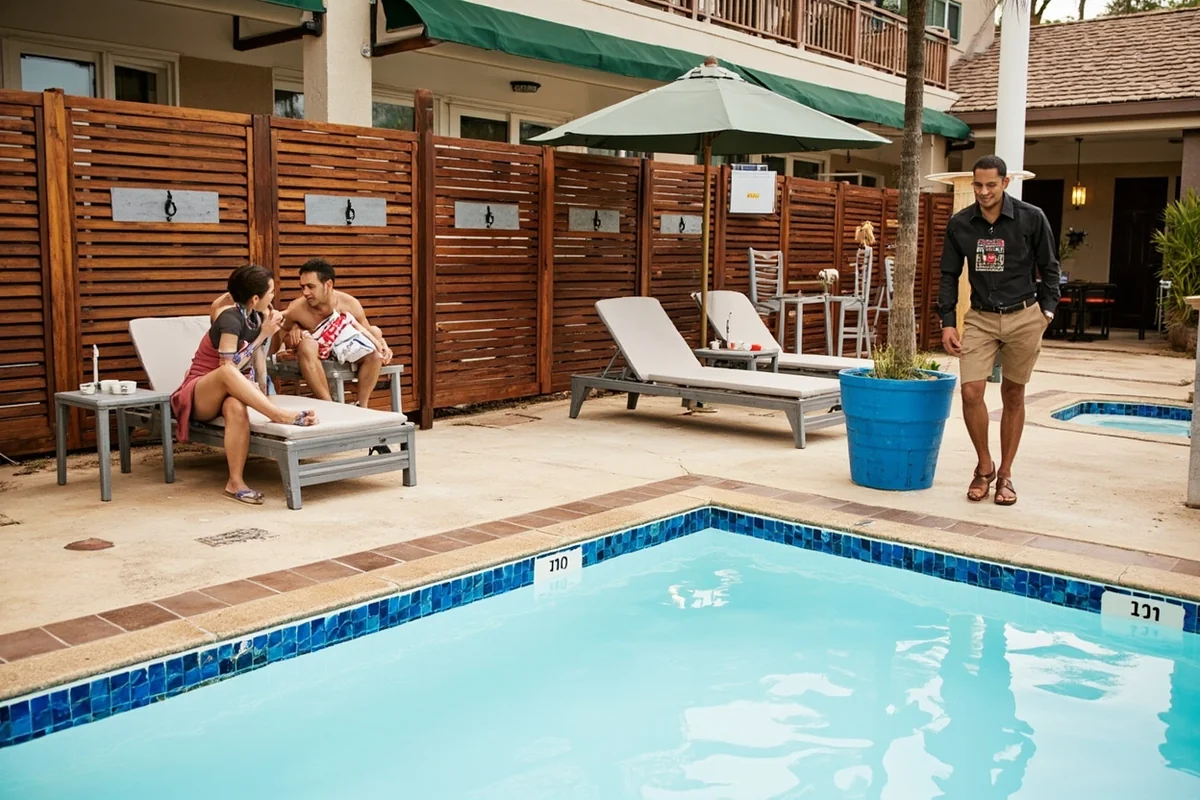
The pool deck includes loungers and has direct sightlines to the river. When I was there on a weekday afternoon, I had nearly the whole space to myself for a blissful two hours.
The Hot Pool
At 106°F, this smaller pool is for serious soakers. I can manage maybe 15 minutes before needing to cool off.
It’s less popular with families (the heat is too intense for most kids), which makes it a quieter option even on busy weekends. I typically start my soaking sessions here to really get the therapeutic benefits, then move to a cooler pool.
The Adults-Only Pool
This became my favorite pool during my recent trip. Reserved for guests 18 and older, it maintains around 100°F — warm enough to be relaxing, cool enough for extended soaks.
The atmosphere here is noticeably more peaceful. No splashing, no Marco Polo, no pool noodles. Just quiet conversation and the sound of the river.
If you’re visiting Quinn’s specifically for relaxation rather than a family outing, prioritize this pool.
The Cool Pool
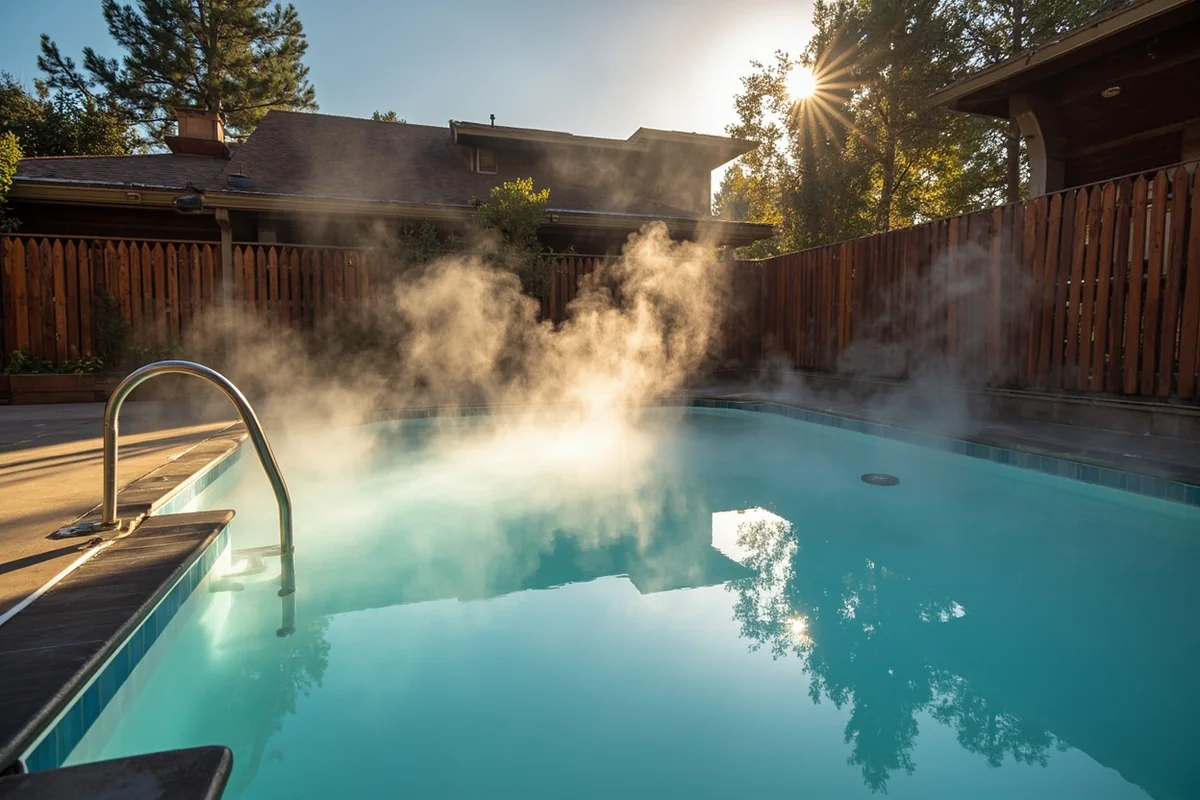
Maintained at approximately 98°F, the cool pool is where I go to reset after the hot pool. It’s also the most comfortable option during summer visits when even moderate heat can feel excessive.
Families with young children tend to gravitate here since the lower temperature is safer for extended play.
The Covered Pool
This pool sits under a roofed structure, making it the go-to option during rain or snow. On my first Quinn’s visit years ago, it was snowing heavily, and I spent most of my time in this pool watching flakes drift down while staying perfectly warm.
The covered area also provides shade during summer months, which some visitors prefer.
The Plunge Pool
A small cold plunge pool exists for contrast therapy — alternating between hot soaks and cold immersion. At around 55°F, it’s genuinely shocking.
I’ll admit I’m not a cold plunge devotee, but I tried it during my last visit. The theory is that it boosts circulation and reduces inflammation. My experience was that it mostly made me gasp and scramble back to the hot pool.
What Makes Quinn’s Water Special
Not all hot springs are created equal, and I’ve become something of a mineral water snob after years of Montana soaking. Quinn’s water has a notably soft quality that I’ve found gentler on skin than some of the more sulfur-heavy springs elsewhere in the state.
The mineral content includes calcium, sodium, and trace silica. There’s minimal sulfur smell — a relief if you’ve ever soaked in springs where the rotten-egg odor clings to your hair for days.
Unlike Norris Hot Springs near Bozeman, which has a distinctly earthy, almost swampy character, Quinn’s water feels cleaner. That’s not a criticism of Norris — I love that place — just an observation about different spring personalities.
The resort continuously cycles fresh spring water through all pools, and they’re drained and cleaned regularly. During my visits, the water has always been crystal clear.
Lodging Options: Where to Stay
Quinn’s offers several accommodation types, and your choice significantly impacts your experience. I’ve stayed in two different room categories and have opinions about each.
Lodge Rooms
The main lodge contains standard hotel-style rooms. They’re clean, comfortable, and perfectly adequate, but honestly not remarkable.
What you’re paying for is pool access and location, not luxury accommodations. The rooms I’ve stayed in had basic furnishings, decent beds, and small bathrooms. WiFi was functional but slow.
Rates typically run $180-250 per night depending on season and day of week. Weekends cost more than weekdays.
Cabins
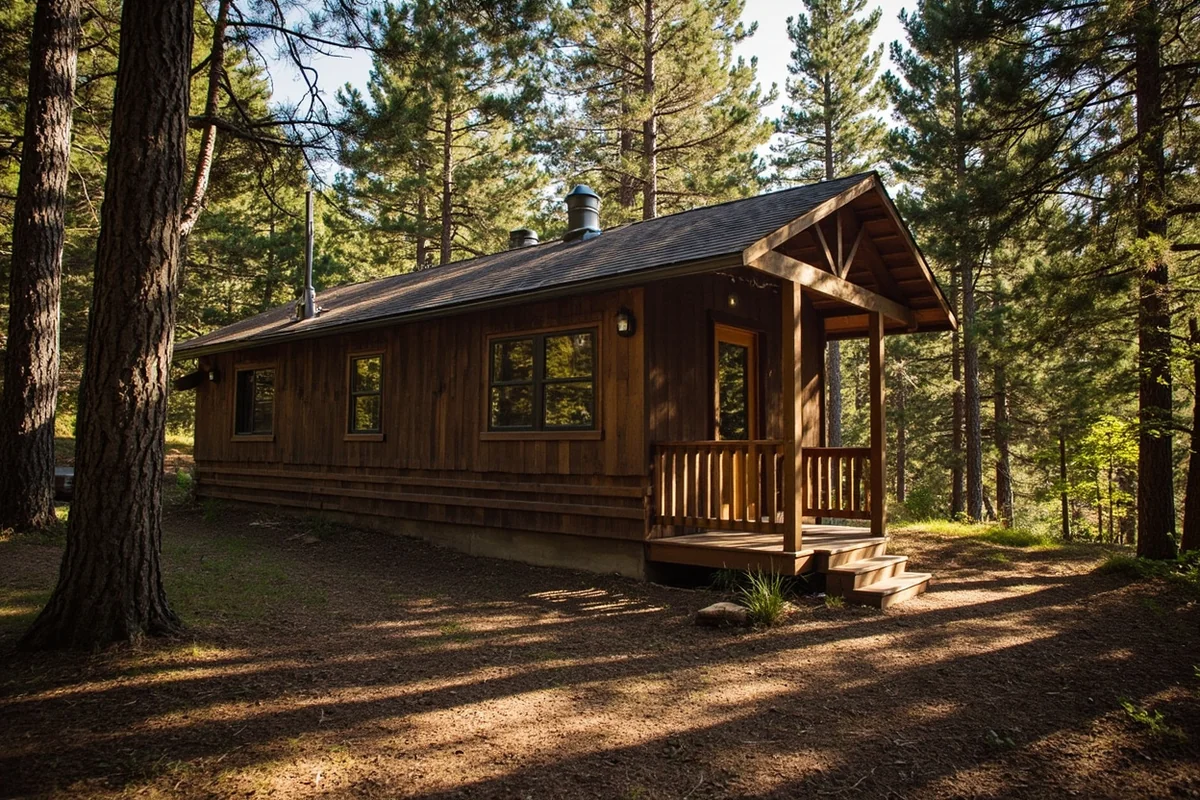
For longer stays or groups, Quinn’s cabins offer more space and privacy. They’re scattered along the property with varying levels of river views.
I haven’t personally stayed in the cabins, but I’ve peeked inside during property tours. They’re rustic-chic with wood interiors and basic kitchenettes.
Cabin rates run $250-400+ per night. If you’re traveling with family or planning a multi-night stay, they’re worth the premium.
Camping Alternative
Quinn’s doesn’t offer on-site camping, but nearby options exist for budget travelers. I’ve heard positive things about informal camping spots along the Clark Fork River, though I haven’t personally tested them.
Day-use pool passes are available if you’re camping nearby, making this a viable budget option during summer months.
My Honest Take on the Harwood House Restaurant
I’ll be direct: I didn’t expect much from the on-site restaurant. Remote Montana resort restaurants often serve mediocre, overpriced food because they know you’re essentially a captive audience.
Harwood House surprised me.
During my September visit, I had a perfectly cooked ribeye with local seasonal vegetables that would’ve impressed me in Missoula or Bozeman. The wine list is small but thoughtfully curated, featuring several Montana producers.
Breakfast offerings include solid standards — eggs, pancakes, bacon — executed well. Nothing innovative, but reliably satisfying after a morning soak.
The atmosphere leans toward classic lodge dining: wood paneling, mounted wildlife, low lighting in the evening. It’s exactly what you’d expect from the setting, and that’s actually fine.
Practical Restaurant Tips
Reservations are strongly recommended for dinner, especially on weekends. I watched several walk-in parties get turned away on a Saturday evening.
Prices are resort-level, meaning expect to pay 20-30% more than you would for equivalent food in a city restaurant. I paid around $55 for my ribeye dinner with one glass of wine.
They accommodate dietary restrictions reasonably well. I overheard staff discussing gluten-free options with another table during my visit.
Planning Your Visit: Timing Matters
When you visit Quinn’s dramatically affects your experience. I’ve been during different seasons and can offer specific guidance.
Summer (June-August)
Peak season. The pools are busiest, rates are highest, and reservations fill weeks in advance. Highway 135 sees its heaviest (though still light) traffic.
On the positive side, summer offers the best weather for hiking nearby trails and the longest daylight hours for river access. Water temperatures can feel slightly too warm when air temps hit 90°F.
Fall (September-November)
My preferred season. Crowds thin significantly after Labor Day. The surrounding hillsides explode with color in late September and early October.
During my recent fall visit, I had pools nearly to myself on a Tuesday afternoon. Evening soaks under crisp autumn skies were transcendent.
Wildlife activity increases as animals prepare for winter. I spotted multiple deer on the property and heard elk bugling in the distance.
Winter (December-February)
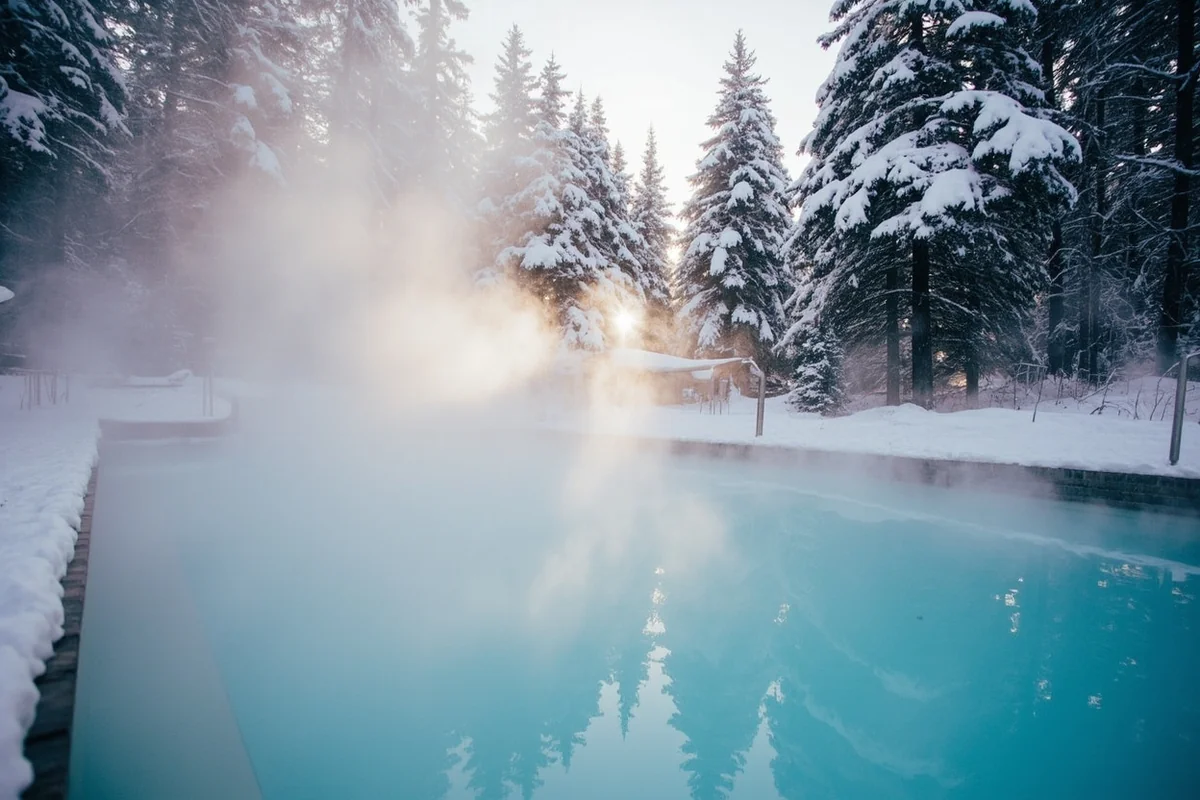
A truly special experience if you’re prepared. Soaking in 106°F water while snow falls around you is bucket-list material.
The drive can be challenging during storms. Highway 135 gets plowed but may be icy. I’d only recommend winter visits if you’re comfortable with mountain driving conditions.
Pool steam intensifies dramatically in cold air, creating an almost mystical atmosphere.
Spring (March-May)
Shoulder season with unpredictable weather. You might get warm sunny days or late-season snow. The Clark Fork River runs high with snowmelt, making it impressive to watch but dangerous to access directly.
Spring offers good value with lower rates and smaller crowds.
Comparing Quinn’s to Other Montana Hot Springs
After soaking across Montana, I can place Quinn’s in useful context compared to alternatives you might be considering.
Bozeman Hot Springs is more accessible if you’re based in southwestern Montana. It’s larger and closer to urban amenities. But it lacks Quinn’s intimate, wilderness-adjacent atmosphere.
Symes Hot Springs in Hot Springs, Montana, offers a historic hotel experience with strong mineral water. It’s less developed than Quinn’s but has authentic character. I’d choose Quinn’s for families, Symes for couples seeking quiet charm.
Wild Horse Hot Springs, also near Hot Springs, provides private pool rentals for true solitude. It’s better for introverts, while Quinn’s suits those who enjoy a social atmosphere.
For primitive soaking, Renova Hot Springs along the Jefferson River offers a completely different experience — no facilities, no fees, no crowds. It’s worth visiting if you want the opposite of resort soaking.
Broadwater Hot Springs in Helena provides a more modern, fitness-center vibe that appeals to locals but lacks Quinn’s resort experience.
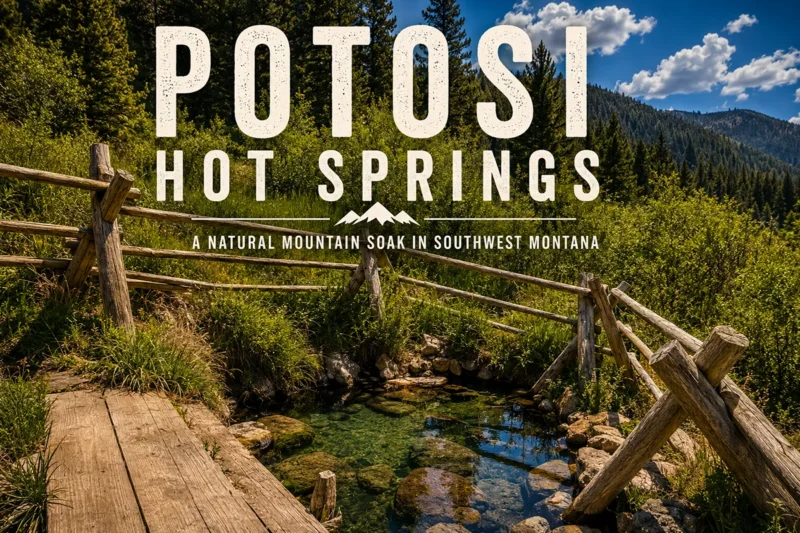
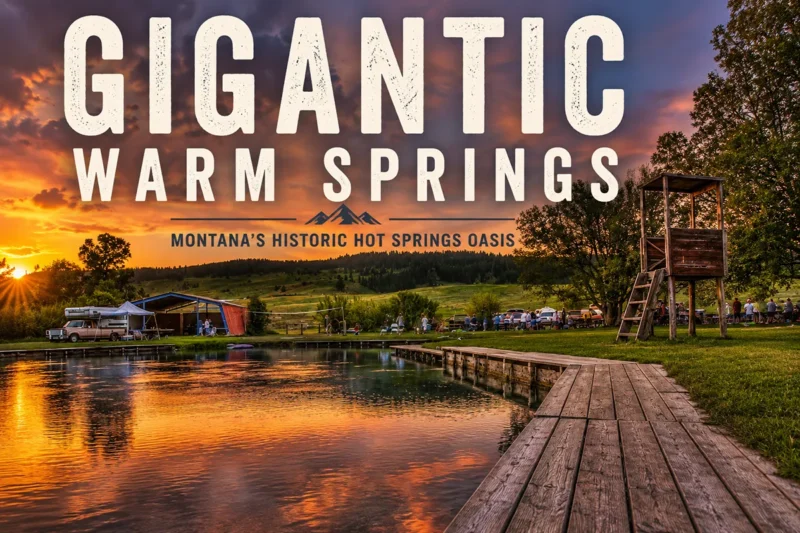
If you’re willing to venture into true backcountry, Potosi Hot Springs and Gigantic Warm Spring offer primitive alternatives worth exploring.
Quinn’s particular strength is combining genuine hot springs with comfortable lodging and good food in a spectacular setting. That combination is harder to find than you’d think.
Day-Use Visitor Guide
Not staying overnight? Quinn’s welcomes day-use visitors, though with some limitations.
Current Pricing and Hours
| Category | Price |
|---|---|
| Adult Day Use | $12-15 |
| Child Day Use (3-12) | $8-10 |
| Day-Use Hours | 10am-9pm (varies seasonally) |
| Overnight Guest Hours | 7am-11pm |
Note: Prices and hours change seasonally. Call ahead to confirm current information, especially during shoulder seasons.
Capacity Limits
Quinn’s limits day-use visitors when pools reach capacity. On busy summer weekends, you might be turned away or asked to wait.
I recommend arriving before noon or after 6pm on weekends to avoid peak crowds. Weekdays rarely have capacity issues except during holidays.
What to Bring (and What to Leave Home)
After multiple visits, I’ve refined my Quinn’s packing list.
Essential Items
- Multiple swimsuits — you’ll want a dry option after your first soak
- Water shoes for the short walk between pools
- Quick-dry towel (though towels are provided for overnight guests)
- Reusable water bottle — hydration is crucial when hot soaking
- Moisturizer — mineral water can be drying on skin
- Book or magazine for pool-side relaxation
- Cash for tips and small purchases
Leave Behind
- Fancy jewelry — mineral water can tarnish metals
- Excessive electronics — embrace the disconnect
- Glass containers — not allowed in pool areas
- Strong expectations for phone service — it’s spotty at best
Nearby Activities Worth Considering
Quinn’s can anchor a broader trip rather than being your sole destination. I’ve explored the surrounding area and found several worthwhile options.
Fishing the Clark Fork
The Clark Fork River flowing past Quinn’s offers legitimate trout fishing. I’m not an angler, but I’ve watched guests pull on waders and walk directly from the resort to the riverbank.
Brown and rainbow trout are the primary targets. Local guides operate in the area if you want guided trips. September and October are particularly productive months, I’m told.
Hiking Options
The Lolo National Forest surrounds Quinn’s with extensive trail networks. Most aren’t immediately adjacent to the resort — you’ll need to drive 15-30 minutes to reach trailheads.
I hiked a short section of the stateline trail during one visit, finding moderate difficulty and beautiful forest scenery. For serious hikers, longer routes penetrate designated wilderness areas.
Wildlife Watching
The corridor between Paradise and St. Regis supports diverse wildlife. I’ve personally spotted deer, osprey, and bald eagles near Quinn’s.
Serious wildlife enthusiasts sometimes use Quinn’s as a base for exploring areas where elk, moose, and even wolves roam. The resort staff can offer current sighting information.
Historic St. Regis
The small town of St. Regis, about 20 minutes south, offers a few restaurants, a gas station, and basic supplies. It’s not a destination itself, but useful for provisioning.
The drive between St. Regis and Quinn’s along Highway 135 is scenic enough to enjoy slowly.
The Not-So-Great Parts: Honest Drawbacks
I’d be doing you a disservice if I only praised Quinn’s. Here’s what I’ve found less impressive.
Remote Location
If anything goes wrong — car trouble, medical emergency, sudden change of plans — you’re far from help. The nearest hospital is in Missoula, over an hour away.
Cell service is unreliable. I couldn’t get consistent data coverage on my phone, and calls dropped frequently. Bring a downloaded map rather than relying on GPS.
Weekend Crowds
Despite its remote location, Quinn’s gets genuinely crowded on summer weekends. The pools that feel magical when empty feel significantly less special when packed with people.
I had moments during a July Saturday visit where the main pool felt more like a crowded city facility than a remote Montana retreat.
Price Point
Quinn’s isn’t cheap. Between lodging, meals, and various incidentals, a couple can easily spend $400+ for an overnight stay.
For that price, you could stay in a Missoula hotel with access to more amenities and more affordable dining. You’re paying a premium for the setting and hot springs access.
Whether that premium is worth it depends entirely on how much you value the unique experience Quinn’s provides.
Limited Dining Alternatives
If Harwood House isn’t to your taste, your only option is driving 20+ minutes to St. Regis for basic alternatives. There’s no grabbing takeout from somewhere else.
Pack snacks if you’re picky. I always bring trail mix and fruit for between-meal munching.
Booking Tips and Best Practices
Based on my experiences, here’s how to optimize your Quinn’s visit.
Reservations
Book lodging at least 2-3 weeks in advance for summer weekends, earlier for holidays. Fall and winter have more availability.
Restaurant reservations should be made when you book your room. Don’t assume you can walk in for dinner.
Best Value Timing
September weekdays offer my favorite combination of good weather, minimal crowds, and reasonable rates. The second week of September is particularly sweet — warm days, cool nights, fall colors beginning, and summer crowds completely gone.
Winter weekday visits also offer good value if you don’t mind the cold drive.
Extend Your Stay
One night feels rushed. I recommend two nights minimum to properly decompress and enjoy multiple soaking sessions.
My ideal Quinn’s trip is three nights: arrive afternoon one, full day of soaking and exploring day two, leisurely departure day three.
Accessibility Considerations
The resort terrain includes uneven ground and stairs between some pool areas. While the main pool area is reasonably accessible, reaching all six pools requires mobility.
I observed that staff seemed helpful and accommodating when I saw guests with mobility aids navigating the property. If you have specific accessibility needs, calling ahead to discuss arrangements is wise.
Pool entry is via traditional steps — no zero-entry or lift options that I observed.
Traveling with Kids vs. Adults-Only
Quinn’s accommodates both demographics, but the experience differs significantly.
Family Visits
Kids generally love the pools, especially the cool pool and main pool. The resort is safe and enclosed, with no roads cutting through.
However, hours of pool time can exhaust children, and dining options are limited to what’s on-site. Bring games or activities for the lodge room.
Couples and Adults
The adults-only pool is your sanctuary. Combined with evening dinners and late-night soaks under stars, Quinn’s creates genuine romance potential.
I’d suggest adults traveling without kids request lodging closer to the adults-only pool and plan multiple extended soaking sessions.
For a different adult-focused experience, Nimrod Hot Springs offers more rustic privacy, while Big Medicine Hot Springs combines soaking with cultural history.
Final Thoughts: Is Quinn’s Worth It?
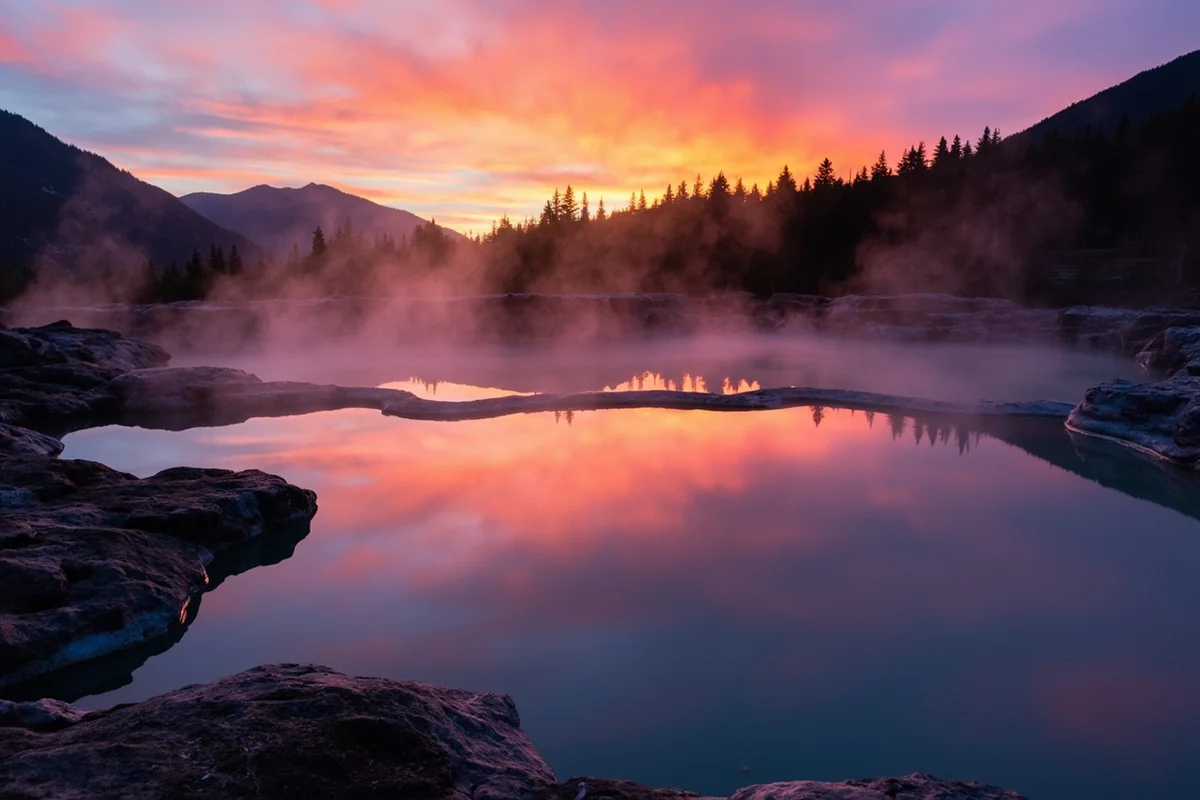
Sitting in the hot pool during my most recent visit, watching the Clark Fork River flow past as the evening light faded, I felt the particular magic that keeps bringing me back.
Quinn’s Hot Springs Resort isn’t for everyone. It’s remote, relatively expensive, and lacks urban convenience.
But for travelers who prioritize authentic natural experiences over polish, who value disconnecting over staying connected, and who find genuine joy in soaking in mineral water surrounded by wilderness — Quinn’s delivers something increasingly rare.
It’s not the biggest hot springs resort in Montana. It’s not the cheapest. It’s not the easiest to reach.
What it is: a genuine escape into the wild northwestern corner of a wild state, with hot water rising from the earth as it has for thousands of years.
That’s worth the drive.
Frequently Asked Questions
How much does it cost to visit Quinn’s Hot Springs Resort in Montana?
Day passes for Quinn’s Hot Springs run around $10-12 for adults, making it one of the more affordable hot springs in Montana. If you’re staying overnight, room rates typically range from $100-200 per night depending on the season, and resort guests get complimentary pool access included.
Where is Quinn’s Hot Springs Resort located and how do I get there?
Quinn’s Hot Springs Resort is located in Paradise, Montana, about 75 miles northwest of Missoula along Highway 135 in the scenic Clark Fork River valley. The drive from Missoula takes roughly 1.5 hours, and the resort is easily accessible by car year-round with no dirt roads or mountain passes to navigate.
What is the best time of year to visit Quinn’s Hot Springs Montana?
I personally love visiting Quinn’s Hot Springs during winter when you can soak in the warm pools while snow falls around you—it’s a magical Montana experience. Summer is great for combining your soak with nearby hiking, but expect larger crowds. Shoulder seasons like September and October offer pleasant weather and fewer visitors.
Are there overnight accommodations at Quinn’s Hot Springs Resort?
Yes, Quinn’s offers a variety of lodging options including cozy lodge rooms, rustic cabins, and larger vacation homes that can accommodate families or groups. All overnight guests receive unlimited access to the hot springs pools during their stay. I’d recommend booking well in advance for weekend stays, especially during summer months.
Is Quinn’s Hot Springs family-friendly and can I bring kids?
Quinn’s Hot Springs is very family-friendly with multiple pools at varying temperatures, including a cooler pool that’s perfect for children. Kids of all ages are welcome, though children under a certain age must be supervised by adults at all times. The resort also has an on-site restaurant, making it convenient for families who want to spend the whole day.
What should I bring to Quinn’s Hot Springs Resort Montana?
Bring your own swimsuit, towel, and water shoes since the pool decks can get slippery. I always pack a reusable water bottle because soaking in hot springs can dehydrate you quickly. If you’re visiting in winter, bring a warm robe or cover-up for walking between pools in the cold mountain air.
Does Quinn’s Hot Springs Resort have food and dining options?
Quinn’s has an on-site restaurant and tavern called the Harwood House that serves breakfast, lunch, and dinner with classic American fare and Montana comfort food. The food is surprisingly good for a hot springs resort, and they have a full bar with local Montana beers on tap. During peak season, I recommend making dinner reservations in advance.