There’s a particular kind of stillness you only find at Montana’s wilder hot springs — the kind where the only sound is water moving over rock and the only company is the occasional heron working the river.
Renova Hot Springs, tucked along a side channel of the Jefferson River south of Whitehall, is one of the best places in Montana to experience that stillness — but it comes with real caveats around access and legal status that every visitor should understand before driving down Point of Rocks Road.
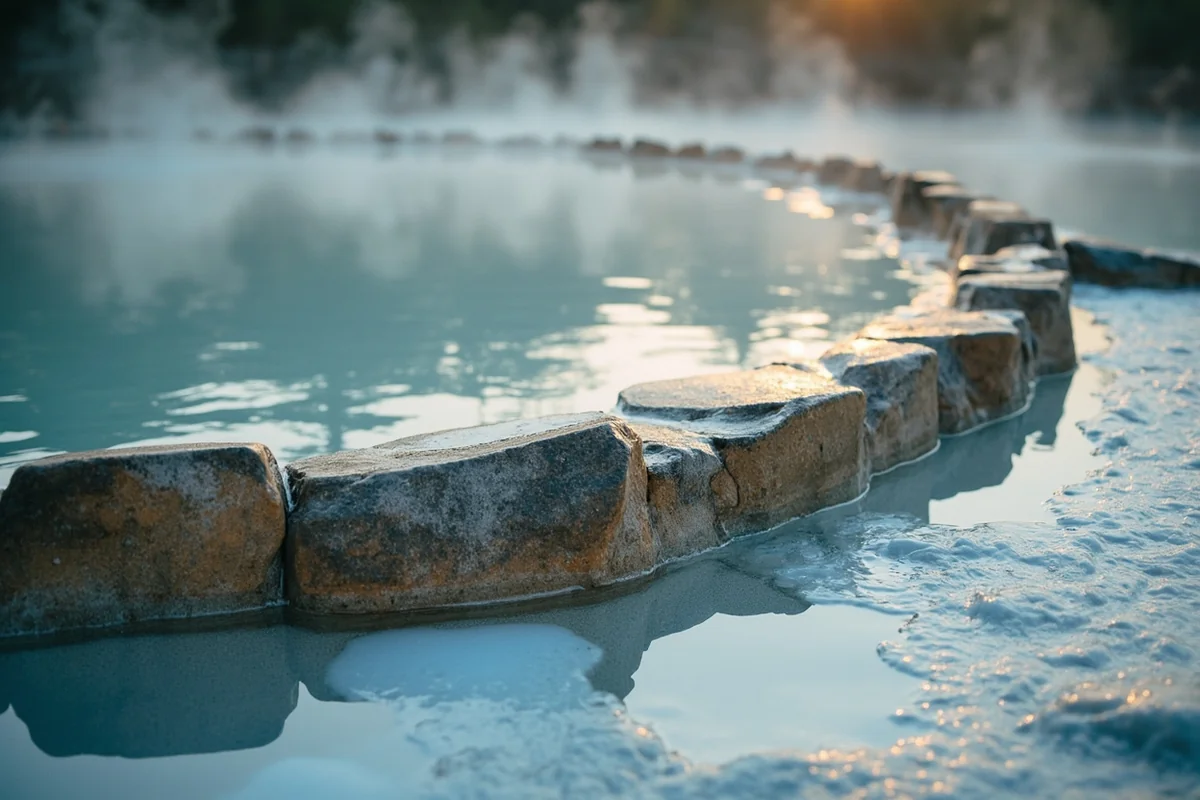
- Renova Hot Springs is a primitive, two-pool natural soak on a side channel of the Jefferson River, approximately 10–12 miles south of Whitehall, Montana — at the foot of the Tobacco Root Mountains.
- Source water temperatures run 110–122°F, but actual pool temperatures depend heavily on Jefferson River levels — too high and the pools are submerged; too hot and the soak is unbearable. Optimal river flow is around 700 CFS (check the USGS gauge at Silver Star/Parsons Bridge).
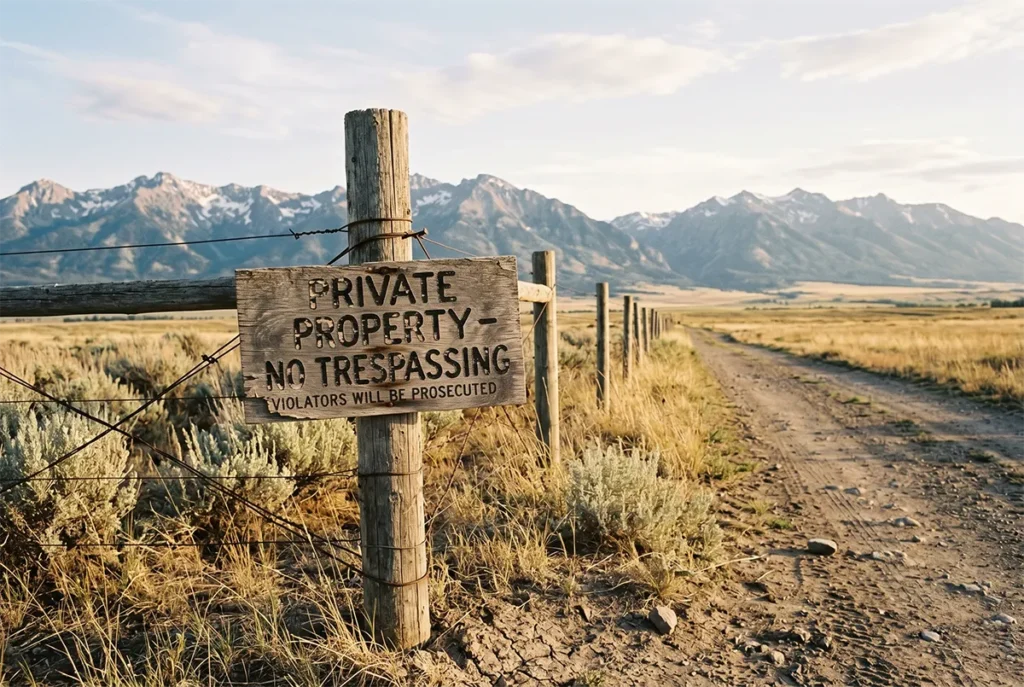
- Critical legal note: Madison County Sheriff’s Office has declared Renova “off-limits” to the public, and the access trail crosses private land owned by five separate out-of-state owners. The pool itself sits in public river channel — but legally reaching it is complicated. Read the access section below before deciding to visit.
- No facilities, no fees, clothing optional. Best window is mid-July through early October when river flow drops.
- Better-credentialed alternatives nearby: Potosi Hot Springs, Norris Hot Springs, and Bozeman Hot Springs.
Liked this article?
Add Roaming Montana as a preferred source so you see more of our articles and guides on Google.
What Renova Hot Springs Actually Is
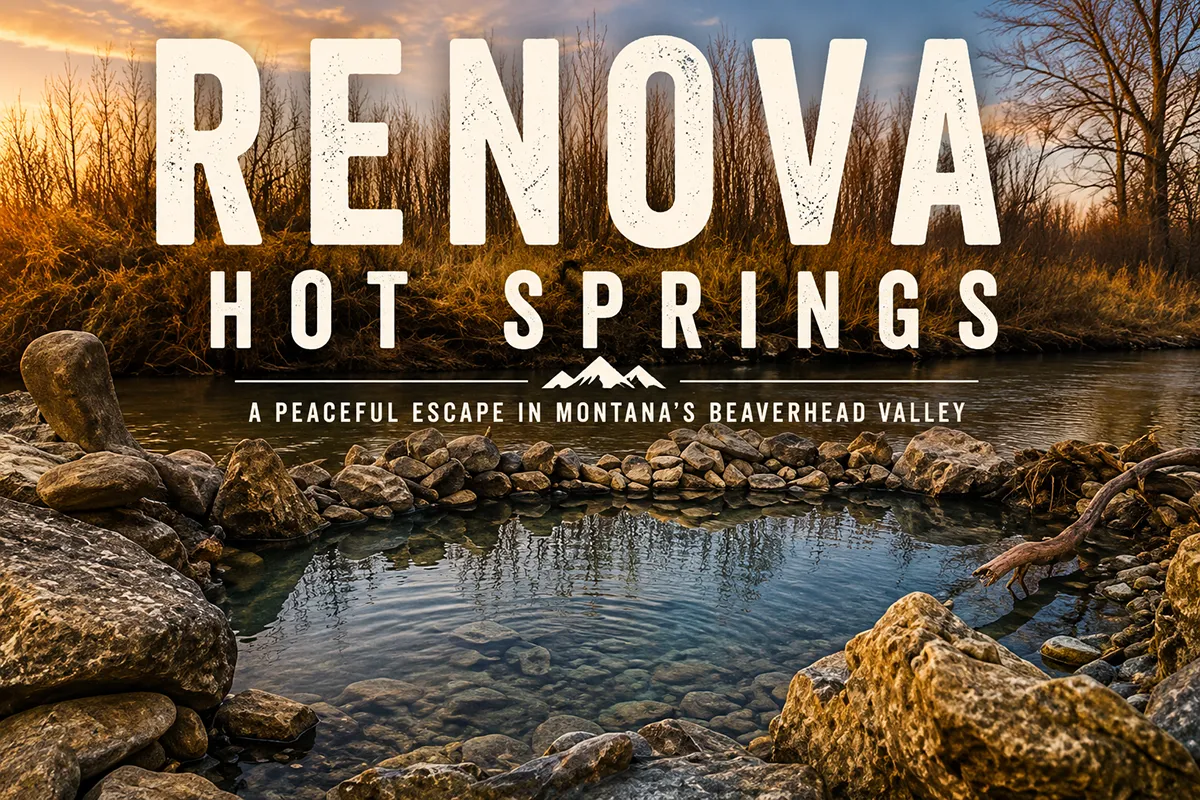
Renova consists of two rock-walled soaking pools built by volunteers in a side channel of the Jefferson River. The thermal water seeps from the earth at around 110–122°F, and the rock walls create dams that hold the hot water back from the much colder Jefferson River — though the cold river can mix in (or fully flood) the pools depending on the season’s water level.
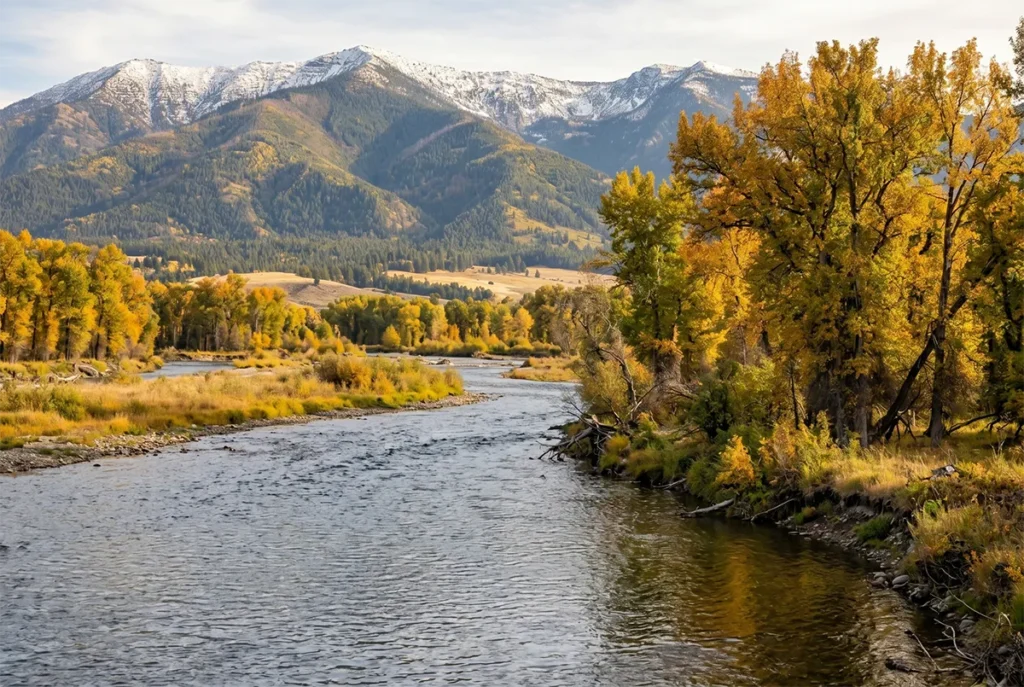
The setting is genuinely beautiful. The Tobacco Root Mountains rise to the west. Cottonwoods line the river. The Jefferson Valley’s mix of grassland and rocky outcrops gives the place an open, unhurried feel that’s harder to find at developed springs.
When conditions are right and the pools are at a soakable temperature, Renova is one of the most peaceful primitive soaks in Montana.
When conditions aren’t right, it’s submerged, scalding, or both.
For a broader survey of the state’s geothermal landscape, see our Montana hot springs hub and the best natural hot springs in Montana roundup.
Read This Before You Visit: The Access Reality
This is the section other travel guides skip. It matters for both your safety and your legal standing.
The pool itself sits in the Jefferson tributary riverbed, which is technically public land in Montana under the state’s stream-access law. So far so good.
But the only practical access trail crosses private land — an old mining claim with five different owners, several of whom live out of state.
Getting formal permission to cross is genuinely difficult: there’s no single landowner to ask. Visitors have used this trail informally for decades, but it’s not a public right-of-way.
On top of that: the Madison County Sheriff’s Office has officially declared Renova Hot Springs off-limits to the public. During the COVID-19 pandemic in 2020, the Madison County Board of Health posted closure signs at the trailhead.
Both designations remain part of the official record. Enforcement has reportedly been inconsistent, and many people still visit — but you should know the situation before you go.
What this means in practice:
- Visiting Renova may involve trespassing depending on the exact route you take and the current posting situation.
- Closure signs may or may not be present when you arrive. Their absence is not legal permission.
- If a landowner or law enforcement asks you to leave, leave immediately and without argument.
- You assume your own risk for this visit. Roaming Montana cannot guarantee current legal access, and access status changes year to year.
If you want a similar primitive experience without the legal complication, the best alternatives are Potosi Hot Springs (private cabin retreat, but legally clear), Norris Hot Springs (developed but rustic, with a small fee), or the upper soaking pools at Bozeman Hot Springs.
For visitors who proceed, the rest of this guide assumes you’ve read this section and accepted the responsibility.
Where Renova Hot Springs Is Located
The springs are along a side channel of the Jefferson River in Madison County, Montana, at the foot of the Tobacco Root Mountains south of Whitehall.
- Approximate address per several sources: 599–681 Point of Rocks Road, Whitehall, MT 59759
- Coordinates: 45°54′02″ N, 112°06′20″ W
- Distance from Whitehall: ~10–12 miles south
- Distance from Bozeman: ~1 hour 45 minutes (about 75 miles)
- Distance from Butte: ~35 miles east
For broader context on the surrounding region, see our Whitehall guide and Three Forks guide — both worth a stop on a Jefferson River day trip.
Directions From the Major Cities
These are the accurate directions per multiple authoritative sources. The “Highway 2” direction in the previous version of this guide was incorrect — Highway 2 runs across far-northern Montana and does not serve the Whitehall area.
From Bozeman:
- Head west on I-90 toward Whitehall (about 60 miles).
- Take the Whitehall interchange and head south on Montana Highway 55 / 287.
- Drive ~10–12 miles south until you reach the Waterloo turnoff.
- Turn onto the Waterloo road, drive south ~0.5 mile and cross the bridge over the Jefferson River.
- Take the first right after the bridge (some sources call this the Loomont road).
- Continue ~2 miles and turn left onto Point of Rocks Road.
- Follow Point of Rocks Road for ~3.5 miles north along the river. You’ll see a small parking area near the fishing access; the springs are about 200 yards beyond.
- Short walking path down the embankment to the river (~0.1 mile).
From Butte:
- Take I-90 east to the Whitehall interchange.
- Follow the same directions from step 2 above.
From Helena:
- Drive south to Boulder, continue to Whitehall via Highway 69 or I-15, then follow from step 2.
Vehicle requirements: The final segment is unpaved (~7 km / 4 miles of dirt). Standard cars handle it in dry weather. After rain or during spring runoff, the road can be muddy enough to require higher clearance. The embankment trail down to the river is short but moderate — not suitable for people with mobility limitations.
The Pools: What to Expect
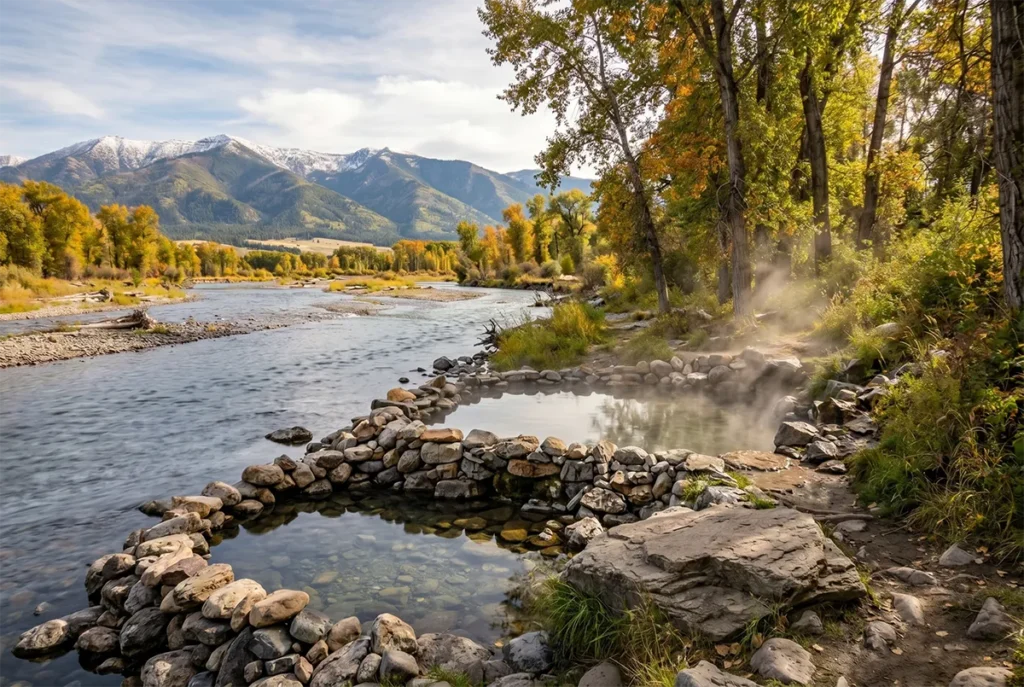
There are two main soaking pools, both rock-walled and built by volunteer maintainers over the years. They’re not always in identical shape — visitors occasionally re-stack rocks after high water disturbs the dams.
The Upper Pool
The pool closer to the main thermal seep runs hottest. When the river is low, this pool can hit 115°F or higher — too hot for many soakers without adding river water. A common trick recommended by experienced visitors: bring a tennis ball, which can plug or unplug one of the flow channels to fine-tune the temperature.
The Lower Pool
The lower pool sits closer to the Jefferson and mixes more readily with river water. Temperatures here are usually milder — often around 100–108°F when conditions cooperate. This is the easier soak for most people.
How Pool Temperature Actually Works at Renova
Pool temperature is determined almost entirely by river flow. High river = pools flooded with cold water. Low river = pools dominated by thermal water, sometimes too hot.
Per Jeff Birkby’s Touring Hot Springs: Montana and Wyoming, heavy agricultural irrigation draws on the Jefferson from late July through mid-September, which paradoxically creates Renova’s best soaking conditions — by lowering the river enough that the pools warm up but don’t fully submerge.
Check the river level before you drive. The USGS gauge at Silver Star (Parsons Bridge) is the right reference. Around 700 CFS is typically the sweet spot. Significantly higher and pools are likely submerged.
Water Temperature, Mineral Content, and What Soaking Feels Like
When conditions are right, Renova delivers a genuinely excellent primitive soak. The water has a soft, mineral feel — slightly sulfurous but milder than many Montana thermal springs.
- Source temperature: 110–122°F
- Best pool temperature for sustained soaking: ~104–108°F
- Mineral profile: Moderate sulfur, otherwise relatively neutral
The cold-plunge option directly into the Jefferson River is one of Renova’s defining experiences. Hot soak → cold river → back to hot soak is a self-administered contrast therapy that, in my experience, leaves the body remarkably energized.
Best Time of Year to Visit
| Season | What to Expect | Pool Conditions |
|---|---|---|
| Late spring (May–early June) | Snowmelt runoff peaks; muddy access road | Pools usually submerged or unusable |
| Mid-June through mid-July | Conditions improving; mosquitoes peak | Variable; check CFS |
| Late July through September | Optimal — irrigation draws drop river flow | Best soaking window |
| October | Beautiful cottonwood color; cool air | Often still excellent; check forecast |
| November–April | Road can be muddy or icy; limited access | Variable; cold-weather soakers only |
The best single window is mid-July through mid-September, when agricultural irrigation reduces Jefferson River flow and the pools settle into their best temperatures. For broader summer planning, see Montana summer and best time to visit Montana.
Bug pressure peaks in June — see our Montana bug season guide.
Practical Info
| Detail | Information |
|---|---|
| Location | Point of Rocks Road, Madison County (south of Whitehall) |
| Coordinates | 45°54′02″ N, 112°06′20″ W |
| Cost | Free (no fees collected) |
| Source Water Temperature | 110–122°F |
| Pool Soaking Temperature | Variable, ideally 100–108°F |
| Number of Pools | Two main rock-walled pools |
| Facilities | None — no restrooms, changing rooms, or trash bins |
| Cell Service | Limited to none |
| Vehicle | Standard car in dry conditions; higher clearance after rain |
| Hike-in | ~0.1 mile down a moderate embankment |
| Clothing | Optional |
| Pets | Dogs on leash; not in the pools |
| Best Season | Mid-July through early October |
| Legal Access Status | Disputed — see access reality section above |
What to Bring
- Water shoes or sandals — rock-walled pools, uneven embankment
- Two towels — one for drying, one for sitting
- Drinking water — geothermal soaking dehydrates fast
- Snacks — no facilities for many miles
- Trash bags — pack out everything, including others’ garbage
- Headlamp if visiting at dawn or dusk
- Layered clothing — Tobacco Root foothills can be cool even in summer
- Tennis ball (per regulars) — useful for adjusting pool flow
- Sunscreen + bug spray in summer
- Bear awareness — this is bear country; see our Montana bear guide
What Not to Bring
- Glass containers — one broken bottle ruins the pool
- Soap or shampoo — contaminates the thermal water
- Bluetooth speakers — let the river be the soundtrack
- Heavy alcohol — hot water + alcohol = serious dehydration and impaired judgment
How to Soak Respectfully If You Choose to Visit
Renova’s continued informal access depends entirely on visitor behavior. The Sheriff’s “off-limits” designation became more rigid after years of accumulated complaints about trash, parties, fights, and damage.
Pack out everything. Every wrapper, bottle cap, towel tag, cigarette butt. If you pack out more than you brought in, you’re part of the solution.
Keep the volume low. Quiet conversation only. No music. No yelling.
Respect clothing-optional culture both ways. Renova has historically been clothing-optional. Some visitors prefer suits; others don’t. Adults handle this with mutual respect — eyes forward, no commentary, no photos.
Don’t share precise GPS coordinates on social media. Social media exposure has accelerated the closure of more Montana hot springs than any other single factor.
Leave the rock pools as good as or better than you found them. If a stone has shifted, set it back. If a wall is failing, see if you can stabilize it.
If approached by a landowner or law enforcement, leave immediately and politely.
How Renova Compares to Other Montana Hot Springs
Because Renova’s access is so complicated, it’s worth knowing what you’d get at the legally clear alternatives nearby.
For a similar primitive soak with cleaner legal status:
- Potosi Hot Springs — Pony, MT. Private cabin retreat with a primitive-feeling mineral pool. Cabin guests only.
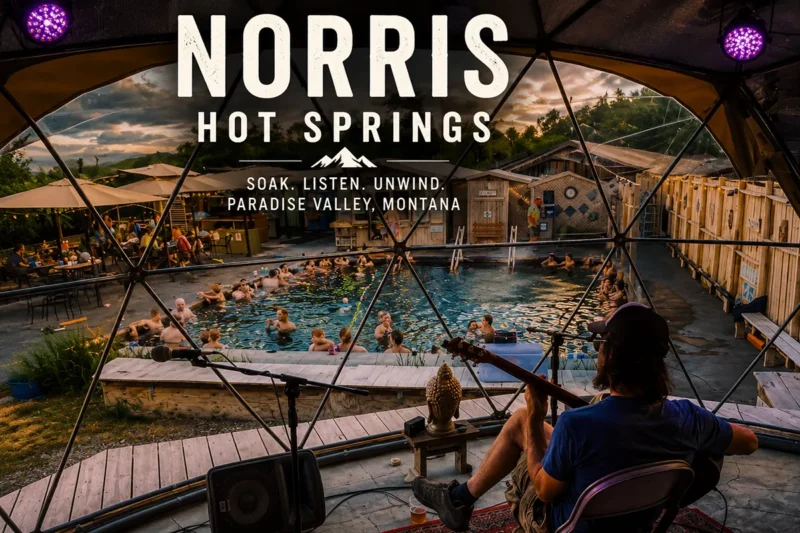
- Norris Hot Springs — Between Bozeman and Helena. Developed but rustic, single artesian pool, day-use fee, live music on weekends.
- Wild Horse Hot Springs — Hot Springs, MT. Communal artesian plunge pools, day use and overnight.
For developed soaking close to the Renova area:
- Bozeman Hot Springs — 12 pools (59–106°F), saunas, fitness facilities.
- Broadwater Hot Springs — Helena. Seven outdoor pools, bar and grill, year-round.
- Elkhorn Hot Springs — Pioneer Mountains. Historic lodge with mineral pools.
For full resort hot springs:
- Chico Hot Springs Resort — Paradise Valley. Two outdoor pools, full resort.
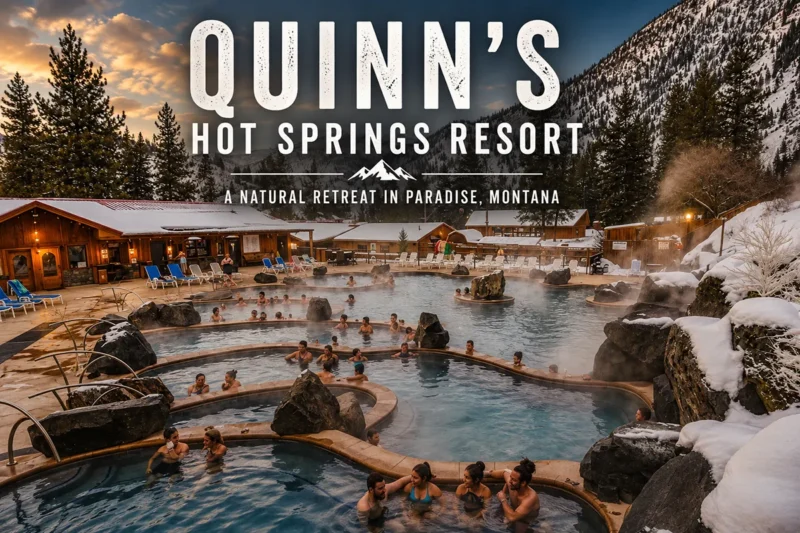
- Quinn’s Hot Springs Resort — Clark Fork canyon. Seven pools (90–106°F).
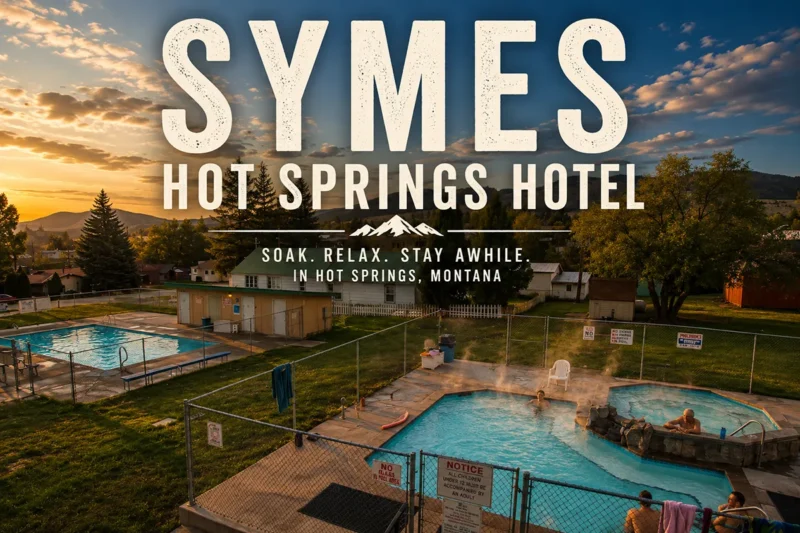
- Symes Hot Springs Hotel — Hot Springs, MT. Historic 1928 resort.
Other Montana primitive options:
- Nimrod Hot Springs — Off I-90 east of Missoula. Cool natural pool (~70°F), cliff jumping, underwater cave.
- Gigantic Warm Springs — Near Great Falls. Large, mild-temperature pool.
- Big Medicine Hot Springs — Camas, on the Flathead Reservation.
For the broader landscape, see our best natural hot springs in Montana and Montana hot springs hub.
Combining Renova With a Larger Trip
The Whitehall–Three Forks–Jefferson River area is one of Montana’s most underrated weekend bases. Recommended pairings:
Lewis & Clark Caverns State Park is ~15 miles east on Highway 2 and offers Montana’s most spectacular limestone cavern tour. Easy half-day add-on.
Three Forks (~25 miles east), the official headwaters of the Missouri River, has the Headwaters State Park, historic mile-markers, and several quiet small-town restaurants. See our Three Forks guide for more.
Fly fishing on the Jefferson — the river itself is a legitimate Montana fly-fishing destination, particularly in late summer when irrigation draws drop flows into prime soaking and prime wading conditions.
Lewis & Clark Caverns Campground is the closest developed camping. Toll Mountain Campground is another nearby option. There’s also dispersed BLM camping along sections of the Jefferson.
Tobacco Root Mountains hiking opens up to the west — high-elevation lakes, ghost towns from the 1860s gold rush, and some of Montana’s least-traveled wilderness.
For broader planning context, see our Montana trip planning guide and things to do in Montana hub.
Safety Considerations
The source water can exceed 122°F — hot enough to cause burns. Never enter a pool without testing the temperature first. Don’t sit directly on a thermal seep.
The Jefferson River has current. Even when low, the river runs fast enough to sweep a swimmer downstream. Don’t plunge in if you can’t see and feel where the pool ends and the river begins.
No cell service. No nearby help. Tell someone where you’re going and when to expect you back.
Bear country. Black bears are present throughout the Jefferson Valley. Grizzly sightings are rarer but documented. Bear spray is recommended for any extended outdoor time in this area — see our Montana bear guide.
Heat stress is the most common medical issue at primitive hot springs. Stay hydrated, alternate hot/cold, don’t soak more than 20–30 minutes at a time without a break, and listen to your body.
Don’t drink, swim, or soak alone if you can avoid it. Buddy systems matter at remote, unsupervised water.
A Final Honest Assessment
Renova Hot Springs at its best — a low-flow August evening, two soaking pools at the right temperature, the Tobacco Roots catching the last light, a heron working the river fifty yards downstream — is genuinely magical, and one of the best primitive soak experiences in Montana.
Renova at its more typical — uncertain legal status, a flooded or scalding pool, a parking situation that may put you at trespassing risk — is a disappointment that could have been avoided by choosing a legally clear alternative.
If you go, go with full information. Read the access section above. Check the Jefferson River flow before driving down. Pack out everything. Leave the place better than you found it.
If you’d rather have a guaranteed soak without the legal complication, Bozeman Hot Springs, Norris Hot Springs, and Potosi Hot Springs all sit within an hour of Renova and deliver excellent experiences with none of the legal uncertainty.
Frequently Asked Questions
Where exactly is Renova Hot Springs located?
Renova Hot Springs is on a side channel of the Jefferson River in Madison County, Montana, approximately 10–12 miles south of Whitehall at the foot of the Tobacco Root Mountains. The access point is along Point of Rocks Road off the Waterloo turnoff from Montana Highway 55/287. Approximate coordinates: 45°54′02″ N, 112°06′20″ W.
Is Renova Hot Springs legally open to the public?
The legal status is complicated. The pools themselves sit in a public river channel, but the only practical access trail crosses private land owned by five separate out-of-state owners. The Madison County Sheriff’s Office has declared the springs “off-limits” to the public, and the Madison County Board of Health posted closure signs in 2020. Many people still visit, but there is potential trespassing risk depending on the route and current posting situation.
How hot is the water at Renova Hot Springs?
Source water at Renova is 110–122°F, but actual pool temperatures depend heavily on Jefferson River flow. When river flow is high, cold river water dilutes the pools (often making them too cool); when flow is very low, the thermal water dominates (sometimes too hot). The optimal soaking window is when river flow is around 700 CFS at the Silver Star/Parsons Bridge USGS gauge — typically mid-July through mid-September.
How many pools are at Renova Hot Springs?
Two main rock-walled pools, built and maintained informally by volunteer visitors over the years. Configuration can shift after high-water events disturb the rock walls.
What is the best time of year to visit Renova Hot Springs?
Mid-July through early October. This is when agricultural irrigation reduces Jefferson River flow enough to keep the pools above water but warm enough to soak. Late spring and early summer often see pools submerged by snowmelt runoff. Winter access is possible but the road can be muddy or icy.
Do I need a four-wheel drive vehicle to reach Renova Hot Springs?
Not in dry summer conditions — a standard car handles the unpaved final stretch fine when the road is dry. After rain or during spring runoff, higher clearance is recommended. Always check road conditions before driving down.
Is Renova Hot Springs clothing-optional?
Yes, the local custom is clothing-optional. Most visitors during peak times wear swimsuits; nudity is more common during early morning or evening hours. Treat the policy with adult respect — eyes forward, no commentary, no photos.
Are dogs allowed at Renova Hot Springs?
Per multiple sources, dogs are allowed on leash but not in the soaking pools. The hot mineral water can be harmful to dogs, and shared pools should not have animals in them.
What should I bring to Renova Hot Springs?
Water shoes, two towels, drinking water, snacks, trash bags, headlamp, layered clothing, sunscreen, bug spray (in summer), and bear awareness gear. Don’t bring glass containers, soap, speakers, or heavy alcohol. Some regulars bring a tennis ball to help adjust pool flow.
What’s the best legal alternative to Renova Hot Springs nearby?
For a similar primitive feel without the legal complication, Potosi Hot Springs near Pony is the closest cabin-based option. For a developed but rustic experience nearby, Norris Hot Springs is the most reliable single-pool soak. For fuller developed amenities, Bozeman Hot Springs is about an hour east.