I was standing outside a small diner in Havre during a January visit when an old-timer pointed to the horizon and said, “You think this is cold? My grandfather survived the winter that killed a million cattle.”
That conversation sparked my obsession with understanding how brutal Montana winters have genuinely been—and why travelers today need to respect what this state can unleash between November and April.
When you dive into Montana history, you quickly realize that winter isn’t just a season here—it’s a force that has repeatedly reshaped the state’s economy, culture, and population. Some winters were so devastating they ended entire industries overnight.
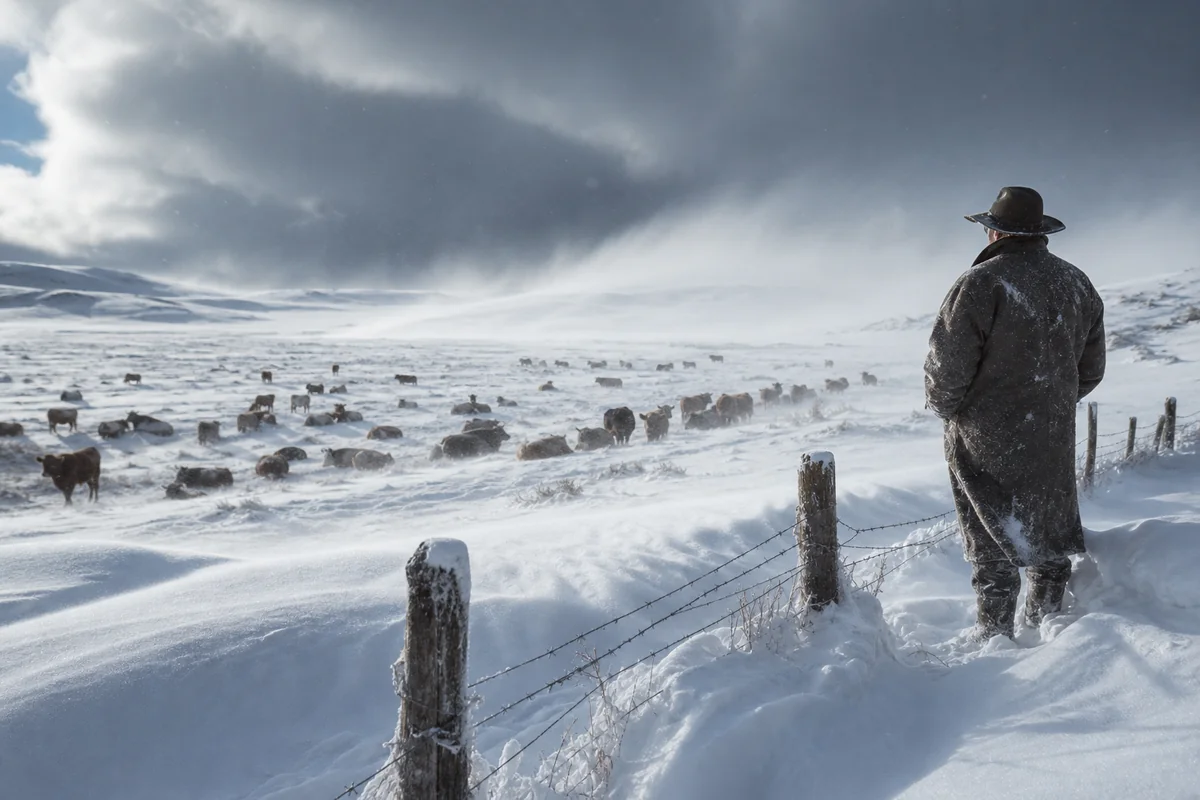
- The 1886-87 “Great Die-Up” killed 60% of Montana’s cattle and ended the open-range cattle era
- January 1888’s “Schoolchildren’s Blizzard” caught settlers without warning on a mild day
- The 1949 winter trapped thousands across Montana for months with record snowfall
- Rogers Pass holds the record for coldest temperature in the lower 48: -70°F in 1954
- Modern travelers should prepare for sudden weather changes and carry emergency supplies November through April
- Several communities still commemorate these historic winters through museums and annual events
Liked this article?
Add Roaming Montana as a preferred source so you see more of our articles and guides on Google.
Understanding Montana’s Unique Winter Vulnerability
Before I walk you through the specific deadly winters, you need to understand why Montana is particularly susceptible to catastrophic winter events. During my research trips across the state, I’ve come to appreciate the geography that makes this place both beautiful and dangerous.
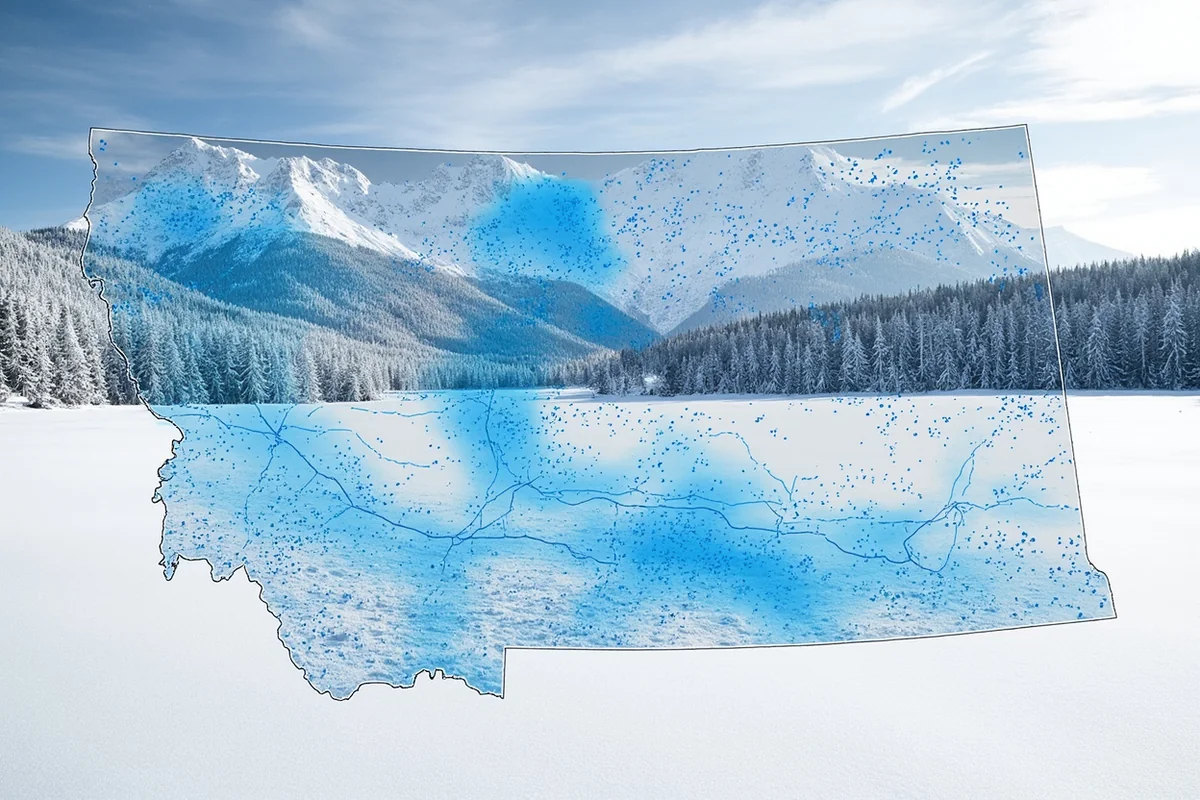
Montana sits at the convergence of several weather systems. Arctic air pours down from Canada through what meteorologists call the “Alberta Clipper” pathway. Meanwhile, Pacific moisture systems crash into the Rocky Mountain front, dumping enormous amounts of snow.
The Hi-Line region—that stretch of Highway 2 running along the northern border—has virtually no natural windbreaks. When I drove from Glasgow to Havre last February, I watched ground blizzard conditions develop in minutes from what had been clear skies.
Eastern Montana’s prairies can see temperature drops of 40-50 degrees in just hours when a cold front arrives. This isn’t an exaggeration—I’ve personally experienced a 35-degree temperature drop in Helena over three hours during a November visit.
The Catastrophic Winter of 1886-1887: When an Industry Died
Every serious discussion of Montana’s worst winters must begin with the harsh Montana winter of 1886-1887. I’ve spent considerable time researching this particular event because it fundamentally transformed the American West.
During my visit to the Montana Historical Society in Helena, I studied first-hand accounts from ranchers who survived that winter. Their descriptions still give me chills—literally. The summer of 1886 was brutally hot and dry, leaving rangeland overgrazed and cattle already weakened heading into fall.
A Perfect Storm of Conditions
November brought the first major blizzard, unusual for its timing and intensity. Temperatures plunged below zero and stayed there. Then came the ice.
What made 1886-87 uniquely deadly was the crusting. Warm chinook winds briefly melted surface snow, which then refroze into an ice sheet cattle couldn’t break through to reach grass beneath.
By January 1887, cattle were literally starving while standing on top of their food. Ranchers reported animals eating cottonwood bark, sagebrush—anything they could reach.
The Death Toll
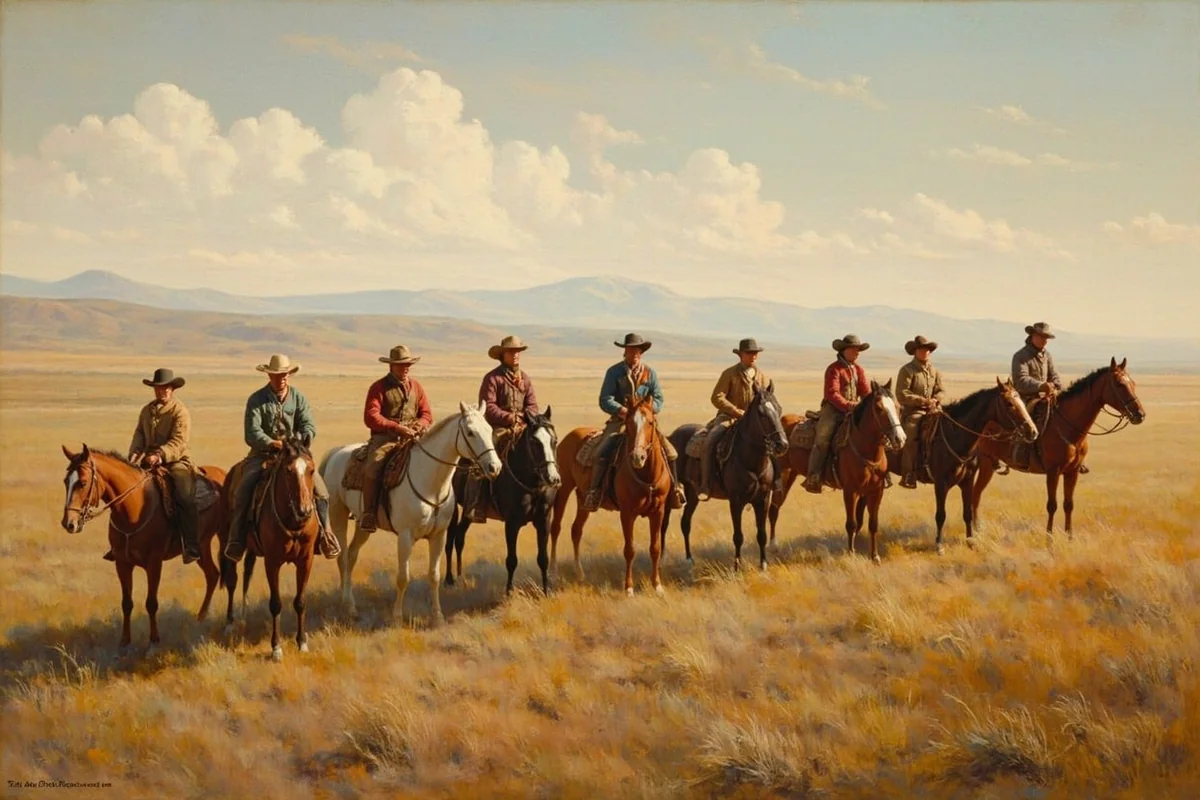
Conservative estimates suggest 60% of Montana’s cattle died that winter. Some ranchers lost 90% of their herds. In real numbers, we’re talking about somewhere between 300,000 and 1,000,000 animals.
The economic devastation was absolute. Major ranching operations simply ceased to exist. This event fundamentally changed how ranching worked across the entire West—suddenly, you couldn’t just let cattle roam open range and expect them to survive winters.
When I visited the Range Riders Museum in Miles City, I saw Charlie Russell’s famous watercolor “Waiting for a Chinook.” Russell painted a gaunt, dying steer surrounded by wolves—it became the defining image of this catastrophe.
What Modern Travelers Can Learn Here
Several Montana museums preserve artifacts and stories from this winter. The Montana Historical Society Museum in Helena has an excellent exhibit. In Miles City, local historians maintain oral histories passed down from survivors.
I recommend visiting the Powder River County Museum in Broadus if you’re in southeastern Montana. The staff there shared personal family stories with me that you won’t find in any textbook.
Understanding how Montana’s pioneer legacy was shaped by this catastrophe gives you genuine appreciation for the resilience required to settle this state.
The Schoolchildren’s Blizzard of 1888
Just one year after the Great Die-Up, Montana experienced another devastating winter event—though this one targeted human lives rather than livestock. The January 12, 1888, blizzard earned its haunting name because of the children who died trying to walk home from school.
I first learned about this storm while visiting a one-room schoolhouse preservation site near Lewistown. The docent, whose great-grandmother survived that day, told me the story with tears in her eyes.
Why This Storm Was So Deadly
The morning of January 12th was unseasonably warm—temperatures in the 30s and 40s across Montana and the northern Plains. Children walked to school in light clothing. Many didn’t even bring coats.
The blizzard struck around midday with almost no warning. Within minutes, temperatures dropped below zero. Visibility fell to nearly nothing. Wind-driven snow made breathing difficult.
Teachers faced impossible choices. Send children home, risking they’d get lost in the blinding snow? Keep them overnight in unheated schools with dwindling fuel supplies?
The Human Cost
Across Montana and the northern Plains, at least 235 people died—possibly many more, as frontier record-keeping was incomplete. Many victims were children under age 16.
Some of the most heartbreaking accounts involve teachers who tried to lead students to safety. Several teachers died protecting their students, their bodies found still positioned over the children they’d tried to shield from the cold.
In Montana specifically, deaths occurred across the Hi-Line and central regions. Families found frozen children within sight of their homesteads—the victims had wandered in circles, blinded by the whiteout conditions.
Visiting Memorial Sites Today
While researching key historical events in Montana, I found that several communities maintain memorials to blizzard victims. The Lewistown area has historical markers, and local cemetery headstones from this period tell their own stories.
I spent an afternoon at the Cascade County Historical Society, where archived newspaper accounts from 1888 described the storm’s aftermath. The handwritten letters from survivors are particularly moving.
The Record-Breaking Cold of 1954
Montana doesn’t just experience devastating snow—it holds the record for the coldest temperature ever recorded in the lower 48 states. On January 20, 1954, the temperature at Rogers Pass dropped to -70°F (-57°C).
I’ve driven over Rogers Pass on Highway 200 several times, and even in October, you can feel why this location becomes a cold air trap. The geography channels and pools Arctic air in a way that creates extreme conditions.
How Cold Is -70°F Really?
During my conversations with meteorologists at the National Weather Service office in Great Falls, they helped me understand just how extreme this temperature was.
At -70°F, exposed flesh freezes in under two minutes. Metal becomes brittle. Gasoline turns thick and sluggish. Vehicle batteries can freeze solid. Even breathing becomes painful as moisture in your lungs crystallizes.
The man who recorded the temperature, a highway maintenance worker named H.M. Kleinschmidt, had to take careful precautions just to read the thermometer. His log entry from that morning is preserved in National Weather Service archives.
Why Rogers Pass Gets So Cold
Rogers Pass sits at about 5,600 feet elevation in a topographical bowl. Cold air drains into this depression and pools, with mountain walls preventing mixing with warmer air above.
When clear, calm conditions coincide with a strong Arctic air mass, temperatures can drop dramatically below even nearby locations. Helena, just 35 miles away, typically stays 20-30 degrees warmer than Rogers Pass on extreme nights.
The pass remains one of the coldest spots in Montana today. During my last winter drive through, the car thermometer read -22°F while Great Falls was a relatively balmy +5°F.
| Location | Record Low | Date |
|---|---|---|
| Rogers Pass | -70°F | January 20, 1954 |
| West Yellowstone | -66°F | February 9, 1933 |
| Wisdom | -63°F | January 12, 1963 |
| Lincoln | -56°F | January 20, 1954 |
| Helena | -42°F | January 12, 1963 |
The Winter of 1949: Montana’s Snowiest Nightmare
While 1886-87 was deadliest for livestock and 1954 set cold records, the winter of 1949 may have been Montana’s most difficult for modern living. This was the winter that buried the state repeatedly for months.
Starting in January and continuing through March, storm after storm pounded Montana. I’ve examined National Weather Service records from this period, and the cumulative snowfall numbers are staggering.
When the Snow Just Wouldn’t Stop
Many Montana communities received 300-400% of their normal winter snowfall in 1949. Drifts exceeded 20 feet in exposed areas. Entire towns were cut off from the outside world for weeks at a time.
The ranching communities of eastern Montana were particularly devastated. Much like 1886-87, livestock couldn’t reach feed. But this time, even ranchers who had stored hay couldn’t get it to their animals because equipment couldn’t operate in the deep snow.
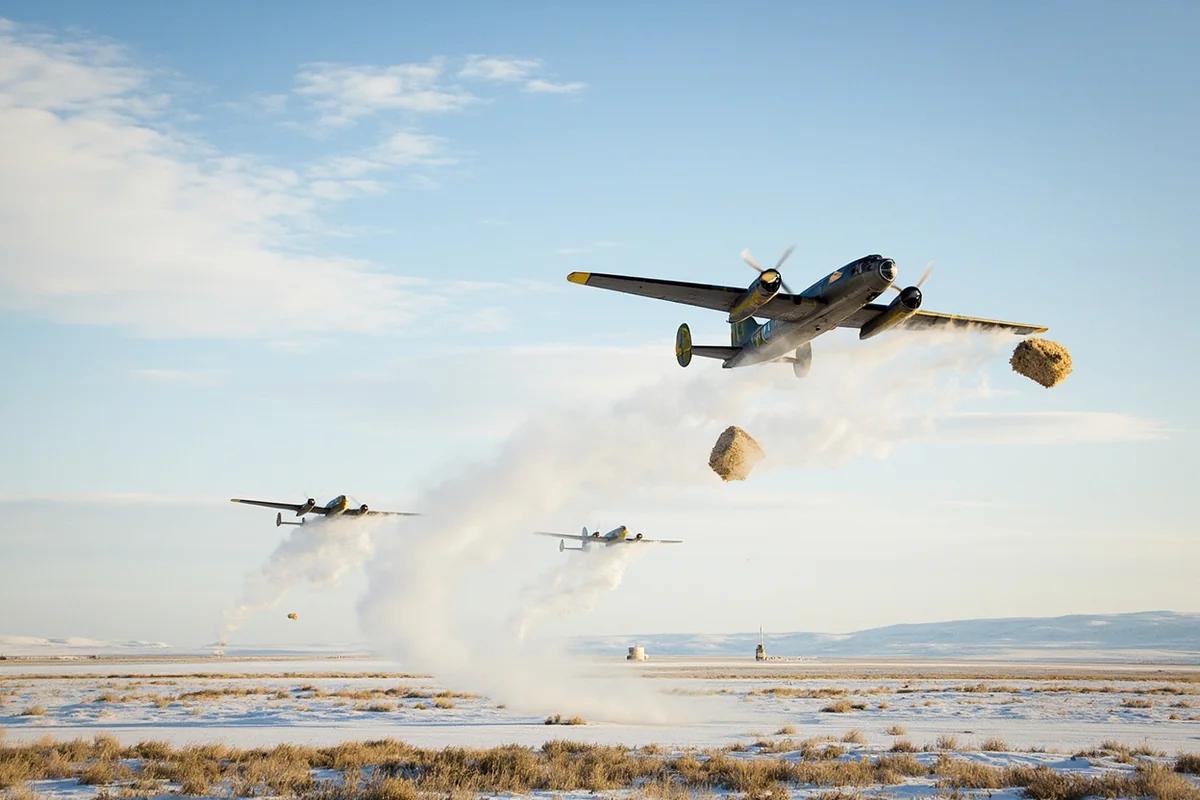
Operation Snowbound became one of the largest peacetime military relief operations in American history. The National Guard, Army, and Air Force deployed to drop hay to stranded livestock and supplies to isolated families.
I spoke with an elderly woman in Malta whose father participated in these operations. She remembered C-47 cargo planes flying over their ranch, kicking out hay bales through the open doors.
The Human Impact
During the research I’ve done on Montana’s active military bases, I learned that Malmstrom Air Force Base in Great Falls played a crucial role in the 1949 relief efforts. Military aircraft launched from there to reach stranded communities.
Towns like Jordan, Ekalaka, and Scobey were completely isolated. Mail service stopped. Medical emergencies became life-threatening when patients couldn’t be evacuated.
The economic impact lasted years. Many ranchers who’d survived 1886-87, the Depression, and two world wars finally gave up after 1949. Ghost towns across eastern Montana date their abandonment to this winter’s aftermath.
Modern Deadly Winters: The Events We’ve Experienced
Montana’s killer winters didn’t end with improved technology. Recent decades have seen storms that remind us nature remains in control here.
The Winter of 1996-97
I was actually in Montana during part of this winter, and I remember it vividly. December 1996 brought repeated storms that dropped feet of snow across western Montana.
Missoula broke its all-time monthly snowfall record with over 60 inches in December alone. The weight of snow collapsed roofs across the region. Highway 93 through the Bitterroot Valley closed repeatedly.
Then came January, which brought extreme cold. The combination of heavy snow cover and Arctic air created problems that lasted through March.
February 2019: A Historic Cold Snap
During February 2019, Montana experienced some of the coldest temperatures since 1954. Great Falls dropped to -37°F, and with wind chill, effective temperatures reached -50°F across much of the state.
Schools closed for a week straight in many districts. The natural gas delivery system across Montana struggled to meet heating demand, and utilities asked customers to lower their thermostats to prevent system failures.
I was monitoring this event from elsewhere but had friends in Bozeman who described pipes freezing despite heat running constantly. Several historic buildings suffered significant damage.
Why Montana Winters Still Pose Serious Risks Today
Despite modern forecasting, heated vehicles, and communication technology, Montana winters remain dangerous for travelers. I’ve compiled these observations from my own experiences and from conversations with Montana Highway Patrol officers and search-and-rescue volunteers.
The Chinook Deception
Chinook winds can raise temperatures 40-50 degrees in hours, creating false confidence. I’ve seen visitors in Browning or Cut Bank experience a pleasant 45°F afternoon, only to face -20°F conditions the following morning when the chinook ended.
If you’re planning winter travel along the Rocky Mountain Front or Hi-Line, always prepare for the cold that’s coming, not the warm spell you’re experiencing.
Ground Blizzards
One of Montana’s most dangerous winter phenomena is the ground blizzard. The sky can be clear blue while winds whip fallen snow into total whiteout conditions at ground level.
I experienced this near Shelby during a February trip. One moment I could see for miles; thirty seconds later, I couldn’t see my own hood. I pulled over immediately and waited—the only safe option.
The Montana Department of Transportation tracks these conditions, but they can develop faster than alerts can reach you.
Remote Distance Realities
Something out-of-state visitors don’t always appreciate is just how far Montana distances stretch. When you’re on Highway 200 between Jordan and Circle, the nearest tow truck might be two hours away in good conditions.
If your car dies during a blizzard in this region, you could be waiting many hours for rescue—if someone even knows you’re there. This is why I always tell winter travelers to inform someone of their route and expected arrival time.
Preparing for Montana Winter Travel Today
Based on my years of Montana winter travel, here’s what I genuinely recommend—not the generic “pack a blanket” advice you’ll find elsewhere.
Vehicle Preparation
Studded tires are legal in Montana from October 1 through May 31, and I use them. Yes, they’re loud on dry pavement, but they’ve saved me on black ice multiple times.
A full tank of gas isn’t just about fuel—it’s weight for traction and a heat source if you’re stranded. Never let your tank drop below half during Montana winter driving.
I carry a sleeping bag rated to -20°F, not a car blanket. I also keep a backpacking stove and fuel because stranded motorists have died from hypothermia while their car batteries died.
Communication Reality
Cell phone coverage remains spotty across large parts of Montana. During my drives on Highway 2 or Highway 200, I routinely lose signal for 30-60 miles.
I rent a satellite communicator (like a Garmin inReach) for winter Montana trips. The small daily cost is worthwhile given the genuine life-safety implications.
Timing Your Travel
Montana’s worst winter weather often moves through quickly. If you can wait 6-12 hours, conditions frequently improve dramatically.
The Montana Department of Transportation’s 511 system provides real-time road conditions. I check it obsessively during winter travel. Their cameras along major highways show actual current conditions.
January and February are statistically Montana’s coldest and most dangerous months. If your trip is flexible, late November or March often offers winter scenery with somewhat less extreme risk.
Historical Sites Where You Can Experience These Stories
If Montana’s winter history fascinates you as much as it does me, several excellent sites tell these stories in depth.
Montana Historical Society Museum, Helena
The state’s flagship history museum maintains exhibits on the 1886-87 winter and other historic events. Their research library is open to visitors and contains original documents from these periods.
I spent an entire afternoon in their archives reading ranchers’ letters from 1887. The desperation in those pages—knowing the writer watched their entire livelihood freeze—is unforgettable.
Range Riders Museum, Miles City
This museum focuses on ranching heritage and includes significant material on how winter catastrophes shaped the industry. The original Charlie Russell artwork related to the Great Die-Up is here.
The staff at Range Riders are themselves descendants of early ranchers, and their personal family stories add context you can’t get from exhibits alone.
Fort Benton
As one of Montana’s oldest settlements, Fort Benton has weathered nearly every significant Montana winter event. The local museum and walking tours provide context for how early Montanans survived.
I particularly recommend the Upper Missouri River Breaks Interpretive Center here. The landscape you see from their viewpoint is largely unchanged from what 1880s ranchers faced.
Just as Montana’s major earthquakes have left geological scars, these historic winters left cultural scars that shaped settlement patterns and economic development.
Winter’s Role in Montana’s Cultural Identity
Something I’ve come to appreciate through my Montana travels is how much winter hardship defines the state’s character. The state motto might be “Oro y Plata” (Gold and Silver) from the Roaming Montanald Rush, but surviving winter is equally central to Montana identity.
Why Montanans Stay
During conversations in bars and diners across the state, I’ve asked long-term residents why they endure months of brutal cold. The answers consistently emphasize self-reliance, community resilience, and the beauty that accompanies winter severity.
A rancher near Choteau told me, “Anyone can live in California. Living here takes determination.”
The pride in surviving difficult conditions connects modern Montanans to those who endured 1886-87 or 1949. Winter isn’t just weather here—it’s a proving ground.
Winter Tourism Today
Montana has increasingly embraced winter tourism, and understanding the historical context makes these activities more meaningful.
When you’re skiing at Big Sky or Whitefish, you’re experiencing the same snowpack that once trapped early settlers. The difference is infrastructure, preparation, and choice.
Ice fishing on Fort Peck Reservoir or Flathead Lake connects you to survival traditions that sustained Montana’s indigenous populations for thousands of winters before European arrival.
Even the Montana culinary heritage reflects winter necessity—preservation techniques, hearty comfort foods, and the importance of communal meals during isolated months.
Planning Your Winter Montana Trip Responsibly
My strong recommendation for visitors interested in Montana’s winter history is to plan visits for “shoulder” periods—early November or late March—when you can experience winter conditions without peak danger.
If you must travel in January or February, build flexibility into your schedule. Assume you’ll be delayed. Consider staying on I-90 and I-15 corridors where help arrives faster.
And please, respect the warnings locals give you. When a gas station attendant in Shelby tells you not to drive to Browning that night, they’re speaking from generations of accumulated wisdom about how quickly Montana winters can kill.
Montana’s area code, 406, covers a state where winter has written history in frozen blood and snow. The historic winters I’ve described here—1886-87, 1888, 1949, 1954—weren’t just weather events. They fundamentally shaped who settled here, how they lived, and whether they survived.
Today, Montana’s winters remain serious but manageable with proper respect and preparation. Visit, explore, and experience this remarkable state’s winter landscape. Just remember that the beautiful snow-covered mountains and pristine frozen prairies can turn deadly quickly.
That’s not meant to frighten you away—it’s meant to prepare you to experience Montana winter safely, with full appreciation for what this land has demanded of everyone who came before you.
Frequently Asked Questions
What was the worst winter in Montana history?
The winter of 1886-1887 is widely considered Montana’s worst, killing an estimated 60% of the state’s cattle and bankrupting countless ranchers in what became known as ‘The Great Die-Up.’ Temperatures plummeted to -46°F with relentless blizzards that buried livestock and isolated communities for months. This catastrophic winter fundamentally changed Montana’s open-range cattle industry forever.
How cold does Montana get during its harshest winters?
Montana holds the record for the coldest temperature ever recorded in the lower 48 states at -70°F, set in Rogers Pass on January 20, 1954. During severe winters, temperatures regularly drop below -30°F across northern and central Montana. If you’re visiting between December and February, pack extreme cold-weather gear rated for subzero conditions.
Is it safe to drive through Montana during winter months?
Winter driving in Montana can be treacherous, especially during historic storm patterns that dump feet of snow and create whiteout conditions on highways like I-90 and US-2. I always recommend carrying emergency supplies including blankets, food, water, and a full tank of gas since distances between towns can exceed 100 miles. Check the Montana Department of Transportation road conditions website before any winter trip.
What should I pack for visiting Montana in winter?
For Montana’s brutal winters, pack insulated waterproof boots, layered thermal clothing, hand warmers, and a heavy down jacket rated for temperatures below -20°F. Don’t forget wool socks, a balaclava or face covering, and quality sunglasses for snow glare. Budget around $200-400 for proper winter gear if you don’t already own cold-weather equipment.
When is the best time to visit Montana to avoid severe winter weather?
The safest months to avoid Montana’s worst winter conditions are mid-May through September, when mountain passes are clear and roads are reliably open. If you specifically want to experience Montana’s historic winter landscapes without extreme danger, early March offers milder cold and stunning snow-covered scenery. I’d avoid January and February entirely unless you’re an experienced cold-weather traveler.
How did Montana’s historic blizzards affect small towns and travel routes?
Historic blizzards like the 1949 winter storms stranded entire communities for weeks, with some towns like Browning completely cut off from supplies and rescue. Railroad lines were buried under 20-foot drifts, and the Army had to airdrop food to isolated ranches across eastern Montana. These events shaped modern emergency preparedness and why Montana invests heavily in snow removal equipment today.
What towns in Montana experience the worst winter conditions for travelers?
Towns along the Rocky Mountain Front like Browning, Cut Bank, and East Glacier experience some of Montana’s most extreme winter conditions due to Arctic air funneling through mountain passes. Cut Bank once recorded 100 consecutive hours below 0°F, making it one of the coldest spots in the continental US. If your travel plans include Glacier National Park’s east side in winter, expect road closures and limited services.
Sources
- https://www.umt.edu/this-is-montana/columns/stories/montana-winters.php
- https://www.umt.edu/this-is-montana/columns/stories/montana-70below.php
- https://www.nps.gov/yell/learn/nature/winter-ecology.htm
- https://www.nps.gov/grko/learn/historyculture/winter.htm
- https://csit.udc.edu/~rpalomino/courses/spring13/wd/sites/rachana/proj1.html