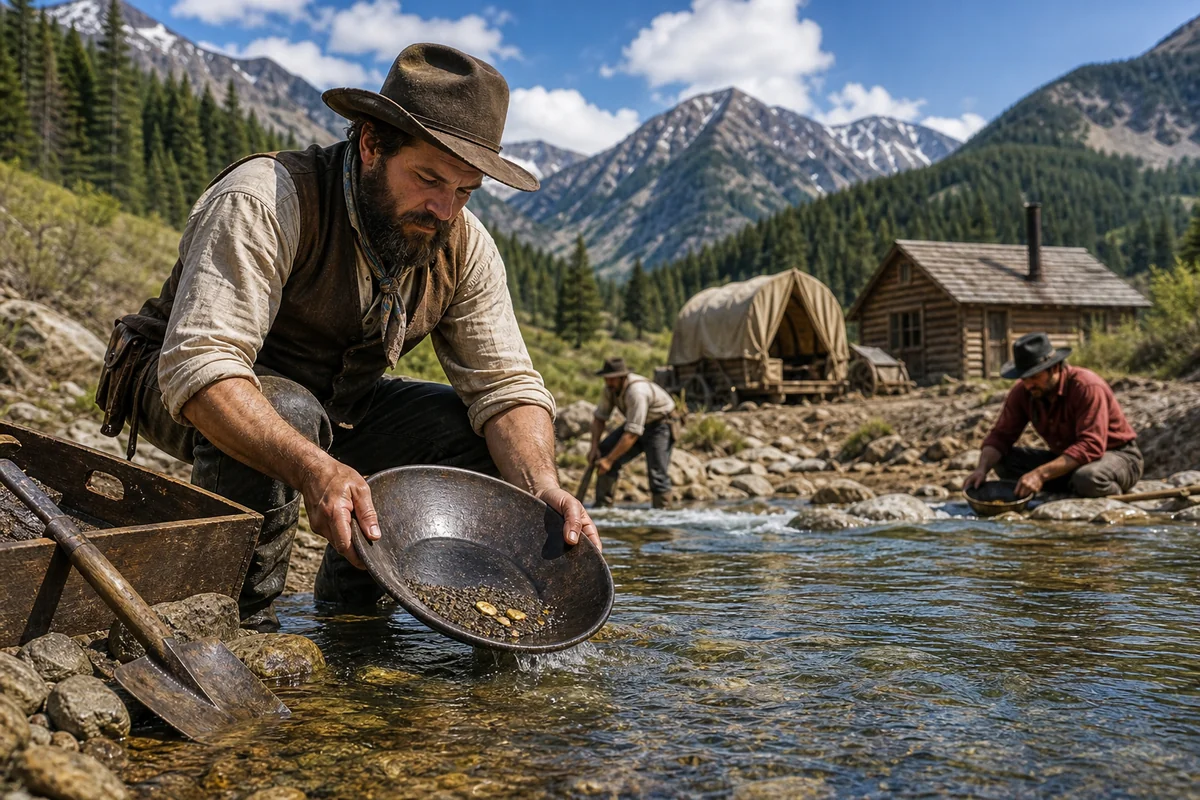
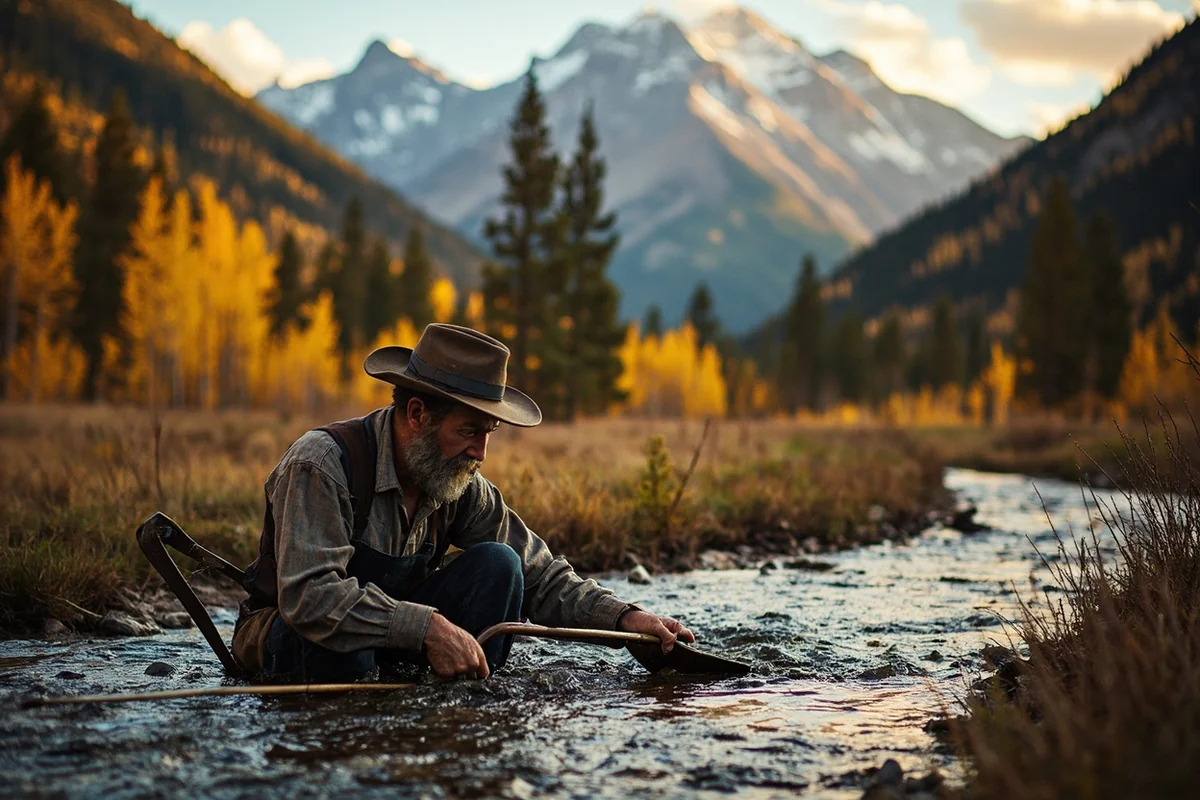
I was knee-deep in Alder Gulch, swirling a gold pan in ice-cold water, when a glint caught my eye—my first real flake of Montana gold.
That moment connected me to the thousands of prospectors who flooded these same streams in the 1860s, transforming wilderness into boomtowns almost overnight.
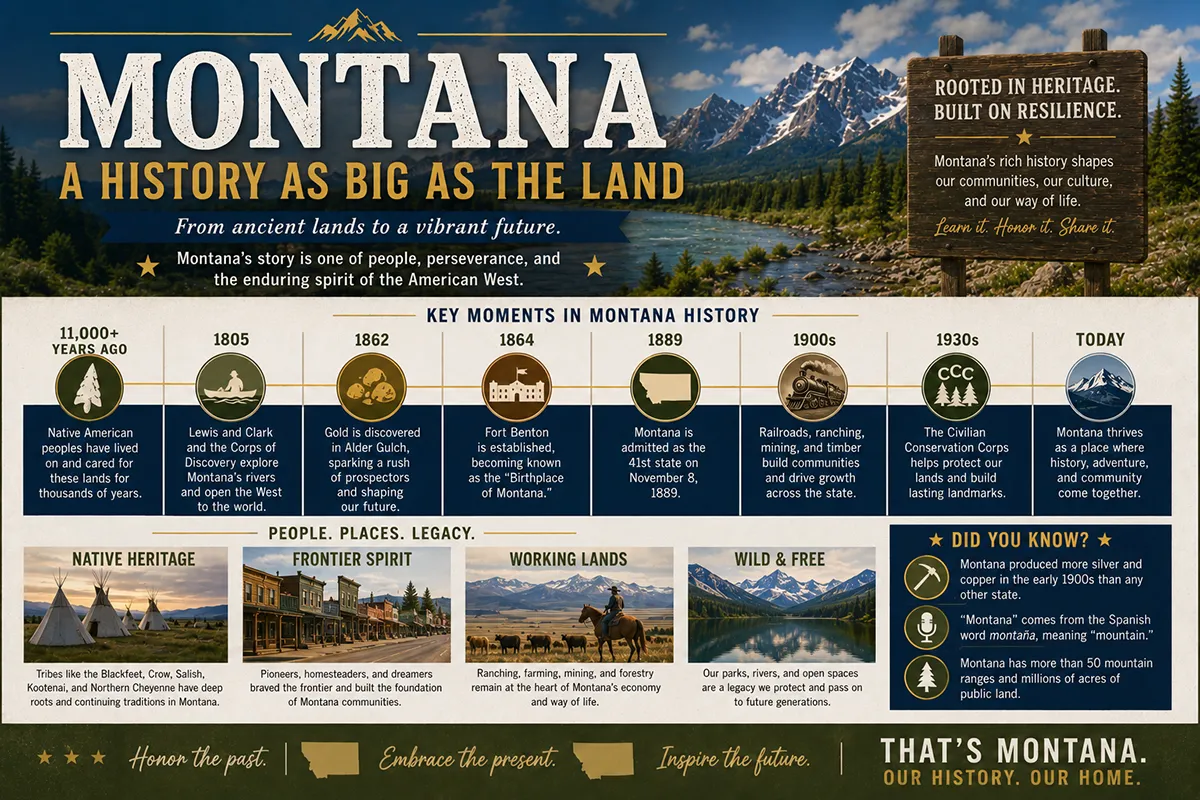
Understanding Montana history means understanding gold, because nothing shaped this state’s early identity more profoundly than the precious metal hiding in its mountain streams.
- Montana’s gold rush began in 1862 at Grasshopper Creek and peaked through the late 1860s
- Virginia City and Bannack are must-visit preserved ghost towns with active tourism
- You can still pan for gold today at several locations across the state
- The gold rush created Montana Territory, established vigilante justice, and shaped modern communities
- Best time to visit gold rush sites: late May through September
- Allow 3-5 days to properly explore the major historic mining districts
Liked this article?
Add Roaming Montana as a preferred source so you see more of our articles and guides on Google.
The Discovery That Changed Everything
On July 28, 1862, a group of prospectors led by John White discovered gold at Grasshopper Creek in what would become Bannack. I’ve stood at that exact spot—now marked with interpretive signs—and tried to imagine what those men felt when they realized the magnitude of their find.
Within weeks, word spread through the mining camps of Colorado and California. By winter, over 500 miners had arrived despite brutal temperatures. The following summer, thousands more flooded in.
What strikes me most when visiting Bannack today is how quickly civilization followed gold. This wasn’t gradual settlement—it was explosive growth driven by desperation and dreams.
Why Montana’s Gold Was Different
Having explored gold rush sites in California, Colorado, and Alaska, I can tell you Montana’s story has unique characteristics that made it particularly significant in American westward expansion. The gold here wasn’t just found in isolated pockets—it appeared in multiple locations within a few years.
The placer deposits in Montana streams were remarkably accessible to individual prospectors. Unlike hard-rock mining that required expensive equipment, early Montana gold could be extracted with a simple pan, rocker box, or sluice. This democratized the rush in ways that attracted everyone from Civil War veterans to Chinese immigrants to families seeking fortune.
Montana gold also came at a critical moment in American history. The Civil War was raging, and the Union desperately needed precious metals to fund the conflict. Montana’s gold helped finance the war effort while providing an escape for men fleeing conscription on both sides.
The Major Gold Districts: A Traveler’s Overview
During my years exploring Montana’s mining heritage, I’ve developed a clear understanding of the major gold-producing regions and what each offers modern visitors. Let me walk you through them geographically.
Bannack: Where It All Began
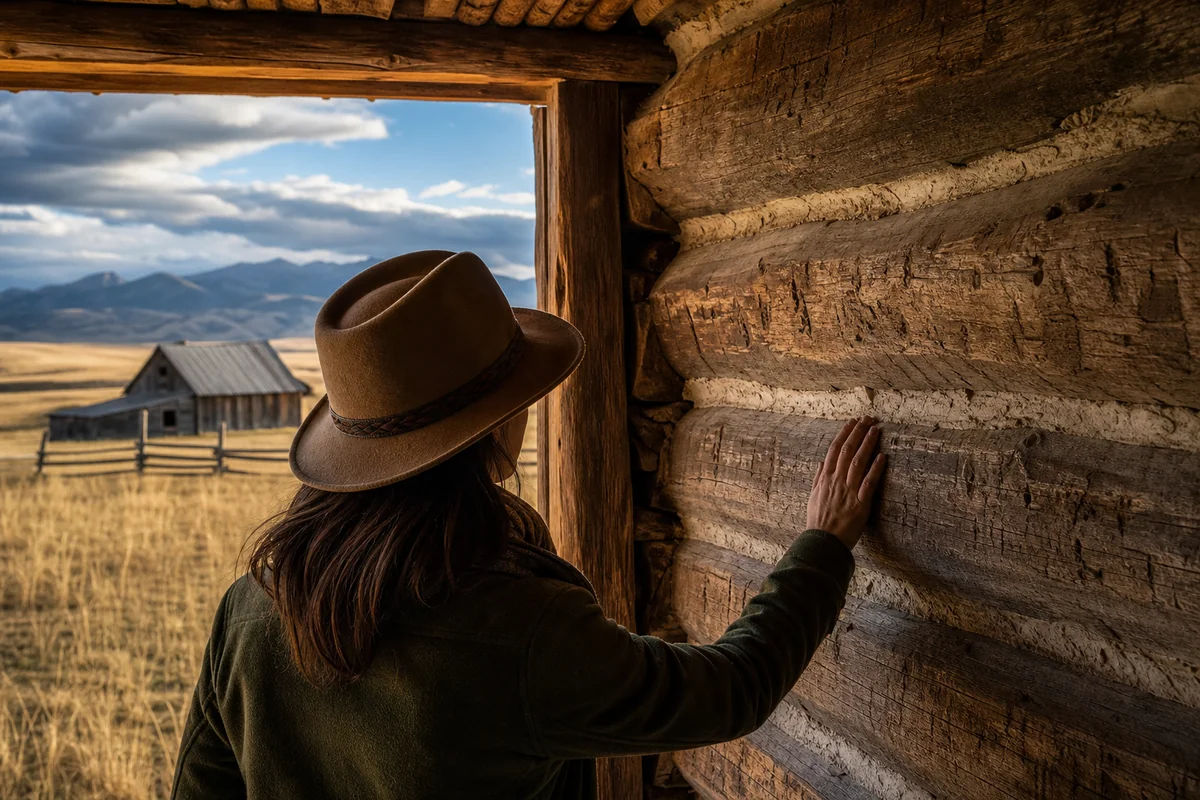
Bannack State Park remains the most authentic gold rush experience in Montana. When I first visited on a crisp September morning, I had the entire ghost town nearly to myself—just me, over 60 preserved structures, and the whispers of history.
The town served as Montana’s first territorial capital in 1864, though that honor was short-lived. Political machinations moved the capital to Virginia City within a year.
What makes Bannack exceptional is its preservation philosophy. Unlike many ghost towns that have been over-restored or commercialized, Bannack maintains “arrested decay.” Buildings are stabilized but not rebuilt, giving you an authentic sense of time’s passage.
I recommend allocating at least half a day here. The self-guided walking tour covers about a mile and includes the old hotel, Masonic lodge, jail, and schoolhouse. If you visit during Bannack Days in July, you’ll experience living history demonstrations, but honestly, I prefer the quieter off-season when you can truly absorb the atmosphere.
Virginia City and Nevada City: The Crown Jewels
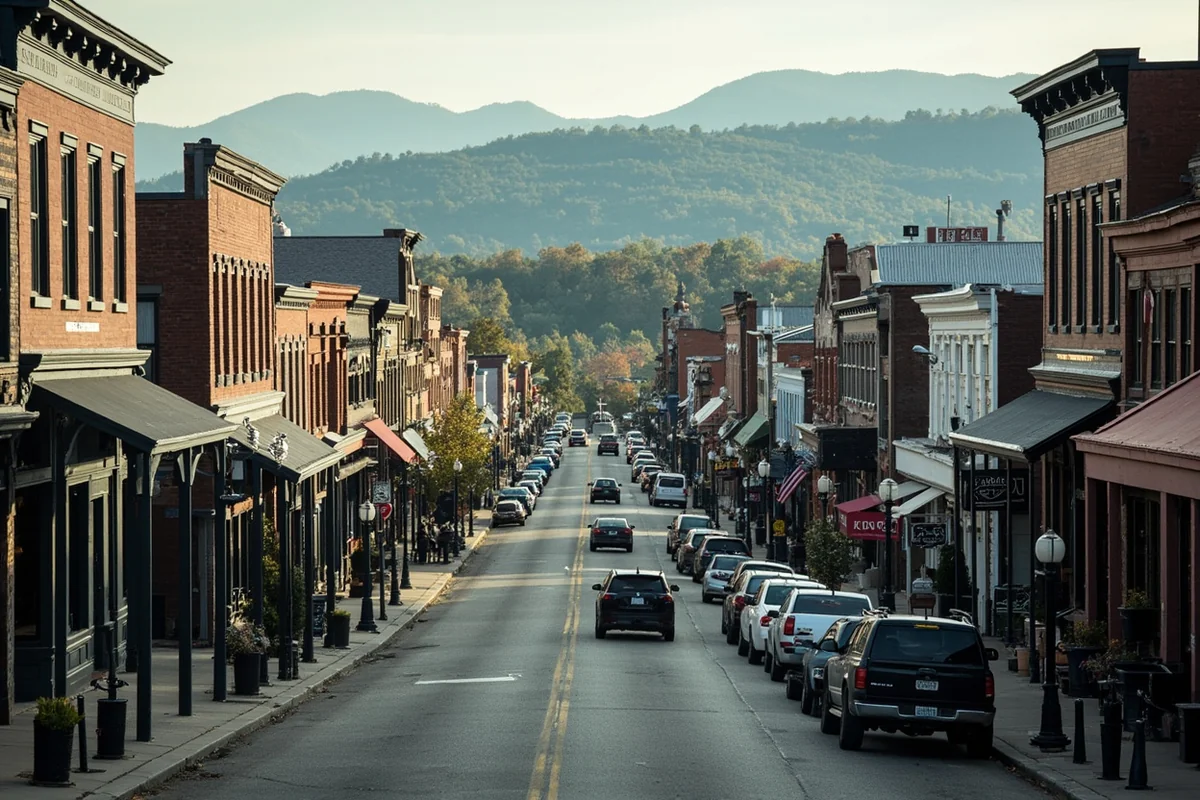
If Bannack is where Montana’s gold rush started, Virginia City is where it exploded. The Alder Gulch strike of May 26, 1863, produced some of the richest placer deposits ever discovered. Within a year, 10,000 people lived along the gulch.
I’ve visited Virginia City at least a dozen times, and I still discover new details with each trip. The town never completely died—unlike Bannack—so it has a living, breathing quality that ghost towns lack.
The main street buildings are original, and many house operating businesses. I particularly love the Smith and Boyd Livery Stable, which still smells of old leather and hay, and the Gilbert Brewery, where interpretive displays explain 19th-century brewing techniques.
Nevada City, just a mile and a half down the road, functions as an outdoor museum village. Charles Bovey spent decades collecting historic buildings from across Montana and reassembling them here. The result feels somewhat artificial compared to Virginia City, but it’s incredibly valuable for understanding period architecture and technology.
The narrow-gauge railroad connecting the two towns operates during summer months. Yes, it’s touristy, but riding through Alder Gulch on a steam locomotive while learning about mining history remains one of my favorite Montana experiences.
Helena: From Last Chance to Capital City
Modern Helena doesn’t look like a gold rush town, but the state capital owes its existence to the “Four Georgians” who discovered gold at Last Chance Gulch in 1864. The story goes they’d had such bad luck at previous claims that they named their final attempt “Last Chance.”
It paid off spectacularly.
Last Chance Gulch produced over $20 million in gold and eventually became Helena’s main street—where you can still walk today past shops and restaurants built on mining wealth.
The Montana Historical Society Museum downtown houses excellent gold rush artifacts, including a stunning collection of gold nuggets and period mining equipment. I spent three hours there during my last visit and could have stayed longer.
For a more immersive experience, I recommend the Reader’s Alley area. This quirky collection of brick mining-era structures has been converted into shops and galleries. The architecture alone tells stories of wealth accumulated and lost.
Butte: Copper’s Shadow, Gold’s Memory
Most people associate Butte with copper mining, and rightfully so—it became one of the largest copper producers in world history. But gold came first.
Gold was discovered in Butte in 1864, though the deposits were relatively modest compared to other Montana strikes. The real transformation came when miners realized the “troublesome” copper-bearing ores interfering with gold extraction were actually more valuable than gold itself.
I include Butte in any comprehensive gold rush itinerary because it shows how mining evolved. The World Museum of Mining offers underground mine tours that illuminate both placer and hard-rock techniques. Standing 65 feet below ground in a reconstructed mining tunnel provides perspective no surface monument can match.
The Berkeley Pit, a massive open-pit mine now filled with toxic water, serves as a stark reminder of mining’s environmental legacy—something I think responsible travel writing must address.
The Human Stories Behind the Gold
Numbers and locations only tell part of the story. What moved me during my research was discovering the individual lives shaped by Montana gold.
Henry Plummer and the Vigilantes
One of the most dramatic chapters in Montana history involves Sheriff Henry Plummer, the lawman who allegedly led a band of road agents terrorizing the mining camps. The story has all the elements of a Western thriller—double identities, stolen gold, secret signs, and vigilante justice.
I’ve read extensively on this topic, and the historical record remains controversial. Was Plummer truly guilty, or was he the victim of mob justice and political rivals? Walking through Bannack, where he served as sheriff and was eventually hanged in January 1864, I found myself genuinely uncertain.
The Vigilantes of Montana, organized by prominent citizens, executed at least 21 men during the winter of 1863-64. Their symbol—the numbers 3-7-77—still appears on Montana Highway Patrol badges today, though its original meaning remains debated. This vigilante period represents one of the key historical events in Montana that continues to fascinate historians and visitors alike.
Chinese Miners: The Overlooked Community
By the 1870s, as easily accessible placer deposits diminished, Chinese miners moved into abandoned claims and worked them profitably through patient, methodical techniques. Their contributions to Montana’s gold production were substantial, yet their stories are often marginalized.
I found traces of Chinese presence throughout Montana’s mining districts—the remains of a Chinese store in Nevada City, artifacts in museum collections, and occasional interpretive markers. The Montana Historical Society has worked to recover these narratives, and I appreciate their efforts to present a more complete picture.
In my experience, asking docents and museum guides specifically about Chinese history often unlocks fascinating information not included in standard tours.
Women on the Mining Frontier
Mining camps weren’t exclusively male spaces, despite popular depictions. Women came to Montana as wives, business owners, entertainers, and yes, prostitutes—a reality the historical record confirms.
The preservation of Virginia City includes structures that served as brothels and dance halls. These aren’t sensationalized but treated as historical fact. I respect this honest approach to frontier history.
Entrepreneurs like Moll Featherlegs in Bannack and Josephine Airey in Virginia City ran successful businesses catering to miners. Their stories deserve telling alongside the more famous male figures.
Planning Your Gold Rush Expedition
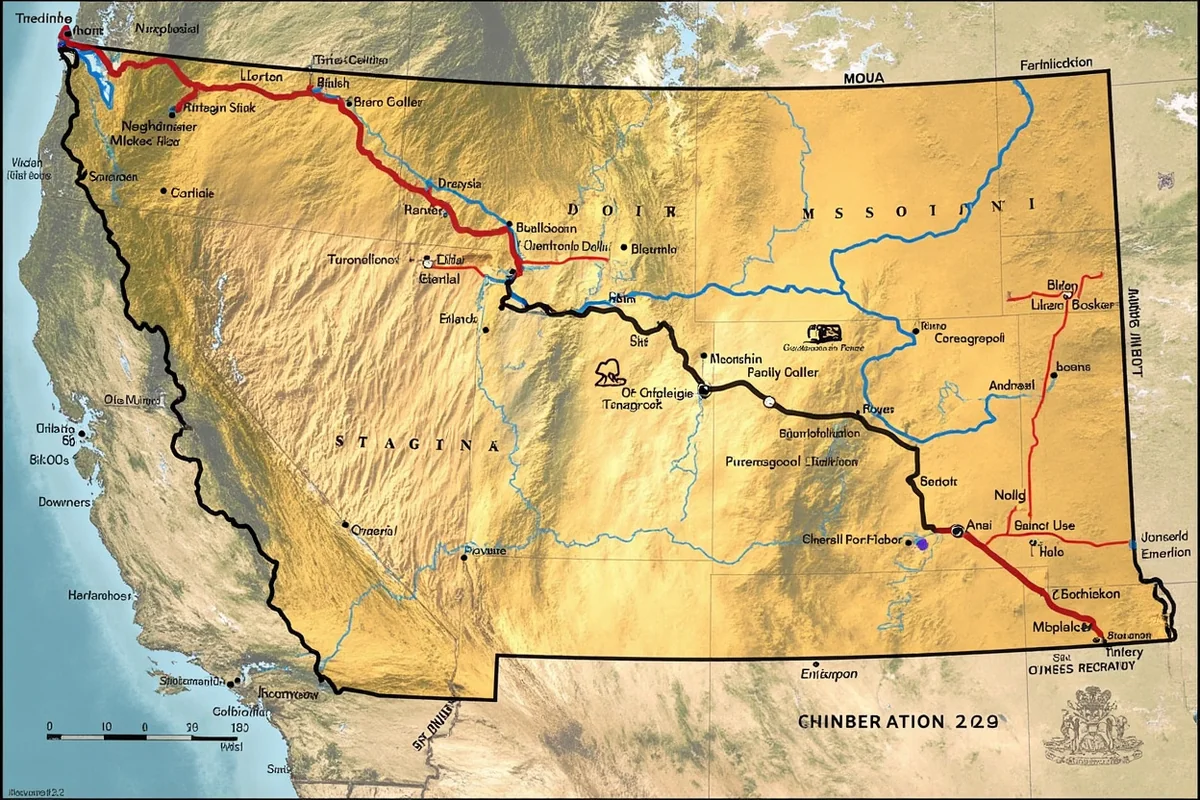
After numerous trips focused specifically on gold rush heritage, I’ve developed recommendations for travelers at different commitment levels.
The Essential Three-Day Itinerary
Day 1: Bannack and Dillon
Start in Dillon, which has the best lodging options near Bannack. Drive 25 miles west on Highway 278 to Bannack State Park. Spend the morning exploring the ghost town, have a picnic lunch (no food services available), then return to Dillon.
The afternoon could include a visit to the Beaverhead County Museum downtown, which has excellent local mining exhibits. Dinner at the Sweetwater Coffee—yes, a coffee shop, but their dinner menu surprised me—caps a solid day.
Day 2: Virginia City and Nevada City
Drive north to Virginia City via Highway 287. Plan to arrive by 9 AM when businesses open. Spend the morning walking the historic main street and touring available buildings. The Opera House tour, if available during your visit, is excellent.
Take the train to Nevada City mid-day, explore the museum village, then return. The Bale of Hay Saloon in Virginia City makes a fun afternoon stop with period decor and decent bar food.
Stay in Virginia City at the Fairweather Inn if you want authentic (read: rustic) accommodation, or drive to Ennis for more modern options.
Day 3: Helena
Drive north to Helena and spend the day exploring the state capital’s mining heritage. Hit the Montana Historical Society Museum first, then walk Last Chance Gulch, and explore Reader’s Alley.
If time permits, drive up to the Marysville ghost town about 25 miles northwest of Helena. It’s less preserved than Bannack but more atmospheric in some ways.
Extended Exploration: Adding Depth
If you have more time, consider these additions:
Philipsburg: This charming former silver mining town (yes, silver, not gold, but part of the same mining boom) has experienced careful revitalization. The candy shops are famous, but I’m more interested in the Granite County Museum and nearby ghost towns like Granite.
Garnet Ghost Town: Accessible via forest roads east of Missoula, Garnet provides a wilder ghost town experience than state-maintained sites. I recommend high-clearance vehicles and checking road conditions beforehand.
Libby Creek Gold Panning Area: In the northwest corner of Montana, this designated recreational gold panning site allows you to actually try your hand at prospecting. I spent a pleasant afternoon here recovering about $3 worth of fine gold—enough to feel connected to history.
Practical Information for Visitors
| Site | Admission | Time Needed | |
|---|---|---|---|
| Bannack State Park | Year-round (limited winter) | $8/vehicle | 3-5 hours |
| Virginia City | May-September (limited winter) | Free (individual tours vary) | 4-6 hours |
| Nevada City | May-September | $10 adults | 2-3 hours |
| MT Historical Society | Year-round | Free | 2-3 hours |
| World Museum of Mining | April-October | $12 adults | 3-4 hours |
| Garnet Ghost Town | May-September (road dependent) | $3 | 2-3 hours |
Weather Considerations
Montana’s gold rush sites sit at elevations between 4,000 and 6,000 feet. Summer days can be hot (90°F+), but mornings and evenings cool quickly. I always pack layers even in July.
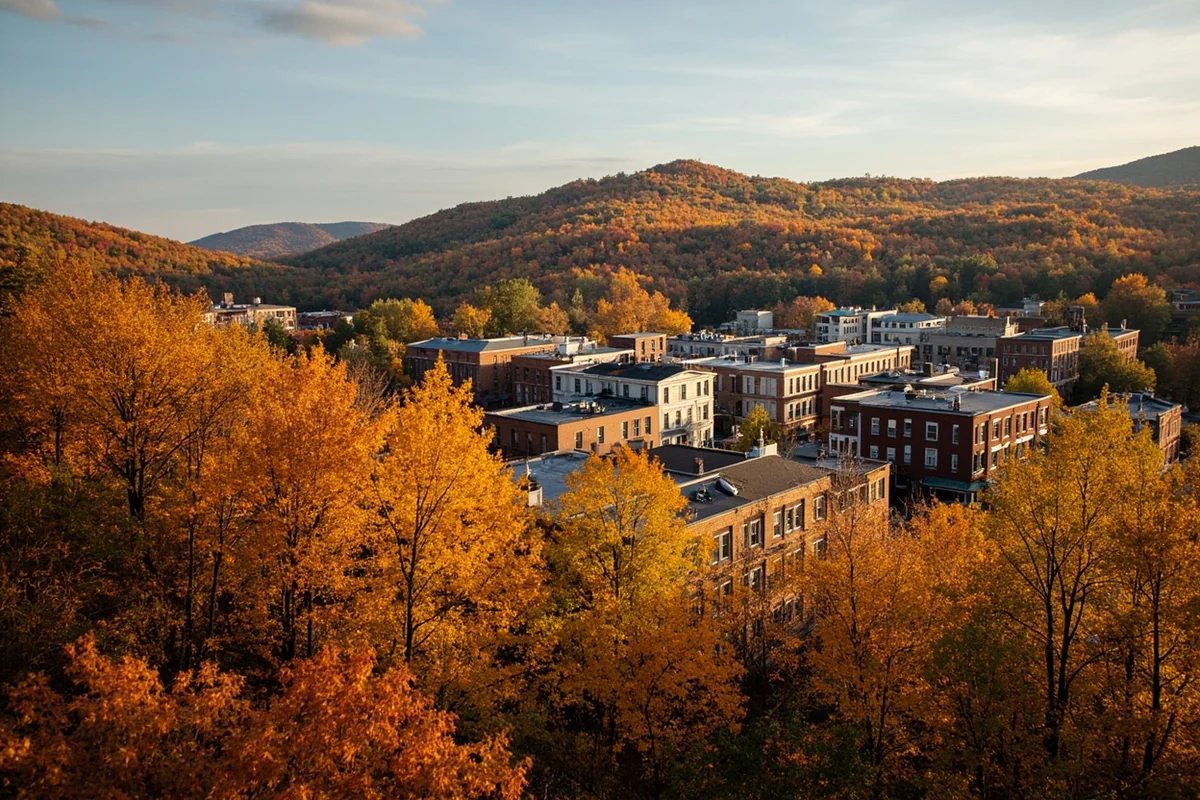
Early fall—specifically late September—has become my preferred time for gold rush exploration. The crowds thin dramatically, the aspens turn golden, and the light takes on a quality that photographers love.
Winter access varies significantly. Bannack remains technically open but has minimal services, and roads can be treacherous. Virginia City maintains some winter activity, but most attractions close. The worst Montana winters can make some historic sites completely inaccessible, so plan accordingly if you’re visiting in the colder months.
Accommodations and Dining
Lodging near gold rush sites ranges from historic hotels to modern chains. In Virginia City, the Nevada City Hotel and Cabins provides period-appropriate accommodation—which means no TVs and shared bathrooms in some units. I found it charming, but travelers expecting modern amenities should book in Ennis instead.
Dillon offers the most reliable modern lodging for Bannack visitors. The GuestHouse Inn has worked well for me on multiple trips.
Dining options are limited in ghost towns. Pack snacks and water, especially for Bannack. Virginia City has several restaurants, though “gourmet” isn’t the operative word. The Star Bakery serves excellent pastries and coffee, and I make a point to stop there every visit.
Gold Panning Today: Yes, You Can Still Do It
Modern recreational gold panning remains legal and accessible in Montana. I’ve panned at several locations and consistently found color—tiny flakes of gold that prove the streams haven’t given up all their treasure.
Best Panning Locations
Libby Creek Recreational Gold Panning Area: This BLM-managed site near Libby is specifically designated for recreational panning. No permit required. The creek consistently produces fine gold, and the setting is beautiful.
Alder Gulch: Recreational panning is allowed in designated areas around Virginia City. Check with local businesses for current access points and regulations.
Confederate Gulch: East of Helena near Townsend, this drainage produced enormous nuggets historically. Modern panning is possible on public lands, though access can be complicated.
Equipment and Technique
You don’t need much to try gold panning. A basic 14-inch pan costs about $15 at outdoor stores in Montana. Add a classifier screen, a small vial for storing finds, and a 5-gallon bucket, and you’re equipped.
The technique takes practice. I recommend watching YouTube tutorials before your trip, then asking local shops for tips on specific creeks. The general principle involves submerging your pan, agitating material to let gold sink, and carefully washing away lighter material until only black sand and (hopefully) gold remain.
Manage expectations—you’re unlikely to strike it rich. But the satisfaction of finding even one small flake connects you viscerally to the miners who shaped Montana 160 years ago.
The Lasting Impact of Roaming Montanald
Montana’s gold rush wasn’t just a historical episode—it fundamentally shaped the state that exists today. Understanding this context enriches any visit to gold rush sites.
Population and Settlement
Before 1862, Montana’s non-Native population numbered perhaps a few hundred fur traders and missionaries. Within five years, tens of thousands of people had arrived. This rapid population growth led directly to Montana becoming a U.S. territory in 1864.
The settlement patterns established during the gold rush persist today. Helena, Butte, Missoula—all owe their locations and early development to mining activity. Even smaller communities like Philipsburg and Deer Lodge trace their origins to mineral wealth.
Meanwhile, the legacy of Montana pioneers who followed the miners continues to influence the state’s identity and culture.
Infrastructure Development
Moving people and supplies to remote gold camps required roads, ferries, and eventually railroads. The infrastructure built for mining purposes later supported ranching, logging, and tourism.
The food and culinary heritage of Montana also traces to this period, as ranches were established to feed hungry mining populations, and culinary traditions developed that continue to this day.
Some original mining roads remain in use, adapted for modern vehicles. Driving Highway 287 through Madison County, you’re following routes established by gold-seekers.
Environmental Legacy
Mining transformed Montana’s landscape, and not always positively. Hydraulic mining stripped hillsides, dredging operations rearranged entire creek beds, and toxic materials were released into waterways.
Contemporary restoration efforts address some of this damage. When I visited the Upper Blackfoot Mining Complex—a Superfund site—I saw both the destruction caused by a century of mining and the painstaking work being done to restore stream function.
This environmental history adds nuance to gold rush tourism. I believe in celebrating the human achievement while acknowledging the costs.
Connecting Gold Rush History to Modern Montana
One aspect I appreciate about Montana’s approach to its mining heritage is the effort to connect historical events to contemporary relevance.
The state’s identity as the 406 area code reflects values that emerged partly from the mining era—independence, resilience, and a certain skepticism of outside authority. Understanding this context enriches your understanding of modern Montanans.
Similarly, the origin of Montana’s name—derived from the Spanish word for “mountainous”—reflects how geography shaped the state’s mining potential and subsequent development.
Montana’s dramatic history extends beyond mining, of course. The same geological forces that concentrated gold also created earthquake-prone faults, leading to significant seismic events throughout the state’s history. The landscape tells stories spanning millions of years.
Even Montana’s more unusual historical aspects connect to this period. The Montana State Prison was established in 1871 partly to address lawlessness in mining communities. The transition from vigilante justice to formal legal institutions represents a significant chapter in state development.
The military presence in Montana, including active military bases and the network of missile silos scattered across the state, developed much later but built upon infrastructure and population patterns established during the gold rush era.
Beyond the Major Sites: Hidden Gems
After years of exploration, I’ve discovered locations that most visitors miss but which offer profound gold rush experiences.
Elkhorn Ghost Town
South of Helena in the Elkhorn Mountains, this silver-boom town features two remarkably preserved fraternal lodge halls—Gillian Hall and Fraternity Hall. The drive through Boulder Valley adds scenic value, and you’ll likely have the site to yourself.
Coolidge Ghost Town
Near Wise River, this short-lived platinum and gold mining town demonstrates how quickly fortunes rose and fell. The remaining structures are fragile—please photograph, don’t disturb.
Kendall Ghost Town
In the Judith Mountains north of Lewistown, Kendall preserves a gold mining boom from the 1890s and early 1900s. The cemetery tells particularly moving stories.
These sites require more effort to visit—rougher roads, less signage, no facilities—but reward dedicated explorers with authentic solitude and discovery.
What the Gold Rush Teaches Modern Visitors
Spending time at Montana’s gold rush sites offers more than historical education. I’ve found these places prompt reflection on themes that remain relevant today.
The boom-and-bust cycle evident in ghost towns parallels modern economic volatility. The environmental damage visible at former mining sites informs contemporary debates about resource extraction. The stories of diverse populations—Native Americans displaced, Chinese workers exploited, women surviving on the frontier—complicate simplified narratives of Western expansion.
Montana’s complex history includes darker chapters. The serial killers with Montana connections, the devastating wildfires that periodically swept through mining towns, the devastating winter of 1886 that destroyed the cattle industry—all these events shaped the state alongside the gold rush.
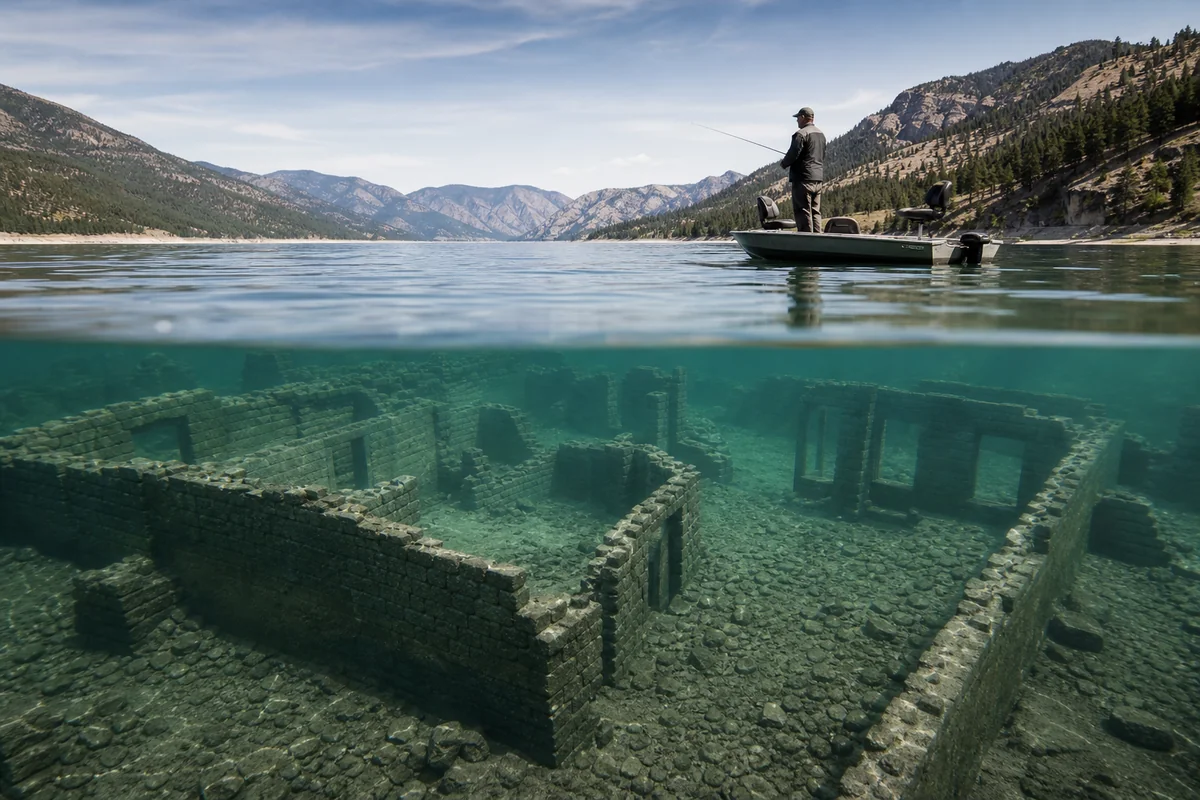
Even the underwater history of Montana—including the man-made reservoirs that flooded mining towns—demonstrates how natural resource management continues to reshape the landscape.
Some aspects of Montana history remain hidden, including rumored secret military installations that add layers of mystery to the state’s story. The gold rush was just one chapter in an ongoing narrative.
I leave every gold rush site with renewed appreciation for the determination of those who came before and questions about what we’re building for those who come after.
Final Thoughts for Travelers
Montana’s gold rush sites offer experiences ranging from family-friendly museum visits to solitary hikes through remote ghost towns. Whatever your interest level, I encourage you to dig deeper than surface-level tourism.
Read primary sources before you go—journals and letters from actual miners are widely available online. Ask questions of docents and local historians. Take time to simply sit in these places and imagine the lives lived there.
The gold is mostly gone, but the stories remain inexhaustible.
Plan your trip for late spring through early fall for the best access and weather. Allow more time than you think you’ll need—these sites deserve unhurried attention. And bring a gold pan. Even if you only find a few flakes, you’ll leave with a tangible connection to Montana’s golden past.
Frequently Asked Questions
Where can I visit Roaming Montanald Rush historic sites today?
I recommend starting with Virginia City and Nevada City, which are remarkably preserved 1860s mining towns about 90 miles south of Butte. Bannack State Park, Montana’s first territorial capital, offers authentic ghost town buildings and is worth the 25-mile drive west of Dillon. The World Museum of Mining in Butte also provides an excellent underground mine tour experience.
When did the Roaming Montanald Rush happen and why does it matter for travelers?
The Roaming Montanald Rush began in 1862 when gold was discovered at Grasshopper Creek, sparking a massive migration that shaped the state’s history and created the towns you can explore today. Understanding this history makes visiting places like Helena, which started as Last Chance Gulch, much more meaningful. Many historic buildings, museums, and landscapes directly connect to this transformative era.
What is the best time of year to visit Roaming Montanald Rush towns?
I’d suggest visiting between late May and September when Virginia City’s historic boardwalk shops are open and weather is ideal for exploring outdoor sites like Bannack State Park. Summer weekends feature living history demonstrations and stagecoach rides in Virginia City. Keep in mind that some attractions close or reduce hours from October through April.
How much does it cost to tour Roaming Montanald Rush historic sites?
Most Roaming Montanald Rush sites are surprisingly affordable, with Bannack State Park charging just $8 per vehicle for day use. Virginia City attractions range from free boardwalk exploring to $10-15 for train rides and theater shows. Budget around $50-75 per person for a full day including tours, museums, and gold panning experiences.
Can I actually pan for gold in Montana during my trip?
Yes, recreational gold panning is legal on many public lands and several tourist sites offer guided experiences where you’re guaranteed to find some color. Sapphire Gallery in Philipsburg and Virginia City both offer panning for around $10-20 per session. I’d recommend bringing your own panning kit if you want to try Bureau of Land Management areas along historic gulches.
What should I bring when visiting Montana ghost towns and mining sites?
Pack sturdy walking shoes since historic sites have uneven wooden boardwalks and rocky terrain. Bring layers even in summer because mountain elevations mean cool mornings and evenings, plus sunscreen and water since shade is limited. A flashlight is essential for underground mine tours, and cash is helpful since some small-town attractions don’t accept cards.
How do I plan a Roaming Montanald Rush road trip itinerary?
I recommend a 3-4 day loop starting in Butte, driving south to Bannack State Park, then east to Virginia City and Nevada City, and finishing in Helena to explore Last Chance Gulch. This covers about 250 miles total with plenty of scenic stretches along the way. Allow at least half a day at each major site to fully appreciate the history without rushing through.
Sources