I’ll never forget the moment I stood in a Montana badlands canyon last summer, my boots planted on 75-million-year-old rock, staring at the exact spot where paleontologists unearthed the first evidence of dinosaur parenting behavior.
That discovery—a nest of baby Maiasaura fossils—didn’t just rewrite scientific textbooks; it eventually became Montana’s official state fossil and transformed how we understand these ancient creatures.
If you’re planning a trip to Montana and want to experience something more profound than scenic drives and wildlife spotting, the state fossil story offers an unforgettable journey through deep time that connects Big Sky Country’s wild present to its even wilder past.
Montana’s Montana State Symbols tell fascinating stories about the land and its heritage, but few symbols pack the emotional and scientific punch of the Maiasaura peeblesorum. This “good mother lizard” represents one of the most important paleontological discoveries in history, and you can visit the actual sites where it all happened.
- Montana’s state fossil is the Maiasaura peeblesorum, designated in 1985
- The Museum of the Rockies in Bozeman houses the world’s largest Maiasaura collection
- You can visit the original discovery site near Choteau at Egg Mountain
- The Montana Dinosaur Trail connects 14 locations across the state
- Best visiting season: May through September for outdoor sites
- Family-friendly with hands-on fossil experiences at multiple museums
Liked this article?
Add Roaming Montana as a preferred source so you see more of our articles and guides on Google.
What Exactly Is the Maiasaura and Why Does It Matter?
The Maiasaura peeblesorum isn’t just another dinosaur with a Latin name that’s hard to pronounce (it’s my-ah-SORE-ah, by the way). This duck-billed hadrosaur lived approximately 76 million years ago during the Late Cretaceous period, roaming what is now north-central Montana in massive herds that scientists estimate numbered in the tens of thousands.
What makes Maiasaura special isn’t its size—though at 30 feet long and weighing around 4 tons, it was certainly impressive. The real significance lies in what researchers discovered about its behavior.
When I visited the Museum of the Rockies during my most recent trip, paleontology curator John Scannella walked me through the evidence. “Before Maiasaura,” he explained, “we thought of dinosaurs as cold, reptilian parents who abandoned their eggs. These fossils changed everything.”
The Discovery That Changed Dinosaur Science
In 1978, Marion Brandvold, a local rock shop owner from Bynum, Montana, brought some unusual fossils to paleontologist Jack Horner. What she’d found near Choteau would become one of the most significant paleontological discoveries of the 20th century.
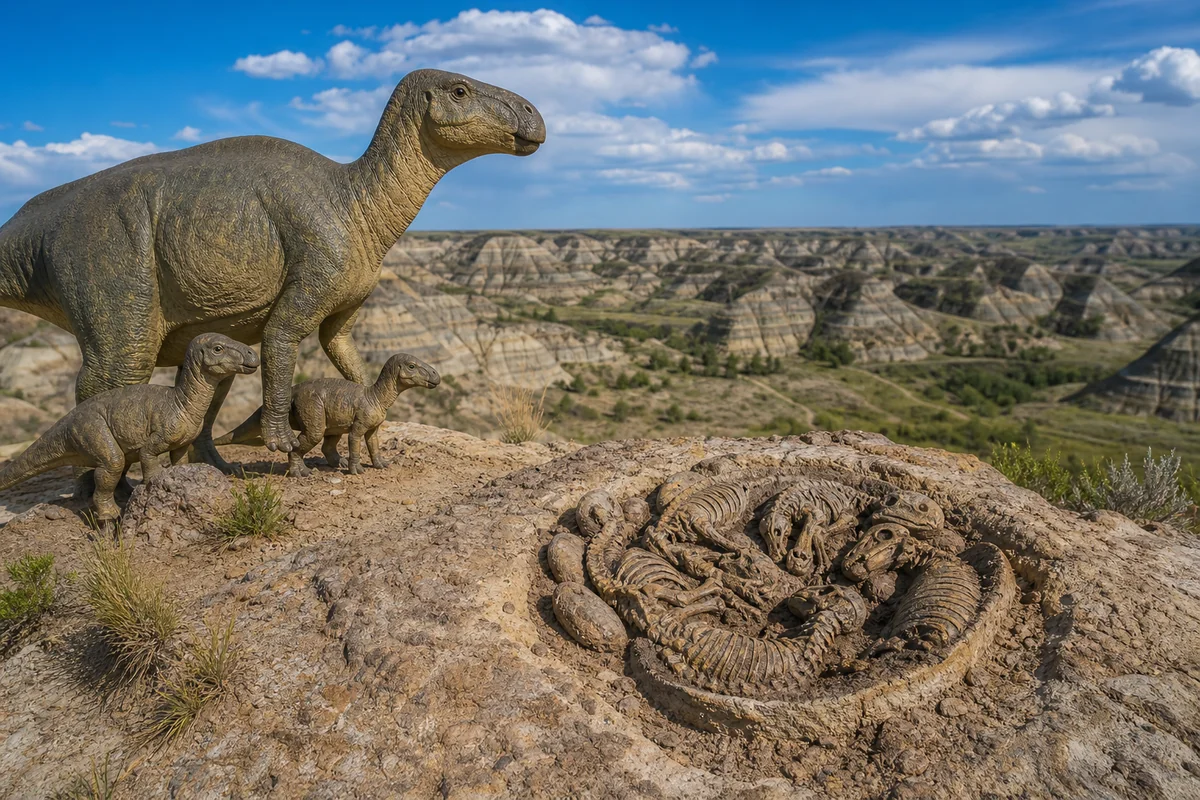
Horner and his colleague Bob Makela began excavating the site and uncovered something unprecedented: nests containing baby dinosaur bones, juveniles at various growth stages, and adults all in the same location. The babies’ teeth showed wear from eating, proving they stayed in the nest while parents brought them food.
This was revolutionary. These dinosaurs were nurturing their young, much like modern birds.
The name “Maiasaura” translates to “good mother lizard,” and “peeblesorum” honors the Peebles family, who owned the land where the discovery occurred. When I stood on that same hillside near Choteau last summer, knowing I was walking where these creatures once nested, the weight of 76 million years felt surprisingly tangible.
Montana’s Dinosaur Heritage: More Than Just One Fossil
Montana’s designation of Maiasaura as the state fossil in 1985 wasn’t arbitrary. The state sits on some of the most fossil-rich formations in North America, and its paleontological heritage runs deep—much like the stories behind the Montana State Animal, the grizzly bear, which also speaks to the state’s wild character.
The geological conditions here created a perfect fossil preservation environment. During the Late Cretaceous, this region featured coastal plains, river deltas, and lush vegetation—ideal habitat for large herbivores like Maiasaura.
The Hell Creek Formation
While Maiasaura fossils come from the Two Medicine Formation near Choteau, Montana’s Hell Creek Formation in the eastern part of the state is equally famous among dinosaur enthusiasts. This is T. rex country.
I spent three days exploring the badlands near Jordan last fall, where ranchers occasionally stumble upon fossils while checking fence lines. The Museum of the Rockies has recovered multiple Tyrannosaurus rex specimens from this area, including the famous “B. rex” that provided the first soft tissue preservation ever found in a dinosaur.
The contrast between these two formations tells a story of Montana’s changing prehistoric landscape. Understanding this geological context makes visiting the fossil sites much more meaningful.
Where to Experience Montana’s State Fossil: A Complete Guide
Planning a paleontology-focused Montana trip requires knowing which sites offer what experiences. I’ve visited all the major locations over multiple trips, and here’s my honest assessment of each.
Museum of the Rockies, Bozeman
This is ground zero for Maiasaura research and the must-visit destination for anyone interested in Montana’s state fossil. Jack Horner built the paleontology program here, and the museum houses the world’s largest collection of Maiasaura specimens.
During my visit last summer, I spent nearly four hours in the Siebel Dinosaur Complex alone. The centerpiece is a stunning Maiasaura growth series showing specimens from hatchling to adult, arranged to demonstrate how these animals developed.
| Museum of the Rockies Details | Information |
|---|---|
| Address | 600 W. Kagy Blvd, Bozeman, MT 59717 |
| Hours | 9 AM – 5 PM daily (extended summer hours) |
| Admission | $14.50 adults, $9.50 children (4-17) |
| Time Needed | 3-4 hours minimum |
| Best For | In-depth scientific exhibits, original Maiasaura specimens |
What sets this museum apart is its working paleontology lab with viewing windows. I watched technicians carefully preparing a hadrosaur femur, brushing away 70 million years of sediment grain by grain. You can’t get experiences like this at most natural history museums.
Pro tip: Visit on a weekday morning. The museum gets crowded with tour groups and summer camps in the afternoon, and you’ll want space to really examine the displays.
Egg Mountain and the Two Medicine Dinosaur Center
For the full Maiasaura experience, you need to visit where it all began. The Two Medicine Dinosaur Center in Bynum—population 27—offers guided tours to Egg Mountain, the original nesting ground discovery site.
I took the field expedition tour on a July morning, and it remains one of my favorite Montana memories. Our guide, a graduate student working on her paleontology dissertation, drove us in a dusty van through ranch land to the actual excavation site.
Standing at Egg Mountain, you see the same rock layers that Jack Horner first examined in 1978. The guide pointed out where specific nests had been removed, now visible as rectangular depressions in the hillside. We even got to prospect for fossils ourselves—under strict supervision, of course.
The center also offers week-long dig programs if you want a deeper experience. I haven’t done one yet, but I’ve met participants who described it as life-changing.
Old Trail Museum, Choteau
Choteau serves as the gateway community to Maiasaura country, and the Old Trail Museum provides excellent local context. It’s smaller than the Museum of the Rockies but has a more intimate feel and focuses specifically on the region’s natural and cultural history.
I stopped here before heading to Egg Mountain and appreciated the local perspective. The museum displays Maiasaura fossils found nearby and tells the story of how the discovery impacted this small Montana community.
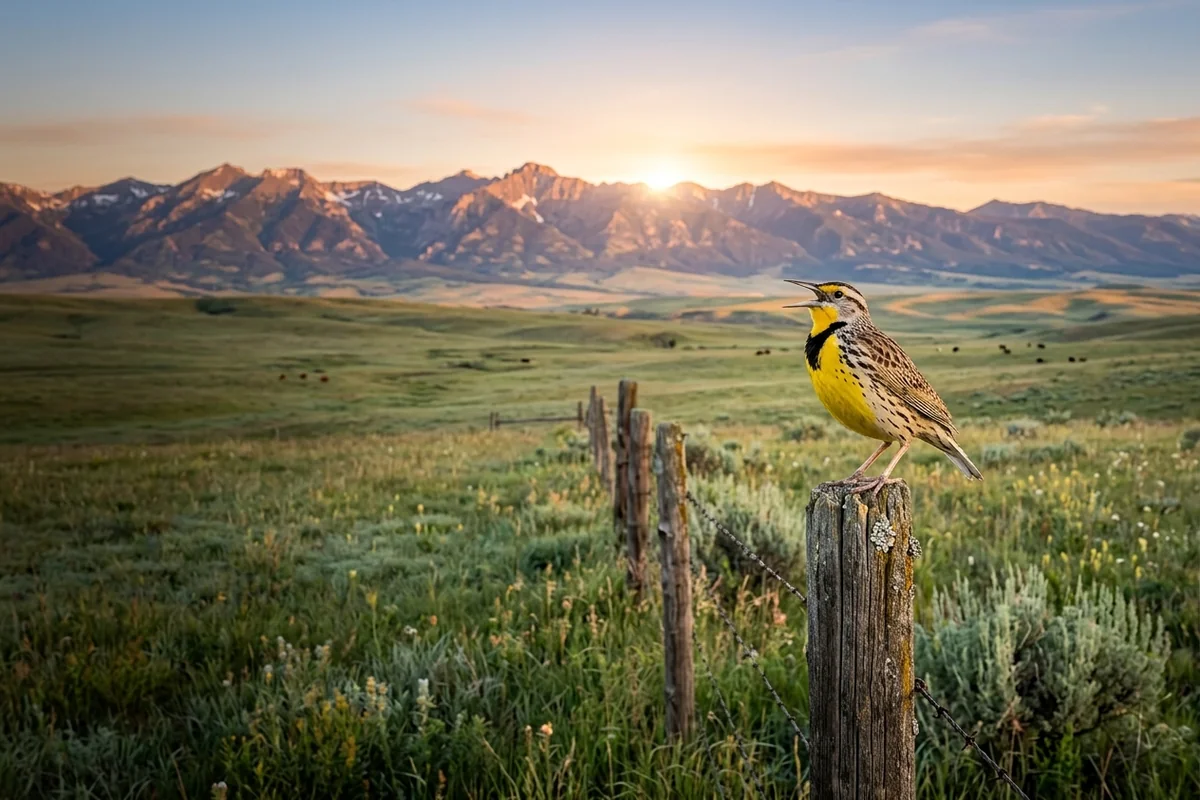
The Rocky Mountain Front rises dramatically west of Choteau, creating spectacular scenery that’s worth the drive alone. This region also offers excellent opportunities to spot wildlife—including grizzly bears, which ties into Montana’s broader natural heritage alongside symbols like the Montana State Bird, the western meadowlark.
The Montana Dinosaur Trail: Planning Your Fossil Adventure
If Montana’s state fossil has captured your imagination, consider tackling the Montana Dinosaur Trail—a 14-site network spanning the state that showcases its prehistoric heritage.
I’ve visited 11 of the 14 sites over three separate trips, and I can honestly say this trail offers one of the most unique road trip experiences in America. It’s not about checking boxes; each location contributes something different to the story.
Planning a Dinosaur Trail Road Trip
The trail stretches from Bozeman in the south to Malta and Glasgow in the north and east. Doing all 14 sites requires serious commitment—I’d recommend a minimum of five days, though a week allows for a more relaxed pace.
Here’s my suggested route based on personal experience:
Day 1-2: Southern Anchor (Bozeman Area)
Start at the Museum of the Rockies, then head to the Gallatin County Pioneer Museum, which has smaller but interesting fossil displays alongside frontier history exhibits.
Day 3: Central Montana
Drive north through Great Falls, stopping at the Upper Missouri Breaks Interpretive Center. The Missouri River country here looks remarkably similar to how it appeared millions of years ago—minus the dinosaurs, obviously.
Day 4: Maiasaura Country
Visit Choteau’s Old Trail Museum, then continue to Bynum for the Two Medicine Dinosaur Center and Egg Mountain. This is the emotional heart of any state fossil pilgrimage.
Day 5-6: Eastern Montana
Head east to the Fort Peck area, where the Fort Peck Interpretive Center houses “Peck’s Rex,” an impressive T. rex specimen. Continue to the Garfield County Museum in Jordan, right in the heart of Hell Creek country.
Day 7: Northern Montana
The Great Plains Dinosaur Museum in Malta and the Dinosaur Field Station in nearby Phillips County round out the eastern portion of the trail.
Which Sites Are Best for Families?
Traveling with kids? I’ve observed families at most trail locations and can offer some guidance.
The Museum of the Rockies has the best children’s programming, with hands-on activities and summer camps. Young children particularly love the size comparison exhibits that let them stand next to life-size dinosaur sculptures.
Egg Mountain tours work well for kids around age 8 and up who can handle hiking on uneven terrain and have the attention span for scientific explanation. Younger children might get restless.
The dinosaur museums in smaller towns often provide more personal experiences. I watched a curator at the Carter County Museum in Ekalaka spend 20 minutes with a 6-year-old, showing her how to identify different fossil types. That kind of individual attention doesn’t happen at crowded urban museums.
Beyond Museums: Finding Fossils in the Montana Landscape
One of the most magical aspects of Montana travel is that fossils aren’t confined to museum displays. The landscape itself tells the story if you know how to read it.
During a backpacking trip through the Bob Marshall Wilderness last August, I came across exposed rock formations that a ranger later confirmed were from the same geologic period as Maiasaura habitat. While I didn’t find any fossils, understanding the geological timeline transformed how I perceived the mountains.
Can Visitors Legally Collect Fossils?
This is a common question, and the answer depends entirely on land ownership.
On federal land (national forests, BLM land, national parks), collecting vertebrate fossils is illegal without permits. This includes dinosaur bones, teeth, and eggs. Invertebrate fossils like shells and plant material can be collected in small quantities for personal use on some public lands, but rules vary.
On private land, fossil collecting depends on landowner permission. Some ranchers welcome paleontology enthusiasts; others don’t want anyone on their property. Always ask first.
Montana law is clear: vertebrate fossils belong to the landowner. Several significant specimens have come from private ranches where owners chose to donate or sell their discoveries to museums.
The ethical approach? Leave fossils where you find them and report significant discoveries to local museums or universities. I once found what appeared to be a fragment of dinosaur bone near Jordan, photographed its location, and reported it to the Garfield County Museum. They were genuinely grateful for the information.
Reading the Landscape
Even without finding actual fossils, you can appreciate Montana’s prehistoric past by understanding its geology.
The Two Medicine Formation, where Maiasaura lived, is characterized by gray and green mudstones with volcanic ash layers. You’ll see these colors throughout the Choteau area, especially along road cuts on Highway 287.
The Hell Creek Formation in eastern Montana features darker, more brownish-gray sediments with obvious layering. The badlands near Jordan expose these layers dramatically, creating the classic “dinosaur dig” landscape you see in documentaries.
When I drive through these areas, I can’t help but imagine the prehistoric rivers, coastal plains, and volcanic mountains that created these deposits. The Montana State Rock and overall geological heritage tell similar stories of deep time and transformation.
The Science Behind Maiasaura: What Researchers Have Learned
Montana’s state fossil continues to yield new scientific insights decades after its initial discovery. If you visit museums on the Dinosaur Trail, you’ll encounter ongoing research that keeps rewriting what we know about these animals.
Growth Rates and Lifespan
By analyzing thin sections of Maiasaura bones, researchers determined these dinosaurs grew remarkably fast—reaching adult size in about eight years. This growth rate suggests warm-blooded metabolism, not the cold-blooded systems of modern reptiles.
When I saw the growth series display at the Museum of the Rockies, the size difference between hatchling and adult specimens was striking. Baby Maiasaura were about 16 inches long at birth; adults reached 30 feet. That’s remarkable growth in less than a decade.
Herd Behavior and Migration
The sheer number of Maiasaura specimens found together—literally thousands of individuals at some bonebeds—indicates massive herding behavior. Scientists believe these herds may have migrated seasonally, possibly moving to higher elevations during warmer months.
This behavior mirrors modern caribou herds, suggesting sophisticated social organization. The nesting grounds at Egg Mountain may have been annual gathering sites, much like salmon spawning grounds or bird nesting colonies.
What Killed the Maiasaura?
Maiasaura lived during the Late Cretaceous, approximately 76-80 million years ago—about 10-14 million years before the famous asteroid impact that ended the dinosaur era. So what killed them?
The evidence suggests volcanic catastrophe. At least one major bonebed shows animals buried rapidly in volcanic ash, possibly from eruptions in what is now the western Montana-Idaho region. These weren’t necessarily the same eruptions that formed Yellowstone much later, but the region has been volcanically active for hundreds of millions of years.
This connection to volcanic activity adds another layer to Montana’s geological story. The same forces that created the stunning landscapes we enjoy today—including areas near the Montana State Capitol in Helena—have been shaping this land far longer than humans can easily comprehend.
Practical Planning: When and How to Visit
Best Time of Year
For Maiasaura-focused travel, timing matters significantly.
May through September offers the best conditions for outdoor sites like Egg Mountain. The Two Medicine Dinosaur Center runs field tours during summer months only, typically Memorial Day through Labor Day.
June and July provide the most consistent weather and longest days. This is peak season, so expect more crowds at popular museums.
September is my personal favorite. Crowds thin dramatically after Labor Day, autumn colors begin appearing along the Rocky Mountain Front, and the weather remains generally mild. I visited Egg Mountain in early September last year and had the site nearly to myself.
Winter visits work fine for indoor museums like the Museum of the Rockies, which operates year-round. However, outdoor sites close, and eastern Montana roads can become treacherous. Unless you’re combining with a ski trip, I’d avoid December through March.
Combining with Other Montana Experiences
A paleontology trip pairs beautifully with other Montana adventures.
From Bozeman, Yellowstone National Park lies just 90 miles south. I once spent a week alternating between dinosaur museums and geyser watching—an excellent combination for families.
The Choteau area offers outstanding wildlife viewing along the Rocky Mountain Front, especially during spring and fall migrations. The same landscapes that supported Maiasaura now host elk herds, grizzly bears, and countless bird species. The Montana State Fish, the blackspotted cutthroat trout, swims in streams just miles from major fossil sites.
Glacier National Park makes a logical extension from the Choteau area—it’s about 90 minutes north. Just understand that trying to do Glacier and the Dinosaur Trail in the same short trip means rushing both experiences.
Budget Considerations
Montana paleontology travel can be quite affordable compared to other destinations.
Museum admissions range from free (several small-town museums) to $14.50 at the Museum of the Rockies. Field tours at Egg Mountain run about $80-100 per person for half-day experiences.
Accommodations in Dinosaur Trail towns are generally cheaper than resort areas. I’ve stayed in clean, comfortable motels in Choteau and Jordan for under $80 per night. Bozeman runs higher—expect $120-200 for decent lodging during summer.
Food along the Dinosaur Trail tends toward classic American fare: diners, steakhouses, and family restaurants. In small towns like Bynum or Jordan, options are extremely limited, so plan accordingly.
The Cultural Significance of Montana’s State Fossil
Beyond its scientific importance, Maiasaura holds symbolic weight for Montanans. The designation as state fossil in 1985 came through grassroots advocacy, including support from school children who learned about the discovery.
This grassroots connection parallels how other Montana State Flower, the Bitterroot, became an official symbol—through genuine public enthusiasm rather than bureaucratic decision-making.
I’ve talked with Montana residents about their state fossil, and the level of awareness and pride is notable. In Choteau, the local grocery store sells Maiasaura-themed souvenirs. Kids in Montana schools learn about the discovery as part of state history curriculum.
This cultural integration means visitors often encounter the Maiasaura story unexpectedly. During a recent stop at a café in Great Falls, I noticed a framed newspaper article about the 1978 discovery hanging near the register. The owner’s family had followed the news as it happened.
Connection to Montana Identity
Montana’s official symbols tell a coherent story about the state’s identity: vast landscapes, natural heritage, and independent spirit. The Montana State Motto, “Oro y Plata” (Gold and Silver), references mining heritage, while the Montana State Nickname, “Big Sky Country,” speaks to the expansive landscape.
Maiasaura fits this narrative perfectly. It represents Montana’s contribution to global scientific knowledge—a discovery made by local people on local land that changed international understanding of prehistoric life.
The fossil also embodies Montana’s frontier character. Jack Horner wasn’t a credentialed academic when he began this work; he was a self-taught fossil hunter who eventually earned honorary doctorates based on his discoveries. That bootstrap success story resonates deeply with Montana values.
Planning Resources and Final Recommendations
Before wrapping up, here are the resources I’ve found most helpful for planning Maiasaura-focused Montana travel:
- Montana Dinosaur Trail website (mtdinotrail.org) — Official trail information with current hours and admission prices
- Museum of the Rockies (museumoftherockies.org) — Exhibits, events, and paleontology program information
- Two Medicine Dinosaur Center — Field tour schedules and booking (reserve early for summer visits)
- Choteau Chamber of Commerce — Local lodging, dining, and area attractions
For deeper reading, I recommend Jack Horner’s book “Digging Dinosaurs,” which tells the Maiasaura discovery story in accessible prose. It’s available at most trail museum gift shops.
My Honest Take
Having explored Montana’s paleontology heritage extensively, here’s my bottom line: This is one of the most underrated travel experiences in America.
Most visitors come to Montana for Glacier, Yellowstone, or ski resorts. They’re missing something profound. Standing where 76-million-year-old dinosaurs once nested their young—and seeing the actual fossils that rewrote scientific understanding—offers a different kind of awe than scenic overlooks provide.
The experience works for serious science enthusiasts and casual visitors alike. Even if you spend just one day at the Museum of the Rockies, you’ll come away with a new perspective on Montana’s wild heritage and your own place in deep time.
Montana’s landscape holds countless stories. The Montana State Grass, the bluebunch wheatgrass, now grows where dinosaurs once grazed. The Montana State Fruit, the huckleberry, belongs to plant families that evolved alongside late dinosaurs. Even the Montana State Insect descends from creatures that shared the Cretaceous world with Maiasaura.
When you visit Montana’s state fossil sites, you’re not just looking at old bones. You’re connecting with a story that spans millions of years and continues unfolding as researchers make new discoveries every field season.
That connection—between ancient past and living present, between scientific knowledge and personal experience—makes Montana’s Maiasaura one of the most meaningful state symbols anywhere in America.
Pack comfortable walking shoes, bring your curiosity, and prepare to see Big Sky Country through 76-million-year-old eyes. The “good mother lizard” has quite a story to tell, and Montana is the only place on Earth where you can experience it fully.
Frequently Asked Questions
What is the official Montana state fossil and when was it designated?
The official Montana state fossil is the Maiasaura peeblesorum, a duck-billed dinosaur designated in 1985. The designation came partly through advocacy from Montana schoolchildren, giving it a grassroots significance that sets it apart from other state symbols chosen through legislative committee.
Where can I see Maiasaura fossils while road tripping through Montana?
I recommend visiting the Museum of the Rockies in Bozeman, which houses an incredible Maiasaura collection including nests and eggs. The Two Medicine Dinosaur Center in Bynum offers guided field tours to Egg Mountain — the actual nesting site where the original discovery was made in 1978 — and is the most emotionally powerful stop on any Maiasaura itinerary.
How do I book a field tour to Egg Mountain, and what should I expect?
The Two Medicine Dinosaur Center in Bynum runs guided field expeditions to Egg Mountain from Memorial Day through Labor Day. Tours are small-group (usually under 12 people), run half a day, and cost around $80–$100 per person. You’ll be driven in a van through ranch land to the original excavation site, where you can see the depressions left by removed nests and prospect for fossils under supervision. Book in advance — summer dates fill quickly. The center also offers week-long dig programs for those who want a deeper hands-on experience. Wear sturdy shoes and bring water; the terrain is uneven and the midday sun is intense.
Why is Montana called a top state for dinosaur fossils and paleontology tourism?
Montana’s unique geology has preserved countless dinosaur fossils, including the state fossil Maiasaura and famous T. rex specimens. The Montana Dinosaur Trail connects 14 museums and sites across the state, giving visitors a structured route for experiencing the full scope of this prehistoric heritage — from the Maiasaura nesting grounds near Choteau to T. rex country in the eastern badlands near Jordan.
What’s the best order to visit the Montana Dinosaur Trail sites?
Starting in Bozeman at the Museum of the Rockies gives you the scientific foundation — the world’s largest Maiasaura collection with full growth series on display. From there, drive north to Choteau’s Old Trail Museum, then continue to Bynum for the Two Medicine Dinosaur Center and Egg Mountain field tour. This two-day western leg covers the heart of Maiasaura country. Then head east toward Jordan for the Garfield County Museum and Hell Creek Formation badlands, and north to Fort Peck for “Peck’s Rex.” Allow five to seven days total to do the full trail without rushing. The complete trail guide is available at mtdinotrail.org with current hours and admission prices for all 14 sites.
What’s the connection between Montana’s state fossil and family-friendly road trips?
The Maiasaura name means ‘good mother lizard’ because fossils showed evidence of parental care, making it perfect for family educational trips. The Museum of the Rockies in Bozeman has the best children’s programming, including hands-on activities and size-comparison exhibits. For families with younger children, start there before attempting outdoor sites like Egg Mountain, which works better for kids aged 8 and up who can handle uneven terrain and longer explanations.
When is the best season to drive to Montana fossil sites and what tires should I use?
The best time to visit Montana fossil sites is late spring through early fall when roads are most accessible and dig sites are open. September is the sweet spot — crowds drop sharply after Labor Day, field tour slots are easier to book, autumn colors begin along the Rocky Mountain Front, and weather stays generally mild through the month. Check the Two Medicine Dinosaur Center’s website for their exact closing date, as it varies by year.
Sources
- https://serc.carleton.edu/research_education/mt_geoheritage/sites/augusta_choteau/paleontology.html
- https://leg.mt.gov/bills/mca/title_0010/chapter_0010/part_0050/section_0090/0010-0010-0050-0090.html
- https://www.nps.gov/articles/mesozoic-egg-mountain-dawson-2014.htm
- https://www.mdt.mt.gov/travinfo/docs/roadsigns/DinosaurCountry.pdf
- https://ucmp.berkeley.edu/taxa/verts/dinosauria/index.php