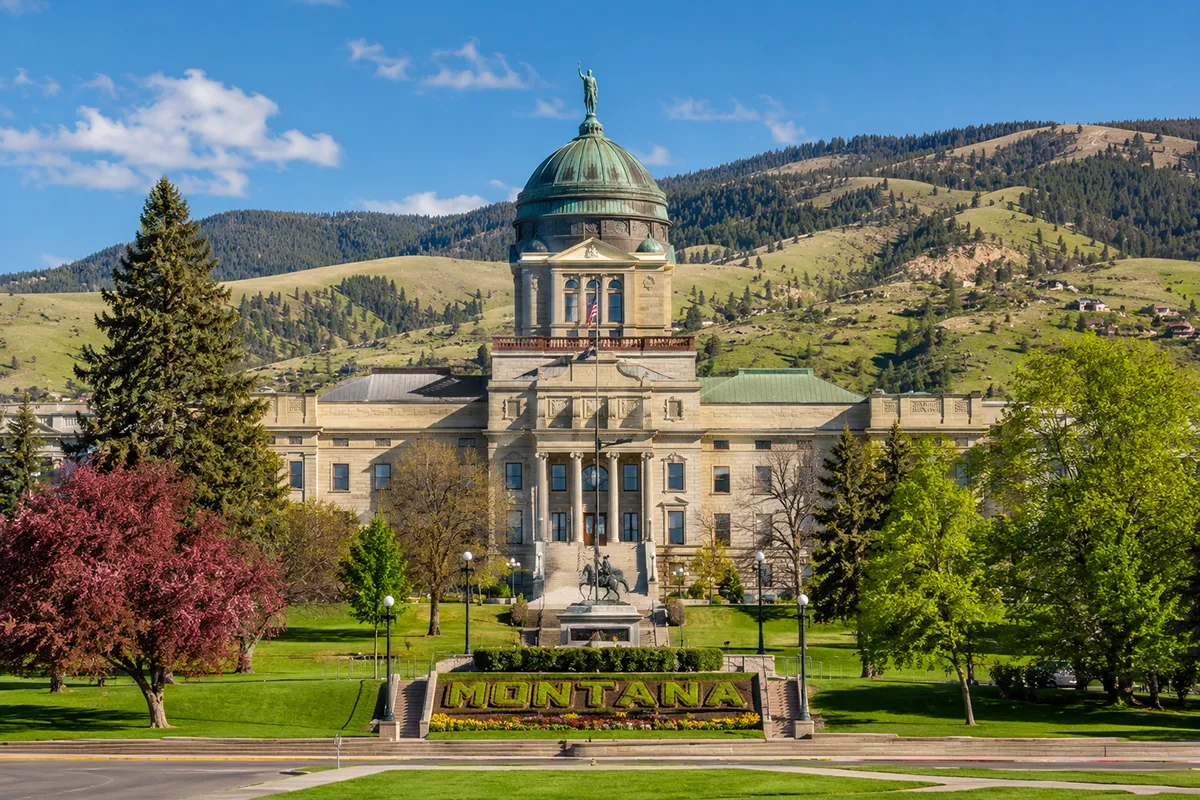
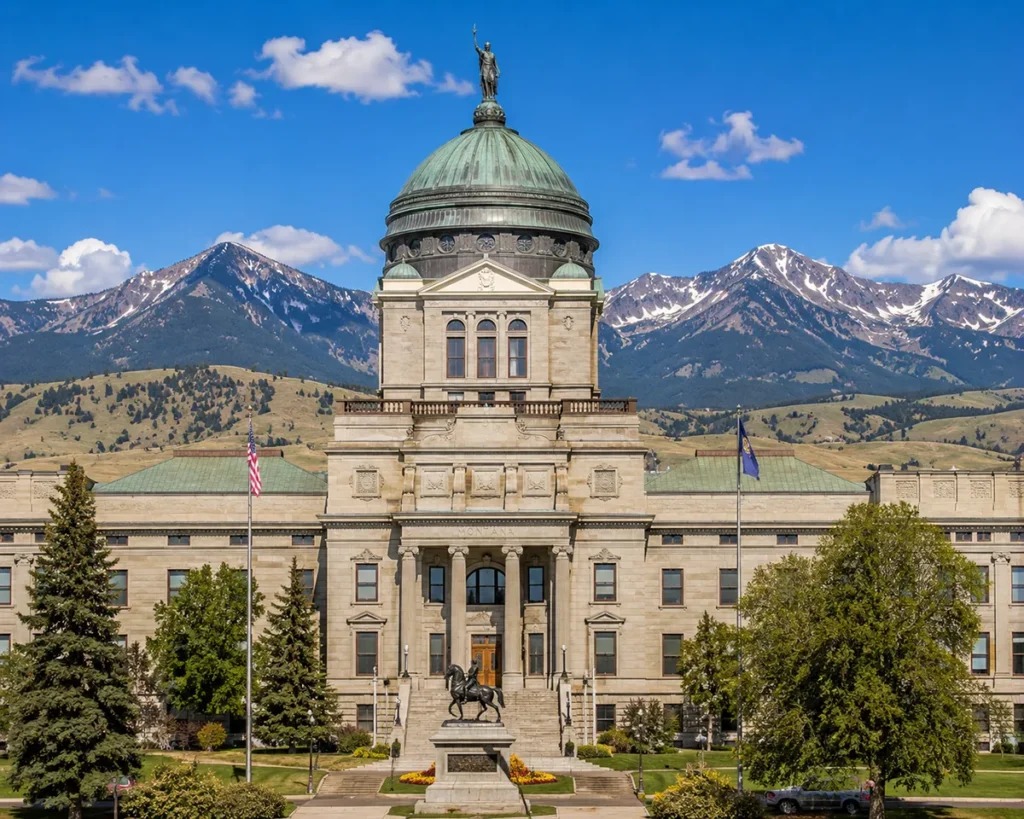
I’ll never forget the moment I rounded the corner on Sixth Avenue in Helena and caught my first glimpse of the Montana State Capitol’s copper dome glowing amber in the late afternoon sun.
That image—the neoclassical grandeur rising against the backdrop of the Rocky Mountains—perfectly captures why this building stands as one of the most important Montana State Symbols and a must-visit destination for anyone traveling through Big Sky Country.
- Free guided tours run Monday-Saturday; self-guided tours available anytime during business hours
- The building features a copper dome visible from miles away and houses four original Charles M. Russell paintings
- Plan 1.5-2 hours for a thorough visit; the third-floor rotunda view is worth the climb
- Best time to visit: weekday mornings for fewer crowds, or during legislative sessions (odd-numbered years) for a glimpse of democracy in action
- Pair your visit with the nearby Montana Historical Society Museum for a complete Helena experience
Liked this article?
Add Roaming Montana as a preferred source so you see more of our articles and guides on Google.
Why the Montana State Capitol Deserves a Spot on Your Itinerary
When I started planning my deep dive into Montana’s history and culture, I knew I had to spend serious time at the State Capitol. What I didn’t expect was how emotionally moved I’d be standing beneath that rotunda, surrounded by artwork depicting the state’s rugged frontier past.
This isn’t just another government building. It’s a living museum, an architectural achievement, and a window into Montana’s soul—all wrapped into one.
During my most recent visit last summer, I spent nearly three hours exploring every accessible corner, and I still feel like I missed things. That’s the kind of place this is.
The History Behind Montana’s Grandest Building
The current Capitol building wasn’t Montana’s first attempt at creating a worthy seat of government. When Montana achieved statehood in 1889, the legislature initially met in a much more modest structure.
The building you see today broke ground in 1899, with construction completed in 1902. Architects Charles Emlen Bell and John Hackett Kent designed it in the Greek Neoclassical style, drawing inspiration from the nation’s Capitol in Washington, D.C.
What makes this history even more interesting is the political drama surrounding it. The “War of the Copper Kings”—the battle between mining magnates Marcus Daly and William Clark—actually influenced where the Capitol would be located. Helena won the capital city designation in a heated 1894 election that some historians still debate was influenced by Daly’s financial interests.
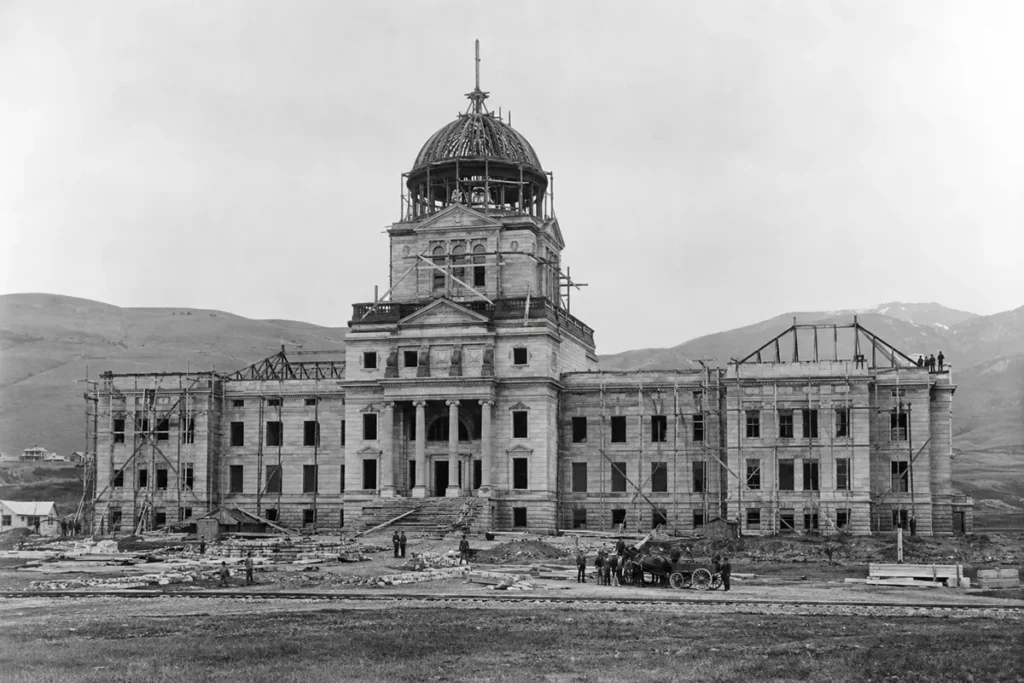
The building cost approximately $485,000 to construct—equivalent to roughly $17 million today. When you see the quality of materials and craftsmanship inside, you’ll understand where every penny went.
Arriving at the Capitol: What to Expect
I’ve visited the Capitol during three different seasons now, and my recommendation is to approach from Sixth Avenue if you’re driving. This gives you that postcard-perfect view of the building with Mount Helena in the background.
Parking is surprisingly easy. There’s a free public lot directly behind the building, and street parking along the surrounding blocks is typically available, especially on weekday mornings.
When I arrived for my first visit on a Tuesday in June, I found a spot within a two-minute walk. Weekend visits can be slightly busier, particularly if there’s an event at the nearby Montana Historical Society.
The grounds themselves deserve attention before you head inside. I spent twenty minutes just walking the landscaped paths, admiring the Montana native plants that surround the building—a nice complement to learning about Montana’s native plant species.
Security and Accessibility
Unlike some state capitols I’ve visited, Montana’s doesn’t require passing through metal detectors or security screenings during regular hours. You simply walk in.
This openness felt refreshing and distinctly Montanan. The building is fully ADA accessible, with ramps and elevators available throughout.
The Exterior: More Than Just a Copper Dome
Let’s talk about that dome. Standing 165 feet from the ground to its tip, the copper-clad dome dominates Helena’s skyline. The copper has developed that characteristic green patina you see on structures like the Statue of Liberty, though sections still show warmer bronze tones.
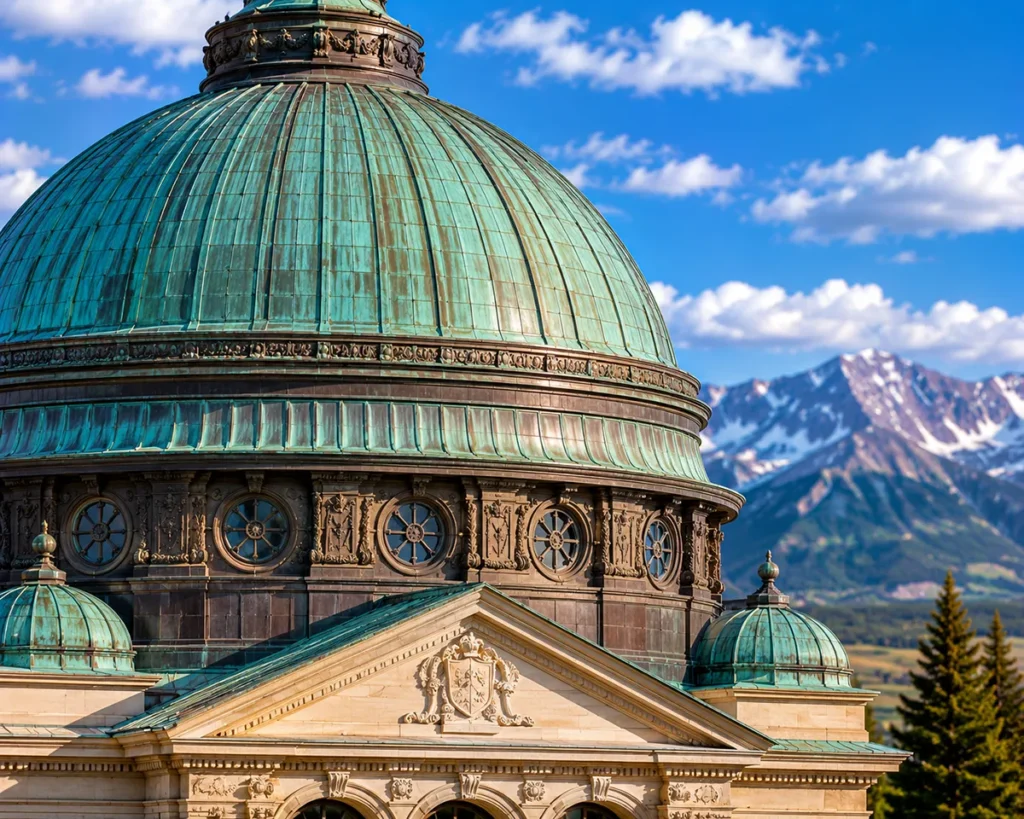
The dome weighs approximately 24 tons and sits atop a sandstone base quarried from local Montana sources. I learned during my guided tour that the copper came from Butte—fitting, given that city’s copper mining heritage.
The building’s exterior features columns in the Ionic style, and if you look carefully at the stonework, you’ll notice intricate carved details that most visitors walk right past. I recommend taking a slow circuit around the building before entering.
Above the main entrance, you’ll spot a sculpture of Lady Liberty. She’s holding a torch and gazing eastward—a detail our tour guide pointed out represents Montana looking toward the rest of the nation while maintaining its independent spirit.
Stepping Inside: The Grand Hall and Rotunda
Nothing prepared me for walking through those front doors for the first time. The interior immediately silences you with its grandeur.
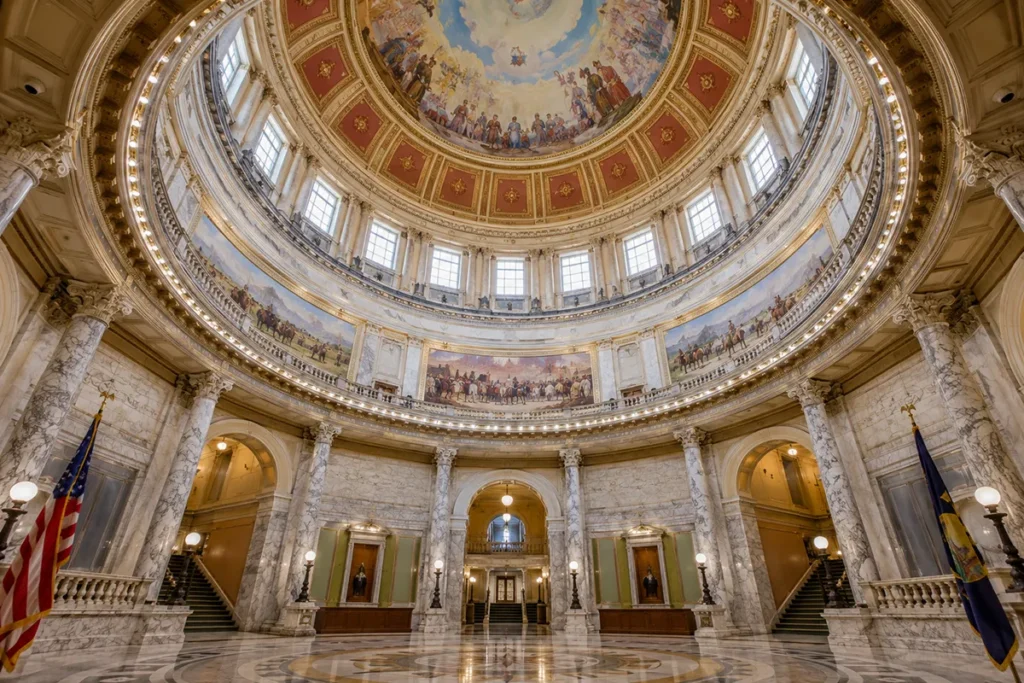
The first-floor grand hall features a checkerboard marble floor—alternating light and dark squares that create a visual rhythm drawing your eye toward the central rotunda. The marble came from multiple quarries, including sources in Italy and Vermont.
I spent a solid ten minutes just looking up at the rotunda from the first floor. The dome’s interior is painted to resemble an open sky, and the natural light filtering through creates an almost ethereal atmosphere.
The Four Charles M. Russell Paintings
Here’s what separates Montana’s Capitol from dozens of others I’ve toured: the Charles M. Russell originals. Russell, Montana’s most famous artist, created four paintings specifically for this building.
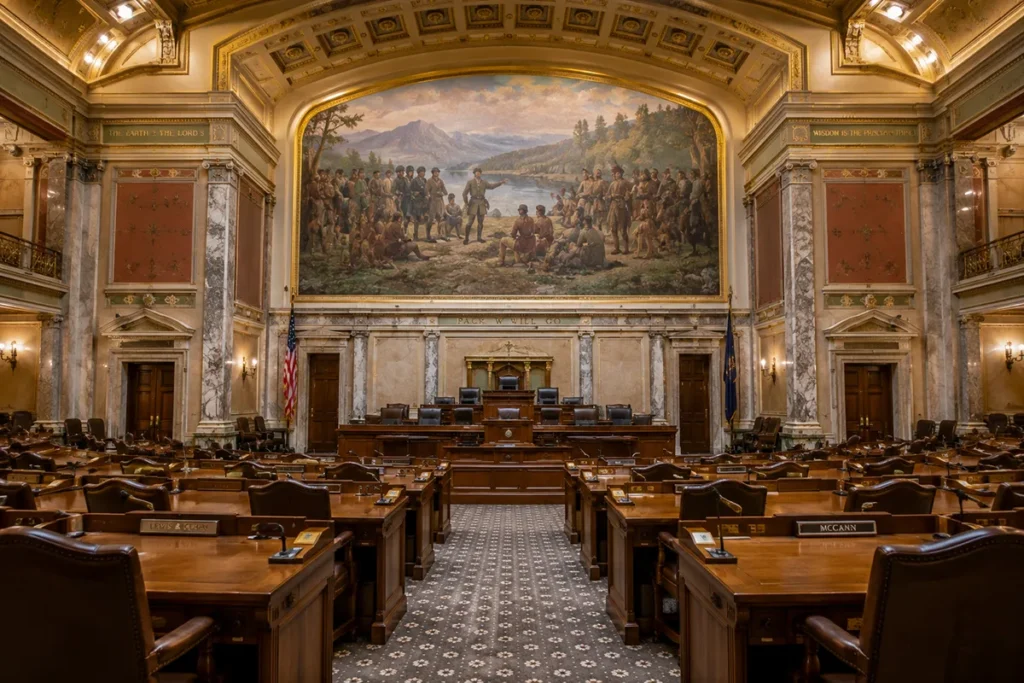
The most famous is “Lewis and Clark Meeting Indians at Ross’ Hole,” a massive canvas hanging in the House of Representatives chamber. During my visit, I stood in front of this painting for nearly fifteen minutes, discovering new details each time I scanned across it.
The colors remain vibrant despite being over a century old. Russell’s attention to authentic Native American dress, horse postures, and landscape details demonstrates why he’s considered one of the greatest Western artists who ever lived.
The other Russell paintings include scenes depicting trappers, traders, and Native Americans—all capturing moments from Montana’s frontier era. These aren’t reproductions or prints; they’re the actual canvases Russell painted.
The Edgar Samuel Paxson Murals
While Russell gets most of the attention, don’t overlook the six large murals by Edgar Samuel Paxson in the House chambers. Paxson spent years researching and creating these works, which depict pivotal moments in Montana’s history.
My personal favorite shows the driving of the golden spike that completed the Northern Pacific Railroad in Montana. The level of historical detail is remarkable—Paxson interviewed actual participants in these events before painting them.
Taking a Guided Tour: What You’ll Learn
I’ve done both self-guided and staff-led tours, and I strongly recommend scheduling a guided tour for your first visit. The volunteer docents and staff members share stories and context you simply won’t get from plaques and brochures.
Tour Schedules and Logistics
| Detail | Information |
|---|---|
| Guided Tour Days | Monday through Saturday |
| Tour Times | Typically on the hour, 9 AM – 3 PM (confirm current schedule) |
| Tour Length | Approximately 1 hour |
| Cost | Free |
| Reservations | Recommended for groups; walk-ins usually accommodated |
| Starting Point | First-floor information desk |
During my guided tour last summer, our docent was a retired teacher who had been volunteering for over a decade. Her knowledge went far beyond the standard script—she shared personal anecdotes about legislators she’d watched over the years and pointed out architectural details even repeat visitors miss.
The Senate and House Chambers
If you’re visiting when the legislature isn’t in session (even-numbered years, plus parts of odd-numbered years), you can typically walk right into both the Senate and House chambers.
The House chamber is larger, accommodating Montana’s 100 representatives. The room features those incredible Paxson murals I mentioned, plus the Russell masterpiece that anchors the entire space.
What struck me most was the intimacy. Montana’s legislature is comparatively small—50 senators and 100 representatives—and the chambers reflect that scale. These aren’t cavernous halls where legislators seem miles apart; they’re working spaces where you can imagine actual debate and deliberation happening.
Visiting During a Legislative Session
I made a point to return during a legislative session in January, and it was a completely different experience. The building hummed with energy—lobbyists clustered in hallways, staffers rushed between offices, and citizens packed the galleries to watch democracy in action.
Montana’s legislature meets in odd-numbered years, typically from January through April or May. If your travel dates align, I highly recommend timing your visit accordingly.
You can sit in the public galleries of both chambers at no cost. Just be prepared for security protocols that are stricter during sessions than during regular visiting hours.
Hidden Gems Most Visitors Miss
After multiple visits, I’ve discovered several spots that don’t appear on standard tours or in most travel guides.
The Third-Floor Galleries
Most visitors never make it above the second floor. That’s a mistake. The third-floor galleries surrounding the rotunda offer the best views of the dome’s interior artwork and a unique perspective looking down at the grand hall below.
During my last visit, I had the third floor entirely to myself for almost twenty minutes. The quiet up there, combined with the views, created one of my most memorable moments in the entire building.
The Governor’s Reception Room
This ornate room on the first floor is sometimes accessible but often overlooked. The woodwork alone is worth seeking out—hand-carved details that represent hundreds of hours of craftsman’s labor.
The Basement Level
Yes, even the basement has interesting elements. The original building’s mechanical systems were cutting-edge for 1902, and some historical elements remain visible. The Capitol also connects to other state buildings via underground tunnels, though public access to these is restricted.
The Capitol Grounds and Surrounding Area
Don’t rush away after your interior tour. The Capitol grounds include several monuments and memorials worth exploring.
The Korean and Vietnam War memorials sit on the northwest lawn, and I found them unexpectedly moving. The names of Montanans who served and died are inscribed on stone—a powerful reminder of sacrifice from a state with a strong military tradition.
There’s also a statue of Thomas Francis Meagher, Montana’s Acting Territorial Governor during the Civil War era. His controversial legacy makes for interesting contemplation.
The Montana Historical Society
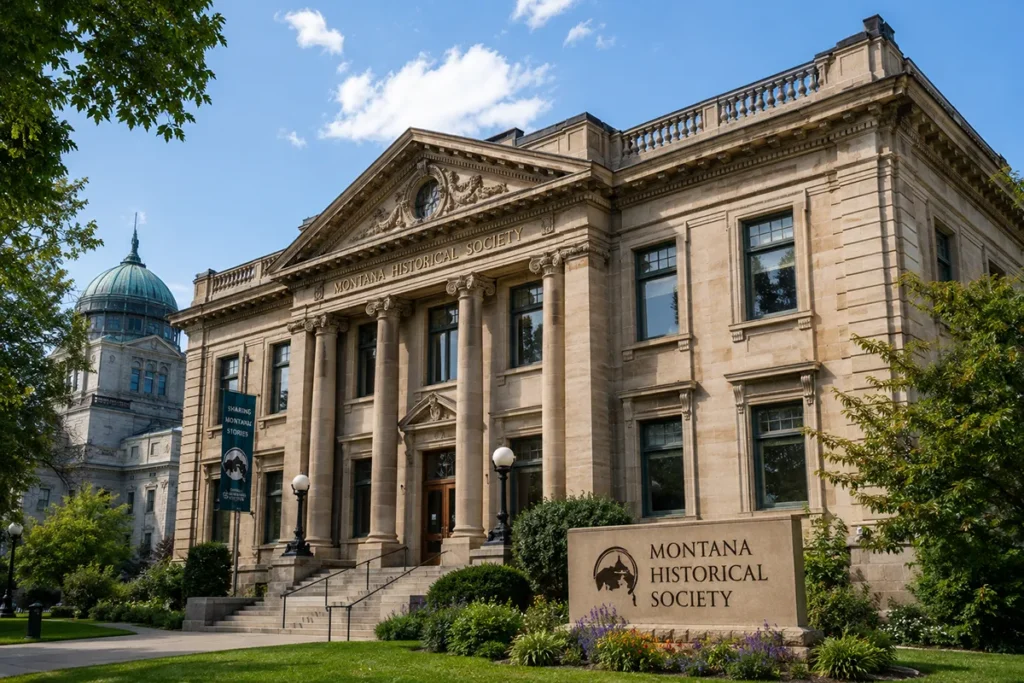
Just steps from the Capitol, the Montana Historical Society Museum houses the most comprehensive collection of Montana artifacts and artwork anywhere in the world. I always pair my Capitol visits with time at this museum.
The museum holds additional Charles M. Russell works, Native American collections, and exhibits covering Montana’s mining, ranching, and natural history. If you want to learn about the Montana state fossil or understand more about the creatures that once roamed this land, the museum delivers.
Understanding Montana’s Political Culture Through the Capitol
One thing that struck me during my visits was how much the Capitol reflects Montana’s unique political identity. This is a state that values independence, practicality, and what locals call “getting things done.”
The building isn’t ostentatious despite its grandeur. There’s a workmanlike quality that matches Montana’s character. The Montana state motto, “Oro y Plata” (Gold and Silver), appears throughout the building, a constant reminder of the mineral wealth that built the state.
I also noticed how accessible everything feels. Unlike some state capitols where security barriers and roped-off areas dominate, Montana’s Capitol remains genuinely open to its citizens. During my session visit, I watched regular Montanans walk right up to their legislators in the hallways.
Photography Tips and Considerations
Photography is permitted throughout most of the Capitol, and the building offers fantastic opportunities for photographers at every skill level.
For the rotunda, I recommend shooting during midday when natural light streams through the dome. The contrast between the bright dome and darker lower levels creates dramatic images.
The Russell and Paxson paintings present challenges due to protective glass and ambient lighting. I found that positioning myself at an angle reduced glare significantly. Flash photography may be restricted in certain areas.
The exterior photographs best during early morning or late afternoon, when the warm light enhances the sandstone’s natural colors and the copper dome seems to glow.
Planning Your Visit: Seasonal Considerations
I’ve now visited the Capitol in summer, winter, and early spring, and each season offers something different.
Summer (June-August)
Peak tourist season brings more visitors but also the best weather for exploring the grounds. Helena’s summers are warm but rarely oppressive—temperatures typically range from 70-85°F.
The building’s lack of aggressive air conditioning means interior temperatures can climb on hot days, but I’ve never found it uncomfortable.
Fall (September-November)
My favorite time to visit Helena. The crowds thin, the aspen trees on surrounding hills turn gold, and the slant of autumn light makes the Capitol especially photogenic.
Winter (December-February)
Legislative sessions begin in January during odd-numbered years, making this prime time for political junkies. Helena sees significant snowfall, so plan accordingly for road conditions.
The Capitol decorated for the holidays is surprisingly beautiful—something most visitors never experience.
Spring (March-May)
Legislative sessions continue into spring during odd-numbered years. Weather can be unpredictable, but the Montana state flower, the bitterroot, begins blooming in the region by late spring.
Combining the Capitol with Other Helena Attractions
Helena deserves more than a quick Capitol visit. The city offers enough to fill a full day or more, and the Capitol serves as a natural starting point.
A Suggested Itinerary
Here’s how I structure my Helena visits when I want to maximize my time:
Morning: Start at the Capitol when it opens. Beat the tour groups and have the rotunda essentially to yourself.
Late Morning: Walk next door to the Montana Historical Society Museum. Plan at least 90 minutes here.
Lunch: Head downtown to one of Helena’s excellent local restaurants. I’m partial to the coffee shops and cafés along Last Chance Gulch.
Afternoon: Explore the Cathedral of St. Helena, a stunning Gothic Revival church that rivals many European cathedrals. Then consider a drive up to Mount Helena for views over the city and valley.
Practical Information for Your Visit
Address and Contact
Montana State Capitol
1301 East Sixth Avenue
Helena, MT 59601
For current tour schedules and special event information, contact the Governor’s Office at (406) 444-3111 or the Montana Historical Society at (406) 444-2694.
Hours
The building is typically open Monday through Friday, 8 AM to 5 PM, with Saturday hours available for tours during peak season. Hours may vary for holidays and special events.
Cost
Visiting the Capitol is completely free, including guided tours.
Accessibility
The building is fully wheelchair accessible with ramps at entrances and elevators serving all public floors.
Connecting the Capitol to Montana’s Broader Story
What I find most meaningful about the Montana State Capitol is how it tells the story of this remarkable state. Every element—from the copper dome sourced from Butte to the Russell paintings depicting frontier encounters—connects to the larger Montana narrative.
The building represents a young state’s ambition. Montana had only been a state for a decade when construction began, yet the legislature and citizens invested in a capitol building that would stand alongside any in the nation.
That ambition continues today. When I watched legislators debating bills during my session visit, I saw the same determination that built the building itself.
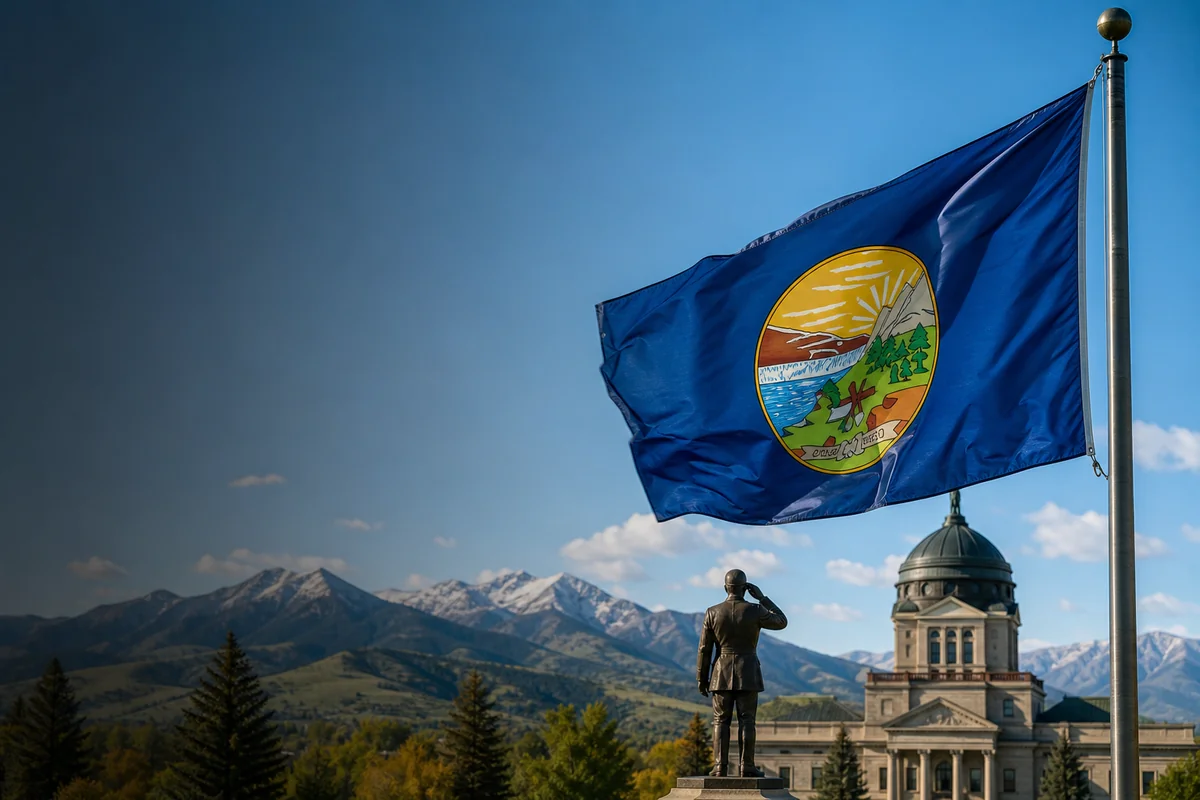
Understanding symbols helps you understand places. The Montana state flag flying outside the Capitol, the state seal appearing on official documents inside, the blue and gold of the state colors decorating legislative chambers—all of these elements weave together into Montana’s identity.
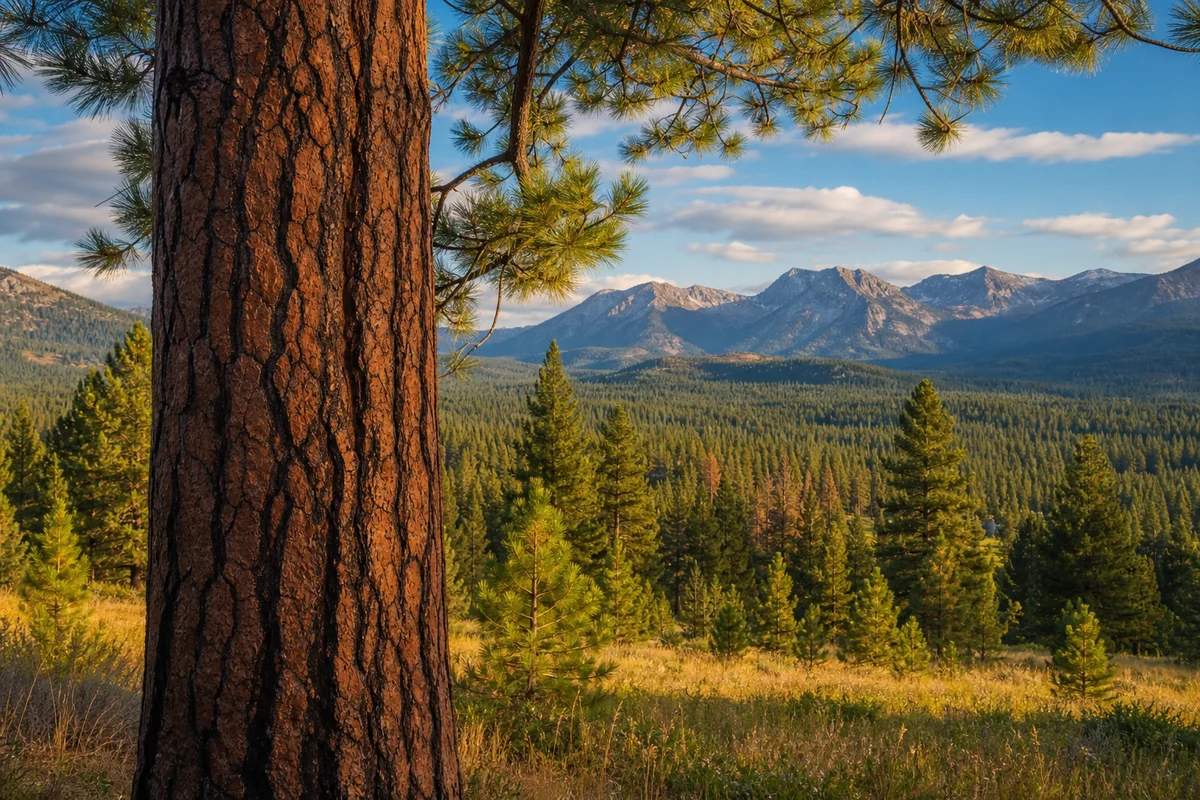
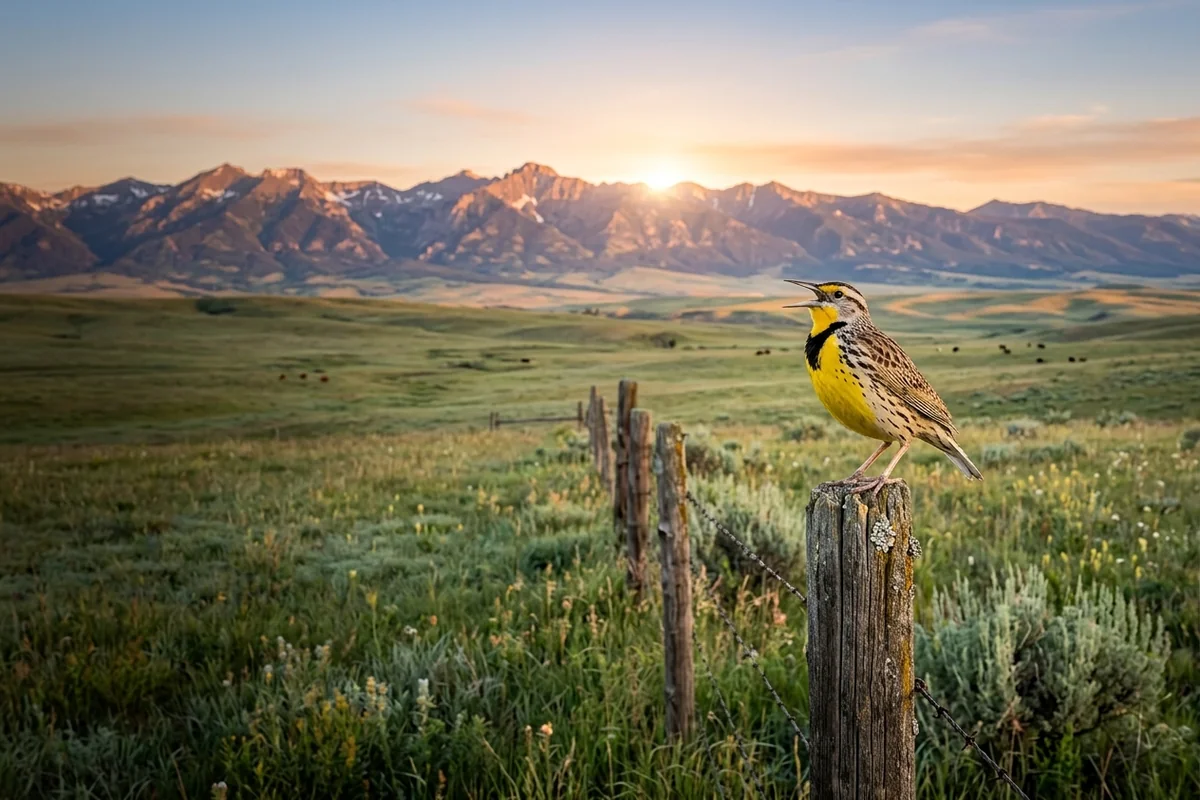
Even seemingly small designations carry meaning. The grizzly bear as Montana’s state animal speaks to wilderness values. The Western Meadowlark as state bird represents the prairie landscapes that cover much of eastern Montana. The Ponderosa Pine as state tree embodies the forests that blanket the western mountains.
What Makes This Capitol Special
I’ve visited state capitols across America, and Montana’s holds a special place in my memory. It’s not the largest or most ornate, but it might be the most authentically reflective of its state’s character.
The Treasure State nickname and various Montana slogans you’ll encounter all connect back to what this building represents: a state built on natural resources, populated by independent-minded people, and governed with a practical, no-nonsense approach.
The Capitol doesn’t try to be something it’s not. There’s no excessive gilding or overwhelming opulence. Instead, there’s quality craftsmanship, meaningful artwork, and a genuine sense of purpose.
When you stand beneath that copper dome, you’re standing at the center of Montana’s civic life. Generations of Montanans have walked these halls—from copper kings to homesteaders’ descendants, from Native American leaders to modern-day activists.
Final Thoughts for Visitors
If I could give one piece of advice to visitors, it would be this: slow down. The Capitol rewards patience.
Don’t rush through the guided tour to check a box. Don’t snap a few photos and move on. Take time to study the paintings, read the inscriptions, and imagine the history that unfolded within these walls.
Talk to the docents—they’re volunteers who love this building and have stories to share. Ask questions about details that catch your eye. Wonder aloud about the decisions made in these chambers.
Montana’s State Capitol isn’t just a building; it’s a story told in stone, copper, canvas, and light. It’s a story about ambition and identity, about resources extracted and landscapes preserved, about democracy practiced in real time.
I’ve left the Capitol after every visit feeling like I understand Montana a little better. That’s the highest compliment I can pay to any building.
And when you’re finished exploring the Capitol, there’s still so much more to discover about what makes Montana unique—from the Blackspotted Cutthroat Trout swimming in mountain streams to the bluebunch wheatgrass swaying on prairie hillsides, from the Mourning Cloak butterfly to the delicious wild huckleberries that represent the state fruit.
There’s even a state lullaby and state song that capture Montana’s spirit in music, plus a collection of other Montana-themed songs that travelers often discover during their visits.
The Montana state quarter in your pocket features a bison skull—another symbol decided within Capitol walls. Even the state gemstone and rocks reflect the geological wealth that shapes Montana’s identity. And for gardeners and outdoor enthusiasts, understanding which plants are native versus invasive—like species covered in the Montana thistle guide—connects to conservation debates that happen in these very legislative chambers.
The Capitol stands as the physical embodiment of all these symbols and stories, gathered under one copper dome in the heart of Helena. Make time for it. You won’t regret it.
Frequently Asked Questions
Where is the Montana State Capitol Building and what are the visiting hours?
The Capitol is located at 1301 East 6th Avenue in Helena, MT 59601. It’s open Monday through Friday, 8 AM to 5 PM, with Saturday hours available during peak season. Free guided tours run Monday through Saturday, typically on the hour from 9 AM to 3 PM. No reservations needed for individuals — just walk up to the first-floor information desk.
How long should I plan to spend at the Montana State Capitol?
Budget at least 1.5 to 2 hours for a thorough visit. A guided tour runs about an hour and covers the main highlights. Add extra time if you want to explore the third-floor galleries, the Governor’s Reception Room, the surrounding grounds, and the war memorials on the northwest lawn. If you’re visiting during a legislative session, you could easily spend half a day between the Capitol and public gallery time.
Is there parking near the Montana State Capitol?
Yes — there’s a free public lot directly behind the building, and street parking along surrounding blocks is usually available, particularly on weekday mornings. Weekend visits can be slightly busier if there’s an event at the nearby Montana Historical Society. From the free lot, you’re within a two-minute walk of the main entrance.
Can you see the Charles M. Russell paintings without a guided tour?
Yes. The Russell paintings are accessible during regular building hours whether you take a guided tour or explore on your own. The most famous — “Lewis and Clark Meeting Indians at Ross’ Hole” — hangs in the House of Representatives chamber, which is typically open to the public when the legislature is not in session. The guided tour provides essential context about the paintings that makes them far more meaningful.
When is the best time to visit the Montana State Capitol?
Weekday mornings are ideal for avoiding crowds and having the rotunda to yourself. For a richer experience, visit during a legislative session — Montana’s legislature meets in odd-numbered years from January through April or May — when the building is alive with activity and public galleries are open. Fall is the most photogenic season, with warm light on the copper dome and golden aspens on the surrounding hills.
What else is worth visiting near the Montana State Capitol?
The Montana Historical Society Museum, directly next door, is a must — plan at least 90 minutes for additional Charles M. Russell works, Native American collections, and Montana history exhibits. From there, the Cathedral of St. Helena (a stunning Gothic Revival church) is a short walk, and Mount Helena offers panoramic views of the city. Last Chance Gulch in downtown Helena has good options for lunch between stops.
Is the Montana State Capitol free to visit?
Yes, completely free — including guided tours. There are no admission fees, no reservation fees, and no parking fees in the lot behind the building. The Capitol is also fully ADA accessible with ramps at entrances and elevators serving all public floors.
Sources:
- https://mhs.mt.gov/education/Capitol/Capitol-History
- https://leg.mt.gov/civic-education/visiting-capitol/
- https://mhs.mt.gov/shpo/docs/AGOL/24LC2422_NR.pdf
- https://mhs.mt.gov/education/Capitol/Capitol-Art/
- https://www.umt.edu/ccfwd/public-policy/2017guidetomontanalegislature.pdf
- http://mhs.mt.gov/education/Capitol
- https://directory.mt.gov/govt/state-dir/agency/library
- https://helenacollege.edu/catalog/helenahistory.aspx
- https://mhs.mt.gov/education/capitol/governors