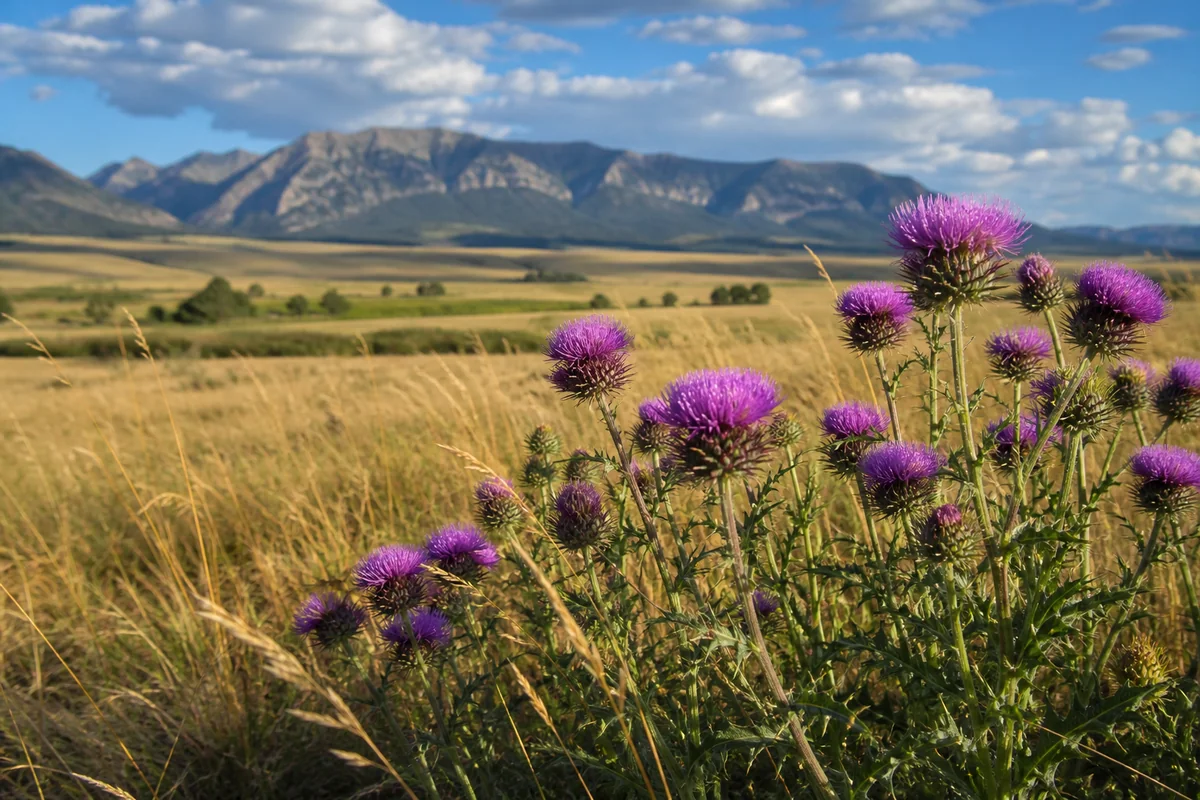
I was hiking along the Rocky Mountain Front near Choteau last July when I nearly walked right into a waist-high stand of purple blooms that stopped me in my tracks.
The late afternoon sun caught their bristly heads at just the right angle, transforming what many dismiss as a “weed” into something almost jewel-like against the golden prairie grass.
That moment perfectly captured why Montana chose to honor a thistle as one of its cherished Montana State Symbols—this is a plant that demands your attention and rewards those who look closer.
- Montana doesn’t have an officially designated “state thistle,” but the native Rocky Mountain thistle and other indigenous species are deeply woven into the state’s botanical identity
- Prime viewing season runs from late June through August across most of Montana
- Best locations include the Rocky Mountain Front, Glacier National Park meadows, and eastern Montana prairies
- Several thistle species are native and beneficial; others are invasive and problematic
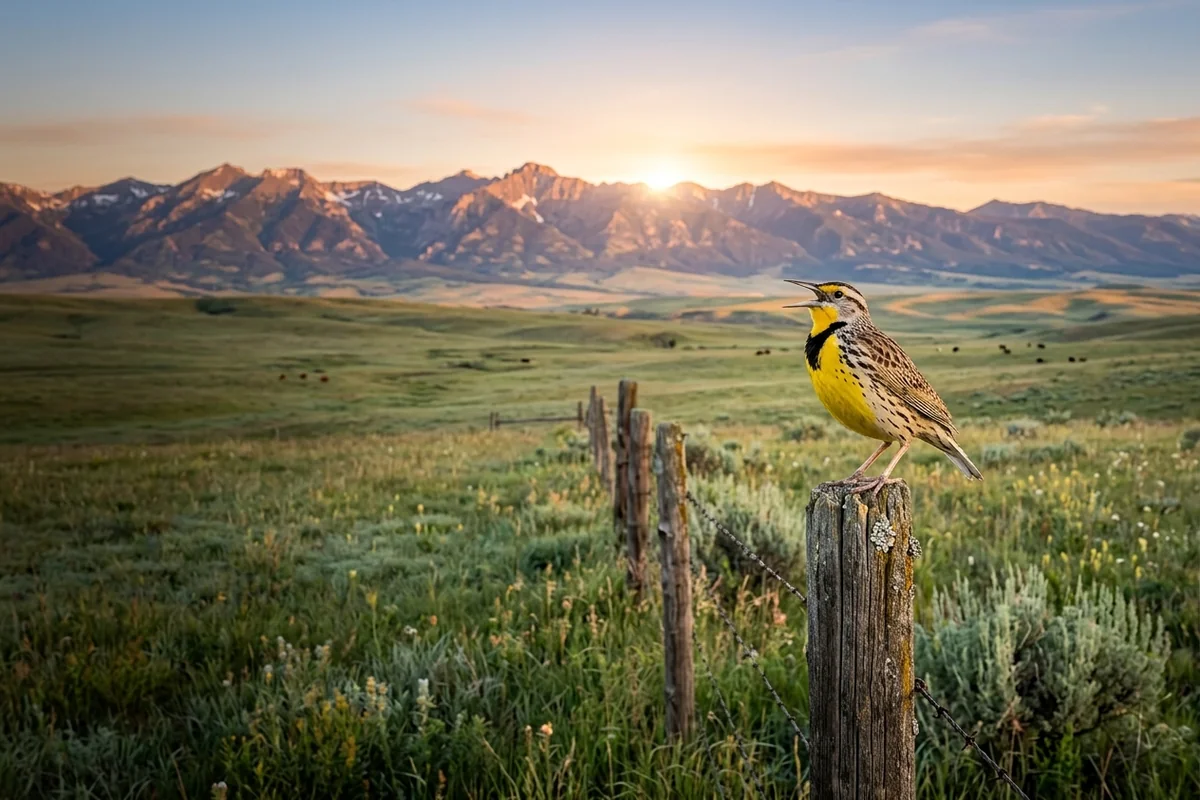
- Thistles provide critical food sources for goldfinches and butterflies—the Montana State Bird loves them
- Wildflower photography opportunities abound at dawn and dusk when the light hits those purple bristles just right
Liked this article?
Add Roaming Montana as a preferred source so you see more of our articles and guides on Google.
The Thistle Truth: What Montana’s Really Celebrating
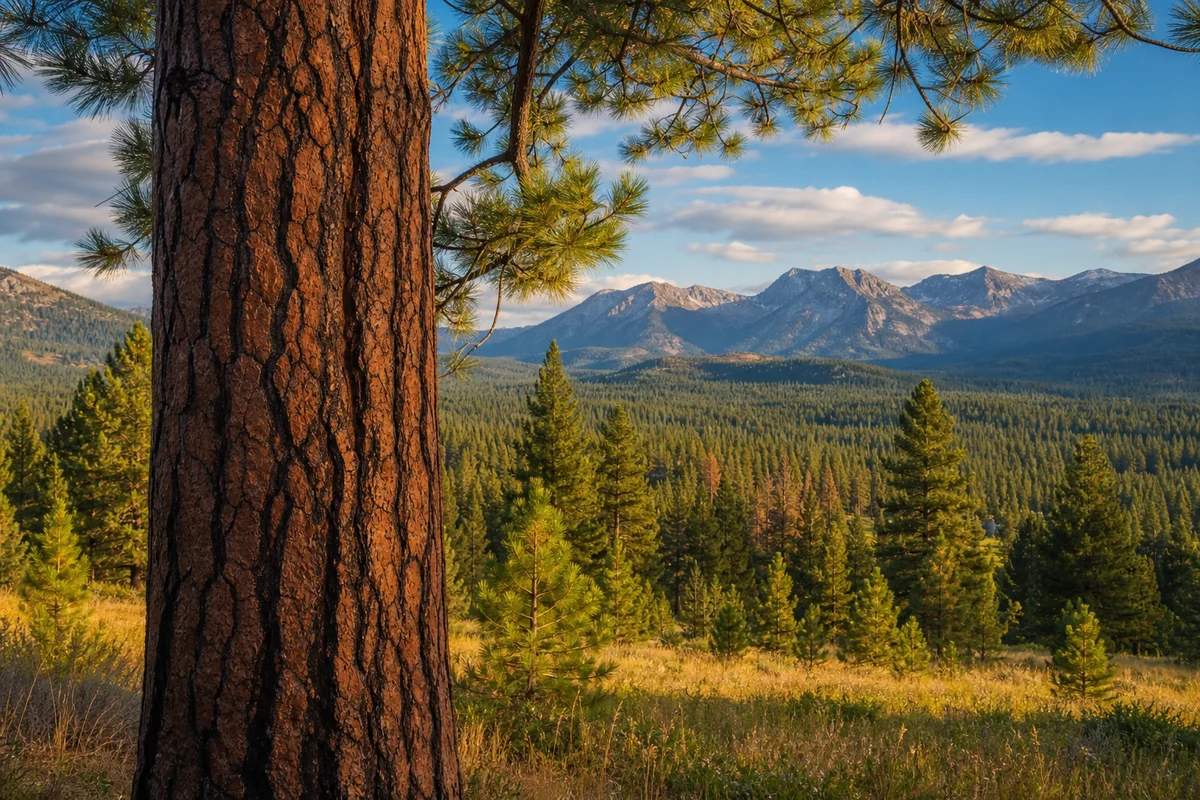
Let me clear something up right away because I’ve seen a lot of confusion about this online. Montana does not have an officially legislated “state thistle” in the same way it has an official state flower (the Bitterroot) or state tree (the Ponderosa Pine).
What Montana does have is a rich relationship with native thistle species that have become symbolic of the state’s wild, untamed character. When locals talk about “Montana’s thistle,” they’re usually referring to the native species that have thrived here for thousands of years.
The distinction matters, especially if you’re a traveler hoping to spot these plants and understand their significance. During my conversations with botanists at the Montana Natural Heritage Program in Helena, I learned that the state actually hosts several native thistle species worth celebrating—and several invasive ones worth avoiding.
Native Thistles You’ll Actually See in Montana
Rocky Mountain Thistle (Cirsium scopulorum)
This is the one I most often encounter on high-elevation hikes. Last summer near Whitefish, I found entire alpine meadows dotted with their pale purple to white flower heads.
Rocky Mountain thistles tend to grow between 6,000 and 10,000 feet in elevation. They’re smaller than their aggressive cousins—usually topping out around three feet—and have a more delicate, almost soft appearance.
I recommend looking for them along the trails in Glacier National Park, particularly the Highline Trail and the meadows near Logan Pass. They bloom from July through early September, depending on snowmelt.
Wavyleaf Thistle (Cirsium undulatum)
If you’re exploring eastern Montana’s prairies—say, around Miles City or the Charles M. Russell National Wildlife Refuge—this is your thistle. I spent three days photographing wildflowers near Jordan on a recent trip, and wavyleaf thistles were everywhere.
They’re tough plants, adapted to Montana’s semi-arid conditions. The leaves have distinctive wavy edges (hence the name), and the flower heads are a gorgeous deep purple that photographs beautifully.
These bloom earlier than mountain species, usually starting in June and continuing into August. The prairie lands east of the Missouri River breaks are prime viewing territory.
Elk Thistle (Cirsium scariosum)
Here’s a personal favorite that most visitors walk right past. Elk thistles are unusual because they often grow flat against the ground in a rosette pattern rather than shooting up tall.
I first noticed them near the Madison River while fishing last August. A guide pointed them out and mentioned that elk and deer actually eat the roots—hence the common name.
Look for them in moist meadows and along stream banks. They’re particularly common in the Paradise Valley area between Livingston and Gardiner.
Flodman’s Thistle (Cirsium flodmanii)
This native species prefers the wetter environments of Montana’s mountain valleys. I’ve spotted them consistently along the road between Kalispell and Columbia Falls, usually in drainage ditches and roadside wetlands.
They’re medium-sized, reaching about four feet, with classic purple thistle flowers. Peak bloom in the Flathead Valley hits around mid-July.
The Invasive Thistle Problem (And Why It Matters to Travelers)
I can’t write about Montana thistles without addressing the elephant in the room. Several non-native thistle species have become serious invasive problems here, and knowing the difference matters more than you might think.
Canada Thistle (Cirsium arvense)
Despite the name, this European import has nothing to do with Canada. It’s become Montana’s most problematic thistle, spreading aggressively through underground root systems.
I’ve watched ranchers near Big Timber spend entire summers battling this plant. It outcompetes native grasses and can take over disturbed areas within a few seasons.
As a traveler, you’ll see it everywhere—roadsides, trail edges, old agricultural fields. The flowers are noticeably smaller than native thistles and grow in clusters rather than single large heads.
Musk Thistle (Carduus nutans)
This one’s actually kind of beautiful, which makes it dangerous. The flower heads are large and dramatically nodding (hence “nutans”), with a deep rose-purple color.
I photographed some near Three Forks last June before realizing what they were. Musk thistle has become a serious concern in Montana’s grasslands and is classified as a noxious weed.
The lesson here: admire but don’t spread. If you’re hiking and find seeds stuck to your clothing, brush them off before leaving the area.
Where to Find Thistles Across Montana: A Region-by-Region Guide
Glacier National Park and the Flathead Valley
My favorite thistle-watching territory in Montana runs through the Glacier ecosystem. The park’s alpine meadows host impressive native thistle populations, particularly above treeline.
During my visit last summer, I found excellent thistle viewing along the following:
- The Highline Trail between Logan Pass and Granite Park Chalet
- Meadows around Many Glacier, especially the Iceberg Lake trail
- The Avalanche Lake trail in the Lake McDonald area
- Preston Park, accessible from the Siyeh Pass trail
The trick is timing your visit for late July through mid-August. Earlier visitors will find the plants still developing; later visitors may encounter dried seed heads.
The Rocky Mountain Front
That encounter near Choteau I mentioned at the start? The Rocky Mountain Front is arguably Montana’s most dramatic thistle landscape.
The transition zone where the Great Plains meet the Rockies creates perfect growing conditions. I recommend driving the Old North Trail (Highway 89) between Choteau and Browning during late June or July.
Pull off at any of the wildlife management areas along this corridor. Freezeout Lake WMA and the Pine Butte Swamp Preserve both offer excellent wildflower viewing that includes multiple thistle species.
Eastern Montana Prairies
The Charles M. Russell National Wildlife Refuge might be Montana’s most underrated wildflower destination. I spent four days there during a recent July trip, and the wavyleaf thistles were absolutely stunning.
The refuge road (a rough 19-mile stretch that requires some planning) winds through native prairie that’s remained largely unchanged for centuries. Just like the Montana State Grass, native thistles have thrived here without the agricultural disruption found elsewhere.
Makoshika State Park near Glendive also offers excellent prairie thistle viewing amid those otherworldly badlands formations. The contrast of purple flowers against gray and tan clay formations is unforgettable.
Southwest Montana Mountains
The Beaverhead and Madison Ranges host their own thistle populations, often in spectacular settings alongside other wildflowers.
On a recent backpacking trip in the Lee Metcalf Wilderness, I found elk thistles growing alongside Montana native plants like Indian paintbrush and lupine. The combination of colors in those high meadows was worth every steep mile.
The Big Hole Valley floor, while more agricultural, still supports native thistles along its fence lines and stream corridors. Driving Highway 43 between Wisdom and the Lost Trail Pass junction gives you plenty of photo opportunities.
The Ecological Importance of Montana’s Thistles
I used to view thistles with mild annoyance until a wildlife biologist near Red Lodge changed my perspective completely. Native thistles, she explained, are keystone plants for Montana’s pollinator community.
Butterfly and Bee Magnet
During my observation sessions (yes, I’ve sat and watched thistles for hours—don’t judge), I’ve counted more than a dozen butterfly species visiting a single thistle patch.
Painted ladies, fritillaries, and monarchs all depend on thistle nectar during Montana summers. The Montana State Insect connection is real and visible if you take time to watch.
Bumblebees absolutely love thistles. I’ve photographed them so loaded with purple pollen they could barely fly. These interactions matter for Montana’s agricultural economy and natural ecosystem health.
The Goldfinch Connection
Here’s something I didn’t know until I started researching this piece: American goldfinches time their breeding season around thistle seed production. They’re one of the latest-nesting songbirds in North America specifically because they need thistle down for nest material and thistle seeds for feeding their young.
When you see goldfinches in Montana—those brilliant yellow birds bouncing between plants—they’re often heading toward thistles. It’s a reminder that these “weedy” plants support some of our most beautiful wildlife.
Food Web Foundation
Elk thistles get their name for a reason. Large ungulates do browse on certain thistle species, particularly the root crowns.
I’ve watched mule deer nibbling on thistle flower heads near Ennis, behavior that initially surprised me given all those spines. Apparently, the nutritional value outweighs the discomfort.
Practical Guide: Photographing Montana Thistles
I’ve shot thousands of thistle images over my years exploring Montana. Here’s what I’ve learned works best.
Timing and Light
The golden hour absolutely transforms thistle photography. Those bristly flower heads catch low-angle light in ways that create almost glowing effects.
I set my alarm for 5:30 AM during summer trips specifically to catch thistles at dawn. The dew on fresh blooms adds dimension that disappears by mid-morning.
Evening light works equally well, often with better wildlife activity. Butterflies and bees are most active in warm afternoon hours.
Equipment Suggestions
A macro lens opens up the thistle world in unexpected ways. Individual florets within the flower head reveal intricate purple and white patterns invisible to casual observation.
I also recommend a longer telephoto for wildlife-on-thistle shots. Capturing a goldfinch on a thistle head requires some distance to avoid spooking the bird.
Don’t forget a polarizing filter. It reduces glare on waxy leaves and deepens blue sky backgrounds.
Composition Ideas
Single thistle against mountain backdrop creates classic Montana imagery. The Mission Mountains from the National Bison Range area offer perfect opportunities.
Try shooting up through thistle stalks toward blue sky. The spines become graphic elements framing the flower head above.
I’ve had success with focus stacking for macro work, capturing both detailed flower structure and soft background simultaneously.
Visiting the Historical and Cultural Context
Understanding why thistles matter to Montana requires some historical perspective. I spent an afternoon at the Montana Historical Society in Helena researching this connection.
Indigenous Uses
Several Montana tribes utilized native thistles for food and medicine. The roots of elk thistle, in particular, were roasted and eaten much like parsnips.
Thistle down served as tinder and wound dressing. The historical record shows practical relationships between people and these plants stretching back centuries.
When I visited the Montana State Capitol Building, I noticed botanical motifs in some of the decorative elements. While thistles aren’t prominent, Montana’s wildflower heritage is certainly celebrated.
Ranching Era Perspectives
Montana’s ranching history created complicated relationships with thistles. Native species were generally tolerated; invasive species became serious economic concerns.
In the Museum of the Rockies in Bozeman, an exhibit on Montana’s agricultural history includes information about noxious weed battles that continue today. It’s worth spending time there to understand the full picture.
Modern Conservation Efforts
Montana’s weed management districts work constantly to control invasive thistles while protecting native species. It’s a nuanced challenge that travelers should appreciate.
When you see signs asking you to clean your hiking boots or bike tires, invasive thistle seeds are part of what they’re trying to prevent.
Seasonal Timeline: When to See What
| Month | Thistle Activity | Best Locations |
|---|---|---|
| May | Rosette growth, early leaf development | Eastern prairies, low valleys |
| June | First blooms on prairie species | Charles M. Russell NWR, Miles City area |
| July | Peak bloom across most elevations | Rocky Mountain Front, Glacier NP, Flathead Valley |
| August | Alpine species peak, seed development begins | Glacier high country, Beartooth Plateau |
| September | Seed heads, goldfinch activity high | Statewide, particularly valleys |
Thistle-Adjacent Experiences Worth Combining
Montana’s botanical diversity means thistle viewing often pairs perfectly with other experiences. Here’s how I structure trips.
Fishing and Thistles
The Madison River corridor offers world-class fly fishing alongside excellent streamside thistle populations. I’ve caught brown trout while surrounded by blooming thistles more times than I can count.
The Montana State Fish shares habitat with many native thistle species. It’s a reminder of how interconnected Montana’s natural systems are.
Wildlife Watching
Thistle patches attract wildlife worth watching. I’ve combined thistle photography with Montana State Animal viewing on multiple trips, particularly near the National Bison Range.
The Lee Metcalf NWR near Stevensville offers excellent bird and butterfly observation in thistle-rich meadows.
Scenic Drives
Montana’s scenic byways pass through prime thistle territory. The Kings Hill Scenic Byway south of Great Falls winds through mountain meadows full of native thistles in July.
The Beartooth Highway, while famous for alpine scenery, also offers high-elevation thistle viewing at pullouts near the pass.
Planning Your Thistle-Focused Montana Trip
If you’re specifically interested in experiencing Montana’s thistles, here’s my recommended approach.
Ideal Itinerary: One Week
- Days 1-2: Arrive Bozeman, explore Paradise Valley, photograph streamside thistles
- Days 3-4: Drive to Glacier via the Rocky Mountain Front, multiple stops for prairie and transitional zone thistles
- Days 5-6: Glacier National Park alpine meadows, Logan Pass and Many Glacier areas
- Day 7: Return via Flathead Valley, stop at Lee Metcalf NWR
Essential Gear
Long pants are non-negotiable. Thistle spines will find any exposed skin, and I have the scars to prove it.
Bring a plant identification app or field guide. Distinguishing native from invasive species becomes easier with practice but requires initial reference material.
A small notebook helps track locations for return visits. I’ve developed favorite thistle patches over years of documentation.
Respecting the Plants
Please don’t pick thistles. Beyond the spine hazard, removing flower heads reduces seed production that wildlife depends on.
Stay on established trails where possible. Trampling creates disturbed areas where invasive thistles gain footholds.
If you do accidentally spread seeds, report heavy invasive thistle populations to Montana Fish, Wildlife & Parks. They track and manage problem areas actively.
Connecting Thistles to Montana’s Broader Identity
Thistles represent something essential about Montana that I’ve come to appreciate deeply. These aren’t soft, easy plants. They’re tough, adapted to harsh conditions, and beautiful despite—or because of—their prickliness.
The state’s Montana State Motto celebrates gold and silver, but Montana’s botanical gold might be these purple crowns studding its prairies and mountains.
I’ve seen the Montana Flag flying over thistle-filled meadows, and the combination feels right somehow. Both represent a place that doesn’t cater to comfort but rewards those who show up and pay attention.
The Montana State Seal depicts mountains and plains—the very landscapes where thistles thrive. Everything connects in Big Sky Country.
Even the Montana State Quarter featuring a bison skull speaks to the prairie ecosystem where wavyleaf thistles have grown for millennia. The state’s state colors of blue and gold complement thistle purple beautifully in the Montana landscape.
Final Thoughts from the Trail
I sat near Freezeout Lake last September, watching goldfinches strip seeds from dried thistle heads as the sun set over the Front Range. The Big Sky Country nickname felt perfectly earned in that moment.
Some people hear Montana’s state song and think of sweeping vistas. Some hear the quieter state lullaby and imagine peaceful evenings. I think of thistles—standing resilient against prairie winds, feeding wildlife, asking nothing and giving much.
Montana honors prehistoric fossils, remarkable rocks, and delicious huckleberries. Maybe thistles will never get their own official designation. But for travelers willing to look past the spines, these plants offer a window into what makes Montana genuinely special.
If you’re exploring why Montana’s slogans and songs celebrate wildness, spend some time with its thistles. You might leave with a few prickles, but you’ll understand something essential about this place.
That’s the gift Montana’s thistles offer: an unvarnished, occasionally sharp, always honest encounter with wild country. I wouldn’t trade those bristly purple encounters for anything.
Frequently Asked Questions
What is the official state flower of Montana and why is it a thistle?
Montana’s official state flower is actually the Bitterroot (Lewisia rediviva), not a thistle, though many visitors confuse native thistles with the state flower due to their similar pink-purple coloring. However, Montana is home to several native thistle species that are commonly spotted along hiking trails and mountain meadows throughout Big Sky Country.
Where can I see native Montana thistles while visiting the state?
I’ve found the best spots to photograph native Montana thistles are in Glacier National Park’s alpine meadows, the Beartooth Highway corridor, and throughout the Bob Marshall Wilderness. Peak blooming season runs from late June through August, and you’ll typically spot them at elevations between 4,000-7,000 feet along roadsides and open grasslands.
What’s the best time of year to photograph wildflowers and thistles in Montana?
Plan your Montana wildflower trip between mid-June and early August for peak thistle and wildflower blooms. I recommend visiting in July when mountain meadows are most vibrant, though timing varies by elevation—lower valleys bloom earlier while alpine areas peak in late July to August.
Are Montana thistles invasive or native species?
Montana has both native thistles like the Elk Thistle and Wavy-leaf Thistle, as well as invasive species like Canada Thistle and Musk Thistle that threaten native ecosystems. When hiking, you can distinguish natives by their larger flower heads and preference for undisturbed mountain habitats rather than roadsides and disturbed agricultural areas.
What should I bring for a Montana wildflower photography trip?
Pack layers since mountain temperatures can swing 30-40°F in a single day, plus a macro lens for close-up thistle shots and bear spray for backcountry meadow excursions. I always bring waterproof hiking boots, a detailed trail map, and plenty of water since many prime wildflower spots are 3-8 miles from trailheads.
How much does it cost to visit Montana’s best wildflower viewing areas?
Glacier National Park charges $35 per vehicle for a 7-day pass, while the Beartooth Highway is free to drive. Budget around $100-150 per night for lodging near prime viewing areas like Whitefish or Red Lodge, and consider a $80 annual America the Beautiful pass if you’re hitting multiple parks.
Can I pick or touch thistles and wildflowers in Montana state and national parks?
Picking wildflowers, including thistles, is strictly prohibited in all Montana national parks, national forests, and most state lands—fines can reach $500 or more. I stick to photography only and stay on designated trails to protect fragile alpine ecosystems that take decades to recover from trampling.
Sources
- https://extension.umn.edu/identify-invasive-species/bull-thistle
- https://kingcounty.gov/services/environment/animals-and-plants/noxious-weeds/weed-identification/bull-thistle.aspx
- https://www.nwcb.wa.gov/images/weeds/Bull-Thistle-factsheet_King.pdf
- https://www.montana.edu/extension/invasiveplants/documents/publications/extension_publications/Guide%20to%20thistles_EB0221.pdf
- https://extension.sdstate.edu/dense-seeding-can-reduce-canada-thistle-planted-grasslands
- https://www.nwcb.wa.gov/images/weeds/Canada-thistle_Franklin.pdf
- https://weedscience.ca.uky.edu/content/musk-thistle
- http://www.library.nd.gov/statedocs/agdept/scotchthistle20070905.pdf
- https://www.ag.ndsu.edu/publications/crops/the-thistles-of-north-dakota/w1120.pdf
- https://fieldguide.mt.gov/speciesDetail.aspx?elcode=PDAST2E0H0
- https://fieldguide.mt.gov/speciesDetail.aspx?elcode=PDAST2E0G0
- https://www.fs.usda.gov/wildflowers/plant-of-the-week/cirsium_undulatum.shtml
- https://fieldguide.mt.gov/speciesDetail.aspx?elcode=PDAST2E2D0
- https://commons.wikimedia.org/wiki/File:Cirsium_brevistylum
- https://commons.wikimedia.org/wiki/File:Cirsium_flodmanii
- https://commons.wikimedia.org/wiki/File:Cirsium_eatonii
- https://commons.wikimedia.org/wiki/File:Cirsium_canovirens_(C.subniveum)
- https://commons.wikimedia.org/wiki/File:Cirsium_longistylum