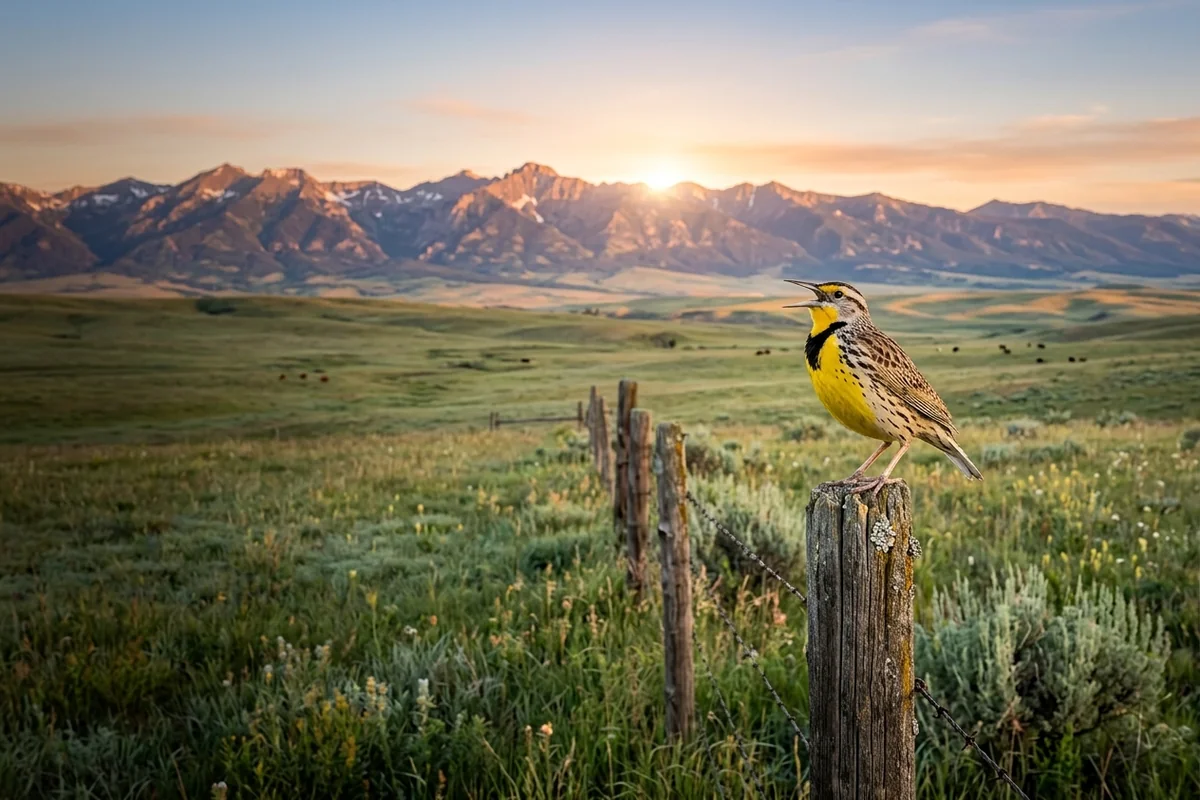
I’ll never forget the first time I heard a Western Meadowlark singing across a Montana prairie—it was 6 a.m. on a chilly May morning near Bozeman, and that rich, bubbling melody stopped me mid-step on a hiking trail.
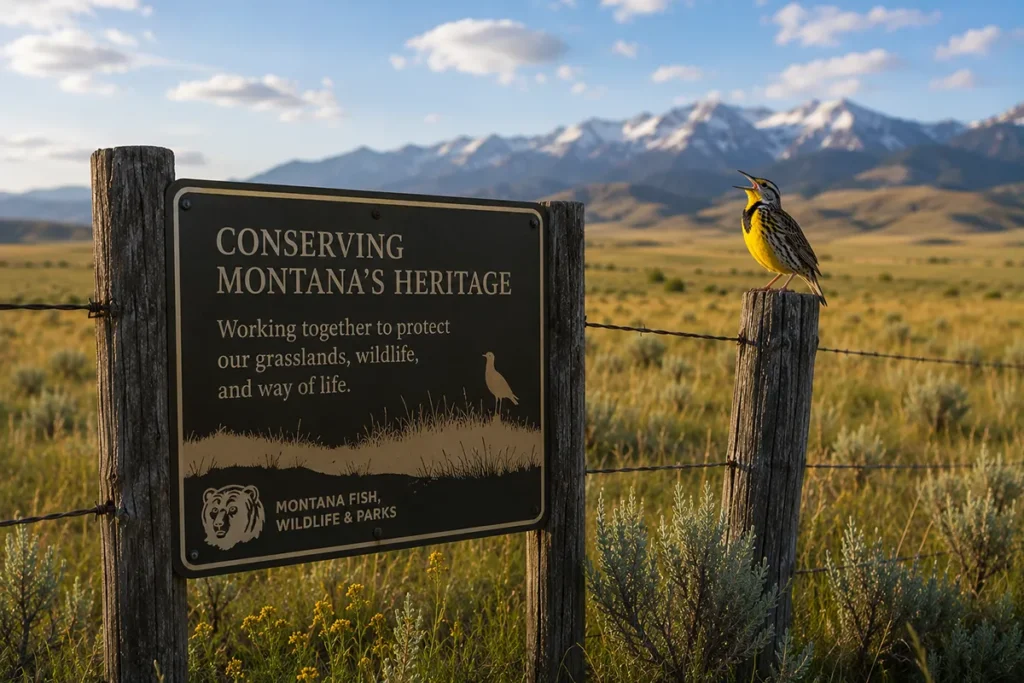
That single moment, with the sun just cresting the Bridger Mountains and this bright yellow bird perched on a fence post belting out its heart, completely changed how I experience Montana’s wild spaces.
The Western Meadowlark isn’t just another bird on a checklist; it’s the living soundtrack of Montana itself. As one of the most cherished Montana State Symbols, this golden-breasted songbird has represented Big Sky Country since 1931, and understanding why helps you appreciate Montana’s landscape on a deeper level.
- The Western Meadowlark became Montana’s state bird in 1931 after a statewide vote by schoolchildren
- Best viewing months: April through August, with peak singing activity in May and June
- Top spots to see them: National Bison Range, Charles M. Russell NWR, and virtually any open grassland or prairie
- Identification: Bright yellow chest with distinctive black “V” pattern, brown streaked back, about 8-10 inches long
- Their flute-like song has 7-10 notes and sounds completely different from the Eastern Meadowlark
- You don’t need binoculars—these birds often perch on fence posts, making them easy to spot along Montana’s scenic drives
Liked this article?
Add Roaming Montana as a preferred source so you see more of our articles and guides on Google.
Why Montana Chose the Western Meadowlark
The story behind Montana’s state bird selection tells you something important about how Montanans view their relationship with the land. In 1930, the Montana Federation of Women’s Clubs organized a statewide election, and it wasn’t politicians or bureaucrats who made the choice—it was schoolchildren.
Over 37,000 Montana kids cast their votes, and the Western Meadowlark won by a landslide. The legislature made it official on March 14, 1931.
I think about those kids sometimes when I’m driving through Montana’s vast prairies. They chose a bird that wasn’t flashy or exotic—they chose the bird that sang to them every morning, the one perched on fence posts along their routes to school, the voice of the open grasslands that defined their home.
What’s fascinating is that Montana shares this state bird with five other western states: Kansas, Nebraska, North Dakota, Oregon, and Wyoming. Some people see this as unoriginal, but I see it differently. The Western Meadowlark is the bird of the American West’s open spaces, and Montana arguably has more of that quintessential meadowlark habitat than anywhere else.
Identifying the Western Meadowlark: What to Look For
During my countless hours birding across Montana, I’ve developed a reliable system for identifying meadowlarks that I want to share with you. Even if you’ve never picked up a pair of binoculars, you can spot these birds with confidence.
Visual Identification
The Western Meadowlark is a medium-sized songbird, roughly the size of a robin but stockier. Here’s what to look for:
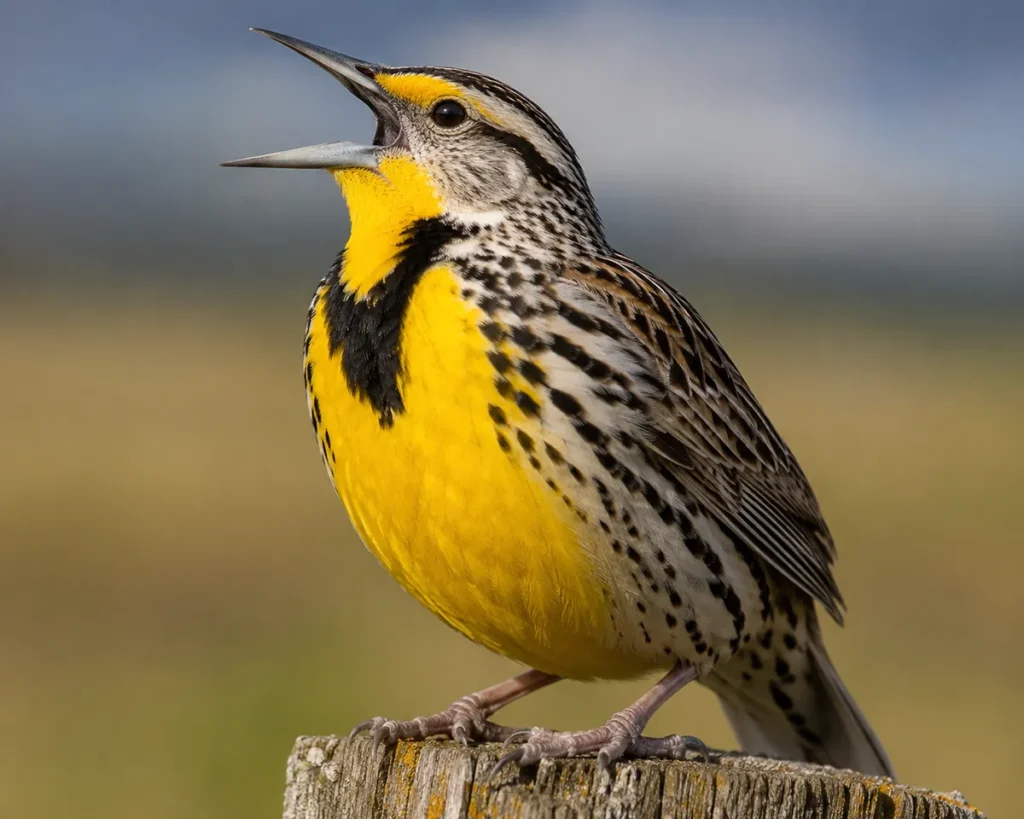
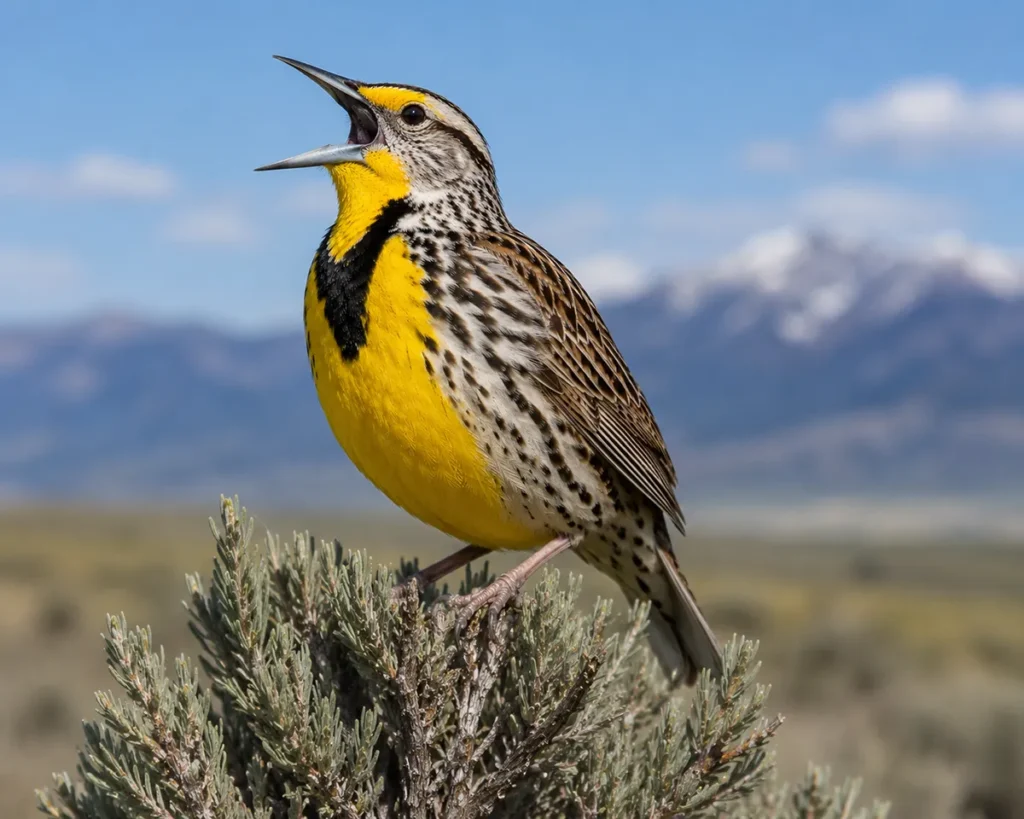
Their chest is brilliant yellow—and I mean genuinely bright, like someone dipped their front in sunshine. Across this yellow breast sits a bold black “V” or crescent shape. This marking is the single most reliable visual identifier.
The back and wings are mottled brown with black and white streaks, providing excellent camouflage when the bird is on the ground. Their head features a distinctive pattern with yellow and brown stripes, plus a white stripe above the eye.
Their bill is long, pointed, and slightly downcurved—perfect for probing into soil for insects. When they fly, you’ll notice white outer tail feathers that flash prominently.
Quick Identification Table
| Feature | Description |
|---|---|
| Size | 8.5-10 inches long, 3-4 oz weight |
| Breast Color | Bright yellow with black V-shaped band |
| Back | Brown with black and buff streaking |
| Bill | Long, pointed, slightly curved downward |
| Tail | Short with white outer feathers visible in flight |
| Wingspan | 14-16 inches |
| Lifespan | 6-10 years in the wild |
The Song That Defines Montana
Honestly, you’re more likely to hear a Western Meadowlark before you see one. Their song is unforgettable once you learn it—a complex series of 7-10 rich, flute-like notes that seem to tumble over each other.
I describe it to first-time visitors as “liquid sunshine turned into sound.” The notes are melodic, with a quality that’s almost too beautiful to be real. Many people compare it to someone playing a wooden flute across the prairie.
Last summer near Great Falls, I recorded a meadowlark singing from a fence post at sunrise. When I played it back for friends who’d never been to Montana, every single one of them asked, “What IS that?” The song is that distinctive.
Here’s a pro tip: The Western Meadowlark’s song differs significantly from the Eastern Meadowlark’s. The Western’s song is more complex and musical, while the Eastern’s is simpler and more whistle-like. In Montana, you’ll almost exclusively encounter Westerns, but knowing the difference adds to your appreciation.
Where to See Western Meadowlarks in Montana
One of the beautiful things about Montana’s state bird is that you don’t need to plan an elaborate expedition to see one. These birds are abundant throughout the state, especially in open country. That said, some locations offer exceptional viewing opportunities.
National Bison Range (Moiese)
I consider this the single best spot in Montana for reliable meadowlark viewing combined with spectacular scenery. On a visit last June, I counted over two dozen meadowlarks during the 19-mile Red Sleep Mountain Drive.
The combination of open grassland, minimal traffic, and the presence of bison, pronghorn, and other wildlife makes this a must-visit. The meadowlarks here are accustomed to vehicles, so you can often photograph them from your car window. This is also where you might spot the Montana State Animal—the grizzly bear—though meadowlarks are far more common!
Charles M. Russell National Wildlife Refuge
This 1.1-million-acre refuge in central Montana is meadowlark paradise. The Missouri River breaks and surrounding grasslands support an enormous population of these birds.
When I drove through in late May, meadowlarks were singing from nearly every elevated perch—fence posts, shrubs, rock outcrops. The remoteness of this area means you’ll often have them all to yourself.
Freezout Lake Wildlife Management Area
While most people visit Freezout for the spectacular snow goose migration, I’ve found it to be excellent meadowlark habitat during spring and summer. The surrounding agricultural land and native prairie provide ideal conditions.
Grasslands Near Bozeman and Missoula
You don’t need to drive to a wildlife refuge. I regularly see meadowlarks on the outskirts of Montana’s larger towns. The open fields along Highway 191 south of Bozeman are particularly productive. Similarly, the Missoula Valley’s remaining grasslands support healthy populations.
Along Montana’s Scenic Byways
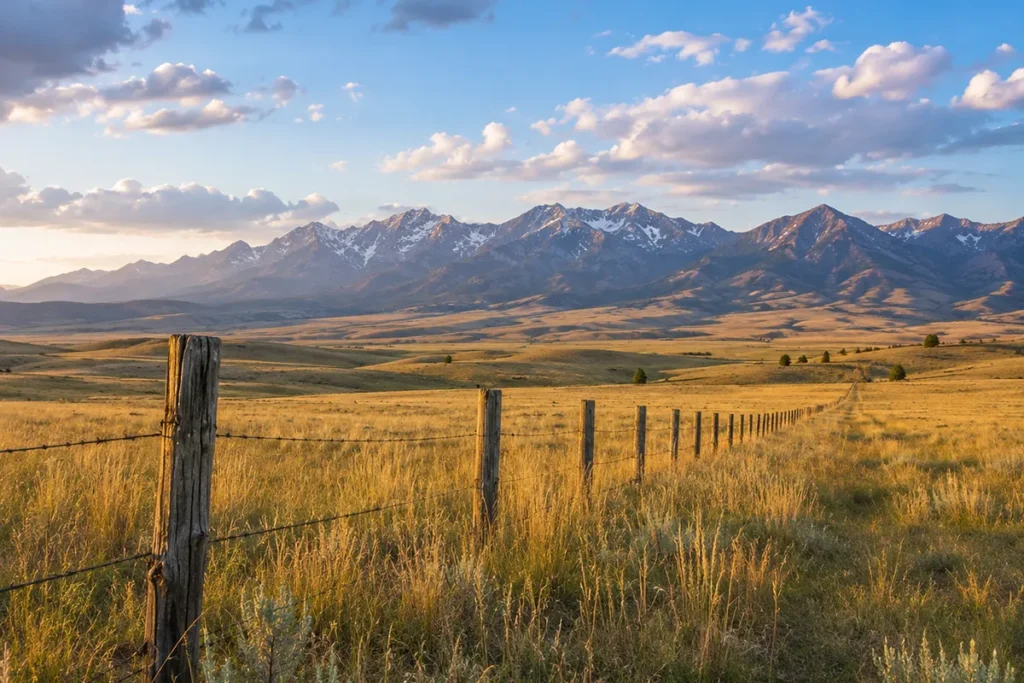
Some of my best meadowlark sightings have been completely unplanned. These birds love fence posts, and Montana has no shortage of those along its scenic routes.
The Hi-Line (Highway 2) across northern Montana passes through prime habitat. So does Highway 200 across the state’s midsection. Pull over anywhere you see open grassland, roll down your windows, and listen.
The Best Time of Year to Experience Meadowlarks
Timing your visit right dramatically increases your chances of memorable meadowlark encounters. Here’s what I’ve learned over multiple trips across different seasons.
Peak Season: May and June
This is when I recommend visiting if meadowlarks are a priority. Males are singing constantly during breeding season, often from dawn until late morning and again in the evening.
During my most recent May trip, meadowlarks were so vocal that I could hear them from inside my tent at a campground near Choteau. The males establish territories and sing to attract females, making them highly visible and audible.
This timing also coincides with the blooming of the Montana State Flower, the Bitterroot, so you can experience multiple state symbols during one trip.
Summer: July and August
Singing decreases somewhat as nesting duties take priority, but meadowlarks remain common and visible. You’ll often see adults carrying food to hidden ground nests.
I find summer excellent for photography because the birds are focused on foraging and less skittish than during the territorial spring season.
Fall and Winter
Some Western Meadowlarks overwinter in Montana, particularly in milder years or in the state’s southwestern valleys. However, many migrate to the southern United States and Mexico.
If you’re visiting between October and March, meadowlark sightings become less predictable. That said, I’ve spotted small flocks in sheltered valleys near Missoula in January.
Understanding Western Meadowlark Behavior
To truly appreciate Montana’s state bird, it helps to understand what they’re doing and why. Here’s what I’ve observed over years of watching these remarkable birds.
Ground Nesters
Western Meadowlarks nest on the ground, which seems counterintuitive for such visible birds. The female constructs a domed nest of dried grasses, often with a woven roof and a side entrance. These nests are incredibly difficult to find—I’ve only stumbled upon two in all my time in Montana.
The ground-nesting habit makes meadowlarks vulnerable to agricultural operations, predators, and habitat disturbance. This is why undisturbed grasslands like those in wildlife refuges are so important.
Feeding Habits
Meadowlarks are primarily insectivores during summer, eating grasshoppers, beetles, caterpillars, and other invertebrates. They walk along the ground, probing with their bills and occasionally running after prey.
In fall and winter, they switch to a more seed-based diet. I’ve watched them foraging in agricultural stubble fields, picking through the remnants of wheat and barley harvests.
The Perching Habit
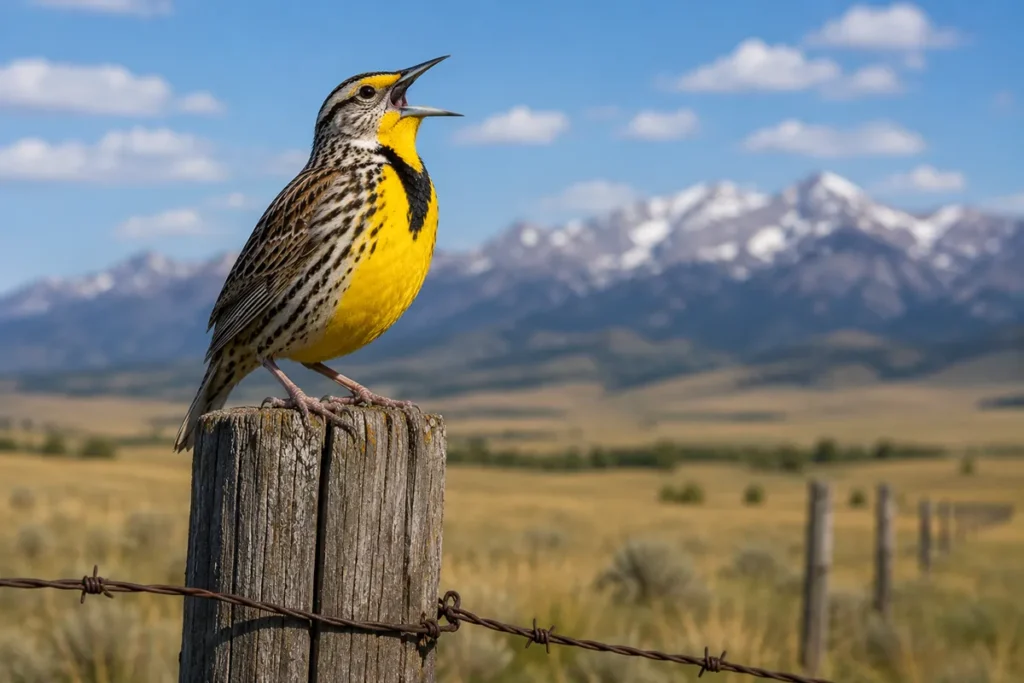
One behavior that makes meadowlarks so delightful for visitors is their love of elevated perches. They sing from fence posts, shrubs, utility poles, and any other elevated spot.
This isn’t just ego—elevated perches serve practical purposes. Males can survey their territory for rivals, spot approaching predators, and project their songs farther across the grassland.
The Western Meadowlark’s Place in Montana’s Ecosystem
Montana’s decision to honor this particular bird reflects something deeper about the state’s identity and landscape. The Western Meadowlark is inseparable from the grassland prairie ecosystem that once covered vast portions of North America.
Grassland Conservation
Prairie grasslands are among the most endangered ecosystems in North America. Some estimates suggest over 99% of original tallgrass prairie and 70% of mixed-grass prairie have been converted to other uses.
Montana retains more intact grassland than most states, which is one reason meadowlarks remain common here. When you see a meadowlark singing from a fence post, you’re witnessing a species that depends on habitat increasingly rare elsewhere.
Conservation efforts to protect Montana’s remaining grasslands—through programs like the Conservation Reserve Program and various land trusts—directly benefit meadowlarks. These initiatives also help support other grassland species like pronghorn, sharp-tailed grouse, and the Montana State Grass, bluebunch wheatgrass.
Indicator Species
Biologists consider the Western Meadowlark an indicator species for grassland health. Where meadowlarks thrive, the overall ecosystem is typically functioning well. Where they decline, it often signals broader environmental problems.
In parts of the Great Plains where agricultural intensification has eliminated habitat, meadowlark populations have dropped significantly. Montana’s relatively stable population reflects the state’s remaining wild character.
Photographing Montana’s State Bird
I’ve spent many happy hours trying to capture the perfect meadowlark photo, and I’ve learned some techniques that might help you.
Best Conditions
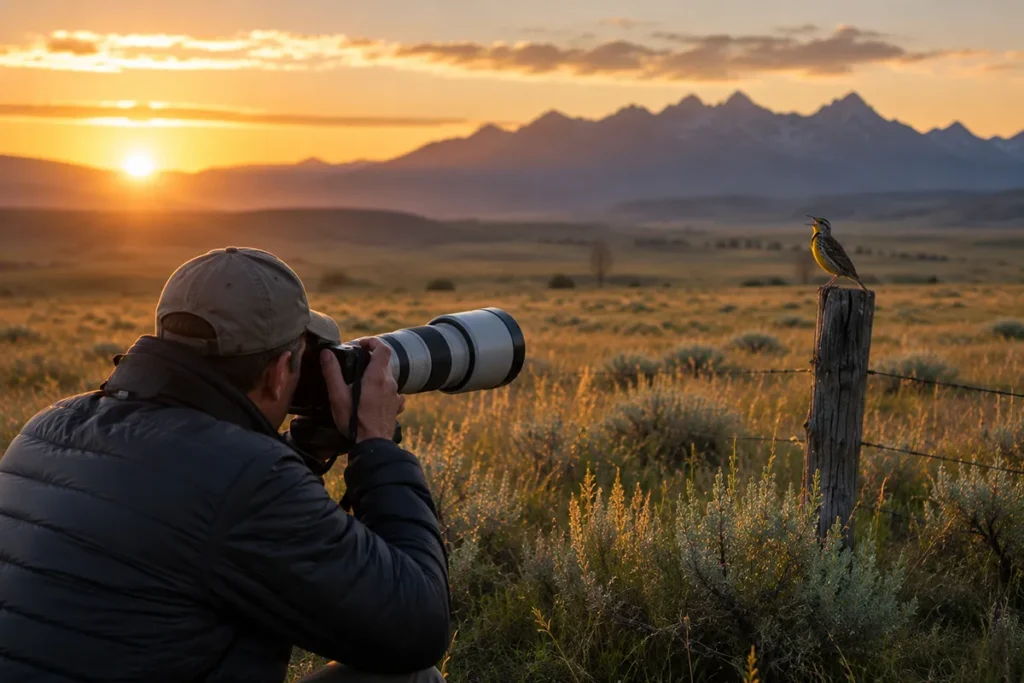
Early morning light is magical for meadowlark photography. The golden tones complement the bird’s yellow breast beautifully. Overcast days work well too, reducing harsh shadows.
I prefer photographing meadowlarks on natural perches like sagebrush or rocks rather than on fence posts, but honestly, the fence post shots often turn out better because the birds are more relaxed.
Approach Techniques
Meadowlarks tolerate closer approaches than many birds, especially from a vehicle. I’ve gotten my best shots by parking near a frequently-used fence post and waiting patiently.
If approaching on foot, move slowly and indirectly. Don’t walk straight toward the bird. Meadowlarks seem to tolerate angles approaches better than direct ones.
Audio Recording
Consider recording their songs as well as photographing them. A simple smartphone recording of a meadowlark chorus at dawn makes a wonderful Montana souvenir.
The songs also help you locate birds for photography—follow the sound to find the singer.
The Cultural Significance of Montana’s State Bird
The Western Meadowlark appears throughout Montana’s culture in ways both obvious and subtle. Once you start noticing, you’ll see references everywhere.
In Art and Literature
Montana artists have long featured meadowlarks in paintings, sculptures, and other works. The bird appears on the Montana State Quarter, making it one of the most widely circulated images of the state.
Writers from Montana frequently reference the meadowlark’s song as a symbol of the state’s wide-open character. Ivan Doig, one of Montana’s most celebrated authors, wove meadowlark descriptions into multiple books.
In Music
Montana’s musical traditions include multiple references to the meadowlark. The Montana State Song and various other Montana songs reference the state’s natural beauty, including its birdlife. The meadowlark’s song has even inspired the Montana State Lullaby and other compositions.
State Symbolism
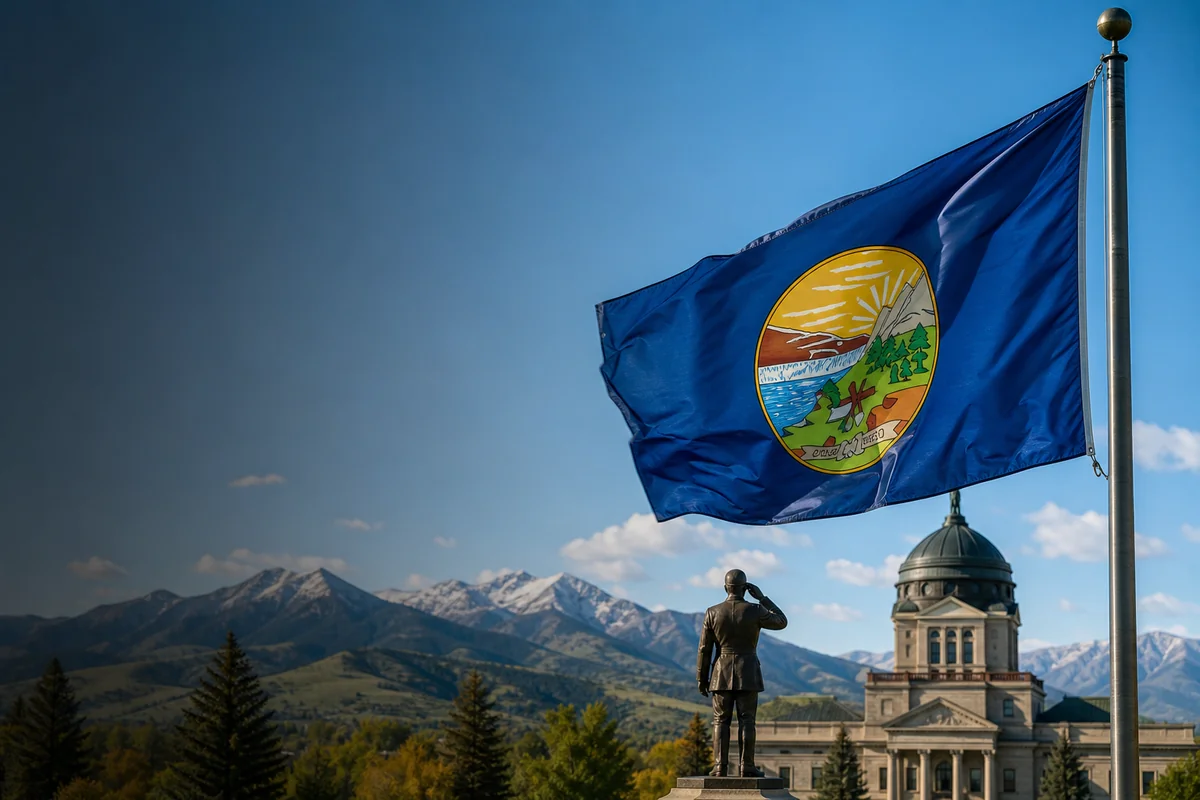
The Western Meadowlark takes its place among numerous official state symbols that represent Montana’s character. While the Montana State Flag and Montana State Seal feature the state’s official imagery, the meadowlark represents the living, breathing essence of Montana’s landscape.
These symbols, including the Montana State Motto “Oro y Plata” (Gold and Silver) and the Montana State Nickname “The Treasure State,” all contribute to the state’s identity. But the meadowlark stands apart as a symbol you can actually encounter, hear, and experience.
Practical Tips for Your Meadowlark-Watching Trip
Based on my extensive experience birding across Montana, here are some practical recommendations for visitors wanting to see Western Meadowlarks.
What to Bring
- Binoculars: Not strictly necessary—meadowlarks are often close enough to see clearly with naked eyes—but binoculars enhance the experience
- Field guide: The Sibley Guide to Birds or Merlin Bird ID app helps with identification of meadowlarks and other species you’ll encounter
- Camera with zoom: Even a smartphone with a good zoom can capture decent meadowlark photos
- Audio recording device: Your phone works fine for recording their beautiful songs
- Sun protection: Montana grasslands offer little shade
- Layered clothing: Mornings can be cool even in summer
Driving Routes
Montana’s scenic byways offer excellent meadowlark viewing. I particularly recommend:
- Highway 200 between Great Falls and Lewiston
- The Rocky Mountain Front along Highway 89
- Highway 87 through the central Montana grasslands
- The Mission Valley on Highway 93
Drive slowly, keep your windows down, and pull over frequently. Some of my best sightings have been from unplanned roadside stops.
Combining with Other Montana Experiences
A trip focused on meadowlarks pairs beautifully with other Montana wildlife experiences. The same grassland habitats support pronghorn, white-tailed and mule deer, and occasionally elk.
You might also encounter other symbolic Montana species. The Montana State Fish, the blackspotted cutthroat trout, inhabits many of the streams that wind through meadowlark habitat. Even the Montana State Insect, the mourning cloak butterfly, shares some of the same geographic range.
If you’re interested in Montana’s natural history, consider visiting areas where you might learn about the Montana State Fossil, the Maiasaura, or see examples of Montana native plants in their natural setting.
And don’t forget to sample the Montana State Fruit—huckleberries—at one of the many cafes and bakeries throughout the state.
Threats and Conservation Status
While the Western Meadowlark remains relatively common in Montana, it faces real challenges that visitors should understand.
Habitat Loss
Conversion of native prairie to cropland, housing developments, and other uses reduces available meadowlark habitat. Even in Montana, development pressure threatens some grassland areas.
Agricultural Practices
Early mowing and haying can destroy ground nests before chicks fledge. Some ranchers and farmers now delay mowing until after fledging season, which significantly improves meadowlark reproductive success.
Climate Change
Shifting climate patterns affect insect populations and grassland vegetation, both of which impact meadowlarks. Researchers are monitoring how Montana’s meadowlark populations respond to these changes.
What You Can Do
Support conservation organizations working to protect Montana’s grasslands. When visiting, stay on designated trails and roads to avoid disturbing nests. Consider timing your visit to peak season when your tourism dollars support communities that value wildlife habitat.
Beyond the Western Meadowlark: Other Birds to Watch For
While searching for Montana’s state bird, you’ll likely encounter numerous other fascinating species. Here are some I frequently see alongside meadowlarks.
Raptors
Red-tailed Hawks patrol the same grasslands, hunting rodents. Swainson’s Hawks are summer residents that migrate to Argentina each winter. Northern Harriers cruise low over the grass, hunting with owl-like facial disks that help them hear prey.
Other Grassland Songbirds
Horned Larks often share habitat with meadowlarks. Vesper Sparrows and Savannah Sparrows sing from shrubs and fence posts. The striking Lark Bunting, with its bold black and white male plumage, appears in eastern Montana.
Game Birds
Sharp-tailed Grouse and Ring-necked Pheasants frequent meadowlark habitat. In sagebrush areas, watch for Greater Sage-Grouse, a species of conservation concern.
My Personal Meadowlark Moments
Over the years, certain meadowlark encounters have stayed with me, and I want to share a few that capture why this bird means so much to Montana.
On a recent trip to the Rocky Mountain Front, I watched a male meadowlark singing from a boulder as the sun set behind the mountains. The light turned his yellow breast to gold, and his song echoed off the cliff faces behind him. That image, that sound—they’re permanently filed in my memory as quintessential Montana.
Another time, hiking near the Montana State Capitol grounds in Helena on a spring morning, I heard meadowlarks singing from the surrounding hills. Even in the state’s capital city, the sound of wild Montana wasn’t far away.
Perhaps my most moving encounter came at dawn in the Charles M. Russell Wildlife Refuge. I’d pulled over to photograph the sunrise and heard not one, not two, but at least a dozen meadowlarks singing simultaneously. The chorus rose and fell across the prairie like some natural symphony. I sat there for an hour, just listening.
Planning Your Montana Meadowlark Adventure
The Western Meadowlark isn’t a destination bird requiring elaborate planning. It’s a bird you’ll encounter naturally while exploring Montana’s open country. But a little preparation enhances the experience.
Visit between late April and early July for the best combination of weather and bird activity. Plan to spend time in grassland areas, not just forests and mountains. Keep your windows down and your ears open.
Consider exploring areas associated with Montana’s state colors of blue and gold—the gold of prairie grasses and meadowlark breasts, the blue of Montana’s legendary big sky.
The Western Meadowlark offers something rare in our modern world: a direct connection to untamed landscape. When you hear that bubbling, flute-like song carrying across a Montana prairie, you’re hearing the same sound that greeted Lewis and Clark, the same sound that convinced those 37,000 schoolchildren to choose this bird to represent their home.
That song is Montana. And once you’ve heard it, really heard it, you’ll understand why this unassuming prairie bird holds such a special place in the hearts of everyone who loves Big Sky Country.
Take the time to find them. Listen for them. Let their song become part of your Montana memories. You might even discover, as I have, that a single meadowlark singing on a fence post can make you fall in love with a place all over again.
Frequently Asked Questions
What is the official state bird of Montana?
The Western Meadowlark became Montana’s official state bird in 1931, chosen by popular vote among schoolchildren. I find it fascinating that this bright yellow songbird with the distinctive black V on its chest is actually shared as a state symbol with five other states including Kansas, Nebraska, and Wyoming.
Where can I spot Western Meadowlarks while driving through Montana?
You’ll most likely spot Western Meadowlarks along Montana’s open grasslands, prairies, and agricultural fields, especially when driving rural highways like US-2 or I-90 through the eastern plains. I recommend keeping your eyes on fence posts and roadside wires during spring and summer months when they’re most active and vocal.
Why did Montana choose the Western Meadowlark as its state bird?
Montana selected the Western Meadowlark because it’s abundant throughout the state’s vast prairies and its melodic song represents the spirit of Montana’s open landscapes. The bird was officially adopted after a statewide vote where it beat out other candidates, reflecting Montanans’ connection to their grassland heritage.
What’s the best time of year to see Montana’s state bird during a road trip?
The ideal time to spot Western Meadowlarks during your Montana road trip is from April through September when they’re breeding and most visible. Pack layers regardless of when you go — spring mornings on the eastern plains can be surprisingly cold, and mountain passes may still have snow while the prairies are warming up. Check road conditions on the Montana DOT website before driving any mountain routes in April or May.
Do Western Meadowlarks migrate out of Montana during winter?
Many Western Meadowlarks migrate south from Montana during harsh winters, though some remain in milder areas of the state year-round. If you’re visiting Montana in winter hoping to spot resident meadowlarks, focus on sheltered valley areas in the southwest and central parts of the state where small numbers overwinter. The Bitterroot Valley and areas around Billings are your best bets for winter sightings.
How does Montana’s state bird differ from the Eastern Meadowlark?
While Western and Eastern Meadowlarks look nearly identical with yellow bellies and black chest markings, their songs are completely different, which is how birders tell them apart. Montana sits firmly in Western Meadowlark territory, so if you’re driving through Big Sky Country and hear that flute-like whistle from a fence post, you’re definitely hearing the state bird.
What other Montana state symbols might I encounter on a driving tour?
Beyond the Western Meadowlark, you might spot the state animal (grizzly bear) in Glacier National Park or see fields of bitterroot, the state flower, blooming along mountain roads in early summer. Planning around the seasons helps — bitterroot blooms peak in May and June in western valleys, while grizzly activity in Glacier is highest from late summer through October. A loop combining Highway 93, Going-to-the-Sun Road, and Highway 2 gives you the best chance of encountering multiple state symbols in a single trip.
Sources:
- https://digitalatlas.cose.isu.edu/bio/birds/sngbrd/icterids/weme/weme_mai.htm
- https://www.mbr-pwrc.usgs.gov/Infocenter/i5011id.html
- https://digitalatlas.cose.isu.edu/bio/birds/sngbrd/icterids/weme/weme_mai.htm
- https://tourism.oregonstate.edu/western-meadowlark-sturnella-neglecta/
- https://txtbba.tamu.edu/species-accounts/western-meadowlark/
- https://news.berkeley.edu/2019/09/30/collapse-of-desert-birds-due-to-heat-stress-from-climate-change/
- https://evolution.berkeley.edu/biological-species-concept/
- https://wgfd.wyo.gov/News/Western-meadowlark-emergence-marks-the-beginning-o