I was standing in the ghost town of Bannack on a crisp October morning when our guide pointed to the faded lettering above an old assay office—”Oro y Plata”—and suddenly Montana’s state motto transformed from words I’d read in a guidebook to a tangible piece of living history beneath my boots.
That Spanish phrase, meaning “Gold and Silver,” isn’t just an official slogan adopted in 1865; it’s the reason this state exists in its current form, the driving force that brought thousands of hopeful miners scrambling across dangerous territory, and a legacy you can still touch, taste, and explore today.
As I’ve been documenting Montana State Symbols over the past few years, I’ve come to realize that “Oro y Plata” might be the most significant of them all—it tells the story of why Montana became Montana in the first place.
- “Oro y Plata” is Spanish for “Gold and Silver” — Montana’s state motto since 1865
- The motto reflects Montana’s mining heritage that sparked its territorial status and eventual statehood
- You can experience this history firsthand at Bannack State Park, Butte’s World Museum of Mining, and Virginia City
- The motto appears on the state seal, flag, and throughout historic buildings across Montana
- Gold was discovered at Grasshopper Creek in 1862, triggering Montana’s transformation
- Today, you can still pan for gold at several locations and tour underground mines
Liked this article?
Add Roaming Montana as a preferred source so you see more of our articles and guides on Google.
The Meaning Behind Montana’s State Motto
“Oro y Plata” rolls off the tongue with a certain elegance that belies the gritty, dangerous, and often desperate reality it represents. When I first learned that Montana chose a Spanish motto despite having virtually no Spanish colonial history, I was genuinely puzzled.
The answer lies in mining tradition. Spanish was the lingua franca of precious metal mining throughout the Americas, and by the 1860s, experienced miners from California, Mexico, and South America had brought their terminology—and their expertise—northward.
When Montana’s territorial legislators gathered in Bannack in 1864 to organize their fledgling government, they needed symbols that captured the essence of why anyone would brave this remote, harsh landscape. The gold and silver that had drawn tens of thousands of fortune-seekers seemed like the obvious choice.
Why Spanish Instead of English?
I’ve asked several historians this question during my travels through Montana’s mining regions. Dr. Ellen Baumler, an interpretive historian I chatted with at the Montana Historical Society in Helena, explained that Spanish mining terms carried prestige and legitimacy.
Words like “bonanza,” “placer,” and “madre” (as in “mother lode”) were already standard vocabulary in mining camps. Choosing “Oro y Plata” connected Montana’s new mining industry to centuries of precious metal extraction tradition.
It also sounded more refined than “Gold and Silver”—important for territorial officials trying to attract investment from Eastern financiers who might otherwise dismiss Montana as a lawless frontier backwater.
The Historical Context: How Mining Shaped Montana
To truly understand Montana’s motto, you need to understand just how dramatically mining transformed this region. Before 1862, the area we now call Montana was sparsely populated, primarily by Indigenous peoples and a handful of fur traders and missionaries.
Everything changed on July 28, 1862, when John White discovered gold at Grasshopper Creek. Within months, thousands of prospectors flooded into what would become Bannack, and Montana’s trajectory was forever altered.
The Gold Rush Timeline
During my research trips, I’ve pieced together just how rapidly events unfolded:
- 1862: Gold discovered at Grasshopper Creek; Bannack established virtually overnight
- 1863: Even richer deposits found at Alder Gulch (Virginia City) and Last Chance Gulch (Helena)
- 1864: Montana Territory officially created; Bannack named first territorial capital
- 1865: “Oro y Plata” officially adopted as territorial motto
- 1875: Butte’s silver deposits begin major production
- 1889: Montana achieves statehood, retaining its original motto
What strikes me most about this timeline is the sheer speed. Montana went from wilderness to organized territory in just two years, driven entirely by precious metal fever.
Silver’s Rise in Butte
While gold sparked Montana’s creation, silver—particularly in Butte—ultimately generated far more wealth. When I toured the underground workings at the World Museum of Mining last summer, our guide mentioned that Butte produced more than $22 billion worth of minerals over its history.
The silver deposits discovered in the 1870s transformed Butte into “The Richest Hill on Earth,” a nickname you’ll still see plastered on welcome signs today. The copper that followed made it even wealthier, though that’s technically beyond the motto’s scope.
Where to See the Montana State Motto Today
One of the joys of traveling through Montana is spotting “Oro y Plata” in unexpected places. The motto appears on the Montana State Flag and the Montana State Seal, which means you’ll encounter it at government buildings, official documents, and historical sites throughout the state.
The State Seal and Flag
The Great Seal of Montana, designed in 1865 and refined over subsequent years, prominently features “Oro y Plata” on a ribbon beneath the central imagery. That imagery itself tells the mining story: a pick, shovel, and plow represent the state’s extractive and agricultural industries, while mountains and the Great Falls of the Missouri River establish the landscape.
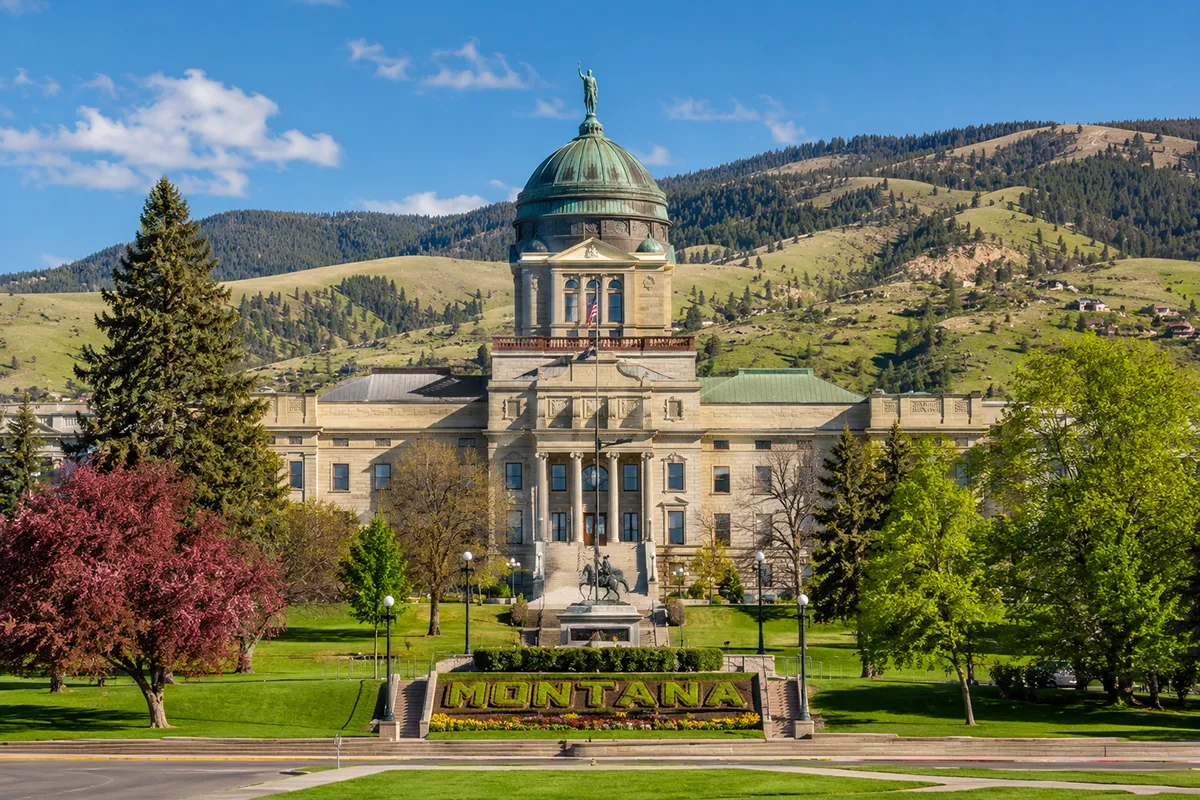
I always recommend visitors take time to examine the seal closely at the Montana State Capitol Building in Helena. The rotunda features beautiful renditions of state symbols, and docents can explain the meaning behind each element.
Historical Buildings and Monuments
Beyond official government uses, you’ll find “Oro y Plata” carved into historic courthouse facades, etched into bank building cornerstones, and displayed in museums across the state. During a recent trip through central Montana, I photographed at least a dozen examples in small towns I wasn’t even specifically visiting for this purpose.
The phrase appears on the Montana State Quarter as well, released in 2007 as part of the 50 State Quarters Program. The quarter features a bison skull against a mountain backdrop—you can read more about its design in our dedicated article.
Experiencing Montana’s Mining Heritage Firsthand
Reading about “Oro y Plata” is one thing; experiencing the history behind it is something else entirely. I’ve spent considerable time exploring Montana’s mining heritage sites, and I want to share the places that genuinely brought the motto to life for me.
Bannack State Park: Where It All Began
Bannack State Park remains my top recommendation for anyone wanting to understand Montana’s motto at a visceral level. This remarkably well-preserved ghost town contains over 60 structures from the gold rush era, and walking its dusty main street feels like stepping through a time portal.
When I visited during Bannack Days last July, the town came alive with historical reenactors demonstrating gold panning, blacksmithing, and period cooking. But even on quiet weekday visits, the atmosphere is powerful.
Practical tips for Bannack:
- The park is located 25 miles west of Dillon off Highway 278
- Day-use fee is $8 per vehicle for non-residents (Montana residents pay $6)
- Bring your own water—facilities are limited
- The ghost town is most photogenic in early morning or late afternoon light
- Plan at least 2-3 hours; I’ve easily spent entire days exploring
The park offers camping if you want the full experience of sleeping where Montana’s history began. I spent a memorable night there in my tent, listening to coyotes howl across the same valley where gold fever first gripped this territory.
Virginia City and Nevada City: Living Ghost Towns
If Bannack feels frozen in time, Virginia City feels like time merely slowed down. This remarkably intact 1860s mining town still has permanent residents, operating businesses, and a summer theater that’s been running since 1949.
I recommend taking the narrow-gauge train between Virginia City and neighboring Nevada City—the ride offers gorgeous views of Alder Gulch, where miners extracted an estimated $90 million in gold (1860s dollars) from just a few miles of creek bed.
Nevada City features an extensive outdoor museum with relocated historic buildings from across Montana. The music hall there houses an incredible collection of mechanical music machines that still play—spending an afternoon listening to 150-year-old orchestrions perform is a surreal experience.
World Museum of Mining in Butte
For understanding the silver half of “Oro y Plata,” Butte’s World Museum of Mining is essential. The museum sits on the former Orphan Girl mine site and includes a recreated 1890s mining camp called Hell Roarin’ Gulch.
The underground tour absolutely made this visit for me. Descending into actual mine workings while guides explained the brutal conditions miners faced—the heat, the danger, the sheer physical toll—gave me profound respect for the human cost behind Montana’s motto.
World Museum of Mining details:
| Information | Details |
|---|---|
| Location | 155 Museum Way, Butte, MT 59701 |
| Season | April through October (underground tours summer only) |
| General Admission | Adults $10, Seniors $8, Children (5-17) $5 |
| Underground Tour | Additional $12; reservations recommended |
| Time Needed | 2-4 hours depending on interests |
Last Chance Gulch in Helena
Montana’s capital city literally sits on one of the richest gold deposits ever discovered. The main pedestrian mall downtown, Last Chance Gulch, follows the path of the original creek where four discouraged prospectors made their final (“last chance”) attempt at striking it rich in 1864.
They succeeded spectacularly. Helena became one of the wealthiest cities per capita in the United States by the 1880s, and the Victorian mansions lining the hillsides reflect that prosperity.
I love walking Last Chance Gulch and imagining miners sloshing through the same ground now occupied by coffee shops and boutiques. The Reeder’s Alley district preserves some original miner housing, providing a stark contrast to the grand mansions wealthy mine owners built just blocks away.
Other State Symbols Connected to the Motto
Montana’s motto doesn’t exist in isolation—it connects to a web of state symbols that together tell the story of this remarkable place. Understanding these connections enriches any Montana journey.
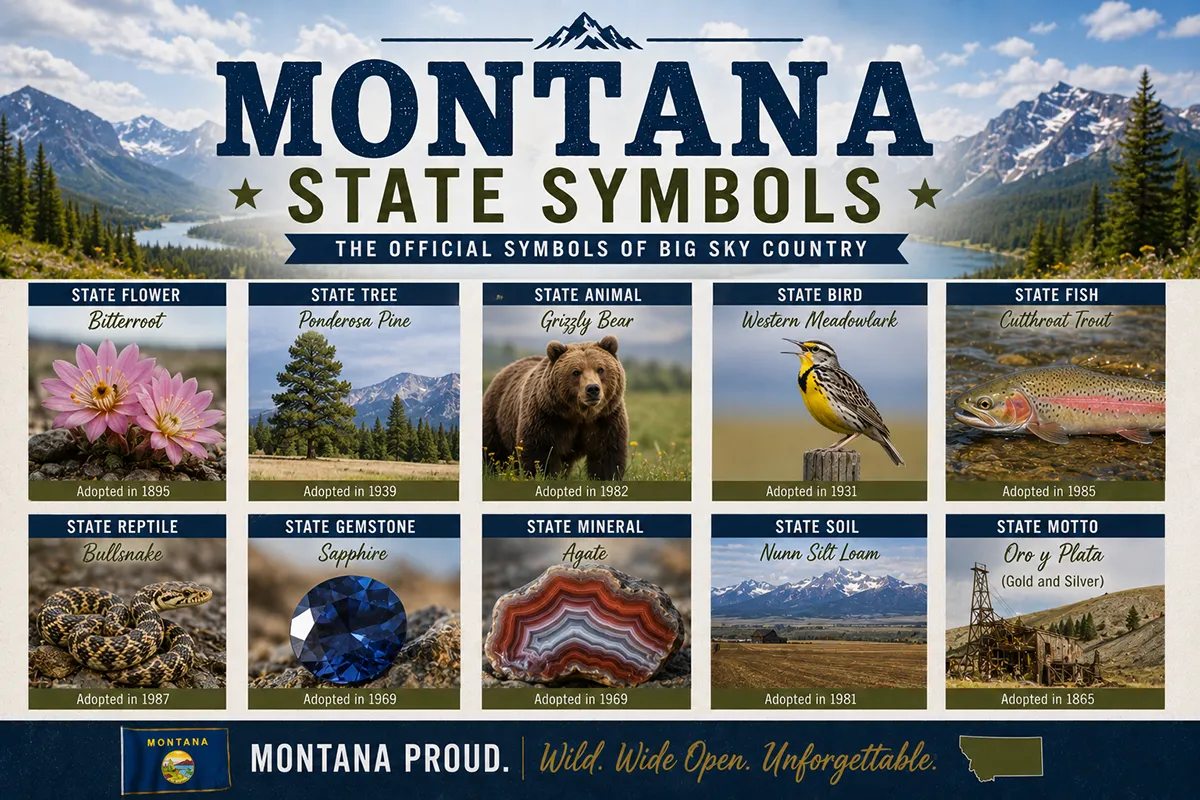
The Montana State Colors of blue and gold, for instance, evoke both the expansive skies and the precious metal that defined territorial identity. Meanwhile, symbols like the Montana State Animal (grizzly bear) and Montana State Bird (western meadowlark) represent the natural world that miners disrupted—and that Montana has worked to protect ever since.
I find it meaningful that Montana has also designated the Montana State Fish (blackspotted cutthroat trout) and various native plants, including the Bitterroot flower and the Ponderosa Pine. These symbols acknowledge that Montana’s identity extends far beyond extractive industry, even as “Oro y Plata” remains the official motto.
For a comprehensive look at native flora, our guide to 21 Montana State Native Plants offers excellent context for understanding the landscape miners encountered.
The Environmental Legacy of “Oro y Plata”
I’d be dishonest if I presented Montana’s mining heritage as purely romantic history. The pursuit of oro y plata left scars that the state still grapples with today.
The Berkeley Pit in Butte, a former open-pit copper mine, is now one of the largest Superfund sites in the United States. The pit filled with toxic water after mining ceased, and it remains a sobering reminder of extraction’s environmental costs.
When I visited the Berkeley Pit viewing stand last year, I was struck by the cognitive dissonance—the pit is genuinely awe-inspiring in scale, the toxic water an almost beautiful blue-green, yet the interpretive signs detail ongoing remediation efforts that will continue for decades.
Reclamation and Restoration
Modern Montana takes environmental restoration seriously. Former mining sites across the state have undergone extensive cleanup, and organizations work to rehabilitate streams damaged by historic placer mining.
In some ways, the state has come full circle. The wealth generated by oro y plata helped build Montana’s communities, and now those communities invest in healing the land that provided that wealth.
This environmental context matters for travelers. When you see “Oro y Plata” on a state building, you’re seeing a symbol that celebrates achievement while also representing complex consequences that Montana continues addressing.
Try Gold Panning Yourself
Nothing connects you to Montana’s motto like actually searching for oro yourself. Several locations across the state offer recreational gold panning, and I’ve tried my luck at a few of them.
Libby Creek Recreational Gold Panning Area
Near Libby in northwestern Montana, this designated area on Kootenai National Forest land lets anyone pan for gold without permit or fee. The quantities are tiny—mostly “flour gold” barely visible without magnification—but the experience is genuine.
I spent a pleasant afternoon there during a trip through the region, squatting in cold creek water, swirling my pan, and feeling an authentic connection to the thousands who did the same thing 160 years ago. I found perhaps $0.50 worth of gold flakes, which I still keep in a small vial as a souvenir.
Commercial Panning Operations
For a more guaranteed success experience, several commercial operations offer gold panning with “salted” material that ensures everyone finds something. These are perfect for families with children who might get frustrated with the hit-or-miss nature of actual prospecting.
Virginia City and Nevada City both offer such experiences during summer months. The gold you find is real—just placed there specifically for visitors rather than occurring naturally in that exact spot.
The Motto in Montana’s Modern Identity
Does “Oro y Plata” still resonate in contemporary Montana? This question has sparked genuine debate over the years.
Some argue the motto feels outdated, representing an extractive past that modern Montana has moved beyond. Tourism, technology, and service industries now drive much of the state’s economy. The Montana State Nickname of “Treasure State” still appears on license plates, but many residents identify more strongly with “Big Sky Country.”
Others contend that the motto remains deeply relevant. Mining continues in Montana—gold, silver, copper, and other minerals still come from Montana earth. And the broader symbolism of valuable resources, natural wealth, and the determination that settled this harsh landscape applies regardless of specific industries.
The various Montana State Slogans used in tourism marketing rarely emphasize “Oro y Plata” directly, preferring imagery of wilderness and outdoor recreation. But the motto remains legally enshrined and shows no signs of changing.
A Personal Perspective
After years of exploring Montana and thinking deeply about this motto, I’ve developed my own interpretation. “Oro y Plata” represents the raw ambition and determination that created Montana—qualities that persist even as the specific pursuits have evolved.
The prospector trudging through mountain snow seeking gold and the modern tourist braving winter roads to ski at Big Sky share something essential: a willingness to embrace harsh conditions in pursuit of something valuable. The treasure just takes different forms.
Music, Art, and Cultural Expressions of the Motto
Montana’s motto has inspired creative works throughout the state’s history. The Montana State Song and other Montana songs often reference the state’s mining heritage, though usually indirectly through imagery of mountains and treasure.
Even the gentle Montana State Lullaby, “Montana Lullaby,” evokes the landscape that mining communities called home. These cultural expressions demonstrate how deeply “Oro y Plata” has permeated Montana’s artistic identity.
Visual artists have long drawn inspiration from mining landscapes—the headframes, the tailings piles, the ghost towns slowly returning to earth. Galleries in Butte and Helena regularly feature works exploring this heritage.
Connecting the Motto to Your Montana Trip
If you’re planning a Montana visit, I encourage you to design at least part of your itinerary around the “Oro y Plata” story. Here’s a suggested routing:
Day 1: Fly into Butte (or drive from Missoula). Explore uptown Butte’s historic district, visit the Berkeley Pit viewing stand, and tour the World Museum of Mining. Overnight in Butte.
Day 2: Drive to Bannack State Park (about 90 minutes). Spend the morning exploring the ghost town, then continue to Virginia City for the afternoon and evening. Consider the Virginia City Players’ melodrama if visiting summer. Overnight in Virginia City or nearby Ennis.
Day 3: Explore Nevada City’s outdoor museum and take the train between towns. In the afternoon, drive to Helena (about 90 minutes). Walk Last Chance Gulch and explore the Cathedral of St. Helena, built with mining wealth.
Day 4: Tour the Montana State Capitol, examining state symbols including the motto. Visit the Montana Historical Society museum for deeper context. Continue your Montana adventures from there.
This routing hits the essential “Oro y Plata” sites while remaining practical. You could compress it into fewer days or expand it with additional stops depending on your schedule.
Lesser-Known Mining Heritage Sites
Beyond the major destinations, Montana offers numerous smaller sites where the motto’s history emerges in unexpected ways. I’ve discovered several through wandering and local recommendations.
Granite Ghost Town
High above Philipsburg, the Granite Ghost Town preserves remains of what was once Montana’s premier silver producer. The steep, rough road deters many visitors, but those who make the effort find substantial stone ruins and expansive valley views.
When I visited, I had the entire site to myself for two hours—a remarkable experience given Granite’s historic significance. Pack water and snacks; there are no services.
Garnet Ghost Town
Maintained by the BLM, Garnet offers more accessibility than Granite while preserving authentic gold rush atmosphere. The winter access via snowshoe or ski makes for an unforgettable experience—I snowshoed in last February and wandered empty streets surrounded by snow-covered mountains.
Elkhorn State Park
This small state park near Boulder protects two striking Victorian-era buildings: Fraternity Hall and Gillian Hall. The silver mining town of Elkhorn once boasted 2,500 residents; today, a handful of people live in private buildings alongside the preserved structures.
Connecting to Montana’s Natural Symbols
The land that yielded oro y plata also produced remarkable natural diversity. I always encourage visitors to appreciate both the mining heritage and the natural world that coexists with it.
The Montana State Grass (bluebunch wheatgrass) covers the same hillsides that prospectors once scrambled across. The Montana State Insect (mourning cloak butterfly) flutters through the ghost towns each spring. Even the Montana State Fossil (Maiasaura) connects to the geological forces that created Montana’s mineral deposits.
Understanding these connections enriches the experience of Montana’s motto. The gold and silver didn’t appear randomly—they resulted from specific geological processes that also created Montana’s distinctive landscapes.
The Montana State Rock (sapphire and agate) represents the gem-quality stones that attracted a different kind of prospector. And the huckleberry, Montana’s state fruit, thrives in the same mountain environments that miners worked.
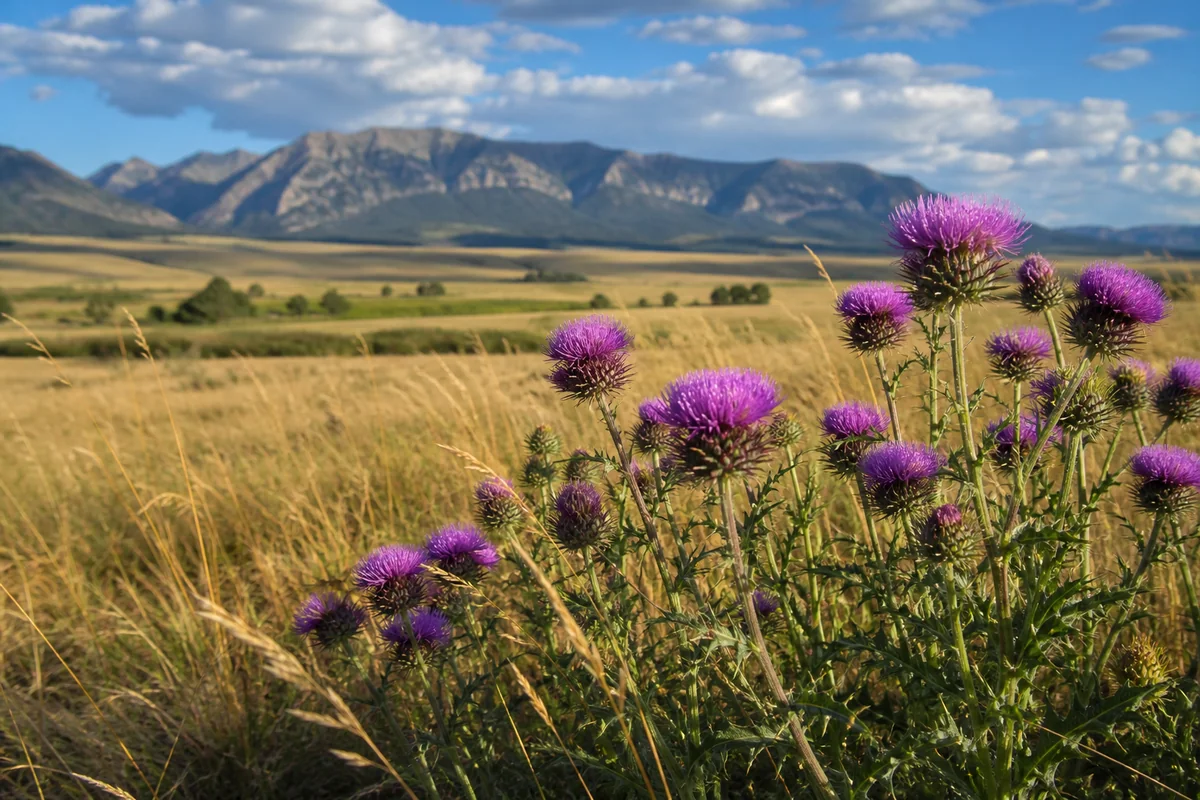
For plant enthusiasts, our Montana State Thistle Guide offers context on native and invasive species you might encounter while exploring mining heritage sites.
Final Thoughts on Montana’s Motto
“Oro y Plata” distills Montana’s origin story into two words. Every time I see those Spanish words carved into stone or printed on official documents, I’m reminded of the remarkable audacity it took to settle this harsh, beautiful landscape.
The gold and silver are largely gone now, extracted and scattered across the world in jewelry and currency and industrial applications. But the communities those minerals built remain, as do the stories, the ruins, the museums, and the spirit of determination that “Oro y Plata” represents.
Whether you spend ten minutes reading a historical marker or ten days exploring mining ghost towns, engaging with Montana’s motto enriches your understanding of this extraordinary state. The treasure continues—it just takes different forms than those four exhausted prospectors expected when they made their last chance attempt at Prickly Pear Creek in 1864.
Come find your own Montana treasure. The gold and silver might be harder to find, but the experiences are richer than anything money can buy.
Frequently Asked Questions
What is Montana’s state motto and what does it mean?
Montana’s state motto is ‘Oro y Plata,’ which is Spanish for ‘Gold and Silver.’ This motto was adopted in 1865 and reflects the state’s rich mining heritage that drove early settlement during the gold rush era. When I visited historic mining towns like Butte and Virginia City, I gained a real appreciation for how deeply this motto connects to Montana’s frontier history.
Where can I see Montana’s state motto displayed during my visit?
You’ll find ‘Oro y Plata’ prominently displayed on the Montana State Capitol building in Helena, on the official state seal, and throughout government buildings across the state. The World Museum of Mining in Butte and the Montana Historical Society Museum in Helena both feature excellent exhibits explaining the motto’s significance. I recommend visiting these spots to understand how gold and silver mining shaped the state.
What historic mining towns should I visit to experience Montana’s gold and silver heritage?
Virginia City and Nevada City are must-see ghost towns about 80 miles south of Butte, where you can walk boardwalks from the 1860s gold rush era. Butte’s uptown historic district showcases the ‘Richest Hill on Earth’ silver and copper legacy, while Bannack State Park near Dillon preserves Montana’s first territorial capital. Budget around $10-15 per person for museum admissions at these sites.
What is the best time of year to explore Montana’s mining history sites?
The best time to visit Montana’s historic mining towns is late May through mid-September when most outdoor museums and ghost towns are fully open. Virginia City’s living history programs run primarily during summer months, and weather is ideal for walking tours. I’d avoid visiting in winter since many historic sites have limited hours or close entirely due to heavy snowfall.
How much does it cost to visit Montana State Capitol and see the state motto?
Visiting the Montana State Capitol in Helena is completely free, and self-guided tours are available Monday through Saturday. Guided tours are also offered at no charge during summer months and provide deeper insight into the state motto and Montana’s history. I spent about two hours exploring the beautiful building and its artwork without spending a dime.
Can I pan for gold in Montana like the early miners referenced in the state motto?
Yes, recreational gold panning is legal on many public lands and designated areas throughout Montana, especially near historic mining districts. Popular spots include Libby Creek near Libby and various locations along the Missouri River. Some tourist attractions like Gold Creek offer guided panning experiences for around $10-25 per person, making it a fun hands-on way to connect with Montana’s ‘Oro y Plata’ heritage.
How far is Helena from other major Montana destinations if I want to see the state motto at the Capitol?
Helena sits centrally located, about 115 miles north of Butte, 90 miles south of Great Falls, and roughly 200 miles southeast of Glacier National Park. From Yellowstone’s north entrance, it’s approximately 180 miles north. I found Helena made a perfect overnight stop when road-tripping between major Montana attractions, and the Capitol visit only took a morning before continuing my journey.
Sources