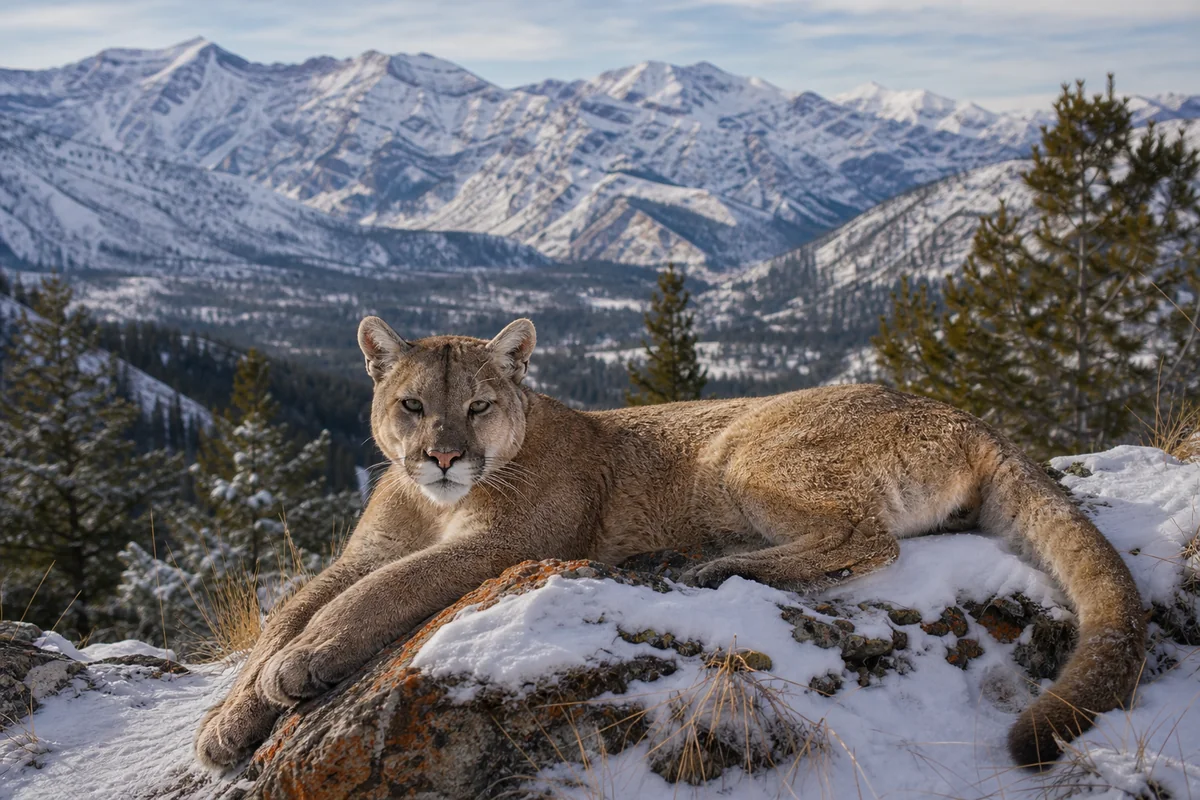
The first time I heard a mountain lion scream in the Bitterroot Mountains, every hair on my neck stood at attention.
It was 3 AM during a late December hunt, and that eerie, almost human-like wail echoing through the frozen pines reminded me exactly why pursuing these apex predators is unlike any other hunting experience in North America.
If you’re considering a mountain lion hunt in Montana, you’re chasing one of the most challenging and rewarding adventures in the state’s incredible Montana Hunting Guide portfolio.
- Montana mountain lion season runs from December 1 through April 14, with most districts having specific quotas
- Hound hunting is the most common and effective method, with 85%+ success rates when using experienced outfitters
- Non-resident lion licenses cost $320 plus a $10 conservation license
- Best hunting districts include 250, 270, 280, and 316 in western Montana
- Hiring a licensed houndsman or outfitter is highly recommended for first-time lion hunters
- You must check harvest quotas daily as districts close quickly once limits are reached
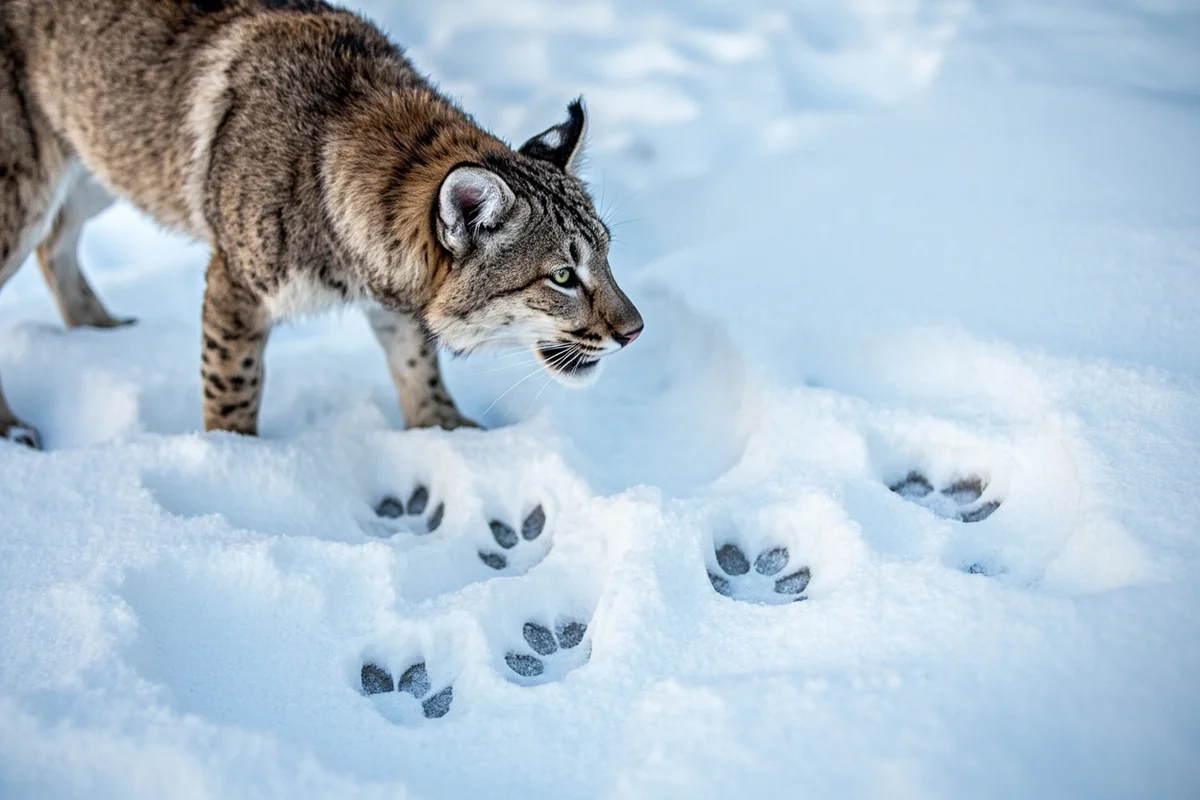
Why Montana Is Premier Mountain Lion Country
Montana’s rugged terrain and abundant prey base create ideal conditions for a healthy mountain lion population. During my years hunting across Big Sky Country, I’ve consistently found that the state offers some of the most accessible and fairly priced cougar hunting opportunities in the western United States.
Unlike neighboring states where tags are limited-draw only, Montana allows over-the-counter mountain lion licenses for both residents and non-residents. This accessibility, combined with an estimated population of 4,000-5,000 lions statewide, makes Montana a top destination for hunters pursuing their first cougar or veterans looking for consistent action.
The diversity of habitat here is remarkable. From the dense cedar forests of the northwest to the sprawling mountain ranges along the Continental Divide, you’ll find lions wherever there’s adequate cover and deer or elk populations. I’ve personally glassed lions in areas ranging from 3,500 to over 8,000 feet in elevation.
Understanding Montana Mountain Lion Seasons and Regulations
Getting the Montana hunting regulations right is critical before you book anything. Mountain lion season runs from December 1 through April 14, though individual hunting districts often close much earlier once quotas are filled.
The Quota System Explained
Montana divides lion hunting into numerous districts, each with its own harvest quota. Once that quota is reached—or sometimes when a female sub-quota is met—the district closes immediately at 11:59 PM that night.
During my hunt last December in Region 2, I watched District 270 close just three days into the season. This wasn’t unusual; popular districts near Missoula and the Bitterroot Valley often fill within the first two weeks.
You absolutely must check the quota status before heading out each day. Montana Fish, Wildlife & Parks maintains a telephone hotline (1-800-385-7826) and online updates. I’ve had hunts canceled mid-morning when I called to check and discovered the district closed overnight.
License Requirements and Costs
Before purchasing your mountain lion license, make sure you understand the full Montana hunting license costs involved. Here’s the breakdown:
| License Type | Resident Cost | Non-Resident Cost |
|---|---|---|
| Conservation License | $8 | $10 |
| Mountain Lion License | $19 | $320 |
| Total Required | $27 | $330 |
You’ll need a valid Montana hunting license before purchasing your lion tag. The good news is that unlike Montana bighorn sheep hunting or certain elk permits, mountain lion tags don’t require Montana preference points or a drawing.

Bag Limits and Legal Harvest
Each hunter may harvest one mountain lion per license year. Both male and female lions are legal, though I strongly encourage selective harvest. Taking mature toms (males) is better for population management and typically provides a larger trophy.
Female lions with spotted kittens at their sides are always illegal to harvest. During my recent trip near Thompson Falls, our group passed on three separate lions because they appeared to be females with young nearby.
Hunting Methods: How Montana Lion Hunters Find Success
There are three primary methods for hunting mountain lions in Montana, each with distinct advantages and challenges. Your choice often comes down to available resources, physical ability, and personal ethics.
Hound Hunting: The Traditional Approach
Running trained hounds is far and away the most effective method for harvesting a mountain lion. Success rates with experienced houndsmen typically exceed 85% over a multi-day hunt.
When I hunted with an outfitter in the Garnet Range last winter, we ran a pack of seven Walker hounds and two Plott hounds. The process starts at first light, driving logging roads looking for fresh tracks crossing the snow. Once a promising track is located, the hounds are released and the chase begins.
What surprised me most was the physical demand. Following hounds through steep, snow-covered timber for miles isn’t for the faint of heart. We averaged 6-8 miles of hiking per day in deep snow, often ascending 2,000+ feet in elevation.
The chase typically ends when the lion trees itself, seeking refuge from the pursuing hounds. At this point, hunters catch up and can make an ethical shot decision. You’ll have time to assess the lion’s size, sex, and age before deciding to harvest.
Calling and Ambush Hunting
Calling mountain lions is an option, though success rates are considerably lower—perhaps 5-10% even in good lion country. I’ve tried predator calls mimicking wounded deer and distressed fawns with mixed results.
During a February hunt in the Tobacco Root Mountains, I sat over a fresh deer carcass for three consecutive mornings without seeing a lion, though tracks indicated one visited the kill site each night. These cats are incredibly nocturnal and wary.
If you choose to call, focus on areas with confirmed lion activity and be prepared to sit motionless for extended periods. Elevated positions overlooking draws or creek bottoms give you the best chance of spotting an approaching cat.
Spot and Stalk
True spot-and-stalk mountain lion hunting is extremely difficult but occasionally productive. During my years in the field, I’ve only seen two lions in Montana without the aid of hounds—both were brief glimpses that offered no shot opportunity.
Lions are most visible during early morning hours when they may still be active from overnight hunting. Glassing south-facing slopes where deer and elk winter can occasionally produce sightings.
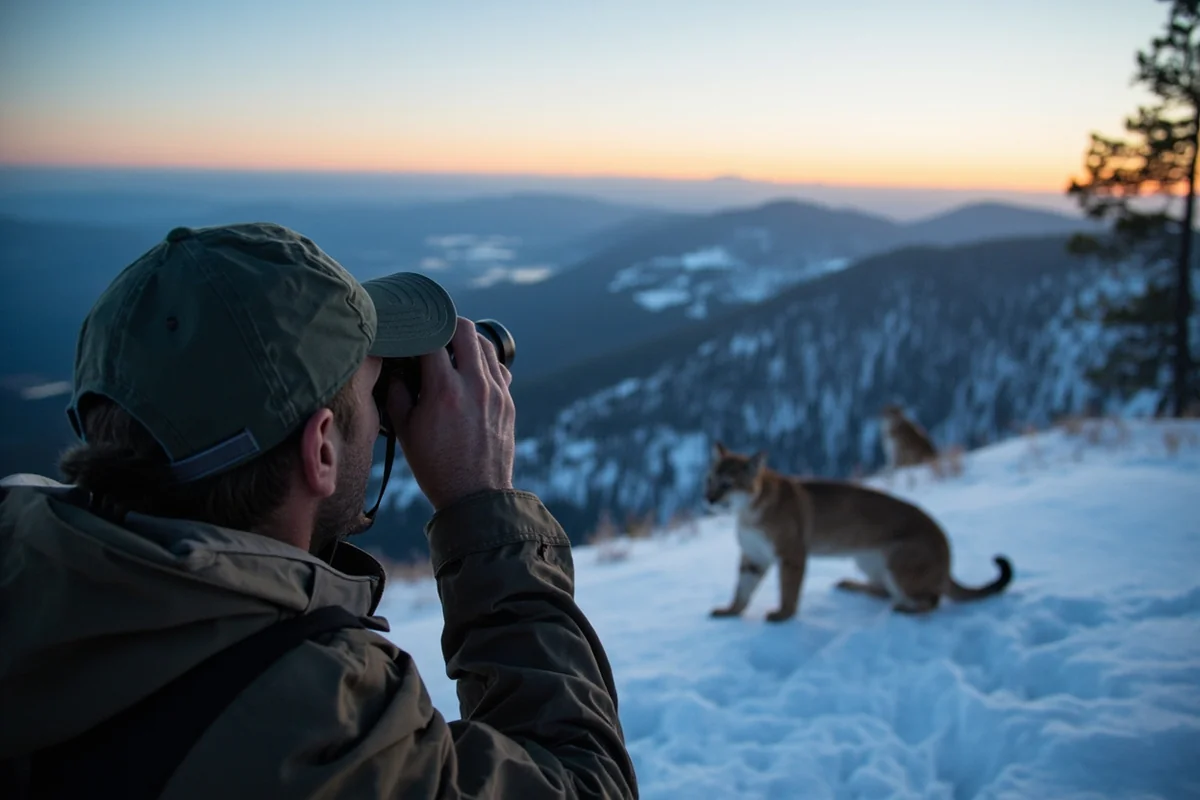
Best Regions and Districts for Montana Lion Hunting
Not all Montana lion habitat is created equal. After hunting various regions and talking with dozens of outfitters and wildlife biologists, I’ve identified the most consistently productive areas.
Region 2: Western Montana’s Prime Territory
The area stretching from Missoula to the Idaho border holds Montana’s highest lion densities. Districts 250, 270, 280, and 282 regularly produce quality toms.
The Bitterroot Valley offers a perfect storm of conditions: steep, timbered terrain with abundant whitetail deer, mild winters at lower elevations, and extensive road access for locating tracks. When I hunted near Darby last season, we found lion tracks every single morning.
This region’s popularity means quotas fill quickly. If you’re planning a trip here, book your outfitter early and be prepared to hunt immediately when the season opens December 1.
Region 1: Northwest Montana
The Flathead Valley north to the Canadian border offers excellent lion hunting with somewhat less pressure. Districts 100, 104, and 150 near Kalispell and Whitefish have healthy populations.
Snow conditions here can be more challenging—heavier snowfall and colder temperatures mean better tracking but harder physical hunting. I recommend this area for hunters who can commit to a longer trip and handle significant winter conditions.
Region 3: Southwest Montana
The area around Bozeman, Butte, and Helena provides good lion hunting closer to major airports. Districts 316, 340, and 380 produce consistent harvests.
This region offers a nice balance of accessibility and quality hunting. During a trip to the Elkhorn Mountains two years ago, I found the lion density lower than western Montana but hunting pressure much lighter.
Working With Outfitters and Houndsmen
Unless you have significant lion hunting experience and trained hounds, I strongly recommend hiring a licensed outfitter for your first Montana mountain lion hunt. The success rate difference is dramatic.
What to Look for in an Outfitter
Quality lion outfitters are hunters first and businesspeople second. When I was researching my first lion hunt, I asked potential guides several key questions:
How many years have they been running hounds specifically for lions? Look for at least five years of dedicated experience. What’s their realistic success rate? Honest outfitters will tell you 70-90%, not promise 100%.
Do they own their own hounds, or do they contract with local houndsmen? Either can work, but I prefer operations where the outfitter has direct control over the dog work.
Ask about backup plans when districts close. Good outfitters have permissions and knowledge across multiple districts and can adapt when quotas fill.
Expected Costs
Guided mountain lion hunts in Montana typically run $4,000-$7,000 for a 5-7 day hunt. This usually includes:
Lodging and meals, transportation during the hunt, guide services and hound work, field preparation of your harvest, and sometimes trophy care.
Your license fees, travel to Montana, taxidermy, and meat processing are additional expenses. Budget $5,500-$9,000 total for a complete, quality experience.

DIY Lion Hunting Considerations
Do-it-yourself mountain lion hunting is possible but challenging. Without hounds, you’re essentially hoping to encounter a lion by chance or successfully call one in—both low-percentage strategies.
Some hunters purchase hound permits and run their own dogs, but this requires significant investment in trained animals ($2,000-$5,000 per quality lion hound), GPS tracking equipment, and years of experience training and handling dogs in rough country.
If you’re set on DIY hunting, focus your efforts on areas with fresh snow and confirmed lion activity. You can hunt on Montana state land and national forest, which comprises millions of accessible acres.
Gear and Equipment Essentials
Mountain lion hunting demands specific gear for the winter conditions and terrain you’ll encounter. After multiple hunts, here’s what I consider essential.
Clothing System
Layering is critical because you’ll alternate between intense physical exertion and extended periods standing still. I start with merino wool base layers, add insulating mid-layers, and top with a breathable, quiet outer shell.
Bring more socks than you think you need—wet feet in below-zero conditions are dangerous. I pack at least three pairs of quality wool socks per day of hunting.
Your boots should be insulated (400-800 grams of Thinsulate) and have aggressive tread for steep, icy terrain. I’ve used Kenetrek Mountain Extremes for three seasons and they’ve handled everything Montana winters throw at them.
Essential Gear Checklist
- Rifle suitable for 50-150 yard shots (.270, .308, .30-06 are all excellent choices)
- Quality binoculars (8×42 or 10×42)
- GPS unit with downloaded maps
- Two-way radios (essential for communicating with guides and hunting partners)
- Snowshoes or quality traction devices
- Headlamp with extra batteries
- Fire-starting materials
- Small first aid kit
- Space blanket or emergency bivy
- Water and high-calorie snacks
Firearms and Shot Placement
When a mountain lion is treed, you’ll typically be shooting at a range of 20-75 yards at an animal weighing 100-180 pounds. Almost any centerfire rifle is adequate.
Many experienced lion hunters prefer lighter calibers like .243 or .25-06 because they cause less pelt damage. I’ve taken lions with a .308 Winchester using 150-grain bullets without any issues.
Shot placement is straightforward—aim for the center of the chest, just behind the front shoulder. Lions are not particularly tough animals, and a well-placed shot results in quick, ethical kills.
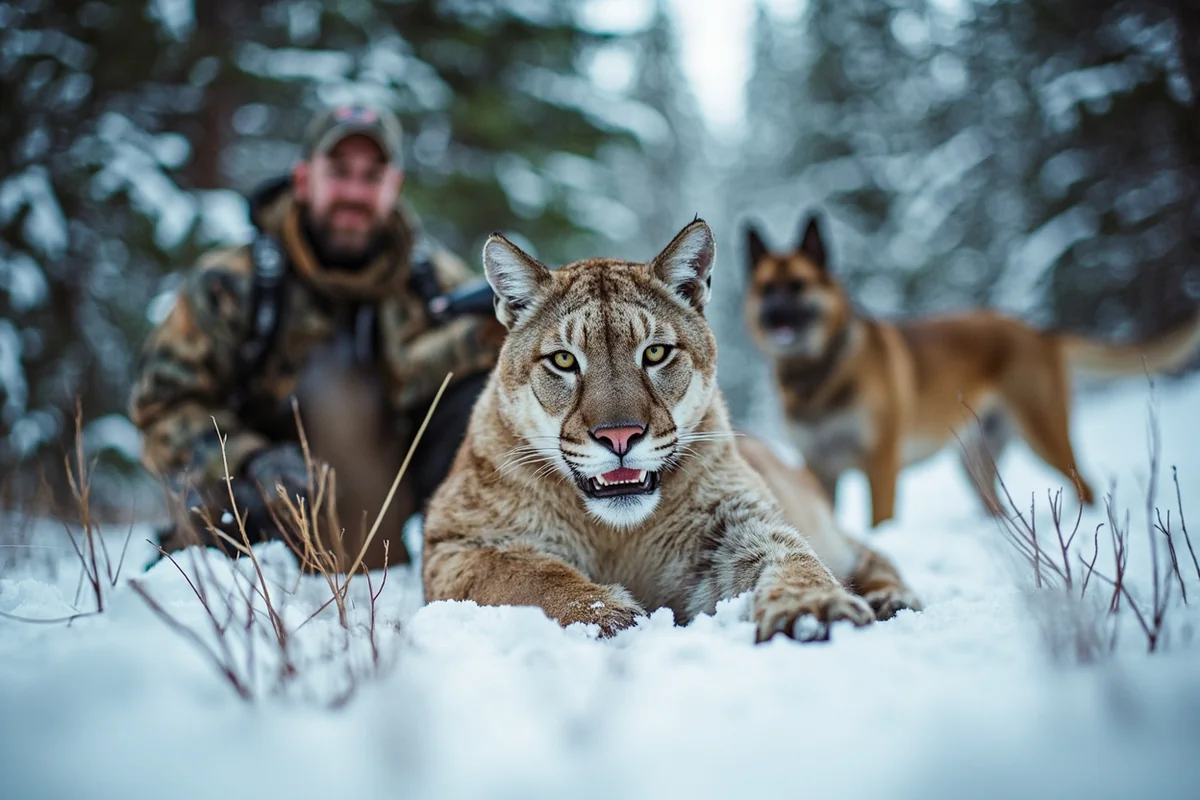
After the Shot: Processing Your Harvest
Montana requires all mountain lion hunters to present their harvest to a Fish, Wildlife & Parks official within 24 hours for tagging and biological data collection. This isn’t optional.
Field Care
Proper field care ensures quality meat and trophy preservation. After the kill, your guide or hunting partner should help lower the lion from the tree carefully to prevent unnecessary damage.
If you plan to have a full-body mount, take special care not to damage the paws, face, or ears during transport. Place the lion on a clean tarp for photos and initial examination.
Skin the lion as soon as practical, especially if temperatures are above freezing. I’ve found that fleshing the hide immediately and salting heavily produces the best results for taxidermy.
Lion Meat: Yes, It’s Excellent
Mountain lion meat is some of the finest wild game you’ll ever taste. Seriously. The texture is similar to pork tenderloin, and the mild flavor takes on marinades and seasonings beautifully.
I’ve served lion backstrap to guests who had no idea what they were eating—the universal response is surprise at how delicious it is. Slow-cooked lion roast rivals the best pork you’ve ever had.
Always cook lion meat to an internal temperature of 165°F to eliminate any risk of trichinella, which can be present in wild carnivore meat.
Trophy Care
Mountain lion hides make stunning mounts and rugs. A quality life-size mount runs $2,000-$4,000, while a full rug mount typically costs $800-$1,500.
Keep the skull attached to the hide if your taxidermist prefers it that way—communication before your hunt is important. Most outfitters have relationships with local taxidermists and can facilitate getting your trophy started before you leave Montana.
Combining Your Hunt With Other Montana Experiences
December through February lion hunting coincides with other Montana hunting opportunities and winter activities. Planning a multi-species trip can maximize your investment in travel.
Other Winter Hunting Options
While pursuing lions, you might encounter wolves in some districts. If you’re interested, check out the Montana wolf hunting regulations and consider purchasing an additional license.
Montana shoulder season elk hunting runs through February 15 in designated areas, providing another big game opportunity during your trip. Some outfitters offer combination packages.
For something completely different, Montana upland bird hunting remains open through January, though by then most pheasant and grouse populations are concentrated in limited areas.
Non-Hunting Activities
Montana’s winter scenery is spectacular, and many lion hunting destinations are near ski resorts, hot springs, and charming mountain towns. If you’re traveling with a non-hunting spouse, they’ll find plenty to do.
I always plan at least one rest day during a week-long hunt. It gives the hounds a break and lets you explore the local area. Hot springs near Missoula, Helena, and Butte provide excellent recovery after days of hard hunting.
Practical Trip Planning Timeline
Successful lion hunts require careful advance planning. Here’s the timeline I recommend based on my experience.
6-12 Months Before
Research and book your outfitter. The best operators fill their December and early January dates quickly. Ask for references and contact previous clients about their experiences.
Begin physical conditioning if needed. Lion hunting demands cardiovascular fitness for hiking at elevation in snow.
3-6 Months Before
Purchase your licenses. Even though tags are over-the-counter, having everything in order early prevents last-minute hassles. The online license system through Montana FWP is straightforward.
Book your travel. Flights to Missoula, Bozeman, Kalispell, or Helena should be secured several months ahead for best rates.
Review the current Montana hunting seasons and any regulation changes from previous years. Rules occasionally adjust, and you want current information.
1-3 Months Before
Confirm all details with your outfitter. Discuss arrival times, what to bring, and any special requests or concerns.
Practice shooting from field positions you might encounter—sitting, kneeling, using trees for support. Most lion shots are taken in awkward positions in timber.
Final Week
Check weather forecasts and adjust your clothing accordingly. Western Montana can experience dramatic temperature swings in winter.
Verify your rental vehicle reservation if applicable. Four-wheel-drive capability is essential; many outfitters can pick you up at the airport instead.
Confirm quota status for your hunting districts. If quotas are already filling faster than expected, discuss backup plans with your outfitter.
Conservation and Ethics in Lion Hunting
Regulated mountain lion hunting plays an important role in Montana’s wildlife management strategy. Understanding this helps appreciate what you’re participating in.
Population Management
Montana’s lion population is healthy and carefully monitored. Annual harvests of approximately 500-700 lions represent a small fraction of the total population and help maintain balance with prey species.
Lions that venture too close to human settlements and livestock operations create conflict situations. Hunting pressure tends to keep lion populations appropriately wary of humans and concentrated in wilder areas.
Selective Harvest
Experienced lion hunters practice selective harvest, targeting mature males when possible. Large toms are territorial and contribute to population stability, but taking one typically allows younger males to expand their range.
When I’ve had the choice, I’ve always waited for a clearly mature tom rather than harvesting the first lion we tree. Your outfitter can help assess the animal before you make your decision.
Fair Chase Considerations
Hound hunting for lions is legal and regulated, but some hunters have ethical concerns about shooting treed animals. This is a personal decision that each hunter must make.
What I’ve found is that the chase itself is tremendously sporting—there’s nothing guaranteed about following hounds through rugged mountain terrain. The outcome at the tree provides a moment for careful evaluation that snap-shooting at a running cat never would.
Comparing Montana to Other Western States
If you’re considering multiple destinations for a mountain lion hunt, here’s how Montana compares to neighboring states based on my research and conversations with hunters who’ve tried various locations.
Montana vs. Colorado
Colorado has higher lion densities in some areas but requires a limited-draw license that can take years to obtain. Montana’s over-the-counter system provides much better accessibility for non-residents.
Montana vs. Idaho
Idaho offers similar terrain and lion populations with slightly lower license costs. However, Montana’s quota system generally keeps hunter pressure more manageable, and I’ve found the outfitter quality in Montana to be exceptional.
Montana vs. Wyoming
Wyoming has fewer lions and more restrictive seasons. Montana provides better overall opportunity for non-resident hunters looking for a quality experience.
What I Wish I’d Known Before My First Hunt
Looking back on my initial Montana lion hunt, several things would have made the experience smoother.
Physical preparation was more important than I anticipated. I thought I was in decent shape, but the combination of elevation, snow, and steep terrain pushed me harder than expected. Start cardio training at least two months before your hunt.
The waiting game is real. Even with good hounds and experienced guides, you might spend days looking for the right track in the right conditions. Mental preparation for this patience-testing aspect helps maintain your enthusiasm.
Temperature management while riding in truck beds or on snowmobiles requires serious planning. When you’re not moving, you get cold fast. Bring more insulation than you think you need.
Finally, lion hunting creates an addiction. After my first successful hunt, I’ve returned to Montana every winter since. There’s something uniquely captivating about pursuing these magnificent predators in some of America’s wildest country.
Planning Your Montana Mountain Lion Adventure
Mountain lion hunting in Montana offers an unmatched combination of accessibility, fair pricing, and quality hunting opportunity. Whether you’re looking to harvest your first cougar or add another Big Sky lion to your record book, this state delivers.
The experience extends beyond the hunt itself. You’ll explore some of North America’s most spectacular winter landscapes, work with passionate houndsmen who’ve dedicated their lives to this tradition, and potentially harvest one of the continent’s most elusive predators.
Start your planning early, work with a reputable outfitter for your first hunt, and come prepared for challenging conditions. The reward—standing over a magnificent Montana mountain lion as hounds bay and snow falls through ancient pines—is worth every bit of preparation.
If you’re also interested in other Montana hunting experiences, consider exploring Montana elk hunting, Montana deer hunting, or even Montana bear hunting to maximize your time in Big Sky Country. For those interested in less physically demanding hunts, Montana duck hunting and Montana antelope hunting offer excellent alternatives.
Whether you’re pursuing a trophy tom in the Bitterroot or exploring the vast wilderness of northwest Montana, a mountain lion hunt here will challenge you, reward you, and likely bring you back again and again.
Frequently Asked Questions
When is the best time to hunt mountain lions in Montana?
Montana’s mountain lion hunting season typically runs from late fall through spring, with the prime months being December through February when snow makes tracking easier. I’ve found that fresh snow conditions are essential for following lion tracks, and outfitters often wait for optimal weather before heading out. The winter season also means lions are more active at lower elevations where prey is accessible.
How much does a guided mountain lion hunt cost in Montana?
Guided mountain lion hunts in Montana generally range from $4,500 to $8,000 for a 5-7 day hunt with experienced outfitters and trained hounds. Non-resident hunters must also purchase a Montana hunting license ($15) plus a mountain lion license ($320). Additional costs include tips for guides (typically 15-20%), taxidermy ($800-$2,000), and travel expenses to remote hunting areas.
Do I need a guide to hunt mountain lions in Montana?
While Montana doesn’t legally require a guide for mountain lion hunting, I strongly recommend hiring one unless you have trained hounds and extensive backcountry experience. Tracking mountain lions requires specialized dogs, knowledge of lion behavior, and familiarity with Montana’s rugged wilderness terrain. Most successful DIY hunters spend years developing their own pack of trained hounds before attempting unguided hunts.
What gear should I bring for a Montana mountain lion hunting trip?
Essential gear includes layered cold-weather clothing rated for temperatures below 0°F, insulated waterproof boots with good traction, and a reliable rifle or handgun in calibers like .44 Magnum or .30-06. You’ll also need quality binoculars, a GPS device, and a daypack with survival essentials since you may cover 10-15 miles daily in mountainous terrain. Most outfitters provide horses or snowmobiles for transportation, but confirm what’s included before booking.
Which Montana hunting districts have the best mountain lion populations?
Districts in western Montana, particularly around the Bitterroot Valley, Flathead region, and areas near Missoula, consistently produce good mountain lion harvest numbers. The Rocky Mountain Front east of Glacier National Park also holds healthy populations due to abundant deer and elk prey. I recommend researching Montana FWP’s harvest statistics by district and consulting with local outfitters who know current lion activity in their specific areas.
How do I apply for a Montana mountain lion hunting license as a non-resident?
Non-residents can purchase mountain lion licenses over-the-counter through Montana FWP’s online portal without entering a draw, making trip planning straightforward. You’ll first need to complete Montana’s online hunter education verification and purchase a base hunting license before adding the lion tag. The entire process can be done online at fwp.mt.gov, and I suggest completing it several weeks before your hunt to avoid any technical delays.
What is the success rate for mountain lion hunting in Montana?
Guided mountain lion hunts in Montana have success rates between 70-90% when conditions are favorable, particularly with experienced outfitters using well-trained hound packs. Success largely depends on snow conditions for tracking, as hunts during snowless periods drop to around 30-40% success rates. Most outfitters offer multi-day packages specifically because it may take several days of tracking before the hounds tree a lion.