Have you ever dreamed of stalking a majestic mule deer through Montana’s rugged mountains or tracking a whitetail along a misty river bottom? Montana’s vast wilderness offers some of the most thrilling and rewarding deer hunting experiences in North America.
But for beginners, the prospect of hunting in Big Sky Country can seem daunting. Where do you start? What gear do you need? How do you navigate the complex regulations and diverse terrain?
- Related article: Hunting Tips for Montana
This comprehensive guide will be your roadmap to success, whether you’re planning your first Montana deer hunt or looking to sharpen your skills. From understanding the behavior of Montana’s deer species to mastering essential field tactics, we’ll cover everything you need to know to embark on your hunting journey with confidence. So grab your boots and rifle – it’s time to discover the adventure, challenge, and deep connection to nature that Montana deer hunting provides.
Table of Contents
Understanding Montana’s Deer Species
Montana is home to two primary deer species: the white-tailed deer and the mule deer. Each species has distinct characteristics that affect hunting strategies and identification in the field.
White-tailed Deer (Odocoileus virginianus)

White-tailed deer are identified by their distinctive reddish-brown summer coat that transitions to grayish-brown in winter. Their most recognizable feature is the white underside of their tail, which they flash as a warning signal when alarmed. Adult bucks typically weigh between 150-300 pounds, while does are smaller at 90-200 pounds.
These deer prefer habitat with a mix of forest edges and open areas, particularly river bottoms, agricultural fields, and mixed woodlands. In Montana, they’re most abundant in the western and central regions, especially along river corridors like the Missouri, Yellowstone, and Clark Fork.
White-tailed deer are crepuscular, meaning they’re most active during dawn and dusk. They tend to be skittish and rely heavily on their acute senses, particularly their sense of smell, to detect danger. When startled, they typically run with their tail raised high, showing the white underside as they bound away.
Their feeding habits consist primarily of browsing on leaves, buds, and twigs from woody plants, supplemented by agricultural crops, acorns, and various forbs. During the fall hunting season, they often focus on high-energy foods to prepare for winter.
Mule Deer (Odocoileus hemionus)
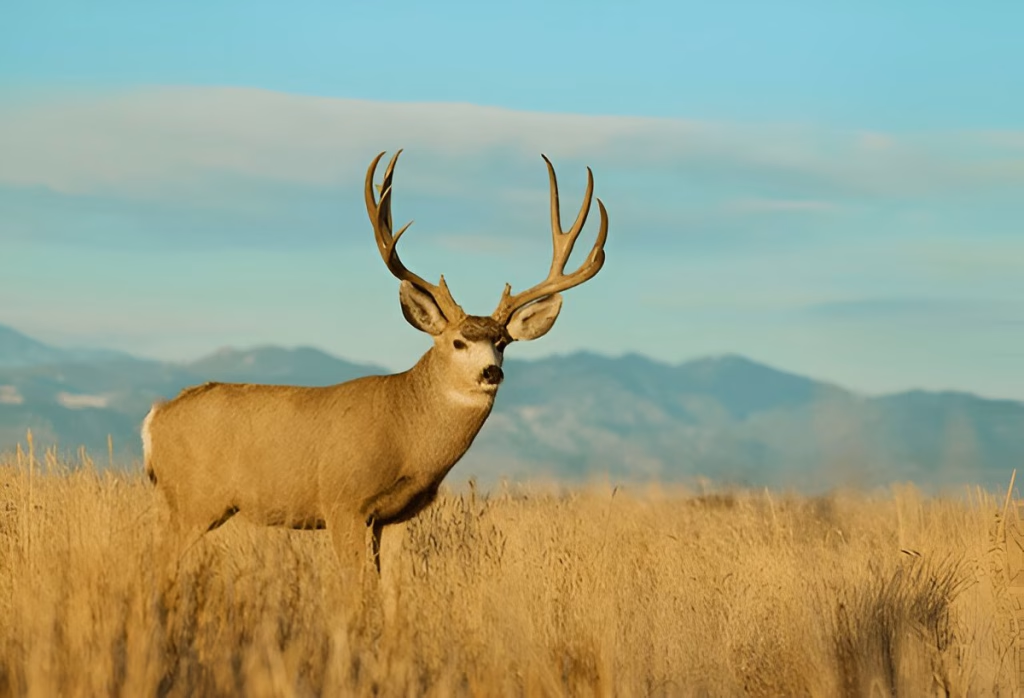
Mule deer are named for their large, mule-like ears. They’re typically larger than whitetails, with bucks weighing 150-400 pounds and does 100-200 pounds. Their coat is grayish-brown, and instead of running with a raised white tail, they move with a distinctive bouncing gait called “stotting,” where all four feet leave the ground simultaneously.
These deer prefer more open, rugged terrain including sagebrush plains, juniper woodlands, and mountain slopes. In Montana, mule deer are prevalent in the central and eastern parts of the state, as well as in higher elevation areas throughout the western mountains.
Mule deer are generally less skittish than whitetails and may pause to identify danger before fleeing, making them somewhat easier to spot. They’re also crepuscular but may be active throughout daylight hours depending on hunting pressure and weather conditions.
Their diet consists of browse from shrubs and trees, with sagebrush being particularly important in winter months. They also consume various forbs, grasses, and agricultural crops when available.
Seasonal Movements
Both species exhibit seasonal migration patterns in Montana, though these vary by region. In mountainous areas, deer typically spend summers at higher elevations and move to lower elevations as winter approaches. Understanding these movement patterns is crucial for hunting success, as deer will be transitioning between summer and winter ranges during the fall hunting season.
During the rut (breeding season), which typically occurs in November, bucks of both species become more active during daylight hours and may travel significant distances in search of receptive does, creating excellent hunting opportunities.
Montana Hunting Regulations and Licensing
Montana’s hunting regulations can seem complex to newcomers, but understanding them is essential before heading into the field. The Montana Fish, Wildlife & Parks (FWP) department manages all hunting activities in the state with carefully designed regulations to ensure sustainable wildlife populations.
License Requirements
All deer hunters in Montana must possess a valid hunting license. Basic requirements include:
- A base hunting license (prerequisite for all hunting activities)
- A conservation license
- A deer license or permit specific to the species you’re hunting
- Proof of having completed a hunter education course (for hunters born after January 1, 1985)
Application Process
The application process varies depending on whether you’re seeking general deer tags or special permits:
- General deer licenses can be purchased over-the-counter at FWP offices, license providers, or online through the FWP website.
- Special permits for limited hunting districts require application through the annual drawing system.
For special permits, applications typically open in March with deadlines in April. Results are usually available by mid-June, giving successful applicants plenty of time to plan their hunts.
Fees
License fees in Montana follow a tiered structure:
- Resident base hunting license: $15-20
- Resident deer license: $20-25
- Non-resident base hunting license: $15
- Non-resident deer license: $200-250
- Conservation license: $8 for residents, $10 for non-residents
Additional fees may apply for special permits or premium hunting opportunities. Always check the current year’s regulations for the most up-to-date pricing.
Hunting Districts
Montana is divided into numerous hunting districts, each with specific regulations:
- Western districts (100-300 series) primarily offer whitetail and mule deer hunting
- Eastern districts (400-700 series) focus more on mule deer and antelope
- Some districts have special regulations for antler point restrictions or limited-entry hunts
Studying district maps and regulations is crucial before planning your hunt, as bag limits and season dates can vary significantly between areas.
Season Dates
Montana’s deer hunting seasons typically include:
- Archery season: Early September through mid-October
- General rifle season: Late October through late November
- Special youth hunts: Usually a few days before general season
- Late-season hunts: Select areas in December and January
Season dates can vary by hunting district and species, so always verify the specific dates for your intended hunting location.
Bag Limits
Standard bag limits in Montana allow for:
- One deer per general license (either whitetail or mule deer, depending on district)
- Additional deer with special B licenses in certain districts
- Antlerless-only opportunities in some areas to manage population
The regulations specify whether tags are valid for antlered deer only, antlerless only, or either sex.
Special Permits
Montana offers several special permit opportunities:
- Limited-entry districts for trophy hunting
- Disability access permits
- Landowner permission hunts
- Management hunts for population control
These permits typically require separate applications and may have earlier deadlines than general licenses.
Resident vs. Non-Resident Considerations
Non-resident hunters face additional considerations:
- Higher license fees
- Quota limitations (only a percentage of licenses are allocated to non-residents)
- Earlier application deadlines for special permits
- Sponsorship requirements in some hunting districts
Residents enjoy priority in drawings and more affordable license options, but Montana still offers excellent opportunities for out-of-state hunters who plan ahead.
Understanding these regulations before your hunt will ensure you stay legal and make the most of your Montana deer hunting experience. The regulations booklet published annually by FWP should be your ultimate reference, as rules can change from year to year based on wildlife management needs.
Essential Gear for Montana Deer Hunting
Montana’s diverse terrain and unpredictable weather demand careful consideration when assembling your deer hunting gear. As a beginner, investing in the right equipment will not only increase your chances of success but also ensure your comfort and safety in the field.
Firearms and Archery Equipment
For rifle hunters, a .270 Winchester, .308 Winchester, or 30-06 Springfield are excellent all-around choices for Montana deer hunting. These calibers offer the right balance of accuracy, effective range, and stopping power without excessive recoil for beginners. Ensure your rifle is properly sighted in at 100-200 yards before your hunt.
If you prefer bowhunting, a compound bow with a draw weight between 45-60 pounds provides sufficient power for ethical deer harvesting. Recurve and traditional bows are also options, though they require more practice to master. Pair your bow with high-quality broadheads designed specifically for deer.
Weather-Appropriate Clothing
Montana’s weather can change dramatically throughout the day, especially during hunting season. The layering system is essential:
- Base layer: Moisture-wicking materials like merino wool or synthetic fabrics
- Insulating layer: Fleece or down jackets that trap body heat
- Outer layer: Waterproof, windproof, and breathable shell
- Headwear: Insulated hat and neck gaiter
- Gloves: Insulated, waterproof gloves with trigger-finger functionality
- Footwear: Insulated, waterproof boots with good ankle support
Camouflage patterns that match Montana’s terrain help you blend in, but remember that hunter orange is required during rifle season (minimum 400 square inches above the waist).
Optics
Quality optics can make the difference between spotting a deer and going home empty-handed:
- Binoculars: 8×42 or 10×42 are versatile magnifications for Montana hunting
- Rangefinder: Essential for accurate distance estimation, particularly for bowhunters
- Rifle scope: Variable power scopes (3-9x or 4-12x) offer flexibility for different shooting distances
For beginners, investing in good binoculars should be a priority if budget is limited.
Navigation Tools
Getting lost in Montana’s vast wilderness is a real concern:
- GPS device: Preferably with topographic maps preloaded
- Compass and physical maps: Never rely solely on electronic devices
- Two-way radios or satellite communicator: For emergency communication
- Smartphone with offline maps: Apps like onX Hunt show property boundaries and can track your location
Field Dressing Equipment
Once you’ve harvested a deer, proper field dressing tools are crucial:
- Sharp hunting knife: Fixed-blade with 3-4 inch blade
- Bone saw or hatchet: For splitting the pelvis and sternum
- Rubber or latex gloves: For hygiene and safety
- Game bags: To keep meat clean and protected
- Paracord: For hanging the deer during field dressing
- Field dressing kit: Pre-assembled kits include most essentials
Beginner-Friendly Recommendations
If you’re just starting out, focus on these essentials:
- Reliable rifle or bow: Consider renting before buying to find what feels comfortable
- Quality binoculars: Even budget-friendly options around $200 can significantly improve your hunting experience
- Proper boots and clothing: Comfort in variable weather conditions is critical for enjoying the experience
- Basic navigation tools: At minimum, a compass and physical map of your hunting area
- Hunting backpack: 2000-3000 cubic inches with frame support for carrying gear and potentially meat
Remember that you don’t need the most expensive gear to be successful. Many experienced Montana hunters started with basic equipment and upgraded over time as they learned their preferences. Quality over quantity should be your guiding principle when assembling your deer hunting kit.
Scouting Techniques for Montana Deer Habitat
Successful deer hunting in Montana begins long before the season opens. Effective scouting is perhaps the most crucial skill a beginner hunter can develop. Montana’s diverse landscape—from alpine meadows to river bottoms—requires specific scouting techniques to identify prime deer habitat.
Reading the Landscape
Montana’s varied terrain provides different opportunities depending on the region. In western Montana’s mountainous regions, look for benches and saddles where deer travel between feeding and bedding areas. In eastern Montana, focus on creek bottoms, coulees, and the edges of agricultural fields where deer find both food and cover.
Start by identifying these key terrain features:
- South-facing slopes (winter feeding areas)
- North-facing slopes (summer bedding areas)
- Saddles between ridges (natural travel corridors)
- Water sources (creeks, ponds, springs)
- Edge habitat where two vegetation types meet
Leveraging Technology
Modern technology has revolutionized scouting:
Digital Mapping Apps: Tools like onX Hunt, BaseMap, or HuntWise allow you to view property boundaries, topographic features, and even save waypoints of promising areas directly on your smartphone. These apps work offline in Montana’s remote areas where cell service is nonexistent.
Satellite Imagery: Use Google Earth to identify potential feeding areas, trails, and natural funnels. The historical imagery feature lets you see how areas change throughout seasons and years.
GPS Units: While smartphones are convenient, a dedicated GPS unit provides reliability in Montana’s backcountry where battery life and durability matter.
Recognizing Deer Sign
Physical evidence of deer presence is your most reliable indicator of productive hunting areas:
Tracks: Deer tracks in mud, snow, or soft soil reveal not just presence but direction of travel and roughly how recently deer passed through. Whitetail tracks are typically more pointed than the rounder mule deer tracks.
Droppings: Fresh pellets indicate recent deer activity. The consistency can even tell you about their diet—harder pellets suggest browsing on woody vegetation, while softer clusters indicate grazing on lush vegetation.
Rubs: Trees where bucks have scraped off bark with their antlers. Fresh rubs show light-colored wood and are typically found along travel corridors. In Montana, look for rubs on aspen, pine saplings, or other soft-barked trees.
Scrapes: Areas where bucks paw the ground and urinate to mark territory, typically found under an overhanging branch. These become increasingly common as the rut approaches.
Trail Camera Strategies
Trail cameras have become essential scouting tools, especially for time-constrained hunters:
- Place cameras along game trails, near water sources, or overlooking natural funnels
- Position them facing north or south to avoid direct sunlight
- Check cameras infrequently to minimize human scent in the area
- Use cellular cameras in accessible areas to reduce disturbance
- Set cameras 2-3 weeks before your planned hunt to establish patterns
Understanding Deer Habitat Components
Feeding Areas: In Montana, these include agricultural fields, clear-cuts, meadows, and recent burn areas. Dawn and dusk are prime times to observe these locations from a distance with binoculars.
Bedding Areas: Deer seek security when resting. Look for thick cover on north-facing slopes (cooler in summer), dense conifer stands, or brushy draws. These areas often show flattened vegetation and concentrated droppings.
Travel Corridors: Deer are creatures of habit and use the path of least resistance between feeding and bedding areas. Natural funnels created by topography—creek bottoms, saddles between hills, or strips of cover connecting larger habitat blocks—concentrate deer movement.
Boots on the Ground
While technology helps, nothing replaces physical scouting:
- Plan early morning or evening hikes when deer are most active
- Move slowly and use binoculars frequently to scan distant areas
- Pay attention to wind direction to avoid alerting deer to your presence
- Document findings in a field notebook or smartphone app
- Look for fresh sign after weather events like rain or snow
By thoroughly scouting Montana’s deer habitat before the season, you’ll not only increase your chances of success but also gain valuable knowledge about deer behavior that will serve you throughout your hunting career. Remember that effective scouting is an ongoing process—the more time you invest, the more intimate your understanding of the landscape becomes.
Public vs. Private Land Hunting Opportunities
Montana offers deer hunters a wealth of options when it comes to hunting grounds, with both public and private lands presenting unique opportunities and challenges for beginners.
Public Land Hunting in Montana
Montana boasts over 30 million acres of public land open to hunting, including national forests, Bureau of Land Management (BLM) areas, and state-owned Wildlife Management Areas (WMAs). These public lands often contain excellent deer habitat, particularly in the western and central regions of the state.
Popular public hunting areas include:
- Helena-Lewis and Clark National Forest
- Flathead National Forest
- Beaverhead-Deerlodge National Forest
- Missouri River Breaks
- Custer Gallatin National Forest
While public lands offer free access, they typically experience higher hunting pressure, especially during opening weekends and in easily accessible areas. Success on public land often requires venturing further from roads and trails to find less-pressured deer.
Montana’s Block Management Program
One of Montana’s most valuable resources for hunters is the Block Management Program (BMP), which provides public hunting access to private lands. This innovative program:
- Opens approximately 7 million acres of private land to public hunting
- Establishes clear rules for each property through landowner agreements
- Requires hunters to obtain permission through sign-in boxes, reservation systems, or direct landowner contact
- Creates win-win relationships between hunters and landowners
To hunt Block Management areas, you’ll need to review the regional BMP guide (available from Montana Fish, Wildlife & Parks) and follow each property’s specific access requirements.
Hunting on Private Land
Outside the Block Management Program, Montana has millions of acres of private land that may offer exceptional deer hunting opportunities. To access these properties:
- Obtain explicit permission from landowners before hunting
- Make contact well before hunting season begins
- Be specific about your hunting plans
- Offer something in return (helping with ranch work, sharing processed meat)
- Always follow up with a thank-you
Building relationships with landowners can lead to long-term hunting access and often less competition from other hunters.
Comparing Public vs. Private Land Hunting
Public Land Pros:
- Free access
- No permission required
- Extensive acreage
- Can scout and hunt at your convenience
Public Land Cons:
- Higher hunting pressure
- May require deeper backcountry travel
- Less predictable deer populations
- More competition during prime seasons
Private Land Pros:
- Potentially less hunting pressure
- May have better-quality deer
- Often easier access by vehicle
- Can offer more predictable hunting
Private Land Cons:
- Requires permission
- May involve access fees
- Restricted hunting dates or methods
- Must adhere to landowner’s specific rules
Etiquette and Regulations
Regardless of where you hunt in Montana, proper etiquette is essential:
- Always leave gates as you found them (open or closed)
- Pack out all trash and spent cartridges
- Report trespassers or violations to landowners or authorities
- Avoid blocking access roads or driveways
- Share the land respectfully with other hunters
Remember that different regulations may apply to different properties. On some Block Management areas, for example, vehicle use might be restricted, or hunting limited to certain species or weapons. Always verify the specific rules for your hunting location before heading out.
For beginners, a mixed approach often works best—start by exploring accessible public lands while simultaneously building relationships with private landowners or researching Block Management opportunities in your target hunting area.
Montana Deer Hunting Tactics for Beginners
For newcomers to Montana deer hunting, understanding effective hunting tactics is crucial for success. The state’s varied terrain and deer behavior patterns require different approaches depending on your hunting location and conditions.
Spot-and-Stalk Methods
Spot-and-stalk hunting is particularly effective in Montana’s open areas and alpine regions. This active hunting method involves:
- Using quality optics (binoculars or spotting scopes) to scan distant hillsides and meadows
- Identifying deer from a distance, often during early morning or evening hours
- Planning a careful approach that considers wind direction, available cover, and terrain features
- Moving slowly and deliberately toward your target, staying out of sight
- Remaining patient and taking breaks to re-evaluate your approach
This method works exceptionally well in Montana’s mountain ranges and open prairie lands where visibility extends for long distances.
Stand Hunting Strategies
When hunting Montana’s forests and river bottoms, stand hunting becomes highly effective:
- Select locations near established deer trails, feeding areas, or water sources
- Set up before first light if hunting morning hours
- Position yourself downwind of expected deer movement
- Remain absolutely still and minimize movement
- Consider using a tree stand or ground blind to break up your outline
- Be prepared for long periods of waiting and watching
Many beginners find success with this method because it requires less physical exertion while maximizing opportunities to see deer in predictable travel corridors.
Still Hunting Techniques
Still hunting—moving extremely slowly through deer habitat—combines elements of both previous methods:
- Move at an incredibly slow pace (think 100 yards per hour)
- Take a few careful steps, then pause to scan and listen
- Focus on using natural cover and shadows to remain concealed
- Hunt into the wind whenever possible
- Wear soft, quiet clothing that doesn’t create noise with movement
- Pay special attention to areas with fresh sign like tracks, droppings, or rubs
This technique is perfect for Montana’s thick timber or brushy areas where visibility is limited but deer density is high.
Calling Methods
While not as widely used as with elk hunting, calling can be effective for Montana deer:
- Grunt calls can attract curious bucks, especially during the rut
- Doe bleats can bring in bucks searching for mates in November
- Rattling antlers simulates buck fights and can draw in dominant males
- Use calls sparingly—a few grunts or a short rattling sequence is often sufficient
- Remain ready for quick shot opportunities, as deer may approach rapidly
Calling works best during the rut (typically early-to-mid November in Montana) when bucks are actively seeking mates.
Scent Control
Montana deer have exceptional noses, making scent control essential:
- Hunt with the wind in your favor whenever possible
- Use scent-eliminating sprays on clothing and equipment
- Store hunting clothes in scent-free containers with earth or pine scents
- Avoid scented soaps, deodorants, and detergents before and during hunts
- Consider wearing rubber boots to minimize ground scent
- Stay hydrated but avoid spicy or strong-smelling foods before hunting
Even the most perfect setup can be ruined if a deer catches your scent, making this perhaps the most critical element for beginners to master.
Hunting Different Times of Day
Understanding when to be in the field dramatically increases success rates:
- Dawn and Dusk: Prime movement times when deer travel between bedding and feeding areas
- Midday: Often overlooked but can be productive during the rut or cold weather
- Weather Transitions: Deer often move just before storms or significant weather changes
- Moon Phases: Pay attention to moon phases, as they can influence deer movement patterns
- Post-Rainfall: Deer often become active after rain stops as sounds are dampened
For beginners, focusing efforts on the first and last hour of daylight typically provides the highest chance of encountering deer, but don’t discount other times, especially during the rut when bucks may move throughout the day.
Understanding Deer Behavior During Hunting Season
Montana’s deer behave differently throughout the hunting season, and understanding these patterns can significantly improve your chances of success. The whitetail and mule deer of Montana follow predictable behavioral patterns that, once understood, can help beginners anticipate their movements and habits.
Rutting Patterns
The rut is perhaps the most exciting time for deer hunters in Montana. This breeding period typically occurs from mid-October through November, with peak activity around mid-November. During this time, bucks become less cautious and more active during daylight hours as they search for receptive does.
Pre-rut behavior includes establishing dominance through sparring and creating rubs and scrapes to mark territory. During the peak rut, bucks may travel miles outside their normal range following doe scent. Post-rut finds exhausted bucks returning to feeding heavily to replenish lost energy.
For beginners, focusing your hunt during the rut can increase your chances of encountering a mature buck, as they become more predictable and less nocturnal during this period.
Weather Impacts on Movement
Weather conditions dramatically influence deer movement in Montana’s varied terrain. Cold fronts often trigger increased feeding activity before and after the front passes. After a snowfall, deer typically become more active as they search for food, making their tracks easier to follow.
High winds generally reduce deer movement, forcing them into sheltered areas like dense timber or protected draws. Conversely, light rain often increases movement, especially during early morning or late evening.
Temperature also plays a crucial role—extremely cold temperatures push deer to feed more frequently during daylight hours to maintain body heat, while unseasonably warm weather may limit movement to nighttime hours when temperatures are cooler.
Pressure Response
Montana deer quickly adapt to hunting pressure. After opening weekend, deer often shift their patterns, becoming more nocturnal and moving to thicker cover or more remote areas. Areas with high hunter traffic may see dramatically reduced daytime deer activity.
Savvy beginners should seek out “sanctuary zones”—areas difficult to access or overlooked by other hunters. These might include steep terrain, thick brush, or locations requiring longer hikes from access points.
When deer sense pressure, they don’t necessarily leave the area entirely but adjust when and how they move through it. Understanding this can help you adapt your hunting strategy throughout the season.
Feeding Times
Montana deer typically follow crepuscular feeding patterns, being most active during dawn and dusk. Morning feeding periods often occur from first light until about 9-10 AM, while evening feeding typically begins 2-3 hours before sunset.
Food sources change throughout the season. Early season may find deer focusing on agricultural fields, while late season might see them targeting remaining mast crops or browsing on woody vegetation. Identifying these food sources and setting up along travel corridors between bedding and feeding areas can be highly effective.
During harsh weather, feeding urgency increases, sometimes causing deer to feed throughout the day rather than during traditional peak times.
Reading Deer Body Language and Vocalizations
Learning to interpret deer body language can alert you to their awareness level and intentions. A deer with its tail down and head low is typically relaxed and unaware of danger. When a deer raises its head suddenly, freezes, or flicks its tail, it’s often sensing something suspicious.
The classic “flag” of a whitetail’s raised tail signals danger to other deer and indicates your presence has been detected. Before fleeing, deer often stamp their front hooves and make short, sharp snorting sounds to alert others.
Vocalizations, though limited, provide valuable information. During the rut, bucks make a distinctive grunt when trailing does. Does communicate with their fawns using soft bleats. Learning to recognize and even replicate these sounds with calling devices can be advantageous.
A deer that repeatedly looks in a particular direction while feeding may be aware of something concerning but not yet identified as a threat. This behavior often precedes the decision to flee or continue feeding, giving attentive hunters valuable seconds to prepare for a shot opportunity.
By studying and understanding these behavioral patterns, beginning Montana deer hunters can significantly improve their ability to anticipate deer movement and position themselves accordingly for a successful, ethical harvest.
Shot Placement and Ethical Hunting Practices
As a beginner to Montana deer hunting, understanding proper shot placement is perhaps the most critical skill you’ll develop. Ethical hunting isn’t just about following regulations—it’s about respecting the animal by ensuring a quick, humane harvest.
The ideal shot on a deer is through the vital organ area, specifically targeting the heart and lungs. This area sits just behind and slightly below the front shoulder of the deer. A well-placed shot here will result in rapid blood loss and a quick, humane death. The vital zone on an average Montana whitetail or mule deer is approximately 8-10 inches in diameter, roughly the size of a paper plate.
For beginners, it’s essential to understand your effective shooting range. While experienced hunters might take shots at 300+ yards, as a beginner, you should limit yourself to distances where you can consistently place shots in an 8-inch circle. For most new hunters using rifles, this means staying within 100-150 yards. If you’re bowhunting, keep your shots under 30 yards until your skills improve.
There are several situations when you should absolutely pass on taking a shot:
- When the deer is moving quickly
- When you can’t clearly identify your target and what’s beyond it
- When the animal is positioned so that vital organs are not exposed
- When brush or obstacles might deflect your bullet or arrow
- When you’re feeling rushed or pressured
- When you’re not 100% confident in the shot
Remember that patience is a virtue in hunting. It’s better to let a deer walk than to risk wounding it with a poor shot.
Before hunting season begins, commit to regular practice with your weapon. For rifle hunters, this means spending time at the range in various shooting positions—not just from a bench rest. For bowhunters, practice from elevated positions if you plan to hunt from treestands. Simulate field conditions as much as possible during practice sessions.
Many novice hunters underestimate the adrenaline factor when a deer appears. Your heart rate will increase, your breathing may become irregular, and your hands might shake. Regular practice helps you overcome these physiological responses when the moment of truth arrives.
Finally, know what to do if you do wound a deer. Wait at least 30 minutes before tracking (longer for gut shots), and be methodical in your search. Following up on wounded game isn’t just ethical—it’s your responsibility as a hunter and steward of Montana’s wildlife resources.
Field Dressing and Processing Your Montana Deer
Successfully harvesting a deer is just the beginning of your hunting journey. Proper field dressing and processing are crucial skills that ensure the quality of your venison and show respect for the animal. For beginners in Montana deer hunting, this process might seem intimidating, but with the right approach, it becomes manageable.
Essential Field Dressing Tools
Before heading into the field, assemble these essential tools:
- A sharp hunting knife (fixed blade preferred)
- Rubber or latex gloves
- Small bone saw or pruning shears for the ribcage
- Clean rope for hanging
- Game bags
- Paper towels or clean rags
- Fresh water (at least 1-2 gallons)
- Heavy-duty plastic bags for meat and waste
Quality tools make field dressing significantly easier, especially when you’re a beginner working in potentially cold Montana conditions.
Step-by-Step Field Dressing Instructions
- Position the deer: Place the deer on its back, slightly uphill if possible. Spread the hind legs and secure them if necessary.
- Make the initial cut: Starting at the bottom of the breastbone, carefully cut through the hide toward the pelvic area, being careful not to puncture the intestines or bladder.
- Open the abdominal cavity: Extend your cut to the pelvic bone, using two fingers inside the cavity to guide your knife and prevent cutting into organs.
- Remove the genitals/reproductive organs: Carefully cut around these organs and set them aside with the entrails.
- Split the pelvic bone: Use your bone saw to split the pelvic bone, providing access to the lower intestinal tract.
- Cut around the anus: Make a circular cut around the anus, being careful not to puncture the intestines.
- Remove the internal organs: Roll the deer slightly to the side and pull the entrails out, cutting any connective tissue as needed. Work from the pelvic area up toward the diaphragm.
- Cut through the diaphragm: Separate the diaphragm from the rib cage, providing access to the heart and lungs.
- Cut the windpipe and esophagus: Reach up into the chest cavity, locate these tubes, and sever them as high as possible.
- Remove heart and lungs: Pull these organs out along with the rest of the entrails.
- Clean the body cavity: Wipe out excess blood with clean cloths and rinse if clean water is available.
Cooling the Meat Properly
In Montana’s varied climate, cooling your deer quickly is essential for meat quality:
- Remove the hide only if temperatures are below 40°F; otherwise, keep it on as insulation
- Prop open the chest cavity with sticks to allow airflow
- Place ice bags inside the cavity if temperatures are warm
- Get the carcass to a cool location within 3-4 hours of harvest
- Never place a warm deer in a small enclosed space like a car trunk
The goal is to get the meat temperature down to below 40°F as quickly as possible to prevent spoilage.
Transport Considerations
Transporting your deer from the Montana backcountry requires planning:
- Properly tag your deer according to Montana regulations
- If dragging, use a deer cart or sled in rough terrain
- For long distances, quarter the deer (after properly tagging)
- Keep the meat clean during transport using game bags
- Avoid placing the deer on hot surfaces like truck beds in direct sunlight
- Consider using a hoist system for loading into vehicles
Remember that Montana law requires evidence of sex and species to remain attached during transport.
Processing Options: DIY vs. Professional
Once you’ve transported your deer, you have two main processing options:
DIY Processing:
- Requires basic butchering equipment (sharp knives, cutting board, freezer paper)
- Saves money ($150-300 compared to professional processing)
- Provides complete control over cuts and quality
- Takes approximately 4-8 hours for beginners
- Requires adequate freezer space
Professional Processing:
- Costs typically range from $75-200 in Montana
- Offers specialty services like sausage making and jerky
- Saves time and effort
- Provides consistent, professional-quality cuts
- Often includes vacuum sealing for better preservation
Many Montana beginners opt for professional processing their first season while learning the basics of field dressing, then gradually take on more of the processing themselves as they gain experience.
With proper field dressing and processing, your Montana deer hunting experience culminates in high-quality, organic protein that can feed your family for months—a rewarding conclusion to your hunting efforts.
Safety Considerations for Montana’s Backcountry
Montana’s vast wilderness offers incredible deer hunting opportunities, but it also presents unique safety challenges that every beginner must understand. The remote nature of many hunting areas means self-reliance and proper preparation are essential for a safe experience.
Wilderness Safety Tips
When venturing into Montana’s backcountry, always hunt with a partner when possible. Before departing, leave detailed plans with a trusted person, including your intended hunting location, expected return time, and vehicle information. Establish check-in times and a clear action plan if you don’t return as scheduled. Carry a fully charged cell phone, but understand that reception is often limited in remote areas.
Bear Awareness
Montana is home to both grizzly and black bears, making bear safety knowledge crucial. Always carry bear spray in an easily accessible location and know how to use it. Make noise while moving through dense vegetation or areas with limited visibility to avoid surprising bears. When field dressing a deer, move the carcass away from the gut pile, and hang your meat at least 10 feet high and 100 yards from your camp. Be particularly vigilant in areas with fresh bear sign or near natural food sources like berry patches.
Emergency Preparedness
Every hunter should carry a basic survival kit including: fire-starting materials, emergency shelter (space blanket), water purification method, high-energy food, basic first aid supplies, and signaling devices (whistle, mirror). Familiarize yourself with basic wilderness first aid, particularly for treating injuries common to hunters such as cuts, sprains, and hypothermia. Consider investing in a satellite communication device for emergencies beyond cell coverage.
Navigation Skills
Montana’s terrain can be disorienting, especially in poor weather conditions. Carry multiple navigation tools—map, compass, and GPS—and know how to use them. Don’t rely solely on electronic devices that can fail. Practice identifying landmarks and maintaining awareness of your location. Many hunters get lost when pursuing wounded deer, so mark your starting point and pay attention to your surroundings during tracking.
Weather Considerations
Montana’s weather can change dramatically within hours. Dress in moisture-wicking layers that can be adjusted throughout the day. Hypothermia is a serious risk, particularly in late-season hunts when temperatures drop and precipitation is common. Always carry waterproof outer layers and extra dry clothing. Check weather forecasts before heading out and be prepared to postpone your hunt or return early if severe weather threatens.
Hunter Orange Requirements
Montana law requires deer hunters to wear at least 400 square inches of hunter orange above the waist, visible from all sides, including a hat or head covering. This isn’t just a legal requirement—it’s a critical safety measure that helps other hunters distinguish you from game. Even when hunting private land or areas with seemingly few other hunters, proper hunter orange significantly reduces your risk of being mistakenly targeted by another hunter.
Remember that no deer is worth risking your safety. Making conservative decisions in challenging situations ensures you’ll return home safely and be able to enjoy many more hunting seasons in Montana’s beautiful backcountry.
Planning Your First Montana Deer Hunt
Planning a successful deer hunt in Montana requires careful consideration of timing, location, accommodations, and whether to hire a guide. As a beginner, these decisions can significantly impact your experience and chances of success.
When to Book
Montana’s deer hunting seasons are popular, especially in prime areas, making early planning essential:
- Book accommodations and guides 6-12 months in advance for the best options
- Apply for special permits in March-April (results typically announced in July)
- Reserve campsites in national forests 6 months ahead if camping
- Book flights 3-4 months before your hunt if traveling from out of state
The general deer season runs from late October through late November, but archery season begins in early September. Weather conditions vary dramatically during these timeframes, so research historical weather patterns for your chosen region when planning.
Choosing the Right Region
Montana offers diverse hunting opportunities across its regions:
- Western Montana: Higher deer densities but more rugged terrain and often more hunting pressure
- Eastern Montana: More open terrain, easier glassing opportunities, but potentially longer travel between deer sightings
- Central Montana: A good balance of access and opportunity for beginners
Consider these factors when selecting a region:
- Public land access (National Forests, BLM lands, Block Management Areas)
- Road quality and accessibility (especially important in adverse weather)
- Local deer population density and buck-to-doe ratios
- Hunting pressure during your planned dates
- Proximity to services if staying multiple days
Accommodations and Travel
Your accommodation choice affects your daily hunting routine:
- Hotels/Motels: Comfortable but may be far from prime hunting areas
- Cabins/Lodges: Often well-positioned near hunting grounds with amenities
- Camping: Most economical and can put you right in the action, but weather-dependent
- Wall Tents: Middle ground between camping and cabins, popular with serious hunters
Travel considerations:
- Plan for longer drive times than GPS estimates, especially on forest roads
- Ensure your vehicle is appropriate for the terrain (4WD often necessary)
- Pack emergency supplies for remote areas
- Calculate daily travel time to hunting areas when choosing accommodations
- Consider fuel availability in rural areas
Guide or DIY?
For beginners, this is perhaps the most important decision:
Hiring a Guide:
- Accelerates learning curve dramatically
- Provides local knowledge of deer patterns and terrain
- Handles field dressing and often meat processing
- Typically provides transportation to hunting areas
- Costs range from $2,000-$5,000+ for guided hunts
DIY Approach:
- More affordable (primarily license and travel costs)
- Greater sense of accomplishment
- Complete freedom to hunt at your own pace
- Requires more preparation and research
- Higher risk of unsuccessful hunts without experience
Many beginners opt for a guided hunt their first season, then transition to DIY as they gain experience and knowledge of the area. Some outfitters also offer “semi-guided” options where they provide lodging and general area guidance but not full-day guiding services.
Whatever approach you choose, start planning early and be thorough in your preparations. Montana’s deer hunting opportunities are exceptional, but the state’s vast wilderness demands respect and proper planning, especially for those new to hunting in the Big Sky Country.
Resources for Montana Deer Hunting Education
Montana offers a wealth of educational resources for new deer hunters looking to build their knowledge and skills. Taking advantage of these resources can significantly improve your hunting experience and success rate.
Hunter Education Requirements
Montana Fish, Wildlife & Parks (FWP) requires all hunters born after January 1, 1985, to complete a hunter education course before purchasing a hunting license. The standard course covers firearm safety, hunting ethics, wildlife identification, and conservation principles. These courses typically include both classroom instruction and field exercises, providing a comprehensive foundation for new hunters.
Additional Courses and Workshops
Beyond the mandatory hunter education, Montana offers specialized workshops that can enhance your deer hunting skills:
- Field Dressing Workshops: Hands-on instruction for properly field dressing and processing deer
- Wilderness First Aid: Essential medical training for backcountry hunting situations
- Map and GPS Navigation: Courses teaching orienteering skills specific to Montana’s diverse terrain
- Advanced Marksmanship: Instruction to improve shooting accuracy under hunting conditions
Books and Print Resources
Several excellent books focus specifically on deer hunting in the Rocky Mountain region:
- “Hunting Big Mule Deer in Montana” provides insights into tracking and stalking techniques
- Whitetail Hunting the Montana Way” offers strategies tailored to Montana’s river bottoms and agricultural areas
- Backcountry Hunting Guide to Montana” covers remote hunting locations and survival skills
- Montana FWP’s annual hunting regulations booklet contains valuable information beyond just the rules
Online Resources and Digital Tools
The digital landscape offers numerous resources for Montana deer hunters:
- Montana FWP’s official website provides detailed hunting district maps, harvest statistics, and regulation updates
- OnX Hunt and similar GPS mapping apps show public/private land boundaries and access points
- YouTube channels like “Montana Wild” feature instructional videos specific to deer hunting in the state
- Online forums such as “Montana Hunting and Fishing” connect beginners with experienced hunters
Mentorship Programs
Learning directly from experienced hunters is invaluable. Montana offers several mentorship opportunities:
- Montana’s “Apprentice Hunter” program allows beginners to hunt under the supervision of an experienced adult before completing hunter education
- The “First-Time Hunter Program” pairs novices with volunteer mentors for guided hunting experiences
- Many conservation organizations sponsor youth hunts with experienced guides
Local Hunting Clubs and Organizations
Joining a local hunting organization provides ongoing education and community support:
- Rocky Mountain Elk Foundation chapters often include deer hunting education in their activities
- Mule Deer Foundation local chapters host workshops specifically for deer hunters
- Backcountry Hunters & Anglers Montana chapter advocates for public land access and offers skills clinics
- Local rod and gun clubs frequently organize shooting practice sessions and hunting seminars
Investing time in these educational resources before your first hunt will build confidence, improve your chances of success, and ensure you’re practicing ethical and legal hunting methods in Montana’s beautiful landscapes.
Conservation and the Role of Hunters
Deer hunting in Montana extends far beyond the pursuit of game—it plays a crucial role in conservation efforts throughout the state. As a beginner hunter, understanding this connection between hunting and conservation can deepen your appreciation for the sport and inspire responsible participation.
Montana’s wildlife management approach relies heavily on regulated hunting as a conservation tool. The funds generated from hunting licenses and permits directly support habitat preservation, scientific research, and wildlife management programs. In fact, the Montana Fish, Wildlife & Parks department derives a significant portion of its conservation budget from these hunting-related revenues, creating a system where hunters themselves fund the protection of the resources they value.
The state currently faces several deer management challenges that new hunters should be aware of. Chronic Wasting Disease (CWD) continues to spread through deer populations in certain regions, requiring careful monitoring and management. Additionally, habitat fragmentation from development, changing land use patterns, and periodic drought conditions all impact deer populations across Montana’s diverse landscapes. Winter severity in recent years has also affected deer numbers in some areas, creating the need for adaptive management strategies.
For beginners entering the world of Montana deer hunting, there are meaningful ways to contribute to conservation beyond purchasing a license:
- Participate in voluntary CWD testing programs when harvesting deer in affected areas
- Report wildlife observations and harvests accurately to help biologists gather population data
- Join local conservation organizations like the Rocky Mountain Elk Foundation or Mule Deer Foundation
- Volunteer for habitat improvement projects such as fence removal, native plant restoration, or stream cleanup
- Practice ethical hunting that minimizes waste and respects harvest limits
- Educate yourself about local ecosystem dynamics and share this knowledge with others
By embracing the hunter-conservationist ethic, beginners can become part of Montana’s proud tradition of wildlife stewardship. This connection between hunting and conservation represents one of the most rewarding aspects of the sport—knowing that your participation contributes to ensuring healthy deer populations and preserved habitats for generations to come.
Conclusion: Taking the First Steps in Your Montana Deer Hunting Journey
As you prepare to embark on your first Montana deer hunting adventure, remember that success isn’t measured solely by harvesting a deer. The journey of becoming a deer hunter in Montana’s breathtaking wilderness is rewarding in countless ways beyond the harvest. Start by mastering the fundamentals—understanding regulations, practicing with your chosen weapon, and developing basic woodsmanship skills. Don’t overwhelm yourself by attempting to learn everything at once or by venturing too deep into remote areas on your first outings.
Begin with day hunts close to access points, gradually expanding your comfort zone as your confidence and knowledge grow. Connect with experienced hunters who can mentor you through the learning process. Their guidance can accelerate your development and help you avoid common beginners’ mistakes. Consider joining a local conservation organization where you’ll find a community of hunters eager to share their wisdom.
Above all, approach hunting with reverence for both the animals and the land. Montana’s hunting heritage spans generations, and as a new hunter, you become part of this storied tradition. Practice ethical hunting by taking clean shots, fully utilizing harvested animals, and leaving no trace in the wilderness. The future of hunting depends on each new generation embracing these principles of conservation and respect.
The mountains, forests, and prairies of Montana offer some of America’s finest deer hunting opportunities. They will challenge you, humble you, and ultimately reward you with experiences that can’t be found elsewhere. Take that first step, prepare diligently, and immerse yourself in Montana’s deer hunting tradition—the adventure of a lifetime awaits.
Frequently Asked Questions
What are the main deer species hunted in Montana?
Montana is home to two primary deer species: white-tailed deer and mule deer. Whitetails are more common in river bottoms, agricultural areas, and forests, while mule deer prefer open country, foothills, and mountain terrain. Both species offer unique hunting experiences and can be found throughout different regions of the state.
When is the best time to hunt deer in Montana?
The general deer hunting season in Montana typically runs from late October through late November. However, the best time often depends on your hunting style and goals. The rut, which usually peaks in mid-November, can be an excellent time for encountering mature bucks. Archery season begins in early September, offering different opportunities and challenges.
Do I need a guide for my first Montana deer hunt?
While not required, hiring a guide for your first Montana deer hunt can be beneficial. A guide provides local knowledge, handles logistics, and can significantly accelerate your learning curve. However, many beginners successfully hunt on their own with proper preparation. Consider your comfort level, budget, and desired experience when making this decision.
What’s the difference between hunting public and private land in Montana?
Public land in Montana offers free access but may have higher hunting pressure. Private land can provide less competition and potentially better-quality deer but requires landowner permission and may involve access fees. Montana’s Block Management Program offers a unique opportunity to hunt private land with public access, bridging the gap between these options.
What essential gear do I need for deer hunting in Montana?
Essential gear for Montana deer hunting includes appropriate clothing for variable weather, quality optics (binoculars and possibly a rangefinder), a reliable firearm or bow, navigation tools (map, compass, and/or GPS), and basic survival equipment. Don’t forget hunter orange clothing, as it’s required by law during rifle season.
How do I field dress a deer in Montana?
Field dressing a deer involves carefully removing the internal organs to cool the meat quickly. You’ll need a sharp knife, gloves, and possibly a bone saw. The process includes making an incision from the pelvic area to the sternum, removing the entrails, and cleaning the body cavity. It’s crucial to perform this task as soon as possible after the harvest to preserve meat quality.
What conservation efforts can I participate in as a new Montana deer hunter?
New Montana deer hunters can contribute to conservation efforts in several ways. Participate in voluntary CWD testing programs, accurately report wildlife observations and harvests, join local conservation organizations, volunteer for habitat improvement projects, and practice ethical hunting. By embracing the hunter-conservationist ethic, you’ll play a vital role in preserving Montana’s wildlife and habitats for future generations.