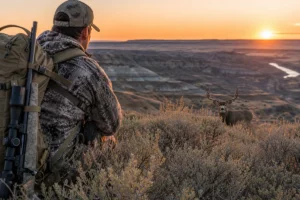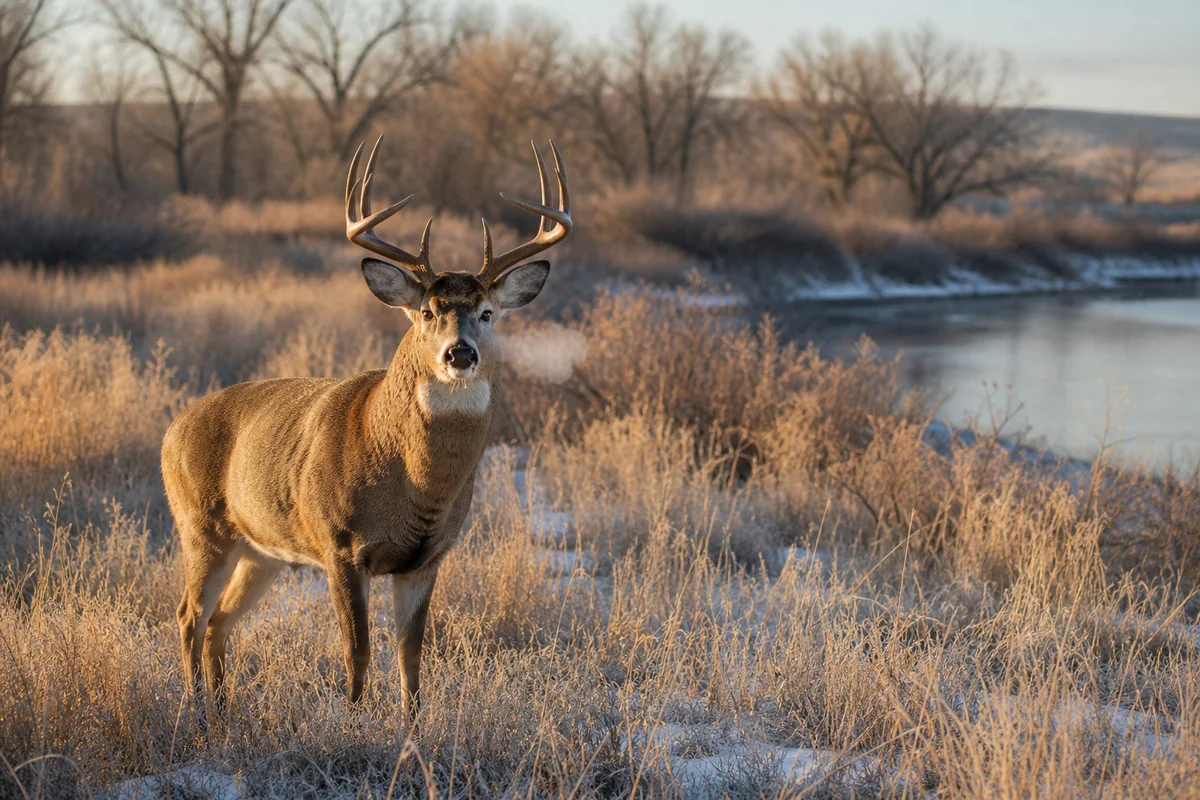
The November morning was bitter cold—maybe 15 degrees—when I watched a mature whitetail buck step out of a cottonwood bottom along the Milk River, his breath steaming as he tested the wind.
That moment, after three days of patient sitting in eastern Montana, reminded me why whitetail hunting here feels different than anywhere else I’ve pursued these deer.
If you’re planning a whitetail adventure in Montana, our comprehensive Montana Hunting Guide covers everything you need to get started, but this deep dive into whitetail-specific hunting will give you the on-the-ground knowledge that makes the difference between filling your tag and going home empty-handed.
- Montana’s whitetail deer are concentrated in river bottoms, agricultural edges, and the western mountain valleys—not evenly distributed across the state
- General deer licenses allow one deer, with whitetail either-sex opportunities in most hunting districts
- Best hunting occurs late October through November during the rut, with archery seasons starting in early September
- Non-residents should expect to pay around $300-500 total for licenses and tags, with no drawing required for general whitetail
- Focus on river corridors like the Milk, Missouri, Yellowstone, and Clark Fork for highest deer densities
- Public land access is excellent through Block Management areas and state lands, especially in eastern Montana
Why Montana Whitetails Are Worth the Trip
I’ll be honest with you—Montana isn’t traditionally known as a whitetail destination. Most hunters who come here are chasing elk or mule deer, and that’s reflected in the hunting pressure patterns I’ve observed over the years.
This actually works in your favor. The whitetail hunting pressure in Montana is noticeably lighter than what you’d find in the Midwest or East Coast, even on public land.
During my hunts in the Milk River drainage last fall, I encountered maybe three other hunters over a five-day period. Try finding that kind of solitude in Wisconsin or Pennsylvania during rifle season.
Montana’s whitetail population sits around 250,000-300,000 animals, concentrated primarily in the river systems and agricultural areas. The deer here aren’t the giants of Iowa or Kansas—the Boone and Crockett entries are modest by comparison—but mature bucks in the 140-160 inch class are absolutely attainable for patient hunters.
What really sets Montana apart is the landscape diversity. You can hunt whitetails in thick western cedar forests, river bottom cottonwoods, agricultural coulees, or even the brush-choked creek draws of the prairie. Each environment demands different tactics, which keeps things interesting.
Understanding Montana’s Whitetail Distribution
Before you book flights or reserve a hunting camp, you need to understand where whitetails actually live in Montana. This isn’t like hunting in the Midwest where whitetails are everywhere.
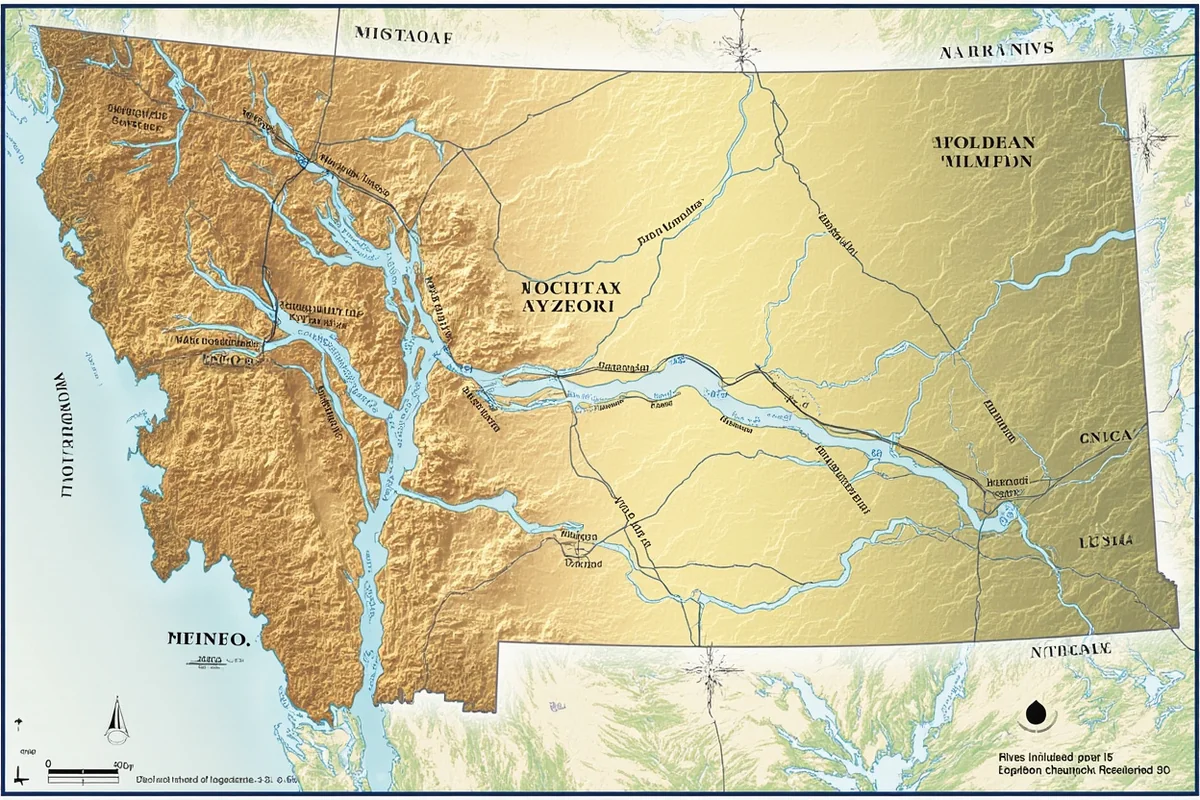
Eastern Montana River Corridors
The Milk River, Missouri River breaks, and Yellowstone River corridors hold Montana’s highest whitetail densities. I’ve spent considerable time hunting the Milk River system between Glasgow and Havre, and the deer numbers there genuinely surprised me.
These river bottoms create ribbons of habitat—cottonwoods, willows, and thick brush—cutting through otherwise open prairie. The deer concentrate in these riparian zones, making them predictable but also making stand placement critical.
The agricultural interface is key here. Whitetails in this region rely heavily on alfalfa, winter wheat, and unharvested grain fields. Find the transition zones between feeding areas and heavy bedding cover, and you’ve found your hunting spots.
Western Montana Mountain Valleys
The Flathead Valley, Bitterroot Valley, Mission Valley, and Clark Fork drainage support healthy whitetail populations in a completely different environment. Here, you’re hunting forest edges, logged areas, and the agricultural patches scattered through the mountain valleys.
I hunted the Bitterroot area a few seasons back and found the whitetails behaving more like blacktail deer—using thick timber during the day and filtering out to feed at dawn and dusk. Glassing was nearly useless; this was a still-hunting and stand-hunting game.
The bonus in western Montana? You’re in gorgeous country, and you might see elk, moose, or even wolves during your whitetail hunt. If you’re interested in combining species, check out our guides on Montana elk hunting and Montana wolf hunting for planning a multi-species trip.
Central Montana Transition Zone
The areas around the Little Belt Mountains, Snowy Mountains, and Judith Basin offer hybrid hunting. Whitetails here use the creek bottoms and timbered edges while mule deer occupy the more open sage country.
This zone requires careful species identification. I’ve seen hunters accidentally shoot mule deer while hunting whitetails in these areas, which creates tag problems since you can’t legally possess a mule deer on a whitetail-only tag.
License and Tag Requirements for Whitetail Hunters
Montana’s licensing system can confuse newcomers, but it’s actually straightforward once you understand the structure. I recommend reviewing our detailed breakdown of Montana hunting license costs for current pricing.
General Deer License Basics
Your general deer license allows you to harvest one deer—either whitetail or mule deer, depending on what’s legal in your hunting district. Most hunting districts allow either-sex whitetail harvest, giving you flexibility to take a doe or buck.
Non-residents can purchase general deer licenses over the counter without any drawing or lottery. This is huge—unlike Montana bighorn sheep hunting or even some elk opportunities, you’re guaranteed a tag if you want one.
The combination license (deer and elk) makes sense for most non-resident hunters. When I did the math last year, purchasing them together saved about $50 compared to buying separately.
B Tags and Antlerless Opportunities
Montana offers B tags for antlerless deer in certain districts with high populations. These are drawn through the permit system, and odds are generally good for whitetail-specific B tags in eastern Montana.
Applying for B tags requires understanding the Montana preference points system, though honestly, whitetail B tags rarely require points to draw. I’ve drawn them my first year applying in several districts.
These tags are excellent for meat hunters or those wanting to extend their hunting opportunity. Filling your buck tag early? Head to a B tag district and pursue does for the freezer.
Getting Your License
The online licensing portal through Montana Fish, Wildlife & Parks is functional if not elegant. I recommend creating your ALS (Automated Licensing System) account well before the season to avoid last-minute technical issues.
Our complete Montana hunting license guide walks through the application process step by step. Don’t wait until August—license sales open in March, and while general deer tags won’t sell out, getting your account established early prevents headaches.
| License Type | Non-Resident Cost (Approximate) | Notes |
|---|---|---|
| Conservation License | $10 | Required before purchasing any hunting license |
| General Deer License | $275 | Over-the-counter, covers one deer |
| Deer B Tag | $75 | Drawn tag for additional antlerless deer |
| Deer/Elk Combo | $900+ | Best value for multi-species hunters |
Whitetail Hunting Seasons and Timing Your Trip
Montana offers multiple season types for whitetail hunters, and choosing the right one dramatically affects your experience. Understanding Montana hunting seasons is essential for planning.
Archery Season (Early September – Mid-October)
Archery season opens around the first Saturday of September and runs through mid-October. Early season whitetail hunting in Montana is all about food sources—the deer haven’t felt hunting pressure yet, and their patterns are predictable.
I hunted early archery in the Flathead Valley during a warm September, and the deer were hammering agricultural fields every evening like clockwork. The challenge? Temperatures can be uncomfortably warm for hanging meat, so have a cooler strategy ready.
The downside of early archery is minimal rutting activity. Bucks are still in bachelor groups, and while they’re killable, they’re not making the mistakes mature bucks make in November.
General Rifle Season (Late October – Late November)
This is prime time for Montana whitetails. The general rifle season typically opens the last Saturday of October and runs through the Sunday after Thanksgiving.
The overlap with the whitetail rut makes this period magical. During my most successful hunts, I’ve witnessed mature bucks throwing caution aside, cruising doe bedding areas in full daylight.
The flip side is hunting pressure. Opening weekend brings crowds to accessible public land. I’ve found the second and third weeks of season—after the initial rush but still during active rut—to be the sweet spot.
Muzzleloader Season
Montana offers a separate muzzleloader season in December for those wanting a primitive weapon experience. By this time, surviving bucks are educated and pressured, but the challenge appeals to certain hunters.
The weather can be brutal—I’ve hunted December muzzleloader seasons in temperatures well below zero—but deer are concentrated on winter range, making them easier to locate if harder to approach.
Finding Public Land Access for Whitetails
Montana’s public land access for whitetail hunting is excellent compared to most whitetail states, though it requires homework. Our guide on hunting on Montana state land explains the basics.

Block Management Program
Block Management is Montana’s secret weapon for public hunting access. Private landowners enroll their property in exchange for compensation, and hunters gain free access through signup or walk-in arrangements.
I’ve found some of my best whitetail hunting through Block Management areas in the Milk River drainage. One particular BMA north of Chinook had unbelievable cottonwood bottom habitat and saw minimal pressure because it required a pre-season signup that many hunters skip.
New Block Management listings are released annually. Study the maps, cross-reference with Google Earth for habitat, and prioritize areas with river access or obvious agricultural edges.
Bureau of Land Management (BLM) and State Trust Lands
Eastern Montana contains scattered BLM parcels and state trust sections that often hold whitetails in the draws and creek bottoms. These can be hard to access—many are landlocked by private property—but some connect to public road frontage.
The onX Hunt app is essentially required equipment for navigating this checkerboard. I’ve walked right up to property lines more times than I can count, guided by the GPS boundary on my phone.
State trust lands require a Conservation License and allow hunting, but check for any specific closures. Some trust lands are leased for agricultural purposes with restrictions during certain periods.
Charles M. Russell National Wildlife Refuge
The CMR refuge along the Missouri Breaks holds whitetails in the river bottom habitat. This is remote, rugged country—not your typical whitetail terrain—but the deer are there, and hunting pressure is light simply because access is difficult.
I spent a long weekend hunting the western portion of CMR two years ago. Saw plenty of mule deer on the breaks, but the whitetails were tucked down in the brushy coulees feeding into the river. It’s physical hunting that rewards persistence.
Tactics That Work for Montana Whitetails
Montana whitetail hunting demands adaptable tactics because the terrain varies so dramatically. What works in the cottonwood bottoms fails in the western timber, and vice versa.
Stand Hunting River Corridors
In eastern Montana’s river bottoms, tree stands and ground blinds set on travel corridors are deadly. The linear nature of the habitat creates natural funnels where deer move predictably.
My approach is to identify inside corners where brush juts into agricultural fields. Deer exiting their beds in the timber hit these corners before stepping into the open, giving you a shot opportunity in legal light.
Morning hunts are typically better in these areas. Deer feed in the fields overnight and filter back to bed at dawn, moving past well-placed stands. Evening hunts can work, but I’ve found the light fades before deer commit to the fields.
Still Hunting Western Timber
The thick forests of western Montana demand a different approach. Sitting isn’t productive when deer density is lower and visibility is measured in feet.
Still hunting—moving slowly through likely habitat, stopping frequently to look and listen—produces encounters in this environment. I aim for speeds around 100 yards per hour in good cover, pausing at every opening to glass ahead.
Look for old logging roads, clearcut edges, and creek bottoms that concentrate both deer and your visibility. Walking aimlessly through uniform timber rarely produces opportunities.
Rattling and Calling
During the rut, rattling and calling can be extremely effective for Montana whitetails. The buck-to-doe ratio in lightly hunted areas often favors aggression, and I’ve called in bucks that responded within minutes.
My rattling setup is minimal—a compact rattle bag and a grunt tube. I rattle aggressively early in the calling sequence, then switch to softer tickling sounds. Following with a few grunts imitates a fight breaking up.
The response can be explosive. Last November, I rattled in a 4×4 buck that nearly ran me over coming through the brush. Be ready before you start making noise.
Spot and Stalk
Spot and stalk hunting works in the prairie breaks and more open agricultural country. Glassing from a high point at dawn, locating deer before they bed, then planning an approach is a classic Western technique.
The challenge with whitetails compared to mule deer is their nervousness. Whitetails don’t tolerate approach distances that muleys will, and they tend to bed in thicker cover. I’ve found successful stalks happen when I locate a deer and then plan an approach using terrain—draws, cutbanks, brush lines—to stay hidden until reaching shooting range.
Gear Recommendations From the Field
Montana weather during deer season is unpredictable. I’ve hunted in 60-degree bluebird days and 20-below wind chills within the same season.
Clothing System
Layering is non-negotiable. I use a merino base layer, insulated mid-layer, and a wind-blocking outer shell. For stand hunting, I bring extra insulation to add once I stop moving.
Heated gear has changed my late-season hunting. A heated vest or jacket insert allows me to sit longer in cold stands without the bulk of massive insulation. Worth every penny when it’s 10 degrees and the deer aren’t moving until late morning.
Don’t forget quality boots. Cold feet end hunts early. I wear insulated pac boots for stand hunting and lighter boots for still hunting, with extra liners ready.
Optics
A quality binocular in the 10×42 range is your most important optic for Montana whitetail hunting. You’ll glass constantly—even in timber country, you’re looking through small windows in the vegetation.
For eastern prairie hunting, a spotting scope helps evaluate distant deer. I’ve made countless stalk decisions based on whether a buck spotted at 600 yards was worth pursuing after zooming in with 60x magnification.
Your rifle scope should gather light well for those dawn and dusk opportunities. I prefer variable scopes in the 3-15x or 4-16x range that allow quick shooting at close range but reach out when needed.
Weapon Considerations
Montana whitetail hunting allows modern rifles, shotguns (check specific district regulations), muzzleloaders, and archery equipment during respective seasons.
For rifle hunting, any standard deer cartridge works. I use a .308 Winchester because it’s accurate, mild recoiling, and ammunition is available everywhere. The .30-06, .270 Winchester, 6.5 Creedmoor, and 7mm-08 are all popular and effective choices.
Shot distances vary dramatically by terrain. In the cottonwood bottoms, most shots are under 100 yards. On the prairie breaks, 300-yard opportunities occur regularly. Make sure you’re practicing at realistic distances for where you’ll hunt.
Combining Whitetail With Other Species
One advantage of Montana hunting is the opportunity to pursue multiple species on a single trip. Your deer license works statewide, so you can move between areas.
If you’re interested in waterfowl, Montana duck hunting overlaps with deer season in some excellent combination areas. The Missouri River corridor offers both whitetails and world-class waterfowl.
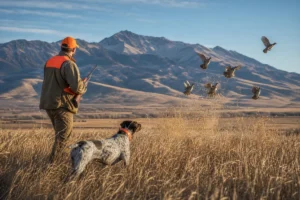
For small game diversions during slow hunting, Montana upland bird hunting provides action. Sharptail grouse and Hungarian partridge share much of the same eastern Montana habitat as whitetails.
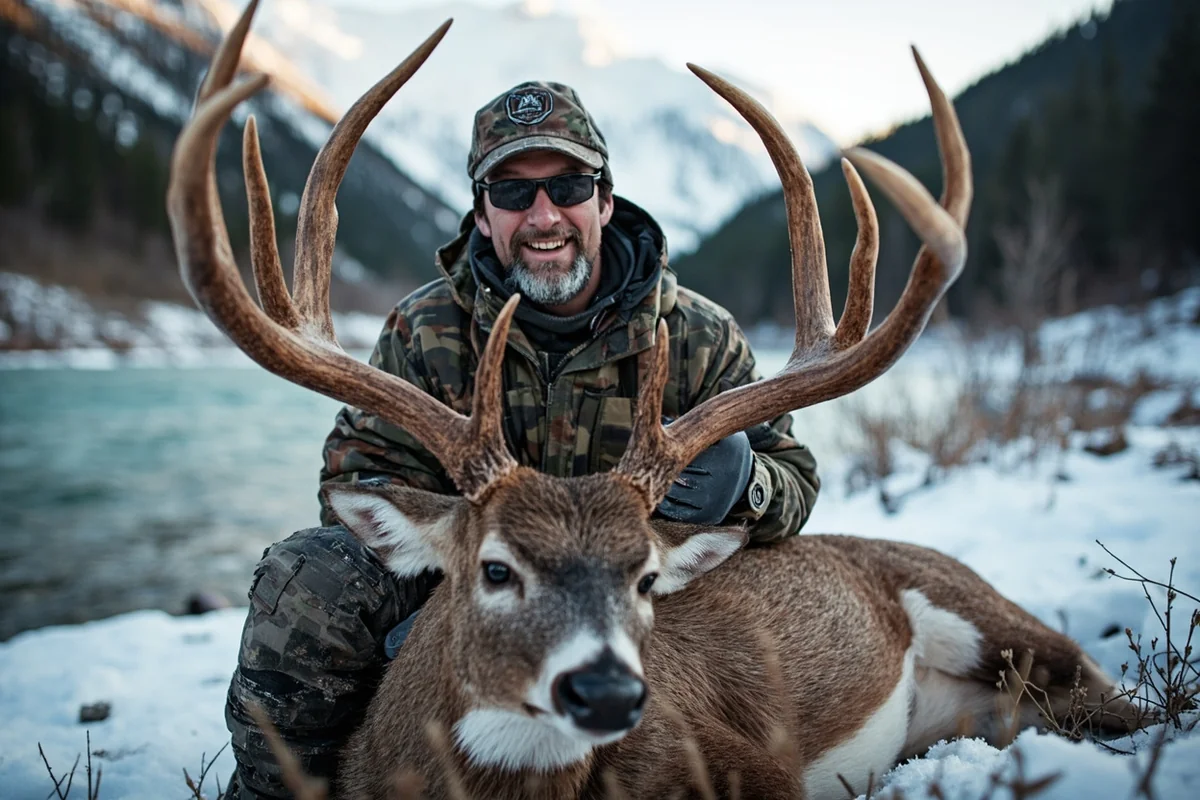
I’ve even combined whitetail hunts with Montana antelope hunting in the eastern districts. The antelope rut occurs earlier, but late-season opportunities exist, and the country overlaps significantly.
Processing Your Harvest in Montana
Assuming you’re traveling to Montana for your whitetail hunt, you need a game processing plan before you shoot anything.
DIY Processing
Many traveling hunters process their own deer. Montana’s November temperatures are typically cold enough for hanging, but weather varies. Bring game bags, a quality knife set, and coolers with ice as backup.
I process my own deer whenever possible. The work takes about 3-4 hours for a complete breakdown, and I know exactly how the meat was handled. YouTube tutorials from reputable sources like MeatEater can walk you through the process if you’re new to it.
Commercial Processors
Most Montana towns of any size have meat processors who handle wild game. During hunting season, expect wait times—sometimes a week or more—and costs around $150-250 for basic cut and wrap.
Call ahead before your hunt to confirm availability and pricing. Some processors are booked solid by mid-November, leaving hunters scrambling.
Shipping Meat Home
Shipping frozen meat via FedEx or UPS is practical if you can’t drive your harvest home. You’ll need styrofoam coolers, dry ice, and proper labeling. The cost adds up—often $100-200 for a deer’s worth of meat—but it beats leaving your venison behind.
Some processors offer shipping services. This is convenient but typically costs more than DIY shipping.
Planning Your Montana Whitetail Trip
A successful Montana whitetail hunt requires careful planning months in advance. Here’s my recommended timeline.
Six Months Out
Start researching hunting districts and deciding where you want to hunt. Read our Montana deer hunting regulations to understand district-specific rules.
Apply for any B tags or special permits during the application period (typically March through June). Even if you don’t draw, your general tag allows hunting.
Three Months Out
Purchase your licenses through the Montana FWP website. Non-resident deer licenses are available over the counter, but don’t wait until the last minute.
Book accommodations. In prime whitetail country like the Milk River area, hunting lodging can fill up. I’ve stayed in everything from motels in Malta to a rented cabin on a Block Management property.
One Month Out
Study mapping tools—onX, Google Earth, topozone—to identify specific hunting locations. Mark potential stand sites, access points, and glassing locations.
Review the Block Management access guide for your chosen area. Some BMAs require advance signup; don’t miss the deadline.
Week Before
Check weather forecasts and adjust your gear accordingly. Montana November weather can range from mild to arctic.
Confirm your processing plan. If using a commercial processor, call to confirm they have availability.
Contact landowners for any Block Management properties requiring permission.
Understanding Montana’s Deer Management
Montana manages whitetails primarily through hunting district regulations rather than statewide rules. Understanding the Montana hunting regulations for your specific district is essential.
Some districts have antler point restrictions, others are bucks-only, and many allow either-sex harvest. The regulations can change annually based on population data, so always check the current year’s regulations even if you’ve hunted an area before.
The deer tag system, explained in our Montana deer tag guide, applies differently to whitetails and mule deer. In some districts, your general tag is valid for either species; in others, it’s restricted to one or the other.
Population Trends
Montana’s whitetail population has remained relatively stable over the past decade, with localized fluctuations based on winter severity and disease events. EHD (epizootic hemorrhagic disease) has impacted some eastern populations, particularly in warm, dry years.
The trend I’ve noticed personally is increasing whitetail range in central Montana. Areas that were historically mule deer only now hold both species, likely due to habitat changes and agricultural practices.
Booking Guided vs. DIY Hunts
Montana whitetail hunts work well for both guided and DIY hunters. Your choice depends on experience level, available time, and budget.
Guided Hunt Benefits
Outfitters provide local knowledge that takes years to develop independently. They know where mature bucks live, have relationships with landowners for private access, and handle logistics so you can focus on hunting.
Expect guided whitetail hunts to run $3,000-5,000 for a five-day trip, including lodging and meals. Premium outfits targeting trophy-class bucks charge more.
I’ve done both guided and DIY hunts in Montana. Guided hunts produced larger deer, but DIY hunts were more satisfying personally. There’s no wrong answer.
DIY Hunt Practicality
DIY whitetail hunting in Montana is absolutely viable with proper preparation. Public land access through Block Management, BLM, and state lands provides plenty of opportunity.
Budget around $1,500-2,000 for a week-long DIY trip including licenses, lodging, food, and fuel. That’s a fraction of guided hunt costs, and for experienced hunters, the results can be equivalent.
The learning curve is real, though. Your first DIY Montana hunt will involve mistakes—wrong areas, missed opportunities, access confusion. Each subsequent trip gets better as you learn the landscape.
Final Thoughts on Montana Whitetail Hunting
After many seasons pursuing whitetails in Montana, I keep coming back for the combination of quality deer, reasonable pressure, and stunning country. It’s not the Midwest experience of high deer density and ground blind hunting, but that’s part of the appeal.
The deer here feel wilder, the landscapes more demanding, and the success more earned. When you watch a mature buck working a scrape line in a Montana cottonwood bottom with the Rockies visible on the horizon, you understand why hunters make this trip.
Plan carefully, hunt hard, and respect the privilege of pursuing these animals in one of America’s last wild places. Montana’s whitetails are waiting.
Frequently Asked Questions
When is the best time to hunt whitetail deer in Montana?
The prime time for whitetail deer hunts in Montana runs from late October through late November, coinciding with the rut when bucks are most active. I’ve found that the general rifle season typically opens in late October, giving hunters about five weeks of opportunity. Early morning hunts during the rut have consistently produced my best results in Montana’s river bottoms and agricultural areas.
How much does a guided whitetail deer hunt cost in Montana?
Guided whitetail deer hunts in Montana typically range from $3,500 to $6,500 for a 5-7 day hunt, depending on the outfitter and accommodations included. Non-resident deer licenses and tags add another $550-$800 to your total cost. DIY public land hunts can reduce expenses significantly, with your main costs being the license, lodging, and travel.
Where are the best areas to hunt whitetail deer in Montana?
The Milk River Valley in northeastern Montana and the river bottoms along the Missouri and Yellowstone Rivers consistently produce trophy whitetail bucks. I recommend focusing on Regions 4, 6, and 7 in eastern Montana where agricultural lands meet riparian corridors. The breaks country near the Charles M. Russell National Wildlife Refuge also offers excellent public land opportunities for whitetail hunting.
Do I need a guide for whitetail deer hunting in Montana as an out-of-state hunter?
No, Montana does not require non-residents to hire a guide for whitetail deer hunting, unlike some wilderness elk hunts. However, hiring a local outfitter significantly increases your success rate, especially if you’re unfamiliar with Montana’s vast landscape. Many out-of-state hunters also secure private land access through Block Management areas, which are free and don’t require a guide.
What gear should I pack for a November whitetail hunt in Montana?
Pack layered clothing rated for temperatures between 10-40°F, as Montana weather can shift dramatically during November hunts. Essential gear includes insulated waterproof boots, quality binoculars (10×42 minimum), a reliable rangefinder, and blaze orange as required by law. I always bring hand warmers, a good headlamp, and a compact drag sled for field recovery across Montana’s open terrain.
How do I apply for a non-resident whitetail deer tag in Montana?
Non-residents can purchase general whitetail deer licenses online through Montana FWP’s licensing portal without entering a draw, as tags are available over-the-counter. You’ll need to create an ALS account and purchase both a non-resident conservation license ($10) and deer license ($265 for 2024). I recommend purchasing your tags by early September to avoid any last-minute issues before your hunt.
What is the average success rate for whitetail deer hunting in Montana?
Montana’s non-resident whitetail deer hunting success rate averages around 40-50% for general season rifle hunters, though guided hunts on private land often exceed 80%. Eastern Montana’s agricultural regions tend to produce higher success rates than the mountainous western areas. Planning your hunt during the November rut and focusing on feeding areas near cover will significantly improve your odds of tagging a Montana whitetail.
Sources