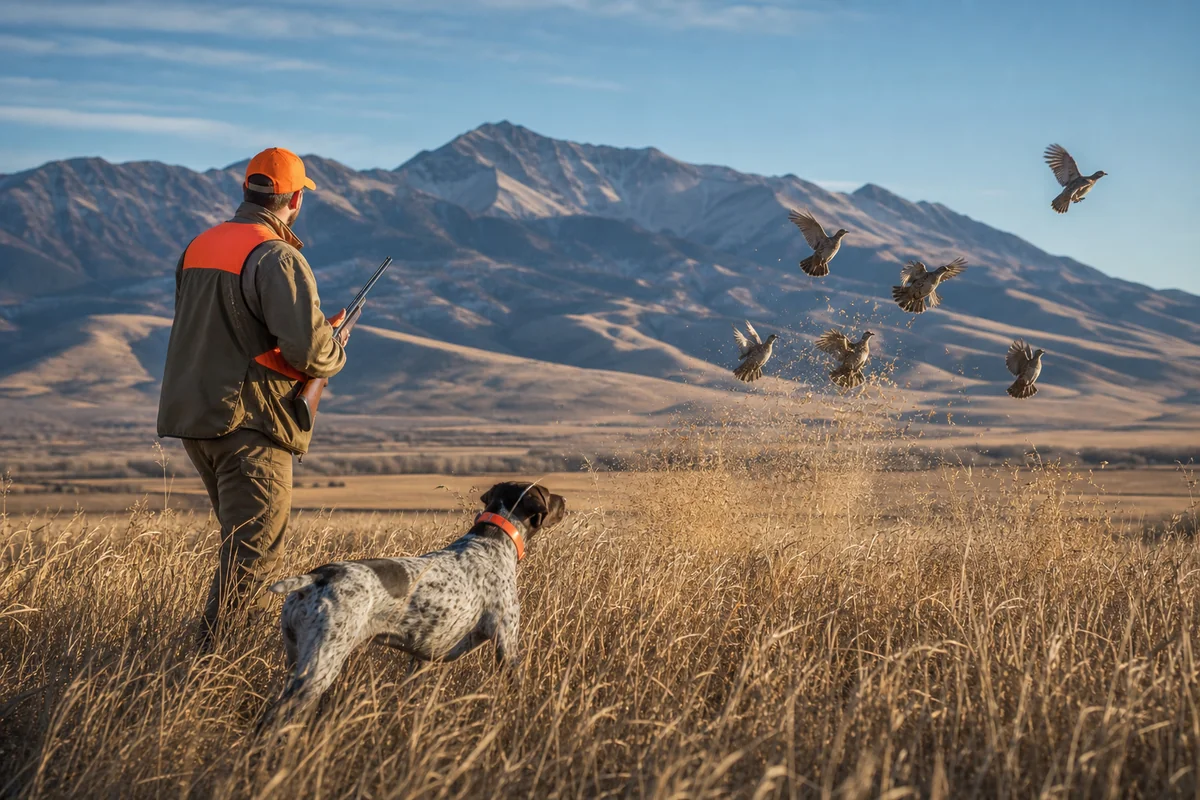
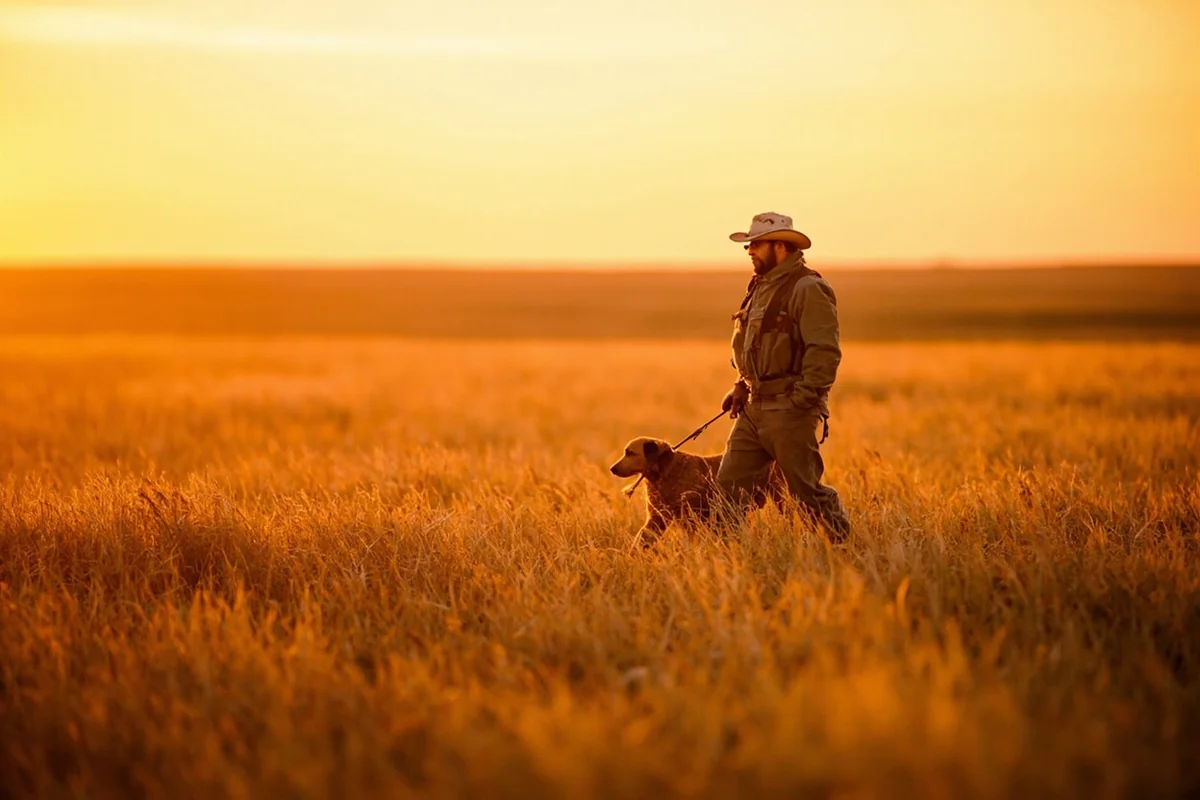
The morning I flushed my first covey of Hungarian partridge outside of Lewistown, watching those gray rockets explode from the golden wheat stubble against the backdrop of the Judith Mountains, I understood why Montana draws bird hunters from across the country—this landscape was simply made for wingshooting.
If you’re exploring our comprehensive Montana Hunting Guide, you’ll quickly realize that bird hunting here offers some of the most accessible, affordable, and genuinely wild experiences available in North America.
- Montana offers hunting for 8+ bird species including pheasants, sharptails, Hungarian partridge, sage grouse, and four types of forest grouse
- General upland bird season runs September through January, with specific dates varying by species
- Non-resident upland bird license costs $125.50; no drawing required for most species
- Public land access is exceptional—over 30 million acres including BLM, state land, and Block Management areas
- Best regions: Hi-Line and north-central Montana for upland birds, western mountains for forest grouse
- A trained bird dog isn’t required but dramatically increases success rates
- Early season (September-October) offers warmest weather; late season means concentrated birds but harsher conditions
Why Montana Stands Out for Bird Hunting
I’ve hunted birds across a dozen states, from Kansas pheasant farms to Georgia quail plantations, and nothing compares to the wild, untamed feel of Montana’s bird hunting.
There’s no comparison to walking truly wild habitat where birds haven’t been stocked from a pen that morning.
Montana’s bird populations are entirely wild, meaning the hunting is more challenging but infinitely more rewarding.
What sets Montana apart isn’t just the birds—it’s the combination of species diversity, public land access, and sheer space. During my last fall season, I hunted five different bird species across three distinct ecosystems in a single week.
The prairie pothole region in the northeast offers exceptional duck hunting opportunities if you want to combine your upland trip with waterfowl. Many hunters I’ve met do exactly this, splitting their time between morning duck hunts and afternoon upland walks.
Bird Species You’ll Find in Montana
Understanding which birds live where—and how to hunt them—is crucial for planning your trip. Let me break down each species based on my experiences hunting them.
Ring-Necked Pheasants
Montana’s pheasant hunting doesn’t get the press that South Dakota receives, but make no mistake—the Hi-Line region produces excellent wild pheasant hunting.
I’ve found the best concentrations along irrigation pivots and in CRP grasslands from Malta east to Plentywood. Unlike preserve birds, these roosters are educated and will flush wild at 50 yards if you’re not careful.
The key is hunting early morning or late afternoon when birds move from roosting cover to feeding areas. During my last trip to Valley County, we averaged four to five roosters per day over three days—nothing record-breaking, but every bird was earned.
Sharp-Tailed Grouse
Sharptails are Montana’s signature upland bird, and hunting them became my personal obsession after that first trip.
These birds occupy the transition zone between prairie and agricultural land, favoring areas where native grass meets grain fields. I’ve had my best luck finding them along coulee edges and on south-facing slopes with good grass cover.
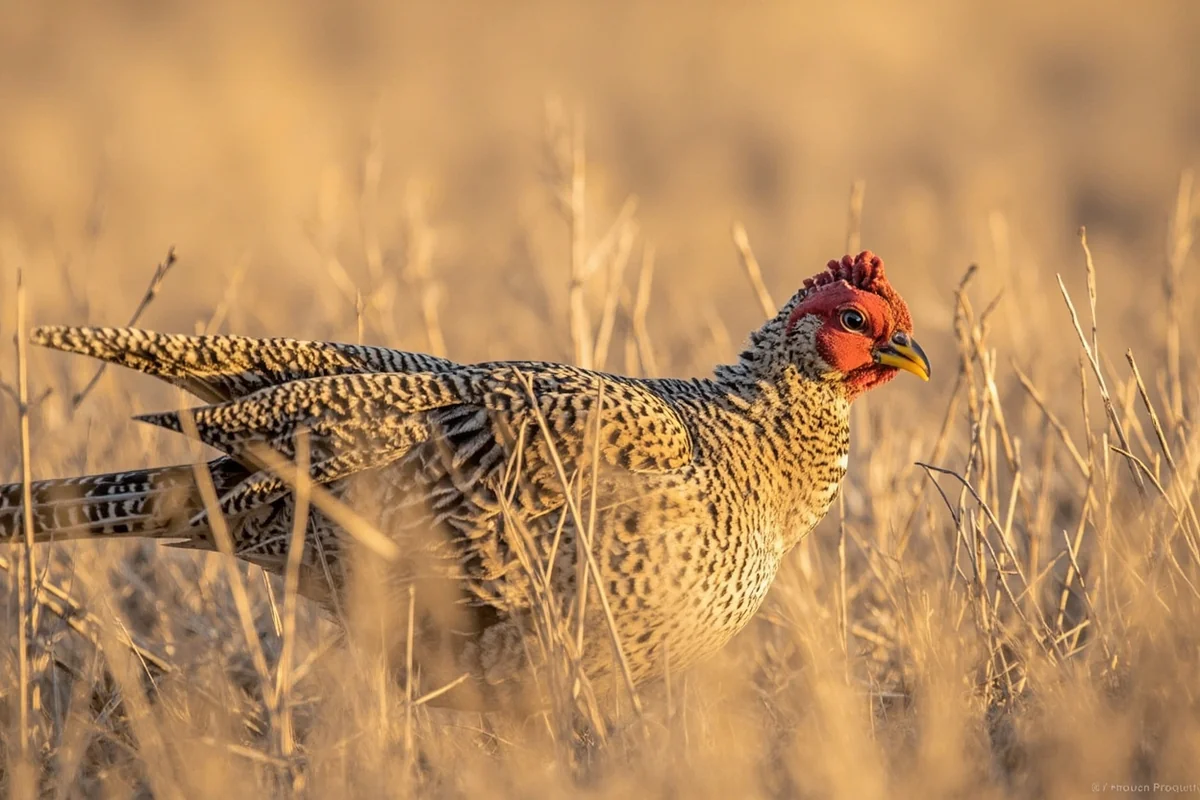
Sharp-tailed grouse are social birds, typically found in coveys of 8 to 20 birds. When you find one, you’ll find more.
They hold reasonably well for pointing dogs in early season but become increasingly wild as hunting pressure mounts. By November, I’ve watched coveys flush at 100 yards.
Hungarian Partridge
Huns are my favorite Montana bird to hunt—and they’ll humble you quickly.
These gray-brown imports from Europe live in tight-knit coveys of 12 to 30 birds, often in the most exposed, sparse cover you can imagine. I’ve found them on bare hilltops where you’d swear nothing could hide.
The challenge with Huns is getting close enough for a shot. They run first and flush second, often at the absolute edge of shotgun range.
My most productive Hun hunting has been in the Triangle region—the area bounded by Havre, Great Falls, and Fort Benton. This agricultural zone, with its mix of small grains and native prairie, is Hun paradise.
Sage Grouse
Hunting sage grouse requires special attention to Montana hunting regulations, as seasons are limited and permits may be required depending on the management area.
These magnificent birds—the largest grouse in North America—inhabit sagebrush ecosystems across central and eastern Montana. I hunted them last September near Jordan, and watching a four-pound sage grouse flush from the silver-gray brush is an unforgettable sight.
Sage grouse hunting is less about shooting and more about covering ground. They don’t hold well for dogs, and the country they live in is vast and open.
Forest Grouse: Ruffed, Dusky, Spruce, and Franklin’s
Montana’s western mountains hold four species of forest grouse, and hunting them feels nothing like prairie bird hunting.
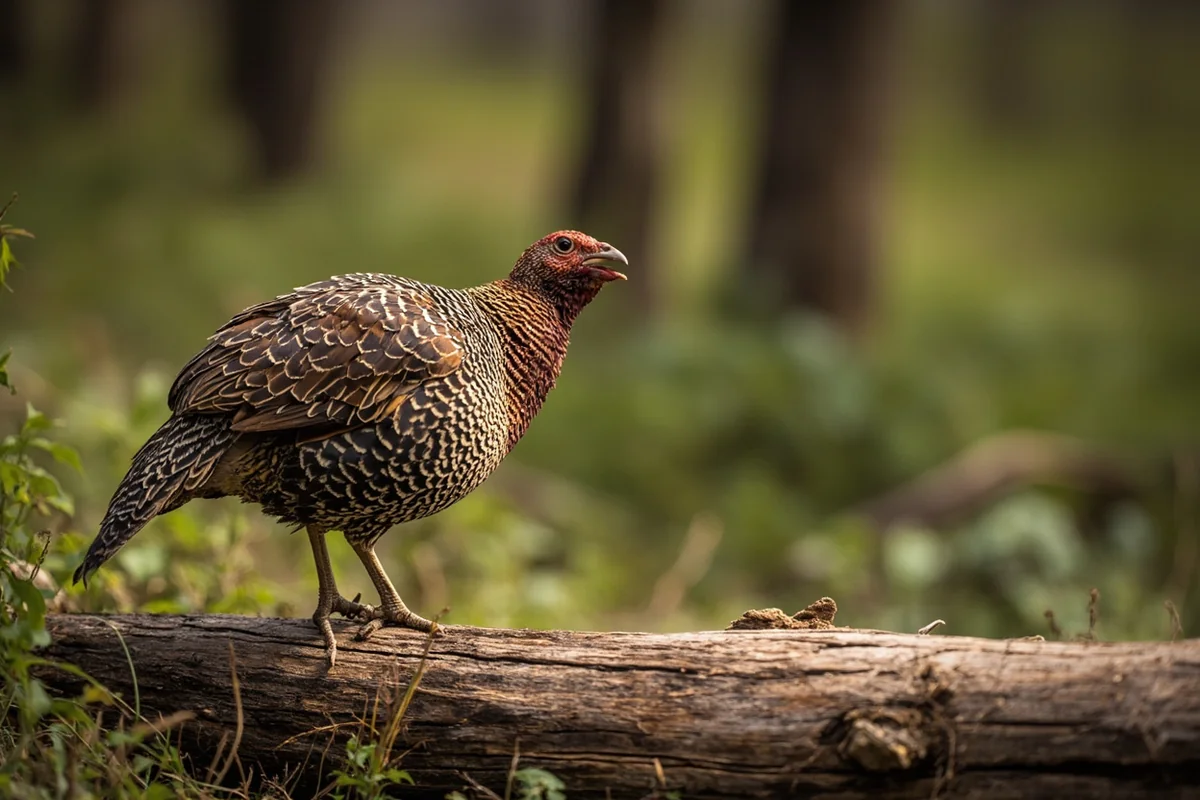
Ruffed grouse are found in aspen groves and riparian areas, while dusky (blue) grouse occupy higher elevations with mixed conifers. Spruce and Franklin’s grouse live at the highest elevations and are famously tame—almost too tame for challenging hunting.
I spent three days last October in the Bitterroot Valley targeting ruffed grouse along logging roads and creek bottoms. The cover is thick, the shots are fast, and a 20-gauge handles perfectly.
For a deeper dive into all upland species, check out our dedicated guide to Montana upland bird hunting.
Montana Bird Hunting Seasons and Dates
Timing your trip correctly can make or break your hunt. Here’s what you need to know based on recent seasons.
| Species | Season Opens | Season Closes | Daily Limit |
|---|---|---|---|
| Pheasant | Early October | January 1 | 3 roosters |
| Sharp-tailed Grouse | September 1 | January 1 | 4 |
| Hungarian Partridge | September 1 | January 1 | 8 |
| Sage Grouse | September (limited) | Late September | 2 |
| Forest Grouse (all species) | September 1 | January 1 | 3 combined |
Always verify current season dates through Montana Fish, Wildlife & Parks before your trip. Review our complete breakdown of Montana hunting seasons for the most up-to-date information.
When to Plan Your Trip
After hunting Montana in every month of the season, here’s my honest assessment.
Early September offers pleasant weather and naive birds, but the vegetation is still thick, making dogs work harder. I’ve also dealt with lingering grasshopper populations that made walking through certain areas less enjoyable.
Mid-October hits the sweet spot for most hunters. Frost has knocked down cover, birds have grouped into larger coveys, and the weather is typically crisp but manageable. This is when I plan most of my trips.
Late November through December means cold—often brutally cold—but birds concentrate in remaining food sources and sheltered habitat. If you can handle the elements, late season can be incredibly productive.
Licensing Requirements for Non-Resident Bird Hunters
Getting properly licensed is straightforward, but there are details worth understanding before you arrive.
The good news: Montana bird hunting licenses are over-the-counter. No drawings, no preference points, no lottery applications.
For complete licensing information, visit our Montana hunting license overview, and check Montana hunting license costs for current pricing.
What Non-Residents Need
- Non-Resident Conservation License: Required for all hunting, approximately $10
- Non-Resident Upland Game Bird License: Approximately $125.50, covers all upland species
- Base Hunting License: Not required for upland-only hunters
- HIP Registration: Free and required for all migratory bird hunting including doves
If you’re combining your bird hunt with big game, the licensing structure changes significantly. Those planning to pursue Montana elk or Montana deer alongside upland birds should review the combination license options.
Where to Hunt: Public Land Access in Montana
Montana’s public land access is the reason I keep coming back.
Over 30 million acres of federal land—BLM, Forest Service, and wildlife refuges—are open to hunting. Add in state trust lands and the Block Management program, and you have more hunting opportunity than you could explore in a lifetime.
Understanding Block Management
Montana’s Block Management Areas (BMAs) are privately-owned lands enrolled in a state program that allows public hunting access. This system is a game-changer for bird hunters.
Some BMAs require sign-in only, while others require advance permission or are Type II (limited hunting permission). I’ve found incredible pheasant and sharptail hunting on Block Management properties that see minimal pressure because hunters don’t know about them.
For detailed information on accessing public lands, read our guide on hunting on Montana state land.
Top Regions for Bird Hunting
Based on where I’ve personally had success, here are my recommendations.
North-Central Montana (Lewistown Area)
This is arguably the best mixed-bag bird hunting region in Montana. Within a 90-minute drive of Lewistown, you can hunt sharptails, Huns, pheasants, and forest grouse.
The Judith Basin and surrounding BLM lands offer excellent sharptail hunting, while agricultural areas north toward Havre hold more pheasants. I headquartered in Lewistown for a week last fall and never ran out of new places to explore.
Hi-Line Region (Malta to Plentywood)
If pheasants are your priority, the Hi-Line delivers. This strip along Highway 2 in northern Montana holds the state’s best wild rooster populations.
The country is flat to rolling, with large agricultural fields interspersed with CRP grasslands and native prairie. Access can be challenging—much of this land is private—but Block Management enrollment is high.
Missouri Breaks
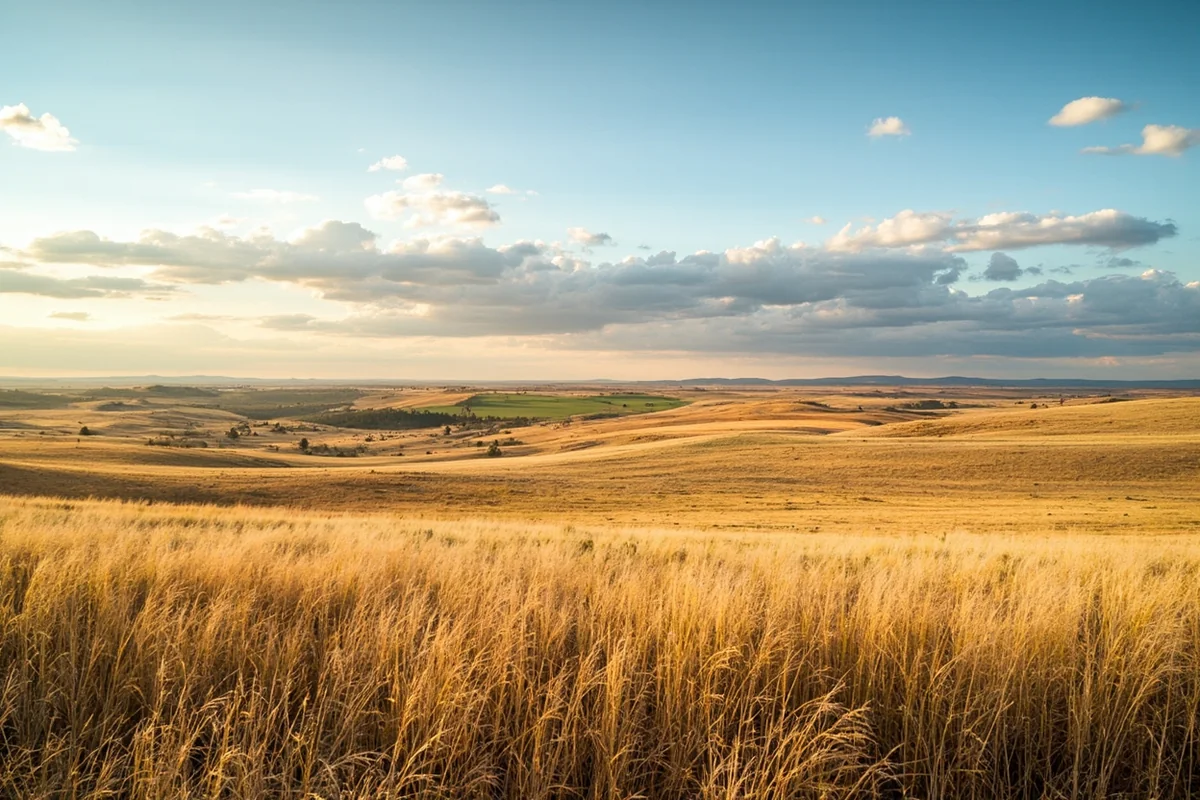
The rugged breaks country along the Missouri River holds sharptails and Huns in habitat that hasn’t changed in 200 years.
Hunting here is physically demanding—steep coulees and rough terrain—but the experience is unmatched. This is where Montana feels genuinely wild.
Western Montana (Bitterroot, Missoula Area)
For forest grouse, the western mountains can’t be beaten. I focus on logging roads at elevations between 4,000 and 6,000 feet, hunting edges and creek bottoms.
Ruffed grouse numbers fluctuate with their natural cycle, so checking recent reports before committing to this region is wise.
Gear and Equipment for Montana Bird Hunting
Packing for Montana requires thinking about extremes. I’ve experienced 80°F days in early September and single-digit temperatures in late November.
Shotgun Selection
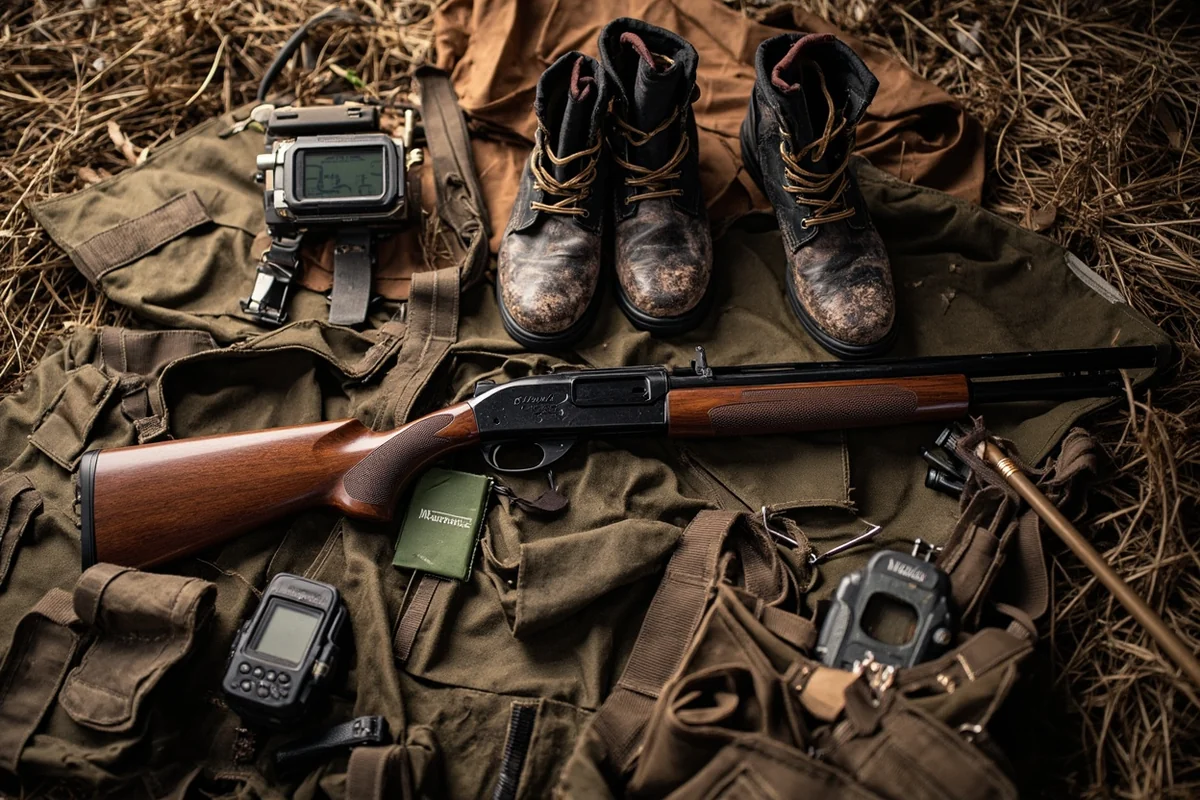
My go-to Montana gun is a 20-gauge over-under, light enough to carry all day but effective on fast-flushing birds.
For open country sharptail and Hun hunting, modified or improved modified chokes give you the reach you’ll need. Prairie birds flush at distance, and tight chokes are your friend.
Forest grouse hunting calls for cylinder or improved cylinder—you won’t get long shots in thick timber.
Essential Clothing
- Quality upland boots: Snake boots aren’t necessary, but sturdy boots with ankle support are essential for coulee hunting
- Layering system: Temperatures swing 40 degrees between dawn and midday
- Brush pants: Not optional. Montana’s thick grass, rose bushes, and sage will shred regular pants
- Blaze orange vest: Required during big game seasons and always a good idea
- Quality sunglasses: Montana’s sun is intense, and late-afternoon birds flush into the glare
Other Essential Items
- GPS or OnX Maps subscription: Absolutely essential for navigating public/private boundaries
- Water for you and your dog: Water sources are scarce in prairie country
- First aid kit: Include items for both human and canine emergencies
- Vehicle recovery gear: Gumbo roads become impassable when wet
Hunting with Dogs in Montana
You can hunt birds in Montana without a dog, but you’ll leave a lot of birds in the field.
During my early trips, I hunted dogless and quickly realized how many sharptails and Huns I was walking past. These birds hold tight in good cover, and without a dog’s nose, you simply miss them.
Best Breeds for Montana Conditions
Pointers—English pointers, German shorthairs, and Brittanys—excel in Montana’s open country. They cover ground efficiently and handle heat better than heavier-coated breeds.
For forest grouse hunting, where shots are close and cover is thick, flushing breeds like springer spaniels or Labrador retrievers work well.
If you’re traveling without your own dog, several outfitters offer guided hunts with trained dogs. This is how I recommend first-time visitors experience Montana bird hunting—you’ll learn the landscape and bird behavior much faster with experienced dogs working for you.
Dog Care in Montana
Montana is hard on bird dogs. Cactus, sharp grass, and rocky terrain can destroy pads and cause cuts.
I always carry dog boots, antiseptic wound wash, and quick-clotting powder. During one October hunt near Malta, my setter picked up a grass awn in his ear that required a veterinary visit—know the nearest vet clinic before you need one.
Water is critical. Carry at least a gallon per dog per half-day hunt. Heat stroke can happen even in October on warm afternoons.
Combining Bird Hunting with Other Montana Adventures
One thing I love about Montana bird hunting is how easily it combines with other hunting opportunities.
If you’re interested in expanding your Montana hunting experience, waterfowl seasons overlap significantly with upland bird dates. Consider our guides to Montana swan hunting for a truly unique opportunity.
Small game hunting for squirrels can fill downtime, especially in the western mountain forests where squirrel populations thrive.
For big game hunters, the fall bird season overlaps with muzzleloader season and general rifle seasons. I know hunters who carry an upland license while deer hunting, taking advantage of grouse flushes encountered while walking to stands.
Those interested in more challenging big game opportunities might explore Montana bear hunting, wolf hunting, bighorn sheep hunting, or buffalo hunting on separate trips.
Working with Outfitters vs. DIY Hunting
Both approaches have merit, and I’ve done both extensively.
When to Consider an Outfitter
First-time Montana visitors benefit enormously from a guided experience. You’ll learn where birds concentrate, how to read habitat, and which public lands produce consistently.
Good outfitters provide trained dogs, local knowledge, and often access to premium private land. Expect to pay $400-$600 per day for fully guided hunts with dogs and lodging.
Going the DIY Route
For experienced bird hunters with their own dogs, Montana offers incredible DIY potential. The public land access genuinely sets it apart from most other states.
I’ve had my most satisfying hunts exploring new Block Management areas alone, figuring out the country, and earning birds without anyone’s help.
The investment in mapping software (OnX Hunt or similar) pays for itself immediately. I spend hours before each trip virtually scouting, marking public land parcels and potential access points.
Practical Planning: Lodging, Food, and Logistics
Montana’s bird hunting regions aren’t tourist destinations, which means limited amenities but also low crowds.
Where to Stay
In north-central Montana, Lewistown offers the best selection of motels and restaurants. It’s a real working town with hardware stores, groceries, and veterinary services—everything a bird hunter needs.
Along the Hi-Line, Glasgow and Malta have basic but adequate lodging. Book in advance during hunting season; these small towns fill up faster than you’d expect.
For extended stays, I’ve had good luck renting cabins or houses through local property managers. Having a kitchen and space to clean birds makes multi-day trips much more comfortable.
Food and Supplies
Stock up before heading into the field. Once you leave town, services disappear quickly.
Pack coolers with ice for game care—Montana allows you to keep birds in the field for the duration of your trip if properly stored. I use a separate cooler just for birds, kept cold with block ice.
Fuel stations can be 60+ miles apart in some regions. I never let my tank drop below half.
Understanding Montana’s Hunting Culture
One aspect that surprised me on my first Montana bird trip was how seriously locals take hunting etiquette.
Respect for private property is paramount. Always ask permission before crossing private land, even if you believe you have legal access through a corner-crossing situation. The legal landscape around corner-crossing is evolving, and relationships matter more than technicalities.
When hunting Block Management areas, follow all sign-in procedures and respect any limitations listed for the property.
Public land hunters should give other parties wide berth. If you see vehicles at a trailhead, move to another area. Montana has enough country that crowding is unnecessary.
For hunters planning to pursue both birds and big game, understanding deer hunting regulations and the Montana preference points system becomes important. Obtaining mule deer tags or planning whitetail deer hunts requires advance planning that upland hunting doesn’t.
The Montana antelope hunting season also overlaps with early bird season, and combination trips are popular among visitors.
My Honest Assessment: Expectations vs. Reality
Let me set realistic expectations based on my actual experiences.
Montana bird hunting is not South Dakota pheasant hunting. You won’t shoot five-bird limits before lunch on wild, unpressured birds. That’s not what Montana offers.
What Montana delivers is genuine wild hunting across vast, beautiful landscapes. Some days are slow. I’ve had hunts where I walked ten miles and fired three shots.
But those three shots were at wild birds, in wild country, often without seeing another hunter all day. That experience has value you can’t replicate on a preserve or crowded public land elsewhere.
The hunters who thrive here embrace the challenge. They enjoy the walking, the dog work, the puzzle of figuring out where birds are holding. If you need high volume to stay engaged, look elsewhere.
Sample Itinerary: A Week of Montana Bird Hunting
Based on my favorite trips, here’s how I’d structure a week.
Days 1-2: Fly into Great Falls or Billings. Drive to Lewistown (2-3 hours). Scout Block Management areas and get oriented. Afternoon hunt for sharptails on public BLM land.
Days 3-4: Focus on sharptail and Hun hunting in the Judith Basin and surrounding prairie. Cover new ground each day, marking productive areas for return visits.
Day 5: Drive north toward Malta for pheasant hunting. This agricultural region offers different habitat and species mix. Block Management areas are abundant.
Day 6: Continue pheasant and sharptail hunting along the Hi-Line, or drive west to the Bitterroot for forest grouse if you want variety.
Day 7: Final morning hunt, clean birds, pack, and drive to airport.
This structure allows you to experience multiple ecosystems and species without constant long drives. Adjust based on where birds are cooperating and weather conditions.
Conservation and the Future of Montana Bird Hunting
Wild bird hunting depends on habitat, and Montana’s landscape faces ongoing pressures.
The Conservation Reserve Program (CRP) has been critical for pheasant and sharptail populations, but acreage enrollments fluctuate with farm bill politics. Pay attention to these issues if you want wild birds to hunt in future decades.
Sage grouse populations have declined significantly, leading to the limited seasons we see today. Responsible hunters advocate for habitat protection—not just through donations but through political engagement.
I encourage every visiting hunter to join local conservation organizations like Pheasants Forever or the Ruffed Grouse Society. Their habitat work directly impacts what you’ll experience in Montana’s fields.
Final Thoughts on Montana Bird Hunting
Standing on a prairie ridge last October, watching my setter lock up on a covey of sharptails as the sun dropped toward the Highwood Mountains, I felt something that modern life rarely provides—complete presence in a wild moment.
Montana bird hunting isn’t about filling game bags. It’s about connecting with landscapes and traditions that have existed for generations and, hopefully, will continue for generations more.
The access is there. The birds are there. The wild country is there.
All you need to do is show up ready to walk, ready to miss some shots, and ready to fall in love with the vast, honest, endlessly surprising Montana prairie.
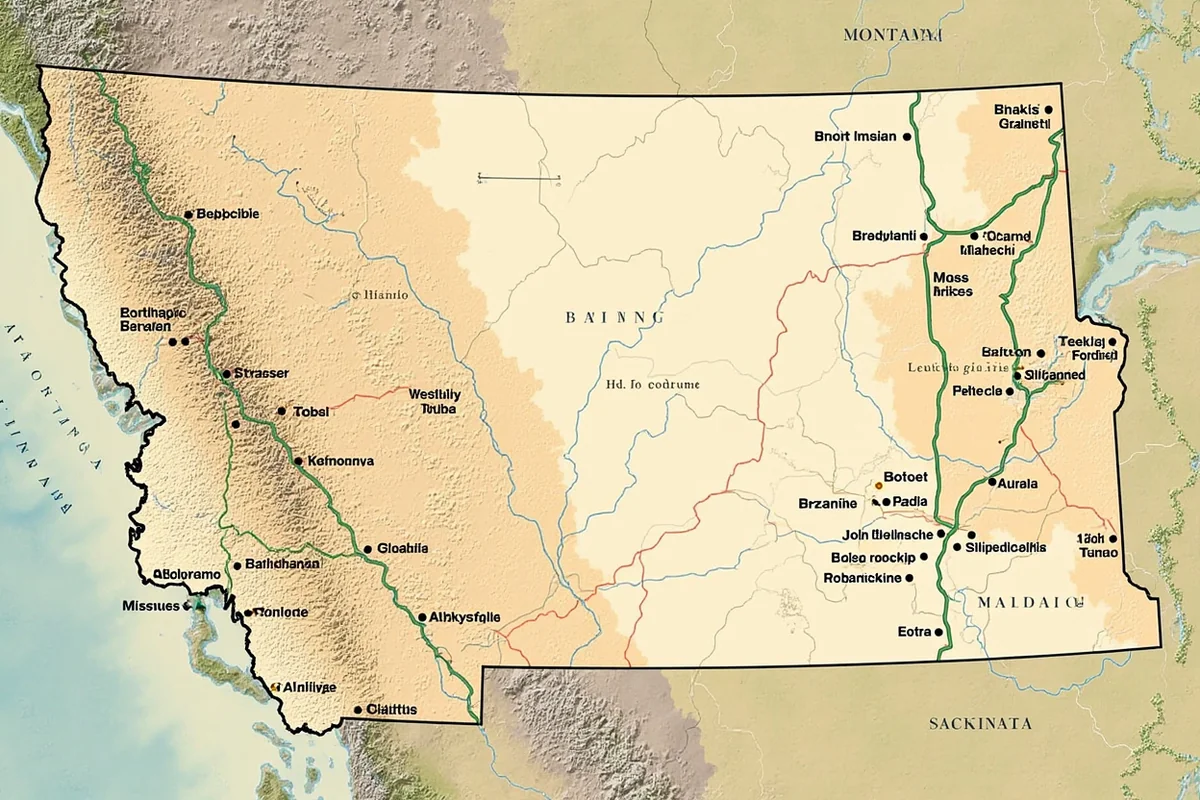
If you’re planning your first trip, start simple. Get your licenses, study the Block Management map, and commit to covering ground. The birds will teach you the rest.
See you in the field.
Frequently Asked Questions
When is the best time to go bird hunting in Montana?
The prime Montana bird hunting season runs from September through January, with upland bird season typically opening in early September and waterfowl season starting in late September or early October. I’ve found that late September through October offers the best combination of pleasant weather, active birds, and beautiful fall foliage across Montana’s prairies and river bottoms.
What types of game birds can I hunt in Montana?
Montana offers incredible diversity for bird hunters, including ring-necked pheasants, sharp-tailed grouse, Hungarian partridge, sage grouse, and multiple species of ducks and geese. The eastern prairies are famous for pheasant and sharptail hunting, while the western mountains provide excellent ruffed grouse and dusky grouse opportunities in the timber.
Do I need a guide for Montana bird hunting, and how much does it cost?
While you don’t need a guide to hunt public land in Montana, hiring an outfitter runs between $350-$600 per day and dramatically increases your success, especially for first-time visitors unfamiliar with the terrain. Guided hunts typically include trained bird dogs, field transportation, and local knowledge that would take years to develop on your own.
How much does a non-resident Montana bird hunting license cost?
Non-resident upland bird licenses cost approximately $125, while a combination license covering upland birds and waterfowl runs around $196 as of the current season. You’ll also need to purchase a Montana conservation license ($10) and federal duck stamp ($29) if you’re hunting waterfowl, so budget roughly $235 total for all necessary permits.
What gear should I pack for a Montana bird hunting trip?
Pack layered clothing for temperatures ranging from 25°F to 65°F, waterproof upland boots with ankle support for walking 5-10 miles daily, and a reliable 20 or 12-gauge shotgun with improved cylinder or modified chokes. I always bring blaze orange for safety, quality shooting glasses, a GPS unit for navigating vast public lands, and plenty of water since Montana’s dry climate will dehydrate you quickly.
Where are the best public land areas for bird hunting in Montana?
The Block Management Program opens millions of acres of private land to public hunting, concentrated heavily in the pheasant-rich counties east of Billings like Custer, Rosebud, and Dawson County. For public land, check out the Charles M. Russell National Wildlife Refuge, Bureau of Land Management tracts near Malta, and state Wildlife Management Areas scattered throughout central and eastern Montana.
How far in advance should I book a Montana bird hunting trip?
I recommend booking guided hunts and lodging at least 4-6 months in advance, especially for peak October weekends when demand is highest and quality outfitters fill up fast. If you’re planning a DIY hunt on public land, secure your hunting licenses online through Montana FWP as soon as they become available in early summer to avoid any last-minute complications.