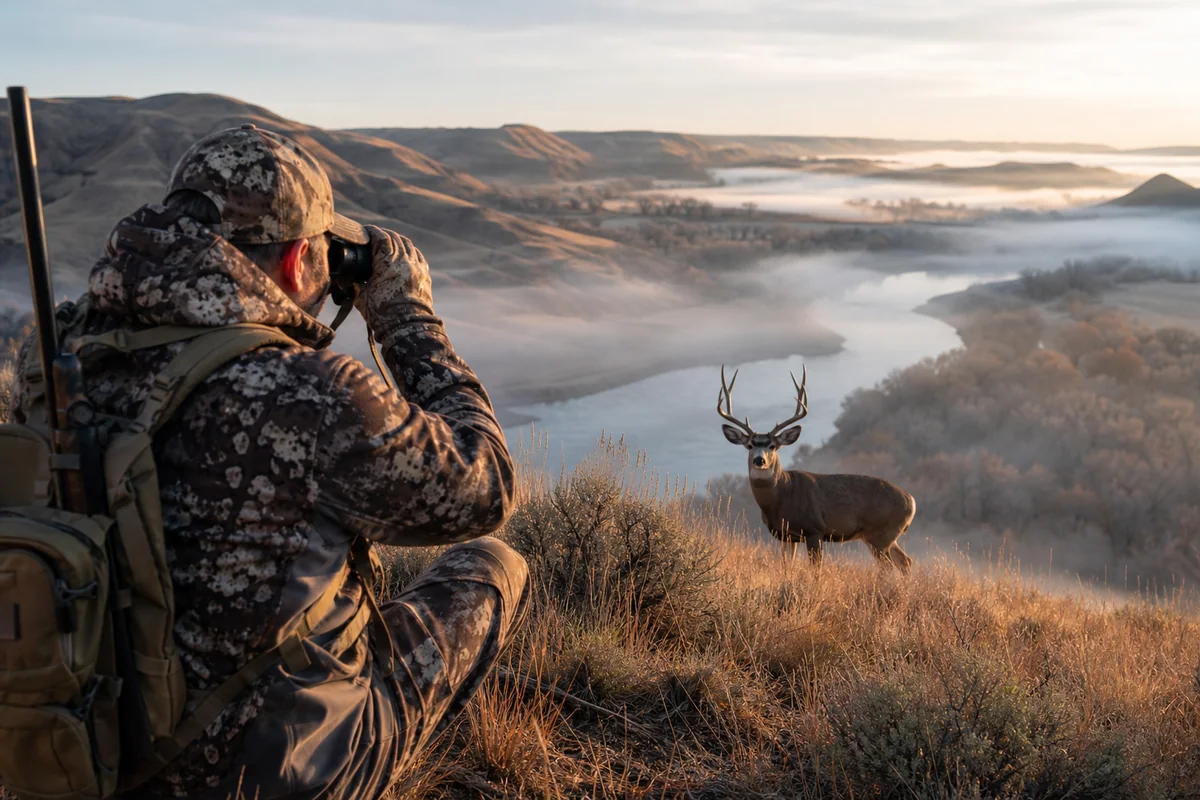
The fog was still lifting off the Missouri River breaks when I spotted my first Montana mule deer buck—a heavy-antlered four-by-four feeding along a coulee edge in Hunting District 410.
That November morning three years ago taught me something crucial: understanding Montana deer hunting regulations isn’t just bureaucratic homework—it’s the difference between filling your tag and going home empty-handed.
If you’re planning your first Montana deer hunt, or even if you’ve been coming here for years, this Montana Hunting Guide resource and the breakdown I’m sharing below will help you navigate everything from license applications to legal shooting hours.
- Montana offers both general deer licenses and limited-entry permits depending on district and species
- Non-residents must apply for deer licenses through the lottery system—application deadline is typically April 1
- General rifle season runs from late October through late November in most districts
- Antler point restrictions, either-sex regulations, and weapon restrictions vary significantly by hunting district
- Non-resident deer combination licenses cost $678 for 2024, covering both deer and elk
- You must possess a valid Conservation License before purchasing any hunting license
Why Montana Deer Hunting Regulations Matter More Than You Think
I’ll be honest with you—I’ve seen hunters get turned away from check stations, lose their deer, and even face misdemeanor charges because they didn’t understand the specific regulations for their hunting district. Montana isn’t a one-size-fits-all state when it comes to deer hunting.
During my most recent hunt in Hunting District 270 near Lewistown, I watched a non-resident tag a whitetail buck only to discover he’d actually drawn a mule deer permit for that area. The confusion cost him his deer and his entire trip.
This is why I’m breaking down everything you need to know—not the generic information you’ll find in a quick Google search, but the practical, field-tested knowledge I’ve gathered over twelve seasons hunting deer across Montana. For broader context on all Montana Hunting Regulations, you’ll want to familiarize yourself with the state’s overall framework.
Understanding Montana’s Deer License Structure
Montana’s deer licensing system seems complex at first glance, but once you understand the framework, it makes logical sense. The state manages deer through a combination of general licenses and special permits, with regulations varying by hunting district.
General Deer License
The general deer license is available to all Montana residents and is included in non-resident combination licenses. This license allows you to harvest deer during the general season in most hunting districts across the state.
What many hunters don’t realize is that the general license doesn’t guarantee you can hunt everywhere. Some districts require additional permits or restrict harvest to specific species or sexes.
I learned this lesson during my second Montana hunt when I drove six hours to hunt mule deer in a district that had switched to permit-only for that species. Always check the current regulations before planning your trip.
Deer B License and Special Permits
Deer B licenses are additional tags that allow you to harvest a second deer in specific districts. These are typically antlerless-only permits designed to manage doe populations in areas with high deer density.
The application process for B licenses happens in late summer, usually with a July deadline. During my hunt last fall, I held a B license for District 411, which allowed me to take an additional whitetail doe after filling my general tag.
Special permits for trophy mule deer districts like the Missouri Breaks require a separate drawing. These are highly competitive, and I recommend anyone serious about hunting trophy mule deer start building Montana Preference Points immediately.
Non-Resident License Requirements
If you’re coming from out of state, you need to understand the non-resident licensing process thoroughly. Montana uses a lottery system for non-resident deer licenses, and demand far exceeds supply.
For 2024, non-residents must apply by April 1 for the general deer and elk combination license. The drawing results typically come out in mid-May, giving you time to plan your fall hunt.
I highly recommend reading our detailed breakdown of Montana hunting license costs before you apply. The fees have increased significantly over the past five years, and budgeting properly is essential.
| License Type | 2024 Cost (Non-Resident) | Notes |
|---|---|---|
| Conservation License | $10 | Required before any other license |
| Deer/Elk Combination | $678 | Includes general deer tag |
| Deer B License | $75 | Additional antlerless tag |
| Special Permit (varies) | $50 application fee | Plus license fee if drawn |
For complete information about obtaining your Montana hunting license, check our comprehensive licensing guide.
Montana Deer Hunting Seasons: Critical Dates for 2024-2025
Timing is everything in Montana deer hunting. The state offers multiple season types, each with distinct regulations and opportunities.
Archery Season
Montana’s archery season typically opens the first Saturday in September and runs through mid-October. This early season offers fantastic opportunities for hunters willing to put in the work during warmer weather.
Last September, I hunted mule deer in the Beartooth Mountains during the archery opener. The bucks were still in velvet, feeding heavily in alpine meadows. The lack of hunting pressure made for incredible stalking opportunities.
Archery season requires no special permit beyond your general deer license, making it accessible to anyone who draws a tag. However, you must complete a bowhunter education course if you were born after January 1, 1985.

General Rifle Season
The general rifle season is when most non-resident hunters plan their trips. It typically runs from late October through late November, with the exact dates varying by hunting district.
For 2024, the general rifle season opens October 26 and closes November 24 in most districts. However, some districts have shortened seasons or delayed openers, so always verify dates for your specific area.
During my hunts over the years, I’ve found that the first week of November consistently produces the best action. This timing coincides with the pre-rut period when bucks become more active and visible during daylight hours.
Understanding Montana Hunting Seasons across all species helps you plan a multi-species trip if you hold combination licenses.
Muzzleloader Season
Montana offers a separate Montana Muzzleloader Season in December for deer and elk. This late season provides a unique hunting experience when snow has pushed deer to lower elevations.
I hunted the December muzzleloader season two years ago in Hunting District 312 near Augusta. The deep snow concentrated whitetails along creek bottoms, making them easier to pattern than during the general season.
Muzzleloader regulations specify inline or traditional muzzleloaders with open or peep sights—no scopes allowed during the special season. This restriction adds challenge but also reduces competition in the field.
Hunting District Specific Regulations
This is where Montana deer hunting gets complicated—and where most hunters make mistakes. The state divides its landmass into hundreds of hunting districts, each with potentially different regulations.
Species-Specific Restrictions
Some hunting districts allow harvest of both mule deer and white-tailed deer, while others restrict you to one species. A few districts, particularly in eastern Montana’s mule deer strongholds, have implemented antler point restrictions.
During my hunt in District 410 last November, the regulations required any harvested mule deer buck to have at least four points on one antler. This regulation protects younger bucks and produces better age structure in the herd.
I’ve found that studying the regulation booklet’s hunting district maps is time well spent. Montana Fish, Wildlife & Parks publishes detailed maps showing district boundaries, access roads, and public land availability.
If you’re specifically targeting mule deer or whitetails, our species-specific guides can help. Check out our Montana Deer Hunting overview and our detailed whitetail deer hunts in Montana guide for more information.

Either-Sex vs. Antlered-Only Districts
Some districts allow either-sex harvest on a general license, while others restrict harvest to antlered animals only. The regulations change annually based on population surveys and management objectives.
I always recommend calling the local FWP biologist for your hunting district before your trip. They can provide current population estimates, recent harvest data, and practical advice about where deer are concentrating.
During a phone call with the biologist for Region 4 last year, I learned that a late spring snowstorm had caused significant fawn mortality. This information helped me adjust my expectations and focus on antlered animals to support herd recovery.
Obtaining Deer Tags
The process for Montana deer tags varies depending on whether you’re a resident or non-resident, and which districts you’re targeting. Limited-entry permit areas require application well in advance.
Legal Weapon Requirements and Restrictions
Montana has specific regulations governing legal weapons for deer hunting. Understanding these requirements prevents equipment problems in the field.
Rifle Regulations
For rifle hunting, Montana requires centerfire rifles or centerfire handguns. There’s no minimum caliber requirement, but I strongly recommend .243 Winchester or larger for ethical deer harvest.
The regulations prohibit fully automatic firearms, suppressors were recently legalized, and electronic sighting devices are permitted. Night vision and thermal scopes remain illegal for big game hunting.
I personally hunt with a .270 Winchester for Montana deer. The cartridge offers flat trajectory for the long shots common in open country while providing adequate energy for clean kills at extended range.
Archery Equipment Standards
Archery tackle must meet minimum standards: bows must have at least 28 pounds of draw weight, and arrows must be at least 20 inches long with broadhead blades at least 7/8 inch wide.
Crossbows are legal during the archery season only for hunters with a disability permit. Otherwise, crossbow hunters must wait for the general rifle season.
I switched to a compound bow set at 65 pounds for my Montana archery hunts. The extra kinetic energy provides better penetration on larger-bodied mule deer at typical shooting distances.
Shotgun and Handgun Options
Shotguns firing slugs or buckshot are legal for deer hunting statewide. Some hunters prefer shotguns in thick river bottom habitat where shots are typically under 100 yards.
Handguns must be centerfire cartridges—no rimfire allowed for deer. I’ve met several hunters who carry .44 Magnum revolvers as backup weapons for close encounters in heavy cover.
Public Land Access and Regulations
Montana offers exceptional public land hunting opportunities, but understanding access regulations is essential for legal and successful hunts.
Block Management Areas
Montana’s Block Management program provides free public access to private lands enrolled by cooperating landowners. These areas offer some of the best deer hunting in the state.
During my hunt in Petroleum County last fall, I accessed three different Block Management Areas that held excellent mule deer populations. Registration at sign-in boxes is required, and some properties have hunter quotas.
I recommend downloading the FWP app to your phone before your trip. It provides GPS boundaries for all Block Management areas and indicates whether registration or reservations are required.
State Land Hunting
For detailed information about accessing Montana’s state trust lands, our guide on hunting on Montana state land covers everything you need to know. These scattered sections provide additional opportunity across the state.
State trust lands are open to hunting unless specifically closed. However, you must have written permission to camp overnight, and motorized vehicle use is restricted to designated roads.
National Forest and BLM Land
Federal lands offer vast deer hunting opportunities in western and central Montana. National Forest land requires no special permits for hunting, but you must follow all state game regulations.
BLM lands in eastern Montana provide access to prairie mule deer habitat. I’ve found these areas particularly productive for spot-and-stalk hunting in the breaks and badlands.
Tagging, Transportation, and Processing Requirements
Montana has strict requirements for tagging and transporting harvested deer. Following these regulations protects your investment and prevents legal problems.
Immediate Tagging Requirements
You must attach your tag to your deer immediately upon harvest—before moving the animal. The tag must remain attached until processing or until the deer reaches your final destination.
I carry a small knife specifically for notching tags and zip ties for secure attachment. Losing a tag in the field has happened to hunters I know, and it creates significant legal complications.
The tag must be notched for month and date of harvest. This allows game wardens to verify legal harvest timing and prevents tag transferring between animals.
Evidence of Sex Requirements
Montana requires evidence of sex to remain naturally attached to any deer carcass during transport. For antlered animals, antlers must remain attached to the carcass or cape.
For antlerless deer, reproductive organs or mammary tissue must remain attached until processing. This regulation prevents hunters from misrepresenting the sex of harvested animals.
I typically quarter my deer in the field but leave the front quarters attached to the cape and skull plate. This satisfies evidence requirements while reducing pack weight.
Chronic Wasting Disease Regulations
CWD has been detected in Montana, and specific regulations apply to carcass transport from affected areas. Check current CWD management zones before transporting any deer carcass.
Generally, you cannot transport brain or spinal tissue out of CWD management areas. Deboned meat, antlers cleaned of all tissue, and finished taxidermy mounts are permitted.
During my last hunt in a CWD zone near Billings, I had my deer tested at a check station. The free testing provides valuable data for wildlife managers while giving me peace of mind about meat safety.
Combining Deer Hunting with Other Montana Opportunities
One of Montana’s great advantages is the ability to pursue multiple species during a single trip. Understanding overlapping seasons maximizes your hunting opportunities.
Multi-Species Combination Hunts
If you hold a deer/elk combination license, you can pursue both species during overlapping seasons. Many hunters I know plan two-week trips targeting elk first, then switching focus to deer.
Our Montana Elk Hunting guide provides complementary information for planning combination hunts. The overlap between general elk and deer seasons creates excellent multi-species opportunities.
I typically start my November hunts focused on elk, then dedicate the final days to filling my deer tag. This strategy works well because deer are often easier to locate and harvest than elk.
Upland Bird Hunting
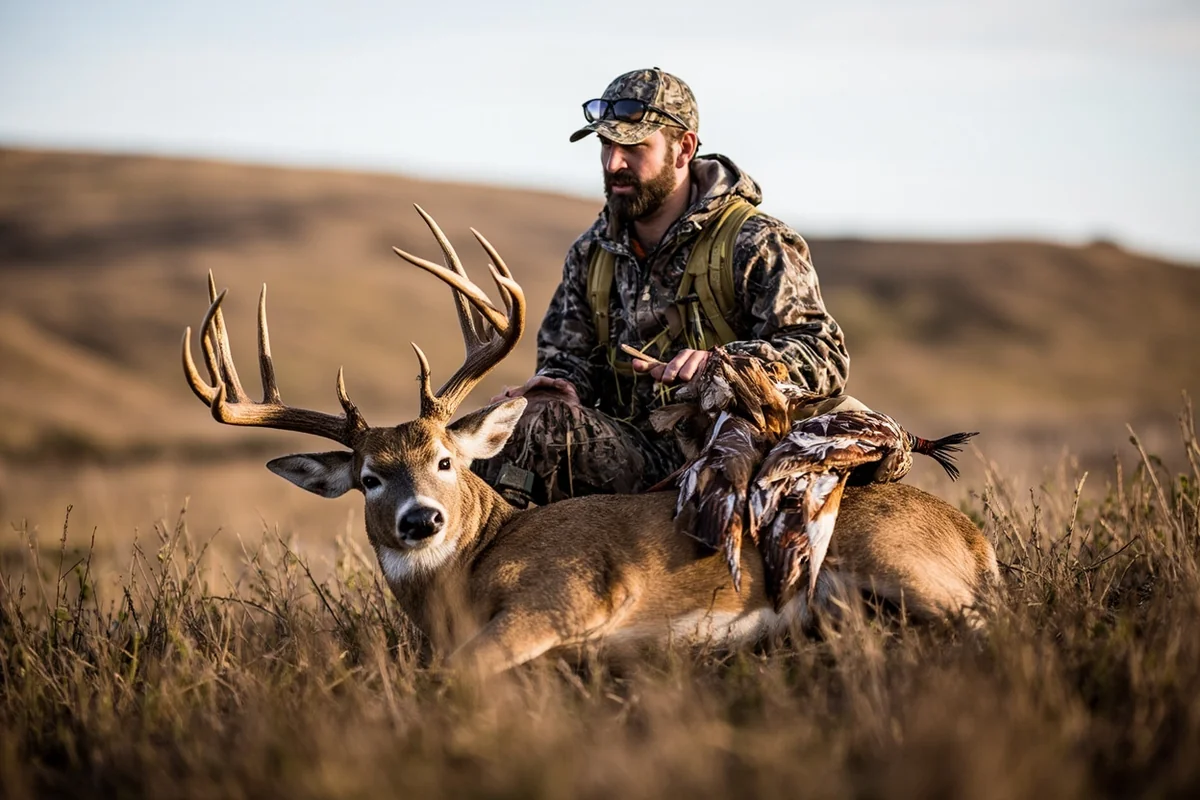
Pheasant and Hungarian partridge seasons overlap with deer season in eastern Montana. Carrying a shotgun and upland license during deer hunts provides additional opportunities.
Last year, I flushed multiple coveys of Huns while walking to my deer stand in Petroleum County. Having my 20-gauge available turned walking time into productive hunting.
Check out our Montana Upland Bird Hunting guide for information about combining upland hunting with your deer trip.
Waterfowl Opportunities
Duck season overlaps with deer hunting across Montana. Prairie potholes and river systems provide excellent waterfowl hunting between deer sits.
Our Montana Duck Hunting guide covers the regulations and prime areas. I’ve enjoyed some memorable morning duck hunts before settling into my deer stand for the day.
Predator and Varmint Hunting
Montana offers Montana Wolf Hunting opportunities during deer season in many districts. Wolves are legal with a valid wolf license, though encounters during deer hunts are rare.
Coyotes are legal year-round with no license required. I’ve taken several coyotes while deer hunting, and their pelts are prime during November.
Other Big Game Species to Consider
Montana’s diverse big game offerings extend well beyond deer. Planning a multi-species trip can maximize your hunting experience.
The Montana Antelope Hunting season opens before deer season, making antelope an excellent addition to early-fall trips. I’ve combined archery antelope and deer hunts with great success.
For hunters seeking more challenging quarry, Montana Bear Hunting provides exciting spring and fall opportunities. Black bears are common throughout the mountainous regions where deer also thrive.
The most exclusive Montana hunting experiences involve limited-entry species. Montana Bighorn Sheep Hunting and Montana Buffalo Hunting require years of point accumulation but represent once-in-a-lifetime opportunities.
Shoulder Season Considerations
Montana has implemented Montana Shoulder Season Elk Hunting in certain districts to manage populations on private lands. While primarily designed for elk, understanding these extended seasons helps you plan around increased hunting pressure.
Shoulder seasons run from August through February in designated areas. During these periods, hunting pressure increases on adjacent deer populations as well.
I’ve found that deer in shoulder season areas often shift their patterns significantly. Morning hunts near agricultural fields become less productive as deer become more nocturnal.
Lesser-Known Species Regulations
Montana offers unique small game opportunities that many visiting hunters overlook. Montana Squirrel Hunting provides excellent off-season practice and delicious table fare.
For truly unique hunting experiences, Montana Swan Hunting offers rare permit opportunities in designated areas. These hunts require advance application but provide memorable experiences.
Practical Field Tips from Experience
After years of hunting Montana deer, I’ve accumulated practical knowledge that regulations don’t cover but significantly impact success.
Weather Preparation
Montana weather during deer season ranges from pleasant to life-threatening. I’ve hunted in shirt sleeves one day and survived blizzard conditions the next.
Pack layers for temperatures from 20°F to 60°F. Lightweight merino base layers, insulated mid-layers, and windproof outer shells handle most conditions.
During my hunt in the Crazy Mountains last November, temperatures dropped 40 degrees overnight when a front moved through. My layering system kept me hunting while others retreated to town.
Navigation and Communication
Cell service is nonexistent in many prime Montana deer areas. I carry a satellite communicator for emergencies and download offline maps before every hunt.
GPS units with detailed topographic maps are essential for navigating unfamiliar country. I use onX Hunt for property boundaries and public land identification.
Physical Preparation
Montana deer hunting demands physical fitness, particularly in the western mountains. I start training three months before season with hiking, stair climbing, and pack carrying.
The ability to hike five miles with a loaded pack determines whether you can access unpressured deer or compete with crowds near roads. Invest in your fitness before investing in gear.
Final Thoughts on Montana Deer Hunting Regulations
Understanding Montana deer hunting regulations requires effort, but the payoff is extraordinary hunting opportunities. The state’s combination of diverse habitats, healthy deer populations, and accessible public lands creates premier hunting experiences.
Take time to study the regulation booklet thoroughly. Call biologists with questions. Scout your hunting district before season. These preparations separate successful hunters from disappointed ones.
Montana has given me some of my most memorable hunting experiences. That mule deer buck I mentioned at the beginning—he’s now a European mount hanging in my office, a daily reminder of why I keep coming back to Big Sky Country.
I hope this guide helps you navigate the regulatory framework and plan a successful Montana deer hunt. The regulations exist to protect the resource and ensure fair chase—understanding them makes you a better hunter and conservationist.
Frequently Asked Questions
What licenses do out-of-state hunters need for deer hunting in Montana?
As a non-resident, you’ll need to purchase a Montana Conservation License ($10) plus a Non-Resident Deer License, which costs $527 for the general season. I recommend applying through Montana Fish, Wildlife & Parks’ online portal at least 6 months in advance, as some popular hunting districts have limited permits that require a drawing application with a March deadline.
When is the best time to visit Montana for deer hunting season?
Montana’s general rifle deer season typically runs from late October through late November, with archery season starting in early September. I’ve found that the last two weeks of October offer the best combination of active deer movement during the rut and more manageable weather conditions. Plan to arrive 2-3 days early to scout your hunting district and acclimate to the elevation.
How much does a Montana deer hunting trip cost for non-residents?
Budget around $1,500-$3,000 for a DIY Montana deer hunting trip, including your non-resident license ($537 total), fuel, lodging, and food for a week-long hunt. If you’re flying into Bozeman or Billings, add $400-$600 for airfare and $300-$500 for a rental truck or SUV. Guided hunts range from $3,500-$7,000 depending on the outfitter and whether lodging is included.
What gear should I pack for hunting mule deer and whitetail in Montana?
Pack layered clothing for temperatures ranging from 20°F to 50°F, including a quality base layer, insulated jacket, and waterproof outer shell since Montana weather changes rapidly. Essential gear includes broken-in hiking boots rated for rugged terrain, a reliable rangefinder for the open country, and optics in the 10×42 range for spotting deer at distance. Don’t forget blaze orange requirements—Montana mandates 400 square inches of hunter orange above the waist during rifle season.
Which Montana hunting districts are best for out-of-state deer hunters?
Region 4 (north-central Montana) and Region 7 (eastern Montana) offer excellent general license opportunities without the drawing restrictions found in western districts. I’ve had great success in hunting districts around the Missouri Breaks and the prairie country east of Billings, where you’ll find healthy populations of both mule deer and whitetail. These areas are also more accessible via public land through Block Management programs, which provide free access to private ranches enrolled in the program.
Can I hunt deer on public land in Montana without hiring a guide?
Absolutely—Montana has over 30 million acres of public land accessible for hunting, including BLM land, national forests, and state trust lands that don’t require a guide. Download the onX Hunt app or pick up a Montana hunting access map from FWP to identify walk-in areas and Block Management properties along your route. I always recommend having backup locations since popular public spots near roads can get crowded during opening weekend.
What are Montana’s deer tagging and reporting requirements for 2024?
You must immediately attach your deer tag to the animal before moving it, notching out the month and day of harvest with a knife or punch. Montana requires you to report your harvest within 24 hours through the FWP online system or by phone, and keep in mind that transporting an untagged deer is a serious violation that can result in license revocation. If you’re traveling home with your meat, you’ll need to keep proof of sex naturally attached until the deer is processed.
Sources