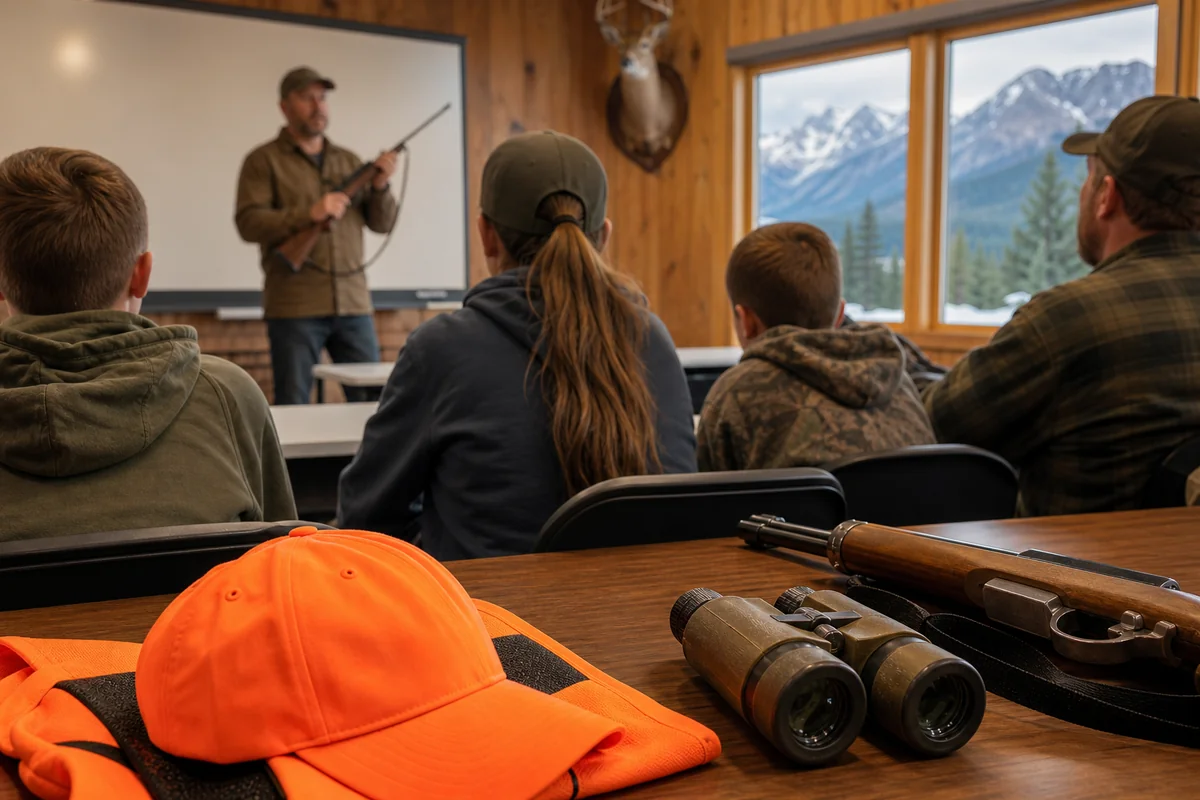
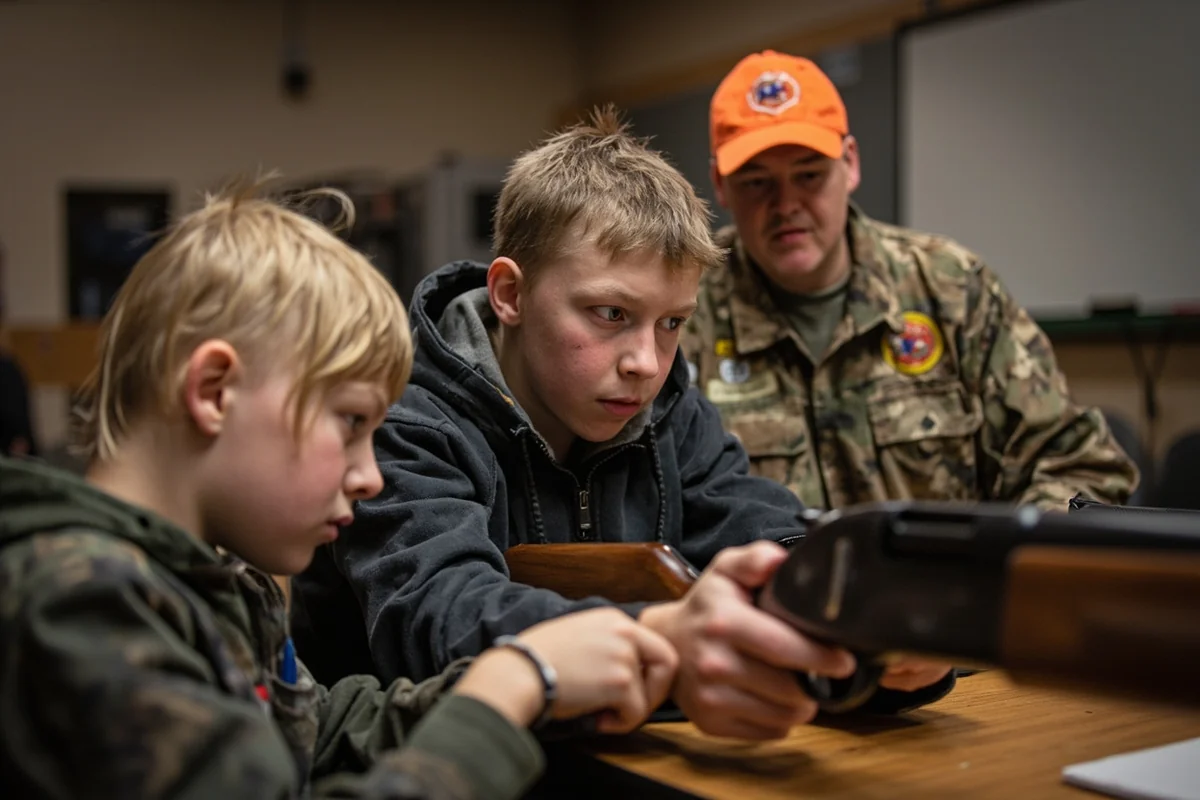
I still remember sitting in a cramped community center in Bozeman last fall, surrounded by eager twelve-year-olds and a handful of adults like myself, all of us absorbing the fundamentals of firearm safety that would open the door to Montana’s incredible hunting opportunities.
That moment crystallized something important for me: hunter safety education isn’t just a bureaucratic checkbox—it’s the foundation of every responsible hunt in Big Sky Country.
Whether you’re planning your first Montana hunting adventure or helping your kids get certified, understanding the hunter safety process is your essential first step.
- Montana requires hunter safety certification for anyone born after January 1, 1985 to purchase a hunting license
- Three course options available: traditional classroom (free), online + field day ($24.50), or online-only for adults 18+ ($13)
- Certification is valid for life and honored in all 50 states
- Minimum age is 10 years old; those under 18 must have parent/guardian signature
- Field day involves hands-on firearm handling, live-fire exercises, and practical skills testing
- Plan 2-3 months ahead during peak seasons as courses fill quickly
Why Montana Takes Hunter Safety Seriously
Montana isn’t just any hunting destination—it’s one of the last great wildernesses in the continental United States. The state’s commitment to hunter education reflects both its deep hunting heritage and genuine concern for safety in challenging backcountry terrain.
When I first moved to Montana eight years ago, I was surprised to learn how seriously locals take hunter safety. It’s not just about passing a test; it’s about joining a community that values ethical hunting and responsible firearm handling.
The statistics back this up. Since Montana implemented mandatory hunter education in 1957, hunting accidents have dropped by over 80%. That’s not just a number—it represents lives saved and families kept whole.
Who Needs Hunter Safety Certification in Montana
Here’s the straightforward rule: if you were born on or after January 1, 1985, you must complete an approved hunter safety course before purchasing any Montana hunting license.
This applies to residents and non-residents alike. I’ve met countless out-of-state hunters at courses who assumed their home state certification would transfer—and thankfully, it does.
If you completed hunter education in another state or country, Montana will honor that certification. You’ll just need proof when purchasing your license, either through the International Hunter Education Association’s HuntSafe database or your original completion card.
Exemptions to Know About
There are a few exceptions worth noting. If you were born before January 1, 1985, you’re exempt from the requirement altogether.
Active-duty military personnel and veterans with honorable discharge who can demonstrate firearm proficiency may qualify for exemptions. However, during my conversations with FWP staff in Helena last spring, they mentioned these exemptions require additional documentation.
Youth hunting licenses for certain seasons may allow unlicensed youth to hunt under direct adult supervision, but this varies by species and season. Check the current Montana hunting regulations for specific details.
Your Three Paths to Certification
Montana Fish, Wildlife & Parks offers three distinct pathways to certification. Having gone through the traditional classroom course myself and helped my nephew complete the online option, I can give you honest insights on each.
Option 1: Traditional Classroom Course (Free)
This is the original format, and honestly, it remains my favorite. The traditional course runs 10-12 hours, typically spread across two days or several evenings.
What I loved about my classroom experience in Bozeman was the hands-on instruction. Our instructor, a retired game warden named Dale, shared stories from decades in the field that no online module could replicate.
You’ll handle actual firearms (unloaded, of course), practice proper carry techniques, and get immediate feedback from experienced instructors. The camaraderie with fellow students also creates a sense of community that online courses simply can’t match.
Best of all, these courses are completely free. Montana FWP and volunteer instructors absorb all costs. You’ll just need to bring a pen and show up ready to learn.
The downside? Limited availability, especially during peak pre-season months. When I registered for my course last August, only three sessions were available within 50 miles of Bozeman, and two were already full.
Option 2: Online Course + Field Day ($24.50)
This hybrid option has become increasingly popular, especially for busy families and travelers. You complete the educational content online at your own pace, then attend a four-hour field day for hands-on skills evaluation.
My nephew Ethan took this route last year before his first Montana deer hunt. The online portion through Kalkomey took him about six hours spread across a week.
He appreciated being able to pause and review confusing sections. The interactive scenarios and quizzes kept him engaged better than I expected for a 14-year-old.
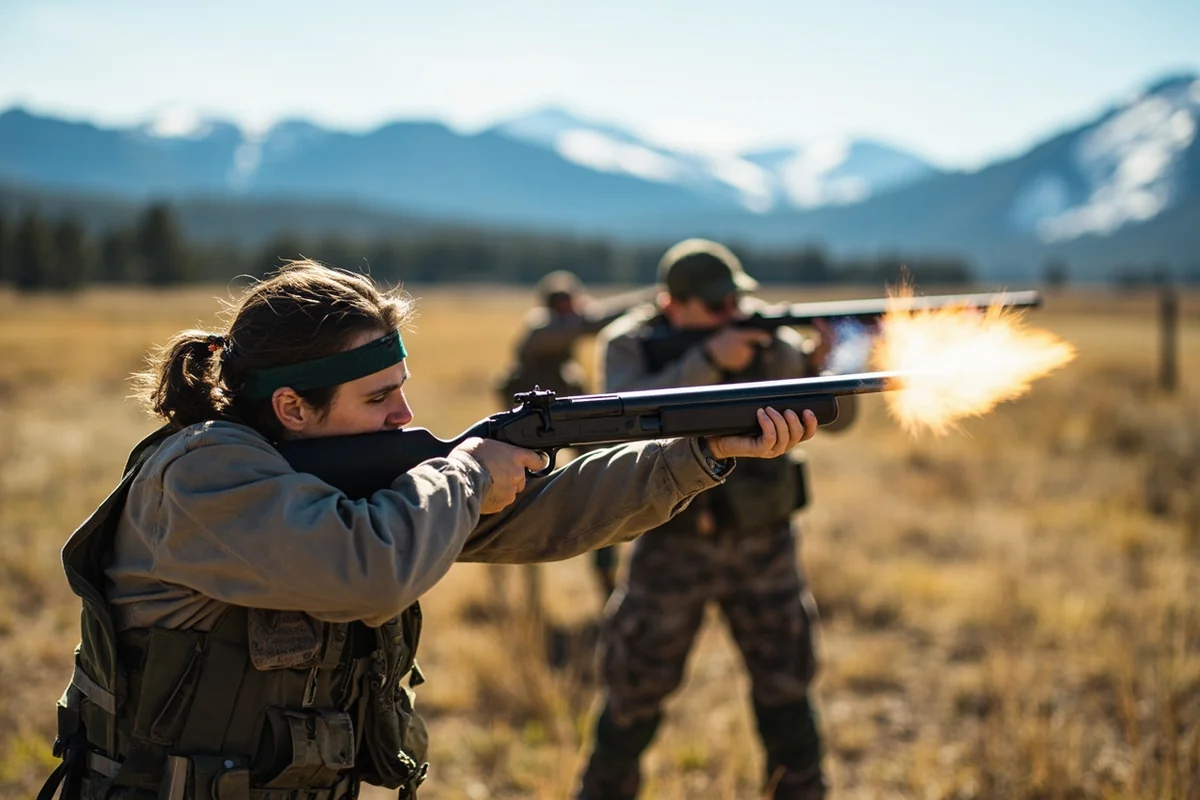
The field day is mandatory and non-negotiable. This is where you’ll demonstrate safe firearm handling, take a live-fire shooting test, and prove you can apply what you learned. Ethan said this was actually his favorite part—finally getting to shoot under professional supervision.
The $24.50 fee covers the online course registration. Field days are scheduled throughout the state, but popular locations fill up fast during summer months.
Option 3: Online-Only Course for Adults ($13)
Montana offers a fully online option for adults 18 and older. This stripped-down approach works well for experienced hunters from other states who just need Montana-specific certification.
The course covers the same material but skips the field day requirement. At just $13, it’s the most affordable and convenient option—if you qualify.
I’d personally recommend the hybrid option even for experienced adults. That field day interaction proved invaluable for understanding Montana-specific terrain considerations and local wildlife behavior patterns.
What You’ll Actually Learn: Course Curriculum Breakdown
Having sat through the entire curriculum, I can tell you it covers far more than basic trigger discipline. Here’s what to expect:
Firearm Safety Fundamentals
The course drills the four universal firearm safety rules until they become second nature. Treat every firearm as if it’s loaded. Always point the muzzle in a safe direction. Keep your finger off the trigger until ready to shoot. Know your target and what’s beyond it.
You’ll also learn safe storage practices, transport regulations, and how to properly clean and maintain your firearms. Montana’s regulations on transporting loaded firearms in vehicles are stricter than many states, so pay attention during this section.
Montana-Specific Hunting Regulations
This was where I found the most value as someone new to Montana hunting. Instructors walk you through the license system, including understanding Montana hunting license costs and the sometimes-confusing Montana preference points system.
You’ll learn about hunting districts, season dates, and legal shooting hours. The course also covers tagging requirements—essential knowledge before pursuing Montana deer tags or any big game.
Wildlife Identification
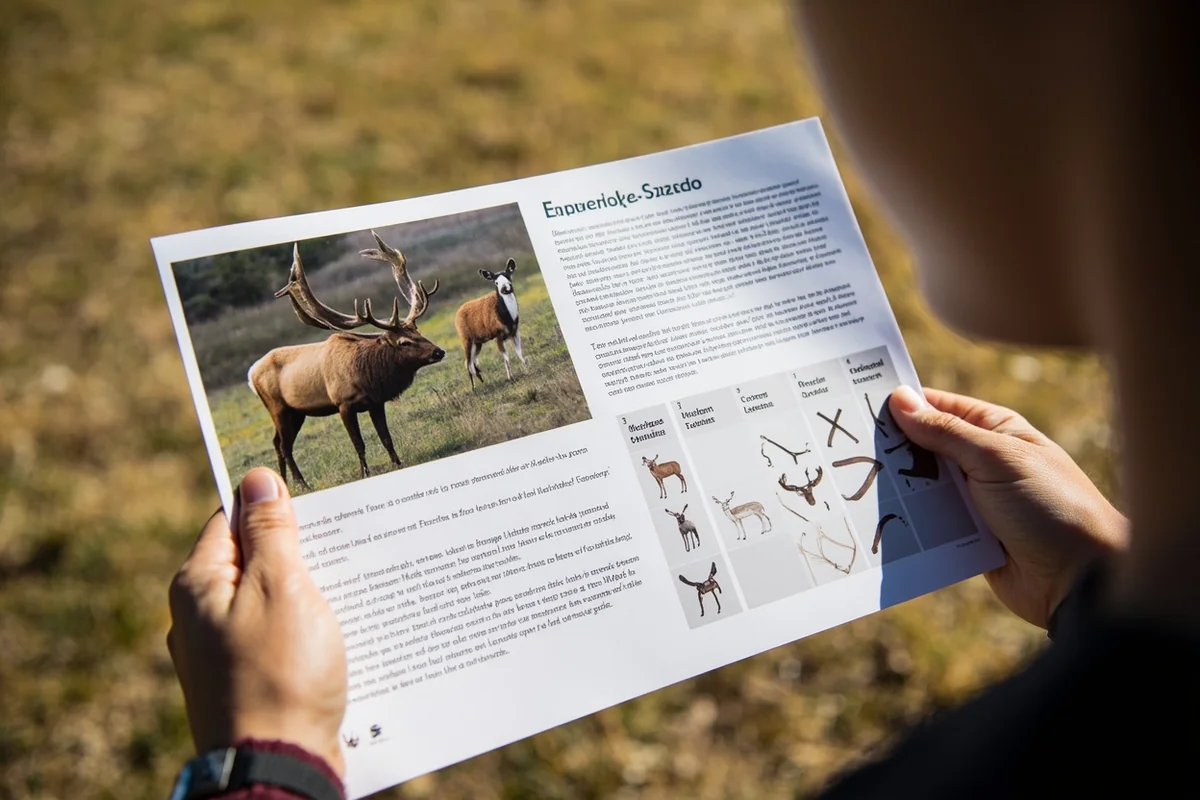
Misidentification is a serious issue in Montana hunting. The course teaches you to distinguish between legal game species and protected animals, as well as between sexes and age classes where regulations differ.
This section proved particularly relevant for Montana elk hunting, where distinguishing bulls from cows can be challenging at distance. Similar skills apply to antelope hunting and identifying legal bucks versus does.
Survival and Outdoor Skills
Montana’s backcountry demands respect. The curriculum includes wilderness survival basics, map and compass navigation, and emergency preparedness.
I appreciated the frank discussion about hypothermia risks during Montana hunting seasons, particularly late-fall archery and muzzleloader season hunts when weather can turn deadly.
Ethics and Responsibility
Perhaps the most thought-provoking section covers hunting ethics. Fair chase principles, landowner relations, and conservation philosophy all receive serious attention.
Our instructor spent considerable time on trespass laws and how to verify whether you’re on public or private land. If you’re planning to hunt on Montana state land, this section provides critical context.
The Field Day Experience: What to Expect
For those taking the hybrid course, the field day is where classroom knowledge meets practical application. I’ve helped at several field days as an assistant, so I can give you the inside perspective.
Arrival and Setup
Plan to arrive 15 minutes early. You’ll need to bring your online course completion certificate, identification, and appropriate outdoor clothing. Montana weather is unpredictable, so dress in layers.
The instructors will verify your documentation and organize students into small groups. Most field days accommodate 15-25 students with 3-5 certified instructors.
Firearm Handling Stations
You’ll rotate through stations demonstrating safe handling of rifles, shotguns, and sometimes handguns. Instructors watch your muzzle discipline, trigger control, and overall safety awareness.
Don’t stress about this too much. Instructors want you to succeed and will coach you through proper techniques. I’ve seen nervous students relax considerably once they realize it’s instructional, not punitive.
Live-Fire Shooting Test
The shooting portion typically involves firing .22 caliber rifles at stationary targets. You’re not expected to be a marksman—just demonstrate basic competency and safe handling while actually shooting.
Most field days provide all firearms and ammunition. However, confirm this when registering, as some locations allow students to bring their own .22 rifles.
Practical Scenarios
The final component involves scenario-based evaluation. You might be asked to identify legal game in photographs, demonstrate crossing a fence safely with an unloaded firearm, or explain what to do if you become lost.
These scenarios draw directly from course material. If you paid attention during the online portion, you’ll handle them easily.
Registration: How and When to Sign Up
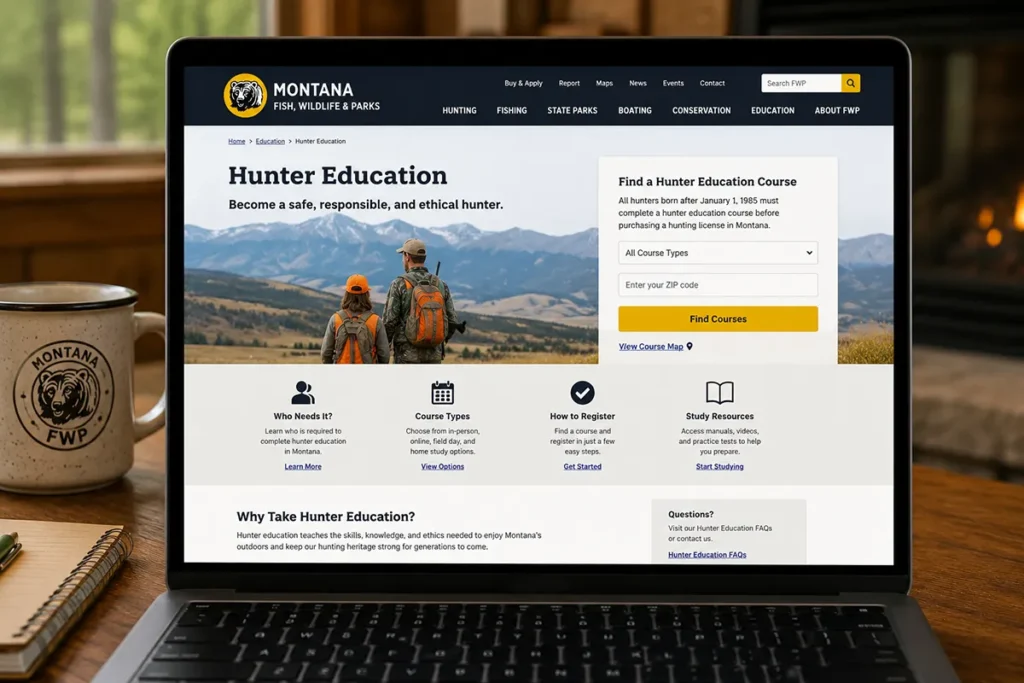
Registration happens through the Montana FWP website. The process is straightforward but requires some planning during busy seasons.
Finding Available Courses
Visit the Montana FWP Hunter Education page and use their course finder tool. You can filter by county, date range, and course type.
Pro tip: Create an account before searching. This speeds up registration when you find an open slot, which can make the difference between getting a seat and watching it fill while you’re entering your information.
Timing Your Registration
This is crucial: don’t wait until the last minute. During my first hunt planning, I tried registering for a July course in mid-June and found nothing available within 100 miles.
I recommend registering at least 6-8 weeks before you need certification, and 2-3 months ahead if you’re planning around specific deer hunting regulations season openers.
Summer courses fill fastest because families want kids certified before fall seasons. If your schedule is flexible, consider spring courses (March-May) when availability is much better.
What You’ll Need to Register
| Requirement | Details |
|---|---|
| Minimum Age | 10 years old at time of course completion |
| Parental Consent | Required for students under 18 |
| Valid ID | State ID, passport, or school ID for minors |
| Payment | Credit/debit card for online courses; traditional courses are free |
| ALS Number | Your Montana Automated License System number (created during registration if you don’t have one) |
After Certification: Your Next Steps
Passing your hunter safety course is just the beginning. Here’s what comes next in your Montana hunting journey.
Receiving Your Certificate
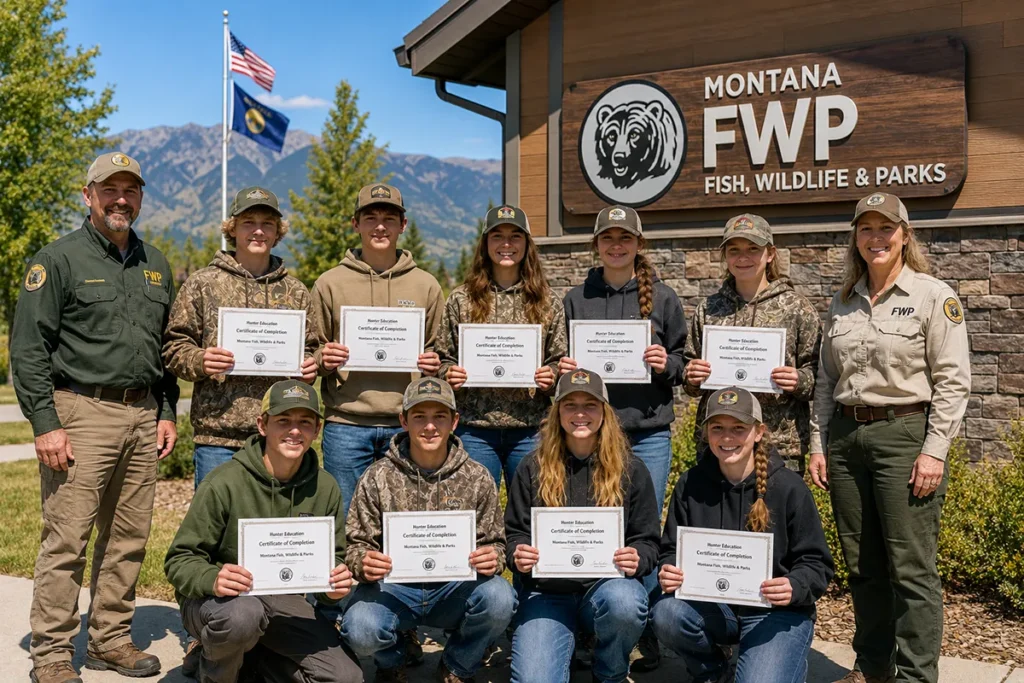
After successful course completion, you’ll receive a hunter education certificate. Traditional classroom students typically get this immediately; online/hybrid students receive theirs within 1-2 weeks via mail.
Your certification is automatically uploaded to Montana’s licensing system and the national HuntSafe database. This means you can purchase licenses online without digging out your physical card.
However, I strongly recommend keeping your card in a safe place. Mine lives in my hunting pack, and I’ve needed it when purchasing licenses at physical FWP offices.
Purchasing Your First License
With certification in hand, you’re eligible to purchase hunting licenses. Montana’s licensing structure can seem complex, but our comprehensive guide to Montana hunting licenses breaks it down clearly.
For first-time hunters, I typically recommend starting with upland birds or waterfowl. Montana upland bird hunting provides great entry-level experience without the complexity of big game applications.
Duck hunting is another accessible starting point, though you’ll need a federal duck stamp in addition to your state licenses.
Building Toward Big Game
If big game is your ultimate goal, understand that Montana’s most popular species require planning years in advance. Trophy species like bighorn sheep can require decades of point accumulation.
More accessible big game options include general season deer and elk in certain districts. The shoulder season elk program offers additional opportunities to fill your freezer.
For unique Montana experiences, consider buffalo hunting through the limited permit system or wolf hunting in areas with available tags.
Tips from the Field: Making the Most of Your Course
Having been through the process and helped others complete it, here are my honest recommendations for success.
Prepare Before You Arrive
Even for traditional classroom courses, some advance preparation helps. Read through Montana’s current hunting regulations booklet, available free at any FWP office or online.
Understanding basic firearm terminology also helps. Know the difference between caliber and gauge, understand what “action type” means, and familiarize yourself with common firearm parts.
Ask Questions
Instructors appreciate engaged students. If something isn’t clear, ask. If you’re curious about a specific species like bear hunting or swan hunting, bring it up.
Some of my best learning came from instructor sidebar discussions about topics not explicitly in the curriculum. Our instructor’s stories about whitetail deer hunting in the breaks taught me more about deer behavior than any textbook.
Practice Before Field Day
If you’re taking the hybrid course, consider visiting a shooting range before your field day. Familiarity with actual firearm handling reduces nervousness and helps you focus on demonstrating proper technique.
Many ranges offer beginner lessons at reasonable rates. The $40 I spent on a one-hour lesson before my nephew’s field day was well worth the investment in his confidence.
Connect with Fellow Students
Hunter safety courses attract diverse groups. During my course, I met a retired teacher who became one of my regular hunting partners and a rancher who granted me permission to hunt his land.
The hunting community in Montana is genuinely welcoming to newcomers. These connections can lead to mentorship, land access, and friendships that enhance your hunting experiences for years to come.
Common Questions and Honest Answers
Let me address some concerns I hear frequently from hunters approaching this requirement.
Is the Course Difficult?
No. If you pay attention and engage with the material, you will pass. The written test requires roughly 80% to pass, and the practical evaluations assess competency, not expertise.
During my course, every student passed. The instructors genuinely want you to succeed and provide ample opportunities to learn and demonstrate knowledge.
What If I Fail?
Retakes are available, typically at no additional cost for traditional courses. For online courses, you may need to pay the fee again, but this is rare if you complete the material thoroughly.
Most “failures” I’ve witnessed were students who rushed through online material without actually learning it. Take your time, and this won’t be an issue.
Can I Transfer Certification from Another State?
Yes. Montana recognizes hunter education from all U.S. states and Canadian provinces through the International Hunter Education Association’s reciprocity agreement.
When purchasing your license, you’ll either verify through the HuntSafe database or present your physical card from your home state. I’ve helped several out-of-state visitors navigate this process, and it’s generally seamless.
What About Bowhunter Education?
Montana does not require separate bowhunter education. Your standard hunter safety certificate covers archery equipment as well.
However, I highly recommend voluntary bowhunter education if you plan to pursue archery hunting. The Montana Bowhunters Association offers excellent courses, and the skills translate directly to more successful hunts.
Special Circumstances and Lesser-Known Programs
Montana FWP offers several specialized programs worth knowing about.
Apprentice Hunting Program
Montana’s Apprentice Hunter program allows first-time hunters to experience hunting under mentor supervision before completing full hunter education. This provides hands-on learning alongside formal education.
Apprentices must be accompanied by a licensed adult who has completed hunter education and maintains direct supervision at all times. It’s an excellent pathway for families introducing children to hunting gradually.
Instructor Certification
If hunter education inspires you, consider becoming a volunteer instructor. Montana FWP provides comprehensive instructor training, and the need for qualified educators is ongoing.
After five years of hunting Montana, I’m now pursuing instructor certification myself. It’s a meaningful way to give back to the community that welcomed me.
Home Study Options
For students in extremely remote areas without internet access (yes, these exist in Montana), FWP offers traditional home study packets. Contact your regional FWP office for availability.
These require additional coordination for field day scheduling but ensure no Montanan is excluded from hunting opportunities due to geographic isolation.
Planning Your First Hunt After Certification
With your hunter safety card in hand, the real adventure begins. Here’s how I recommend approaching your first season.
Start with something achievable. Squirrel hunting doesn’t get much attention, but it’s an excellent way to practice woodsmanship and stalking skills in a low-pressure environment.
Study your chosen area thoroughly before season opens. Understanding terrain, access points, and wildlife patterns matters more than fancy gear.
Connect with experienced hunters. Whether through local clubs, online forums, or friends made during your safety course, hunting alongside someone experienced accelerates your learning dramatically.
Most importantly, approach your first hunts with realistic expectations. Success isn’t measured solely by filling tags—it’s measured by safe, ethical hunts that deepen your connection to Montana’s wild places.
The Bigger Picture: Why This Matters
As I reflect on my hunter education journey and subsequent years hunting Montana’s backcountry, I’m grateful for that foundation built in a Bozeman classroom.
Hunter safety certification isn’t just about legal compliance or accident prevention. It’s about joining a tradition of conservation-minded hunters who’ve protected Montana’s wildlife for generations.
Every dollar you spend on licenses funds wildlife management. Every ethical choice you make in the field builds public support for hunting. Every safe season you complete proves that hunters deserve the privileges we enjoy.
Montana’s wild character depends on hunters who understand this responsibility. Hunter education is where that understanding begins.
I hope you’ll approach your certification with the seriousness it deserves—not as an obstacle to hunting, but as your initiation into a community that cares deeply about wildlife, wild places, and the future of hunting in Montana.
Good luck, stay safe, and I’ll see you in the field.
Frequently Asked Questions
Do out-of-state hunters need to complete Montana hunter safety certification before hunting?
Yes, Montana requires all first-time hunting license buyers to show proof of hunter education certification before purchasing a license. If you completed hunter safety in your home state, Montana will accept that certification—just bring your card or certificate when buying your license. I recommend carrying a photo of your certification on your phone as backup.
How much does Montana hunter safety certification cost for non-residents?
The Montana hunter education course is free to complete online, though there’s a $6 fee for the final proctored exam if taken in person. Non-resident hunting licenses are where the real costs add up—expect to pay $455-$1,250+ depending on species, so factor that into your Montana hunting trip budget. The safety course investment is minimal compared to overall trip expenses.
How long does it take to complete Montana hunter safety requirements?
The online Montana hunter education course typically takes 6-8 hours to complete at your own pace, and you can save your progress along the way. I’d recommend finishing it at least 2-3 weeks before your trip to avoid any last-minute certification issues. The field day portion, if required, adds another 4-6 hours and must be scheduled in advance.
Where can I take the Montana hunter safety field day exam as a visiting hunter?
Montana Fish, Wildlife & Parks offers field day sessions at various locations across the state, typically in larger towns like Billings, Missoula, Bozeman, and Great Falls. As a visiting hunter, you can schedule your field day online through the Montana FWP website, but sessions fill up fast during fall hunting season. Plan to arrive a day early if you need to complete this requirement before your hunt begins.
What’s the best time of year to visit Montana for hunting and complete safety requirements?
I recommend arriving in Montana at least 2-3 days before hunting seasons open in September or October to handle any certification needs and scout your hunting area. General deer and elk seasons typically run from late October through late November, which is prime time but also the busiest for hunter education field days. Summer months offer more flexibility for completing in-person requirements without the seasonal rush.
Can I complete Montana hunter safety entirely online if I’m traveling from another state?
Montana offers a fully online hunter education option for adults 18 and older, which is ideal for out-of-state travelers who can’t attend an in-person field day. Younger hunters under 18 must complete both the online course and an in-person field day with a certified instructor. I completed mine online before driving up from Colorado, and the process was straightforward.
What should I bring to Montana to prove my hunter safety certification?
Bring your original hunter education card, a photocopy, and I always keep a digital photo on my phone as triple backup when traveling to Montana. You’ll need to present proof at any license vendor or FWP office before purchasing your non-resident hunting license. Some vendors can verify your certification electronically through the national hunter education database, but don’t rely on this in remote Montana towns with spotty internet.