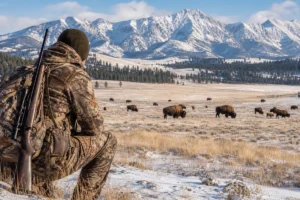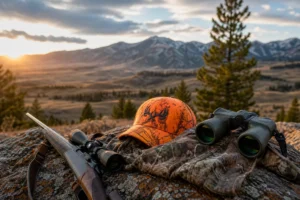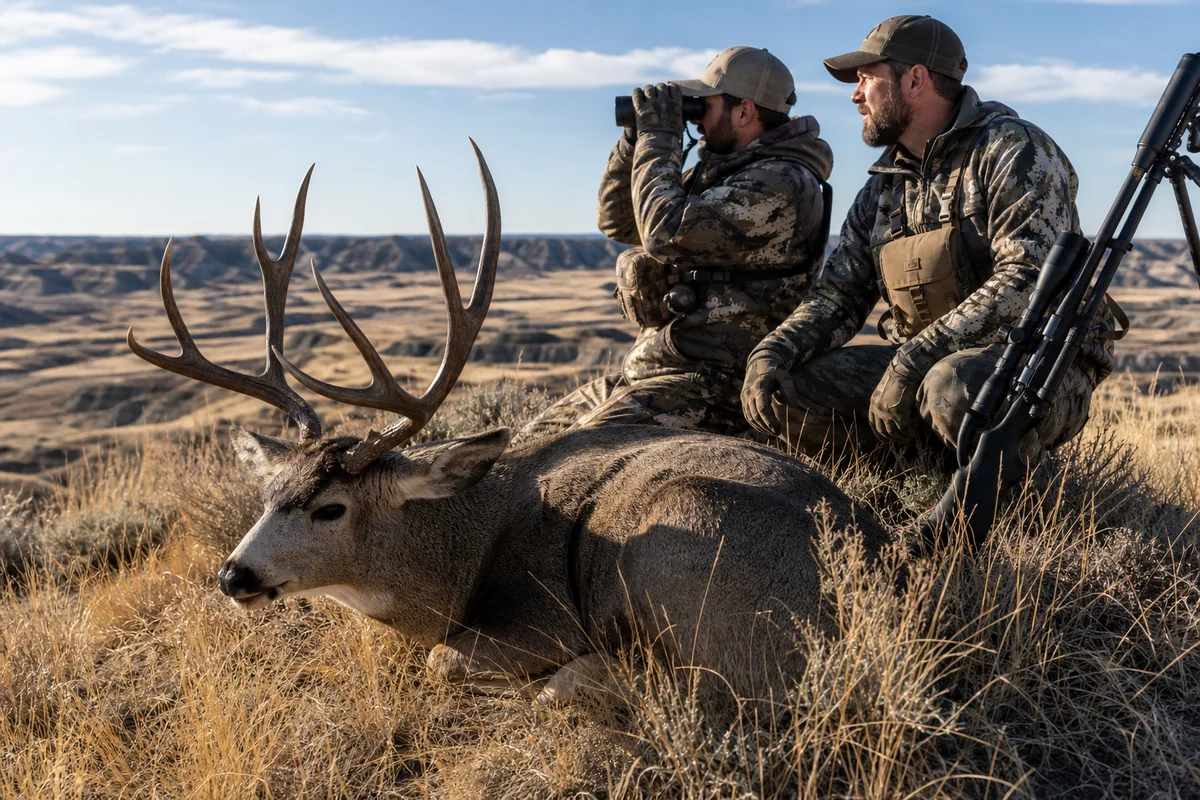
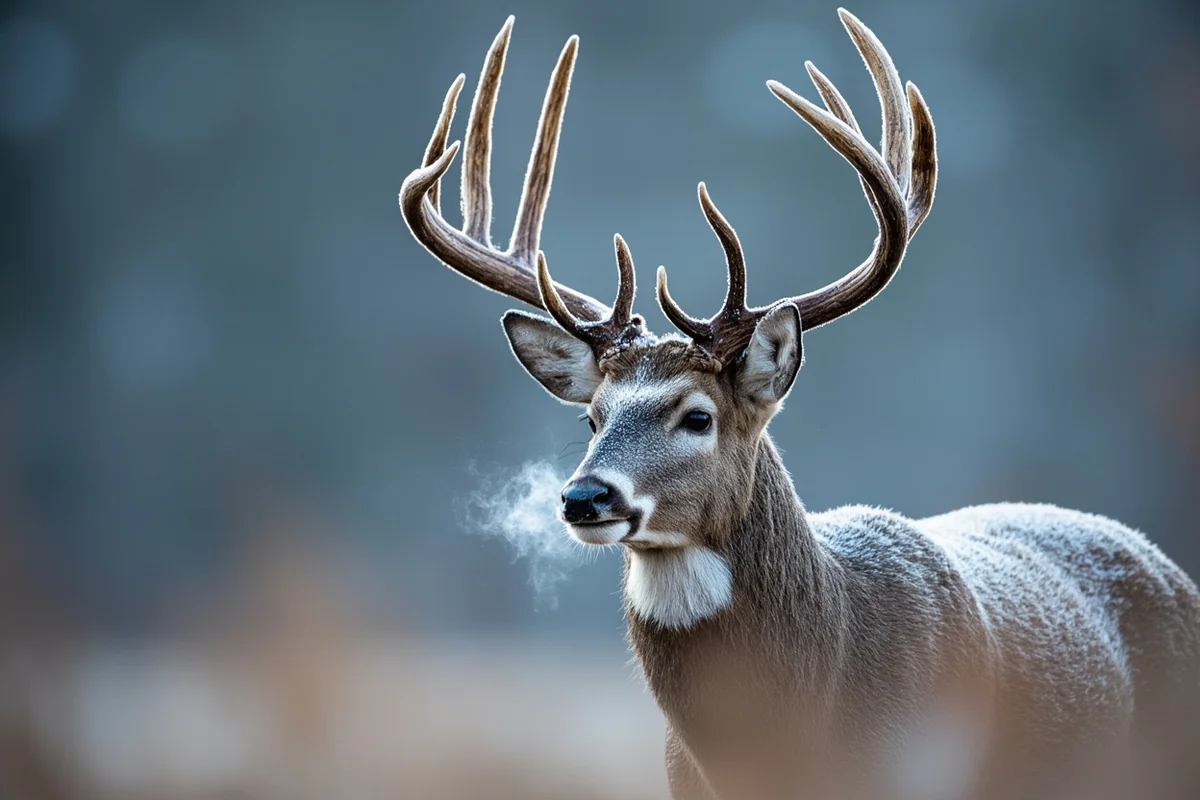
The buck materialized from a draw I’d glassed a dozen times without seeing him—a heavy-horned four-by-four that made my guide whisper, “That’s why we hunt this country.”
That moment in the Missouri Breaks last October reminded me why Montana remains the premier destination for serious mule deer hunters, and why the right outfitter makes all the difference between a frustrating week and the hunt of a lifetime.
If you’re planning a guided mule deer adventure, this Montana Hunting Guide resource will help you navigate your options, but choosing an outfitter requires specific knowledge I’ve gained from booking multiple hunts across Big Sky Country.
- Montana’s best mule deer outfitters operate in distinct regions: Missouri Breaks, Rocky Mountain Front, and Eastern Prairie
- Expect to pay $4,500–$8,000 for a quality 5-7 day guided mule deer hunt
- Book 12-18 months in advance for premium outfitters—the best ones fill fast
- Non-resident deer combo licenses cost around $850 (general tag) plus outfitter fees
- Look for outfitters with Block Management access, private land leases, or wilderness permits
- Success rates vary dramatically—ask for references and verifiable harvest data
- October through mid-November offers the best hunting, with rut activity peaking late October

Why Montana Mule Deer Hunting Demands an Outfitter
I’ve hunted mule deer in six western states, and Montana consistently delivers the largest-bodied bucks and most challenging terrain I’ve encountered.
The sheer scale of huntable land—over 30 million acres of public access—sounds like paradise until you’re standing at a trailhead wondering where to even begin.
During my first DIY attempt in the Breaks, I spent three days hiking into country that looked perfect on OnX but held nothing but does and small bucks.
The Public Land Challenge
Montana’s reputation for accessible public hunting is well-deserved, but that accessibility means pressure—lots of it.
Every drainage and bench that’s easy to reach gets hammered by the second weekend of rifle season.
The mature bucks—the 170-class animals that draw hunters from across the country—survive by living in places most DIY hunters can’t or won’t go.
Quality outfitters have spent years, sometimes decades, learning where these bucks hide. They’ve invested in horses, camps, and relationships with private landowners that give their clients access to unhunted pockets.
When I finally booked with an outfitter near Jordan, I saw more shooter bucks in three days than I had in two previous seasons combined.
Understanding Montana’s Hunting Regulations
Before you even think about outfitters, you need to understand how Montana hunting regulations affect your hunt planning.
The state operates on a complex system of hunting districts, weapon restrictions, and tag availability that can make or break your trip.
Montana deer hunting regulations specifically govern season dates, antler point restrictions in certain areas, and the number of tags you can purchase as a non-resident.
Getting familiar with Montana hunting seasons well in advance helps you coordinate with your outfitter for the optimal timing.
Montana’s Premier Mule Deer Regions
After hunting and researching extensively, I’ve identified the three primary regions where outfitters concentrate their mule deer operations.
Each offers distinct advantages depending on what kind of hunt experience you’re seeking.
The Missouri Breaks: Trophy Country
If you’re chasing a legitimate 180-plus buck, the Breaks demand your attention.
This rugged, roadless country along the Missouri River produces more Boone and Crockett mule deer than almost anywhere else in North America.
During my hunt near the Charles M. Russell National Wildlife Refuge, the terrain humbled me daily—steep coulees, gumbo clay that turns treacherous when wet, and miles of seemingly identical draws.
The outfitter I hunted with, based out of Winifred, had been running horses through that country for thirty years. His knowledge of buck movement patterns between the river bottoms and the rimrocks was encyclopedic.
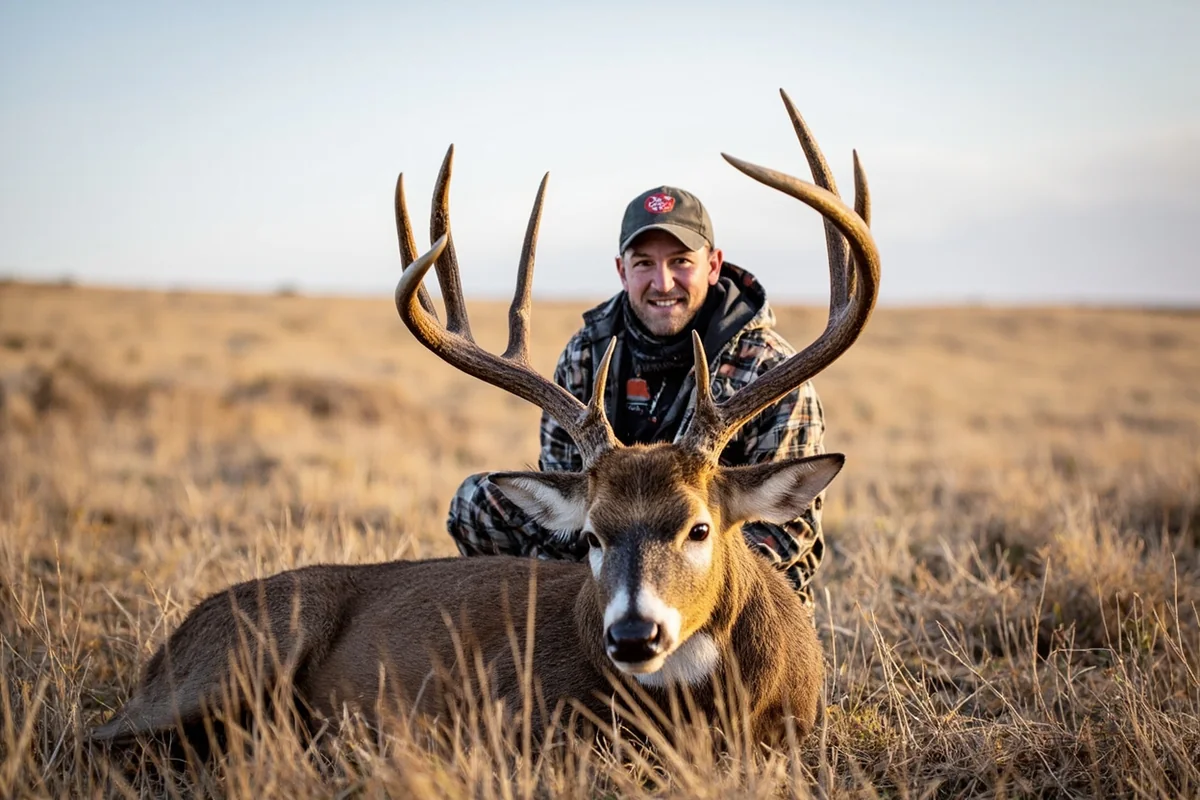
We spotted bucks every day, passing on several 160-class deer before I connected on a 172-inch four-point on day five.
The Breaks produce big deer because they’re hard to hunt. Expect long horseback rides, spike camps, and physical demands that surprise even fit hunters.
The Rocky Mountain Front
The zone where the prairies meet the mountains near Choteau and Augusta offers a different experience entirely.
Here, mule deer migrate between summer range in the Bob Marshall Wilderness and winter range on the prairie benches.
I hunted this transition zone during a late October trip and watched bucks pour out of the mountains ahead of an early snowstorm—one of the most memorable wildlife spectacles I’ve witnessed.
Outfitters along the Front often combine mule deer hunts with opportunities for Montana elk hunting, making it attractive for hunters seeking a combo hunt.
The country is more accessible than the Breaks, with better road networks and more lodging options.
Eastern Montana’s Prairie Breaks
The rolling prairies and badlands east of the Musselshell River—around Roundup, Miles City, and Ekalaka—offer perhaps the best value in Montana mule deer hunting.
These aren’t the giant bucks of the Breaks, but 150-160 class deer are realistic expectations, and the hunting is excellent.
I’ve hunted this region twice, once near Jordan and once south of Baker, and found the country surprisingly rugged despite its “prairie” designation.
Outfitters here often work private ranch land where hunting pressure is minimal. My hunt near Jordan took place on a 40,000-acre cattle operation where we saw deer constantly.
The eastern prairie also offers excellent Montana antelope hunting, and many outfitters package the two species together.
How to Evaluate Mule Deer Outfitters
Choosing an outfitter involves more due diligence than most hunters realize. I’ve learned—sometimes the hard way—what questions to ask and red flags to watch for.
Critical Questions to Ask
Start with these essential inquiries before booking any hunt:
- What’s your actual success rate on mature bucks? Any outfitter can show you trail cam photos. Ask for harvest data from the last three years with verifiable references.
- How many hunters do you take per week/season? Overcrowded camps mean overpressured deer. I look for outfitters running 4-6 hunters maximum per week.
- What’s your land access situation? The best outfitters have a combination of private leases, Block Management enrollment, and public land expertise.
- How do you handle wounded deer? A professional outfitter should have a clear tracking protocol and the dogs or expertise to recover wounded game.
- What’s your guide-to-hunter ratio? One-on-one guiding dramatically increases success. Anything worse than 2:1 raises concerns.
Red Flags I’ve Encountered
Over the years, I’ve learned to spot warning signs that suggest an outfitter might not deliver:
Outfitters who refuse to provide references or get defensive when you ask detailed questions are hiding something.
Operations that show you hero photos but can’t tell you when and where those deer were killed might be using stock images or years-old harvests.
If an outfitter’s price is dramatically lower than competitors in the same area, there’s usually a reason—often crowded camps, inexperienced guides, or limited land access.
I once booked a “discounted” hunt that turned out to involve twelve hunters sharing one guide and camp. The competition was ridiculous, and the deer had been pushed to neighboring properties by day three.
Verifying Credentials
Montana requires outfitters to be licensed through the Board of Outfitters. Verify any potential outfitter at the board’s website before booking.
Ask for their license number and check their complaint history. A legitimate outfitter will provide this without hesitation.
What to Expect: Costs and Inclusions
Montana mule deer hunts vary widely in price, and understanding what you’re paying for helps set realistic expectations.
Typical Pricing Breakdown
| Hunt Type | Price Range | What’s Typically Included |
|---|---|---|
| Budget/Semi-Guided | $2,500–$4,000 | Land access, lodging, meals; limited guiding |
| Standard Guided | $4,500–$6,500 | 1:2 guiding, lodging, meals, field dressing, some transport |
| Premium/Trophy | $6,500–$8,500 | 1:1 guiding, premium accommodations, full field care, trophy prep |
| Wilderness Pack-In | $7,000–$10,000+ | Horseback access, spike camps, full outfitter services |
Additional Costs to Budget
Your outfitter fee is just the beginning. Plan for these additional expenses:
Understanding Montana hunting license costs is essential. Non-resident deer combination licenses run approximately $527 for the deer tag alone, with additional fees for conservation and ALS licenses bringing your total to around $850.
You’ll need to secure a Montana deer tag in advance, and understanding the application process is critical.
Tips for guides and camp staff typically run $500-$1,000 for a quality hunt—don’t skimp here if your guide worked hard for you.
Meat processing costs $1.50-$2.50 per pound, and shipping frozen meat home can run $200-$400 depending on your location.
If you’re flying into Montana, add gun case fees, rental vehicles, and potentially overnight stays in Billings, Great Falls, or Bozeman.
What’s Usually NOT Included
Read your contract carefully. Most outfitters exclude:
- Hunting licenses and tags
- Gratuities
- Taxidermy and trophy shipping
- Meat processing and shipping
- Travel to/from the hunt area
- Alcoholic beverages
- Weapon rental (if needed)
The Tag Situation: What Non-Residents Need to Know
Montana’s deer tag availability directly affects your outfitter hunt planning.
General Tags vs. Special Permits
General deer tags are available over-the-counter for non-residents in most hunting districts, making Montana more accessible than neighboring states like Wyoming or Colorado.
However, some premium districts require special drawing permits, and certain areas have limited entry that’s allocated through Montana preference points.
Your outfitter should advise you on which license and tag combination you need. Make sure you secure your Montana hunting license well before your hunt dates.
Combo Opportunities
One advantage of Montana’s system is the ability to purchase multiple species tags.
Many outfitters offer combo hunts that include mule deer alongside other opportunities. I’ve combined mule deer hunts with Montana upland bird hunting on several occasions—the breaks country holds excellent sharptail grouse and Hungarian partridge.
If you’re interested in pursuing Montana’s other big game, check out options for Montana bear hunting, Montana bighorn sheep hunting, or even Montana buffalo hunting.
Timing Your Hunt: Season Strategy
When you book matters almost as much as who you book with.
Archery Season (September)
Montana’s archery season opens in early September and offers uncrowded conditions with deer still in summer patterns.
Bucks are typically in velvet early and transition to hard horn by mid-month. Spot-and-stalk hunting can be exceptional when you locate bachelor groups.
The challenge is that deer haven’t concentrated yet—they’re scattered across summer range, often at higher elevations.
General Rifle Season (Late October–November)
This is prime time, and most outfitters focus their operations here.
The last week of October through the first two weeks of November catches the pre-rut and early rut when bucks are moving and vulnerable.
I prefer hunting the first few days after season opens. Deer are still relatively unpressured, and mature bucks haven’t gone nocturnal yet.
By the second week of rifle season, pressure has pushed smart bucks into thick cover or onto neighboring properties with less hunting activity.
Muzzleloader Season
Montana muzzleloader season offers a unique opportunity for hunters seeking less competition.
The reduced hunter numbers mean deer experience less pressure, though you’re limited to primitive weapon ranges that require closer stalks.
Late Season Considerations
Some outfitters offer hunts during Montana’s Montana shoulder season that extends into winter months.
While primarily focused on antlerless elk, these hunts can provide opportunities for late-season mule deer in certain districts.
Preparing for Your Guided Hunt
Once you’ve booked, preparation becomes critical for maximizing your investment.
Physical Conditioning
Montana mule deer hunting is physically demanding, regardless of the terrain you’re hunting.
Even “easy” prairie hunts involve miles of hiking through broken country, often at elevations that surprise flatland hunters.
I start a specific training program at least three months before any western hunt—hiking with a weighted pack, stair climbing, and lots of leg work.
Your guide will push you harder if you’re physically capable. Being in shape directly correlates with seeing more deer and having shot opportunities at quality animals.
Shooting Practice
Most outfitters recommend being proficient to at least 300 yards, and some Breaks outfitters suggest 400-yard capability.
I spend the month before any hunt shooting from field positions—sitting, kneeling, prone with a pack as rest—not just off a bench.
Cold bore shots matter most. Practice that first shot from a cold barrel repeatedly.
Gear Considerations
Montana weather changes rapidly, especially in October and November.
I pack for everything from 60-degree bluebird days to full-on snowstorms. Layering systems are essential, and I never skimp on rain gear even when the forecast looks clear.
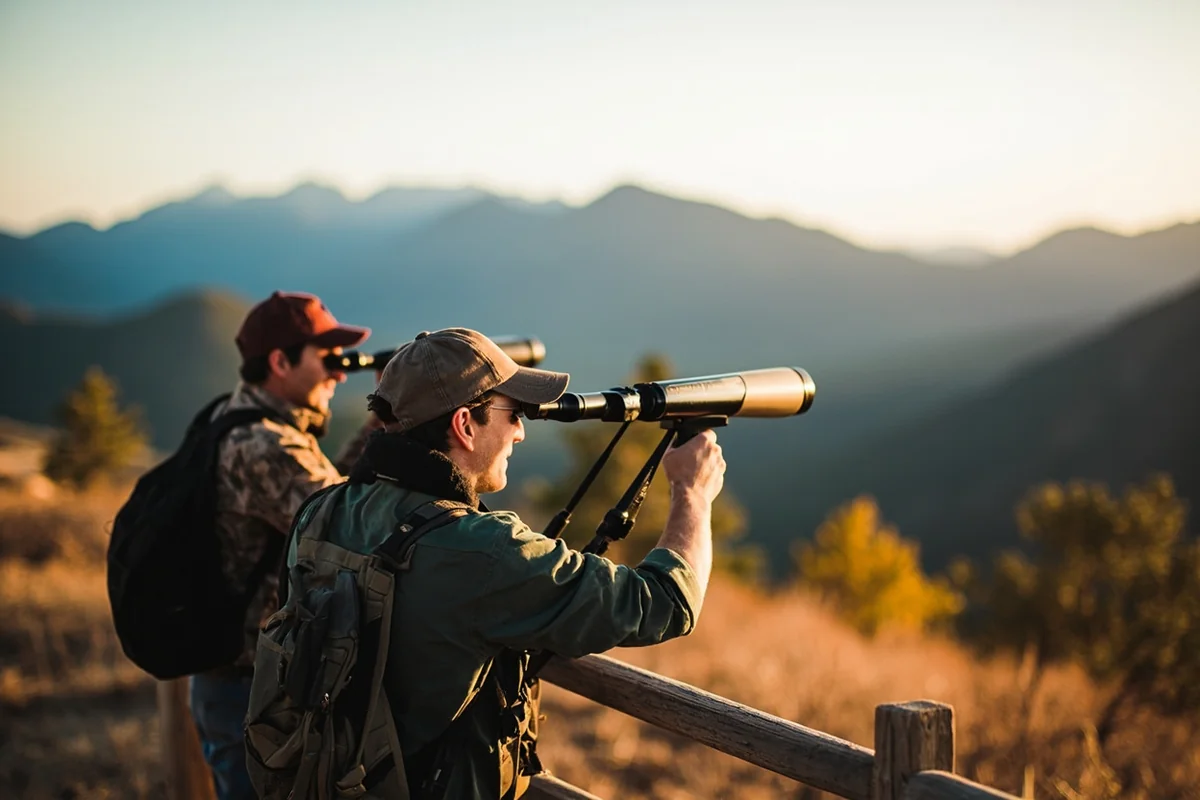
Quality optics matter more than your rifle. I’ve watched clients struggle with cheap binoculars and miss deer their guides spotted immediately.
Bring the best glass you can afford—15×56 binoculars minimum, and a quality spotting scope if you’re hunting open country.
Understanding Land Access Types
Outfitter hunts involve several categories of land access, and understanding them helps you evaluate what you’re paying for.
Private Land Leases
Premium outfitters maintain exclusive or semi-exclusive leases with private landowners.
These arrangements give their clients access to unhunted deer that have grown old and big without the pressure that public-land deer experience.
When evaluating an outfitter, ask about the acreage and exclusivity of their private leases. Some “private land” hunts involve shared access with multiple outfitters—not ideal.
Block Management Access
Montana’s Block Management program provides public access to private lands, and hunting on Montana state land and Block Management areas can be excellent.
Some outfitters rely heavily on Block Management properties. This isn’t necessarily bad—many BMA ranches hold excellent deer—but understand that these aren’t exclusive.
National Forest and BLM Permits
Outfitters operating in wilderness areas or on national forest land need special use permits.
These permits limit the number of outfitters in an area, effectively creating some exclusivity even on public land.
The Bob Marshall Wilderness and adjacent areas host permitted outfitters with established camps and priority access to certain drainages.
Combining Species: Making the Most of Your Trip
Since you’re traveling to Montana, consider maximizing your investment with additional hunting opportunities.
Deer and Elk Combos
Many outfitters offer combination hunts that pursue both mule deer and elk.
This makes logistical sense—you’re already in camp, the seasons overlap, and many areas hold both species.
The challenge is that pursuing two species divides your focus. I generally recommend dedicated hunts if you’re specifically targeting a trophy-class mule deer.
Adding Waterfowl or Upland
Montana duck hunting can provide evening entertainment after your deer hunting wraps for the day.
Many mule deer outfitters have access to stock ponds and prairie potholes that hold ducks, and they’ll arrange shoots for interested clients.
Similarly, whitetail deer hunts in Montana can be combined with mule deer in regions where both species overlap.
Unique Montana Opportunities
If you’re looking for something truly different, consider Montana’s more unusual hunting options.
Montana wolf hunting tags are available, and some mule deer outfitters offer incidental wolf opportunities.
For the adventurous, even Montana swan hunting and Montana squirrel hunting provide unique additions to any Big Sky adventure.
My Top Recommendations: Regions and Outfitter Types
Based on my experiences, here’s how I’d direct different types of hunters:
For Trophy Hunters
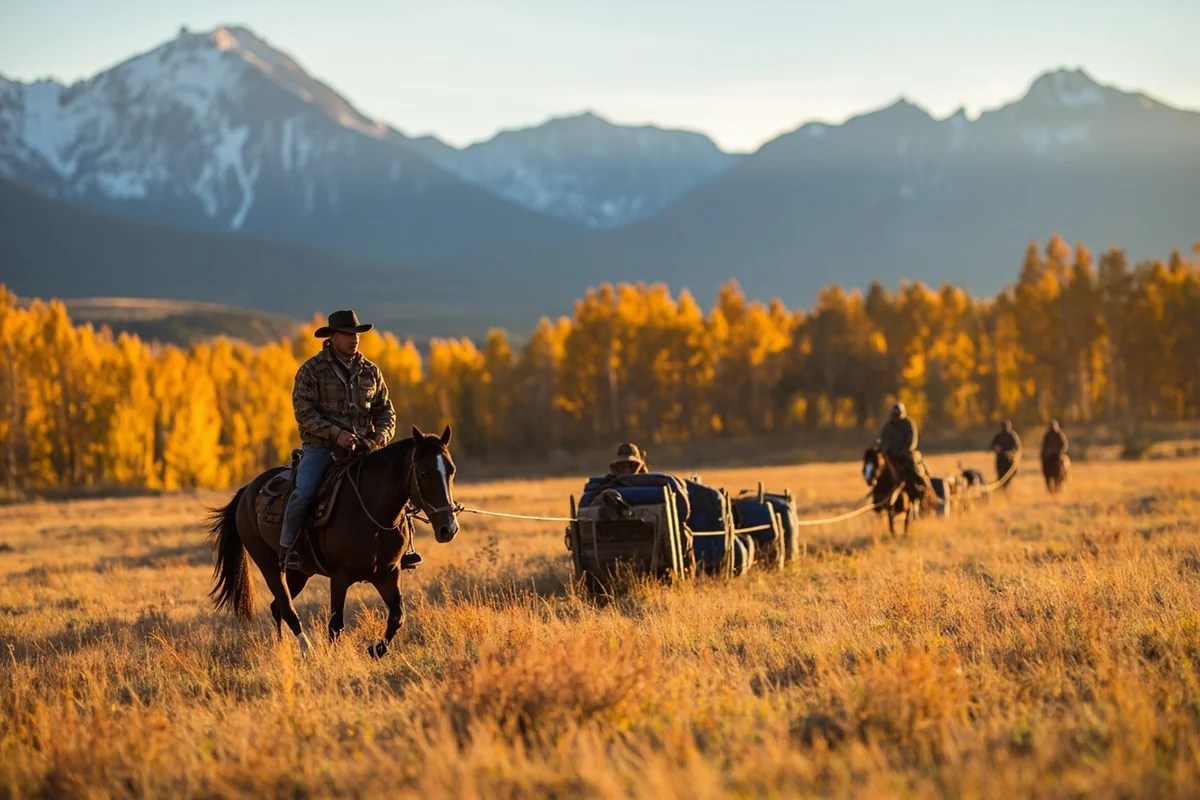
Focus on the Missouri Breaks with an established outfitter running horse camps.
Expect to pay premium prices ($7,000+) and book 18 months in advance. The outfitters I’ve hunted with in the Winifred, Zortman, and Jordan areas consistently produce 170+ class bucks.
Be prepared for physical demands and understand that even the best outfitters can’t guarantee a 180-inch buck every hunt.
For Value-Focused Hunters
Eastern Montana’s prairie country offers excellent hunting at more accessible prices.
The country around Ekalaka, Baker, and the Powder River breaks holds solid populations of 140-160 class bucks, and outfitters here often charge $4,000-$5,500 for quality hunts.
You’re unlikely to kill a book buck, but you’ll see lots of deer and have legitimate opportunities at mature animals.
For First-Time Western Hunters
Consider the Rocky Mountain Front region for your introduction to Montana mule deer hunting.
The terrain is challenging enough to feel like a real western hunt but not so brutal that you’ll be overwhelmed.
Several outfitters near Choteau and Augusta offer excellent experiences at mid-range prices with good success on 150-160 class bucks.
After the Hunt: Processing and Transport
Killing your buck is just the beginning. Getting the meat and trophy home requires planning.
Meat Processing Options
Most outfitters have relationships with local processors and can coordinate meat handling.
If you’re flying home, discuss shipping options before the hunt. Some processors will freeze and ship directly; others require you to arrange transport.
I’ve had good experiences with processors in Lewistown, Miles City, and Great Falls.
Trophy Care
If you’re planning a mount, communicate this to your guide immediately after the kill.
The cape needs proper care from the moment the deer hits the ground. A rushed or improper cape job can ruin your taxidermy.
Quality outfitters know how to cape a head and will have facilities to keep it cool until you can get it to a taxidermist.
Many outfitters have working relationships with Montana taxidermists who can ship completed mounts to your home.
Booking Timeline and Final Thoughts
The best Montana mule deer outfitters book 12-18 months in advance for prime dates.
If you’re reading this planning for next year, start making calls immediately. October and early November dates go first, especially with established outfitters in the Breaks.
Deposit structures vary, but expect to put down 50% at booking with the balance due 60-90 days before your hunt.
Read contracts carefully and understand cancellation policies. Life happens, and knowing your options matters.
Montana mule deer hunting with a quality outfitter represents a significant investment—often $6,000-$10,000 when you factor in all costs.
But standing on a Montana ridge watching a heavy-racked buck work through the sagebrush, knowing your guide has put you in the right place at the right time, that investment feels worth every penny.
The memories and meat from that hunt in the Breaks still feed my family and fuel my dreams of returning.
Choose your outfitter carefully, prepare thoroughly, and embrace whatever Montana’s mule deer country offers. The experience will stay with you long after the antlers are on the wall.
Frequently Asked Questions
What is the best time to book a Montana mule deer outfitter for hunting season?
The general rifle season for mule deer in Montana typically runs from late October through late November, so I recommend booking your outfitter 6-12 months in advance to secure prime dates. Early November is often considered the sweet spot when bucks are most active during the rut, making it the most competitive time to book.
How much does a guided mule deer hunt cost in Montana?
Guided mule deer hunts in Montana typically range from $3,500 to $7,500 for a 5-7 day hunt, depending on whether you choose a DIY drop camp or fully outfitted experience. Premium outfitters offering access to private ranches with trophy-quality bucks can run $8,000-$12,000 or more, which usually includes lodging, meals, and guide services.
What hunting license and tags do out-of-state hunters need for Montana mule deer?
Non-resident hunters need to purchase a Montana Conservation License ($10) plus a General Deer License, which costs around $527 for out-of-state hunters. Many quality mule deer units require a special permit obtained through Montana’s drawing system, so work with your outfitter to apply by the March deadline the year before your hunt.
Which Montana regions have the best mule deer hunting with outfitters?
Eastern Montana’s Region 7, particularly around the Missouri River Breaks, is legendary for producing trophy mule deer with outfitters reporting consistent success. The Hi-Line country in Region 6 and the foothills near the Rocky Mountain Front also offer excellent opportunities, with many ranches spanning thousands of acres of prime habitat.
What gear should I pack for a Montana mule deer hunting trip?
I always recommend layering systems for Montana’s unpredictable weather, including a quality base layer, insulated mid-layer, and waterproof outer shell since temperatures can swing from 50°F to below freezing. Essential items include sturdy boots broken in for rugged terrain, a reliable rangefinder, binoculars (10×42 minimum), and a rifle capable of 300+ yard shots since Montana’s open country demands longer shooting.
Do Montana mule deer outfitters provide lodging and meals during the hunt?
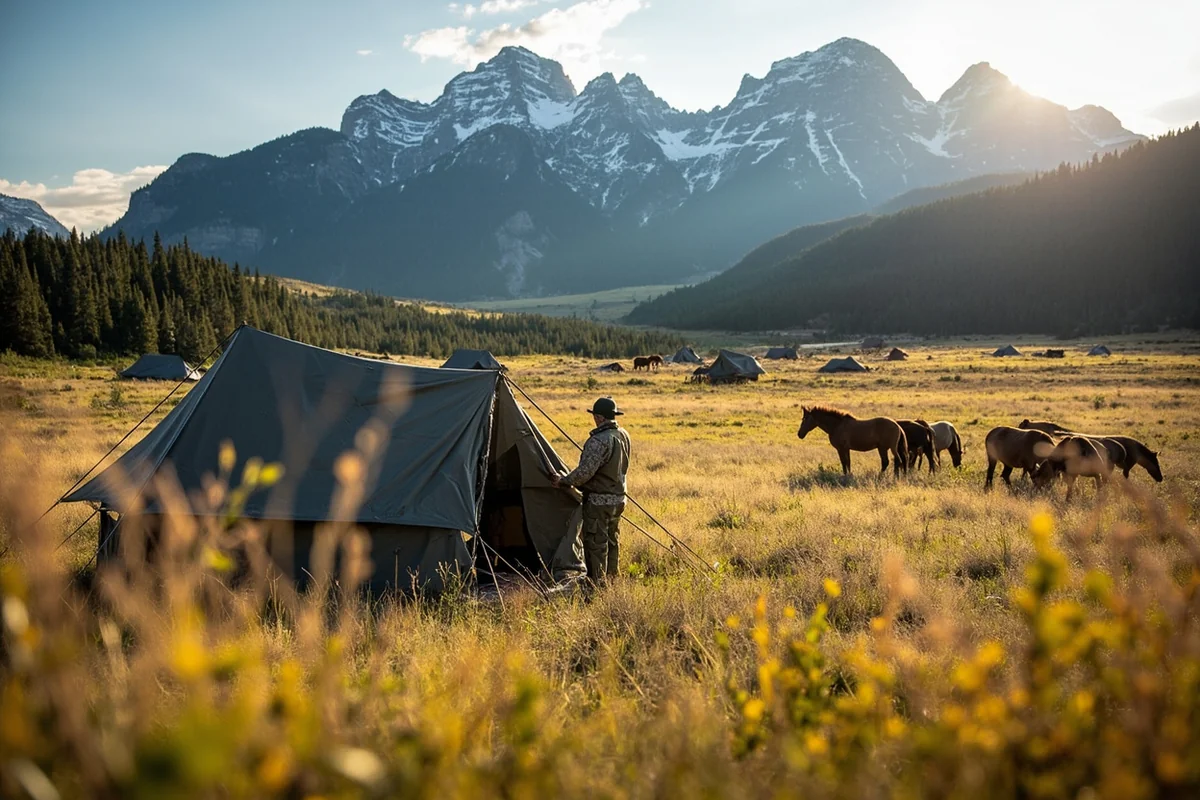
Most reputable Montana mule deer outfitters offer all-inclusive packages that include rustic lodge accommodations or comfortable wall tents, home-cooked meals, and field transportation. I’ve found that full-service outfitters typically handle everything from airport pickup in Billings or Great Falls to meat processing, though it’s worth confirming these details before booking.
What is the average success rate for guided mule deer hunts in Montana?
Quality Montana mule deer outfitters typically report success rates between 70-90% for harvest opportunities, though trophy buck success rates are naturally lower at 40-60%. Your success largely depends on the outfitter’s access to quality habitat, so I always recommend asking for references and recent harvest photos before committing to a booking.