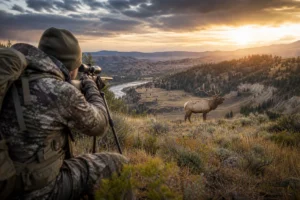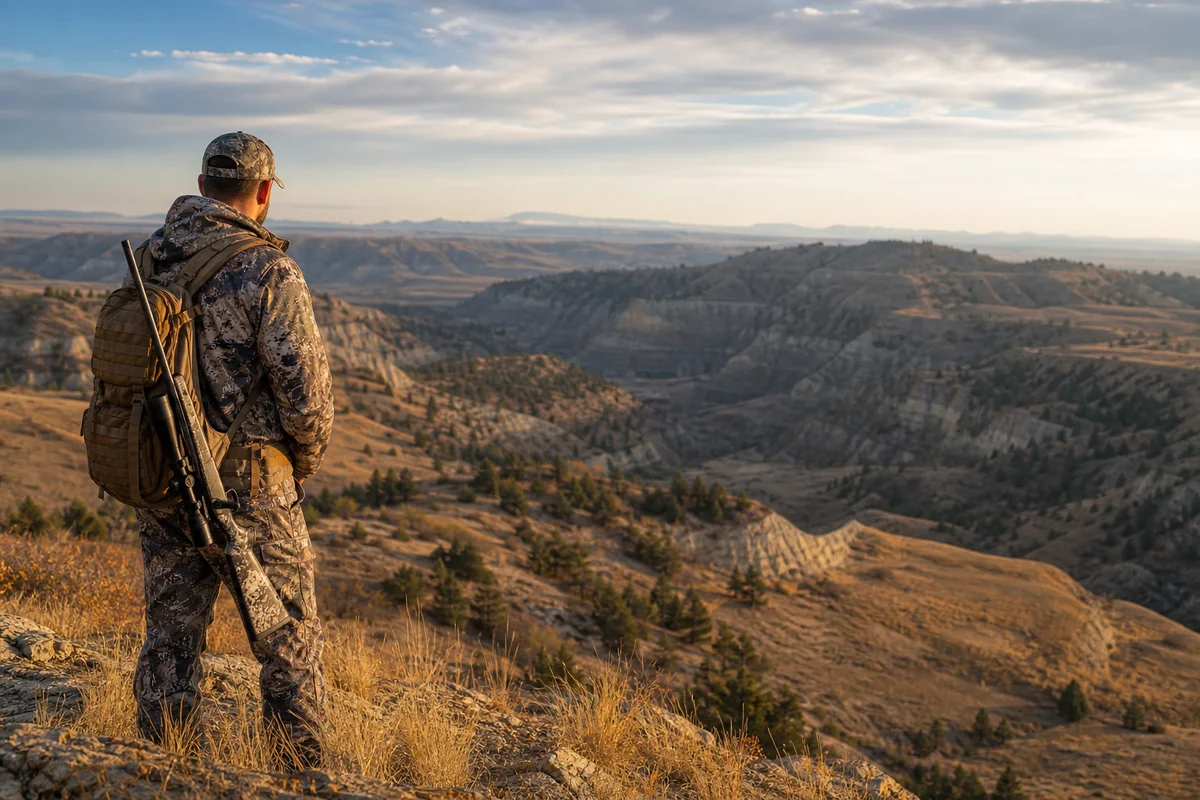
Standing on a windswept ridge in the Missouri Breaks last September, I watched a herd of mule deer filter through the coulees below—and realized I hadn’t seen another hunter in three days.
That’s the magic of Montana’s public hunting land: over 30 million acres of accessible wilderness where you can chase everything from elk to upland birds without paying a dime in trespass fees.
If you’re planning your first trip or looking to expand beyond private outfitter hunts, this comprehensive Montana Hunting Guide resource will show you exactly how to unlock the state’s incredible public access opportunities.
- Montana offers 30+ million acres of public hunting land including BLM, National Forest, state lands, and Block Management areas
- Block Management provides free access to 7+ million acres of private land enrolled in the program
- State trust lands require a $25 recreational use license for hunting access
- The onX or HuntStand app is essential—paper maps can’t keep up with land ownership changes
- Best public hunting concentrations: Missouri Breaks, Rocky Mountain Front, Beaverhead-Deerlodge NF
- Non-residents can hunt most public land but face higher license fees and limited permits for premium species
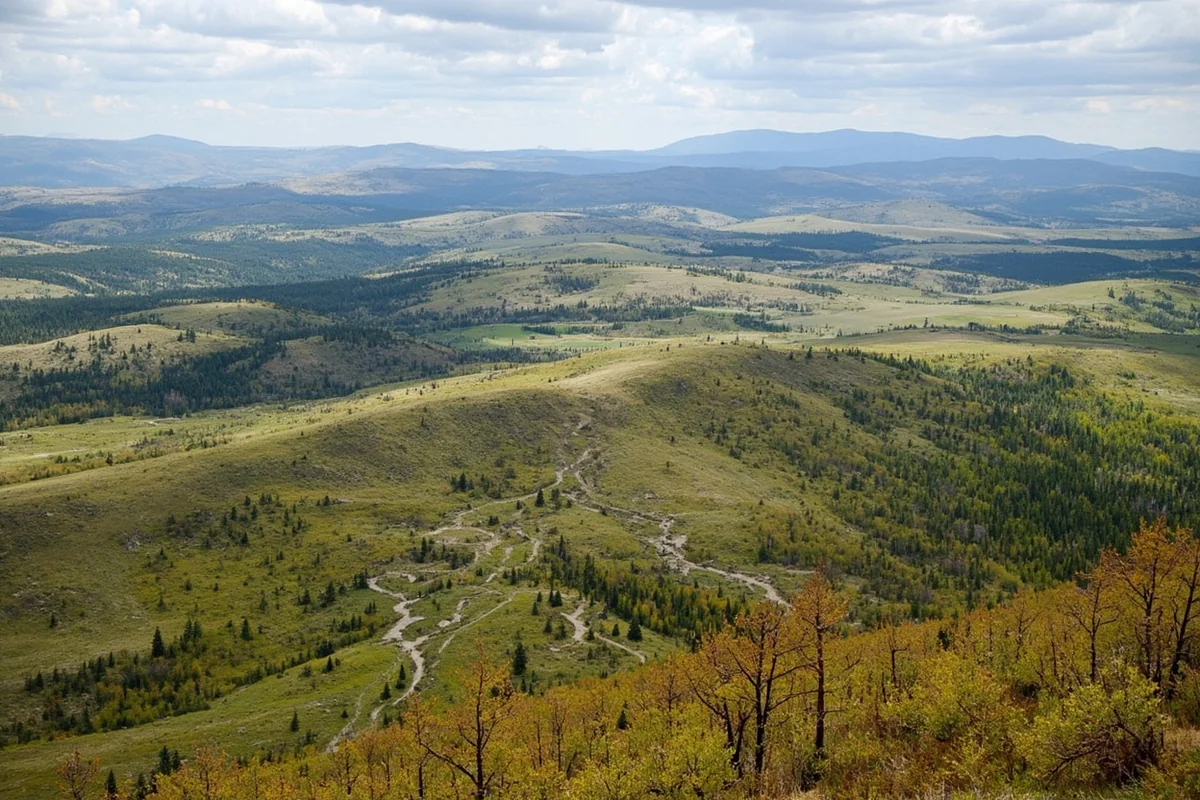
Understanding Montana’s Public Land Categories
When I first started hunting Montana over a decade ago, I was overwhelmed by the patchwork of land ownership. Federal, state, and private parcels interweave like a complex puzzle, and knowing who manages what determines where you can legally hunt.
Let me break down each category based on my years of navigating this system.
Bureau of Land Management (BLM) Land
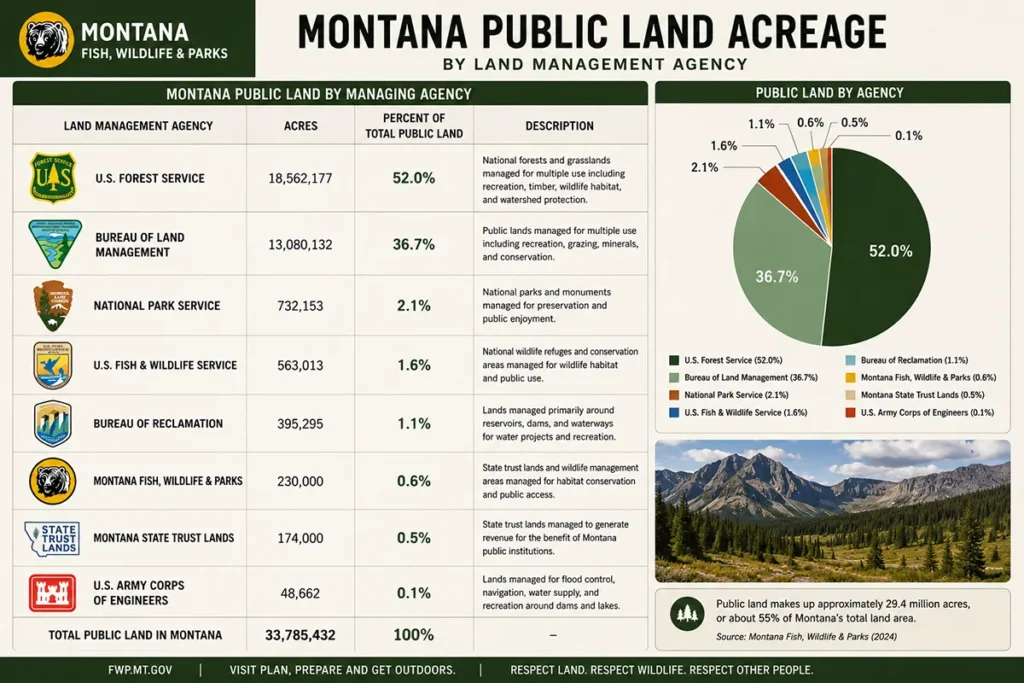
BLM administers roughly 8 million acres across Montana, concentrated primarily in the eastern and central portions of the state. These lands are open to hunting without any additional permits beyond your standard Montana hunting license.
During my hunts in the Missouri Breaks, I’ve found BLM land to be some of the most underutilized public ground in the state. The terrain can be brutal—rugged breaks, sparse water, and punishing heat in early season—but the hunting pressure is minimal compared to National Forest land.
The catch? BLM parcels are often scattered and landlocked by private property. I’ve spent hours planning routes to legally access isolated sections, sometimes hiking three or four miles just to reach a 640-acre chunk surrounded by ranches.
National Forest Land
Montana’s National Forests comprise approximately 17 million acres and represent the backbone of public hunting opportunity in the western half of the state. The Beaverhead-Deerlodge, Flathead, Helena-Lewis and Clark, Lolo, Gallatin, Kootenai, and Custer-Gallatin National Forests offer expansive, contiguous hunting grounds.
I’ve had my best Montana elk hunting experiences on National Forest land in the Bitterroot and Bob Marshall Wilderness areas. The trade-off is access—wilderness areas prohibit motorized vehicles, meaning you’re packing in on foot or horseback.
What I appreciate about National Forest hunting is the predictability. Unlike state land with scattered sections, you can plan multi-day backcountry trips knowing you’re on public ground for miles in every direction.
State Trust Lands
Montana’s 5.2 million acres of state trust land confuse many visiting hunters, myself included when I first arrived. These lands are managed to generate revenue for public schools and other institutions—they’re not traditional “public land” in the recreation sense.
As of recent years, you need a State Land Recreational Use License ($25 for residents, $25 for non-residents) to hunt state trust lands. This license is separate from your hunting license and can be purchased through FWP.
I’ve found state sections to be hit-or-miss for hunting quality. Some parcels hold excellent populations of deer and antelope because they see less pressure than National Forest land. Others have been leased for agricultural use and offer limited habitat.
For detailed information on regulations governing these areas, check out our guide on whether you can hunt on Montana state land.
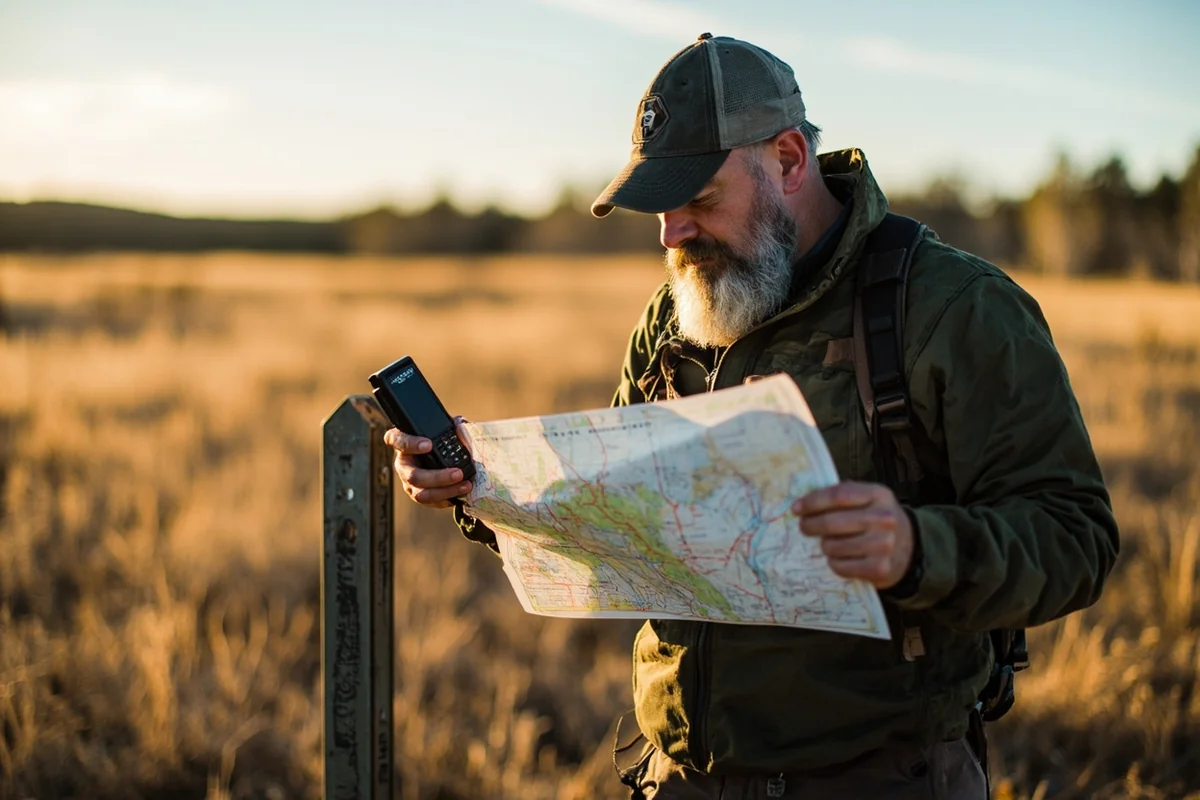
Wildlife Management Areas (WMAs)
Montana Fish, Wildlife & Parks manages roughly 70 WMAs totaling around 350,000 acres specifically for wildlife habitat and public hunting access. These properties often provide exceptional hunting because habitat management is the primary objective.
Sun River WMA west of Augusta has produced some of my most memorable whitetail deer hunts. The bottomland habitat along the Sun River corridor concentrates deer in predictable patterns.
Some WMAs have special regulations—certain areas may be closed during specific seasons, some require sign-in at check stations, and a few have weapon restrictions. I always check the individual WMA regulations before hunting a new property.
Block Management: Montana’s Secret Weapon
If there’s one program that sets Montana apart from other western states, it’s Block Management. This voluntary program enrolls private landowners who agree to provide public hunting access on their property in exchange for financial compensation and liability protection.
Last season, I hunted seven different Block Management areas across central Montana, accessing over 50,000 combined acres that would otherwise be off-limits.
How Block Management Works
Landowners enroll their property with FWP, and the agency maps and signs the boundaries. Some BMAs (Block Management Areas) allow unlimited hunter access during legal shooting hours. Others implement Type 1 or Type 2 permission systems requiring advance contact with the landowner or sign-in at designated locations.
The program currently enrolls over 7 million acres annually. That’s 7 million acres of private land you can hunt for free—assuming you follow the rules.
I’ve found that Block Management areas often hold more game than comparable public land simply because hunting pressure has historically been lower. Landowners control access, meaning you’re not competing with the same crowds you’d find on National Forest opening day.
Tips for Block Management Success
During my years hunting BMAs, I’ve learned several lessons the hard way.
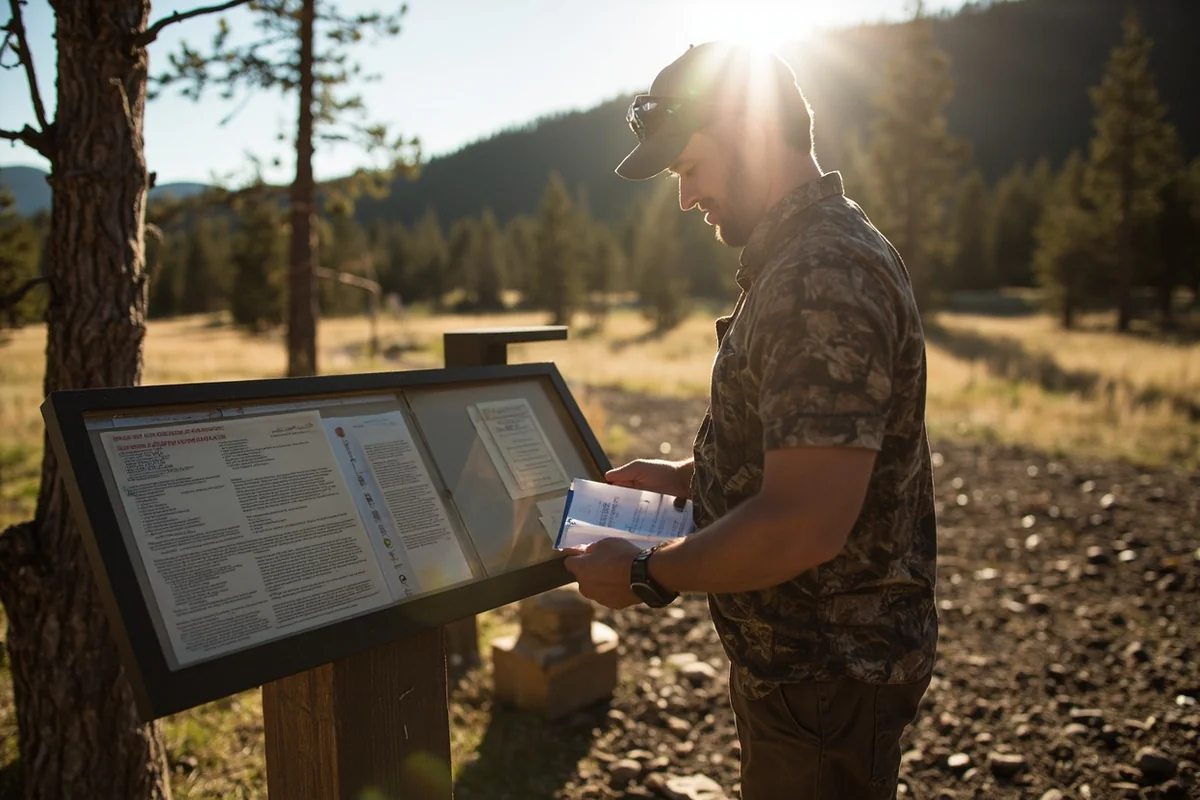
First, get the physical Block Management booklet or download the regional PDFs from FWP’s website well before your hunt. These guides include maps, access instructions, and landowner contact information for Type 1 areas.
Second, always call ahead for Type 1 areas, even if you think you might not need permission. I’ve driven two hours to a BMA only to find the landowner had already reached his daily hunter limit.
Third, treat these properties with absolute respect. Close gates, pack out all trash, and follow any landowner-specific rules. Block Management only survives because landowners voluntarily participate—one bad hunter can pull thousands of acres from the program.
Fourth, hunt BMAs during mid-week if possible. Weekend pressure on popular units near population centers can rival nearby public land.
Essential Mapping Tools for Montana Public Land
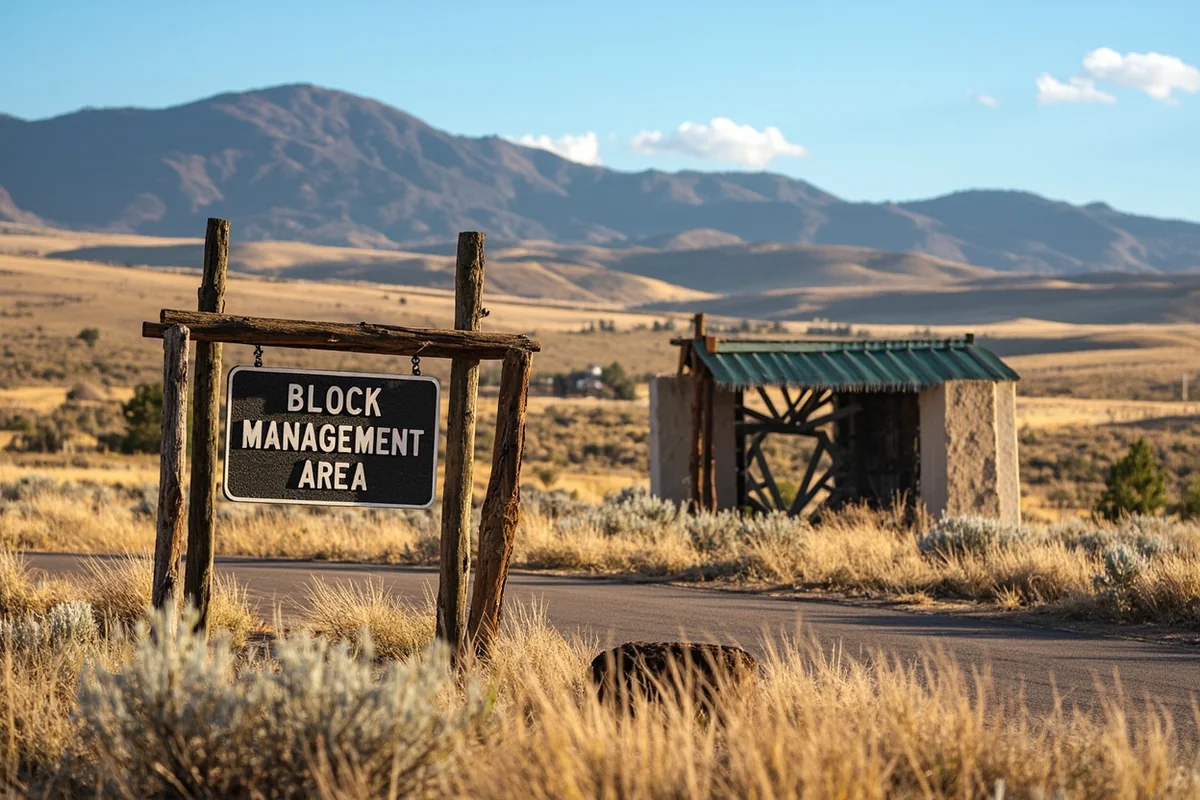
I cannot overstate this: hunting Montana public land without digital mapping is like driving blindfolded. The checkerboard ownership pattern, especially in eastern Montana, makes paper maps nearly useless for real-time navigation.
Why Digital Maps Are Non-Negotiable
On a Montana antelope hunting trip near Jordan three years ago, I watched a hunter from Iowa nearly walk onto private property while following a herd. His paper map didn’t show that the fence line he was approaching marked the boundary between BLM and a private ranch.
I use onX Hunt as my primary mapping tool, though HuntStand and other competitors offer similar functionality. These apps overlay land ownership data on satellite imagery, showing you exactly where public land ends and private begins.
The subscription cost ($30-100 annually depending on features) pays for itself the first time you avoid a trespass citation or successfully navigate to an isolated public parcel.
Key Features to Utilize
Beyond basic land ownership layers, I rely heavily on these mapping features.
Offline maps are critical. Cell service doesn’t exist across huge swaths of Montana hunting country. Download your hunt area before leaving town.
Property owner information helps when you encounter unmarked boundaries. I’ve made several landowner contacts through mapping apps that led to permission-based hunting opportunities.
Historical aerial imagery reveals habitat changes, old roads, and water sources that don’t appear on standard topo maps.
Region-by-Region Public Land Breakdown
Montana’s geography varies dramatically from the glacier-carved peaks of the northwest to the prairie breaks of the east. Here’s what I’ve learned hunting public land across different regions.
Northwest Montana (Region 1)
The Flathead and Kootenai National Forests dominate this region, offering millions of acres of contiguous public land. Terrain ranges from valley bottoms to alpine ridges exceeding 9,000 feet.
I’ve hunted black bear in the dense timber near Libby and chased whitetails along the Flathead River corridor. This region receives significant precipitation, meaning the forest is thick—really thick. Spot-and-stalk hunting can be challenging in the heavy cover.
The Bob Marshall Wilderness complex provides some of the most remote public hunting in the Lower 48. I’ve packed in eight miles for September archery elk hunts and not seen another person for the duration of my trip.
Access points can be limited, and roads often close early due to snow. Plan your hunt timing carefully.
Southwest Montana (Region 3)
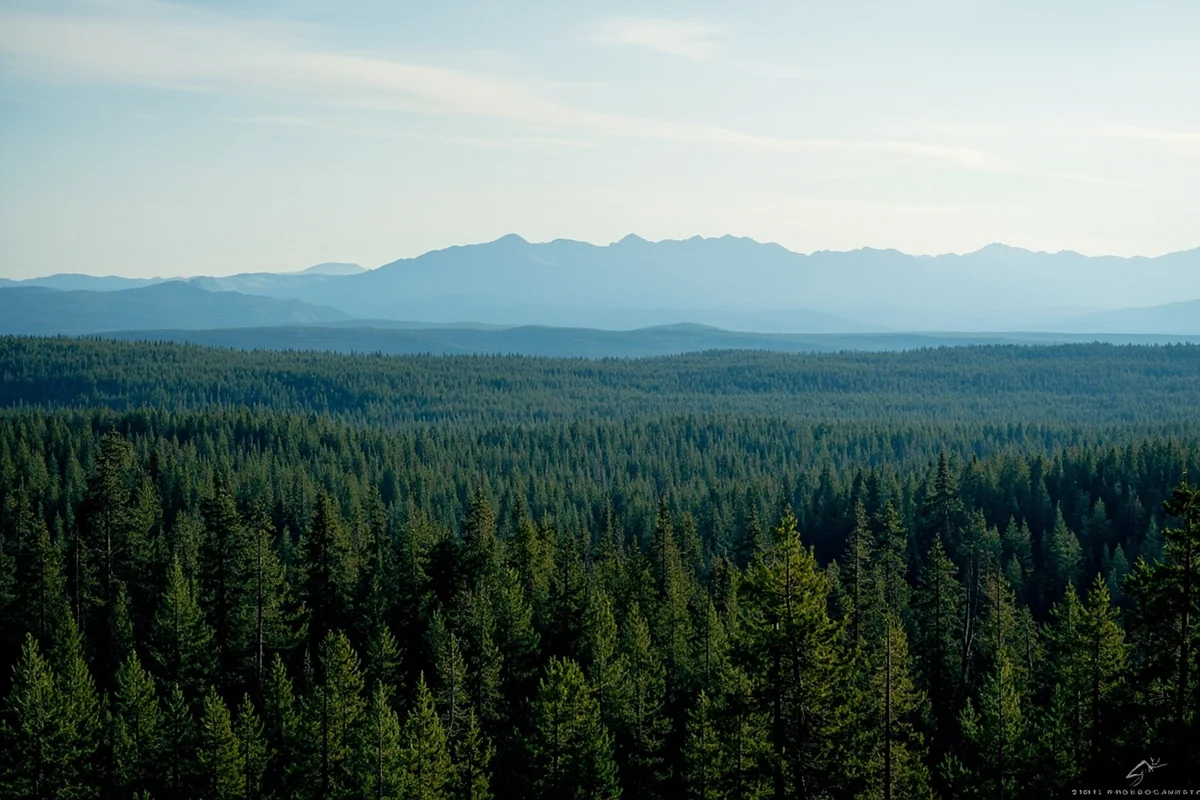
The Beaverhead-Deerlodge National Forest sprawls across this region, intermixed with substantial BLM holdings. This is prime elk country, but also supports strong populations of mule deer, moose, and mountain lion.
Hunting districts around Dillon, Butte, and Anaconda have produced consistent action during my mid-October rifle seasons. The elevation ranges from 5,000 feet in the valleys to over 10,000 feet on the peaks, so conditioning matters.
State trust lands dot the valleys between mountain ranges. I’ve found these lower-elevation sections useful for early and late season hunting when high-country snow pushes animals down.
The Madison, Ruby, and Beaverhead valleys offer excellent upland bird hunting on public ground when you need a break from big game pursuit.
Central Montana (Region 4)
This region transitions from mountain to prairie and contains some of Montana’s most diverse public land opportunities. The Helena-Lewis and Clark National Forest covers the mountain ranges, while BLM and Block Management dominate the eastern portions.
The Rocky Mountain Front—that dramatic line where the Rockies meet the plains—offers what I consider Montana’s most spectacular hunting landscape. I’ve glassed grizzly bears, elk, mule deer, and mountain goats from single vantage points along the Front.
Districts around Augusta and Choteau see heavy pressure opening week of rifle season but settle down considerably by mid-November. The combination of walk-in areas, Block Management, and National Forest provides options if one area gets crowded.
Northcentral Montana (Region 4 continued)
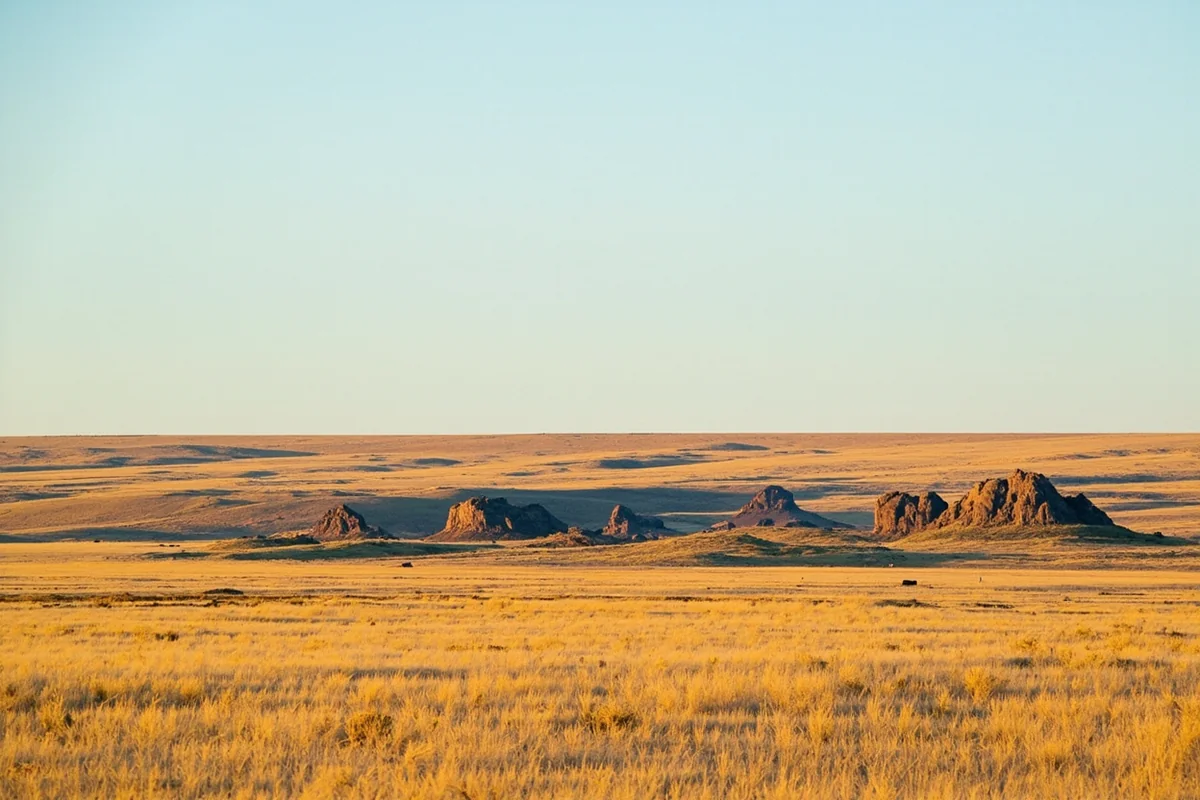
The Missouri Breaks represent public land hunting at its finest and most demanding. BLM, Charles M. Russell National Wildlife Refuge, and scattered state sections create a patchwork of accessible ground.
I spent five days in the Breaks two Novembers ago, hunting mule deer and elk. The terrain is unforgiving—steep coulees, gumbo clay that turns to concrete on your boots, and water that’s hard to find. But the hunting is extraordinary.
Mule deer tags for break country units are increasingly difficult to draw, but the CMR refuge and surrounding BLM remain open for general hunting. I’ve consistently found mature bucks in the isolated coulees that require real effort to reach.
Eastern Montana (Regions 6 and 7)
The eastern prairies might not look like traditional Montana hunting country, but they hold remarkable opportunity for those willing to work the checkerboard.
BLM and state trust lands scatter across the landscape like pieces of a puzzle. Block Management fills many gaps, creating huntable corridors through otherwise private country.
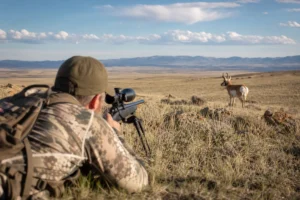
I hunt pronghorn in eastern Montana nearly every fall. The public land challenge keeps most hunters on Block Management areas, meaning isolated BLM sections often hold undisturbed animals.
Sharptail grouse and Hungarian partridge thrive in this region. I’ve combined antelope hunts with upland walks, covering 10-12 miles daily across the rolling prairie.
Practical Considerations for Planning Your Hunt
Understanding where public land exists is only the first step. Successfully hunting that ground requires thoughtful logistics.
Access Points and Parking
Not all public land has legal access. I’ve identified promising habitat on satellite imagery only to find the parcel landlocked by private ground with no public road frontage.
County roads maintained for public travel provide access to many areas. These roads appear as thin lines on mapping apps—verify they’re actually public before assuming you can drive them.
Parking on public land isn’t automatically permitted everywhere. Some National Forest roads prohibit parking off the roadway to protect vegetation. Some BLM areas designate specific parking areas. Check agency regulations for your specific hunt area.
Camping Options
Dispersed camping on National Forest and BLM land saves accommodation costs and puts you closer to your hunting ground. I camp near my hunting areas whenever possible, which means I’m in position before first light instead of driving an hour from town.
Dispersed camping rules vary by area. Most National Forests allow camping within 150 feet of roads in previously disturbed sites. Some areas restrict camping near water sources or during fire season.
State trust lands generally don’t allow camping without written permission from DNRC. I’ve learned this rule the hard way and now plan my state land hunts as day trips from a nearby National Forest camp.
Water and Resupply
Eastern Montana public land hunts require serious water planning. I carry at least one gallon per day during early season hunts when temperatures can still reach the 80s.
Stock tanks and windmills on BLM land sometimes provide water, but don’t count on it. Many ranchers have removed or secured tanks on public sections.
The nearest town might be 60-80 miles from your hunting area in regions like the Missouri Breaks or the Big Open. Top off fuel and supplies before heading into the backcountry.
Licensing Requirements for Public Land Hunting
Before setting foot on any Montana public land, ensure your licensing is complete. The requirements vary by residency status and species.
Basic License Requirements
All hunters need a base hunting license and appropriate species tags. Understanding Montana hunting license costs helps budget your trip—non-resident fees add up quickly.
The Conservation License ($10 resident, $10 non-resident) serves as your base license allowing purchase of species-specific tags.
Combination licenses bundle species for cost savings. I recommend non-residents consider the deer-elk combination if planning to hunt both species.
Special Permits and Drawings
Some of Montana’s best public land hunting requires drawn permits. Limited entry elk units, moose, mountain goat, bighorn sheep, and buffalo all require application.
The Montana preference points system rewards persistent applicants. I’ve accumulated points for years toward difficult draws.
General season deer and elk tags remain available over-the-counter in most units—a significant advantage compared to states where all big game requires drawings.
Check current Montana hunting regulations and deer-specific regulations before finalizing your plans.
State Land Recreational Use License
Remember that hunting state trust land requires the additional $25 recreational use license mentioned earlier. This license is valid for the calendar year and can be purchased when buying other licenses through FWP.
Timing Your Public Land Hunt
Montana hunting seasons span from September through February depending on species and weapon type. Public land hunting success often depends on timing your trip strategically.
Early Archery Season (September)
Archery season opens in early September across most of Montana. The weather is warm, animals are still in summer patterns, and the landscape is dry.
I’ve found early archery hunting on public land most productive in higher elevations where elk remain in alpine basins. Lower elevation public land can be extremely hot and animals often water at night.
The advantage of September is low hunting pressure. Many hunters save their vacation time for rifle season, meaning you’ll have public land largely to yourself.
General Rifle Season (Late October-November)
Opening week of rifle season transforms popular public land areas. I’ve seen truck-lined roads and hunter-packed parking areas at National Forest trailheads near Bozeman and Missoula.
My strategy involves hunting the first few days of season, then backing off during peak pressure. Public land hunting quality often improves dramatically after the first week as casual hunters head home.
Later November brings snow, which moves animals and makes them more visible. Some of my best public land hunts have come during the final week of rifle season when persistent hunters have the mountains to themselves.
Muzzleloader and Late Seasons
Montana’s muzzleloader season and shoulder season opportunities extend hunting into December and beyond.
Late season public land hunting focuses on lower elevations where animals have migrated. Block Management areas in valley bottoms become particularly productive as elk and deer concentrate on winter range.
Weather presents the primary challenge—December hunts can involve serious cold and snow. But public land that saw heavy pressure in October may hold unpressured animals by mid-winter.
Species-Specific Public Land Strategies
Different game species use public land in predictable ways. Here’s what I’ve learned targeting specific animals.
Elk on Public Land
Elk move constantly in response to hunting pressure. On public land, I focus on areas requiring physical effort to reach—miles from roads, steep terrain, and thick timber.
Opening day of rifle season, I’m typically two to three miles from the nearest road. Elk pushed by hunters often move toward these low-pressure pockets.
National Forest wilderness areas provide the most consistent public land elk hunting because motorized hunters can’t access them. The tradeoff is the pack-out challenge if you’re successful.
Mule Deer on Public Land
Mule deer on Montana public land have adapted to hunting pressure. The bucks I see on heavily hunted National Forest land are warier than any private-land deer.
I’ve had best success focusing on terrain features that other hunters avoid—steep sidehills, dense brush patches, and isolated benches far from roads.
Late season hunts often produce the best mule deer opportunities as bucks move toward winter range. Dedicated mule deer hunters know that public land near private agricultural ground can intercept migrating bucks.
Whitetails on Public Land
Whitetail habitat concentrates along river bottoms and agricultural edges—areas often privately owned. But public hunting opportunities exist on WMAs, river access sites, and Block Management areas.
I’ve taken my best public land whitetails by keying on specific habitat types: cattail marshes, willow thickets, and cottonwood bottoms. These micro-habitats often exist on small public parcels overlooked by hunters focused on big country.
Duck hunting and whitetail hunting often overlap in river bottom habitat. I’ve combined morning duck hunts with afternoon deer stands on the same public WMA.
Upland Birds and Waterfowl on Public Land
Montana’s upland bird hunting receives less attention than big game, but public opportunities are excellent. Pheasants, sharptails, Huns, and mountain grouse all exist on public ground.
Eastern Montana BLM and Block Management hold sharptails and Huns across vast prairie habitat. I’ve walked 10 miles in a day and flushed birds consistently on public ground.
Mountain grouse—blues, ruffed, and spruce—occupy National Forest land in the western mountains. These birds provide excellent hunting when combined with early archery elk hunts.
Swan hunting and other specialized waterfowl opportunities exist on WMAs and refuges with specific regulations.
Predators and Small Game
Wolf hunting on Montana public land requires specific licensing and occurs during designated seasons.
Squirrel hunting provides an often-overlooked public land opportunity, particularly in the forested western mountains.
| Land Type | Approximate Acres | Additional Permit Required | Primary Region |
|---|---|---|---|
| National Forest | 17 million | No | Western Montana |
| BLM | 8 million | No | Central/Eastern Montana |
| Block Management | 7+ million | No (varies by BMA type) | Statewide |
| State Trust Land | 5.2 million | Yes ($25 Rec Use License) | Statewide (scattered) |
| Wildlife Management Areas | 350,000 | No (some restrictions) | Statewide |
Common Mistakes to Avoid
Over the years, I’ve made—and witnessed—plenty of public land hunting mistakes. Learn from my errors.
Failing to Scout Before Season
Public land scouting trips pay enormous dividends. I try to visit my planned hunting areas at least once before season opens to identify access points, learn the terrain, and pattern animal movement.
Summer scouting doesn’t require a license. Trail cameras on public land face some restrictions, so check current regulations, but glass-and-gas scouting trips are always legal.
Hunting Too Close to Roads
The majority of public land hunting pressure occurs within one mile of a road. Simply walking farther dramatically improves your odds.
I rarely hunt within two miles of a trailhead during rifle season unless I’m specifically targeting pressure-driven animals moving ahead of other hunters.
Ignoring Block Management
Some hunters dismiss Block Management as “not really public land.” This attitude leaves millions of acres lightly hunted.
I’ve taken several of my best Montana animals on Block Management properties. Don’t overlook this resource.
Underestimating the Terrain
Montana’s public land will humble unprepared hunters. The distances are vast, the elevation changes are significant, and the weather can turn dangerous quickly.
Physical conditioning matters. I spend months preparing for Montana hunts with hiking, stair climbing, and pack training. Arriving out of shape limits where you can hunt effectively.
Final Thoughts on Montana Public Land Hunting
After more than a decade hunting Montana’s public lands, I remain amazed at the opportunities available to anyone willing to put in the work. The state’s combination of National Forest, BLM, state land, and Block Management creates a mosaic of huntable ground that rivals or exceeds any state in the nation.
Success requires preparation—understanding land ownership, navigating the licensing system, and planning logistics carefully. But the reward is hunting wild country for wild animals without writing a check to an outfitter or landowner.
Start with digital mapping tools and the Block Management guide. Identify accessible parcels in your chosen hunting district. Plan a scouting trip if possible. And be prepared for country that demands physical and mental effort.
The public land is there. It’s yours to hunt. You just have to find it.
Frequently Asked Questions
How much public hunting land is available in Montana?
Montana offers over 8 million acres of public hunting land, including Bureau of Land Management (BLM) lands, national forests, and state wildlife management areas. I’ve found that Block Management areas add another 7+ million acres of private land open to public hunting through the state’s access program. This makes Montana one of the best states in the US for accessible public land hunting opportunities.
What is the best time to hunt on public land in Montana?
The best time depends on your target species, but general rifle season for deer and elk typically runs from late October through late November. I recommend arriving mid-week during the second or third week of rifle season when initial hunting pressure drops but animals are still active. Archery hunters should plan for September when temperatures are milder and elk are bugling.
How much does a non-resident hunting license cost in Montana?
Non-resident hunting licenses in Montana range from $15 for a conservation license (required base license) to $1,026 for a combination deer and elk license. A non-resident deer combo runs about $578, while elk combo costs around $928. I always budget an extra $50-100 for habitat stamps and any special permits required for specific units.
What gear should I bring for hunting public land in Montana?
Pack layers for unpredictable mountain weather, quality boots rated for rugged terrain, and navigation tools like OnX Maps or a GPS since cell service is unreliable in remote areas. I never hunt Montana without a quality spotting scope, trekking poles for steep terrain, and a reliable pack capable of hauling meat several miles. Bring blaze orange requirements (minimum 400 square inches above the waist during rifle season) and be prepared for elevation gains of 1,000+ feet.
Do I need to apply for a hunting tag in advance for Montana public land?
Some Montana hunting opportunities require applying through a draw system with deadlines in early March to June, especially for limited-entry elk units, moose, sheep, and goat. However, general deer and elk licenses are available over-the-counter for non-residents until quotas fill, which I’ve seen happen by September in popular years. I recommend applying for bonus points annually even if you can’t make the trip to build preference for premium units.
Where are the best public hunting areas in Montana for out-of-state hunters?
Region 3 around Bozeman and Region 7 in eastern Montana offer excellent public land access with healthy elk and mule deer populations. I’ve had great success on BLM land in the Missouri Breaks for mule deer and the Custer Gallatin National Forest for elk. The Rocky Mountain Front along Highway 89 provides stunning terrain with solid game numbers, though expect company during peak season.
Can I camp on public hunting land in Montana?
Yes, dispersed camping is allowed on most BLM and national forest land in Montana for up to 14 days at no cost, which saves significantly on lodging. I typically set up a base camp on forest service roads within a few miles of my hunting area, arriving a day early to scout and acclimate to the elevation. Just check for any fire restrictions or special regulations in your specific unit before setting up camp.