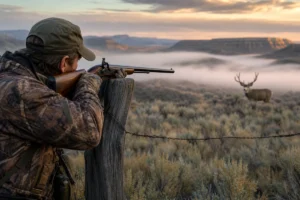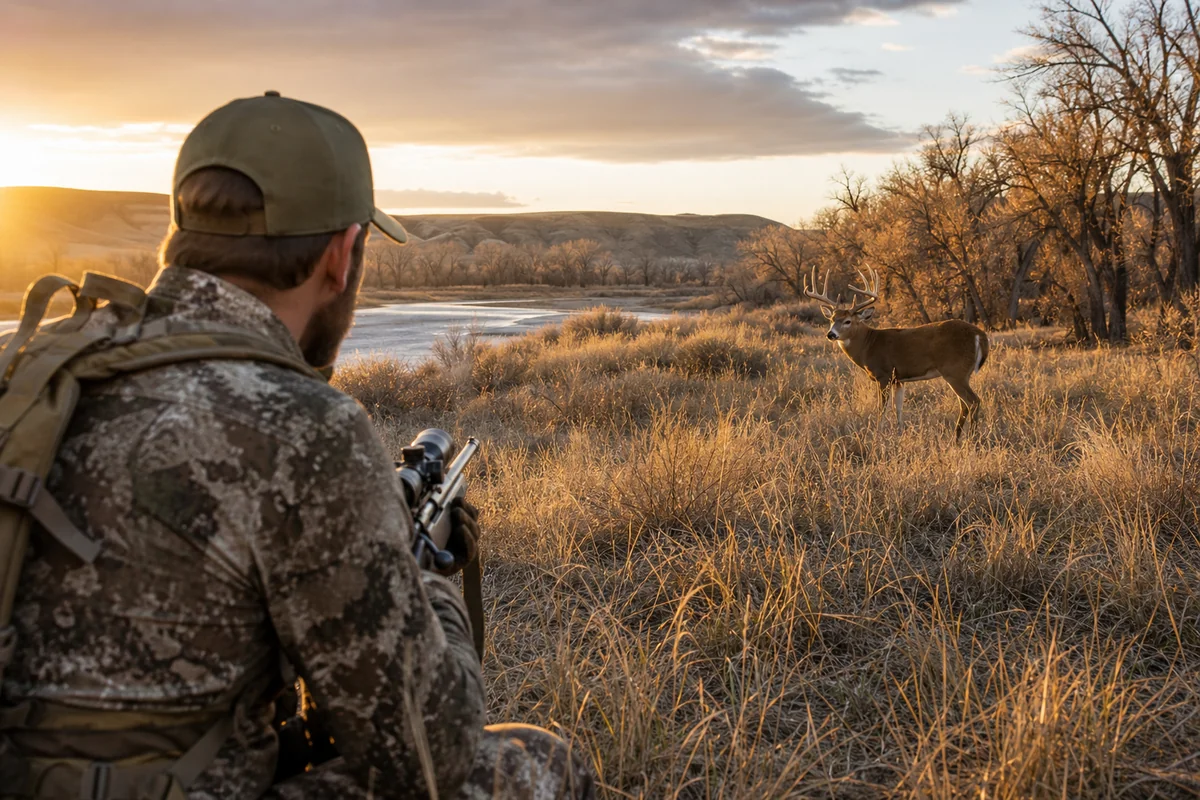
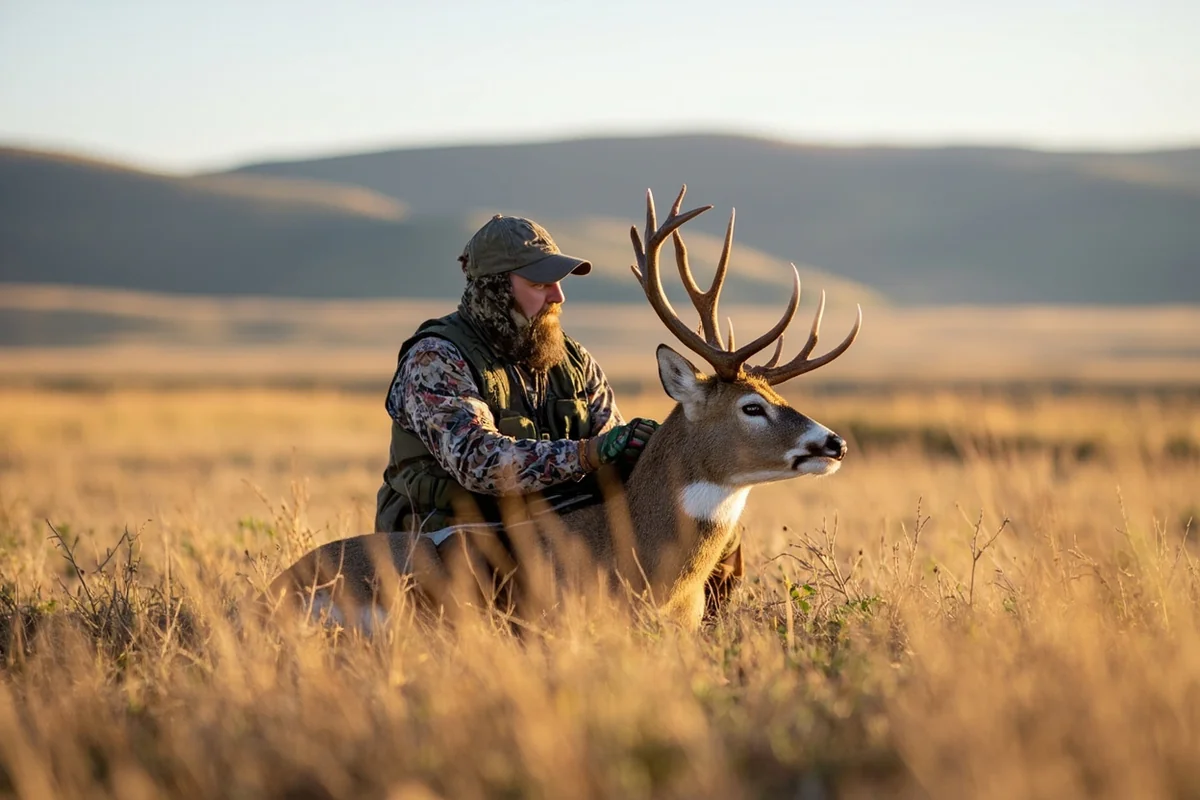
The first whitetail buck I ever took in Montana materialized like a ghost from the cottonwoods along the Milk River, his rack catching the golden light of a November sunrise in a way that still gives me chills years later.
That moment crystallized everything I love about hunting whitetails in Big Sky Country—the intersection of patience, preparation, and pure Montana magic that makes this state one of the most underrated whitetail destinations in America.
If you’re planning a trip to pursue whitetails here, you’re in for an experience that rivals anything the Midwest has to offer, and this Montana Hunting Guide resource will help you understand why serious deer hunters keep coming back to the Treasure State.
- Montana offers exceptional whitetail hunting primarily in the northern and eastern river corridors, with mature bucks regularly exceeding 150 inches
- General season runs late October through late November, with archery starting in early September—plan around the November rut for best results
- Non-resident deer combination licenses cost around $500-600, and tags are available over-the-counter for most hunting districts
- Focus on river bottoms, agricultural edges, and coulees for the highest whitetail concentrations
- Public land opportunities are excellent, especially BLM lands and Block Management areas in the northeastern corner of the state
- Weather can be extreme—prepare for anything from 60°F to -20°F during the season
Why Montana Deserves Your Attention for Whitetails
I’ll be honest—when most hunters think of Montana, they picture bugling elk in alpine basins or mule deer on sagebrush ridges. That’s exactly why the whitetail hunting here is so good.
The pressure is simply lower than in traditional whitetail states. During my last November hunt near Glasgow, I spent four days without seeing another hunter in the field.
Montana’s whitetail population has exploded over the past two decades. What was once considered marginal habitat now holds some truly impressive deer.
The genetics here produce different-looking bucks than you’ll find in the Midwest. Montana whitetails often have wider spreads with slightly fewer tines, adapted to navigating dense willow thickets and cottonwood stands.
I’ve taken bucks here that would be considered once-in-a-lifetime deer in more pressured states. The difference is that Montana gives you realistic opportunities at mature animals if you put in the work.
Understanding Montana’s Whitetail Distribution
Knowing where whitetails actually live in Montana is half the battle. This isn’t a state where you can hunt anywhere and expect to find deer.
Whitetails in Montana are creatures of river corridors and agricultural edges. They’ve expanded significantly from their historical range but remain concentrated in specific areas.
The Milk River Corridor
This is my favorite whitetail region in the entire state. The Milk River flows across northern Montana, creating a ribbon of prime habitat through otherwise open prairie.
Towns like Malta, Glasgow, and Havre serve as base camps for accessing this incredible hunting ground. During my most recent trip, I hunted public land south of Saco and encountered whitetails daily.
The cottonwood bottoms here can be thick—I’m talking about terrain that will test your patience and your clothing. But the deer numbers make it worth every thorn scratch.
The Missouri River Breaks
The Missouri River corridor offers a unique combination of whitetail and mule deer hunting opportunities, often in the same drainage. I’ve watched both species feeding in the same agricultural field just outside of Fort Benton.
The breaks country demands physical fitness. You’ll be climbing in and out of steep coulees, but the isolation and deer quality reward the effort.
This area tends to hold more mature bucks because fewer hunters are willing to work this challenging terrain.
Northeastern Montana’s Prairie Potholes
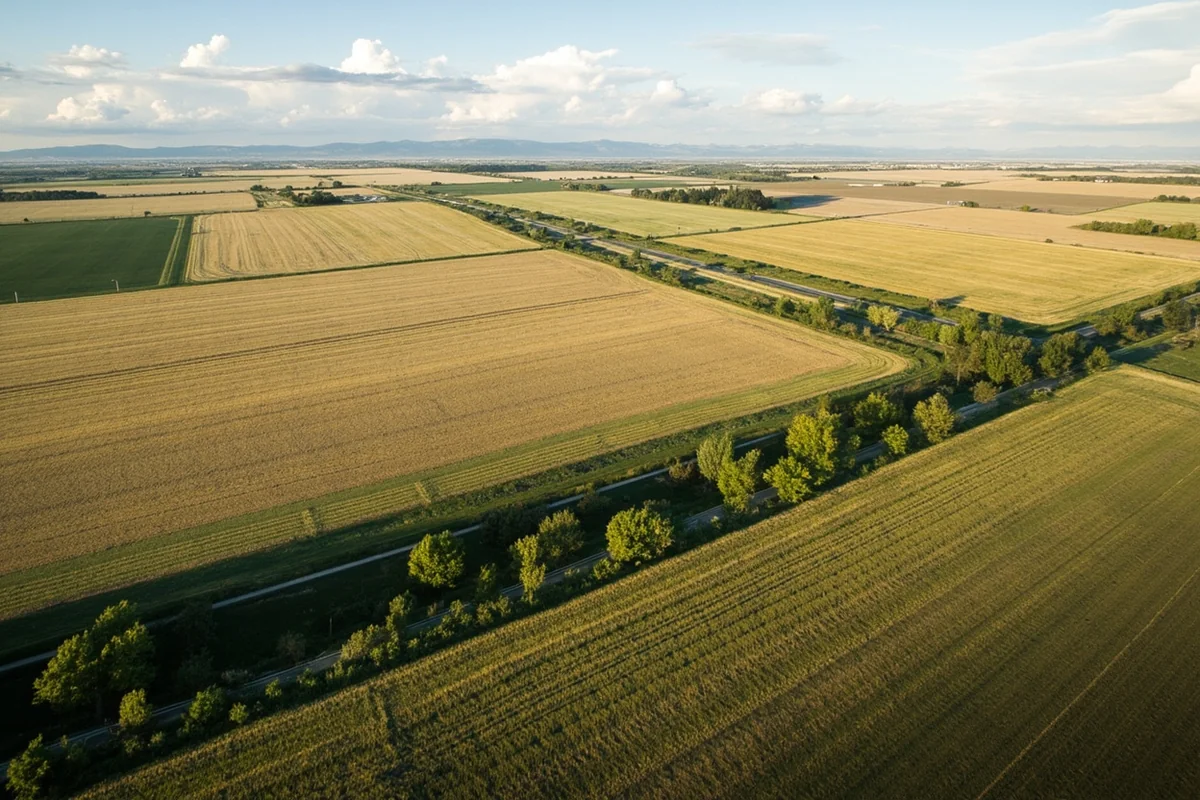
The area around Plentywood, Scobey, and Wolf Point might be Montana’s best-kept whitetail secret. Agricultural fields interspersed with shelterbelts create textbook whitetail habitat.
I spent last fall exploring this region and was genuinely surprised by the deer density. Local farmers told me they see more deer now than at any point in their lifetimes.
The flat terrain makes this area more accessible than the breaks country, though you’ll still need to work for unpressured deer on public land.
Western Montana’s River Valleys
Yes, there are whitetails in western Montana. The Bitterroot Valley, Flathead Valley, and areas around Missoula hold huntable populations.
However, these areas receive significantly more hunting pressure due to higher human populations. During the general season, I’ve found these areas frustrating compared to the eastern part of the state.
The western whitetails can be excellent, but success requires either access to private land or serious dedication to scouting out-of-the-way public parcels.
Montana Whitetail Seasons and Timing
Understanding Montana’s hunting seasons is critical for planning your trip. The state offers multiple opportunities to pursue whitetails throughout fall and early winter.
Archery Season
Montana’s archery season typically opens in early September and runs through mid-October. This is a challenging time for whitetails—temperatures can still be warm, and deer haven’t yet concentrated in predictable patterns.
I’ve bowhunted whitetails in September along the Yellowstone River with mixed results. The velvet is just coming off, and bucks are transitioning out of bachelor groups.
Water sources become critical during early archery season. If you can find a secluded water hole near bedding cover, you’ve got a chance.
General Season
The general firearms season is when Montana whitetail hunting really shines. Dates typically fall from late October through late November, which coincides perfectly with the rut.
Based on my experience, the sweet spot is the second and third weeks of November. This is when mature bucks throw caution to the wind, and I’ve seen deer movement at all hours of the day.
Last November, I witnessed a 160-class buck chasing does across an open wheat stubble field at 2 PM—something that would never happen outside of peak rut.
Late Season Opportunities
Some hunting districts offer extended seasons or additional license opportunities through December. Check the Montana deer hunting regulations carefully for specific district dates.
Late season hunting can be productive but brutal. I’ve hunted Christmas week near the Missouri River in temperatures that never climbed above zero. The deer concentrate on south-facing slopes and agricultural fields, making them somewhat predictable if you can handle the cold.
Licensing and Tags: What You Need to Know
Navigating Montana’s licensing system takes some research, but it’s more straightforward for whitetails than for many other species. Start by understanding Montana hunting license costs before you commit to your trip.
Non-Resident Options
Non-residents have two primary pathways to hunt whitetails in Montana. The deer combination license allows you to harvest one mule deer and one whitetail, or two whitetails in appropriate districts.
You’ll also need a base hunting license before purchasing any species license. For a complete breakdown, check the Montana hunting license requirements.
The good news is that whitetail tags are available over-the-counter in most hunting districts. Unlike elk or some mule deer units, you don’t typically need preference points or a lottery draw.
Tag Availability and Planning
Some hunters also consider Montana deer tags for specific limited-entry units, but general season whitetail hunting rarely requires advance planning beyond securing your combination license.
Montana preference points become important if you’re targeting specific limited-entry districts or want to pursue other species during your trip.
I recommend purchasing licenses through Montana’s FWP website as early as possible. While tags won’t sell out for general whitetail, completing paperwork early reduces pre-trip stress.
| License Type | Approximate Cost (Non-Resident) | Notes |
|---|---|---|
| Conservation License | $10 | Required before any other purchase |
| Base Hunting License | $15 | Required for all hunting activities |
| Deer Combination | $527 | Allows two deer (species restrictions by district) |
| Archery License | $10 | Required for archery season participation |
Public Land Access Strategies
Montana offers exceptional public land whitetail hunting if you know where to look. Understanding access options will make or break your DIY hunt, and you’ll want to read up on whether you can hunt on Montana state land before finalizing plans.
Block Management Areas
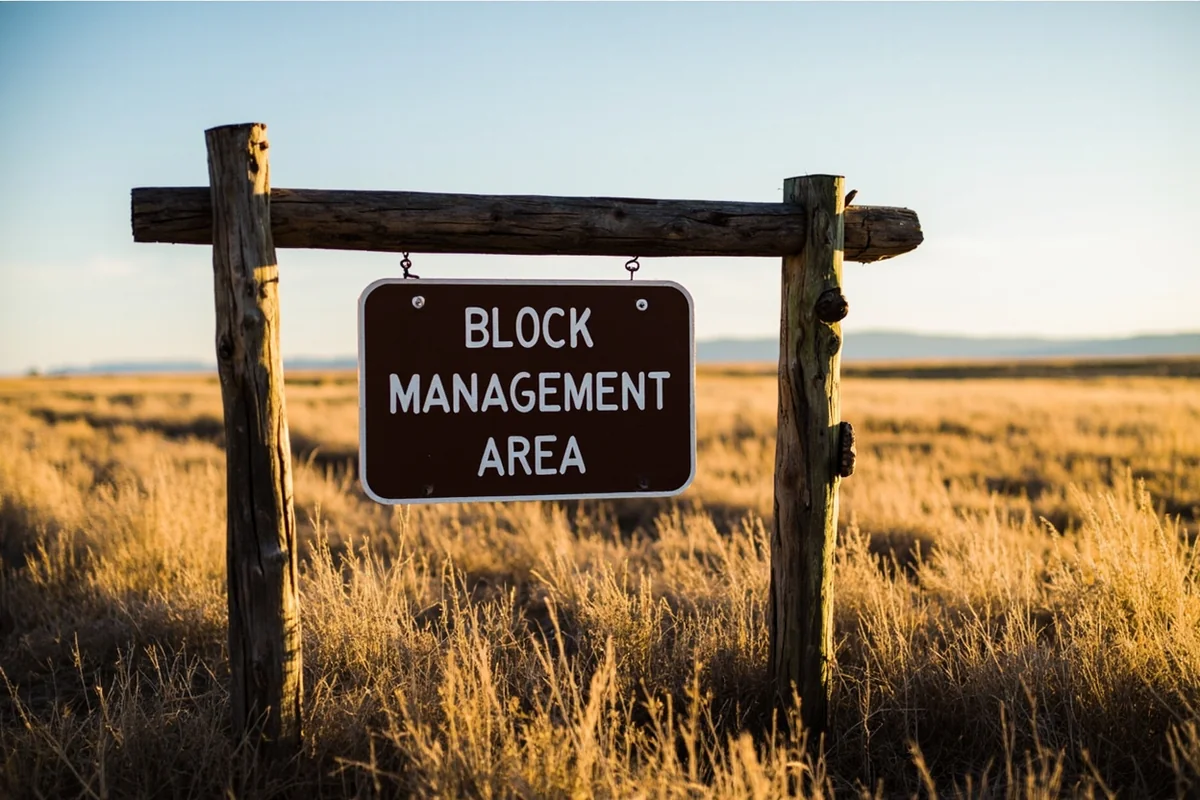
This is Montana’s secret weapon for non-resident hunters. The Block Management program enrolls private lands in a public hunting access system, dramatically expanding your options.
During my hunts in Valley County, I’ve used Block Management areas extensively. Some require registration; others are walk-in. The quality varies, but I’ve taken two of my best Montana whitetails on Block Management lands.
Download the current Block Management hunting access guide from Montana FWP before your trip. The book is updated annually, and boundaries change.
BLM and National Grasslands
The Bureau of Land Management controls millions of acres in eastern Montana. These scattered parcels often border agricultural land—exactly where whitetails want to be.
I’ve had excellent success hunting BLM land near the Fort Peck Reservoir. The key is identifying small parcels adjacent to private agricultural fields where deer feed.
Carry multiple mapping apps or GPS units. Cell service is unreliable, and you cannot afford to accidentally trespass.
National Wildlife Refuges
Several NWRs in Montana permit hunting during specific seasons. Charles M. Russell NWR along the Missouri River offers vast hunting opportunities, though terrain can be challenging.
Bowdoin NWR near Malta has produced some impressive whitetails. Check individual refuge regulations, as they often differ from state seasons.
State Wildlife Management Areas
Montana’s WMAs provide targeted habitat specifically managed for wildlife. These areas can be productive but receive concentrated pressure during opening weekends.
I’ve learned to hunt WMAs during the second half of the season when casual hunters have gone home. The deer that survive the initial onslaught become more visible as pressure decreases.
Tactics That Work in Montana
Hunting whitetails in Montana differs from traditional Midwest tactics. The terrain, cover density, and deer behavior require adaptation.
Glassing River Bottoms
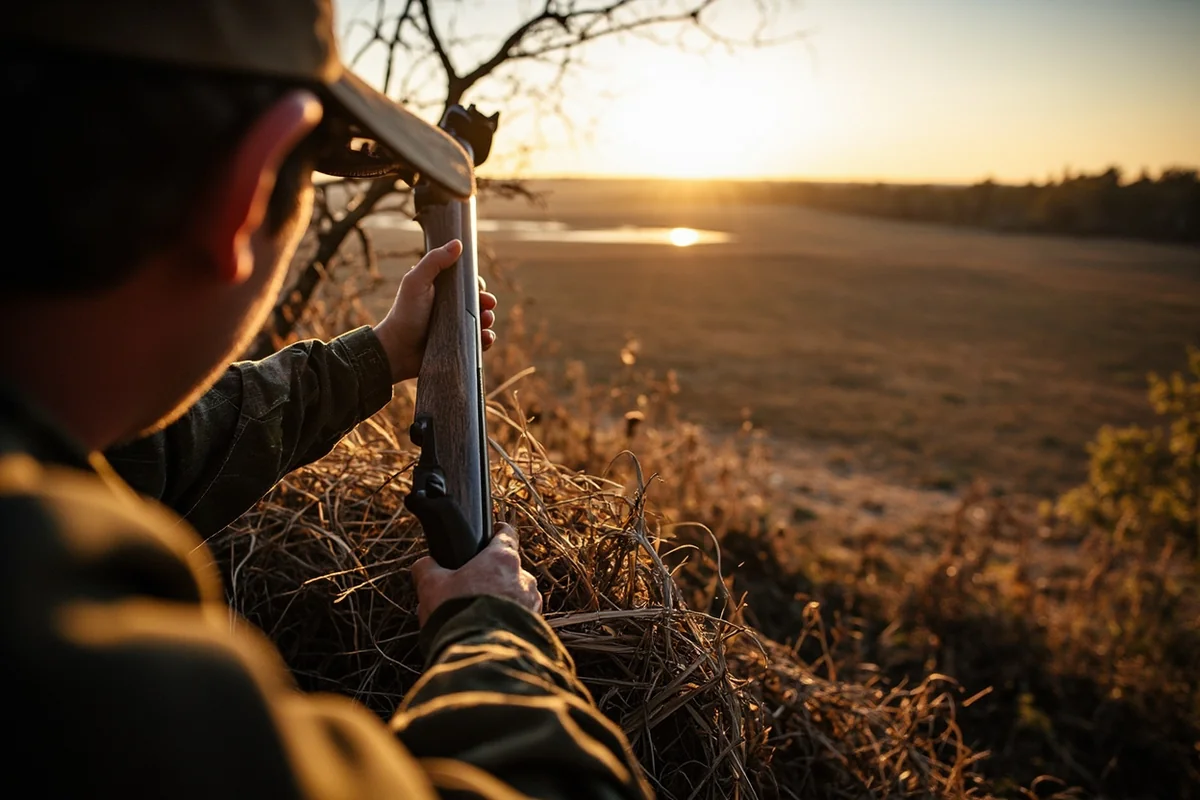
This is my most productive technique for Montana whitetails. I find elevated positions overlooking river corridors and glass systematically at first and last light.
Montana’s relatively open terrain allows you to locate deer at distances impossible in Wisconsin or Pennsylvania. Once I pattern where deer are feeding and bedding, I plan my approach.
Last fall, I glassed a specific buck for three mornings before determining his preferred bedding thicket. That intelligence allowed me to position myself for an ethical 180-yard shot.
Hunting Agricultural Edges
Whitetails in Montana key on agricultural crops differently than deer in more fragmented habitats. When snow arrives, deer concentrate on picked grain fields and any standing corn or sunflowers.
I’ve had success setting up along fence lines where deer travel between bedding cover and feeding areas. Unlike Midwest hunting where you might sit in a tree, Montana tactics often involve ground blinds or natural terrain features.
Wind becomes critical in open country. Montana whitetails have survived by trusting their noses—one wrong wind current will educate every deer in the drainage.
Coulee Hunting
Coulees—those steep-sided draws cutting through prairie terrain—create natural travel corridors for whitetails. I’ve killed several bucks by simply positioning myself along heavily-used coulee bottoms.
This is physical hunting. You’ll be hiking into remote areas, often several miles from the nearest road. But coulees concentrate deer movement in ways that reward those willing to work.
During the rut, I still-hunt slowly up coulee bottoms, checking likely bedding spots in side draws. This aggressive approach has produced encounters that ambush hunting never would.
Calling and Rattling
Montana bucks respond to calling and rattling, particularly during peak rut. I carry a grunt tube and rattling antlers on every hunt from November 5-20.
The open terrain means sound carries farther than in timber-choked eastern woods. I’ve called bucks from over 400 yards in open coulees—something that would be impossible in thick cover.
Start subtle with calls. Montana deer don’t hear hunting pressure like deer in heavily-hunted states, so they’re often more responsive but can also be spooked by overly aggressive calling.
Gear Considerations for Montana Whitetails
Packing for a Montana whitetail hunt requires preparation for extreme conditions. I’ve experienced 70-degree bluebird days and -15°F blizzards during the same November season.
Clothing Systems
Layer everything. A base layer, insulating mid-layer, and windproof outer shell give you flexibility as conditions change throughout the day.
I’ve made the mistake of bringing only cold-weather gear during a warm spell. Being overdressed and sweating will ruin your hunt as quickly as being underdressed and freezing.
Waterproof boots are non-negotiable. Morning frost turns every grass stem into a moisture wick, and wet feet end hunts early.
Optics
Quality optics matter more in Montana than almost anywhere else I hunt. You’ll be glassing vast landscapes looking for subtle movement or antler tips.
I run 10×42 binoculars and a 15-45x spotting scope on every hunt. The spotting scope has saved me countless miles by allowing me to evaluate bucks at extreme distances.
A quality rangefinder is essential. Shots in Montana can be longer than typical eastern hunting, and misjudging distance by 50 yards ruins opportunities.
Transportation and Logistics
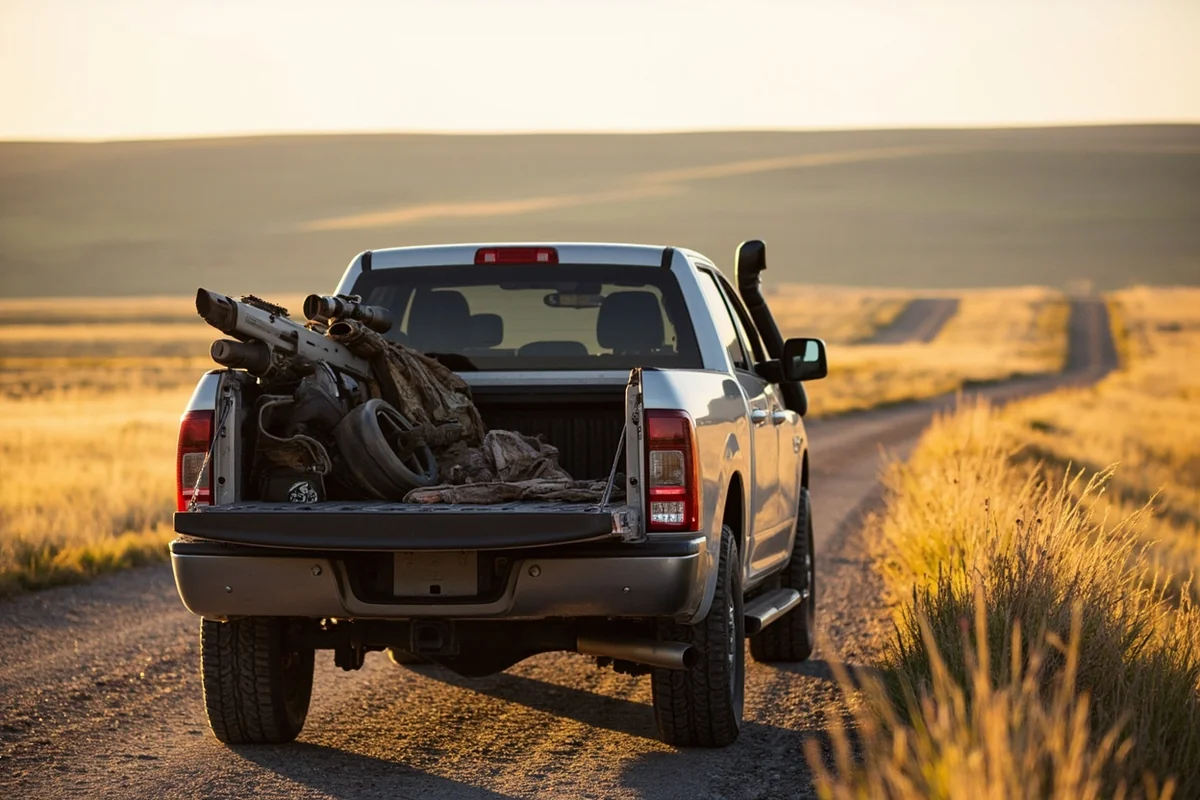
Unless you’re booking an outfitted hunt, you’ll need reliable transportation. Gravel roads dominate eastern Montana, and some become impassable when wet.
I prefer a 4WD truck with good ground clearance. A winch has saved me twice during November gumbo conditions—clay soil that turns to glue after precipitation.
Carry extra fuel, water, and food. Gas stations can be 50+ miles apart, and hunting areas are often well off the grid.
Weather and Physical Preparation
Montana weather can humble unprepared hunters. I’ve learned to respect the conditions through hard experience.
Cold Weather Hunting
When Arctic air drops into Montana, temperatures can plummet dramatically. I’ve hunted in conditions where exposed skin risks frostbite within minutes.
Chemical hand warmers, insulated boots rated to -40°F, and quality gloves become survival equipment rather than comfort items. Know your limits and don’t risk injury for a deer.
Wind chill is the real danger. Montana’s open terrain offers no wind protection—what reads as -5°F can feel like -30°F with a 20 mph wind.
Physical Conditioning
While whitetail hunting is less demanding than elk hunting, don’t underestimate Montana terrain. Coulees and river breaks involve significant elevation gain and loss.
I train for Montana hunts by hiking with a weighted pack during the months before my trip. The ability to cover ground efficiently extends your range beyond what road-bound hunters can access.
Altitude also factors in western Montana. While eastern prairie sits relatively low, the state’s overall elevation can affect hunters accustomed to sea-level living.
Combining Species on Your Trip
One of Montana’s greatest advantages is the ability to pursue multiple species during a single trip. Your deer combination license already includes both whitetail and mule deer opportunities.
Many hunters add a Montana elk hunting tag to their trip, especially if hunting during the overlapping season dates. The archery and general seasons provide opportunities to fill multiple tags.
If you’re interested in faster-paced hunting, consider adding Montana antelope hunting to your itinerary. Pronghorn season often overlaps with early deer hunting, and tags are available through the draw system.
Montana upland bird hunting pairs perfectly with deer hunting, especially in eastern Montana. I often carry a shotgun during deer hunts for opportunistic sharptail grouse encounters.
For hunters seeking unique adventures, Montana offers bear hunting opportunities in western portions of the state, though this requires different terrain and timing than prime whitetail country.
More specialized pursuits like Montana bighorn sheep hunting or buffalo hunting require separate planning and limited-entry permits but showcase Montana’s incredible wildlife diversity.
Waterfowl Combinations
Eastern Montana’s prairie potholes create excellent duck hunting opportunities alongside whitetail pursuits. I’ve spent mornings in a duck blind and afternoons glassing for deer during November trips.
Some hunters even pursue Montana swan hunting during their fall trips, though permits are extremely limited.
Predator Hunting Opportunities
Montana wolf hunting has grown increasingly popular, and predator opportunities exist throughout whitetail country. Check current Montana hunting regulations for season dates and requirements.
Outfitter Options vs. DIY Hunting
Both approaches can produce successful whitetail hunts in Montana. Your choice depends on budget, experience level, and available time.
Benefits of Outfitted Hunts
Quality outfitters provide land access that would take years to develop independently. Many lease or own properties with limited hunting pressure and managed deer populations.
Lodging, meals, and local knowledge come included. During a guided hunt near the Musselshell River, my outfitter put me on a buck the first morning that I never would have found independently.
Expect to pay $3,500-6,500 for a quality guided whitetail hunt in Montana. Premium outfitters targeting trophy bucks can exceed $8,000.
DIY Success Strategies
Public land hunters absolutely can succeed in Montana with preparation. I’ve taken several Pope and Young class bucks on Block Management and BLM lands.
Start scouting digitally months before your trip. OnX Maps or HuntStand will become your best friends for identifying public parcels and access points.
Consider arriving a day or two before season opens to scout in person. What looks promising on a map sometimes disappoints in reality—and vice versa.
Processing and Transporting Your Harvest
Planning for a successful hunt means planning for getting your deer home. Montana’s distances and regulations require advance thinking.
Field Processing
Warm November days can spoil meat quickly. I carry a complete bone-out kit and game bags on every hunt.
Several commercial processors operate in larger Montana towns. Glasgow, Miles City, and Great Falls all have butchers accustomed to handling deer during hunting season.
If you’re camping remotely, bring coolers and ice. Meat care begins the moment you pull the trigger.
Transportation Regulations
Montana requires evidence of sex remain naturally attached to carcasses or quarters until processing. Understand these regulations before you begin butchering.
If flying home, factor in cooler costs and airline baggage fees for transporting frozen meat. Many hunters ship meat home using overnight services rather than checking it on flights.
CWD regulations affect some hunting districts. Check whether your harvest area requires testing before transporting deer parts across state lines.
Making the Most of Your Montana Whitetail Trip
After multiple Montana whitetail hunts, I’ve learned that success comes from realistic expectations combined with thorough preparation.
Trip Length Recommendations
Plan for at least five hunting days—preferably seven. Travel days, weather delays, and the unpredictable nature of deer hunting demand buffer time.
My most successful hunts have come during the second half of week-long trips. It takes time to pattern deer on unfamiliar ground.
Backup Plans
Have multiple hunting areas identified. If your primary spot disappoints or receives unexpected pressure, you need alternatives.
Montana muzzleloader season and other specialty seasons can provide backup opportunities if your initial hunt doesn’t pan out.
Weather can shut down hunting entirely. Know what you’ll do if a blizzard rolls through—and have indoor backup activities planned.
Small Game Additions
Even dedicated whitetail hunters appreciate variety. Montana squirrel hunting might seem like an afterthought, but mixing in small game pursuit keeps you engaged during slow deer periods.
The Montana shoulder season for elk can extend your overall hunting trip if you’re willing to pursue multiple species across different seasons.
My Honest Assessment of Montana Whitetail Hunting
Is Montana the best whitetail destination in America? That depends on what you’re seeking.
If you want easy hunting with guaranteed sightings, traditional whitetail states with higher deer densities might suit you better. Montana requires work.
But if you want the chance at a mature buck in wild, uncrowded country—with opportunities for multiple species and genuine adventure—Montana delivers like few other destinations.
The learning curve is real. My first Montana whitetail hunt ended without a buck. I’d hunted areas that looked good on maps but held few deer.
Each subsequent trip has been more successful as I’ve learned the landscape and the specific habits of Montana whitetails. This isn’t a state where you can simply apply Midwest tactics and expect results.
What keeps drawing me back is the combination of quality deer and quality experience. When I’m glassing a coulee at dawn with no other hunters in sight, watching a mature buck work a scrape line 400 yards away, I remember why I started hunting in the first place.
Montana whitetails have tested me, humbled me, and rewarded me in ways that manufactured hunting experiences never could. If you’re willing to embrace the challenge, this state will deliver memories that last far longer than any venison in your freezer.
Frequently Asked Questions
When is the best time to hunt whitetail deer in Montana?
The general rifle season for whitetail deer in Montana typically runs from late October through late November, with archery season starting in early September. I’ve found that the rut peaks around mid-November, making it the prime time for trophy bucks as they’re more active and less cautious during daylight hours.
How much does a non-resident whitetail deer hunting license cost in Montana?
Non-resident deer combination licenses in Montana cost around $527-$628 depending on the license type, plus a $10 conservation license required for all hunters. Budget an additional $50-200 for preference points if you’re applying for limited-entry units, and remember that some popular hunting districts require winning a lottery draw.
What are the best regions in Montana for whitetail deer hunting?
The river bottoms and agricultural areas of eastern Montana, particularly along the Milk River and Missouri River breaks, offer excellent whitetail hunting opportunities. I recommend hunting districts in regions 4, 6, and 7, where private land access programs like Block Management provide free public access to prime whitetail habitat on working ranches.
Do I need a guide to hunt whitetail deer in Montana as an out-of-state hunter?
Montana does not require non-residents to hire a guide for whitetail deer hunting, unlike some wilderness elk hunts. However, if you’re unfamiliar with the terrain, booking an outfitter ($2,500-$5,000 for a 5-day hunt) can significantly increase your success rate and handle logistics like lodging, meals, and field dressing.
What gear should I pack for a November whitetail hunt in Montana?
Pack layered clothing rated for temperatures between 0-40°F, including insulated boots, hand warmers, and a quality base layer since November mornings can be brutally cold. Essential gear includes your rifle (most hunters prefer .270 or .30-06), binoculars, a Montana-legal blaze orange vest and hat, and a reliable GPS since cell service is spotty in prime hunting areas.
How do I find public land access for whitetail deer hunting in Montana?
Montana’s Block Management Program offers free access to over 7 million acres of private land enrolled by cooperating landowners, and you can request permission through the FWP website or regional offices. Additionally, BLM land and state trust lands scattered throughout eastern Montana provide walk-in hunting opportunities—I use the onX Hunt app to identify property boundaries and avoid trespassing issues.
Can I bring my harvested whitetail deer meat back home on a flight from Montana?
Yes, most major airlines allow you to check frozen or cooled game meat as luggage in hard-sided coolers, typically charging $35-50 per checked bag. I recommend having your deer processed at a local Montana butcher ($150-300 for full processing), then packing the frozen meat with dry ice for your flight home—just confirm your airline’s dry ice weight limits beforehand.