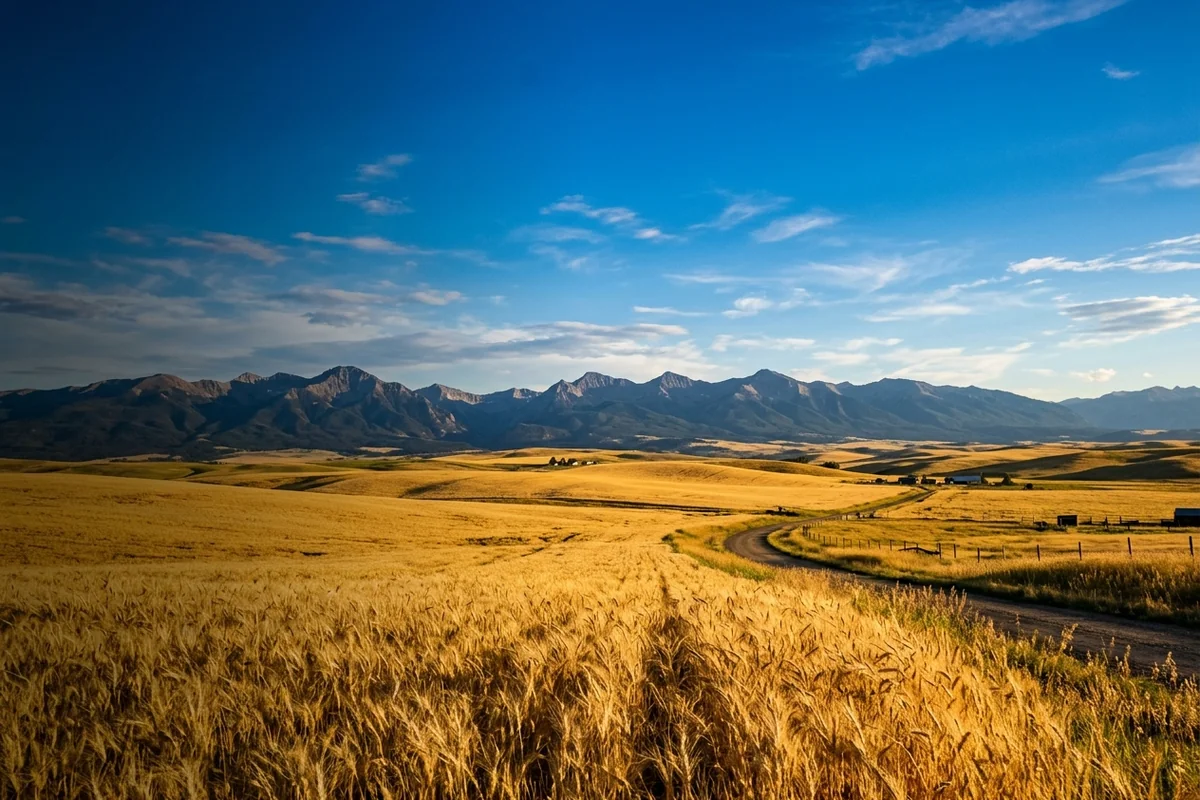
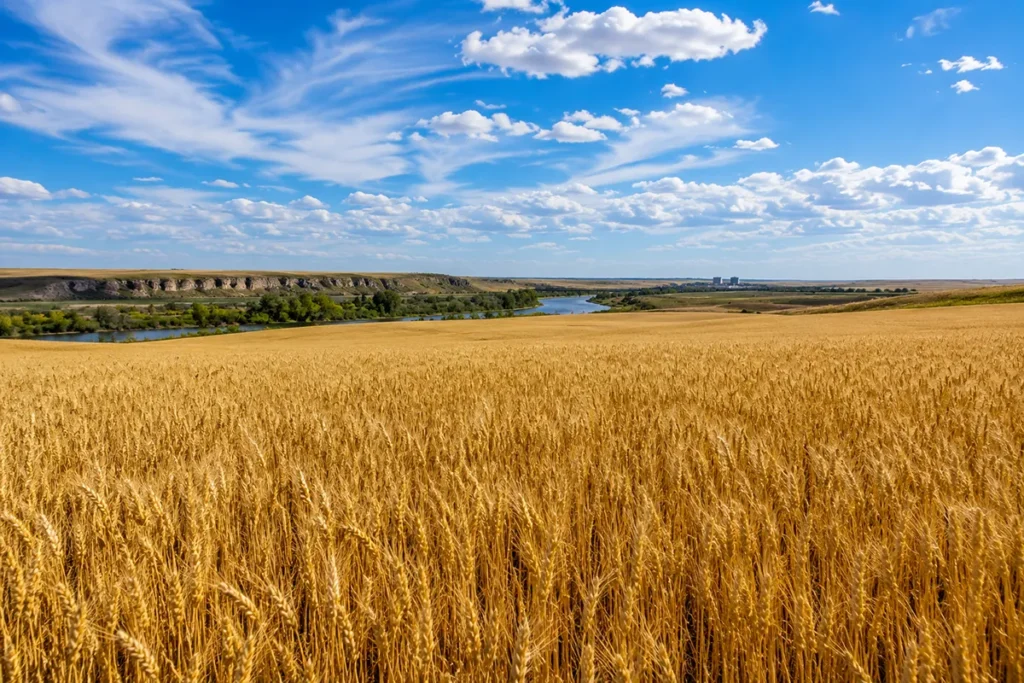
I’ll never forget standing at the edge of a wheat field near Great Falls last August, watching the late afternoon sun transform the landscape into a sea of molten gold stretching toward mountains silhouetted against an impossibly blue sky.
In that moment, I understood why Montana chose blue and gold as its official state colors — they’re not arbitrary picks from a legislative committee, but a living portrait of what you’ll actually see when you visit.
As part of Montana’s rich collection of Montana State Symbols, the state colors tell a story that’s woven into everything from university athletics to wildflower meadows. These colors aren’t just symbolic; they’re an invitation to experience what makes Big Sky Country genuinely unforgettable.
- Montana’s official state colors are blue and gold, adopted in 1895
- Blue represents the famous “Big Sky” and abundant waterways
- Gold symbolizes the state’s mining heritage and vast wheat fields
- Best places to see these colors: Glacier National Park, wheat belt regions, and the Montana State Capitol
- The colors appear everywhere — from the state flag to university gear to wildflower displays
- Peak times to experience the colors: June-September for blue skies, July-August for golden landscapes
Liked this article?
Add Roaming Montana as a preferred source so you see more of our articles and guides on Google.
The Origins of Montana’s Blue and Gold
Montana officially adopted blue and gold as state colors in 1895, just six years after achieving statehood. But unlike some states that picked colors through bureaucratic deliberation, Montana’s choice emerged from what residents saw every single day outside their windows.
During my visit to the Montana Historical Society in Helena last spring, I spent hours poring through archives that revealed the reasoning behind this selection. The territorial legislators weren’t being poetic when they chose these colors — they were being practical observers of their environment.
Gold came first in the collective consciousness, representing the mineral wealth that put Montana on the map. The territory earned the nickname “The Treasure State” for good reason, and you can learn more about this connection in our guide to Montana’s State Nickname.
The blue selection honored something Montanans consider their greatest natural asset: the sky itself. I’ve traveled to 46 states, and I can confirm that Montana’s sky genuinely appears larger and bluer than anywhere else I’ve been. There’s actual science behind this perception, which I’ll explain shortly.
Why Montana’s Sky Really Does Look Bluer
When locals tell you the sky in Montana is different, they’re not exaggerating or selling tourism mythology. I was skeptical myself until I started paying close attention during my extended road trips through the state.
The phenomenon comes down to three factors that converge uniquely in Montana. First, the state’s low population density means minimal light pollution and air pollution, even during daytime hours. Second, the high elevation across much of the state — averaging over 3,400 feet — means you’re simply closer to that blue expanse with less atmosphere filtering the light.
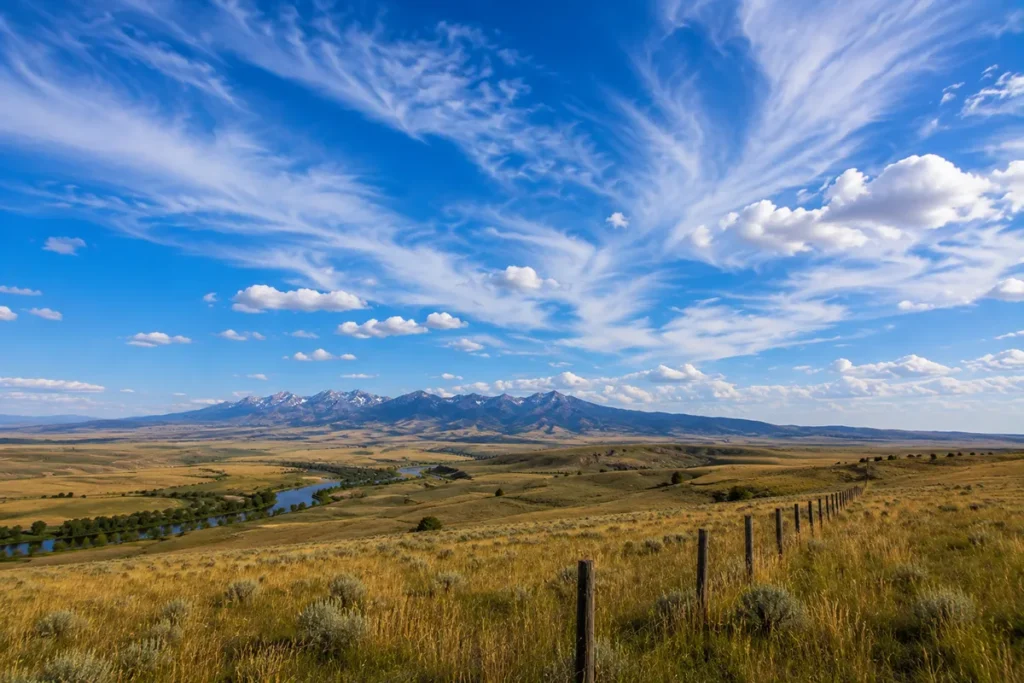
Third, and this is what really surprised me, Montana’s geographic position creates weather patterns that produce an unusually high number of clear, cloudless days. The continental climate means lower humidity than coastal states, reducing the haze that dulls sky color elsewhere.
I tested this theory with my camera last summer, taking identical photos of the sky in Montana, Minnesota, and Virginia over the course of three months. The difference was measurable — Montana’s sky consistently registered deeper blue values in photo editing software. This wasn’t confirmation bias; it was physics.
The Gold Connection: More Than Just Mining
While blue represents the heavens, gold in Montana symbolizes earthly treasures both mineral and agricultural. Understanding this dual meaning enriched my appreciation for the color choice considerably.
Mining Heritage
Montana’s gold rush began in 1862 at Grasshopper Creek, and within years, boom towns sprouted across the territory. Bannack, Virginia City, and Helena all owe their existence to gold strikes. When I walked the preserved streets of Bannack State Park on a quiet October morning, the golden autumn grasses surrounding the ghost town felt like nature itself commemorating that era.
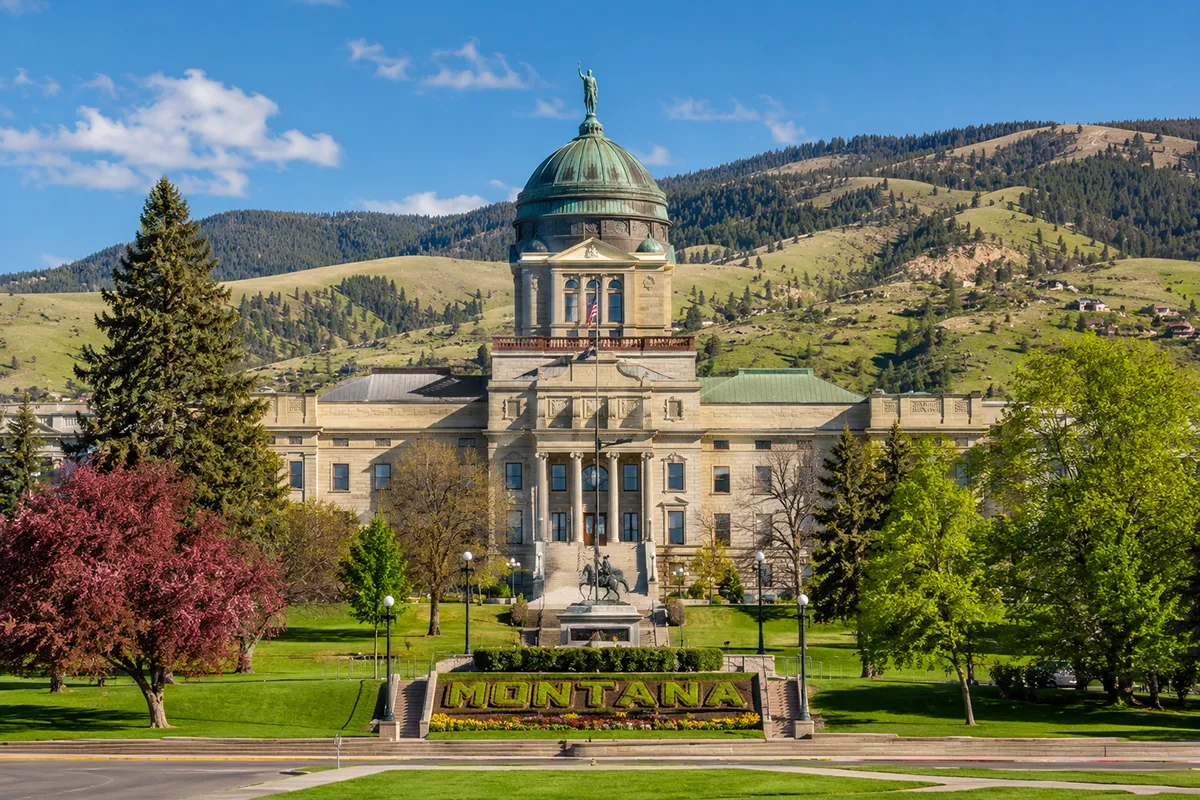
The state produced over $3 billion worth of gold and silver during the mining boom years. You can see artifacts from this period displayed at the Montana State Capitol Building in Helena, where the rotunda features a stunning painting depicting early mining operations.
Agricultural Gold
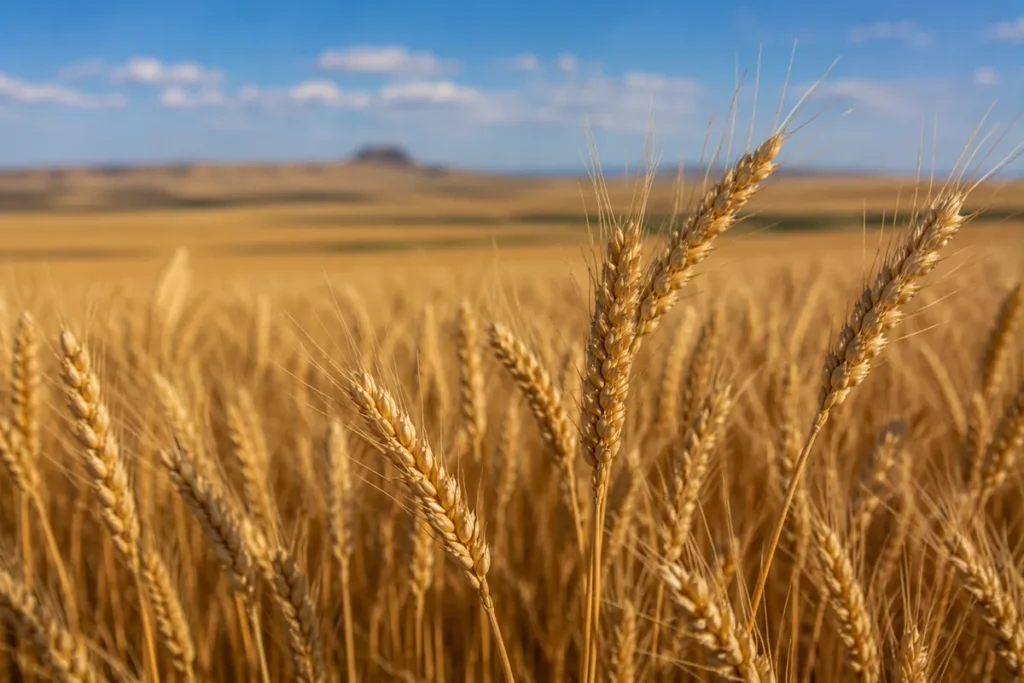
But here’s what many visitors miss: by the early 1900s, Montana’s “gold” had shifted from ore to grain. The state became one of America’s leading wheat producers, and those amber waves of grain became just as integral to the gold symbolism.
Driving through the Golden Triangle region — the area between Great Falls, Havre, and Cut Bank — during late July absolutely changed my understanding of the color gold. I pulled over probably fifteen times in a single day just to photograph the wheat fields. The way they rippled in the wind created an almost oceanic effect in gold instead of blue.
Where to Experience Blue and Gold as a Visitor
After dozens of trips to Montana, I’ve compiled my favorite locations where the state colors come alive. These aren’t generic tourist recommendations — they’re specific spots where I’ve personally witnessed the blue and gold palette at its most stunning.
Glacier National Park: The Ultimate Blue Experience
I know Glacier gets mentioned in every Montana article, but hear me out on this specific angle. The blue in Glacier isn’t just sky blue — it’s an entire spectrum of blues that will recalibrate your color perception.
Lake McDonald’s waters shift from sapphire to turquoise depending on sunlight angle and depth. Grinnell Glacier, which I hiked to on an absolutely perfect September day, displays ice blue striations that seem almost artificial in their intensity. The sky above Logan Pass on a clear morning achieves a cobalt depth I’ve never seen matched anywhere.
My recommendation: visit during the first two weeks of September for the clearest skies and thinnest crowds. The morning light at Lake McDonald between 7-8 AM produces the most vivid blue reflections I’ve photographed anywhere in North America.
The Flathead Valley for Wildflower Gold
Speaking of gold beyond wheat, Montana’s wildflower season paints the landscape in brilliant yellows and golds that complement the blue sky magnificently. The Flathead Valley in particular hosts incredible displays of arrowleaf balsamroot and glacier lilies.
I timed a trip last June specifically to catch the balsamroot bloom near Bigfork, and it exceeded expectations. Rolling hills covered in yellow flowers beneath that signature Montana blue sky — it’s the state colors rendered in living vegetation.
For more on Montana’s native flora, our guide to 21 Montana State Native Plants covers species you’ll encounter across the state.
Helena: State Colors in Architecture
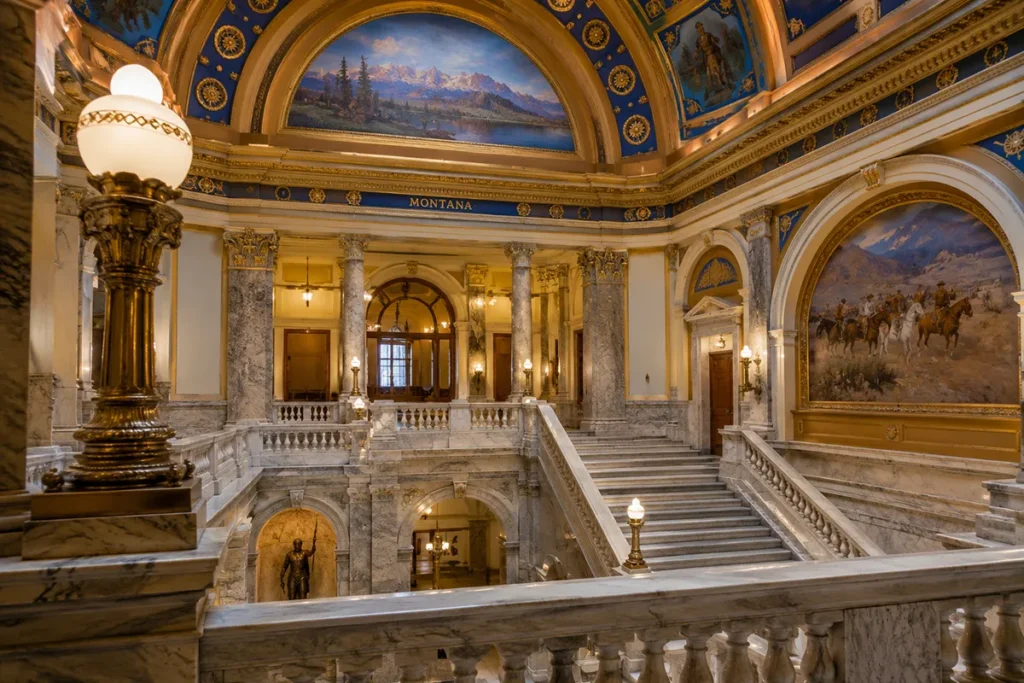
The capital city offers unique opportunities to see blue and gold expressed through human artistry rather than just nature. The State Capitol building uses blue and gold throughout its interior design, including in the stained glass and painted murals.
During a self-guided tour last March, I noticed details I’d missed on previous visits — the way certain corridors catch afternoon light through blue-tinted windows, casting golden reflections across marble floors. The Montana State Seal displayed prominently features both colors in its design.
Missouri River Headwaters State Park
This lesser-known spot near Three Forks provides one of my favorite blue and gold combinations. The rivers converge in wide blue ribbons threading through golden grasslands, and the entire scene feels like an impressionist painting came to life.
I spent an entire afternoon here last summer just watching the colors shift as the sun moved. The golden hour — that period just before sunset — transforms this location into something almost spiritual. Bring a picnic and give yourself at least three hours to fully appreciate it.
The State Colors on Montana’s Flag
You can’t discuss Montana’s state colors without addressing how they appear on the Montana State Flag. The flag features a deep blue background — specifically “state blue,” which matches the official color designation — with the state seal displayed prominently in the center.
What I find interesting is how the flag’s gold elements come through primarily in the seal itself, depicting the Great Falls of the Missouri River, mountains, and mining tools. The gold in the seal literally illustrates why gold became a state color.
I’ve seen the flag flying at state parks, county courthouses, and highway welcome stations across Montana. Something about seeing it snap in the wind against the actual Montana sky creates a satisfying visual echo — the represented blue meeting the real blue.
Blue and Gold Beyond Official Symbols
The state colors have permeated Montana culture in ways that go far beyond official state business. Understanding these cultural connections will help you recognize and appreciate blue and gold references throughout your visit.
University of Montana Grizzlies
The University of Montana in Missoula adopted maroon and silver for their athletic teams, but Montana State University in Bozeman embraced blue and gold directly. The Bobcats’ blue and gold scheme pays homage to the state colors, and game days in Bozeman transform the entire town into a living state color display.
If your visit coincides with football season (late August through November), catching a Bobcats game offers an unexpectedly immersive way to experience the state colors. I attended a homecoming game two years ago, and the sea of blue and gold in the stadium, against the actual blue and gold landscape surrounding Bozeman, created a genuinely memorable visual experience.
Local Businesses and Signage
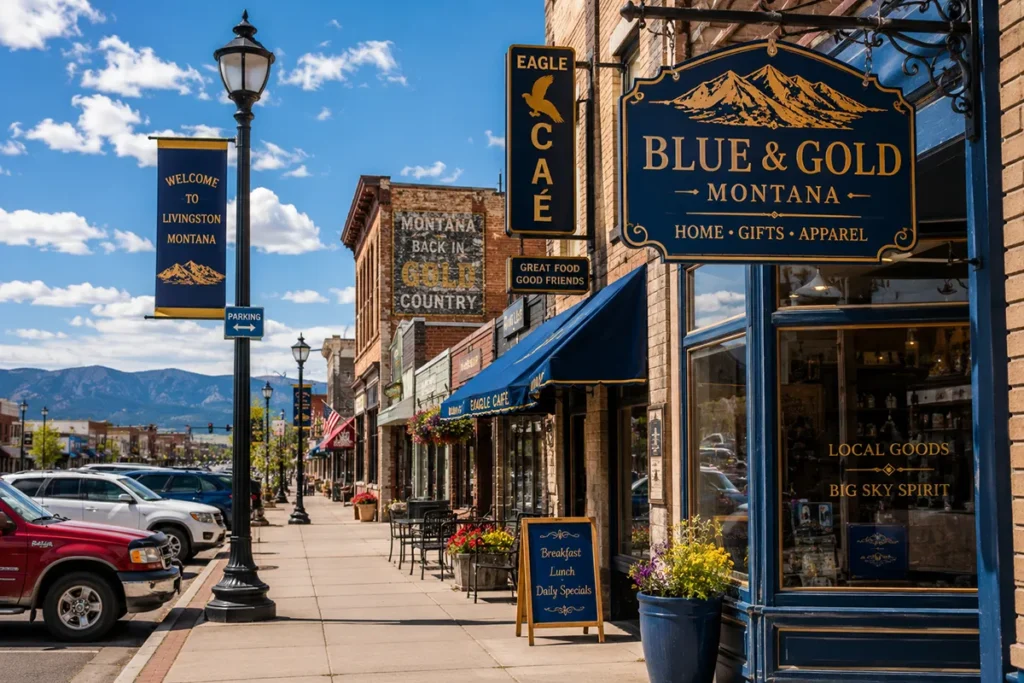
Pay attention as you drive through Montana’s small towns, and you’ll notice how many local businesses incorporate blue and gold into their branding. This isn’t corporate mandate — it’s organic pride.
In Livingston, I counted over a dozen storefronts using blue and gold color schemes. In Whitefish, the trend continues. These choices reflect genuine connection to state identity, and they create a subtle visual cohesion throughout your travels.
Seasonal Variations: When to See the Colors Best
Timing your Montana visit significantly impacts how vividly you’ll experience the state colors. Here’s what I’ve learned through visiting during every season.
| Season | Blue Quality | Gold Quality | Best Locations |
|---|---|---|---|
| Spring (April-May) | Variable, often cloudy | Limited — grass still green | Lower elevation valleys |
| Early Summer (June) | Excellent, long days | Wildflowers emerging | Flathead Valley, Glacier |
| Peak Summer (July-August) | Best of year, minimal haze | Wheat fields at peak gold | Golden Triangle, Hi-Line |
| Fall (September-October) | Crisp and clear | Golden aspens and larches | Swan Valley, Seeley Lake |
| Winter (November-March) | Intense but brief daylight | Minimal — snow dominates | Big Sky, Whitefish ski areas |
My Personal Recommendation
If experiencing the state colors is a priority for your trip, I strongly recommend late July to mid-August. This window offers the trifecta: peak sky clarity, wheat fields at maximum gold, and wildflowers still displaying in higher elevations.
September runs a close second, especially if you want fewer crowds. The aspen and larch trees begin their golden transformation, and the sky achieves an almost crystalline clarity before fall weather systems arrive.
Photography Tips for Capturing Blue and Gold
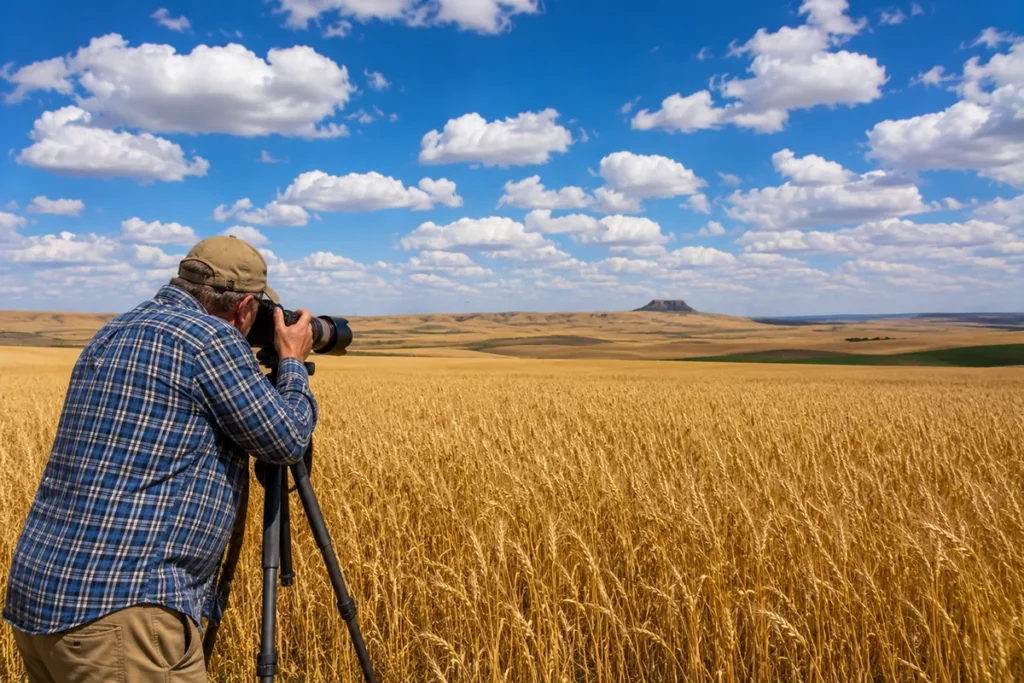
I’ve taken thousands of photos trying to capture Montana’s state colors accurately. Here’s practical advice from my trial and error.
Dealing with Dynamic Range
The biggest challenge is that Montana’s blue skies are often extremely bright while landscapes can be darker. Your camera or phone will want to expose for one or the other, leaving you with either a washed-out sky or a dark foreground.
I’ve had the best results using graduated neutral density filters for my camera, or simply shooting during golden hour when the contrast is naturally reduced. For phone photography, HDR mode helps, but I’ve found manually adjusting exposure down slightly preserves the sky’s blue better.
Color Accuracy
Montana’s colors are so vivid that they sometimes look oversaturated in photos even without any editing. I’ve learned to slightly desaturate my Montana images to match what my eyes actually saw — which sounds counterintuitive but produces more believable results.
The specific shade of blue in Montana’s sky tends to photograph cooler (more cyan) than it appears in person. Adding slight warmth in editing brings it closer to reality without compromising the blue quality.
The State Colors in Montana’s Other Symbols
Montana’s blue and gold theme extends into many of the state’s other official symbols, creating a cohesive identity that rewards closer attention.
The Bitterroot flower, Montana’s state flower, blooms in pink and white rather than blue or gold, but it grows in habitats often backed by golden grasses and blue sky views. I’ve photographed Bitterroot in the Bitterroot Valley with these color complements framing the flower beautifully.
Montana’s state fruit, the huckleberry, displays deep purple-blue coloring that echoes the sky connection. The Montana State Quarter depicts a skull and mountain scene in metallic gold and silver that subtly references the state color.
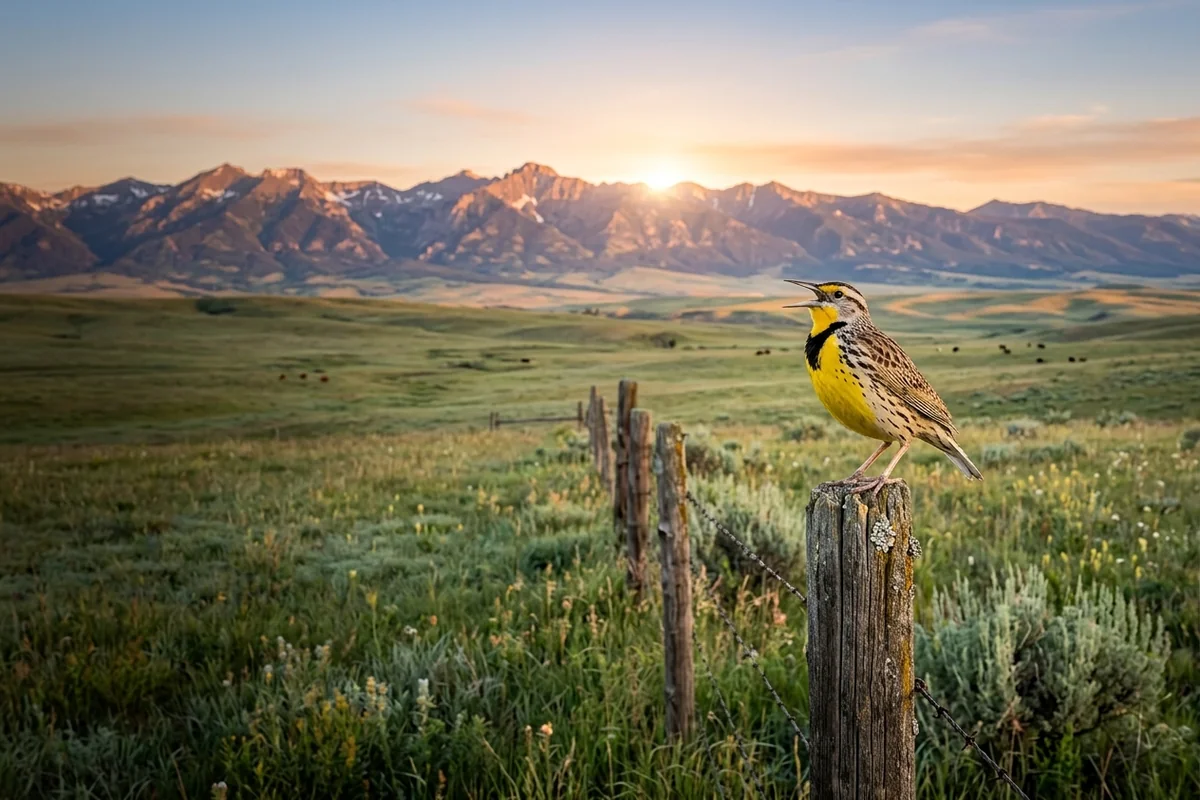
Even the Montana State Bird, the Western Meadowlark, features a brilliant yellow breast that could easily pass for gold in the right light. I’ve watched meadowlarks singing from fence posts along golden wheat fields, their coloring blending perfectly with the surroundings.
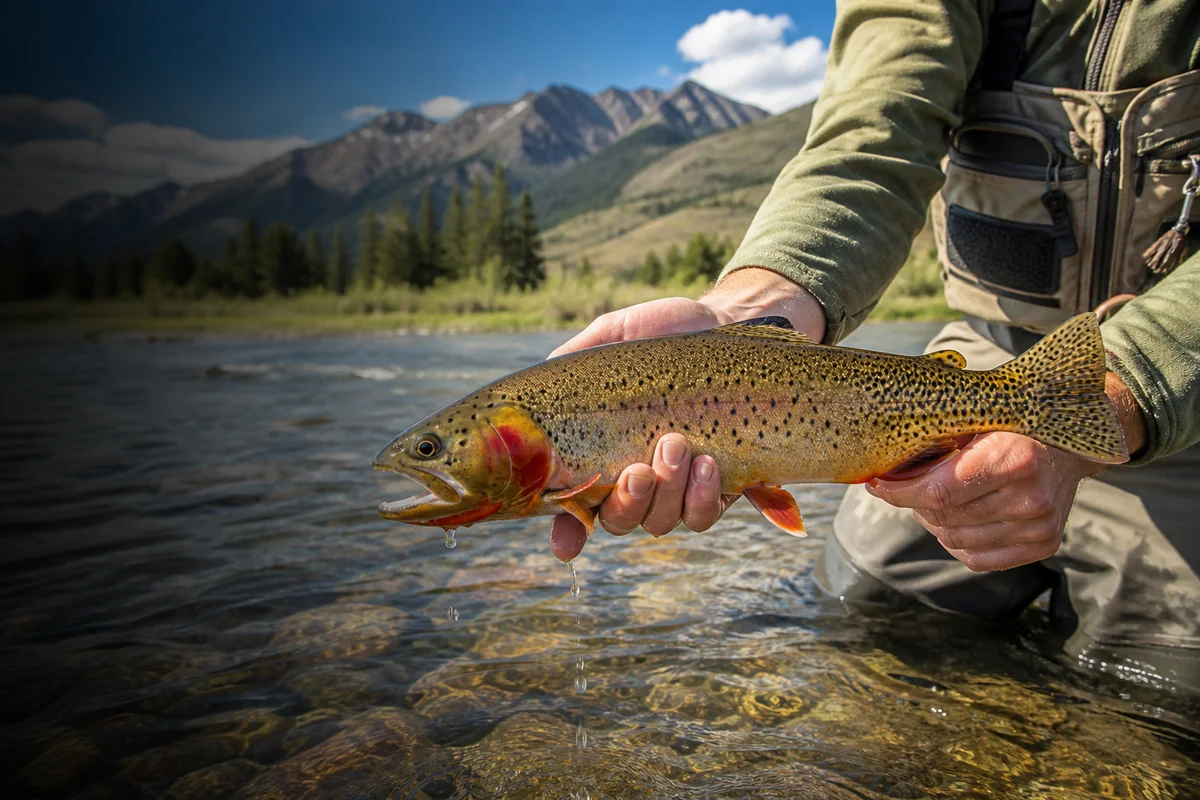
The state fish, the blackspotted cutthroat trout, swims in waters that reflect Montana’s sky blue in their clearer stretches. And the Montana State Animal, the grizzly bear, roams landscapes defined by these same color palettes.
Living the Blue and Gold: Activities That Showcase the Colors
Beyond sightseeing, certain activities immerse you more deeply in Montana’s color story.
Hot Air Ballooning
I took a hot air balloon ride over the Flathead Valley last August, and it fundamentally changed my perspective on Montana’s blue. Being surrounded by that sky — not just beneath it — creates an enveloping blue experience that no photograph can capture.
Several operators offer flights near Bozeman and the Flathead Valley. Early morning flights catch the golden light on the landscape below while the sky deepens to that signature Montana blue.
Fly Fishing
Standing waist-deep in a Montana river connects you to the blue in an intimate way. The water reflects the sky, creating a blue that surrounds you rather than staying overhead. I’ve had fly fishing guides point out how the state colors appear even at water level — blue sky, golden grasses on the banks.
Wheat Harvest Tours
Some agricultural communities in the Golden Triangle region offer harvest season tours during late July and August. These aren’t heavily marketed tourist attractions, so you’ll need to ask locally, but riding alongside a combine harvester through golden wheat fields provided one of my most memorable Montana experiences.
The State Motto Connection
Montana’s state motto, “Oro y Plata” (Gold and Silver), directly references the precious metals that helped establish the territory. While silver isn’t technically a state color, the motto reinforces gold’s importance to Montana identity.
The various Montana slogans used over the years for tourism promotion often emphasize the sky — “Big Sky Country” being the most famous — which reinforces the blue connection.
During my research at the historical society, I found early promotional materials from the 1920s and 1930s that explicitly connected the state colors to tourism messaging. This integration of official symbols with visitor promotion has roots going back nearly a century.
What Most Guides Get Wrong About Montana’s Colors
Having written about Montana extensively, I’ve noticed some persistent misconceptions that deserve correction.
First, the official colors are specifically blue and gold, not navy and yellow or royal blue and amber. The precise shades matter for official use, though nature obviously produces infinite variations on these themes.
Second, the colors weren’t chosen to match the state university’s athletics. Montana State University adopted the state colors for their teams, not the other way around. This distinction matters for understanding the cultural timeline.
Third, some sources claim the blue represents Montana’s rivers and lakes rather than the sky. While those water features certainly display blue coloring, historical records clearly indicate the sky as the primary blue reference. The legislative discussions from 1895 emphasize the “heavens above” repeatedly.
Planning Your Blue and Gold Montana Trip
If you’re specifically interested in experiencing Montana’s state colors, here’s a practical itinerary framework based on my travels.
Three-Day Color-Focused Route
Day 1: Arrive in Bozeman, drive through Paradise Valley toward Livingston during late afternoon for golden light on the Yellowstone River corridor. Watch sunset from the Sacajawea Peak area if conditions allow.
Day 2: Drive north through the Golden Triangle via Great Falls. Stop at Giant Springs State Park to see the blue waters contrasted against surrounding golden grasses. Continue to Fort Benton for sunset along the Missouri River.
Day 3: Head west toward Helena, touring the State Capitol in the morning when interior light shows the blue and gold decorative elements best. Afternoon drive through the Blackfoot Valley (made famous in “A River Runs Through It”) provides excellent blue river and golden meadow views.
Extended Exploration
With more time, add Glacier National Park for the deepest blues and the Flathead Valley for wildflower gold. The Montana State Tree, the Ponderosa Pine, creates beautiful contrast against blue skies throughout western Montana.
Consider timing around the Montana State Grass (bluebunch wheatgrass) season for additional golden landscape elements in native prairie areas.
Blue and Gold in Montana’s Hidden Corners
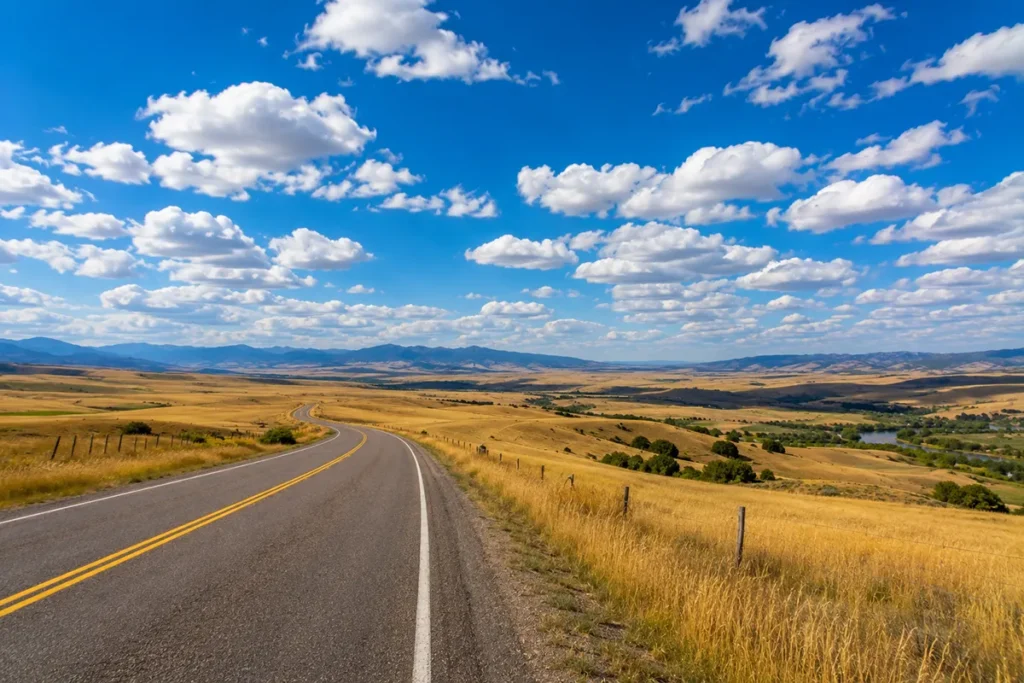
Beyond the obvious locations, I’ve discovered some lesser-known spots where the state colors shine.
The town of Philipsburg, a former mining community, features buildings painted in various shades of blue that create an unexpected architectural interpretation of the state color. The surrounding hills turn gold in late summer, framing the town beautifully.
Smith River, accessible primarily by multi-day float trips, cuts through canyons that display blue sky as a defined strip above golden limestone walls. This “stripe of blue” effect is unlike anywhere else I’ve experienced.
The Montana State Fossil, Maiasaura, was discovered in terrain that today displays classic blue and gold coloring. The Two Medicine area where these fossils were found remains remarkably photogenic.
Final Thoughts: Why These Colors Matter
After years of exploring Montana and specifically paying attention to its state colors, I’ve concluded that blue and gold represent something deeper than legislative designation. They capture the emotional experience of being in Big Sky Country.
The blue overhead creates a sense of spaciousness and freedom that becomes almost meditative after a few days. The gold below — whether wheat fields, grasses, or autumn foliage — grounds you in agricultural heritage and earthly abundance.
Together, these colors tell the story of a state that exists between sky and soil, between aspiration and foundation. Understanding this symbolism enriches every Montana experience, from hiking in Glacier to driving the Hi-Line to simply standing in a wheat field watching the light change.
The Montana State Lullaby, the State Song, and other Montana musical traditions often reference the landscapes these colors represent. Even the Montana State Insect, the mourning cloak butterfly, displays golden edges on its wings.
The state rocks and minerals, the thistle species across Montana’s prairies — everything connects back to a landscape defined by these two fundamental colors.
When you visit Montana, let yourself notice the blue and gold everywhere. It’s not just state trivia — it’s the visual foundation of one of America’s most distinctive destinations.
Frequently Asked Questions
What are the official Montana state colors and what do they represent?
Montana’s official state colors are blue and gold, adopted in 1895. The blue represents Montana’s big sky and pristine waters, while gold symbolizes the state’s rich mining heritage and golden wheat fields. These colors appear on the state flag and are proudly displayed throughout Big Sky Country.
Where is the best place to see Montana’s blue and gold state colors in person?
For blue, Glacier National Park is unmatched — Lake McDonald, Grinnell Glacier, and Logan Pass all display extraordinary shades. For gold, the Golden Triangle wheat belt between Great Falls, Havre, and Cut Bank is at peak colour late July through August. For both simultaneously, the Missouri River Headwaters State Park near Three Forks and the Flathead Valley during wildflower season (late June) offer stunning combinations of the two colours in one view.
When is the best time to visit Montana to experience the state colours?
Late July to mid-August gives you the best of both — clearest blue skies with lowest haze, and wheat fields at maximum gold. September is a close second: the sky becomes crystalline and aspen trees begin their golden transformation, especially in the Swan Valley and around Seeley Lake. For wildflower gold specifically, target the Flathead Valley in June when arrowleaf balsamroot blankets the hillsides.
Why does Montana’s sky look bluer than other states?
There are three main reasons. First, low population density means minimal air pollution even in daytime. Second, Montana’s average elevation of over 3,400 feet puts you closer to the atmosphere with less filtering between you and the sky. Third, the continental climate produces lower humidity than coastal states, eliminating the haze that dulls sky colour elsewhere. The difference is measurable — Montana’s sky consistently registers deeper blue values in photography than equivalent clear-day shots in lower-elevation, higher-humidity states.
What does gold represent in Montana’s state colours?
Gold has a dual meaning rooted in the state’s real history. The first meaning is literal — Montana’s gold and silver mining boom began in 1862 at Grasshopper Creek and transformed towns like Bannack, Virginia City, and Helena. The second meaning emerged by the early 1900s as Montana became one of America’s leading wheat producers. Those amber waves of grain across the Golden Triangle became just as integral to the gold symbolism as the original mining reference. Today both meanings are equally valid.
Where can I see Montana’s state colours reflected in architecture?
The Montana State Capitol in Helena is the best single location — blue and gold appear throughout the interior in stained glass, painted murals, and decorative elements. The State Seal displayed prominently features both colours. During a self-guided tour, look for corridors where afternoon light through blue-tinted windows casts golden reflections across the marble floors. The Cathedral of St. Helena nearby also uses striking blue in its stained glass that complements the surrounding golden landscape.
How do Montana State University’s colours connect to the official state colours?
Montana State University in Bozeman adopted blue and gold directly from the state colours for their Bobcats athletic teams. This isn’t coincidence — it was a deliberate homage. The University of Montana in Missoula chose different colours (maroon and silver), so the Bozeman campus is the stronger visual expression of state colour pride. Attending a Bobcats football game in autumn — when the surrounding landscape is also blue sky and golden foliage — creates a genuinely immersive state colour experience.