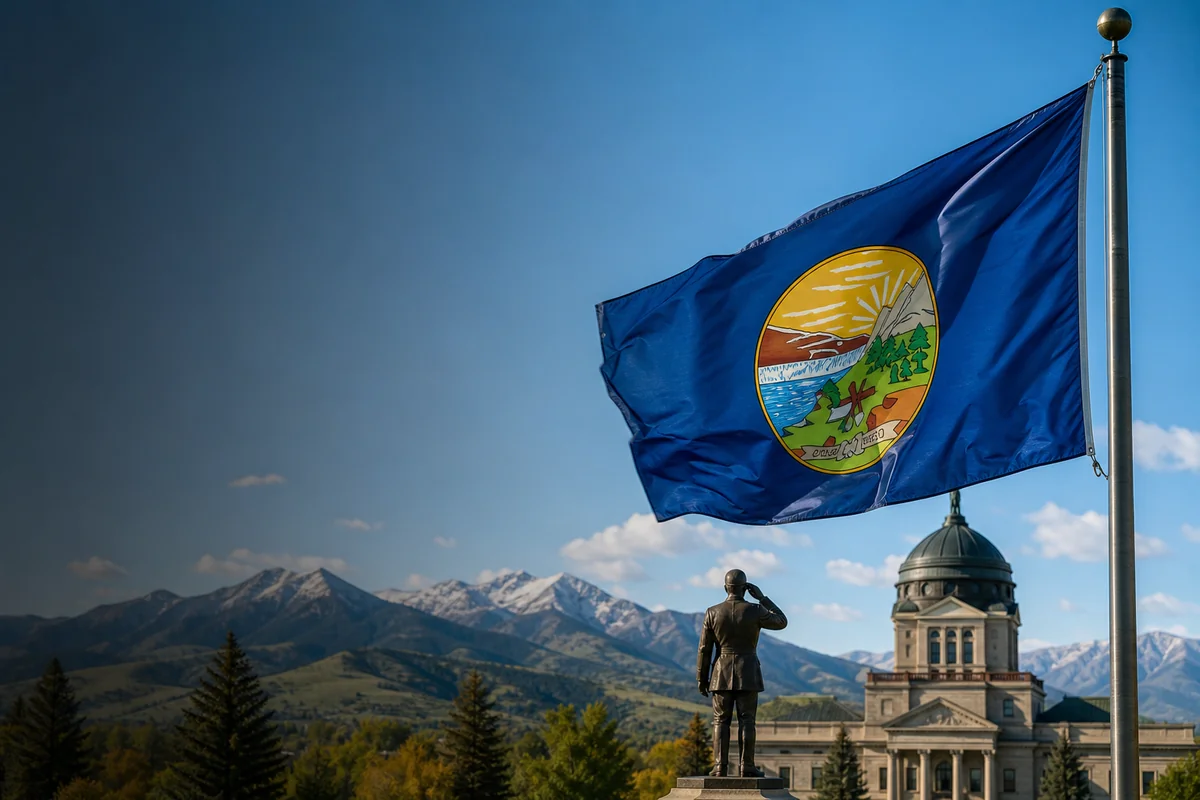
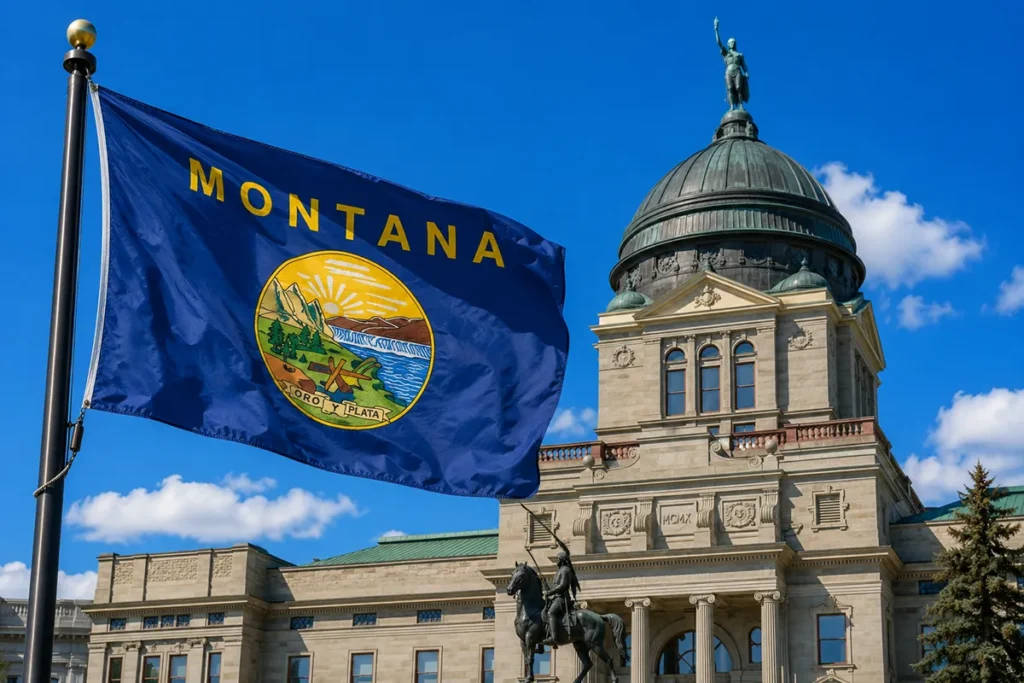
I still remember the exact moment the Montana state flag truly captured my attention. I was standing on the steps of the State Capitol in Helena last September, watching the deep blue banner snap and ripple against a cloudless sky, when a veteran beside me removed his hat and stood in silence.
That small gesture made me realize this wasn’t just a piece of fabric—it was a living symbol that means something profound to the people who call Big Sky Country home.
As one of the most distinctive Montana State Symbols, the flag tells a story that every visitor should understand before exploring this remarkable state.
- Montana’s state flag features a deep blue background with the state seal centered, displaying mountains, the Great Falls of the Missouri, and mining tools
- The word “MONTANA” was added in gold letters in 1981—before that, the flag was often unidentifiable when hanging limp
- Best places to see the flag: State Capitol in Helena, Fort Missoula, and Little Bighorn Battlefield
- The flag’s design dates back to the Spanish-American War in 1898, making it one of the oldest continuously used state flag designs
- The state motto “Oro y Plata” (Gold and Silver) appears on the seal, reflecting Montana’s mining heritage
Liked this article?
Add Roaming Montana as a preferred source so you see more of our articles and guides on Google.
The Unexpected Origins: Born on a Battlefield Far From Home
Most people assume state flags were designed by committees in government buildings. Montana’s flag has a far more interesting origin story—one that begins thousands of miles from the Rocky Mountains.
During the Spanish-American War in 1898, Colonel Harry C. Kessler of the First Montana Infantry needed a way to identify his regiment. He commissioned a blue banner featuring the territorial seal, and Montana soldiers carried it into battle in the Philippines.
When I visited the Montana Historical Society Museum in Helena during my trip last summer, I was able to see original artifacts from this period. The archivists there explained that when those soldiers returned home as heroes, the flag came with them—and Montanans weren’t about to let it fade into obscurity.
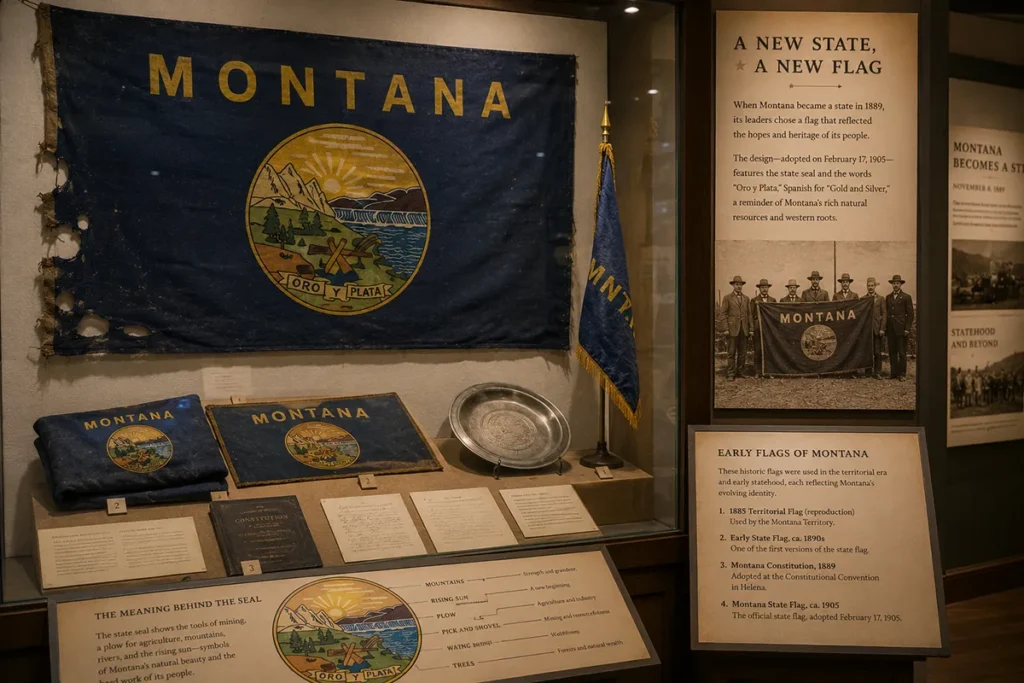
In 1905, the state legislature officially adopted the military banner as Montana’s state flag. It was a decision rooted in pride, sacrifice, and a deep connection to the men who served.
Decoding the Montana State Flag: Every Symbol Has a Story
When you first look at Montana’s flag, you’ll notice a rich blue field with an intricate circular seal in the center. But each element within that seal represents a specific aspect of Montana’s identity, and understanding them transformed my appreciation for what I was seeing across the state.
The Mountains and Great Falls
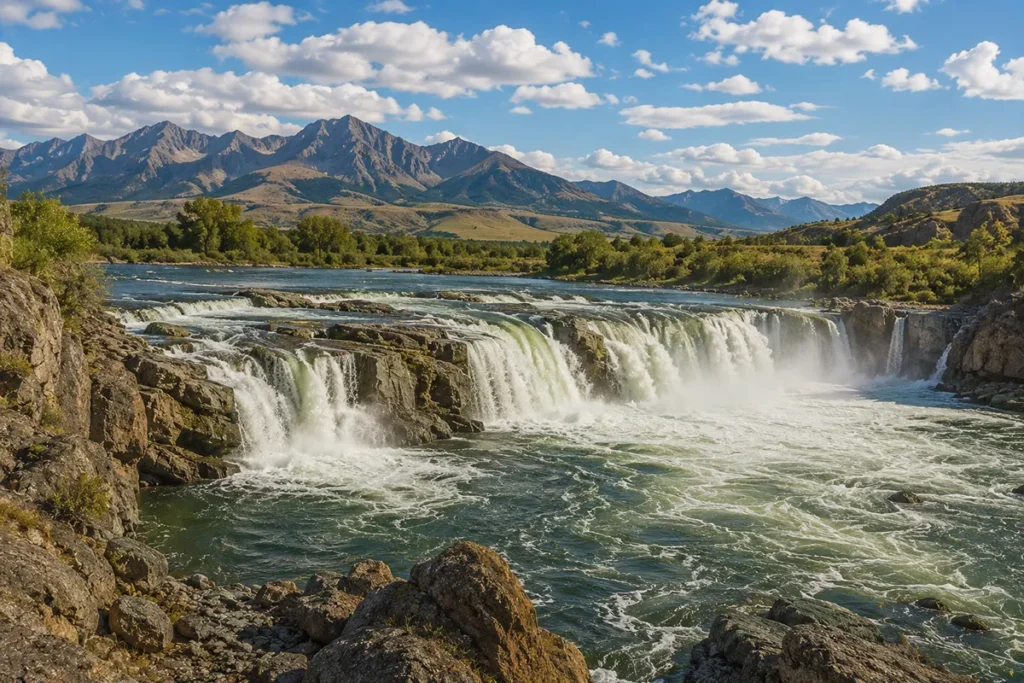
The most prominent feature of the seal is a panoramic landscape showing mountains, trees, and the Great Falls of the Missouri River. This isn’t a generic mountain scene—it specifically references one of Montana’s most significant natural landmarks.
I made a point of visiting Giant Springs State Park near Great Falls during my last trip, specifically to see the actual falls depicted on the flag. Standing there, watching the Missouri cascade over the rocks, I finally understood why the 1865 territorial seal designers chose this exact scene.
The five mountain ranges in the background represent the countless peaks that define Montana’s western half. If you’ve driven through Glacier National Park or hiked in the Beartooth Mountains, you’ve walked among the inspiration for this design.
The Mining Tools: Pick, Shovel, and Plow
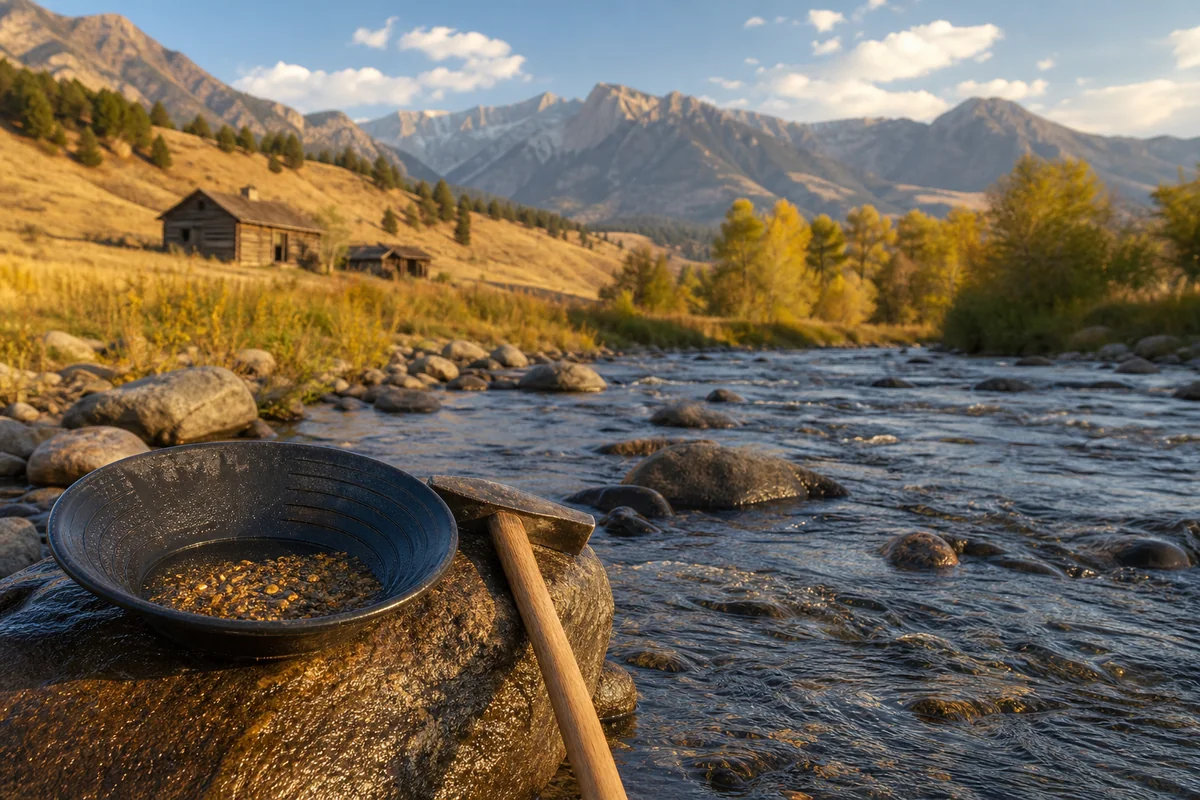
In the foreground of the seal, you’ll notice a plow, a miner’s pick, and a shovel. These tools represent the two industries that built Montana: agriculture and mining.
The plow symbolizes the farmers and ranchers who tamed the eastern prairies—the same landscapes I drove through on Highway 2, where wheat fields stretch to every horizon. Meanwhile, the pick and shovel honor the miners who dug copper, gold, and silver from Montana’s mountains.
During a visit to the World Museum of Mining in Butte on a recent trip, I gained new appreciation for these symbols. Butte was once called “the richest hill on Earth,” and walking through the reconstructed mining town helped me understand why these tools earned a place on the state flag.
The Montana State Motto “Oro y Plata” (Gold and Silver) appears on a ribbon beneath these tools, further cementing the mining connection.
The Rising Sun
Behind the mountains, you’ll notice rays of a rising sun. This represents the dawn of a new state and the promise of Montana’s future.
I found this particularly moving when I watched sunrise from the Going-to-the-Sun Road in Glacier National Park last June. As golden light poured over the Continental Divide, I thought about how the flag’s designers captured that exact feeling of hope and possibility.
The Blue Field
Montana’s flag uses a specific shade of deep blue, which connects to the military origins of the banner. This blue matches the U.S. Army infantry blue that Colonel Kessler’s regiment would have carried.
The Montana State Colors—blue and gold—appear prominently on the flag, creating visual harmony with the gold lettering added in 1981.
The 1981 Addition: When Montana’s Flag Finally Got Its Name
Here’s something most visitors don’t realize: for 76 years, Montana’s flag had no text identifying it whatsoever.
When I first learned this during a conversation with a park ranger at Little Bighorn Battlefield, I was genuinely surprised. She explained that when the flag hung limp on a windless day, it was essentially impossible to distinguish from other state flags that also featured blue backgrounds and central seals.
In 1981, the state legislature finally added “MONTANA” in bold gold letters above the seal. The debate over font selection—they ultimately chose a heavy, sans-serif typeface—took months of discussion.
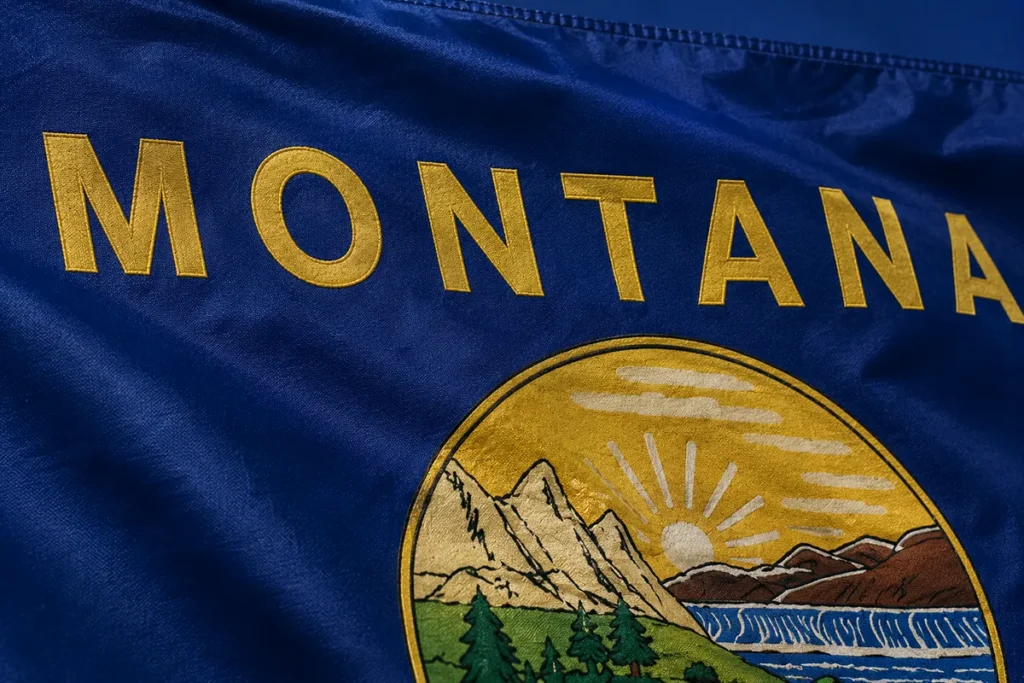
This addition might seem minor, but it solved a genuine practical problem. Now, whether I spotted the flag at a rest stop along Interstate 90 or outside a ranger station in Yellowstone, there was no confusion about which state I was in.
Where to Experience the Montana State Flag Across the State
During my travels throughout Montana, I’ve made a habit of noting places where the flag flies with particular significance. Here are my personal recommendations for visitors who want to connect with this symbol.
Montana State Capitol, Helena
The most obvious but essential stop. The Montana State Capitol Building flies the state flag prominently, and the interior features numerous displays explaining state symbols.
I recommend timing your visit for early morning when the light hits the copper dome perfectly. Free tours run throughout the day, and docents can explain the connections between the flag, the Montana State Seal, and other official symbols.
Little Bighorn Battlefield National Monument
This sacred site near Crow Agency flies both the American and Montana flags. The setting feels especially appropriate given the flag’s military origins.
When I visited in August, a Crow tribal member working as a guide pointed out how the flag’s symbolism takes on additional meaning at a battlefield. The sacrifices made here, and later in the Spanish-American War where the flag was born, are permanently intertwined.
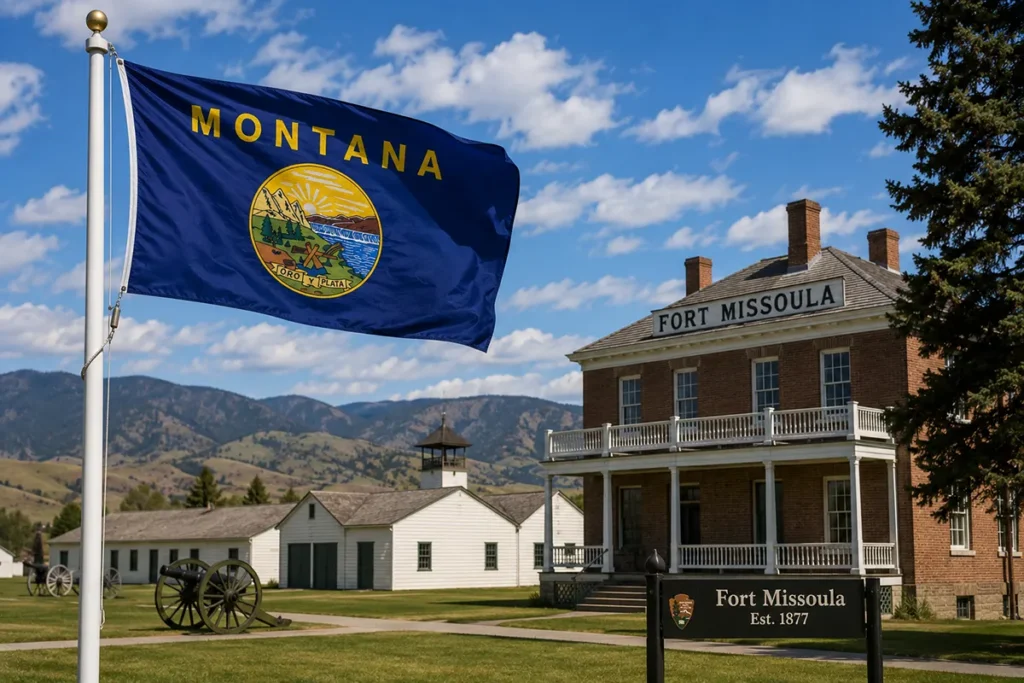
Fort Missoula
This historic military installation, now home to the Historical Museum at Fort Missoula, has direct connections to the First Montana Infantry that carried the original flag.
Walking the grounds last fall, I found historical markers explaining the regiment’s journey to the Philippines and back. The museum’s military collection provides excellent context for understanding why Montana’s flag emerged from warfare rather than a design contest.
Montana State University and University of Montana
Both campuses in Bozeman and Missoula fly the state flag alongside their institutional banners. If you’re visiting these college towns, take a moment to notice how the flag integrates into the educational landscape.
At Montana State in Bozeman, I particularly liked the flag display near the duck pond in the center of campus. It’s a peaceful spot for reflection.
County Courthouses
Every county courthouse in Montana flies the state flag. During my road trip along Highway 200, I made stops in small towns like Lewistown and Jordan specifically to photograph these displays.
There’s something powerful about seeing the same flag in both bustling Helena and tiny towns with populations under 500. It represents the connection between all Montanans, regardless of where they live.
Practical Information: Montana State Flag Quick Facts
| Specification | Details |
|---|---|
| Adoption Date | February 27, 1905 (text added 1981) |
| Colors | Blue field with gold lettering and multicolored seal |
| Dimensions | Official ratio of 2:3 (height to width) |
| State Motto on Flag | “Oro y Plata” (Gold and Silver) |
| Origin | First Montana Infantry, Spanish-American War (1898) |
| Seal Design Date | 1865 (territorial seal) |
The Montana State Flag and Other State Symbols: Making Connections
One thing I love about exploring Montana’s official symbols is how they interconnect. The flag doesn’t exist in isolation—it’s part of a web of symbols that tell Montana’s complete story.
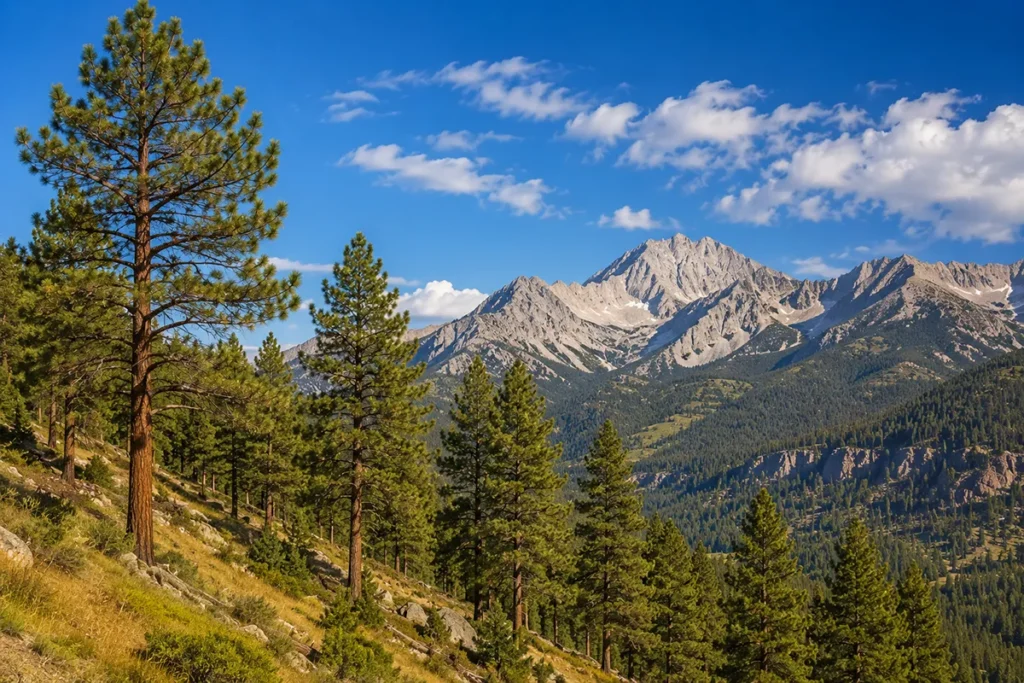
The mountains on the flag connect to the Montana State Tree, the Ponderosa Pine, which blankets those very slopes. The agricultural tools link to the Montana State Grass, bluebunch wheatgrass, that covers the prairies.
The waterfall in the seal represents the same rivers where you’ll find the Montana State Fish, the blackspot cutthroat trout. During my fishing trip on the Yellowstone River last September, I kept thinking about these connections.
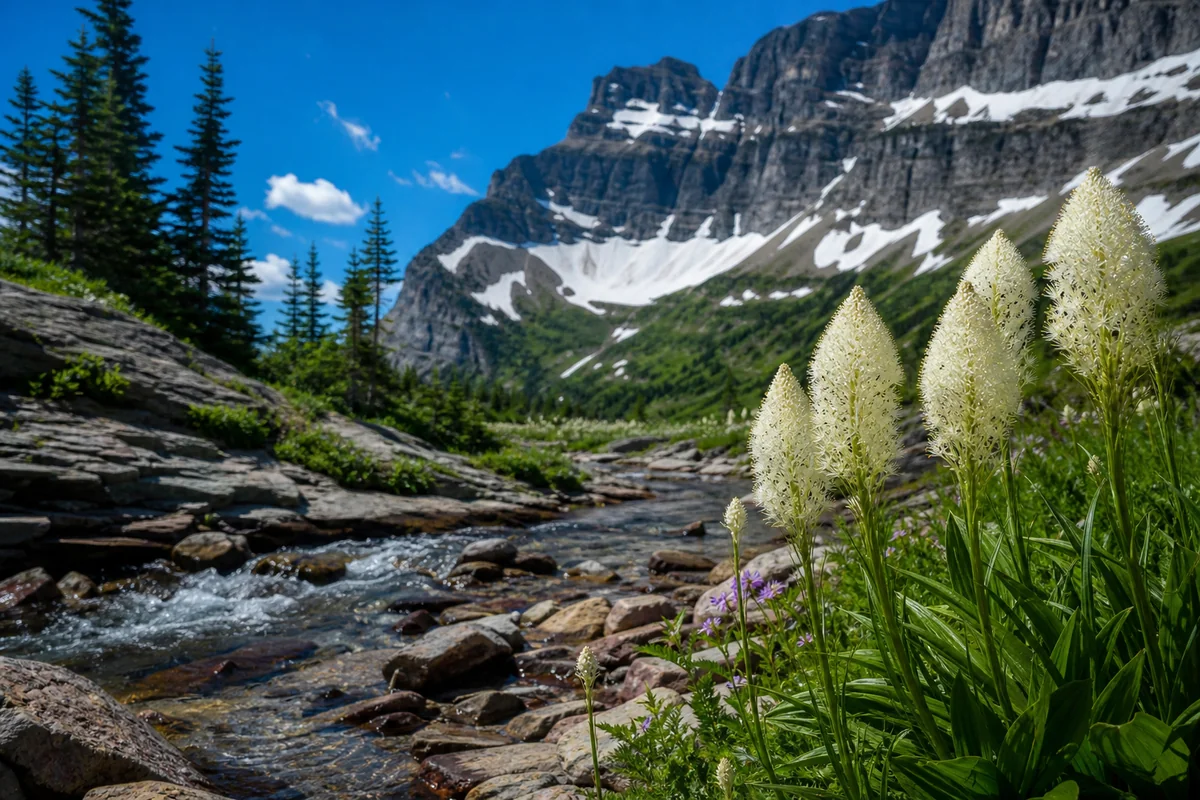
Even the Montana State Flower, the bitterroot, grows in the same mountain landscapes depicted on the seal. Similarly, the Montana State Bird, the Western Meadowlark, sings across the prairies that the plow on the flag represents.
If you’re interested in Montana’s paleontological heritage, the Montana State Fossil, the Maiasaura, was discovered in the same mountain ranges shown on the flag. The Montana State Rocks came from those depicted peaks as well.
The Montana State Animal, the grizzly bear, roams the wilderness shown in the seal’s background. And foraging in those same forests, you’ll find the Montana State Fruit, the huckleberry.
Buying Montana State Flag Merchandise: What’s Worth Your Money
As someone who’s brought home my share of Montana souvenirs, I have strong opinions about flag merchandise.
The Montana Historical Society gift shop in Helena sells high-quality flags in various sizes, with proceeds supporting the museum’s work. I bought a 3×5 foot nylon flag there that’s survived three Montana winters on my flagpole at home.
In Bozeman, Country Bookshelf stocks local history books that explain the flag’s symbolism in depth. I recommend “Montana: A History of Two Centuries” for visitors who want scholarly context.
For something unique, check out made-in-Montana products featuring the flag design. I found excellent leather goods at a shop in Whitefish last winter, including a wallet with a tasteful flag embossing.
Avoid the cheap imported flags sold at some truck stops. The colors fade within months, and the stitching fails quickly. Spending a few extra dollars on an American-made flag is worth it.
Montana State Flag Etiquette: What Visitors Should Know
Montanans take flag etiquette seriously, and visitors should understand the basics.
When the Montana state flag flies alongside the American flag, it should be positioned to the left of the U.S. flag (from the viewer’s perspective) and slightly lower. I’ve noticed this protocol carefully observed at government buildings throughout the state.
At sunset, flags should be lowered or illuminated. During my camping trip in the Missouri Breaks last summer, I watched a rancher lower his flags with ceremony each evening—a reminder that traditions run deep in rural Montana.
If you attend a public event where both flags are displayed, stand respectfully during any flag ceremonies. Montanans notice, and they appreciate when visitors honor their symbols.
Photography Tips: Capturing the Montana State Flag
I’ve photographed Montana’s flag in dozens of locations, and here are my hard-won tips.
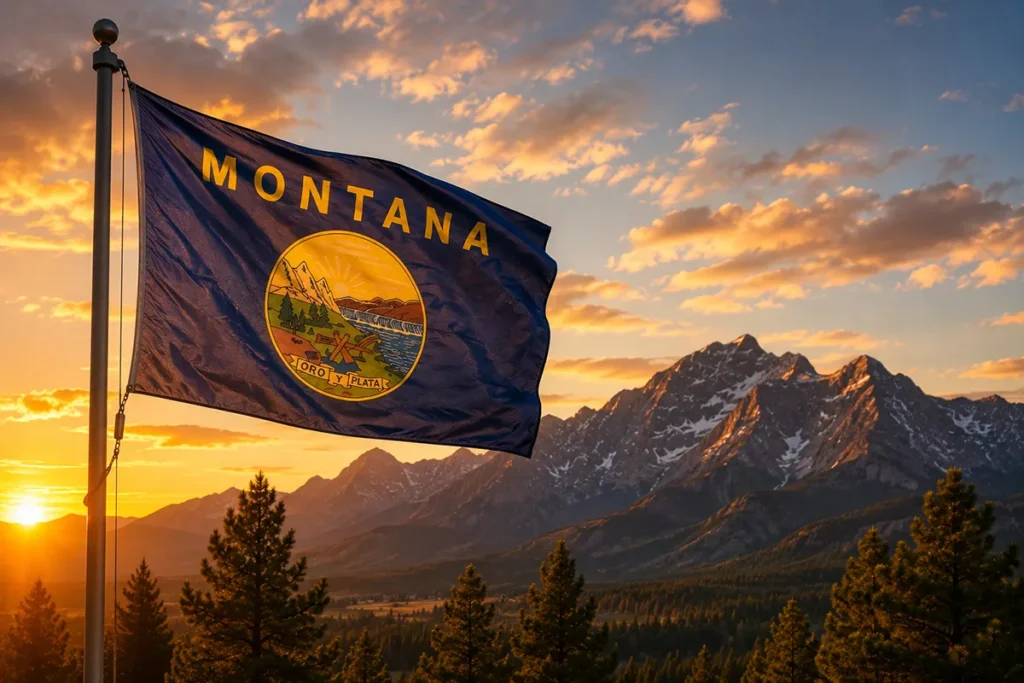
The best light for flag photography comes in the golden hour—roughly an hour after sunrise or before sunset. The warm tones make the gold lettering pop against the blue field.
Wind matters. A limp flag against a pole doesn’t make a compelling image. I check weather forecasts for breezy days when planning flag photography.
Include context. A flag photographed against Helena’s mountains or Glacier’s peaks tells a richer story than an isolated close-up. My favorite shot shows the flag at Fort Owen State Park with the Bitterroot Mountains behind it.
For close-ups of the seal details, you’ll need a telephoto lens or significant cropping. The intricate elements—the miners’ tools, the waterfall, the rays of sun—deserve sharp, detailed capture.
The Flag in Montana Culture: Music, Art, and Pride
Montana’s flag appears throughout the state’s cultural life in ways that surprised me as a visitor.
The Montana State Song, “Montana,” celebrates the same landscapes depicted on the flag. When I attended a performance at the Myrna Loy Center in Helena, the evening opened with this anthem—and the flag imagery in my mind enhanced the music.
Local artists frequently incorporate flag elements into their work. At the Missoula Art Museum, I saw contemporary pieces that reimagined the seal’s components in creative ways. It’s a living symbol that artists continue engaging with.
Even the Montana State Lullaby connects to flag themes, singing children to sleep with imagery of the mountains and valleys shown on the state seal.
The state’s various Montana State Slogans often complement the flag’s visual messaging, while the Montana State Nickname “Big Sky Country” captures the same expansive landscape.
For a unique musical experience, explore the collection of Montana Songs that celebrate state pride.
Montana State Flag vs. Other State Flags: An Honest Assessment
I’ll be direct: Montana’s flag isn’t going to win any design awards from vexillologists (flag experts). It belongs to the category of “seal on a blue background” flags that many states adopted in the late 1800s and early 1900s.
However, I’d argue that Montana’s flag excels where it matters most—historical authenticity and meaningful symbolism. Unlike flags designed by committee to check demographic boxes, Montana’s flag emerged organically from actual military service.
The 1981 addition of “MONTANA” was a pragmatic improvement that some design purists criticize. But as someone who’s tried to identify state flags from a distance, I appreciate the clarity.
What Montana’s flag lacks in minimalist design principles, it makes up for in emotional resonance. Every element connects to real Montana history, geography, and values.
The Montana State Quarter Connection
If you’re collecting state quarters, you’ll notice interesting parallels between the coin and the flag. The Montana State Quarter, released in 2007, features a bison skull and mountain landscape that echo the flag’s themes.
I keep a Montana quarter in my travel kit as a pocket reminder of Big Sky Country. The shared visual language between the flag and the coin creates a cohesive state identity.
Connecting the Flag to Montana’s Natural Heritage
For visitors interested in Montana’s ecology, the flag provides a framework for understanding the landscape.
The mountain forests shown on the seal contain the Montana Native Plants that define the state’s ecosystems. Hiking through these woods, you’re walking through the flag’s imagery.
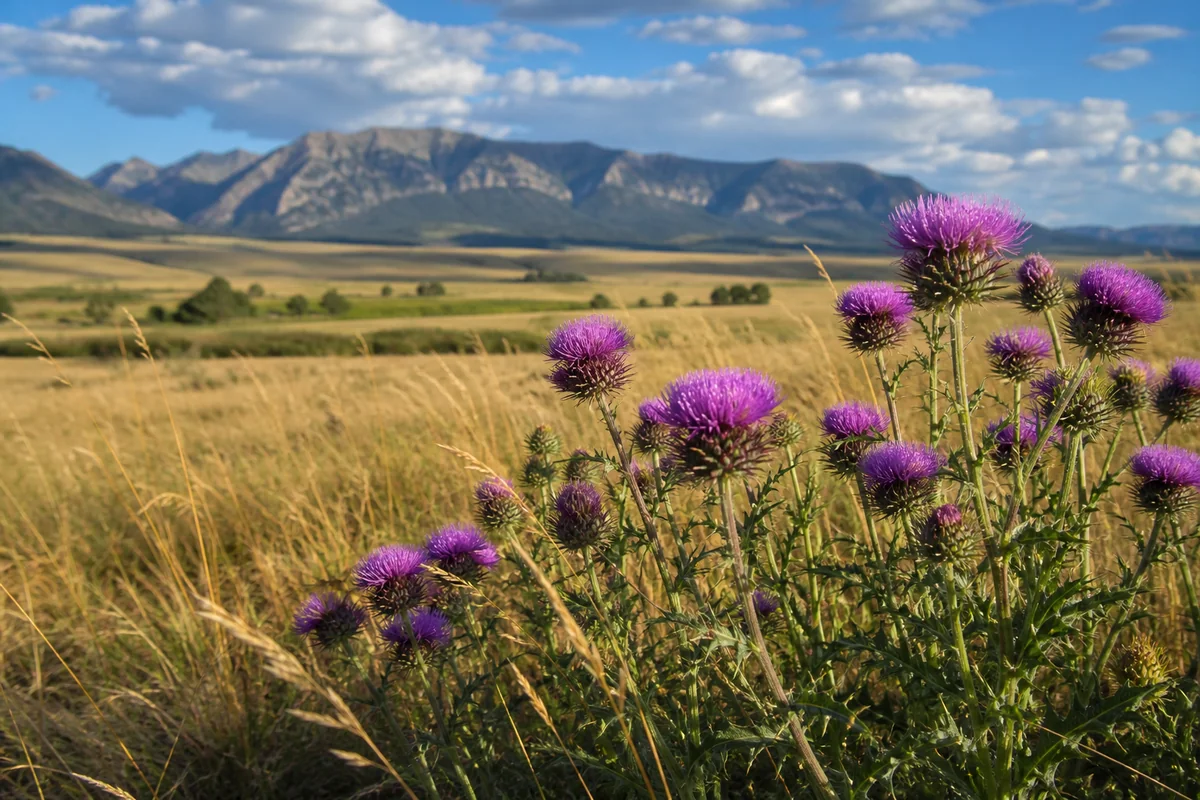
The Montana State Insect, the mourning cloak butterfly, flits through the same landscapes. And if you’re curious about plant identification, the Montana Thistle Guide covers species found in the prairies the flag’s plow represents.
Final Thoughts: Why the Montana State Flag Matters to Visitors
After years of exploring Montana, I’ve come to see the state flag as more than decoration. It’s a compressed history lesson, a statement of values, and a visual anchor for understanding everything else you’ll experience in Big Sky Country.
When you see the flag flying outside a courthouse in rural Montana, remember the soldiers who first carried that design into battle. When you notice it at Glacier National Park headquarters, connect the depicted mountains to the peaks surrounding you.
The Montana state flag rewards attention. The more you understand its symbols, the richer your Montana experience becomes.
Whether you’re visiting for a weekend or planning an extended road trip, take time to really look at Montana’s flag. The story it tells—of mining and farming, of sacrifice and hope, of mountains and rivers—is the story of Montana itself.
And that story, I promise, is worth knowing.
Frequently Asked Questions
What does the Montana state flag look like and what do its symbols mean?
The Montana state flag features a deep blue background with the state seal in the center, displaying mountains, the Great Falls of the Missouri River, forests, and mining tools. The word ‘MONTANA’ appears in gold letters above the seal. Understanding what each element represents deepens your appreciation for the history behind Montana’s statehood.
When was the Montana state flag officially adopted?
Montana’s state flag was officially adopted in 1905, though the gold lettering spelling ‘MONTANA’ wasn’t added until 1981. The flag’s design honors Montana’s history as the 41st state admitted to the Union in 1889. The 76-year gap before ‘MONTANA’ was added in 1981 meant the flag was often unidentifiable hanging limp — the text addition solved a genuine practical problem.
Why does the Montana state flag feature mining and agricultural imagery?
The Montana state flag prominently displays a pickaxe, shovel, and plow on the state seal because mining and agriculture built Montana’s economy in the 1800s. The state motto ‘Oro y Plata’ means ‘Gold and Silver’ in Spanish, referencing Montana’s rich mining heritage. Together, the pick, shovel, and plow on the seal tell the story of two industries — mining and agriculture — that shaped every corner of the state.
Where are the best places to see the Montana state flag displayed with historical significance?
The Montana State Capitol in Helena is the essential starting point — the flag flies prominently outside and appears throughout the interior. Fort Missoula has direct historical ties to the First Montana Infantry that originally carried the flag into battle in the Philippines in 1898, making it the most meaningful location for understanding the flag’s origins. Little Bighorn Battlefield National Monument near Crow Agency flies the flag in a setting that reinforces its military heritage. Every county courthouse in Montana also displays the flag — stopping at small-town courthouses along Highway 200 or the Hi-Line gives you a sense of how the symbol connects all of Montana’s communities.
Can I legally display the Montana state flag on my vehicle?
Yes, you can legally display the Montana state flag on your vehicle as a show of state pride. Many Montana drivers add flag decals to their trucks or fly small flags from their antennas. Just ensure any flag display doesn’t obstruct your view or violate local regulations about items extending from vehicles.
What is the meaning behind Montana’s state motto on the flag?
Montana’s state motto ‘Oro y Plata’ translates to ‘Gold and Silver’ in Spanish, appearing on a banner within the state seal on the flag. This motto honors the gold and silver mining boom that brought settlers to Montana Territory in the 1860s. The motto appears on a ribbon beneath the mining tools in the seal — a compact summary of the mineral wealth that put Montana on the national map in the 1860s.
How does the Montana state flag’s military origin story connect to places I can visit today?
The flag’s journey from the Spanish-American War to official state symbol is traceable through specific sites. Fort Missoula’s Historical Museum holds military collections and markers explaining the First Montana Infantry’s service in the Philippines. The Montana Historical Society Museum in Helena holds archival materials from this period, including original artifacts. If you visit the State Capitol, the docents on free guided tours can explain the 1905 legislative debate that officially adopted the military banner as the state flag — including why it took seven years after the soldiers returned for it to become official.
Sources: