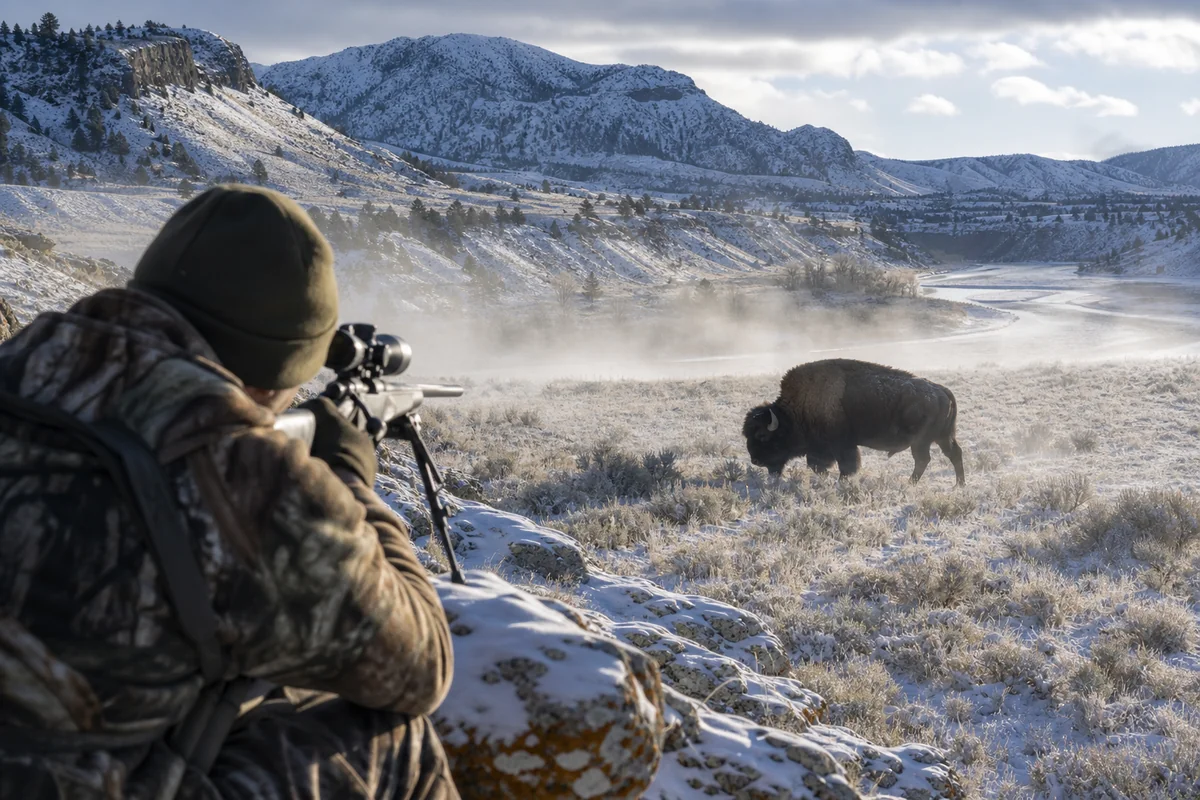
Standing on a frozen ridge outside Gardiner last November, watching a massive bull bison materialize through the morning mist, I understood why hunters wait decades for this moment.
The animal was prehistoric in scale—easily 1,800 pounds of raw power, his breath steaming in the -15°F air as he grazed along the Yellowstone River corridor, completely unaware of my presence 400 yards away.
After twelve years of building Montana preference points and countless hours of preparation, I was finally living the dream that draws hunters from across the country to pursue North America’s largest land mammal.
If you’re exploring the broader world of Montana hunting, bison represents the ultimate trophy pursuit—one that demands patience, planning, and a genuine respect for both the animal and the complex management systems that make these hunts possible.
- Montana offers extremely limited wild bison hunting licenses through a competitive lottery system—typically fewer than 100 tags total per year
- Expect to build preference points for 15-20+ years for desirable hunting units, or pay premium prices for ranch hunts with guaranteed tags
- Primary hunting areas include the Gardiner Basin (Yellowstone-adjacent) and lands near the Fort Peck and Fort Belknap reservations
- Total costs range from $2,500-$5,000 for DIY public land hunts to $5,000-$15,000+ for guided ranch experiences
- Specialized equipment including heavy-caliber rifles (.375 H&H minimum recommended) and meat processing plans are essential
- Wild bison hunting season typically runs from mid-November through February, with best odds during harsh winter weather
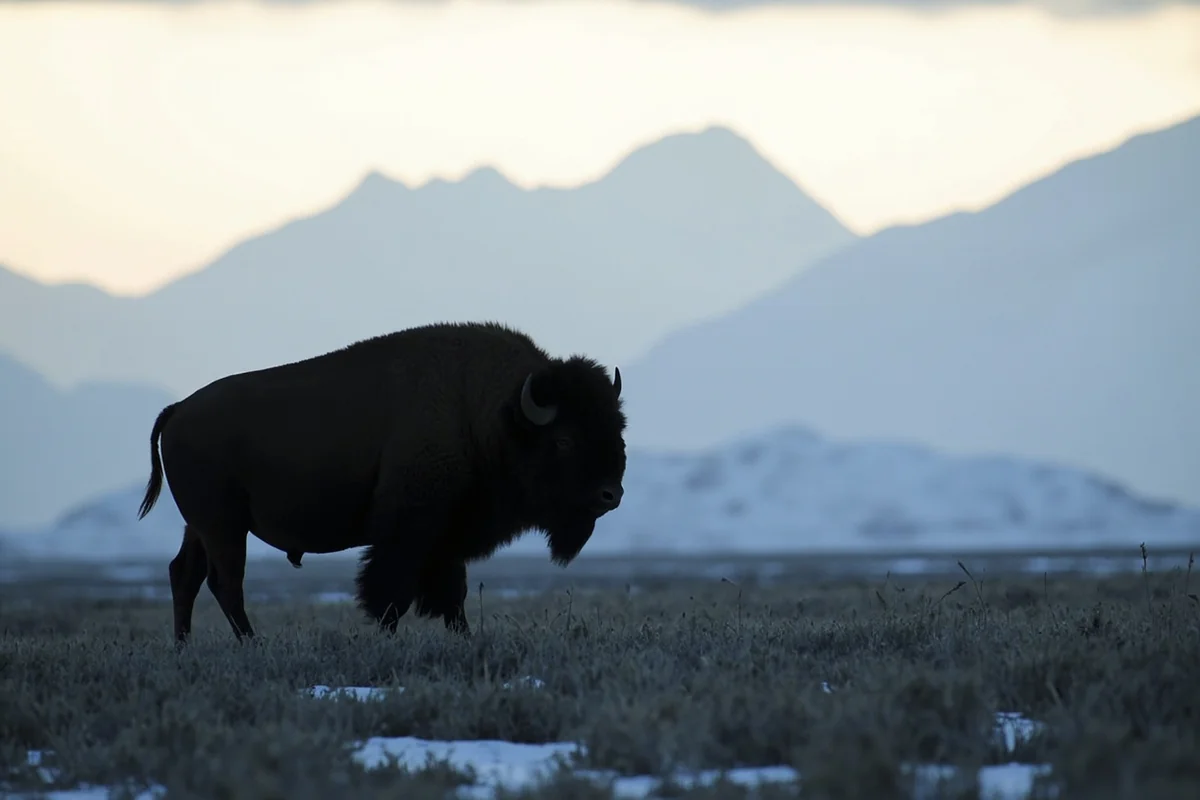
Understanding Montana’s Wild Bison Hunting Opportunities
Before I dive into the practical details, I need to clear up a common confusion that trips up many aspiring bison hunters. Montana actually offers two completely different types of bison hunting experiences, and understanding the distinction fundamentally changes how you approach this pursuit.
Wild bison hunting—the focus of this guide—targets free-ranging animals that migrate out of Yellowstone National Park or live on tribal lands. These hunts are extremely limited, highly competitive, and require either years of preference point accumulation or tribal affiliation.
Ranch or preserve bison hunting involves pursuing animals on private property where guaranteed tags are available for a fee. While these hunts can still be challenging and rewarding, they operate under different regulations and offer a very different experience.
When I finally drew my tag for the Gardiner Late Season Hunt in 2023, I’d been applying since 2011. The wait was excruciating, but the experience of pursuing truly wild bison in their natural habitat was worth every frustrating year of rejection.
The Gardiner Basin: Montana’s Premier Wild Bison Hunt
The area surrounding Gardiner, Montana—right at the north entrance of Yellowstone—represents the most iconic wild bison hunting opportunity in the lower 48 states. During harsh winters, bison migrate out of the park seeking forage at lower elevations, crossing onto public and private lands in the Gardiner Basin.
Montana Fish, Wildlife & Parks manages these hunts through a carefully controlled lottery system designed to reduce bison population pressure on lands outside the park while maintaining herd health.
During my hunt, I spent the first three days glassing from various vantage points along Highway 89 and the side roads branching into the Absaroka Mountains. The terrain is deceptive—what looks like rolling grassland from a distance is actually carved by deep ravines and sudden elevation changes that can make stalking incredibly challenging.
The hunting units in this area include HD 301, 313, and 393, each with specific boundaries and regulations. My tag was valid for HD 313, which covers the eastern portion of the hunting district and includes both public BLM land and Block Management areas.
Fort Peck and Fort Belknap Tribal Hunts
Beyond the Yellowstone hunts, wild bison opportunities exist on and near the Fort Peck and Fort Belknap Indian Reservations in northeastern Montana. These tribes manage their own bison populations and occasionally offer hunting access to non-tribal members through special permits.
I haven’t personally hunted these areas, but I’ve spoken with several hunters who have. They describe a vastly different experience from the Gardiner hunts—more open prairie terrain, different herd dynamics, and typically milder weather conditions.
The tribal hunts often operate under separate regulations from Montana state licenses, so you’ll need to contact the tribal wildlife departments directly for current availability and requirements. Be prepared for additional fees and specific protocols that may differ from state-managed hunts.
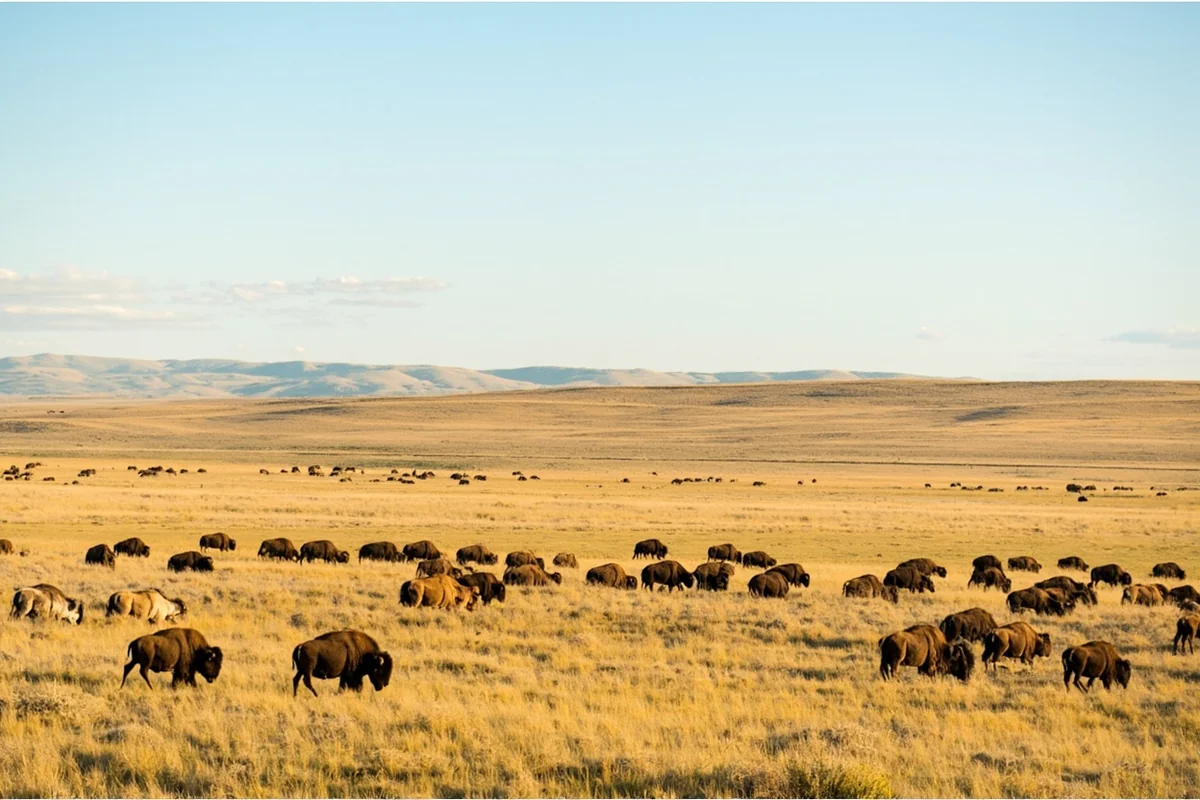
The Montana Bison License Lottery: A Realistic Timeline
Let me be brutally honest about something that many hunting websites gloss over: if you’re starting from scratch today, you should plan for a 15-20 year wait for a wild bison tag in desirable units. I’m not exaggerating.
Montana uses a preference point system for bison that’s similar to what you’ll encounter when pursuing bighorn sheep or bear hunting permits. Each year you apply but don’t draw, you accumulate one preference point. When tags are allocated, applicants with more preference points have priority.
Current Wait Times by Hunting District
Based on recent draw data and conversations with FWP biologists during my pre-hunt consultation, here’s what you’re realistically looking at:
| Hunting District | Typical Wait (Preference Points) | Tags Available |
|---|---|---|
| HD 301 (Early Season) | 20-25+ years | 10-15 |
| HD 313 (Late Season) | 12-18 years | 20-40 |
| HD 393 | 15-20 years | 15-25 |
| Fort Peck Area | Variable (fewer applicants) | 5-15 |
The number of tags varies each year based on population counts, migration patterns, and management objectives. During my application years, I watched the late season allocation swing from fewer than 20 tags to nearly 50 in years with heavy snow pushing more animals out of the park.
How to Apply: Step-by-Step Process
Applying for bison is straightforward once you understand the system. Here’s exactly what I did each year:
First, you need a valid Montana hunting license. Non-residents must purchase the appropriate base license before applying for bison.
Next, visit the Montana FWP online licensing system during the application period, which typically runs from early March through late April. The exact dates change slightly each year, so verify the current deadline before assuming.
Select your preferred hunting district(s)—you can typically list first and second choices. I always put HD 301 as my first choice and HD 313 as my second, knowing the early season had better weather but longer odds.
Pay the application fee (non-refundable) and the license fee (refundable if you don’t draw). For non-residents, expect to pay around $1,250 for the application and license fees combined, with the license portion returned if you’re unsuccessful.
Understanding Montana hunting license costs helps you budget for the long game of accumulating preference points.
My Hunt: Lessons from Five Days in the Gardiner Basin
When I finally received that “Successful” notification in June 2023, I immediately started planning what would become a five-day hunting experience that tested every skill I’d developed over 25 years of pursuing game.
Day One: Arrival and Initial Scouting
I arrived in Gardiner on November 14th, two days before my hunt window opened. The town was bustling with other successful applicants—I counted license plates from Wyoming, Colorado, Texas, and even Florida in the motel parking lot.
My first afternoon was spent driving the main access roads and glassing from pullouts. The weather was mild by Montana November standards—mid-30s with light wind—which actually worked against me. Bison were still high in the park, content with available forage and feeling no pressure to migrate.
I stopped by the FWP check station to verify my paperwork and get the latest intel on herd locations. The biologist there was incredibly helpful, pointing out areas where she’d seen small groups starting to drift toward the park boundary.
Day Two: The Waiting Game
Opening morning found me positioned on a ridge overlooking Slip and Slide Creek before first light. I’d read about this area in forum posts and hunting magazines, but nothing prepared me for the scale of the landscape.
Through my spotting scope, I could see scattered groups of bison across the valley—but all were still clearly inside the park. For legal and ethical reasons, you absolutely cannot shoot animals within Yellowstone boundaries, and the park boundary is not always clearly marked on the ground.
I spent eight hours on that ridge, watching, waiting, and slowly freezing. Not a single bison crossed into the hunting district.
This is the reality of wild bison hunting that glossy magazine articles rarely mention: you can do everything right and still go home empty-handed. Unlike elk hunting or deer hunting where you can cover ground actively searching, bison hunting in this area is largely a waiting game.
Day Three: Weather Changes Everything
I woke on day three to six inches of fresh snow and temperatures dropping through the single digits. This was exactly what I’d been hoping for.
By mid-morning, my spotting scope revealed movement I hadn’t seen before—a line of dark shapes filing down from the higher elevations toward the river bottom. The weather was pushing them, finally.
I relocated three times that day, trying to anticipate where the herd would cross onto huntable ground. Each time, they zigged when I expected them to zag.
By afternoon, I’d narrowed down their likely crossing point to a drainage that emptied onto a stretch of Block Management land. I positioned myself 500 yards away, downwind, and settled in for what I hoped would be a shot opportunity.
The animals came through just before dark—but the light was too low for a safe, ethical shot. I watched them bed down in a depression maybe 350 yards from my position and knew exactly where I’d be before dawn the next morning.
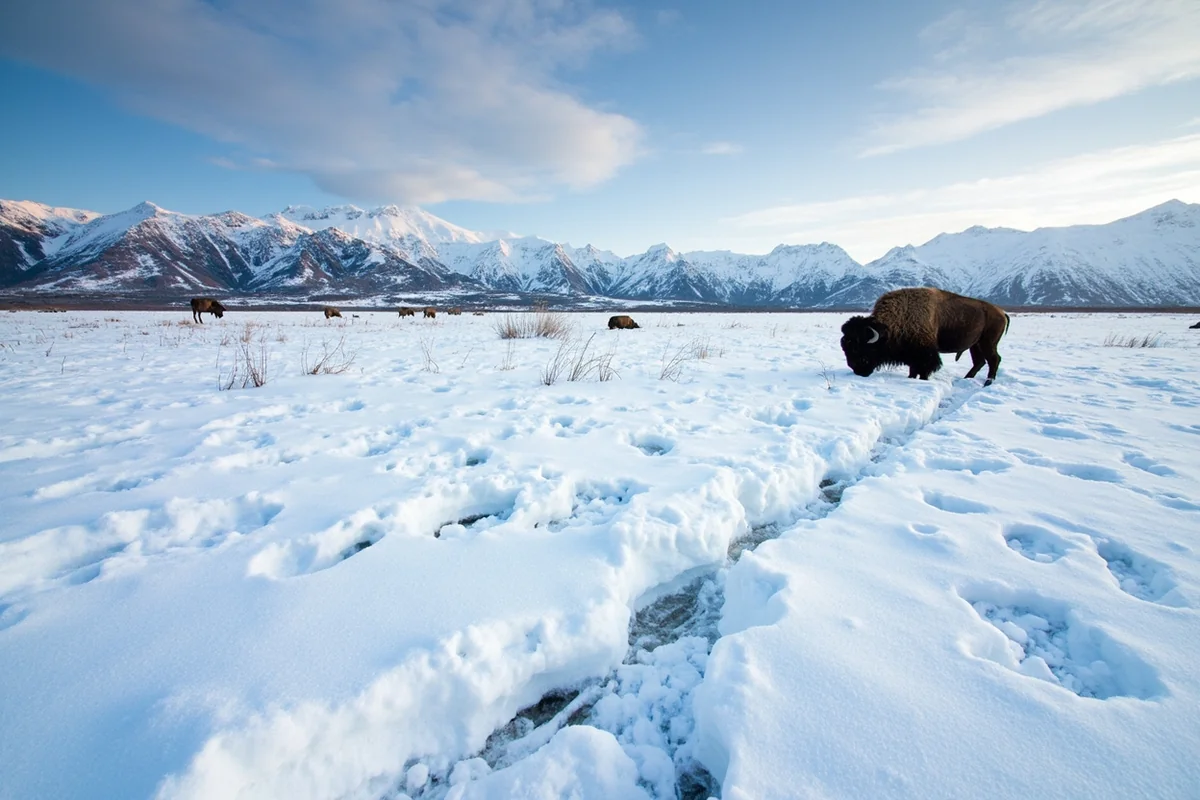
Day Four: The Moment of Truth
I was in position by 5:30 AM, having hiked the last mile in complete darkness to avoid spooking the bedded herd. The temperature was -15°F, and I could feel ice forming on my eyelashes.
As the sky began to lighten, I could make out the dark shapes of maybe 25 bison scattered across the flat. Several bulls were visible, including one massive animal that I’d spotted the previous evening.
For the next two hours, I lay prone in the snow, watching and waiting for the herd to begin moving and for enough light to confirm my target and make a clean shot.
At 8:47 AM, the big bull separated from the group, moving toward some exposed grass at the base of a small rise. At 287 yards—a distance I’d verified with my rangefinder countless times—I had a perfect broadside presentation.
I took a breath, let half of it out, and pressed the trigger on my .375 H&H.
The bull took two steps and dropped. Twenty-five years of anticipation, twelve years of preference points, and four days of cold, exhausting hunting culminated in that single moment.
Day Five: The Real Work Begins
What I haven’t mentioned yet is that killing a bison is actually the easy part. Processing one in the field is where things get truly challenging.
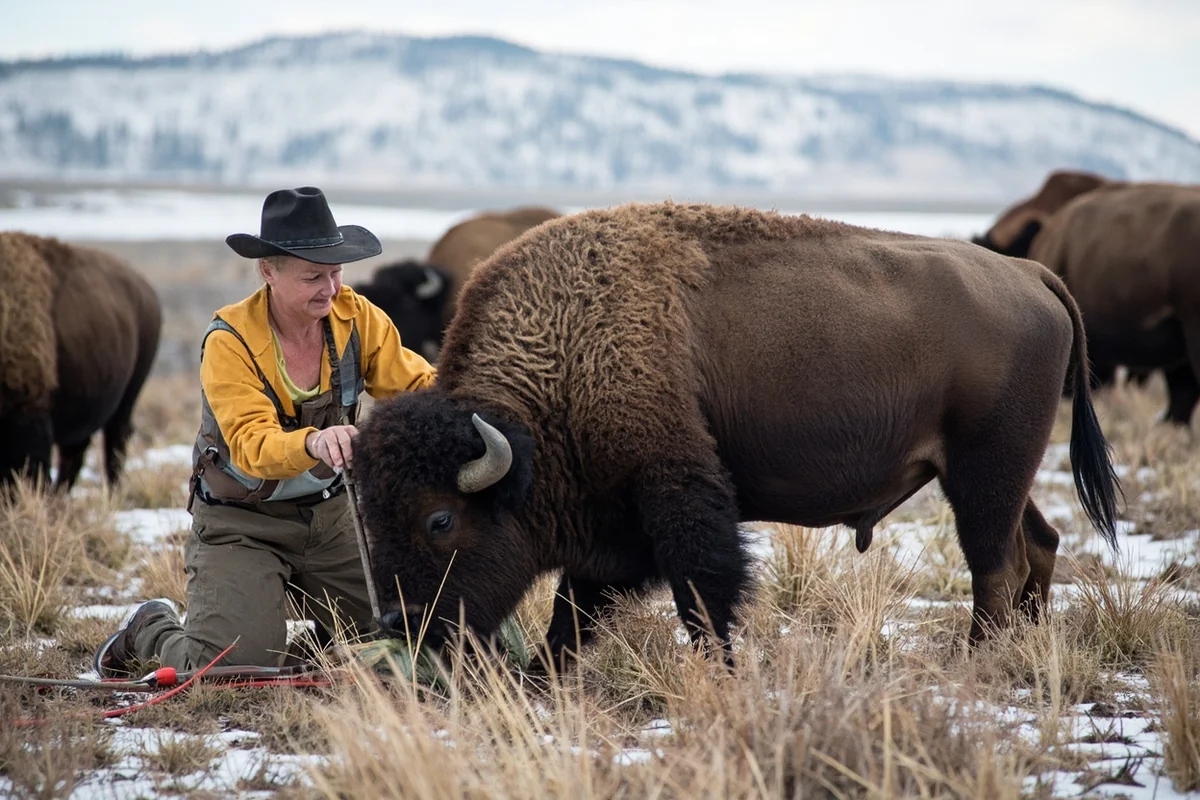
My bull dressed out at just over 900 pounds of meat. That’s not a typo. I had arranged for a local outfitter to assist with field processing and transportation—a decision I cannot recommend strongly enough for first-time bison hunters.
The pack-out took eight hours with two snow machines, a meat sled, and four people working. We quartered the animal on-site, removed the hide (which weighed over 100 pounds by itself), and carefully tagged and bagged each section for transport.
I paid $800 for this assistance, which included cold storage until I could arrange shipping back to my home state. Money extremely well spent.
Essential Gear for Montana Bison Hunting
After going through this experience, I can tell you definitively what works and what doesn’t. Forget the theoretical gear lists—this is what actually matters in the field.
Firearms and Caliber Selection
Bison are unbelievably tough animals. I’ve heard stories of poor shot placement with marginal calibers resulting in dangerous tracking situations and wounded animals.
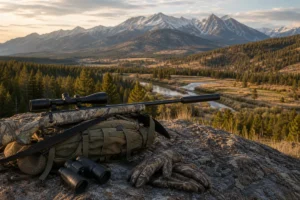
My recommendation—and what I personally used—is nothing lighter than .375 H&H for a rifle hunt. The .375 offers adequate penetration for the thick hide, dense muscle, and heavy bone structure of a mature bison. Some hunters prefer .416 Rigby or even larger African-appropriate calibers.
Whatever you choose, practice extensively with your exact hunting load. Bison don’t give second chances, and follow-up shots on a wounded, angry bull are nightmare scenarios.
If you’re interested in alternative methods, some hunters pursue bison during Montana’s muzzleloader season, though this requires even more careful shot selection and bullet choice.
Optics: Quality Over Everything
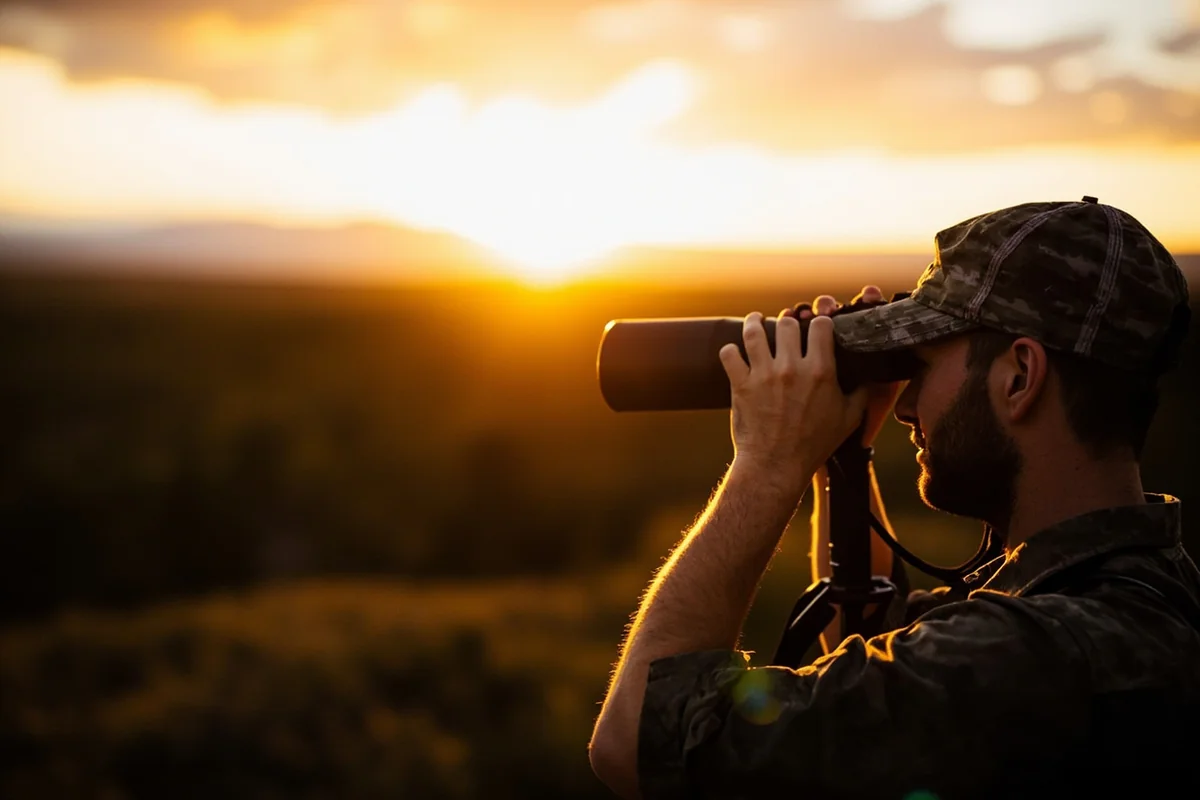
I used a Swarovski EL 10×42 binocular and an 85mm spotting scope with a 25-60x eyepiece. In the glare of snow-covered terrain and the low-light conditions of early morning and late evening, premium glass makes an enormous difference.
A quality rangefinder is non-negotiable. I used a Leica that I’ve carried for elk and antelope hunting for years.
Cold Weather Essentials
The temperatures I experienced—well below zero with wind chill—will absolutely destroy inadequate gear and potentially create dangerous situations.
My layering system included:
- Merino wool base layers (I prefer 250 weight for this type of cold)
- Insulated mid-layer (synthetic, not down, in case of moisture)
- Heavy insulated parka rated to -40°F
- Insulated bibs over fleece pants
- Pac boots with at least 1,000 grams of insulation
- Multiple sets of gloves and hand warmers
I also packed emergency survival gear including a bivy sack, fire-starting materials, and emergency food. The Gardiner Basin is remote enough that a mechanical breakdown or injury could quickly become life-threatening in extreme cold.
Understanding Montana Bison Hunting Regulations
Montana hunting regulations for bison are more complex than most other species, and violations carry severe penalties including loss of hunting privileges.
Boundary Concerns and Legal Hunting Areas
The single most important regulation to understand is the Yellowstone National Park boundary. Hunting within the park is a federal crime that will end your hunting career and potentially land you in prison.
The boundary is not always marked with obvious signs or fences. Before your hunt, study maps obsessively. I used both OnX Hunt app and physical USGS maps to familiarize myself with exactly where the line falls.
When in doubt, don’t shoot. If you cannot verify with 100% certainty that an animal is outside the park, let it walk. There will be other opportunities.
Understanding where you can hunt on Montana state land is crucial for this and all other Montana hunts.
License and Tagging Requirements
Your bison license must be in your possession while hunting and must be validated immediately upon harvest. This means signing and dating the tag and attaching it to the animal before any processing begins.
You’re required to check your animal at an FWP check station within 24 hours of harvest. The biologists will examine the animal, collect biological samples, and record data important for population management.
I also recommend photographing your validated tag attached to the animal before processing—this provides documentation in case any questions arise later.
The Alternative: Ranch Bison Hunts
If the 15-20 year wait for a wild bison tag seems unreasonable—and I understand that perspective—ranch hunts offer a viable alternative.
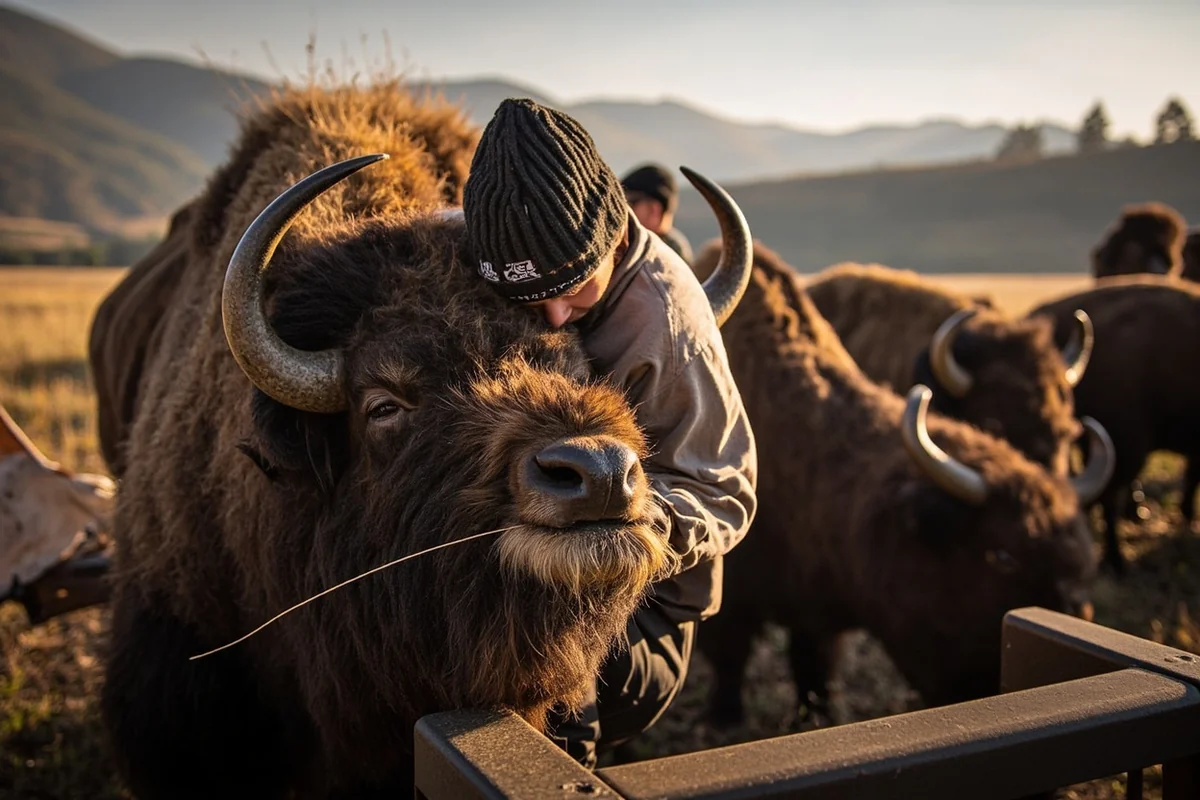
Several Montana operations maintain bison herds on large private ranches and offer hunts with guaranteed tags. These aren’t “shooting preserves” in the negative sense—the animals are free-ranging on thousands of acres and hunting them still requires skill and effort.
Prices for ranch bison hunts typically range from $5,000 to $15,000 depending on trophy quality, amenities, and whether guiding is included. Some operations offer cow bison hunts at lower price points for hunters primarily interested in the meat.
I haven’t personally done a ranch bison hunt, but several hunters I met in Gardiner had done both and described them as completely different but equally valid experiences. The ranch hunts offered more comfortable conditions and guaranteed success, while the wild hunts provided the ultimate adventure and connection to genuine wildlife management.
For comparison, the ranch hunting experience shares some similarities with how buffalo hunting operations work in other contexts.
Processing and Meat Handling: Planning Ahead
The single biggest logistical challenge of bison hunting isn’t the hunting itself—it’s handling the mountain of meat you’ll bring home.
Field Processing Reality Check
A mature bull bison yields 700-1,000 pounds of boneless meat. That’s roughly equivalent to processing three large elk at once.
Unless you have extensive experience with large game processing, I strongly recommend arranging professional help before your hunt. Many outfitters in the Gardiner area offer field processing and cold storage services—identify these resources before you arrive.
If you’re determined to DIY, bring at least two helpers, a game cart or sled, and plan for a full day of hard labor. Bring far more game bags than you think you’ll need.
Transportation and Storage
Getting nearly half a ton of meat home requires serious planning. Options include:
Commercial shipping through companies like FedEx Custom Critical or specialized wild game shippers—expensive but reliable.
Renting a large chest freezer locally and slowly transporting meat home in coolers over multiple trips.
Arranging on-site processing and having a local butcher package everything for shipment.
I used a combination approach: a local processor cut and vacuum-sealed everything, then I shipped the meat home in insulated boxes. Total shipping cost was around $600—significant but manageable when spread across 800+ pounds of premium, organic, grass-fed bison.
Other Montana Hunting Opportunities While You Wait
Building preference points for bison takes patience. In the meantime, Montana offers incredible hunting opportunities that can sharpen your skills and satisfy your hunting passion.
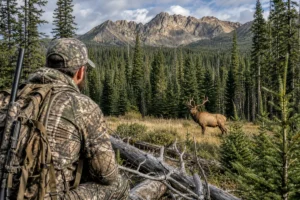
Elk hunting provides similar big-game challenges with much better draw odds for non-residents. The Montana shoulder season extends opportunities beyond traditional dates.
Whitetail deer hunts and mule deer tag opportunities offer excellent general season hunting throughout the state. Understanding deer hunting regulations helps you maximize these opportunities.
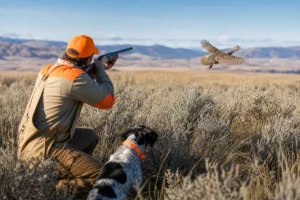
For something completely different, consider upland bird hunting, duck hunting, or even swan hunting—yes, Montana is one of the few states offering legal trumpeter swan hunts.
Wolf hunting provides another challenging predator pursuit, while squirrel hunting offers accessible small game action that’s perfect for family trips.
Review Montana hunting seasons to plan visits that combine multiple species opportunities during a single trip.
Final Thoughts: Is It Worth the Wait?
Lying in the snow at -15°F, watching my breath freeze in the air while waiting for shooting light, I had plenty of time to contemplate whether twelve years of preference point accumulation was worth this moment.
My answer, without hesitation, is yes.
There’s something profound about pursuing an animal that once numbered 30 million on this continent and nearly vanished completely. The wild bison of the Yellowstone herd represent an unbroken genetic lineage dating back thousands of years. Having the privilege to participate in their management—harvesting one animal while supporting the ongoing conservation of the species—connects you to something larger than any single hunting experience.
The practical challenges are real: the long wait, the significant cost, the brutal weather conditions, and the massive logistical undertaking of processing the harvest. But if you’re the type of hunter who values once-in-a-lifetime experiences over quantity of hunts, Montana wild bison should be on your list.
Start buying preference points today. Learn the landscape through other Montana hunts while you wait. When your number finally comes up—and it will, if you’re patient enough—you’ll be ready for an adventure unlike anything else in American hunting.
And if the wait seems too long, those ranch hunts are calling. There’s no shame in pursuing bison on private land—you’ll still come home with a freezer full of incredible meat and a story worth telling.
Either way, Montana stands alone as the premier destination for anyone serious about hunting North America’s largest land mammal. See you in the Gardiner Basin.
Frequently Asked Questions
How much does a bison hunting tag cost in Montana?
Montana bison hunting licenses typically range from $75-$125 for residents, while non-resident tags can cost between $1,000-$1,500 depending on the hunting district and whether it’s a wild bison or tribal hunt. I’d also budget an additional $3,000-$8,000 if you’re hiring an outfitter, which most out-of-state hunters do for their first Montana bison hunt.
When is the best time to hunt bison in Montana?
The Montana bison hunting season generally runs from November through February, with peak hunting occurring during the migration period from mid-December to early February when bison move outside Yellowstone National Park boundaries. I recommend planning your trip for January when bison are most active outside park boundaries and winter conditions create ideal hunting opportunities near Gardiner and West Yellowstone.
Where can you legally hunt wild bison in Montana?
Legal bison hunting in Montana is restricted to specific areas adjacent to Yellowstone National Park, primarily in Hunting Districts 301, 302, and 313 near Gardiner and the Hebgen Lake area near West Yellowstone. These hunts target bison that migrate outside park boundaries onto National Forest land and private property, so you’ll want to familiarize yourself with the exact boundary lines before your hunt.
Do I need a guide or outfitter for bison hunting in Montana?
While hiring an outfitter isn’t legally required, I strongly recommend one for first-time bison hunters traveling to Montana since locating migrating herds, navigating public land boundaries, and processing a 1,000+ pound animal requires local expertise. Expect to pay between $4,000-$10,000 for a guided 5-7 day bison hunt, which typically includes lodging, field dressing, and meat processing assistance.
What gear should I pack for a Montana bison hunt in winter?
Pack extreme cold-weather layering systems rated for -20°F temperatures, including insulated waterproof boots, hand warmers, and quality binoculars for glassing distant herds across open terrain. I’d bring a rifle chambered in .300 Win Mag or larger with premium controlled-expansion bullets, plus a reliable 4×4 vehicle since you’ll likely drive 15-30 miles on snowy forest roads to reach hunting areas.
How hard is it to draw a Montana bison hunting license as a non-resident?
Drawing a Montana bison tag is extremely difficult with non-resident success rates often below 1-2% due to limited licenses and high demand, though odds vary by hunting district. I’d suggest applying through Montana FWP’s online system every year to build preference points, or consider booking a hunt on tribal lands through the Confederated Salish and Kootenai Tribes where tags are more readily available for a higher fee.
What should I do with bison meat after a successful Montana hunt?
Most outfitters partner with local meat processors near Gardiner or Bozeman who can butcher, vacuum-seal, and freeze your bison within 24-48 hours for around $400-$700 depending on processing options. If you’re driving back to another state, bring quality coolers and dry ice since a mature bison yields 400-600 pounds of lean, delicious meat that you’ll want to keep frozen during the trip home.