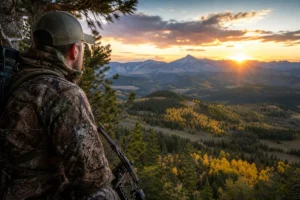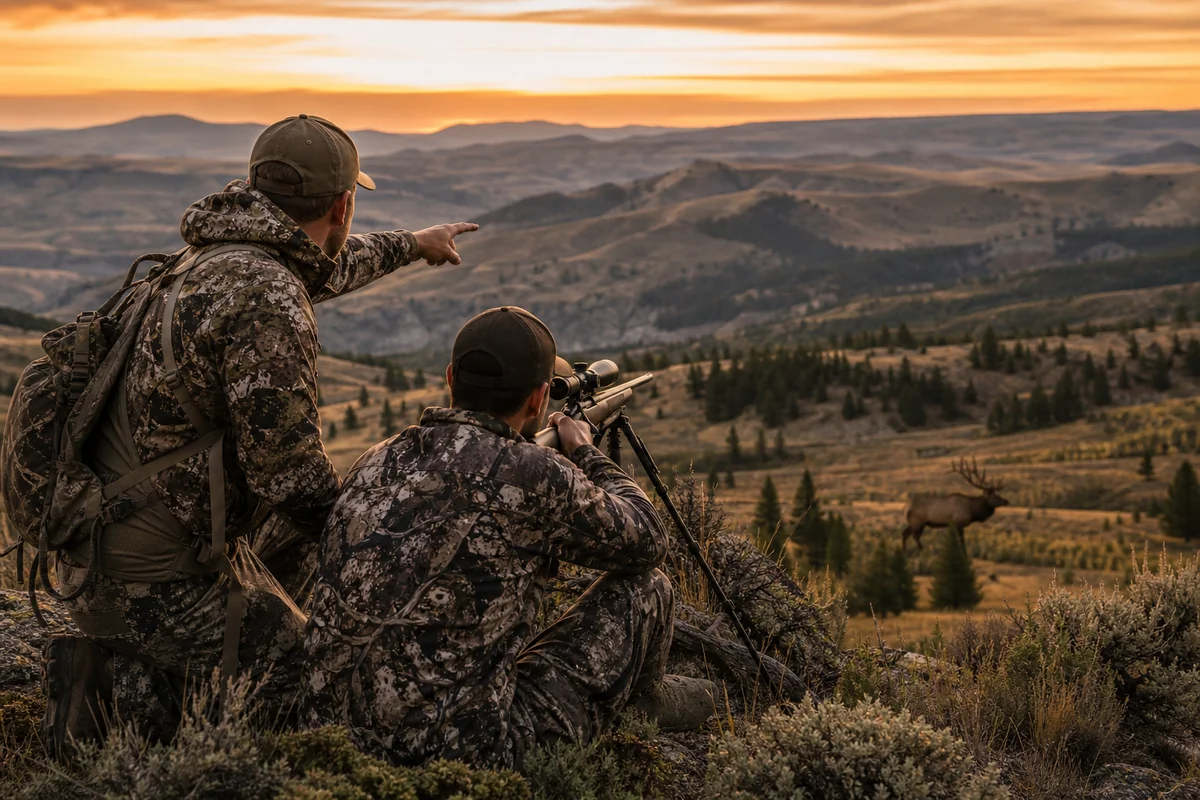
The bull elk bugled so close I could hear him raking his antlers against timber, and my guide Kyle whispered, “Two hundred yards, quartering away—take him when you’re ready.”
That moment, after four days of glassing ridgelines and hiking through chest-high sagebrush near the Missouri Breaks, justified every dollar I’d spent on my first guided Montana hunt.
If you’re considering booking with an outfitter in Big Sky Country, I’m going to share everything I’ve learned across multiple trips—the good, the expensive, and the details nobody tells you upfront.
Whether you’re diving deep into our complete Montana Hunting Guide or just exploring your options, understanding guided hunts will dramatically improve your experience.
- Guided Montana hunts typically cost $4,000–$15,000+ depending on species, duration, and amenities
- Book 12–18 months in advance for premium elk and mule deer outfitters
- You still need a valid Montana hunting license and appropriate tags—guides don’t handle this
- Quality outfitters maintain 60–80% success rates; ask for references and call them
- Expect to cover 5–12 miles daily on foot; physical preparation is non-negotiable
- Tipping guides 10–20% of hunt cost is standard practice
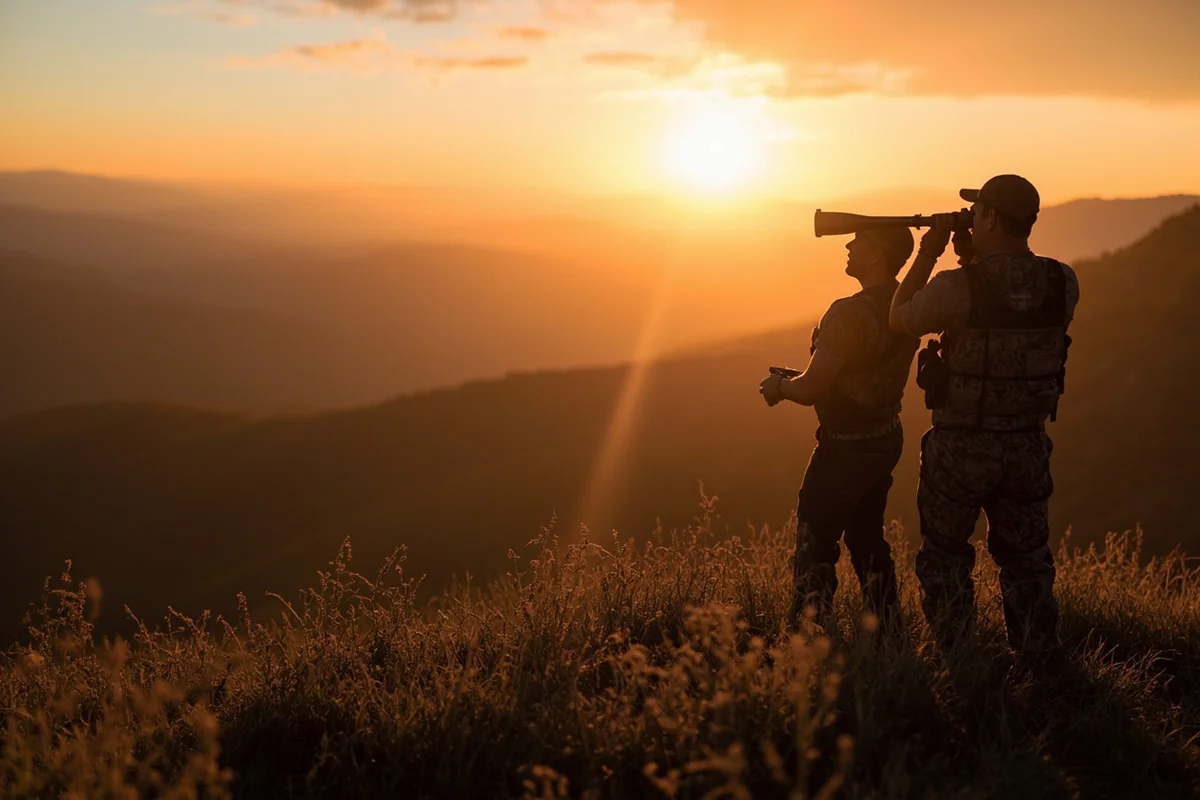
Why I Chose a Guided Hunt for My First Montana Trip
I’ll be honest—I grew up hunting whitetails in the Midwest, and the idea of tackling Montana’s 94 million acres solo intimidated me. The terrain is different here. The animals behave differently. And the logistics of hunting in true wilderness, hours from any paved road, require knowledge I simply didn’t have.
During my first trip back in 2019, I booked with an outfitter operating out of Region 4 near the Rocky Mountain Front. Within the first morning, I understood why. My guide had been hunting that specific drainage for seventeen years. He knew exactly where elk bedded during early season versus late October, which ridges caught thermals first, and where we could cut off a moving herd.
That local knowledge is what you’re really paying for—not just someone to carry your pack.
What Types of Guided Hunts Are Available in Montana
Montana outfitters offer hunts ranging from budget-friendly drop camps to fully catered wilderness experiences. Understanding your options helps you match expectations with budget.
Fully Guided Hunts
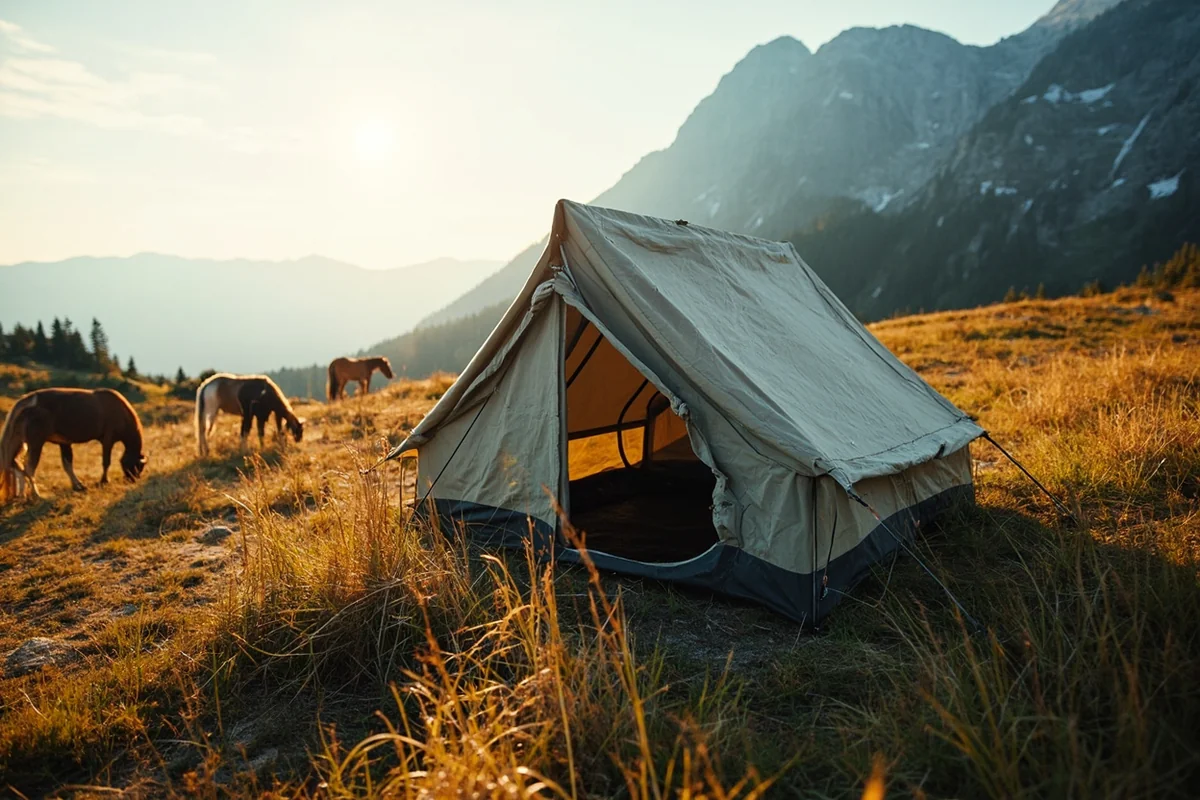
This is the all-inclusive experience. Your outfitter provides lodging (lodge, wall tent, or cabin), meals, transportation within the hunting area, horses or pack mules where applicable, and one-on-one or two-on-one guide service throughout your hunt.
I’ve done three fully guided hunts now, and the daily routine is fairly consistent. We’d wake around 4:30 AM, eat a hot breakfast, and be positioned on a glassing point by first light. Mid-day typically involved relocating, still-hunting through timber, or returning to camp for lunch. Afternoons focused on catching animals feeding before dark.
Expect to pay $5,000–$8,000 for a five-day fully guided Montana elk hunt, with premium outfitters charging $10,000–$15,000 for private land access or trophy-focused hunts.
Semi-Guided Hunts
Semi-guided hunts provide some assistance—typically scouting, field dressing, and pack-out help—but leave the actual hunting more to you. You might get dropped at a productive drainage in the morning and picked up that evening.
Last fall, I tried a semi-guided mule deer hunt in Region 7, and honestly, I preferred it. The reduced guide time knocked $2,000 off the price, and I enjoyed the independence of working through country on my own terms. If you have western hunting experience already, this middle-ground option makes sense.
Drop Camps
Drop camps are the most affordable outfitter option. The service packs you and your gear into a remote location, sets up a wall tent camp, and leaves you there for the duration of your hunt. They return on a scheduled date to pack you out—hopefully with meat.
Drop camps run $1,500–$3,000 in most areas. I haven’t personally done one yet, but hunting buddies who have stress the importance of physical fitness and self-reliance. You’re alone out there. If weather turns bad or someone gets hurt, help isn’t coming quickly.
Day Hunts
Some outfitters offer day hunts, where you’re picked up each morning and returned to town each evening. These work well for antelope or birds, where daily travel distances are reasonable.
If you’re interested in Montana antelope hunting, day hunts are particularly popular since most pronghorn hunting happens on accessible prairie rather than remote wilderness.
How to Choose a Reputable Montana Outfitter
This is where first-timers make expensive mistakes. I’ve talked to hunters who booked based on Instagram photos only to discover their “outfitter” was operating illegally on public land. Others paid deposits to operations that went out of business before hunting season.
Verify Licensing and Land Access
Montana law requires outfitters to hold a license from the Board of Outfitters. Every legitimate operation has a license number you can verify through the state. When I was booking my Missouri Breaks hunt, I called the Board directly and confirmed the outfitter’s license status, any complaints on file, and how long they’d been operating.
Beyond state licensing, verify where the outfitter actually hunts. Are they operating on private land under a lease agreement? Do they hold a special use permit for wilderness areas on Forest Service land? Understanding whether you can hunt on Montana state land and how outfitter permits work helps you ask the right questions.
I specifically ask outfitters: “Can you send me documentation of your land lease or Forest Service permit?” Legitimate operators have no problem with this request.
Ask for References—And Actually Call Them
Every outfitter will give you references who had successful hunts. That’s expected. What I do is ask for contacts from hunters who didn’t fill their tags. How an outfitter handles difficult hunts tells you far more than success stories.
On my third guided hunt, I called a reference who’d hunted with the outfitter for six days without seeing a legal bull. He told me the guides never gave up, hiking him into three different drainages and adjusting strategy daily. He booked again the following year—and that endorsement, more than any grip-and-grin photo, convinced me.
Understand Success Rates in Context
Outfitters love advertising high success rates, but dig into the numbers. A 90% success rate on elk sounds amazing until you learn it’s based on four hunters over two years. Meanwhile, an outfitter claiming 65% success across 40 annual clients represents a much larger sample size.
Also consider what “success” means. Some outfitters count any legal animal—including cows and raghorns—while others only track mature bulls. My Rocky Mountain Front outfitter defined success as “a bull scoring 300+ inches or a hunter choosing to pass on all opportunities.” That honesty impressed me.
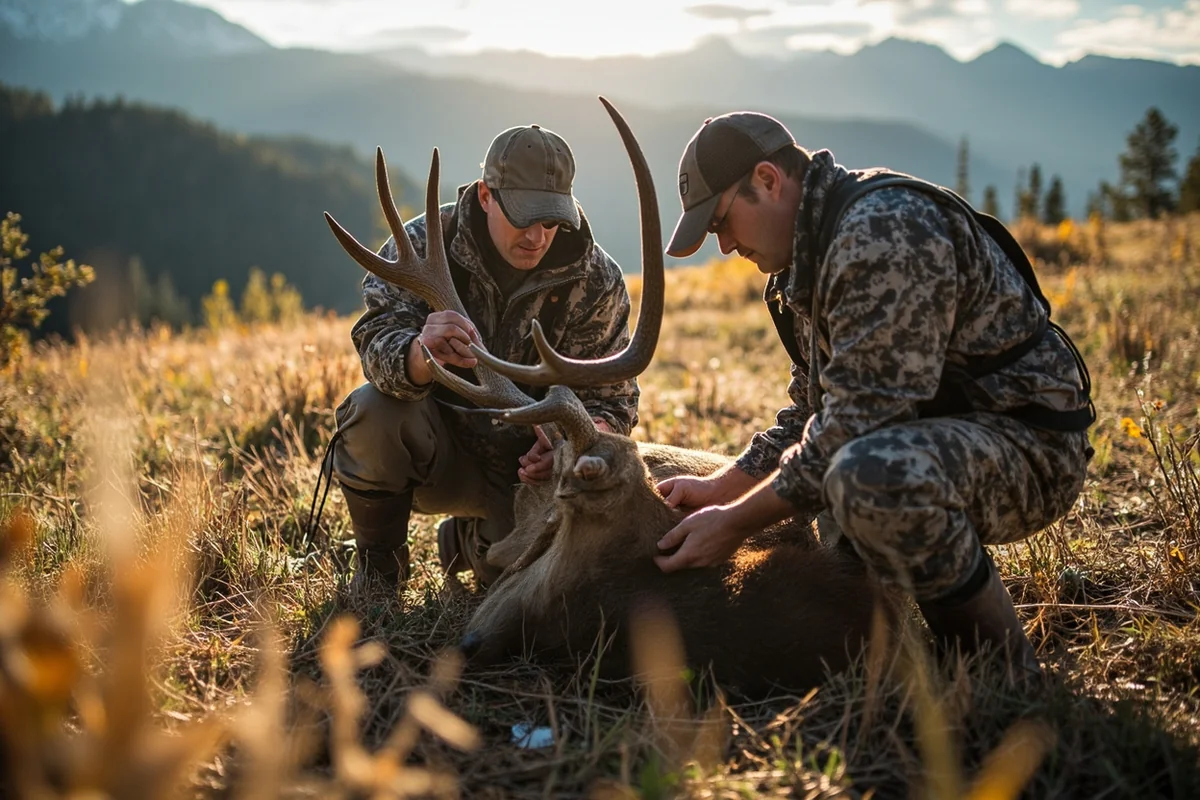
What Does a Guided Montana Hunt Actually Cost?
Total cost confused me before my first trip because outfitters quote prices differently. Here’s the full picture based on what I’ve actually spent.
| Species | Hunt Duration | Typical Cost Range | What’s Included |
|---|---|---|---|
| Elk (Fully Guided) | 5–7 days | $5,000–$12,000 | Lodging, meals, guide, field dressing, pack-out |
| Mule Deer (Fully Guided) | 5–7 days | $4,500–$9,000 | Same as above; combination hunts available |
| Whitetail Deer | 4–5 days | $3,500–$6,500 | Often lodge-based along river bottoms |
| Antelope | 3–4 days | $2,500–$4,500 | Vehicle-based spot-and-stalk or blind hunts |
| Black Bear | 5–7 days | $3,500–$6,000 | Spring or fall; spot-and-stalk typical |
| Mountain Lion | 5–7 days | $5,500–$9,000 | Hounds provided; December–February typical |
| Bighorn Sheep | 7–14 days | $10,000–$18,000 | Premium pricing; extremely limited tags |
Costs NOT Included in the Hunt Price
What catches people off guard are the additional expenses that pile up around the guided hunt itself.
Licenses and tags: Non-resident Montana hunting license costs run $646–$1,000+ depending on which species tags you need. Your outfitter doesn’t purchase these for you. Understanding Montana hunting license requirements is essential before booking anything.
Travel: Round-trip flights to Bozeman, Missoula, or Billings typically run $350–$600 from most US cities. Add rental vehicle costs and fuel to reach your outfitter’s meeting point.
Meat processing and shipping: Getting your meat home costs $300–$600 depending on processor rates and shipping distance. My last elk ran $425 to process into steaks, roasts, and burger, plus another $180 to ship coolers home.
Taxidermy: If you want a shoulder mount, budget $800–$1,500 depending on the taxidermist. Shipping adds more.
Guide gratuity: Industry standard is 10–20% of your hunt cost. On a $6,000 elk hunt, you should budget $600–$1,200 for tipping your guide and any wranglers or camp staff who made your hunt happen. I tip higher when guides go above and beyond—like the time mine helped me hike out an extra bull quarter at midnight because we ran out of daylight.
All told, my fully guided elk hunts have cost $9,000–$14,000 when everything is added up. Knowing this upfront helps avoid sticker shock.
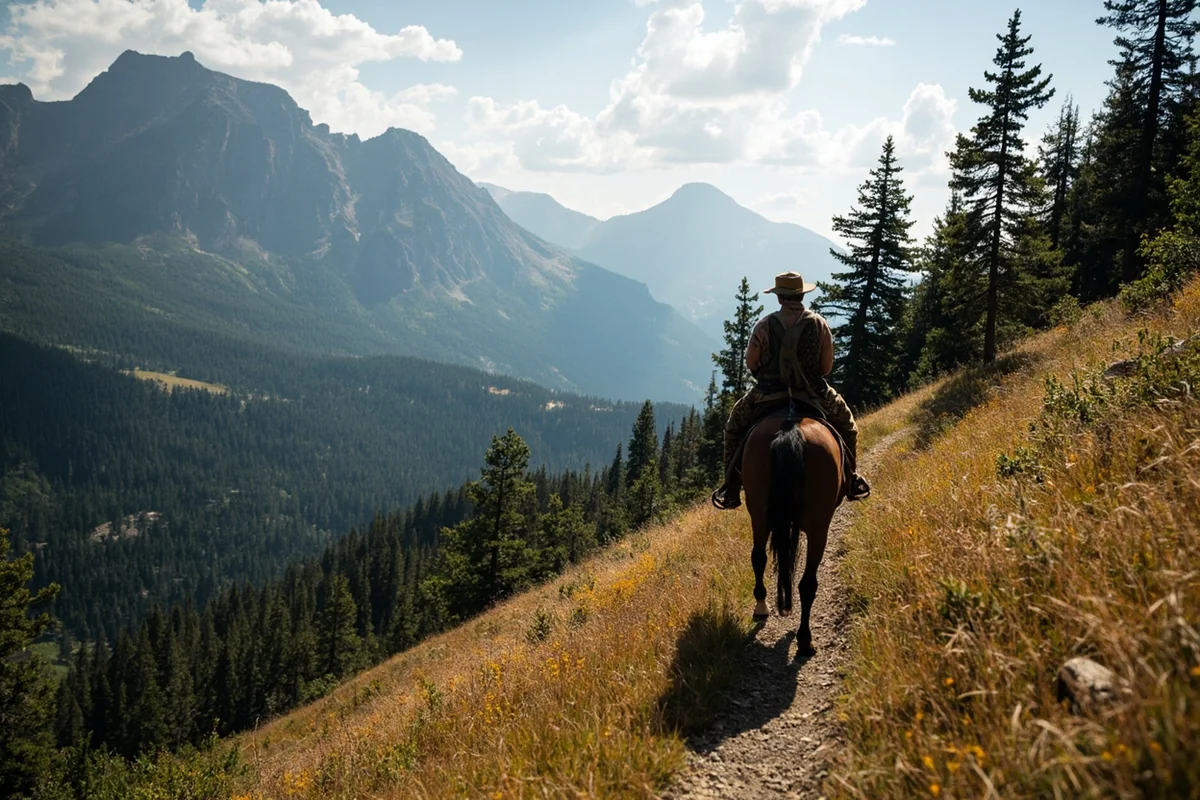
When to Book Your Guided Montana Hunt
Timing matters enormously. The best outfitters book out 12–18 months in advance for prime dates. Here’s how I approach planning.
Understanding Montana’s Hunting Seasons
Montana’s general big game season runs from late October through late November, with archery season beginning in early September. Knowing Montana hunting seasons helps you communicate clearly with outfitters about which timeframe works best.
Early September archery hunts target rutting elk—bugling bulls respond to calls and move more during daylight. These dates book fastest. General rifle season in late October offers more stable weather and easier access before heavy snow.
I personally prefer early November hunts. The rut is winding down, but elk are still vocal and concentrated before winter migration pushes them lower. Snow makes tracking easier too.
For Montana shoulder season elk hunting, some outfitters offer extended opportunities that run into winter months on specific units with damage permits.
The Draw System and Planning Ahead
Here’s something that confused me initially: some Montana hunts require draw tags, which means you must apply in the state’s lottery system before you can hunt—regardless of whether you’ve booked an expensive guided trip.
Montana bighorn sheep hunting, for example, requires either winning an extremely competitive draw or purchasing a once-in-a-lifetime unlimited sheep license. Understanding Montana preference points and how they accumulate is crucial if you’re targeting premium species.
The smart approach is discussing tag logistics with your outfitter before booking. Quality operations will explain exactly which licenses and permits you need, guide you through the application process, and only accept deposits after you’ve successfully drawn required tags.
For general elk, deer, and antelope, tags are available over-the-counter, making booking simpler. But Montana deer tags have become more competitive recently in certain regions, so verify availability for your desired unit.
What to Expect During Your Guided Hunt
I remember feeling nervous before my first morning with a guide. Would I embarrass myself? Would I keep up physically? Here’s an honest account of what guided hunting in Montana actually looks like.
The Daily Routine
Most camps wake before dawn—around 4:30 or 5:00 AM. Breakfast is served hot and heavy: eggs, bacon, pancakes, and strong coffee. You’ll need the calories.
By first light, you’re in position. Depending on the terrain and game, this might mean sitting on a glassing point with spotting scopes, still-hunting through timber, or hiking toward bugling bulls. Mornings are typically most productive for animal movement.
Mid-day often brings a break. We’d return to camp for lunch and rest during the warmest hours when game typically beds down. Some days we pushed through, especially if we had animals located and conditions warranted staying close.
Afternoons pick up around 3:00 PM as temperatures cool and animals move toward feeding areas. Some of my best encounters happened in the last hour of legal shooting light.
Physical Demands
This isn’t exaggerated: guided Montana hunts are physically demanding. On my elk hunts, we averaged 7–10 miles daily with 1,500–3,000 feet of elevation gain. Much of that travel happened above 7,000 feet where oxygen is thinner.
I train specifically for hunting season now. Starting in July, I hike steep terrain with a 40-pound pack three times weekly. The StairMaster became my nemesis and my friend. Arriving in shape meant I could hunt hard all week rather than struggling to keep up after day two.
Several outfitters I’ve spoken with said that lack of physical preparation is the number one reason hunters have poor experiences. Your guide can’t help you if you can’t reach where the animals are.
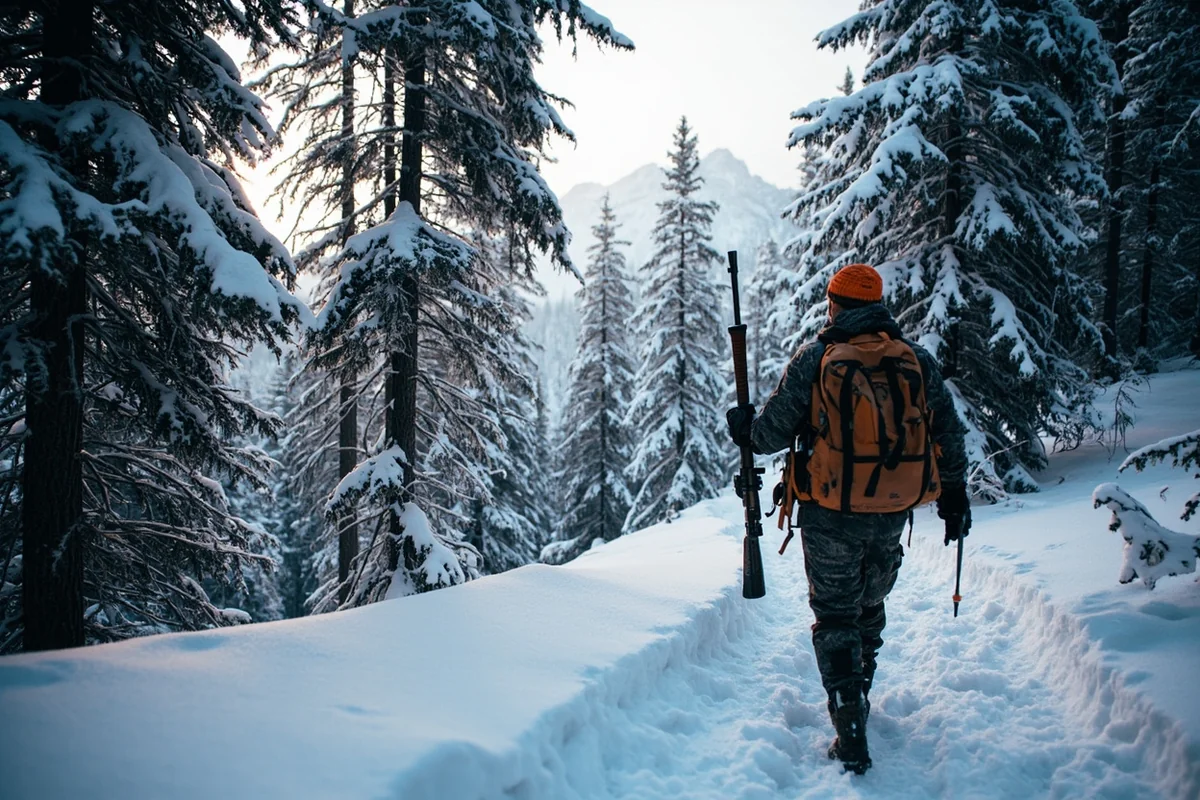
Your Role in the Hunt
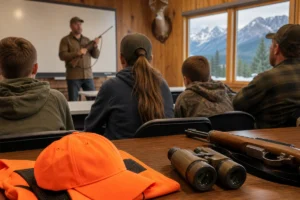
A good guide puts you in position, but you still have to execute. That means maintaining shooting proficiency, making sound decisions under pressure, and communicating clearly about your comfort level and capabilities.
Before every guided hunt, I spend serious time at the range. I practice shooting from field positions—kneeling, sitting, using shooting sticks—at distances from 100 to 400 yards. I know exactly what my personal effective range is, and I communicate that clearly to my guide.
When a shot opportunity comes, it happens fast. My Missouri Breaks bull gave me maybe fifteen seconds from the time Kyle whispered “take him” to when the elk walked behind timber. You don’t have time for hesitation or equipment malfunctions. Preparation makes all the difference.
Specialized Guided Hunts in Montana
Beyond the big three—elk, mule deer, and whitetail—Montana offers guided hunts for nearly every game species in North America. Some of my most memorable trips targeted less common animals.
Bear Hunting
I booked a Montana bear hunting trip two springs ago, and it was unlike any elk hunt I’d done. We spent long hours glassing south-facing slopes where bears emerged from hibernation to feed on winter-killed elk and emerging vegetation.
Bear hunting requires patience and good optics. We spotted multiple bears over five days but passed on several younger animals before I took a mature chocolate-phase black bear on day four. The lack of pressure and slow pace made it a welcome change from the intensity of elk season.
Upland Birds and Waterfowl
For something completely different, Montana upland bird hunting with a guide offers a more relaxed experience with excellent dog work and stunning prairie scenery. I hunted sharptail grouse and Hungarian partridge in the eastern prairies last October, and the combination of pointing dogs and endless grassland was addicting.
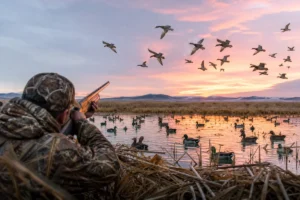
Waterfowl hunters should explore Montana duck hunting along the Missouri River corridor and eastern pothole regions. Guides provide boats, decoys, and blind setup—you just bring your shotgun.
More specialized opportunities include Montana swan hunting, which requires winning a limited draw, and Montana wolf hunting, which has grown increasingly popular as pack numbers have increased.
Buffalo Hunting
If budget allows, Montana buffalo hunting provides a truly unique experience. These hunts typically take place on tribal lands or private ranches with free-ranging herds. Expect to pay premium prices, but the experience of hunting North America’s largest land mammal stays with you forever.
Regulations and Licensing for Guided Hunt Clients
Even though you’re hunting with a guide, you’re personally responsible for understanding and following Montana hunting regulations. Ignorance isn’t a legal defense.
What You Must Handle Yourself
You must purchase your own Montana hunting license and appropriate species tags. Your outfitter may provide guidance, but clicking “purchase” is your responsibility.
You must know what constitutes a legal animal for the species you’re hunting. Montana deer hunting regulations specify antler point requirements in some areas, brow tine rules for elk, and specific harvest restrictions that vary by hunting district.
You must carry required documentation while hunting—license, tags, hunter education certificate (if required), and any special permits.
Working With Your Guide on Compliance
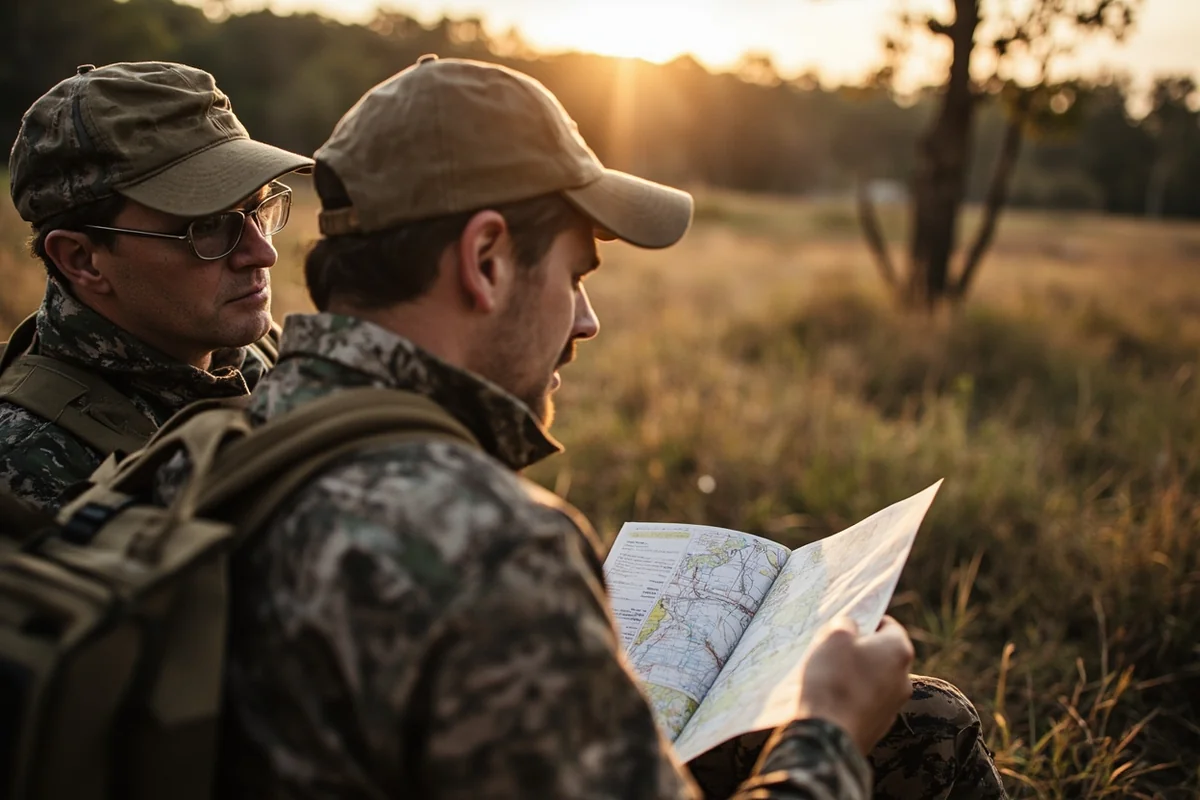
That said, a quality guide helps ensure you stay legal. My guides always confirmed legal shooting hours, pointed out private land boundaries, and verified animals met harvest criteria before advising me to shoot.
On my last mule deer hunt, my guide stopped me from shooting a buck that looked legal but was standing ten yards over a fence onto private property we didn’t have permission for. That’s the kind of judgment call you’re paying for.
If you’re interested in Montana muzzleloader season or whitetail deer hunts in Montana, make sure your outfitter specifically operates during those seasons and understands the weapon-specific regulations.
Choosing Between Public and Private Land Outfitters
This distinction matters more than many hunters realize. Both have advantages, and understanding the tradeoffs helps you pick the right operation.
Public Land Outfitters
Outfitters hunting public land—whether National Forest, BLM, or wilderness areas—typically access bigger country with more adventure. My Bob Marshall Wilderness elk hunt involved a twelve-mile horseback ride into a spike camp, complete isolation from other hunters, and truly wild country.
The downside? Public land animals face pressure from other hunters. Even in remote wilderness, other outfitters may operate nearby, and the terrain often demands more physical effort to reach unpressured pockets.
Public land hunts also depend heavily on your outfitter’s knowledge. Anyone can hunt public land, but knowing where animals concentrate and how to access them efficiently makes the difference. An outfitter who’s worked the same drainage for twenty years holds significant advantage.
Private Land Outfitters
Private land operations lease exclusive hunting rights from ranchers. This guarantees no competition from other hunters and often provides easier access via ranch roads.
Many private land outfitters maintain food plots, water sources, and other habitat improvements that concentrate game. Success rates on private land tend to run higher, particularly for Montana deer hunting.
Prices also run higher—sometimes 30–50% more than comparable public land hunts. Whether the increased success and reduced physical demand justifies the cost depends on your priorities and budget.
What Happens If You Don’t Fill Your Tag?
This is the question nobody wants to ask but everyone should. Even on guided hunts with high success rates, filling your tag isn’t guaranteed.
Policies Vary by Outfitter
Some outfitters offer reduced-rate return hunts if you don’t harvest an animal. Others provide no accommodation—you paid for the experience, not a guaranteed kill. Understanding this policy before booking avoids frustration later.
On my first elk hunt, I didn’t fill my tag. We saw bulls every day, but nothing presented a shot I was comfortable taking. My outfitter offered me a 50% discount to return the following year, which I accepted. I took a beautiful six-point bull on day three of that second hunt.
Managing Expectations
Going in with realistic expectations helps. A 70% success rate means three out of ten hunters go home without meat. Weather, luck, and factors beyond anyone’s control affect outcomes.
The best outfitters still provide an incredible experience even when animals don’t cooperate. Quality meals, spectacular country, genuine effort from guides—these things matter regardless of harvest.
Questions to Ask Before Booking
After multiple guided hunts and conversations with dozens of other hunters, these are the questions I always ask now:
How many hunters do you accommodate per season, and what’s your historical success rate over the past five years?
What specific areas do you hunt, and can you provide documentation of land access or permits?
What’s your guide-to-hunter ratio? (I prefer one-on-one or, at most, two-on-one)
What happens if weather prevents hunting on scheduled days?
What’s your physical expectation for clients? Be honest about terrain and daily demands.
Can you provide references from hunters who did NOT harvest animals?
What’s your cancellation and refund policy?
Do you provide references from your meat processor and recommendations for shipping?
How do you handle wounded or unrecovered animals?
Any outfitter unwilling to answer these questions directly raises red flags.
Tips for Maximizing Your Guided Hunt Experience
After five guided Montana hunts, here’s what I’ve learned about getting the most value from your investment.
Arrive in Shape
I can’t stress this enough. Physical fitness determines how hard you can hunt. Start training three months before your trip with hiking, stair climbing, and pack carrying. Show up ready.
Communicate Openly With Your Guide
Tell your guide your actual shooting ability, not what you hope it is. If you’re comfortable to 250 yards, say so. If steep downhill shots make you nervous, mention it. This information helps guides put you in positions where you can succeed.
Trust the Process
Your guide hunts this country year-round. When they suggest waiting on a shot or relocating to different terrain, listen. I’ve seen hunters ignore guide advice and regret it. You’re paying for expertise—use it.
Prepare Your Gear Before Arrival
Zero your rifle at home. Break in your boots. Test your cold-weather clothing. Arriving in Montana isn’t the time to discover your scope took a knock during travel or your boots cause blisters.
Embrace the Experience
The meat and antlers matter, but so does everything else. Some of my best hunting memories involve campfire conversations, spectacular sunrises, and wildlife encounters that had nothing to do with my tag. Stay present and appreciate where you are.
Even if big game isn’t your focus, smaller species like those covered in our Montana squirrel hunting guide offer low-pressure ways to explore the state’s incredible habitat.
Final Thoughts on Guided Montana Hunts
Booking a guided hunt in Montana represents a significant investment—in money, time, and physical preparation. But for many hunters, especially those unfamiliar with western terrain and tactics, it’s the difference between a frustrating struggle and an unforgettable adventure.
I’ve taken some of the best animals of my life on guided hunts. I’ve also gone home empty-handed with memories worth more than any mount. The key is choosing reputable outfitters, preparing thoroughly, and approaching the experience with realistic expectations.
Montana’s wild country demands respect. Having a knowledgeable guide beside you makes that country accessible without requiring years of scouting and learning on your own. Whether you’re chasing elk, deer, or something more exotic, the right guided hunt connects you to landscapes and experiences you’ll remember forever.
Start researching outfitters now, ask the hard questions, and begin training for the physical demands ahead. The bull bugling in a Montana drainage next fall might be waiting for you.
Frequently Asked Questions
How much does a guided hunt in Montana cost?
Guided hunts in Montana typically range from $3,500 to $8,000 for elk and deer, while trophy mule deer or bighorn sheep hunts can exceed $15,000. I’ve found that most reputable outfitters include lodging, meals, and guide services in their packages, but you’ll want to budget an extra $500-$1,000 for tips, licenses, and taxidermy deposits.
What is the best time of year for guided hunting trips in Montana?
The prime hunting season in Montana runs from September through November, with early September being ideal for archery elk hunts during the rut when bulls are most active. For rifle hunters, I recommend booking late October through mid-November when cooler temperatures keep game moving and snow pushes elk to lower elevations.
Do I need to apply for hunting licenses in advance for Montana guided hunts?
Yes, non-resident hunters must apply for certain Montana hunting licenses through a lottery system, with applications typically due in early March for fall hunts. Your outfitter can guide you through the process, but general deer and elk combination licenses are usually available over-the-counter for non-residents at around $1,000-$1,250.
What should I pack for a guided hunting trip in Montana?
I always recommend layered clothing for Montana’s unpredictable mountain weather, including moisture-wicking base layers, insulated mid-layers, and waterproof outer shells rated for temperatures down to 20°F. Essential gear includes broken-in hunting boots with ankle support, quality binoculars, a reliable headlamp, and your rifle or bow already sighted in before arrival.
How physically demanding are guided elk hunts in Montana?
Most Montana elk hunts involve hiking 3-8 miles daily through rugged terrain at elevations between 5,000 and 9,000 feet, so I strongly recommend starting a cardio and leg-strength program at least 8 weeks before your trip. Outfitters often offer horseback hunts as a less strenuous alternative, which are perfect if you’re concerned about mobility or want to access more remote backcountry areas.
Where are the best areas in Montana for guided big game hunts?
The Missouri River Breaks region offers exceptional mule deer hunting, while the Absaroka-Beartooth Wilderness near Yellowstone is legendary for elk and mountain lion. I’ve had great experiences in the Bob Marshall Wilderness, which spans over 1.5 million acres and provides some of the most pristine backcountry hunting in the lower 48 states.
How do I choose a reputable hunting outfitter in Montana?
Look for outfitters licensed through the Montana Board of Outfitters and verify their standing with the Montana Outfitters and Guides Association. I always check recent client references, ask about their hunter success rates over the past 3-5 years, and confirm they have liability insurance and proper permits for the specific hunting units you’re interested in.