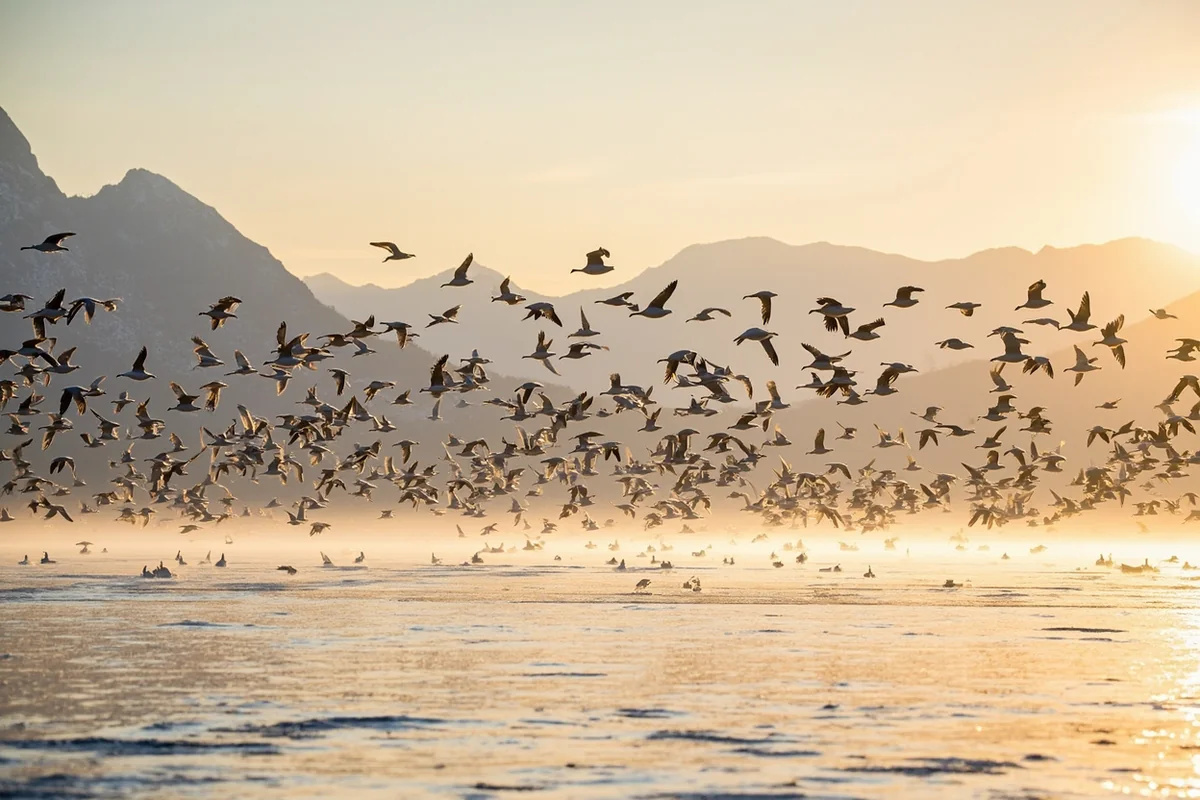
I was standing knee-deep in frost-covered grass at Freezout Lake last March when the sky literally turned white—not from clouds, but from 300,000 snow geese lifting off simultaneously.
That moment, with their calls drowning out everything else and my hands shaking too much to hold my binoculars steady, is when I understood why Montana ranks among the top birding destinations in North America.
The state’s position along the Central and Pacific flyways, combined with its staggering habitat diversity, creates a paradise for both birds and the people who chase them.
If you’re exploring Montana wildlife, you’ll quickly realize that birding here is different from anywhere else I’ve experienced.
From the alpine peaks where white-tailed ptarmigan blend into rocky slopes to the prairie potholes teeming with waterfowl, Montana hosts over 400 recorded species—and I’ve spent the last eight years documenting as many as I possibly can.
- Montana hosts 400+ bird species across six distinct ecosystems, from alpine tundra to prairie grasslands
- Best overall birding months: May-June for breeding birds, March for waterfowl migration, January for winter specialties
- Top hotspots: Freezout Lake, Glacier National Park, Medicine Lake NWR, Lee Metcalf NWR
- Must-see species: Harlequin Duck, White-tailed Ptarmigan, Sprague’s Pipit, Great Gray Owl
- Bring multiple field guides—Montana birds span both eastern and western North American species
Liked this article?
Add Roaming Montana as a preferred source so you see more of our articles and guides on Google.
Why Montana is a Birder’s Paradise
Montana’s birding reputation isn’t accidental. The state sits at a continental crossroads where eastern and western species overlap, northern boreal birds push south, and prairie specialists meet mountain dwellers.
During my visits over the years, I’ve checked off species you’d typically only see in the Pacific Northwest alongside birds normally found in the Great Plains. This overlap happens nowhere else in the lower 48 with such dramatic effect.
The habitat diversity is staggering. Within a single day last June, I went from watching Sprague’s Pipits performing their remarkable sky-diving display over shortgrass prairie near Lewistown to photographing Harlequin Ducks in a rushing Glacier National Park stream. That’s a 200-mile drive connecting two completely different worlds.
Raptors: Montana’s Sky Hunters
1. Golden Eagle
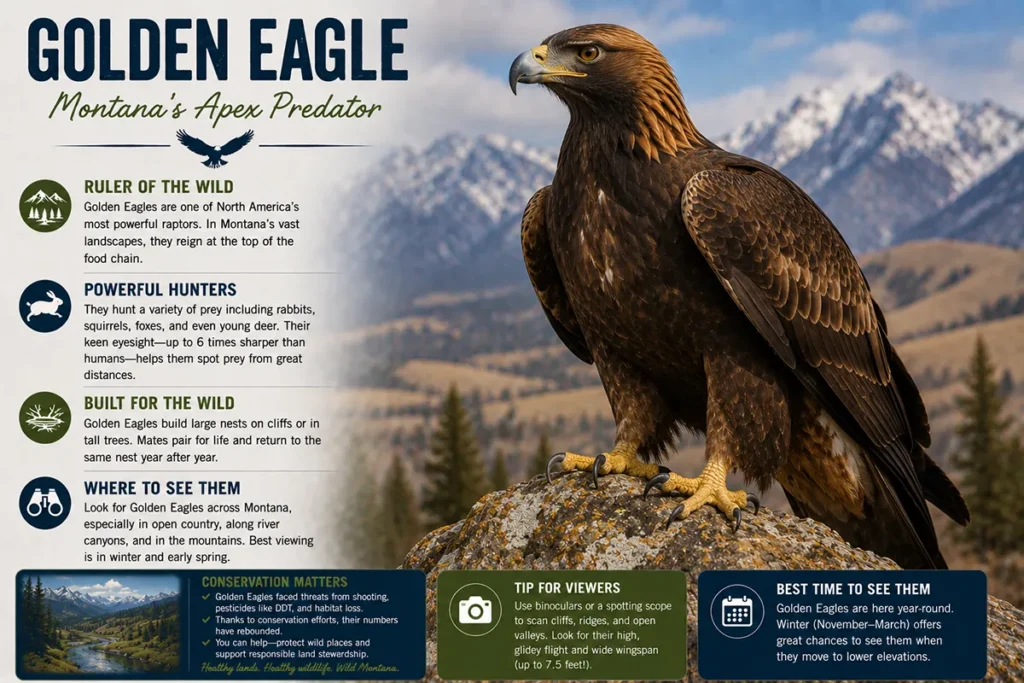
Nothing quite prepares you for your first Golden Eagle encounter in Montana. I remember mine vividly—along the Rocky Mountain Front near Choteau, watching one fold its wings and dive at what had to be 150 miles per hour toward an unsuspecting ground squirrel.
Golden Eagles are year-round residents here, but winter concentrations along the Rocky Mountain Front are genuinely spectacular. During a December trip, I counted 47 individuals in a single day, many perched on power poles scanning the snow-covered fields.
The best viewing areas I’ve found include the Sun River Game Range, the Mission Valley, and surprisingly, the outskirts of Helena where they hunt the open grasslands.
2. Bald Eagle
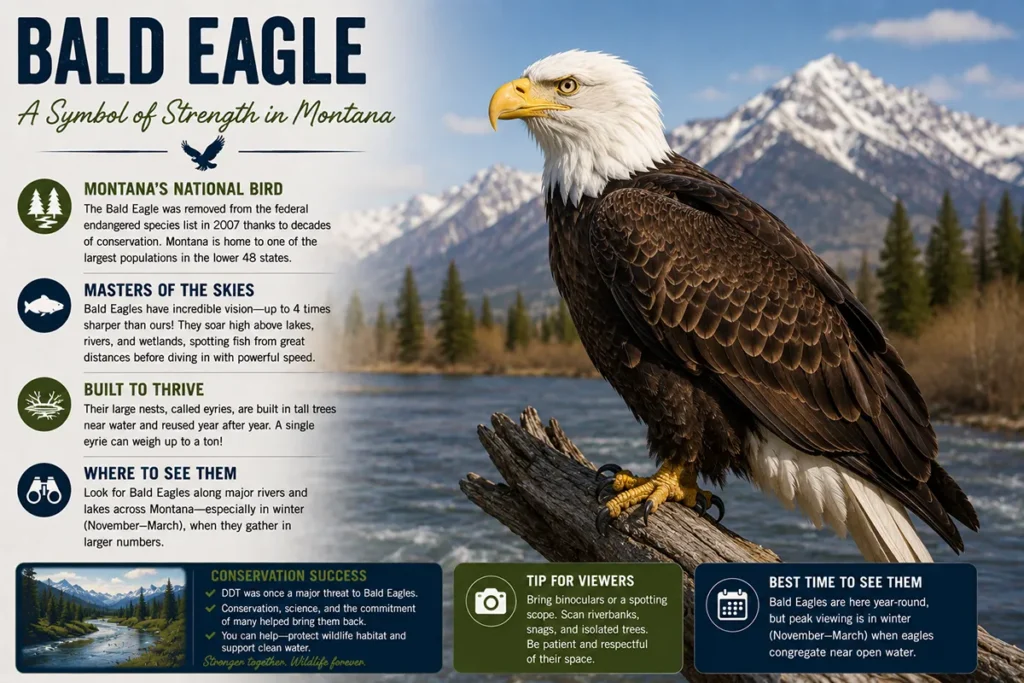
While Golden Eagles get the “wow factor” for their hunting prowess, Bald Eagles gather in numbers that genuinely shocked me. The autumn kokanee salmon run on Flathead Lake and its tributaries draws hundreds of eagles to a relatively small area.
I spent three days last November near Polson watching groups of 20-30 Bald Eagles at a time squabbling over fish carcasses along the Flathead River. The noise alone was memorable—that distinctive high-pitched chattering that always surprises people who expect a more powerful call.
Canyon Ferry Reservoir near Helena and the Yellowstone River corridor are equally productive. During one March trip, I watched eagles fishing open water sections below the Canyon Ferry dam while ice still covered most of the reservoir.
3. Ferruginous Hawk
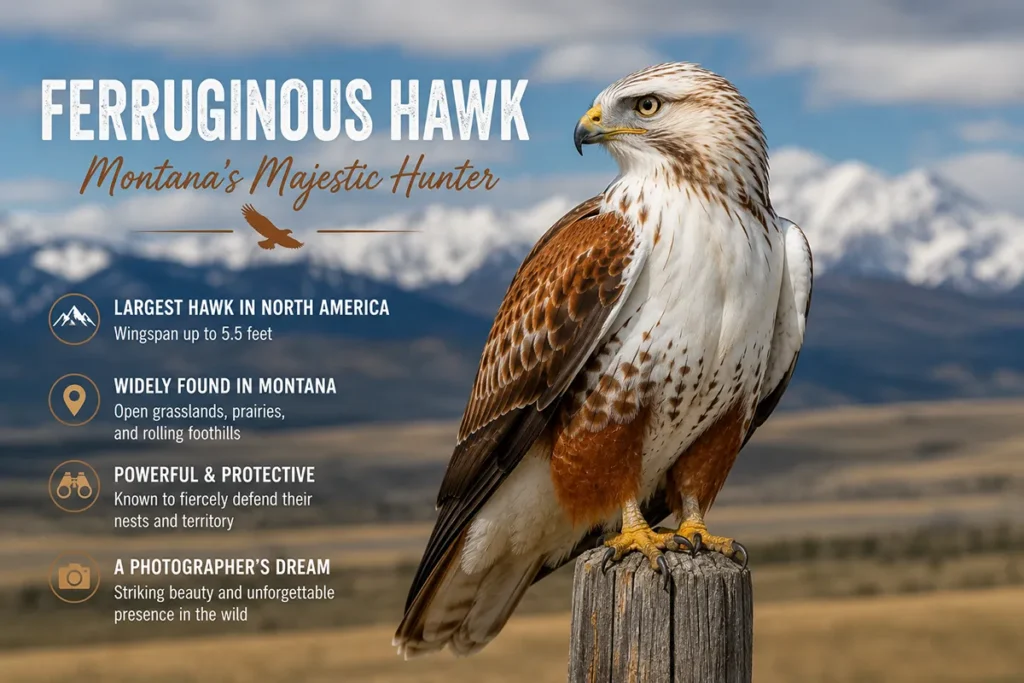
This prairie specialist is Montana’s largest hawk, and honestly, it took me three dedicated trips to the eastern part of the state before I finally had satisfying views.
The birds favor the rolling grasslands around Glasgow and north toward the Medicine Lake area. When I finally connected last summer, I found a pair nesting on a rocky outcrop near the Charles M. Russell National Wildlife Refuge.
What struck me was their size—they’re substantial birds that look almost eagle-like when soaring. Their rusty-red backs and legs make identification straightforward once you know what you’re seeing.
4. Swainson’s Hawk
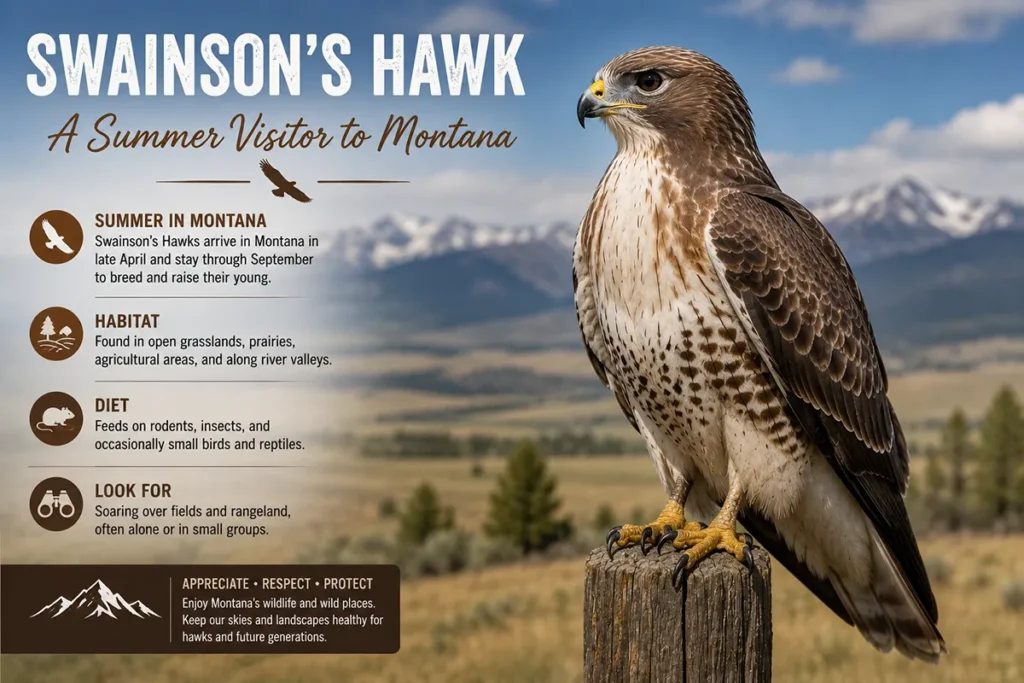
Every summer, Swainson’s Hawks migrate all the way from Argentina to breed in Montana’s grasslands. That’s roughly 6,000 miles each way.
I’ve watched them hunting grasshoppers in the Bitterroot Valley, often following tractors cutting hay. On one memorable afternoon near Hamilton, I counted 14 Swainson’s Hawks working a single field, gorging themselves on insects disturbed by the machinery.
Look for their distinctive two-toned underwing pattern—dark flight feathers contrasting with pale wing linings. They’re one of the easier hawks to identify in flight.
5. Northern Goshawk

The Northern Goshawk is, hands down, the most difficult raptor I’ve tried to photograph in Montana. These forest-dwelling hunters are fierce, elusive, and seemingly allergic to birders.
My best encounter came unexpectedly while I was watching squirrels in the Seeley-Swan Valley. A Goshawk exploded from nowhere, missed its target (a red squirrel), and vanished back into dense timber within about three seconds. That’s often how Goshawk sightings go.
Look for them in mature coniferous forests throughout western Montana. They’re most visible during spring courtship when males perform undulating display flights above the canopy.
6. Rough-legged Hawk
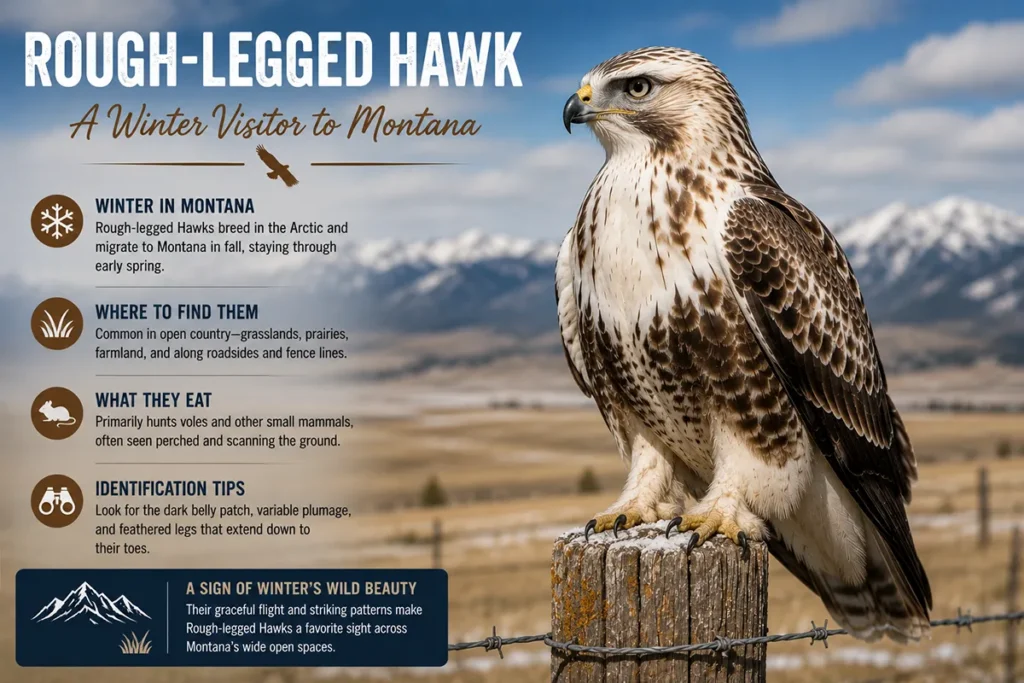
This Arctic breeder only visits Montana during winter, and I’ve developed a genuine affection for these cold-weather specialists. Their hovering hunting style—unusual among buteos—makes them easier to spot than other hawks.
The Mission Valley and the area around Ninepipe Reservoir are particularly reliable. During one January trip, I found seven Rough-legged Hawks along a 20-mile stretch of road, several hovering motionless over snow-covered fields.
Waterfowl: Beyond the Common Mallard
Montana’s waterfowl diversity extends far beyond what you’ll find on a typical park pond. For a complete breakdown of duck species, check out our guide to 27 Montana duck species, but here are some highlights from my experiences.
7. Harlequin Duck
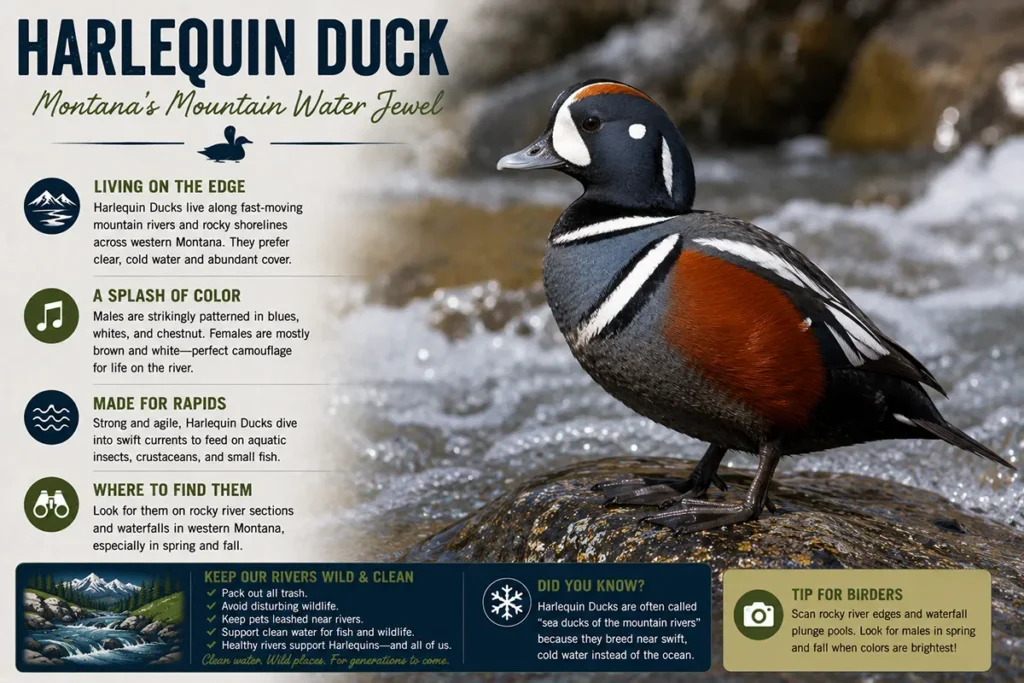
The Harlequin Duck is my personal Montana favorite and, in my opinion, the most beautiful duck in North America. Males look like they’ve been painted by an artist who got a bit carried away—slate blue bodies with bold white crescents and chestnut flanks.
I’ve spent countless hours watching them along McDonald Creek in Glacier National Park. The birds favor fast-moving, rocky streams where they dive for aquatic insects, somehow navigating currents that would sweep most ducks downstream.
The best time for viewing is May through early July before they head to coastal wintering areas. Arrive at Lake McDonald’s outlet early in the morning—I’ve had the best luck between 6-8 AM when light hits the creek perfectly.
8. Trumpeter Swan
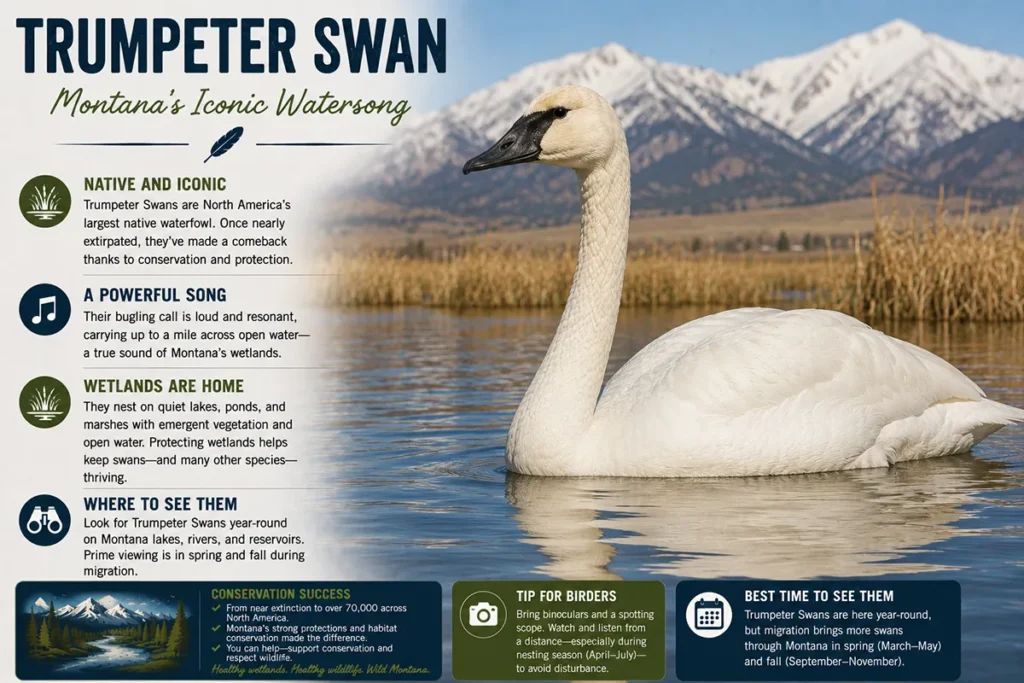
Seeing Trumpeter Swans in Montana feels like witnessing conservation success in real-time. These massive birds—North America’s heaviest flying species—were nearly extinct by the early 1900s with only a few dozen surviving in the Yellowstone region.
Today, the Red Rock Lakes National Wildlife Refuge hosts a healthy breeding population, and during my last visit in late September, I counted over 60 individuals on Upper Red Rock Lake. Their deep, resonant calls echoing across the water at dawn is something I won’t soon forget.
Winter brings additional Trumpeter Swans to the Flathead Valley, where open spring-fed waters allow them to survive harsh conditions.
9. Common Loon
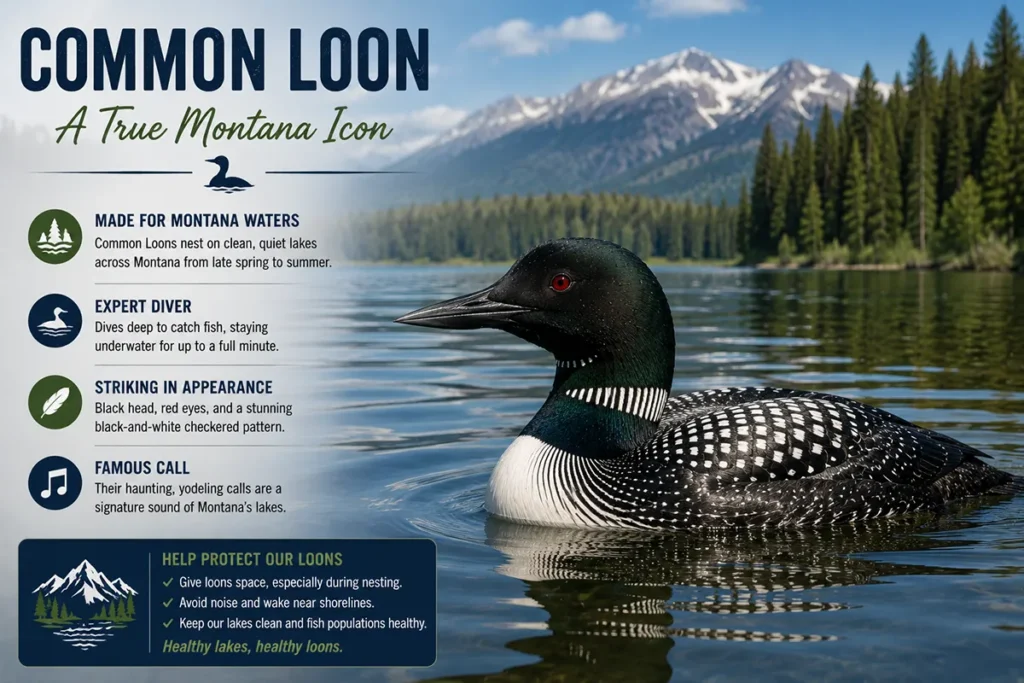
The Common Loon’s wailing call is the soundtrack of Montana’s mountain lakes. I’ve camped beside Holland Lake in the Swan Valley specifically to fall asleep to their haunting vocalizations.
Montana hosts a small but stable breeding population, primarily in the northwestern lakes. Seeley Lake, Placid Lake, and several Glacier National Park lakes are reliable spots.
During one misty August morning on Seeley Lake, I watched a pair with two chicks for nearly an hour. The adults took turns diving for fish while chicks rode on their parents’ backs—classic loon behavior that never gets old.
10. American White Pelican
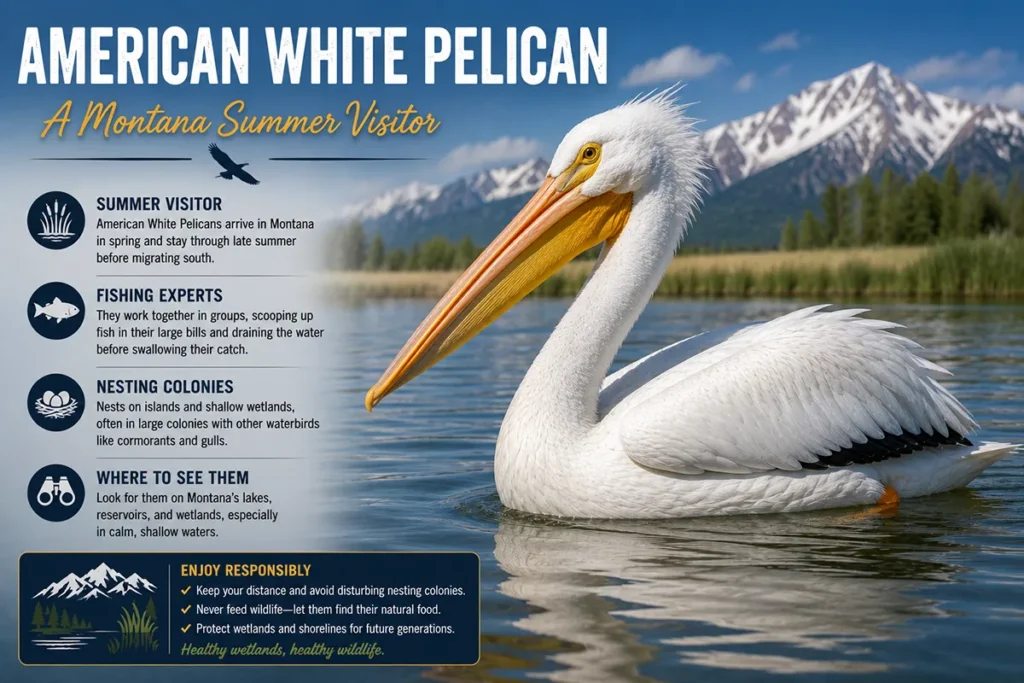
These aren’t the ocean-dwelling pelicans most people picture. Montana’s American White Pelicans are freshwater birds, and their presence always surprises visitors.
Medicine Lake National Wildlife Refuge in the northeastern corner hosts one of the largest breeding colonies in North America—somewhere around 10,000 nesting pairs during peak years. Standing at the observation area last June, watching thousands of these nine-foot-wingspan birds circling overhead, felt almost prehistoric.
I also regularly see them at Canyon Ferry Reservoir and occasionally on the Missouri River near Great Falls. Their synchronized fishing behavior—forming a line to corral fish into shallow water—is remarkably coordinated.
Owls: Montana’s Nocturnal Hunters
Montana offers exceptional owl diversity, and I’ve made it my mission to see as many species here as possible. For an in-depth look at all the species and specific tactics, read our complete Montana owls guide. Here are personal highlights.
11. Great Gray Owl
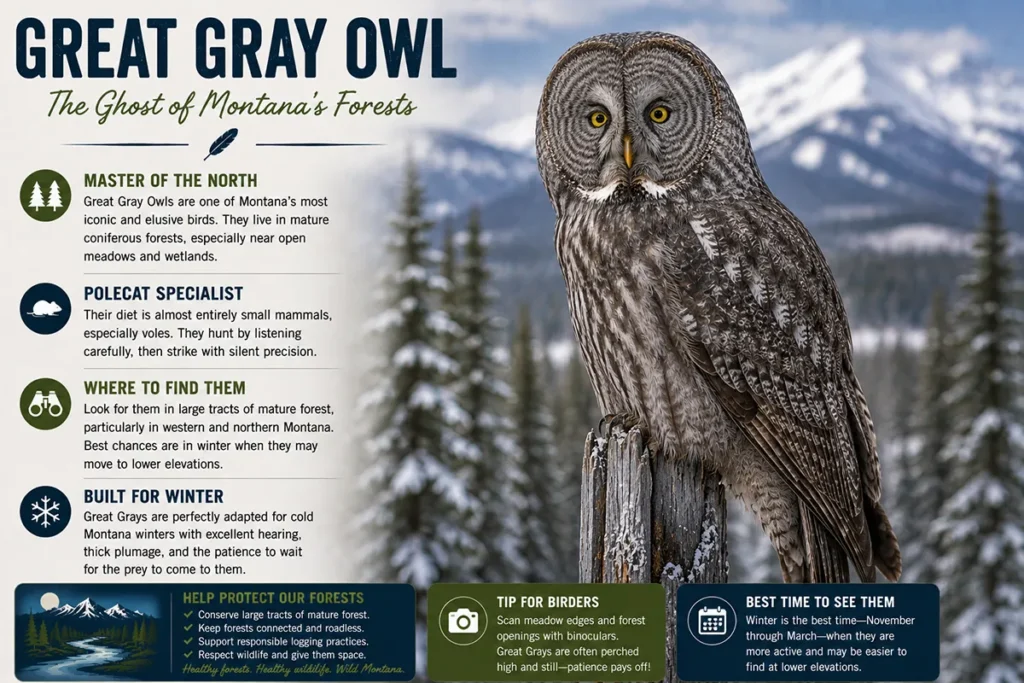
The Great Gray Owl is Montana’s largest owl by length—and possibly the most sought-after bird in the state among visiting birders. I’ve received more emails asking about finding them than any other species.
After many attempts, I finally had prolonged views in a meadow near West Yellowstone during a late February trip. The owl was hunting in broad daylight, a behavior Great Grays often display during winter when they need to find food around the clock.
They favor forest edges adjacent to open meadows where they can listen for voles beneath snow. The Seeley-Swan Valley and the West Yellowstone area are the most reliable regions, though “reliable” is a relative term with this species.
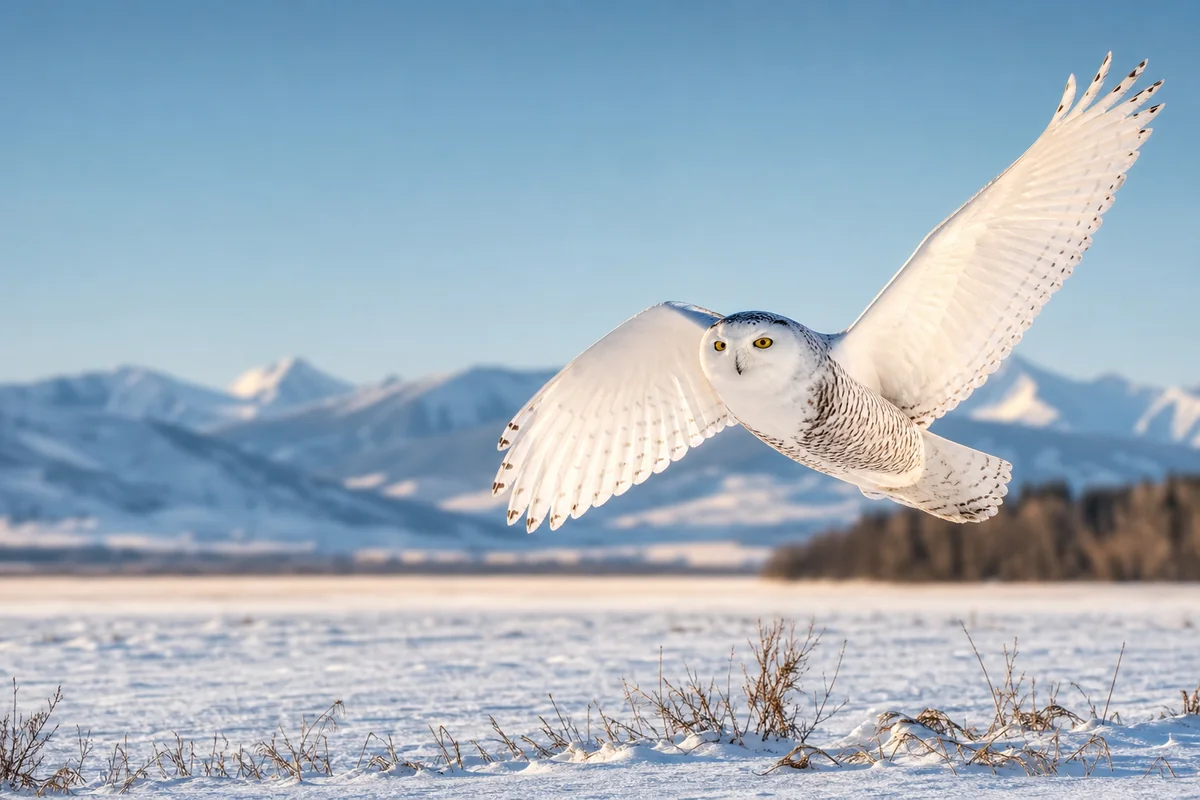
12. Snowy Owl
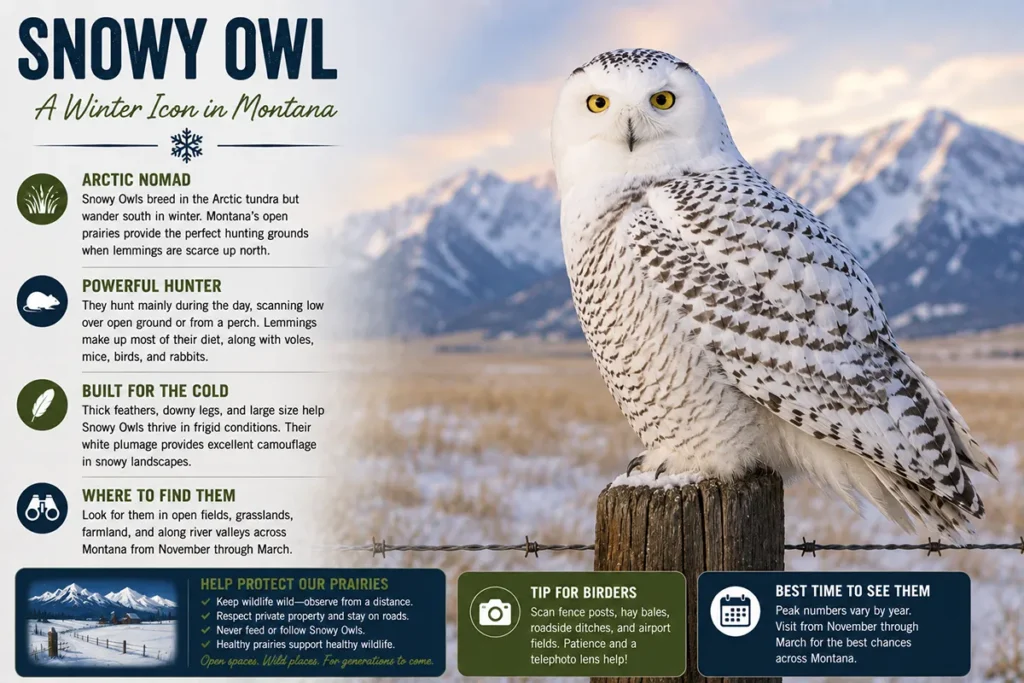
Snowy Owls are irruptive visitors—some winters bring dozens to Montana, others bring almost none. When they do arrive, the open prairies around Havre, Malta, and the Hi-Line towns are prime territory.
I got lucky during the winter of 2021-2022, finding three Snowies along a single stretch of Highway 2 near Harlem. They perched on fence posts and hay bales, surprisingly tolerant of my slow approach in a vehicle.
If you’re planning a winter trip hoping for Snowies, monitor eBird reports starting in late November. When birds arrive, word spreads quickly in the birding community.
13. Northern Saw-whet Owl
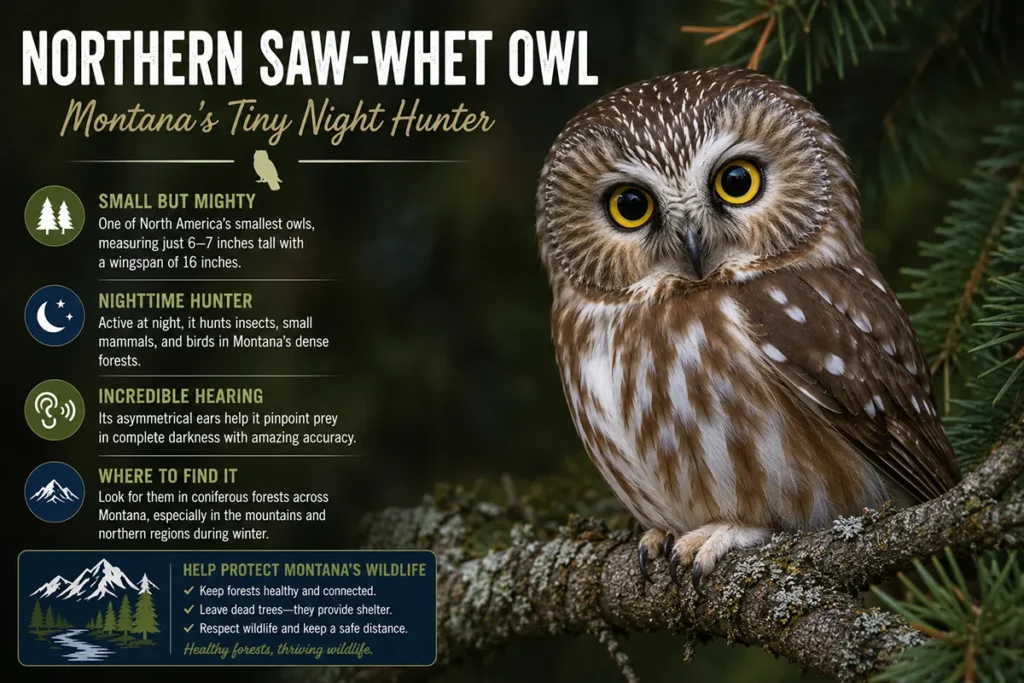
This tiny owl—barely larger than a robin—is far more common than most people realize. The challenge is finding them roosting in dense conifers during daylight hours.
I’ve had my best luck in juniper stands throughout western Montana, where their preferred roosting habitat meets my ability to actually search systematically. Checking dense, low branches at eye level sometimes produces surprising results.
Their repetitive “too-too-too” call is easier to detect than the birds themselves. On quiet spring evenings, I’ve heard them calling along the edges of nearly every mountain valley in western Montana.
14. Boreal Owl
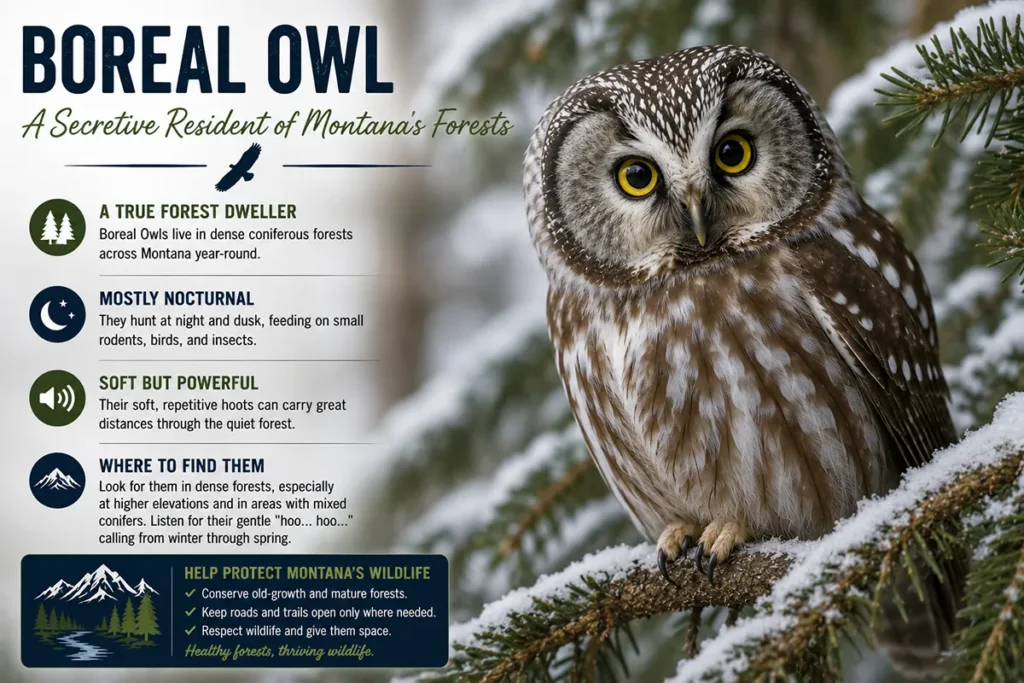
The Boreal Owl represents the pinnacle of Montana owl challenges. These small, strictly nocturnal birds inhabit dense subalpine forests and only call for a brief window in late winter and early spring.
I spent four consecutive nights in late March driving logging roads near Seeley Lake before finally hearing one calling. The rhythmic hooting—almost like a series of bells—came from somewhere in impenetrable timber, and despite my best efforts, I never saw the bird.
If you’re determined, focus on roads above 5,000 feet elevation in the Swan Range or Glacier National Park’s western edge during March. Bring patience and warm clothing—lots of both.
Grassland Specialists: The Prairie Birds
Eastern Montana’s grasslands support bird species you simply won’t find in the mountains. These prairie specialists are increasingly rare across their range, making Montana’s intact grasslands critically important.
15. Sprague’s Pipit
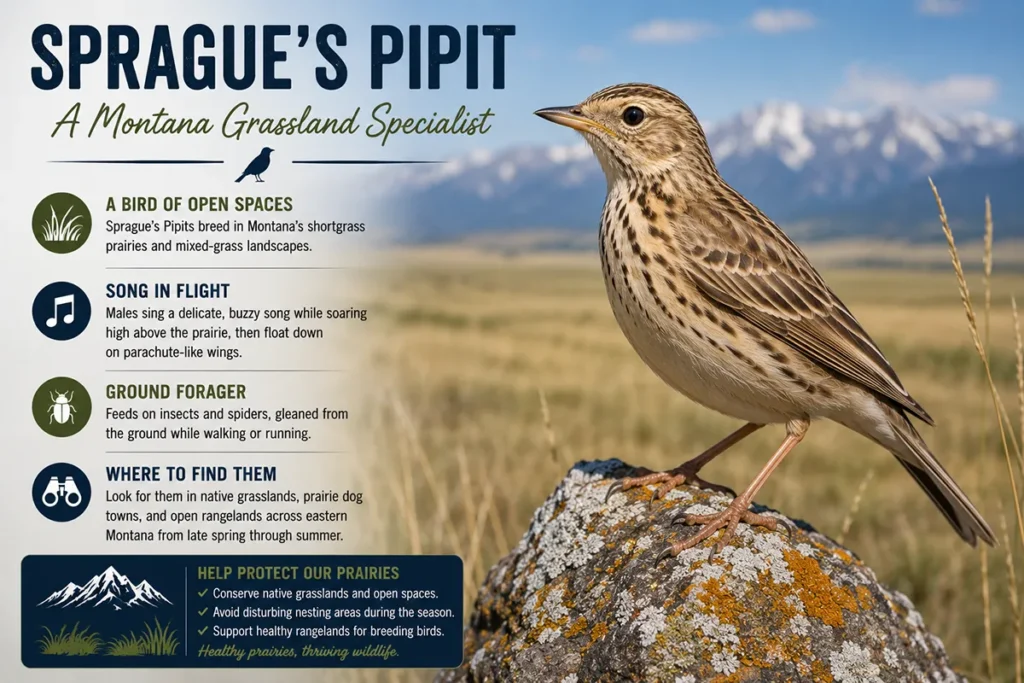
The Sprague’s Pipit performs one of the most remarkable displays in the bird world, and witnessing it became a personal mission after reading about it years ago.
The males fly straight up—sometimes 300 feet or higher—then descend in a series of swooping parachute-like drops while singing continuously. Each display can last several minutes. I finally watched this spectacle over shortgrass prairie near Lewistown, neck aching from staring upward.
These birds are subtle and often overlooked, but their display is anything but subtle. Visit between late May and early July for the best chances.
16. Chestnut-collared Longspur
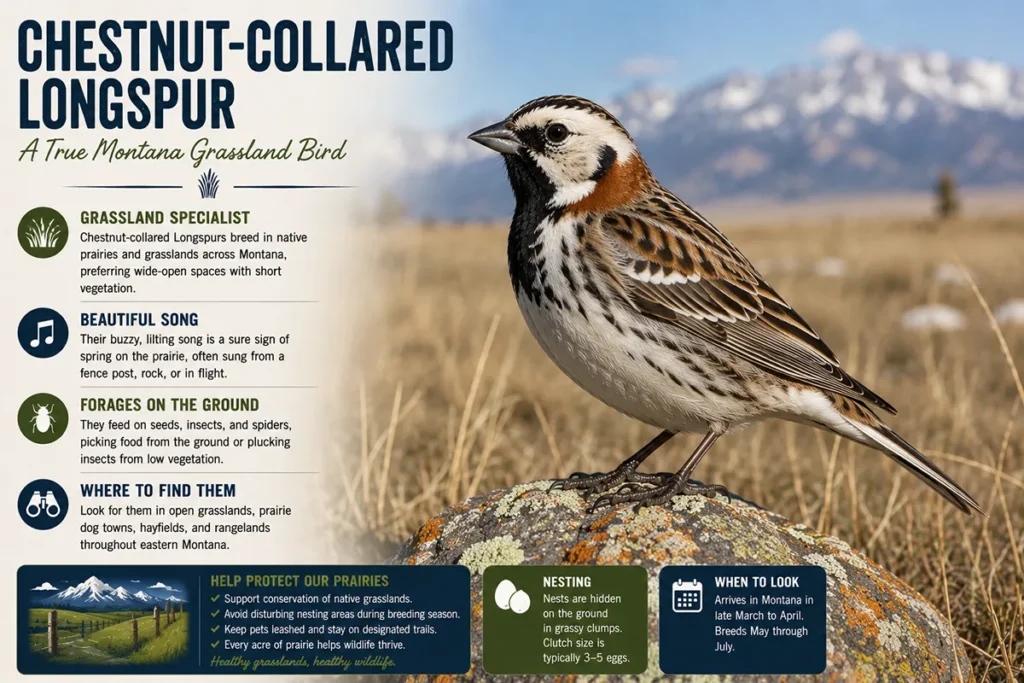
Another prairie specialty, the Chestnut-collared Longspur, is both beautiful and declining. Males in breeding plumage—black belly, chestnut nape, yellow throat—are stunning little birds.
I found a small colony near the town of Jordan last June. The males sang from fence posts and low shrubs, defending territories across native grassland that looked essentially unchanged from what Lewis and Clark would have seen.
The Bowdoin National Wildlife Refuge and surrounding BLM lands are reliable areas, though populations have declined significantly in recent decades due to habitat loss.
17. Mountain Plover
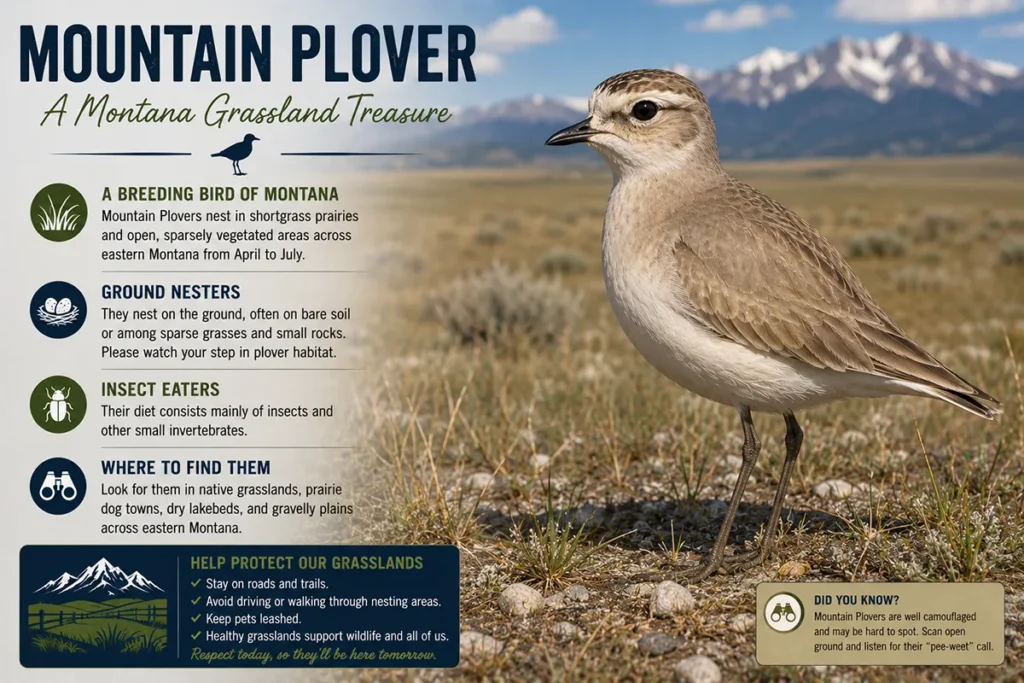
Despite its name, the Mountain Plover wants nothing to do with mountains. This prairie-loving shorebird (yes, shorebird) breeds on bare or sparsely vegetated ground in eastern Montana.
Finding them requires effort. I drove gravel roads near Circle for two days before locating a pair on a black-tailed prairie dog town. The birds use the disturbed, short vegetation around prairie dog colonies for nesting.
Look for them in May and June on heavily grazed areas or active prairie dog towns. They’re often first detected when they run—which they do constantly—rather than when standing still.
Forest and Mountain Birds
18. White-tailed Ptarmigan
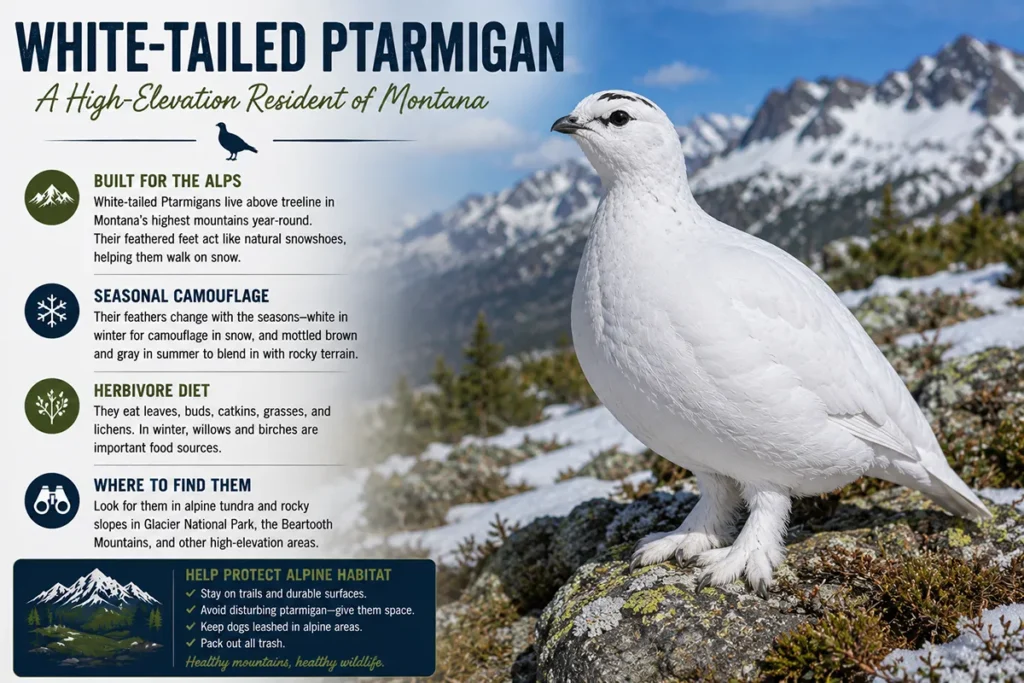
The White-tailed Ptarmigan is the only bird species that lives year-round in the alpine tundra above treeline. Finding them in Glacier National Park felt like finding a piece of the Arctic in Montana.
I finally spotted a group of three near Logan Pass after two previous failed attempts. They were nearly invisible against the rocky slope, their mottled summer plumage blending perfectly. When they moved, the illusion broke, and I had wonderful views.
The birds are genuinely challenging—small, well-camouflaged, and occupying terrain that requires effort to reach. Late June through August offers the best combination of accessible alpine habitat and reasonable weather.
19. Clark’s Nutcracker
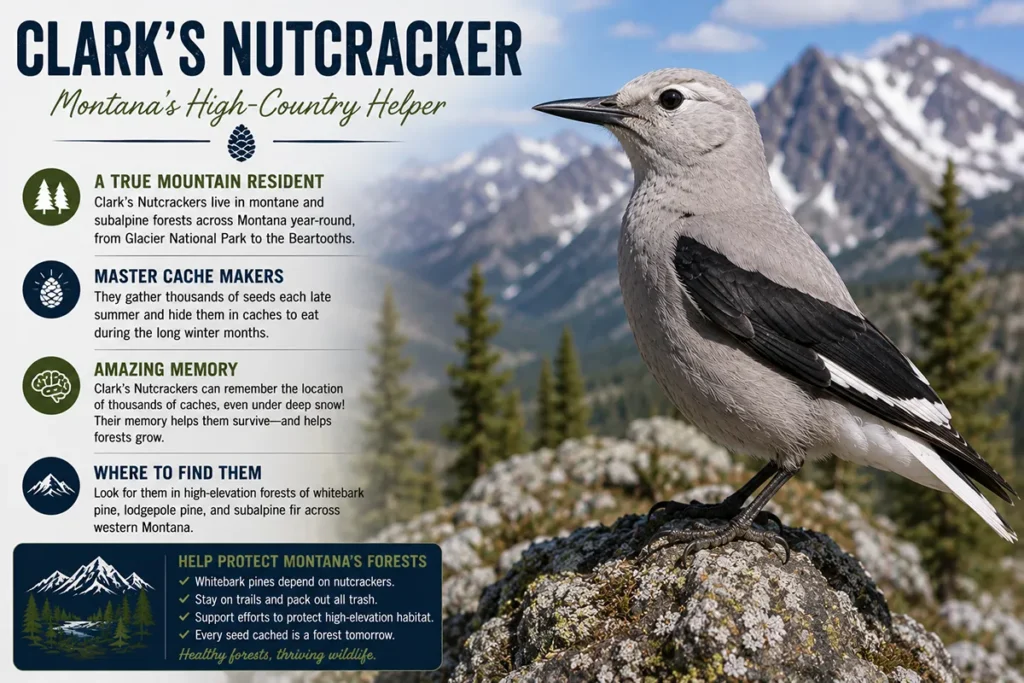
Named for William Clark of the Lewis and Clark expedition, this corvid is inseparable from whitebark pine ecosystems. The relationship is genuinely remarkable—nutcrackers cache thousands of pine seeds each fall, and the “forgotten” seeds grow into new trees.
I see them constantly in subalpine forests throughout western Montana. They’re loud, bold, and relatively easy to observe. Near Glacier’s Many Glacier area, they regularly approach visitors hoping for snacks (please don’t feed them).
As endangered and threatened species in Montana continue to face challenges, the whitebark pine—and by extension, Clark’s Nutcracker—faces an uncertain future due to blister rust and mountain pine beetles.
20. Gray Jay (Canada Jay)
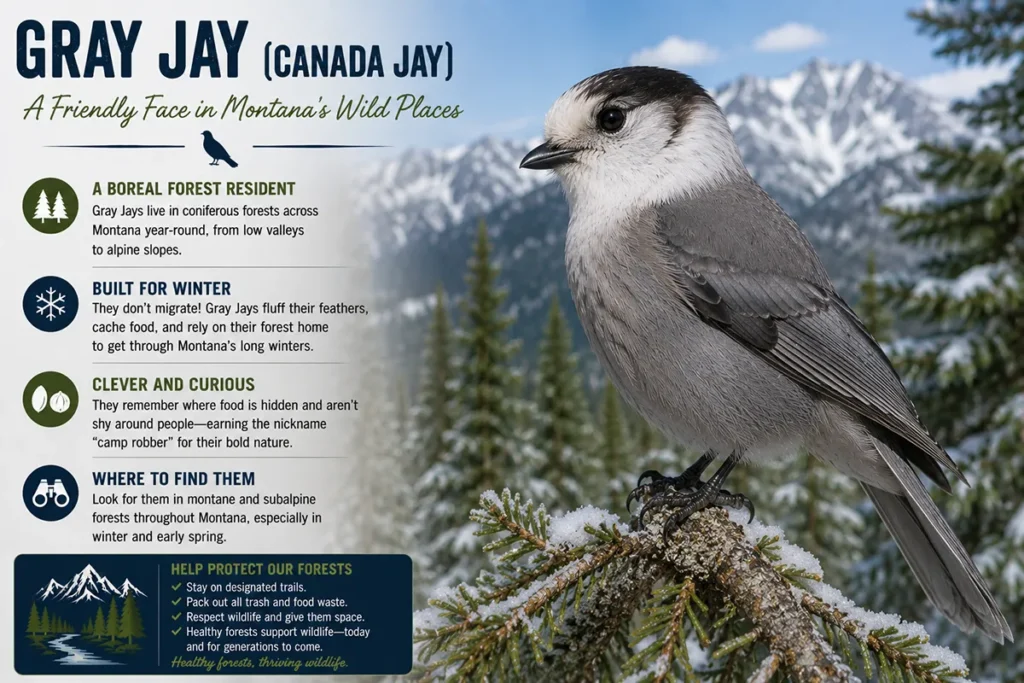
These friendly birds are renowned for approaching humans in hopes of food. In the Seeley-Swan Valley, I’ve had them land on my hand holding a cracker—an experience that never fails to delight.
Gray Jays are year-round residents of Montana’s coniferous forests. They survive brutal winters by caching food throughout their territories, using specially adapted saliva to stick items to tree bark.
Look for them anywhere you find spruce-fir forests. They’re particularly common along trails in Glacier National Park and throughout the Mission Mountains.
21. Three-toed Woodpecker and Black-backed Woodpecker
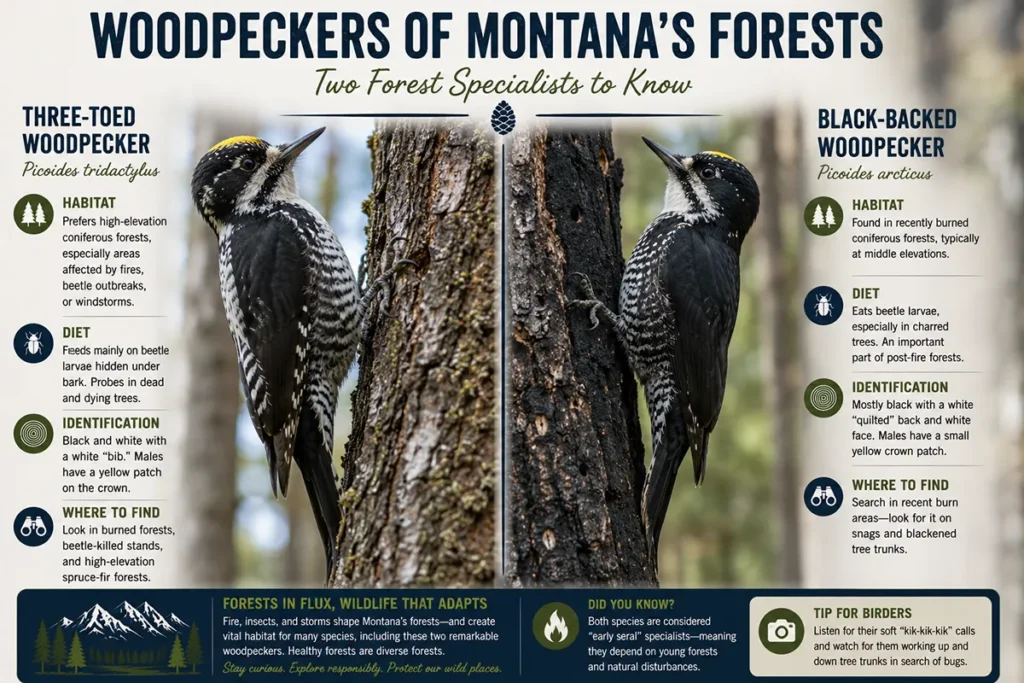
Both species specialize in recently burned forests, feeding on bark beetle larvae that colonize fire-killed trees. This makes them somewhat unpredictable—they follow fire activity across the landscape.
I found both species in a burn area near the Lolo Pass in 2019. The Three-toed was methodically flaking bark from a dead lodgepole pine while a Black-backed worked a tree about 50 yards away.
Monitor recent fire activity and check burned areas 1-3 years after the burn. Both species are quiet and easily overlooked, so patience is essential.
22. American Dipper
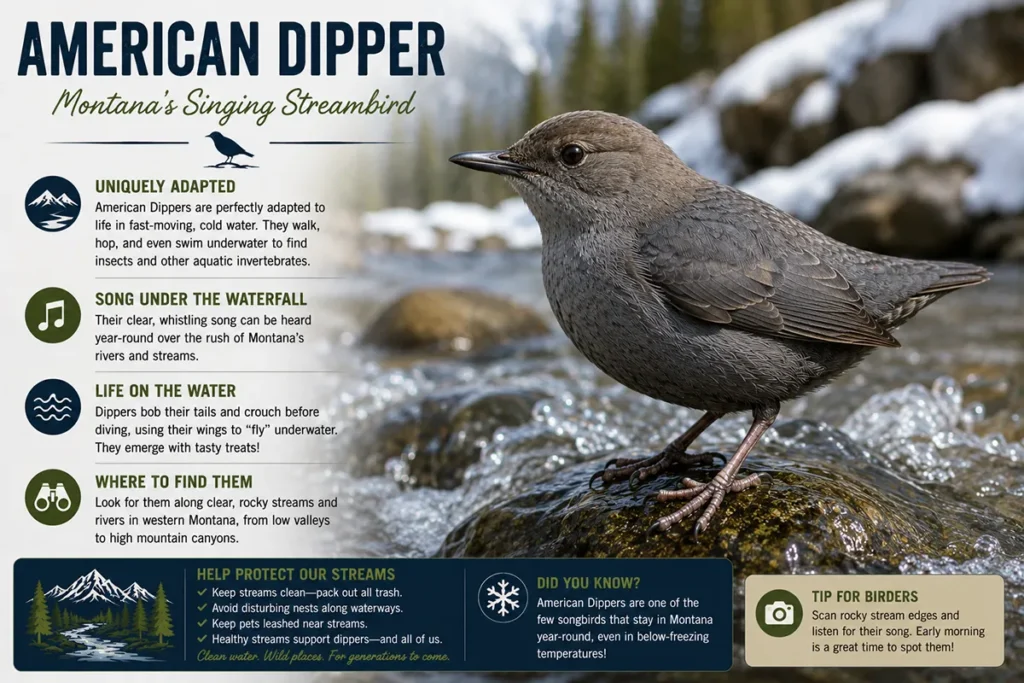
The American Dipper is the only truly aquatic songbird in North America, and watching one work a Montana stream never gets old.
These chunky gray birds walk underwater along stream bottoms, probing for insect larvae. I’ve watched them emerge from a fully submerged dive, shake off water, and immediately dive again—remarkable behavior in near-freezing water.
They’re year-round residents on virtually every clear mountain stream in western Montana. Rock Creek near Missoula, the Gallatin River, and streams throughout Glacier National Park are all reliable spots.
Seasonal Highlights: When to See What
Spring Migration (March-May)
Spring in Montana is waterfowl season. The Freezout Lake snow goose migration in late March is genuinely one of North America’s great wildlife spectacles—100,000 to 300,000 birds concentrated along the Rocky Mountain Front.
Shorebirds move through in April and May, with the Benton Lake and Bowdoin National Wildlife Refuges hosting excellent diversity. I’ve tallied 15 shorebird species in a single May morning at Benton Lake.
Songbird migration peaks in mid-May, when warblers, vireos, and flycatchers pour into Montana’s forests.
Breeding Season (June-July)
This is prime time for seeing resident species in full breeding plumage and song. Alpine birds like White-tailed Ptarmigan and Rosy-finches are accessible once snow melts from high passes.
Prairie species are actively displaying, making it the best window for Sprague’s Pipit and longspurs. The dawn chorus in any Montana forest during June is incredible—I’ve recorded over 25 species singing in an hour at Lee Metcalf National Wildlife Refuge.
Fall Migration (August-October)
Hawk migration along the Rocky Mountain Front peaks in September and October. The Rocky Mountain Front Hawkwatch near Choteau records thousands of raptors, including impressive Golden Eagle numbers.
Waterfowl begin returning to staging areas, and many mountain species—like Clark’s Nutcracker—descend to lower elevations. I particularly enjoy September birding because the crowds have thinned and weather is typically stable.
Winter (November-February)
Winter brings Arctic visitors like Snowy Owls and Rough-legged Hawks to the prairies while year-round residents like Gray Jays become easier to find as they seek food sources.
If you’re interested in cold-season wildlife, our Montana winter birds and Montana winter animals guides cover seasonal opportunities in detail.
Top Birding Locations: A Practical Guide
| Location | Best Season | Key Species | My Notes |
|---|---|---|---|
| Freezout Lake WMA | March | Snow Geese, Tundra Swans | Plan for crowds during peak migration |
| Glacier National Park | June-August | Harlequin Duck, Ptarmigan | Arrive early to avoid parking issues |
| Medicine Lake NWR | May-July | White Pelicans, Prairie Birds | Remote but worth the drive |
| Lee Metcalf NWR | Year-round | Waterfowl, Songbirds | Excellent accessibility near Missoula |
| Charles M. Russell NWR | May-June | Prairie specialists, Raptors | Combine with mammal watching |
| Red Rock Lakes NWR | May-September | Trumpeter Swans, Marsh birds | High elevation, check road conditions |
Practical Tips for Montana Birding
What to Bring
I’ve learned to pack multiple field guides for Montana trips. The Sibley Guide to Birds covers everything, but regional guides for both eastern and western birds help with the species overlap.
Binoculars are essential—I recommend 8×42 or 10×42 as a good compromise between magnification and field of view. A spotting scope is invaluable for distant raptors and waterfowl.
Layers are critical year-round. Montana weather changes rapidly, and standing still while birding means getting cold faster than hiking. Even in July, I bring a fleece for alpine areas.
Wildlife Safety
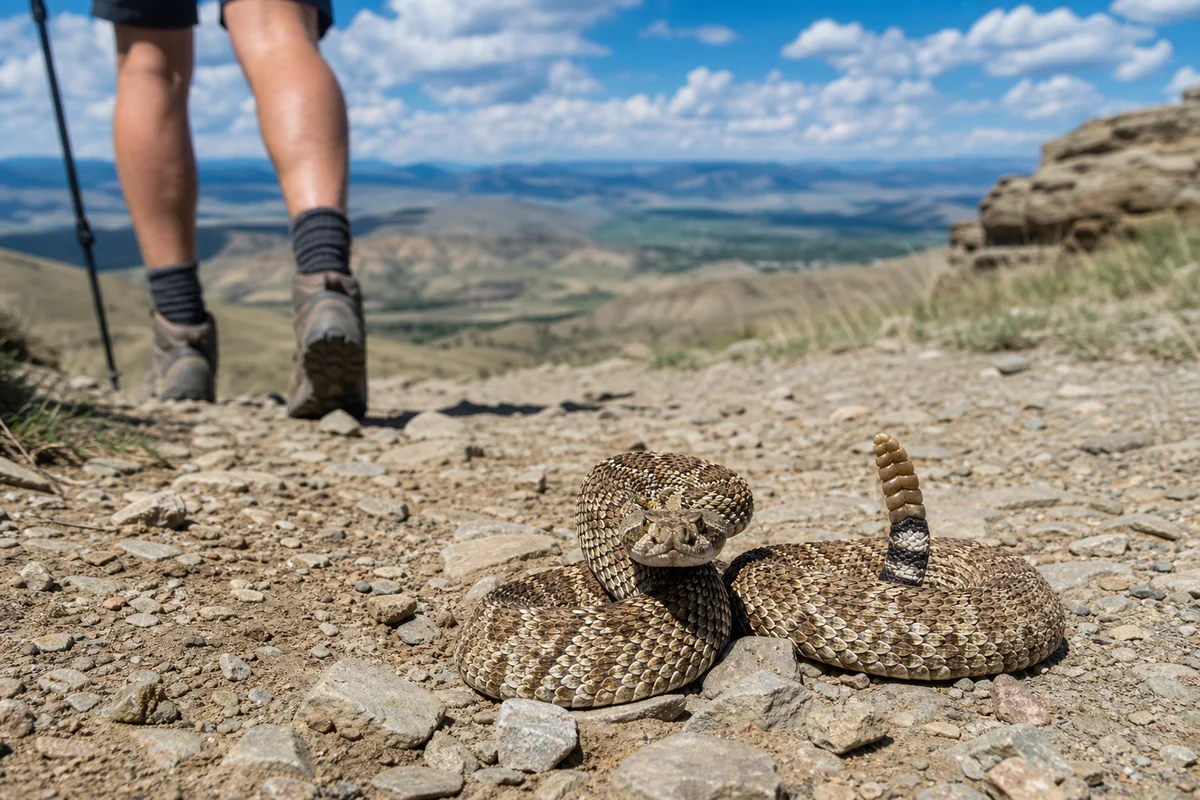
Montana’s birding often happens in country shared with larger wildlife. While watching birds, I’ve encountered bears, mountain lions, and rattlesnakes—often when my attention was focused elsewhere.
Carry bear spray in western Montana forests, and make noise to avoid surprising wildlife. In prairie areas, watch your step around rocky areas where rattlesnakes shelter.
Respect and Ethics
Montana’s bird populations face increasing pressure from habitat loss and climate change. Responsible birding means keeping distance from nesting birds, staying on trails in sensitive areas, and never using playback recordings during breeding season.
Some species, like Great Gray Owls, attract significant attention when found. If you locate a rare bird, consider whether posting the location publicly might cause harm through excessive disturbance.
Beyond Birds: Montana’s Complete Wildlife Experience
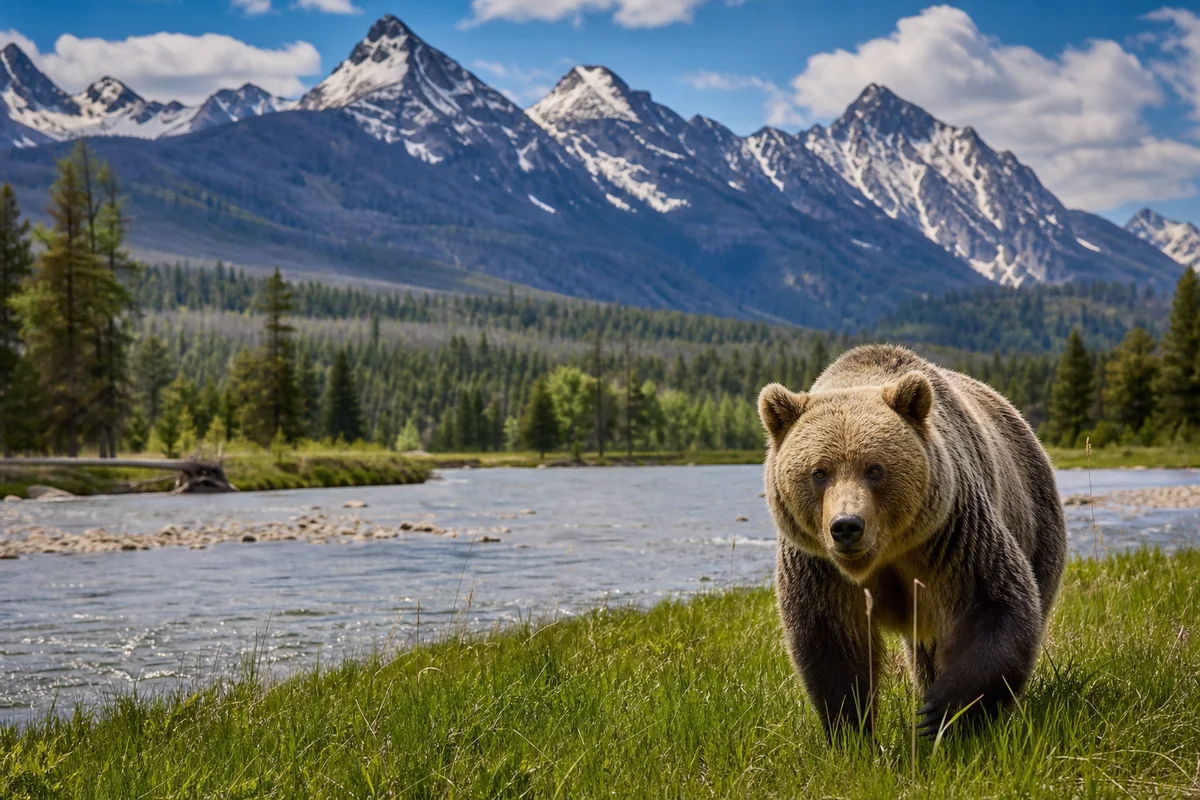
One aspect I love about birding in Montana is the inevitable wildlife encounters beyond birds. While scanning a prairie dog town for Mountain Plovers, I’ve watched elk herds move across distant ridges. While waiting for Harlequin Ducks, I’ve spotted otters working the same streams.
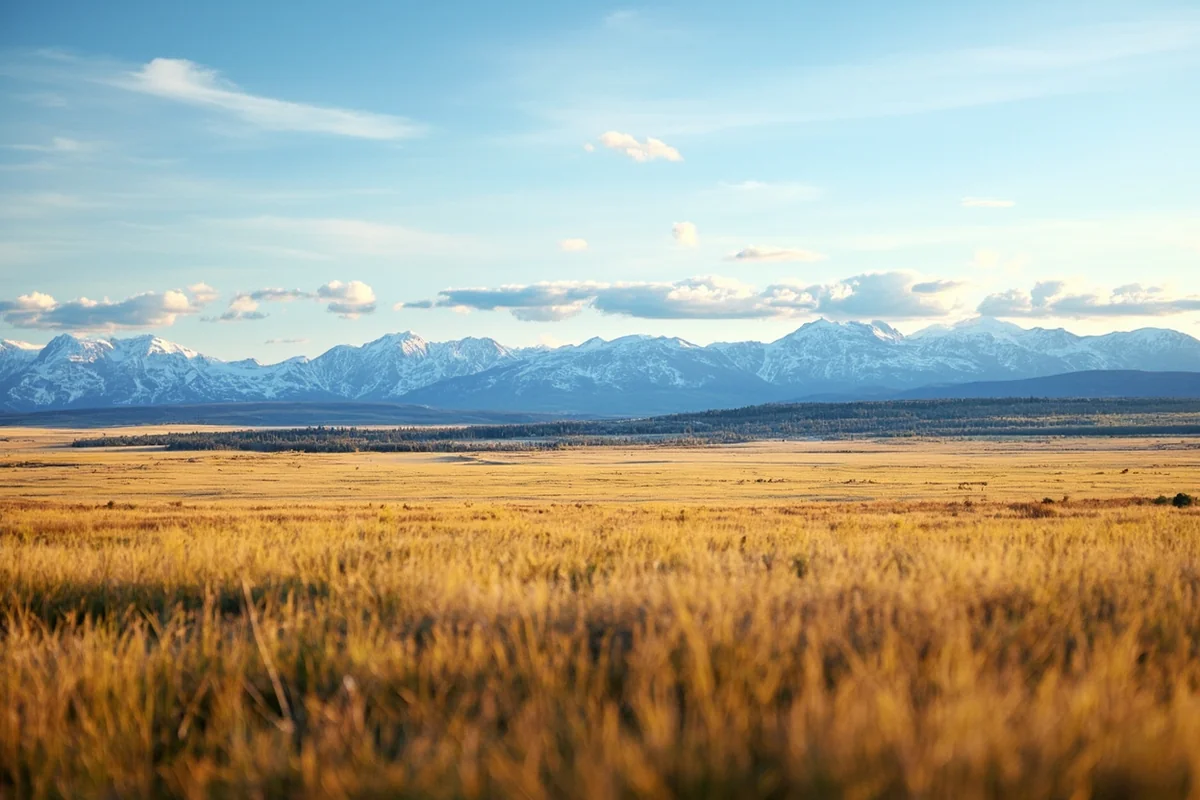
The interconnected nature of Montana’s ecosystems means birding here is never just about birds. Deer browse the same forest edges where I watch woodpeckers. Bighorn sheep share alpine habitat with ptarmigan. Mountain goats traverse the same cliffs where Golden Eagles nest.
Even the ospreys that nest on platforms throughout the state remind me how everything connects—I once watched an osprey harassed by a Bald Eagle drop a fish that was then grabbed by a waiting otter below.
Understanding these connections enriches every birding trip. While observing raptors, consider the prey base they depend on. While watching lynx habitat, notice which bird species share that snowy forest.
Montana also faces conservation challenges. Invasive species threaten native habitats, and monitoring unusual wildlife becomes everyone’s responsibility. Even unusual sightings—like the occasional alpaca farms or historical connections to the Montana Mountain Horse—remind us how human activity shapes what we see.
My Favorite Montana Birding Memory
If I had to choose one moment from years of Montana birding, it would be a June evening in the Mission Valley. I was photographing Yellow-headed Blackbirds at a small cattail marsh when a Short-eared Owl emerged from the grassland edge.
The owl hunted for nearly 30 minutes in the golden hour light, its buoyant flight carrying it across the marsh while blackbirds called their displeasure. Behind the scene, the Mission Mountains glowed pink with alpenglow.
No other state has given me that combination—an Arctic-breeding owl, a marsh full of western blackbirds, and glaciated peaks in the background. That’s Montana birding in a single frame.
Planning Your Montana Birding Trip
Start by deciding what species you most want to see, then plan your timing and route accordingly. A focused trip targeting specific birds will yield better results than trying to see everything at once.
For first-time visitors, I recommend starting in western Montana. Glacier National Park combined with the Flathead Valley and Missoula area provides excellent diversity within reasonable driving distances.
If prairie specialists are your priority, plan for May or June in eastern Montana. The drive is substantial from most starting points, but the birding rewards are worth every mile.
Whatever you choose, bring patience and flexibility. Montana’s vast landscapes mean birding here involves more driving and searching than smaller states. But when that search pays off—when you finally spot that Great Gray Owl or watch thousands of snow geese lift off at sunrise—you’ll understand why I keep coming back.
Frequently Asked Questions
What is the best time of year to go birdwatching in Montana?
I’ve found that late spring through early summer (May to July) offers the best Montana birdwatching opportunities, as migratory species return and breeding activity peaks. Fall migration from August to October is also excellent for spotting diverse species. Winter birding can be rewarding too, especially for seeing snowy owls and other cold-weather raptors near Glacier National Park.
Where are the top birdwatching hotspots in Montana for rare species?
Freezout Lake Wildlife Management Area near Choteau is legendary for snow geese and tundra swans during spring migration. I highly recommend Lee Metcalf National Wildlife Refuge in the Bitterroot Valley for warblers and waterfowl, while Bowdoin National Wildlife Refuge in north-central Montana attracts pelicans, avocets, and over 230 documented species.
What birding gear should I pack for a Montana wildlife trip?
Bring quality binoculars (8×42 is ideal), a spotting scope for open prairie viewing, and layered clothing since Montana weather changes quickly even in summer. I always pack a field guide specific to Rocky Mountain birds, a camera with at least a 300mm lens, and plenty of water since many birding sites are remote with no facilities nearby.
How much does a Montana birdwatching trip cost on average?
Budget around $150-250 per day for lodging, food, and gas when birding across Montana. National Wildlife Refuge access is free, though Glacier National Park charges $35 per vehicle for a 7-day pass. Guided birding tours typically run $200-400 per day, which I recommend for first-time visitors hoping to spot specific species like the great gray owl.
Can I see bald eagles and golden eagles in Montana without a guide?
Absolutely—Montana has healthy populations of both eagle species that you can spot independently along major river corridors. I’ve had great luck seeing bald eagles near Canyon Ferry Lake and along the Missouri River, especially during winter when they congregate near open water. Golden eagles are commonly spotted soaring over the prairies east of the Rocky Mountain Front.
What unique Montana bird species can’t I see anywhere else in the US?
While not exclusive to Montana, the state offers some of the most accessible viewing of harlequin ducks along Glacier’s mountain streams and boreal species like spruce grouse and gray jays. Montana’s prairie potholes region is one of the best places in the lower 48 to see American avocets, marbled godwits, and Wilson’s phalaropes during breeding season.
How far apart are Montana’s best birding locations and how should I plan my route?
Montana’s top birding sites are spread across a massive state—it’s about 350 miles from Glacier National Park to Bowdoin NWR, and 200 miles from Missoula to Freezout Lake. I suggest planning a 7-10 day road trip loop starting in Missoula, heading north to Glacier, east across the Hi-Line to the prairie refuges, then south through Great Falls back to your starting point.