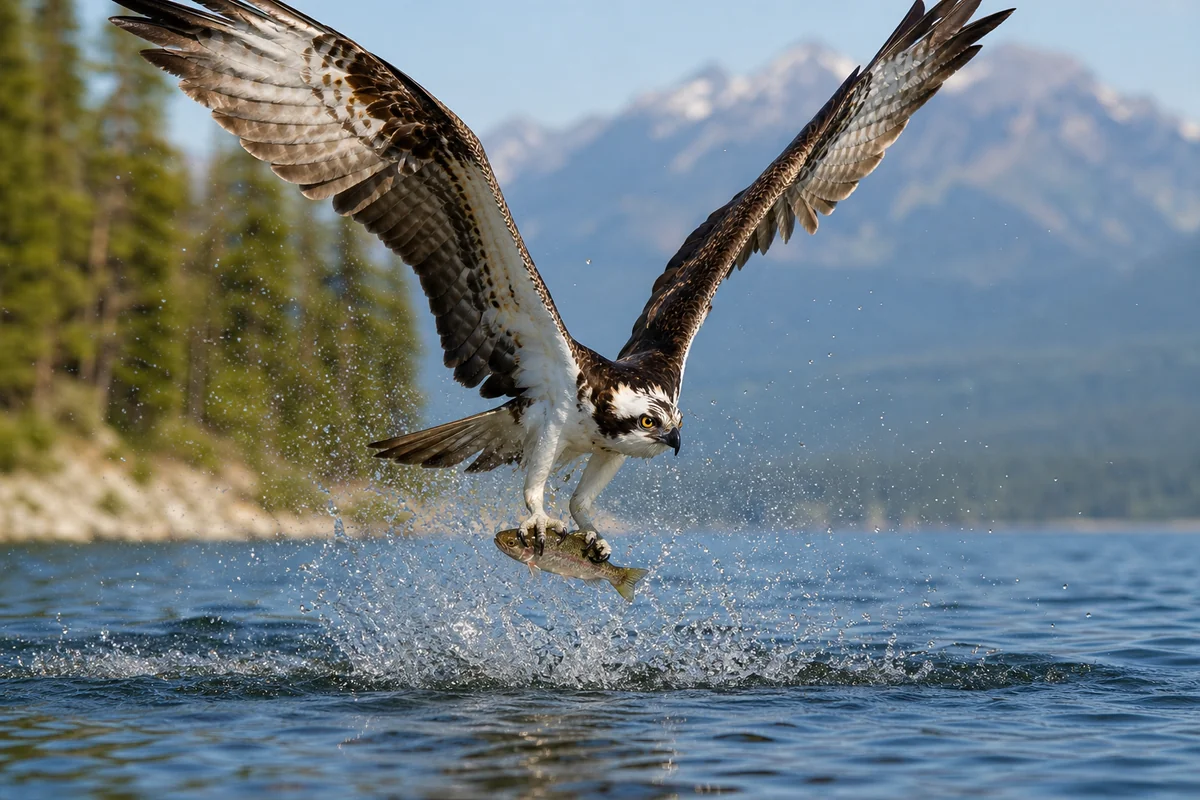
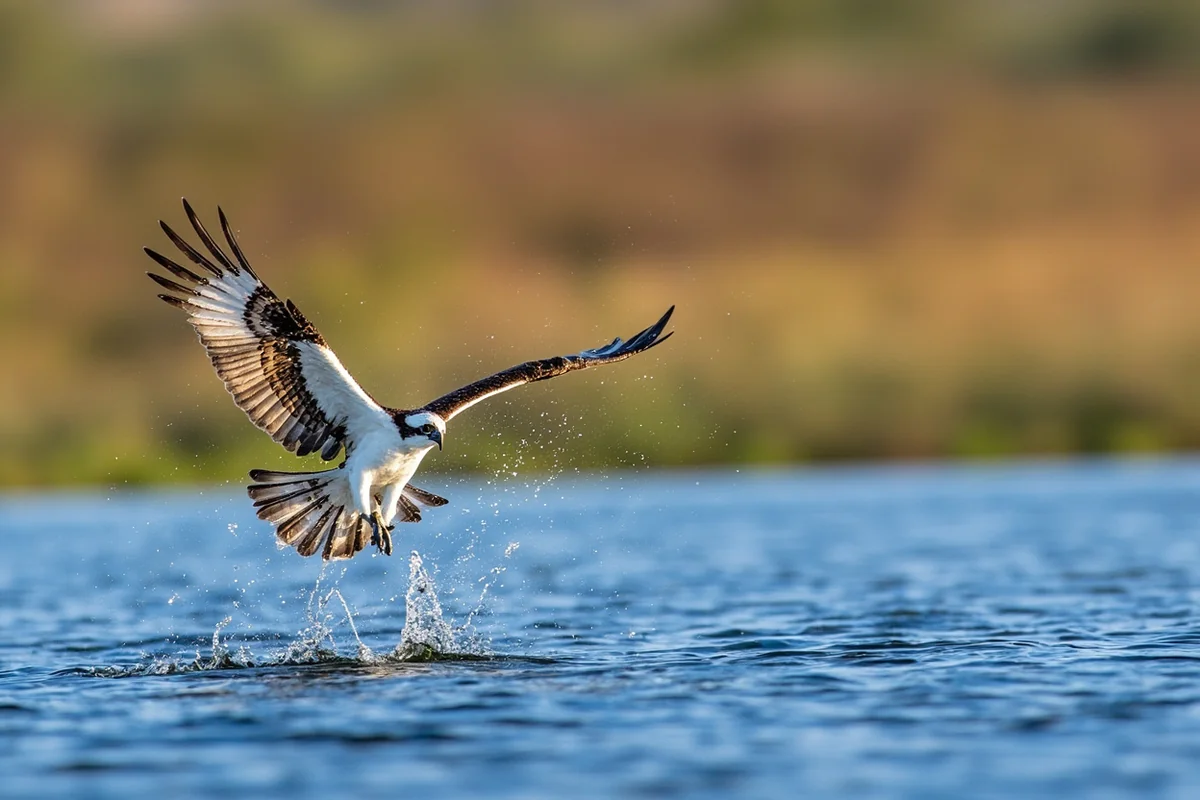
I’ll never forget the moment I watched an osprey plunge talons-first into Flathead Lake last June, emerging seconds later with a writhing cutthroat trout clutched in its grip—water droplets catching the golden morning light like scattered diamonds.
That spectacular dive, repeated thousands of times across Montana’s waterways each summer, represents one of the most thrilling wildlife encounters available to visitors exploring Montana wildlife.
- Best viewing: Late April through September, with peak activity in June-July during nesting season
- Top locations: Flathead Lake, Glacier National Park, Fort Peck Reservoir, and the Blackfoot River corridor
- Prime hours: Early morning (6-9 AM) and late afternoon (4-7 PM) when osprey hunt most actively
- What to bring: Binoculars (8×42 minimum), polarized sunglasses, and patience
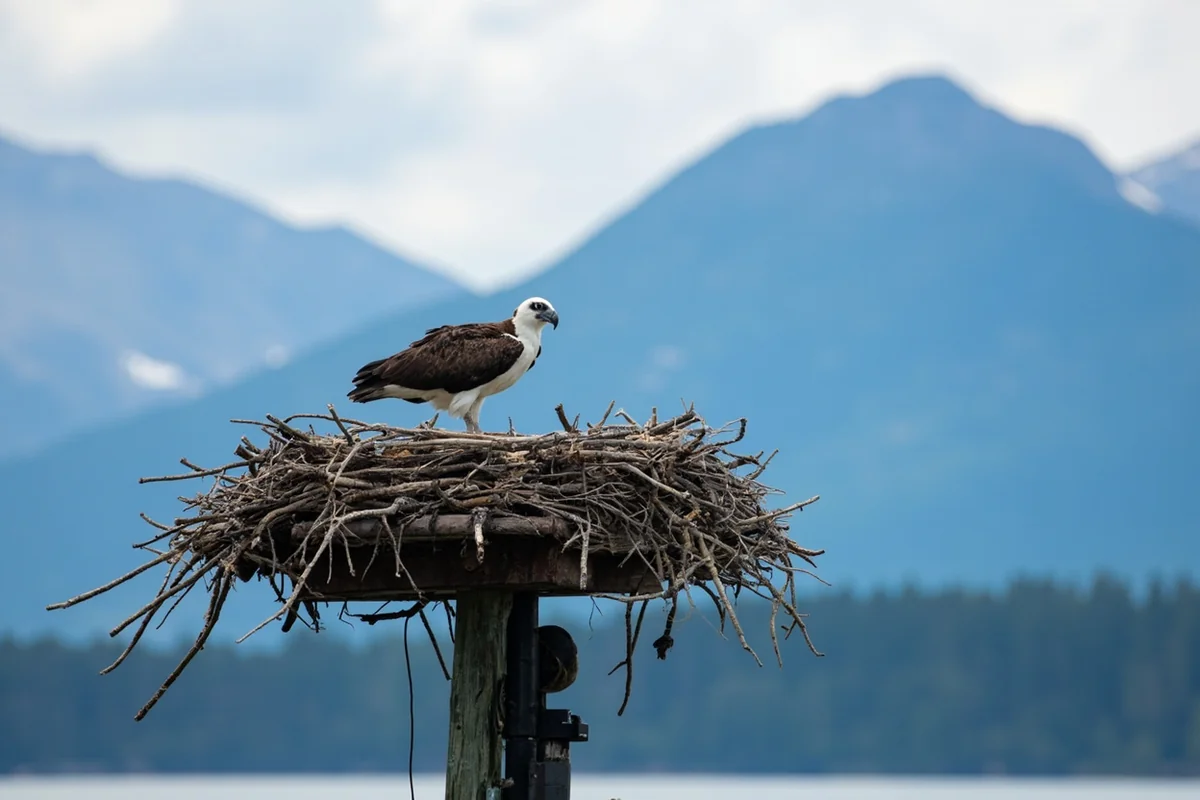
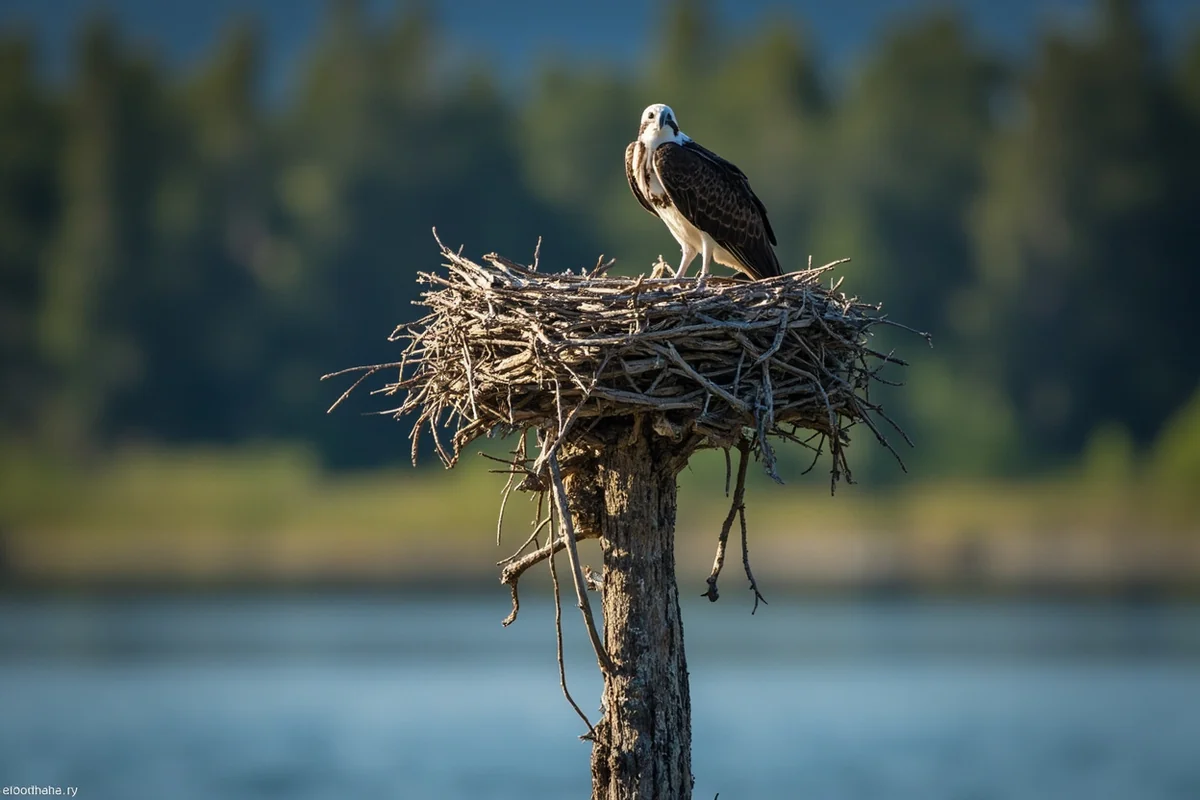
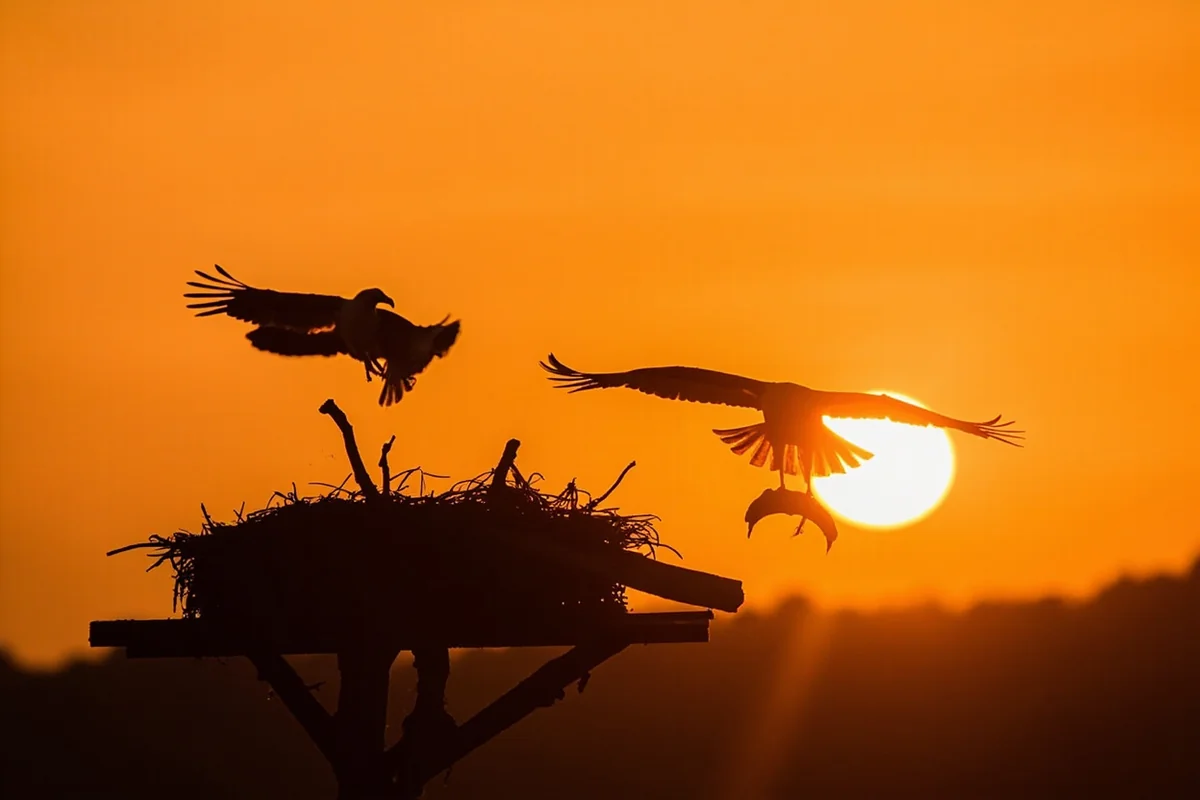
- Nesting platforms: Montana has over 400 artificial nest platforms—many visible from roadsides
- Best photo opportunities: Position yourself with the sun behind you near known fishing spots
Liked this article?
Add Roaming Montana as a preferred source so you see more of our articles and guides on Google.
Why Montana Is an Osprey Paradise
Montana’s nickname “The Treasure State” could just as easily apply to its osprey population as its mineral wealth. With over 3,000 natural lakes, 170,000 miles of rivers and streams, and an abundance of fish species, Montana offers osprey exactly what they need to thrive.
I’ve spent the better part of eight summers tracking these remarkable raptors across the state, and I’m consistently amazed by their adaptability. Unlike many other fish-eating birds that require pristine wilderness, osprey have learned to coexist with human development remarkably well.
During my travels, I’ve observed osprey nesting on power poles along Highway 93, atop cellular towers near Missoula, and even on a retired grain elevator outside of Great Falls. This adaptability makes them one of the most accessible wildlife viewing opportunities in the state.
The osprey population in Montana has rebounded spectacularly since the DDT ban of 1972. When I first started visiting Montana in the 1990s, seeing an osprey was genuinely exciting because they were still recovering. Now, you’d be hard-pressed to spend a day near any significant water body without spotting at least one.
Understanding Osprey: More Than Just Another Raptor
Before I dive into specific viewing locations, I think it’s worth understanding what makes osprey so special. These birds occupy a unique ecological niche that sets them apart from other raptors you might encounter while exploring Montana bird species.
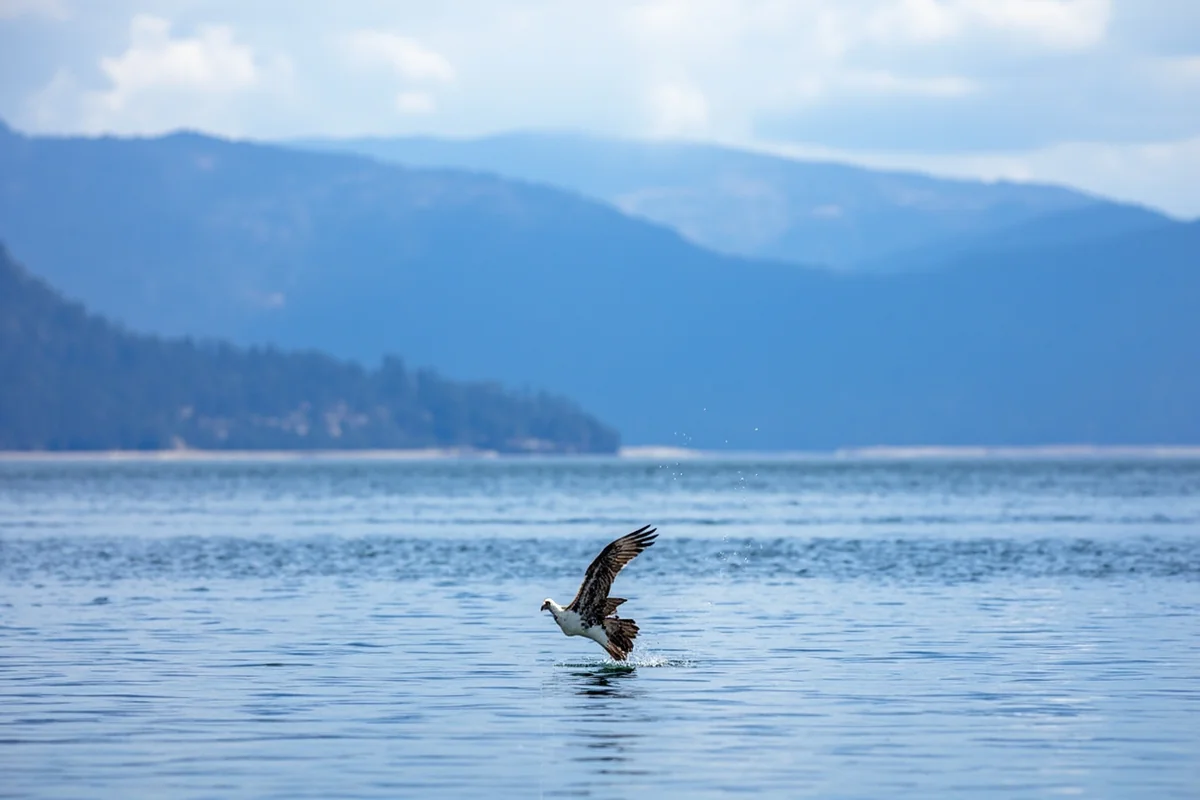
Osprey are the only raptors in North America that dive feet-first into water to catch fish. While bald eagles will occasionally grab fish from the surface, osprey commit fully to the hunt—sometimes submerging entirely before struggling back into the air with their catch.

Their physical adaptations are remarkable. During my observations, I’ve noted how their outer toe can rotate backward, giving them a two-in-front, two-in-back grip perfect for slippery fish. Their nostrils can close to prevent water entry during dives, and their dense, oily plumage sheds water more effectively than a Gore-Tex jacket.
I once timed an osprey near Seeley Lake through an entire hunting session. In 47 minutes, the bird made nine dive attempts and successfully caught three fish. That’s roughly a 33% success rate, which aligns with scientific studies suggesting osprey catch fish in about one-quarter to one-third of their attempts.
When to Visit Montana for Osprey Watching
Timing matters enormously if osprey viewing is a priority for your Montana trip. I’ve organized my recommendations by season based on years of personal observation.
Spring Arrival (Late March – April)
The first osprey typically arrive in Montana during the last week of March, though I’ve recorded early birds appearing as soon as March 15th during unusually warm years. These initial arrivals are almost always males, who return first to claim and defend nesting territories.
During a trip in early April two years ago, I watched a male osprey spend three consecutive days defending a nest platform near Polson from persistent attacks by a rival. The territorial displays—steep dives, loud alarm calls, and talon-forward confrontations—were absolutely riveting.
If you visit during this window, focus on established nesting sites. The birds are highly active but haven’t yet settled into the quieter routines of incubation.
Nesting Season (May – July)
This is my favorite time to observe osprey, and I recommend it for most visitors. Females lay eggs in late April or early May, with incubation lasting about 38 days.
By June, most nests contain hungry chicks demanding constant food deliveries. I’ve positioned myself near nests during this period and watched males make fishing runs every 90 minutes to two hours throughout daylight.
The action peaks in late June and early July when chicks are growing rapidly. During a week-long stay near the Blackfoot River last July, I witnessed an adult male deliver 47 fish to a nest containing three chicks. That’s remarkable parental dedication.
Fledging and Migration (August – September)
Young osprey take their first flights in August, typically when they’re 50-55 days old. This creates incredible viewing opportunities as inexperienced juveniles crash-land into trees, practice fishing techniques, and gradually develop their parents’ grace.
I particularly enjoy watching fledglings attempt their first dives. They often hover uncertainly, abort multiple attempts, and sometimes emerge from the water looking utterly bewildered. It’s a reminder that even nature’s most skilled hunters start as awkward beginners.
By mid-September, most Montana osprey begin their southward migration to wintering grounds in Central and South America. I’ve watched them departing along the Rocky Mountain Front, riding thermals southward in loose groups.
Best Locations for Osprey Viewing in Montana
After years of exploration, I’ve identified several locations that consistently deliver exceptional osprey encounters. Here’s my honest assessment of each.
Flathead Lake and Surrounding Area
Flathead Lake remains my top recommendation for first-time osprey watchers. The lake’s size (it’s the largest natural freshwater lake west of the Mississippi) supports a substantial fish population that attracts dozens of nesting pairs.
My favorite specific spot is Wayfarers State Park on the east shore. During a visit last summer, I counted 14 different osprey hunting the waters visible from the day-use area in a single morning. The park’s position provides excellent sight lines across the water.
The town of Polson at the lake’s southern end offers multiple viewing opportunities. I often park at Riverside Park and walk the Flathead River Trail, where nest platforms are visible at several points. The Kerr Dam area downstream also hosts reliable nesting pairs.
Wild Horse Island State Park, accessible only by boat, has several active nests. If you can arrange a kayak trip or boat rental, the island’s osprey are remarkably tolerant of observers who maintain respectful distances.
Glacier National Park
Glacier offers osprey viewing combined with some of America’s most spectacular scenery. The park’s western lakes—particularly Lake McDonald and Bowman Lake—support healthy osprey populations.
I’ve had my best luck along the Going-to-the-Sun Road near Apgar. There’s a well-known nest visible from the road just past the entrance, and I’ve spent hours photographing the adults there during multiple visits.
Lake McDonald’s east shore near Apgar Village consistently produces sightings. During my most recent visit in July, I watched an osprey battle a persistent bald eagle attempting to steal its catch—a dramatic interaction that lasted nearly two minutes.
The North Fork of the Flathead River, accessible via the Outside North Fork Road, offers excellent osprey viewing away from the park’s more crowded areas. I recommend this route for visitors who prefer solitude with their wildlife watching.
Fort Peck Reservoir
Eastern Montana often gets overlooked by wildlife watchers focused on the mountains, but Fort Peck Reservoir offers outstanding osprey opportunities. The reservoir’s massive size—over 1,500 miles of shoreline—creates abundant hunting territory.
I spent a week at Fort Peck two summers ago and found the Hell Creek State Park area particularly productive. The combination of protected coves and abundant fish attracts multiple nesting pairs.
The town of Fort Peck itself has several visible nests, including one on a power pole structure that’s become something of a local landmark. The Charles M. Russell National Wildlife Refuge, which borders the reservoir, adds excellent viewing of other species including Montana deer and elk.
The Blackfoot River Corridor
Made famous by Norman Maclean’s “A River Runs Through It,” the Blackfoot River offers intimate osprey viewing in a gorgeous mountain valley setting. The river’s excellent trout fishing naturally attracts piscivorous birds.
I recommend the stretch between Ovando and Potomac for dedicated osprey watching. Multiple nest platforms are visible from the road, and several fishing access sites provide close approaches to the water.
Salmon Lake, located along the Blackfoot corridor, has become one of my reliable go-to spots. The lake’s clear waters allow you to watch osprey track fish from above before diving—something murkier waters don’t permit.
The Bitterroot Valley
The Bitterroot River and its tributaries support a healthy osprey population that’s easily accessible from the valley’s many towns. I’ve found productive spots from Missoula south to Darby.
Lee Metcalf National Wildlife Refuge near Stevensville offers exceptional viewing. The refuge’s mix of river channels, ponds, and marshes attracts osprey along with various duck species and river otters.
During my last visit to the Bitterroot, I discovered an extremely active nest visible from Woodside Crossing fishing access. I returned three consecutive mornings and witnessed successful fish deliveries during each session.
Practical Tips From the Field
These recommendations come from hard-won experience—including plenty of mistakes I’ve made over the years.
Essential Gear
Binoculars make or break osprey watching. I use 10×42 models for the extra magnification, but 8x42s offer a wider field of view that helps when tracking birds in flight. Whatever you choose, don’t cheap out—clear optics transform the experience.
A spotting scope adds value if you’re serious about nest observation. I carry a 20-60x zoom scope when I know I’ll be watching from a distance. Set up on a sturdy tripod, it reveals details like prey species and chick behavior invisible to binoculars.
Polarized sunglasses aren’t just for comfort—they cut glare and allow you to watch osprey track fish below the water’s surface. I consider them essential equipment.
Photography Advice
For serious osprey photography, you’ll want at least a 400mm lens. I’ve gotten acceptable shots with a 100-400mm zoom, but my best images have come from a 600mm prime.
Focus on locations where you can predict the flight path. Nest platforms are excellent because adults approach along consistent routes. Fishing spots where osprey regularly hunt allow you to pre-focus on the water and capture dive sequences.
Early morning light is magical, but I’ve actually gotten some of my favorite shots in overcast conditions when harsh shadows disappear and colors saturate naturally.
Ethical Observation
This matters enormously to me. Osprey tolerate humans reasonably well, but nesting birds deserve wide berths. I never approach closer than 100 meters to an active nest, and I back off immediately if adults begin alarm calling.
Drone use near nests is absolutely unacceptable—I’ve witnessed other visitors do this, and the distress it causes is obvious and distressing. Montana Fish, Wildlife & Parks regulations prohibit drone operation near nesting raptors.
If an osprey abandons its nest because of disturbance, the eggs or chicks will almost certainly die. No photograph is worth that outcome.
Osprey Behavior Decoded
Understanding what you’re seeing adds immeasurable depth to wildlife watching. Here’s what I’ve learned about interpreting osprey behavior.
Hunting Techniques
Osprey use several distinct hunting approaches. The classic hover-and-plunge involves the bird pausing in mid-air, sometimes for 10-15 seconds, before folding its wings and diving. I find this behavior mesmerizing to watch.
Low glide hunting occurs when osprey cruise 15-30 feet above the water watching for fish. This technique seems more common in calm conditions when surface reflections don’t obscure underwater visibility.
I’ve also observed what I call “opportunistic interception”—osprey spotting fish from considerable heights while traveling between locations and dropping into unexpected dives. These surprise dives often catch observers off-guard.
Vocalizations
Osprey are vocal birds, and their calls communicate specific information. The sharp, repeated “cheep-cheep-cheep” alarm call indicates disturbance—often from eagles, but sometimes from human approach.
The begging call of hungry chicks carries surprising distances. Once you learn to recognize it, you can locate active nests by sound alone. I’ve found several previously unknown nest sites simply by following these vocalizations.
Mated pairs engage in duet calling during courtship and pair-bonding, a softer, more musical exchange than the alarm calls. I’ve recorded these interactions near several nests and find them genuinely beautiful.
Territorial Disputes
Osprey defend territories vigorously, but their conflicts rarely result in serious injury. Most disputes involve aerial displays—talons presented, wings held in exaggerated positions, and loud calling.
The most dramatic conflicts I’ve witnessed involve bald eagles attempting to steal fish from osprey. Eagles are larger and stronger, but osprey are more agile. I’ve seen osprey successfully evade eagles through superior maneuverability, though sometimes they simply drop the fish and surrender.
Understanding this relationship adds context to what you might observe. When watching Montana bears or mountain lions, you witness apex predators. With osprey, you observe sophisticated aerial athletes who must contend with larger competitors.
Osprey and Montana’s Conservation Story
Montana’s osprey recovery represents one of wildlife management’s genuine success stories. Understanding this history enriches the viewing experience.
DDT accumulation in the mid-20th century caused osprey eggshells to thin catastrophically. Nests that should have produced healthy chicks instead collapsed under incubating parents. By 1970, osprey populations had crashed across North America.
The 1972 DDT ban allowed slow recovery, but Montana’s wildlife managers accelerated the process through artificial nest platform programs. The first platforms were installed in the late 1970s, and the program has expanded continuously since then.
During my travels, I’ve documented over 200 artificial platforms across the state. These structures—typically wooden platforms atop utility poles—provide stable nesting sites in areas where natural options are limited.
The program’s success illustrates how targeted conservation action can reverse wildlife declines. It’s a counterpoint to more troubling stories about endangered species in Montana still struggling to recover.
Combining Osprey Watching With Other Wildlife
One of Montana’s great advantages is the opportunity to observe multiple species during a single trip. Osprey habitat overlaps extensively with other compelling wildlife.
River corridors where osprey hunt often host otters working the same waters. I’ve enjoyed mornings where I’ve watched both species fishing the same stretch of river, each employing entirely different techniques.
The forests surrounding osprey lakes shelter owls that become active as osprey settle for the night. Transitioning from daytime osprey watching to evening owl listening creates a full-day wildlife experience.
In mountainous areas, you might spot bighorn sheep or mountain goats on cliff faces above osprey-rich waters. Glacier National Park is particularly good for this combination.
Occasionally, you’ll encounter more secretive species. While watching osprey along the North Fork of the Flathead, I once spotted a lynx crossing the road—an unexpected bonus that made an already great day exceptional.
Planning Your Osprey Trip: Practical Information
| Factor | Recommendation |
|---|---|
| Best Months | June and July for nesting activity; August for fledgling behavior |
| Time of Day | 6-9 AM and 4-7 PM for hunting; midday for nest observation |
| Trip Duration | Minimum 3 days to visit multiple locations; 7+ days ideal |
| Base Camp Options | Kalispell (Flathead area), Missoula (Blackfoot/Bitterroot), Malta (Fort Peck) |
| Budget Consideration | Many viewing locations are free; state parks typically charge $6-8 per vehicle |
| Physical Difficulty | Low – most viewing is roadside or from short walks |
Accommodation Suggestions
For the Flathead Lake region, I recommend staying in Polson or Bigfork rather than Kalispell. Both towns offer closer proximity to prime viewing areas and have excellent restaurant options.
Missoula makes an ideal base for exploring both the Blackfoot and Bitterroot corridors. The city has abundant lodging at various price points, and you can easily reach productive osprey habitat within 30 minutes in either direction.
For Fort Peck, options are limited. The Fort Peck Hotel (the original 1930s structure) offers historic charm, while Glasgow (17 miles north) has standard chain accommodations.
Combining With Other Activities
Osprey watching pairs naturally with fly fishing—you’ll often share water with the birds you’re observing. Several outfitters in the Blackfoot and Bitterroot valleys offer guided trips that accommodate wildlife photography alongside fishing.
Kayaking provides intimate water-level perspectives. I’ve paddled Flathead Lake, Seeley Lake, and portions of the Blackfoot while watching osprey hunt around me. The perspective is entirely different from shore-based observation.
While exploring osprey habitat, you’ll encounter excellent hiking opportunities. Many trailheads are located near productive viewing areas, allowing you to combine mountain walks with waterside wildlife watching.
Challenges and How to Handle Them
Honest travel writing acknowledges difficulties. Here’s what might go wrong and how to respond.
Weather in Montana can shift rapidly. I’ve experienced sunny mornings transform into afternoon thunderstorms countless times. Always carry rain gear, and be prepared to adjust plans based on conditions.
Smoke from wildfires increasingly affects summer visibility, particularly in August. If smoke is severe, consider heading to eastern Montana where air quality is often better, or focus on closer-range observation where atmospheric interference matters less.
You might visit a known nest site and find it inactive. Osprey occasionally abandon nests between seasons due to structural failure, predator activity, or unclear reasons. Don’t let a single disappointment derail your trip—the birds are widespread, and alternatives exist.
Mosquitoes near water can be brutal in June and early July. DEET-based repellent or treated clothing makes a real difference in comfort during prime viewing season.
Managing Expectations
Some visits produce spectacular encounters; others yield distant glimpses at best. Wildlife watching rewards patience and repeated effort rather than demanding guaranteed results.
I keep a journal of my Montana wildlife observations, and reviewing it reminds me that the memorable experiences are scattered among many ordinary ones. The magic moments come to those who put in the time.
Beyond Osprey: Building a Complete Wildlife Trip
While osprey might be your primary focus, Montana’s broader wildlife diversity deserves attention. Consider incorporating stops specifically for other species.
The same river corridors hosting osprey often support bald eagle populations, especially outside nesting season when eagles are more mobile. Winter visitors should explore our guide to Montana winter birds for species you won’t encounter during summer osprey trips.
Grassland areas near osprey-rich waters sometimes harbor rattlesnakes, particularly in eastern Montana. Awareness is appropriate, though encounters are uncommon if you stay on established trails.
The quirky squirrel species in Montana’s forests provide constant entertainment between osprey sightings. I find their antics help pass time during slow periods.
For something completely different, consider visiting one of Montana’s alpaca farms. These operations offer a domestic counterpoint to wild species and make excellent family stops.
Resources for Continued Learning
Montana Fish, Wildlife & Parks maintains current information about raptor populations including osprey. Their website includes nest location data for several regions.
The Montana Audubon Society organizes field trips during migration seasons that sometimes focus on raptors. Joining a guided outing with local experts accelerated my learning dramatically.
eBird, the Cornell Lab of Ornithology’s citizen science platform, shows recent osprey sightings across Montana. I check it before every trip to identify current hotspots.
Be aware of how invasive species affect Montana’s ecosystems, including the aquatic habitats osprey depend upon. Understanding these ecological connections deepens appreciation for the complex relationships sustaining wildlife populations.
Final Thoughts From the Field
Watching osprey hunt Montana’s waters connects you to something ancient and vital. These birds have survived ice ages, adapted to human landscapes, and recovered from near-extinction through a combination of resilience and conservation action.
I return to Montana’s osprey waters every year because the experience never becomes routine. Each dive, each fish delivered to hungry chicks, each territorial dispute reveals something new about these remarkable raptors.
Whether you’re a dedicated wildlife photographer, a casual nature enthusiast, or simply someone who appreciates wild places, Montana’s osprey deserve your attention. The birds are waiting—all you need to do is show up with binoculars and patience.
The state’s diverse wildlife, from graceful mountain horses to elusive winter animals, creates a tapestry of experiences. But for me, osprey occupy a special place—proof that wildness persists even in accessible locations, that spectacular nature reveals itself to those willing to look.
I hope this guide helps you discover Montana’s osprey for yourself. When you watch your first successful dive, that explosive moment when bird meets water and emerges triumphant with a glittering fish, you’ll understand exactly why these raptors have captivated me for years.
Frequently Asked Questions
When is the best time to see ospreys in Montana?
The best time to spot ospreys in Montana is from late April through September, with peak viewing during the nesting season from May to July. I’ve found early morning hours offer the most action as ospreys actively hunt for fish. They migrate south by October, so plan your trip during summer months for guaranteed sightings.
Where are the best places to watch ospreys in Montana?
Flathead Lake, the Clark Fork River near Missoula, and Glacier National Park offer exceptional osprey viewing opportunities. I highly recommend the Osprey Falls Trail in Yellowstone’s Montana section and the numerous nest platforms along the Bitterroot River. Many ospreys nest on man-made platforms near bridges and marinas, making them surprisingly accessible from roadside pullouts.
What gear should I bring for osprey watching in Montana?
Pack binoculars (10×42 recommended), a camera with at least a 300mm zoom lens, and polarized sunglasses to reduce water glare while watching them fish. I always bring layers since Montana mornings near water can be chilly even in summer, plus sunscreen and insect repellent for riverside observation spots.
Are there guided osprey watching tours in Montana and what do they cost?
Several outfitters offer wildlife watching tours that include osprey spotting, typically ranging from $75-$150 per person for half-day excursions. Kayak and float trips along the Clark Fork or Flathead Rivers provide unique water-level perspectives and cost around $80-$120. I’ve found local Audubon Society chapters also organize free guided birdwatching walks during peak season.
How can I identify an osprey versus other Montana raptors like bald eagles?
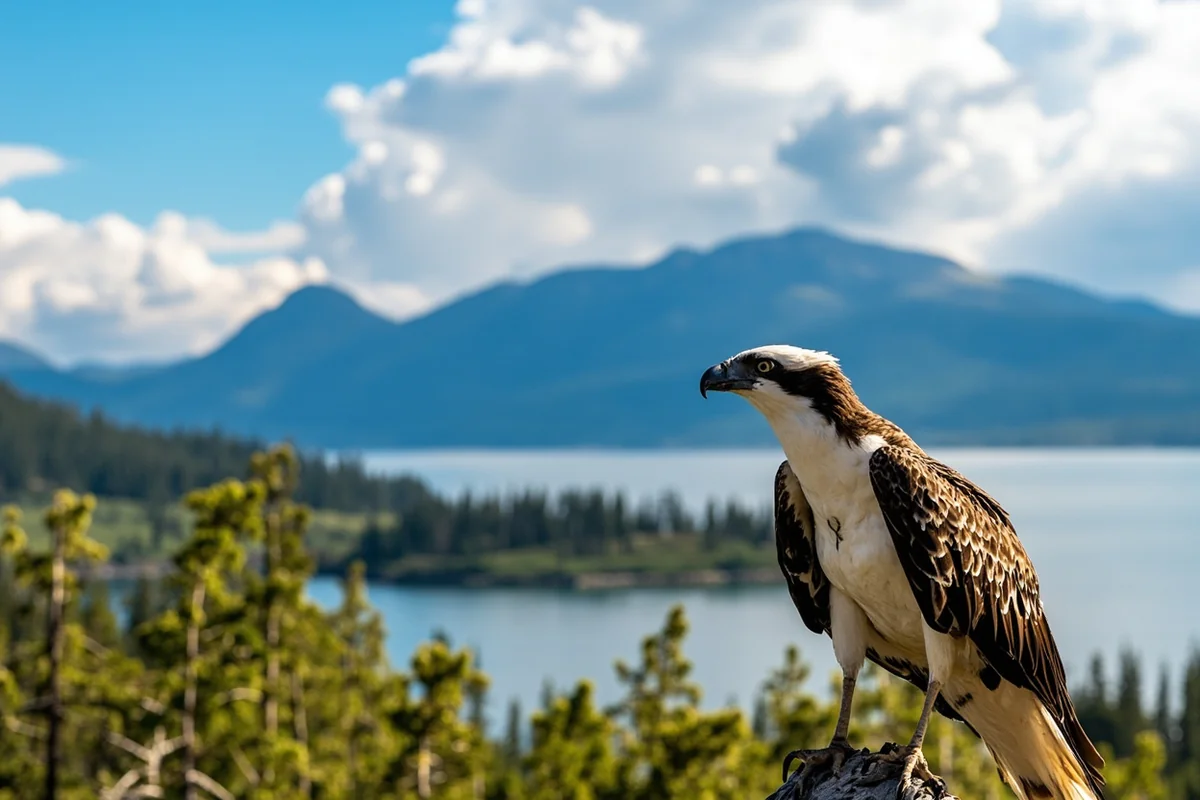
Ospreys are smaller than bald eagles with a distinctive white underbelly and a dark eye stripe that looks like a bandit mask. Their wings have a characteristic crook or M-shape when soaring, unlike eagles’ flat wingspan. When hunting, ospreys dive feet-first into water, which is behavior you won’t see from eagles who snatch fish from the surface.
Can I see osprey nests up close in Montana without disturbing them?
Yes, Montana has numerous osprey nest platforms specifically positioned for public viewing near parking areas and visitor centers. The Lee Metcalf National Wildlife Refuge near Stevensville has observation blinds within 50 feet of active nests. Always maintain at least 100 feet distance from unprotected nests and never use drones, as stressed ospreys may abandon their eggs.
What other wildlife might I see while osprey watching in Montana?
While scanning for ospreys along Montana rivers and lakes, I’ve regularly spotted bald eagles, great blue herons, river otters, and white-tailed deer sharing the same habitat. Beaver activity is common near osprey nesting sites, and you may see kingfishers, pelicans, and various waterfowl. These multi-species sightings make osprey hotspots excellent all-around wildlife destinations.
Sources
- https://fieldguide.mt.gov/speciesDetail.aspx?elcode=abnkc01010
- https://www.umt.edu/missoula-college/new-building/mtospreyproject.php
- https://hs.umt.edu/osprey/
- https://www.nps.gov/yell/learn/nature/osprey.htm
- https://www.flickr.com/photos/nnn27/2409632562
- https://www.flickr.com/photos/neilwagnersphotos/51348176231
- https://www.flickr.com/photos/blingsister/33894495411