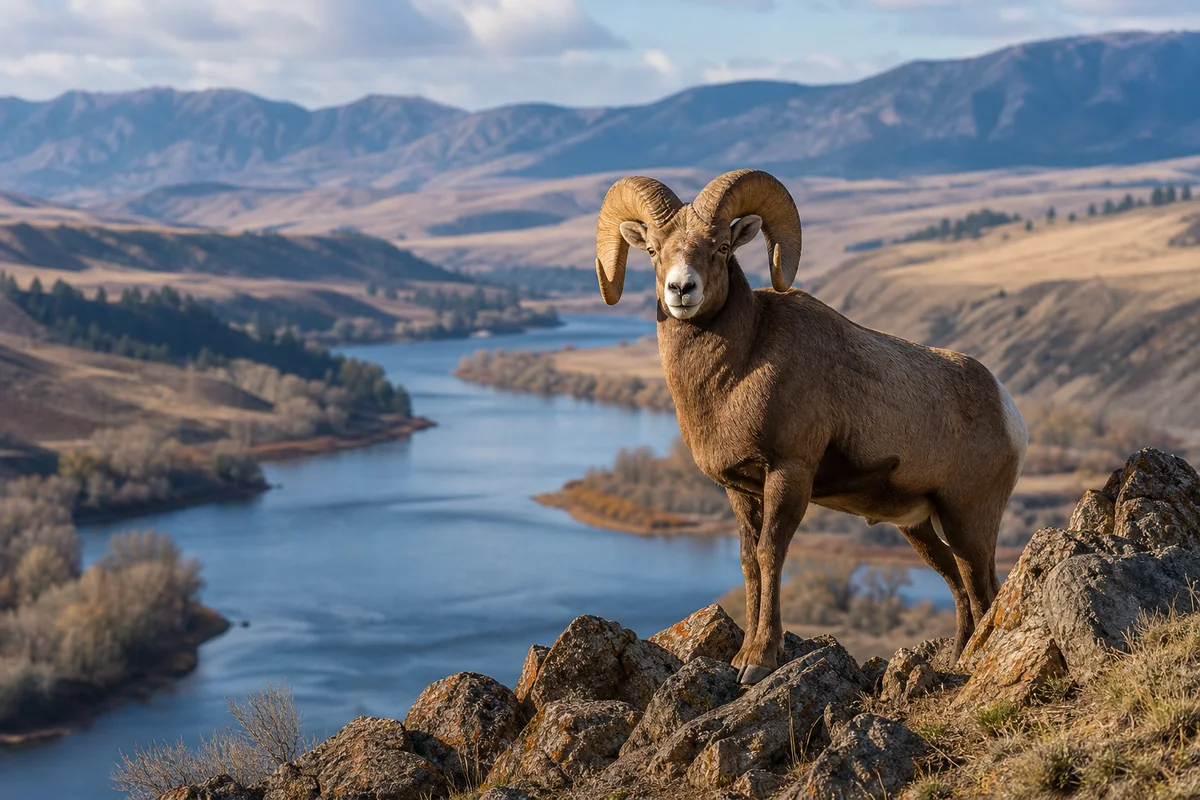
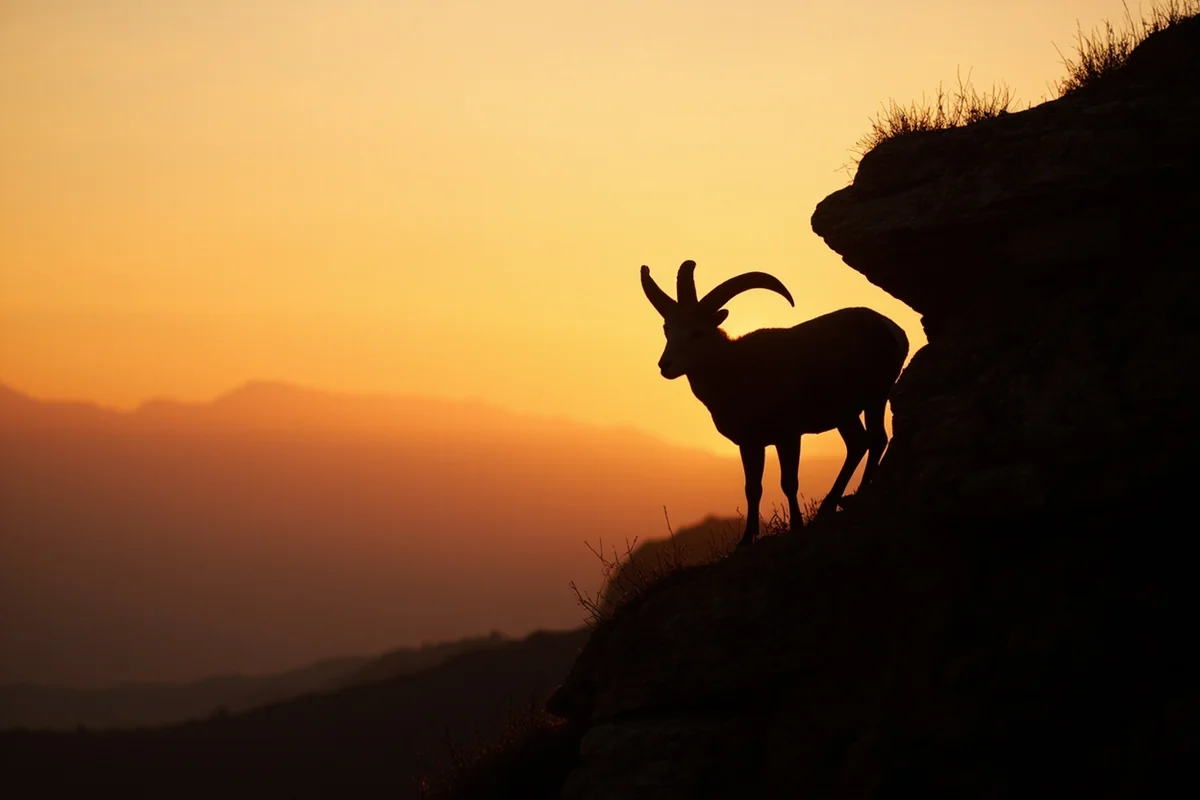
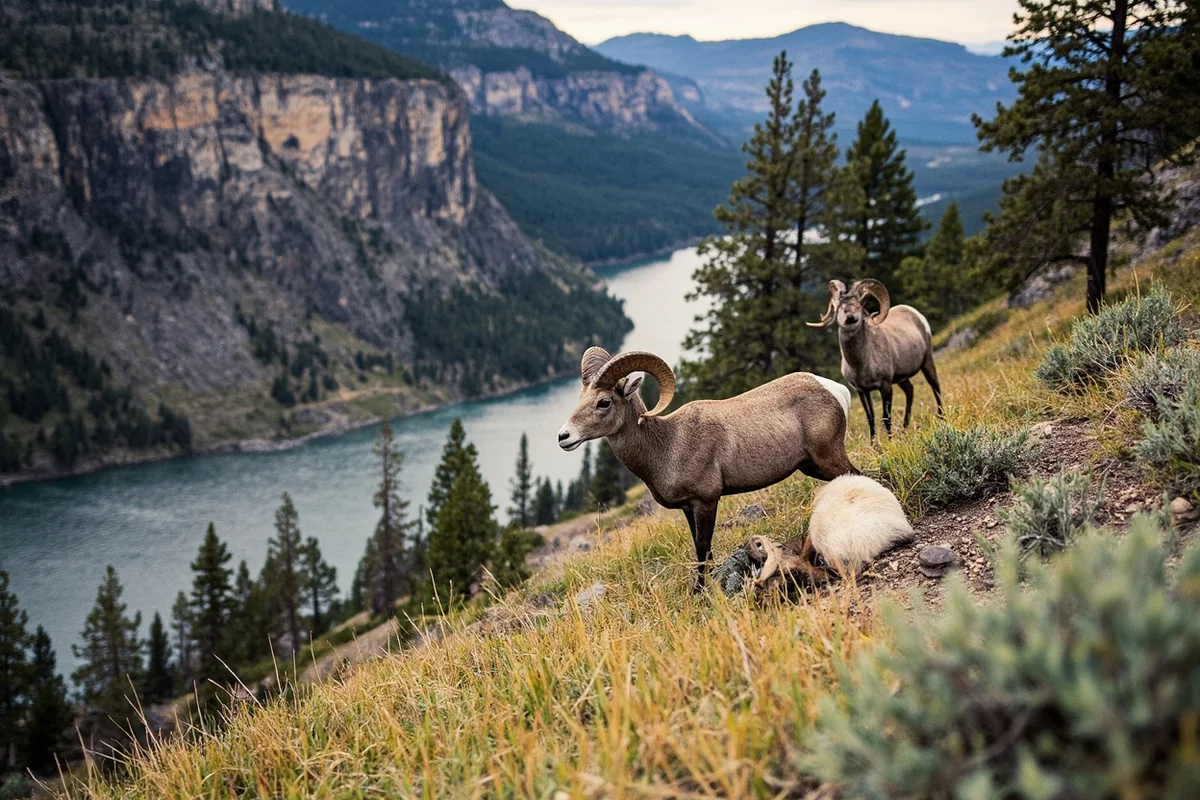
The first time I saw a bighorn ram in Montana, I nearly drove off Highway 200. There he stood on a rocky outcrop above the Missouri River, his massive curled horns catching the late afternoon sun like some kind of ancient sentinel.
I pulled over, hands shaking slightly as I fumbled for my camera, and watched him watch me with those strange golden eyes for a solid five minutes before he turned and disappeared over the ridge.
That moment hooked me completely, and I’ve spent the better part of six years since chasing bighorn sheep sightings across this state. If you’re planning a trip to experience Montana wildlife, these magnificent animals deserve a spot at the top of your must-see list.
- Montana hosts around 6,000 bighorn sheep across multiple distinct herds
- Best viewing: November-December (rutting season) or late spring when lambs appear
- Top spots: Wild Horse Island, Gates of the Mountains, Upper Missouri River Breaks
- Early morning and late afternoon offer the best sighting opportunities
- Bring quality optics — binoculars rated 10×42 minimum for serious viewing
- Maintain 25+ yards distance; rams can be aggressive during rut
- Winter offers the most reliable viewing as sheep move to lower elevations
Understanding Montana’s Bighorn Sheep Population
Montana is home to one of the most significant bighorn sheep populations in North America, and I think many visitors don’t fully appreciate this until they start researching their trip. We’re talking about roughly 6,000 animals spread across the state, divided into dozens of distinct herds that have adapted to different terrain and climate conditions.
The species here is the Rocky Mountain bighorn sheep (Ovis canadensis canadensis), which is the largest subspecies of wild sheep on the continent. During my years of observation, I’ve seen rams that I’d estimate weighed close to 300 pounds, though the Montana average runs closer to 200-250 pounds for mature males.
What makes Montana special isn’t just the numbers — it’s the accessibility. Unlike some Rocky Mountain states where you need a serious backcountry expedition to find sheep, Montana offers viewing opportunities from paved highways, boat ramps, and easy hiking trails.
A Brief History Worth Knowing
Here’s something I find fascinating that most visitors never learn: bighorn sheep nearly disappeared from Montana entirely. By the early 1900s, unregulated hunting, habitat loss, and diseases transmitted from domestic sheep had decimated populations to dangerous levels.
The recovery effort that followed represents one of Montana’s greatest conservation successes. Through careful management, transplant programs, and habitat protection, Montana Fish, Wildlife & Parks has rebuilt these herds to sustainable levels.
When I spoke with a wildlife biologist at a viewing event near Helena last fall, she mentioned that disease transmission from domestic sheep remains the biggest ongoing threat. This is why you’ll see strict grazing regulations in bighorn habitat areas. It’s also worth knowing if you encounter domestic sheep or Montana alpaca farms near bighorn territory — the separation is intentional and important.
Where to See Bighorn Sheep in Montana
Over the years, I’ve developed a mental map of reliable bighorn viewing locations. Some are well-known, others are spots I’ve discovered through trial, error, and talking to locals. Here’s my honest assessment of each major area.
Wild Horse Island State Park
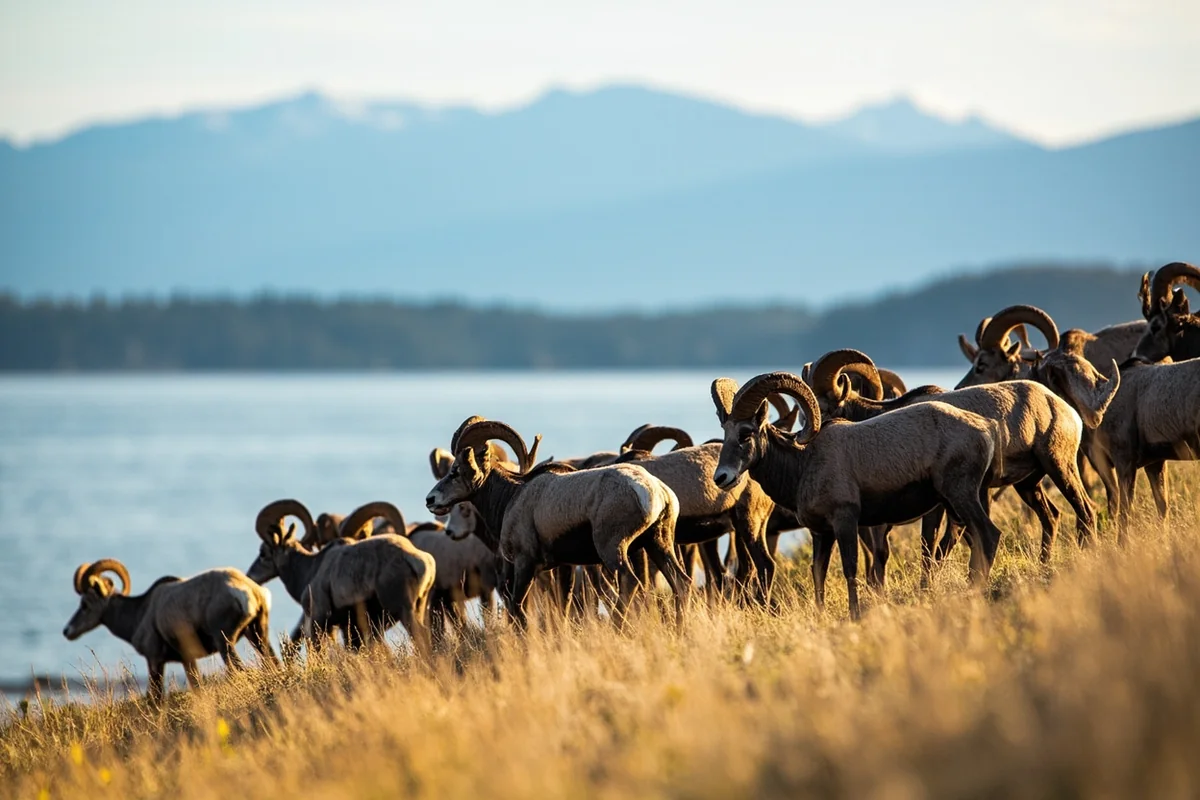
If I had to recommend just one location for guaranteed bighorn sightings, Wild Horse Island on Flathead Lake would be it. This 2,200-acre island supports a herd of approximately 75-100 bighorn sheep, and because they’re on an island, they can’t exactly disappear into the next drainage when they spot you.
I visited Wild Horse Island during a warm October weekend last year, and within twenty minutes of stepping off the ferry, I was photographing a group of five ewes and two lambs grazing on the hillside above the dock. The island’s relatively small size and open grasslands make sightings almost certain.
Getting there requires either a private boat or hiring water transportation from Dayton or Big Arm. The ferry service typically runs from late May through September. Plan for at least a half-day trip — the island deserves unhurried exploration.
One practical note: there’s no water available on the island, so bring everything you’ll need. I learned this the hard way during a hot August visit when I underestimated my hydration needs by about two liters.
Gates of the Mountains Wilderness
Named by Lewis and Clark, this Missouri River canyon north of Helena offers spectacular bighorn viewing combined with dramatic scenery. I’ve taken the boat tour here three times, and I’ve spotted sheep on every single trip.
The sheep here use the steep limestone cliffs that rise directly from the river. Bring binoculars and scan the rocky outcrops as the boat passes — you’re often looking at animals 200-300 feet above the water.
The tour boats operate from late May through September, with departures from the Gates of the Mountains Marina about 20 miles north of Helena. I prefer the afternoon departures because the western-facing cliffs catch better light for photography.
Upper Missouri River Breaks National Monument
This is bighorn sheep country at its wildest and most authentic. The breaks — that distinctive badlands topography carved by the Missouri River — provide perfect habitat: rugged terrain, escape routes from predators, and winter browse on south-facing slopes.
During a four-day float trip I took two summers ago, I counted over 40 individual sheep. They’re most visible along the river corridor itself, often bedded down on rocky benches during midday heat.
Getting here requires more commitment than other locations. You can arrange float trips through outfitters in Fort Benton, or drive the rough roads that access certain overlooks. The Woodhawk area and Eagle Creek are reliable spots I’ve returned to multiple times.
Highway 200 Along the Missouri River
This stretch of road between Great Falls and the Idaho border passes through excellent bighorn habitat. I mentioned my first sighting near this highway, and it remains one of my most productive driving routes for wildlife.
The sheep here have become somewhat habituated to vehicle traffic, which makes roadside viewing possible without disturbing them. Pay particular attention to the rocky areas east of Rogers Pass and the river corridor sections between Cascade and Ulm.
Pull completely off the highway if you stop — this road carries significant truck traffic, and shoulders can be narrow. I’ve seen too many people risk accidents for wildlife photos.
Glacier National Park
Glacier supports a healthy bighorn population, though they’re harder to locate than in some other areas due to the park’s vast wilderness. My most consistent sightings have been along the eastern edge of the park, particularly around Many Glacier and the Two Medicine area.
The Highline Trail offers opportunities to spot sheep on the steep slopes below the Garden Wall. I spent a morning last summer watching a group of rams from Logan Pass — they were grazing perhaps a half-mile away on cliffs that would make a human mountaineer nervous.
The park’s bighorns share habitat with Montana mountain goats, and I’ve occasionally seen both species on the same slopes. Knowing the difference matters: goats are white with black horns, while bighorns are brown/tan with curved brown horns.
Paradise Valley and the Yellowstone River
South of Livingston, Paradise Valley follows the Yellowstone River toward the park. The rocky canyon sections between Livingston and Gardiner hold scattered bighorn populations.
I find this area productive in late fall and winter when sheep move to lower elevations. The Yankee Jim Canyon section is particularly reliable, though pullouts can be limited.
Thompson Falls Area
In northwestern Montana, the Clark Fork River corridor near Thompson Falls supports a visible herd. I’ve watched sheep from town itself — they sometimes venture onto the slopes directly above the community.
Highway 200 west of Thompson Falls passes through prime habitat. Watch the rocky hillsides, especially during early morning hours when sheep move to feeding areas.
Best Times to See Bighorn Sheep
Timing your visit correctly can make the difference between a quick glimpse and a memorable extended encounter.
Seasonal Patterns I’ve Observed
November through December: This is rutting season, and it’s become my favorite time for bighorn watching. Rams that spend most of the year avoiding each other suddenly congregate, competing for breeding opportunities. The head-butting battles are spectacular — the crack of horns colliding echoes off canyon walls and can be heard from surprising distances.
During a December visit to the Missouri Breaks, I watched two mature rams clash repeatedly over a 45-minute period. The violence is impressive and a bit unsettling, though the animals rarely suffer serious injuries.
Late April through June: Lambing season brings adorable young sheep onto the landscape. Ewes with new lambs tend to use steep, protected terrain, but they gradually move to better feeding areas as lambs grow stronger.
I photographed a lamb no more than a few days old during a May visit to Wild Horse Island. It was already bouncing across rocks with surprising confidence.
Summer months: Sheep move to higher elevations where temperatures are cooler and forage is fresh. This can make viewing more challenging unless you’re willing to hike into alpine terrain. Glacier National Park becomes more productive during this season.
Winter: Heavy snow pushes sheep to lower elevations where visibility is often excellent. South-facing slopes that shed snow quickly become concentrating areas. I’ve had some of my best viewing days in January and February, though the cold demands proper preparation.
Time of Day Matters
Early morning and late afternoon consistently produce the best sightings in my experience. Bighorns are most active during these cooler periods, feeding and moving between areas.
During midday heat, sheep typically bed down in rocky areas that provide shade. They’re harder to spot and less interesting to watch when they’re simply lying still.
For photography, I aim to be in position before sunrise. The soft morning light creates better images, and sheep are more active before temperatures climb.
Essential Gear for Bighorn Sheep Viewing
I’ve refined my gear list over dozens of outings. Here’s what I actually bring:
| Item | My Recommendation | Why It Matters |
|---|---|---|
| Binoculars | 10×42 minimum; 12×50 if budget allows | Sheep are often 200+ yards away on cliffs |
| Spotting scope | 20-60x zoom with tripod | Essential for counting horn rings and identifying individuals |
| Camera lens | 400mm minimum for serious photos | Standard zooms won’t get frame-filling shots |
| Sun protection | Hat, sunscreen, polarized sunglasses | Rocky sheep habitat offers little shade |
| Layers | Wind-resistant outer shell | Exposed ridges and canyon winds chill quickly |
| Field guide | Montana wildlife identification book | Helps distinguish similar species and understand behavior |
How to Identify and Age Bighorn Sheep
Learning to really see these animals adds enormous depth to any encounter. I’ve developed these skills over time, and they’ve made me a much better observer.
Distinguishing Rams from Ewes
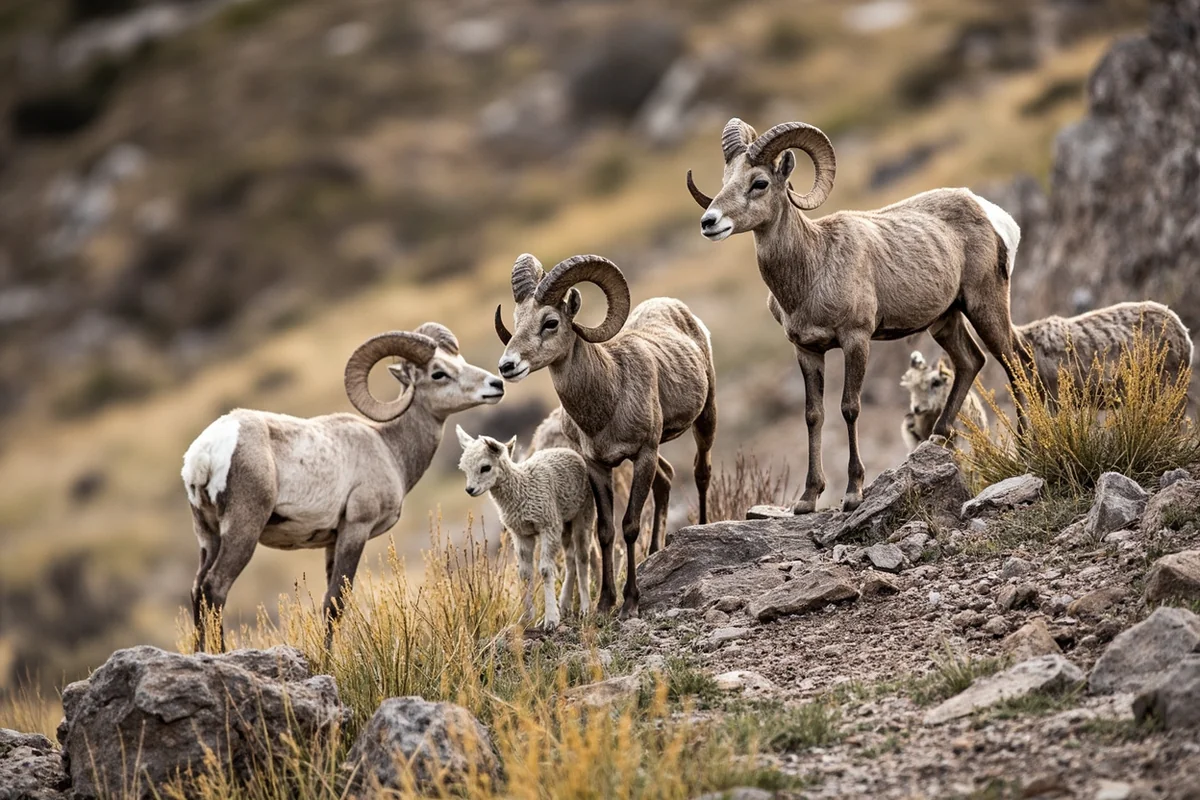
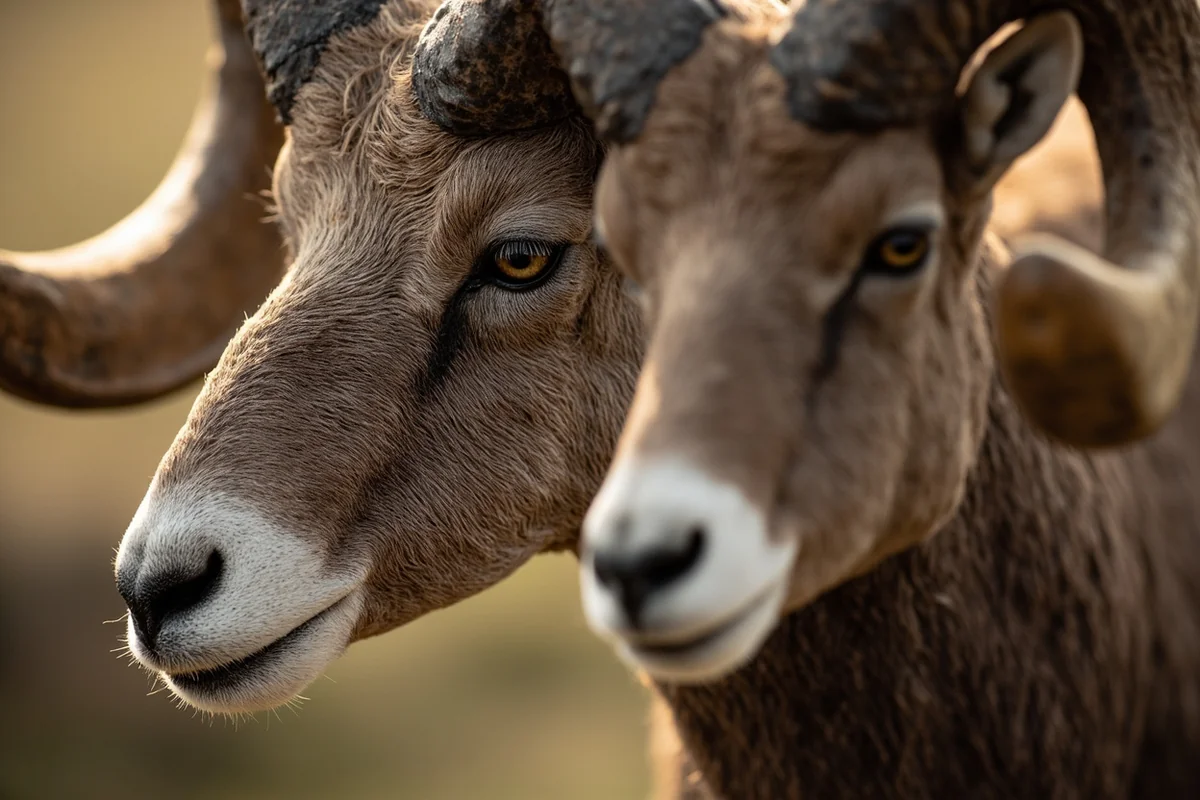
The obvious difference is horn size. Mature rams carry massive curved horns that can weigh 30+ pounds and wrap in nearly complete circles. Ewes have much smaller, straighter horns that rarely exceed 12-15 inches.
Body size also differs significantly. Rams are noticeably bulkier, with heavier necks and chests. During rut, their necks swell further as they prepare for combat.
Behavioral cues help too. Groups of rams tend to be smaller and more loosely organized. Ewe groups often include lambs and yearlings, creating more complex social groupings.
Aging Rams by Horn Growth
Each year of a ram’s life produces one growth ring on the horns, similar to tree rings. With good optics, you can count these rings and estimate age.
A ram typically reaches “full curl” — meaning his horns have grown to form a complete 360-degree circle when viewed from the side — around age 7-8. This is the milestone that hunting regulations often reference.
I’ve observed rams that appeared to be in the 10-12 year range based on horn size and wear patterns. These old monarchs carry deeply broomed (worn and broken) horn tips and move with a confidence that younger animals lack.
Reading Sheep Behavior
Bighorns communicate through body language that becomes readable with practice.
A sheep that’s looking at you directly with head raised is alert and assessing threat level. If it stamps a front foot, you’re likely too close and should back away.
Rams approaching each other with lowered heads are preparing to clash. This pre-fight posturing can last several minutes before the actual collision.
Feeding sheep with heads down and relaxed postures indicate you’re at an acceptable distance and haven’t disrupted normal behavior. This is what I aim for in every encounter.
Ethical Viewing Practices
I feel strongly about responsible wildlife watching, and bighorn sheep deserve particular care given the disease transmission risks they face.
Maintaining Distance
Montana Fish, Wildlife & Parks recommends staying at least 25 yards from bighorn sheep. I typically stay much further back — 50-100 yards when possible — and use optics to observe closely.
The 25-yard minimum isn’t arbitrary. Closer approaches cause sheep to expend energy fleeing when they should be resting or feeding. During winter, this stress can be dangerous.
If a sheep changes its behavior because of your presence — stands up, stops feeding, moves away — you’re too close. Back off and give the animal space.
Vehicle Viewing Etiquette
Roadside sheep encounters are common in Montana. When you spot animals near the highway, pull completely off the road before stopping. Use your vehicle as a blind by staying inside and watching through windows.
Exiting vehicles often triggers flight responses that remaining inside doesn’t. I’ve watched sheep feed calmly 30 yards from my parked truck while another visitor’s approach on foot sent the same animals scrambling.
Photography Considerations
Long lenses are essential precisely because they allow frame-filling images without close approach. I’d rather have a distant, undisturbed animal than a close photo of a stressed one.
Flash photography is problematic with all wildlife. Natural light produces better images anyway.
Posting specific location information on social media requires judgment. Some locations can handle increased traffic; others cannot. I’m deliberately vague about certain spots I’ve discovered precisely because publicizing them would likely harm the animals.
Combining Bighorn Viewing with Other Wildlife
Montana’s diversity means bighorn sheep often share habitat with other species. Planning trips that target multiple animals increases your chances of memorable encounters.
The same rocky habitats that support bighorns sometimes harbor Montana rattlesnakes — something to be aware of during warm-weather viewing in lower elevation areas. Watch where you step and where you sit.
During a Thompson Falls visit last spring, I spotted bighorns, Montana osprey diving for fish in the Clark Fork, and a Montana mountain lion track in the mud near my parking spot. That diversity is typical of good sheep habitat.
The Upper Missouri Breaks host excellent Montana elk and Montana deer populations alongside bighorns. During my float trip, I saw all three species daily.
Golden eagles are common bighorn predators, particularly of lambs. Watching the skies while scanning for sheep often produces raptor sightings. Montana supports diverse bird species worth noting during any wildlife outing.
In winter, bighorn viewing trips can double as opportunities to observe Montana winter animals adapted to harsh conditions. The same low-elevation areas that concentrate sheep often support wintering ungulates of several species.
Conservation Status and Threats
While Montana’s bighorn population is currently stable, these animals face ongoing challenges that any serious enthusiast should understand.
Disease Concerns
Pneumonia transmitted from domestic sheep remains the primary threat. When wild bighorns contact domestic animals, the results can be catastrophic. Die-offs claiming 30-50% of affected herds have occurred repeatedly across the West.
Montana manages this through grazing allotment restrictions and herd monitoring. The debate between sheep ranching interests and wildlife advocates continues, and it’s more nuanced than either side sometimes admits.
Habitat Fragmentation
Bighorns need large contiguous areas to maintain genetic diversity and traditional movement patterns. Development, roads, and fencing can isolate herds and prevent natural population mixing.
Some Montana herds are genetically distinct because geographic barriers prevent interbreeding. Wildlife managers occasionally transplant animals between herds to maintain genetic health.
Understanding these issues helps explain why bighorn sheep feature among endangered and threatened species in Montana discussions, even though the overall population isn’t currently listed.
Climate Change Impacts
Shifting temperature patterns affect forage quality and timing, predator distributions, and disease ecology in complex ways. The long-term implications for bighorns remain uncertain.
Some researchers suggest that invasive species spreading into bighorn habitat could alter plant communities in ways that reduce food availability. These are gradual changes that require ongoing monitoring.
Planning Your Bighorn Sheep Trip
Let me help you structure an actual visit rather than leaving you with just theoretical information.
Weekend Trip: Wild Horse Island Focus
If you have just 2-3 days and want near-guaranteed sightings, base yourself in the Flathead Lake area. Stay in Polson, Big Arm, or Dayton for easy boat access to Wild Horse Island.
Day one: Arrange boat transportation and spend 4-6 hours exploring the island. Bring lunch and plenty of water.
Day two: Drive the west shore of Flathead Lake, stopping at National Bison Range (which also supports bighorns) if time permits.
Week-Long Wildlife Expedition
With more time, you can sample multiple bighorn hotspots while enjoying other Montana wildlife.
- Days 1-2: Glacier National Park eastern side. Focus on Many Glacier and Two Medicine. Target sheep, mountain goats, and Montana bears.
- Days 3-4: Drive to the Missouri Breaks via Highway 87. Stop at Giant Springs State Park in Great Falls, then continue to Fort Benton. Arrange a day float trip or drive the Woodhawk Road for Breaks access.
- Days 5-6: Gates of the Mountains and Helena area. Take the boat tour, then explore the surrounding national forest.
- Day 7: Highway 200 drive toward Missoula, watching for roadside sheep and other wildlife.
Practical Logistics
Most bighorn viewing areas lack developed services. Pack food, water, and fuel before heading to remote locations like the Missouri Breaks.
Cell coverage is spotty to nonexistent in prime sheep habitat. Download offline maps before your trip.
Weather in bighorn country can change rapidly. I’ve experienced snow in June at Glacier elevations and 100-degree heat in the Breaks during summer. Layer and prepare for extremes.
Photography Tips from the Field
I’ve made every mistake possible photographing these animals. Here’s what I’ve learned:
Anticipate movement rather than reacting to it. Sheep often follow predictable patterns — moving uphill when alarmed, feeding toward morning shade, bedding on prominent rocks. Position yourself where they’re heading, not where they are.
Shoot through midday heat distortion carefully. Rising air from sun-baked rocks creates wavering images that no lens can correct. Morning shooting avoids this problem.
Include environmental context rather than cropping tightly on every shot. A bighorn small in the frame but surrounded by dramatic Montana landscape tells a story that a headshot doesn’t.
The sound of butting rams travels far. During rut, listen for the distinctive crack and move toward it carefully. I’ve located battling rams from over a half-mile away using sound alone.
Patience matters more than gear. Some of my best images came after waiting motionless for two hours while sheep gradually fed closer to my position. Rushing produces nothing but mediocre photos of fleeing animals.
Connecting with Local Knowledge
Montana has a committed community of wildlife observers who generously share information.
Montana Fish, Wildlife & Parks regional offices can provide current herd status and recent sighting reports. The staff biologists I’ve spoken with have been uniformly helpful and enthusiastic.
Local hunting supply stores often track sheep movements — hunters and wildlife watchers need the same information. I’ve gotten excellent tips from shop employees in Fort Benton and Thompson Falls.
The Montana Wild Sheep Foundation supports conservation and connects enthusiasts. Their events and publications offer deeper knowledge than any single article can provide.
Social media wildlife photography groups focused on Montana often share recent sightings, though take specific location posts with appropriate skepticism — not everyone reports accurately.
The same communities that watch sheep often track other species. Montana lynx sightings, Montana owl locations, and Montana otter activity all flow through these networks.
Making Memories Beyond the Camera
I want to close with something personal. The best bighorn sheep experience I’ve ever had didn’t produce a single photograph worth keeping.
It was a November morning in the Breaks, cold enough that my breath froze on my binoculars. I’d hiked to an overlook before dawn and settled in to watch a side canyon wake up.
As light crept down the opposite slope, I counted seventeen sheep emerging from bedding areas. I watched them feed, interact, and eventually move toward the river. A young ram practiced sparring with a smaller companion. Two ewes groomed each other in a way I hadn’t observed before.
I sat there for three hours, completely absorbed. My camera stayed in my pack after the first few shots because I wanted to simply watch rather than document.
That morning taught me something about wildlife observation that I’d missed despite years of practice. Sometimes the best response to extraordinary animals is simply presence — being there fully, without agenda, letting them show you something rather than trying to capture something from them.
Montana’s bighorn sheep offer that opportunity. They’re ancient animals living wild lives in wild places, and spending time in their presence changes how you see the landscape around them.
I hope your encounters prove as meaningful as mine have been.
Frequently Asked Questions
Where is the best place to see bighorn sheep in Montana?
I’ve had the best luck spotting Montana bighorn sheep in the Wild Horse Island State Park on Flathead Lake, the upper Rock Creek drainage near Missoula, and along the cliffs of the Missouri River near Helena. The National Bison Range near Moiese also offers reliable sightings, especially during early morning hours when sheep descend to lower elevations.
What is the best time of year to see bighorn sheep in Montana?
Late November through December is prime time for viewing Montana bighorn sheep since the dramatic rutting season brings rams down to accessible areas for head-butting battles. I also recommend early spring (March-April) when sheep gather at lower-elevation mineral licks, making them easier to spot without hiking deep into the backcountry.
What should I bring for a Montana bighorn sheep watching trip?
Pack a quality spotting scope or binoculars (10×42 minimum), layered clothing for unpredictable mountain weather, and sturdy hiking boots with ankle support for rocky terrain. I always bring a telephoto lens (300mm or longer), plenty of water, bear spray, and a detailed topo map since cell service is unreliable in prime sheep habitat.
How much does a guided bighorn sheep wildlife tour cost in Montana?
Guided bighorn sheep watching tours in Montana typically run between $150-$400 per person for a half-day experience with an experienced wildlife guide. Multi-day backcountry expeditions focusing on sheep photography or hunting scouting can range from $800-$2,000, which usually includes transportation from nearby towns like Missoula or Great Falls.
Can you see bighorn sheep in Glacier National Park?
Yes, Glacier National Park is one of Montana’s top destinations for viewing bighorn sheep, particularly along the Going-to-the-Sun Road near Logan Pass and the Highline Trail. I’ve consistently spotted them on the rocky slopes near the Hidden Lake Overlook, where they’re remarkably accustomed to hikers and offer excellent photo opportunities from just 50-100 feet away.
Are Montana bighorn sheep dangerous to hikers and photographers?
Montana bighorn sheep are generally docile and will ignore humans who keep a respectful distance of at least 25 yards. However, during the November-December rut, rams become unpredictable and territorial, so I always maintain extra distance and never position myself between competing males or between ewes and their lambs.
What is the difference between bighorn sheep and mountain goats in Montana?
Bighorn sheep have brown coats with distinctive curved horns and prefer grassy alpine meadows, while mountain goats are pure white with short black horns and cling to steeper cliff faces. Both species overlap in places like Glacier National Park, but I find bighorn sheep at slightly lower elevations (5,000-8,500 feet) compared to goats, which rarely venture below the rocky crags.
Sources
- https://fwp.mt.gov/conservation/wildlife-management/bighorn-sheep
- https://fieldguide.mt.gov/speciesDetail.aspx?elcode=amale04010
- https://fwp.mt.gov/hunt/regulations/bighorn-sheep
- https://fwp.mt.gov/binaries/content/assets/fwp/montana-outdoors/bighornsheep.pdf
- https://www.fs.usda.gov/recarea/lolo/recreation/recarea/?recid=10316&actid=62