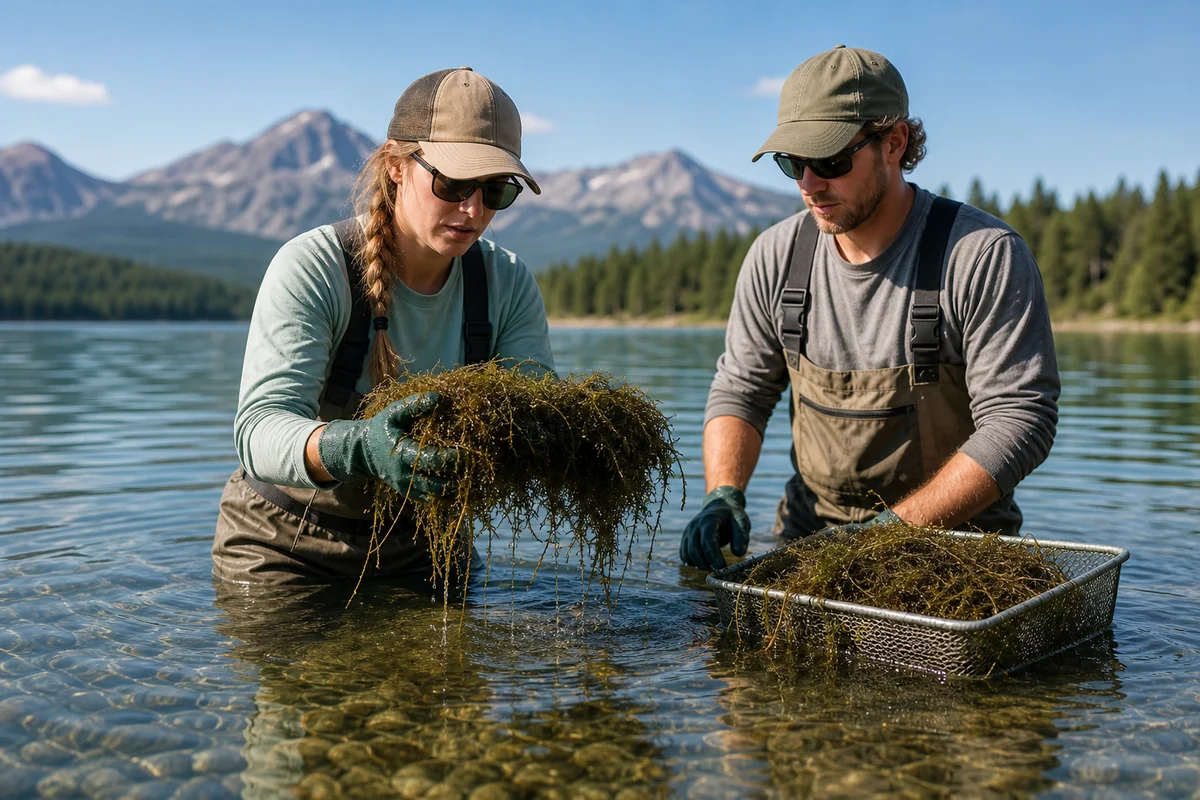
I was knee-deep in Flathead Lake last summer, helping a local biologist pull invasive Eurasian watermilfoil from the crystal-clear shallows, when the scope of Montana’s invasive species problem truly hit me.
This wasn’t just an abstract conservation issue—it was a battle for the soul of Montana wildlife and the ecosystems that millions of travelers come here to experience.
What I learned during that afternoon, and through dozens of conversations with rangers, outfitters, and researchers across the state, fundamentally changed how I approach every outdoor adventure here.
- Montana faces threats from aquatic invaders like zebra mussels, Eurasian watermilfoil, and invasive fish species that could devastate iconic waters
- Boat inspections are mandatory at all entry points—expect stops and plan extra time
- Clean, Drain, Dry protocols apply to all watercraft, waders, and fishing gear
- Terrestrial invaders like feral swine, spotted knapweed, and invasive insects impact hiking trails and wildlife viewing
- Travelers play a critical role in prevention—your actions directly affect Montana’s future
- Fines for transporting invasive species can reach $137,500 for commercial violations
Liked this article?
Add Roaming Montana as a preferred source so you see more of our articles and guides on Google.
Why Invasive Species Should Matter to Every Montana Visitor
Here’s something that surprised me when I first started researching this topic: Montana remains one of the last strongholds in the lower 48 states without established zebra mussel populations. That’s not luck—it’s the result of aggressive prevention efforts that every single traveler becomes part of the moment they cross state lines with outdoor gear.
I’ve traveled to Montana from states where invasive species have already won. I’ve fished in Lake Erie, where zebra mussels carpet every hard surface. I’ve paddled Wisconsin waters choked with Eurasian milfoil.
Trust me when I say you don’t want that for Montana.
The economic stakes alone are staggering. Montana’s outdoor recreation industry generates over $7.1 billion annually. A single established invasive mussel population could cost the state up to $234 million per year in damages to infrastructure, fisheries, and tourism.
But beyond dollars, there’s something deeper at stake. The Montana osprey diving for native westslope cutthroat trout, the river otters playing in clear mountain streams, the diverse duck species migrating through pristine wetlands—all of these depend on ecosystems that invasive species can fundamentally transform.
The Aquatic Invaders: Montana’s Greatest Threat
During my most recent trip to Montana, I spent three days with a fisheries biologist named Sarah who works out of the Kalispell office. Her passion for protecting Montana’s waters was infectious, but so was her concern about what she called “the aquatic invasion front.”
Zebra and Quagga Mussels: The Species That Keep Officials Up at Night
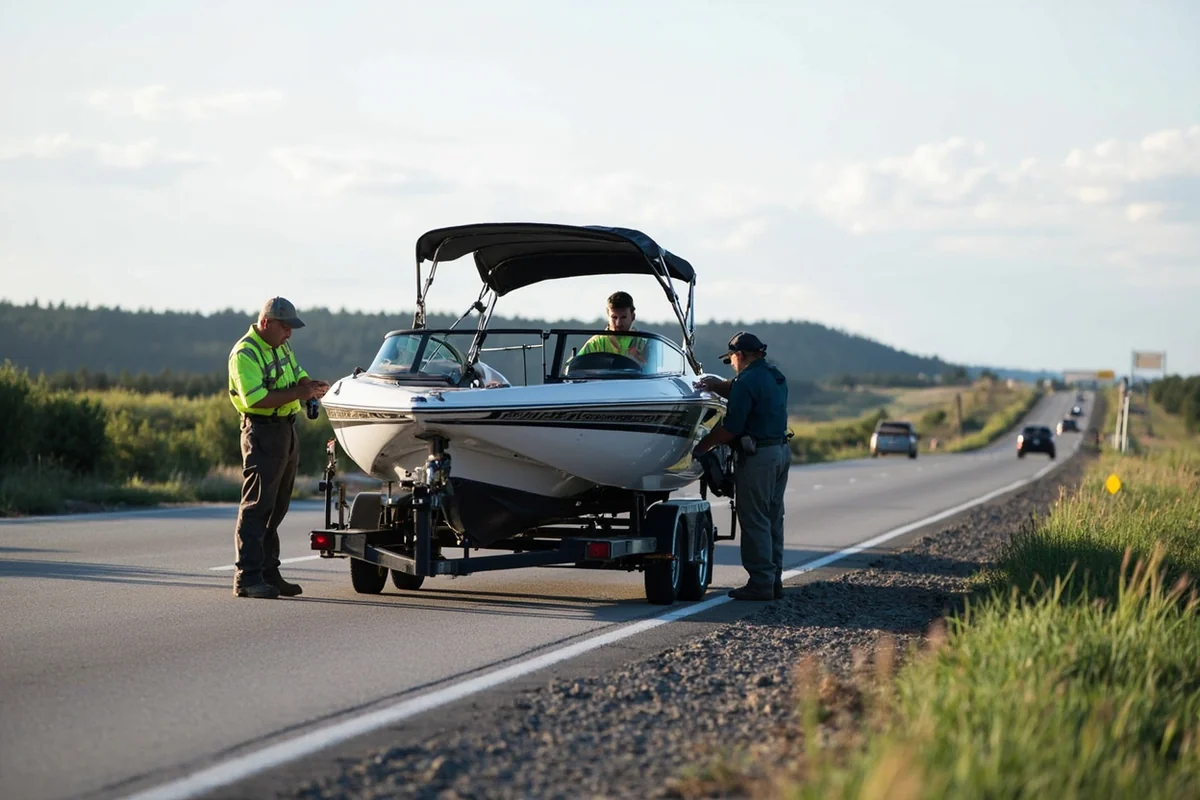
Montana has intercepted hundreds of mussel-fouled boats at inspection stations, including specimens found on vessels from as far away as Michigan and Texas. During my visit to the Clearwater Junction inspection station on Highway 200, I watched inspectors find dried zebra mussels on a boat trailer that had last touched water in Lake Mead three weeks earlier.
“People don’t realize these things can survive for weeks out of water,” the inspector told me while carefully scraping samples into a specimen container. “They hide in bilges, livewells, anywhere there’s moisture.”
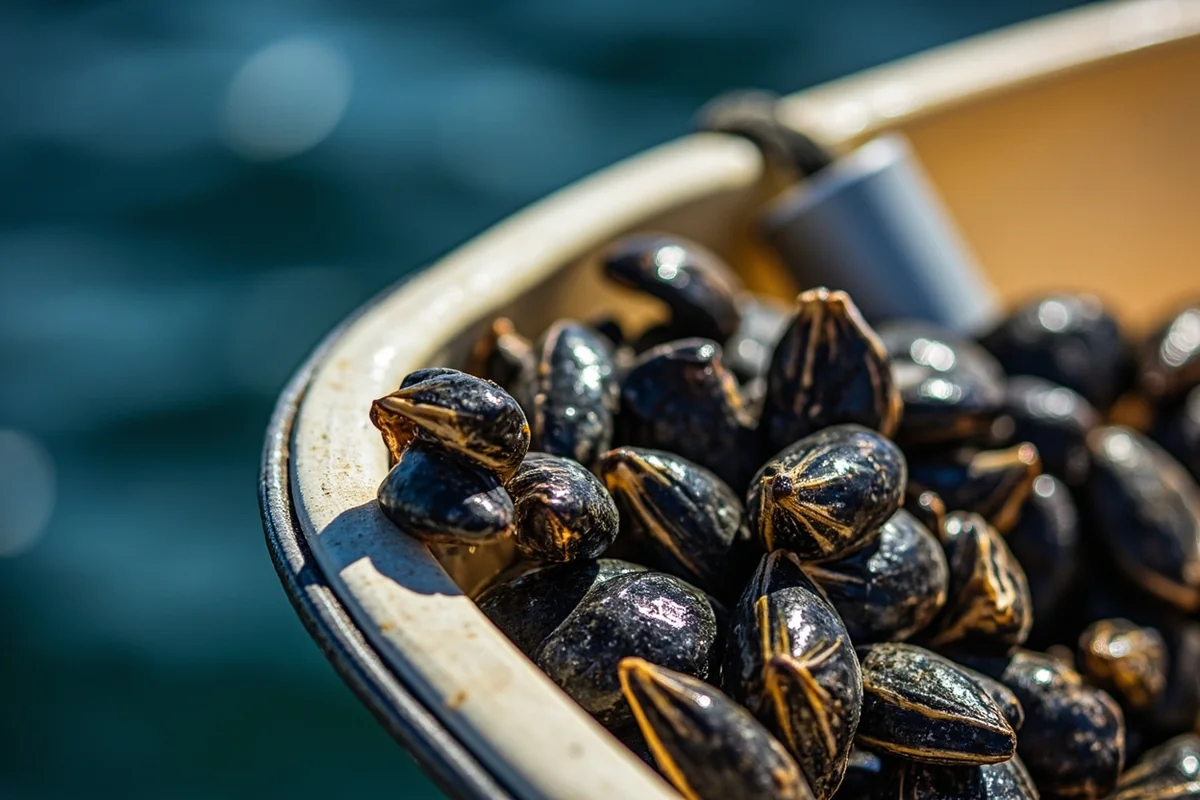
What makes these tiny mollusks so dangerous? They reproduce at astronomical rates—a single female can release up to one million eggs per year. They filter massive amounts of water, stripping out the algae that forms the base of the food chain. They clog water intake pipes, coat boat hulls, and transform clear waters into ecological wastelands.
If you’re bringing any watercraft into Montana—and I mean anything that touches water, from kayaks to paddleboards to inflatable rafts—you need to understand the inspection requirements.
Current Inspection Requirements for Watercraft
| Requirement | Details |
|---|---|
| Mandatory Inspections | All watercraft entering Montana or launching after being in another state’s waters |
| Inspection Station Hours | Vary by location; many operate 7 AM – 7 PM during peak season |
| Decontamination | Required if watercraft was in mussel-positive waters within past 30 days |
| Seal Requirement | Watercraft may receive a seal after inspection; do not break until at launch |
| Penalty for Non-Compliance | Up to $137,500 for commercial violations; $500 for individual citations |
I’ve personally been through four Montana boat inspections over the past two years. The process typically takes 10-20 minutes for a clean boat. Plan your arrival accordingly—station wait times can exceed an hour on summer weekends.
Eurasian Watermilfoil: Already Here, Still Fighting
Unlike zebra mussels, Eurasian watermilfoil has already established itself in several Montana waters. I’ve seen it firsthand in sections of the Clark Fork River and portions of Noxon Reservoir.
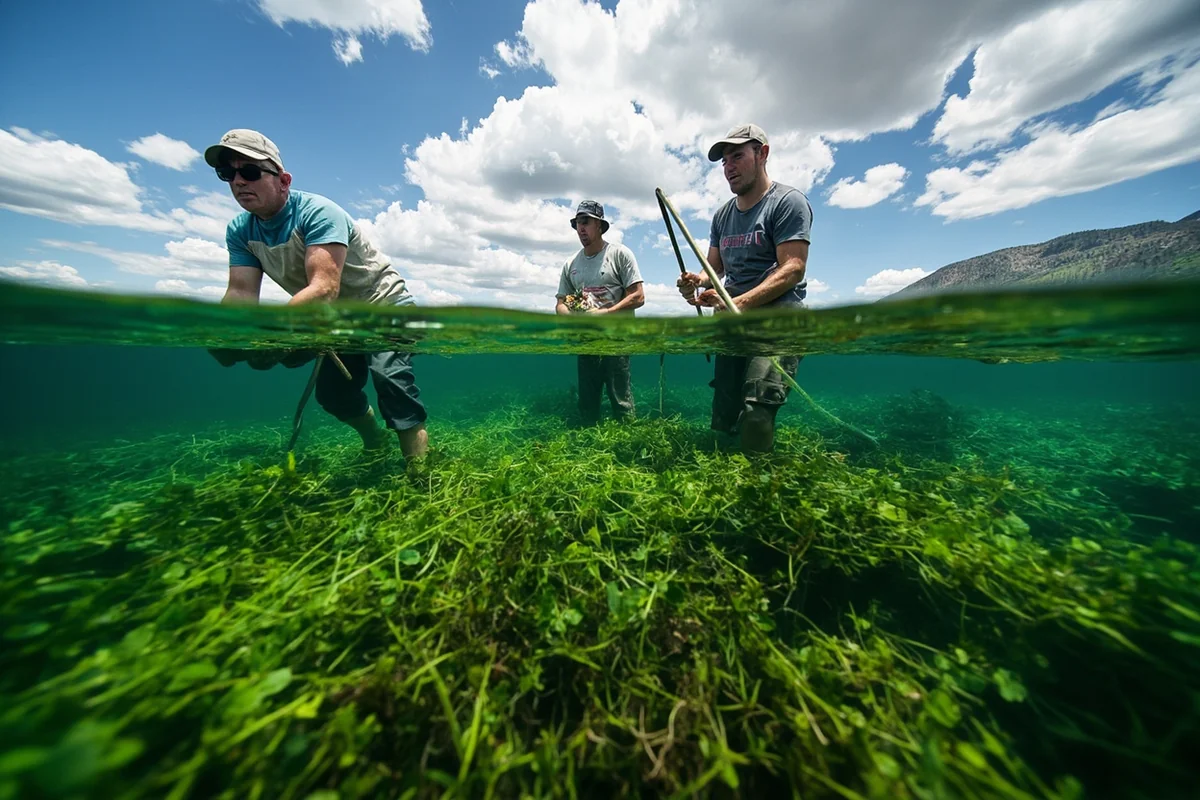
This aquatic plant forms dense underwater mats that choke out native vegetation, impede boat traffic, and alter water chemistry. It spreads through fragmentation—a single stem piece caught on your anchor, propeller, or fishing line can start a new infestation miles away.
Last summer, I participated in a volunteer removal effort at Salmon Lake near Seeley Lake. We filled an entire pickup truck bed with hand-pulled milfoil in just four hours. The sobering part? We’d barely made a dent.
Invasive Fish Species Threatening Native Trout
For anglers, this is where the conversation gets personal. Montana’s native westslope cutthroat trout, bull trout, and Arctic grayling face constant pressure from non-native fish species.
Lake trout in Yellowstone Lake have devastated the native cutthroat population. The same threat looms over Flathead Lake, where aggressive suppression netting has removed hundreds of thousands of lake trout over the past decade.
I spent a morning with a gill-netting crew on Flathead Lake, and the scale of the operation was impressive. We pulled nets that had been set the previous evening and removed over 200 lake trout ranging from juveniles to 15-pound adults.
“Every one of these we take out is one less mouth competing with bull trout and cutthroat,” the crew leader explained while sorting fish into bins. “But they reproduce faster than we can remove them.”
The takeaway for visitors is simple: never transport live fish between water bodies, and always drain livewells before leaving any launch area. What seems like a harmless bucket of minnows can permanently alter an ecosystem.
Terrestrial Invasive Species: Threats on Land
While aquatic invaders get most of the attention, Montana’s landscapes face equally serious threats from invasive plants, insects, and mammals. I’ve witnessed the impacts of these invaders across countless miles of hiking trails and backcountry explorations.
Feral Swine: An Emerging Threat
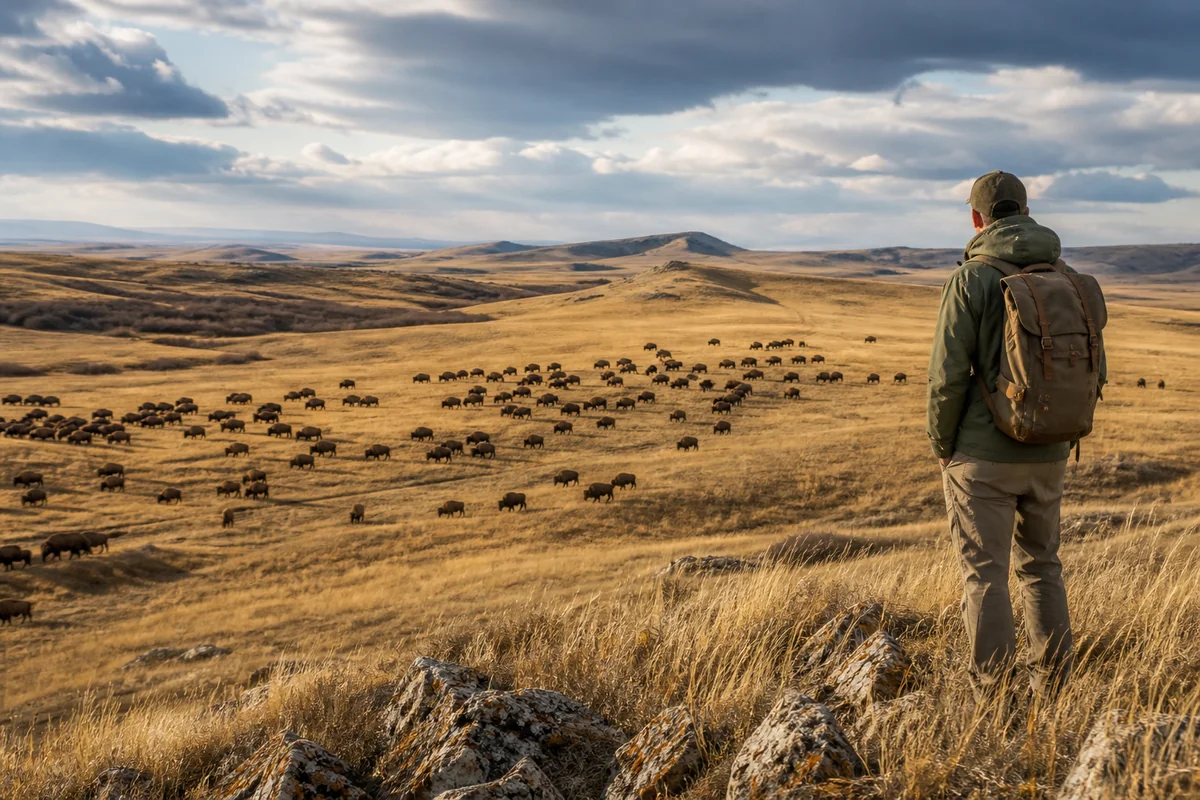
During a backcountry hunt near the Missouri Breaks last fall, I came across something I’d never expected to see in Montana: fresh feral hog rooting. The area looked like someone had run a rototiller through pristine grassland.
Feral swine haven’t established large populations in Montana yet, but they’re knocking on the door. Neighboring states have significant populations, and these destructive animals don’t respect state lines.
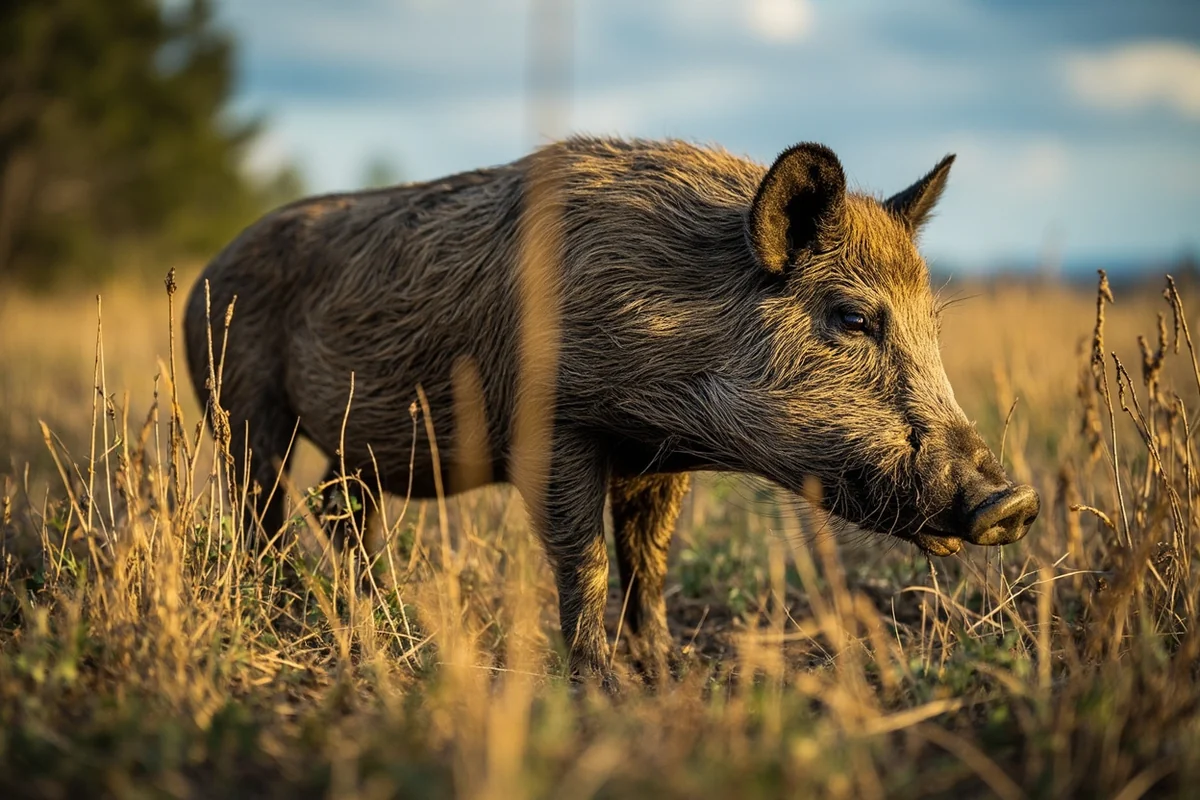
What makes feral swine so problematic? They breed year-round, with sows producing up to two litters of 4-12 piglets annually. They carry diseases transmissible to livestock and wildlife. They destroy native vegetation, compete with native species like Montana’s deer and elk populations, and contaminate water sources.
If you encounter feral swine or evidence of their activity during your Montana travels, report it immediately to Montana Fish, Wildlife & Parks. Your observation could help prevent establishment of this devastating invasive species.
Invasive Plants: The Quiet Takeover
I’ll never forget hiking through what should have been prime wildlife habitat near Helena, only to find acres dominated by spotted knapweed. The purple flowers looked almost pretty until I understood what they represented: an ecological disaster in slow motion.
Spotted knapweed has invaded an estimated 4.7 million acres of Montana rangeland. It releases chemicals that inhibit native plant growth, produces massive quantities of seeds, and offers little forage value for wildlife or livestock.
Other problematic invasive plants I’ve encountered across Montana include:
- Leafy spurge – Toxic to cattle and horses, displacing native vegetation across prairie ecosystems where bighorn sheep and other grazers depend on native forage
- Dalmatian toadflax – Aggressive spreader that I’ve seen dominating disturbed roadsides throughout western Montana
- Canada thistle – Forms dense colonies that crowd out native species in meadows and riparian areas
- Houndstongue – Seeds attach to clothing and animal fur, spreading rapidly through trail systems
- Yellow starthistle – Still limited in Montana but spreading from neighboring states
As a traveler, you can help prevent plant invasion spread by thoroughly cleaning boots, clothing, and gear between hiking areas. I carry a stiff brush specifically for cleaning boot soles after each trail.
Invasive Insects: Small But Destructive
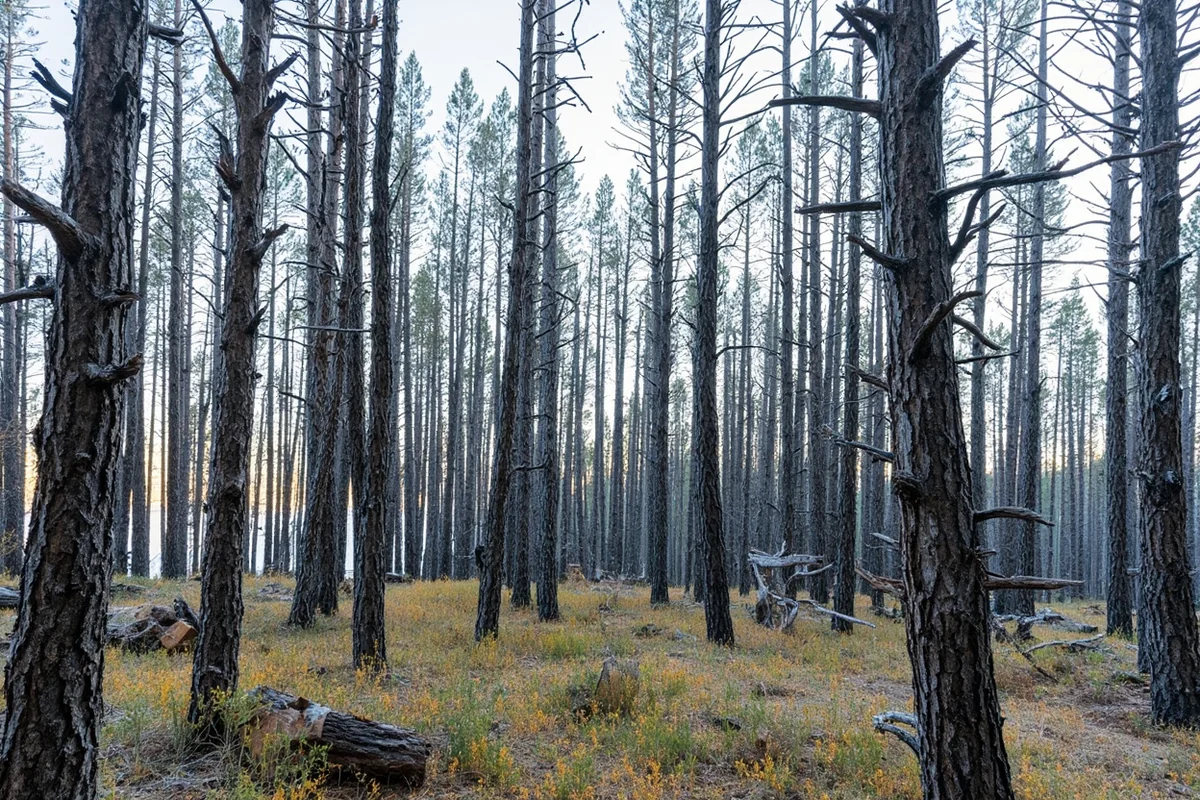
The mountain pine beetle has killed millions of acres of Montana forests. While technically native to the region, warming temperatures have allowed populations to explode and expand into higher elevations previously too cold for their survival.
During a backpacking trip through the Bob Marshall Wilderness last August, I walked through miles of standing dead lodgepole pine—ghostly gray trunks stripped of bark, testament to beetle devastation.
Other invasive insects threatening Montana include:
- Emerald ash borer – Not yet confirmed in Montana but devastating ash trees across eastern states
- Asian longhorned beetle – Another potential future threat to Montana’s hardwood trees
- Gypsy moth – Defoliates trees and has been intercepted at Montana ports of entry
Travelers who transport firewood are one of the primary vectors for invasive insect spread. The message from Montana officials is crystal clear: buy firewood locally, burn it completely, and never transport wood across state lines or even between regions within Montana.
How Invasive Species Impact Wildlife Viewing
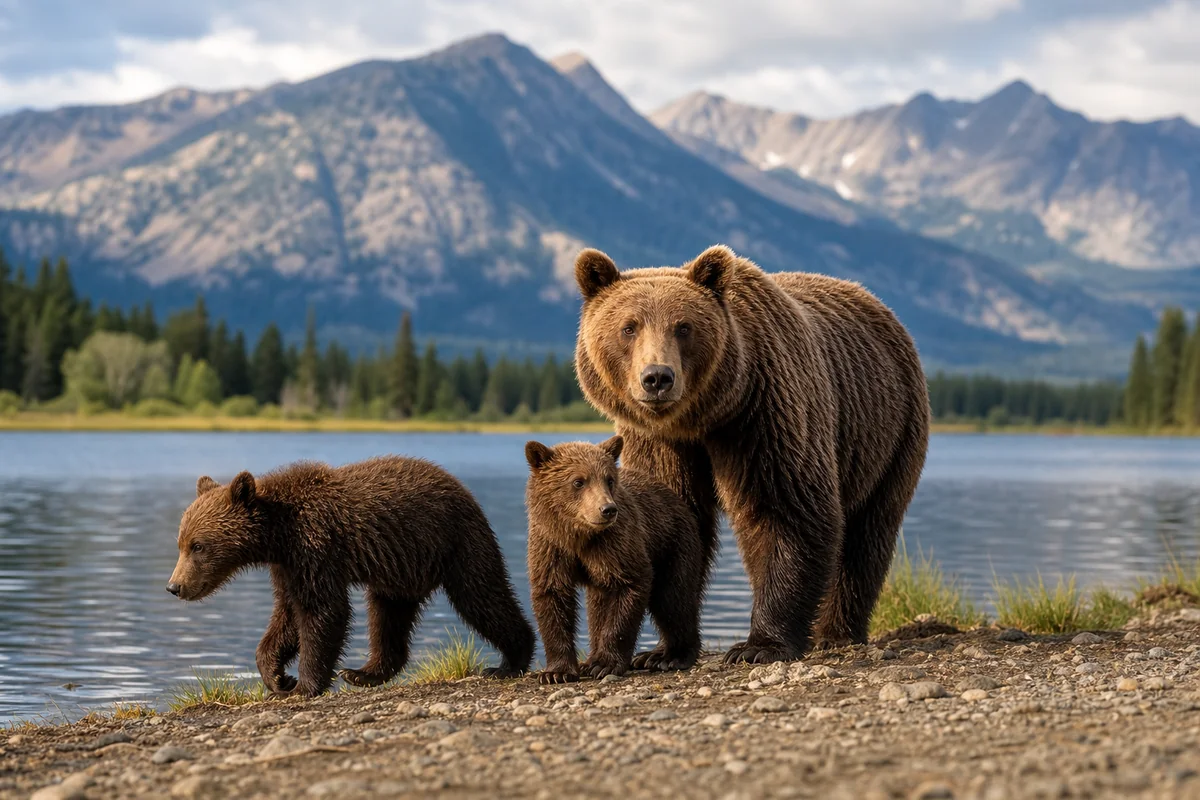
One of the most common reasons travelers visit Montana is to see wildlife. I’ve spent countless hours observing everything from grizzly and black bears to elusive lynx to the incredible diversity of Montana bird species. What many visitors don’t realize is how directly invasive species threaten these viewing opportunities.
Food Web Disruptions
When Eurasian watermilfoil takes over a lake, it changes the invertebrate community that fish depend upon. Fewer native fish means fewer opportunities for wintering birds and year-round residents that depend on aquatic prey.
I watched this cascade effect play out during a winter trip to a western Montana reservoir where milfoil had become established. The diving ducks I expected to see were notably absent, and a local biologist explained that the invertebrate community had shifted dramatically since the plant’s invasion.
Habitat Degradation
Invasive plants fundamentally alter wildlife habitat. Those knapweed-dominated rangelands I mentioned? They support far fewer ground-nesting birds, provide less forage for deer and elk, and create structural changes that affect everything from ground squirrels to rattlesnakes.
The endangered and threatened species in Montana face disproportionate impacts from invasive species, as they’re often already stressed by habitat loss and other factors.
Competition and Predation
Non-native fish species don’t just compete with natives—they often prey upon them directly. Lake trout in Flathead Lake eat juvenile bull trout and cutthroat. Brook trout outcompete native trout in many headwater streams.
I’ve fished streams where native cutthroat have been entirely replaced by non-native brook trout. While brook trout are beautiful fish and fun to catch, their presence represents the loss of something irreplaceable.
What Responsible Travelers Must Do
After spending years exploring Montana and watching the invasive species battle unfold, I’ve developed a personal checklist that I follow religiously. I encourage every visitor to adopt similar practices.
Before Arriving in Montana
- Inspect all watercraft, including kayaks, canoes, paddleboards, and inflatables
- Clean all fishing gear thoroughly, especially waders and boots with felt soles
- Remove all visible plant material from boats, trailers, and gear
- Drain all water from bilges, livewells, and any compartments
- Leave firewood at home—plan to purchase locally
- Check tire treads and wheel wells for plant seeds
At Montana Inspection Stations
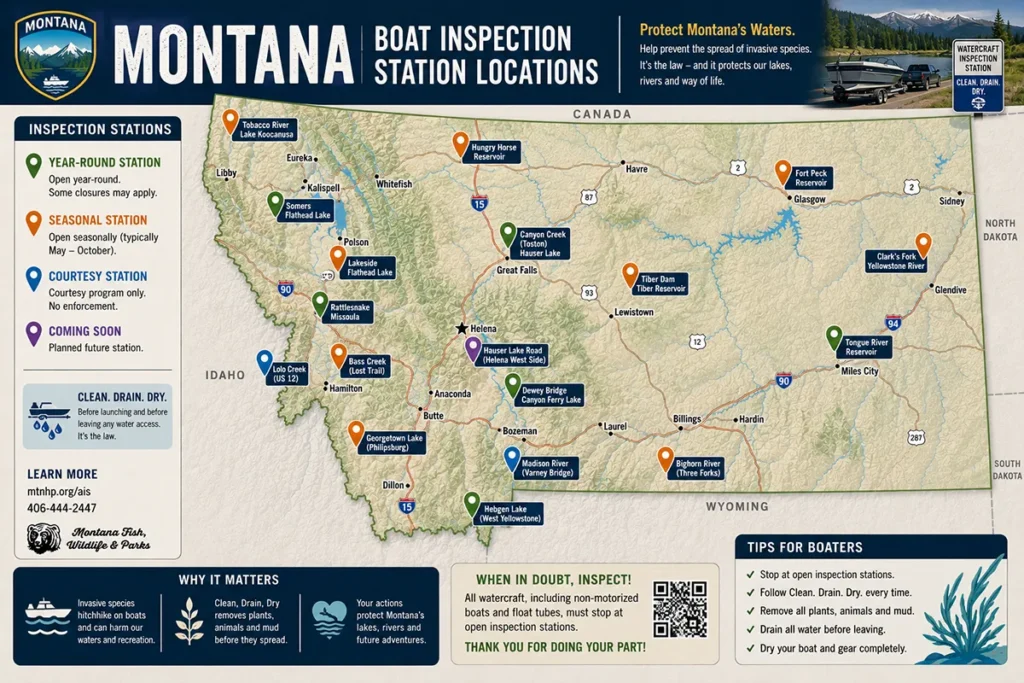
Inspection stations are mandatory stops for all watercraft entering Montana. I’ve seen travelers try to avoid them, which is both illegal and deeply irresponsible.
When you arrive at a station:
- Pull over when directed by signs or flaggers
- Have your watercraft registration accessible
- Be prepared to answer questions about where your boat has been
- Allow inspectors full access to your watercraft
- Accept decontamination if required—it’s free and protects Montana’s waters
I always budget extra time for inspections when traveling with watercraft. Arriving at a station 30 minutes before closing with a line of boats ahead of you is stressful and potentially means overnight detention of your boat.
While Recreating in Montana
Every day in the field is an opportunity to prevent invasive species spread. Here’s what I do:
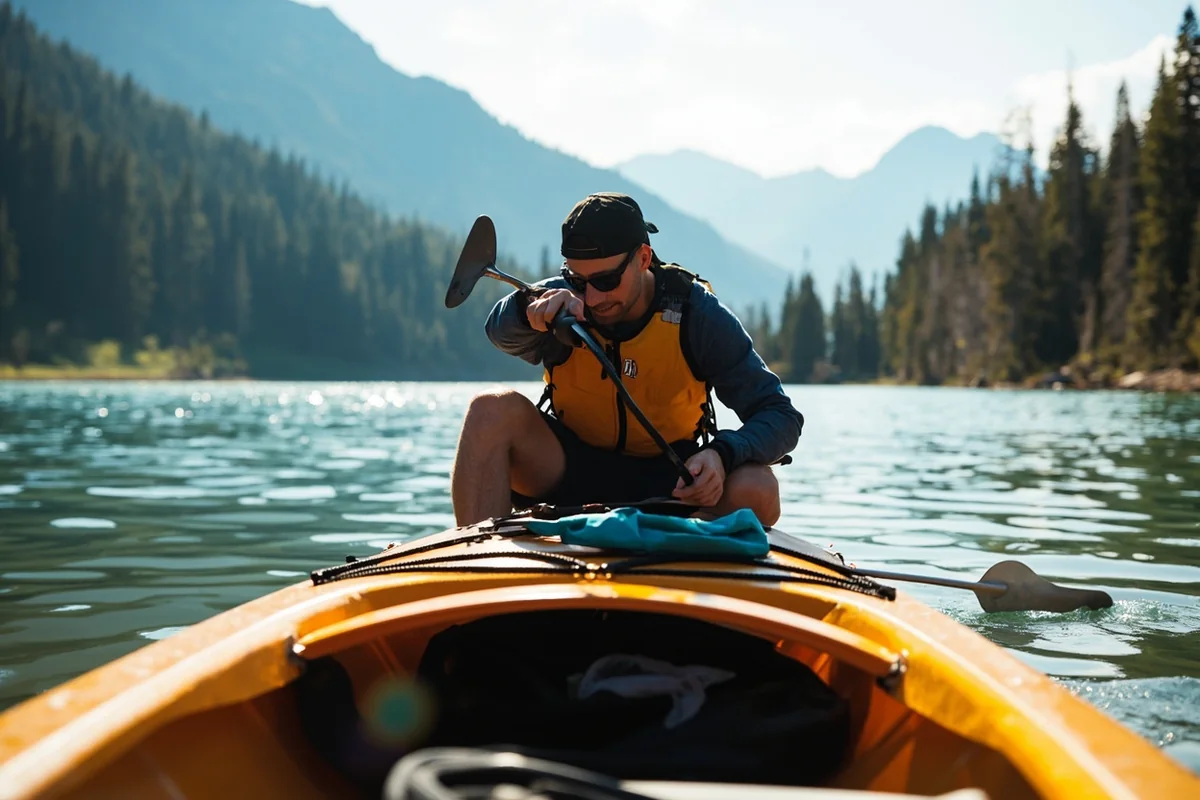
- Between water bodies: Clean, Drain, Dry every time. I carry a pump sprayer to clean my kayak between launches.
- After fishing: Dry waders and boots for at least 48 hours before fishing new waters, or use a bleach solution (10%) to disinfect.
- On trails: Clean boot soles between hikes, especially when moving between ecological zones.
- At campgrounds: Only burn local firewood, and burn it completely before leaving.
- When pet-friendly: Check your dog’s fur for seeds and burrs before leaving trailheads.
Reporting Invasive Species Observations
If you see something, say something. Montana officials want to hear about:
- Unusual aquatic plants, especially dense underwater vegetation
- Mussels attached to any surfaces (docks, rocks, debris)
- Feral swine or evidence of rooting
- Dense patches of unfamiliar plants
- Dead or dying trees with unusual bark patterns
The Montana Invasive Species Council maintains reporting portals, and you can also call local Montana Fish, Wildlife & Parks offices directly.
Regional Invasive Species Concerns
Different parts of Montana face different invasive species pressures. Understanding regional concerns helps you prepare for specific areas.
Western Montana: Aquatic Focus
The Flathead Valley, Clark Fork drainage, and Glacier National Park region face the most intense aquatic invasive species pressure. This is where boat inspection stations are most numerous and scrutiny is highest.
During my trips to Flathead Lake and Whitefish Lake, I’ve noticed particularly strict enforcement of clean, drain, dry protocols. Watercraft coming from out of state can expect thorough inspections.
The lakes here are also where I’ve seen the most Eurasian watermilfoil, particularly in low-flow areas and boat harbors.
Central Montana: Mixed Threats
The Missouri River drainage and central Montana prairies face both aquatic and terrestrial invasive pressures. Canyon Ferry Lake has mandatory inspections, and I’ve seen spotted knapweed dominating vast stretches of rangeland near Helena and Great Falls.
This region also borders areas with feral swine populations, making vigilance for that species particularly important.
Eastern Montana: Terrestrial and Agricultural Concerns
Eastern Montana’s prairie ecosystems face significant invasive plant pressure. Leafy spurge has invaded millions of acres here, and I’ve seen startling examples during drives along Highway 2 and Highway 200.
Fort Peck Lake, Montana’s largest reservoir, has mandatory boat inspections, though the eastern waters have generally faced less aquatic invasive pressure than western Montana.
Yellowstone Region: Special Concerns
The waters in and around Yellowstone National Park face unique invasive species challenges. Lake trout illegally introduced to Yellowstone Lake have devastated native cutthroat populations, with cascading effects on grizzly bears, owls, and other predators that once depended on spawning cutthroat.
New Zealand mud snails have established in many Yellowstone-area streams, and felt-soled waders are prohibited in Yellowstone National Park specifically because they can harbor these tiny invaders.
The Future of Montana’s Invasive Species Fight
I’ve spent considerable time talking with Montana Fish, Wildlife & Parks officials, conservation biologists, and local advocates about where things are headed. The consensus is cautiously optimistic but far from confident.
Emerging Threats
Several invasive species haven’t yet established in Montana but are considered imminent threats:
- Asian carp – Could transform Montana’s river ecosystems if they reach the state
- Didymo (rock snot) – Already present in limited areas, could spread through angling gear
- Viral hemorrhagic septicemia – Disease that could devastate fish populations
- Emerald ash borer – Would threaten Montana’s ash tree populations
Prevention Investments
Montana has invested heavily in prevention infrastructure, including over 30 watercraft inspection stations statewide. During my most recent summer travels, I noticed increased staffing at stations and extended operating hours.
The state has also invested in early detection monitoring, including eDNA sampling that can detect invasive species presence before visual confirmation is possible.
The Critical Role of Travelers
Every conversation I’ve had with invasive species professionals comes back to the same point: prevention depends on people. No amount of inspection stations or monitoring can stop invasive species if travelers don’t cooperate.
The good news is that compliance rates are high—most visitors I’ve observed take the issue seriously. The bad news is that it only takes one careless act to introduce an invader that could never be eradicated.
Connecting Conservation to Your Montana Experience
I want to end with something I’ve come to believe deeply through my Montana travels: protecting this place from invasive species isn’t a burden—it’s a privilege.
When I spend extra time cleaning my gear, wait patiently at inspection stations, or carefully check my boot soles, I’m participating in something larger than myself. I’m joining a collective effort to preserve the wild Montana that drew me here in the first place.
The mountain goats scrambling across Glacier’s peaks, the mountain lions stalking deer through the Bitterroots, the winter animals surviving another harsh season—all of these creatures depend on healthy ecosystems that invasive species threaten.
Even the agricultural heritage of Montana, including the alpaca farms and horse ranches that add to the state’s character, face impacts from invasive plants and the ecological changes they bring.
Every time I return to Montana, I’m struck by how much is at stake and how much we can lose. But I’m also struck by the dedication of the people fighting to protect this place—and by my own ability to help.
Your visit to Montana matters. The choices you make about cleaning your gear, following inspection protocols, and staying vigilant for invasive species will shape what Montana looks like for generations to come.
Make those choices count.
Frequently Asked Questions
What invasive species should I watch out for when hiking in Montana?
When hiking Montana’s trails, be aware of aquatic invaders like zebra mussels and Eurasian watermilfoil in lakes, plus terrestrial threats like spotted knapweed and leafy spurge along trails. I always check my boots and gear for hitchhiking seeds, and you’ll notice signs at trailheads warning about these species. Feral hogs have also been spotted in eastern Montana, so report any sightings to Montana Fish, Wildlife & Parks.
How do Montana’s invasive species regulations affect my fishing trip?
Montana requires all watercraft, including kayaks, paddleboards, and float tubes, to be cleaned, drained, and dried before entering any water body to prevent spreading aquatic invasive species. Inspection stations operate from May through September along major highways, and stopping is mandatory—fines can reach $500 for non-compliance. I recommend arriving with completely dry gear to avoid delays at checkpoints.
Can I transport firewood into Montana for camping?
Transporting firewood into Montana is strongly discouraged because it can carry invasive insects like emerald ash borer and forest diseases that threaten native ecosystems. Most campgrounds sell locally sourced firewood for $5-$10 per bundle, and I’ve found buying on-site saves hassle and protects Montana’s forests. The rule of thumb is to burn firewood within 50 miles of where you bought it.
What should I do if I spot an invasive species while visiting Montana?
If you encounter a suspected invasive species in Montana, take clear photos and note the GPS location or nearby landmarks, then report it through the Montana Invasive Species Council website or the EDDMapS app. Reporting is especially critical for newer threats like Northern pike in the wrong waterways or feral swine sightings. Your observation genuinely helps wildlife managers protect the ecosystems you’re visiting.
Are there volunteer opportunities to help with invasive species removal during my Montana trip?
Several Montana organizations offer volunteer weed-pulling events and invasive species removal days, particularly from June through August when plants are actively growing. Glacier National Park, Yellowstone, and local land trusts frequently host these events, and I’ve found them to be a rewarding way to give back while exploring. Check Montana Conservation Corps or individual park websites about a month before your trip for scheduled opportunities.
How do invasive species impact wildlife viewing opportunities in Montana?
Invasive species like lake trout in Yellowstone and Flathead Lake have devastated native cutthroat trout populations, reducing food sources for grizzly bears and osprey that visitors come to see. Invasive plants also degrade habitat for elk, deer, and native birds by outcompeting the vegetation they depend on. Supporting clean-gear practices during your visit directly helps preserve the iconic Montana wildlife viewing experiences you’re planning for.
What’s the best time to visit Montana to avoid invasive species inspection delays?
Watercraft inspection stations are busiest on Friday afternoons and holiday weekends from Memorial Day through Labor Day, so I recommend crossing into Montana mid-week or early morning to minimize wait times. If you’re visiting in October or November for hunting season, most stations have closed for the year but self-certification may be required. Planning your water activities for weekdays can save you 30-60 minutes of inspection time during peak summer travel.
Sources
- https://fwp.mt.gov/conservation/species-of-interest
- https://fieldguide.mt.gov/displaySpecies.aspx?inv=AIS
- https://fwp.mt.gov/conservation/aquatic-invasive-species/species-identification
- https://www.invasivespeciesinfo.gov/us/montana
- https://invasivespecies.mt.gov/
- https://www.montana.edu/extension/invasiveplants/noxioussub.html