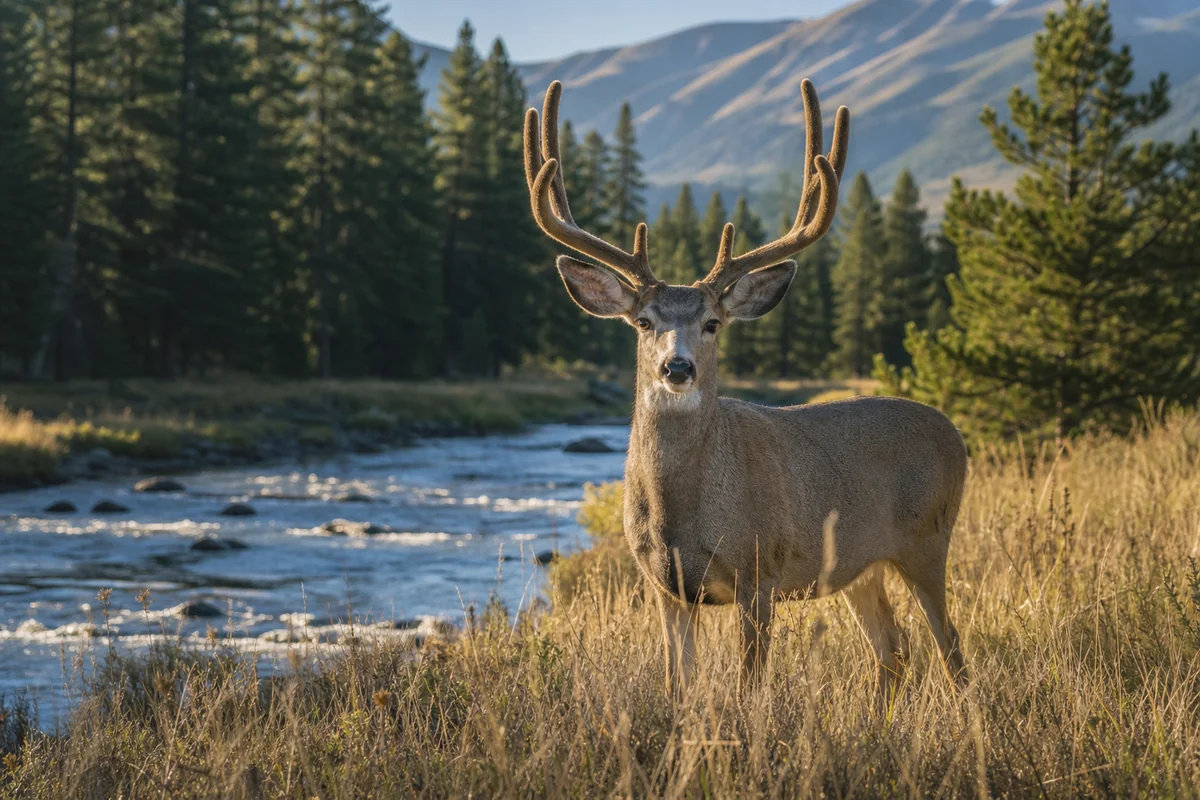
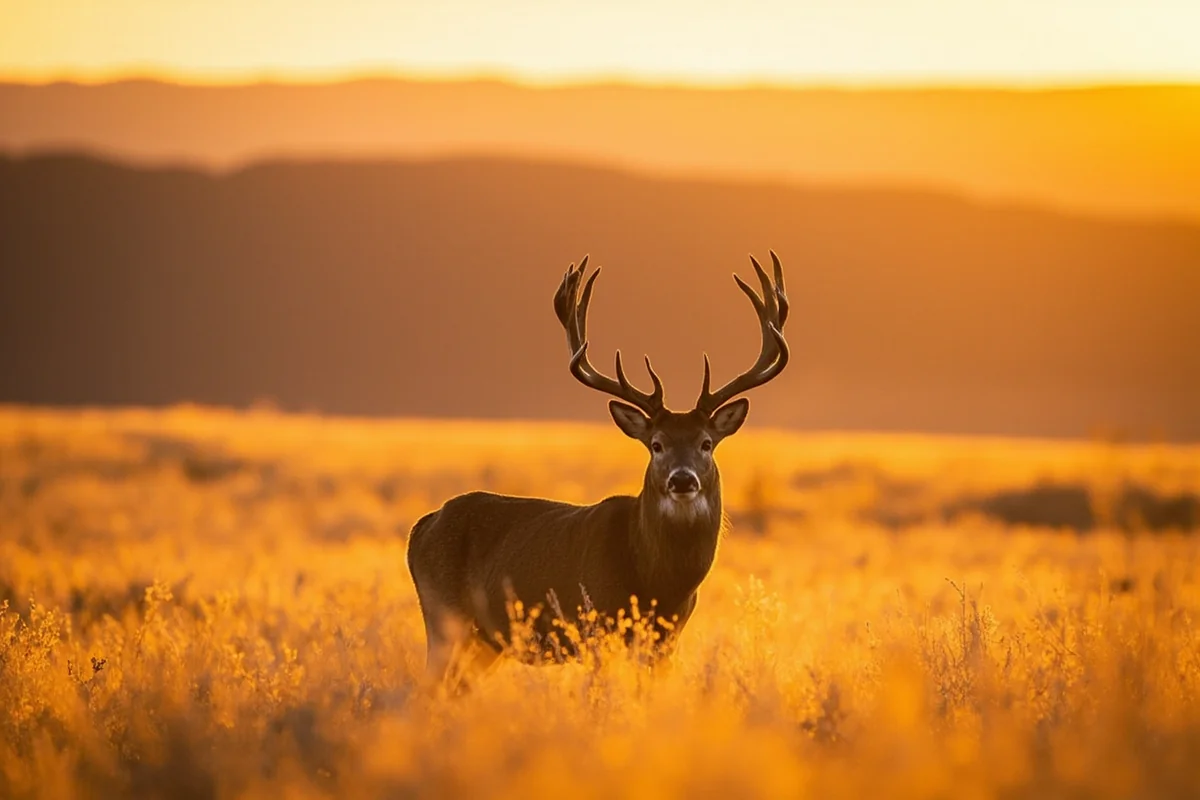
I was crouched behind a ponderosa pine near the Blackfoot River last September when I locked eyes with a massive mule deer buck standing barely thirty yards away.
His antlers were still wrapped in velvet, backlit by the golden morning sun, and for a full minute neither of us moved—just two creatures sharing a moment in Montana’s wild country.
That encounter reminded me why deer remain the most accessible yet endlessly fascinating part of Montana wildlife for visitors exploring the Big Sky State.
- Montana hosts two primary deer species: mule deer and white-tailed deer, each with distinct habitats and behaviors
- Best viewing months are September through November during the rut, and May through June for fawns
- Top locations include the National Bison Range, Glacier National Park’s east side, and the Bitterroot Valley
- Dawn and dusk provide the highest success rates for sightings—plan your drives accordingly
- Understanding deer behavior and habitat preferences dramatically increases your viewing opportunities
- Maintain at least 100 yards distance and never approach, feed, or follow deer
Meet Montana’s Two Deer Species
When I first started exploring Montana over a decade ago, I assumed a deer was just a deer. How wrong I was.
Montana is home to two distinctly different deer species, and learning to tell them apart has become one of my favorite parts of wildlife watching here. Each species has evolved to thrive in specific Montana environments, and understanding these differences will transform your viewing experience.
Mule Deer: The Western Icon
Mule deer get their name from their oversized ears—seriously, they’re enormous—which give them exceptional hearing in the open landscapes they prefer. During my travels across Montana’s eastern prairies and mountain foothills, I’ve come to recognize mule deer as the quintessential western deer.
Their most distinctive feature beyond those ears is their black-tipped tail and the way they move when alarmed. Instead of running flat-out like their white-tailed cousins, mule deer “stot” or “pronk”—a bouncing gait where all four feet hit the ground simultaneously. The first time I witnessed this near Choteau, I actually laughed out loud. It looks almost cartoonish.
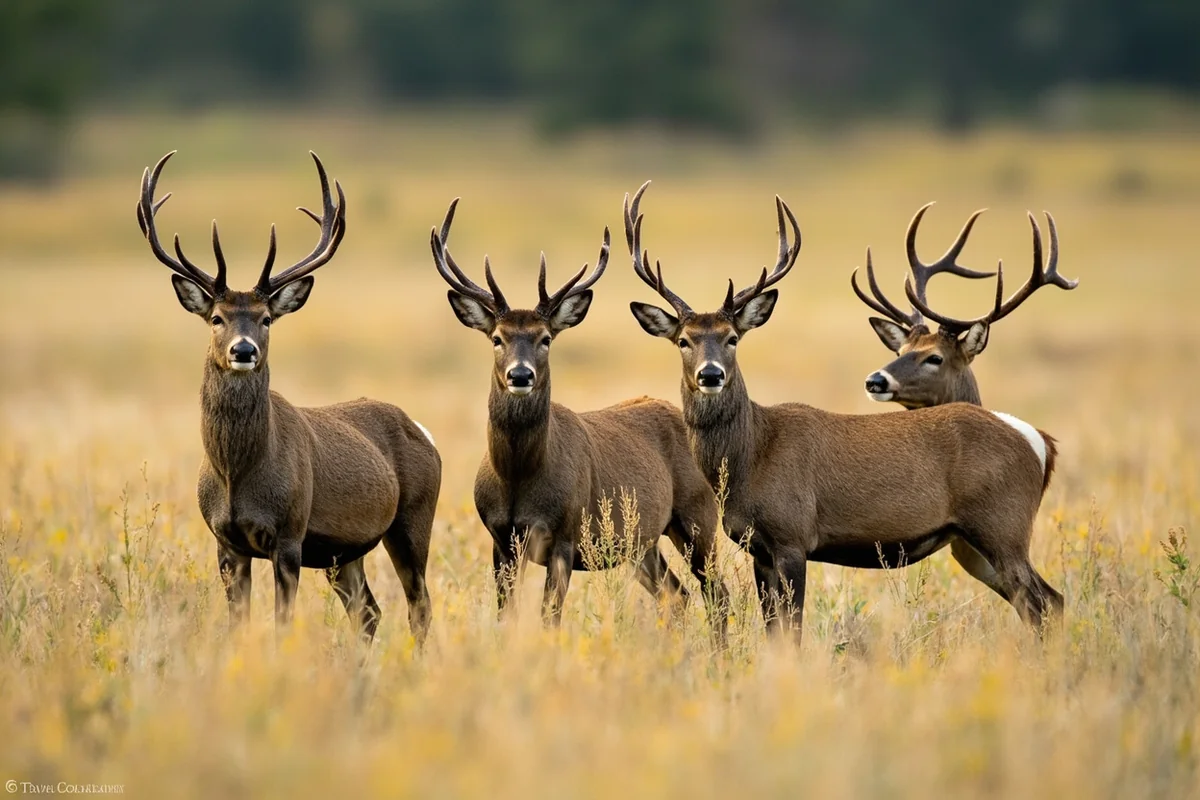
Mule deer bucks grow impressive, bifurcated antlers that fork into equal branches rather than sprouting tines from a single main beam. I photographed a mature buck near the Rocky Mountain Front last October whose antlers spread over 30 inches—a genuine trophy-class animal just standing beside Highway 89.
White-Tailed Deer: The River Bottom Specialist
White-tailed deer are the deer most Americans know, and Montana’s western river valleys hold exceptional populations. Their namesake white tail, which they flash like a warning flag when fleeing, is impossible to miss once you know what to look for.
I’ve spent countless hours watching white-tails in the Bitterroot Valley, where they concentrate along the river corridor and adjacent agricultural fields. They’re generally smaller than mule deer and far more skittish—white-tails seem hardwired to flee first and assess threats later.
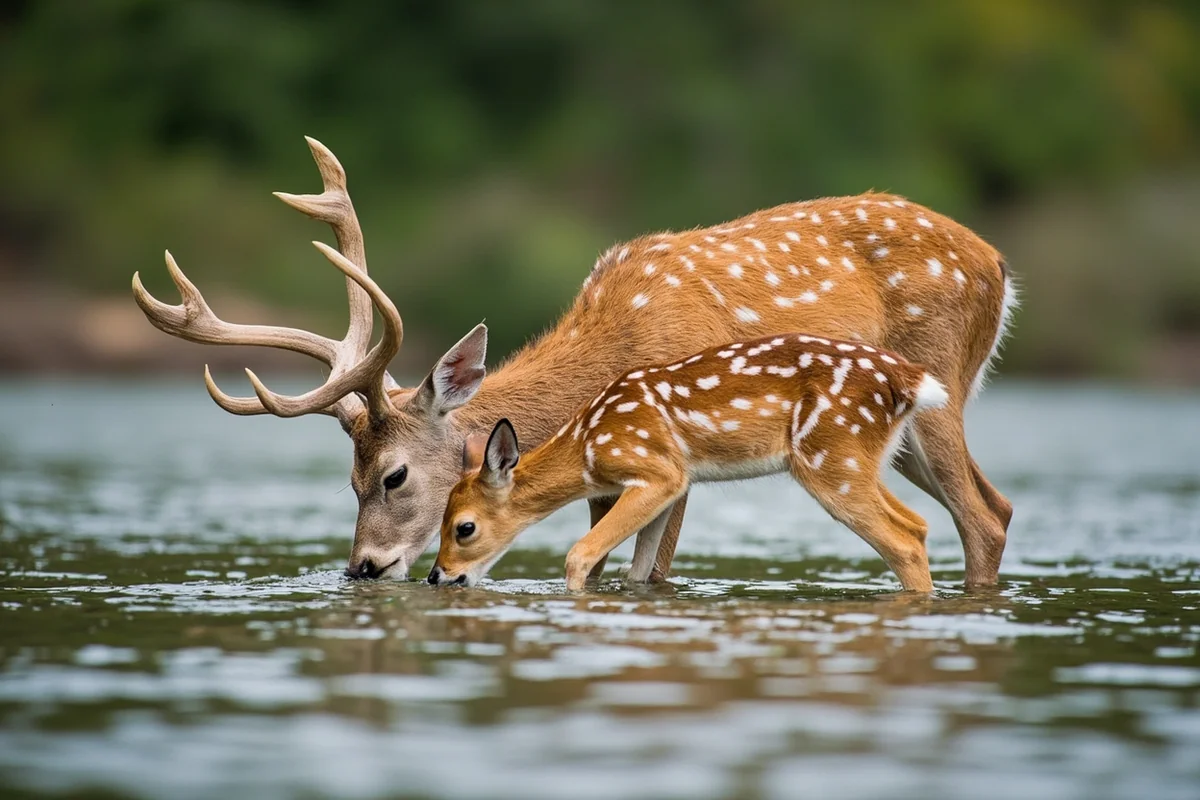
Their antlers grow differently too, with all tines sprouting upward from a single main beam. During a canoe trip down the Clark Fork last June, I counted fourteen white-tailed deer in a single morning, most of them does with spotted fawns drinking at the water’s edge.
Where Deer Live in Montana
Montana spans over 147,000 square miles, and deer occupy nearly every corner of it. But they’re not evenly distributed, and knowing their habitat preferences saves you time and increases your sighting odds dramatically.
Mule Deer Habitat
Mule deer dominate Montana’s mountain foothills, sagebrush steppe, and breaks country—those rugged, eroded landscapes along major rivers. I’ve found the highest concentrations in transition zones where different habitat types meet.
The Missouri River Breaks, that spectacular badlands country north of Lewistown, holds phenomenal mule deer numbers. During a late October trip through this area, I spotted over forty mule deer in a single afternoon, many of them bucks with polished antlers chasing does.
Glacier National Park’s eastern boundary and the adjacent Blackfeet Reservation provide excellent mule deer habitat too. The mix of prairie, foothills, and mountain slopes creates perfect conditions. I always budget extra time driving Highway 89 between Browning and Choteau specifically for mule deer watching.
White-Tailed Deer Habitat
White-tails hug Montana’s river corridors, forested valleys, and agricultural bottomlands. They need thicker cover than mule deer and rarely venture far from security habitat.
The Bitterroot Valley remains my personal favorite for white-tailed deer viewing. Those cottonwood-lined river bottoms and adjacent hay fields support incredible densities. During my most recent visit last May, I watched seven does feeding in a single alfalfa field near Stevensville.
Western Montana’s forested valleys—the Swan, Flathead, and Yaak—all hold strong white-tail populations. These deer are harder to spot than their prairie-dwelling cousins simply because the vegetation is so thick, but patient observers are rewarded.
Best Locations for Deer Watching
After years of chasing deer sightings across Montana, I’ve developed a reliable list of locations that consistently produce. Some are obvious; others took me years to discover.
National Bison Range
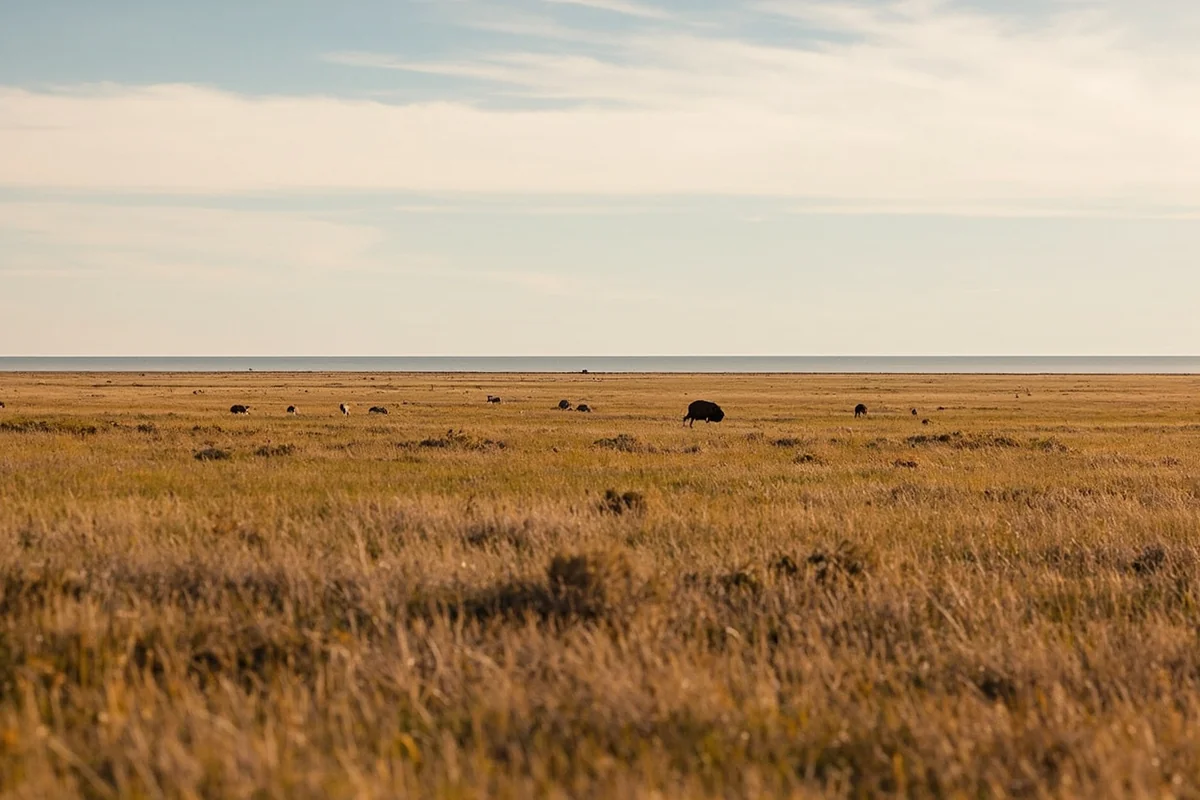
Yes, the name says bison, but this 18,500-acre refuge near Moiese delivers exceptional deer viewing. I’ve never driven the Red Sleep Mountain Drive without seeing both mule deer and white-tails, often in the same field of view.
The refuge’s varied terrain—from valley floor grasslands to forested mountain slopes—concentrates deer along the transition zones. My best success comes in late afternoon when deer move from bedding areas to feeding sites.
One October visit produced a memorable encounter with a massive mule deer buck standing directly beside my vehicle. He was clearly in rut mode, barely acknowledging my presence while scanning for does. I spent twenty minutes photographing him from my open window.
Glacier National Park’s East Side
The Many Glacier Valley and Two Medicine areas offer outstanding mule deer opportunities. These deer share the landscape with Montana bighorn sheep and mountain goats, making for diverse wildlife days.
I particularly love the loop road through Two Medicine in early morning. Mule deer browse the willow bottoms near the lake, often within easy viewing distance of the road. Last September I photographed a bachelor group of six bucks, their velvet-free antlers gleaming in the sunrise.
The eastern park entrance roads—Highway 89 through the Blackfeet Reservation and Highway 2 over Marias Pass—both produce regular sightings. Drive slowly and watch the meadow edges.
Bitterroot Valley
For white-tailed deer specifically, the Bitterroot Valley between Missoula and Darby remains unmatched in my experience. The Lee Metcalf National Wildlife Refuge near Stevensville offers both dedicated viewing areas and easy access.
Agricultural fields throughout the valley attract deer at dawn and dusk. I’ve found productive spots near Florence, Victor, and Hamilton—basically anywhere irrigation creates those lush green alfalfa fields that deer find irresistible.
Local tip: the Eastside Highway (Route 203) parallels the valley’s eastern bench and passes through excellent white-tail country. This road sees far less traffic than Highway 93 and offers better viewing opportunities.
Missouri River Breaks
This is serious mule deer country—remote, rugged, and absolutely stuffed with deer. The breaks landscape north of Lewistown and east of Fort Benton supports some of Montana’s highest mule deer densities.
Access requires some commitment. The roads are rough, services are minimal, and cell coverage is essentially nonexistent. But for dedicated wildlife watchers willing to venture off the beaten path, the rewards are substantial.
During a four-day camping trip through the breaks last October, I logged sightings of over 200 mule deer. Many were mature bucks actively rutting, providing behaviors I’d never witnessed elsewhere.
Seasonal Patterns and Best Times
Deer behavior shifts dramatically throughout the year, and timing your visit correctly makes an enormous difference. Here’s what I’ve learned from hundreds of field days across all seasons.
Spring (April-May)
Spring brings green-up, and deer concentrate on new growth after the nutritional stress of winter. This is prime time for spotting deer in open meadows and agricultural fields.
Does are heavily pregnant in spring and tend to move slowly, making observation easier. I love May specifically because the contrast between brown winter vegetation and emerging green grass makes deer highly visible.
Watch for deer near water sources—they’re drinking frequently as lactation approaches. River corridors and stock ponds attract consistent activity.
Summer (June-August)
Fawns arrive in late May and early June, and summer viewing centers on does with young. Spotted fawns are incredibly photogenic, though mothers are understandably protective.
Summer deer are largely crepuscular, feeding primarily at dawn and dusk while bedding through midday heat. I adjust my schedule accordingly, starting drives at first light and continuing until mid-morning, then resuming in late afternoon.
Bucks separate from family groups in summer and often form bachelor herds. Finding these groups of antlered deer growing velvet is a summer highlight. Look in higher elevation meadows where temperatures stay cooler.
Fall (September-November)
This is peak season for deer watching, full stop. The rut—deer breeding season—triggers dramatic behavioral changes that make bucks visible and active throughout the day.
Mule deer rut peaks in mid-November, while white-tails typically peak a week or two earlier. During this period, bucks throw caution aside, chasing does across open ground regardless of time or observers.
I plan my most ambitious deer-watching trips for late October and early November. Last year I spent a week near Augusta specifically to photograph rutting mule deer, and the action exceeded my expectations every single day.
Winter (December-March)
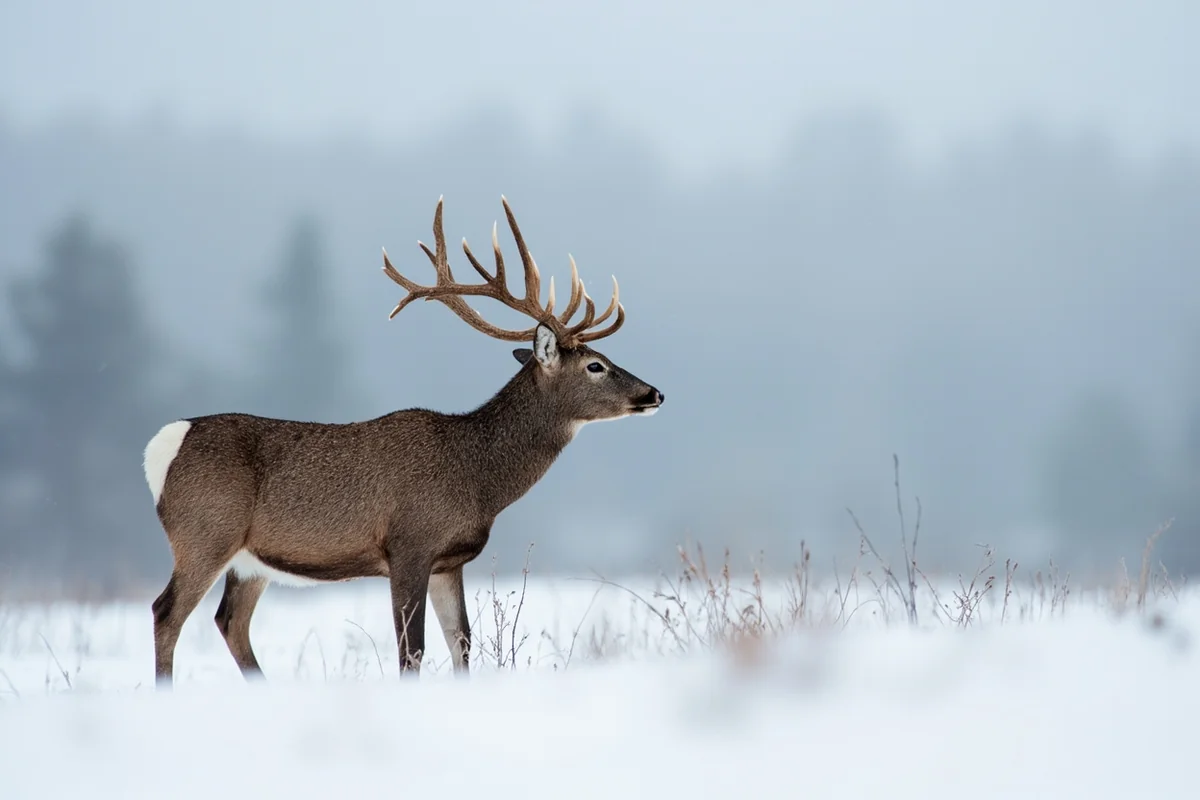
Winter concentrates deer on lower-elevation winter ranges where snow depths remain manageable. This concentration creates excellent viewing opportunities but also raises ethical considerations.
Deer are nutritionally stressed in winter and burning calories they can’t easily replace. Approaching too closely or causing them to flee can have serious consequences. I maintain greater distances in winter and limit my viewing time.
Highway corridors through valley bottoms become productive in winter as deer move to lower elevations. The stretch of Highway 93 through the Bitterroot routinely produces sightings from December through March. You’ll also spot deer among the Montana winter animals that remain active during the coldest months.
Practical Deer Watching Strategies
Success with deer watching comes down to preparation, patience, and understanding deer behavior. Here are the strategies I’ve refined over years of practice.
Timing Your Drives
Deer are most active during the “golden hours”—roughly one hour before and after sunrise and sunset. I cannot overstate how much this timing matters.
My standard approach involves arriving at promising habitat while it’s still dark, then watching as light builds and deer emerge from cover. This strategy consistently outperforms midday searching by a factor of ten or more.
If you can only watch once per day, choose morning. Evening activity is good, but morning deer seem less pressured and more likely to linger in open areas.
Driving Slowly (Really Slowly)
Most visitors drive too fast to spot wildlife effectively. I’ve learned to crawl along at 15-20 mph on secondary roads, constantly scanning edges and openings.
Frequent stops help too. I pull over every quarter mile or so, turn off the engine, and glass with binoculars. This approach reveals deer that motion and engine noise would otherwise keep hidden.
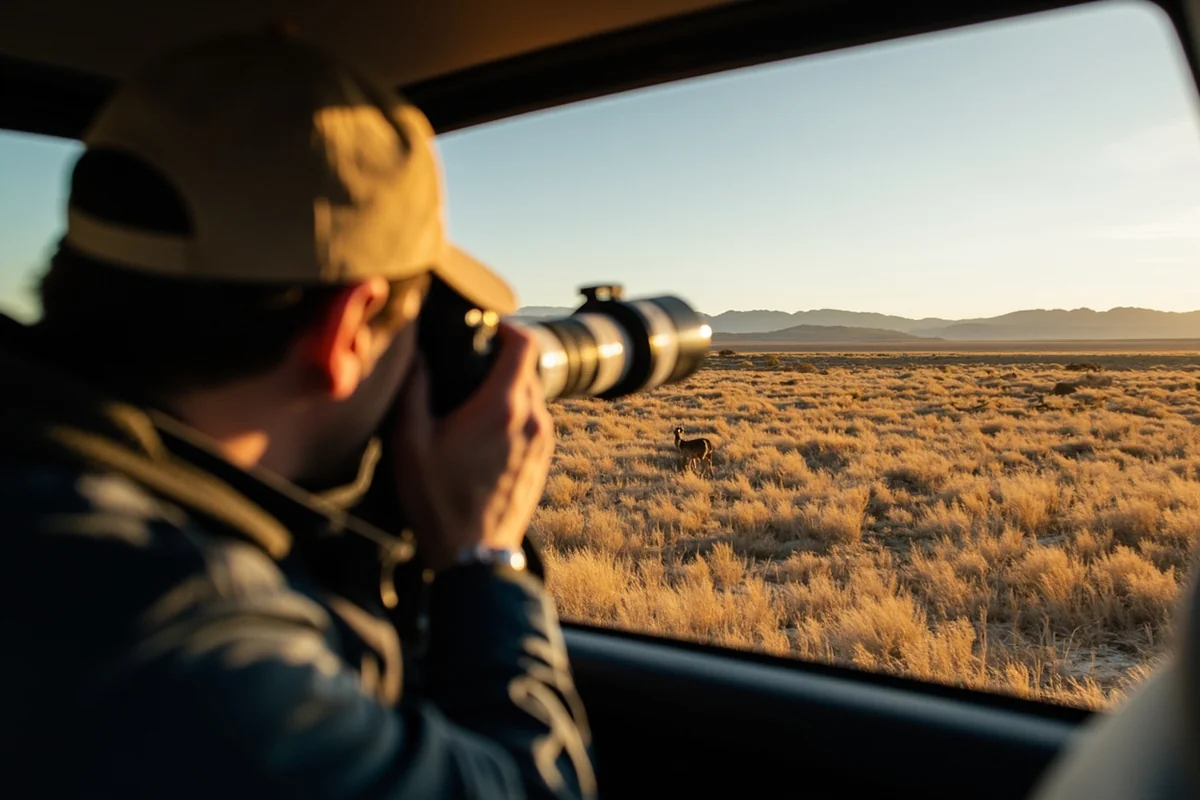
Your vehicle functions as a blind—deer tolerate vehicles far better than pedestrians. Stay in your car, shoot through open windows, and resist the urge to exit for “better” angles.
Using Optics Effectively
Binoculars transform deer watching from frustrating to productive. I carry 10×42 binoculars everywhere in Montana and consider them more essential than my camera.
Systematically scan habitat rather than just looking randomly. Start at the far edge of a meadow, work across to the near edge, then move to the next section. This grid approach catches deer that casual glancing misses.
A spotting scope adds capability for distant subjects, especially in open country like the Missouri Breaks where deer might be a mile or more away.
| Season | Best Viewing Times | Peak Activity | Recommended Locations |
|---|---|---|---|
| Spring | Dawn and dusk | Feeding on new growth | Agricultural valleys, river bottoms |
| Summer | Early morning, late evening | Fawning, bachelor herds | Mountain meadows, high valleys |
| Fall | All day during rut | Breeding behavior | Foothills, transition zones |
| Winter | Midday (warmer hours) | Winter range concentration | Lower valleys, south-facing slopes |
Deer Behavior Insights
Understanding why deer do what they do makes watching them infinitely more interesting. Here’s what I’ve learned observing Montana deer across seasons.
Body Language
Deer communicate constantly through posture, ear position, and tail movement. Learning to read these signals helps you predict behavior and adjust your approach accordingly.
Alert ears pointed forward mean a deer has detected something concerning—possibly you. Relaxed ears that swivel occasionally indicate a comfortable deer likely to continue feeding.
The “foot stomp” is a warning behavior I see frequently. A deer stamps its front hoof repeatedly, trying to provoke a response from a potential threat. When you see this, you’ve been detected.
White-tailed deer flagging—that characteristic tail raise showing the white underside—signals alarm to other deer. Once one deer flags, nearby deer typically flee too.
Feeding Patterns
Deer are browsers and grazers, eating a remarkably varied diet that shifts seasonally. Understanding what they eat helps you predict where to find them.
In spring and summer, deer focus on forbs (broad-leafed plants), fresh grasses, and agricultural crops. Alfalfa fields are virtual deer magnets during growing season.
Fall brings a shift toward woody browse—the twigs and buds of shrubs and trees. Look for deer in brush patches, forest edges, and areas with abundant willow or bitterbrush.
Winter deer eat whatever remains accessible—dried grasses, woody browse, and occasionally agricultural residue. They concentrate where food exists, making winter range locations particularly productive.
Social Structure
Deer aren’t randomly distributed; they live in social groups with predictable patterns. Does typically form family groups consisting of mothers, daughters, and fawns.
Bucks separate from these family groups except during breeding season. Summer bachelor herds can include multiple age classes of bucks peacefully coexisting—a situation that changes dramatically once testosterone rises in fall.
During the rut, all social structures break down as bucks compete for breeding opportunities. This chaos creates the dramatic viewing opportunities that make fall so productive.
Photography Tips
I photograph wildlife seriously, and deer have taught me lessons that apply across species. Here’s what works.
Equipment
Longer lenses matter with deer—I typically shoot with a 200-500mm or 100-400mm zoom. Even “close” encounters benefit from reach that lets you isolate subjects from backgrounds.
Image stabilization is crucial because you’ll often shoot handheld from vehicles. Modern stabilized lenses make shots possible that would have required tripods a generation ago.
Bring a beanbag or window mount for vehicle-based shooting. Resting your lens on a stable surface improves sharpness dramatically, especially in the dim light of early morning.
Techniques
Shoot at deer’s eye level whenever possible. This might mean lowering your vehicle window fully or waiting for deer to move to terrain that puts them at your height.
Focus on the eye—always. A tack-sharp eye anchors an image even if other areas are slightly soft. Modern cameras with animal eye detection make this easier than ever.
Work the situation. A single deer encounter can yield dozens of varied images if you stay patient and let behavior unfold. The best shots often come ten minutes into an encounter, not in the first seconds.
Ethical Considerations
Never pursue deer for photographs. If a deer moves away, let it go. Chasing creates stress, wastes the animal’s energy, and rarely produces good images anyway.
Be particularly careful around does with fawns. Mothers will flee, leaving fawns hidden, and prolonged human presence can prevent reunification. Get your shots and move on.
Avoid spotlighting deer at night—it’s illegal in Montana and disrupts natural behavior. The “best” light is natural light at dawn and dusk.
Deer and Other Wildlife
Deer share Montana’s landscape with an incredible diversity of other species, and understanding these relationships enriches your viewing experience.
Deer habitat overlaps significantly with Montana elk, and I frequently spot both species on the same outings. The National Bison Range is particularly good for this—elk, mule deer, and white-tails all occur within the refuge.
Predators follow deer, and where deer concentrate, you might also encounter Montana mountain lions. I’ve never actually witnessed a mountain lion predation event, but I’ve found kill sites with deer remains on several occasions.
The bird life in good deer habitat is exceptional too. Those river corridors that white-tails prefer also support Montana osprey, owls, and diverse Montana bird species. I often come home with as many bird photos as deer photos from a single outing.
Be aware of Montana bears in deer country, particularly during spring when bears seek winter-killed deer carcasses. Carry bear spray in bear country regardless of your primary wildlife target.
Safety Considerations
Deer seem harmless compared to bears or mountain lions, but they deserve respect. Here’s what I keep in mind.
Vehicle Collisions
Deer-vehicle collisions represent the most significant deer-related danger in Montana. Over 7,000 collisions occur annually, many causing serious injuries.
Dawn and dusk—prime deer-watching hours—are also peak collision times. Drive slowly, stay alert, and assume every deer will do something unpredictable.
If a deer crosses the road ahead of you, brake and watch for following deer. Deer rarely travel alone, and where one crosses, others typically follow within seconds.
Aggressive Behavior
Does with fawns can show surprising aggression toward perceived threats. I’ve been charged by protective does twice, both times when I inadvertently approached too close to hidden fawns.
Rutting bucks are unpredictable and potentially dangerous. Those antlers aren’t decorative—they’re weapons evolved for combat. Maintain substantial distance from any buck exhibiting rutting behavior.
Never corner a deer or block its escape route. A panicked deer may run directly through you rather than past you, and their hooves can cause serious injury.
Disease Awareness
Chronic Wasting Disease (CWD) affects deer populations in portions of Montana. While CWD poses no known risk to humans, hunters should follow Montana Fish, Wildlife & Parks guidelines regarding handling and testing.
Ticks are common in deer habitat and can transmit diseases. Wear long pants, use repellent, and check yourself thoroughly after time in the field. This applies to all Montana wildlife watching, from deer to squirrels to otters.
Responsible Viewing Ethics
Wildlife watching carries responsibilities that I take seriously. Here’s my approach to ethical deer viewing.
Maintain distance. I use 100 yards as my minimum unless deer approach me voluntarily. Binoculars and telephoto lenses let me observe without intrusion.
Never feed deer. Feeding habituates wildlife to humans, alters natural behavior, and often leads to conflicts that end badly for the deer. It’s also illegal in many Montana jurisdictions.
Stay on designated roads and trails. Leaving roads to pursue wildlife damages vegetation, disturbs other species, and sets a poor example. Your off-road shortcut might cross crucial deer bedding habitat.
Keep encounters brief. Even if you’re not obviously disturbing a deer, your presence changes its behavior. Get your observations and photos, then move along to minimize cumulative stress.
These principles apply across Montana wildlife—whether you’re watching deer, Montana lynx, or even rattlesnakes. Respectful viewing ensures wildlife remains wild and viewable for future visitors.
Planning Your Deer Watching Trip
Ready to plan a dedicated deer-watching visit to Montana? Here’s my framework for trip planning.
Duration
Budget more time than you think you need. A single morning rarely delivers the encounters you’re hoping for, but four or five days in good habitat almost always does.
I recommend a minimum of three full days focused on deer, with flexibility to adjust locations based on initial sightings. My best trips have been week-long adventures with no fixed schedule.
Lodging Choices
Base yourself near productive habitat to maximize your golden-hour opportunities. Staying an hour away from good deer country means missing prime morning activity while you drive.
For mule deer in the Rocky Mountain Front, Augusta and Choteau offer basic lodging with excellent access. The Bitterroot Valley has numerous options from Missoula to Darby for white-tailed deer focus.
Combining Species
Don’t limit yourself to deer—Montana offers extraordinary diversity. A trip centered on deer can easily include excellent viewing opportunities for waterfowl, songbirds, and numerous mammals.
Some visitors combine deer watching with visits to Montana alpaca farms or Montana mountain horse ranches for a broader Montana experience. The state’s wildlife and agricultural heritage intertwine in fascinating ways.
Resources
Montana Fish, Wildlife & Parks publishes hunting district maps showing deer distribution and habitat types—useful even for viewers with no hunting intent. Their website includes seasonal movement information and population updates.
Local wildlife refuges often provide viewing guides specific to their properties. The National Bison Range visitor center staff have always been helpful when I’ve asked about recent deer activity.
Understand that Montana also supports endangered and threatened species and faces challenges from invasive species that affect deer habitat. Conservation awareness enhances any wildlife-focused visit.
Final Thoughts
Deer watching in Montana has given me hundreds of memorable encounters over the years, from that velvet-antlered buck on the Blackfoot to snow-dusted does surviving another Montana winter. These animals occupy nearly every Montana landscape, making them the perfect gateway to the state’s broader wildlife diversity.
What I love most about watching Montana deer is the accessibility. You don’t need backcountry skills or specialized equipment. A rental car, binoculars, and early alarm settings will put you in position for remarkable experiences.
The deer will be there. They’ve been here for millennia, adapting to this big, wild landscape long before travelers arrived to admire them. All we need to do is show up at the right time, in the right place, with patience and respect.
I’ll be back in Montana next fall, driving slowly through the Missouri Breaks, watching mule deer bucks test their antlers against rivals in that ancient autumn ritual. Maybe I’ll see you out there, stopped on some unmarked gravel road, binoculars raised toward a distant deer doing what deer have always done in Montana’s magnificent open country.
Frequently Asked Questions
Where are the best places to see wild deer in Montana?
I’ve had the most consistent deer sightings in the National Bison Range near Moiese, the Lee Metcalf National Wildlife Refuge, and throughout Glacier National Park’s eastern valleys. The Charles M. Russell National Wildlife Refuge in central Montana is another excellent spot where mule deer and white-tailed deer roam freely across 1.1 million acres of protected land.
What is the best time of year to see deer in Montana?
Early fall (September through November) offers the best deer viewing during the rutting season when bucks are most active and visible throughout the day. I recommend visiting at dawn or dusk year-round, but spring months also provide great opportunities to spot does with newborn fawns in meadows and along forest edges.
What types of deer species can you see in Montana?
Montana is home to two primary deer species: white-tailed deer, which are more common in river bottoms and forested areas, and mule deer, easily identified by their large ears and black-tipped tails in open sagebrush country. You’ll find white-tails concentrated in western Montana while mule deer dominate the eastern plains and mountain foothills.
What should I bring for deer watching and wildlife photography in Montana?
Pack binoculars (10×42 is ideal), a camera with at least a 200mm zoom lens, and dress in layers since Montana mornings can drop to 30°F even in summer. I always bring a spotting scope for distant meadows, bear spray for safety in backcountry areas, and a field guide to distinguish between mule deer and white-tailed deer.
How close can you safely get to wild deer in Montana?
Always maintain at least 25-50 yards distance from wild deer, as approaching too closely causes stress and can provoke defensive behavior, especially from does protecting fawns. In national parks and wildlife refuges, staying in your vehicle often allows closer viewing since deer are accustomed to cars but will flee from people on foot.
Are guided deer watching tours available in Montana and what do they cost?
Several outfitters near Glacier and Yellowstone offer wildlife safari tours ranging from $150-$350 per person for half-day excursions that include deer, elk, and other wildlife viewing. I’ve found that local guides know exactly where deer congregate seasonally, making the investment worthwhile if you’re short on time or unfamiliar with Montana’s backcountry roads.
Can you see deer in Montana during a winter road trip?
Winter is actually fantastic for deer spotting since animals move to lower elevations near highways and ranches where food is more accessible. Drive the Paradise Valley north of Yellowstone or Highway 200 through central Montana where I’ve counted dozens of mule deer along a single 50-mile stretch, though be cautious of deer crossing roads especially at twilight.