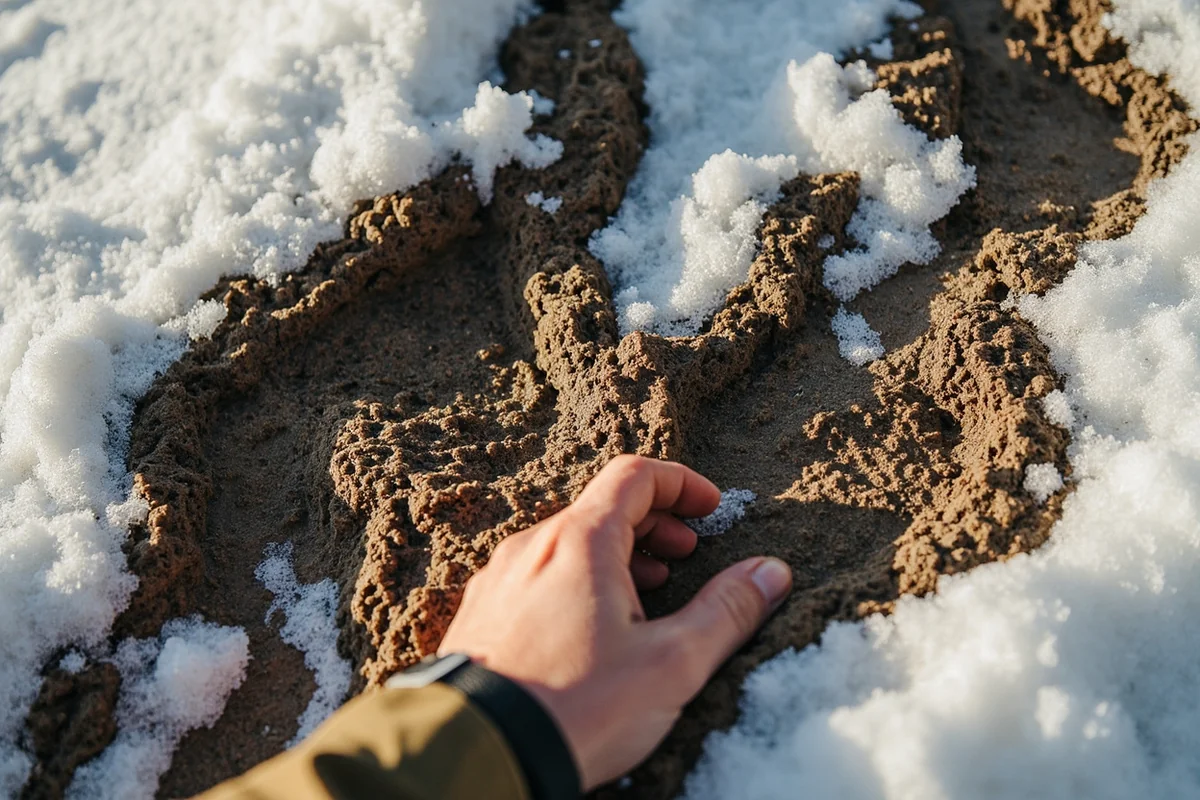
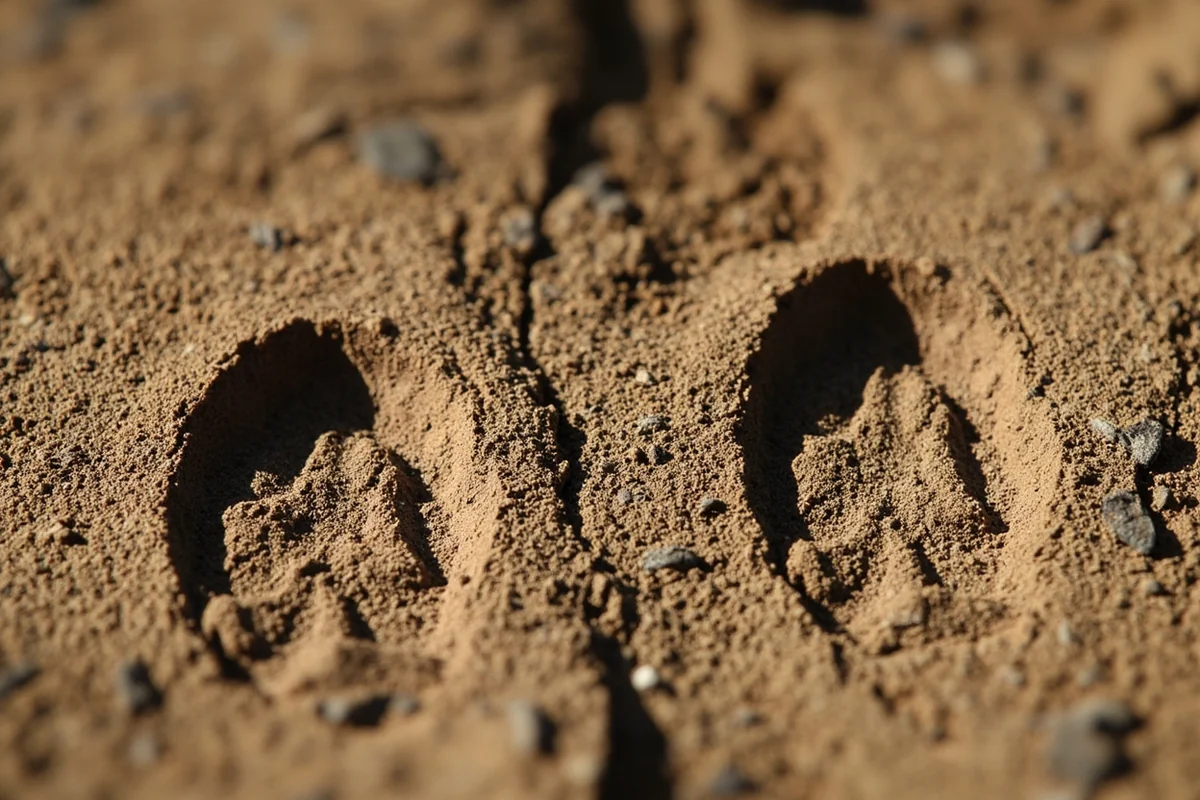
I’ll never forget the moment I found fresh mountain lion tracks pressed into the mud along the Rattlesnake Wilderness trail just north of Missoula last September—each paw print the size of my palm, the claw marks invisible (cats retract them when walking), and the morning dew still beading in the impressions.
That visceral reminder that I was sharing space with North America’s largest wild cat transformed my entire perspective on hiking in Montana.
If you’re exploring Montana wildlife, understanding these magnificent and elusive predators isn’t just fascinating—it’s essential for anyone venturing into Big Sky Country’s backcountry.
- Montana has an estimated 4,000-4,500 mountain lions spread across the state’s mountainous and forested regions
- Sightings are rare—these cats actively avoid humans, and most Montanans never see one despite living here for decades
- Best viewing opportunities exist near Glacier National Park, the Bitterroot Valley, and the Rocky Mountain Front
- Dawn and dusk are peak activity times; always hike in groups and make noise on trails
- Encounters are extremely rare but knowing proper response protocols could save your life
- Winter months offer the best chance to spot tracks in snow, even if the cats remain hidden
Liked this article?
Add Roaming Montana as a preferred source so you see more of our articles and guides on Google.
Understanding Montana’s Mountain Lion Population
Montana Fish, Wildlife & Parks estimates between 4,000 and 4,500 mountain lions currently roam the state, making it one of the healthiest populations in the continental United States. During my conversations with wildlife biologists at a Helena conference last spring, I learned that this number has remained relatively stable over the past decade thanks to carefully managed hunting quotas and abundant prey species.
These cats occupy nearly every county in Montana, though their density varies dramatically based on terrain and available food sources. The western third of the state—with its deep river valleys, dense conifer forests, and rugged mountain ranges—supports the highest concentrations.
What surprised me most when researching this topic was learning that mountain lions have actually expanded their range in Montana over the past 50 years. Areas that rarely saw these predators in the 1970s now support resident populations.
Why They’re Called by So Many Names
When I first moved to Montana, the terminology confused me endlessly. Locals use mountain lion, cougar, puma, catamount, and even painter interchangeably—they’re all the same animal, *Puma concolor*.
I’ve noticed that longtime Montanans tend to say “lion” or “cat” most often, while visitors typically use “mountain lion” or “cougar.” It doesn’t matter which term you use; everyone will know exactly what you’re talking about.
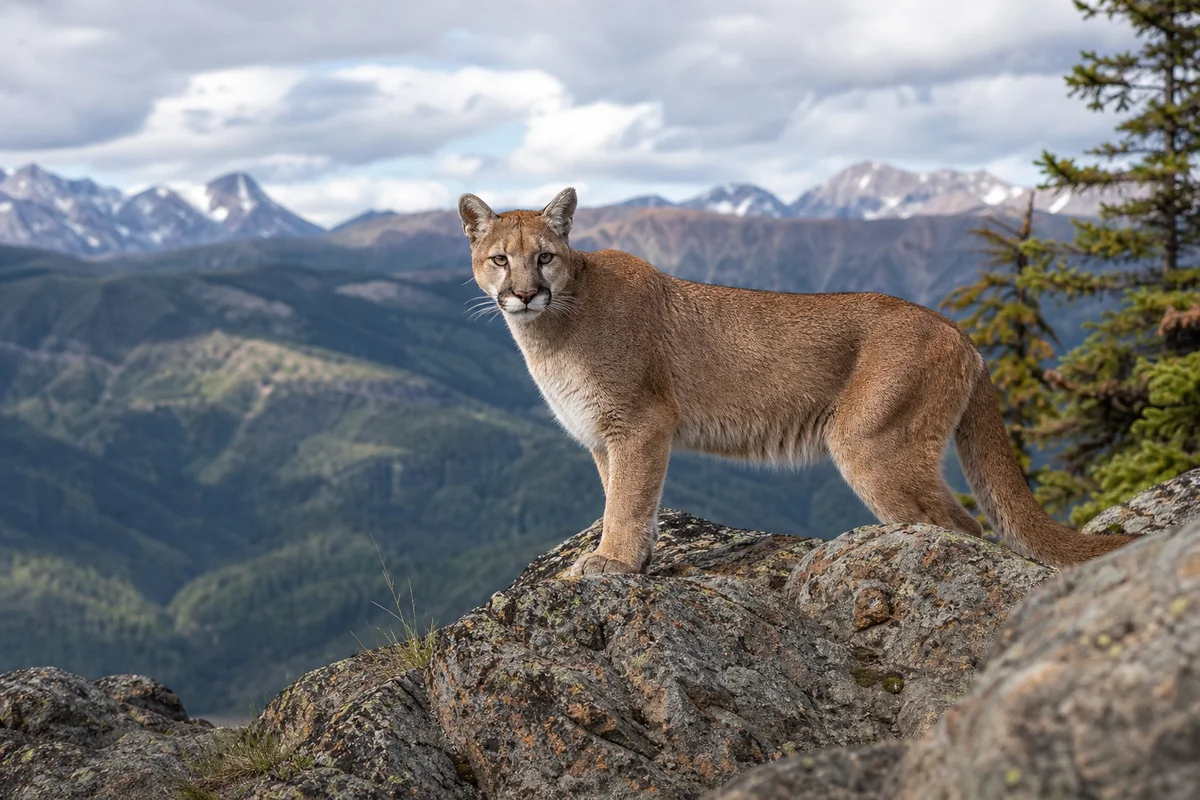
The scientific name *Puma concolor* translates roughly to “cat of one color,” which perfectly describes their tawny-brown coats. Unlike Montana lynx, which sport spotted fur and distinctive ear tufts, mountain lions wear solid coloring from nose to tail tip.
Physical Characteristics: What to Look For
Adult male mountain lions in Montana typically weigh between 120 and 180 pounds, with exceptional individuals occasionally exceeding 200 pounds. Females run smaller, averaging 80 to 130 pounds.
During my time volunteering with a wildlife tracking program near Kalispell two winters ago, I had the chance to examine photographs from trail cameras capturing lions in various seasons. The size difference between males and females became immediately apparent—males have noticeably broader heads and thicker necks.
The Distinctive Long Tail
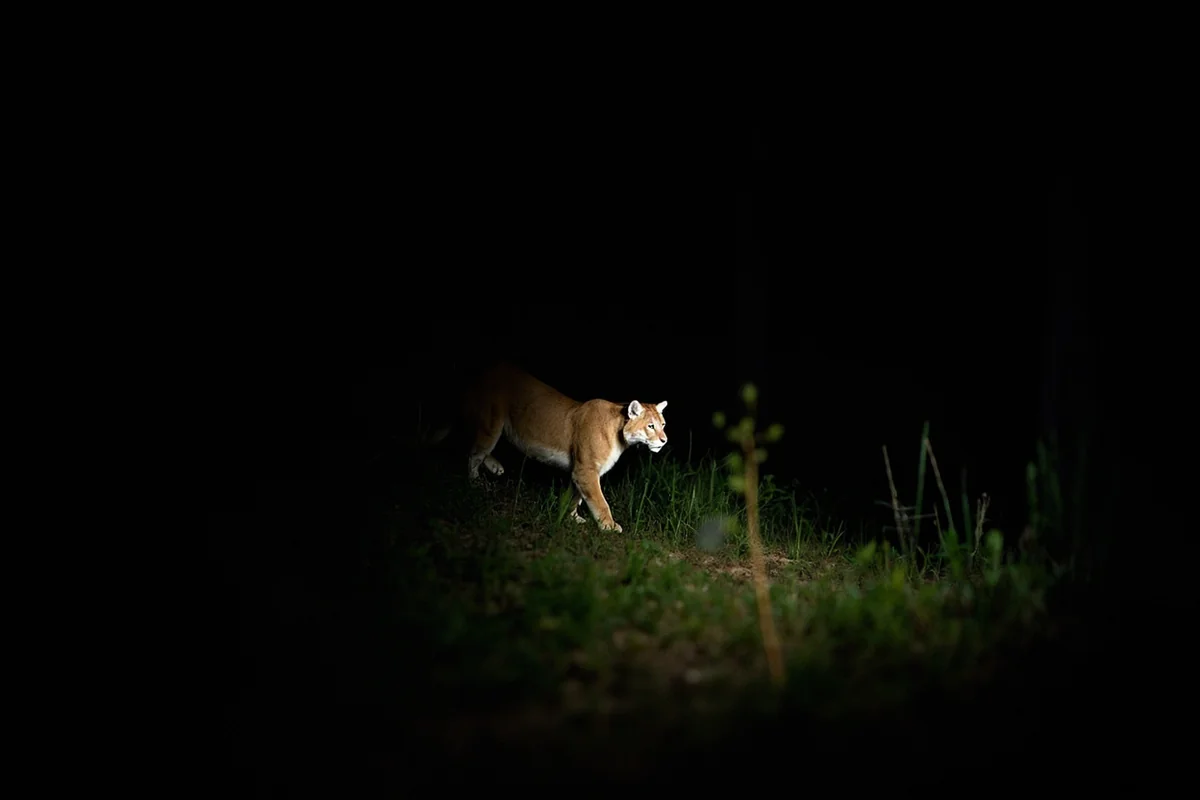
The easiest way to identify a mountain lion, even at a distance, is that remarkable tail. Measuring two to three feet long, it’s proportionally longer than any other North American cat.
I always tell fellow hikers to remember this key identifier. If you see a large cat and can’t make out details, look for that long, rope-like tail with its dark tip. Lynx have stubby, bobbed tails that look completely different.
That tail serves critical functions for the cat—it provides balance while navigating rocky terrain and helps them make sharp turns when pursuing prey through dense forest.
Coloring and Seasonal Variations
Mountain lions wear a tawny or grayish-brown coat year-round, though I’ve noticed in photographs that their coloring can appear quite different depending on lighting conditions and season. Winter coats tend slightly grayer and thicker.
The undersides—belly, inner legs, and chest—show lighter, almost cream-colored fur. Their muzzle displays distinctive white and black markings around the mouth and nose.
Kittens sport dark spots that fade completely by the time they reach about a year old. If you ever see a spotted large cat in Montana, you’re looking at a young mountain lion still with its mother.
Where Mountain Lions Live in Montana
Mountain lions thrive in habitat that provides three essentials: adequate prey (primarily deer), stalking cover, and rocky terrain for denning. Montana delivers all three across millions of acres of public land.
| Region | Lion Density | Notable Areas |
|---|---|---|
| Northwest Montana | Very High | Glacier NP, Flathead Valley, Cabinet Mountains |
| Southwest Montana | High | Bitterroot Valley, Pioneer Mountains, Anaconda Range |
| Central Mountains | High | Rocky Mountain Front, Bob Marshall Wilderness |
| South-Central | Moderate-High | Absaroka-Beartooth, Paradise Valley, Gallatin Range |
| Eastern Montana | Low-Moderate | Missouri Breaks, scattered populations in river corridors |
The Bitterroot Valley: Prime Lion Country
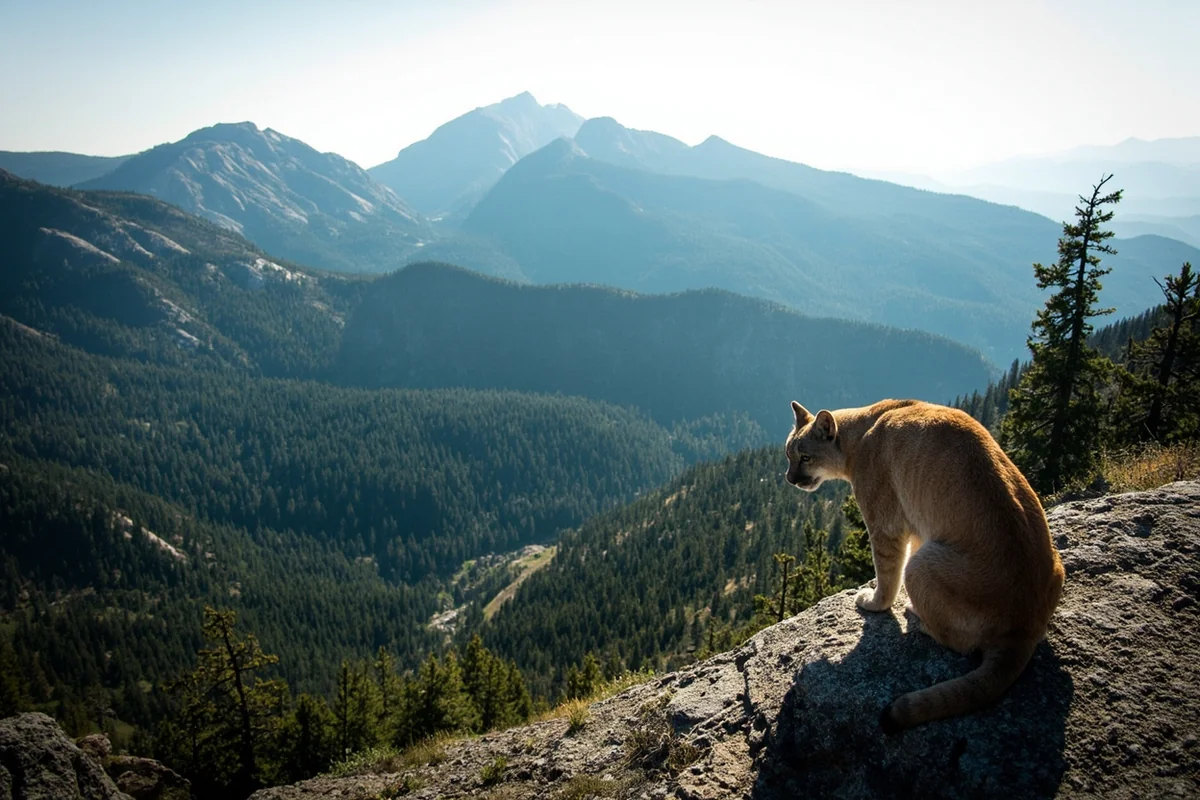
I spent three weeks exploring the Bitterroot Valley last June, and every local I spoke with had mountain lion stories. This narrow valley running south from Missoula offers ideal habitat—steep, forested slopes on both sides with abundant white-tailed deer and mule deer populations.
The Selway-Bitterroot Wilderness alone encompasses over 1.3 million acres of virtually untouched mountain lion habitat. During my hikes around Lake Como and up the Bass Creek trail, I found multiple deer carcasses that appeared to be lion kills—the signature dirt and debris raked over the remains gave them away.
Ranchers in this area have learned to coexist with lions, though conflicts occasionally arise. I interviewed a fourth-generation cattle rancher near Darby who told me he’d lost exactly three calves to mountain lions in forty years—a testament to how rarely these cats target livestock when natural prey abounds.
Rocky Mountain Front: Where the Plains Meet the Mountains
The Rocky Mountain Front running from Augusta north toward Glacier National Park ranks among my favorite places in Montana for wildlife watching. The dramatic transition from prairie to peak creates edge habitat that mountain lions patrol regularly.
On a recent trip along the Teton River drainage west of Choteau, I discovered lion tracks crossing a snowfield at nearly 7,000 feet elevation. The tracks followed a well-worn game trail that Montana deer and elk clearly used frequently.
This region sees consistent lion activity because the abundant ungulate populations—deer, elk, and even bighorn sheep—provide year-round food sources.
Glacier National Park and Surrounding Wilderness
Glacier National Park and the adjacent Bob Marshall Wilderness Complex form one of the largest intact ecosystems in the lower 48 states. Mountain lions share this landscape with grizzlies, black bears, wolves, and wolverines.
During my backpacking trips in Glacier over the years, I’ve found lion tracks on perhaps a dozen occasions but have never actually seen a cat. That’s entirely typical—even researchers studying lions rarely observe them without radio collars and tracking equipment.
The trails in Glacier’s North Fork area, particularly around Bowman Lake and Kintla Lake, pass through excellent lion habitat. The density of huckleberry bushes attracts deer in summer, which in turn attracts the cats that hunt them.
When Mountain Lions Are Most Active
Understanding mountain lion activity patterns helps visitors know when to heighten their awareness on trails. These cats are crepuscular and nocturnal, meaning they’re most active during dawn, dusk, and nighttime hours.
During a conversation with a Montana Fish, Wildlife & Parks biologist last autumn, she explained that GPS collar data shows lions traveling an average of six to eight miles per night. They move extensively under cover of darkness, hunting and patrolling their territories.
Seasonal Behavior Patterns
Winter presents unique circumstances. Lions follow deer to lower elevations, bringing them closer to human development. I’ve noticed that lion sighting reports in Montana spike during December through March, not because there are more lions, but because they’re more concentrated in accessible areas.
Summer disperses prey animals across broader ranges, and lions follow. A tom might patrol a territory of 100 square miles or more in summer months, making any single sighting exceptionally unlikely.
Fall triggers increased movement as young lions disperse from their mothers. These subadult cats—typically 12 to 24 months old—travel long distances seeking their own territories. They’re more likely to appear in unusual locations or show less caution around humans.
Best Times for Track Discovery
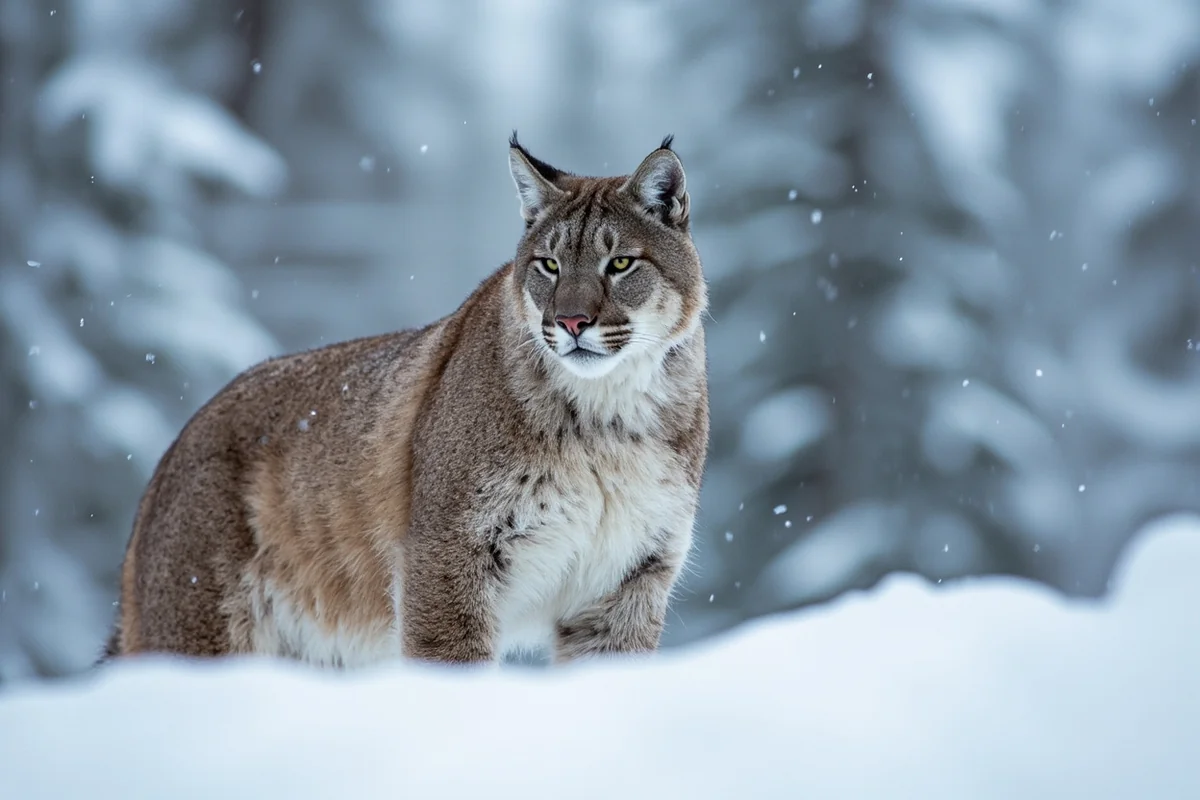
If you want to find evidence of mountain lions without necessarily seeing one (the most realistic goal), early morning after a light snowfall offers your best opportunity. Fresh tracks in snow remain pristine and unmistakable.
I’ve had the best luck finding tracks between 7 and 9 AM in winter, usually within the first 24 hours after snow stops falling. The cats hunt at night, leaving tracks that snow hasn’t yet obscured.
Summer track finding proves more challenging but not impossible. Look for muddy areas near water sources at dawn—I’ve found tracks along the Blackfoot River corridor multiple times in September when water levels drop and expose muddy banks.
Mountain Lion Diet and Hunting Behavior
White-tailed deer and mule deer constitute roughly 80% of mountain lion diet in Montana. A single adult lion typically kills one deer every 10 to 14 days, though a mother with kittens might kill more frequently.
The hunting style fascinates me. Lions are ambush predators that rely on stealth and explosive power rather than sustained pursuit. They stalk close—often within 30 feet—before launching an attack that rarely lasts more than a few bounds.
Other Prey Species
Beyond deer, Montana mountain lions opportunistically take elk calves, bighorn sheep, porcupines, rabbits, wild turkeys, and occasionally livestock. In the Missouri Breaks region, they’ve been documented hunting feral horses on rare occasions.
I spoke with a wildlife photographer last summer who captured images of a lion attempting to take a mountain goat near Logan Pass. The goat escaped onto rocky terrain where the lion couldn’t follow—a reminder that prey animals have evolved effective defenses.
Small mammals and birds round out their diet during lean periods. Unlike what many assume, lions will eat squirrels, rabbits, and even carrion when deer become scarce.
Caching Behavior
After a successful kill, a mountain lion will typically drag the carcass to a concealed location and cover it with debris—leaves, pine needles, dirt, or snow depending on season. They return to feed on the cached kill over several days.
If you ever encounter a large carcass covered with debris in the backcountry, leave the area immediately. The lion that made that kill is likely nearby and may return at any time. I make it a point to give any suspected kill site at least a 200-yard buffer.
Staying Safe in Mountain Lion Country
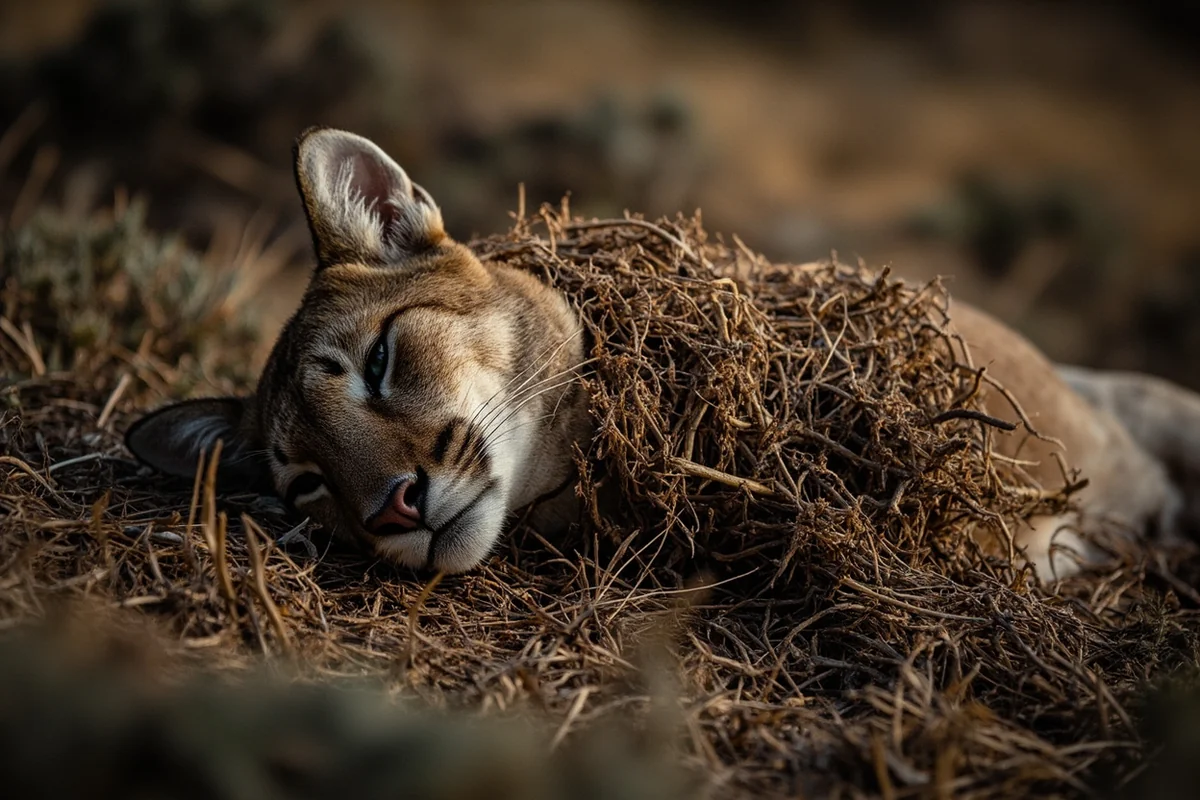
Let me be absolutely clear: mountain lion attacks on humans are extremely rare. Montana averages less than one documented attack per year, and fatal attacks occur perhaps once per decade. You’re far more likely to be injured in a car accident driving to the trailhead.
That statistical reality doesn’t mean you should ignore common-sense precautions. Understanding lion behavior helps you avoid the circumstances that could lead to a negative encounter.
Hiking and Camping Precautions
I follow these practices on every Montana backcountry trip, whether I’m hiking established trails in Glacier or exploring remote areas of the Bob Marshall:
- Never hike alone in remote areas—groups of three or more virtually never experience lion encounters
- Keep children close and in sight at all times, particularly on narrow trails with dense vegetation
- Make noise on the trail, especially when approaching blind corners or dense brush
- Avoid hiking during dawn, dusk, and nighttime when lions are most active
- Keep dogs on leash—running dogs can attract lion attention or lead a lion back to you
- Never approach a lion kill or any covered carcass
- Store food properly using bear-safe methods (this also deters lions)
The same precautions you’d take for Montana bears largely apply to mountain lion country. Bear spray, while not tested specifically on lions, would likely prove effective as a last resort.
What to Do If You See a Mountain Lion
Most mountain lion sightings last mere seconds—a tawny shape crossing the trail ahead or disappearing into timber. If you’re fortunate enough to observe a lion that hasn’t noticed you, enjoy the moment from a safe distance without approaching.
If a mountain lion sees you and doesn’t immediately flee (unusual but possible), follow these steps:
- Do NOT run—running triggers a predator’s chase instinct
- Face the lion and make yourself appear as large as possible—raise your arms, open your jacket wide
- Speak firmly and loudly without screaming or making high-pitched sounds
- Back away slowly while maintaining eye contact
- Pick up small children immediately without bending over
- If the lion approaches, throw rocks, sticks, or anything available while continuing to appear large
In the exceptionally rare event a lion attacks, fight back with everything available. Unlike bears, playing dead never works with lions. Target the eyes and nose, use rocks, sticks, trekking poles, or bare hands—people have successfully defended themselves against attacking lions.
Protecting Pets in Lion Country
I’ve met several Montana residents who’ve lost pets to mountain lions, particularly cats allowed to roam outdoors at night. If you’re staying in a cabin or rental near lion habitat, keep pets indoors during nighttime hours.
During daytime walks, keep dogs on leash. An off-leash dog chasing a scent through the brush could encounter a lion—or worse, lead one back to you. I know this sounds restrictive, but it’s standard practice throughout mountain lion range in the American West.
Observing Signs of Mountain Lion Activity
Since actual lion sightings remain rare, learning to read their sign becomes the most reliable way to know you’re sharing habitat with these cats. I find this tracking aspect deeply rewarding—it’s like reading a story written in the landscape.
Tracks and Track Patterns
Mountain lion tracks measure roughly three to four inches wide for adults, with four toe pads arranged in a slightly asymmetrical pattern around a large heel pad. The heel pad’s distinctive three-lobed bottom edge helps distinguish lion tracks from canine prints.
The absence of claw marks in the track is your clearest identifying feature. Dogs, wolves, and coyotes leave visible claw impressions because they can’t retract them. Cats walk with claws retracted, leaving clean, rounded toe impressions.
When I find tracks, I photograph them with a known object for scale—a knife, coin, or my hand. These photos help confirm identification later and create a record of where and when I found lion sign.
Scrapes and Other Territorial Markers
Male mountain lions maintain territories by leaving scrapes—small piles of debris gathered with their hind feet, often marked with urine. These scrapes typically appear along ridge lines, near trail intersections, or under prominent trees.
I discovered my first scrape in the Rattlesnake Wilderness several years ago—a distinctive pile of pine needles and duff about 12 inches across at the base of a large ponderosa pine. The pungent odor confirmed it was fresh.
Lions also claw trees and stumps as territorial markers. These scratches appear 3 to 5 feet off the ground, higher than you’d expect from smaller cats, with visible vertical gouges from multiple claws.
Scat Identification
Mountain lion scat is cylindrical, segmented, and typically contains visible hair and bone fragments. It measures about an inch in diameter for adults and often shows a blunt end on one segment and a tapered end on the other.
Unlike canine scat, lion droppings don’t usually contain vegetable matter or berry seeds. If you see scat with visible berry remains, you’re likely looking at bear or coyote leavings instead.
Lions often deposit scat in prominent locations—the middle of trails, on top of rocks, or near scrapes. It’s another form of territorial communication.
Mountain Lions and Montana’s Ecosystem
As apex predators, mountain lions play a crucial role in Montana’s ecological balance. Their presence shapes deer behavior, which in turn affects vegetation patterns across the landscape.
Research in the Greater Yellowstone Ecosystem has shown that areas with active lion populations see less browse damage to riparian vegetation because deer don’t linger in vulnerable streamside areas. This cascading effect benefits everything from songbirds to beaver.
Coexistence with Other Predators
Montana’s mountains support a full complement of native carnivores—grizzly bears, black bears, wolves, and mountain lions all share habitat. I find this predator diversity remarkable; few places in North America retain such complete predator guilds.
Lions and wolves compete for similar prey but use different hunting strategies. Wolves run down prey over distance; lions ambush from cover. This behavioral difference allows some habitat separation, though conflicts do occur.
When I explored the Paradise Valley last fall, a rancher told me he’d found a lion kill that wolves had subsequently taken over. The lion apparently abandoned the carcass rather than confront the wolf pack—a reminder that these predators interact in complex ways we rarely witness.
Impact on Prey Populations
Mountain lions help maintain healthy deer populations by removing sick, injured, and older animals disproportionately. This selective predation keeps prey herds vigorous and prevents the overgrazing that can occur when ungulate populations go unchecked.
Montana Fish, Wildlife & Parks includes lion predation in their deer and elk management models. The relationship isn’t adversarial—lions are part of the system that produces the wildlife Montana is famous for.
I’ve spoken with hunters who initially viewed lions as competitors for deer. Most have come to appreciate that healthy predator populations indicate healthy ecosystems overall. If lions are thriving, prey populations are sufficient to support them.
Mountain Lion Management in Montana
Montana manages mountain lions through regulated hunting seasons, with quotas set by region based on population estimates and human-conflict levels. This controversial approach divides opinions among residents and visitors alike.
Wildlife managers argue that hunting helps maintain lion wariness of humans, reducing conflicts in areas where cats and people increasingly overlap. Critics contend that lions provide ecological benefits that outweigh any risks.
Quotas and Regulations
As of my most recent check, Montana’s lion hunting season runs from late autumn through mid-spring, with specific quotas for each hunting district. When quotas are met, that district closes to further harvest.
Female quotas are set especially conservatively because reproductive females drive population health. Killing a female with dependent kittens is illegal, and hunters must check carcasses within 24 hours so biologists can verify sex and age.
This management system generates data about population demographics, helping biologists track trends over time. Whether you support hunting or not, the biological information gathered serves conservation purposes.
Human-Wildlife Conflict Response
When lions kill livestock or appear in populated areas, Montana FWP wildlife specialists respond. Their goal is resolving conflicts with non-lethal methods when possible—hazing, temporary fencing, or relocating problem animals.
Lions that repeatedly kill livestock or show dangerous behavior toward humans may be lethally removed. These decisions aren’t made lightly; each case is evaluated individually based on circumstances and that animal’s history.
I attended a community meeting in the Bitterroot last year where residents discussed lion management. The conversations revealed how personal these issues become—ranchers who’ve lost animals, hikers who want wildlands to remain wild, hunters with various perspectives. There’s no simple consensus.
Photographing Mountain Lions (Realistic Expectations)
I’ll be honest with you: photographing a wild mountain lion in Montana is exceptionally difficult. Professional wildlife photographers with years of experience and specialized equipment often go years between lion sightings.
If wildlife photography is a priority, focus on more visible species. Montana bird species offer far more opportunities, as do deer and elk. Even Montana owls and osprey are easier to capture than lions.
Trail Camera Opportunities
If you’re staying at a private cabin or ranch property (with owner permission), deploying trail cameras offers your best chance at lion images. Place cameras on game trails, near water sources, or along habitat edges.
I’ve had moderate success with trail cameras placed along ridgelines where lions travel to survey their territory. The cameras need to stay in place for weeks, sometimes months, before capturing anything worthwhile.
Motion-triggered cameras should be set to capture multiple images per trigger event. Lions move quickly, and a single photo often produces just a blur of tawny fur.
Ethical Viewing Practices
Should you encounter a mountain lion, remember that any photograph isn’t worth endangering yourself or stressing the animal. Lions that become habituated to human presence often end up as management problems—and management problems frequently end with the cat being killed.
The best wildlife photographers I know prioritize animal welfare over getting the shot. They use long lenses, maintain distance, and never bait or pursue wildlife for better images.
Wildlife Tours and Guided Experiences
Several wildlife tour operators in Montana specifically target lion sign and habitat while understanding that actual sightings are unlikely. These guided experiences offer educated context that enhances any wildlife encounter.
Companies operating near Yellowstone sometimes combine lion habitat exploration with viewing of wolves, bears, and ungulates. The guides know the landscape intimately and can read sign that casual visitors would miss entirely.
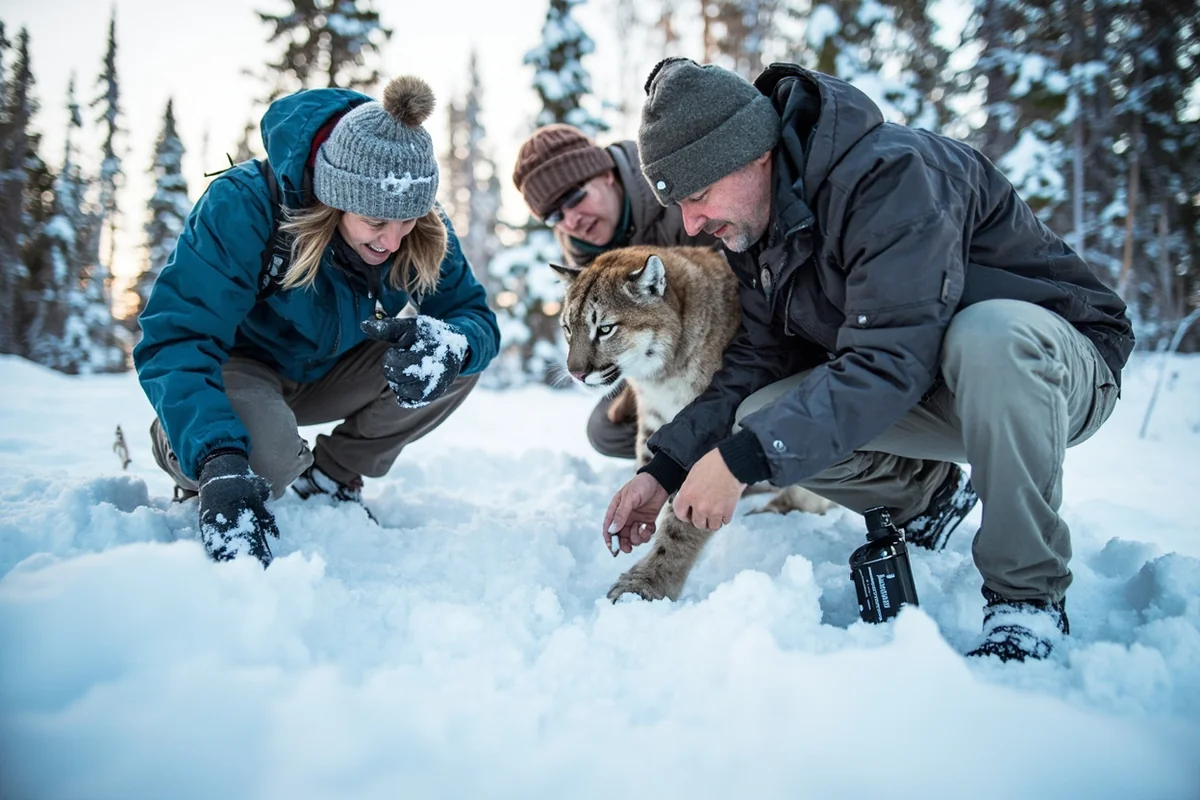
I went on a winter wildlife tour near the Paradise Valley that focused on tracking carnivores in snow. We found lion tracks along a ridge above the Yellowstone River, followed them for nearly a mile, and pieced together the story of that cat’s night hunt. We never saw the lion, but the experience left me more connected to this landscape than any fleeting sighting could have.
Comparing Mountain Lions to Other Montana Predators
Visitors sometimes confuse mountain lions with other Montana wildlife, particularly at a distance or in poor lighting conditions. Knowing what distinguishes lions from similar species helps with accurate identification.
Canada lynx are much smaller (20-30 pounds versus 100+ for lions) with shorter tails, spotted coats, and distinctive ear tufts. Their oversized paws look almost comically large compared to their body size—an adaptation for walking on snow.
Bobcats fall between lynx and lions in size, with spotted coats and stubby tails. They’re actually more common than either lynx or lions but equally secretive.
Young black bears occasionally get reported as mountain lions, usually when glimpsed briefly. Bears walk flat-footed with a distinctive rolling gait; lions move more like domestic cats, fluid and low to the ground.
Planning Your Montana Trip with Wildlife in Mind
If experiencing Montana’s wildlife diversity matters to you, plan your itinerary to maximize time in quality habitat. The western mountain corridors offer the best combination of accessible lion country and diverse wildlife viewing.
Consider basing yourself in Missoula for easy access to multiple wilderness areas, or choose the Flathead Valley for proximity to Glacier National Park’s exceptional wildlife habitat. Both areas support healthy lion populations alongside bears, wolves, and abundant ungulates.
The winter months concentrate wildlife in valleys and make tracking much easier, though weather can limit backcountry access. Summer provides longer days and more hiking opportunities but spreads animals across larger areas.
Don’t overlook Montana’s smaller wildlife either. River otters, winter birds, and even species like waterfowl add richness to any Montana wildlife experience. Even unexpected encounters—like the alpacas I’ve seen on Montana ranches—contribute to the state’s animal diversity.
Understanding and Respecting These Magnificent Cats
After years of hiking Montana’s backcountry, I’ve developed deep respect for mountain lions—not fear, but genuine appreciation for animals that embody wildness in its truest form. They’re here, they’re watching, and their presence makes every trail feel more alive.
The fact that these powerful predators share Montana’s mountains with us speaks to the quality of habitat that still exists here. In a world where large carnivores have been eliminated from most of their historic range, Montana remains a place where the full cast of native wildlife persists.
When you visit, carry that awareness with you. Take sensible precautions, but don’t let fear diminish your experience. The mountain lion you’ll probably never see is part of what makes Montana’s wilderness genuinely wild.
Stay informed about other wildlife you might encounter during your travels—from rattlesnakes in lower elevations to spiders you might find in cabins. Understanding the full spectrum of Montana’s fauna, including endangered species and invasive species threatening native wildlife, makes you a more aware and responsible visitor.
Montana’s mountain lions don’t need us to fear them—they need us to understand them, respect their space, and support the wild landscapes they require to survive. That’s a legacy worth preserving for every future visitor who sets foot on a Montana trail.
Frequently Asked Questions
Are mountain lions dangerous to hikers in Montana?
Mountain lion attacks on humans in Montana are extremely rare, with only a handful of documented incidents over the past century. I always recommend hiking in groups, making noise on trails, and never approaching or running from a mountain lion if you spot one. Carrying bear spray works as an effective deterrent for cougars too, giving you added peace of mind on backcountry trails.
Where is the best place to see mountain lions in Montana?
Your best chances of spotting a wild mountain lion in Montana are in the mountainous regions of Glacier National Park, the Bob Marshall Wilderness, and the Absaroka-Beartooth Wilderness near Yellowstone. These elusive cats are most active at dawn and dusk, so early morning wildlife tours offer the highest probability of a sighting. I’d suggest booking a guided wildlife safari in the Paradise Valley area, where experienced guides know the terrain and animal behaviors.
What time of year are mountain lions most active in Montana?
Mountain lions in Montana are active year-round, but winter months from December through March offer increased visibility since deer and elk move to lower elevations, bringing cougars with them. Late fall during hunting season also sees more mountain lion movement as they follow migrating prey. I’ve found that visiting during these cooler months, especially near dawn, dramatically improves your wildlife viewing opportunities.
What should I do if I encounter a mountain lion while camping in Montana?
If you encounter a mountain lion while camping in Montana, never run—instead, face the animal, make yourself appear larger by raising your arms, and speak firmly while slowly backing away. Keep children close and pick them up without bending over. If attacked, fight back aggressively with rocks, sticks, or bear spray, as mountain lions often retreat when prey fights back.
How much does a guided mountain lion tracking tour cost in Montana?
Guided wildlife tracking tours that include mountain lion spotting opportunities typically range from $150-$400 per person for half-day excursions and $500-$1,200 for full-day private experiences in Montana. Multi-day backcountry expeditions with experienced trackers can run $1,500-$3,000 including gear and meals. I recommend booking with outfitters based in Bozeman or Missoula who specialize in predator ecology tours for the most authentic experience.
What gear should I pack for hiking in Montana mountain lion territory?
Essential gear for hiking in Montana mountain lion country includes bear spray ($40-$50 per canister), a whistle or air horn for making noise, and trekking poles that double as defensive tools. I always pack a headlamp since cougars are crepuscular hunters, plus bright-colored clothing to appear less like prey. A satellite communicator like a Garmin inReach ($300-$400) provides emergency SOS capability in remote areas where cell service is nonexistent.
How large is the mountain lion population in Montana?
Montana’s mountain lion population is estimated at 4,000-6,000 animals, making it one of the healthiest cougar populations in the Lower 48 states. These apex predators roam across approximately 145,000 square miles of suitable habitat, from the Rocky Mountain Front to the forested regions near the Idaho border. Wildlife biologists with Montana Fish, Wildlife & Parks actively monitor populations, so checking their website before your trip provides current data on regional activity.
Sources
- https://www.nps.gov/glac/planyourvisit/mtnlionsafety.htm
- https://fwp.mt.gov/hunt/regulations/mountain-lion
- https://fwp.mt.gov/hunt/education/mountain-lion-identification
- https://www.nps.gov/glac/learn/nature/mammals.htm
- https://fwp.mt.gov/conservation/wildlife-management/mountain-lion
- https://www.nps.gov/yell/learn/nature/cougar.htm
- https://fieldguide.mt.gov/speciesDetail.aspx?elcode=AMAJH04010