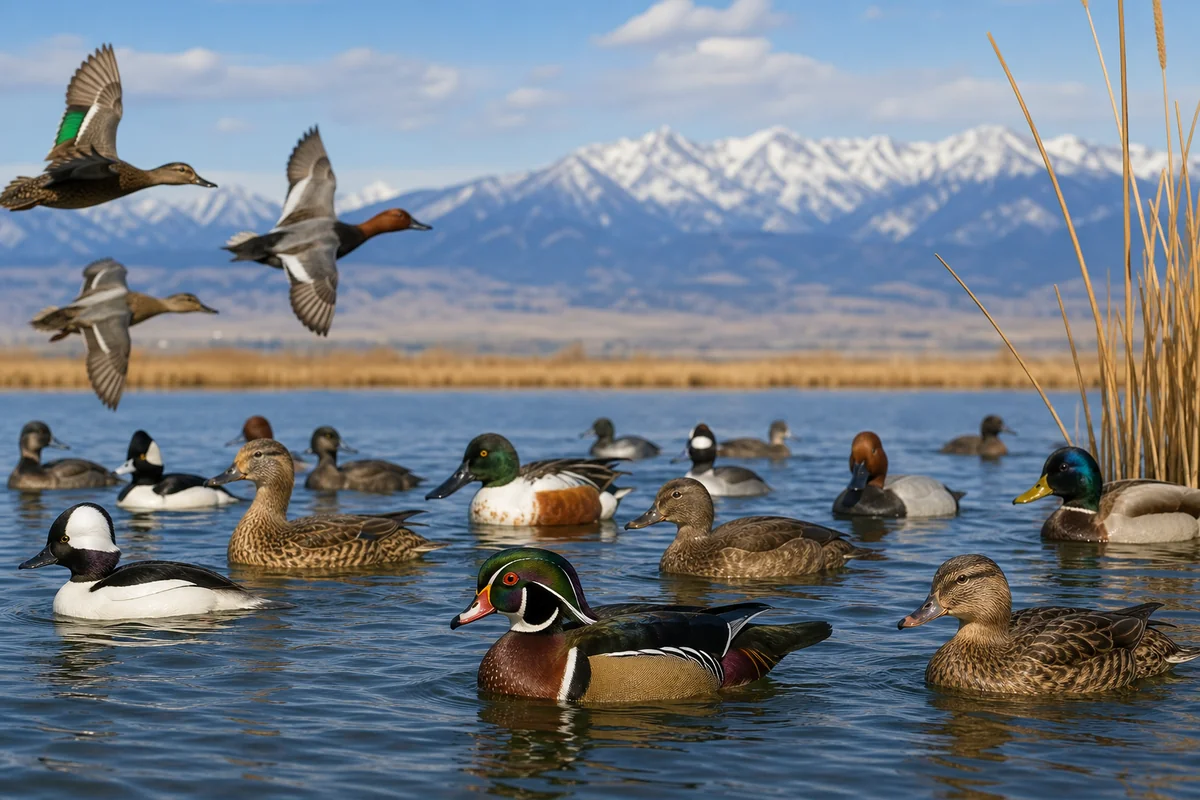
I’ll never forget the morning I counted fourteen different duck species from a single boardwalk at Freezout Lake—all before my coffee had gone cold. Montana’s waterways host an almost unbelievable diversity of waterfowl, from flashy Wood Ducks to sea ducks that somehow find their way to landlocked prairie potholes. If you’re planning a wildlife-watching trip to Big Sky Country, understanding where to find these 27 duck species will transform a casual outing into an unforgettable birding adventure that rivals anything you’d experience along the coasts. This diversity is just one reason why Montana wildlife draws visitors from around the world.
- Montana hosts 27 documented duck species across four major flyways
- Best viewing seasons: March-April (spring migration) and September-November (fall staging)
- Top hotspots: Freezout Lake, Bowdoin NWR, Lee Metcalf NWR, and the Missouri River
- Dabbling ducks dominate prairie potholes; diving ducks prefer deeper reservoirs
- Bring spotting scopes—many species are shy and keep their distance
- Early morning offers best lighting and most active feeding behavior
Liked this article?
Add Roaming Montana as a preferred source so you see more of our articles and guides on Google.
Why Montana Is a Duck-Watching Paradise
Montana sits at a remarkable crossroads of North American migration routes. During my travels across the state, I’ve realized that four major flyways converge here—the Pacific, Central, Mississippi, and even portions of the Atlantic flyway touch Montana’s eastern prairies.
This geographic quirk means you can spot species typically associated with completely different regions. Last September near Glasgow, I photographed both a Pacific-origin Harlequin Duck and an eastern Greater Scaup within the same hour.
The state’s diversity of aquatic habitats amplifies this advantage. You’ve got glacial prairie potholes, mountain lakes, meandering rivers, massive reservoirs, and everything in between.
Each habitat type attracts different duck species, which is why serious birders plan multi-day trips covering various ecosystems. If you’re interested in other Montana bird species, ducks make an excellent gateway into the state’s broader avian diversity.
Understanding Montana’s Duck Categories
Before diving into individual species, you’ll spot ducks more effectively if you understand how ornithologists categorize them. This isn’t just academic—it completely changes where you’ll look.
Dabbling Ducks (Puddle Ducks)
These are your classic “tip-up” feeders that you’ll find in shallow wetlands, flooded fields, and marshy edges. They don’t dive underwater; instead, they upend themselves to reach vegetation just below the surface.
During my spring visit to the Ninepipe National Wildlife Refuge, I watched Mallards, Gadwalls, and Northern Pintails feeding in water barely six inches deep. They take off directly from the water in an explosive vertical launch—no running start required.
Diving Ducks
These species submerge completely, propelling themselves underwater with their feet to chase fish or collect aquatic invertebrates. You’ll find them on deeper lakes and reservoirs.
I’ve spent hours at Canyon Ferry Reservoir watching Common Goldeneyes and Buffleheads dive and resurface twenty yards away. They need a running start across the water to take flight, which helps with identification.
Sea Ducks
Yes, Montana has sea ducks—even though we’re over 500 miles from any ocean. Several species migrate through or occasionally winter here.
My most surprising Montana duck sighting was a Long-tailed Duck at Fort Peck Reservoir. It had likely been pushed off-course during migration and decided the reservoir was close enough to marine habitat.
Stiff-Tailed Ducks
The Ruddy Duck is our primary representative of this quirky group. Their tails stick up at comical angles, and their courtship displays are genuinely hilarious to watch.
The Complete Montana Duck Species Guide
I’ve organized these 27 species by category, with specific details on where I’ve personally found them and when you’re most likely to see each one.
Dabbling Ducks
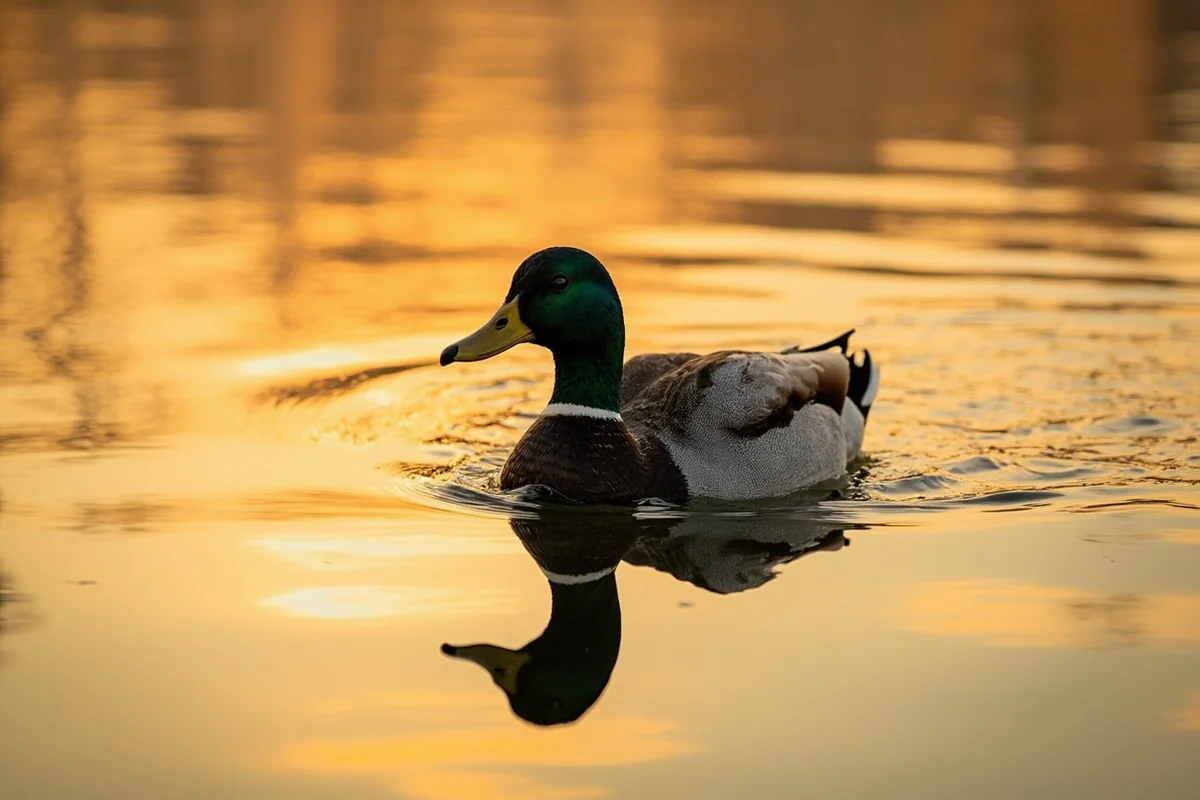
1. Mallard (Anas platyrhynchos)
The most abundant and recognizable duck in Montana, Mallards live here year-round. I see them in literally every wet spot—from irrigation ditches in Billings to backcountry beaver ponds in the Absaroka Range.
During a November trip to Helena, I counted over 300 gathered on a small stretch of Prickly Pear Creek that stayed ice-free due to warm springs. They’re incredibly adaptable and seem genuinely comfortable around humans.
2. Gadwall (Mareca strepera)
Don’t dismiss Gadwalls as “boring gray ducks.” When I got close views at Benton Lake NWR, I noticed their intricate vermiculated plumage—it’s actually stunning under good light.
They’re common breeders in prairie pothole country. Look for them from April through October, though some overwinter near thermal springs.
3. American Wigeon (Mareca americana)
Their distinctive white forehead stripe makes these ducks easy to pick out, even at distance. I always hear them before I see them—their whistling “whew-whew-whew” call is unlike any other Montana duck.
They’re particularly abundant during migration. Last April, I estimated over 2,000 at Freezout Lake, grazing on short grass like miniature geese.
4. Northern Shoveler (Spatula clypeata)
That absurdly oversized bill isn’t for looks—they’re filter feeders, sweeping their heads side-to-side through shallow water. When I first saw one through my scope, I thought something was wrong with its face.
Males are absolutely gorgeous with their green heads, white chests, and rusty flanks. Find them in marshy areas from March through September.
5. Northern Pintail (Anas acuta)
These are the supermodels of the duck world—sleek, elegant, with impossibly long tail feathers on males. They’re one of the earliest spring migrants.
I’ve seen them arrive at Freezout Lake while there’s still ice on the edges, sometimes in late February. They seem impatient to get north.
6. Green-winged Teal (Anas crecca)
Our smallest dabbling duck, Green-winged Teal are surprisingly hard to spot despite being common. Their size lets them hide in marsh vegetation that larger ducks can’t access.
I finally got excellent looks at Lee Metcalf NWR when a small flock fed along the edge of a viewing platform. That green wing patch is electric in good light.
7. Blue-winged Teal (Spatula discors)
That white facial crescent on males is diagnostic even at distance. These are long-distance migrants—some winter as far as South America.
They arrive later in spring than most ducks. During my May visits to the Bitterroot Valley, they’re still streaming in while other species are already nesting.
8. Cinnamon Teal (Spatula cyanoptera)
Males are genuinely cinnamon-colored—a deep rusty red that looks almost artificial. They’re the least common teal in Montana but reliably found in the right habitats.
I’ve had best luck at small marshes in the western valleys. Ninepipe and Pablo National Wildlife Refuges consistently produce sightings in May.
9. Wood Duck (Aix sponsa)
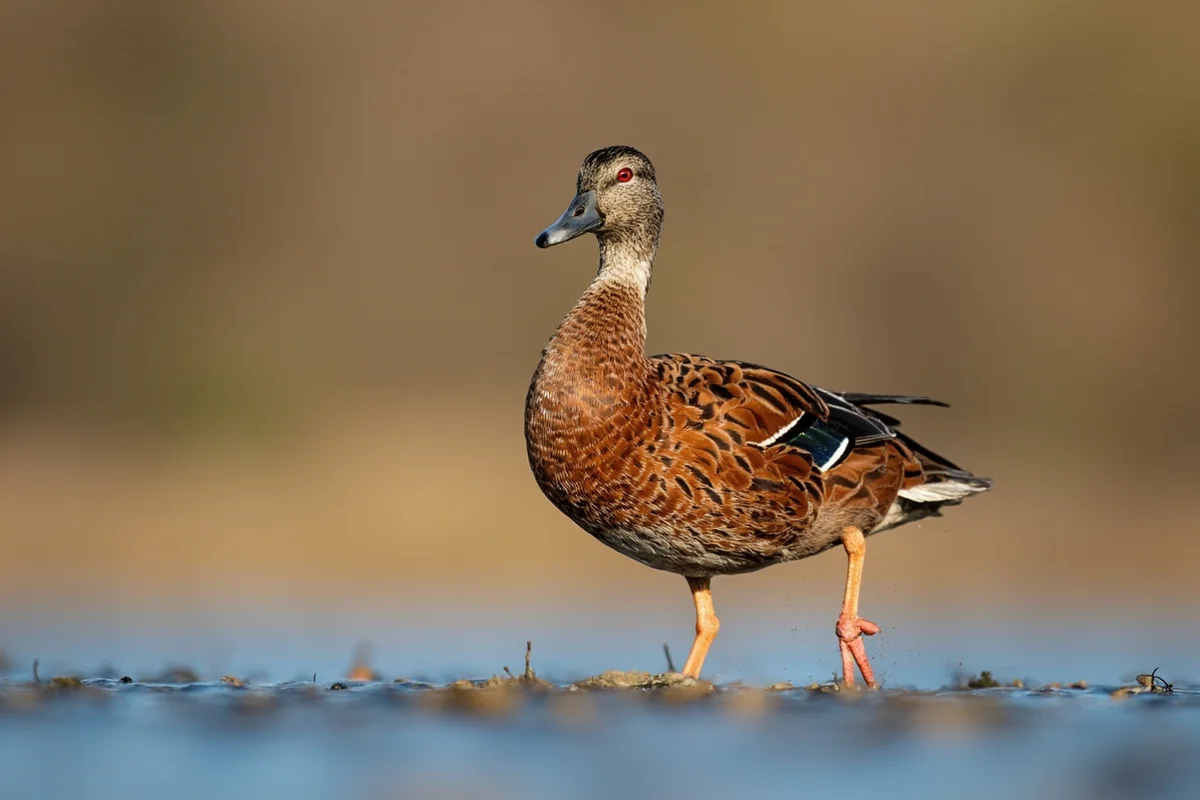
If you think Wood Ducks only live in eastern forests, Montana will surprise you. They nest in tree cavities along wooded rivers and wetlands throughout western Montana.
The first time I canoed the Blackfoot River in early June, I startled a brood of downy chicks. The male’s iridescent plumage looked impossibly tropical against cottonwood bark.
10. American Black Duck (Anas rubripes)
This eastern species is rare in Montana, but I include it because confirmed sightings do occur. Look carefully at dark female-like ducks during migration—you might get lucky.
I’ve only seen one in Montana, a lone bird mixed with Mallards at Bowdoin NWR. It’s worth checking every dark duck you encounter.
Diving Ducks
11. Canvasback (Aythya valisineria)
That sloping forehead profile is unmistakable. Canvasbacks are diving ducks royalty—big, elegant, and the species market hunters prized above all others during the 19th century.
They stage in impressive numbers on larger lakes. I watched several hundred at Canyon Ferry last October, their white backs creating a patchwork pattern on gray water.
12. Redhead (Aythya americana)
Often confused with Canvasbacks, Redheads have rounder heads and darker backs. Side-by-side comparison really helps cement the differences.
They’re more numerous than Canvasbacks in Montana’s prairie potholes. I’ve found nesting pairs at Medicine Lake NWR multiple years running.
13. Ring-necked Duck (Aythya collaris)
Ignore the name—you’ll never see that subtle chestnut neck ring in the field. Instead, look for the white ring around the bill and peaked head shape.
They prefer smaller, more sheltered waters than other diving ducks. During my spring visits to small mountain lakes near Missoula, Ring-necked Ducks are consistently present.
14. Greater Scaup (Aythya marila)
Telling Greater from Lesser Scaup challenges even experienced birders. Look for the rounder head shape and more extensive green gloss on Greater Scaup.
They’re less common than their smaller cousins but regular migrants. I’ve found them reliably at Fort Peck during October.
15. Lesser Scaup (Aythya affinis)
The default scaup in Montana—smaller, with a slightly peaked head showing purple gloss. During migration, rafts of hundreds gather on larger reservoirs.
Last fall at Fresno Reservoir, I estimated over 1,500 Lesser Scaup staging before continuing south. They seemed reluctant to leave.
16. Common Goldeneye (Bucephala clangula)
That white face spot glows against the dark green head. Common Goldeneyes are cold-hardy and stick around all winter on ice-free rivers.
I love their wing-whistle—you hear them flying overhead before you see them. The Yellowstone River near Livingston reliably hosts winter flocks.
17. Barrow’s Goldeneye (Bucephala islandica)
Western Montana’s version of the goldeneye, with a crescent-shaped face patch instead of a round spot. They’re actually more common than Common Goldeneyes in mountain habitats.
My best sightings come from glacial lakes in Glacier National Park. McDonald Creek below Lake McDonald is particularly reliable in winter. While observing these ducks, you might also spot Montana otters hunting the same waters.
18. Bufflehead (Bucephala albeola)
Our smallest diving duck looks like a bobbing cotton ball with that oversized white head patch. They’re absurdly cute—there’s no other way to say it.
Buffleheads are common migrants and winter residents. I see them on everything from tiny farm ponds to massive reservoirs.
19. Hooded Merganser (Lophodytes cucullatus)
When a male raises that spectacular black-and-white crest, it’s one of birding’s great visual moments. They nest in tree cavities like Wood Ducks.
I’ve had excellent luck along the lower Clark Fork River. They’re shy, so approach slowly and avoid sudden movements.
20. Common Merganser (Mergus merganser)
Big, fish-eating diving ducks with serrated bills for gripping slippery prey. Females lead trains of chicks that sometimes number over a dozen.
They’re abundant year-round on Montana’s rivers. During my float trips on the Missouri below Holter Dam, I see them constantly.
21. Red-breasted Merganser (Mergus serrator)
Less common than Common Mergansers, with a shaggier crest and thin red bill. They prefer coastal areas but migrate through Montana.
I spot them most reliably at Fort Peck during fall migration. They seem to appreciate the reservoir’s lake-like character.
Sea Ducks (Yes, in Landlocked Montana)
22. Long-tailed Duck (Clangula hyemalis)
Formerly called “Oldsquaw,” these Arctic breeders occasionally appear on Montana’s larger reservoirs. Their long tail streamers are unmistakable.
Finding one feels like winning a lottery. I’ve only encountered them twice in fifteen years of Montana birding—both times at Fort Peck.
23. Harlequin Duck (Histrionicus histrionicus)
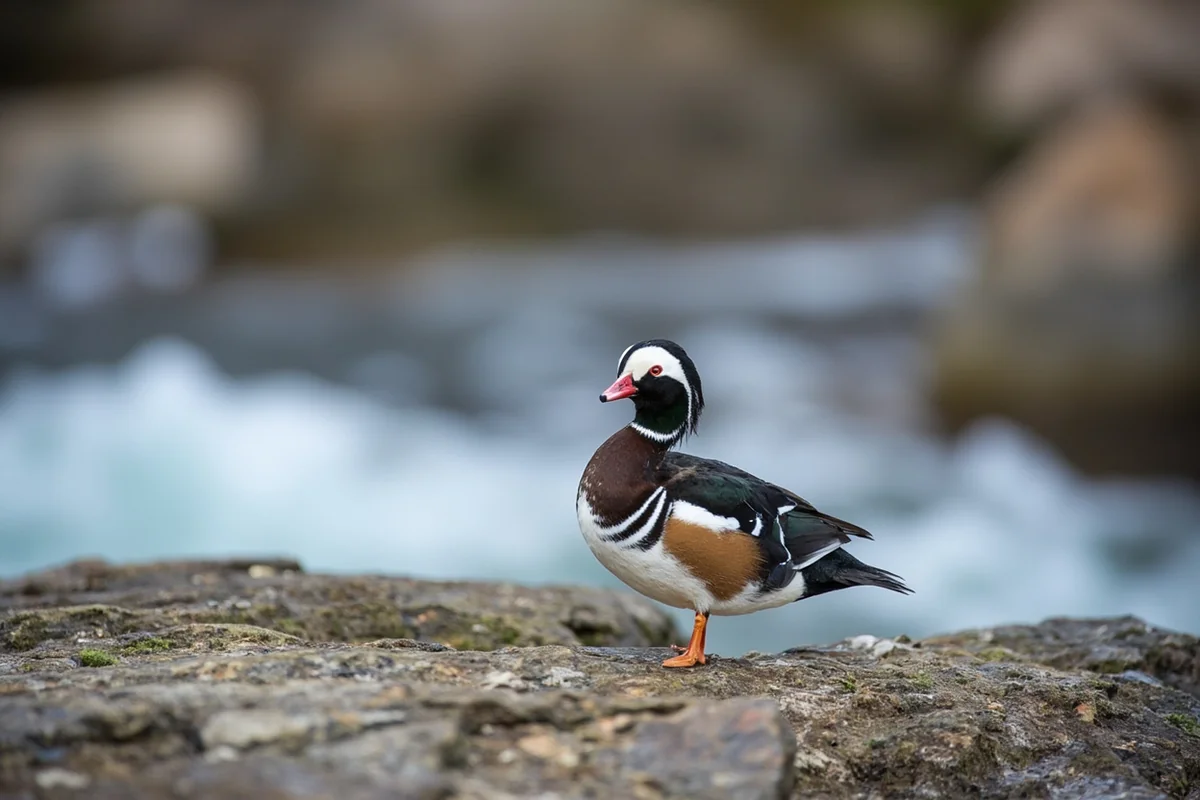
These mountain-stream specialists are the birds that got me into Montana duck watching. Males look painted with their bold blue, white, and chestnut patterns.
They breed on fast-flowing rivers in the northwest mountains. McDonald Creek in Glacier National Park is the most reliable spot I know.
24. Surf Scoter (Melanitta perspicillata)
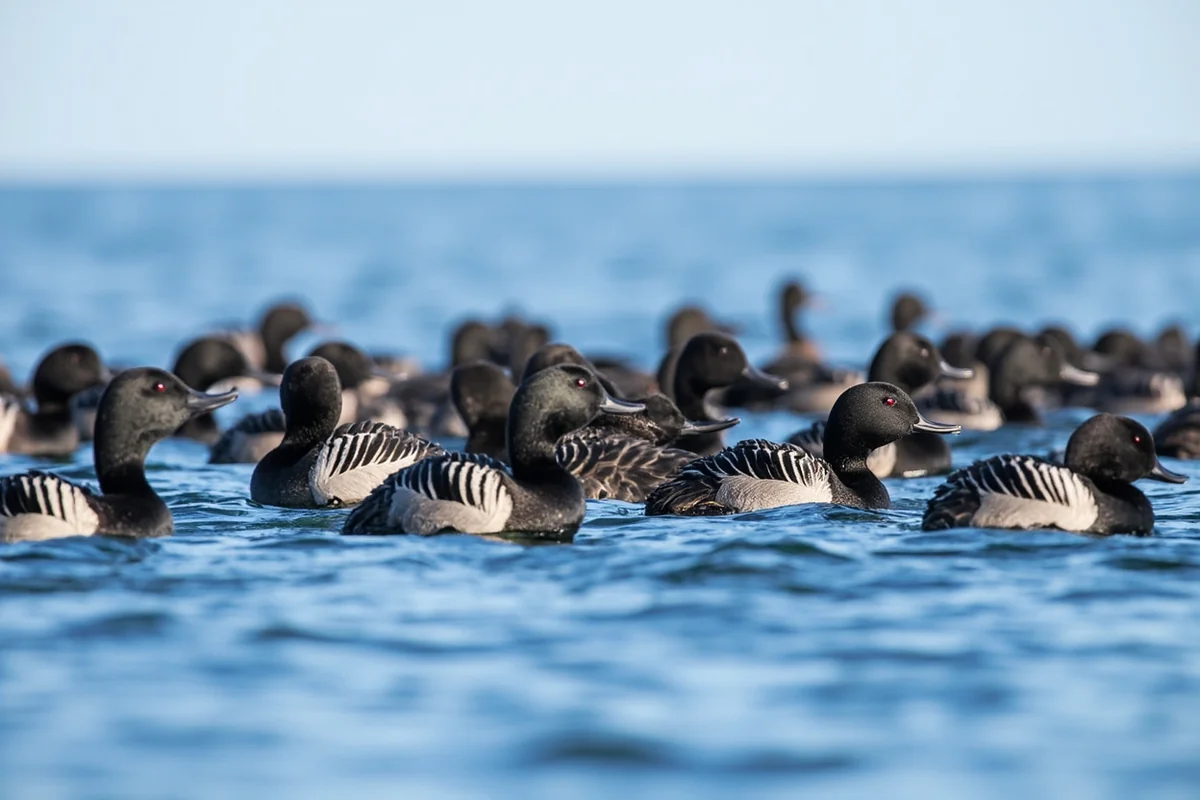
Black sea ducks with multicolored bills—they look like they shouldn’t exist this far inland. Yet I’ve seen them at Canyon Ferry and Fort Peck during migration.
They’re not annual visitors, so finding one requires both luck and patience. Keep checking large bodies of water during October and November.
25. White-winged Scoter (Melanitta deglandi)
The most frequently encountered scoter in Montana, with that distinctive white wing patch visible in flight. They’re regular migrants on larger reservoirs.
Last October, I watched a group of eight at Tiber Reservoir. They stayed for nearly two weeks before continuing their journey.
Stiff-Tailed Ducks
26. Ruddy Duck (Oxyura jamaicensis)
Those bright blue breeding-season bills on males are unlike anything else in North American waterfowl. Their courtship display—rapid bill-drumming against inflated neck pouches—is comedy gold.
Ruddy Ducks breed commonly in Montana’s prairie pothole region. I’ve spent hours at Benton Lake watching their bizarre performances.
Whistling-Ducks
27. Black-bellied Whistling-Duck (Dendrocygna autumnalis)
This tropical species is increasingly recorded in Montana as its range expands northward. It’s a genuine rarity, but confirmed sightings exist.
I haven’t personally found one in Montana yet, but birding friends have reported them near Billings. Climate change seems to be pushing their range northward, similar to how some endangered and threatened species in Montana are seeing range shifts.
Best Locations for Duck Watching in Montana
Through years of exploration, I’ve identified hotspots that consistently deliver outstanding duck diversity. Here are my favorites:
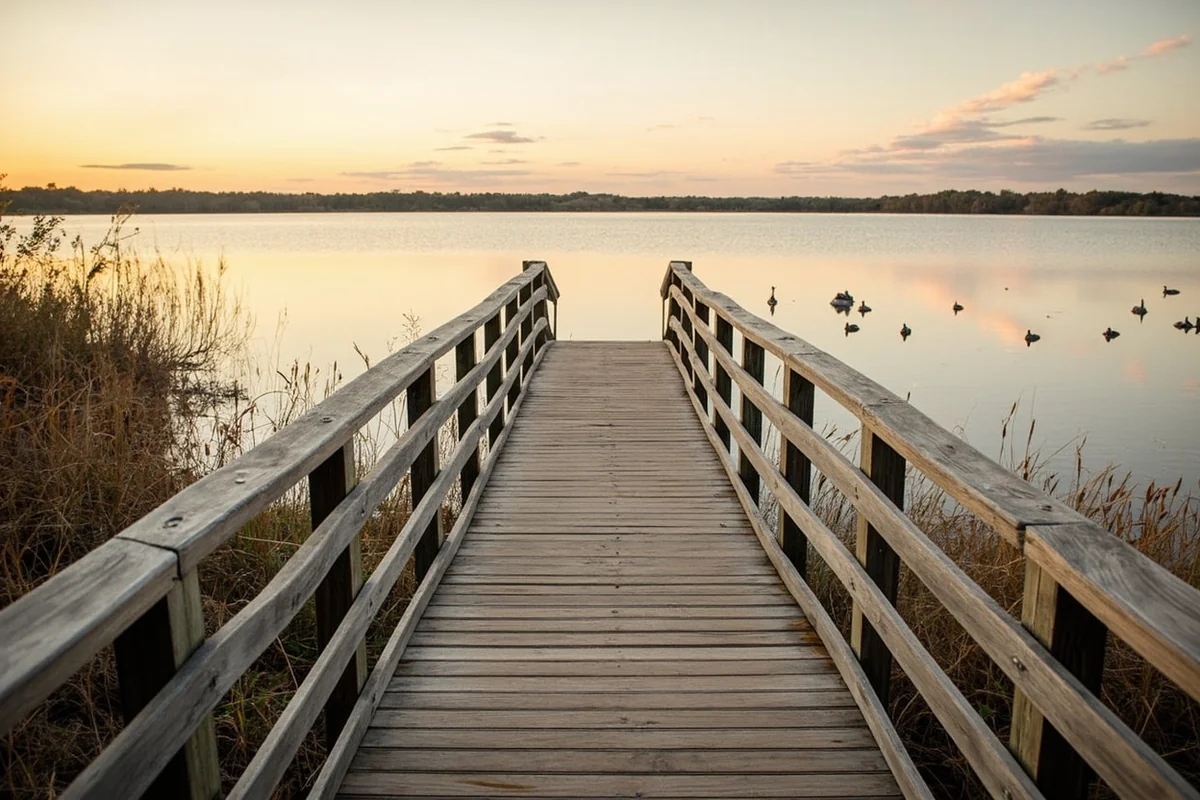
Freezout Lake Wildlife Management Area
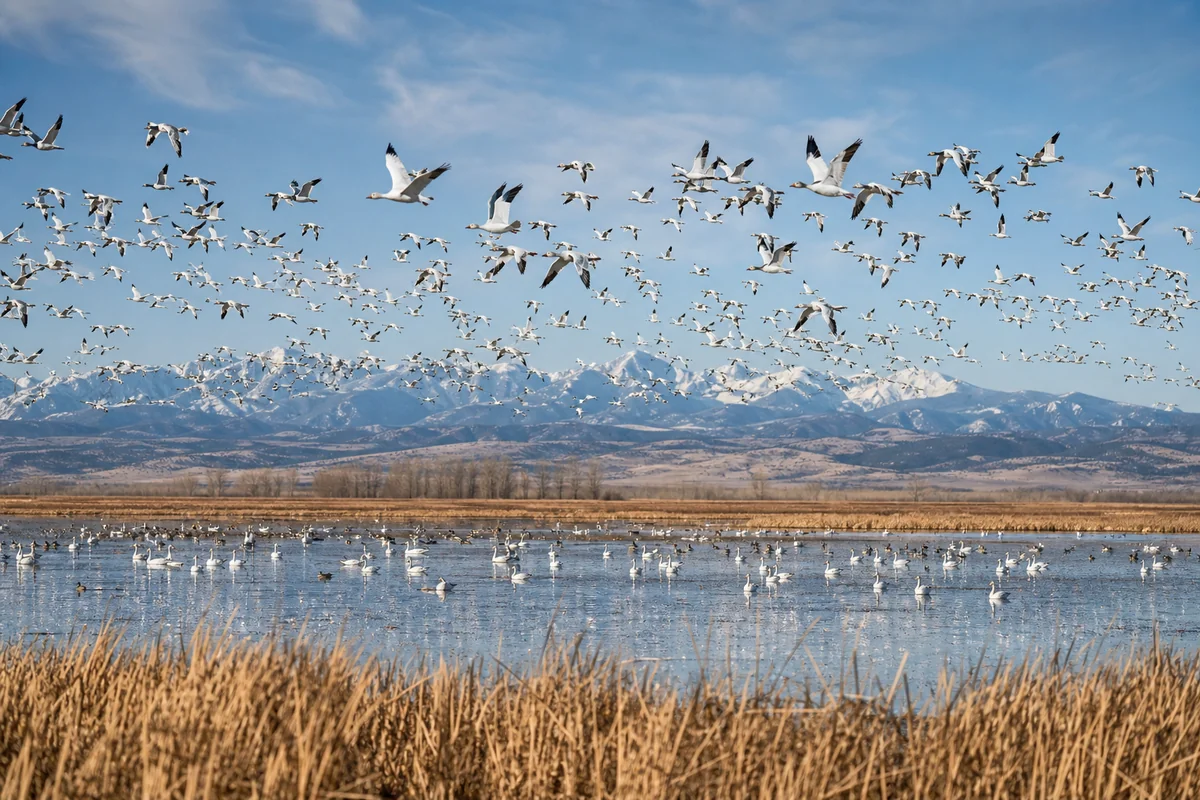
This is Montana’s premier waterfowl destination, hands down. During peak migration, the lake hosts hundreds of thousands of birds.
I’ve visited during spring snow goose migration and been overwhelmed by the spectacle. But early mornings in September offer quieter, more intimate duck-watching opportunities.
The viewing platform near the headquarters provides excellent vantage points. Bring a spotting scope—birds can be distant.
Bowdoin National Wildlife Refuge
This prairie oasis near Malta attracts impressive duck diversity. The auto tour route lets you cover extensive habitat without excessive walking.
I spent an entire morning here last May and tallied 18 duck species. The shallow marshes are perfect for dabbling ducks.
Lee Metcalf National Wildlife Refuge
Located in the Bitterroot Valley near Stevensville, this refuge offers easy access and excellent viewing infrastructure. The trails wind through diverse wetland habitats.
Wood Ducks are reliably here, along with most common dabbling species. It’s a great place to bring beginners.
Medicine Lake National Wildlife Refuge
This northeastern Montana gem requires commitment to reach, but the isolation means lighter birding pressure. Prairie pothole habitat supports breeding populations.
I’ve found several uncommon species here that I’ve missed elsewhere. The surrounding grasslands also host Montana rattlesnakes, so watch your step on trails.
Fort Peck Reservoir
Montana’s largest body of water attracts unusual species during migration. Sea ducks and other rarities appear here more than anywhere else in the state.
I always plan at least one fall trip specifically to scan Fort Peck’s waters. The sheer size of the reservoir means multiple days are worthwhile.
Glacier National Park
For Harlequin Ducks and Barrow’s Goldeneyes, Glacier is essential. McDonald Creek below Lake McDonald is particularly productive.
The mountain lake setting makes every sighting feel special. You might also encounter Montana bears while hiking to remote lakes.
Practical Information Table
| Season | Best Locations | Target Species | Conditions |
|---|---|---|---|
| Spring (March-May) | Freezout Lake, Bowdoin NWR | Migrating dabbling ducks, Northern Pintail concentrations | Variable weather; ice-out timing varies yearly |
| Summer (June-August) | Prairie potholes, Glacier NP | Breeding pairs, ducklings, Harlequin Ducks | Warm; mosquitoes can be intense |
| Fall (September-November) | Fort Peck, Canyon Ferry, Freezout | Staging diving ducks, sea duck rarities | Cooling temps; excellent visibility |
| Winter (December-February) | Ice-free rivers, thermal spring areas | Goldeneyes, Common Merganser, hardy Mallards | Cold; limited access to many areas |
Gear and Preparation Tips
Proper preparation makes duck watching far more productive. Here’s what I’ve learned through trial and error.
Optics Are Essential
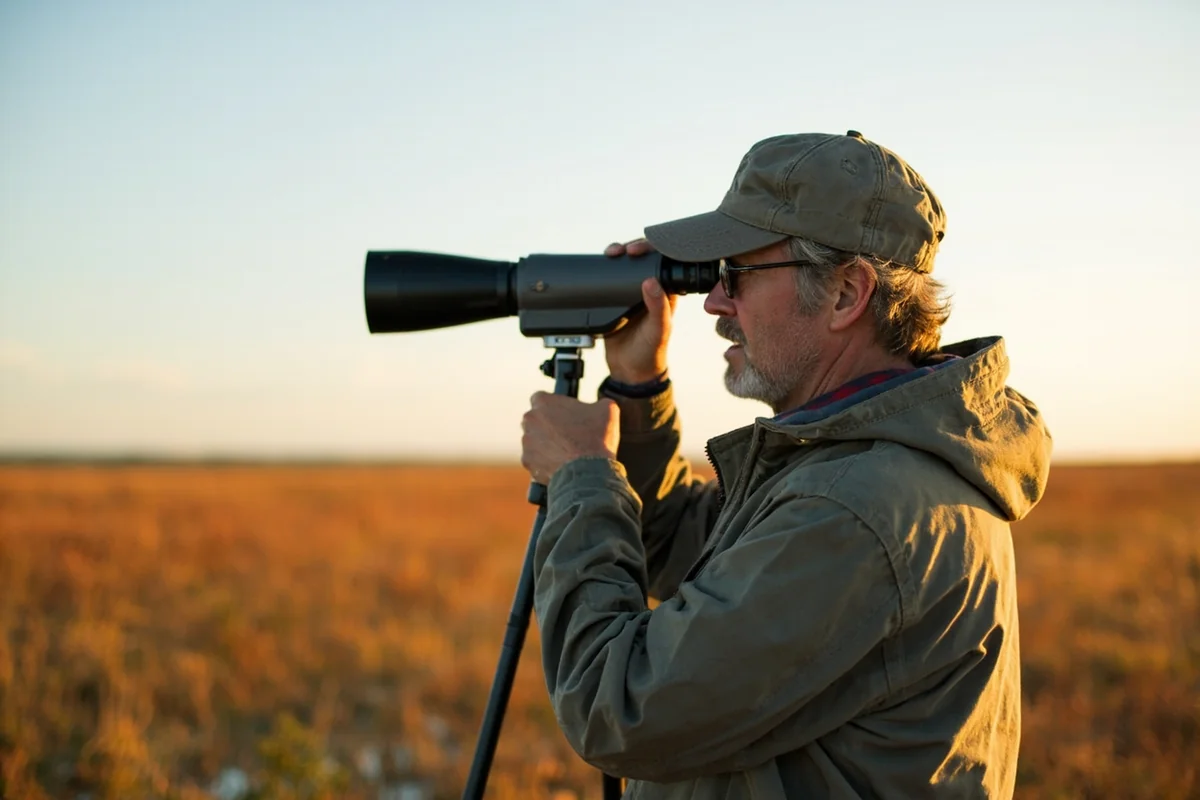
Ducks rarely let you approach closely. I never attempt serious duck watching without my spotting scope—20-60x magnification minimum.
Binoculars alone won’t cut it for identifying distant scaup or picking out rare species from a flock. Invest in quality glass.
Dress for Wind
Montana’s best duck habitat sits on exposed prairies. Wind chill can make September mornings feel like December.
I’ve learned to pack wind-blocking layers even when temperatures seem mild. That constant prairie breeze adds up quickly.
Plan for Early Mornings
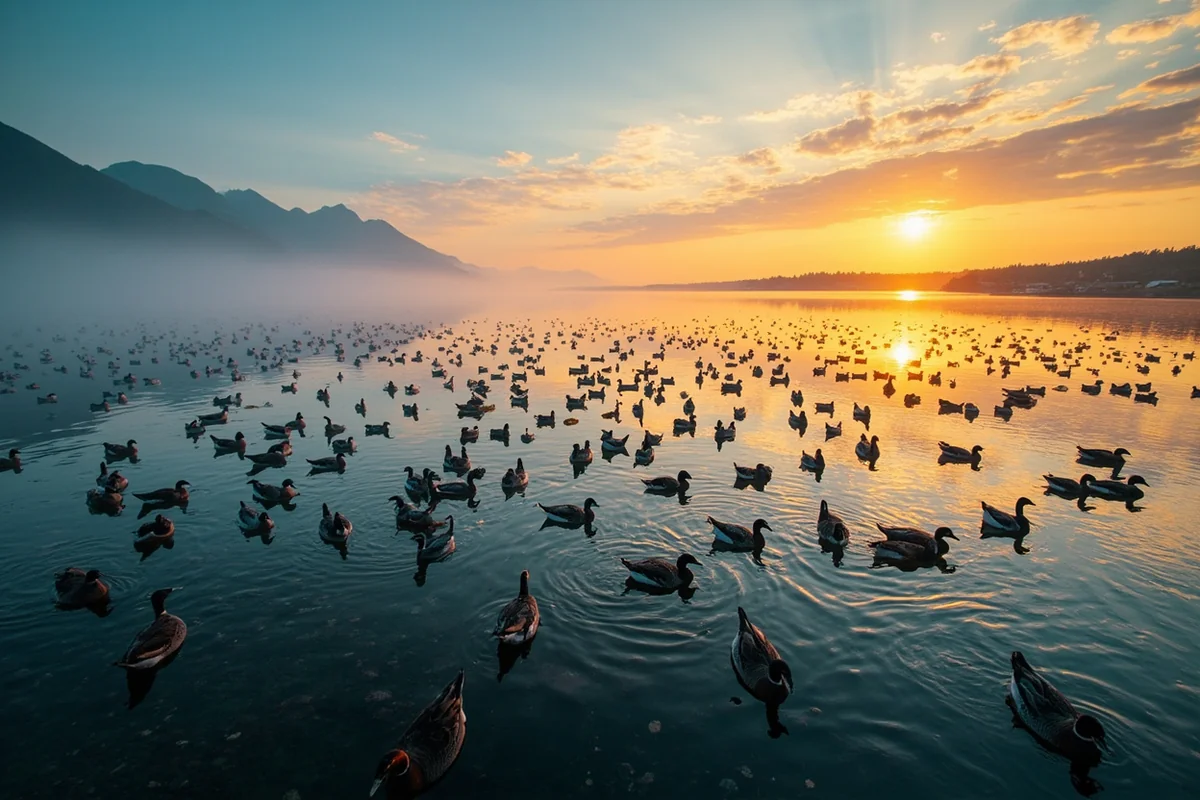
Ducks are most active during the first hours after sunrise. Light is also best for seeing subtle plumage details that aid identification.
I typically arrive at my viewing spot while it’s still dark, getting settled before the action starts. While waiting for sunrise, I’ve occasionally heard Montana owls calling nearby.
Carry Field Guides
Even experienced birders benefit from references. I use both the Sibley and National Geographic guides, comparing illustrations from both.
Photography can help too—I often snap documentation shots to review later when ID feels uncertain.
Ethical Viewing Practices
Montana’s duck populations deserve our respect. Following ethical guidelines ensures both successful viewing and species protection.
Maintain Distance
If ducks flush when you approach, you’re too close. I use my spotting scope specifically to observe without disturbing birds.
Stressed birds waste energy they need for migration and survival. Keeping distance is non-negotiable.
Stay on Designated Paths
Wetland vegetation is fragile. I’ve seen careless birders trample nesting habitat while pursuing better views.
The existing trails and viewing platforms exist for good reasons. Use them.
Respect Hunting Seasons
Montana has regulated waterfowl hunting seasons. Wildlife management areas may have restricted access during these periods.
I always check regulations before visiting public lands in fall. Hunter-birder conflicts are avoidable with proper planning.
Combining Duck Watching with Other Wildlife
Montana’s wetland and riparian habitats host far more than ducks. I always watch for additional species while focused on waterfowl.
The same prairie potholes that attract ducks also draw shorebirds, herons, and pelicans. Surrounding grasslands support Montana deer and various raptors.
Mountain lake settings offer chances at Montana bighorn sheep on surrounding slopes. I once watched a Harlequin Duck while mountain goats grazed the cliff above.
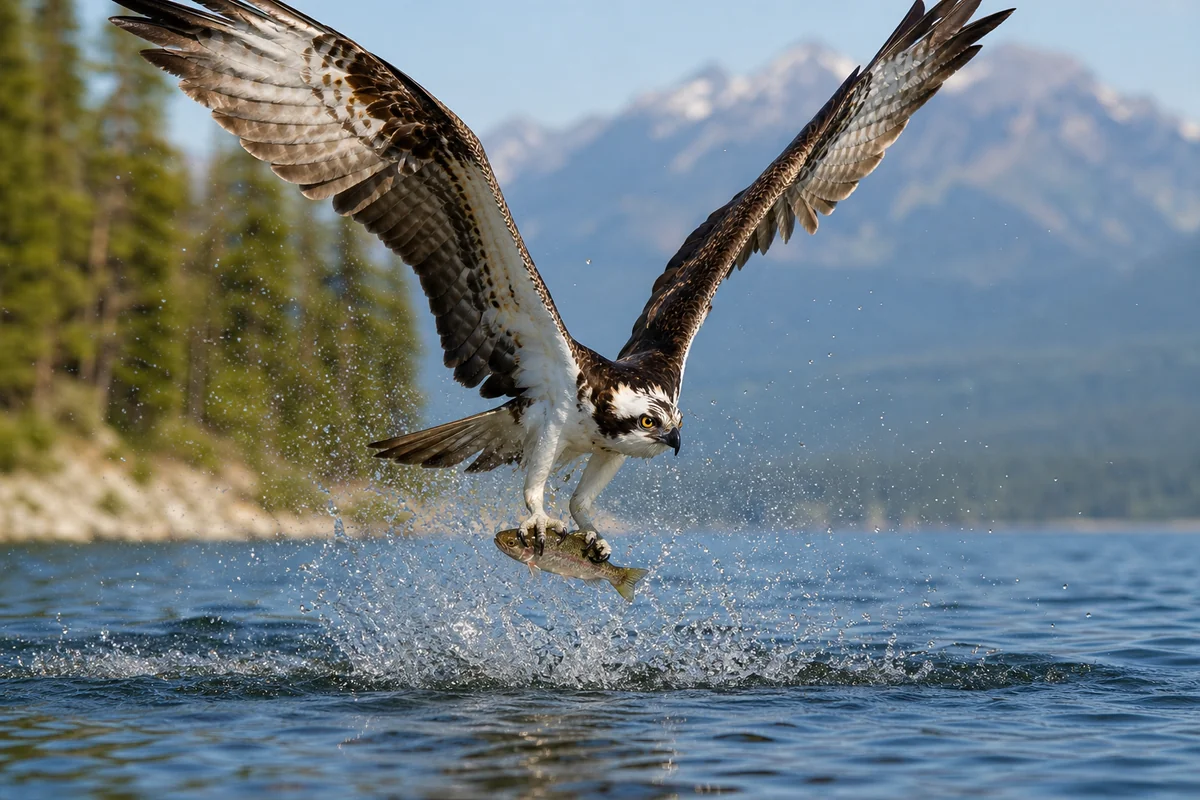
River corridors where mergansers hunt might also reveal Montana osprey diving for the same fish. The ecosystem connections fascinate me endlessly.
Don’t forget about smaller wildlife either. Marmots, Montana squirrels, and even Montana spiders add interest during slower birding moments.
Photography Considerations
I photograph ducks whenever conditions allow, though it requires specific techniques and equipment.
Long telephoto lenses are non-negotiable—I wouldn’t attempt duck photography with anything shorter than 400mm. Most of my best images come at 600mm or longer.
Low angles work best. I’ve spent considerable time prone on muddy banks, getting eye-level with swimming ducks. The resulting images have three-dimensional depth that standing shots lack.
Early morning golden hour light transforms ordinary Mallards into spectacular subjects. That warm light against reflective water creates magic.
Planning Your Montana Duck Trip
For first-time visitors, I recommend focusing on accessible hotspots with established infrastructure before exploring remote locations.
Start at Freezout Lake or Lee Metcalf NWR. Both offer easy viewing, parking, and predictable species. Build your identification skills before chasing rarities.
Allow multiple days—weather variability means some mornings will disappoint while others exceed expectations. Flexibility produces results.
Consider shoulder seasons. Peak summer brings mosquitoes and reduced species diversity. October combines pleasant weather with concentrated migration activity.
If you’re visiting during winter, many ducks remain on ice-free waters. Check out Montana winter birds and Montana winter animals guides for additional cold-season wildlife opportunities.
While less relevant to duck watching, Montana’s unique domestic animals like Montana alpaca farms and Montana mountain horses can add variety to wildlife-focused trips. Similarly, understanding invasive species helps contextualize conservation challenges facing Montana’s wetlands.
Remote areas may offer surprising encounters. I once spotted a Montana lynx while hiking to a backcountry lake for duck watching. And mountain lions occasionally appear near riparian corridors, though I’ve never had the luck to see one during birding trips.
Final Thoughts on Montana’s Duck Diversity
Twenty-seven duck species represent remarkable diversity for a landlocked state. Montana’s position at the crossroads of migration routes creates opportunities that coastal birders might envy.
I’ve been watching Montana ducks for over fifteen years now, and I still get excited when Harlequins return to McDonald Creek each spring. That sense of discovery never fades.
Whether you’re a seasoned birder chasing your North American life list or a casual wildlife enthusiast hoping to see something beautiful, Montana’s ducks deliver. Pack your scope, dress warmly, and prepare for early mornings.
The prairie marshes and mountain streams are waiting.
Frequently Asked Questions
What is the best time of year to see ducks in Montana?
I’ve found that spring migration (March through May) and fall migration (September through November) offer the best duck viewing opportunities in Montana. During these periods, you’ll spot the highest diversity of species as they travel through the Pacific and Central Flyways. Winter is also excellent for seeing hardy species like Common Goldeneyes and Buffleheads on open rivers.
Where are the best places to go duck watching in Montana?
Freezout Lake Wildlife Management Area near Choteau is my top recommendation, especially during spring when thousands of waterfowl congregate there. Bowdoin National Wildlife Refuge in north-central Montana, Lee Metcalf NWR near Missoula, and the Missouri River headwaters also offer exceptional duck viewing. Most locations are free to access and within a 2-3 hour drive from major cities like Billings or Missoula.
What equipment do I need for duck spotting in Montana?
Bring quality binoculars (8×42 is ideal), a spotting scope for distant waterfowl, and a waterproof field guide to Montana birds. I always pack waterproof boots, layered clothing, and a portable blind or camo clothing for closer observation. Budget around $150-300 for decent beginner optics if you don’t already own them.
Which duck species are most commonly seen in Montana lakes and rivers?
Mallards are the most abundant species you’ll encounter year-round throughout Montana. Other commonly spotted ducks include Northern Pintails, American Wigeons, Green-winged Teal, and Common Mergansers. In summer months, look for nesting Wood Ducks in wooded wetlands and Cinnamon Teal in marshy areas.
Can I combine duck watching with other wildlife viewing in Montana?
Absolutely—Montana’s wetlands and refuges are home to incredible biodiversity beyond ducks. At places like Freezout Lake, I’ve spotted Snow Geese, Tundra Swans, bald eagles, and even the occasional moose in a single morning. Many duck habitats overlap with prime areas for viewing elk, deer, and various raptors, making it easy to plan a multi-species wildlife trip.
Are there guided birdwatching tours for duck species in Montana?
Several outfitters offer guided birding tours ranging from $150-400 per day, including companies based in Missoula and the Glacier National Park region. Local Audubon Society chapters also host free or low-cost field trips during migration seasons. I recommend booking guided tours if you’re new to waterfowl identification, as experienced guides can help you spot and identify all 27 Montana duck species more efficiently.
What rare duck species might I see during a Montana birding trip?
Lucky birders may spot Harlequin Ducks on fast-moving mountain streams in western Montana, particularly near Glacier National Park. Other uncommon species include Long-tailed Ducks, Surf Scoters during migration, and the stunning Barrow’s Goldeneye. Check local birding reports on eBird before your trip to track recent rare duck sightings across the state.
Sources
- https://fieldguide.mt.gov/displaySpecies.aspx?family=Anatidae
- https://www.nps.gov/articles/harlequin-ducks.htm
- https://fwp.mt.gov/binaries/content/assets/fwp/montana-outdoors/duckid.pdf
- https://www.fws.gov/refuge/northwest-montana-wetland-management-district/species
- https://animalrangeextension.montana.edu/wildlife/private_land_wildlife_mgmt/waterfowl-mgmt.html