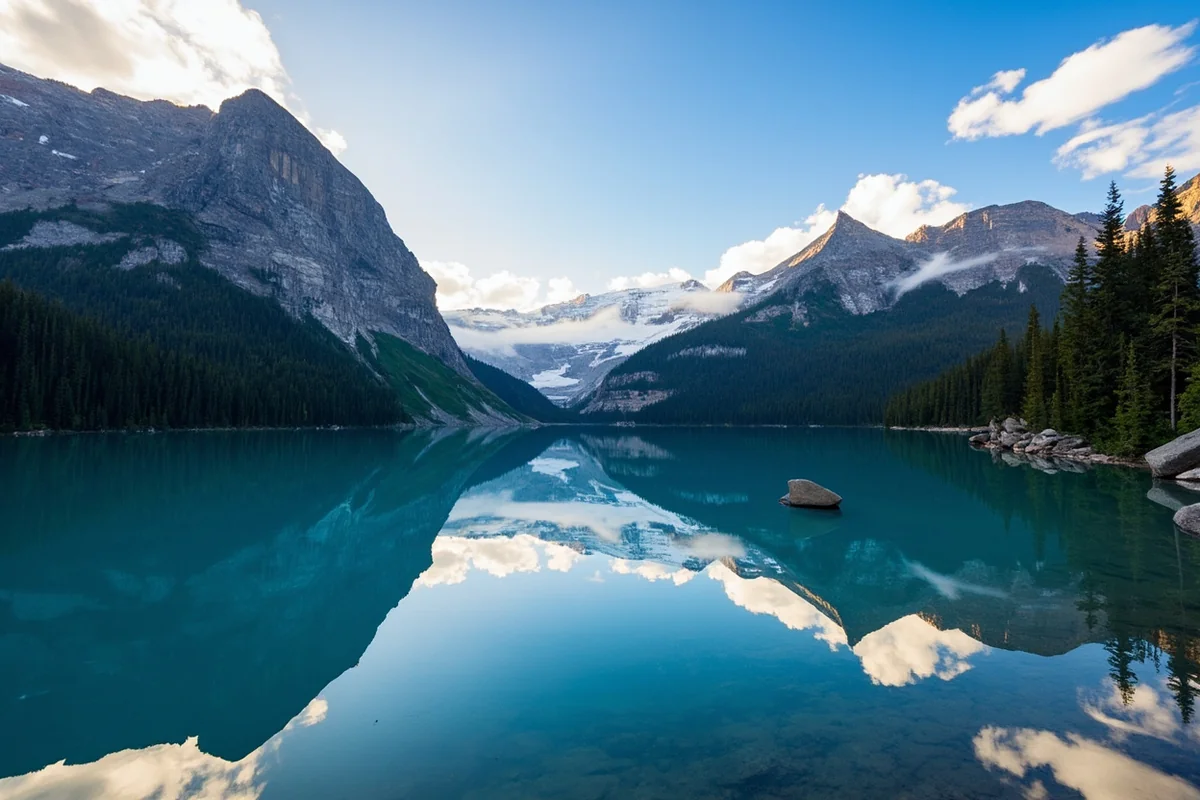
I was standing at the edge of Two Medicine Lake in Glacier National Park last summer when a fellow hiker asked me a question I’ve heard dozens of times: “Is Montana really worth the trip?” I laughed, gestured at the turquoise water reflecting Sinopah Mountain, and said, “Does this answer it?”
If you’re researching About Montana before your first visit, you probably have a mental list of questions that Google hasn’t quite satisfied—and I’m here to fix that.
- Montana’s best visiting window is June through September, but shoulder seasons offer fewer crowds and lower prices
- Budget $150-300 per day for comfortable travel including lodging, food, and activities
- You absolutely need a car—public transportation is virtually nonexistent outside major towns
- Wildlife encounters are common; I’ve seen grizzlies, moose, and wolves during various trips
- Cell service is unreliable in most areas—download offline maps before you go
- Glacier National Park requires vehicle reservations during peak season (May through September)
Liked this article?
Add Roaming Montana as a preferred source so you see more of our articles and guides on Google.
General Montana Questions Every First-Timer Asks
Why Is Montana Called Big Sky Country?
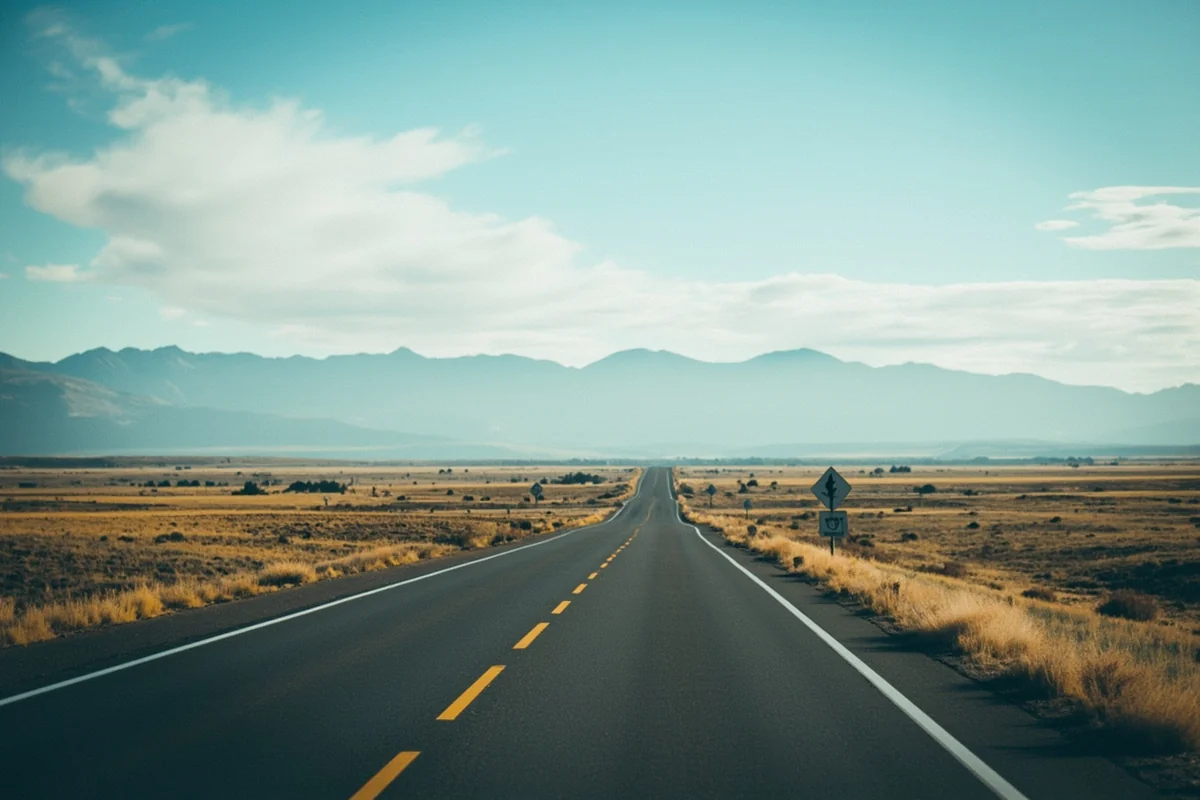
The nickname isn’t marketing fluff—it’s literal truth. When I drove across the Hi-Line (Highway 2) for the first time, I understood immediately.
The combination of vast prairies, minimal light pollution, and sparse development creates an optical phenomenon where the sky genuinely appears larger than anywhere else I’ve traveled in the continental US. A.B. Guthrie Jr. coined the phrase in his 1947 novel “The Big Sky,” which captures Montana’s expansive spirit.
If you’re curious about the literary heritage here, check out our guide to Montana Authors and the Best Books On Big Sky Country.
How Big Is Montana Exactly?
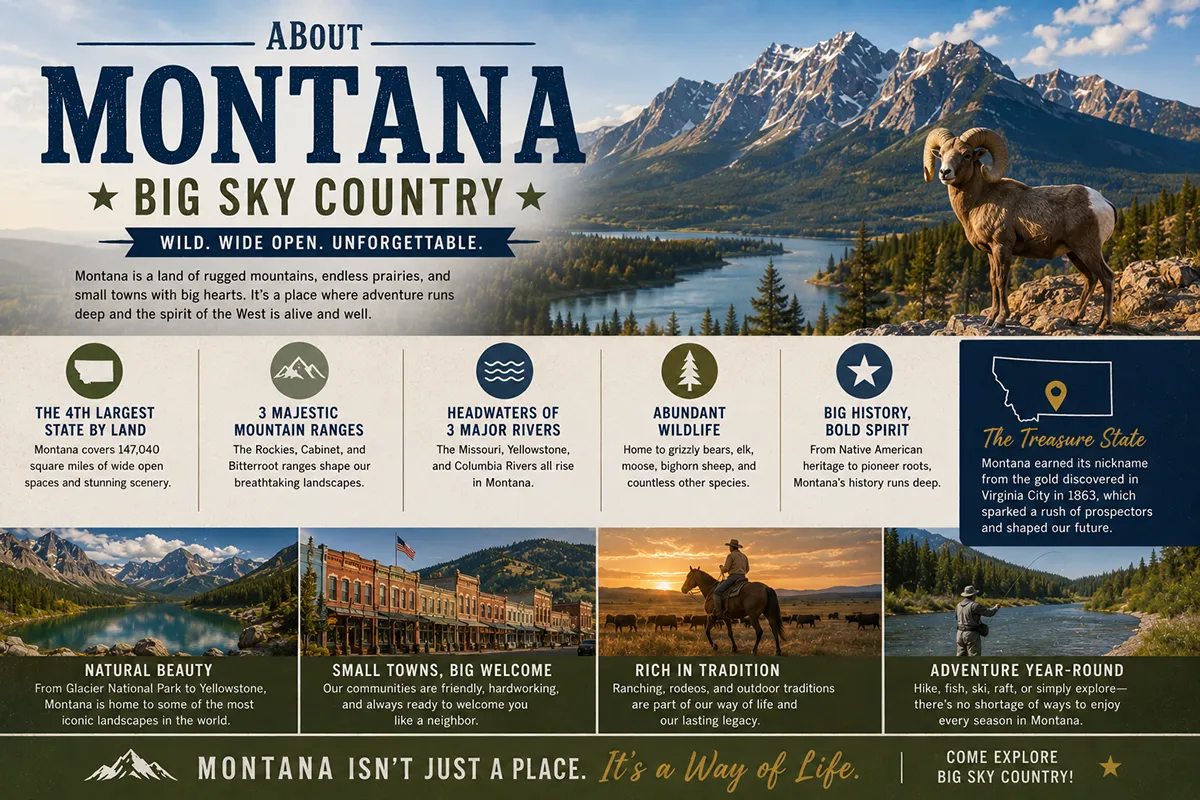
Montana is the fourth-largest state at 147,040 square miles—roughly the size of Germany. During my first trip, I severely underestimated distances and planned way too many stops in a single day.
Here’s what caught me off guard: driving from Glacier National Park to Yellowstone takes about 6 hours with zero stops. That’s within the same state.
What’s the Population Like?
Montana has roughly 1.1 million residents spread across all those miles, making it the third-least densely populated state. On a recent drive from Great Falls to Lewistown, I didn’t pass another vehicle for 45 minutes.
This emptiness is the point. If you want solitude, Montana delivers it without effort.
Weather and When to Visit Questions
What’s the Best Time to Visit Montana?
I’ve visited Montana in every season, and my honest answer is: it depends on what you want.
Summer (June-August) offers the most accessible experiences—all roads and trails open, warmest weather, longest days. But it’s also the most crowded and expensive.
Fall (September-October) is my personal favorite. Last September, I had entire trails in Glacier to myself, watched elk bugling in the Madison Valley, and paid half the summer lodging rates. The larch trees turning gold in late September is a spectacle I now plan trips around.
How Cold Does Montana Actually Get?
Brutally cold. I experienced -15°F in Bozeman one January, and locals shrugged like it was nothing.
Montana holds the record for the coldest temperature ever recorded in the lower 48: -70°F at Rogers Pass in 1954. Winter visitors should pack serious cold-weather gear, not the light jacket that works in Seattle.
Does It Snow a Lot?
Depends where. The mountains get absolutely buried—Whitefish Mountain Resort averages over 300 inches annually.
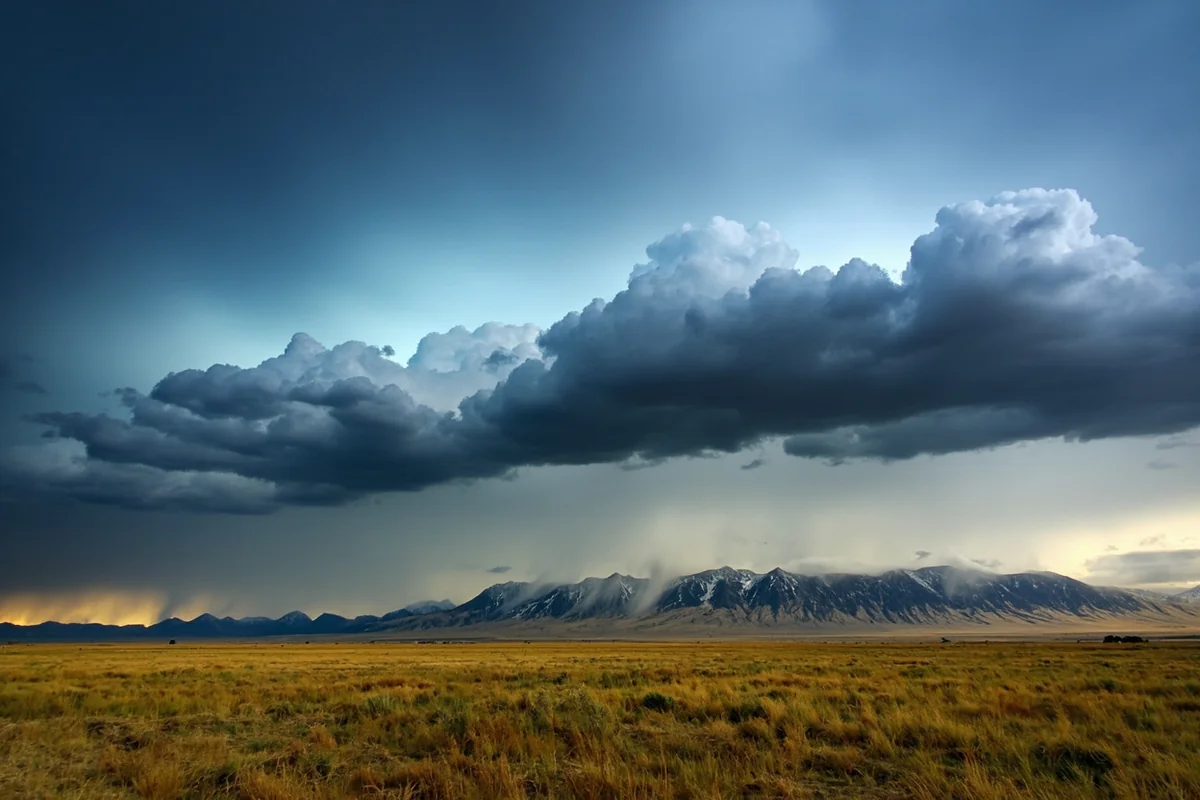
Eastern Montana is surprisingly dry, more like the high plains than alpine terrain. Miles City might get only 12 inches of snow in an average winter.
What About Summer Weather?
Summer days typically range from 70-90°F in the valleys, cooler in the mountains. I’ve learned to always pack layers regardless of season.
One afternoon last July, I started a hike in Glacier wearing shorts and a t-shirt at 75°F. Three hours later at the summit, I was in my down jacket with 40°F winds and horizontal rain. Weather changes fast here.
Getting There and Getting Around Questions
Which Airport Should I Fly Into?
Montana has eight commercial airports, but these four handle most visitors:
| Airport | Best For | My Notes |
|---|---|---|
| Bozeman (BZN) | Yellowstone, Big Sky, Southwest MT | Busiest airport, most flight options, 90 mins to Yellowstone north entrance |
| Missoula (MSO) | Glacier (west), Flathead Lake, Western MT | 2.5 hours to Glacier’s west entrance, good restaurant scene in town |
| Kalispell (FCA) | Glacier National Park | Only 30 mins to Glacier’s west entrance, limited flights, prices spike in summer |
| Billings (BIL) | Eastern MT, Beartooth Highway | Often cheapest flights, but 3+ hours from most attractions |
Do I Need a Car?
Unequivocally yes. I cannot stress this enough.
There’s no Uber in most of Montana. There’s no practical bus system between towns. Amtrak’s Empire Builder stops at a few northern towns, but you’ll be stranded without wheels once you arrive.
I’ve tried to piece together trips using shuttles and tours—it’s expensive, limiting, and frustrating. Rent a car.
What About RV Travel?
Montana is exceptional for RV travel, and I’ve done several RV trips here. The state has hundreds of campgrounds, generous pull-off areas, and roads generally suited to larger vehicles.
One caveat: Going-to-the-Sun Road in Glacier restricts vehicles over 21 feet long and 8 feet wide. Check specific route restrictions before driving anything oversized.
How’s the Cell Service?
Terrible in the best possible way. During my last trip through the Bob Marshall Wilderness area, I had zero service for three full days.
Major highways and towns have coverage, but venture into the backcountry—which is most of Montana—and you’ll be offline. I now download Google Maps offline regions and carry a Garmin inReach for emergencies.
Cost and Budget Questions
Is Montana Expensive to Visit?
More than you might expect. Montana has transformed from a budget-friendly destination to a moderately expensive one, especially since the pandemic tourism boom.
During peak summer, I’ve paid $350/night for average hotels near Glacier and $250/night in Bozeman. Shoulder seasons are significantly better—the same rooms drop to $150-180.
What’s a Realistic Daily Budget?
Based on my trips, here’s what I actually spend:
Budget travel (camping, cooking your own food, minimal activities): $75-100/day
Mid-range travel (modest hotels, restaurant meals, some paid activities): $175-250/day
Comfortable travel (nice hotels, good restaurants, guides/outfitters): $300-400/day
What Costs Catch People Off Guard?
Gasoline between towns. Stations are sparse, and I’ve paid $5.50/gallon at the only option within 80 miles.
Activity costs add up fast: a guided fly fishing trip runs $550-700/day, whitewater rafting is $80-120/person, and horseback rides average $150 for a half-day.
One pleasant surprise: Montana has no sales tax. What you see on the price tag is what you pay.
National Parks and Public Lands Questions
Do I Need Reservations for Glacier National Park?
Yes, during peak season. The vehicle reservation system (introduced in 2021) requires advance booking for entering via Going-to-the-Sun Road corridor between 6 AM and 3 PM from late May through early September.
I learned this the hard way in 2022 when I showed up without a reservation and was turned away at the gate. Reservations release in batches—some months in advance, some 24 hours prior.
Is Yellowstone National Park in Montana?
Only partially. Yellowstone spans Wyoming, Montana, and Idaho. The three Montana entrances (North, Northeast, and West Yellowstone) offer convenient access for Montana-based trips.
The North Entrance through Gardiner is my favorite approach—you drive through the original Roosevelt Arch and immediately enter the Lamar Valley, which has the best wildlife viewing in the entire park.
What About Less Famous Public Lands?
Glacier and Yellowstone get the attention, but I’ve had some of my best Montana experiences on lesser-known public lands.
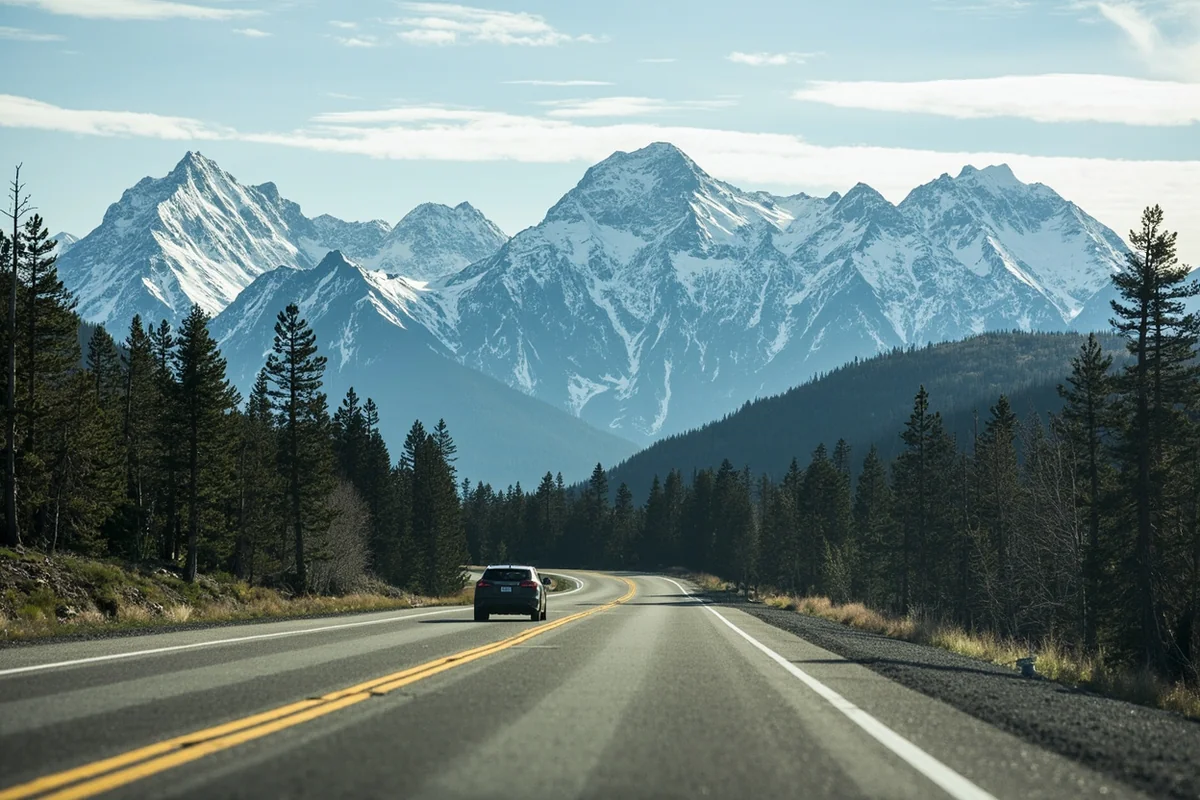
The Bob Marshall Wilderness Complex (over 1.5 million acres) offers backpacking solitude that Glacier can’t match. Makoshika State Park near Glendive has badlands and dinosaur fossils without crowds. The Beartooth Highway from Red Lodge to Yellowstone’s northeast entrance is the most scenic drive I’ve experienced anywhere in America.
For unique discoveries, explore our list of Beautiful Places in Montana that most tourists miss.
Wildlife Questions
Will I See Bears?
Probably. Montana has the largest grizzly bear population in the lower 48.
I’ve seen grizzlies on about 60% of my Montana trips, usually in Glacier or the Greater Yellowstone Ecosystem. Last spring, I watched a sow with two cubs from a pullout on the Many Glacier Road for a solid 20 minutes.
Carry bear spray ($50-60 at any outdoor store in Montana), know how to use it, and make noise on trails. I’ve never had a dangerous encounter, but I’ve also never been careless.
What Other Wildlife Is Common?
Beyond bears, I regularly see elk, mule deer, white-tailed deer, moose, bison (in Yellowstone), pronghorn antelope, bald eagles, and osprey.
I once spotted a wolverine in the Many Glacier Valley—the rarest sighting of my life. Wolves are present but elusive; I’ve heard them howling but only seen them twice in dozens of trips.
Is Wildlife Dangerous?
It can be if you’re foolish. Bison injure more Yellowstone visitors than bears do, usually because tourists approach too closely for photos.
The rule I follow: stay 100 yards from bears and wolves, 25 yards from all other wildlife. A moose with calves is arguably more dangerous than a black bear—they’re aggressive and fast.
Outdoor Activity Questions
Is Roaming Montanaod for Fishing?
Montana is a fly fishing mecca. The Madison, Gallatin, Yellowstone, Missouri, and Bighorn rivers draw anglers from around the world.
I’m not a skilled fisherman, but I’ve hired guides on the Missouri River near Craig and caught trout within my first hour on the water. A non-resident fishing license costs about $86 for the season or $25 for two days.
What About Hiking?
Exceptional—easily top-five state for hiking in my experience. Glacier alone has over 700 miles of trails.
My personal favorites: Grinnell Glacier Trail (strenuous but spectacular), Avalanche Lake (moderate and family-friendly), and the less-crowded trails in the Many Glacier area.
Outside Glacier, I love Hyalite Canyon near Bozeman, the M Trail overlooking Missoula, and the Beaten Path through the Absaroka-Beartooth Wilderness.
Can I Go Skiing in Montana?
Absolutely. Montana ski resorts offer excellent conditions without Colorado’s crowds or prices.
Big Sky Resort has the biggest terrain (5,800 acres), Whitefish Mountain has the most character, and Bridger Bowl near Bozeman offers incredible value with legendary steep terrain. Lift tickets run $100-180/day—still cheaper than Vail or Aspen.
What About Rafting and Kayaking?
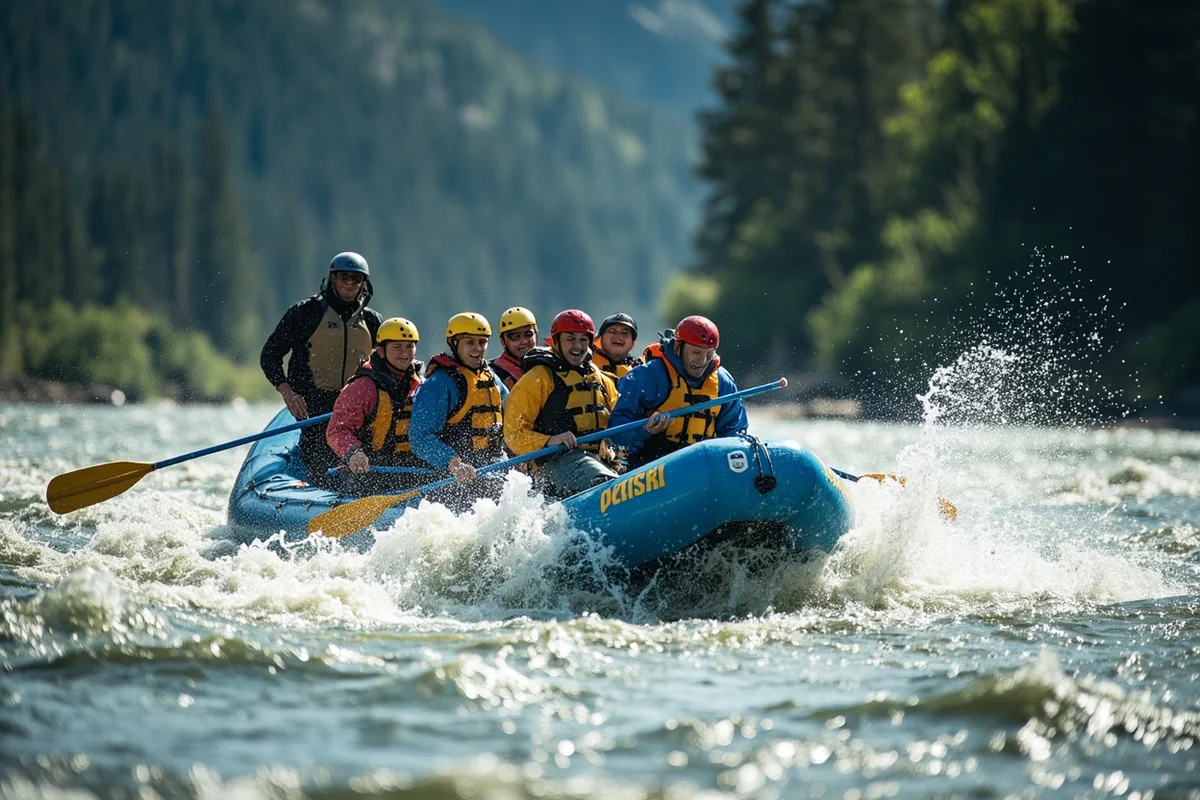
Montana’s rivers provide outstanding whitewater opportunities. I’ve rafted the Middle Fork of the Flathead (Class III-IV, absolutely thrilling) and floated the gentler Clark Fork near Missoula.
The Gallatin River’s “Mad Mile” near Big Sky offers accessible whitewater for beginners, while the Alberton Gorge on the Clark Fork challenges experienced paddlers.
Food and Dining Questions
What’s Montana Food Like?
Beef. Lots of beef. Montana is cattle country, and the steaks are genuinely some of the best I’ve eaten.
Beyond beef, expect bison (I had a fantastic bison burger at Ted’s Montana Grill in Bozeman), huckleberry everything (pie, jam, ice cream, beer), and surprisingly good farm-to-table options in college towns like Missoula and Bozeman.
Are There Good Restaurants?
In unexpected places, yes. Missoula has a genuinely impressive food scene—Scotty’s Table, The Pearl Café, and Biga Pizza are favorites.
Bozeman punches above its weight with places like Blackbird Kitchen and the community-table atmosphere at Open Range. Even small towns surprise: Polebridge Mercantile’s huckleberry bear claws are worth the dirt-road drive.
What About Vegetarian/Vegan Options?
Limited but improving. College towns have options; rural areas are challenging.
I traveled with a vegetarian friend through eastern Montana, and she ate a lot of side salads and baked potatoes. Plan ahead, pack snacks, and research restaurant menus before arriving in small towns.
Lodging Questions
Where Should I Stay Near Glacier?
West Glacier/Columbia Falls for the west side (most dining and services), Whitefish for a charming resort-town vibe, and Many Glacier for the best in-park experience (though lodging sells out a year in advance).
St. Mary on the east side is convenient but has fewer amenities. East Glacier has historic character with the iconic Glacier Park Lodge.
What About Near Yellowstone?
West Yellowstone, Montana has the most lodging options but feels touristy. Gardiner at the north entrance has more character.
My personal preference: stay in Bozeman or Livingston and day-trip to Yellowstone. Better restaurants, more to do if weather ruins park plans, and generally better lodging value.
Is Camping Available?
Extensive camping throughout the state. National park campgrounds book months ahead; first-come-first-served sites fill by early morning in summer.
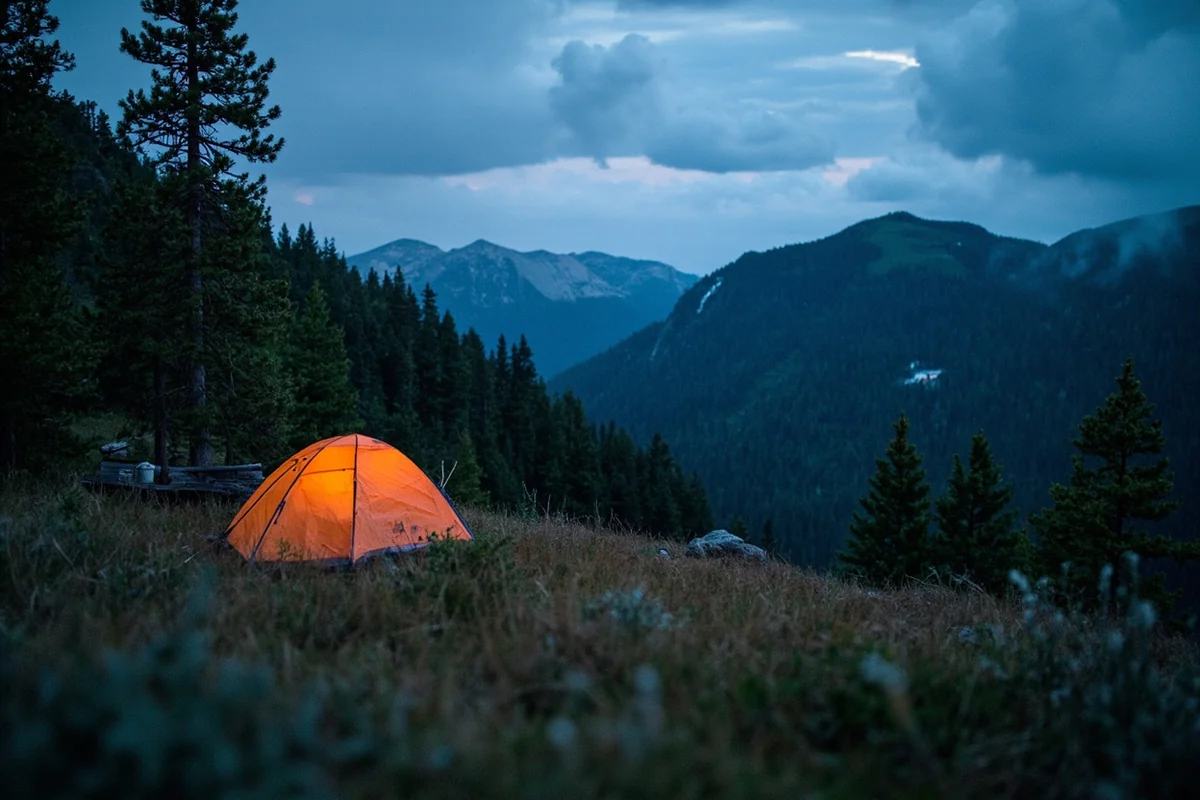
National forest campgrounds are my go-to—often free or very cheap ($10-15/night), scenic, and rarely full outside holiday weekends.
Culture and History Questions
What’s the History I Should Know?
Montana’s history is dramatic and sometimes tragic. The Little Bighorn Battlefield, where Custer made his last stand in 1876, is a sobering and worthwhile visit.
The state’s mining history shaped entire regions—Butte’s Berkeley Pit and headframes tell the story of copper’s boom and bust. Virginia City and Nevada City preserve gold rush-era ghost towns.
Indigenous history runs deep here. The Blackfeet, Salish, Kootenai, Crow, Northern Cheyenne, Assiniboine, Gros Ventre, and other tribes have inhabited these lands for thousands of years. The Museum of the Plains Indian in Browning offers important context.
For more cultural context, explore our article on Famous People from Montana and the Movies Filmed In Big Sky Country.
What’s “Montana Culture” Like?
Fiercely independent, outdoor-oriented, and unpretentious. Montanans value self-reliance and tend toward libertarian sensibilities regardless of political party.
People are genuinely friendly but respect privacy. I’ve had long conversations with strangers at bars and diners, but nobody pries into your business.
The “last best place” mentality is real—many Montanans moved here specifically to escape crowded places and protect what makes Montana special.
Practical Travel Questions
Is Montana Safe for Solo Travelers?
Very safe in terms of crime. I’ve solo traveled extensively throughout Montana without concerns about personal safety in towns.
Backcountry safety is different—solo hiking in grizzly country carries real risk. I always tell someone my itinerary and expected return when hiking alone.
Is Montana LGBTQ+ Friendly?
Mixed, honestly. Missoula, Bozeman, and Helena are welcoming with visible LGBTQ+ communities and Pride events.
Rural areas and small towns vary. I haven’t witnessed overt hostility, but visitors should be aware that attitudes in remote areas may be more conservative.
How Do I Handle Wildfires?
Wildfire season (typically July-September) can significantly impact travel plans. I’ve had trips where smoke obscured mountain views entirely.
Check AirNow.gov for air quality before outdoor activities. Have backup plans if your destination is smoky—some years are worse than others. My August 2021 trip was severely smoke-impacted; August 2023 was crystal clear.
What Should I Pack?
Layers, always. Even summer requires a warm jacket for evenings and mountain excursions.
My essential Montana packing list: bear spray, rain jacket, sunscreen, insect repellent, reusable water bottle, offline maps downloaded, binoculars, and a good camera.
Comparing Montana to Other States
Travelers often ask how Montana stacks up against similar destinations. I’ve written detailed comparisons to help you decide.
If you’re torn between mountain states, check out Montana Vs Wyoming (Wyoming has more geothermal features; Montana has more glacial landscapes) or Montana Vs Colorado (Colorado is more developed; Montana offers more solitude).
For Pacific Northwest comparisons, see Montana Vs Oregon and Montana Vs Idaho.
Those considering northern states might explore Montana Vs North Dakota or even Montana Vs Alaska for the ultimate wilderness comparison.
And for prairie state context, Montana Vs South Dakota covers the differences in eastern landscapes.
Questions About Living in Montana
Should I Move to Montana?
This question comes up constantly after people visit. My advice: rent first, experience a full winter, and read our comprehensive guide on Things To Know Before Moving to Montana.
Housing costs have skyrocketed since 2020. Bozeman and Missoula median home prices now exceed $600,000. Jobs in your field may not exist. Winters are long and dark.
That said, people who move here for the right reasons—prioritizing outdoor access over career advancement, craving space over convenience—tend to thrive.
What Are Montana’s Natural Resources?
Montana’s economy historically centered on mining, timber, and agriculture. Today, tourism rivals traditional industries. For deeper exploration, read about Montana Natural Resources.
The state contains significant coal, copper, gold, and silver deposits. Timber remains important in western Montana. Cattle ranching dominates the eastern plains.
Understanding What Makes Montana Special
I’ve tried to answer the practical questions, but the deeper question—why Montana?—deserves attention.
Montana offers something increasingly rare: genuine wildness within the continental United States. When I backpack the Bob Marshall Wilderness, I’m in country that looks essentially unchanged from centuries ago.
The state hasn’t been sanitized for tourism. Grizzlies actually roam. Roads actually close in winter. Cell phones actually don’t work. This isn’t manufactured adventure—it’s the real thing.
Our guide to 27 Things Montana is Known For covers the highlights, while Reasons Montana Is Best explains why visitors become repeat visitors.
For unique experiences, explore Unique Big Sky Country and Weird Unusual Things you won’t find anywhere else.
And if you want to understand Montana’s soul through the words of those who love it, don’t miss our collection of Quotes about Montana.
Final Thoughts From Someone Who Keeps Coming Back
I’ve answered dozens of Montana questions here, but the one I can’t answer for you is whether it’s right for your trip.
What I can tell you: Montana rewards preparation but punishes overplanning. Leave room for spontaneity. The best moments of my trips—watching wolves at dawn in Lamar Valley, stumbling upon a rodeo in a town I’d never heard of, finding a perfect swimming hole on a hot afternoon—weren’t on any itinerary.
Montana is big enough to contain contradictions. It’s both welcoming and indifferent to tourists. It’s both stunningly beautiful and capable of being deadly. It’s both changing rapidly and stubbornly timeless.
If you’re still researching, also check out Big Sky Country Best for curated highlights and our coverage of the Montana State Governor for current political context.
The questions will keep coming as you plan. That’s normal. Montana is worth every moment of preparation—and then some.
Frequently Asked Questions
What is the best time of year to visit Montana for first-time travelers?
I recommend visiting Montana between mid-June and early September when roads are fully open, including the famous Going-to-the-Sun Road in Glacier National Park. Summer temperatures range from 70-85°F, perfect for hiking and outdoor activities. If you’re hoping to avoid crowds, early June or September offers better availability and lower lodging prices.
How many days do you need to explore Montana properly?
For a solid Montana road trip covering Glacier National Park and Yellowstone’s Montana entrances, I suggest planning at least 7-10 days. If you’re focusing on just one region like Glacier or the Bozeman area, 4-5 days allows enough time to experience the highlights without feeling rushed. Remember, distances are vast here—Glacier to Yellowstone is about 350 miles.
What should I pack for a summer trip to Montana?
Pack layers even in summer since Montana mountain temperatures can drop 30-40 degrees after sunset. I always bring hiking boots, sunscreen, bear spray ($40-50 at local outfitters), a rain jacket, and binoculars for wildlife viewing. Don’t forget a reusable water bottle and a portable phone charger since cell service is spotty in remote areas.
How much does a Montana vacation cost for a week?
A week-long Montana trip typically costs $1,500-3,000 per person depending on your travel style. Budget travelers can find campsites for $15-35/night, while mid-range hotels near Glacier run $150-250/night in peak season. Factor in park entrance fees ($35 per vehicle for Glacier or Yellowstone), gas for long drives, and dining costs of $40-80 per person daily.
Is it safe to hike in Montana with bears and wildlife?
Montana hiking is safe when you take proper precautions—I always carry bear spray, make noise on trails, and hike in groups. Grizzly and black bears are present throughout the state, so store food in bear-proof containers and never approach wildlife. Check ranger stations for recent bear activity before heading out on backcountry trails.
Do I need a rental car to travel around Montana?
Yes, a rental car is essential for exploring Montana since public transportation is extremely limited outside of cities. I recommend renting an SUV or vehicle with good clearance for gravel forest roads and unpredictable weather conditions. Book your rental well in advance for summer travel—prices range from $60-150 per day, and vehicles sell out quickly near Glacier National Park.
What are the most underrated places to visit in Montana besides Glacier National Park?
I love recommending the Beartooth Highway near Red Lodge, often called America’s most scenic drive with 10,947-foot summit views. Flathead Lake, the largest natural freshwater lake west of the Mississippi, offers incredible swimming and cherry picking in summer. The ghost towns around Bannack State Park and the hot springs in Paradise Valley near Livingston are also worth adding to your Montana itinerary.