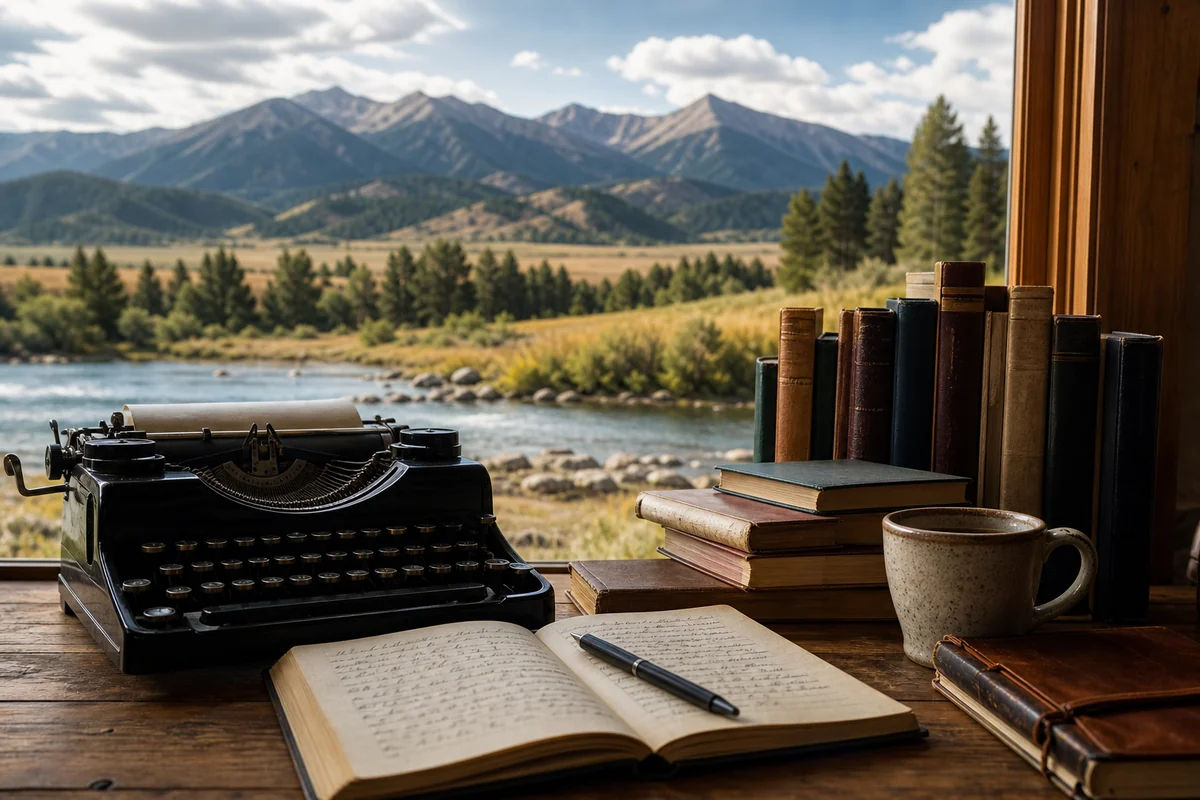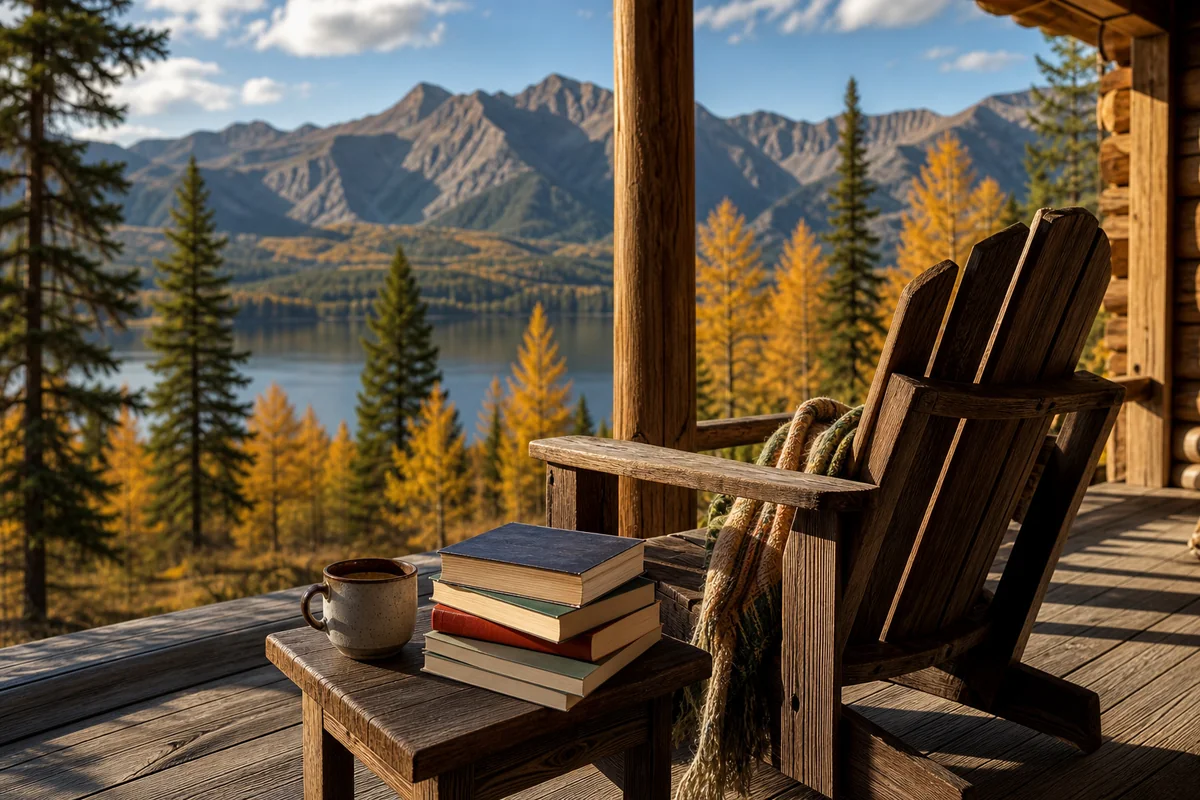
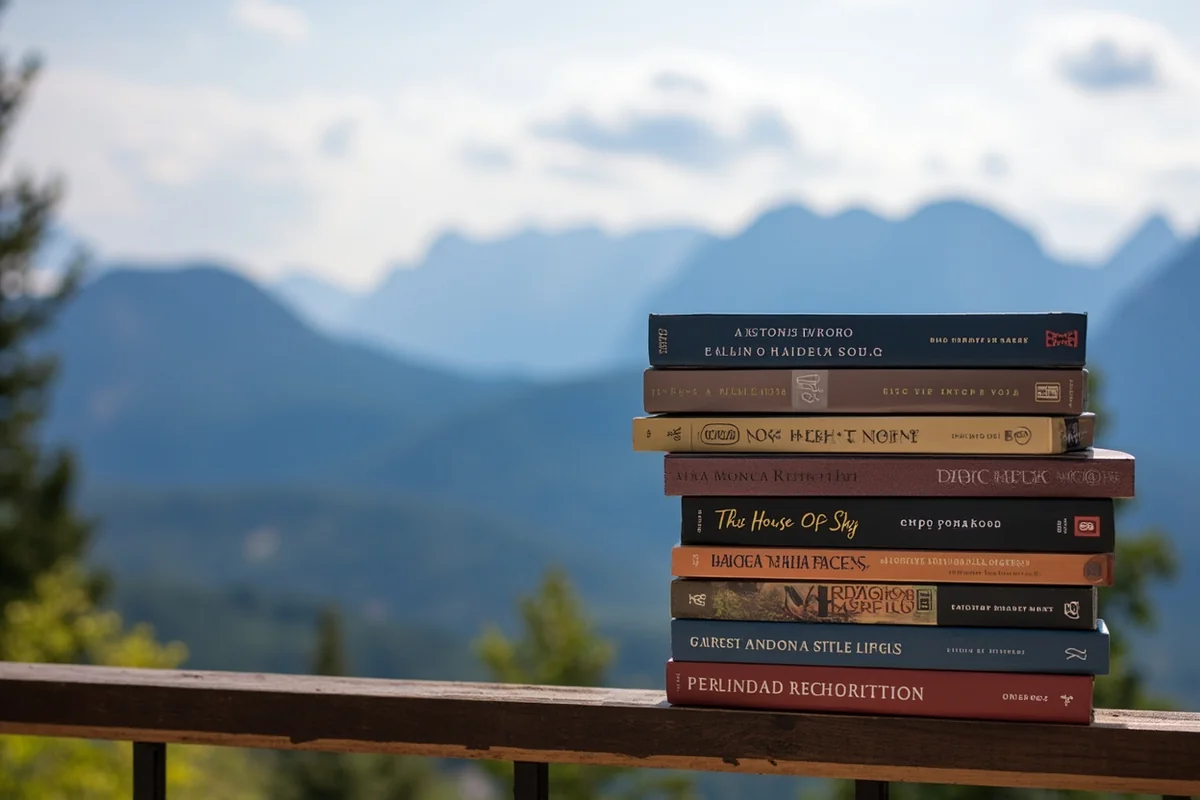
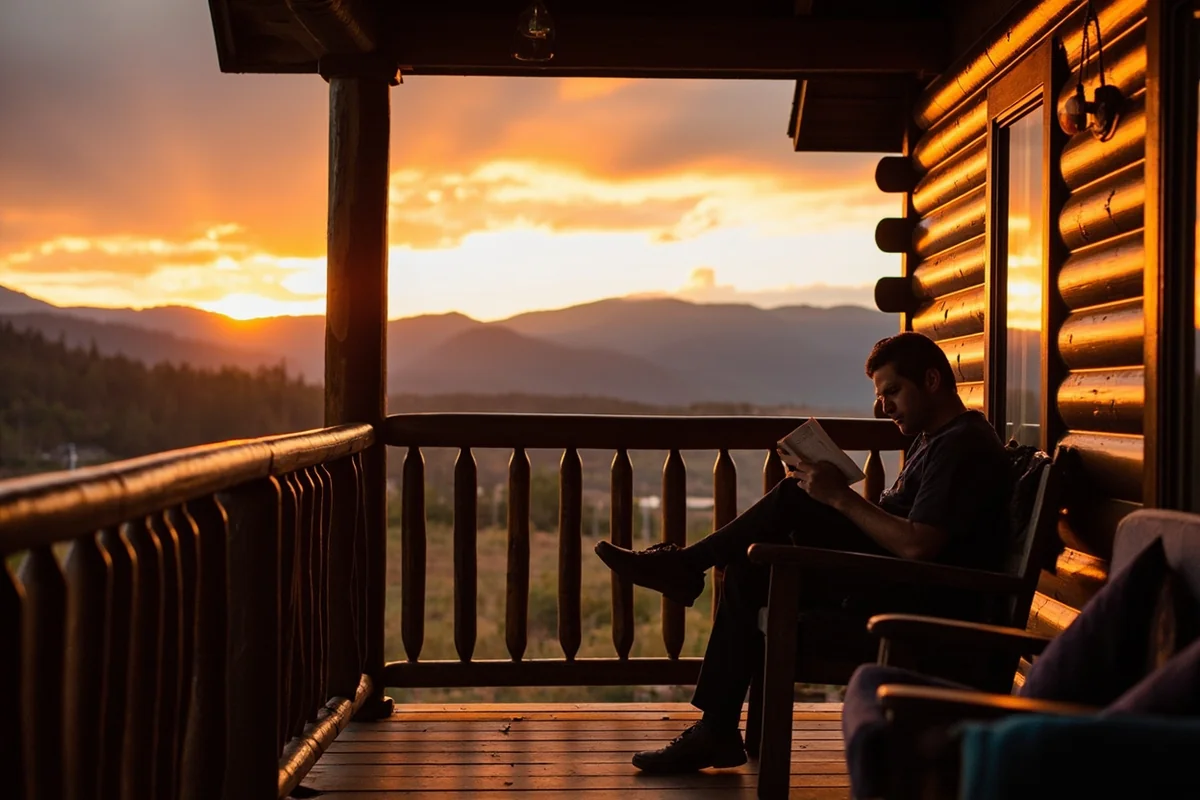
I was sitting on the porch of a cabin near Seeley Lake last September, watching the larch trees turn gold against the Mission Mountains, when I cracked open Norman Maclean’s *A River Runs Through It* for perhaps the fifth time.
There’s something about reading Montana literature while actually *in* Montana that transforms words on a page into something visceral — the smell of pine smoke, the sound of the Blackfoot River, the weight of big sky pressing down on your shoulders.
If you’re planning a trip to About Montana territory and want to truly understand this place beyond the tourist highlights, the right books will prepare you better than any travel guide.
I’ve spent years collecting Montana literature, interviewing local authors at bookshops in Missoula and Bozeman, and reading passages aloud to fellow travelers around campfires from Glacier to the Beartooths.
- Norman Maclean’s works remain essential for understanding Montana’s soul — read them before fly fishing the Blackfoot
- Ivan Doig’s memoir “This House of Sky” offers the most authentic portrayal of rural Montana life
- For wildlife and wilderness, Doug Peacock and Rick Bass capture the state’s wild heart
- Contemporary authors like Debra Magpie Earling and Pete Fromm bring fresh Indigenous and modern perspectives
- History buffs should pack books on Lewis and Clark, copper kings, and homesteader accounts
- Local bookstores in Missoula, Bozeman, and Livingston carry regional titles you won’t find elsewhere
Liked this article?
Add Roaming Montana as a preferred source so you see more of our articles and guides on Google.
Why Reading About Montana Matters Before You Visit
I used to think travel reading was optional — nice background but not necessary. Montana changed my mind completely.
When I first drove through the Hi-Line along Highway 2 without reading any homesteader accounts, I saw only flat, empty prairie. After reading Jonathan Raban’s *Bad Land*, that same drive became haunted with ghost towns, broken dreams, and the fierce resilience of people who tried to make this unforgiving landscape home.
Context transforms scenery into story. The beautiful places in Montana become exponentially more meaningful when you understand the human and natural histories layered beneath them.
Montana has produced an outsized number of exceptional writers for a state with barely a million residents. Something about the isolation, the harsh beauty, and the proximity to wilderness seems to demand documentation. Many Montana authors have shaped American literature in profound ways.
The Essential Classics: Where Every Montana Reader Should Start
A River Runs Through It by Norman Maclean
I’ll be honest — you’ve probably heard of this one, especially after Robert Redford’s 1992 film. But the book is something else entirely.
Maclean wrote this memoir in his seventies after retiring from the University of Chicago. It’s ostensibly about fly fishing with his brother Paul in early 20th-century Montana, but it’s really about family, loss, and the inability to help those we love most.
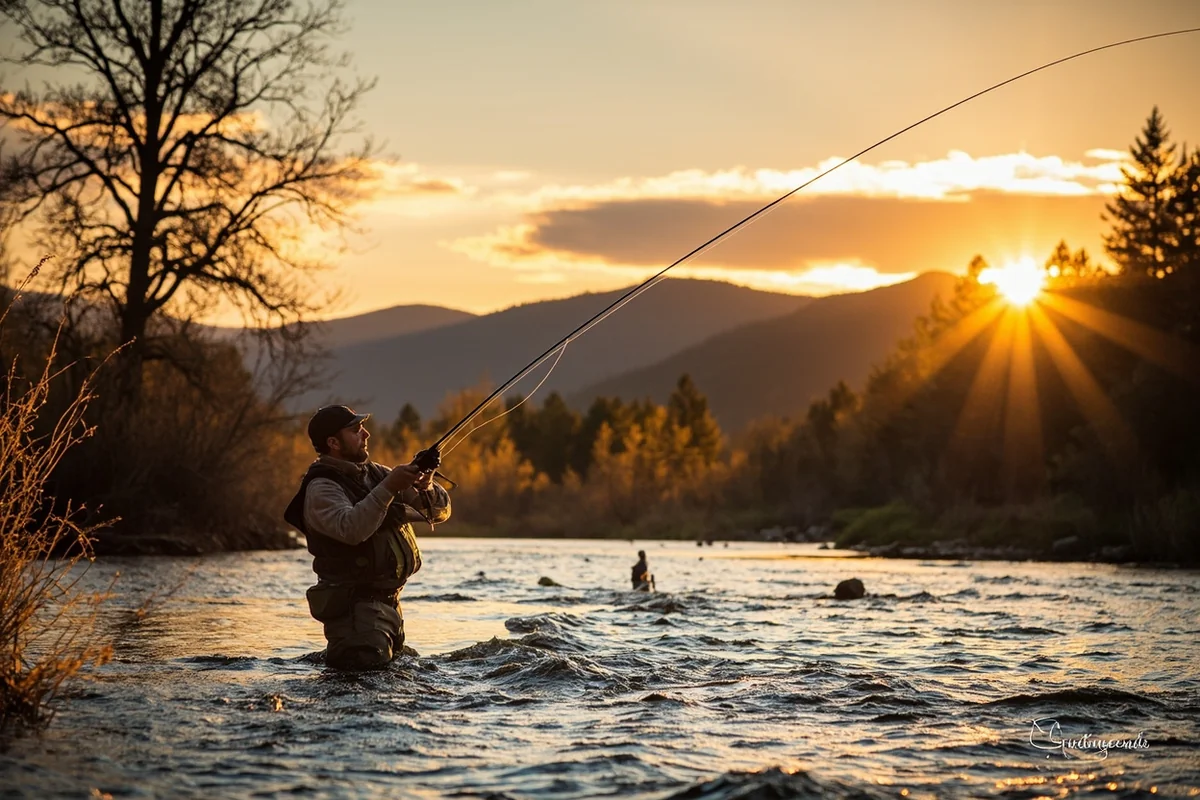
During my visit to Missoula last summer, I traced Maclean’s footsteps along the Blackfoot River. I stood at the confluence where the Blackfoot meets the Clark Fork, the same waters Maclean describes with almost religious reverence. Reading his prose while watching actual trout rise to evening hatches felt like a pilgrimage.
The writing is sparse, Presbyterian, and devastating. “Eventually, all things merge into one, and a river runs through it.”
Young Men and Fire by Norman Maclean
Less famous than *River* but equally important, this book investigates the 1949 Mann Gulch fire that killed thirteen young smokejumpers near Helena.
I hiked to Mann Gulch two years ago — it requires a boat across the Missouri River and a steep scramble up the drainage. Standing where those young men died, with Maclean’s meticulous reconstruction fresh in my mind, was one of the most powerful experiences of my Montana travels.
Maclean spent fourteen years researching this book and died before completing it. His editors finished the final chapter from his notes. The result is part tragedy, part detective story, part meditation on mortality and the terrible beauty of wildfire.
This House of Sky by Ivan Doig
If Maclean wrote Montana’s soul, Ivan Doig wrote its backbone.
Born in White Sulphur Springs and raised across the ranching and logging communities of central Montana, Doig’s 1978 memoir captures a way of life that was already disappearing when he documented it. His father’s itinerant ranch work, his grandmother’s fierce determination, the small-town rhythms of mid-century Montana — it’s all here.
I carried a worn paperback copy through the Smith River canyon on a five-day float trip. Reading Doig’s descriptions of the same landscape, the same sky, made the isolation feel less like emptiness and more like heritage.
Doig went on to write numerous novels set in Montana, including *English Creek*, *Dancing at the Rascal Fair*, and *The Whistling Season*. All are worth reading, but *This House of Sky* remains his masterpiece.
Contemporary Voices: Modern Montana Literature
Perma Red by Debra Magpie Earling
I picked up this novel at Fact & Fiction bookstore in Missoula after a staff member pressed it into my hands. “You can’t understand Montana without Indigenous perspectives,” she said. She was absolutely right.
Set on the Flathead Reservation in the 1940s, *Perma Red* follows Louise White Elk through a landscape of violence, desire, and spiritual complexity. Earling, who is Bitterroot Salish, writes with hypnotic intensity about a Montana that tourist brochures never mention.
This book changed how I see the Mission Valley. Driving past St. Ignatius, past the mission church and the tribal headquarters, I now understand I’m moving through a landscape of survival and resistance, not just pretty scenery.
Indian Creek Chronicles by Pete Fromm
For anyone who’s ever fantasized about spending a winter alone in the Montana backcountry, Fromm’s memoir delivers reality in all its brutal glory.
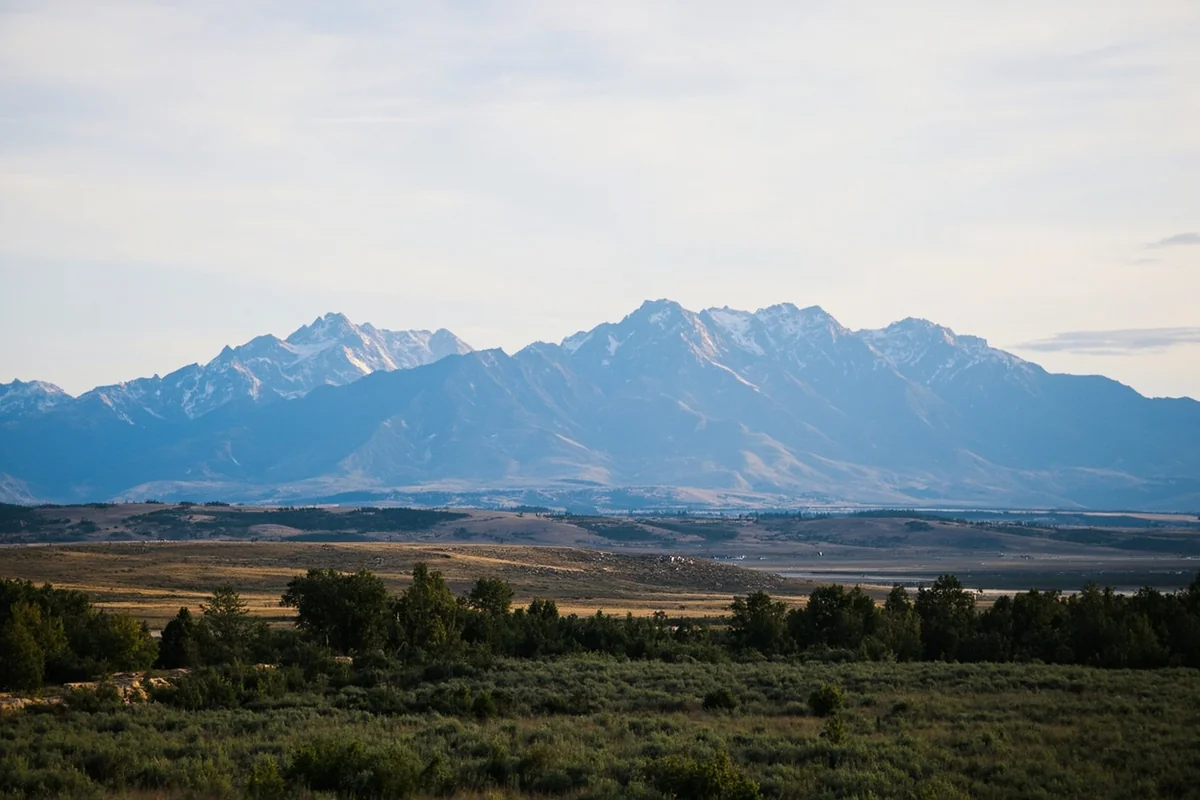
As a college student in 1978, Fromm accepted a job guarding salmon eggs over winter in a remote Idaho-Montana borderland canyon. Alone for seven months, he nearly froze, nearly starved, and definitely learned that wilderness romance requires survival skills.
I recommend this book to anyone who tells me they want to move to Montana without understanding its winters. The isolation that draws visitors during golden autumn can become life-threatening when December winds howl and the temperature drops to thirty below.
Fromm has since published many excellent books, including *How All This Started* and *If Not for This*, but *Indian Creek Chronicles* remains the essential document of youthful wilderness idealism meeting Montana reality.
The Meadow by James Galvin
This slim, strange, beautiful book defies easy categorization. Part history, part meditation, part elegy, it chronicles a century of life on a single piece of land straddling the Colorado-Wyoming border — but its sensibility is pure Northern Rockies.
I found myself rereading passages aloud during a solo camping trip in the Centennial Valley. Galvin captures the loneliness and beauty of ranching country better than almost anyone.
The book’s structure — short fragments arranged like memory rather than chronology — mirrors how the landscape itself seems to hold time. Past and present collapse together.
Wilderness and Wildlife: Montana’s Wild Heart
Grizzly Years by Doug Peacock
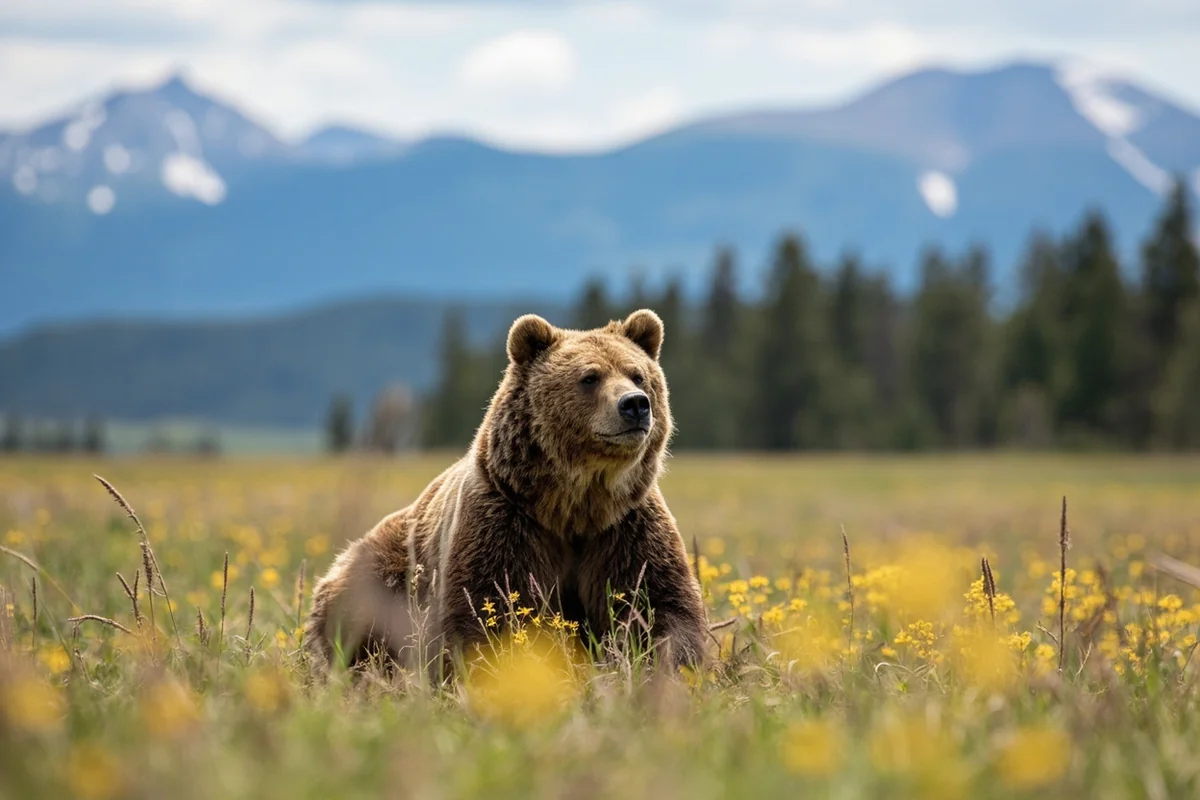
Doug Peacock returned from two tours as a Green Beret medic in Vietnam profoundly broken. He rebuilt himself by spending years alone in grizzly country, observing bears and regaining some capacity for human connection.
This isn’t easy reading. Peacock is angry, wounded, and refuses to prettify either his war experience or his wilderness redemption. But his descriptions of grizzly behavior come from thousands of hours of direct observation, and his passion for wildland preservation burns through every page.
I carried *Grizzly Years* on my first backpacking trip through Glacier National Park. Knowing I was walking through Peacock’s territory — Many Glacier, the Belly River, the Bob Marshall Wilderness — intensified every bear track I crossed.
Peacock was the model for Hayduke in Edward Abbey’s *The Monkey Wrench Gang*, which tells you something about his approach to both life and conservation.
The Book of Yaak by Rick Bass
Rick Bass moved to the remote Yaak Valley in northwestern Montana’s extreme corner and has spent decades fighting to preserve its roadless wildlands.
This essay collection is part nature writing, part activist manifesto, part love letter to a landscape most Montanans have never visited. Bass writes about wolverines and wilderness with evangelical intensity.
On a recent trip to the Yaak, I understood why Bass fights so hard. This forgotten corner of Montana, pressed against Canada and Idaho, holds some of the state’s last truly wild country. When you compare Montana vs Idaho wilderness areas, the Yaak represents something increasingly rare in both states — genuine wildness.
Beyond the Hundredth Meridian by Wallace Stegner
Technically about John Wesley Powell and the American West generally, this book provides essential context for understanding Montana’s relationship with water, federal land policy, and the persistent dream of Western settlement.
Stegner wasn’t Montanan (he grew up in Saskatchewan and Utah), but his observations about aridity and the limits of Western expansion apply directly to Montana’s agricultural history and ongoing land-use conflicts.
I read this book while camping near Fort Benton, where the Missouri River flows past the ruins of a once-thriving steamboat economy. Understanding why that economy collapsed — and why subsequent settlement schemes failed — requires Stegner’s big-picture thinking.
History and Non-Fiction: Understanding Montana’s Past
Undaunted Courage by Stephen Ambrose
The Lewis and Clark expedition crossed Montana twice — westbound in 1805 and eastbound in 1806 — and their journals provide the earliest written descriptions of the state’s landscape and peoples.
Ambrose’s narrative history follows Meriwether Lewis from his Virginia boyhood through the expedition and his tragic death. It’s deeply researched and compellingly written.
I’ve visited most of the Montana Lewis and Clark sites — the Great Falls portage, Camp Disappointment, Travelers’ Rest, Lemhi Pass — and having Ambrose’s details in mind transforms each location from roadside historical marker to living history.
The sections describing the expedition’s near-starvation crossing of the Bitterroots, and their rescue by the Nez Perce, still move me every time I drive over Lolo Pass.
Bad Land: An American Romance by Jonathan Raban
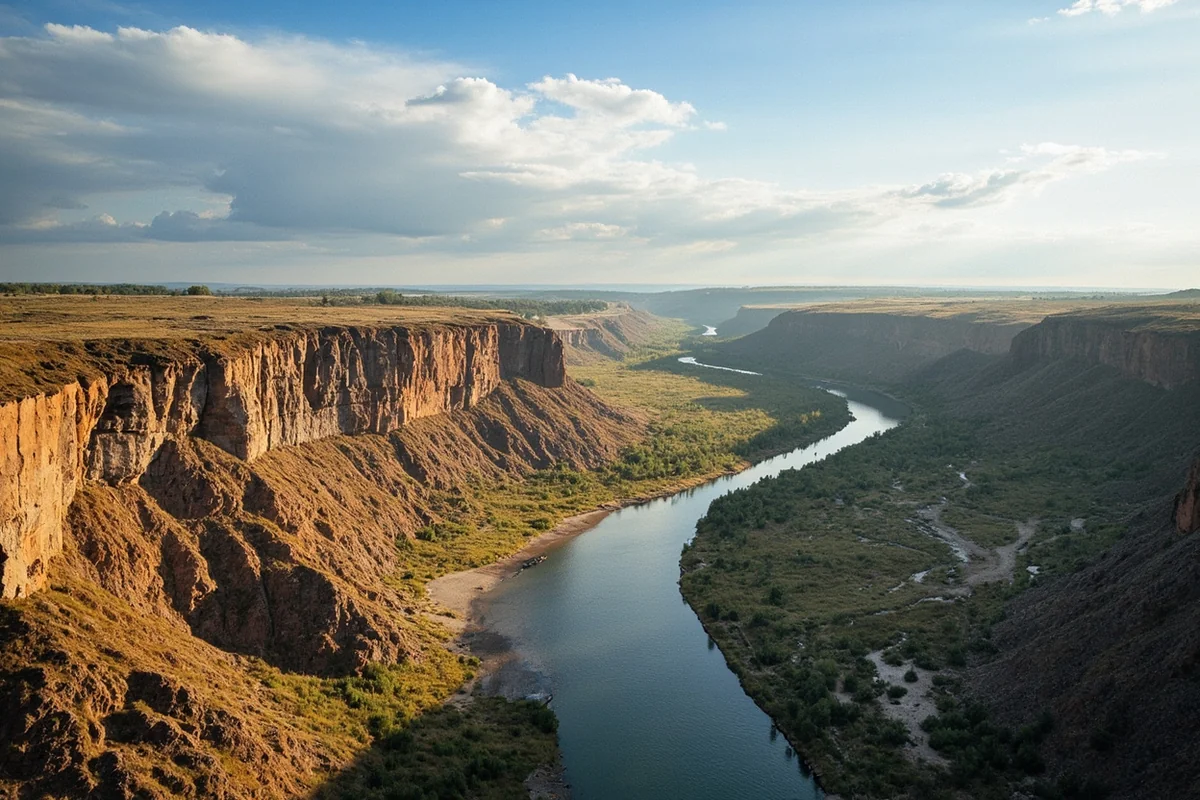
Raban, a British travel writer, became obsessed with the failed homesteading experiment that drew thousands of families to Montana’s Hi-Line in the early 1900s.
Promised by railroad companies that “rain follows the plow,” these settlers found instead drought, isolation, and agricultural impossibility. Most were bankrupt and gone within a decade.
Raban walks their abandoned claims, reads their diaries, and reconstructs their dreams with devastating sympathy. This book explains why so many Montana towns are ghosts — and why the survivors carry a particular kind of prairie resilience.
When I researched 27 things Montana is known for, this boom-and-bust settlement history came up repeatedly. Understanding it requires reading Raban.
Copper Camp by the WPA Writers’ Project
Butte’s mining history shaped modern Montana more than any other single factor. This 1943 WPA guide, recently reissued, captures the city when it was still “the richest hill on earth.”
The writers document everything — saloons, brothels, union halls, the ethnic neighborhoods where Cornish miners mixed with Irish and Italians, the underground worlds where men worked and died by the thousands.
I walked Butte’s streets with this book in hand, matching descriptions to surviving buildings. The Copper King Mansion, the M&M Cigar Store, the headframes on the hill — they all come alive through these Depression-era observations.
The Big Burn by Timothy Egan
The 1910 fire that burned three million acres across Montana, Idaho, and Washington created the modern U.S. Forest Service and defined American fire policy for a century.
Egan reconstructs the disaster in terrifying detail — entire towns destroyed, trains racing flames, forest rangers making impossible choices. The heroes who emerged, particularly ranger Ed Pulaski, became legends.
Reading this book before visiting the Bob Marshall Wilderness or the Bitterroot Mountains adds sobering context. These forests burned completely once within living memory, and they will burn again.
Fiction Set in Montana: Imagined Truths
The Big Sky by A.B. Guthrie Jr.
This 1947 novel follows mountain man Boone Caudill through the fur trade era of the 1830s and 1840s. It’s violent, elegiac, and captures the tragedy of a landscape already being destroyed by those who loved it most.
Guthrie, who won a Pulitzer Prize for *The Way West*, grew up in Choteau and wrote about Montana with insider knowledge and critical distance.
The novel’s title gave Montana its enduring nickname — Big Sky Country. That alone earns it a spot on this list.
Legends of the Fall by Jim Harrison
Harrison’s novella collection, including the title story later filmed with Brad Pitt, explores family violence, wilderness, and Montana’s particular brand of masculinity.
The prose is gorgeous, the psychology is dark, and the landscape is essential to every story. Harrison understood that Montana functions as character, not just setting.
When I compare movies filmed in Montana with their source material, *Legends of the Fall* shows how Hollywood both captures and distorts the state’s literary legacy.
The Hearts of Horses by Molly Gloss
Set during World War I, this quiet novel follows a young woman breaking horses across eastern Oregon and Montana. Gloss writes about rural Western life with patience and accuracy.
I love this book for its attention to practical details — how horses think, how small towns function, how women navigated limited roles through skill and persistence. It’s a corrective to all the masculine bluster in Western literature.
Travel Companions: What to Actually Pack
Based on years of Montana travel, here’s my practical recommendation for what books to bring on different types of trips:
| Trip Type | Essential Read | Why |
|---|---|---|
| Fly Fishing | A River Runs Through It | The spiritual foundation of Montana angling |
| Glacier/Bob Marshall | Grizzly Years | Prepares you mentally for grizzly country |
| Hi-Line/Eastern MT | Bad Land | Transforms empty prairie into human drama |
| Butte/Mining Towns | Copper Camp | Historical context for industrial landscapes |
| Flathead Reservation | Perma Red | Indigenous perspective often missing from tourism |
| Winter Visit | Indian Creek Chronicles | Realistic portrait of Montana cold and isolation |
| Lewis & Clark Trail | Undaunted Courage | Brings expedition sites to life |
Where to Find Montana Books
Independent Bookstores Worth Visiting
Missoula’s literary scene rivals cities ten times its size. Fact & Fiction on South Higgins Avenue has the best regional selection I’ve found anywhere, with staff who actually read and recommend Montana authors.
Shakespeare and Company, also in Missoula, specializes in used and rare books. I’ve found out-of-print Montana titles there that aren’t available anywhere else.
In Bozeman, Country Bookshelf on Main Street stocks excellent regional selections alongside new releases. The store has supported Montana authors for nearly fifty years.
Livingston’s Elk River Books focuses on used and antiquarian titles, with particular strength in Western Americana. Livingston itself has long attracted writers — it’s where Jim Harrison spent summers and where many contemporary Montana authors still live.
Library Systems
Montana’s public libraries participate in excellent interlibrary loan networks. If you’re staying anywhere for more than a few days, a visitor library card can connect you to resources across the state.
The Montana Historical Society Library in Helena holds incredible archival materials, including original homesteader diaries and territorial newspapers. It’s free to visit and the staff are remarkably helpful.
Understanding Montana Through Its Literature
One thing I’ve noticed after years of reading about this place: Montana literature tends toward elegy. Writers mourn what’s being lost — wilderness, small-town community, a way of life dependent on ranching and logging and mining.
This isn’t pessimism. It’s honest attention to change.
When you visit the Montana natural resources that define the state’s economy, literature helps you understand the human costs of extraction and the genuine community pride in traditional industries.
The landscape itself hasn’t changed that much since Lewis and Clark passed through — the same mountains, the same rivers, the same impossible sky. But human relationships with that landscape have transformed utterly.
Good Montana books capture both timelessness and change. They show how the land shapes people and how people have tried — sometimes disastrously — to shape the land.
Books I’m Still Discovering
Montana literature continues evolving. Contemporary authors like Maile Meloy, Smith Henderson, and Deirdre McNamer are producing important new work.
The famous people from Montana increasingly include literary figures who’ve found national audiences while remaining rooted in place.
I recently discovered C.M. Russell’s writings to accompany his paintings, and Larry Watson’s *Montana 1948*, a devastating novella about racism and family loyalty in the years after World War II.
The list keeps growing. Every trip reveals new recommendations from locals who’ve found authors I’ve somehow missed.
A Final Thought on Reading and Traveling
Last October, I sat in a hot spring near Ennis watching the first snow fall on the Madison Range. I’d brought Jim Harrison’s journals, reading while steam rose around me.
Harrison wrote: “I have tried to avoid writing about places I love for the usual fear that it might attract the crowds I was trying to avoid.”
I understand that fear. Montana’s appeal is fragile, dependent on space and silence and the absence of crowds. The reasons Montana is best are precisely the qualities most threatened by popularity.
But good writing doesn’t attract crowds. It attracts readers — people willing to slow down, pay attention, and understand rather than consume.
If you’re reading this article and planning a Montana trip, you’re already that kind of traveler. The books on this list will deepen your experience immeasurably.
They’ll also complicate it. You’ll see Montana’s beauty through eyes that understand its history of violence, displacement, and environmental degradation. You’ll appreciate what remains while mourning what’s been lost.
That’s not a comfortable experience. But it’s an honest one.
When you research quotes about Montana, you’ll find writers struggling with exactly this tension — loving a place while acknowledging its complicated past.
Pack a book. Read it slowly. Let Montana’s authors guide you toward understanding that no single trip can provide.
The unique ways Montana stands out become clearer through literature than any visitor guide could make them. The state’s literary tradition is itself a kind of natural resource — renewable, accessible, and essential to anyone who wants to move beyond surface impressions.
Start reading before you arrive. Keep reading while you’re there. Return home with books you discovered in Montana bookshops. Build a shelf that grows with each trip.
Montana will reward the attention.
For those considering comparing Montana with neighboring states, whether examining Montana vs Wyoming, Montana vs Colorado, Montana vs Alaska, Montana vs Oregon, Montana vs North Dakota, or Montana vs South Dakota, the literature of each region tells you far more than any list of statistics. Reading shapes how we see place.
If you’re thinking about a longer commitment, even reading up on the Montana state governor and things to know before moving to Montana will help you understand the political and cultural landscape.
And if Montana’s quirks appeal to you, exploring weird and unusual things in Montana through literature reveals depths that roadside attractions never show.
Happy reading, and happy travels.
Frequently Asked Questions
What are the best books to read before visiting Montana’s Big Sky Country?
I highly recommend starting with ‘A River Runs Through It’ by Norman Maclean for its stunning portrayal of Montana’s fly-fishing culture, followed by ‘The Big Sky’ by A.B. Guthrie Jr. for historical context. For practical trip planning, pair these with a current Montana travel guide like Lonely Planet or Moon Montana to get both the literary soul and logistical details of your visit.
Are there Montana travel guides that focus specifically on Big Sky and Yellowstone gateway areas?
Yes, ‘Moon Yellowstone & Grand Teton’ and ‘Fodor’s Yellowstone and Grand Teton National Parks’ both cover the Big Sky corridor extensively since it’s a major gateway to Yellowstone’s north entrance. These guides typically cost $15-$25 and include mile-by-mile scenic drive routes, hiking trail difficulty ratings, and seasonal road closure information that’s essential for planning.
What books capture authentic Montana ranch life and cowboy culture for travelers?
I found ‘Breaking Clean’ by Judy Blunt offers a raw, honest memoir of growing up on a remote eastern Montana ranch that really prepared me for the state’s rural character. ‘Riding the White Horse Home’ by Teresa Jordan is another excellent choice that gives you genuine insight into the ranching communities you’ll encounter when driving through Big Sky Country.
Which Montana history books help travelers understand the state before visiting?
Start with ‘Montana: A History of Two Centuries’ by Michael Malone for comprehensive background, then read ‘Empire of Shadows’ by George Black for the fascinating history of Yellowstone’s discovery. Understanding the Nez Perce Trail and Lewis and Clark expedition through books like ‘Undaunted Courage’ makes visiting historic sites along Highway 12 and the Missouri River much more meaningful.
Are there good wildlife and nature books to read before a Montana trip?
Doug Chadwick’s ‘The Wolverine Way’ is essential reading if you’re visiting Glacier National Park, where his research took place. I also recommend ‘American Serengeti’ by Dan Flores to understand the wildlife you’ll see in places like the Lamar Valley, and carrying a pocket-sized field guide like ‘Birds of Montana’ ($12-$18) makes roadside wildlife spotting much more rewarding.
What fiction books are set in Montana that will enhance my Big Sky Country road trip?
Ivan Doig’s ‘This House of Sky’ and his McCaskill family trilogy beautifully capture the Two Medicine country near Glacier National Park. For a modern thriller set against Montana’s stunning landscapes, try C.J. Box’s Joe Pickett series or Craig Johnson’s Longmire books, which make excellent audiobooks for those long drives between Bozeman and Missoula (about 140 miles).
Where can I buy Montana-specific books once I arrive in Big Sky Country?
Country Bookshelf in Bozeman and Fact & Fiction in Missoula are legendary independent bookstores with extensive Montana sections curated by local experts. Gift shops at Glacier and Yellowstone visitor centers also stock regional titles, though prices run 10-15% higher than online. I always budget $30-$50 for books during my Montana trips since local recommendations often lead to hidden gems.
Sources
- https://scholarworks.umt.edu/cgi/viewcontent.cgi?article=8161&context=newsreleases
- https://uwapress.uw.edu/book/9780295971292/montana/
- https://magazine.washington.edu/feature/montana-is-always-in-ivan-doigs-heart-and-his-novels/
- https://www.nebraskapress.unl.edu/bison-books/9780803273399/
- https://dailyinterlake.com/news/2017/sep/28/100-days-of-solitude-released-6