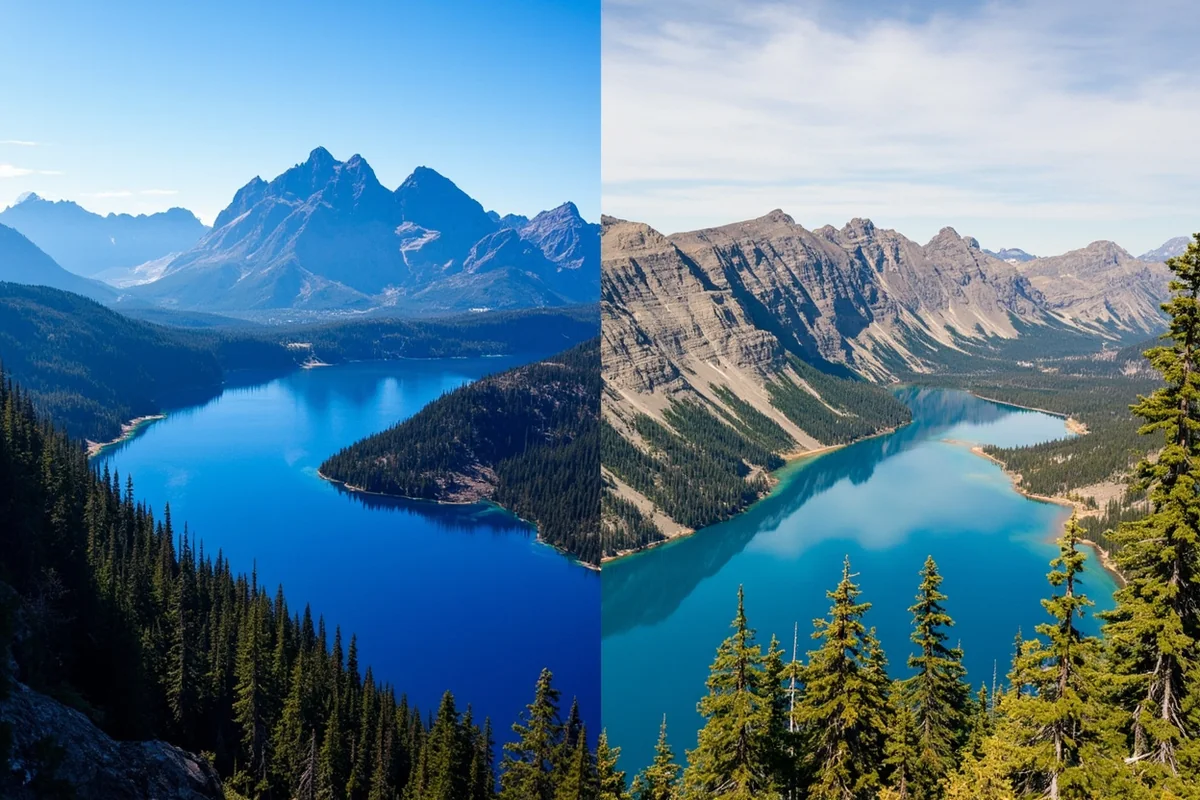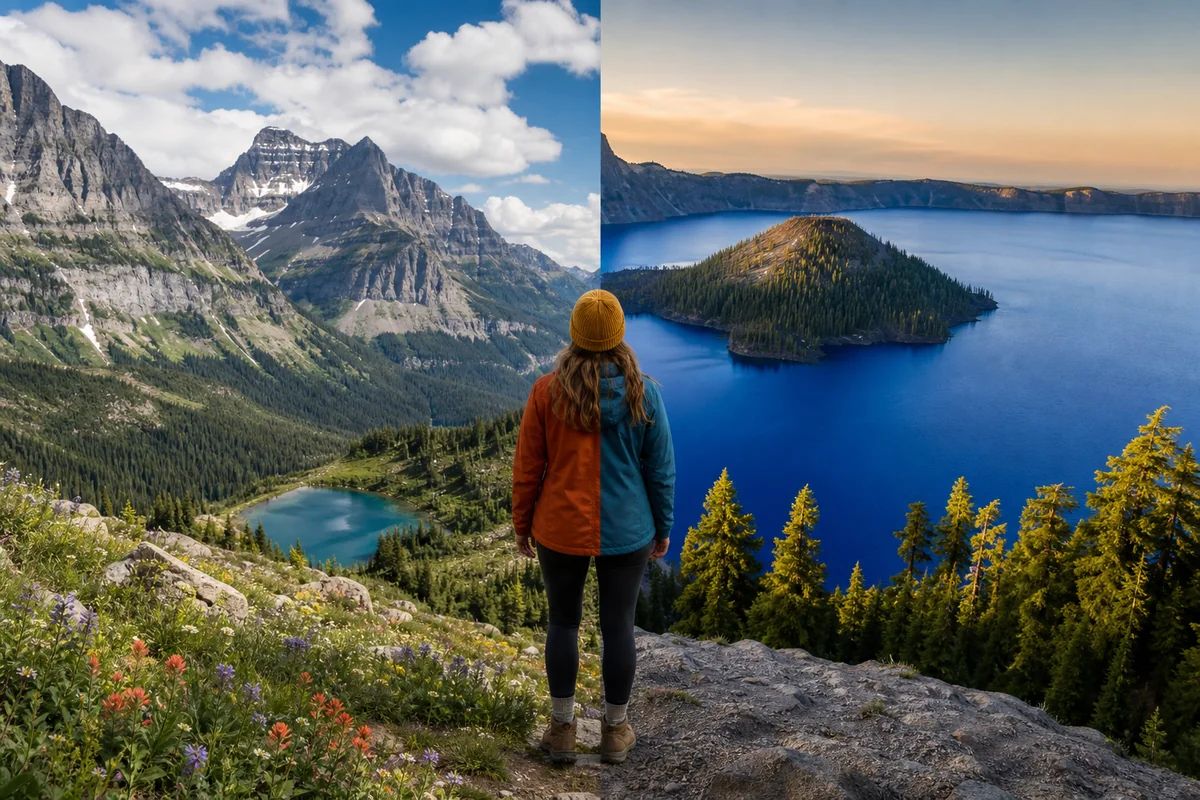
Are you dreaming of trading city life for mountain vistas, but can’t decide between the rugged peaks of Montana and the diverse landscapes of Oregon? You’re not alone—thousands of Americans are making this exact decision right now, and getting it wrong could cost you tens of thousands of dollars in taxes, leave you struggling with unaffordable housing, or strand you in a political environment that clashes with your values.
The American West has always represented possibility and reinvention, but in 2025, Montana and Oregon offer two fundamentally different versions of that dream. As remote work reshapes where Americans can live and coastal housing costs push families to seek alternatives, these two states have emerged as migration hotspots—yet beneath their shared appeal of natural beauty lies a chasm of difference in economics, taxation, lifestyle, and governance.
This comprehensive analysis cuts through the scenic postcards to reveal the structural realities that will actually shape your daily life. You’ll discover why Montana’s violent crime rate surprises most newcomers, how Oregon’s estate tax could claim a chunk of your middle-class wealth, and why the “affordable Montana” narrative is rapidly becoming outdated in desirable areas.
We’ll examine real estate markets where median home prices exceed $700,000, compare tax burdens that differ by thousands of dollars annually, and explore how political polarization has created two distinct Western cultures.
Whether you’re a remote worker seeking tax advantages, a retiree planning wealth transfer, a family prioritizing education and healthcare, or an outdoor enthusiast choosing your adventure playground, this guide provides the data-driven insights you need to make an informed decision between these two compelling but contrasting Western destinations.
Table of Contents
Economic Landscape: Silicon Forest vs. Montana’s Boom
When comparing Montana and Oregon’s economies, we’re looking at two distinctly different approaches to growth in the American West. Oregon operates as a coastal gateway with a significantly larger GDP than Montana, driven by international trade and a mature high-tech sector. Montana, historically resource-dependent, has shown remarkable resilience with a steady expansion that has defied national cooling trends.
Oregon’s economy centers around the “Silicon Forest,” primarily in Hillsboro and the Portland metro area. However, this tech powerhouse faces significant headwinds in 2025. Intel, Oregon’s largest private employer, has initiated massive workforce reductions with approximately 3,000 jobs cut in 2024 alone, followed by an additional 2,400 positions eliminated across its Hillsboro and Aloha campuses. These cuts represent a potential structural shift in the region’s economic reliance on a single dominant player.
Despite these challenges, Oregon maintains its position as the nation’s top producer of softwood lumber and plywood, employing over 62,000 individuals. The state is actively modernizing this legacy industry through initiatives like the Oregon Mass Timber Coalition to promote sustainable construction materials.
Montana’s economic narrative tells a different story. The state ranked 8th in the nation for employment growth since 2020, adding over 30,000 jobs through the first half of 2024 alone. This isn’t merely a rebound but a structural expansion as Montana transforms into a hub for professional services and lifestyle-driven commerce. The professional services sector grew significantly, adding 1,120 jobs at a rate of 4.1% in 2023.
Montana has also seen exceptional wage growth, ranking 2nd in the nation since 2020. In 2023, the average wage earned by Montana workers reached $57,230, growing by 5% over the year. More importantly, real wage growth (adjusted for inflation) was 0.8%, the 6th fastest among states, indicating that Montana workers are seeing tangible gains in purchasing power rather than just keeping pace with inflation.
The unemployment rate in Montana remains near record lows (2.9% in late 2024), creating a tight labor market with two job openings for every unemployed person. While this labor shortage puts workers in a strong bargaining position, it does hamper business expansion. Oregon’s unemployment trends have been slightly less favorable, influenced by the volatility in the tech and manufacturing sectors.
Taxation and Fiscal Policy: Two Different Western Approaches
When it comes to your financial bottom line, few factors impact your long-term prosperity more than a state’s tax structure. Oregon and Montana represent two fundamentally different approaches to taxation and public finance, creating distinct financial environments for residents and businesses.
Oregon embraces what economists call a “high-tax, high-service” model. The state relies heavily on its progressive income tax system, with rates climbing as high as 9.9% for top earners. This generates substantial revenue that funds extensive public services, from education to infrastructure. By contrast, Montana has deliberately positioned itself as a more tax-friendly jurisdiction, capping its income tax at just 5.9% starting in 2024—a significant reduction that makes it increasingly attractive to high-income earners.
Perhaps the most striking difference appears in how these states treat investment income. Montana stands out by offering a 2% tax credit on all capital gains, effectively reducing the tax burden on investment profits. Oregon provides no such incentive, instead taxing capital gains as ordinary income at those high progressive rates. For investors, retirees living off investment income, or entrepreneurs looking to sell businesses, this distinction can translate to tens of thousands of dollars in tax differences.
The estate tax divide is even more dramatic. Oregon imposes what critics often call a “death tax” on estates valued over $1 million, with rates ranging from 10% to 16%. This relatively low threshold means many middle-class families with modest homes and retirement savings may trigger this tax. Montana has no estate tax whatsoever, making it significantly more attractive for wealth preservation and generational transfers.
Property taxes present a more complex picture. While Oregon’s effective rates are generally higher, the state’s unique system caps assessment growth through Measures 5 and 50, providing long-term predictability. Montana’s property taxes have historically been lower, but the recent influx of wealthy residents has driven property values skyward, creating potential tax shocks for long-time residents as assessments catch up to market reality.
For high-income earners, the financial math strongly favors Montana. Consider a professional earning $200,000 annually: in Oregon, they might face an effective state income tax burden approaching $18,000, while in Montana, that same income would generate roughly $11,800 in tax—a $6,200 annual difference. Over a decade, that’s $62,000 in potential savings, not counting the additional benefits from Montana’s capital gains treatment.
The trade-off, of course, is in public services. Oregon’s higher tax revenues fund more robust infrastructure, education, and social safety nets. Montana’s leaner approach means more money stays in residents’ pockets, but potentially at the cost of certain public amenities and programs.
Housing and Real Estate: The Zoom Town Phenomenon
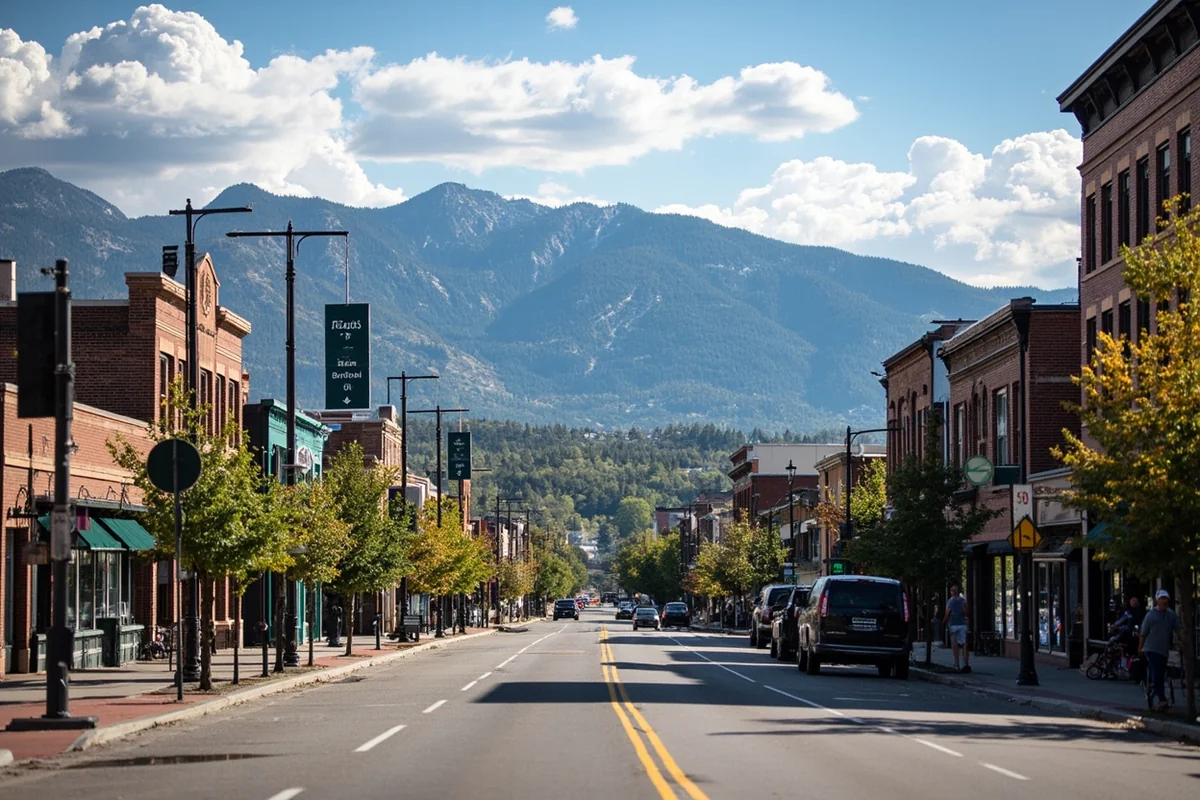
The housing markets in Montana and Oregon have undergone dramatic transformations in recent years, largely driven by the rise of remote work. This shift has created what experts now call “Zoom Towns” – once-affordable communities that have experienced explosive growth and skyrocketing prices as location-independent workers flood in.
In both states, housing has become a critical pain point for long-term residents while presenting opportunity for wealthy newcomers. The statistics tell a compelling story of rapid change and growing inequality.
Portland vs. Missoula: Urban Market Comparison
The contrast between Oregon’s largest city and Montana’s cultural hub reveals significant differences in cost, but similar trends of increasing unaffordability:
- Portland’s housing costs are approximately 38% higher than Missoula’s
- The average home listing price in Portland hovers around $700,956
- Missoula’s average listing price is approximately $507,524
- Average rent in Portland: $1,508 per month
- Average rent in Missoula: $1,291 per month
While Portland remains more expensive in absolute terms, Missoula’s transformation from affordable college town to desirable mountain destination has created a functional affordability crisis that feels just as acute to locals. The key difference is that Portland’s higher wages partially offset its higher costs, while Missoula’s local wages often cannot support the new housing price floor.
Bozeman vs. Bend: Twin Cities of Hyper-Gentrification
Perhaps no two cities better exemplify the “Zoom Town” phenomenon than Bozeman, Montana and Bend, Oregon. These outdoor recreation gateways have experienced nearly identical market dynamics:
- Bend, Oregon: Median single-family home price of $729,950 in 2024
- Bozeman, Montana: Median residential price of $713,500 in early 2025
Both cities have seen housing costs completely detach from local economic fundamentals. As one Bozeman resident aptly noted, the city is “as expensive as Portland with generally lower wages and fewer job opportunities.” This creates an almost impossible situation for service workers, teachers, and other local professionals who don’t bring remote salaries with them.
The market in both cities shows signs of stabilizing, with inventory increasing by nearly 30% in Bend and homes sitting longer on the market (median 25 days). However, prices remain prohibitively high for locals not employed in the remote tech sector or high-end services.
The Rural Land Rush
For those seeking acreage and a rural lifestyle, the dynamics have shifted dramatically:
- Oregon ranks as the 10th cheapest state to buy land, with average prices around $8,653 per acre
- Montana’s land prices have surged dramatically due to the popularity of the “Yellowstone” lifestyle
- The days of affordable mountain-view acreage in Montana are largely over
- Truly affordable land in Montana is now confined to very small towns in the eastern prairie, far from the western mountain ranges that attract most buyers
Remote Work’s Double-Edged Sword
The rise of remote work has fundamentally altered both states’ economies and housing markets, but in different ways:
- In Montana, the “Zoom Town” effect is acute and state-altering, with a significant portion of the 45,000 new residents since 2020 being high-income remote workers
- This influx has boosted local spending and tax bases but created a “dual economy” where remote wages significantly outpace local service wages
- In Oregon, the remote work trend has had a more complex impact, fueling growth in lifestyle hubs like Bend while actually contributing to population outflow from Portland
The housing vacancy rate in Montana decreased by 4.1% between 2019 and 2024, exacerbating scarcity despite building booms. Oregon faces different challenges with permitting bottlenecks and strict land-use laws (Urban Growth Boundaries) constraining sprawl and keeping prices high even as demand softens.
For both states, the 2025 outlook is a “cooling but not crashing” scenario. High interest rates have dampened the speculative frenzy, but chronic supply shortages prevent significant price corrections, ensuring that housing affordability will remain a central challenge for years to come.
Cost of Living: A Comparative Analysis Between Montana and Oregon
When comparing Montana and Oregon, cost of living represents one of the most significant practical considerations for anyone contemplating a move. While both states have traditionally offered different value propositions, the landscape is rapidly changing in 2025.
The overall cost disparity between these states is substantial, with Portland approximately 16.5% more expensive than Missoula. This difference is primarily driven by housing costs, where Portland’s market runs about 38.1% higher than Missoula’s. The average home listing in Portland hovers around $700,956 compared to Missoula’s more modest $507,524.
Transportation costs tell a similar story, with Portland residents paying nearly 25% more than their Montana counterparts. This is largely attributable to Oregon’s consistently high gas prices (often among the highest nationally) and steeper insurance premiums.
Interestingly, utilities present a reverse pattern. Portland residents enjoy approximately 9% lower utility costs than Montanans. This advantage stems from Oregon’s milder maritime climate in the Willamette Valley, which demands less intensive heating during winter months compared to Montana’s harsh continental climate with sub-zero temperatures. Oregon’s access to abundant hydropower further contributes to this cost advantage.
However, the traditional “low cost” narrative of Montana is rapidly eroding. High-demand areas like Bozeman and Whitefish have seen explosive price growth that rivals major coastal cities. This transformation has effectively created a “dual economy” within Montana – one where remote workers with coastal salaries live alongside locals earning Montana wages but facing increasingly coastal-level costs.
The situation is particularly acute in “Zoom towns” like Bozeman, where the median residential price of $713,500 in 2025 puts it on par with trendy Oregon destinations like Bend ($729,950). In both locations, local wages have become completely decoupled from housing costs, creating functional affordability crises that impact long-term residents most severely.
For those seeking rural land, the picture is similarly changing. While Oregon ranks as the 10th cheapest state to buy land (averaging $8,653 per acre), this statistic is heavily skewed by vast, arid, and sparsely populated areas in Eastern Oregon. Meanwhile, Montana’s once-affordable frontier has seen land prices surge dramatically, driven by the popularity of the “Yellowstone” lifestyle. The days of purchasing affordable mountain-view acreage in Montana are largely over unless one ventures into extremely remote territories far from amenities and services.
The 2025 outlook suggests continued pressure on affordability in both states, with Montana’s transformation being the more dramatic of the two. While Oregon remains more expensive in absolute terms, Montana’s rapid cost acceleration means the gap is narrowing, particularly in the most desirable western regions of the state.
Political Landscapes: The Growing Divide Between Montana and Oregon
The political environments of Montana and Oregon have evolved dramatically in recent years, creating distinct governance approaches that significantly impact residents’ daily lives. While both states experience rural-urban divides, their power dynamics and policy trajectories have diverged sharply.
Oregon remains firmly under Democratic control, with the party’s strongholds in Portland, Eugene, and Salem dictating the state’s legislative agenda. This progressive dominance has created a political environment that appeals to liberal-leaning residents but has increasingly alienated those in rural counties. The urban centers, representing the majority of Oregon’s population, have pushed forward policies on gun control, environmental regulations, and drug decriminalization that have widened the cultural and political gap with the state’s eastern regions.
This disconnect has fueled the remarkable “Greater Idaho Movement,” where 13 eastern Oregon counties have approved ballot measures exploring secession to join neighboring Idaho. While legally complex and unlikely to succeed without approval from both state legislatures and Congress, the movement symbolizes the profound cultural chasm dividing the state. Rural Oregonians frequently express feeling voiceless in policy decisions made by Portland-based legislators who may not understand rural economies and lifestyles.
Meanwhile, Montana has undergone a significant political transformation. Once known as a “purple” state with a tradition of ticket-splitting—electing Democratic governors alongside Republican legislators—Montana has shifted decisively red. The GOP now holds a supermajority in the statehouse, and recent redistricting has reduced the number of competitive districts, cementing conservative control.
This political consolidation has led to policy changes that sharply contrast with Oregon’s approach. Montana has moved toward deregulation, stronger gun rights protections, and restrictions on abortion access. The state has also pursued tax reforms aimed at attracting businesses and wealthy residents, including capping income tax rates and offering capital gains tax credits.
The 2024 Senate race involving moderate Democrat Jon Tester served as a national litmus test for the viability of “rural Democrats” in increasingly polarized states. Montana’s political environment now creates a welcoming atmosphere for conservative migrants while potentially alienating liberals in progressive enclaves like Missoula.
These divergent political paths have real consequences for residents. In Oregon, higher taxes fund more extensive social services and environmental protections, while Montana’s lower-tax model emphasizes individual responsibility and limited government intervention. For those considering relocation, these political realities often serve as decisive factors—sometimes even more influential than economic opportunities or natural amenities.
The political climate in both states continues to evolve, with Oregon facing internal fragmentation while Montana experiences increasing political homogenization. These trends suggest that rather than converging, the political cultures of these neighboring western states may continue to diverge further in the coming years.
Crime and Public Safety: Perception vs. Reality
When considering a move to either Montana or Oregon, public safety concerns often influence decision-making. Interestingly, public perception and statistical reality don’t always align when comparing these two states.
Montana’s reputation as a peaceful, rural paradise masks some surprising statistics. Despite its image as an idyllic escape from urban problems, Montana actually records a higher violent crime rate than Oregon. Recent data shows Montana’s violent crime rate at 423.5 per 100,000 residents, compared to Oregon’s 331.0 per 100,000. This higher rate is primarily driven by aggravated assault cases, with particular challenges in reservation communities where jurisdictional complexities can hamper effective law enforcement.
Oregon, particularly Portland, battles a different narrative. While its violent crime rate is lower, the state faces significant challenges with property crime. Oregon’s property crime rate substantially exceeds the national average, with Portland specifically struggling with high rates of theft, auto theft, and vandalism. For potential residents, this means that while you may be statistically safer from violent encounters in Oregon, your property faces greater risk.
The homelessness crisis represents another visible dimension of public safety concerns. Oregon ranks fourth highest in the nation for homelessness, with approximately 535 people experiencing homelessness per 100,000 residents. The visibility of unsheltered populations in urban centers like Portland and Eugene significantly impacts perceptions of safety and cleanliness in public spaces. Montana’s homelessness rate is substantially lower at 177 per 100,000 (ranking 17th nationally), making the issue less visually apparent in public areas.
This table summarizes the key crime statistics between the states:
| Crime Type | Montana (2024) | Oregon (2024) | Context |
|---|---|---|---|
| Violent Crime | 424 per 100k | 331 per 100k | MT higher due to aggravated assault rates |
| Property Crime | 1,617 per 100k | 2,800+ per 100k | OR significantly higher theft/burglary rates |
| Homelessness | 177 per 100k | 535 per 100k | OR crisis more visible in urban centers |
For those considering relocation, these statistics suggest different trade-offs. Montana offers better protection for your property and less visible homelessness but carries a surprisingly higher risk of violent crime. Oregon provides greater safety from violent crime but presents increased challenges regarding property security and homelessness visibility in urban areas.
Education & Healthcare: Montana vs. Oregon’s Human Capital Landscape
When families consider relocating to either Montana or Oregon, education and healthcare access often become deciding factors. Both states present distinct advantages and challenges in these critical quality-of-life areas.
K-12 Education: Funding and Performance
Oregon generally outperforms Montana in K-12 education metrics, largely due to its stronger tax base that allows for higher per-pupil funding, especially in urban districts. This funding advantage translates to broader academic and extracurricular offerings in Oregon’s more populated areas.
Montana’s rural schools face unique challenges, including consolidation pressures and chronic staffing shortages. While Montana maintains respectable high school graduation rates, rural students often have limited access to advanced placement courses and specialized programs that are more readily available in Oregon’s larger school districts.
The tradeoff is clear: Oregon offers more educational resources and specialized programs, while Montana provides smaller class sizes and stronger community integration. For families with school-aged children, this distinction can be crucial depending on their educational priorities.
Higher Education Landscape
Oregon boasts a more comprehensive and internationally recognized university system compared to Montana:
| University Comparison | Oregon | Montana |
|---|---|---|
| Top Public Universities | University of Oregon, Oregon State University | University of Montana, Montana State University |
| Research Recognition | Higher global rankings, particularly in forestry and oceanography | Strong in specific niches but less broad research output |
| In-State Tuition | Comparable to Montana | Slightly more affordable than Oregon |
| Program Diversity | More extensive program offerings | Limited specialized programs |
Oregon State University stands out as a top-tier research institution with particular strength in forestry, oceanography, and engineering. The University of Oregon offers strong liberal arts programs and research opportunities.
Montana State University has gained recognition for scientific impact in specific fields like agriculture and ecology, but lacks the comprehensive research infrastructure of its Oregon counterparts. The University of Montana offers strong programs in forestry, wildlife biology, and journalism.
One advantage for students in both states is their participation in the Western Undergraduate Exchange (WUE), which allows access to programs across the western region at reduced tuition rates.
Healthcare Quality and Access
The healthcare comparison reveals perhaps the starkest contrast between the states:
Oregon is home to Oregon Health & Science University (OHSU) Hospital in Portland, ranked as the #1 hospital in the region with an impressive quality score of 90.52%. OHSU offers world-class specialty care, advanced trauma services, and cutting-edge clinical trials that simply aren’t available in Montana.
Montana’s top medical facility, Providence St. Patrick Hospital in Missoula, while highly regarded within the state (ranked #1 in Montana), lacks the depth of subspecialties found in Portland. Montanans with complex medical conditions often face the burden of traveling to major medical centers in Seattle, Salt Lake City, or Denver for specialized treatment.
The Rural Healthcare Crisis
Both states face a troubling rural healthcare emergency, though the challenges manifest differently:
In Montana, “care deserts” continue expanding across the vast landscape. Rural emergency departments increasingly operate without physicians on-site, instead relying on nurse practitioners or telehealth consultations to stabilize patients before transferring them long distances. The geographic isolation of many Montana communities exacerbates these challenges.
Oregon’s eastern counties face similar rural healthcare shortages, but the population density of the Willamette Valley provides a safety net that Montana’s sprawling geography cannot match. Residents in western Oregon generally have more accessible healthcare options within reasonable driving distance.
Mental health services represent a critical failure point in both states, with nearly every rural county designated as a shortage area. This gap in care has become increasingly visible as both states grapple with rising rates of substance abuse and mental health crises.
For retirees and those with ongoing medical needs, Oregon’s superior healthcare infrastructure may outweigh other considerations, while those in good health might find Montana’s tradeoffs acceptable given other lifestyle benefits.
Montana vs Oregon: Outdoor Paradise Showdown
Montana and Oregon both offer spectacular outdoor recreation opportunities, but they deliver distinctly different experiences for nature enthusiasts. Montana proudly holds the #1 ranking nationally for outdoor enthusiasts, largely due to its vast wilderness areas, exceptional access to public lands, and lower population density that creates truly immersive experiences.
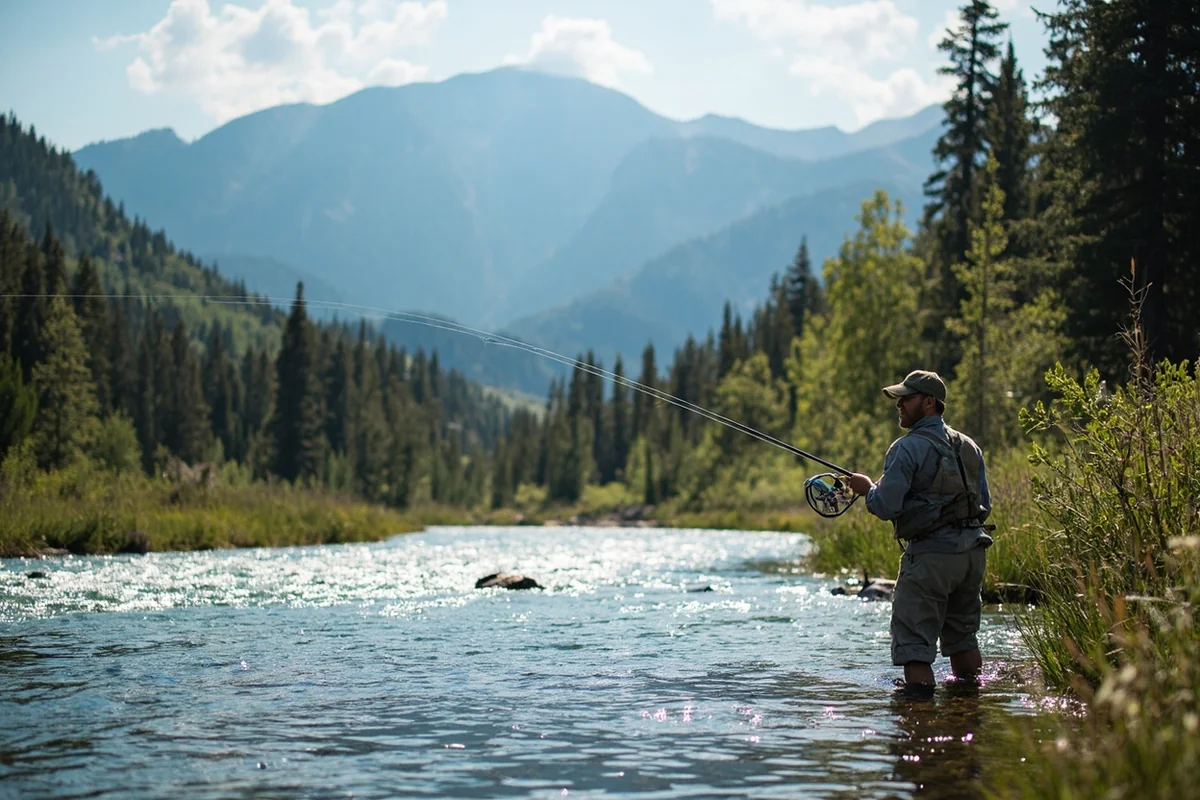
When it comes to hunting and fishing, Montana stands out with its legendary opportunities. The state’s Block Management Program opens millions of acres of private land to public hunting, creating unparalleled access to prime elk, deer, and antelope territory. Montana’s blue-ribbon trout streams like the Madison, Yellowstone, and Bighorn rivers have achieved mythical status among fly fishing enthusiasts worldwide. While Oregon certainly offers quality hunting for Roosevelt elk and excellent salmon runs, the sheer availability of tags and significantly lower hunting pressure gives Montana a clear edge for serious sportsmen.
The skiing experience between these states offers fascinating contrasts. Oregon’s ski resorts like Mt. Bachelor feature what locals affectionately call “Cascade Concrete” – heavy, wet snow that creates a stable base and enables exceptionally long seasons that can extend well into summer. Montana’s ski areas like Big Sky and Bridger Bowl deliver the coveted “cold smoke” powder – light, dry snow that powder enthusiasts chase. Montana’s terrain tends to be steeper and more challenging, though skiers must brave significantly colder temperatures. Your preference largely depends on whether you prioritize powder quality (Montana) or season length (Oregon).
Environmental quality shows notable differences as well. Montana’s vast, sparsely populated landscape means less light pollution (creating spectacular stargazing), less ambient noise, and generally better air quality outside of fire season. Oregon’s western half receives significantly more precipitation, creating lush, green landscapes year-round, while Montana’s environment is more defined by seasonal extremes. Both states face serious wildfire challenges, with smoke season becoming an unfortunate “fifth season” that can significantly impact outdoor recreation for weeks at a time.
The choice between these outdoor paradises ultimately comes down to whether you prefer Montana’s rugged, less developed wilderness experience or Oregon’s more accessible but potentially more crowded natural attractions.
Environmental Risks and Climate Challenges: Montana vs. Oregon
The American West stands at a crossroads of environmental change, with both Montana and Oregon facing escalating challenges that are reshaping life in these states. What was once theoretical climate risk has become a defining reality for residents in 2025.
Wildfire: The Fifth Season
Both states have experienced catastrophic fire seasons in recent years, fundamentally altering the relationship between residents and the landscape. In Oregon, massive acreage losses have become increasingly common, with some fires consuming hundreds of thousands of acres in a single event. The 2020 Labor Day fires alone burned over 1 million acres and destroyed thousands of homes.
Montana’s fire seasons have grown longer and more intense as well. What’s particularly concerning for both states is that 9 of the 10 congressional districts with the highest wildfire risk in America are now in the Western United States.
For residents of cities like Missoula and Bend, smoke has essentially become a “fifth season” – weeks of hazardous air quality that disrupts outdoor activities, tourism, and daily life. Air purifiers are now considered essential household equipment rather than luxury items.
Water Scarcity: The True Limiting Factor
As of 2025, drought conditions have become a persistent reality across both states. The entire Colorado River Basin and large portions of the Columbia Basin are experiencing drought conditions. Northern Idaho and Western Montana have faced continuous drought for nearly three consecutive years.
This water scarcity impacts:
- Agricultural viability: Ranchers in eastern Montana have been forced to liquidate herds due to lack of feed and water
- Recreational opportunities: Lower river levels affect fishing and boating
- Ski industry economics: Shorter seasons and reduced snowpack threaten winter tourism
- Municipal water supplies: Many communities face restrictions and conservation mandates
The competition for water rights has intensified, particularly in Montana’s agricultural regions and Oregon’s high desert. This scarcity represents perhaps the most significant long-term constraint on development and population growth.
Climate Contrasts: Choosing Your Challenge
The climate differences between the states present distinct lifestyle considerations:
Montana:
- Significantly colder with severe winters lasting 6-7 months
- Temperatures routinely dropping below zero (Fahrenheit) for extended periods
- “Cold smoke” powder snow prized by skiers
- Shorter growing season
- Lower humidity year-round
Oregon:
- West of Cascades: Temperate, rainy climate with mild winters
- East of Cascades: High desert with distinct seasons but less severity than Montana
- “Cascade Concrete” – heavier, wetter snow
- Longer growing season in Willamette Valley
- Higher humidity west of mountains
The choice often comes down to preference: Montana’s harsh but clear winters versus Oregon’s milder but persistently gray and rainy conditions from November through May.
Long-Term Environmental Outlook
Looking ahead, both states face significant environmental challenges that will shape their futures:
- Forest Health: Beetle infestations and disease are transforming forest ecosystems in both states, changing the landscape aesthetics and increasing fire danger.
- Species Migration: Wildlife populations are shifting their ranges in response to changing conditions, affecting hunting and wildlife viewing opportunities.
- Infrastructure Vulnerability: Both states face increased stress on infrastructure from extreme weather events – whether Montana’s freeze-thaw cycles damaging roads or Oregon’s increasing flood risks.
- Coastal Concerns: Oregon’s coastline faces rising sea levels and increasing storm intensity, threatening coastal communities and infrastructure.
The environmental outlook suggests that residents of both states will need to adapt to a “new normal” characterized by greater volatility and more frequent extreme events. The pristine wilderness that draws many to these states remains spectacular but increasingly threatened by these converging environmental pressures.
Transportation Networks & Digital Infrastructure: Navigating the Western Divide
When comparing Montana and Oregon’s transportation systems, the contrast couldn’t be more stark. Portland boasts one of the most comprehensive public transit networks in the western United States, while Montana remains firmly rooted in car culture by necessity.
Portland’s TriMet system represents the pinnacle of western public transportation outside California. With light rail (MAX), streetcars, and frequent bus service throughout the metropolitan area, Portland earns a solid 8/10 transit score. The system connects suburbs to downtown, provides airport access, and makes car-free living a genuine possibility for residents. This infrastructure investment reflects Oregon’s urban-centric planning philosophy and environmental priorities.
Montana, by contrast, offers minimal public transportation options. Missoula’s transit system scores a mere 5/10, with limited routes and operating hours. In smaller Montana communities, public transit is virtually non-existent. This reality makes vehicle ownership essentially mandatory for Montana residents, adding a significant fixed cost to the state’s supposedly lower cost of living.
Road quality presents another interesting comparison point. Oregon ranks 13th nationally for road conditions, slightly outperforming Montana at 18th. However, statistics don’t tell the complete story. Montana’s extreme temperature fluctuations create brutal freeze-thaw cycles that rapidly deteriorate pavement. Winter driving in Montana demands specialized equipment—all-wheel drive vehicles and winter tires are considered essential rather than optional in most regions.
The digital infrastructure gap further widens the divide between these western states. While major Montana hubs like Bozeman and Missoula offer respectable broadband options, rural Montana faces significant connectivity challenges. Approximately 15.7% of Montana households lack any broadband access whatsoever, creating digital deserts that severely limit remote work possibilities in the state’s most affordable regions.
Oregon’s more developed broadband infrastructure extends reliable internet access deeper into rural areas, though coverage gaps still exist east of the Cascades. This digital divide has profound implications for remote workers considering relocation. The pandemic-era dream of working remotely from an affordable Montana cabin quickly collides with the reality of insufficient connectivity in many of the state’s most picturesque and budget-friendly locations.
For those weighing a move between these states, transportation and connectivity considerations should factor prominently into decision-making. Oregon offers superior infrastructure but at higher tax and housing costs, while Montana provides more affordable living but demands self-sufficiency and acceptance of infrastructure limitations.
Arts & Culture: Portland’s Depth vs. Missoula’s Accessibility
When comparing the arts and cultural scenes of Oregon and Montana, we find two distinct but vibrant approaches to creativity and expression.
Portland remains the undisputed cultural heavyweight in the Pacific Northwest with its established arts community. The city boasts an extensive network of galleries, theaters, and music venues that attract major touring acts and foster local talent. Portland’s reputation as a creative hub has been cemented over decades, with its distinct “hipster” subculture influencing everything from fashion to food.
The dining scene in Portland is particularly noteworthy, with a diverse range of restaurants spanning from innovative food carts to fine dining establishments. The city consistently ranks among the top culinary destinations in the country, with chefs embracing farm-to-table philosophies and drawing inspiration from the bounty of the Willamette Valley and Pacific Ocean.
Meanwhile, Missoula has earned a reputation for “punching above its weight” in Montana’s cultural landscape. Despite its smaller size, Missoula has cultivated a surprisingly robust arts scene that some describe as having a “mini-Portland” vibe. The university town hosts numerous festivals throughout the year, including the Montana Folk Festival and the Big Sky Documentary Film Festival, which attract visitors from across the region.
The key difference between these cultural scenes lies in their accessibility and community integration. In Missoula, the arts scene is highly participatory—local residents don’t just consume culture, they actively create it. Community theaters, public art initiatives, and grassroots music venues foster a sense of ownership and involvement that can be harder to find in larger cities.
By contrast, Portland’s arts scene functions more as a professional industry. While this brings world-class performances and exhibitions to the city, it can sometimes create a divide between creators and audiences. Portland offers depth and variety, while Missoula provides intimacy and accessibility.
For those considering a move, the choice comes down to whether you prefer being a spectator with endless options or a participant in a tight-knit creative community. Portland offers the excitement of a major cultural center, while Missoula provides the satisfaction of belonging to a place where your contribution to the arts scene can make a meaningful difference.
Choosing Between Montana and Oregon: Recommendations Based on Your Life Situation
When deciding between Montana and Oregon, your personal circumstances and priorities significantly influence which state might better suit your needs. Let’s explore specific recommendations based on different life situations:
For Remote Workers
Choose Montana if:
- You’re a high-income remote worker seeking lower income taxes (5.9% flat rate vs Oregon’s 9.9% top rate)
- You want to maximize tax savings while enjoying outdoor amenities
- You prefer smaller communities with growing tech scenes in Bozeman and Missoula
- You have reliable internet access and don’t need to live in extremely rural areas
Choose Oregon if:
- You want more robust digital infrastructure and reliable high-speed internet
- You prefer proximity to a larger tech ecosystem (Portland’s “Silicon Forest”)
- You value urban amenities while working remotely
- You need frequent access to an international airport
For Retirees
Choose Montana if:
- Estate planning is a priority (Montana has no estate tax, while Oregon taxes estates over $1M)
- You’re looking to preserve wealth for heirs
- You want lower property taxes
- You appreciate a politically conservative environment
- Social Security tax exemption is important (Montana is phasing this out by 2024/2026)
Choose Oregon if:
- You prioritize access to specialized healthcare and medical facilities
- You prefer milder winters with less extreme cold
- You want more public transportation options as you age
- You value progressive social policies and services
For Families
Choose Montana if:
- You value smaller class sizes and community-integrated schools
- You prioritize access to outdoor recreation for children
- You prefer a more traditional cultural environment
- You can afford housing in areas with good schools (increasingly challenging)
Choose Oregon if:
- Educational variety and quality are top priorities
- You want access to more advanced academic programs and extracurriculars
- You seek more diverse cultural experiences for your children
- Healthcare access for specialized pediatric care is important
For Outdoor Enthusiasts
Choose Montana if:
- Uncrowded wilderness experiences are your priority (Montana ranks #1 nationally)
- You’re an avid hunter or fisher (superior access and regulations)
- You prefer “cold smoke” powder skiing and challenging terrain
- You don’t mind extreme winters to access pristine natural areas
Choose Oregon if:
- You want diverse outdoor experiences (coast, mountains, desert)
- You prefer longer ski seasons with milder temperatures
- Water sports and ocean access matter to you
- You want to balance outdoor recreation with urban amenities
For Budget-Conscious Individuals
Choose Montana if:
- Lower overall taxation is your primary concern
- You can secure employment in growing sectors
- You’re willing to live in smaller communities for affordability
- You can handle the self-sufficiency required in more remote areas
Choose Oregon if:
- You value the services provided by higher taxation
- You need public transportation to reduce vehicle expenses
- You can find affordable housing outside major urban centers
- You want more robust social safety nets
The “better” state ultimately depends on your personal values, financial situation, and lifestyle preferences. Both states offer distinctive versions of western living, with Montana representing a more independent, lower-tax model, while Oregon provides more services and infrastructure at a higher cost.
Conclusion and Future Outlook
The choice between Montana and Oregon in 2025 is a choice between two distinct versions of the American West.
Oregon offers a “Managed West.” It provides robust social safety nets, superior infrastructure, diverse industries, and world-class healthcare, funded by high taxation. It is culturally liberal, coastal-facing, and integrated into the global economy. However, it is grappling with the growing pains of urbanization—homelessness, crime, and political fragmentation—that threaten its quality of life.
Montana offers the “Wild West” in transition. It provides lower tax burdens (for now), unparalleled access to solitude, and a booming economy. However, it demands a higher degree of self-sufficiency. Residents must navigate harsher weather, fewer services, and a housing market that is rapidly pricing out the middle class. The state is politically consolidating to the right, which appeals to some migrants while alienating others.
Verdict for 2025:
- Choose Oregon if: You prioritize access to specialized healthcare, higher education, and cultural diversity; you rely on the tech sector; or you prefer a temperate climate and are willing to pay a premium in taxes and housing.
- Choose Montana if: Your priority is maximizing outdoor recreation and minimizing tax liability (especially estate tax); you are a remote worker with a high income; or you prefer a culturally conservative environment and are resilient to severe winters.
As water scarcity and housing affordability reshape the region, the “better” state is increasingly defined not by the land itself, but by the individual’s capacity to afford the cost of entry.
Detailed Data Appendices
Appendix A: Comparative Tax Liabilities (Hypothetical)
The following table illustrates the potential tax impact for different resident profiles.
| Scenario | Montana Impact | Oregon Impact | Advantage |
| Retiree ($60k Income) | Social Security exempt (2024+); Lower property tax. | Social Security exempt; High property tax. | Montana |
| High Earner ($200k) | 5.9% flat rate; Cap gains credit. | ~9% marginal rate. | Montana |
| Business Owner | No sales tax; Equipment tax credits. | Corporate Activity Tax (CAT) burden. | Montana |
| Wealth Transfer ($5M) | $0 Estate Tax. | 10-16% Estate Tax. | Montana |
Appendix B: Crime Statistics Comparison (Per 100k)
| Crime Type | Montana (2024) | Oregon (2024) | Context |
| Violent Crime | 424 | 331 | MT higher due to aggravated assault rates. |
| Property Crime | 1,617 | 2,800+ (Est) | OR significantly higher theft/burglary rates. |
| Homelessness | 177 | 535 | OR crisis visible in urban centers. |
FAQs: Montana vs Oregon
Is Montana really cheaper than Oregon to live in?
The answer is more complicated than it appears. While Montana traditionally offered a lower cost of living, the gap is narrowing rapidly in 2025. Portland is approximately 16.5% more expensive than Missoula overall, with housing costs running 38% higher. However, Montana’s most desirable areas like Bozeman have experienced explosive price growth that rivals coastal cities. Bozeman’s median home price of $713,500 is nearly identical to Bend, Oregon’s $729,950. The real cost advantage in Montana now exists primarily in smaller, less desirable towns far from the western mountain ranges that attract most newcomers. For high-demand lifestyle destinations, the cost difference between the states has largely evaporated.
Which state is better for remote workers?
Montana offers significant advantages for high-income remote workers, primarily through its favorable tax structure. The state caps income tax at 5.9% compared to Oregon’s 9.9% top rate, and provides a 2% tax credit on capital gains. For a remote worker earning $200,000 annually, this translates to approximately $6,200 in annual tax savings, or $62,000 over a decade. However, Oregon provides more robust digital infrastructure, with Montana’s rural areas suffering from significant connectivity gaps—15.7% of Montana households lack any broadband access. If you’re working remotely in Bozeman or Missoula, Montana is excellent. If you need to live in truly rural areas for affordability, Oregon’s better infrastructure may prove essential.
How do the job markets compare between Montana and Oregon?
Montana has shown remarkable employment growth, ranking 8th nationally for job growth since 2020 and adding over 30,000 jobs through mid-2024. The state’s unemployment rate of 2.9% indicates an extremely tight labor market with two job openings for every unemployed person. Montana also ranked 2nd nationally for wage growth since 2020. However, Oregon offers a larger, more diversified economy with its “Silicon Forest” technology sector, though this sector faces volatility with Intel cutting approximately 5,400 jobs across its Oregon campuses in 2024. Oregon provides more career diversity and higher absolute wages, while Montana offers faster growth and a tighter labor market that favors workers in wage negotiations.
Which state has better healthcare access?
Oregon holds a clear advantage in healthcare quality and access, particularly for specialized care. OHSU Hospital in Portland ranks as the #1 hospital in the region with a quality score of 90.52%, offering world-class specialty care and advanced treatment options unavailable in Montana. Montana’s top facility, Providence St. Patrick Hospital in Missoula, provides quality care but lacks the depth of subspecialties found in Portland. Montanans with complex medical conditions frequently must travel to Seattle, Salt Lake City, or Denver for specialized treatment. Both states struggle with rural healthcare access, but Oregon’s population density in the Willamette Valley provides better coverage than Montana’s vast, sparsely populated geography. For retirees or those with ongoing medical needs, Oregon’s healthcare infrastructure represents a significant advantage.
What about taxes for retirees—which state is more favorable?
Montana is significantly more favorable for retirees, particularly wealthy ones focused on estate planning. The state has no estate tax, while Oregon imposes a 10-16% estate tax on estates exceeding just $1 million—a threshold that captures many middle-class homeowners with modest retirement savings. Montana is also phasing out taxation on Social Security income by 2024-2026, though Oregon already exempts Social Security entirely. Montana’s lower property taxes and 5.9% income tax cap (versus Oregon’s 9.9% top rate) provide additional savings. For retirees with significant assets or those concerned about wealth preservation for heirs, Montana offers substantial financial advantages that can amount to tens of thousands of dollars annually.
Is it true that Montana has more crime than Oregon?
Surprisingly, yes—at least for violent crime. Montana records a violent crime rate of 423.5 per 100,000 residents compared to Oregon’s 331.0, primarily driven by high rates of aggravated assault and jurisdictional challenges in reservation communities. However, Oregon faces a severe property crime crisis, with rates substantially exceeding the national average. Portland particularly struggles with theft, auto theft, and vandalism. Montana’s property crime rate of 1,617 per 100,000 is significantly lower than Oregon’s estimated 2,800+. The practical takeaway is that you’re statistically safer from violent encounters in Oregon, but your property faces greater risk. Montana offers better property security but carries a surprisingly higher risk of violent crime.
How do the public schools compare?
Oregon generally outperforms Montana in K-12 education metrics, benefiting from higher per-pupil funding in urban districts and a stronger overall tax base. Oregon schools offer broader academic and extracurricular programs, particularly in larger districts. Montana’s rural schools face consolidation pressures and chronic staffing shortages, with students often lacking access to advanced placement courses and specialized programs available in Oregon. However, Montana schools typically provide smaller class sizes and stronger community integration. For higher education, Oregon maintains a clear advantage with more comprehensive and internationally recognized universities. Oregon State University and the University of Oregon rank higher globally than their Montana counterparts, offering stronger research programs and more diverse academic offerings.
What are the main environmental risks in each state?
Both states face severe wildfire risk and increasingly problematic smoke seasons that have become a “fifth season” lasting weeks at a time in cities like Missoula and Bend. However, water scarcity is emerging as the critical limiting factor for 2025. As of late 2024, 100% of the Colorado River Basin and large portions of the Columbia Basin are experiencing drought conditions, with Northern Idaho and Western Montana in drought for nearly three consecutive years. This impacts agricultural viability, recreational opportunities, ski season length, and municipal water supplies. Montana faces significantly harsher winters with temperatures routinely dropping below zero for extended periods, while Oregon’s western regions enjoy milder maritime climates. Both states are experiencing climate volatility that is reshaping the traditional outdoor lifestyle that attracts most newcomers.
Can I live car-free in either state?
Living car-free is genuinely feasible in Portland, which boasts one of the most comprehensive public transit systems in the western United States. The TriMet system includes light rail (MAX), streetcars, and frequent bus service throughout the metro area, earning Portland a transit score of 8/10. In Montana, car-free living is essentially impossible. Even Missoula, the state’s cultural hub, has a transit score of only 5/10 with limited routes and operating hours. Private vehicle ownership is mandatory for Montana residents, adding significant fixed costs to the state’s supposedly lower cost of living. This transportation requirement also means Montana residents face higher transportation costs overall, with expenses running nearly 25% higher than Oregon when accounting for vehicle ownership, insurance, and Montana’s harsh winter driving conditions that require specialized equipment.
Which state is more politically stable?
Neither state offers traditional political stability, though their instabilities manifest differently. Oregon remains solidly Democratic but faces profound internal fragmentation, exemplified by the “Greater Idaho Movement” where 13 eastern counties have approved ballot measures exploring secession to join Idaho. This rural-urban divide creates ongoing policy friction and governance challenges. Montana has shifted from a historically “purple” state to solid Republican control, with the GOP holding a supermajority in the statehouse. Recent redistricting has reduced competitive districts, cementing conservative dominance. This political consolidation creates policy predictability for conservative-leaning residents but represents a significant shift from Montana’s tradition of ticket-splitting and moderate governance. Your political preferences will largely determine which state’s political environment feels more “stable” to you personally.
Sources:
- https://sos.oregon.gov/blue-book/Pages/facts/economy-employment.aspx
- https://lmi.mt.gov/_docs/Publications/LMI-Pubs/Labor-Market-Publications/LDR24_Final.pdf
- https://forestgrovenewstimes.com/2025/07/14/1824/
- https://hillsboroherald.com/intel-layoffs-rock-hillsboro-2400-jobs-cut-across-local-campuses/
- https://www.profocustechnology.com/wp-content/uploads/2025/02/2025-Silicon-Forest-Tech-Trends-Report-by-ProFocus-Technology-1.pdf
- https://oregonforestfacts.org/sites/default/files/2025-05/OFRI-ForestFacts2025_DIGITAL.pdf
- https://www.eda.gov/funding/programs/american-rescue-plan/build-back-better/case-studies/Oregon-Mass-Timber-Coalition
- https://capitalpress.com/2022/05/12/northwest-vs-southeast-timber-industry-grows-where-it-thrives/
- https://storymaps.arcgis.com/stories/0f629423eee044238e94ecc5ea0ca4d3
- https://montanabudget.org/report/rental_affordability_2025
- https://www.jec.senate.gov/public/index.cfm/republicans/mt/
- https://taxfoundation.org/data/all/state/sales-tax-rates/
- https://smartasset.com/retirement/montana-retirement-taxes
- https://taxfoundation.org/data/all/state/state-income-tax-rates-2024/
- https://archive.legmt.gov/bills/2023/FNPDF/HB0526_1.pdf
- https://www.oregon.gov/dor/programs/individuals/pages/pit.aspx
- https://afsa.org/sites/default/files/flipping_book/010224/72/
- https://revenue.mt.gov/taxes/fiduciaries/estate-and-inheritance-tax
- https://smartasset.com/retirement/oregon-retirement-taxes
- https://archive.legmt.gov/content/Committees/Interim/2023-2024/Revenue/Meetings/September-2023/Montana-Taxes-%20Comparisons-2022.pdf
- https://www.billtrack50.com/billdetail/1753187
- https://taxfoundation.org/data/all/state/property-taxes-by-state-county-2024/
- https://taxfoundation.org/data/all/state/estate-inheritance-taxes/
- https://www.apartments.com/cost-of-living/missoula-mt-vs-portland-or/
- https://www.reddit.com/r/Montana/comments/kt67gi/oregon_or_montana/
- https://www.bendpremierrealestate.com/blog/2025/01/07/bend-oregon-real-estate-2024-trends-and-2025-predictions
- https://www.taunyafagan.com/bozeman-price-trends/
- https://districtlending.com/10-cheapest-states-to-buy-land/
- https://www.sustainablelumberco.com/2025/07/montana-housing-report/
- https://www.bber.umt.edu/pubs/Seminars/2025/EconRpt2025.pdf
- https://ballotpedia.org/Greater_Idaho,_Oregon,_countywide_ballot_measures_(2020-2024)
- https://en.wikipedia.org/wiki/Greater_Idaho_movement
- https://www.mtpr.org/montana-news/2024-10-29/2024-elections-are-the-first-test-of-montanas-new-legislative-districts-map
- https://www.theguardian.com/us-news/2024/oct/21/montana-senate-race-jon-tester-democrats
- https://en.wikipedia.org/wiki/List_of_U.S._states_and_territories_by_violent_crime_rate
- https://usafacts.org/answers/what-is-the-crime-rate-in-the-us/state/montana/
- https://www.voronoiapp.com/economy/Which-States-Have-the-Highest-Homelessness-Rates-Tap-to-Expand-6987
- https://nrea.net/wp-content/uploads/2025/08/WRMReport2023_DIGITALFINAL_State-Rankings.pdf
- https://www.topuniversities.com/university-rankings-articles/world-university-rankings/top-us-universities-state
- https://wetlands.msuextension.org/news/22240
- https://www.bestcolleges.com/resources/in-state-vs-out-of-state-tuition/
- https://rankings.newsweek.com/americas-best-state-hospitals-2024/americas-best-state-hospitals-2024-oregon
- https://blog.providence.org/missoula-montana/st-pats-recognized-as-one-of-the-worlds-best-hospitals-and-1-in-montana
- https://montanafreepress.org/2025/08/12/rural-emergency-rooms-increasingly-run-without-doctors-experts-say/
- https://csgwest.org/2025/10/27/rural-healthcare-on-life-support-states-race-to-save-critical-access/
- https://www.fox13seattle.com/news/best-states-outdoor-enthusiasts
- https://smilehub.org/blog/best-states-for-outdoor-lovers/187
- https://www.onxmaps.com/hunt/blog/best-state-for-elk-hunting
- https://thehonestlocal.com/living-in-montana-moving/
- https://www.reddit.com/r/skiing/comments/ux2ooz/some_perspective_as_to_why_skiing_is_primarily_a/
- https://www.perc.org/2025/02/25/perc-wildfire-risk-map/
- https://www.drought.gov/news/western-drought-issue-2025-09-03
- https://www.drought.gov/drought-status-updates/drought-status-update-pacific-northwest-2025-07-14
- https://destinationmissoula.org/blog/9-reasons-why-we-love-missoulas-vibrant-arts-scene
- https://z100missoula.com/missoula-montana-portland-maine/
- https://www.opb.org/news/article/portland-public-transit-comparison-christof-spieler/
- https://www.movebuddha.com/popular-routes/or/mt/portland-to-missoula/
- https://constructioncoverage.com/research/states-with-the-worst-roads
- https://huntsvilleadventurer.com/states-ranked-by-quality-of-roads/