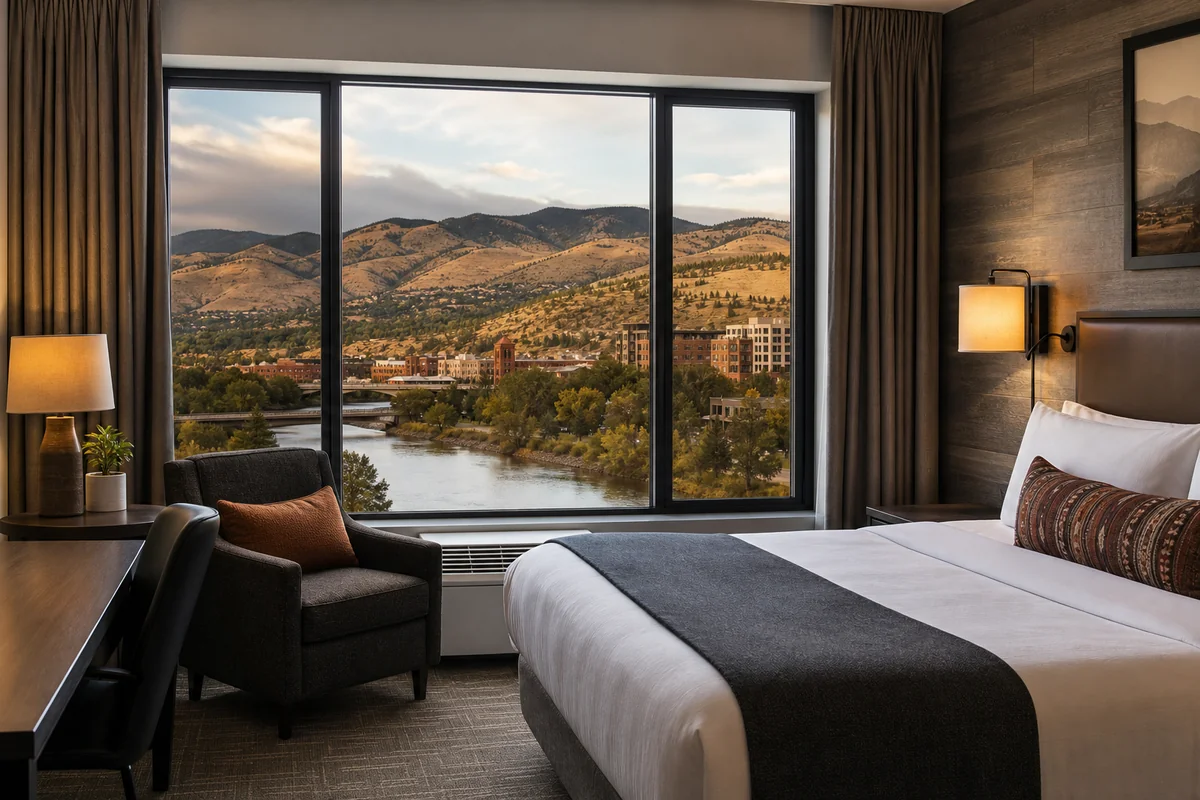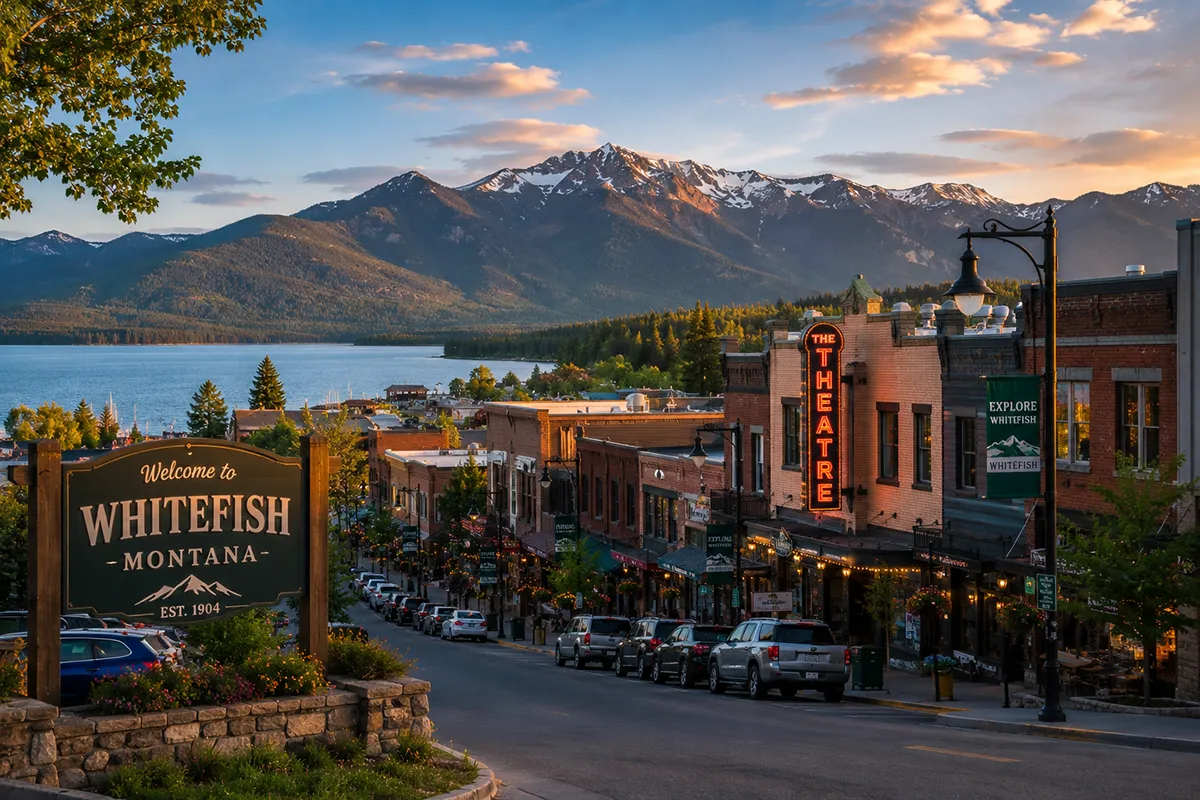
The first time I pulled into West Yellowstone on a freezing October evening, every motel sign along Canyon Street was dark except one. I’d made the classic rookie mistake — assuming I could just “find something” near Yellowstone without a plan.
That was fifteen years and countless Montana trips ago, and I’ve since slept in everything from a canvas wall tent outside Gardiner to a luxury suite overlooking the Gallatin River.
If you’re figuring out where to stay in Yellowstone’s Montana gateway towns, I’ve made enough mistakes (and discoveries) to save you real headaches.
- Montana has three Yellowstone gateway towns: West Yellowstone, Gardiner, and Cooke City/Silver Gate — each with a completely different vibe and strategic advantage
- West Yellowstone has the most lodging options and is best for first-timers targeting geysers and Grand Prismatic
- Gardiner is the only year-round entrance and ideal for the Lamar Valley, Mammoth, and wildlife watchers
- Cooke City/Silver Gate is remote, rugged, and perfect for people who want solitude and backcountry access
- Book 4–6 months ahead for summer (June–August); shoulder seasons offer better rates and fewer crowds
- Budget travelers should look at cabin-style motels in West Yellowstone or camp at one of the USFS sites near Gardiner
Liked this article?
Add Roaming Montana as a preferred source so you see more of our articles and guides on Google.
Understanding Yellowstone’s Montana Side: Three Towns, Three Experiences
Here’s something that trips up a lot of first-time visitors: Yellowstone National Park sprawls across three states — Wyoming, Montana, and Idaho — but Montana claims two of the five park entrances, plus the Northeast entrance that’s technically in Montana’s backyard through Cooke City. Each gateway town sits at a different elevation, different ecosystem, and different corner of the park.
This matters enormously for where you stay, because Yellowstone is massive. It’s roughly the size of Rhode Island and Delaware combined. Choosing the wrong base can mean an extra 90 minutes of driving each way to the things you actually came to see.
During my most recent trip last August, I split my week between West Yellowstone and Gardiner specifically to cover more ground without exhausting myself. That strategy worked beautifully, and I’d recommend it to anyone with five or more days.
West Yellowstone: The Most Popular Montana Gateway
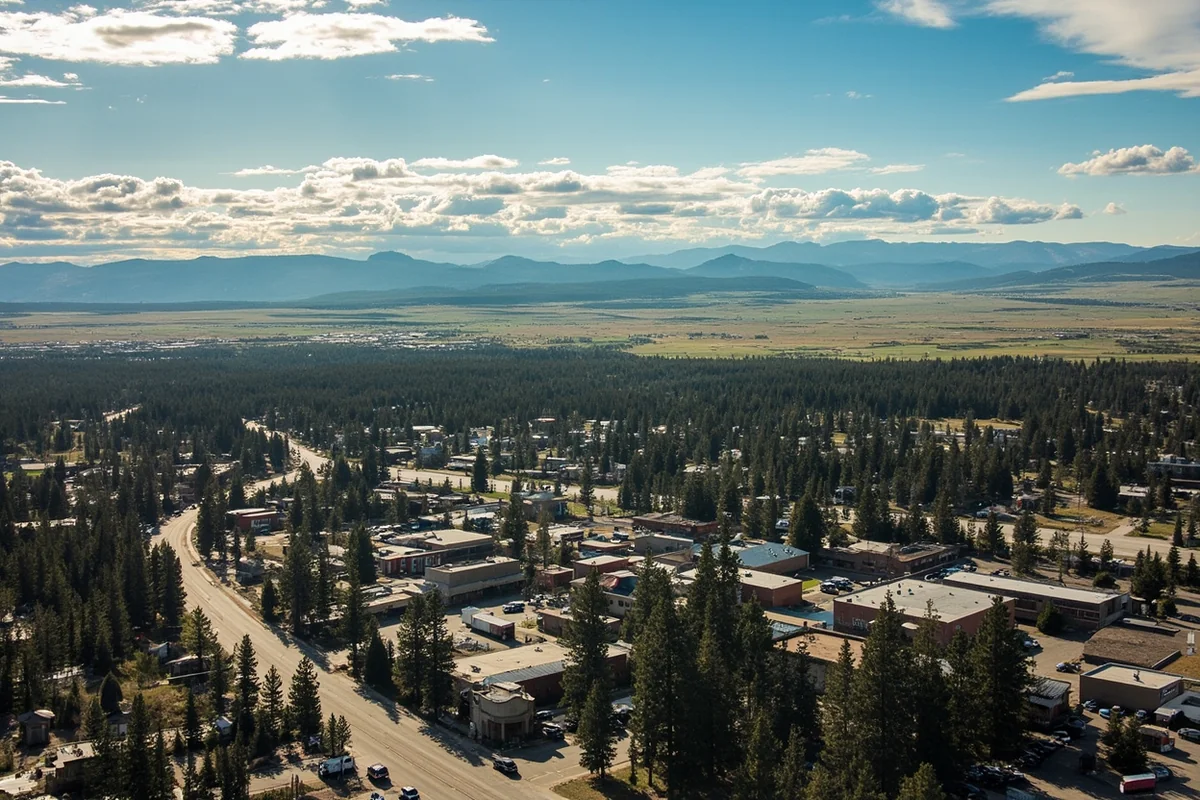
West Yellowstone is the town most people picture when they think of staying near the park from the Montana side. It sits right at the West Entrance — literally, you can walk from some hotels to the park gate in ten minutes. The town has a permanent population of about 1,400, but during summer it swells to something unrecognizable.
I’ll be honest: West Yellowstone is touristy. The main drag, Canyon Street, is lined with souvenir shops selling the same bison plush toys and huckleberry taffy you’ll see everywhere in Montana. But there’s a reason it’s the most popular gateway — convenience is hard to beat.
Why West Yellowstone Works for Most Visitors
The West Entrance puts you on the road to Madison Junction, which is the crossroads for reaching Old Faithful (about 45 minutes from town), Grand Prismatic Spring, Norris Geyser Basin, and the Firehole River area. If geothermal features are your priority — and for most first-timers, they are — West Yellowstone is the logical base.
Last summer, I was at Grand Prismatic by 7:30 AM after leaving my hotel at 6:45. That early access makes a real difference. By 10 AM, the parking lots are a nightmare and the boardwalks are shoulder-to-shoulder.
The town also has the most dining options, grocery stores (the Market Place is decent for stocking up), and services. If you need a laundromat, a gas station that’s open past 8 PM, or a restaurant where you can get a proper meal, West Yellowstone delivers in ways that Gardiner and especially Cooke City simply can’t.
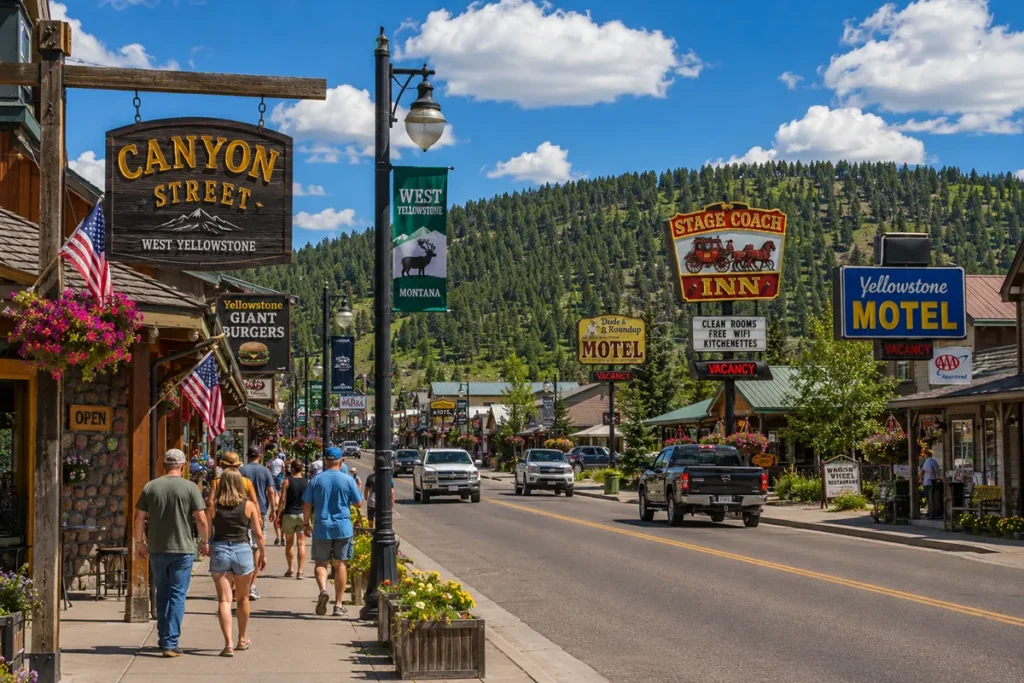
Where I’ve Stayed in West Yellowstone (and What I’d Book Again)
I’ve personally stayed at six different properties in West Yellowstone over the years. Here’s my honest breakdown:
| Property | Type | Summer Rate Range | My Take |
|---|---|---|---|
| Explorer Cabins at Yellowstone | Cabin hotel | $250–$400/night | My top pick for families — individual log cabins with kitchenettes, very clean, walking distance to everything |
| Brandin’ Iron Inn | Motel | $150–$250/night | No-frills but well-maintained, outdoor heated pool, great value for the location |
| Kelly Inn West Yellowstone | Hotel | $200–$350/night | Indoor pool, hot tub, continental breakfast — solid mid-range choice, rooms are larger than average |
| Moose Creek Lodge & Cabins | Cabin | $180–$300/night | Quieter location on the edge of town, cozy cabins with a rustic Montana feel |
| Gray Wolf Inn & Suites | Hotel | $220–$380/night | Best indoor pool in town, suites have full kitchens — I stayed here during my winter snowmobile trip |
| Al’s Westward Ho Motel | Budget motel | $100–$180/night | Basic but clean, family-owned, one of the few genuinely affordable options in peak summer |
If I had to pick just one, I’d go back to Explorer Cabins every time. On my trip last June, my cabin had a small porch where I drank coffee while watching a family of mule deer graze across the street. Those little moments are what make choosing a cabin over a chain hotel worthwhile.
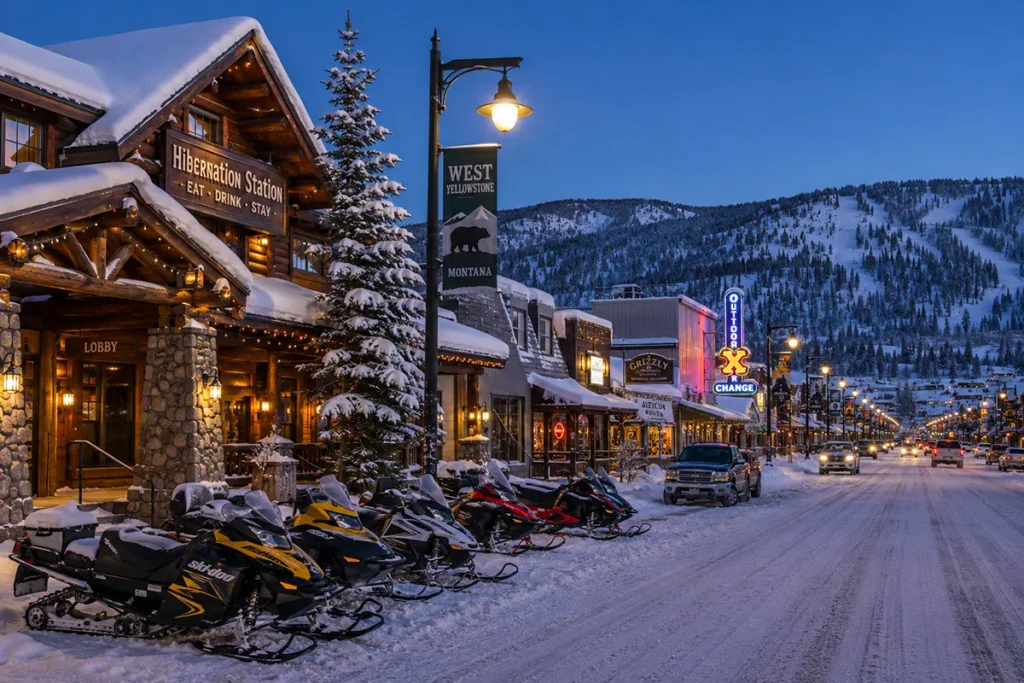
West Yellowstone’s Secret: It’s Also a Winter Destination
Something most people don’t realize is that the West Entrance to Yellowstone closes to regular vehicle traffic from early November through mid-April. But the town doesn’t shut down. It transforms into a snowmobile and cross-country skiing hub.
I spent three days there in February a few years back, and the experience was surreal. The town was quiet, rates were half of summer prices, and I did a guided snowcoach tour into the park to see Old Faithful erupting in subzero temperatures with maybe twenty other people. If you’re flexible on timing, winter is a revelation.
Gardiner: The Year-Round Gateway with Serious Character
Gardiner sits at the North Entrance, tucked into a rugged canyon where the Yellowstone River comes roaring out of the park. It’s smaller and scrappier than West Yellowstone, and I mean that as a compliment.
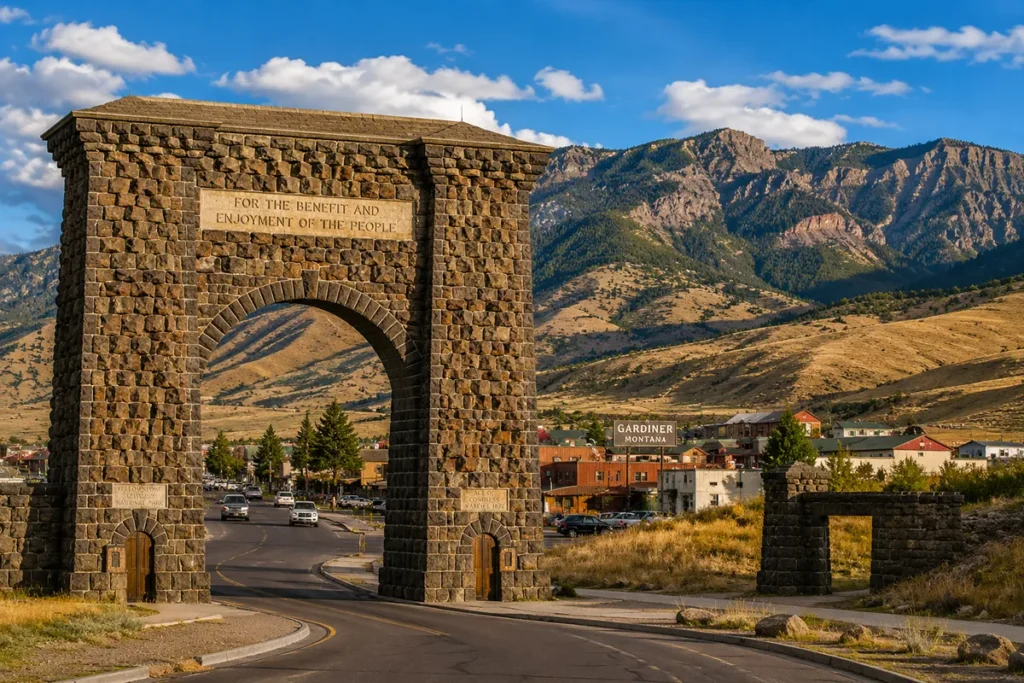
The Roosevelt Arch — that iconic stone gateway Theodore Roosevelt dedicated in 1903 — marks the entrance to the park right at the edge of town. There’s something about driving under that arch that makes the trip feel official every single time.
Why Choose Gardiner
The North Entrance is the only one open to cars year-round. That alone makes Gardiner essential for anyone visiting between November and April. But even in summer, Gardiner has strategic advantages that West Yellowstone doesn’t.
From Gardiner, you’re immediately in the park’s northern range — Mammoth Hot Springs is just five minutes inside the gate, and the Lamar Valley (the best wildlife-watching corridor in North America, in my opinion) is about an hour’s drive along one of the most beautiful roads in the park.
When I was there last September, I watched wolves hunting at dawn in the Lamar Valley and was back in Gardiner eating breakfast at the Yellowstone Grill by 9 AM. That proximity to the northern range is a game-changer for wildlife enthusiasts.
The town also has a genuinely local feel. The Yellowstone River runs right through it, and during my last visit I saw locals fly fishing from the bridge while tourists walked past with cameras. The Iron Horse Bar & Grill serves elk burgers that I still think about. The whole vibe is more “Montana mountain town” than “tourist hub.”
Where to Stay in Gardiner
Gardiner has fewer lodging options than West Yellowstone, and they book up fast. Here’s what I know from experience:
Yellowstone Riverside Cottages — These little cottages along the Yellowstone River are my favorite place to stay in all of Yellowstone’s Montana gateways. I’ve booked them three times now. You fall asleep to the sound of the river, and the property is run by people who genuinely care. Last time I stayed, the owner left a hand-drawn map of her favorite hikes on my pillow. Summer rates run $200–$350.
Absaroka Lodge — Right on the main street with balconies overlooking the river. The rooms are straightforward but clean, and the location can’t be beaten. I stayed here on a last-minute trip and was pleasantly surprised. Expect $180–$300 in summer.
Yellowstone Village Inn & Suites — On the edge of town, this is one of the larger properties in Gardiner. Indoor pool, decent rooms, family-friendly. It lacks the charm of the smaller places but compensates with amenities. $200–$380 in peak season.
Comfort Inn Yellowstone North — If you want predictable chain-hotel reliability, this is your option. It’s the newest property in Gardiner and rooms are noticeably more modern than most of what’s available in town. $220–$400 in summer.
A word of caution: Gardiner has almost zero budget options in summer. If you’re watching your wallet, look into the USFS campgrounds along the Yellowstone River north of town — Timber Camp and Eagle Creek are both first-come, first-served and cost under $15/night. I camped at Eagle Creek on a September trip and had the place nearly to myself.
The Gardiner-Mammoth Connection
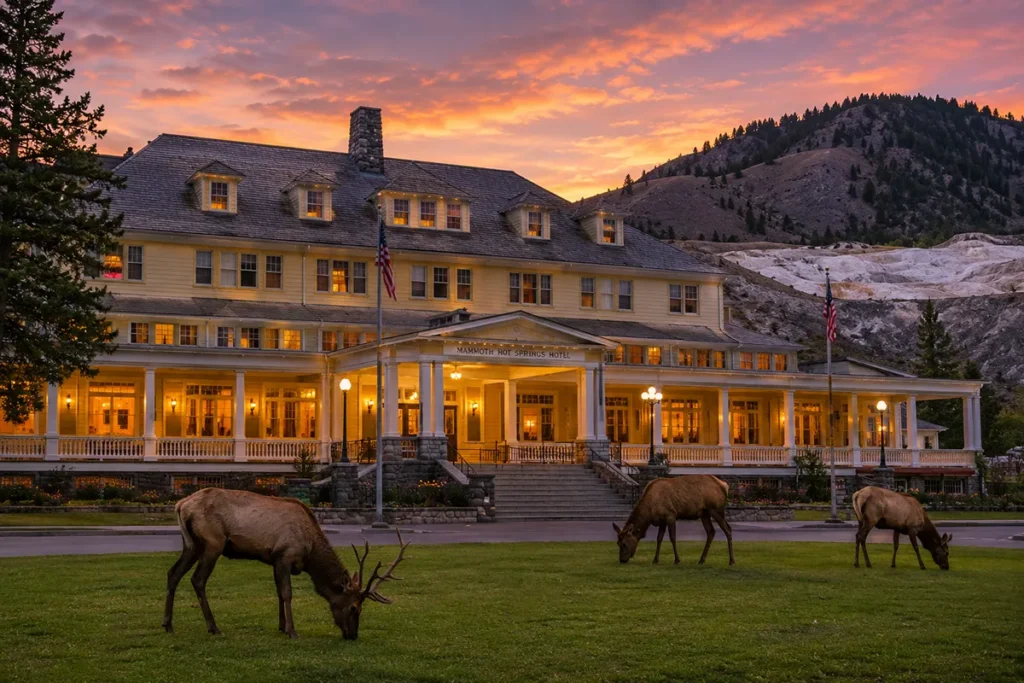
Here’s an insider tip many visitors miss: Mammoth Hot Springs, which is technically inside the park, has its own lodging — the Mammoth Hot Springs Hotel. It’s operated by Yellowstone’s concessioner and is only five miles from Gardiner.
I’ve stayed there twice. The rooms in the main hotel are dated (think 1950s national park aesthetic), but the recently renovated cabins are surprisingly comfortable. The real draw is location — you’re already inside the park, which means you can be on the road to Lamar Valley at 5 AM without waiting at an entrance gate. Elk routinely graze on the Mammoth lawn, and I’ve watched them from the hotel porch at sunset.
Book through Yellowstone Lodges (the official concessioner) well in advance. These rooms fill up 6–12 months out.
Cooke City and Silver Gate: For the Adventurous Traveler
If West Yellowstone is the popular kid and Gardiner is the cool, slightly rugged one, then Cooke City is the hermit who lives at the end of a dirt road and has the best stories. This tiny community (population: around 75 year-round) sits just outside the Northeast Entrance, wedged between the Absaroka and Beartooth mountains at 7,600 feet.
Getting to Cooke City requires driving through the park from Gardiner or coming over the Beartooth Highway from Red Lodge — one of the most spectacular drives in the American West but only open from late May through mid-October, depending on snow.
Who Should Stay Here
Cooke City is not for everyone, and I don’t say that to be elitist. There are maybe a dozen lodging options total between Cooke City and its even smaller neighbor, Silver Gate. There’s one small general store. Cell service is spotty at best. The nearest hospital is over an hour away.
But if you’re a serious wildlife watcher, a backcountry hiker, or someone who just wants to be as far from crowds as possible while still being near Yellowstone, this is your place.
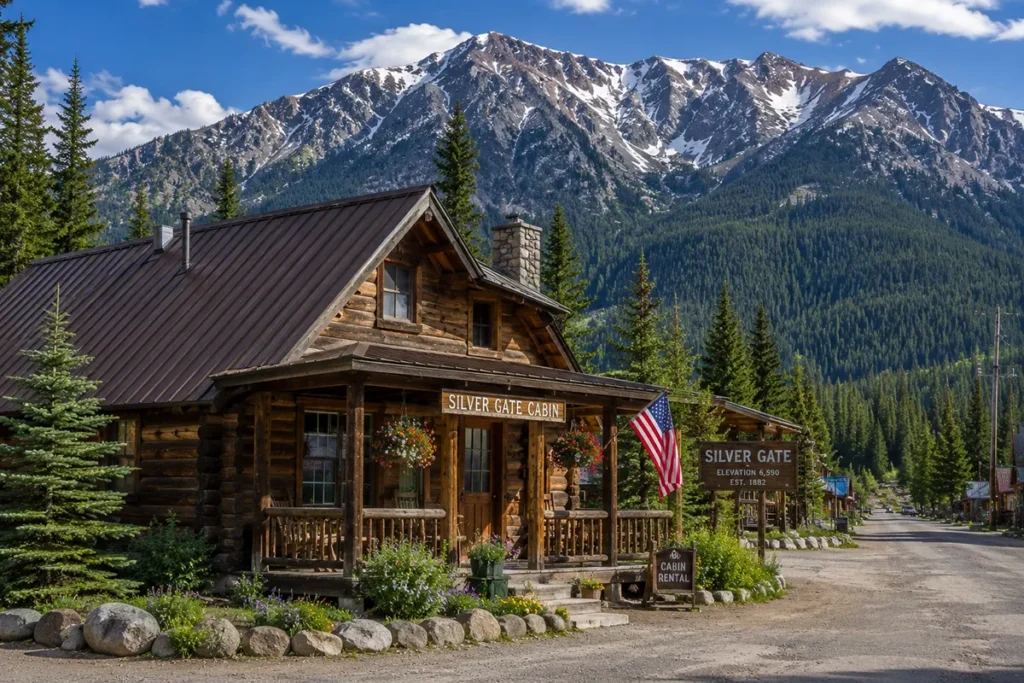
On a trip two Septembers ago, I stayed at the Silver Gate Lodges — a small collection of cabins right on the edge of the park boundary. I sat on my cabin porch one morning and watched a grizzly bear amble through the meadow across the road. No other people in sight. That kind of experience doesn’t happen in West Yellowstone.
The Lamar Valley, which I consider the crown jewel of Yellowstone for wildlife, is more accessible from Cooke City than from any other gateway town. You’re entering the park at the valley’s eastern end, which means you’re driving into prime wolf and bison territory within minutes.
Cooke City Lodging Options
Silver Gate Lodges (Silver Gate) — Rustic cabins with full kitchens. My personal favorite on this end of the park. No TV, no Wi-Fi in the cabins, and that’s the point. $150–$250/night in summer.
Soda Butte Lodge (Cooke City) — The largest property in the area with a restaurant and bar on-site. Rooms are basic motel-style but clean. The Prospector Restaurant attached to the lodge serves surprisingly good food — I had a bison ribeye there that rivaled any steakhouse in Bozeman. $160–$280/night.
Antlers Lodge (Cooke City) — Small, family-run, and deeply charming. Log cabin rooms with quilts on the beds. This feels like stepping back in time. $130–$220/night.
Cooke City Alpine Motel — Budget-friendly and no-nonsense. If you just need a clean bed and a hot shower after a day in the backcountry, this delivers. $100–$170/night.
Staying Inside the Park: Montana-Side Options
While most of Yellowstone’s interior lodging falls within Wyoming’s borders, the Mammoth Hot Springs area is technically in Montana, and it deserves its own mention.
Beyond Mammoth Hot Springs Hotel (which I covered above), there’s camping. Indian Creek Campground is about eight miles south of Mammoth on the road toward Norris, and it’s one of the more peaceful campgrounds in the park.
I camped there on a July trip a few years back and had a site surrounded by lodgepole pines with a creek gurgling nearby. At $20/night, it’s one of the best deals in the entire Yellowstone ecosystem.
Mammoth Campground itself is right in the Mammoth Hot Springs developed area. It’s the only campground in Yellowstone open year-round, and it operates on a reservation system through Recreation.gov. Sites are more exposed than Indian Creek, but the convenience of being steps from the general store and restaurant is undeniable.
The Big Decision: Which Gateway Town Is Right for You?
After all these trips, here’s how I’d distill the decision:
| If You Want… | Stay In… | Why |
|---|---|---|
| Geysers, hot springs, iconic features | West Yellowstone | Closest to Old Faithful, Grand Prismatic, Norris Basin |
| Most dining/shopping/services | West Yellowstone | Largest gateway town with the most options |
| Wildlife watching (wolves, bears, bison herds) | Gardiner or Cooke City | Both are close to Lamar Valley and the northern range |
| Year-round access | Gardiner | Only entrance open to cars all 12 months |
| Solitude and backcountry | Cooke City/Silver Gate | Smallest, quietest, most remote gateway |
| Budget-friendly camping | Gardiner area (USFS sites) or inside the park | Multiple campgrounds under $20/night |
| A scenic drive as part of the experience | Cooke City (via Beartooth Hwy) | The Beartooth Highway is one of America’s greatest drives |
What About Staying in Bozeman or Big Sky?
I get asked this a lot, and the answer is: it depends on your tolerance for driving.
Bozeman is about 90 miles north of West Yellowstone, or roughly 90 minutes via US-191 through the Gallatin Canyon. It’s a fantastic town — I love Bozeman for its restaurants, breweries, and the fact that it has a real airport (Bozeman Yellowstone International) with direct flights from most major US cities.
But 90 minutes each way to the park adds up fast. I’ve done it on a day trip and felt like I spent half my day in the car. If you’re spending multiple days in Yellowstone, don’t stay in Bozeman unless you’re only doing one park day as part of a larger Montana trip.
Big Sky is closer — about 50 miles from West Yellowstone — and has some gorgeous resort-style lodging. I stayed at a vacation rental near Big Sky on a ski trip and drove down to West Yellowstone for a snowcoach tour. The drive through the Gallatin Canyon is beautiful, but in summer, traffic along US-191 can be heavy due to construction and recreational traffic.
My honest recommendation: if Yellowstone is your primary destination, stay at a gateway town. Save Bozeman and Big Sky for separate trips or for bookending your Yellowstone visit.
Booking Strategy: How to Actually Get a Room
This is where I see people make the most costly mistakes. Yellowstone is the fourth most-visited national park in the country, and Montana’s gateway towns have finite lodging. Here’s my practical advice based on years of booking:
For summer (mid-June through August): Book 4–6 months in advance minimum. I’ve tried booking West Yellowstone hotels in April for July and found almost everything sold out. The few remaining rooms were priced at a premium.
For September: This is my favorite time and the best-kept secret. The crowds thin dramatically after Labor Day, fall colors start appearing, and wildlife is extremely active (elk rut, bears feeding for winter). I’ve found rooms at 30–40% below peak rates. Book 2–3 months ahead.
For winter: Only relevant for Gardiner (year-round entrance) and West Yellowstone (snowmobile/snowcoach access). Rates drop significantly. I’ve gotten rooms in Gardiner for under $120/night in January.
Cancellation policies: Most gateway town properties have 48-hour to 7-day cancellation policies. During my trip planning, I sometimes book a refundable room early as a safety net, then look for better options as the date approaches.
Vacation rentals: Platforms like Vrbo and Airbnb have options in all three gateway towns, though inventory is smaller than you might expect. I rented a two-bedroom house in West Yellowstone last summer that was significantly better value than two hotel rooms would have been for our group of four.
Practical Tips I’ve Learned the Hard Way
Gas up before entering the park. Gas inside Yellowstone is limited and expensive. West Yellowstone and Gardiner both have multiple gas stations. Cooke City has one, and it closes earlier than you’d think.
Pack food even if you’re staying in town. You’ll want snacks and drinks for full days in the park. The general stores inside Yellowstone are overpriced and understocked. On my last trip, I packed a cooler with sandwiches, fruit, and drinks each morning, and it saved us time and money.
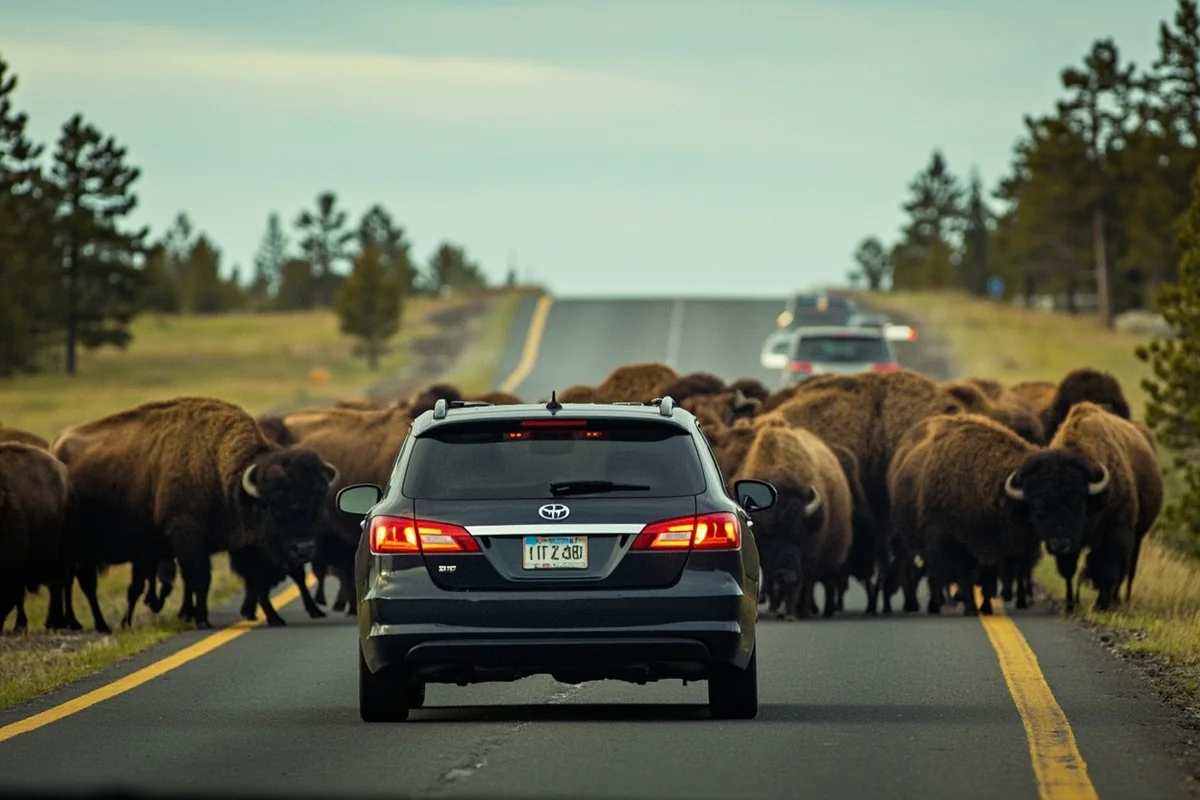
Don’t underestimate drive times. Speed limits in the park are 45 mph maximum, often 25–35 near developed areas. Add wildlife jams (bison on the road, bear sightings causing traffic) and construction, and a 50-mile drive can take 90 minutes or more.
Bring layers regardless of the season. Even in July, mornings at elevation can be in the 30s. I’ve been in West Yellowstone in August when it hit 85°F in the afternoon and dropped to 38°F by dawn.
The entrance fee is $35 per vehicle for a 7-day pass. If you’re visiting multiple national parks or plan to return, the $80 America the Beautiful annual pass is a no-brainer. I’ve had one for over a decade.
My Ideal Yellowstone Montana Itinerary
If I were planning a week-long trip to Yellowstone from the Montana side — which I’ve essentially done multiple times — here’s exactly how I’d structure lodging:
Nights 1–3: West Yellowstone. Use these days to hit the heavy-hitter geothermal features: Old Faithful, Grand Prismatic, Norris Geyser Basin, Fountain Paint Pots. Get up early each day to beat the crowds. Eat dinner in town.
Night 4: Drive to Gardiner via the park’s Grand Loop Road. Stop at Canyon Village to see the Grand Canyon of the Yellowstone on the way. This is a full day of driving and sightseeing. Check into your Gardiner lodging that evening.
Nights 5–6: Gardiner. Wake up at dawn for Lamar Valley wildlife watching. Visit Mammoth Hot Springs. Take an afternoon to explore the town, soak in the Yellowstone Hot Springs (a commercial hot springs pool complex just north of town — I found it wonderfully relaxing after days of hiking).
Night 7: Cooke City (optional, for the adventurous). If the Beartooth Highway is open, drive out through the Northeast Entrance, spend a night in Cooke City, and exit via the Beartooth Highway toward Red Lodge the next morning. This is one of the most memorable drives you’ll ever take.
Final Thoughts: The Montana Side Is the Right Side
I’ve approached Yellowstone from all five entrances over the years, and I keep coming back to the Montana gateways. There’s something about the combination of accessibility, authentic Montana character, and proximity to the park’s best features that makes the Montana side feel like home.
West Yellowstone gives you the full-service gateway experience. Gardiner gives you year-round access and real Montana grit. Cooke City gives you wilderness on a level that most park visitors never experience.
The key is matching your lodging to your priorities, booking earlier than you think you need to, and being willing to split your stay between towns if time allows. Yellowstone is too vast and too varied to experience from a single base, and the Montana side gives you the best tools to make the most of it.
Start planning early, pack your layers, fill your gas tank, and bring more patience than you think you’ll need. The park rewards those who slow down — and choosing the right place to stay is the first step toward doing exactly that.
Frequently Asked Questions
What are the best towns to stay in near Yellowstone’s Montana entrance?
West Yellowstone is the most popular base camp, sitting right at the park’s west entrance and offering the widest range of hotels, cabins, and vacation rentals. Gardiner is another excellent choice at the north entrance, staying open year-round and giving you quick access to Mammoth Hot Springs and the Lamar Valley. Cooke City and Silver Gate near the northeast entrance are ideal if you want a quieter, more rugged Montana experience with fewer crowds.
How much does it cost to stay near Yellowstone in Montana per night?
Budget motels in West Yellowstone and Gardiner typically run $120–$200 per night during peak summer season (June–August), while mid-range hotels and cabins average $200–$350. Luxury lodges and premium vacation rentals can easily exceed $400–$600 per night. If you visit in the shoulder seasons of May or September, you can often save 30–40% on accommodation costs.
Should I stay inside Yellowstone National Park or in a Montana gateway town?
Staying inside the park at lodges like Old Faithful Inn or Mammoth Hot Springs Hotel puts you right in the action with no commute, but availability is extremely limited and often books up 6–12 months in advance. Gateway towns like West Yellowstone and Gardiner give you more lodging options, better dining variety, and generally lower prices. I personally prefer staying in a gateway town for the flexibility and booking a night or two inside the park as a special experience.
What is the best time of year to visit and stay near Yellowstone Montana?
June through mid-September offers the best weather and full access to all park roads and entrances, though July and August bring peak crowds and the highest lodging prices. Late September and October deliver stunning fall colors and thinner crowds, but some roads and accommodations begin closing. Winter visits (December–March) are magical for snowcoach tours and wildlife viewing, and West Yellowstone becomes a hub for snowmobiling, though only the north entrance through Gardiner stays open to regular vehicles.
How far in advance should I book accommodation near Yellowstone in Montana?
For summer travel between June and August, I recommend booking at least 3–6 months in advance, especially for popular properties in West Yellowstone and Gardiner. In-park lodges managed by Yellowstone Forever and Xanterra can sell out a year ahead for peak dates. Shoulder season visits in May, September, or October give you a bit more flexibility, but booking 1–2 months out is still wise for the best selection and rates.
Are there affordable camping options near Yellowstone’s Montana entrances?
Yes, there are several great options if you’re looking to stay near Yellowstone Montana on a budget. The Gallatin National Forest surrounding West Yellowstone and Gardiner offers dispersed camping for free, and established forest service campgrounds run about $10–$25 per night. Private campgrounds and RV parks in West Yellowstone like the Yellowstone Grizzly RV Park charge $40–$80 per night with full hookups, showers, and amenities. Inside the park, first-come-first-served campgrounds like Mammoth cost around $25–$35 per night.
What should I pack if I’m staying near Yellowstone in Montana?
Layers are essential since Montana mountain weather near Yellowstone can swing from 80°F during the day to below 40°F at night, even in summer. Bring a quality rain jacket, sturdy hiking boots, bear spray (available for about $30–$50 in gateway towns), and binoculars for wildlife viewing in the Lamar and Hayden Valleys. If you’re visiting in shoulder season or winter, pack thermal base layers, insulated outerwear, and hand warmers because temperatures can drop well below zero.