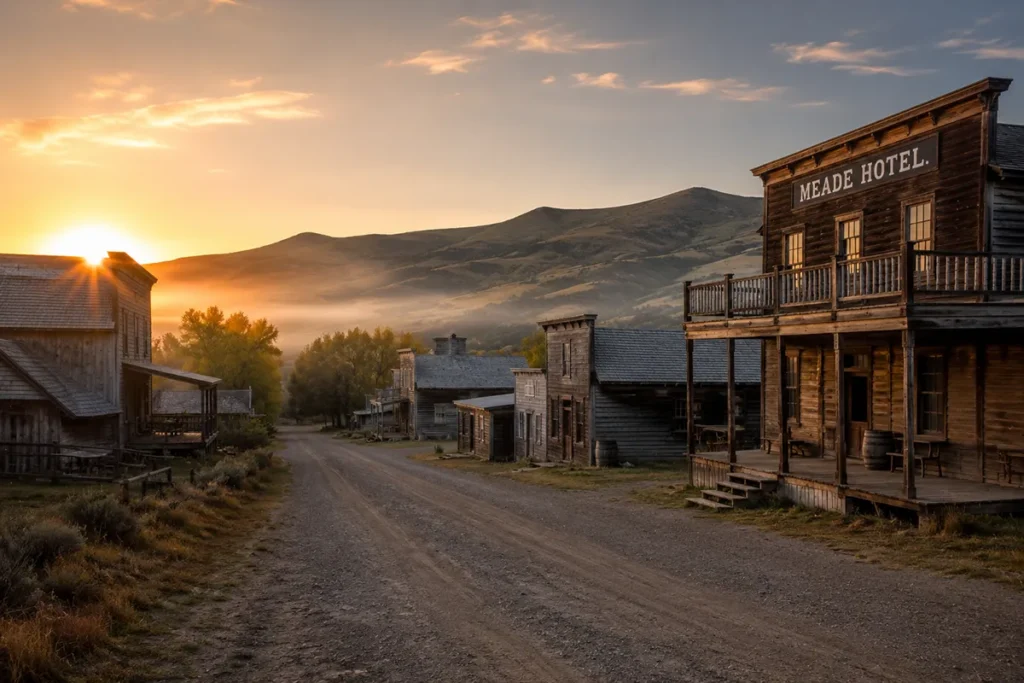
I once stood alone in the middle of Bannack’s main street on a Tuesday morning in late September, listening to the wind rattle the windows of the Meade Hotel — and I couldn’t shake the feeling that the town wasn’t quite as empty as it looked.
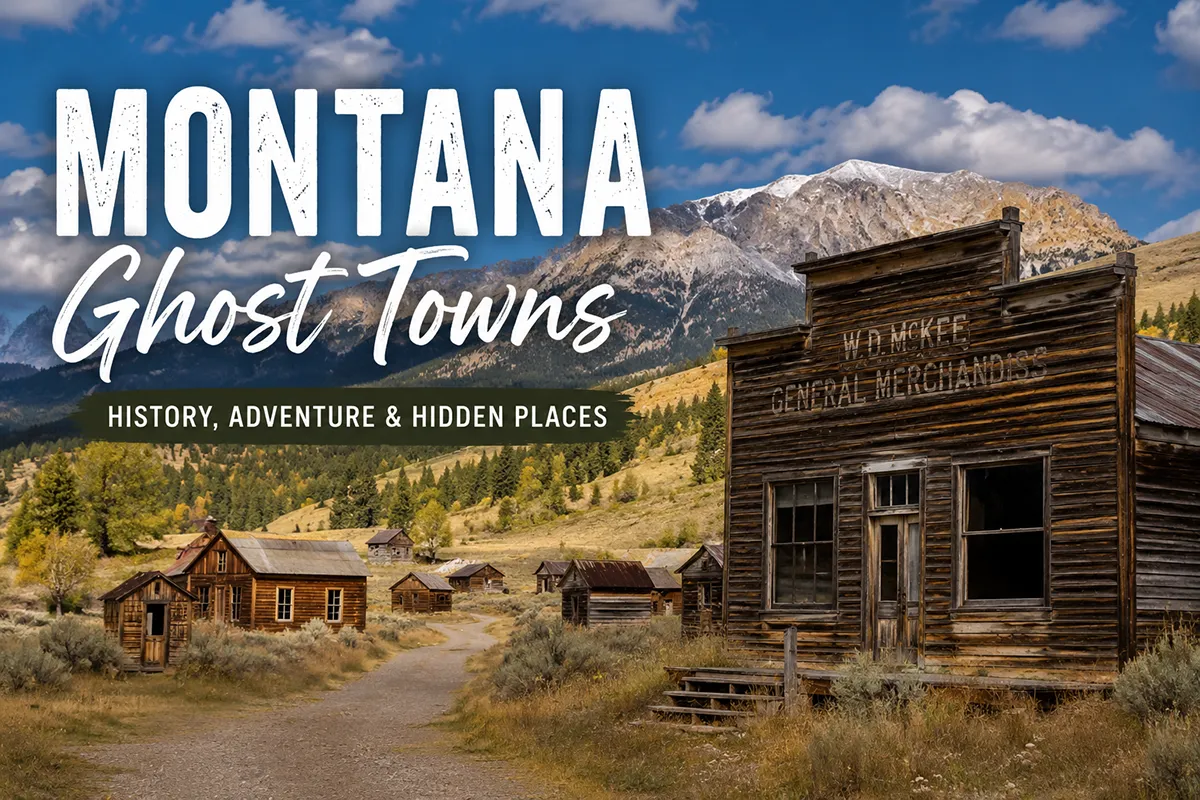
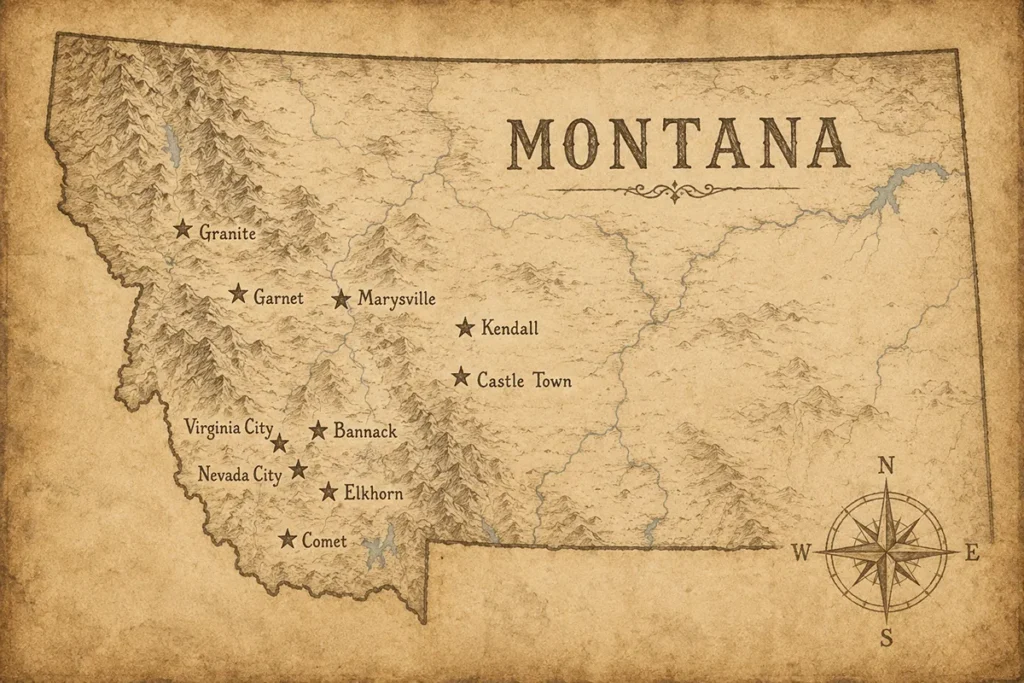
Montana has more than 60 ghost towns, but only about 10 are worth the drive for most travelers. Bannack and Garnet are the best-preserved and most accessible. Virginia City and Nevada City are “living” ghost towns with full summer programming. Granite, Elkhorn, Marysville, Kendall, Castle Town, and Comet are deeper cuts for serious history buffs. Below: which to visit, how to get there, what each one costs, and the multi-day routes locals actually use.
Liked this article?
Add Roaming Montana as a preferred source so you see more of our articles and guides on Google.
Why Montana’s Ghost Towns Hit Different
I’ve explored ghost towns in Colorado, Nevada, and Arizona. They’re impressive in their own way. But Montana’s are different — and I think it comes down to three things.
First, the scale of the boom-and-bust here was staggering. When gold was discovered at Grasshopper Creek in 1862, Bannack went from empty creek bed to a town of 3,000 people in months.
Virginia City pulled gold worth tens of millions in 1864 dollars out of a single gulch. Then the seams played out, the railroads bypassed the wrong towns, the silver crash of 1893 hit, and entire communities packed up and left within weeks. Many of these places haven’t been touched since.
Second, Montana’s remoteness is what preserved them. The same geography that made these towns hard to abandon also made them hard to vandalize.
Bannack sat at the end of a long gravel road through a wide empty valley for 80 years before becoming a state park in 1954. Garnet is 11 miles up a forest service road from a highway most people don’t drive. That isolation is why so many original structures still stand.
Third, the Montana gold rush and the vigilante story tied to it is unique in the American West. Henry Plummer — Bannack’s sheriff who was secretly running a road agent gang, then was hanged on his own gallows in 1864 — is a piece of frontier history that hasn’t been Disney-fied. You can stand on the spot where it happened. That’s rare.
This guide is built from my own visits across multiple seasons, with as much practical detail as I could pack in. I’ve cross-checked fees and hours where possible, but anything time-sensitive should be confirmed before you go.
The 10 Montana Ghost Towns Worth Visiting
Below: a quick-reference table, then a deep-dive on each town with a link to my full guide.
| # | Ghost Town | Region | Best For | Status | Entry Fee | Access |
|---|---|---|---|---|---|---|
| 1 | Bannack | Southwest | First-timers, families | State park | ~$8/vehicle [verify] | Paved + 4 mi gravel |
| 2 | Garnet | Western | Solitude, authenticity | BLM-managed | ~$3/person [verify] | 11 mi gravel, closed in winter |
| 3 | Virginia City | Southwest | Living history, summer events | Living town | Free entry; tours paid | Paved access |
| 4 | Nevada City | Southwest | Pair with Virginia City | Open-air museum | Combo tickets w/ VC | Paved access |
| 5 | Granite | Western | Adventurous hikers | Public land | Free | 4 mi steep gravel + hike |
| 6 | Elkhorn | Southwest | Quiet day trip | State park | Free | 11 mi gravel |
| 7 | Marysville | Central-West | Easy from Helena | Semi-ghost town | Free | Paved access |
| 8 | Kendall | Central | Off-the-beaten-path | Public access | Free | Gravel, high-clearance helpful |
| 9 | Castle Town | Central | Drive-by history | Private property | Free (roadside only) | FS Road 211, summer only |
| 10 | Comet | Southwest | Photography, quiet | Private property | Free (respectful viewing) | 5 mi gravel from I-15 |
1. Bannack — Montana’s First Territorial Capital
If you only visit one Montana ghost town, make it Bannack. This is where Montana’s gold rush began in July 1862, where the first territorial capital was seated in 1864, and where Sheriff Henry Plummer was hanged on his own gallows that same year. Over 60 original structures still stand, and unlike most preserved sites, you can walk right into them.
I visited on a quiet Tuesday in September and had the Meade Hotel almost entirely to myself. The second-floor wallpaper is peeling exactly the way it was when the last residents left in the 1970s. There’s a profound silence inside that building that I haven’t experienced anywhere else in Montana.
Bannack Days in the third weekend of July brings reenactors and demonstrations, but I actually prefer the quiet shoulder seasons. May and September are sweet spots — buildings are open, weather is workable, and the crowds are thin.
📍 Read my full guide: Bannack Ghost Town — Complete Visitor’s Guide
2. Garnet — Montana’s Best-Preserved Mining Town
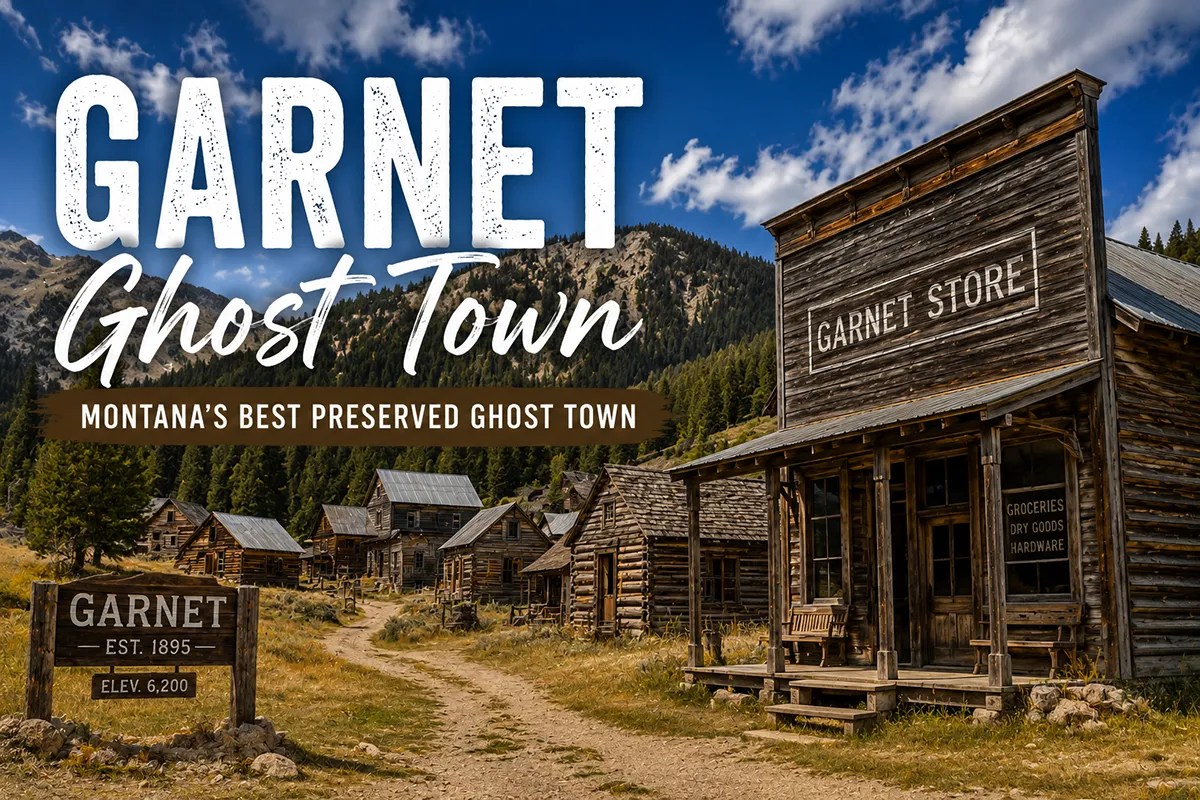
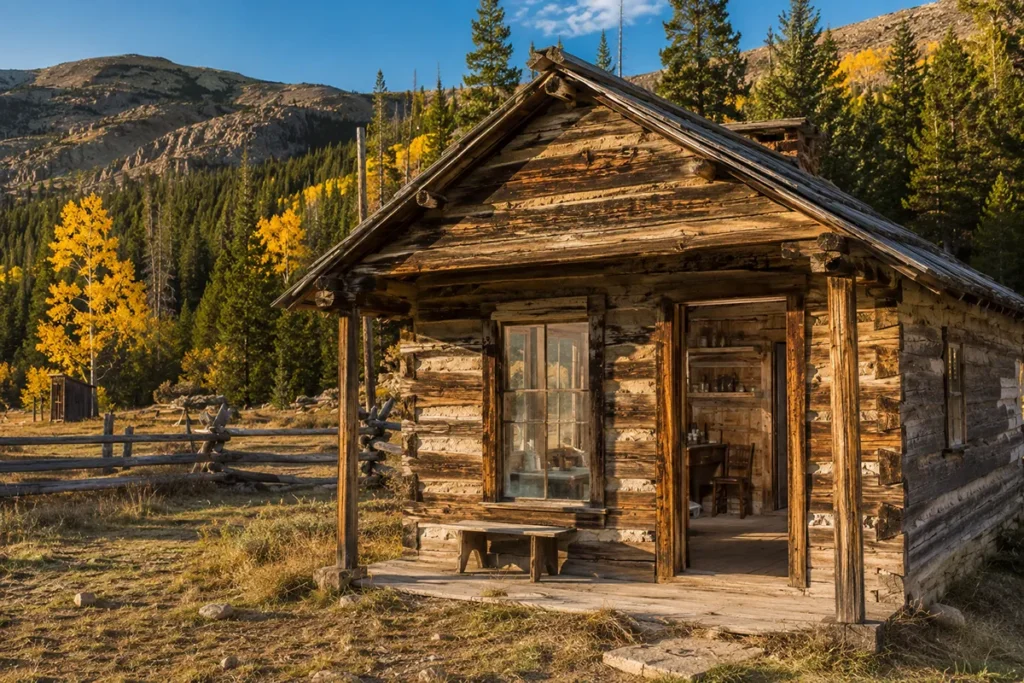
Garnet is what Bannack would be if Bannack had never become a state park. It sits at 6,000 feet in the Garnet Range, 30 miles east of Missoula, and the BLM has kept it in a state of “arrested decay” since the 1970s.
About 30 buildings remain, several still partially furnished. Kelly’s Saloon still has the original bar. The J.K. Wells Hotel still has guest registers visible through windows.
The drive in is the first part of the experience. From Highway 200, you turn onto Garnet Range Road, and you climb 11 miles of gravel. My low-clearance sedan handled it fine in late June, but I wouldn’t try it after rain.
In winter, the road closes and Garnet becomes a snowshoe-and-cross-country-ski destination. The BLM rents two of the original cabins to overnight visitors in winter, which is one of the most unique experiences in Montana if you can get a reservation.
📍 Read my full guide: Garnet Ghost Town — How to Visit Montana’s Most Authentic Mining Town
3. Virginia City — The Living Ghost Town
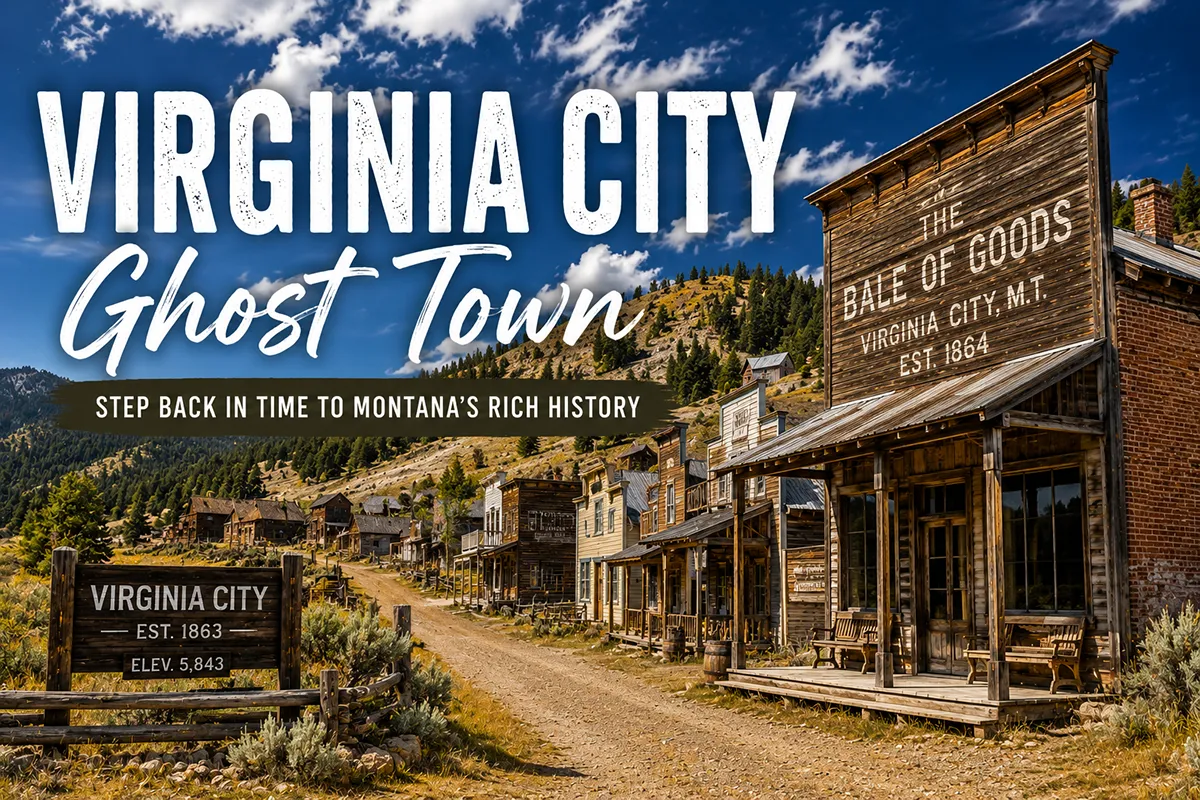
Virginia City is the one most people picture when they hear “Montana ghost town.” It’s not abandoned — about 200 people live here year-round — but the boardwalks are original, over 100 19th-century buildings still stand, and in summer it operates as a living history museum with actors in period costume.
I’ve visited four times. The first was in July during peak season, and honestly it felt a bit Disney. The next was a quiet weekend in early June, before the summer programming had fully started, and that’s when I fell in love with it.
You can walk the boardwalks at dusk after the day-trippers have left, peek into the same storefronts where vigilantes once met, and end up at Boot Hill Cemetery reading the headstones of road agents hanged in 1864.
The Alder Gulch Shortline steam train between Virginia City and Nevada City is the best $13 [verify] you’ll spend in the state.
📍 Read my full guide: Virginia City Ghost Town — Montana’s Living Gold Rush Museum
4. Nevada City — The Outdoor Museum
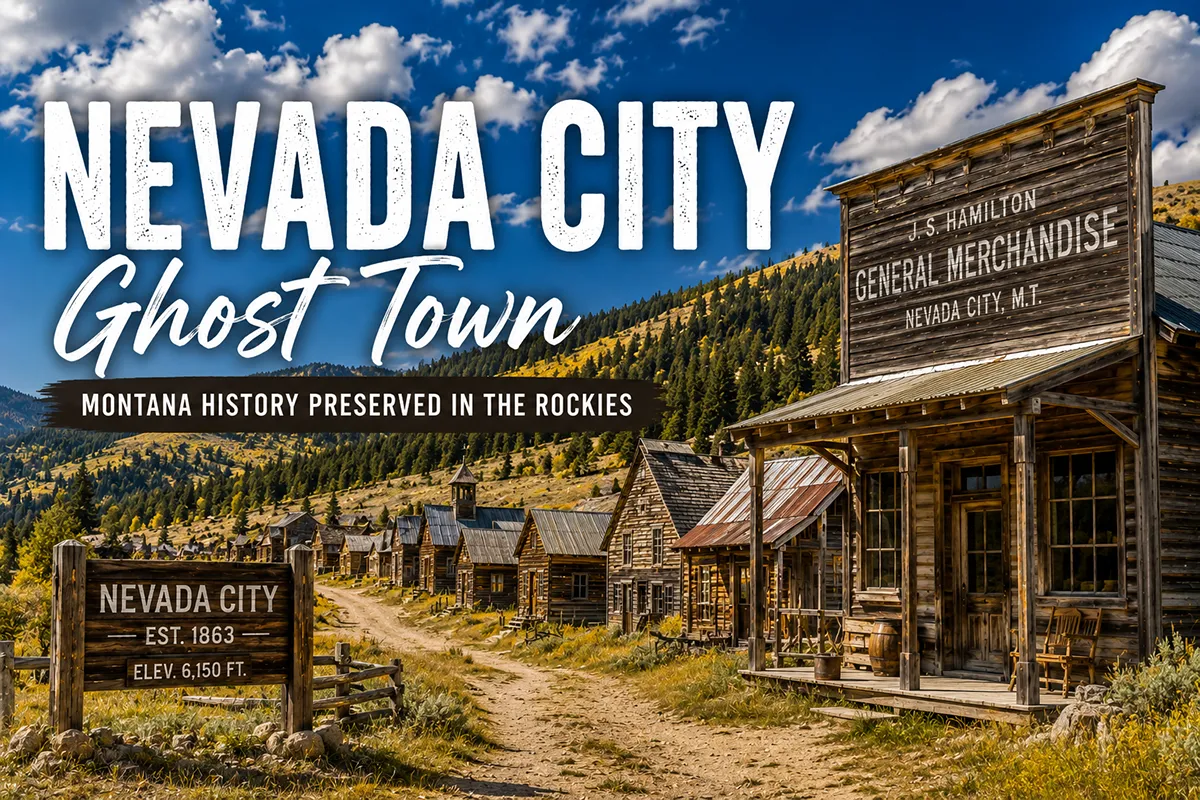
Nevada City sits a mile and a half west of Virginia City and operates almost as a single destination with it. Where Virginia City has a working town overlay, Nevada City is more of an open-air museum — over 100 relocated and original buildings arranged into a recreated 1860s mining town.
The Music Hall here houses one of the largest collections of antique music machines in the world, and a curator demonstrates them for small groups. I sat through a private demonstration of a massive German orchestrion on a slow Tuesday in August and it remains one of the most surreal cultural experiences I’ve had in Montana.
Visit Nevada City and Virginia City together — they share combo tickets and the train shuttle makes the logistics easy.
📍 Read my full guide: Nevada City Montana — The Open-Air Mining Museum
5. Granite — The Silver Queen’s Ruins
Granite is for hikers and serious history buffs. In 1890 it was the silver capital of Montana with 3,000 residents. By 1893, after silver was demonetized, the population collapsed almost overnight. People walked away from their homes because the silver in their pockets was suddenly worthless.
The ruins sit on a steep ridge above Philipsburg. To reach them you drive a short distance up Granite Mountain Road from town and then hike the rest. I made the trip last October — about a two-mile round-trip walk through scattered foundations, partial walls, and the superintendent’s house still standing remarkably intact.
The eeriest part is how the silver crash narrative still hangs over the place. You can stand among foundations of houses where families had a week to decide what to keep and what to leave behind. Most chose to leave it all.
📍 Read my full guide: Granite Ghost Town — Hiking to Montana’s Silver Capital Ruins
6. Elkhorn — A Quiet State Park Day Trip
Elkhorn is the easiest ghost town to combine with a Helena or Boulder trip. It’s a state park, but unlike Bannack, it’s tiny — just two main buildings (Fraternity Hall and Gillian Hall) and a scattering of cabins along a single dirt street, surrounded by current-day residents in private homes.
The drive in is part gravel through a beautiful canyon. Fraternity Hall, built in 1893, is a striking false-front building with original Masonic symbols still visible. Gillian Hall next door has a balcony where I sat for 20 minutes watching afternoon light hit the empty stage.
Most visitors do Elkhorn as a half-day trip. Combine it with the Boulder Hot Springs for a perfect Saturday.
📍 Read my full guide: Elkhorn Ghost Town — Montana’s Smallest State Park
7. Marysville — Helena’s Backyard Ghost Town
Marysville is technically a semi-ghost town — about 80 people still live here — but the abandoned structures outnumber the inhabited ones.
Founded around the Drumlummon Mine in 1876 (named by Irish prospector Thomas Cruse after his hometown), it was once Montana’s leading gold producer with a peak population of 3,000.
What sets Marysville apart: it had a baseball field with proper bleachers — incredibly rare for a mining camp — and the field is still there. Weathered, leaning, but still there.
It’s a 30-minute drive from Helena on a fully paved road, which makes it the most accessible ghost town in this guide. If you have one afternoon free in the Helena area and don’t want to drive forever, this is the call.
📍 Read my full guide: Marysville Ghost Town — The Drumlummon Mine Story
8. Kendall — Central Montana’s Forgotten Gold Camp
Kendall is the deep cut on this list. Tucked into the North Moccasin Mountains north of Lewistown, it was founded in 1899 around a then-revolutionary cyanide gold extraction process, peaked at about 1,500 residents, and was effectively abandoned by 1920 when the main mine folded.
What makes Kendall unusual is that most residents physically hauled their houses to nearby Hilger when the mine closed. So what’s left isn’t a frontier town frozen in time — it’s stone ruins, foundations, and a few stubborn structures. Boy Scouts maintain interpretive signage on-site.
This isn’t a “wow, look at all the buildings” ghost town. It’s a “feel the weight of what’s missing” ghost town. Don’t drive four hours from Bozeman for it, but if you’re already exploring central Montana, it’s a worthwhile add.
📍 Read my full guide: Kendall Ghost Town — Central Montana’s Lost Gold Camp
9. Castle Town — The Calamity Jane Connection (Private Property)
⚠️ Important: Castle Town is on private property. You can view it from Forest Service Road 211, but you cannot wander among the structures.
That said, the drive itself is one of the most beautiful in central Montana. From Highway 12, you climb FS Road 211 through the Castle Mountains, past Elk Peak, and down into the old town site.
At its 1890s peak, Castle had over 2,000 residents and was a major silver producer. Its most famous resident was Calamity Jane, who briefly lived here while trying (and failing) to open a restaurant.
There’s a historical marker and one preserved cabin visible from the road, along with the foundation of the old Baker’s General Store. The silver crash of 1893 killed the town, and the last mine closed in 1950.
I include Castle Town here mainly because the drive is worth doing, and because nearby Lennep and Martinsdale make it an excellent half-day loop from White Sulphur Springs.
📍 Read my full guide: Castle Town Ghost Town — A Drive-By Guide to Central Montana’s Silver City
10. Comet — Photographer’s Ghost Town (Private Property)
⚠️ Also private property. Comet is viewable from the road only — please respect that.
Comet sits about 40 miles northeast of Butte off I-15 (exit 160), 5 miles up High Ore Road. It’s a true ghost town — only one family lives there full-time, making the official population three.
What remains is striking: a two-story boarding house still standing, an old mill, a bunkhouse, and dozens of cabins scattered across a 12-block radius.
It was a silver/lead/zinc mining town that operated in fits and starts from 1876 to 1941, producing over $20 million in ore. Toxic mine runoff polluted High Ore Creek for 80 years until a major reclamation project in 1997.
I visited on an October afternoon and stayed in my car along the main road, shooting photos for about an hour. The light at 4 p.m. through October trees against weathered wood is exceptional. If you’re into photography, Comet might be the most rewarding ghost town in Montana — but treat it as a drive-through, not a walk-through.
📍 Read my full guide: Comet Ghost Town — Montana’s Silent Silver Camp
Which Ghost Town Is Right For You?
Here’s the decision matrix I wish I’d had on my first trip. Pick your priority and use this:
| If you want… | Visit… |
|---|---|
| The most famous, most preserved, best for a first visit | Bannack |
| The most authentic, non-commercial feel | Garnet |
| Living history, restaurants, summer events, family-friendly | Virginia City + Nevada City |
| A photographer’s quiet location | Comet or Castle Town (drive-by) |
| An easy half-day from Helena | Marysville or Elkhorn |
| A workout and dramatic ruins | Granite |
| Deep history, fewer visitors | Kendall |
| To stay overnight in an original cabin | Garnet (winter only, BLM rentals) |
| To combine with a hot springs trip | Elkhorn + Boulder Hot Springs |
| Genuine “spooky” atmosphere | Bannack (try the late October ghost walks) |
Regional Clusters — How to Plan Multi-Town Routes
If you want to see more than one ghost town in a trip, group them geographically. Here are the three clusters I recommend:
🟢 Southwest Cluster (3–4 day route)
Bannack → Virginia City → Nevada City → Comet → Elkhorn
This is the gold rush heartland. Base in Dillon for nights 1–2 (Bannack), then move to Virginia City for nights 3–4. Detour to Comet on the drive between if you’re taking I-15. End in Boulder near Elkhorn.
🟡 Helena & Central-West Cluster (2 day route)
Marysville → Elkhorn → (optional Granite via Philipsburg)
A relaxed weekend with Helena as your base. Day 1: Marysville in the morning, return to Helena, then drive south to Elkhorn for the afternoon. Day 2 optional: head west toward Philipsburg for Granite.
🟠 Central Montana Loop (2–3 day route)
Castle Town → Kendall → (Lewistown overnight)
This is for travelers who’ve already done the famous southwest towns and want something different. White Sulphur Springs makes a good launching point. Castle Town is your drive-by; Kendall is the destination.
Practical Info — What to Bring & What to Know
| Topic | Recommendation |
|---|---|
| Vehicle | Bannack, Marysville, Virginia City, Nevada City: any car. Garnet, Elkhorn, Comet, Castle Town: high-clearance recommended. Granite: high-clearance required for the road portion. |
| Best season | Mid-May through early October. Bannack and Virginia City are accessible year-round but most others lose road access in winter. |
| What to bring | Sturdy shoes (boardwalks are uneven), water, sun protection, layers (mountain weather shifts fast), a printed offline map (no cell signal at most sites). |
| Cell service | None at Garnet, Granite, Elkhorn, Castle Town, Comet, or Kendall. Download offline maps before you leave town. |
| Pets | Allowed on leash at most state-park sites (Bannack, Elkhorn). Garnet: yes, leashed. Private-property sites: keep them in the vehicle. |
| Accessibility | Bannack and Virginia City have the most accessible terrain. Garnet, Granite, and Elkhorn require walking on uneven ground. |
| Fees (verify before going) | Bannack: ~$8/vehicle. Garnet: ~$3/person. Virginia City: free entry, tours/train extra. Most others: free. |
What I Wish I’d Known Before My First Ghost Town Trip
A few things that would have saved me time and improved my visits — none of which are easy to find online.
Visit before 10 a.m. or after 4 p.m. The light is dramatically better, especially for photos, and at sites like Bannack and Garnet you’ll have buildings almost to yourself in the early morning hours. Mid-day light flattens everything and the boardwalks get crowded.
The shoulder seasons are the sweet spot. Late May and mid-September give you accessible roads, working visitor centers, and roughly half the visitors of July. October at Bannack is incredible — the “Ghost Walks” the park hosts around Halloween are genuinely well done and not gimmicky.
Don’t trust online hours without calling. I drove an hour out of my way once to find a visitor center closed for a staffing reason that wasn’t on the website. For Garnet especially, call the BLM Missoula office before making the trip if you’re going outside peak summer.
Bring a real camera if you can. Phone cameras handle ghost towns okay in daylight but struggle with the high-contrast interiors and the weathered wood textures that make these places visually special. A basic mirrorless with a 35mm prime lens is plenty.
Read the vigilante history before you go. Bannack and Virginia City hit very differently when you understand the Henry Plummer / Montana Vigilantes story. Most visitors walk through the gallows at Bannack without realizing what happened on that exact spot.
Be careful with structures on private property. Castle Town and Comet are the obvious ones, but Marysville and parts of Elkhorn also have private buildings interspersed with public ones. When in doubt, stay on marked paths.
Photography Tips
A few specific things I’ve learned from shooting ghost towns:
- Golden hour at Bannack hits the Meade Hotel face on around 7:30 a.m. in summer. That’s the postcard shot.
- Garnet’s J.K. Wells Hotel is best photographed from the trail above the town in late morning.
- Comet’s boarding house photographs best in afternoon side-light.
- Virginia City’s boardwalks are most interesting after a brief rain — wet wood reads beautifully on camera.
- Granite’s ruins are best at sunset; the rust-colored foundations glow.
Vigilante History — The Story Most Travelers Miss
The story tied to Bannack and Virginia City is one of the most dramatic chapters in American frontier history, and most visitors don’t realize they’re standing in the middle of it.
In 1862, Henry Plummer arrived in Bannack with a complicated past. By 1863 he’d been elected sheriff. But starting around that same time, prospectors and travelers heading out of the gold camps with payloads started disappearing along the trails between Bannack and Virginia City.
The road agents — eventually known as “the Innocents” — operated with shocking efficiency. Locals began to suspect they had inside information.
In late 1863, citizens of Virginia City and Bannack secretly formed the Montana Vigilantes. Between December 1863 and February 1864, they hanged 22 men without formal trials — including Sheriff Henry Plummer himself on January 10, 1864, on the same gallows he had used to enforce the law.
To this day, historians argue about whether Plummer was actually guilty or whether he was a victim of mob justice. What’s not in dispute is that the vigilante movement effectively ended highway robbery in southwest Montana within months.
You can stand on the spot of the original Bannack gallows. You can read the names of hanged men on headstones at Virginia City’s Boot Hill. The story is right there — most guidebooks just don’t dig into it.
Frequently Asked Questions
What is the best ghost town to visit in Montana?
For first-time visitors, Bannack State Park. It’s the best-preserved, most accessible, and most historically significant. Garnet is a close second if you want a more authentic, less crowded experience.
Are Montana ghost towns free to visit?
Most are free. Bannack charges around $8 per vehicle [verify], Garnet around $3 per person [verify], and Virginia City is free to enter but charges for tours, the train, and live shows. Castle Town and Comet are free but on private property.
Can you stay overnight in a Montana ghost town?
Yes — Garnet’s BLM rents two original cabins in winter (snowshoe or ski access only), and there are camping facilities at Bannack State Park. Virginia City has lodging in operational hotels and B&Bs.
Are Montana ghost towns haunted?
Several have well-documented paranormal reports, including Bannack, Garnet, and the Dumas Brothel in Butte. See my full guide to Montana’s most haunted places for the deeper dive.
When is the best time to visit Montana’s ghost towns?
Mid-June through mid-September for full access. Late May and late September are sweet spots — fewer crowds, most sites still open. Winter visits are possible at Bannack and Virginia City but most other roads are closed.
Are Montana ghost towns family-friendly?
Bannack and Virginia City are excellent for families with kids. Garnet works for older kids who can handle a hike. Granite and the private-property sites (Castle Town, Comet) are less suited for young children.
Final Thoughts
I keep going back to these places. There’s something about standing in the middle of a town that 1,000 people walked away from in 1893 — and that nobody has lived in since — that gets into your bones. These aren’t theme parks. They’re real ruins of real lives, preserved by accident more than by design.
If you’re planning your trip, start with Bannack. Take your time. Read the historical markers. And bring a flashlight if you want to peek into the darker corners of the Meade Hotel — there’s more in there than the brochures will tell you.
Pin this post for your trip planning, drop your questions in the comments, and let me know which ghost towns you visit. I’m always looking for an excuse to add another stop to my list.