I was standing in a cramped bookstore in Missoula last October, surrounded by at least fifteen different Montana guidebooks, completely overwhelmed.
After spending seven years exploring this state and relying on various guides to plan my adventures, I’ve learned that the right guidebook can transform a good Montana trip into an unforgettable one—while the wrong one leaves you at a trailhead with outdated information and growing frustration.
If you’re working through your Montana trip planning guide, selecting the right guidebook deserves serious consideration. These books become your constant companion, fitting into glove compartments, backpacks, and nightstands across your journey through Big Sky Country.
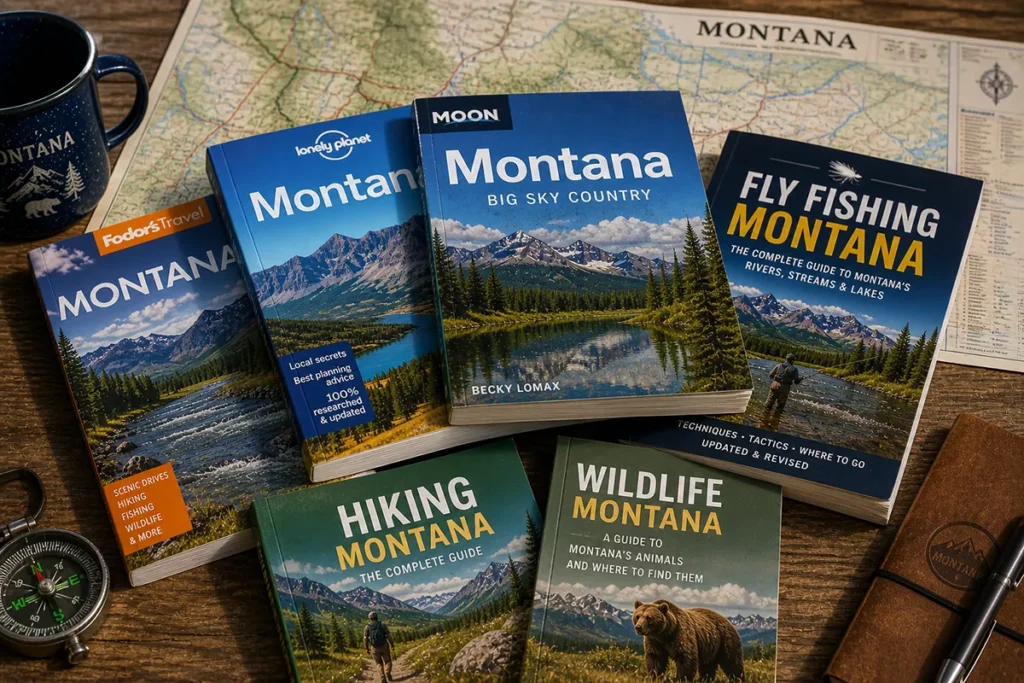
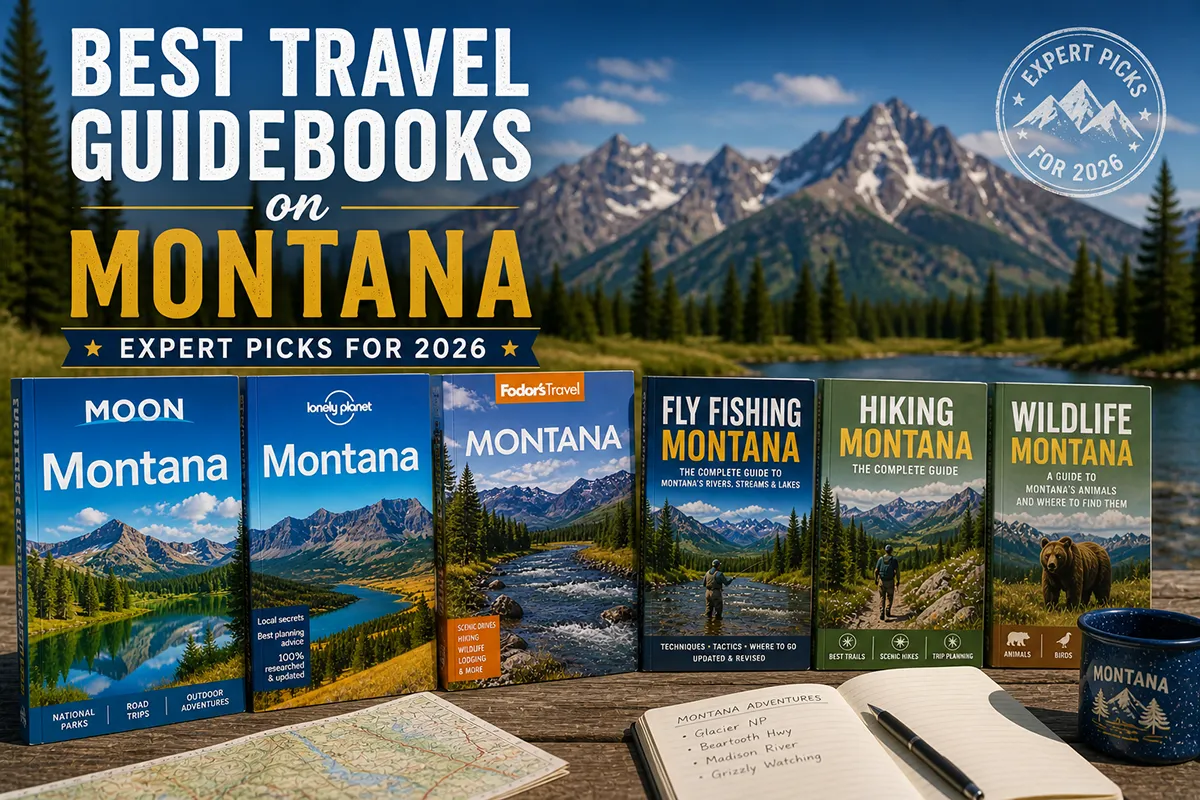
- Moon Montana is my top overall pick for comprehensive state coverage and practical trip planning
- Lonely Planet Montana & Wyoming excels for backcountry adventurers and budget travelers
- Fodor’s Montana offers the best dining and lodging recommendations for comfort-focused travelers
- Specialty guides like “Day Hikes in Glacier National Park” outperform general guides for specific activities
- Digital guidebooks work well as supplements but physical books remain essential in Montana’s spotty cell coverage areas
- Budget $25-45 for guidebooks—it’s the best investment you’ll make for your trip
Liked this article?
Add Roaming Montana as a preferred source so you see more of our articles and guides on Google.
Why You Actually Need a Montana Guidebook in 2024
I know what you’re thinking—why buy a guidebook when everything is online? I asked myself the same question before my first solo Montana road trip in 2017.
Then I found myself at the Two Medicine entrance to Glacier National Park with zero cell service, no idea which trails were open, and a growling stomach with no clue where to find lunch. That $22 Moon guide I almost didn’t buy? It became my lifeline.
Montana presents unique challenges that make guidebooks particularly valuable. The state spans 147,000 square miles with vast stretches of wilderness where cell towers simply don’t exist.
Once you’ve figured out how to get to Montana, you’ll quickly realize that navigating the state requires offline resources. I’ve driven entire days through central Montana without a single bar of service.
Beyond connectivity issues, Montana’s landscape changes rapidly with seasons and conditions. A good guidebook provides baseline knowledge you can verify against current conditions, rather than starting from scratch at every destination.
The Major Players: Comprehensive Montana Guidebooks Compared
After purchasing, borrowing, and thoroughly testing over a dozen Montana guidebooks, I’ve developed strong opinions about which ones actually deliver value for different types of travelers.
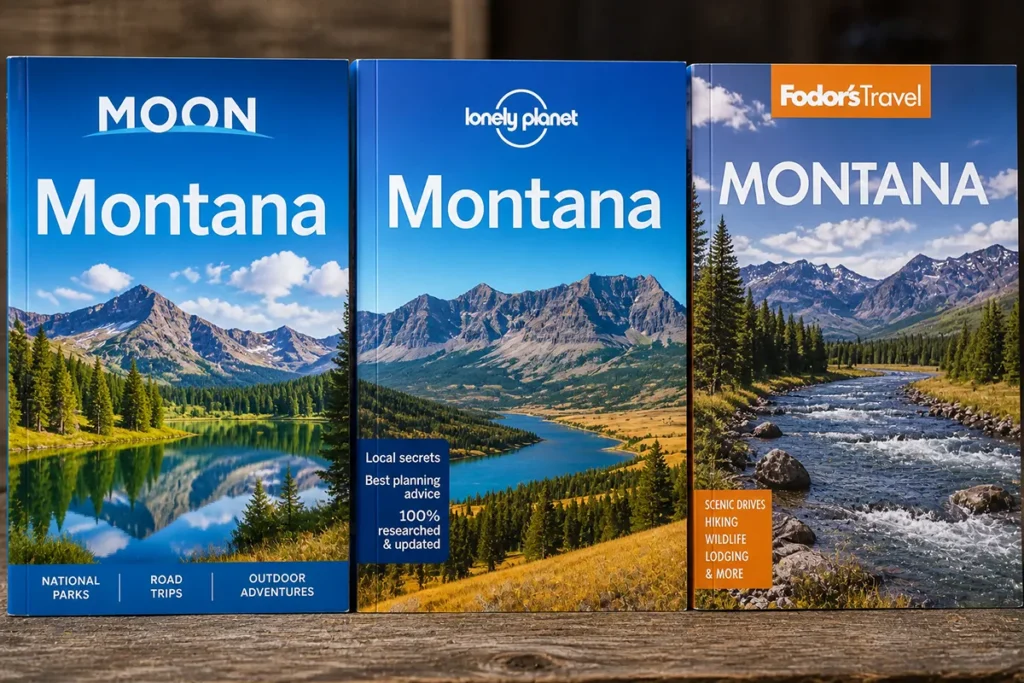
Moon Montana (My Top Overall Recommendation)
I’ve carried Moon Montana on five separate trips, and my current copy looks like it survived a war—dog-eared pages, coffee stains, and margin notes throughout. That’s the highest compliment I can give a guidebook.
Carter G. Walker, the author, clearly spent serious time on the ground here. His descriptions of the Beartooth Highway matched my experience almost eerily, including the warning about afternoon thunderstorms that I ignored (and regretted) during my 2021 visit.
The book excels at practical logistics. Walker provides specific driving times between destinations that actually account for Montana’s winding mountain roads, not just Google’s optimistic estimates.
His restaurant recommendations lean toward locally-owned establishments. When he suggested the Montana Club in Great Falls for steak, I was skeptical of such an ordinary-looking place—but the ribeye I had there during my last summer’s trip justified his enthusiasm completely.
The weakness? Moon Montana tries to cover the entire state equally, which means popular areas like Glacier and Yellowstone get relatively brief treatment compared to specialized guides.
Lonely Planet Montana & Wyoming
Lonely Planet’s combined Montana/Wyoming guide takes a different approach, and it works brilliantly for certain travelers.
This guide shines for budget-conscious adventurers and backpackers. The accommodation recommendations include hostels, forest service cabins, and dispersed camping options that other guides skip entirely.
During my 2022 trip to the Gallatin Valley, Lonely Planet’s suggestion to stay at the Bozeman Backpacker Hostel saved me $150 compared to nearby hotels—and I met fascinating travelers from around the world.
The outdoor activity coverage runs deeper than competitors. Trail descriptions include elevation profiles, difficulty assessments, and seasonal considerations that helped me plan a three-day backpacking route in the Absaroka-Beartooth Wilderness.
However, the Wyoming coverage means Montana gets compressed. If you’re planning a Montana-only trip, you’re paying for content you won’t use.
Fodor’s Montana: With Glacier and Yellowstone National Parks
Fodor’s takes the upscale approach, and there’s nothing wrong with that for travelers seeking comfort over rugged adventure.
The hotel and restaurant reviews feel like they were written by someone who actually stayed and dined at these places, not someone who Googled them. When Fodor’s describes the Whitefish Mountain Resort’s ski-in/ski-out lodging, they capture details about room layouts and mountain views that only come from experience.
I referenced Fodor’s heavily when planning my parents’ 50th anniversary trip to Montana last May. They appreciated the suggestions for accessible scenic drives and comfortable dining options that didn’t require hiking boots.
The cultural content—history, Native American heritage, ranching traditions—receives more attention here than in adventure-focused guides. Reading Fodor’s chapters on the Blackfeet Reservation before visiting gave me context that enriched the experience.
The downside: if you’re planning backcountry adventures, Fodor’s won’t help much beyond getting you to the trailhead.
Frommer’s Montana & Wyoming Complete Guide
Frommer’s attempts to split the difference between budget and comfort, with mixed results.
The guide does well with mid-range options—the kind of comfortable-but-not-extravagant choices most families make. Their breakdown of family-friendly activities in the Flathead Valley helped my sister plan her kids’ first Montana trip.
Road trip itineraries in Frommer’s stand out as particularly useful. The suggested one-week and two-week routes account for realistic driving times and include enough flexibility for spontaneous discoveries.
My complaint: some information felt dated during my recent trip. A restaurant Frommer’s recommended in Helena had closed two years prior, and several suggested motels had changed ownership with noticeable quality changes.
Specialty Guidebooks: When General Guides Aren’t Enough
After years of Montana travel, I’ve learned that specialty guides often outperform comprehensive guidebooks for specific interests. Here’s what I’ve found actually useful.
Hiking-Specific Guidebooks
If hiking features prominently in your plans, general Montana guides simply cannot match dedicated hiking books.
“Day Hikes in Glacier National Park” by Robert Stone has accompanied me on every Glacier visit since 2018. The trail descriptions include parking lot details, specific mileage markers, and photo-worthy viewpoints that general guides skip.
During my visit to Glacier last summer, Stone’s guide helped me discover the Scenic Point Trail—an absolutely stunning but less-crowded alternative to the packed Highline Trail. The trailhead directions were precise enough that I found it on my first attempt.
For the Greater Yellowstone area, “Hiking Yellowstone National Park” by Bill Schneider remains the gold standard. His safety notes about bear activity in specific drainages proved accurate when I spotted fresh grizzly scat exactly where he warned on the Slough Creek Trail.
Falcon Guides publishes excellent regional hiking guides covering the Bob Marshall Wilderness, Absaroka-Beartooth, and other Montana backcountry areas. I own three of these and consider them essential for serious hiking trips.
Fishing Guidebooks
Montana’s fly fishing reputation attracts anglers worldwide, and the right guidebook makes a significant difference in finding quality water.
“The Montana Angler’s Guide” by Chuck Robbins opened my eyes to productive water I never would have discovered independently. His descriptions of small streams in the Bitterroot Valley led me to some of the most peaceful fishing I’ve experienced anywhere.
I’m not an expert angler by any means, but Robbins’ guide helped me understand hatch patterns and access points well enough to catch my first Montana brown trout on the Blackfoot River during a visit two summers ago.
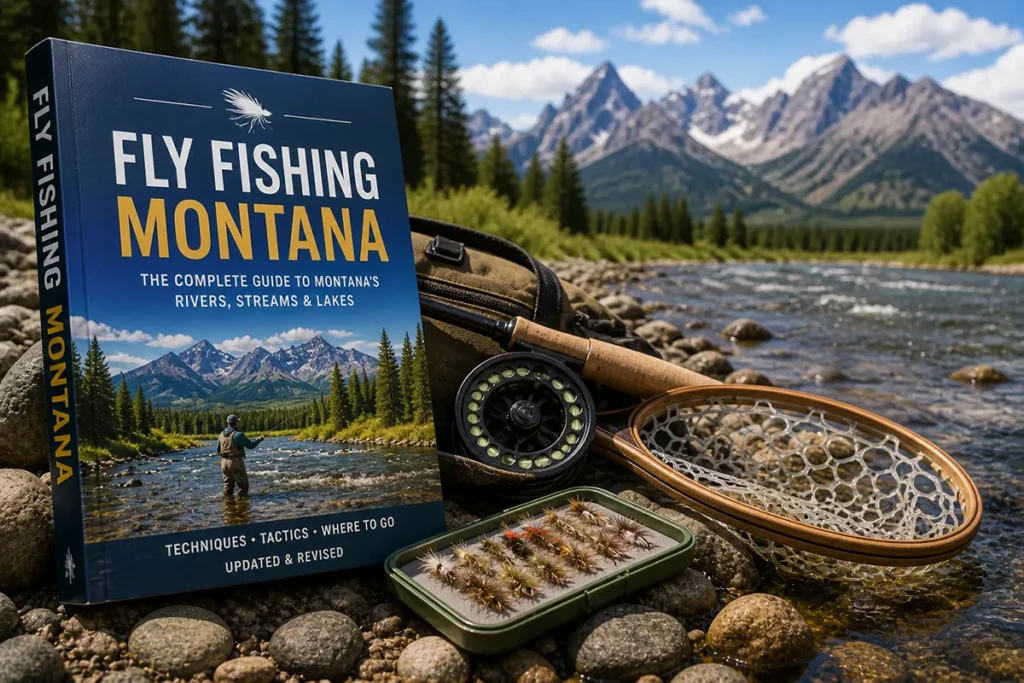
For fly fishing newcomers, “Fly Fishing Montana” by Michael Sample provides gentler instruction alongside location information. It’s less comprehensive but more accessible for casual anglers like myself.
Wildlife and Nature Guidebooks
Montana’s wildlife viewing opportunities deserve dedicated resources beyond what travel guides offer.
“Wildlife Watching Montana” by the Montana Fish, Wildlife & Parks department remains surprisingly practical despite being a government publication. The species-specific location charts helped me finally spot a moose in the wild during my 2023 visit to the Seeley-Swan Valley.
For Glacier National Park specifically, “Mammals of Glacier National Park” proved invaluable. Understanding habitat preferences meant I knew to look for mountain goats at specific elevations along the Going-to-the-Sun Road—and I found them.
These guides also enhance appreciation for what you’re seeing. When I spotted a pika during a hike near Big Sky, I already knew from my guidebook that I was witnessing a species threatened by climate change. That context transformed a cute animal sighting into something more meaningful.
Digital Guidebooks vs. Physical Books: An Honest Assessment
The digital versus physical debate deserves frank discussion, especially for Montana travel.
Where Digital Guidebooks Excel
I use the Lonely Planet and Moon digital apps as supplements to physical books, and they serve specific purposes well.
Last-minute trip changes become easier with digital access. When a forest fire closure redirected my Bitterroot Valley plans during a 2021 trip, I searched my digital guide for alternative activities within minutes.
The search functionality saves time when you need specific information quickly. Finding restaurant recommendations in a specific town takes seconds digitally versus minutes of page-flipping.
Weight matters for backpacking trips. My phone with downloaded guidebook content weighs ounces compared to pounds of books.
Where Digital Guidebooks Fail in Montana
Here’s where my honest assessment turns critical: digital-only approaches remain risky in Montana.
I’ve already mentioned the cell coverage problem, but it bears repeating. Downloading content in advance helps, but apps sometimes require authentication or updates that fail without service.
Battery life becomes crucial during long Montana days. When you’re photographing wildlife, using GPS navigation, and browsing your digital guidebook, phones drain fast. My physical book never runs out of battery.
Reading comprehension actually differs between formats. I’ve found that I absorb and remember information better from physical books, especially when studying maps and making annotations.
My recommendation: buy the physical guidebook for your primary planning and trip companion, then add digital versions for quick reference and backup.
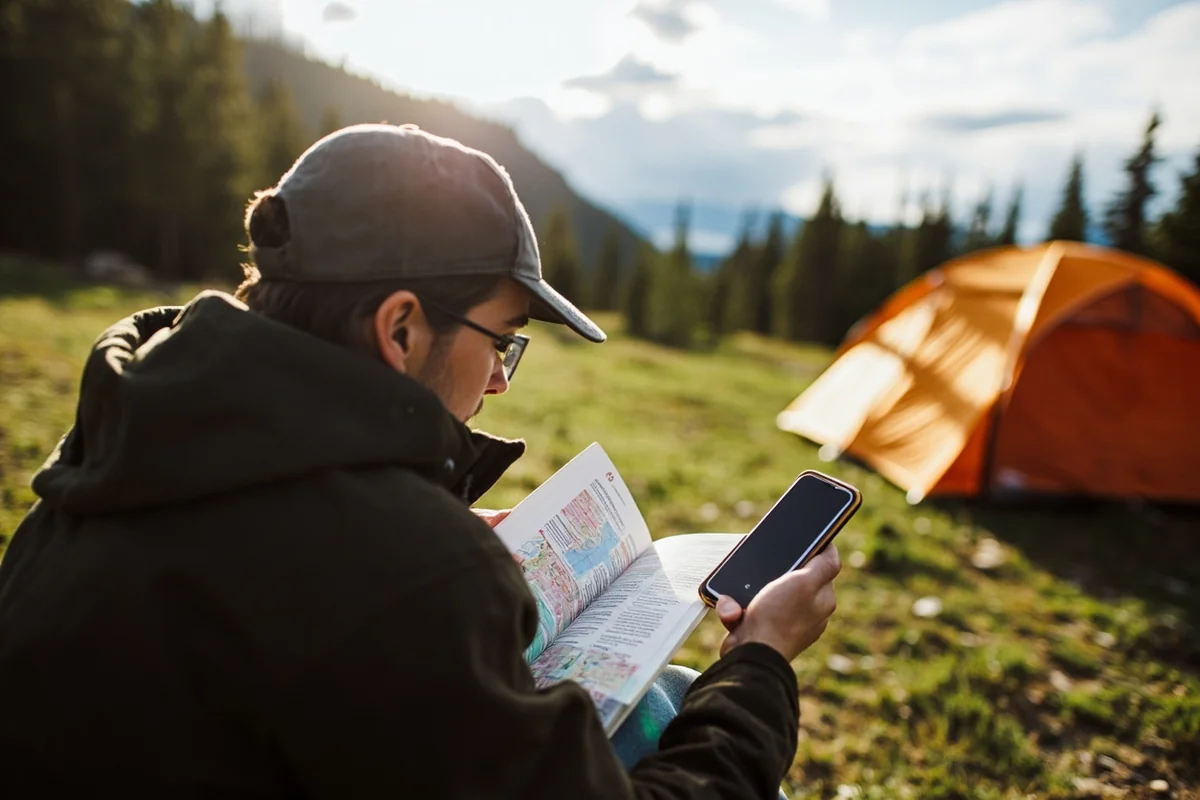
Guidebook Comparison Table
| Guidebook | Best For | Price Range | Last Updated | My Rating |
|---|---|---|---|---|
| Moon Montana | Overall trip planning, road trips | $20-25 | 2023 | ★★★★★ |
| Lonely Planet Montana & Wyoming | Budget travelers, backpackers | $22-27 | 2022 | ★★★★☆ |
| Fodor’s Montana | Comfort travelers, foodies | $20-24 | 2023 | ★★★★☆ |
| Frommer’s Montana & Wyoming | Families, mid-range budgets | $18-22 | 2021 | ★★★☆☆ |
| Day Hikes Glacier NP | Glacier hikers specifically | $16-20 | 2022 | ★★★★★ |
How to Choose the Right Guidebook for Your Trip Style
After helping friends and family select guidebooks for their Montana adventures, I’ve developed a quick mental framework that works well.
For First-Time Montana Visitors
Start with Moon Montana as your foundation. Its balanced coverage helps you understand the state’s geography and options without overwhelming detail.
Add a park-specific guide if Glacier or Yellowstone features prominently in your plans. The $15-20 investment pays off immediately when navigating crowded park logistics.
Understanding the key reasons to visit Montana helps you choose between guidebooks emphasizing different aspects—wilderness adventure versus cultural experiences versus scenic drives.
For Repeat Visitors Exploring New Areas
If you’ve already experienced Montana’s highlights, specialty regional guides become more valuable than comprehensive state books.
I’ve accumulated guides specific to the Missouri Breaks, the Bitterroot Valley, and the Hi-Line region. Each cost around $20 but revealed areas I’d never have discovered in general guides.
The Montana Historical Society publishes excellent driving tour guides for specific regions. Their Lewis and Clark Trail guide transformed a drive I’d made twice before into a genuinely educational experience.
For Activity-Focused Trips
When your trip centers on a specific activity—fishing, skiing, hiking, wildlife photography—invest in the best specialty guide available rather than trying to extract that information from general sources.
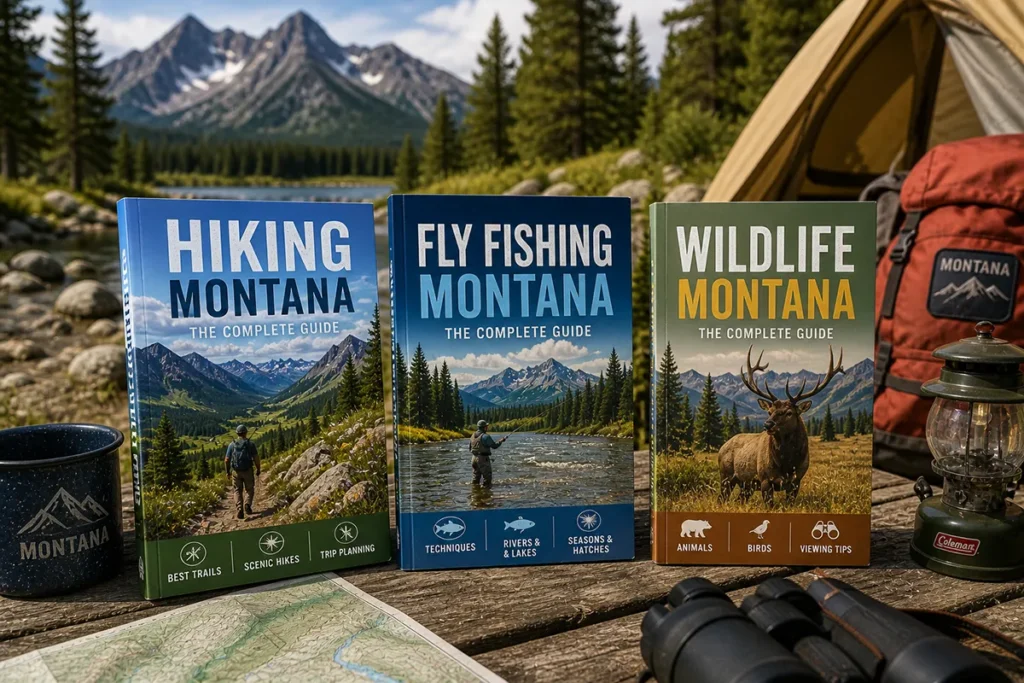
My three-day fly fishing trip to the Missouri River improved dramatically after I purchased John Holt’s “Fly Fishing the Missouri River” guide. General Montana guidebooks mention the river briefly; Holt’s book gave me specific access points, hatch charts, and technique suggestions.
Where to Buy Montana Guidebooks
Purchasing strategy affects both price and supporting the right businesses.
Buy Local When Possible
Montana bookstores often stock regional guides you won’t find at major retailers. Country Bookshelf in Bozeman carries an impressive Montana section, including self-published local guides I’ve never seen elsewhere.
During my visit to Whitefish last fall, Bookworks stocked a detailed Flathead Valley hiking guide that’s become one of my favorites. The staff recommendations also pointed me toward books I hadn’t considered.
Buying in Montana supports local businesses and often means talking to knowledgeable staff who’ve used the books themselves.
Online Options
Amazon and Barnes & Noble offer convenience and sometimes better prices, especially for commonly available guides like Moon and Lonely Planet.
I typically buy my primary guidebook locally during early trip planning, then order specialized additions online after identifying specific needs.
Used bookstores and sites like ThriftBooks can save money, but verify publication dates carefully. A 2015 guidebook may contain significantly outdated information about road conditions, business hours, and even trail access.
Library Resources
Don’t overlook public libraries for trip planning. Most carry current guidebooks you can borrow for initial planning, then purchase the titles you find most useful.
My local library’s interlibrary loan system has brought me obscure Montana guides that would have cost $40+ to purchase. I read them, took notes, and returned them—perfect for one-time reference needs.
Getting the Most From Your Guidebook
Owning a good guidebook matters less than using it effectively. Here’s what I’ve learned about maximizing value.
Pre-Trip Deep Reading
Resist the urge to just skim before departure. Reading thoroughly during the planning phase reveals connections between destinations and activities that inform better itineraries.
When I actually read Moon Montana’s sections on central Montana before my 2020 trip, I discovered that the Charlie Russell Museum in Great Falls related perfectly to the historic sites I planned to visit in the Missouri Breaks. That connection created a thematic through-line that enriched the entire trip.
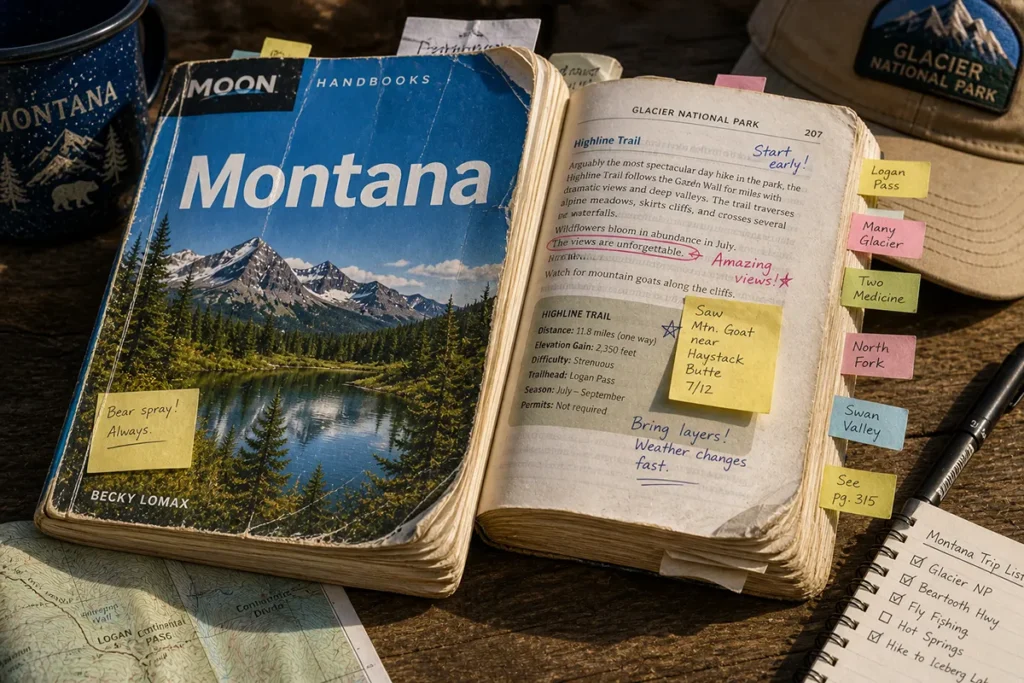
Take notes in margins or on separate paper. My guidebooks contain scribbled questions, circled attractions, and crossed-out options that document my decision-making process.
Active Use During Your Trip
Bring your guidebook everywhere, not just to major destinations. Some of my best discoveries came from flipping through pages while eating lunch or waiting out afternoon thunderstorms.
The guidebook suggested visiting the Berkeley Pit viewing platform in Butte, something I initially dismissed as depressing industrial tourism. But during an unplanned stop for gas, I decided to check it out—and found the environmental story genuinely fascinating.
Mark pages for upcoming destinations with sticky notes or paper clips. Quick access matters when you’re navigating and making decisions on the fly.
Post-Trip Preservation
After your trip, your annotated guidebook becomes a valuable personal record. I’ve kept every Montana guidebook I’ve used, and rereading them brings back memories more vividly than photos sometimes.
The notes I made about trail conditions, restaurant experiences, and unexpected discoveries help me give better recommendations to friends planning similar trips.
Consider writing a brief trip summary inside the back cover while memories remain fresh. Future-you will appreciate past-you’s thoroughness.
Supplementing Guidebooks With Other Resources
Even the best guidebook benefits from additional current information sources.
Official Park and Forest Resources
National Park Service websites and Glacier/Yellowstone visitor centers provide current condition information no guidebook can match. Check these sources before visiting parks, even when guidebooks suggest specific trails or activities.
I learned this lesson when a guidebook-recommended Glacier trail was closed for bear management during my 2022 visit. The NPS website listed the closure; the two-year-old guidebook obviously couldn’t.
Forest Service ranger stations offer similar current information for wilderness areas. The Hungry Horse Ranger Station has helped me plan Bob Marshall Wilderness trips twice now.
Local Tourism Offices
Montana tourism offices, both statewide and local, provide free maps and current event information. The glossy brochures may look touristy, but they often contain practical information about business hours and seasonal activities.
Planning around Montana public holidays requires current information that guidebooks can’t always provide, making tourism office resources particularly valuable.
Online Communities
Reddit’s r/Montana and various Facebook groups provide crowd-sourced current information. Questions about specific attractions or current conditions often receive helpful responses within hours.
I’ve used these communities to verify guidebook recommendations and discovered several restaurant closures before arriving expecting dinner.
However, treat online recommendations with appropriate skepticism. Guidebook authors visit places professionally; random internet strangers may have different standards or agendas.
My Current Montana Guidebook Kit
After years of experimentation, here’s what I actually carry on Montana trips now.
For general state travel, Moon Montana remains my primary guide. It fits in my car’s center console and contains reliable baseline information for unexpected detours.
For Glacier trips specifically, I add “Day Hikes in Glacier National Park” and the park’s official newspaper/map. This combination handles both planning and on-the-ground navigation.
For Yellowstone portions of Montana, Lonely Planet’s Yellowstone & Grand Teton guide provides deeper coverage than Montana-wide books offer.
My phone contains downloaded versions of Moon and Lonely Planet apps for quick searches when I have connectivity.
This kit costs roughly $60-70 total and has served me well across dozens of Montana adventures. The investment pays for itself in better decisions, fewer frustrations, and discovered gems I’d otherwise miss.
Final Recommendations by Trip Type
Let me summarize with specific recommendations based on your likely trip style.
Classic Montana Road Trip (1-2 weeks): Moon Montana plus downloaded digital backup. Add Glacier or Yellowstone specialty guide if those parks feature prominently.
Budget Backpacking Adventure: Lonely Planet Montana & Wyoming for general planning plus Falcon Guides for specific wilderness areas you’ll visit.
Comfortable Sightseeing Trip: Fodor’s Montana for lodging and dining recommendations plus official park guides for any national park visits.
Fishing-Focused Trip: General guide of your choice plus specialized fishing guides for specific rivers you’ll target.
Family Vacation: Frommer’s Montana & Wyoming for family-friendly suggestions plus activity guides matching your children’s ages and interests.
Whatever you choose, actually use your guidebook. The best Montana guidebook is the one you read thoroughly, carry everywhere, and annotate liberally.
Your Montana adventure deserves the preparation that only a well-chosen, well-used guidebook provides. The state’s immense scale and varied offerings reward those who arrive informed—and the right guidebook puts that information at your fingertips exactly when you need it.
Frequently Asked Questions
What are the best Montana travel guidebooks for first-time visitors?
I recommend starting with Moon Montana & Yellowstone or Lonely Planet’s Montana & Wyoming guides, both offering comprehensive coverage of must-see destinations and practical trip planning advice. Fodor’s Montana guide is another solid choice that includes insider tips on lesser-known spots. These guidebooks typically cost between $15-25 and are updated every 2-3 years.
Are printed Montana travel guides still worth buying in 2024?
Absolutely—I’ve found printed guidebooks invaluable when exploring Montana’s remote areas where cell service is spotty or nonexistent, especially in Glacier National Park’s backcountry or rural eastern Montana. They’re also great for road trip planning since you can mark up pages and reference maps without draining your phone battery. I typically pair a physical guidebook with downloaded offline maps for the best coverage.
Which Montana guidebook has the best hiking trail information?
For serious hikers, Falcon Guides’ ‘Hiking Montana’ series offers the most detailed trail descriptions with accurate mileage, elevation gains, and difficulty ratings for over 100 trails. I also recommend ‘Day Hikes in the Beartooth Mountains’ or ‘Hiking Glacier and Waterton Lakes National Parks’ for region-specific adventures. These specialized hiking guides include topographic maps that generic travel guides often lack.
How much should I budget for Montana travel resources and guidebooks?
Plan to spend $20-50 on quality Montana travel guidebooks depending on how many specialized guides you need—a general Montana guide runs about $20, while adding hiking or wildlife-specific books increases costs. I suggest checking your local library first, as many carry recent editions you can borrow for free. Digital versions on Kindle are often $5-10 cheaper than print editions.
What Montana travel guide is best for planning a Glacier National Park road trip?
Moon Glacier National Park is my top pick specifically for Glacier road trips, featuring detailed Going-to-the-Sun Road itineraries and seasonal driving tips. The guide covers driving distances between trailheads (the park spans over 1,500 square miles), camping reservations, and vehicle restrictions that are critical for planning. I’d also grab a Benchmark Montana Road & Recreation Atlas for navigating the surrounding areas.
When should I buy my Montana travel guidebook before my trip?
I recommend purchasing your Montana guidebook 2-3 months before your trip to allow time for thorough planning, especially if you’re visiting during peak summer season when camping and lodging book up fast. Check the publication date and aim for editions published within the last 2 years since park fees, road conditions, and business information change frequently. This lead time also lets you request specific books through interlibrary loan if you’re trying to save money.
Do Montana travel guidebooks include information on lesser-known destinations beyond Yellowstone and Glacier?
Yes, comprehensive guides like Lonely Planet Montana and Moon Montana dedicate significant sections to underrated gems like the Bob Marshall Wilderness, Flathead Lake, the Missouri River Breaks, and historic towns like Butte and Virginia City. I’ve discovered some of my favorite Montana experiences—like soaking in natural hot springs near Bozeman—through guidebook recommendations that aren’t on typical tourist itineraries. Look for guides that specifically mention ‘off-the-beaten-path’ coverage in their descriptions.