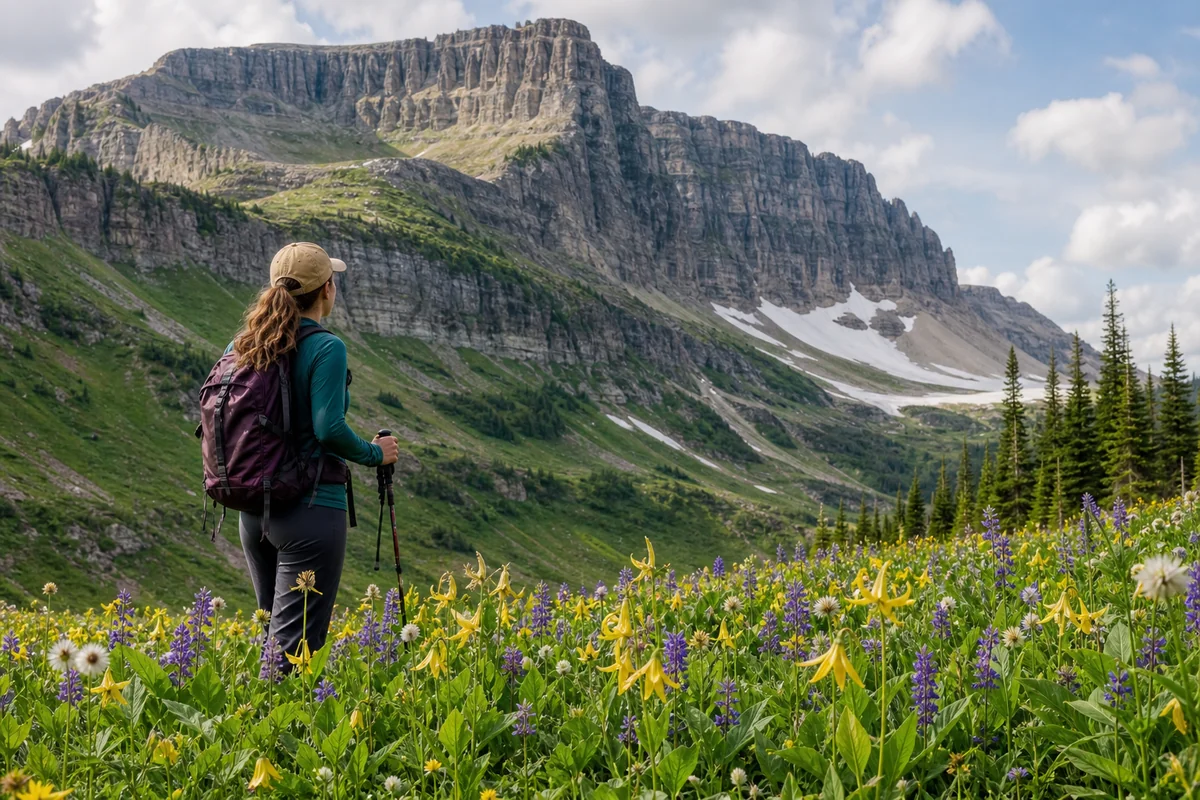
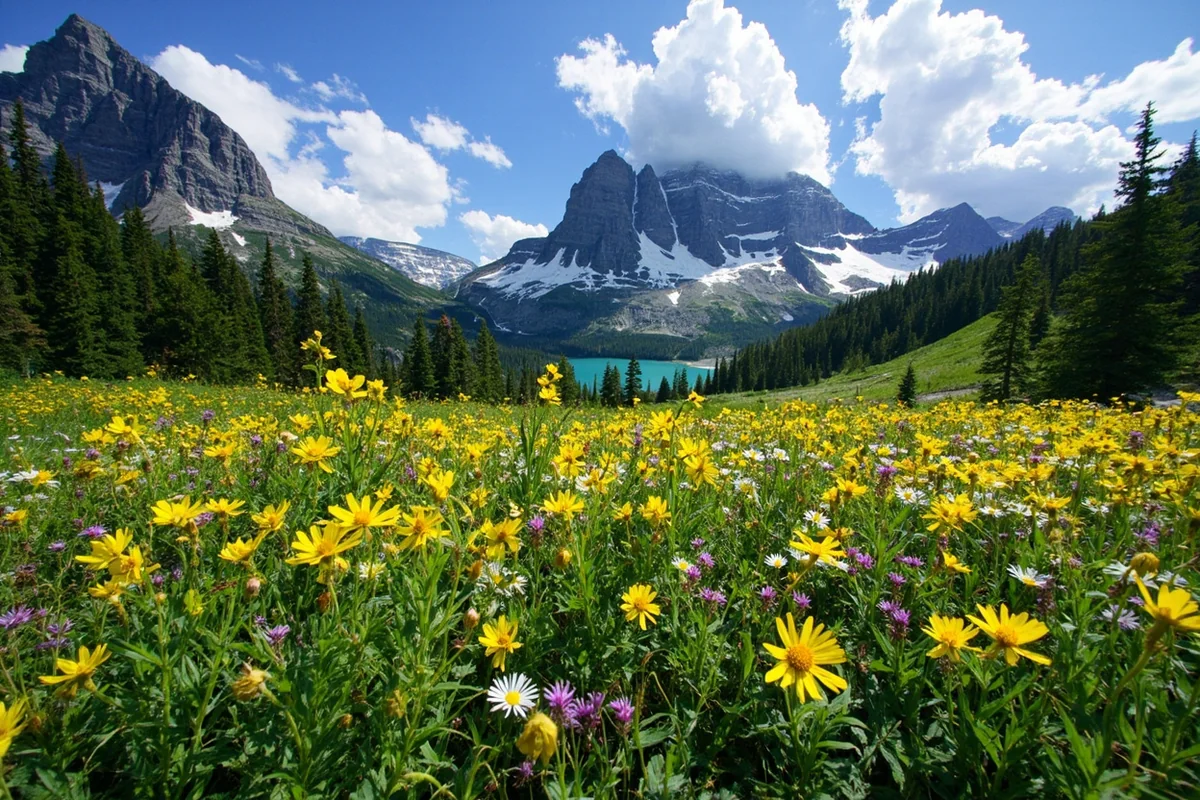
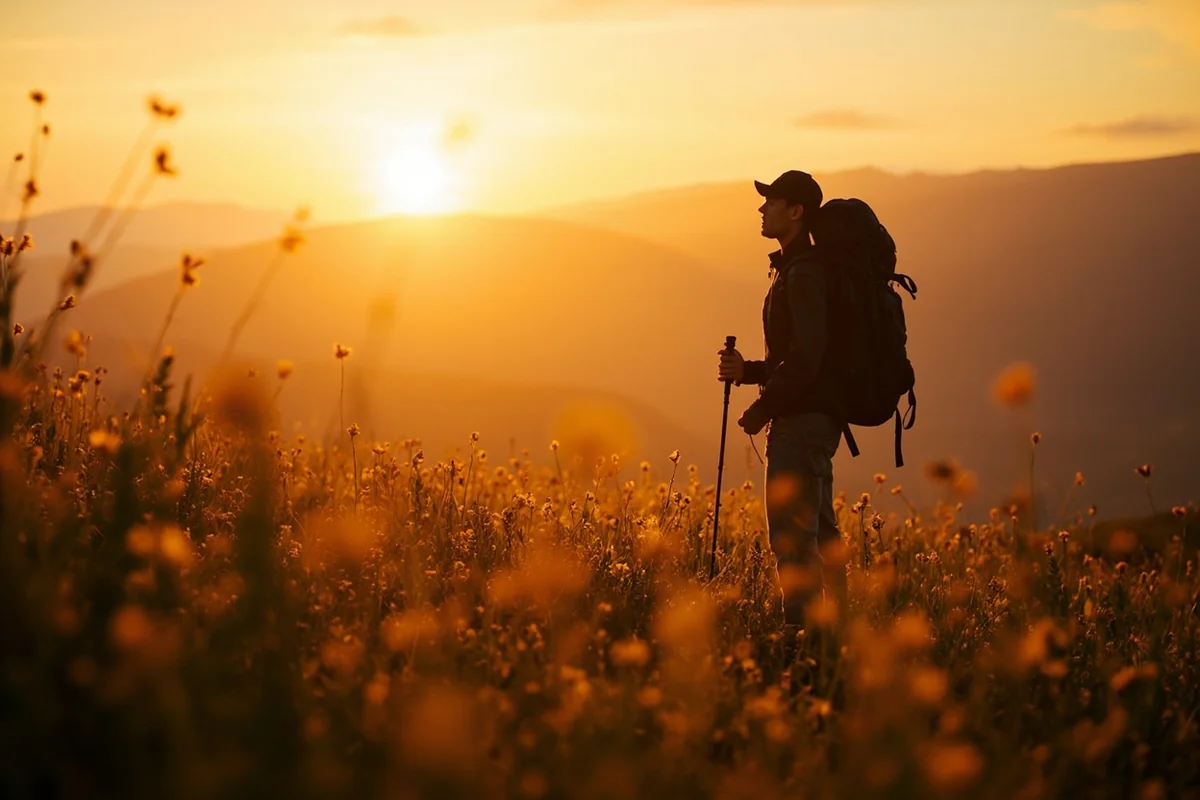
Standing knee-deep in a meadow of glacier lilies at Logan Pass last July, with the Garden Wall towering behind me and the sweet scent of alpine flowers filling the thin mountain air, I understood why Montana is called the “Treasure State”—and the treasure isn’t just gold beneath the ground.
It’s the incredible tapestry of wildflowers that transforms this rugged landscape into something almost impossibly beautiful from late spring through early fall.
If you’re exploring Montana nature attractions, the wildflower displays rank among the most breathtaking experiences you’ll find anywhere in North America.
- Peak wildflower season runs mid-June through August, varying by elevation and region
- Glacier National Park, the Beartooth Highway, and the Big Belt Mountains offer the most spectacular displays
- This guide covers 41+ species organized by color family with bloom times and viewing locations
- Best viewing typically occurs early morning when flowers are fully open and lighting is optimal
- Carry a field guide, bring a macro lens if you’re into photography, and never pick wildflowers on public lands
Liked this article?
Add Roaming Montana as a preferred source so you see more of our articles and guides on Google.
Why Montana’s Wildflowers Are So Exceptional
During my eight years of photographing wildflowers across the American West, nowhere has consistently amazed me like Montana. The combination of dramatic elevation changes, diverse ecosystems, and relatively uncrowded viewing areas creates wildflower experiences that rival—and often surpass—more famous destinations.
Montana spans multiple climate zones, from semi-arid prairie to alpine tundra. This means you can find wildflowers blooming somewhere in the state from April through October.
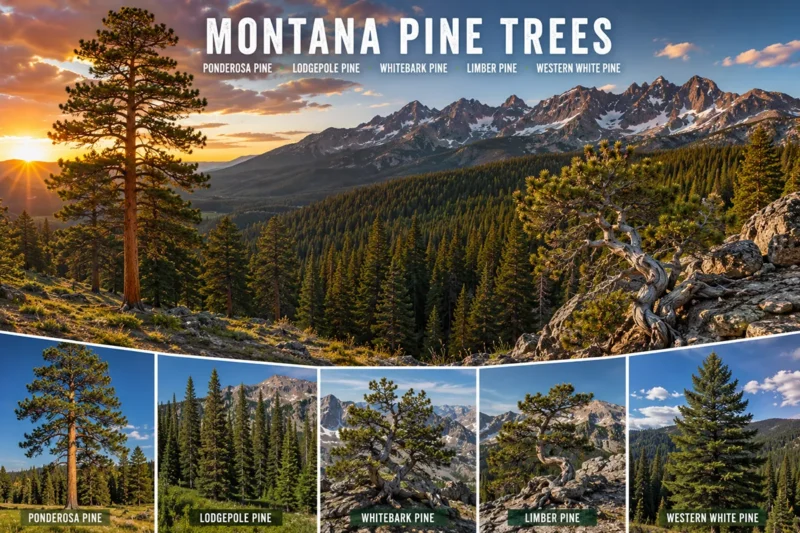
The native Montana trees that dot these landscapes provide the perfect backdrop for wildflower photography, and the relationship between forest and meadow creates the ideal conditions for diverse flower populations. I’ve counted over 30 species in a single afternoon hike more than once.
Understanding Montana’s Wildflower Seasons
Early Season (April-May): Valley Floors and Foothills
When I arrived in the Bitterroot Valley last April, I was shocked to find spring beauties and shooting stars already in full bloom while snow still capped the surrounding peaks. The lower elevations around Missoula, Helena, and the Flathead Valley wake up first.
Prairie smoke and pasqueflowers push through barely-thawed ground, often appearing alongside the last patches of snow. It’s a magical time that most visitors miss entirely.
Peak Season (June-July): The Main Event
This is when Montana truly shows off. Mid-June through late July delivers the most intense wildflower displays, particularly in the mountain meadows and alpine zones.
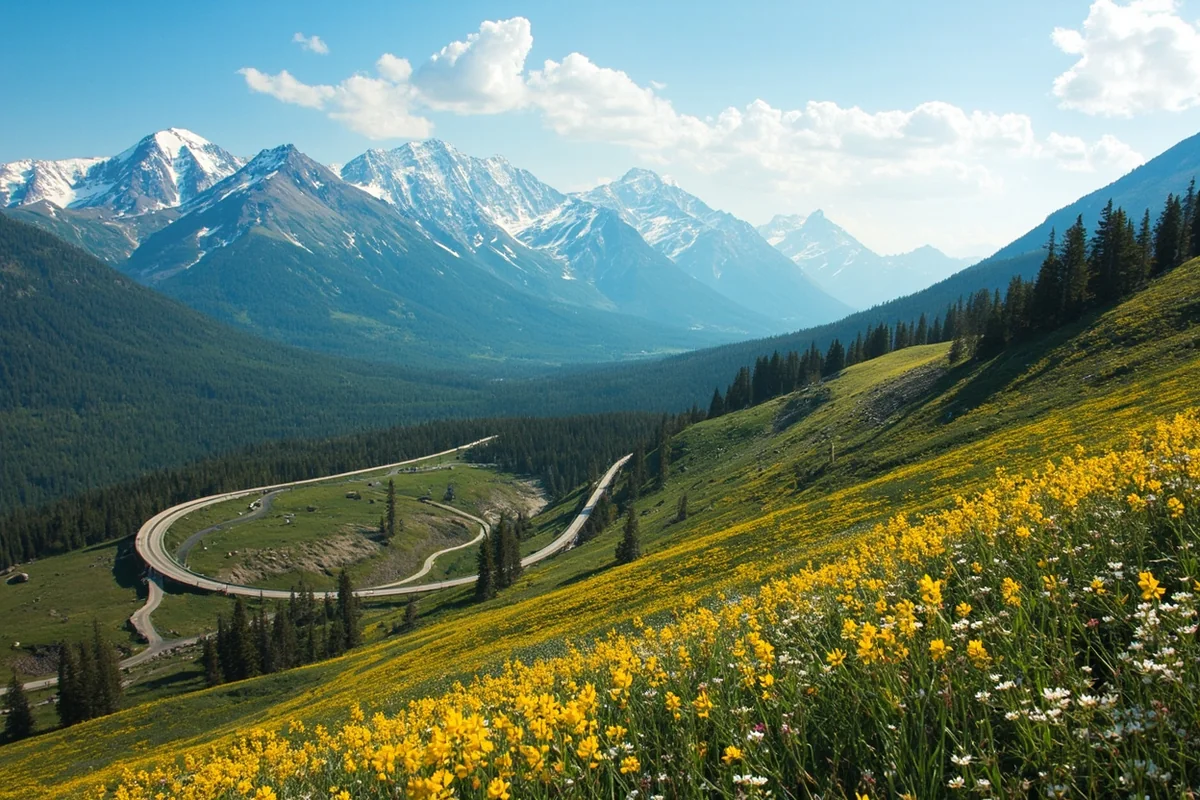
I always tell friends visiting during this window to head straight for the high country. The Going-to-the-Sun Road corridor typically hits peak bloom around the second week of July, though climate variations can shift this by a week or two in either direction.
Late Season (August-September): High Alpine and Second Bloom
Many people think wildflower season ends in August, but they’re missing out. The highest alpine zones—above 8,000 feet—often peak in early August, and a second flush of late-season bloomers like asters, goldenrods, and gentians carry color into September.
Last August, I hiked to Iceberg Lake in Glacier and found entire slopes of purple asters that rivaled the earlier displays.
Complete Montana Wildflower Guide by Color
White and Cream-Colored Wildflowers
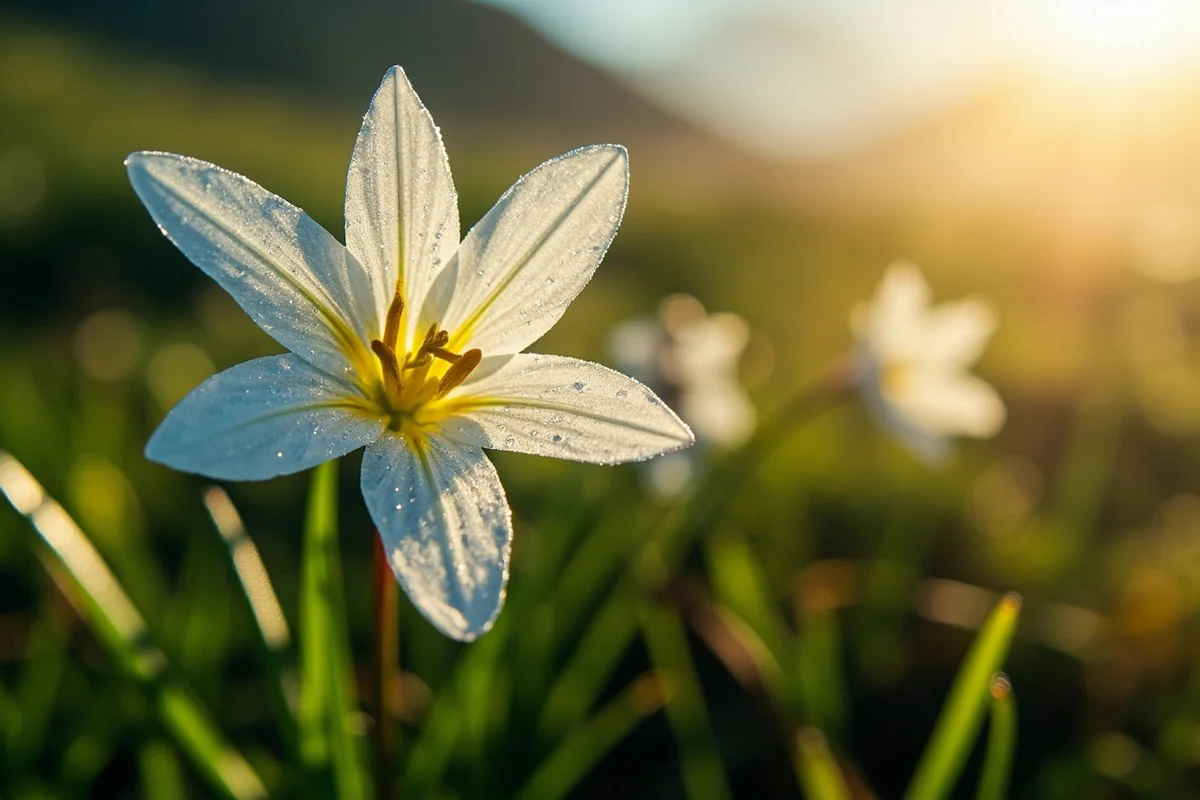
1. Beargrass (Xerophyllum tenax)
Nothing says Montana quite like beargrass. These dramatic white plumes rise 3-5 feet tall and bloom in spectacular “mast years” when entire hillsides turn white. I witnessed one of these events at Granite Park Chalet in 2022—absolutely unforgettable.
Bloom Time: Late June-July
Best Locations: Glacier National Park, especially the Highline Trail
2. Western Pasqueflower (Pulsatilla occidentalis)
One of the first alpine flowers to bloom, often pushing through melting snow. The silky seed heads that follow are equally beautiful. On a recent trip to the Beartooth Plateau, I found thousands along the West Summit trailhead.
Bloom Time: May-July (depending on snowmelt)
Best Locations: Beartooth Highway, Glacier NP, high mountain passes
3. Cow Parsnip (Heracleum maximum)
These massive umbels can reach 8 feet tall. They’re common along streams and in moist meadows throughout western Montana. Note: the sap can cause skin irritation, so admire from a distance.
Bloom Time: June-August
Best Locations: Stream corridors throughout western Montana
4. White Trillium (Trillium ovatum)
Found in moist forests, these three-petaled beauties are among my favorite spring wildflowers. The Rattlesnake Wilderness near Missoula has excellent populations along the main trail.
Bloom Time: April-June
Best Locations: Rattlesnake Wilderness, western Montana forests
5. Mountain Lady’s Slipper (Cypripedium montanum)
A rare orchid that makes my heart race every time I find one. They prefer shaded conifer forests and are increasingly uncommon. I’ve found them in the Swan Range but won’t share exact locations—they’re too precious.
Bloom Time: June-July
Best Locations: Swan Range, scattered western Montana forests
6. Sitka Valerian (Valeriana sitchensis)
Clusters of small white to pale pink flowers with a distinctive sweet scent. Common in subalpine meadows throughout Glacier National Park. I photographed gorgeous specimens near Siyeh Pass last summer.
Bloom Time: June-August
Best Locations: Glacier NP subalpine areas, Bob Marshall Wilderness
Yellow and Gold Wildflowers
7. Glacier Lily (Erythronium grandiflorum)
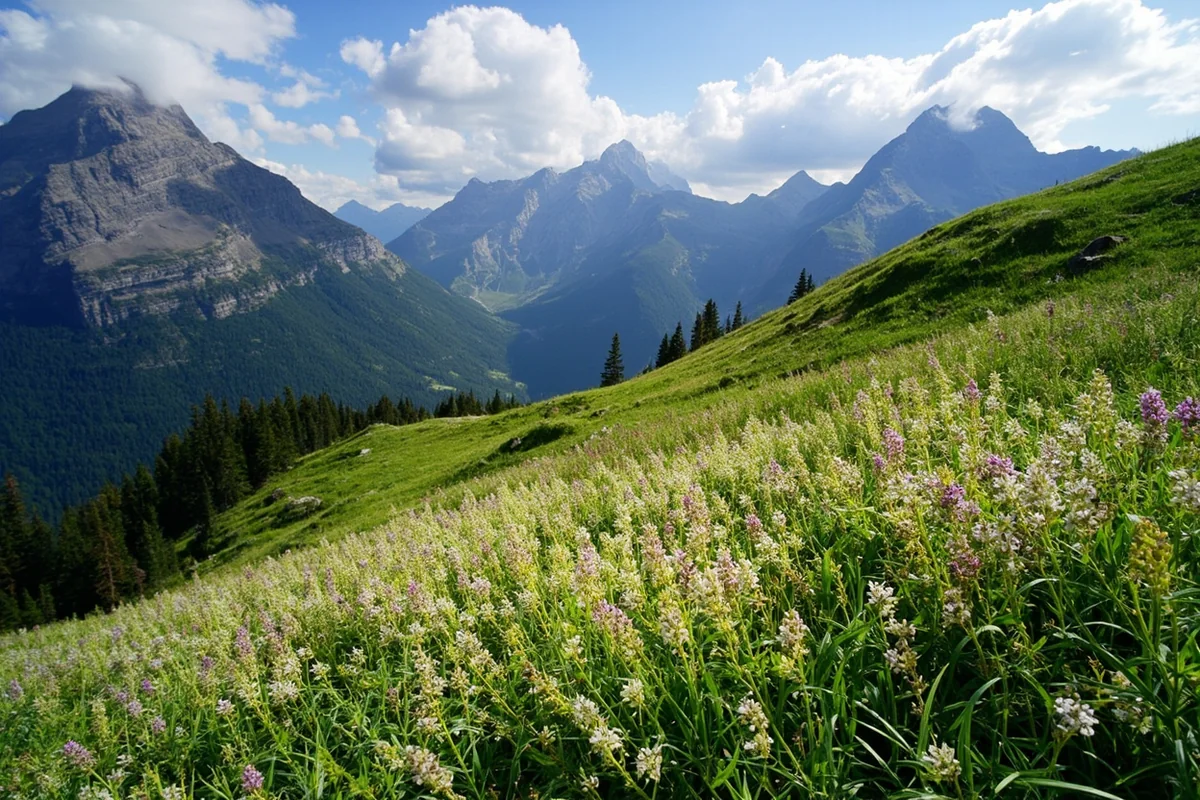
These nodding yellow flowers follow retreating snowbanks, often blooming just feet from snow’s edge. The scene at Logan Pass in early July—glacier lilies carpeting meadows with snow-capped peaks beyond—is one of Montana’s iconic images.
Bloom Time: May-August (follows snowmelt)
Best Locations: Logan Pass, Beartooth Highway, any high mountain meadow
8. Arrowleaf Balsamroot (Balsamorhiza sagittata)
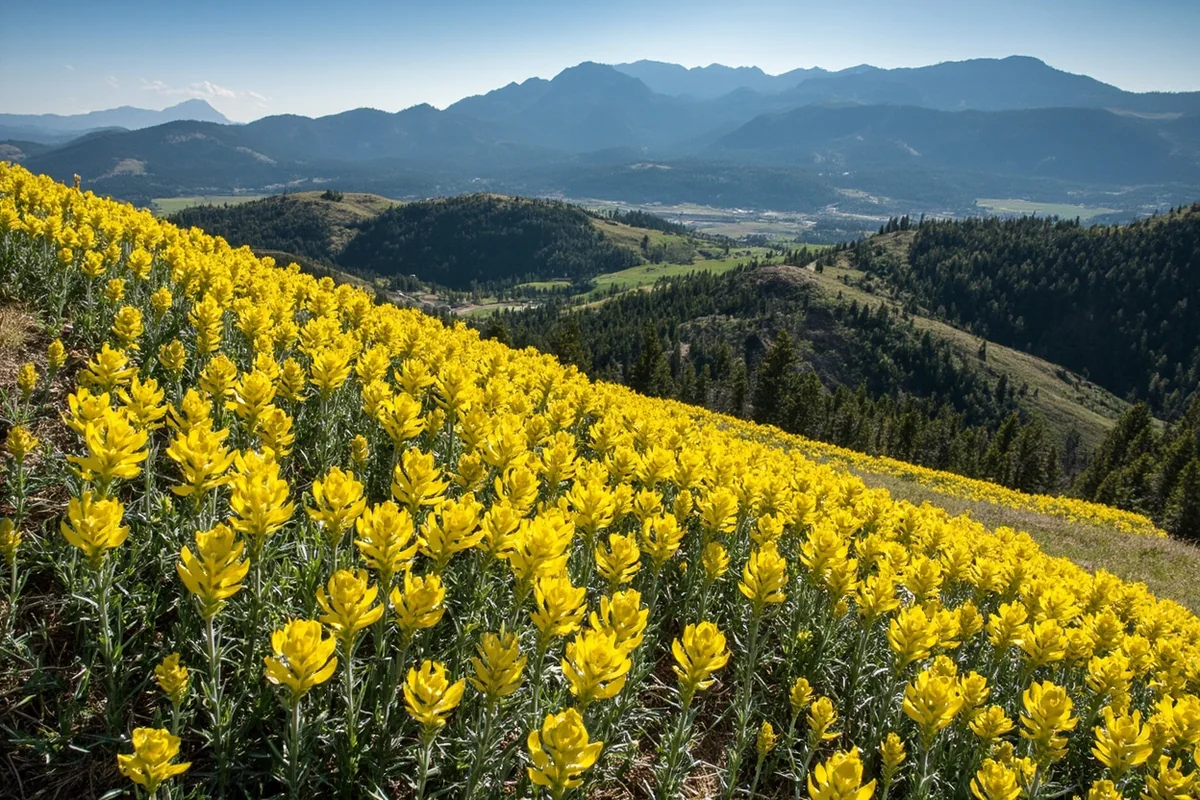
Montana’s answer to sunflowers. Entire hillsides turn golden in late spring, particularly in the Bitterroot Valley. I’ve driven Highway 93 between Missoula and Hamilton when the display was so spectacular I had to pull over repeatedly.
Bloom Time: May-June
Best Locations: Bitterroot Valley, National Bison Range area, foothills statewide
9. Yellow Columbine (Aquilegia flavescens)
Delicate spurred flowers in shades of pale yellow to cream. They prefer rocky areas and are particularly common along cliff bases in Glacier. The trail to Grinnell Glacier has beautiful specimens among the rocks.
Bloom Time: June-August
Best Locations: Glacier NP rocky areas, mountain cliffs throughout
10. Heartleaf Arnica (Arnica cordifolia)
Bright yellow daisy-like flowers that carpet forest floors. So abundant in some years that entire forests glow yellow. Last June in the Flathead National Forest, I walked through miles of arnica-covered understory.
Bloom Time: May-August
Best Locations: Forested areas throughout western Montana
11. Subalpine Buttercup (Ranunculus eschscholtzii)
Glossy yellow petals that literally shine in morning light. Another early bloomer that emerges right at snowline. Common but always cheerful—the first one of the season always makes me smile.
Bloom Time: June-August
Best Locations: Alpine and subalpine meadows statewide
12. Yellow Monkey Flower (Erythranthe guttata)
Found along streams and wet areas, these snapdragon-like flowers have red spots in their throats. McDonald Creek in Glacier is one of my favorite spots to photograph them against turquoise water.
Bloom Time: June-September
Best Locations: Stream banks, seeps, and wet meadows
13. Golden Aster (Heterotheca villosa)
A tough prairie flower that blooms through summer’s heat. Common on the eastern plains and foothill grasslands. I’ve found excellent populations at Giant Springs State Park near Great Falls.
Bloom Time: July-September
Best Locations: Eastern Montana prairies, foothill grasslands
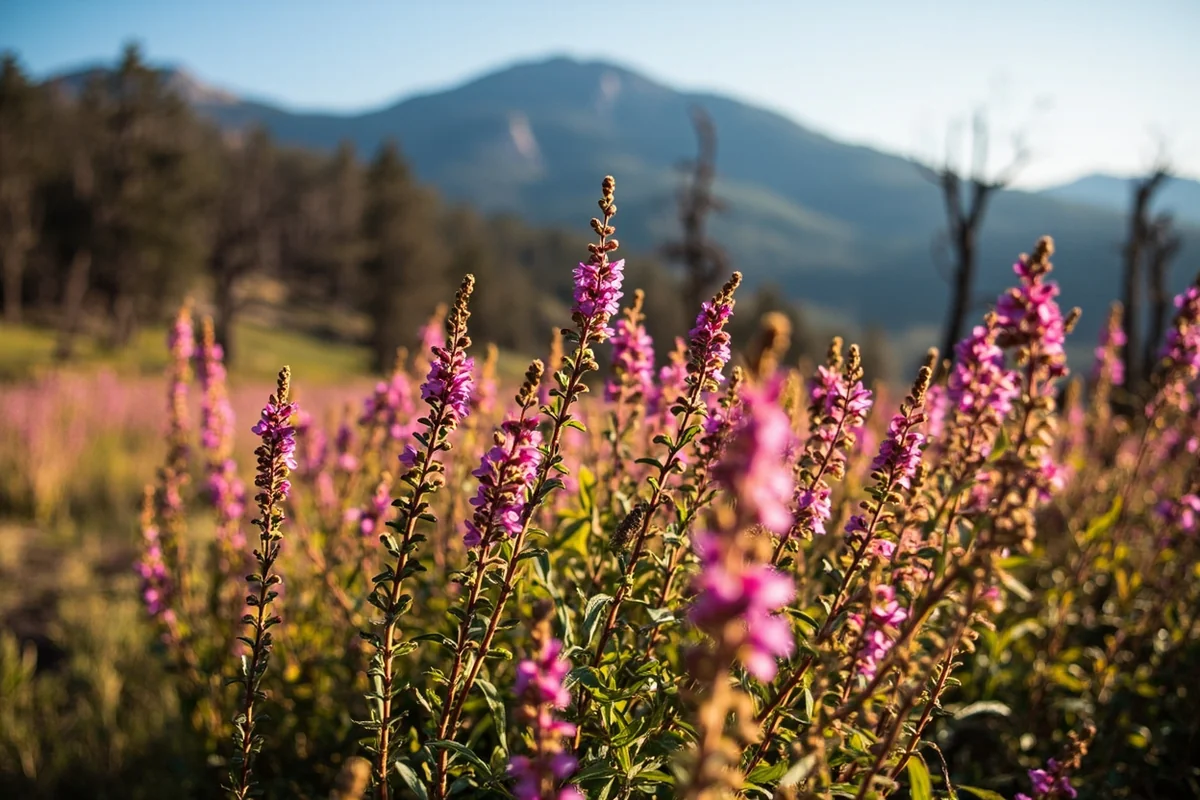
Pink and Purple Wildflowers
14. Fireweed (Chamerion angustifolium)
After wildfire, fireweed moves in and creates stunning magenta displays. The Flathead Valley’s burned areas often produce some of the best fireweed shows I’ve seen anywhere. These plants are also edible—the young shoots taste surprisingly good.
Bloom Time: July-September
Best Locations: Burn areas throughout Montana, roadsides, disturbed areas
15. Lewis’s Monkeyflower (Erythranthe lewisii)
Named for Meriwether Lewis, who collected specimens during the Corps of Discovery expedition. The large pink flowers prefer wet areas and streambanks. I consider finding these a historical connection—the same flower Lewis saw 200+ years ago.
Bloom Time: June-August
Best Locations: Logan Pass vicinity, wet meadows in western Montana
16. Shooting Star (Dodecatheon pulchellum)
The reflexed petals make these look like tiny pink rockets. They bloom early in moist meadows and are one of the first flowers I look for each spring. The Blackfoot River corridor near Missoula has reliable populations.
Bloom Time: April-July
Best Locations: Moist meadows and stream edges statewide
17. Mountain Hollyhock (Iliamna rivularis)
Large pink mallow flowers on tall stalks. These can reach 6 feet in ideal conditions and really stand out in mountain meadows. I’ve photographed beautiful specimens along the Trail of the Cedars area.
Bloom Time: June-August
Best Locations: Moist mountain meadows, western Montana
18. Pink Mountain Heather (Phyllodoce empetriformis)
A low-growing alpine shrub with bell-shaped pink flowers. Often found alongside white mountain heather, creating a beautiful color combination. The Highline Trail in Glacier is one of my go-to spots for heather photography.
Bloom Time: July-August
Best Locations: Alpine areas above treeline in Glacier NP and the Beartooths
19. Wild Rose (Rosa woodsii)
Montana’s state flower. Pink five-petaled flowers with a heavenly fragrance bloom along fencelines, trails, and meadow edges throughout the state. I always stop to smell them—they’re much more fragrant than cultivated roses.
Bloom Time: June-July
Best Locations: Statewide, especially foothill areas and forest edges
20. Prairie Smoke (Geum triflorum)
Nodding pink flowers mature into feathery seed heads that give the plant its name—from a distance, a field of them looks smoky. The prairies around Helena have some of the best displays I’ve encountered.
Bloom Time: April-June
Best Locations: Prairies and grasslands, especially around Helena and Great Falls
21. Sticky Geranium (Geranium viscosissimum)
Abundant pink-purple flowers cover mountain meadows in early summer. They’re so common some people overlook them, but a close look reveals beautiful venation in the petals. Photography tip: backlight them for stunning results.
Bloom Time: May-July
Best Locations: Mountain meadows statewide
Blue and Violet Wildflowers
22. Mountain Harebell (Campanula rotundifolia)
Delicate blue bells nodding on wiry stems. They seem too fragile for Montana’s harsh conditions, yet they thrive in rocky areas and meadows. I love photographing them against Montana’s pine trees for a classic Big Sky composition.
Bloom Time: June-September
Best Locations: Rocky slopes and meadows statewide
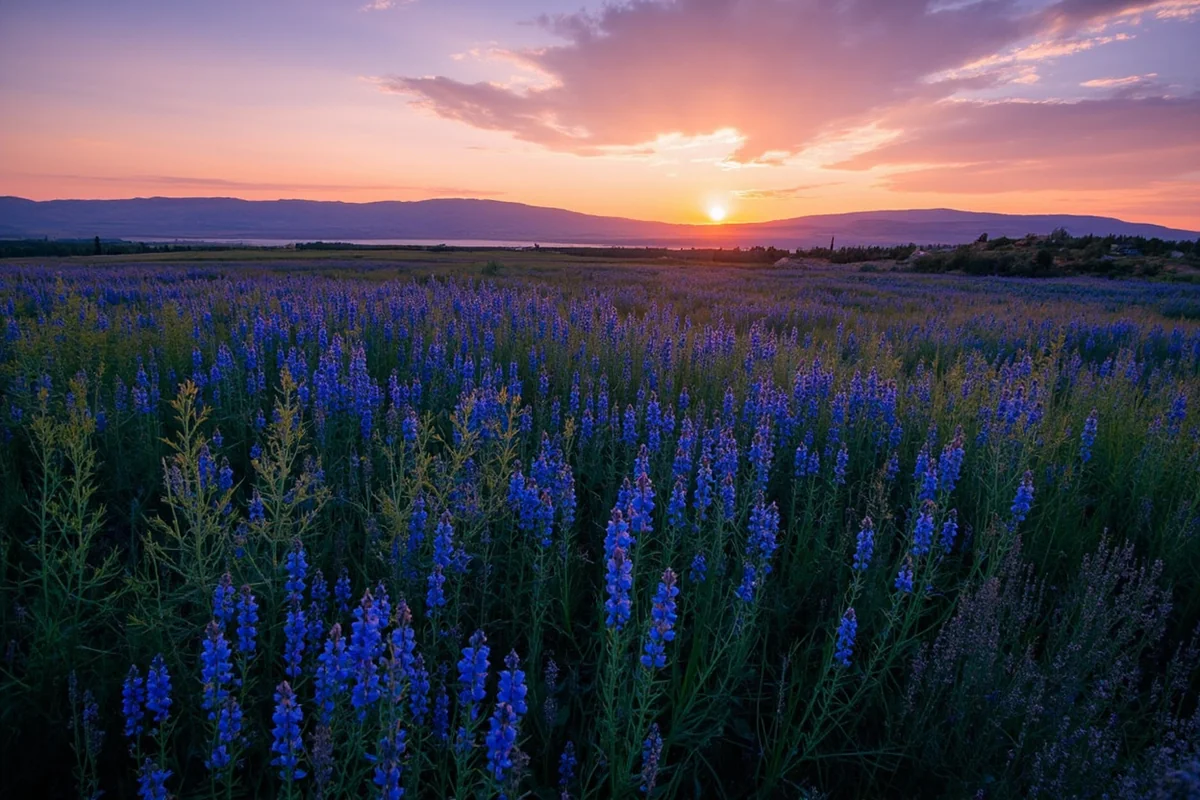
23. Silky Lupine (Lupinus sericeus)
Montana has several lupine species, but silky lupine is among the most common. Blue-purple flower spikes cover hillsides and meadows. The National Bison Range in spring is one of the best lupine displays I’ve seen.
Bloom Time: May-July
Best Locations: Grasslands and open forests statewide
24. Larkspur (Delphinium species)
Tall spikes of blue to purple flowers. Several species grow in Montana, some extremely toxic to livestock. The deep blue varieties in alpine meadows are particularly stunning—I photographed exceptional specimens at Big Sky last July.
Bloom Time: June-August
Best Locations: Mountain meadows, particularly around Big Sky and the Madison Range
25. Blue Camas (Camassia quamash)
Historically vital to Indigenous peoples as a food source. Wet meadows turn blue-violet when camas blooms. The Blackfoot Valley near Ovando has extensive camas meadows—truly spectacular in late May.
Bloom Time: May-June
Best Locations: Blackfoot Valley, wet meadows in western Montana
26. Alpine Forget-Me-Not (Myosotis alpestris)
Tiny blue flowers with yellow centers carpet alpine areas. At 8,000+ feet on the Beartooth Plateau, I’ve seen forget-me-nots forming solid blue mats in sheltered spots. They’re Montana’s answer to Alaska’s state flower.
Bloom Time: July-August
Best Locations: Beartooth Plateau, high alpine areas in Glacier
27. Fringed Gentian (Gentianopsis detonsa)
One of the most beautiful late-season flowers. The blue petals are fringed at the edges, creating an almost crystal-like appearance. Finding these in a late-August meadow is like discovering hidden treasure.
Bloom Time: August-September
Best Locations: Wet meadows and streamsides, western Montana
28. Rocky Mountain Iris (Iris missouriensis)
Large blue-violet flowers resembling cultivated iris. They prefer wet meadows and form impressive colonies. The Centennial Valley near Red Rock Lakes has outstanding iris displays most years.
Bloom Time: May-July
Best Locations: Centennial Valley, wet meadows in southwest Montana
29. Blue Flax (Linum lewisii)
Another Lewis and Clark species. The sky-blue flowers open each morning and drop their petals by afternoon. Time your visit right—I learned the hard way that evening walks miss them entirely.
Bloom Time: May-July
Best Locations: Grasslands and roadsides statewide
Red and Orange Wildflowers
30. Indian Paintbrush (Castilleja species)
Multiple species occur in Montana, ranging from scarlet to orange to pale yellow. The red varieties are especially striking against green meadows. Logan Pass has excellent paintbrush diversity—I’ve counted four different species in one area.
Bloom Time: May-August
Best Locations: Mountain meadows statewide, Logan Pass, Beartooth Highway
31. Western Wood Lily (Lilium philadelphicum)
Bright orange-red flowers that seem to glow in forest openings. They’re becoming less common due to picking and habitat loss—please photograph only. Finding one is always a highlight of any Montana hike.
Bloom Time: June-July
Best Locations: Open forests and meadows, increasingly uncommon
32. Scarlet Gilia (Ipomopsis aggregata)
Trumpet-shaped red flowers on tall stalks. Hummingbirds love them, so watching scarlet gilia often means watching hummingbirds too. The Bitterroot foothills have good populations.
Bloom Time: June-August
Best Locations: Dry slopes and forest openings in western Montana
33. Orange Agoseris (Agoseris aurantiaca)
Sometimes called orange mountain dandelion. The burnt-orange color is unusual and eye-catching. I’ve found nice specimens in the Bob Marshall Wilderness on pack trips.
Bloom Time: June-August
Best Locations: Mountain meadows, Bob Marshall Wilderness
Additional Notable Species
34. Bitterroot (Lewisia rediviva)
Montana’s state flower (officially). Pink to white flowers emerge from seemingly dead rosettes in rocky areas. The Bitterroot Valley is named for this plant—I recommend visiting the Dancing Prairie Preserve near Florence in late May for the best displays.
35. Elephant’s Head (Pedicularis groenlandica)
Look closely at the individual flowers—they really do look like tiny pink elephants. Wet meadows throughout western Montana support good populations.
36. Old Man of the Mountain (Hymenoxys grandiflora)
Large yellow sunflower-like blooms facing east. Alpine meadows on the Beartooth Plateau have spectacular displays.
37. Globeflower (Trollius laxus)
Creamy white globe-shaped flowers in wet alpine meadows. One of my favorite finds near Iceberg Lake last summer.
38. Western Anemone (Anemone occidentalis)
White flowers become dramatic “mop-head” seed heads. The seed heads are almost as photogenic as the flowers.
39. Thimbleberry (Rubus parviflorus)
Large white flowers become edible red berries. Common along trails in western Montana forests.
40. Pearly Everlasting (Anaphalis margaritacea)
White papery flowers that dry beautifully. Common in disturbed areas and forest edges.
41. Showy Fleabane (Erigeron speciosus)
Pink to lavender daisy-like flowers with numerous thin petals. One of the most common mountain wildflowers.
42. Alpine Sunflower (Rydbergia grandiflora)
Large yellow flowers facing east at alpine elevations. Found above treeline on the Beartooth Plateau.
Best Wildflower Viewing Locations in Montana
| Location | Peak Season | Signature Species | Difficulty |
|---|---|---|---|
| Logan Pass, Glacier NP | July 1-20 | Glacier lily, beargrass, paintbrush | Easy to Moderate |
| Beartooth Highway | July 15-Aug 10 | Alpine forget-me-not, alpine sunflower | Easy (roadside) |
| National Bison Range | May 20-June 15 | Arrowleaf balsamroot, lupine | Easy (driving) |
| Bitterroot Valley | May-June | Bitterroot, balsamroot | Easy |
| Big Sky/Madison Range | July 1-31 | Larkspur, sticky geranium | Moderate |
| Blackfoot Valley | May 15-June 10 | Blue camas | Easy |
Practical Tips for Wildflower Viewing
Timing Your Visit
I always check recent trip reports online before heading out. Social media groups focused on Montana hiking often share current bloom conditions. The National Park Service also posts occasional wildflower updates for Glacier.
Remember that timing shifts with elevation. If you’re a week early at higher elevations, drop down a few thousand feet and you’ll likely find peak bloom there.
Photography Advice
Early morning light between 6-9 AM produces the most beautiful wildflower images. The flowers are fully open, dew adds sparkle, and the low-angle light creates depth.
I always carry a small spray bottle to add “dew” drops for close-up photography. Wind is the wildflower photographer’s enemy—I’ve waited 20 minutes for calm conditions to capture a single flower.
A polarizing filter helps manage reflections on waxy leaves and petals. It also darkens blue skies for more dramatic compositions.
What to Bring
Besides camera gear, I recommend bringing:
- A quality field guide (I use “Plants of the Rocky Mountains” by Kershaw, MacKinnon, and Pojar)
- Knee pads or a small sitting pad for low-angle photography
- Macro lens or close-up filters if you’re serious about flower photography
- Notebook for recording locations and bloom timing for future visits
- Bear spray—you’re in bear country, even in flower-filled meadows
Ethical Viewing
Never pick wildflowers on public lands—it’s illegal in national parks and national forests. Stay on established trails when possible to avoid trampling next year’s blooms.
If you must leave the trail for photography, step carefully and minimize your impact. One careless footstep can destroy dozens of plants.
Combining Wildflower Viewing with Other Montana Experiences
Montana’s wildflower season coincides perfectly with other natural wonders. After sunset, the same meadows where you watched flowers during the day become ideal spots for viewing the Montana night sky. The dark skies above alpine meadows offer some of the best stargazing in the lower 48.
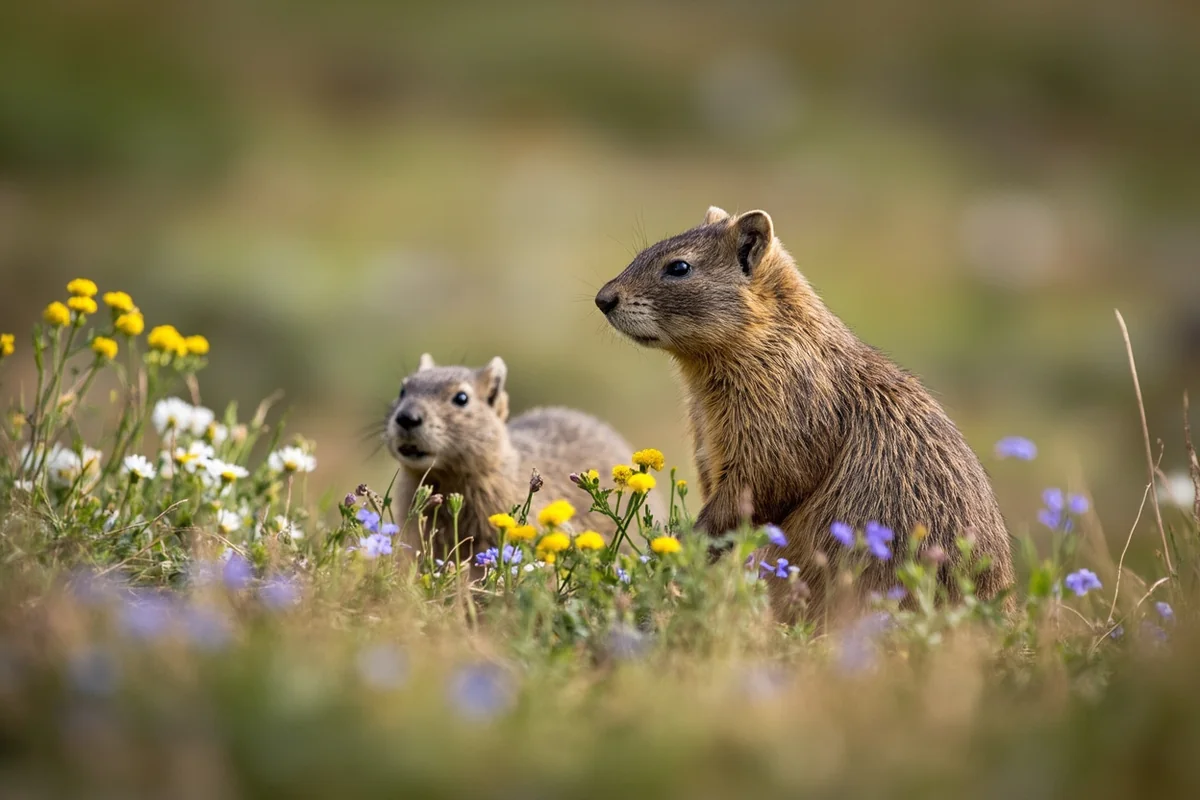
Wildlife watching and wildflower viewing go hand in hand. I’ve seen grizzly bears grazing in glacier lily meadows, marmots perched among alpine forget-me-nots, and countless deer browsing in balsamroot-covered hillsides.
The same ecosystems that produce spectacular wildflower displays also support incredible diversity of butterflies, bees, and hummingbirds. Bring binoculars and spend time watching the pollinators—it adds another dimension to the experience.
Month-by-Month Wildflower Calendar
April
Focus on low-elevation areas. Prairie smoke, spring beauties, and pasqueflowers begin appearing on south-facing slopes. The Bitterroot foothills and Helena-area prairies come alive first.
May
Valley floors peak. Arrowleaf balsamroot and lupine dominate foothill meadows. Blue camas blooms in wet areas. Bitterroot flowers appear mid-month. This is when I spend most of my time in the Bitterroot Valley and around the National Bison Range.
June
Transition month with great diversity. Lower mountains peak while higher areas are just beginning. Sticky geranium, wild roses, and shooting stars are widespread. Mid-June, higher passes start opening and glacier lilies follow retreating snow.
July
Prime time for alpine flowers. Logan Pass typically peaks around July 10-15. Beargrass blooms (in good years), along with paintbrush, fireweed, and mountain heather. The Beartooth Highway opens and alpine areas become accessible.
August
High alpine peaks and late-season species dominate. Gentians, asters, and goldenrods take over. Seed heads become photogenic subjects. Some of my favorite images come from August when most visitors have left.
September
Asters and goldenrods continue. Autumn colors begin blending with late flowers. The crowds thin dramatically, and there’s something special about finding the last gentians of the season.
Final Thoughts: Why Montana Wildflowers Are Worth the Trip
After years of chasing wildflower blooms across the American West, Montana remains my favorite destination. The combination of incredible scenery, diverse ecosystems, and uncrowded viewing makes it special.
Unlike some popular wildflower destinations that can feel like botanical theme parks, Montana maintains a wild authenticity.
You might hike for hours without seeing another person, finding your own private meadow of glacier lilies or a hidden patch of rare orchids.
The experience connects you to something larger—the seasonal rhythms that have played out in these mountains for millennia.
Indigenous peoples gathered camas bulbs in the same meadows you’ll visit. Lewis and Clark collected specimens of flowers that still bloom along their route.
Plan your visit, check conditions, bring your camera, and prepare to be amazed. Montana’s wildflowers are waiting.
Frequently Asked Questions
When is the best time to see wildflowers in Montana?
The peak wildflower season in Montana typically runs from mid-June through early August, though timing varies by elevation. I’ve found that lower valleys bloom first in late May, while alpine meadows in Glacier National Park don’t peak until mid-July. For the most diverse displays, plan your trip for the last two weeks of June when multiple elevations are blooming simultaneously.
Where are the best places to see wildflowers in Montana?
Glacier National Park offers the most spectacular Montana wildflower viewing, particularly along the Highline Trail and at Logan Pass. The Beartooth Highway, Big Sky’s mountain meadows, and the National Bison Range near Moiese are also exceptional spots. I recommend driving the Going-to-the-Sun Road in July when lupine, beargrass, and Indian paintbrush carpet the mountainsides.
What wildflowers are native to Montana and easiest to identify?
Montana’s most recognizable native wildflowers include bitterroot (the state flower), bright orange Indian paintbrush, purple lupine, and the iconic white beargrass that blooms every 5-7 years. Arrowleaf balsamroot with its large yellow sunflower-like blooms covers entire hillsides in spring and is impossible to miss. I always look for glacier lilies near snowmelt areas as one of the first signs of summer.
Do I need a permit or pay entrance fees to see Montana wildflowers?
Glacier National Park charges $35 per vehicle for a 7-day pass, and during peak season you’ll need a free timed-entry reservation for Going-to-the-Sun Road. Many other wildflower hotspots like the Beartooth Highway and National Forest lands are free to access. State parks typically charge $6-8 for day use, and the National Bison Range entrance is $20 per vehicle.
What should I bring for a Montana wildflower hike?
Pack layers since mountain temperatures can drop 20-30 degrees from trailhead to summit, plus rain gear for afternoon thunderstorms. Bear spray is essential in Glacier and most Montana backcountry areas and costs around $40-50 at local outfitters. I always bring a macro lens or smartphone clip-on lens for close-up flower photography, along with a wildflower identification guide or the iNaturalist app.
Are Montana wildflower areas accessible for beginners and families?
Yes, many of Montana’s best wildflower viewing spots require minimal hiking and are perfect for families. The Wild Goose Island Overlook and Logan Pass boardwalks in Glacier offer stunning displays with walks under half a mile. Flathead Lake’s shoreline trails and the easy paths at Big Sky Resort’s summer operations provide beginner-friendly options with abundant blooms.
Can I pick wildflowers in Montana or take them home?
Picking wildflowers is prohibited in all Montana national parks, wilderness areas, and most state lands with fines up to $500. On private land, you’d need the landowner’s explicit permission. I recommend photographing flowers instead and purchasing native wildflower seeds from Montana nurseries if you want to grow them at home—this helps protect fragile alpine ecosystems that can take decades to recover from disturbance.
Sources
- https://www.fs.usda.gov/wildflowers/pollinators/documents/NativeWildflowersBeesWesternMontana.pdf
- https://app.mt.gov/shop/mhsstore/copy-of-montana-wildflowers
- https://app.mt.gov/shop/mhsstore/montana-trees-wildflowers-a-folding-pocket-guide-to-familiar-species
- https://www.fs.usda.gov/wildflowers/viewing/
- https://www.nps.gov/glac/learn/nature/wildflowers.htm