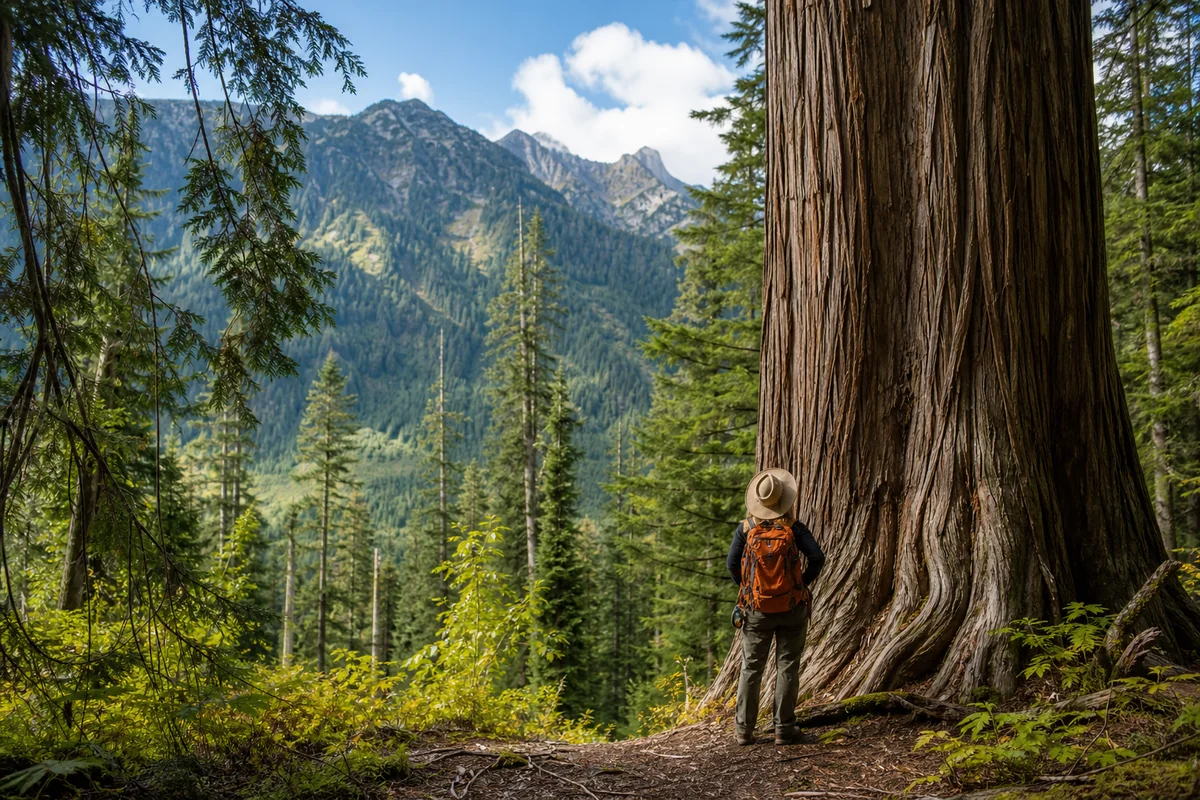
Standing beneath a 500-year-old western red cedar in the Ross Creek Cedars Natural Area last September, I felt genuinely small in a way that recalibrates your entire perspective on time and nature.
These ancient giants, some reaching 175 feet tall with trunks over 8 feet in diameter, represent just one of the remarkable native tree species you’ll encounter while exploring Montana Nature Attractions.
After spending countless trips hiking through Montana’s diverse ecosystems—from the lush cedar groves of the northwest to the rugged ponderosa stands of the eastern slopes—I’ve developed a deep appreciation for the state’s seventeen native tree species and the stories they tell about this wild landscape.
- Montana hosts 17 native tree species across dramatically different ecosystems, from wet coastal-like forests in the northwest to semi-arid grassland margins in the east
- Best tree-viewing destinations include Ross Creek Cedars, Glacier National Park, the Bitterroot Valley, and the Big Belt Mountains
- Prime seasons for tree identification: late spring for flowering species, early fall for larch color, winter for evergreen bark patterns
- The western larch is Montana’s only native deciduous conifer—it turns brilliant gold in October before dropping its needles
- Bring a field guide; many species look similar until you examine needle clusters, bark texture, and cone shapes up close
If you’re planning to explore Montana’s forests, understanding the native trees transforms a simple hike into an immersive experience. You’ll start noticing subtle differences between species, understanding why certain trees grow where they do, and appreciating the ecological stories written across the landscape.
I’ve also found that knowing your trees enhances other Montana experiences—like identifying the perfect aspen grove for photographing Montana wildflowers growing in dappled shade, or finding a clearing among the pines ideal for viewing the Montana night sky.
Liked this article?
Add Roaming Montana as a preferred source so you see more of our articles and guides on Google.
Understanding Montana’s Tree Geography
Before diving into individual species, it helps to understand why Montana’s tree diversity exists in the first place. The state essentially contains multiple climate zones compressed into one border.
The northwestern corner receives over 100 inches of precipitation annually in some areas, creating conditions similar to the Pacific Northwest. Meanwhile, the eastern prairies might see only 12 inches of rain per year.
I remember driving from Missoula to Billings on Highway 12 during a trip two summers ago and watching the forest composition change dramatically over just a few hours. Dense western red cedars gave way to Douglas firs, then ponderosa pines, and finally scattered junipers clinging to rocky outcrops.
This gradient creates distinct forest zones, each hosting specific tree communities. Understanding these zones helps you know what to look for depending on where your Montana travels take you.
The Conifers: Montana’s Evergreen Foundation
Conifers dominate Montana’s forests, comprising the majority of the state’s tree cover. These needle-bearing, cone-producing species have adapted to Montana’s harsh winters and variable precipitation.
Western Larch (Larix occidentalis)
The western larch holds a special place in my heart because it completely defies expectations. When I first moved to Montana, I panicked seeing entire mountainsides of “dying” golden conifers in October—until a local explained that larch is deciduous.
This tree drops its soft, feathery needles every fall after turning a stunning golden yellow. I’ve found the best larch displays along the Seeley-Swan Valley, particularly around Holland Lake.
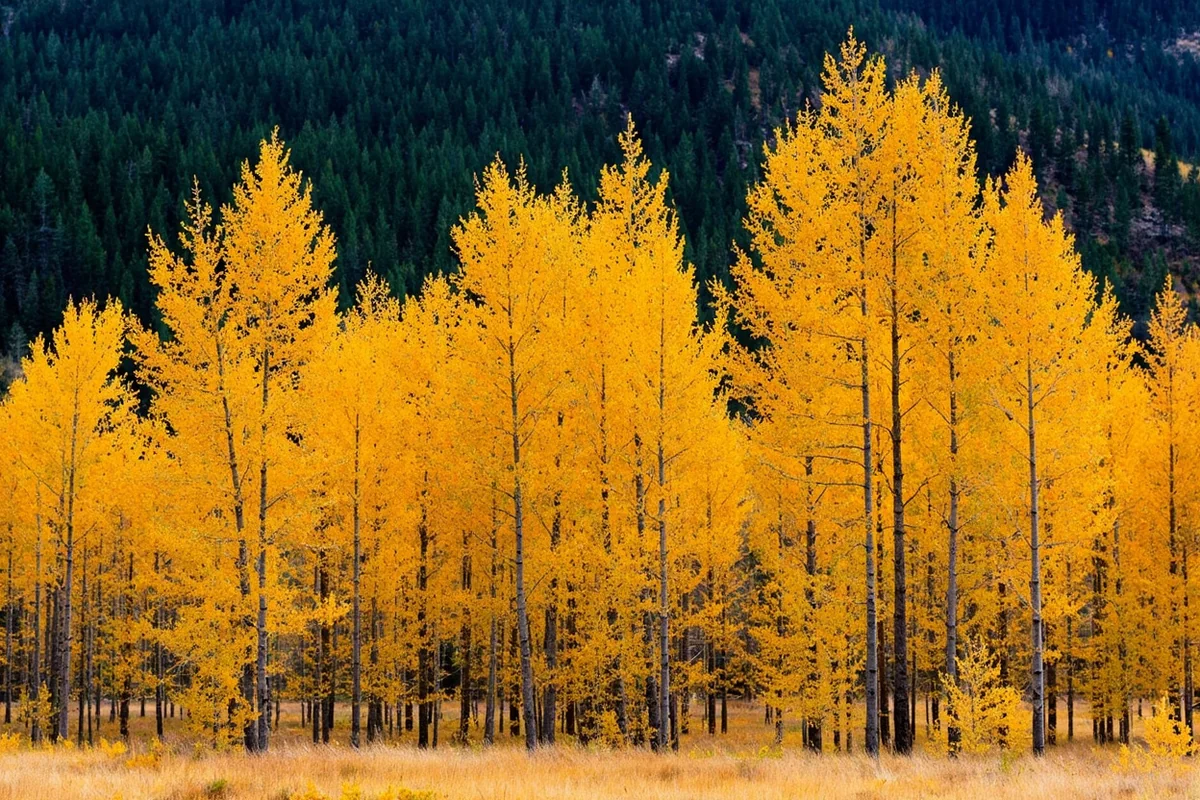
Identifying features include soft needles growing in clusters of 15-30 on short spur branches, deeply furrowed reddish-brown bark on mature trees, and small upright cones about 1-1.5 inches long. The bark on old-growth larch can be 6 inches thick, making these trees remarkably fire-resistant.
During a hike near Lolo Pass last October, I timed my visit perfectly for peak larch color. The contrast between golden larch and dark green subalpine firs created one of the most photogenic landscapes I’ve ever witnessed in Montana.
Ponderosa Pine (Pinus ponderosa)
If Montana had to choose a signature tree, the ponderosa pine would be a strong contender. These majestic trees with their distinctive orange-brown puzzle-piece bark dominate the lower montane forests throughout western and central Montana.
I always tell visitors to do the “sniff test”—stick your nose into the bark crevices of a sun-warmed ponderosa. The vanilla-butterscotch aroma is unmistakable and completely delightful. On hot summer afternoons, you can sometimes smell it from several feet away.
Ponderosas grow their long needles (5-10 inches) in bundles of three. For a deeper exploration of Montana’s pine species specifically, check out this guide to 13 Montana pine tree types.
Some of my favorite ponderosa stands include the open parklands around the National Bison Range near Moiese and the scattered groves in the Helena area. These trees prefer drier sites and lower elevations, so they’re often the first conifers you’ll encounter driving into mountain country from the prairies.
Lodgepole Pine (Pinus contorta)
Lodgepole pines form the backbone of Montana’s mid-elevation forests, often growing in dense, uniform stands that stretch for miles. Their name comes from their historical use by Native Americans for tipi poles—the straight, slender trunks were ideal.
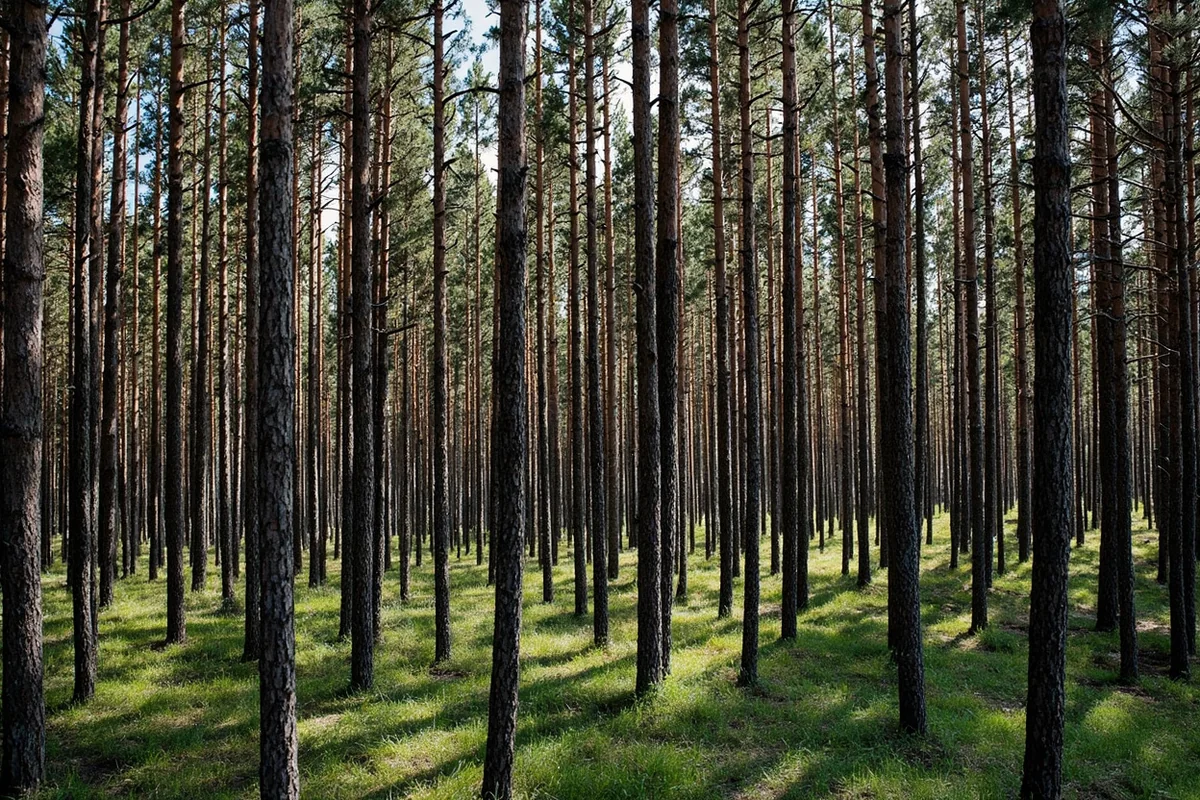
I’ve spent many miles hiking through lodgepole forests in Yellowstone’s northern reaches and the Gallatin Range. These trees thrive after fire—their serotinous cones remain sealed by resin until heat from flames melts the seal, releasing seeds into the freshly cleared, nutrient-rich soil.
Identifying lodgepoles is straightforward: needles come in pairs, are 1-3 inches long, and often appear slightly twisted (hence “contorta”). The bark remains thin and scaly throughout the tree’s life, unlike the thick armor ponderosas develop.
One observation from my travels: lodgepole forests can feel monotonous during a long hike, but they support incredible biodiversity in the understory. Keep your eyes down for wildflowers, fungi, and ground-dwelling birds.
Whitebark Pine (Pinus albicaulis)
Finding whitebark pine requires effort—these high-elevation specialists grow near treeline, often in windswept, rocky terrain. But the effort rewards you with some of Montana’s most dramatic landscapes.
I encountered my most memorable whitebark pines on the Highline Trail in Glacier National Park, where gnarled, twisted specimens cling to exposed ridges. These trees can live 1,000 years, though many are now threatened by white pine blister rust and mountain pine beetle.
Whitebark pine produces large, nutritious seeds that are a crucial food source for Clark’s nutcrackers and grizzly bears. I’ve watched nutcrackers cache seeds in dozens of locations during a single autumn afternoon—they remember thousands of cache sites and inadvertently plant new trees from forgotten stores.
Limber Pine (Pinus flexilis)
Limber pine often grows alongside whitebark at high elevations but generally occupies slightly lower, drier sites. The name comes from their remarkably flexible branches—I’ve bent young limbs into complete circles without breaking them.
I find limber pines most often on rocky outcrops and exposed ridges in the Big Belt and Little Belt Mountains. Their five-needle clusters and smoother bark (compared to whitebark’s plated texture) help distinguish them, though the two species can be tricky to tell apart at a glance.
Douglas Fir (Pseudotsuga menziesii)
Despite its common name, Douglas fir isn’t a true fir—it occupies its own genus. These magnificent trees dominate much of western Montana’s lower to mid-elevation forests.
The easiest identification trick I know: look for cones with distinctive three-pointed bracts protruding between scales, resembling the hind legs and tail of a mouse diving for cover. Once you see it, you’ll never forget it.

Douglas firs near my home in the Bitterroot Valley have some of the most beautiful reddish-brown, deeply furrowed bark I’ve seen on any conifer. Old-growth specimens can exceed 200 feet tall and live over 1,000 years.
Grand Fir (Abies grandis)
Grand firs occur in Montana’s moist northwestern forests, often mixed with western red cedar and western hemlock. Their flat, glossy needles arranged in two rows on the branch give them a distinctive, almost manicured appearance.
Crush a grand fir needle and you’ll release a sweet, citrusy fragrance—I think it smells like tangerines. This is my go-to identification method when I encounter firs in the wet forests around Libby or along the Yaak River.
Subalpine Fir (Abies lasiocarpa)
Subalpine fir has the quintessential “Christmas tree” silhouette—a perfect narrow spire that helps shed heavy snow loads. These trees define the upper forests throughout Montana’s mountain ranges.
I love encountering subalpine fir in the high basins of Glacier National Park, where they form picturesque stands around alpine meadows. The bark remains smooth and gray even on older trees, with resin blisters that pop satisfyingly when pressed.
Western Red Cedar (Thuja plicata)
Western red cedars reach Montana only in the extreme northwest corner, but where they occur, they create cathedral-like forests that feel transported from the Pacific Coast.
Ross Creek Cedars Natural Area is the premier destination for experiencing these giants. During my visit last September, I spent hours among the ancient trees, some estimated at over 500 years old.
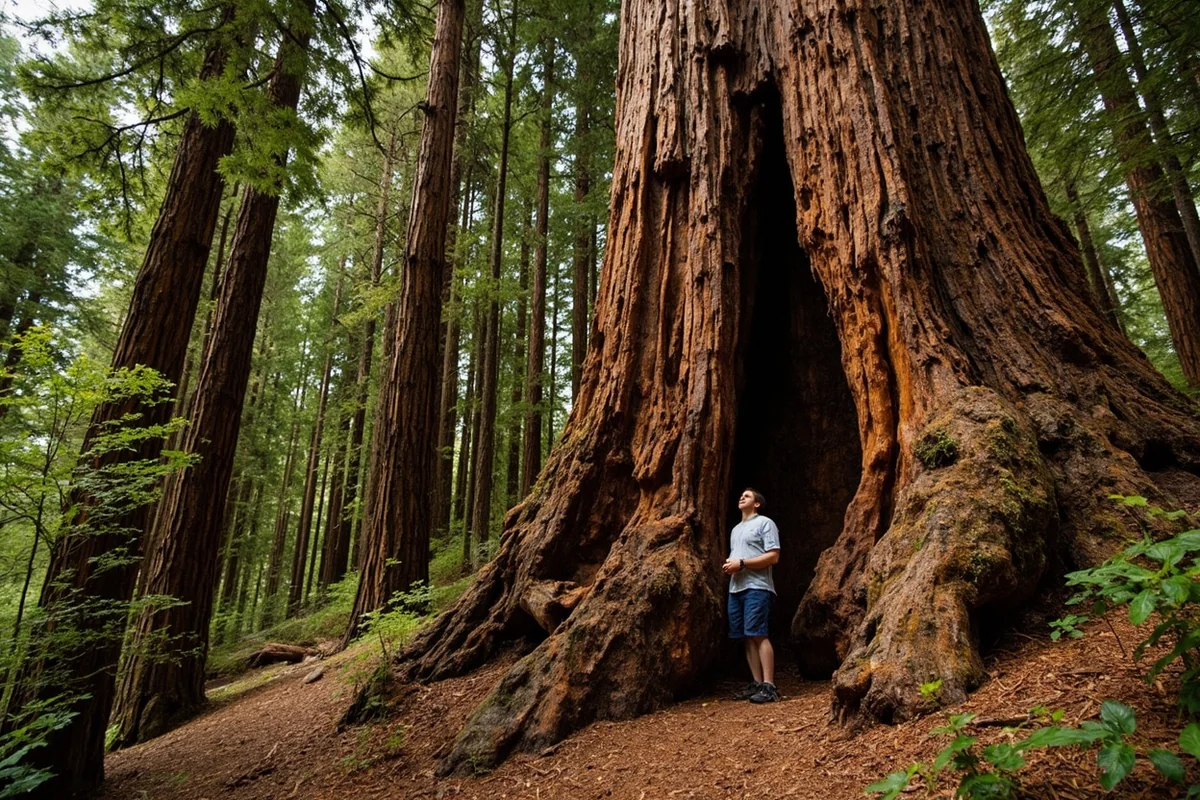
The stringy, fibrous bark and flat, scale-like foliage distinguish cedars from all other Montana conifers. Indigenous peoples used cedar extensively for canoes, buildings, and baskets—the wood is naturally rot-resistant and splits easily into planks.
Western Hemlock (Tsuga heterophylla)
Western hemlock accompanies cedar in Montana’s wet northwestern forests. These graceful trees have drooping branch tips and tiny cones—the smallest of any Montana conifer.
I find hemlocks easiest to identify by their lacy, delicate appearance and the way their leader (top stem) droops rather than growing straight upward. The needles vary in length along each branch, which their scientific name “heterophylla” (different leaves) references.
Engelmann Spruce (Picea engelmannii)
Engelmann spruce occupies high-elevation forests throughout Montana, often mixing with subalpine fir. These cold-hardy trees can survive winter temperatures below -50°F.
Touch the needles to distinguish spruces from firs—spruce needles are square in cross-section and prickly, while fir needles are flat and soft. I always remember: “Spruce is sharp, fir is flat and friendly.”
Rocky Mountain Juniper (Juniperus scopulorum)
Rocky Mountain junipers are the survivors of Montana’s tree world, growing where other species can’t—on dry, rocky slopes, exposed ridges, and semi-arid grassland margins.
These aromatic trees rarely exceed 30 feet tall in Montana, often growing twisted and gnarled by wind and drought. I’ve seen beautiful specimens in the badlands near Makoshika State Park and along the canyon walls of the Missouri River Breaks.
| Tree Species | Elevation Range | Best Viewing Location | Key Identifying Feature |
|---|---|---|---|
| Western Larch | 3,000-7,000 ft | Seeley-Swan Valley | Deciduous needles, golden fall color |
| Ponderosa Pine | 3,000-6,000 ft | National Bison Range area | Vanilla-scented bark, 3-needle bundles |
| Lodgepole Pine | 4,000-9,000 ft | Yellowstone region | 2-needle bundles, thin bark |
| Whitebark Pine | 6,500-9,500 ft | Glacier NP Highline Trail | 5-needle bundles, treeline habitat |
| Douglas Fir | 3,000-7,000 ft | Bitterroot Valley | “Mouse” bracts on cones |
| Western Red Cedar | 2,000-5,000 ft | Ross Creek Cedars | Stringy bark, scale-like foliage |
| Engelmann Spruce | 5,000-10,000 ft | Throughout mountain ranges | Sharp, square needles |
The Broadleaves: Montana’s Deciduous Native Trees
While conifers dominate Montana’s forests, several deciduous broadleaf trees add seasonal color and ecological diversity.
Quaking Aspen (Populus tremuloides)
Quaking aspens are perhaps Montana’s most photogenic trees, especially during their fall color display. The flattened leaf stems cause leaves to flutter in the slightest breeze, creating the “quaking” effect.
I chase aspen color every September and October. My favorite groves include those along Highway 287 south of Ennis, the aspen parklands near Big Sky, and the extensive stands around Hungry Horse Reservoir.
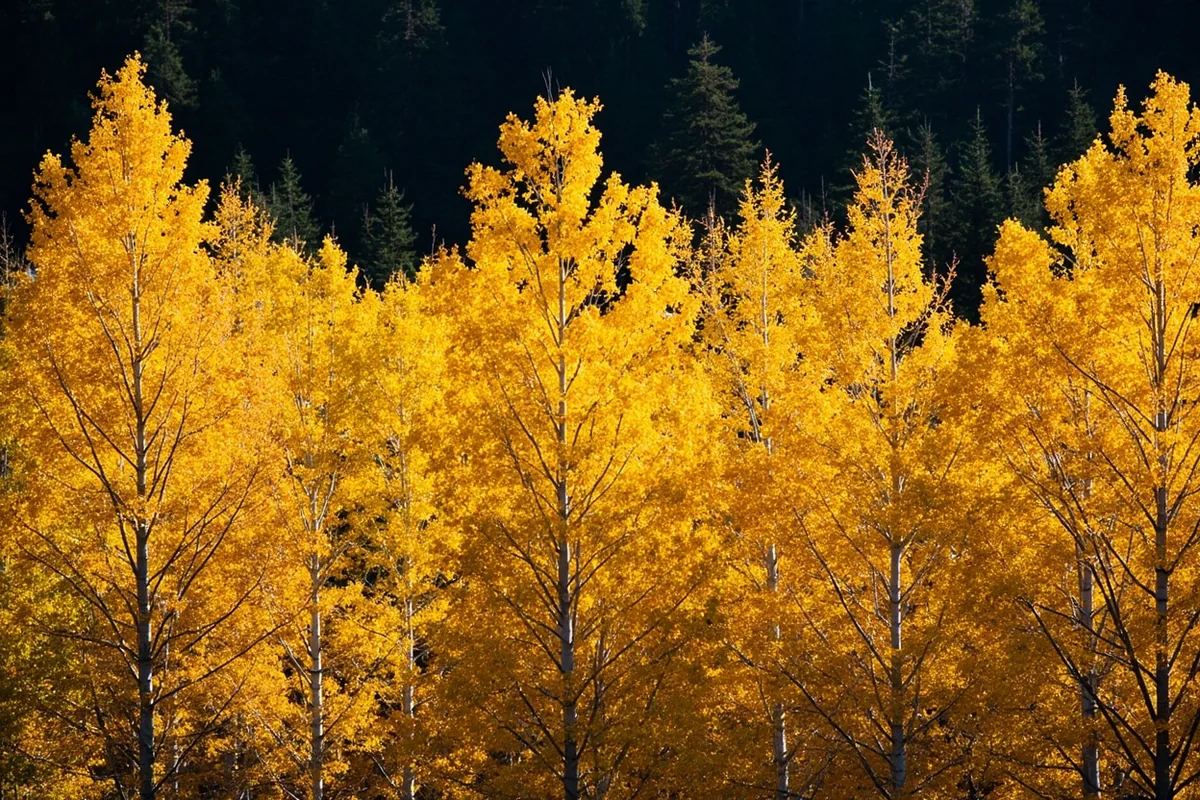
What fascinates me about aspens is that entire groves often comprise a single organism connected by root systems. One such clone in Utah called “Pando” is considered among the largest living organisms on Earth. Montana likely hosts several large clonal stands, though none have been mapped as extensively.
Black Cottonwood (Populus trichocarpa)
Black cottonwoods line river corridors throughout western Montana, growing to impressive sizes with thick, deeply furrowed bark. I’ve measured cottonwoods along the Bitterroot River with trunk diameters exceeding 5 feet.
The sticky, resinous buds have a sweet, balsamic fragrance that perfumes river bottoms in early spring. Cottonwood fluff—the white, fluffy seeds released in early summer—can look like snowfall along Montana rivers.
Narrowleaf Cottonwood (Populus angustifolia)
Narrowleaf cottonwood replaces black cottonwood in Montana’s mountain valleys and eastern regions. As the name suggests, the leaves are much narrower than black cottonwood—lance-shaped rather than broadly triangular.
I most often notice narrowleaf cottonwoods along mountain streams and in the river bottoms of central and eastern Montana. They’re smaller than black cottonwoods but equally important for riparian ecosystems.
Paper Birch (Betula papyrifera)
Paper birches occur in scattered locations across Montana’s northern tier, their white, peeling bark instantly recognizable. The bark was historically used by northern tribes for canoes, containers, and other implements.
My best paper birch sightings have been near Flathead Lake and in moist drainages of the Whitefish Range. These trees prefer cool, moist sites and often indicate areas with reliable water.
Water Birch (Betula occidentalis)
Water birch is Montana’s smaller, darker-barked native birch. It grows as a multi-stemmed shrub or small tree along streams and in wet areas throughout the state.
The bark is coppery-red to dark brown, lacking the dramatic white of paper birch. I often find water birches along fishing streams in the Big Hole and Gallatin valleys.
Seasonal Strategies for Tree Identification
Different seasons offer unique advantages for studying Montana’s native trees. I’ve developed seasonal strategies over years of exploration.
Spring (April-May)
Spring brings new growth that can help distinguish species. Aspens and cottonwoods flower before leafing out—catkins appear along riparian corridors while snow still lingers in the mountains.
Fresh conifer growth appears in lighter green at branch tips, making species like Douglas fir and grand fir easier to compare. This is also prime wildflower season beneath tree canopies.
Summer (June-August)
Summer offers full leaf development for broadleaf species and easy access to high-elevation forests. Treeline areas where whitebark pine and subalpine fir grow become accessible as snow melts.
I prefer early morning or evening light for photographing summer forests—midday sun creates harsh shadows that obscure bark textures and needle colors.
Fall (September-October)
Fall is prime time for larch color and aspen displays. I plan entire trips around peak color, usually targeting late September for lower-elevation aspens and early October for high-elevation larch.
Deciduous species make identification easier when leaves are present—cottonwoods, aspens, and birches reveal their distinctions through leaf shape and fall color.
Winter (November-March)
Winter strips away distracting foliage and lets you focus on bark patterns, branching structure, and evergreen needle characteristics. Snow provides contrast that can make dark conifer bark more visible.
I’ve found winter excellent for distinguishing similar species like lodgepole and ponderosa pine—the bark differences become more apparent against white snow.
Conservation Concerns and Threats
Montana’s native trees face several serious challenges that travelers should understand.
White pine blister rust, a fungal disease introduced from Europe, devastates five-needle pines including whitebark and limber pine. During hikes in Glacier National Park, I’ve seen heartbreaking mortality in whitebark stands—some areas have lost over 90% of mature trees.
Mountain pine beetle outbreaks have killed millions of acres of lodgepole and ponderosa pine across Montana. The red and gray “ghost forests” visible on many mountainsides result from these outbreaks, often intensified by drought and warming temperatures.
Climate change is pushing treeline species higher while expanding habitat for lower-elevation trees. Scientists predict significant shifts in forest composition over the coming decades.
Practical Tips for Tree-Focused Travel
After years of seeking out Montana’s native trees, I’ve gathered practical advice for fellow enthusiasts.
Bring a quality field guide—I recommend “Trees of the Rocky Mountains” by Richard Spellenberg or the Sibley Guide to Trees. Digital apps like iNaturalist can help with identification and contribute to citizen science.
Carry a hand lens or magnifying glass for examining needle arrangements, cone scales, and bark details. A 10x lens costs under $10 and dramatically improves identification accuracy.
Take photos of multiple features: overall tree shape, bark texture, needle or leaf closeups, and cones or seeds. This documentation helps with later identification and creates a personal reference library.
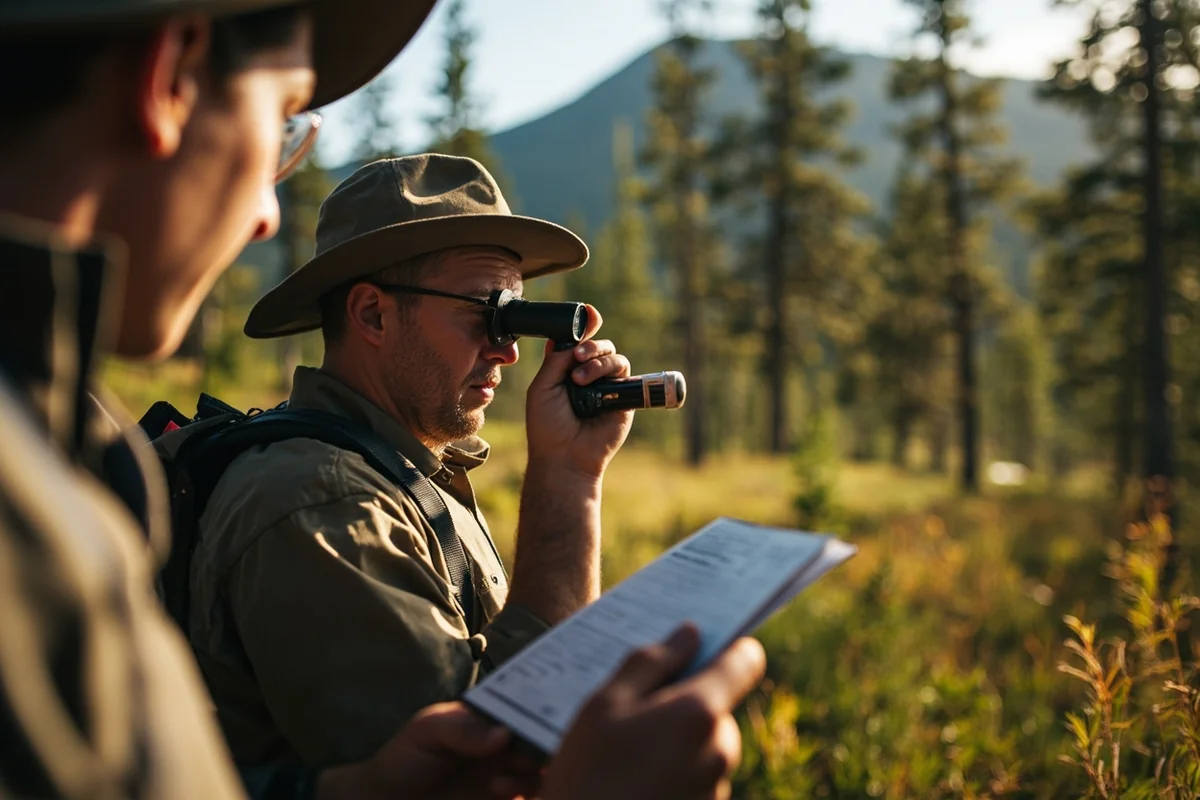
Start with common species in accessible locations before seeking rarities. Master the differences between Douglas fir, ponderosa pine, and lodgepole pine—you’ll encounter these on nearly every Montana mountain hike.
Best Tree-Watching Destinations
Montana offers numerous outstanding destinations for tree enthusiasts.
Ross Creek Cedars Natural Area features old-growth western red cedar in a 100-acre preserve near Libby. An interpretive trail loops through ancient giants in a cathedral-like setting.
Glacier National Park contains examples of nearly every Montana native tree species across its diverse elevations. The Going-to-the-Sun Road traverses multiple forest zones in a single spectacular drive.
Seeley-Swan Valley hosts Montana’s finest western larch forests. Plan a fall visit for unforgettable golden color displays reflected in numerous lakes.
National Bison Range preserves beautiful open ponderosa pine parklands amid grasslands. The self-driving tour routes pass through excellent examples of Montana’s dry forest communities.
Makoshika State Park near Glendive showcases Rocky Mountain juniper in badlands terrain—a completely different landscape than Montana’s mountain forests.
Understanding Montana’s seventeen native tree species enriches every outdoor experience in Big Sky Country. Whether you’re photographing fall larch color, sniffing ponderosa bark on a hot summer afternoon, or contemplating centuries-old cedars in misty old-growth groves, these trees tell Montana’s ecological story in living form.
The forests I’ve explored across this magnificent state have shaped my understanding of landscape, time, and the intricate relationships between species. I hope this guide helps you develop your own connections with Montana’s native trees—they’re waiting to share their stories with anyone willing to slow down and look closely.
Frequently Asked Questions
Where can I see the most native tree species in Montana during a single trip?
Glacier National Park offers the best opportunity to see diverse Montana native trees in one location, with species ranging from western red cedar in the valley floors to whitebark pine at higher elevations. I recommend driving the Going-to-the-Sun Road, which passes through multiple forest zones within its 50-mile stretch, letting you spot ponderosa pine, Douglas fir, and subalpine fir without extensive hiking.
What is the best time of year to photograph Montana’s native trees?
Early October delivers stunning fall colors from western larch trees turning golden yellow, while late September through mid-October showcases quaking aspens at peak brilliance. For evergreen forests and wildlife photography, visit between late May and early July when snow has melted at lower elevations and wildflowers bloom beneath towering conifers.
Are there guided tree identification tours available in Montana?
Yes, both Glacier and Yellowstone National Parks offer free ranger-led nature walks that cover native tree identification during summer months. Private outfitters like Montana Wilderness Guides offer half-day forest ecology tours starting around $75-150 per person, which I’ve found especially helpful for learning to distinguish between similar species like lodgepole pine and ponderosa pine.
What should I bring for hiking through Montana’s native forests?
Pack bear spray ($40-55 at local outdoor stores), sturdy hiking boots with ankle support for uneven forest terrain, and layers since temperatures drop significantly under dense tree canopy. I always carry a physical field guide to Montana trees since cell service is unreliable in most forested areas, and binoculars help identify treetop features from the ground.
How much does it cost to visit Montana’s best old-growth forests?
Glacier National Park charges $35 per vehicle for a 7-day pass, while state forests and many Bureau of Land Management areas with impressive native trees are completely free to explore. Budget around $50-80 per night for camping near prime forest areas or $120-200 for lodges and cabins surrounded by native Montana trees in gateway towns like Whitefish or West Yellowstone.
Can I see giant sequoias or redwoods in Montana?
No, giant sequoias and coast redwoods are not native to Montana and don’t grow here naturally. However, Montana boasts its own impressive giants including western red cedars over 8 feet in diameter in the Ross Creek Cedars Scenic Area near Libby, and massive ponderosa pines reaching 150 feet tall in the Bitterroot Valley.
Which Montana native trees are best for fall foliage viewing along scenic drives?
The western larch creates spectacular golden displays along Highway 2 near Libby and throughout the Seeley-Swan Valley, typically peaking the first two weeks of October. Quaking aspens put on brilliant yellow shows along the Beartooth Highway and throughout the Paradise Valley, and I suggest planning a 3-4 day road trip to catch multiple species at their peak since timing varies by elevation and location.
Sources