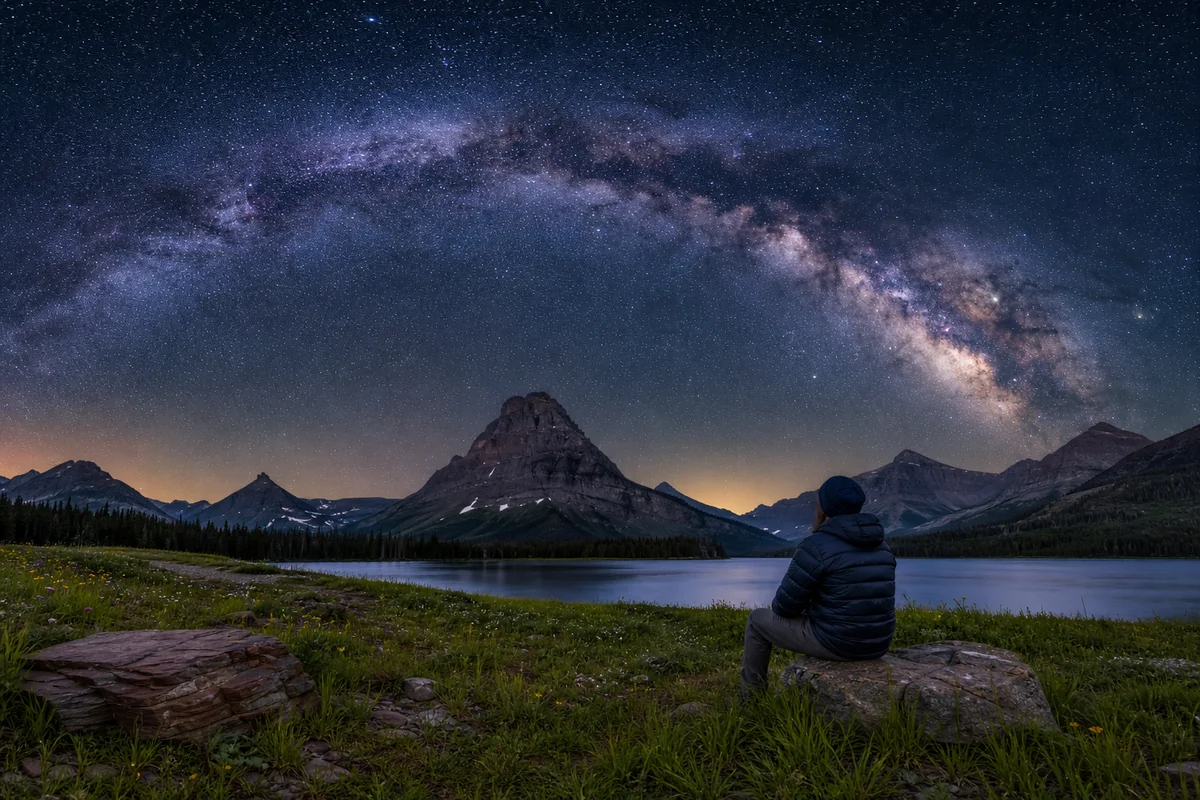
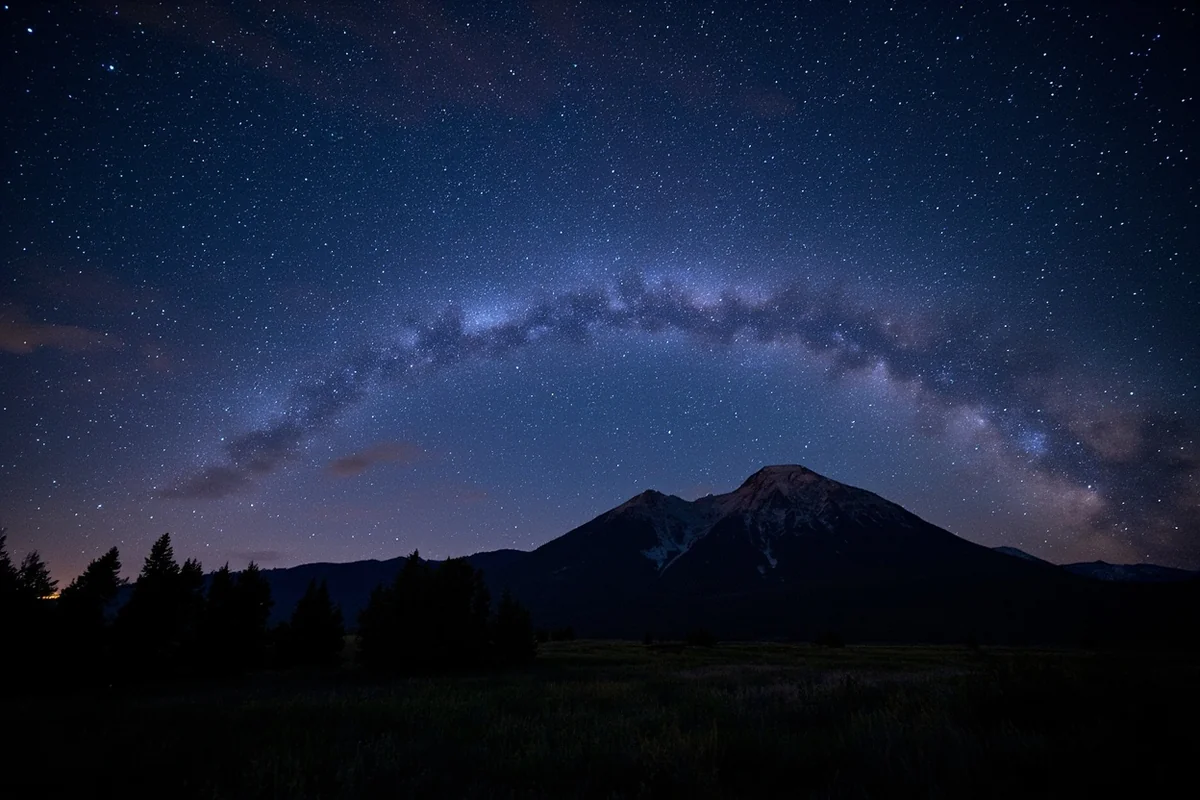
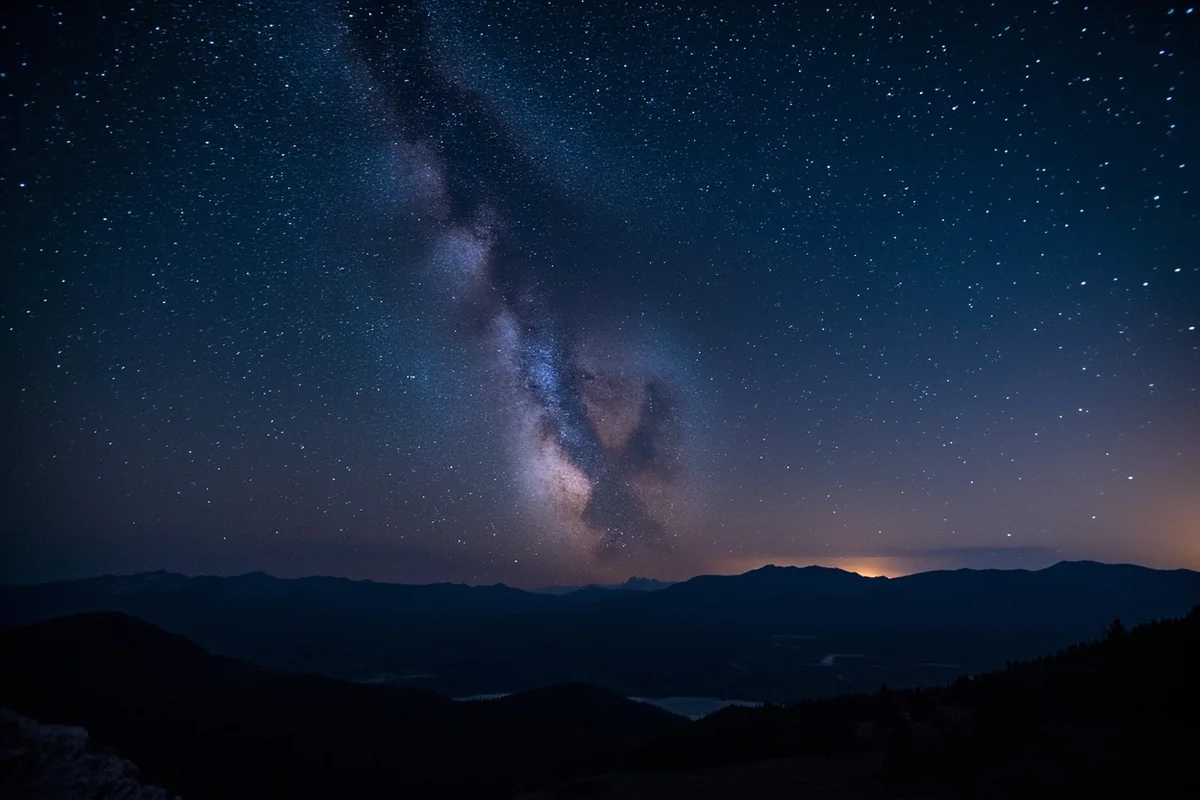
The first time I witnessed the Milky Way arch completely across the Montana sky—horizon to horizon—I actually gasped out loud.
I was standing alone in a meadow near the Two Medicine area of Glacier National Park last August, and the silence was so complete that I could hear my own heartbeat between camera shutter clicks.
That moment fundamentally changed how I think about travel experiences, and it’s why Montana’s night sky has become one of my favorite Montana nature attractions to share with fellow travelers.
- Montana has some of the darkest skies in the continental US—Glacier and Big Hole Valley are certified International Dark Sky locations
- Best stargazing months: June through September (clear skies, mild temps) and January through February (exceptional clarity)
- New moon windows are essential—plan your trip around the lunar calendar, not just your work schedule
- Altitude matters: higher elevations like Logan Pass (6,646 ft) offer dramatically better viewing than valley floors
- Budget 30-45 minutes for your eyes to fully dark-adapt before expecting to see the Milky Way clearly
- Summer nights are short—astronomical darkness doesn’t hit until 11 PM or later in June/July
Liked this article?
Add Roaming Montana as a preferred source so you see more of our articles and guides on Google.
Why Montana’s Night Sky Is Different
I’ve done night photography in Arizona, New Mexico, Utah, and half a dozen other western states. Montana hits differently, and I want to explain why before we get into specific locations.
The first factor is population density—or rather, the stunning lack of it. Montana has roughly 7 people per square mile, making it the third least densely populated state in the country.
When I drove from Missoula to the Big Hole Valley during my spring 2023 trip, I went nearly 90 minutes without seeing another vehicle’s headlights.
Light pollution in most of Montana simply doesn’t exist in the way it does elsewhere. Even when you’re staying in a town like Choteau or Augusta, you can often see the Milky Way just by stepping into your motel parking lot.
The second factor is topography. Montana’s mountains create natural shields against distant light domes from cities in neighboring states. When you’re positioned in a valley like the Big Hole or on the east side of the Continental Divide, you’ve got thousands of feet of rock blocking light pollution from the west.
Understanding Montana’s Dark Sky Certifications
Montana currently has two International Dark Sky certified locations, and I’ve spent multiple nights at both. Understanding what these certifications actually mean will help you plan better.
Glacier National Park: International Dark Sky Park
Glacier earned its designation in 2017, and having camped there on perhaps a dozen occasions over the years, I can confirm the park takes its light protection seriously.
During my most recent visit last summer, I noticed the park had retrofitted many of the campground bathroom facilities with amber lighting that minimizes sky glow. The visitor centers shut off exterior lights at reasonable hours, and rangers actively educate visitors about responsible lighting practices.
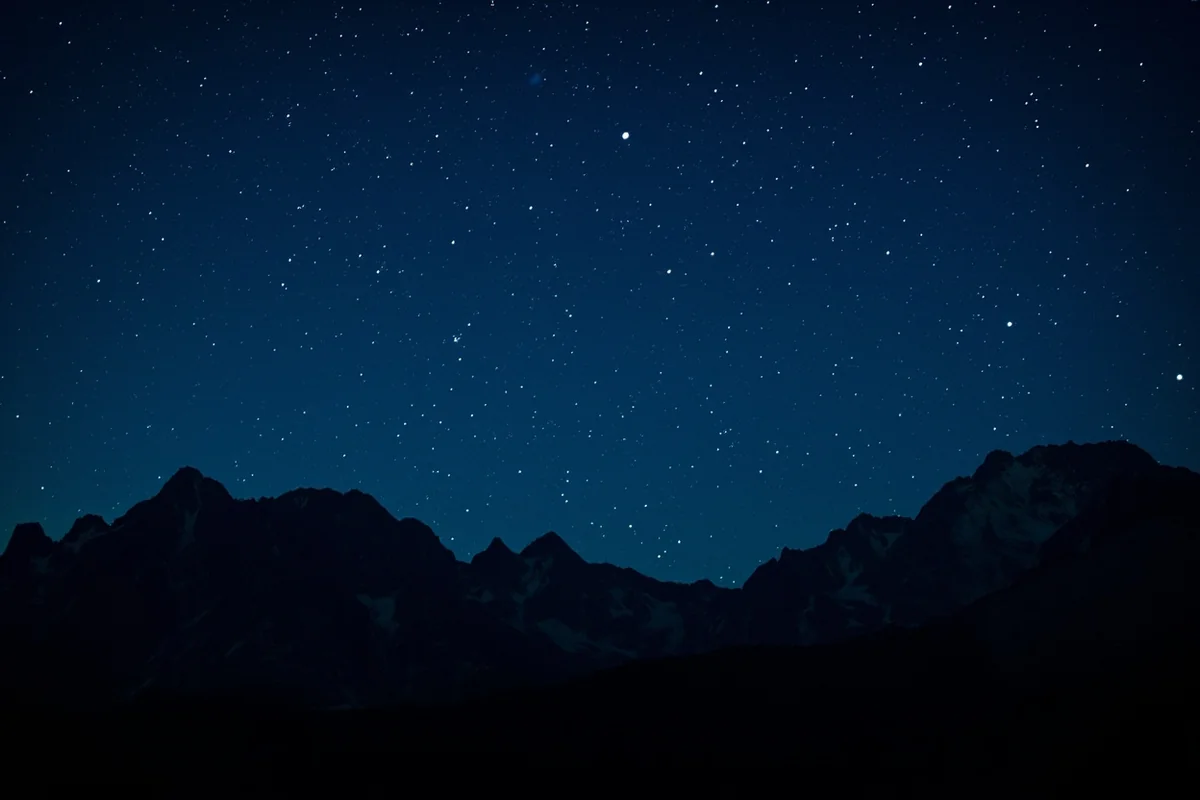
The viewing conditions inside Glacier vary dramatically based on where you position yourself. The west side of the park—near Lake McDonald and Apgar—receives more light pollution influence from Kalispell and the Flathead Valley. The east side, particularly the Two Medicine and Many Glacier areas, offers noticeably darker conditions.
Logan Pass itself, at 6,646 feet, provides exceptional viewing when accessible. The thin atmosphere at altitude means less atmospheric distortion, and the 360-degree views let you track celestial objects from rise to set.
I photographed the Andromeda Galaxy with just a 50mm lens from the parking lot there last August—something that wouldn’t be possible from lower, more light-polluted locations.
Big Hole Valley: International Dark Sky Sanctuary
The Big Hole National Battlefield became Montana’s first Dark Sky Sanctuary in 2020, and it remains one of the least-visited dark sky locations in the country. That obscurity is precisely what makes it special.
I spent three nights in the Big Hole Valley during the new moon in March 2023, and the darkness was almost disorienting.
With no moon and no artificial light visible in any direction, the sky held so many stars that familiar constellations became difficult to identify—a phenomenon astronomers call “constellation confusion.”
The battlefield itself opens for stargazing programs on select summer nights, but you don’t need to attend an official program. The surrounding valley offers miles of pullouts along Highway 43 where you can set up for viewing.
I particularly like the spots between Jackson and Wisdom, where the road runs flat through open ranchland with unobstructed horizons.
My Top 8 Montana Stargazing Locations (Personally Tested)
Beyond the certified dark sky areas, Montana offers countless exceptional viewing spots. These are locations where I’ve personally spent time under the stars and can vouch for the conditions.
1. Two Medicine Lake, Glacier National Park
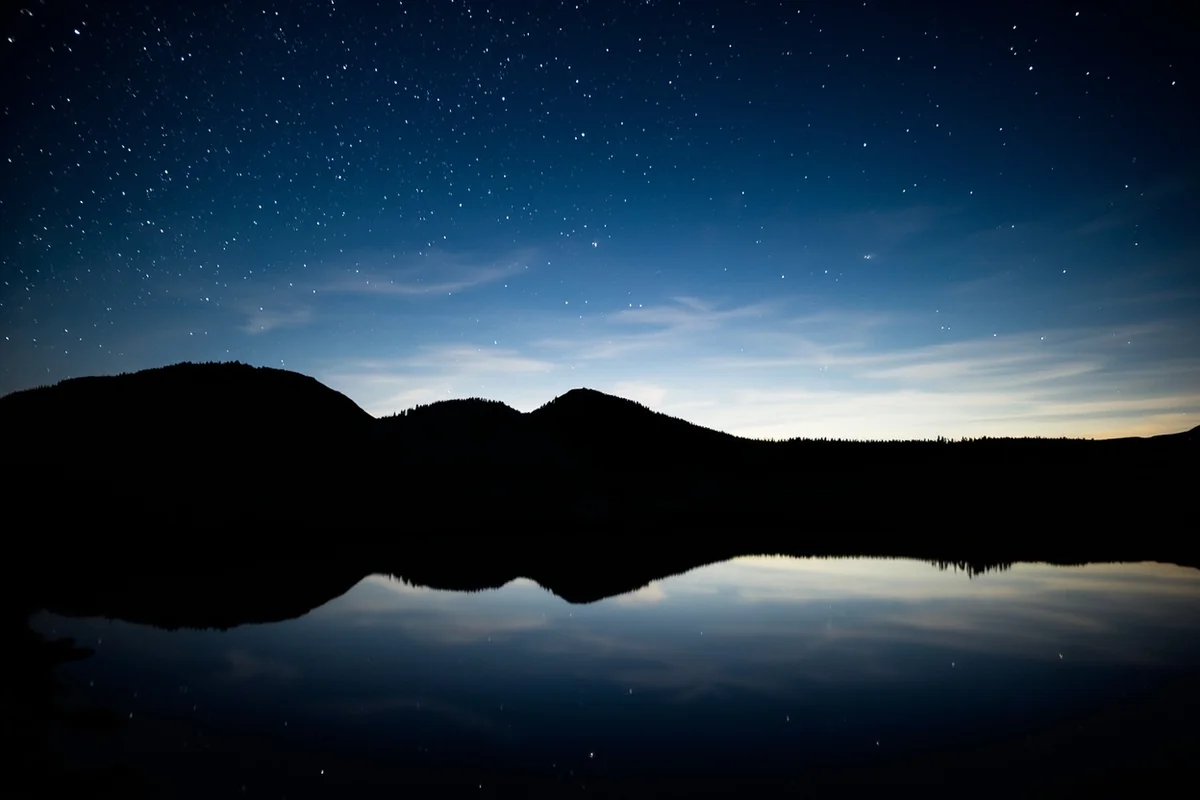
This is my single favorite night sky location in Montana. The lake creates a natural amphitheater surrounded by peaks, and on calm nights, you get star reflections in the water that will make your heart ache.
The Two Medicine campground stays open into October, well past when most Glacier facilities close. I’ve found late September offers an ideal combination—dark skies, autumn clarity, and vastly reduced crowds.
Practical tip: The boat launch area provides the best lakeshore access at night. Bring a camp chair; the ground is rocky.
2. Bowman Lake, North Fork Area
Getting to Bowman Lake requires driving one of the roughest access roads in the Glacier park system—about 6 miles of washboard gravel that’ll rattle your fillings loose. It’s worth every bump.
The north fork of the Flathead River valley is incredibly remote, and Bowman Lake sits at its heart.
When I camped there in July 2022, I counted over a dozen shooting stars in a single hour without even trying. The Perseid meteor shower from this location would be otherworldly.
Important note: This area has heavy grizzly bear activity. Practice proper food storage and don’t wander far from your campsite in the dark.
3. Medicine Rocks State Park (Eastern Montana)
Most Montana visitors never make it to the eastern part of the state, which is a shame. Medicine Rocks, near Ekalaka in the far southeastern corner, offers some of the darkest natural skies I’ve ever experienced anywhere.
The sandstone formations here create an almost alien landscape during daylight, but at night, they become perfect silhouette subjects for astrophotography. During my October 2022 visit, I photographed the Orion Nebula rising above the hoodoos—an image that required zero light pollution processing.
The nearest town of any size is Miles City, about 80 miles away. That isolation translates to a Bortle Class 1-2 sky, the darkest rating possible.
4. Missouri River Breaks National Monument
This vast, roadless wilderness in central Montana doesn’t appear on many stargazing lists, but it should. The breaks—deeply eroded canyons carved by the Missouri—create natural viewing bowls where you’re shielded from any ambient light.
I accessed the monument via the James Kipp Recreation Area during a May trip and found the viewing exceptional. The high canyon walls meant I couldn’t see the full horizon, but directly overhead, the darkness was profound.
The area around the recreation site supports some interesting night wildlife, too. I heard great horned owls calling throughout the evening and watched a beaver working in the river just before astronomical twilight ended.
5. Wisdom (Town), Big Hole Valley
The tiny town of Wisdom (population under 100) serves as a perfect base camp for Big Hole Valley stargazing. The Nez Perce Motel, where I stayed during my March trip, has virtually no exterior lighting, and the owner is happy to turn off the office sign if you ask.
From Wisdom, you can drive in any direction for 10-15 minutes and find yourself in profoundly dark countryside. The Montana wildflowers in the valley meadows during summer create beautiful foreground interest for night photography, though you’ll need to scout locations during daylight first.
6. Hyalite Reservoir (Near Bozeman)
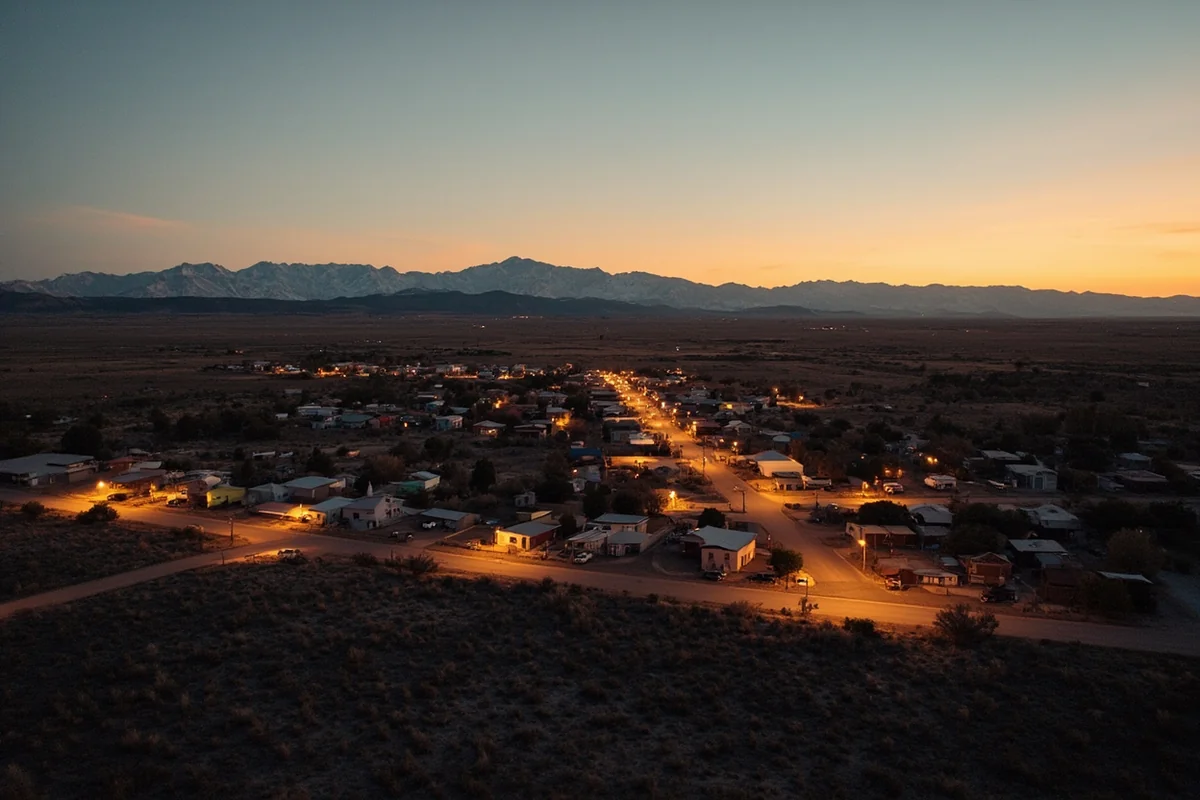
Not everyone has time to drive to remote corners of the state, and I respect that. Hyalite Reservoir, just 20 minutes south of Bozeman, offers surprisingly good viewing for a location this accessible.
The reservoir sits at about 6,500 feet in the Gallatin Range, and the mountains block much of Bozeman’s light dome. I’ve joined friends there on several occasions for casual stargazing, and we’ve always been able to clearly see the Milky Way structure, the Andromeda Galaxy (with averted vision), and major deep-sky objects through binoculars.
The main parking area near the dam works well, but I prefer the more secluded pullouts along the road to the reservoir. Less chance of someone pulling in with their headlights at a critical moment.
7. Makoshika State Park (Near Glendive)
Another eastern Montana gem, Makoshika contains Montana’s largest badlands formations. The park has made efforts to reduce light pollution, and the results show.
What makes Makoshika special for stargazing is the landscape itself. The eroded sandstone pillars and hoodoos create otherworldly foreground compositions. During my September 2021 visit, I spent an entire night working the overlooks, shooting star trails over formations with names like “The Submarine” and “The Throne.”
The town of Glendive is small enough that its light signature is minimal, and the park’s cap rock overlook provides views where you can’t see any artificial light at all.
8. Ross Creek Cedars Scenic Area
This is an unconventional choice, but hear me out. The Ross Creek Cedar Grove, southwest of Libby in far northwestern Montana, contains ancient western red cedars and Montana native tree types that create the most atmospheric night photography opportunities I’ve found in the state.
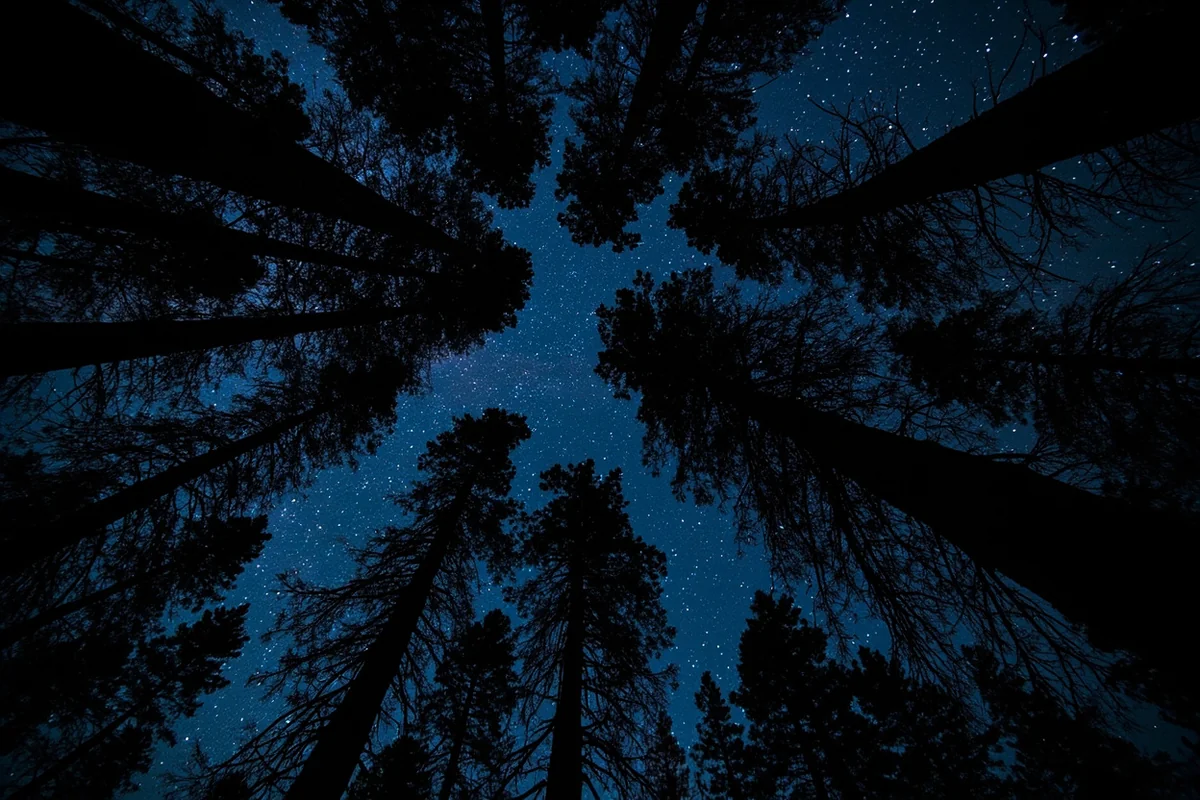
The canopy is so dense that you can’t see the full sky, but that’s part of the appeal. What you can photograph is starlight filtering through ancient branches—moody, mysterious images unlike anything else in Montana.
I visited during a summer road trip in 2021 and found the experience almost spiritual. The smell of cedar, the absolute silence, and the fragmentary glimpses of stars through the trees created an atmosphere that felt primeval.
Seasonal Considerations: When to Plan Your Trip
Montana’s night sky experience varies dramatically by season, and I’ve observed these differences firsthand across multiple visits throughout the year.
Summer (June–August)
Summer brings the best weather and easiest access to high-elevation viewing sites. Logan Pass opens reliably by early July most years, and you can camp at otherwise-inaccessible backcountry sites.
However—and this is critical—summer also brings the shortest nights. During the week around the summer solstice, full astronomical darkness (when the sun is more than 18 degrees below the horizon) doesn’t occur until nearly 11:30 PM in northern Montana, and dawn begins before 4 AM.
That leaves roughly four hours of true dark sky viewing. If you’re driving to a remote location, setting up equipment, and allowing your eyes to adapt, you might get two to three hours of prime observing.
I’ve adapted by treating summer stargazing as a late-night activity and sleeping in the next morning. It’s also worth noting that the Milky Way’s galactic core—the brightest, most photogenic section—is well-positioned in summer skies, rising high enough for excellent viewing by midnight.
Fall (September–October)
This is my preferred season for Montana stargazing. The nights lengthen significantly, temperatures remain mild enough for extended outdoor observing, and crowds at popular locations thin dramatically after Labor Day.
The fall sky features the Milky Way setting in the west during early evening, then the rising of autumn showpiece objects like the Andromeda Galaxy, the Double Cluster, and later, Orion and the winter constellations.
The main challenge is weather unpredictability. Montana can experience sudden temperature drops and early snowfall by late September, particularly at higher elevations. Check mountain pass conditions daily if you’re planning high-altitude observing.
Winter (November–February)
Winter skies in Montana are the clearest and darkest of the year. Cold, dry air holds less moisture to scatter light, and the long nights—over 16 hours of darkness at the winter solstice—provide ample observing time.
The winter Milky Way, while dimmer than the summer galactic core, stretches gracefully across the sky with beautiful open clusters and nebulae along its path. Orion dominates, and the crisp winter stars seem to sparkle more intensely than at any other time of year.
The obvious challenge is cold. I’ve observed in Montana in January at temperatures below -20°F, and it requires serious preparation. Your camera batteries will die in minutes without proper insulation. Your breath will fog any eyepiece you bring near your face. Touching bare metal means frostbitten fingertips.
It’s an advanced-level experience, but for those willing to prepare properly, winter stargazing in Montana delivers an intensity unmatched at any other time of year.
Spring (March–May)
Spring is transition season. The winter constellations set in the west while the spring galaxies—an abundance of distant island universes in Leo, Virgo, and Coma Berenices—climb higher each night.
Weather remains unpredictable through April, with late snowstorms possible even into May at higher elevations. But spring also brings some of the clearest atmospheric conditions of the year, particularly in late May as weather patterns stabilize.
The Big Hole Valley, where snow melts early due to the relatively mild Pacific influence, becomes accessible for spring stargazing before most mountain locations. My March trip there caught perfect conditions after a dry spell.
Planning Around the Moon Phase
I cannot stress this enough: the moon phase matters more than almost any other factor in planning a Montana stargazing trip.
A full moon in Montana will wash out the sky almost as effectively as light pollution. Even at the darkest certified sites, you’ll struggle to see more than the brightest stars when the full moon rides high.
Conversely, a new moon window—typically the five to seven nights centered on the new moon—provides conditions where the faintest objects become visible.
I plan all my dedicated stargazing trips around the lunar calendar first, then work backward to arrange logistics. Yes, this sometimes means booking trips months in advance or accepting suboptimal dates for other activities. The difference in sky quality is worth the planning effort.
| Moon Phase | Stargazing Quality | What You’ll See |
|---|---|---|
| New Moon (±3 days) | Excellent | Milky Way structure, faint galaxies, zodiacal light |
| Crescent Moon (4-7 days) | Very Good | Most deep-sky objects; moon sets early or rises late |
| Quarter Moon (±3 days) | Fair | Bright stars, planets, major constellations clearly |
| Gibbous Moon (11-14 days) | Poor | Only the brightest objects; good for moon photography |
| Full Moon (±2 days) | Not Recommended | Planets only; nice for moonlit landscape photography |
Essential Gear for Montana Night Sky Observation
Based on my experiences across multiple Montana trips, here’s the gear that actually matters—and what you can skip.
Absolute Essentials
A red-light headlamp is non-negotiable. Regular white light destroys your night vision, requiring 30-45 minutes to fully recover. I use a simple headlamp with a red-light mode and keep it on the dimmest setting possible.
Warm layers matter even in summer. Nighttime temperatures at Montana’s higher elevations can drop 30-40 degrees from daytime highs. I’ve shivered in July at Logan Pass in temperatures that required a down jacket.
A ground pad or camp chair makes extended observation sessions far more comfortable. Craning your neck to look straight up from a standing position becomes painful quickly. I carry a simple foam pad that lets me lie back and scan the sky comfortably.
Bug spray becomes critical from June through September, particularly near water. Montana’s mosquitoes are legendary, and nothing ruins stargazing faster than being eaten alive.
Nice to Have
Binoculars transform casual stargazing into genuine exploration. Even modest 7×50 or 10×50 binoculars reveal star clusters, the Andromeda Galaxy’s shape, Jupiter’s moons, and countless other objects invisible to the naked eye. I bring binoculars on every trip.
A star chart app on your phone helps with identification, but use it sparingly—the screen light hurts your adaptation. I recommend apps like SkySafari or Star Walk, but keep your phone at minimum brightness with a red filter enabled.
A camera and tripod aren’t necessary for enjoyment, but even a smartphone can capture surprisingly good night sky images these days. I’ve been impressed by what iPhone and Pixel phones can achieve in their dedicated night modes.
Skip These
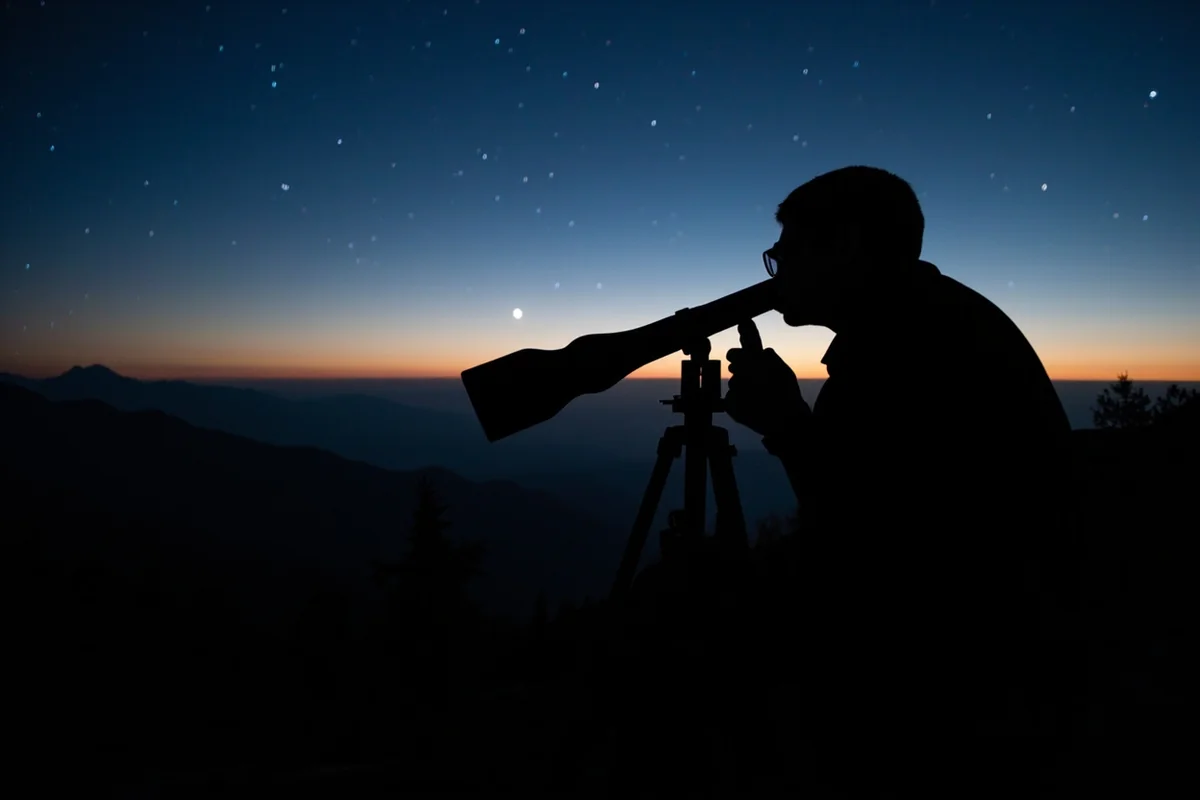
Unless you’re a serious amateur astronomer, you probably don’t need a telescope for Montana stargazing. A telescope limits your view to a tiny slice of sky when Montana’s glory is the sheer scale of what’s visible to the naked eye. Binoculars offer a better balance of portability and capability.
Specialized light pollution filters only matter if you’re photographing from locations with significant artificial light. Montana’s dark sky areas don’t require them.
Wildlife Considerations After Dark
Montana’s night sky viewing happens in wildlife habitat, and that requires respect and preparation.
Grizzly bears and black bears are active at night, particularly in and around Glacier National Park. Make noise when walking to your viewing location, carry bear spray, and never bring food to your stargazing site. I always store food in a bear canister or hanging system before setting up for observation.
Mountain lions are present throughout Montana and are primarily nocturnal hunters. While attacks are extremely rare, I stay aware of my surroundings and don’t wander far from my vehicle or camp in dense brush areas.
On a more pleasant note, you’ll likely encounter fascinating nocturnal wildlife during Montana stargazing. I’ve watched owls hunting, listened to coyote choruses, and observed meteor showers while moose grazed nearby. These wildlife encounters have become some of my most treasured Montana memories.
Astrophotography Tips from the Field
I’ve made every mistake possible while photographing Montana’s night sky. Here’s what I’ve learned:
Start with wide-angle compositions. The temptation to zoom in on specific objects pulls people away from what makes Montana special—the vast, unbroken dome of stars. An 14-24mm lens captures the full sweep of the Milky Way in context with Montana’s spectacular landscapes.
Focus is the hardest part of night photography. Your camera’s autofocus will struggle or fail entirely in darkness. I recommend focusing on a distant light (even a far-off ranch light on the horizon) or using live view zoomed to 10x on a bright star to achieve critical focus manually.
The 500 Rule provides a starting point for exposure: divide 500 by your lens’s focal length to get the maximum exposure time before stars begin trailing. With a 24mm lens, that’s roughly 20 seconds. I often find I can push slightly longer without noticeable trails.
ISO settings in the 1600-6400 range typically work best with modern cameras. Higher isn’t always better—noise becomes problematic, and stacking multiple shorter exposures often yields cleaner results than single long exposures.
Scout locations during daylight. Stumbling around unfamiliar terrain in complete darkness looking for compositions wastes precious observing time. I spend afternoons identifying foreground elements and noting exact camera positions for after dark.
Guided Programs and Events
Several Montana locations offer organized night sky programming that can enhance your experience, especially if you’re new to stargazing.
Glacier National Park runs ranger-led astronomy programs throughout summer, typically at the St. Mary and Apgar campground amphitheaters. These programs provide context about what you’re seeing and often include telescope viewing opportunities. Check the park newspaper for current schedules.
The Big Hole National Battlefield hosts occasional dark sky events in partnership with local astronomy clubs. These tend to be more in-depth than park programs and attract knowledgeable amateur astronomers willing to share their equipment and expertise.
Montana State University in Bozeman operates a public observatory that holds open nights during the academic year. While not in a dark sky location, the large telescopes there can show you deep-sky objects in detail that’s impossible with portable equipment.
Combining Night Sky with Daytime Activities
A Montana trip planned around stargazing doesn’t have to be solely nocturnal. The state offers endless daytime diversions.
In the Glacier area, hiking to alpine lakes, wildlife watching along Going-to-the-Sun Road, and exploring historic chalets fill daylight hours beautifully. The park’s diverse ecosystems include stands of Montana pine trees that create stunning contrast with glacial lakes.
The Big Hole Valley offers world-class fly fishing on the Big Hole River. I’ve combined stargazing trips with morning float sessions that yielded memorable trout. The valley’s hot springs near Jackson provide post-fishing relaxation.
Eastern Montana’s night sky sites sit near fascinating historical attractions. Makoshika State Park contains significant dinosaur fossil beds, while the Missouri Breaks preserve Lewis and Clark expedition landmarks.
The rhythm I’ve found works best: active outdoor exploration during morning and early afternoon, rest and meal preparation in late afternoon, then night sky observation from astronomical twilight until I’ve seen what I came to see.
Practical Information Table
| Location | Access | Nearest Lodging | Best Season |
|---|---|---|---|
| Two Medicine Lake | Paved road, seasonal | Two Medicine Campground or East Glacier (12 mi) | July–September |
| Logan Pass | Paved road, very seasonal | Rising Sun Motor Inn (15 mi) or West Glacier (35 mi) | July–mid-September |
| Big Hole Valley | Year-round paved roads | Wisdom or Jackson (motels and camping) | Year-round |
| Medicine Rocks | Gravel road, year-round | Park campground or Ekalaka (8 mi) | April–October |
| Bowman Lake | Rough gravel, seasonal | Bowman Lake Campground or Polebridge (15 mi) | July–September |
| Hyalite Reservoir | Paved/gravel, mostly year-round | Bozeman (20 min) or forest campgrounds | Year-round |
My Final Thoughts on Montana’s Night Sky
After countless nights spent under Montana’s stars, I remain genuinely moved by the experience. There’s something about the scale—both the vast landscapes below and the infinite cosmos above—that puts human concerns into proper perspective.
I’ve had transcendent moments watching meteors burn up in the atmosphere over Glacier’s peaks. I’ve felt profound solitude standing alone in the Big Hole Valley at 2 AM, the only visible artificial light belonging to a distant ranch miles away. I’ve photographed the same Milky Way scene dozens of times and never grown tired of the view.
Montana’s night sky isn’t just an attraction to check off a list. It’s an experience that rewards patience, planning, and the willingness to stay up past your bedtime. The state protects some of the darkest skies remaining in America, and every visit reminds me why that protection matters.
If you’ve never seen a truly dark sky—one where the Milky Way casts shadows and you can see satellites crossing silently overhead every few minutes—Montana offers that experience more accessibly than almost anywhere else in the lower 48 states.
Plan your trip around the new moon, dress warmer than you think you’ll need, bring patience and wonder in equal measure, and prepare to have your perspective on the universe fundamentally shifted. The stars are waiting.
Frequently Asked Questions
Where are the best places to see the night sky in Montana?
I’ve found Glacier National Park, Big Sky, and Medicine Rocks State Park offer some of the darkest skies in the continental US. Glacier National Park is actually designated an International Dark Sky Park, making it one of the top stargazing destinations in Montana. The remote areas around the Hi-Line and Charles M. Russell National Wildlife Refuge also provide incredible viewing with virtually zero light pollution.
What is the best time of year to stargaze in Montana?
Late summer through early fall (August-October) offers ideal conditions with clear skies, comfortable nighttime temperatures around 40-50°F, and excellent Milky Way visibility. Winter months provide the longest nights and crispest air, but temperatures can drop well below zero. I recommend timing your trip around a new moon for the darkest possible skies.
Can you see the Northern Lights in Montana?
Yes, Montana is one of the best places in the lower 48 states to see the aurora borealis, especially in the northern regions near Glacier National Park. Peak viewing season runs from September through March, and I suggest checking NOAA’s aurora forecast before heading out. Strong geomagnetic storms can make the Northern Lights visible as far south as Great Falls and Helena.
What should I bring for Montana night sky photography?
Pack a sturdy tripod, a camera with manual settings capable of long exposures, and a wide-angle lens with an aperture of f/2.8 or wider. I always bring extra batteries since cold Montana nights drain them quickly, plus a headlamp with a red light mode to preserve night vision. Hand warmers and layered clothing are essential since temperatures drop dramatically after sunset, even in summer.
Are there guided stargazing tours available in Montana?
Several outfitters offer guided stargazing experiences, particularly near Glacier National Park and Big Sky Resort, typically costing $50-$150 per person. Glacier National Park rangers lead free astronomy programs during summer months at Logan Pass and Apgar Campground. I recommend booking private tours in advance during peak season as they fill up quickly.
How far do I need to drive from Bozeman to find dark skies?
You can find excellent dark skies within 30-45 miles of Bozeman by heading toward the Madison Valley or into the Gallatin National Forest. The small town of Ennis, about 60 miles southwest, offers some of the darkest conditions in the region. I’ve had great luck at Hyalite Reservoir, just 20 miles south of town, though weekend crowds can bring unwanted headlights.
Is it safe to stargaze alone in remote Montana locations?
While Montana’s backcountry offers incredible stargazing, solo trips require preparation for wildlife encounters, particularly bears and mountain lions active at night. I always carry bear spray, tell someone my exact location, and keep a charged phone with downloaded offline maps. Sticking to designated pullouts and campgrounds rather than wandering into unfamiliar terrain makes nighttime viewing both safer and more enjoyable.
Sources