I was standing in a tiny general store in Polebridge — population 88 — when a fourth-generation Montanan handed me a huckleberry bar baked ten miles down the road and said, “If you can find it within a hundred miles of here, you should be buying that and not the trucked-in stuff.”
That single sentence captures the entire ethos of Montana brands: built locally, owned locally, made with the kind of pride that doesn’t translate into a marketing slogan.
This guide profiles 20 Montana brands that earn the label honestly — the founders, the towns they come from, and what makes their work worth seeking out when you visit (or when you want to bring Montana home with you).
Understanding the Montana economy means understanding these brands that have become ambassadors for Big Sky Country worldwide.
- Montana’s most prominent homegrown brands span outdoor gear (Mystery Ranch, Simms, Schnee’s, Oboz), food and beverages (Wilcoxson’s, Truzzolino, Wheat Montana, Great Harvest), camping (KOA — born in Billings in 1962, still HQ there today), and craft goods (Montana Silversmiths, Gibson acoustic guitars).
- The state’s brand ecosystem is concentrated in Bozeman, Butte, Missoula, and the Flathead Valley, with strong outliers in Billings, Livingston, and Polebridge.
- Several brands offer tasting rooms, factory tours, or flagship stores that work as legitimate travel stops on a longer Montana itinerary.
- “Made in Montana” can mean different things: founded here, headquartered here, or genuinely manufactured here. This guide notes the distinction for each brand.
Liked this article?
Add Roaming Montana as a preferred source so you see more of our articles and guides on Google.
Why Montana Builds Different Kinds of Brands
Montana isn’t a venture-capital state. Its population is smaller than San Antonio’s. Its winters punish anyone trying to build a casual operation. That climate — literal and entrepreneurial — produces companies with longer time horizons, more focus on durability than disruption, and a distinct preference for craft over scale.
A bartender in Bozeman put it to me last winter: “If you build something here, you’re committing to it. There’s no quick exit.” That commitment shows up in how Montana brands handle quality, customer service, and community engagement.
For broader context on what powers the state economically, see our Montana economy guide and the related 27 things Montana is known for overview.
The 20 Best Montana Brands
1. KOA / Kampgrounds of America — Billings (since 1962)
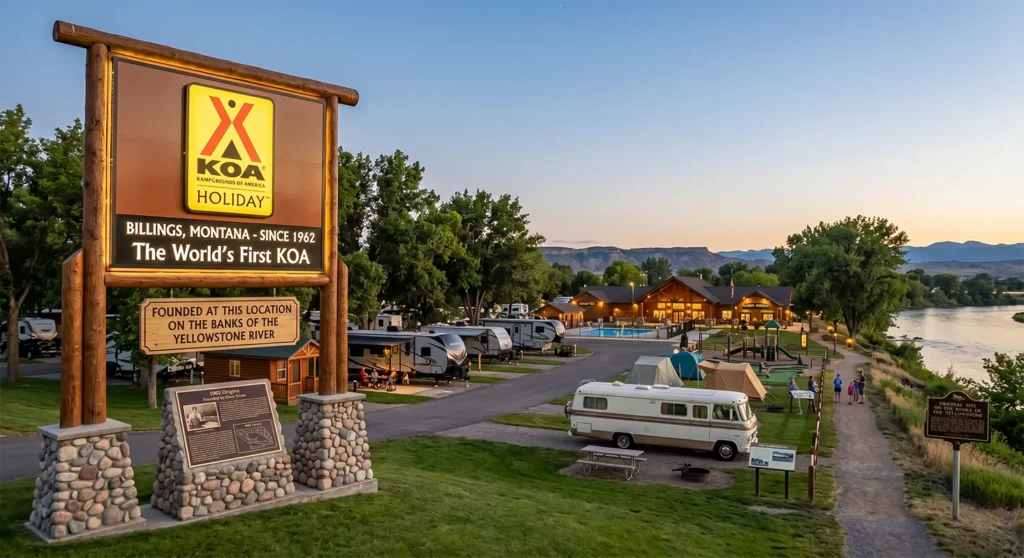
The single most consequential Montana-born brand on this list, and the one most “best Montana brands” lists somehow miss.
Kampgrounds of America was founded on the banks of the Yellowstone River in Billings in 1962 by businessman Dave Drum and partners, who set up a modest campground to serve travelers driving to the Seattle World’s Fair. The first campsite cost $1.75 a night.
KOA is now the world’s largest system of privately owned campgrounds — 500+ locations across the United States and Canada — and the headquarters has remained in Billings the entire time. A new corporate HQ on Transtech Way opened in 2023.
If you’ve ever driven past one of those bright yellow KOA signs anywhere in North America, you’ve encountered a Montana brand. Every franchise traces back to that original Yellowstone River campground. For lodging context in the broader sense, see our best RV parks in Montana hub.
2. Mystery Ranch — Bozeman (since 2000)
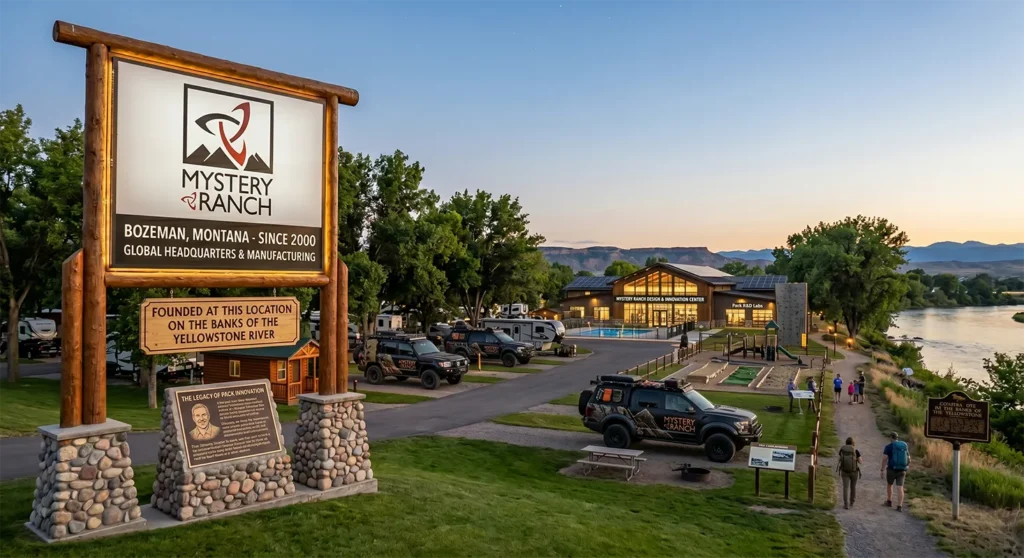
The most respected American technical pack company. Mystery Ranch was founded in Bozeman in 2000 by Dana Gleason and Renee Sippel-Baker, building packs trusted by U.S. wildland firefighters, military teams, and serious backcountry users worldwide.
Their packs aren’t cheap — expect $300–600 for a serious hauler — but the load-carry comfort and longevity are difficult to match. The Bozeman retail store offers professional fittings; the staff genuinely use the products in the surrounding wilderness.
The company was acquired by W.L. Gore & Associates in 2022 but remains headquartered in Bozeman, where most of the design and a portion of the manufacturing still happen.
3. Simms Fishing Products — Bozeman (since 1993 in Montana)
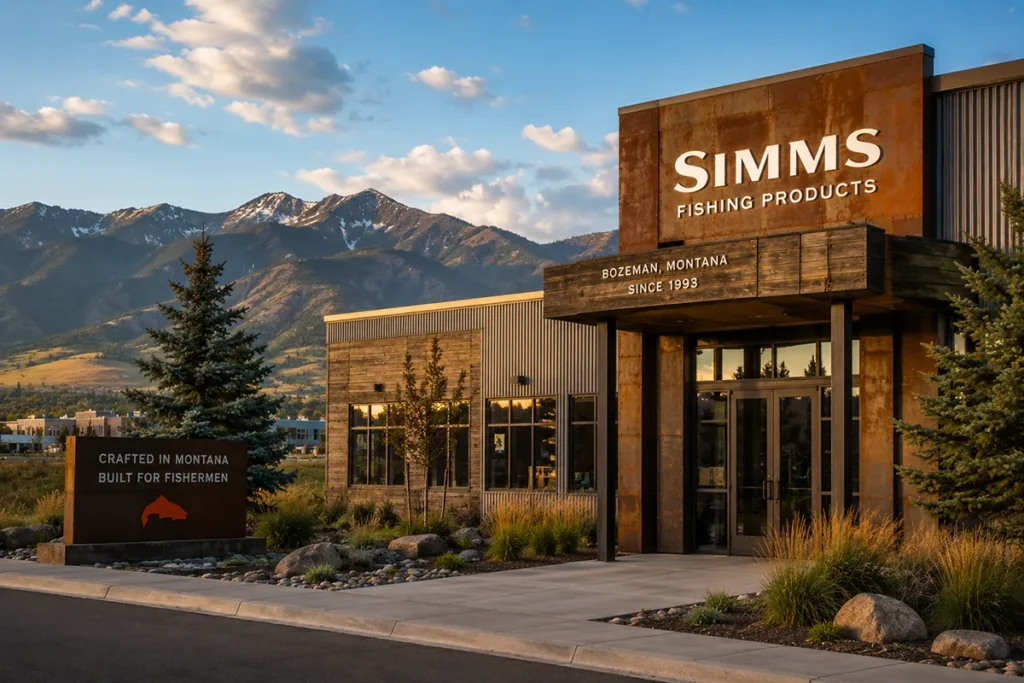
Ask any serious fly fisher about waders and Simms comes up first. The company was originally founded in 1980 by John Simms in Jackson, Wyoming, then sold to K.C. Walsh in 1992, who moved the operation to Bozeman in 1993.
Today, every pair of Simms Gore-Tex waders is still hand-built in Bozeman by a small team of dedicated “wader makers” — Simms is the only U.S. wader manufacturer, and one of just three companies worldwide licensed to use Gore-Tex in wading products. The Bozeman flagship facility runs about 70,000 square feet and employs more than 130 people.
4. Schnee’s — Bozeman (since 1946)
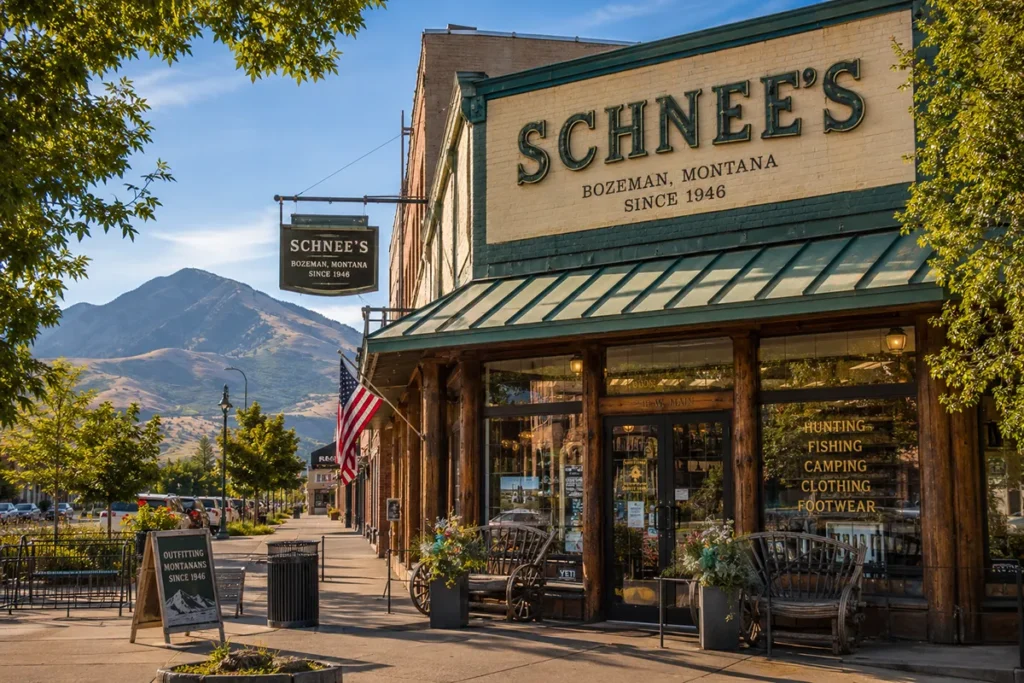
Schnee’s traces its heritage to 1946, when George Dieruf founded Powder Horn Outfitters in Bozeman to outfit hunters and serious outdoors-people.
In 1974, Steve and Jean Schnee started Cobbler’s Corner shoe-repair shop nearby. The famous Schnee’s pac boot line launched in 1987, and the two businesses combined under the “Schnee’s” name in 2006.
Modern Schnee’s pac boots are still hand-built in Bozeman. The flagship store on Main Street is one of the best outdoor retail experiences in Montana — a real cobbling tradition lives inside, and the fittings take 45 minutes for a reason. Boots run $300–600 and can be resoled and repaired for decades.
5. Oboz Footwear — Bozeman (since 2007)
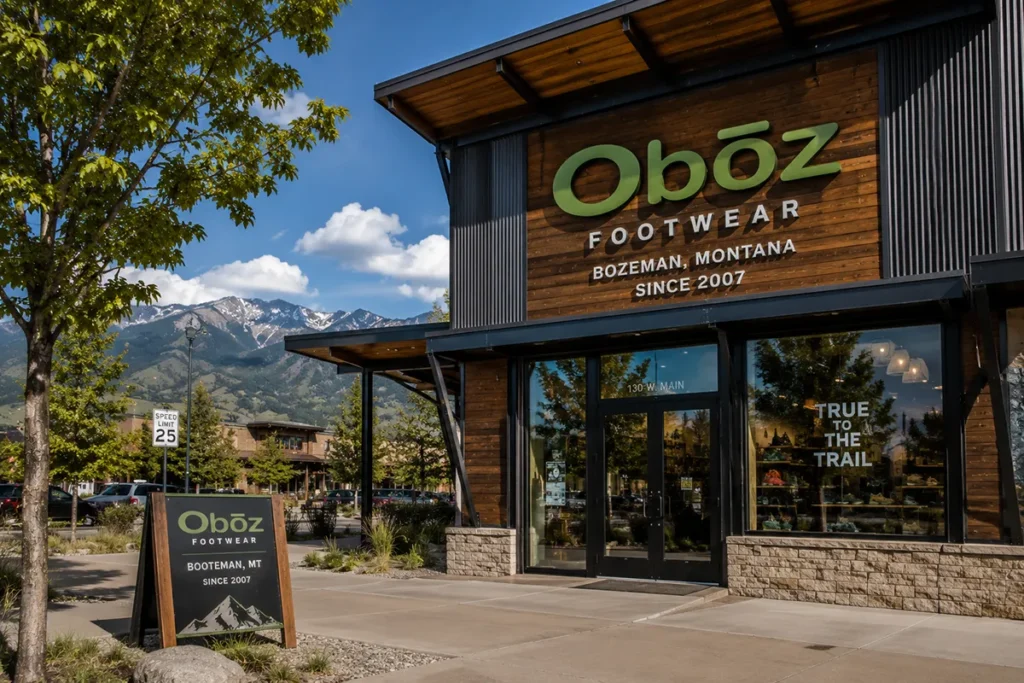
Founded in Bozeman in 2007, Oboz makes hiking shoes and boots designed for serious trail use. Their lower price point (most models $150–250) makes them the everyday hiking option for Montanans who don’t necessarily need Schnee’s-level pac boots but want gear that handles the state’s terrain.
Oboz has built a strong sustainability reputation — they plant a tree for every pair of shoes sold, with documentation through partner organizations.
6. West Paw — Bozeman (since 1996)
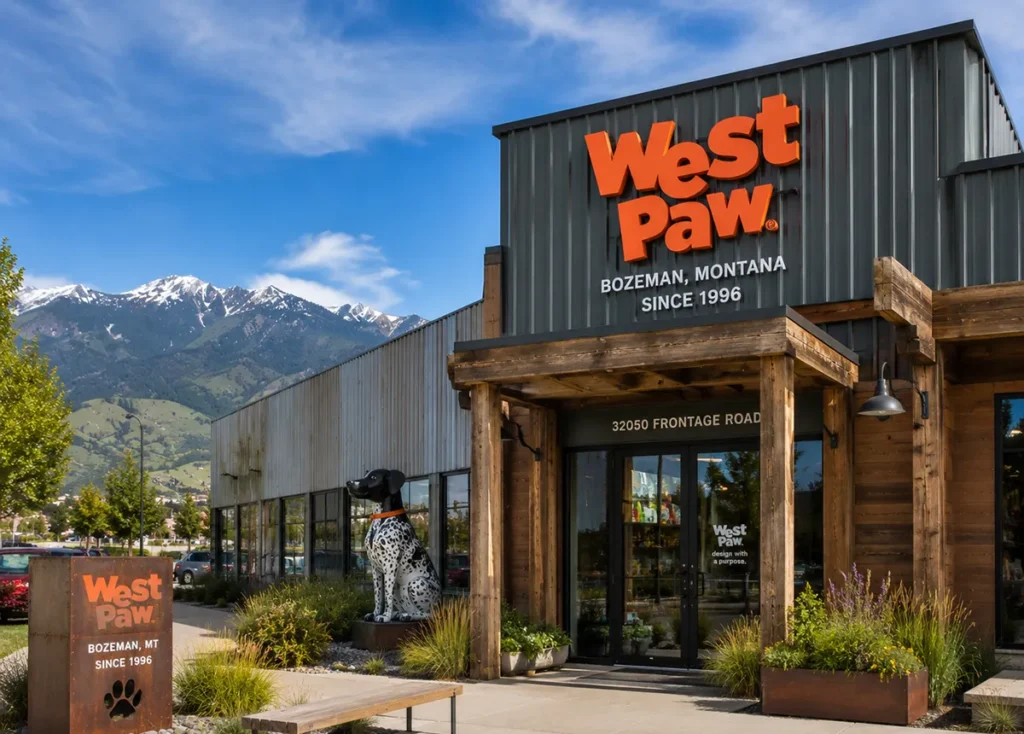
If you have a dog, you’ve probably seen West Paw products even if you didn’t know they were from Montana. The Bozeman-based maker of dog toys, beds, and bowls is a Certified B Corporation with a strong sustainability focus — many of their toys are made from recycled materials, and most products are guaranteed for life. Their facility is fully run on renewable energy.
7. Wheat Montana — Three Forks (since 1985)
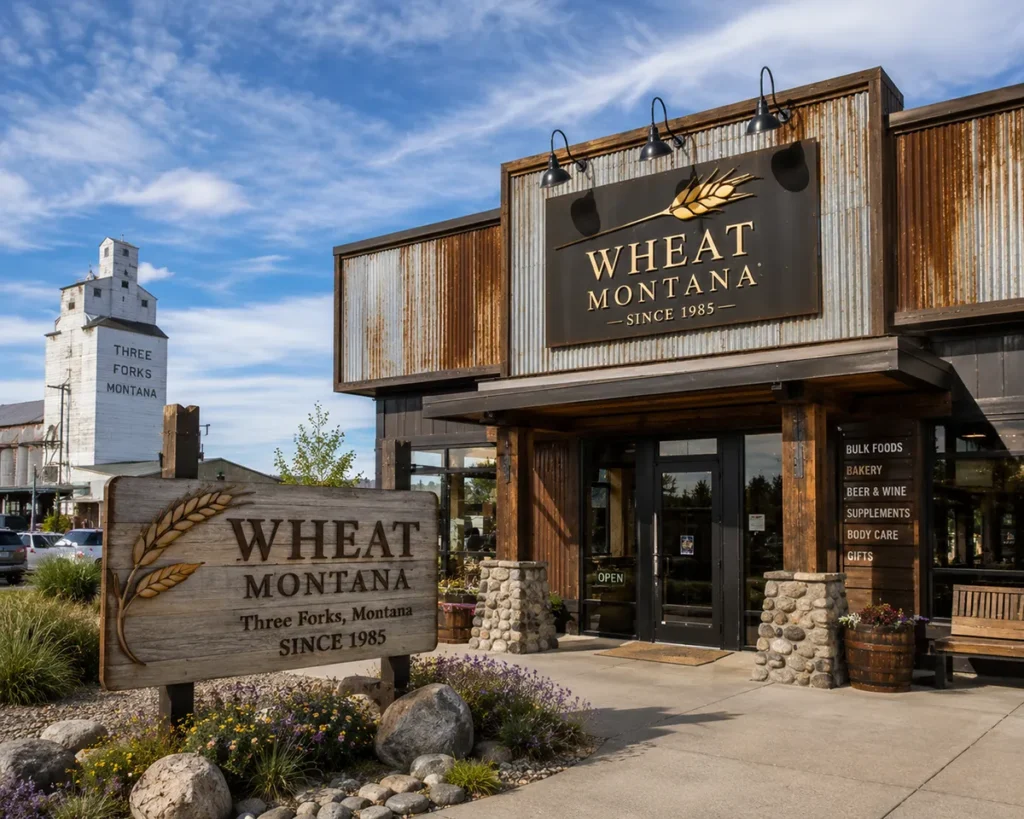
Driving I-90 between Bozeman and Butte, the Three Forks Wheat Montana exit is a Montana ritual. The family-owned farm-to-bakery operation grows its own wheat in the Golden Triangle, mills it on-site, and bakes some of the best bread in the state.
The Three Forks deli is the headquarters — their cinnamon rolls are the size of a softball — and their flour ships to bakeries across the country. For a road-trip lunch stop between major destinations, it’s almost unbeatable.
8. Great Harvest Bread — Great Falls / Dillon (since 1976)
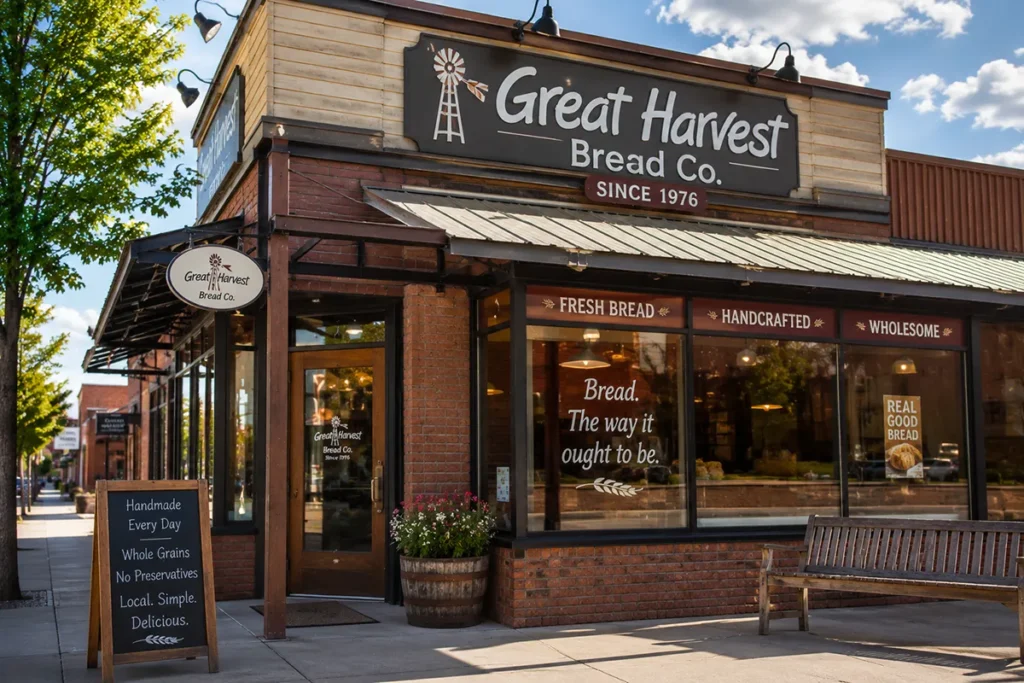
Founded in Great Falls in 1976 and headquartered in Dillon today, Great Harvest is one of the most beloved Montana-born brands in any category. Their stone-milled whole-grain breads are baked fresh daily at franchise locations across the country, and the Dillon HQ runs the franchise system and supports each location’s “freedom-based franchising” model (each store has unique recipes).
If you’ve stopped at a Great Harvest bakery in any state for honey-whole-wheat bread or a slice of warm sweet bread with butter, you’ve encountered Montana baking history.
9. Wilcoxson’s Ice Cream — Livingston (since 1912)
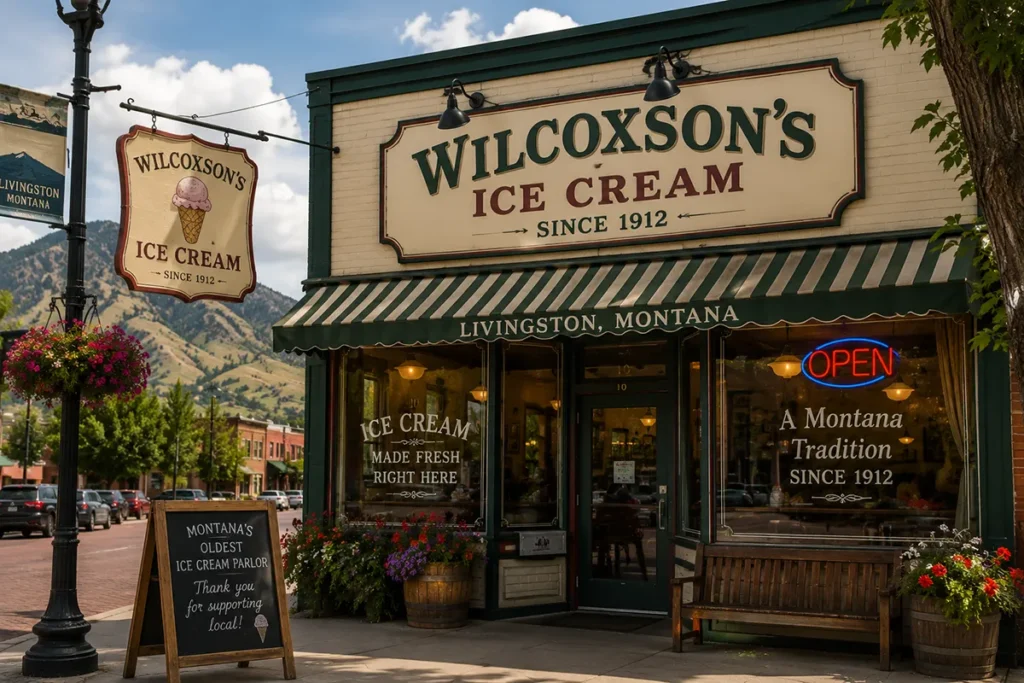
The state’s ice cream. Wilcoxson’s has been making real-cream ice cream in Livingston since 1912 — well over a century — and supplies grocery stores, restaurants, and convenience stores across Montana.
Their huckleberry is the cult favorite. Their chocolate is genuinely better than the major national brands. They use cream from Montana dairies, and the texture difference is noticeable in a single bite. Worth a stop at any small-town gas station with a Wilcoxson’s sticker on the door.
10. Truzzolino Tamales — Butte (since 1908)
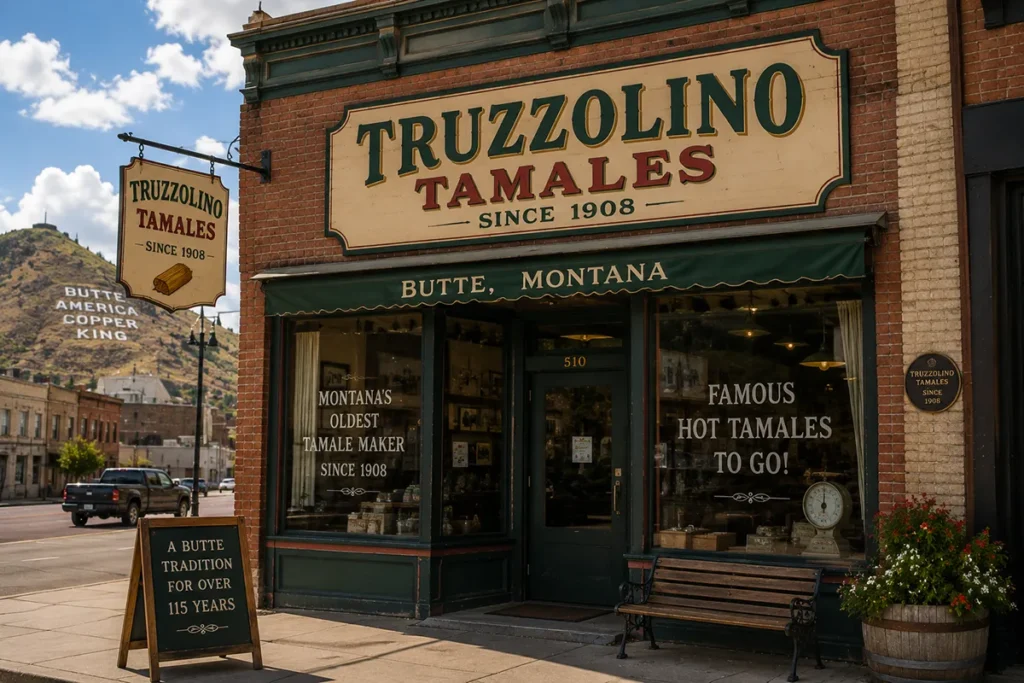
Butte’s mining heritage brought workers from around the world, and Truzzolino Tamales has been feeding Montanans since 1908 — making it one of the oldest food brands in the state. The family-owned operation still uses essentially the original recipe, and you’ll find their tamales in freezers at small-town grocery stores across Montana.
These aren’t artisan-restaurant tamales — they’re working-class lunch tamales, perfect for camping trips, hunting cabins, and quick dinners. A box in the freezer is a Montana staple.
11. Montana Coffee Traders — Whitefish (since 1981)
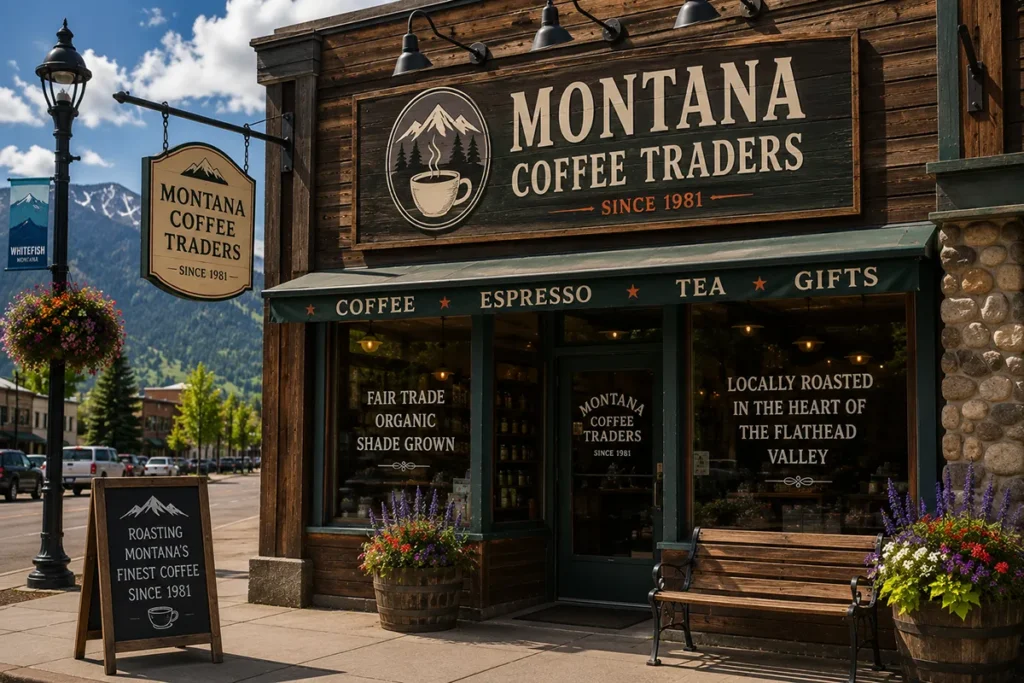
Whitefish coffee roaster Montana Coffee Traders has been roasting since 1981, making it one of the oldest specialty coffee operations in the Rocky Mountain West. Their beans are sourced from direct-trade relationships and roasted in small batches.
The Whitefish café is a Glacier-area institution; you’ll also find their beans in shops across northwest Montana. Their bagged coffee ships nationwide and makes one of the better Montana mail-order gifts. For more on the regional coffee scene, see our best coffee shops in Great Falls roundup.
12. Bequet Confections — Bozeman (since 2001)
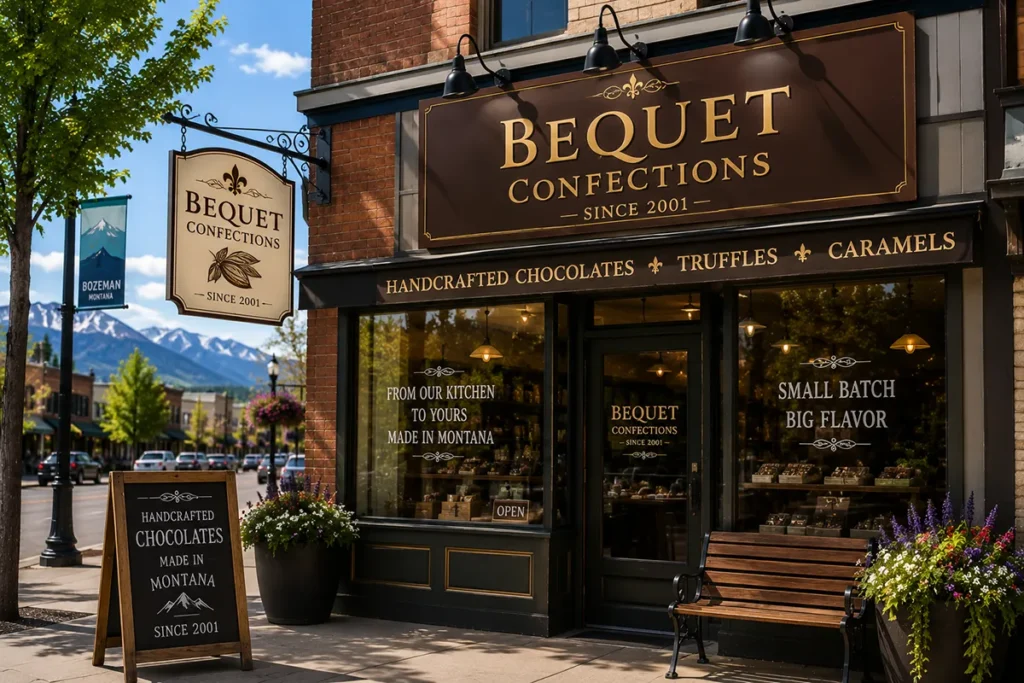
If you’ve had a really good caramel from Montana, it was probably a Bequet. The Bozeman confectioner has been hand-crafting small-batch caramels in unusual flavors — celtic sea salt, mountain bourbon, hot cinnamon, classic vanilla — since 2001. They’ve won multiple national specialty-food awards and ship nationwide.
A box of Bequet caramels is one of the best portable Montana gifts. They’re light, packable, and almost universally beloved.
13. Headframe Spirits — Butte (since 2010)
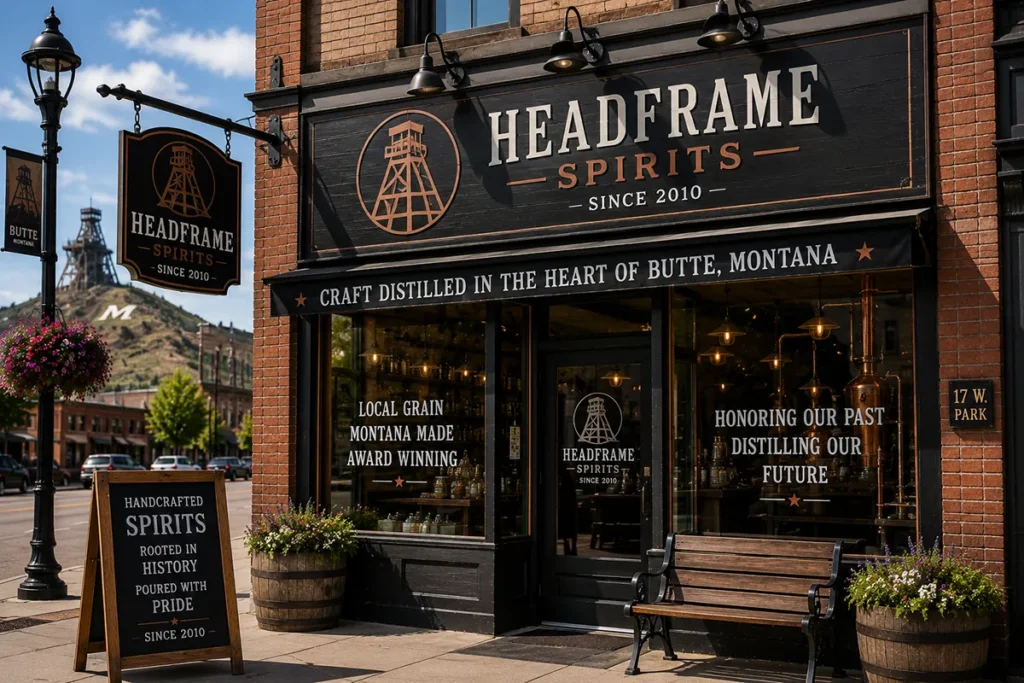
Named for the iconic mining headframes that still stand over Butte’s skyline, Headframe Spirits crafts whiskey, vodka, gin, and liqueurs that lean into the city’s heritage. Their Orphan Girl Bourbon Cream Liqueur is the cult favorite. The High Ore whiskey line uses Montana grain.
The downtown Butte tasting room is one of the best brand visits in the state — staff know their process inside and out, and the surrounding mining history makes for a deeper visit than a typical distillery tour.
14. Bozeman Spirits — Bozeman (since 2012)
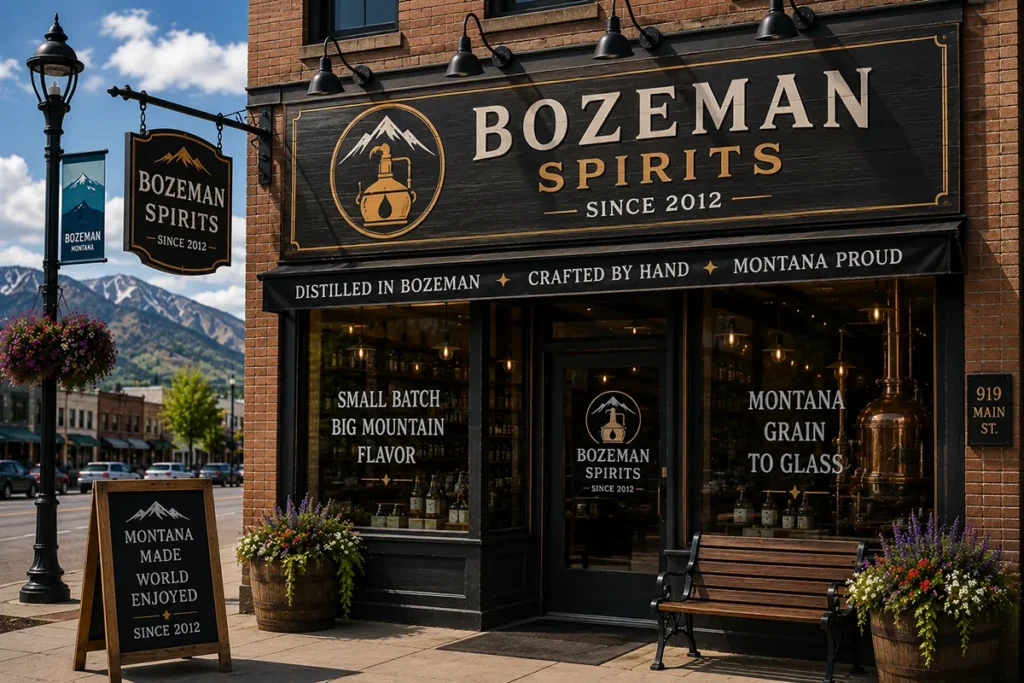
Downtown Bozeman’s own small-batch distillery, opened in 2012. They produce whiskey, gin, and vodka using Montana-grown grain, and their Cold Spring Huckleberry Vodka has become a signature Montana spirit.
The tasting room sits right downtown — an easy stop on any Bozeman itinerary. Tasting flights let you sample multiple products before committing to a bottle. For broader downtown context, see Bozeman breweries for the full craft-beverage scene.
15. Wildrye Distilling — Bozeman (since 2017)
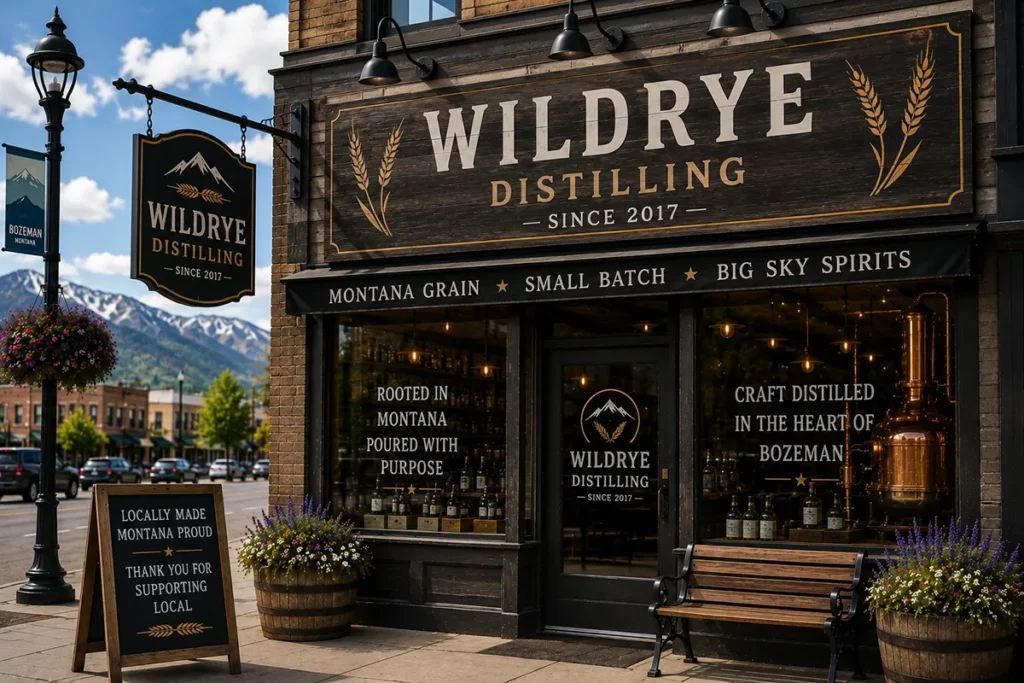
The newest distillery on this list, but already one of the most decorated. Wildrye opened in Bozeman in 2017 with a focus on bourbon and rye whiskey made from Montana-grown grain. Their bourbon has won gold at major spirits competitions, which brought national attention without changing their small-batch approach.
The tasting room is intentionally modest — modern without being trendy — and the bartenders can usually tell you which specific Montana farm grew the grain in your glass.
16. Montucky Cold Snacks — Missoula (since 2014)
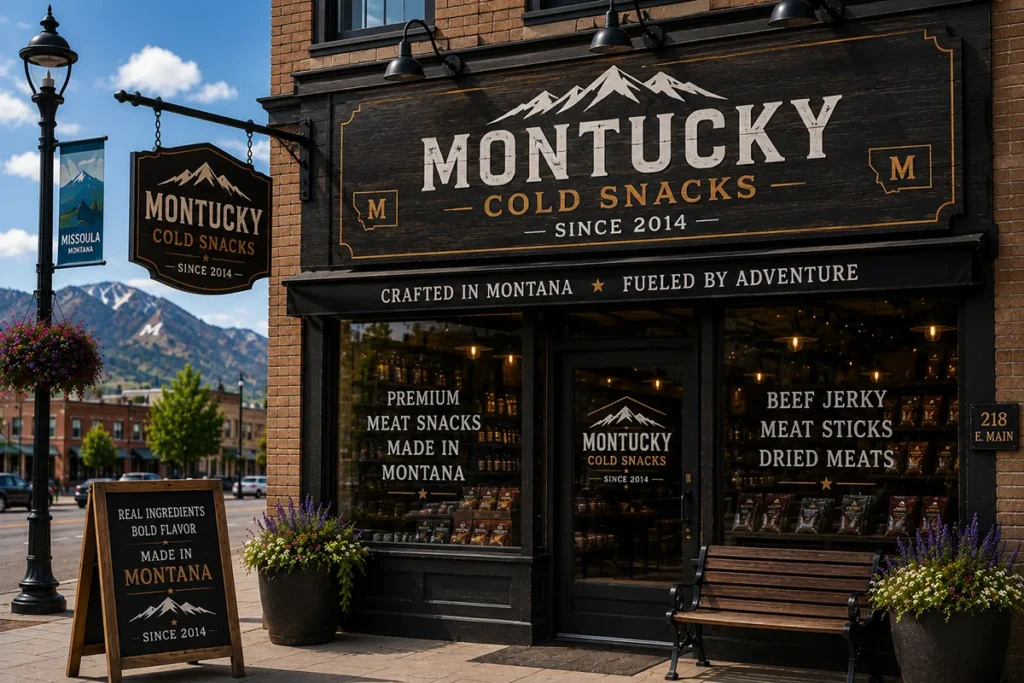
Founded in Missoula in 2014, Montucky Cold Snacks (or just “MCS” to most Montanans) is a low-cal light lager that became a phenomenon — both for the beer itself and the unironically rural-Montana branding aesthetic.
Montucky pledges a portion of profits to nonprofit organizations in every state it sells in, which has made it popular with younger Montanans for reasons that go beyond the beer. The cans are now stocked in bars and grocery stores from Bozeman to Brooklyn. For full Missoula craft-beer context, see Missoula breweries.
17. Kalispell Brewing Company — Kalispell (since 2014)
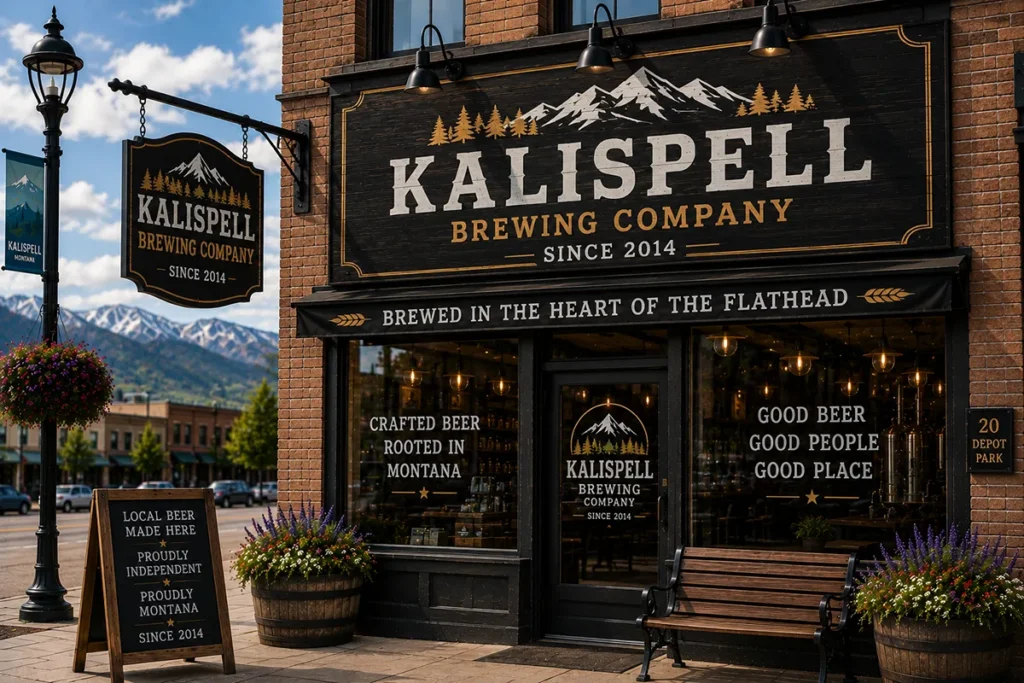
The flagship brewery of the Kalispell downtown scene. KBC focuses on locally-sourced ingredients and unpretentious flavor — their Highline Wheat uses Montana grain, and the seasonal offerings rotate with what’s available from regional farms.
The taproom has a distinctly local feel, populated more by Flathead Valley regulars than tourists. It’s a good break between Whitefish and Glacier National Park. For broader Montana brewing context, see Bozeman breweries and breweries in Helena.
18. Montana Silversmiths — Columbus (since 1973)
If you’ve ever admired a rodeo championship belt buckle, there’s a strong chance Montana Silversmiths made it. The Columbus-based company has been hand-engraving silver since 1973 and supplies championship buckles to the PRCA and other rodeo organizations.
Their product range runs from $40 silver money clips to custom $5,000+ buckles. The Columbus showroom lets visitors watch artisans at work — one of the better behind-the-scenes craft experiences in Montana.
19. Gibson Acoustic — Bozeman (since 1989)
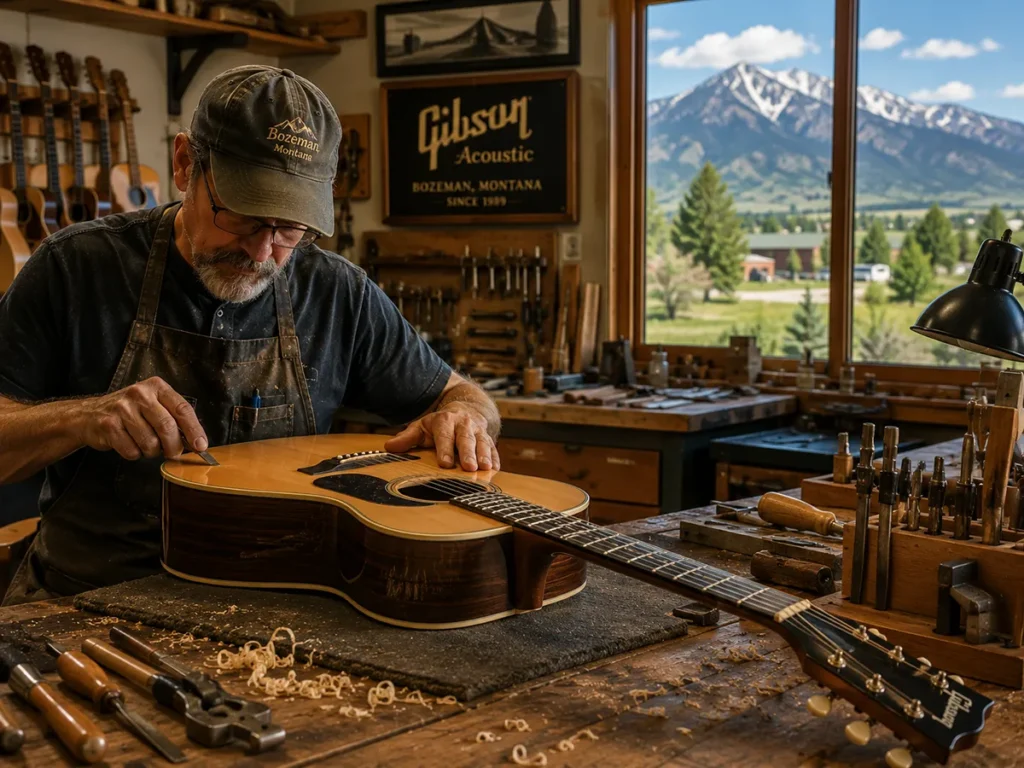
Surprise inclusion that most visitors don’t know: Gibson’s acoustic guitars — including the legendary J-45 and Hummingbird — are built in Bozeman, not Nashville. The acoustic facility has been in operation here since 1989.
The Bozeman air’s low humidity reportedly benefits both the wood and the precision of the build. Public factory tours are limited, but the Bozeman Music store downtown carries Bozeman-built Gibsons and the staff can walk you through the lineage. For the broader cultural angle, see famous people from Montana, which covers Montana’s outsized musical contributions.
20. Polebridge Mercantile — Polebridge
Technically a general store, but Polebridge Mercantile’s wood-fired bakery has achieved legendary status. The huckleberry bear claws are worth the unpaved drive on North Fork Road by themselves — fresh-baked daily without electricity, using wood-fired ovens.
It’s the best argument in Montana for the principle that “brand” doesn’t require scale. One small store, one set of recipes, one off-grid bakery, and 88 residents have created something that draws visitors from across the country. For full context, see our things to do in Polebridge guide.
Which Brand Visits Are Worth Building Into a Trip?
Several of these brands offer public visits worth detouring for. Here’s how to think about which to prioritize.
| Brand | Town | Visitor Experience | Best Window |
|---|---|---|---|
| KOA Billings | Billings | Original campground (still operating) | Year-round |
| Mystery Ranch | Bozeman | Retail store, professional fittings | Weekdays |
| Simms Fishing | Bozeman | Flagship retail, factory tours by appointment | Year-round |
| Schnee’s | Bozeman | Main Street flagship, custom boot fittings | Weekdays preferred |
| Wheat Montana | Three Forks | Bakery, deli, store | Mornings for fresh pastries |
| Wilcoxson’s | Livingston | Sold at most Montana grocery & convenience stores | Year-round |
| Headframe Spirits | Butte | Tasting room with Butte history | Afternoons |
| Bozeman Spirits | Bozeman | Downtown tasting room | Afternoons / evenings |
| Wildrye Distilling | Bozeman | Tasting room | Evenings |
| Montana Silversmiths | Columbus | Showroom + active workshop | Weekdays |
| Polebridge Mercantile | Polebridge | Bakery, general store | Early morning, summer |
| Kalispell Brewing | Kalispell | Taproom, food menu | Year-round |
| Montana Coffee Traders | Whitefish | Café, bagged coffee | Mornings best |
Building a Montana Brand Road Trip
A focused brand-and-craft itinerary makes a strong alternative to the standard Glacier-Yellowstone route — particularly during shoulder seasons when the parks are crowded or weathered out.
Day 1 — Bozeman cluster. Schnee’s, Mystery Ranch, Simms, Oboz, West Paw, Bozeman Spirits, Wildrye, Bequet. Most are within 15 minutes of each other, and you can comfortably cover four to six brands in a day with relaxed time at each.
Day 2 — Three Forks to Butte. Start at Wheat Montana in Three Forks for breakfast. Drive west to Butte for Headframe Spirits and Truzzolino tamales (grocery-store tour, not factory). Add Butte’s mining heritage as cultural anchor.
Day 3 — Livingston / Paradise Valley. Wilcoxson’s at the source, plus the broader Livingston scene — galleries, restaurants, and the Yellowstone River.
Day 4 — Billings. Visit the original KOA campground (still operating) and Montana Silversmiths’ showroom on the Columbus detour east.
Day 5 (extended) — Flathead Valley. Drive north to Whitefish for Montana Coffee Traders, Kalispell for KBC, and Polebridge Mercantile if you’re committed to the unpaved North Fork detour.
For broader trip planning, see our Montana trip planning guide and things to do in Montana hub.
How “Montana-Made” Actually Works
A label that says “Made in Montana” can mean several different things, and informed buyers benefit from knowing the distinctions.
Truly made in Montana: Simms waders, Schnee’s pac boots, Wilcoxson’s ice cream, Wheat Montana flour, Truzzolino tamales, Polebridge baked goods, Gibson acoustic guitars (the specific J-45 / Hummingbird models), Headframe and Bozeman and Wildrye spirits, and KOA’s hospitality service all genuinely originate in the state.
Designed and headquartered in Montana, partially manufactured elsewhere: Mystery Ranch, Oboz, Montana Silversmiths, and several apparel brands handle design and a portion of production in Montana but use overseas partners for some product lines. This is common in modern outdoor gear and shouldn’t be treated as a deception — it’s the standard global production model — but it’s worth understanding when you’re paying a premium for “American craftsmanship.”
Sold in Montana but not Montana-born: Plenty of brands sell heavily in Montana without being Montana brands. Stormy Kromer (Michigan), Patagonia (California), Filson (Washington), and most of the major outdoor names fit here. Useful gear, but not Montana craft.
The “Made in Montana” state-administered designation is a useful filter. The program certifies products with significant Montana content; you’ll see the marking on legitimate Montana-origin packaging at farmer’s markets, gift shops, and major grocery stores across the state.
Pairing Brands With Other Montana Experiences
Many of these brands sit naturally inside broader Montana itineraries:
- Outdoor gear shopping pairs with best hikes in Glacier National Park — buy boots, then break them in.
- Distillery and brewery tours pair with Bozeman breweries and Missoula breweries for a longer craft-beverage focus.
- Food brand stops pair well with best restaurants in Montana and the regional roundups like best bagels in Montana and best steakhouses in Montana.
- Hot springs detours pair with brand visits — particularly the Bozeman cluster paired with the best natural hot springs in Montana.
For gift-giving guidance specifically, see our gifts from Montana small businesses roundup.
What These Brands Reveal About Montana Character
The pattern that emerges across this list is consistent: these are companies that chose to build slowly and locally rather than scale fast. They prioritize repair-ability over disposability, real ingredients over substitutes, community engagement over impersonal customer service.
There’s a reason Montana brands punch above their weight in their respective categories. Schnee’s outsells major national pac-boot brands among Western ranchers and hunters.
Mystery Ranch packs are issued to elite military units. Wilcoxson’s beats every major ice cream brand on a head-to-head taste test among Montanans. KOA invented modern American camping infrastructure.
The state’s small population and harsh conditions act as quality filters. Brands that can survive here have to be good, and the ones that succeed often turn out to be world-class.
For more on the broader culture and character that produces these brands, see our Montana living hub and reasons to move to Montana guide.
A Final Thought
The best souvenir from a Montana trip isn’t a moose plush from an airport gift shop — it’s a product built by people in towns you actually drove through. A bottle of Headframe bourbon opened on a cold night at home brings Butte’s mining bars into your kitchen.
A pair of Schnee’s pac boots outlasts every “lifestyle brand” boot you’ve ever owned. A KOA night under the Yellowstone Valley sky stays with you for years.
If you’re putting together a Montana trip, build at least one or two of these brand visits into the itinerary. They sit alongside the better-known attractions, and they leave you with something more durable than postcards.
For broader inspiration, see our list of Montana cities and towns and the best time to visit Montana guide.
Frequently Asked Questions
Which Montana brand is the largest by revenue or footprint?
Kampgrounds of America (KOA) is the most consequential single Montana-born brand on this list — founded in Billings in 1962, still headquartered there, and operating 500+ campground locations across North America. By traditional revenue and brand footprint, no other Montana-born company comes close.
Where can I buy authentic Montana-made products during a trip?
The strongest single-stop selections are typically in Bozeman, Missoula, Whitefish, and Helena, where dedicated retailers stock multiple Montana brands under one roof. Farmer’s markets running June through September across most Montana towns are excellent for small-batch food brands. The “Made in Montana” state program certifies products with significant Montana content — look for the official designation on packaging.
Are factory tours worth visiting on a Montana road trip?
Yes for several. Wheat Montana in Three Forks (working bakery + deli + store), Headframe Spirits in Butte (active tasting room with mining-history context), Bozeman Spirits and Wildrye Distilling (downtown tasting rooms), Montana Silversmiths in Columbus (active workshop visible to visitors), and the original KOA campground in Billings (still operating) are all legitimate stops. Mystery Ranch, Schnee’s, and Simms offer flagship retail experiences in Bozeman — not formal factory tours, but high-quality customer experiences worth the time.
What’s the difference between “Montana-made” and “Montana-headquartered”?
Real difference. Some brands genuinely manufacture in Montana (Simms waders, Schnee’s pac boots, Wheat Montana flour, Wilcoxson’s ice cream, Polebridge baked goods). Others design and headquarter in Montana but use overseas manufacturing partners for some products (common in modern outdoor gear). Both can be legitimate “Montana brands” — but the distinction matters if true local production is what you’re buying.
What is the best time of year to visit Montana for brand shopping?
Summer (June–August) is when every brand storefront, tasting room, and factory tour operates full hours, and farmer’s markets are in full swing. September–October is the underrated window — most shops remain open, harvest products hit the shelves, and crowds drop sharply. Winter visits work for indoor brand stops but smaller resort-town shops may reduce hours.
Which Montana outdoor brands are genuinely worth the premium price?
For serious outdoor use, the three most consistently praised are Schnee’s pac boots (built to be resoled and repaired for decades), Mystery Ranch packs (load-carry comfort under heavy weight is industry-leading), and Simms waders (only U.S. wader manufacturer using Gore-Tex). For more accessible price points, Oboz hiking shoes and Montana Silversmiths accessories deliver Montana craftsmanship at less daunting numbers.
Can I find Montana-brand products at Montana airports?
Yes — Bozeman Yellowstone International (BZN), Glacier Park International (FCA), and Missoula International (MSO) all carry at least some Montana brands in their gift shops. Selection is limited compared to in-town retailers and prices run higher. If you have time, shop in town before you fly home.
Which Montana food brands ship well as gifts?
Bequet caramels (light, packable, broadly appealing), Wheat Montana flour and bread mixes, Montana Coffee Traders beans, and Headframe Spirits in states where they’re licensed for direct shipment. Wilcoxson’s ice cream is the one Montanan food everyone wishes they could send out of state — it doesn’t ship well due to the cold-chain requirements, which is part of its mystique.
Did Patagonia really have a Montana connection?
Patagonia is not a Montana-born brand — they’re headquartered in Ventura, California. They operated a service center and outlet store in Dillon, Montana, for many years, but the major service operations have shifted to other locations. Patagonia products are widely sold in Montana but don’t belong on a Montana brands list.
What Montana craft brand has the longest continuous history?
Truzzolino Tamales in Butte, founded 1908 — over a century of family ownership and essentially the same recipe. Wilcoxson’s Ice Cream in Livingston, founded 1912, is the second-oldest food brand still operating. Among non-food brands, the Schnee’s lineage (Powder Horn 1946) is the longest continuous Montana retail and footwear story.
Sources:
- https://lmi.mt.gov/_docs/0422-ImportExport.pdf
- https://lmi.mt.gov/employment/qcewtop
- https://www.sec.gov/Archives/edgar/data/1616318/000161631822000085/pressrelease-projecttrophy.htm
- https://www2.oberlin.edu/alummag/oamcurrent/oam_fall2001/businessUnusual.html
- https://www.greatharvestmissoula.com/
- https://revivallclothing.com/
- https://obozfootwear.com/en-us
- https://www.simmsfishing.com/
- https://www.olivelle.com/
- https://www.westpaw.com/
- https://schnees.com/
- https://www.shopyouer.com/
- https://montuckycoldsnacks.com/
- https://kenetrek.com/
- https://koa.com/
- https://bequetconfections.com/
- http://www.karunaclothing.com/
- https://www.juniperous.com/
- https://www.mysteryranch.com/