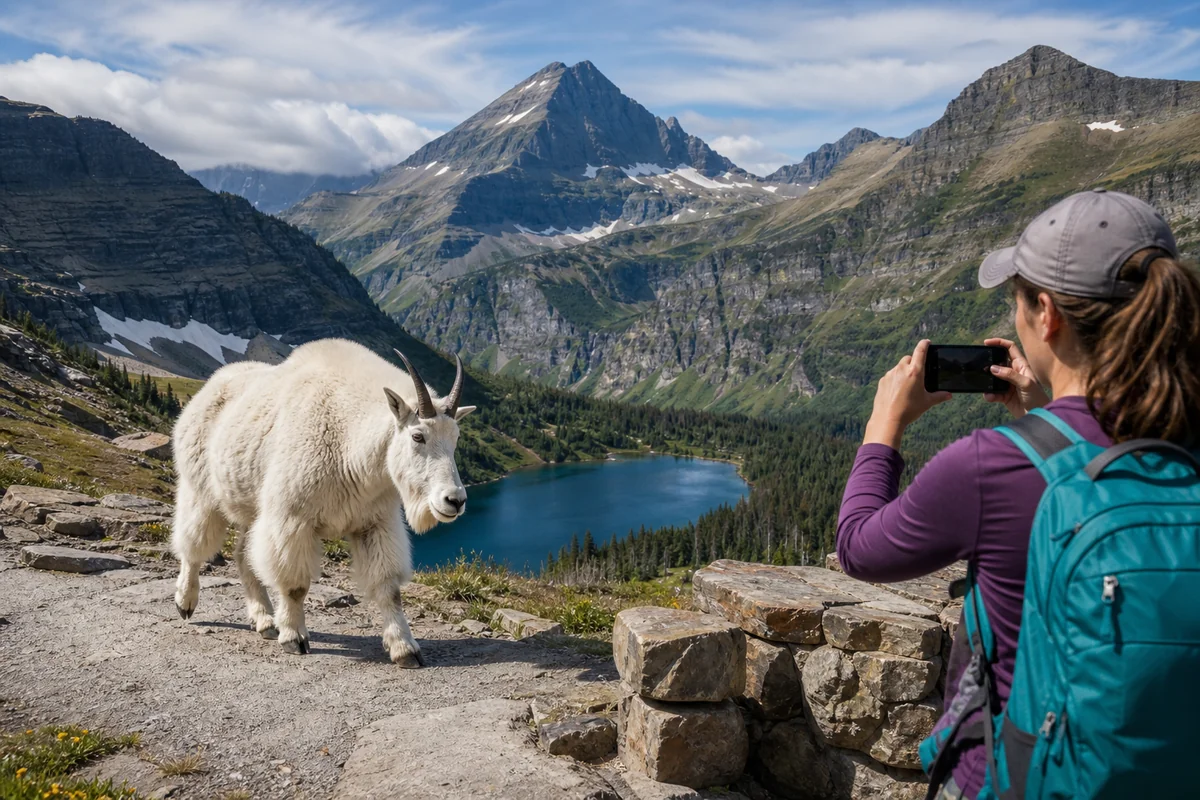
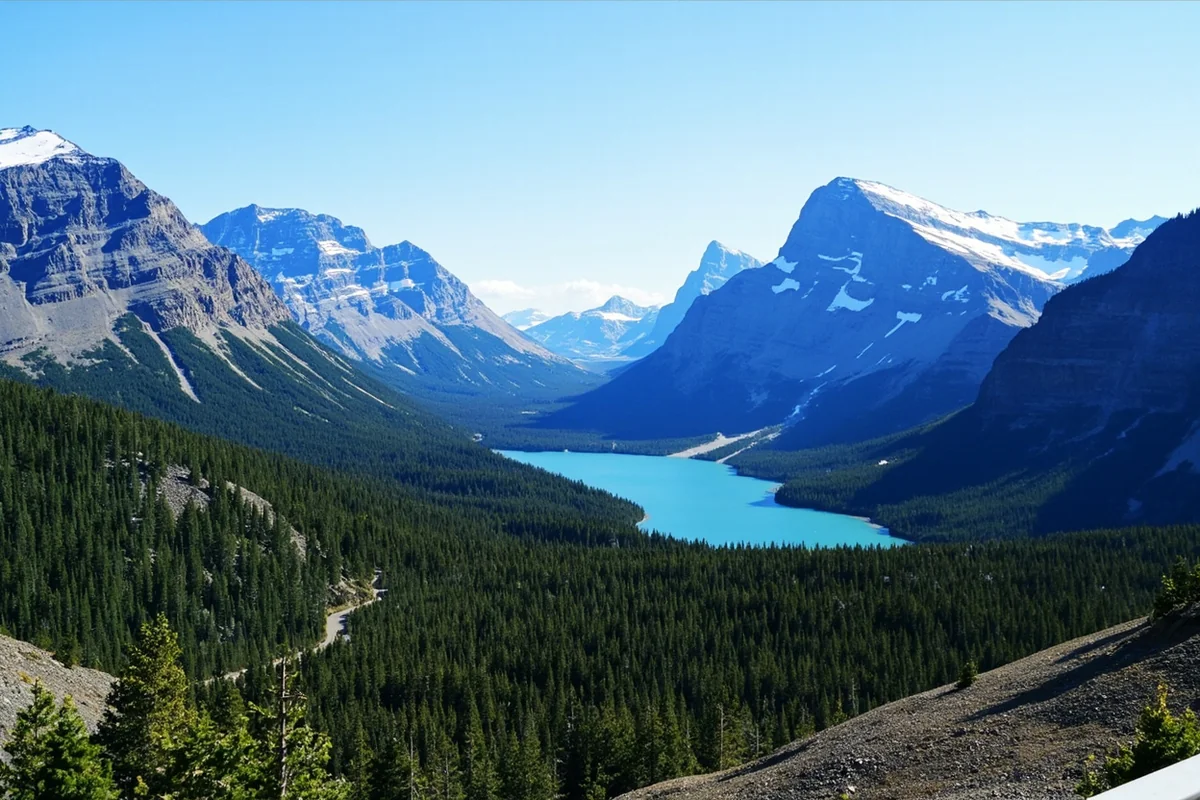
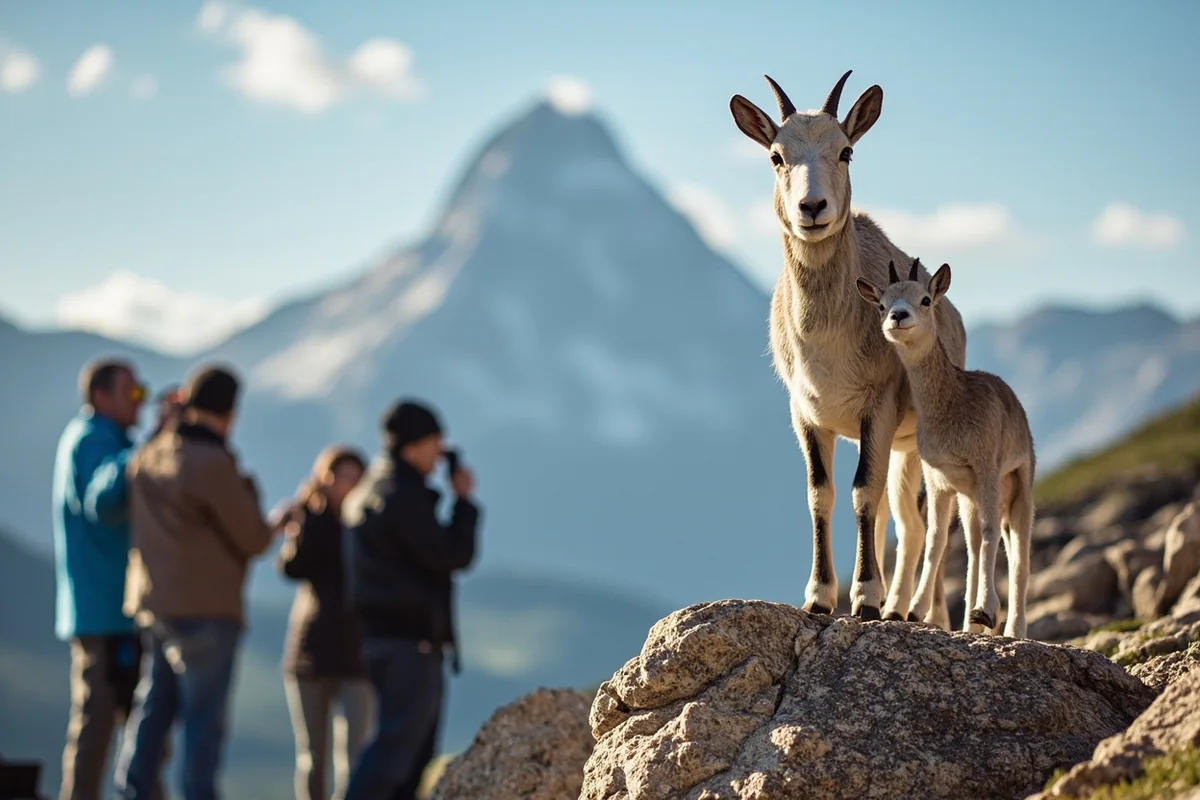
Standing at Logan Pass last August, watching a mountain goat casually stroll past tourists like it owned the place (it basically does), I realized that Glacier National Park isn’t just scenery — it’s a living textbook of geology, ecology, and human history that most visitors barely scratch.
After seven trips over the past decade, I’ve collected enough mind-blowing facts about this place to fill a book, but I’ve distilled the very best into this guide.
- Glacier National Park covers over 1 million acres with 700+ miles of trails
- The park has lost over 80% of its glaciers since 1850 — only 26 remain today
- Going-to-the-Sun Road took 11 years to build and crosses the Continental Divide
- The park’s rocks are 1.6 billion years old — some of Earth’s oldest exposed sedimentary rock
- Over 1,000 plant species and 70+ mammal species call the park home
- Peak season is July-August; vehicle reservations now required for Going-to-the-Sun Road corridor
Liked this article?
Add Roaming Montana as a preferred source so you see more of our articles and guides on Google.
Jaw-Dropping Geology Facts About Glacier National Park
1. The Rocks Are Ancient Beyond Comprehension
When I first learned that the exposed rocks in Glacier National Park are approximately 1.6 billion years old, I genuinely couldn’t wrap my head around it. These are among the oldest exposed sedimentary rocks on Earth, predating even the simplest multi-celled life forms.
The Belt Supergroup rocks you’ll see throughout the park formed when this entire region was covered by a shallow sea. During my hike to Grinnell Glacier, I ran my hands along striations in the rock face that were formed by ancient algae — stromatolites that represent some of Earth’s earliest life.
2. The Lewis Overthrust Is a Geological Marvel
Here’s a fact that blew my mind during a ranger talk at Logan Pass: the older rocks in Glacier actually sit on TOP of younger rocks. This shouldn’t happen according to basic geology principles.
The Lewis Overthrust, a massive geological event roughly 170 million years ago, pushed a slab of ancient rock over 50 miles eastward, sliding it on top of rocks that were hundreds of millions of years younger. Chief Mountain, visible from Many Glacier, is a “klippe” — an isolated remnant of this thrust sheet that erosion separated from the main formation.
3. The Park Contains Rocks From Four Different Eras
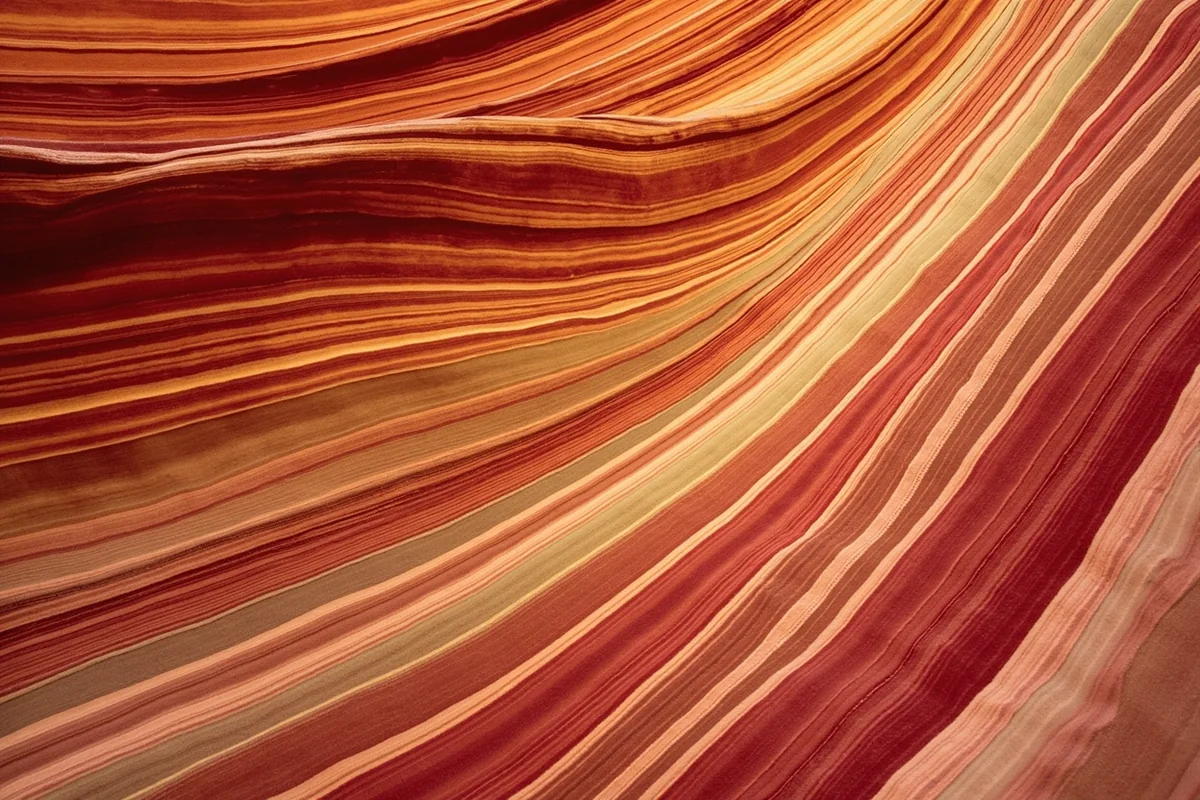
Walking through Glacier is like moving through a geological timeline. The four distinct colors you’ll notice — red, green, gray, and tan — each represent different sedimentary layers and conditions from that ancient sea.
The red rocks (Grinnell Formation) get their color from iron oxide, essentially rust. I always point this out to first-time visitors at Red Rock Falls on the Swiftcurrent Pass Trail — the vibrant crimson streambed looks almost otherworldly.
4. Glacier Carved These Mountains, Not Formed Them
Despite the name, the glaciers didn’t create the mountains in Glacier National Park. Tectonic forces pushed up the raw material millions of years ago. The glaciers simply sculpted what was already there during the Pleistocene ice ages.
During my conversations with park geologists, I learned that the classic “horn” peaks like Mount Reynolds and Mount Oberlin were carved by glaciers grinding away from multiple sides, creating their dramatic pointed shapes.
Glacier and Ice Facts That Will Surprise You
5. The Park Is Losing Its Namesake Glaciers
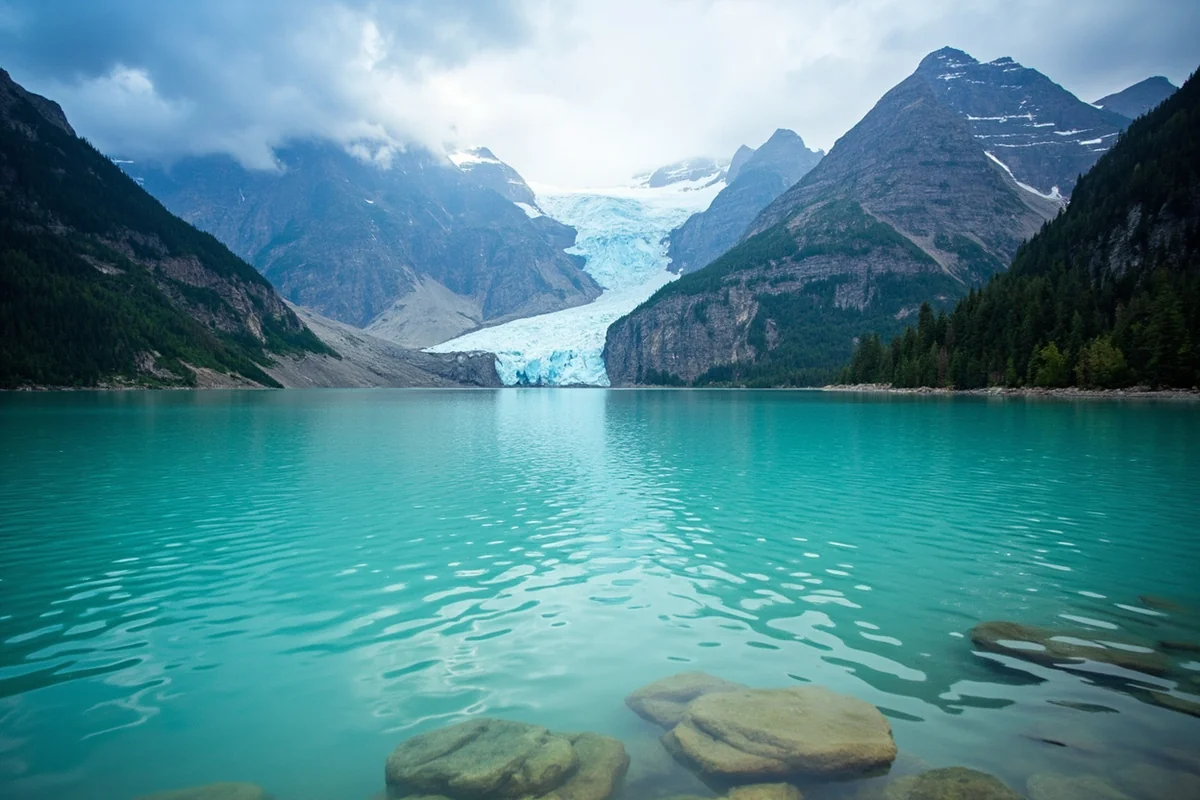
When Glacier National Park was established in 1910, researchers estimated approximately 150 glaciers existed within its boundaries. Today, only 26 glaciers remain, and they’re shrinking rapidly.
I visited Grinnell Glacier in 2015 and again in 2023. The difference was heartbreaking and unmistakable — the ice had retreated significantly, leaving behind more exposed gray rock and expanded glacial lakes.
6. Scientists Predict Glaciers Could Disappear by 2030
Early predictions suggested Glacier’s namesake ice would vanish by 2020. That didn’t quite happen, but current models indicate most glaciers will be too small to classify as glaciers (under 25 acres) within the next decade.
The park itself removed some of its “glaciers will be gone by 2020” signs, but this isn’t cause for celebration — it simply reflects the unpredictable nature of climate modeling, not a reversal of the trend.
7. A Glacier Must Meet Specific Criteria
Not every chunk of ice qualifies as a glacier. According to geological standards, a glacier must be at least 25 acres in size and show evidence of movement. Many of Glacier’s remaining ice bodies have become stagnant snowfields.
During a backcountry trip, a ranger explained that Sperry Glacier has become so thin that it may no longer move under its own weight — a prerequisite for true glacier classification.
8. Glacial Lakes Get Their Color From “Rock Flour”
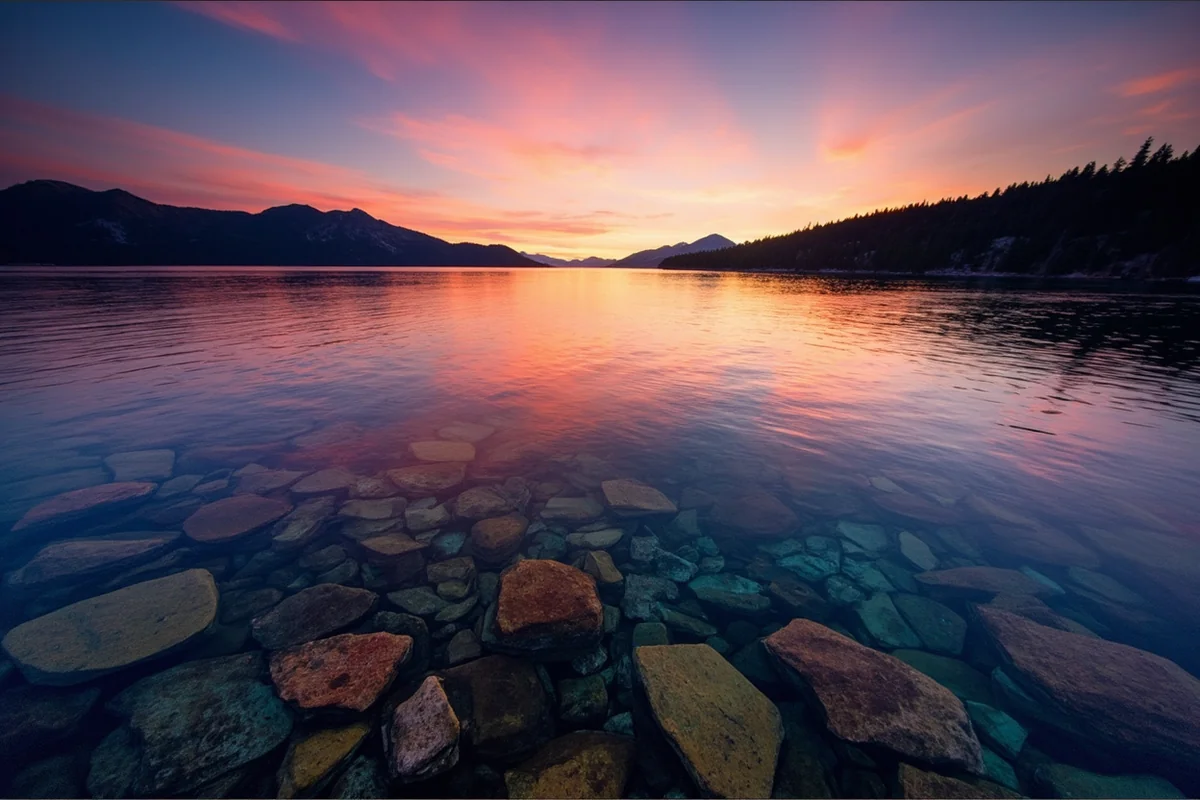
Those impossibly turquoise lakes like Lake McDonald, St. Mary Lake, and Grinnell Lake aren’t Photoshopped. The color comes from glacial flour — rock ground into fine powder by glacier movement.
These suspended particles reflect blue and green light wavelengths, creating that distinctive milky turquoise appearance. On my most recent visit, Lake McDonald’s west end appeared deep blue-green while the east end (further from active glaciers) was noticeably clearer.
9. Some Lakes Are Over 400 Feet Deep
Lake McDonald, the park’s largest lake at nearly 10 miles long, plunges to 472 feet at its deepest point. That’s deeper than most people realize when they’re skipping stones on its rocky shores.
St. Mary Lake reaches 292 feet deep, while Two Medicine Lake drops to 312 feet. During my kayaking trip on Two Medicine, the depth was palpable — the water turned from emerald to nearly black within feet of shore.
Going-to-the-Sun Road: Engineering Marvel Facts
10. Construction Took 11 Years
Building the 50-mile Going-to-the-Sun Road from 1921 to 1932 was an engineering feat that required blasting through solid rock, constructing retaining walls with no modern equipment, and solving countless seemingly impossible problems.
When I drive this road, I try to imagine workers dangling from ropes, drilling holes for dynamite by hand. At one point, construction progressed just 100 feet per month through the hardest rock sections.
11. The Road Crosses the Continental Divide
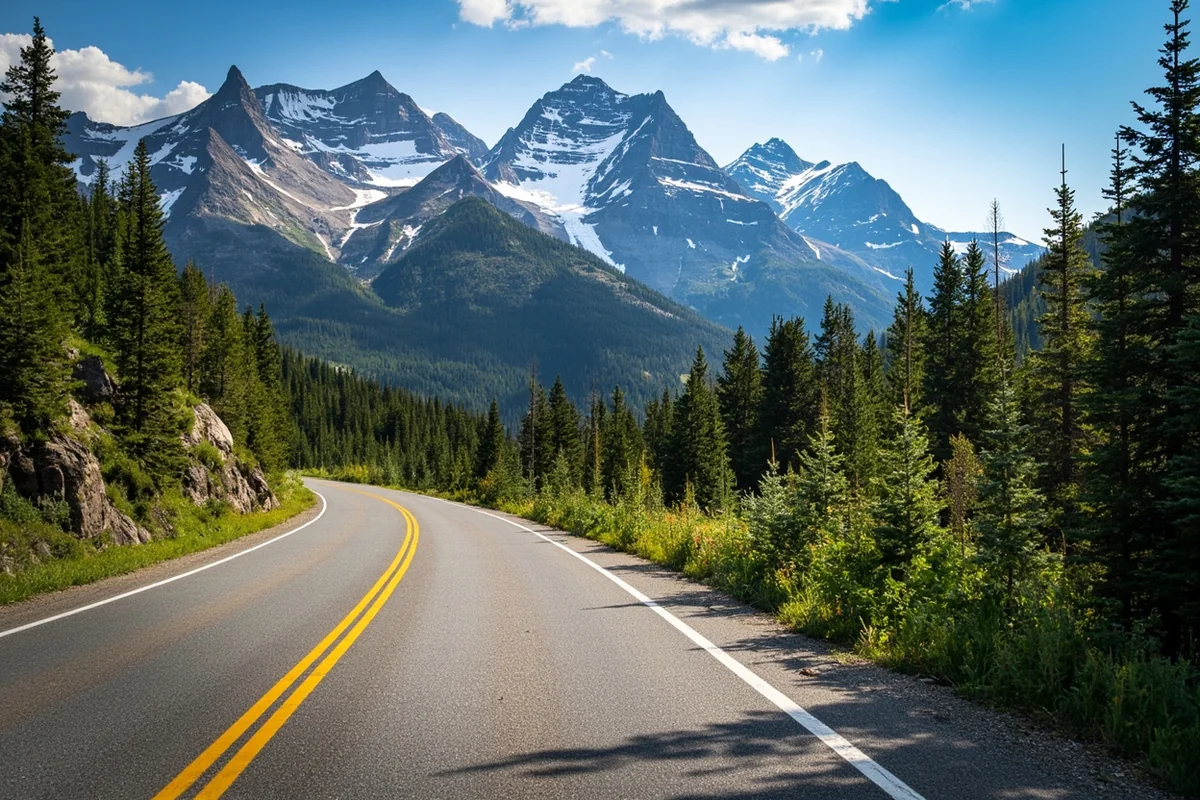
At Logan Pass (elevation 6,646 feet), Going-to-the-Sun Road crosses the Continental Divide. Water falling on the west side of this line eventually reaches the Pacific Ocean, while water on the east side flows to the Atlantic.
This isn’t just trivia — it fundamentally shapes the park’s ecosystems. I’ve noticed the west side tends to be lusher and greener, receiving more Pacific moisture, while the east side feels more exposed and windswept.
12. Vehicle Restrictions Exist for Safety
Vehicles over 21 feet long and 8 feet wide are prohibited on the central portion of Going-to-the-Sun Road between Avalanche Creek and the Sun Point parking area. This isn’t arbitrary — the road’s hairpin turns and narrow passages physically cannot accommodate larger vehicles.
I’ve watched rangers politely but firmly turn back RVs that somehow made it past the warning signs. The pullouts at these turn-around points are chaos during peak season.
13. The Road Is a National Historic Landmark
Going-to-the-Sun Road achieved National Historic Landmark status in 1985, recognizing its engineering significance and seamless integration with the natural landscape. It’s also a National Civil Engineering Landmark.
What impresses me most is how the road’s designers prioritized aesthetics. The stone guardrails and retaining walls use native materials that blend rather than clash with the surroundings.
14. Plowing Takes Months Each Spring
Snow removal on Going-to-the-Sun Road typically begins in April and continues through June or even early July. At the snowiest sections near Logan Pass, plows encounter drifts exceeding 80 feet deep.
During a May visit, I hiked the closed road to Big Drift — a legendary snow accumulation zone where crews carve through walls of white taller than a six-story building. It’s surreal and worth the effort.
| Going-to-the-Sun Road Section | Distance | Key Viewpoints |
|---|---|---|
| West Entrance to Lake McDonald Lodge | 10 miles | Lake McDonald, Apgar Village |
| Lake McDonald Lodge to The Loop | 12 miles | Trail of the Cedars, Avalanche Lake Trailhead |
| The Loop to Logan Pass | 8 miles | Weeping Wall, Garden Wall, Big Drift area |
| Logan Pass to St. Mary | 18 miles | Jackson Glacier Overlook, Wild Goose Island, Sun Point |
Wildlife Facts From the Crown of the Continent
15. Grizzly Bears Number Around 300
Glacier National Park supports one of the healthiest grizzly bear populations in the lower 48 states, with approximately 300 grizzlies roaming the park’s million-plus acres.
I’ve encountered grizzlies three times during my visits — each time at a safe distance, each time utterly thrilling. The park’s healthy population is a conservation success story worth celebrating.
16. Mountain Goats Are the Park’s Most Visible Large Mammal
While bears grab headlines, mountain goats steal the show at Logan Pass. These shaggy white creatures have become remarkably habituated to humans, often approaching within feet of hikers.
During my last summer visit, a nanny goat and kid blocked the Hidden Lake Overlook trail for 20 minutes, completely unbothered by the growing crowd of photographers. Rangers remind visitors that approaching wildlife is illegal and dangerous — let them come to you.
17. Wolverines Live Here (But You Probably Won’t See One)
Glacier supports a small but viable wolverine population, making it one of the best places in the continental US to find these elusive creatures. “Best” is relative, though — in all my visits, I’ve never spotted one.
Wolverines require vast wilderness areas and are incredibly shy. Researchers estimate only a few dozen live within park boundaries.
18. Over 270 Bird Species Have Been Documented
From harlequin ducks riding McDonald Creek’s rapids to golden eagles soaring above the alpine, Glacier’s avian diversity is remarkable. The park lies within a major migratory corridor.
I particularly love watching American dippers (water ouzels) at McDonald Falls — these small gray birds literally walk underwater, hunting aquatic insects in fast-flowing streams.
19. Bull Trout Are Fighting for Survival
Bull trout, a threatened species, still swim in Glacier’s cold, clear waters. These fish require specific conditions — clean gravel for spawning, water temperatures below 55°F, and connected habitats.
Lake McDonald once supported bull trout that grew over 30 pounds. Introduced lake trout (a predatory non-native species) have devastated the population, but park biologists are working on restoration.
20. The Ptarmigan Is a Master of Camouflage
White-tailed ptarmigan live in Glacier’s high alpine areas, changing their plumage from mottled brown in summer to pure white in winter. They’re nearly invisible against the rocks and snow.
I spent an hour searching for ptarmigan near Hidden Lake Overlook before realizing I’d been staring at one for several minutes — it looked exactly like a lichen-covered rock until it moved.
Native American History and Cultural Facts
21. The Blackfeet Called This “The Backbone of the World”
The Blackfeet Nation, whose reservation borders Glacier’s eastern boundary, traditionally called these mountains “Miistakis” — the Backbone of the World. The name reflects the range’s spiritual and physical significance.
Standing at Two Medicine Lake, I felt the weight of this name. The peaks rising above felt less like scenery and more like the skeleton holding up the sky.
22. Multiple Tribes Consider This Land Sacred
The Blackfeet, Salish, Kootenai, and Pend d’Oreilles peoples all have historical and spiritual connections to what became Glacier National Park. The land was used for hunting, fishing, gathering medicinal plants, and conducting sacred ceremonies.
Treaty negotiations in the 1890s opened the area for mining prospecting, though the Blackfeet specifically retained certain rights. This complicated history deserves thoughtful consideration from every visitor.
23. Some Traditional Names Are Being Restored
Several park features carry names that reflect their Indigenous heritage. Two Medicine Valley, for example, references a Blackfeet story about two medicine lodges established on opposite sides of the lake.
I appreciate the park’s growing efforts to acknowledge Native place names and stories alongside — or instead of — names given by European explorers and surveyors.
24. The Blackfeet Reservation Offers Complementary Experiences
The Blackfeet Nation operates cultural experiences, including the Museum of the Plains Indian in Browning and guided tours led by tribal members. These provide context that enriches any park visit.
I highly recommend spending time in Browning before or after your Glacier trip. The perpective shifts how you see everything in the park.
Human History and Park Establishment Facts
25. Glacier Became a National Park in 1910
President William Howard Taft signed the legislation establishing Glacier as America’s tenth national park on May 11, 1910. The Great Northern Railway was instrumental in lobbying for the park’s creation.
The railroad’s motivations weren’t purely conservationist — they wanted to generate tourism revenue. Still, their marketing coined the phrase “See America First” and helped create the infrastructure that still serves visitors today.
26. The Great Northern Railway Built Many Lodges
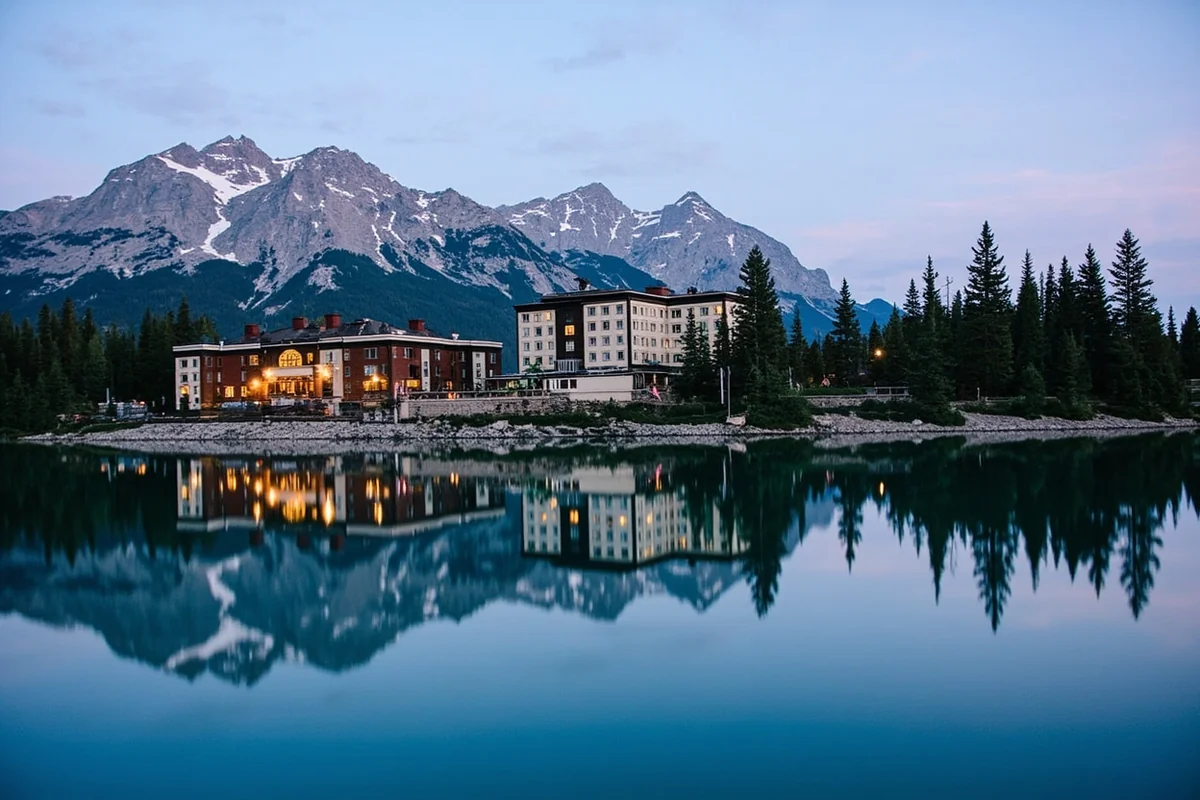
Many Glacier Hotel, Lake McDonald Lodge, Granite Park Chalet, and Sperry Chalet were all developed by the Great Northern Railway to attract wealthy tourists traveling by train.
Staying at Many Glacier Hotel, despite its creaky floors and occasional quirks, transports you back to the early 1900s. The Swiss chalet architecture was intentional — railroad marketing compared Glacier to the Swiss Alps.
27. Historic Chalets Require Advance Planning
Granite Park Chalet and Sperry Chalet, both reached only by trail, offer backcountry lodging with prepared meals and beds (no tent required). Reservations fill within hours of opening.
I finally secured Sperry Chalet reservations after years of trying. The 6.7-mile hike is worth every step, especially when you arrive to a hot dinner and warm bed. Book at exactly 8:00 AM MT on the opening date — even seconds matter.
28. The Civilian Conservation Corps Left Its Mark
Many of Glacier’s trails, campgrounds, and facilities were built by Civilian Conservation Corps workers during the Great Depression. The craftsmanship of their stonework and log structures remains impressive.
The stone guardrails along Going-to-the-Sun Road, hand-cut from local rock, required skills that would be prohibitively expensive to replicate today.
Trail and Backcountry Facts
29. Over 700 Miles of Trails Await
Glacier National Park maintains approximately 734 miles of trails, ranging from wheelchair-accessible boardwalks to rugged backcountry routes that cross high passes and ford glacial streams.
I’ve hiked maybe 200 miles of these trails over the years, and I still discover new favorites. The diversity is staggering — rainforest-like cedar groves, alpine wildflower meadows, and wind-scoured ridges above treeline.
30. Highline Trail Is the Park’s Most Popular
The Highline Trail, starting at Logan Pass and traversing the Garden Wall, sees enormous traffic for good reason. The 11.8-mile one-way hike (with shuttle return) offers consistent stunning views and frequent wildlife sightings.
My tip: start early (before 7 AM) and hike north. Most people congregate near Logan Pass, so the trail thins dramatically after the first few miles.
31. Backcountry Permits Require Planning
Backcountry camping in Glacier requires permits, which become available via advance reservation in mid-March and through walk-up availability during your trip. Popular campsites like those on the Gunsight Pass route book immediately.
I learned the hard way that showing up expecting walk-up permits during peak season is risky. Build flexibility into your itinerary or secure advance reservations.
32. Bear Safety Is Non-Negotiable
Every hiker should carry bear spray, know how to use it, and make noise on the trail. Glacier is serious bear country, and encounters happen regularly.
During a 2019 hike to Iceberg Lake, I rounded a blind corner and found myself 50 feet from a feeding grizzly. Speaking calmly and slowly backing away worked — but those seconds felt like hours.
33. Some Trails Require Creek Crossings
Many Glacier-area trails like Ptarmigan Tunnel involve fording creeks that run cold and fast with snowmelt. By late summer, water levels drop, but early season crossings can be thigh-deep.
I always carry camp sandals for crossings and trekking poles for stability. Hypothermia from a fall into glacial water is a real risk, not just discomfort.
Ecosystem and Plant Life Facts
34. Glacier Is the “Crown of the Continent”
Naturalist George Bird Grinnell coined this phrase, recognizing that Glacier sits at the meeting point of three major watersheds — waters here eventually reach the Pacific Ocean, Atlantic Ocean (via the Gulf of Mexico), and Arctic Ocean (via Hudson Bay).
Triple Divide Peak, accessible via a strenuous hike, is the literal point where these three watersheds meet. It’s one of only two such points in North America.
35. Over 1,000 Plant Species Grow Here
From tiny alpine forget-me-nots to towering western red cedars, Glacier supports extraordinary botanical diversity. The park spans multiple life zones, from valley-bottom forests to Arctic-like tundra.
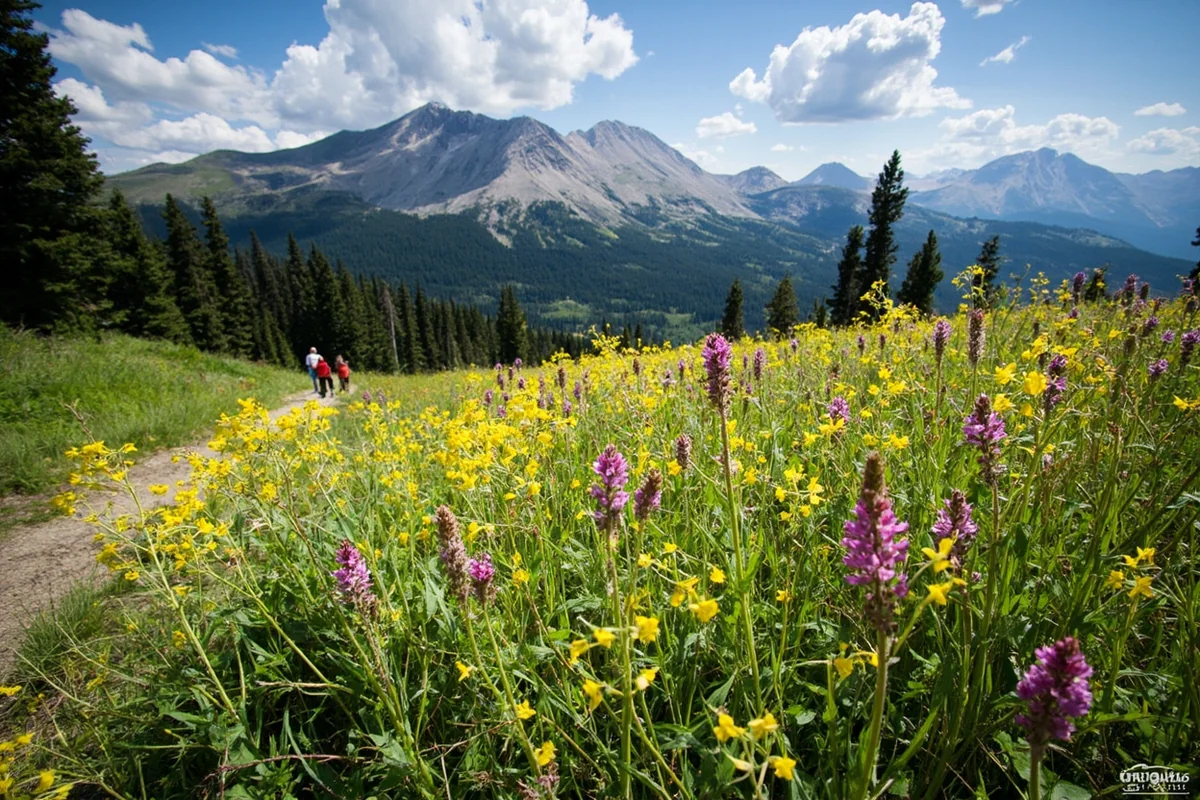
The wildflower peak at Logan Pass, typically mid-July to early August, transformed my understanding of “meadow.” Beargrass, paintbrush, glacier lilies, and dozens of species I couldn’t name carpeted every visible slope.
36. Huckleberries Are a Local Obsession
Huckleberries (closely related to blueberries) thrive throughout Glacier, particularly in recently burned areas where sunlight reaches the forest floor. The berries are central to local culture — and local bear diets.
I’ve picked huckleberries along trails in late August, though always while making noise and staying aware. Bears and humans compete for the same patches, and bears have priority.
37. Whitebark Pines Are Dying
Climate change and an invasive fungus (white pine blister rust) are devastating whitebark pine populations throughout Glacier. These slow-growing trees provide critical food for grizzly bears and Clark’s nutcrackers.
Walking through ghost forests of dead whitebark pines near Siyeh Pass is sobering. It’s a visible reminder that climate change isn’t abstract — it’s killing trees I can touch.
Climate and Weather Facts
38. Weather Changes Dramatically and Rapidly
I cannot overemphasize this: Glacier’s weather can shift from sunny to snowing within an hour, any month of the year. Logan Pass has recorded snow in every calendar month.
During a July hike to Iceberg Lake, I started in shorts and ended huddled behind a rock in my emergency rain jacket while hail pelted down. Always pack layers, rain gear, and sun protection — all in the same daypack.
39. The West Side Is Wetter Than the East
Moisture-laden Pacific air rises over the park’s mountains, dropping rain and snow primarily on the western slopes. Average precipitation at Lake McDonald exceeds that at St. Mary by roughly 50%.
This explains why the Trail of the Cedars feels like a Pacific Northwest rainforest while the prairies outside St. Mary feel like Montana’s eastern plains.
40. Winter Brings 30+ Feet of Snow
Logan Pass accumulates an average of 450 inches of snow annually — over 37 feet. Some years bring significantly more. This snowpack feeds the remaining glaciers, though recent warm winters have reduced accumulation.
I’ve visited in winter exactly once, snowshoeing near Apgar. The silence was profound, and the park felt utterly different — wild and empty in the best possible way.
Practical and Planning Facts
41. Vehicle Reservations Are Now Required
Starting in 2022, visiting the Going-to-the-Sun Road corridor during peak hours (6 AM to 4 PM) requires a vehicle reservation during peak season. Reservations release in batches and sell out quickly.
This system has significantly improved the experience for those who plan ahead. Gone are the 3-hour entry lines I experienced in 2019. Check the park website for current reservation dates and procedures.
42. The Park Spans Over 1 Million Acres
Glacier National Park encompasses 1,013,322 acres — larger than the state of Rhode Island. Yet most visitors experience only the Going-to-the-Sun Road corridor and immediate trailheads.
Venturing to areas like Bowman Lake, Kintla Lake, or the remote North Fork region reveals a different park entirely — quieter, wilder, and utterly magnificent.
43. Waterton-Glacier Is an International Peace Park
In 1932, Glacier National Park and Canada’s Waterton Lakes National Park were designated together as the world’s first International Peace Park, recognizing that nature doesn’t respect political boundaries.
You can hike from Glacier into Canada via the Goat Haunt area, though border crossing procedures apply. It’s a powerful reminder that conservation works best when nations cooperate.
Bonus Facts for True Glacier Enthusiasts
44. Glacier Has Its Own Astronomy Programs
The park’s dark skies support stargazing programs through summer. Logan Pass at night, with zero light pollution, reveals the Milky Way in spectacular detail.
I attended a ranger-led telescope viewing at Apgar that showed Saturn’s rings clearly. The program requires patience (it doesn’t start until full dark) but rewards it magnificently.
45. Red Bus Tours Date Back Decades
The iconic red “jammer” buses, with their roll-back canvas tops, have been operating since the 1930s. Named for their drivers’ gear-jamming transmissions, these vintage vehicles offer a unique way to experience Going-to-the-Sun Road.
I’ve taken a Red Bus tour twice — once to relax and photograph without driving, once with elderly family members who couldn’t hike. Drivers share excellent commentary and handle the road conditions expertly.
46. The Park Shares Its Name With a Florida Park
Montana’s Glacier National Park is occasionally confused with Glacier National Park in Patagonia, Argentina, or Florida’s Glacier Creek Preserve. When booking, confirm you’re headed to the right location.
I mention this because I’ve met visitors who genuinely thought they were in a different park when arriving. Montana’s version is the famous one — plan accordingly.
Making the Most of Your Glacier Visit
After all these facts, here’s what matters most: Glacier National Park rewards preparation and punishes rushed visits. Give yourself at least three full days, ideally a week or more.
Stay inside the park if possible — rooms at Many Glacier Hotel, Lake McDonald Lodge, or the campgrounds put you at trailheads before crowds arrive. East Glacier and West Glacier offer additional lodging just outside park boundaries.
Visit in September if you can handle potential trail closures and weather uncertainty. The crowds thin dramatically after Labor Day, fall colors begin, and the light turns golden. My September visits have been uniformly the best.
Most importantly, get out of your car. The viewpoints are wonderful, but Glacier reveals its true character only to those willing to walk into it. Even a two-mile hike to Avalanche Lake will show you more than any windshield tour.
This park changed how I see Montana, how I think about wilderness, and how I understand geological time. I suspect it will do the same for you.
Frequently Asked Questions
What is the best time to visit Glacier National Park to see everything open?
The best time to visit Glacier National Park with full access is mid-July through mid-September when the Going-to-the-Sun Road is completely open. I recommend late July for wildflowers and August for the most predictable weather, though expect larger crowds during these peak months.
How much does it cost to enter Glacier National Park in 2024?
Glacier National Park charges $35 per vehicle for a 7-day pass, or you can purchase an annual America the Beautiful pass for $80 that covers all national parks. Motorcycle entry is $30, and walk-in or bicycle access costs $20 per person.
How far is Glacier National Park from major Montana cities like Missoula and Bozeman?
Glacier National Park’s west entrance is approximately 150 miles (about 2.5 hours) north of Missoula and roughly 290 miles (4.5 hours) from Bozeman. Most visitors fly into Glacier Park International Airport in Kalispell, which is only 30 miles from the park entrance.
Do I need a reservation to drive the Going-to-the-Sun Road?
Yes, from late May through mid-September, you’ll need a vehicle reservation to enter the Going-to-the-Sun Road corridor between 6 AM and 3 PM. Reservations are released on Recreation.gov in batches, and I recommend booking as soon as they become available since they sell out within minutes.
What should I pack for a summer trip to Glacier National Park?
Pack layers including a warm fleece and rain jacket since temperatures can drop 30 degrees between valley floors and mountain passes. I always bring bear spray ($40-50 at park stores), sturdy hiking boots, plenty of water, and sun protection since UV exposure is intense at higher elevations.
How many glaciers are actually left in Glacier National Park?
Glacier National Park currently has approximately 26 named glaciers remaining, down from an estimated 150 glaciers in 1850. Scientists predict most glaciers could disappear by 2030, making now an important time to witness these ancient ice formations before they’re gone.
Is Glacier National Park safe to visit with bears around?
Glacier is home to both grizzly and black bears, but the park is safe when you follow proper precautions like carrying bear spray and hiking in groups. I always make noise on trails, store food in bear-proof containers, and stay at least 100 yards from any bears I encounter.