I’ve stood on the shore of Flathead Lake in a July heat wave watching cherry pickers work the orchards across the water, and I’ve followed rock cairns across open Beartooth tundra to a lake so remote I never saw another hiker. Montana doesn’t have one lake personality — it has fifty-seven of them, at least, and I’ve made a point of getting to know every one on this list myself.
This is the most complete Montana lakes guide I’ve been able to put together — 57 lakes across nine regions, from Flathead Lake’s 200 square miles of sailboats and cherry orchards to a Beartooth alpine lake with no maintained trail at all. Every lake below links to its own full guide covering access, fishing, camping, water temperature, and the honest details other sites skip. I’ve organized this by region rather than by “top 10,” because a trip built around Glacier National Park looks nothing like a trip built around the Beartooth high lakes, and you deserve a guide that reflects that rather than a generic ranked list.
Liked this article?
Add Roaming Montana as a preferred source so you see more of our articles and guides on Google.
Why Montana’s Lakes Deserve Their Own Trip
Most people plan a Montana trip around Glacier National Park or Yellowstone and treat the lakes as scenery along the way — a pull-off for a photo, maybe a picnic. I’ve made that mistake myself, on my first trip through in my twenties, and I regret every lake I drove past without stopping.
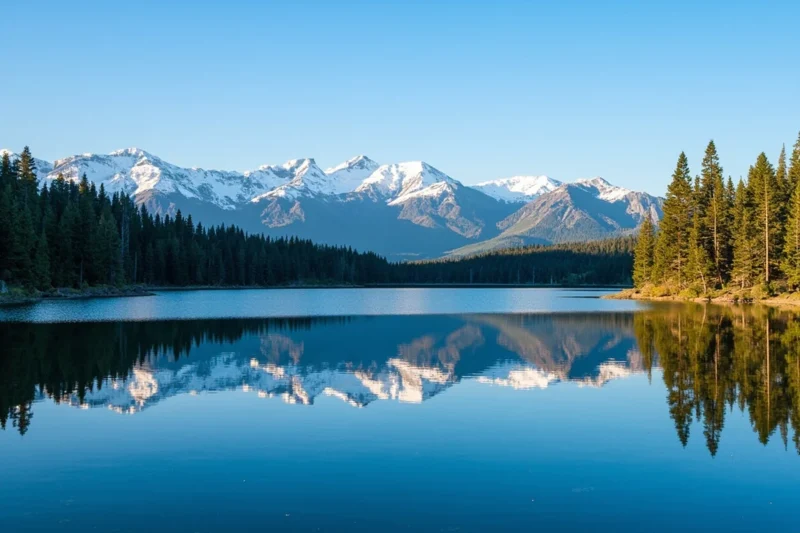
The truth is that Montana’s lakes are the trip, not the backdrop to it. This is a state carved by Ice Age glaciers that retreated roughly 12,000 to 15,000 years ago, leaving behind basins that filled with some of the clearest, coldest water in the Lower 48.
Add in a handful of 20th-century dam projects on the Missouri and Kootenai rivers, and you get a lake system that ranges from a 130-mile-long reservoir with its own inland sea feel to a 106-acre alpine pool you can only reach by a 4.6-mile hike.
I’ve spent more than a decade making a point of visiting Montana across every season, and the lakes are where that seasonal difference shows up most dramatically.
A lake that’s a sun-baked swimming hole in August can be a frozen, wind-scoured plain in February with ice fishermen scattered across it like punctuation marks.
This guide is built region by region, the way I’d actually plan a road trip, so you can pick a corner of the state and go deep rather than trying to see all 55+ in one summer (I’ve tried — don’t).
How I Organized This List
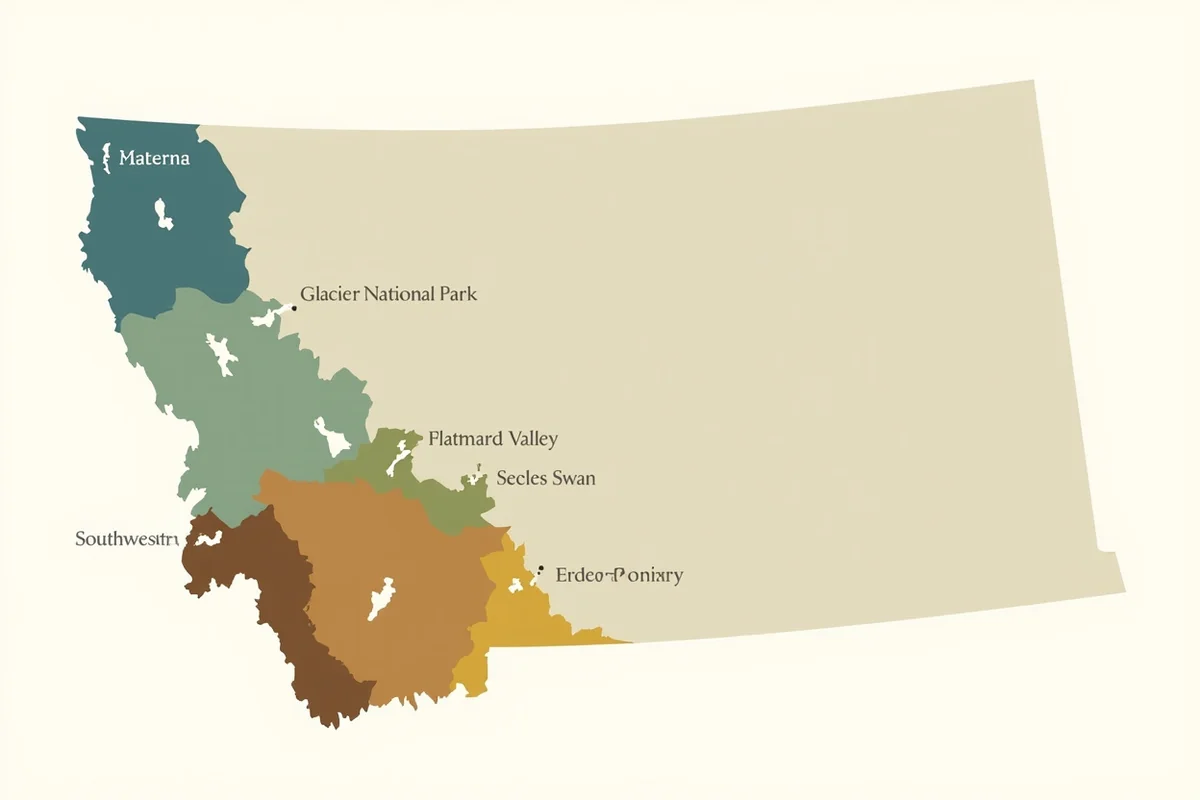
Montana’s official tourism regions are Glacier Country, Central Montana, Missouri River Country, Southeast Montana, Southwest Montana, and Yellowstone Country.
Lakes don’t always respect those boundaries neatly, so I’ve grouped them the way travelers actually experience them: by drive time and shared access points, plus a few regions built around a specific trail system rather than geography alone.
Every one of these 57 lakes links to its own full write-up — unlike some guides that send you to a different site entirely for half their “top 10” lakes. If you’re basing yourself in Kalispell, the Flathead Valley section below is your whole trip.
If you’re doing the Beartooth Highway, skip straight to the Beartooth High Lakes section — six lakes strung along two connected trail systems that most visitors never realize exist beyond the one or two most famous names.
Glacier National Park Lakes
Glacier holds roughly 762 named lakes within its boundaries. You’ll only ever see a fraction of them, but these fifteen are the ones worth building a hiking or driving day around.
- Lake McDonald — the park’s largest lake, ten miles long, and the first thing most visitors see coming in the west entrance.
- St. Mary Lake — the second-largest, on the drier east side, with the best wind and the best light I’ve photographed in the park.
- Avalanche Lake — a 4.6-mile round-trip hike from the Trail of the Cedars to a lake fed by hanging waterfalls.
- Two Medicine Lake — the quietest of Glacier’s developed areas and my personal pick for solitude.
- Bowman Lake — a rough gravel road keeps the crowds down in the North Fork.
- Kintla Lake — the most remote drive-to lake in the park, right up against the Canadian border country.
- Grinnell Lake — that impossible turquoise color, reached by trail or boat shuttle from Many Glacier.
- Swiftcurrent Lake — postcard views of the Many Glacier Hotel right from the shoreline.
- Lake Sherburne — a reservoir with dramatically different water levels by season, and no boat ramp at all.
- Hidden Lake — the payoff at the end of the boardwalk trail from Logan Pass, where a sitting vice president once fished.
- Lake Josephine — the easiest backcountry lake in the entire park, a mile’s walk from Many Glacier Hotel.
- Fishercap Lake — a five-minute walk from the trailhead and one of my best moose sightings in the park.
- Leigh Lake — not the Many Glacier pond of the same name, but a genuinely wild Cabinet Mountains lake near Libby with an unmeasured depth.
- Waterton Lake — straddles the U.S.-Canada border into Waterton Lakes National Park; bring your passport.
- Iceberg Lake — genuine floating ice in July, thanks to a shadow cast by 3,000 feet of surrounding peaks.
Flathead Valley & Northwest Montana Lakes
This is Montana’s lake country in the way people mean it when they picture the state — cherry orchards, sailboats, and mountains on every horizon.
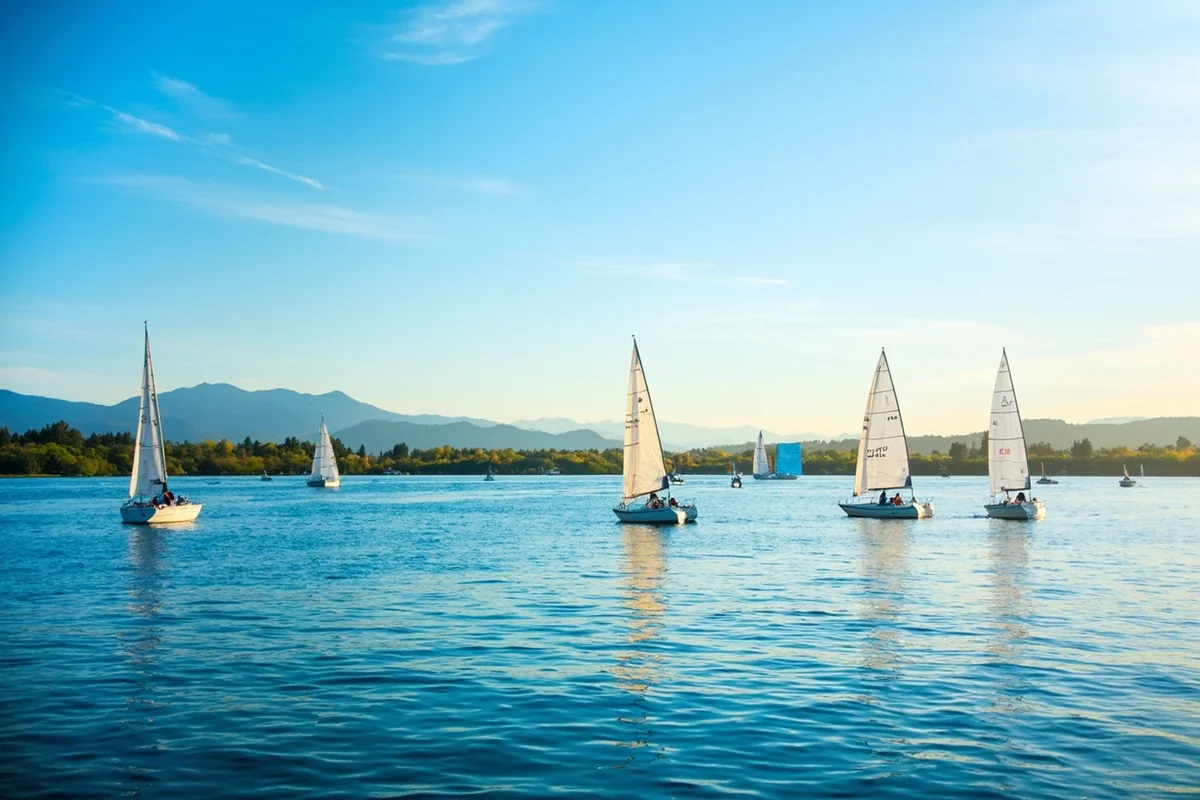
- Flathead Lake — the largest natural freshwater lake west of the Mississippi, and the anchor of this whole region.
- Whitefish Lake — five square miles, a sandy city beach, and the closest lake to Whitefish Mountain Resort.
- Tally Lake — Montana’s deepest lake, and warmer than it has any right to be thanks to tannin-stained water.
- McGregor Lake — spring-fed and genuinely cold, with visibility down to 35 feet.
- Ashley Lake — the second-cleanest lake in the state; some residents drink straight from it.
- Echo Lake — groundwater-fed and noticeably warmer than its Flathead Valley neighbors.
- Swan Lake — strung along Highway 83 between the Swan and Mission ranges, with a “wild ice” skating tradition in winter.
- Lake Alva — part of the Clearwater Chain, with a campground that sits right next to the Holland Falls Trail.
- Little Bitterroot Lake — home to a genuinely strange local legend: a jilted man’s abandoned “castle.”
- Loon Lake — small, remote, and open year-round for ice fishing near Libby.
- Horseshoe Lake — one of the only wake-permitted lakes in the otherwise quiet Thompson Chain.
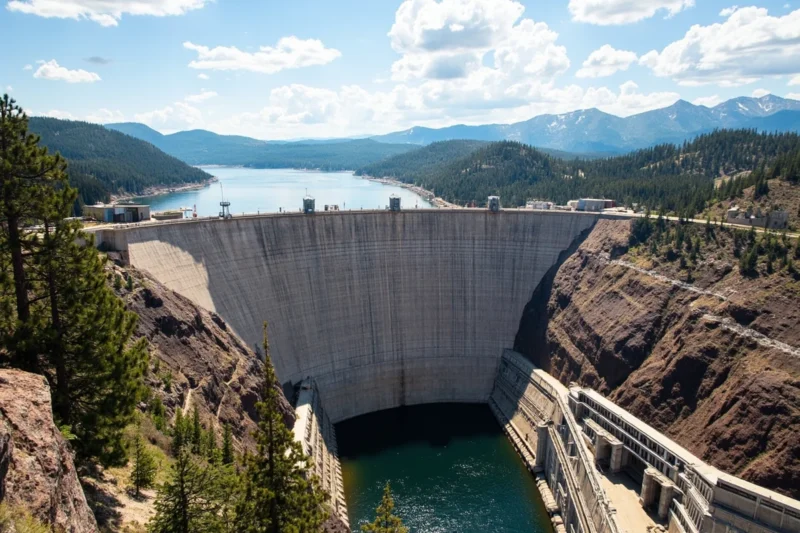
- Hungry Horse Reservoir — a dam once targeted in a real Cold War sabotage plot.
- Lake Koocanusa — a binational reservoir named for a 1970s naming contest, with the Koocanusa Bridge as its signature landmark.
- Thompson Chain of Lakes — 18 named lakes strung along 20 miles of Highway 2.
- Duck Lake — on the Blackfeet Reservation, technically outside Glacier’s boundary, with an 8-pound average trout size and a separate tribal permit requirement.
Seeley-Swan, Missoula & Bitterroot Lakes
An hour east of Missoula, the Seeley-Swan Valley is its own little lake district, and the Bitterroot Valley to the south hides one of the best swimming lakes in the state.
- Seeley Lake — the hub of the Clearwater chain, with a canoe trail that’s one of the best beginner paddles in western Montana.
- Salmon Lake — smaller and quieter than Seeley, minutes away but far less crowded.
- Holland Lake — a three-mile trail from the lodge leads to Holland Falls, one of my favorite short hikes in the state.
- Lake Como — a Bitterroot National Forest reservoir with a genuine, rare-for-Montana sandy beach.
Southwest Montana & Yellowstone Country Lakes
This is earthquake country, mining country, and some of the best fly fishing water in the state, all wrapped around a handful of lakes with real geological stories.
- Hebgen Lake — forever tied to the 1959 earthquake, with submerged “ghost forest” trees still visible in the shallows.
- Quake Lake — formed in weeks by that same earthquake, with a genuine “tree cemetery” fishery downstream.
- Mystic Lake — a hydroelectric reservoir with one of the largest sandy beaches anywhere in the Beartooths.
- Georgetown Lake — a mining-era reservoir that flushes itself clean through a genuinely clever bottom-draw dam design.
- Ennis Lake — locals still call it “Meadow Lake” decades after the official rename.
Central Montana & Missouri River Lakes
The chain of reservoirs behind Canyon Ferry, Hauser, and Holter dams turned a stretch of the Missouri River into some of the best boating and fishing water near Helena, and the plains hold a couple of surprising gems too.
- Canyon Ferry Lake — named for a literal ferryman who crossed this stretch of river in 1865, nine decades before the dam existed.
- Hauser Lake — close enough to Helena to see the capitol dome from the water.
- Holter Lake — 25 miles of shoreline with zero state-park-run access points; everything here is BLM.
- Crystal Lake — sits on porous limestone that literally drains the lake from below.
- Freezeout Lake — up to 300,000 snow geese lift off together here every March.
Eastern Montana & Hi-Line Lakes
The plains don’t get the glacial lakes of the west, but they have something the mountains don’t: Montana’s single largest body of water, plus a couple of quiet reservoirs most travelers never think to visit.
- Fort Peck Lake — the largest lake in Montana by surface area, with more shoreline than the entire California coast.
- Fresno Reservoir — a Hi-Line fishing reservoir near Havre, its campground kept running by a volunteer walleye club.
- Lake Elwell — also called Tiber Reservoir, home to Montana’s state-record 17-pound walleye.
- Hailstone Lake — an unstaffed wildlife refuge that was the site of a genuine 1885 battle.
Blackfeet Reservation & Border Lakes
One lake here, and it’s genuinely one of the best-kept fishing secrets on this entire list.
- Duck Lake — outside Glacier National Park’s boundary on the Blackfeet Reservation, with an average trout size around 8 pounds. Requires a separate tribal fishing permit, not a standard Montana license.
Beartooth High Lakes
This is the section I’d send serious hikers to first. Six lakes across two connected trail systems in the Beartooth Mountains, ranging from a short, dramatic day hike to genuine multi-day backpacking territory.
- Glacier Lake — a short, steep hike that crosses an unmarked Montana-Wyoming state line, not to be confused with anything in Glacier National Park.
- Moon Lake — a faint, cairn-marked route past Glacier Lake, across open tundra, for hikers comfortable with off-trail navigation.
- Fossil Lake — sits at 9,890 feet on the Beaten Path and doesn’t fully thaw until late July.
- Huckleberry Lake — a steep, easily-missed side trail past Mystic Lake that most hikers walk right by.
- Princess Lake — the standard gateway onto the Beartooth Plateau, with waterfalls feeding directly into the water.
- Lake at Falls — widely considered one of the prettiest lakes on the entire Beaten Path, with multiple waterfalls visible at once.
Southeast Montana & Bridger Range Lakes
Two lakes that prove Montana’s best water doesn’t stop at the edge of the mountains.
- Bighorn Lake — inside a canyon 1,000 feet deep, with a tailwater trout fishery holding up to 11,000 fish per mile.
- Fairy Lake — one of the easiest true alpine-lake camping experiences near Bozeman; no hike required.
Personal Tips / What I Wish I Knew
The water is colder than it looks, almost everywhere. Even in August, glacially-fed lakes like Avalanche and McDonald rarely climb out of the 50s at depth. A handful of exceptions — Whitefish, Ennis, Echo, Tally — genuinely warm up by late summer, and I’ve flagged those specifically throughout this guide.
“Clean, Drain, Dry” isn’t optional. Montana takes aquatic invasive species seriously, especially since mussel larvae were detected in the Tiber and Canyon Ferry watersheds. If you’re trailering a boat between lakes, budget extra time for mandatory inspection stations.
The best light is almost never midday. I plan lake photography around the two hours after sunrise or before sunset — the wind tends to lie down in the morning on most of these lakes, which is also the best time to see reflections of the surrounding peaks.
Some of the best lakes on this list require real effort. The Beartooth High Lakes section especially isn’t a drive-up experience. If you want alpine scenery without the hike, Fairy Lake and Lake Como are your best bets on this entire list.
Practical Info: Planning a Montana Lake Trip
| Best overall season | Mid-July through early September for swimming and boating; late September for fewer crowds |
| Water temperature | Glacial/alpine lakes: 45–58°F even in summer. Warmer exceptions: Whitefish, Ennis, Echo, Tally lakes |
| Boat inspections | Required at many public access points [verify current station locations and hours] |
| Fishing licenses | Required for all Montana lakes; separate tribal permit required for Duck Lake and the Flathead Reservation portion of Flathead Lake |
| Ice-out | Typically late April to mid-May for lower-elevation lakes; Beartooth high lakes can hold ice into late July |
| What to pack | Wetsuit or rash guard for swimming, layered clothing, polarized sunglasses, bear spray for remote/alpine lakes |
Frequently Asked Questions
What is the biggest lake in Montana?
Fort Peck Lake, formed by the Fort Peck Dam on the Missouri River, is the largest lake in the state by surface area, with roughly 1,500 miles of shoreline.
What is the largest natural lake in Montana?
Flathead Lake, at nearly 200 square miles, is the largest natural freshwater lake west of the Mississippi River.
Are Montana lakes cold?
Most of them, yes. Glacially-fed and high-elevation lakes stay cold enough to be uncomfortable for long swims even in midsummer. A handful of exceptions — Whitefish, Ennis, Echo, and Tally lakes — warm up considerably more by late summer.
Can you swim in Glacier National Park’s lakes?
Swimming is generally permitted in Glacier’s lakes, though there are no lifeguards and the water is genuinely cold year-round. Lake McDonald and St. Mary Lake see the most swimmers.
Is Flathead Lake or Whitefish Lake better for a family trip?
I send families to Whitefish Lake for a dedicated swimming beach with shallower water and more services (Whitefish City Beach); I send families to Flathead Lake if they want boating, cherry picking, and a bigger home base with more lodging variety.
What is Iceberg Lake in Glacier National Park?
Iceberg Lake sits at the end of a roughly 9.7-mile round-trip trail from the Many Glacier area, at the base of a sheer headwall that blocks enough sun to keep chunks of ice floating on the surface well into July most years. The water stays cold enough that a real swim isn’t realistic — most visitors dip in briefly and get right back out.
Is Duck Lake in Montana good for fishing?
Yes — Duck Lake, on the Blackfeet Reservation near Babb, is known for an average trout size around 8 pounds, making it one of the better big-fish lakes in the state. It holds rainbow, brown, bull trout, and westslope cutthroat. A tribal fishing permit is required in addition to (or instead of, depending on current rules) a standard Montana state license — [verify current tribal permit requirements before visiting].
What is the biggest lake in the Beartooth Mountains?
Mystic Lake is the best-known lake in the Beartooths, but it’s part of a larger chain that includes Glacier Lake, Fossil Lake, Moon Lake, Princess Lake, Huckleberry Lake, and Lake at Falls, reached via the East Rosebud and West Rosebud trailheads near Red Lodge and Absarokee. Fossil Lake, at 9,890 feet, is the highest in the chain and often doesn’t fully thaw until late July.
Are there good lakes in southeastern Montana?
Yes, though the region is often overlooked in favor of the mountain lakes further west. Bighorn Lake, inside Bighorn Canyon National Recreation Area near Hardin, sits in a dramatic limestone canyon and offers strong trout fishing in its tailwater sections along with walleye and other warm-water species further into the reservoir.
How many lakes does this guide actually cover?
57, each with its own dedicated guide — more than any other Montana lakes resource I’ve found, most of which top out around 10 to 21 lakes with a sentence or two each.
Which lake on this list requires the least effort to reach?
Fairy Lake in the Bridger Range — a small, free campground sits right at the water’s edge, no hiking required. Lake Como in the Bitterroot Valley is a close second, with a paved road right to a sandy beach.
Which lake on this list requires the most effort?
Fossil Lake, roughly 16 miles into the Beartooth backcountry along the Beaten Path, or Moon Lake, which requires off-trail navigation across alpine tundra with no maintained path.
Final Thoughts
I could give you a top ten and call it a day — plenty of sites do exactly that, and several of them send you elsewhere for the actual information. Montana’s lakes are too different from each other, and there are simply too many worth knowing about, for a shortlist to do this state justice.
Pick the region that matches the kind of trip you actually want, click through to that lake’s full guide, and start planning from there. I add to this list as I visit new lakes myself, so this is the page I’d bookmark if I were planning a Montana lake trip from scratch.
Explore More on RoamingMontana
- Boating in Montana — for the full rundown on renting, launching, and permits
- Montana Hot Springs — for when you want warm water instead of cold
- Montana Mountain Ranges — for the Beartooths, Bridgers, and beyond
- Things to Do in Montana — the site’s full activity pillar