I once drove 45 minutes off Highway 2 in the rain to stand in a one-room museum in Rudyard, Montana, population 300-ish, because I’d heard they had a dinosaur nicknamed the “Oldest Sorehead.” I was the only visitor that afternoon. The volunteer at the desk turned on the lights just for me.
That’s Montana museums in a nutshell — world-class fossils and pioneer history, sitting quietly in towns most road-trippers blow straight through.
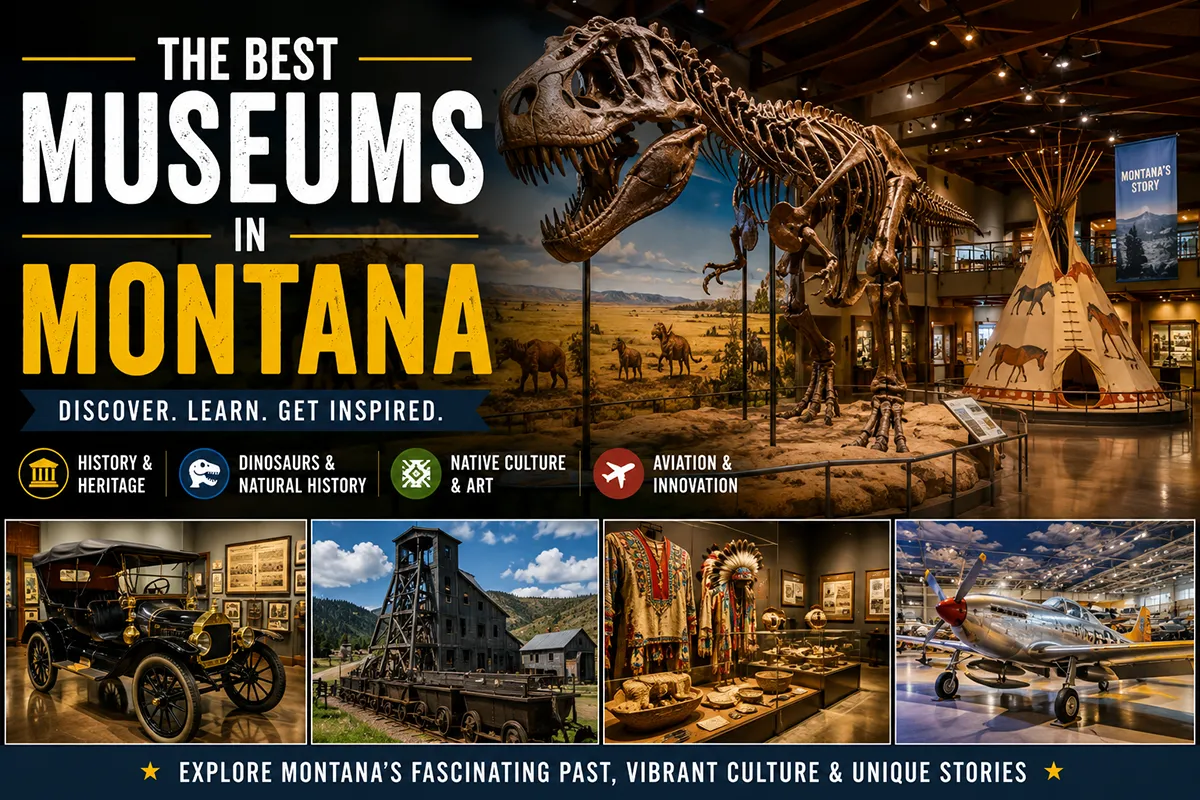
Montana has well over 140 museums, and no single list does them justice — so this guide organizes them the way you’ll actually plan a trip: by theme and by region. You’ll find the flagship stops everyone should know (Museum of the Rockies, the C.M. Russell Museum, the Montana Historical Society), the official 14-stop Montana Dinosaur Trail that almost no other guide covers in full, Indigenous heritage and battlefield sites, art museums, offbeat curiosities, and a region-by-region directory of small-town museums that rarely make anyone’s “top 10.” I’ll also flag what other guides get wrong or leave out, plus the practical stuff — seasonal hours, entry fees, and what I wish I’d known before I started museum-hopping across this state.
Liked this article?
Add Roaming Montana as a preferred source so you see more of our articles and guides on Google.
Why Montana’s Museum Scene Is Bigger Than Anyone Tells You
Most “best museums in Montana” lists top out at ten stops and call it done. I get why — Montana has around 900,000 people spread across 147,000 square miles, and it seems unlikely that a state this empty would have much of a museum scene.
But Montana actually has one of the highest concentrations of museums per capita in the country, somewhere north of 140 institutions, because nearly every county and a good number of small towns decided their history was worth preserving in a building of its own.
That density is both a gift and a planning headache. I’ve spent years crossing this state for work and for fun, and I’ve learned that the “greatest hits” — Museum of the Rockies, the C.M. Russell Museum — are absolutely worth your time, but so are places you’ve probably never heard of: a former brothel-turned-museum in Butte, a dinosaur skeleton discovered by a rancher outside Malta, an underground tour beneath the streets of Havre.
This guide is my attempt to map the whole landscape, not just the top ten, and to send you toward the individual guides I’m building out for the stops that deserve a deeper dive.
One more thing before we get into it: Montana’s museums split cleanly into two operating rhythms. Urban museums in Bozeman, Missoula, Billings, and Helena tend to run year-round. Rural and small-town museums — which make up most of this list — often operate seasonally, typically Memorial Day through Labor Day, sometimes by appointment the rest of the year.
Show up in March expecting the Range Riders Museum in Miles City to be open, and you’ll be looking at a locked door. I’ll flag seasonal operators as we go.
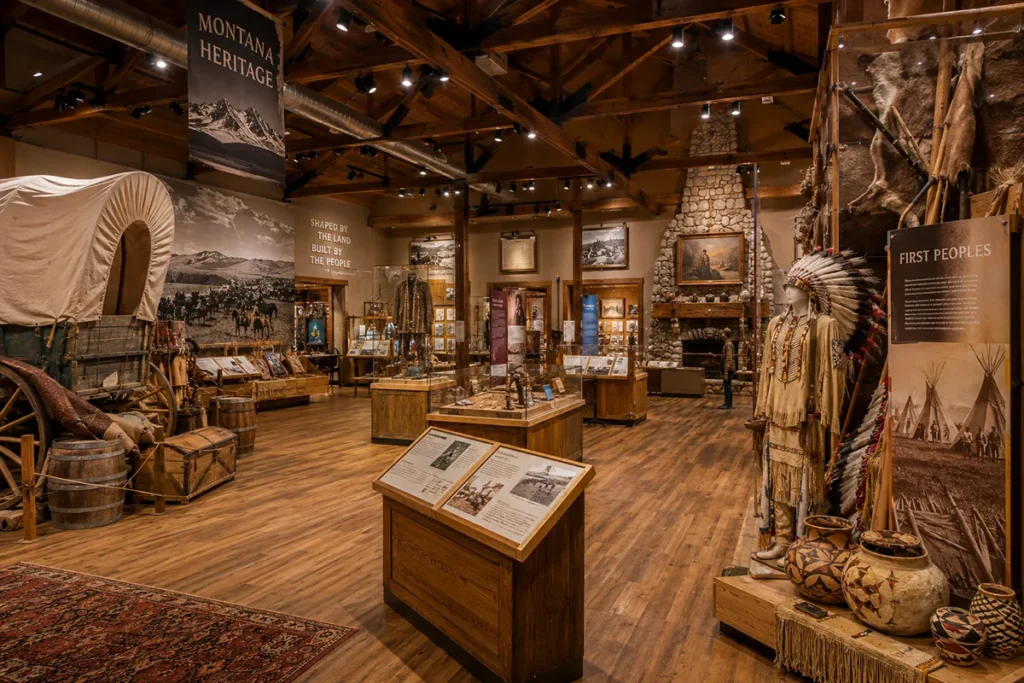
The Montana Dinosaur Trail: The Thing Every Other Guide Misses
If you only take one thing from this guide, let it be this: Montana has an official, statewide Dinosaur Trail connecting 14 museums and dig sites across the state, and almost none of the “best museums in Montana” roundups I’ve read mention it at all.
That’s a genuine miss, because Montana is one of the richest dinosaur fossil regions on Earth — this is the state that gave the world Maiasaura (the state fossil), Leonardo the mummified Brachylophosaurus, and some of the most complete Tyrannosaurus rex specimens ever found.
The trail runs from the Montana Dinosaur Center in Bynum to the Carter County Museum in Ekalaka, and you can pick up a free Prehistoric Passport and collect a stamp at each stop.
Complete all 14 and you earn a trail T-shirt — a genuinely fun excuse for a multi-week Montana road trip if you’re the kind of traveler who likes a scavenger hunt built into your itinerary.
1. Museum of the Rockies — Bozeman
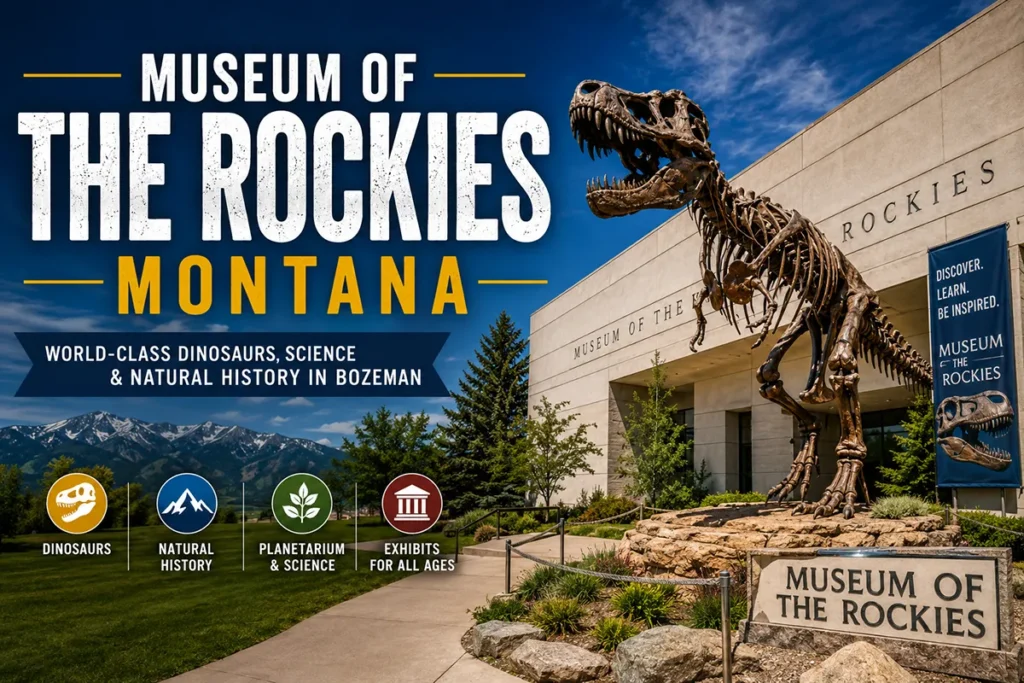
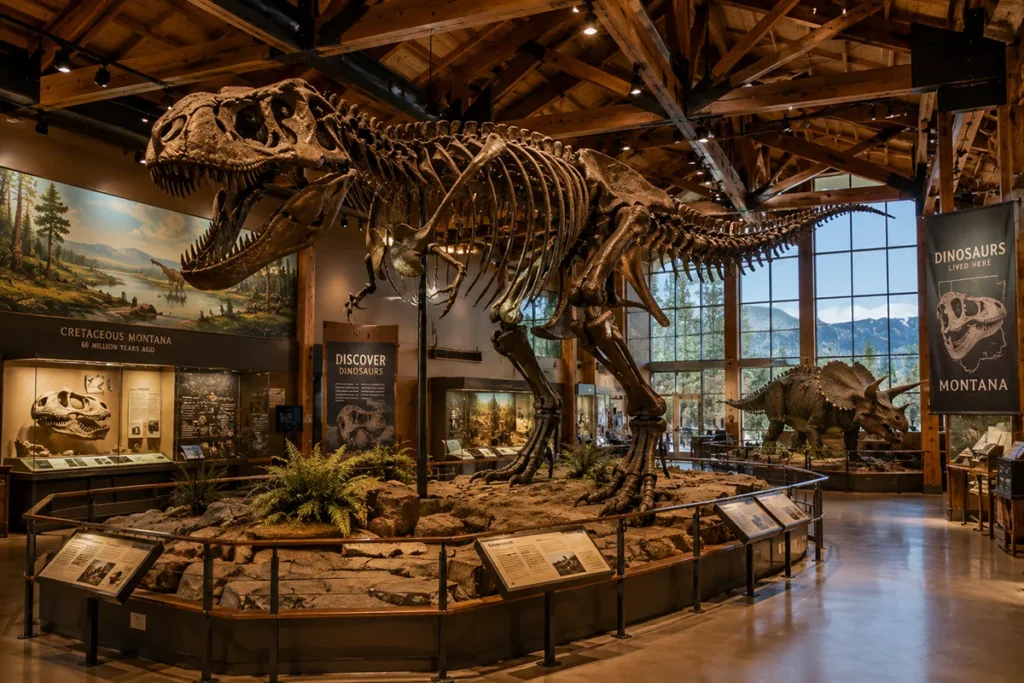
This is the trail’s anchor and, frankly, the best-known museum in the state. The Siebel Dinosaur Complex houses one of the most significant Tyrannosaurus rex collections in North America, and the museum operates as a Montana State University affiliate and Smithsonian Affiliate.
I’ve watched paleontology preparators work on real fossils behind glass here, which is one of those small details that makes the museum feel alive rather than static.
Beyond dinosaurs, the Living History Farm re-creates an 1890s–1910s Montana homestead with costumed interpreters in summer, and the Taylor Planetarium runs rotating shows in a 40-foot dome.
Individual guide: Museum of the Rockies in Bozeman — read now.
2. Two Medicine Dinosaur Center — Bynum
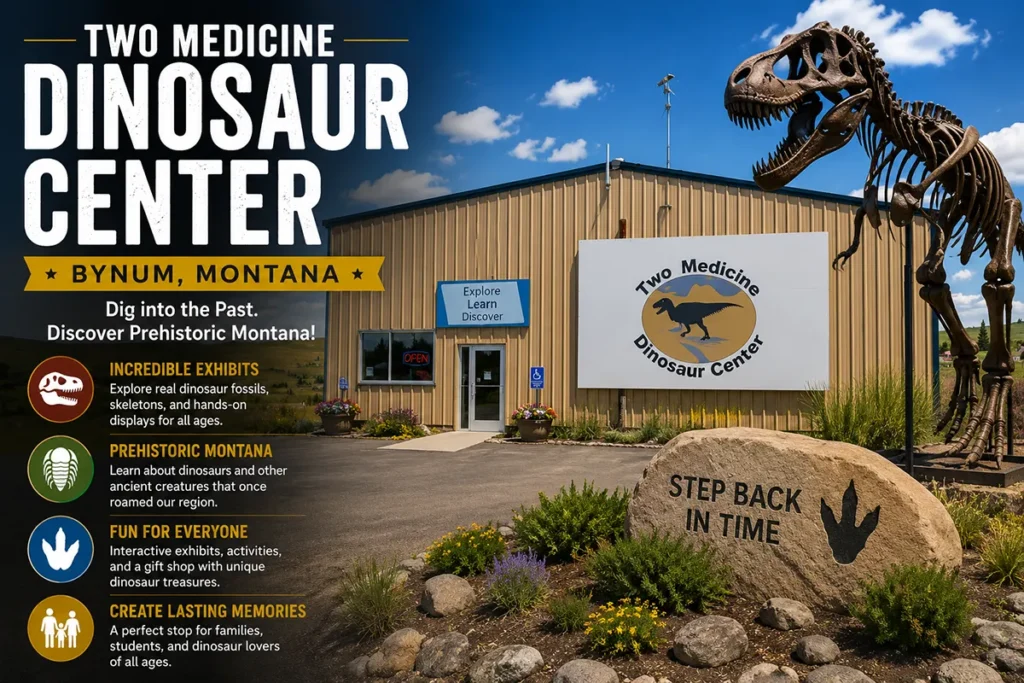
Officially the Montana Dinosaur Center, this is where the trail begins, and it’s also the only stop on the list where you can join a same-day, hands-on fossil dig — not a replica dig, an actual active excavation.
The gallery holds Seismo, a full-size cast of a Seismosaurus that’s recognized by Guinness as one of the longest dinosaur skeletons ever mounted.
This area near the Rocky Mountain Front is where the first baby dinosaur bones in North America were discovered, which reshaped how paleontologists think about dinosaur parenting behavior.
Individual guide: Two Medicine Dinosaur Center in Bynum — read now.
3. Old Trail Museum — Choteau
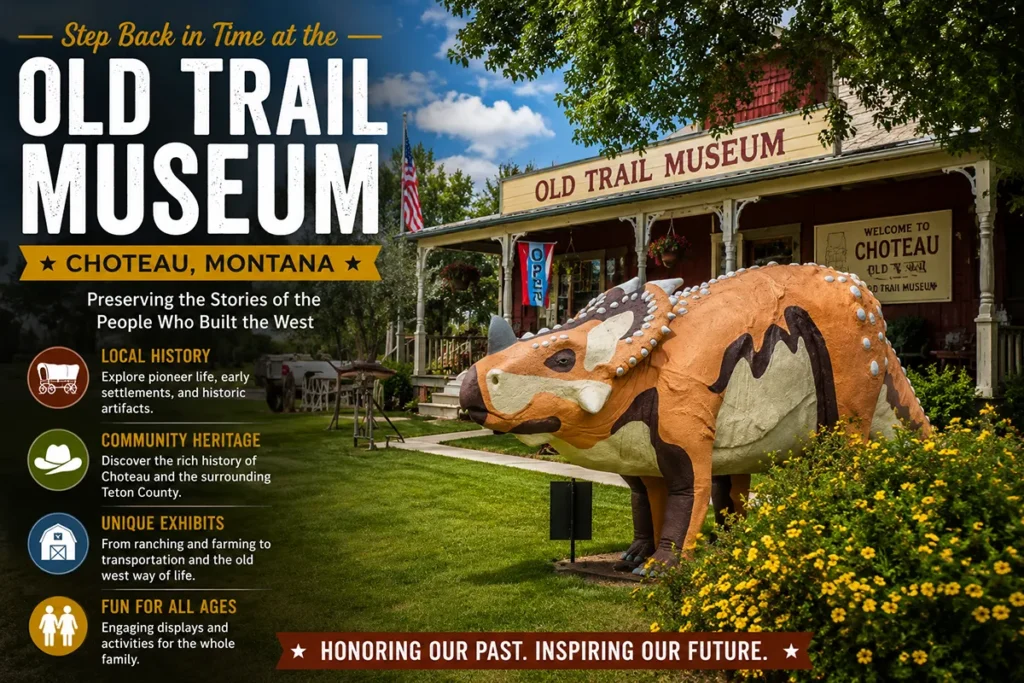
A short drive from Bynum, Old Trail Museum’s paleontology gallery focuses on the Two Medicine Formation and includes a touchable fossilized duck-billed dinosaur thigh bone — a rare hands-on moment in a field usually locked behind glass.
Individual guide: Old Trail Museum in Choteau — read now.
4. Great Plains Dinosaur Museum and Field Station — Malta
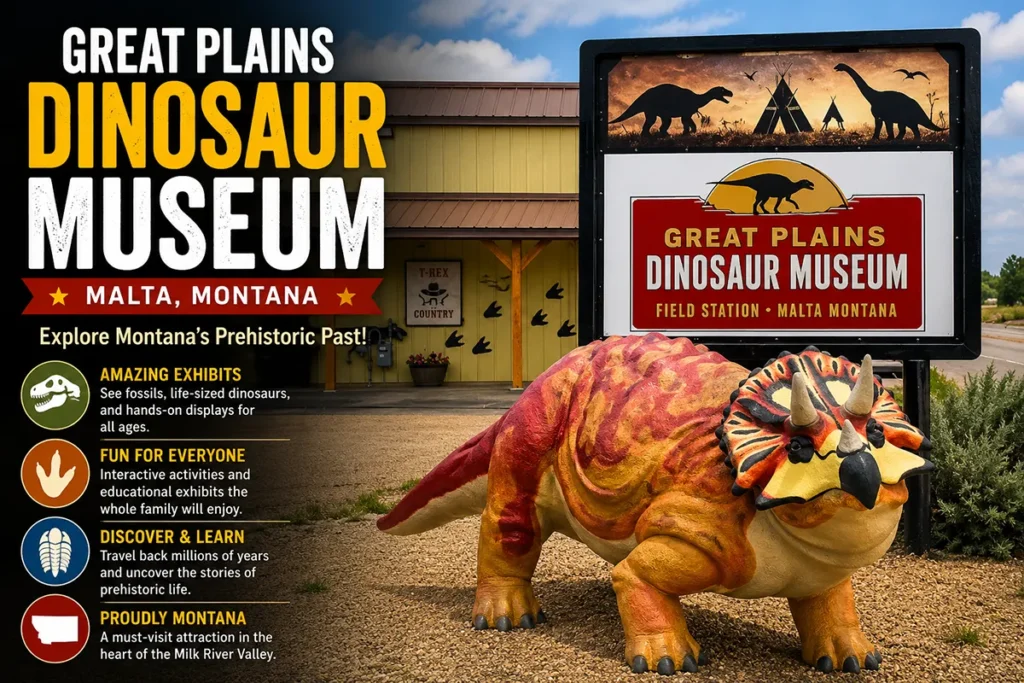
Home to Leonardo, one of the most complete and best-preserved mummified dinosaur specimens ever found — skin impressions and all — plus Herb the Triceratops.
This museum sits in what paleontologists consider some of the richest Late Cretaceous fossil ground in the world, and it partners with the neighboring Phillips County Museum for a two-for-one regional history stop.
Open daily May through September; October through April is by appointment only, so call ahead if you’re passing through in the off-season.
Individual guide: Great Plains Dinosaur Museum in Malta — read now.
5. Carter County Museum — Ekalaka
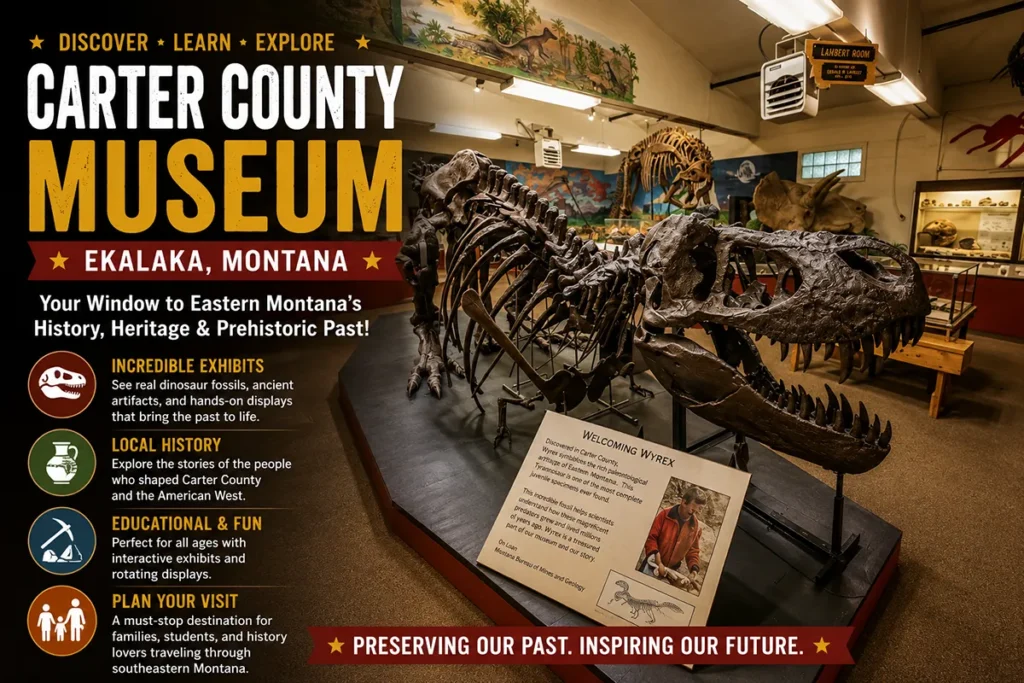
The trail’s eastern anchor and Montana’s first county museum, founded in 1936 in a former automotive garage.
It’s the official fossil repository for Medicine Rocks State Park and holds a partnership with a sister dinosaur museum in Kumamoto, Japan — an unexpected international connection for a museum in a ranching town of about 400 people.
The museum also directly addresses the Indigenous history of the region, acknowledging the Lakota, Northern Cheyenne, Crow, Hidatsa, Arikara, and Mandan nations whose ancestral land the museum sits on.
Individual guide: Carter County Museum in Ekalaka — read now.
The rest of the trail: Blaine County Museum (Chinook), H. Earl Clack Memorial Museum (Havre), Depot Museum (Rudyard), Upper Musselshell Museum (Harlowton), Phillips County Museum (Malta), Garfield County Museum (Jordan), Fort Peck Interpretive Center (Fort Peck), and Makoshika State Park (Glendive) round out the remaining stops. [verify current 14-location list at mtdinotrail.org, as this changes occasionally]
The Flagship Museums Every First-Timer Should Know
These are the stops I point out-of-state friends toward first — big enough to fill half a day, polished enough to impress a skeptic, and genuinely representative of what makes Montana’s history distinct.
6. C.M. Russell Museum — Great Falls
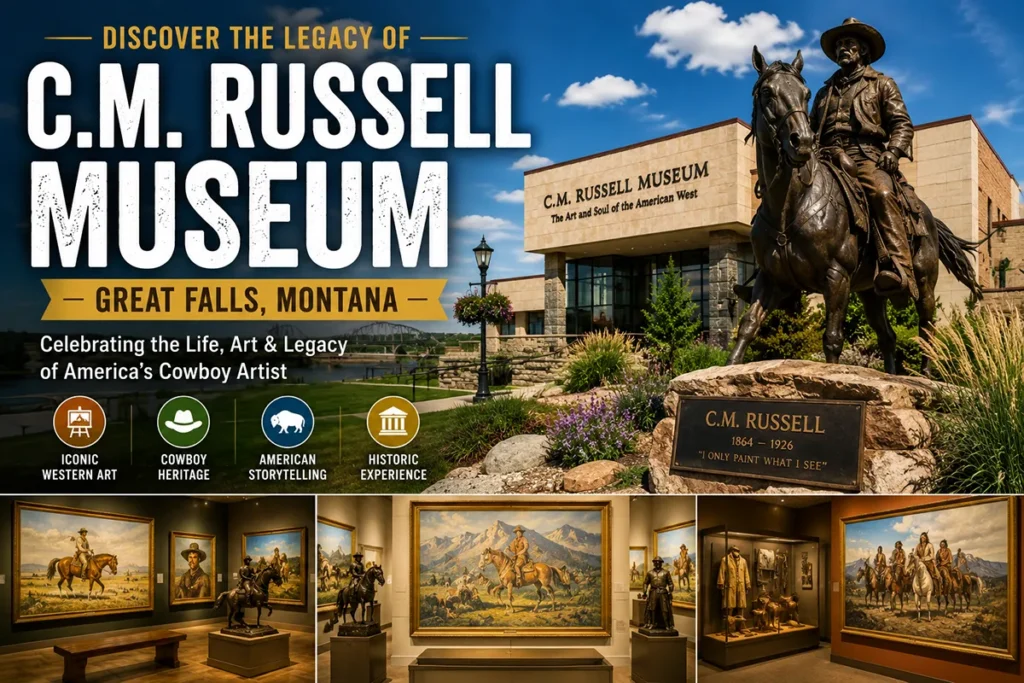
Dedicated to Charles Marion Russell, the cowboy artist who captured 19th-century Montana ranch and Plains Indian life in oil paintings, watercolors, illustrated letters, and bronze sculpture.
The complex includes Russell’s original hand-built log cabin studio, still standing on the property, alongside 16 galleries holding several thousand pieces.
If you only see one piece of Western art in Montana, make it here — Russell isn’t just a regional curiosity, he’s one of the most significant chroniclers of the vanishing frontier West, and this museum owns the deepest collection of his work anywhere.
Individual guide: C.M. Russell Museum in Great Falls — read now. See also our Great Falls city guide.
7. Montana Historical Society — Helena
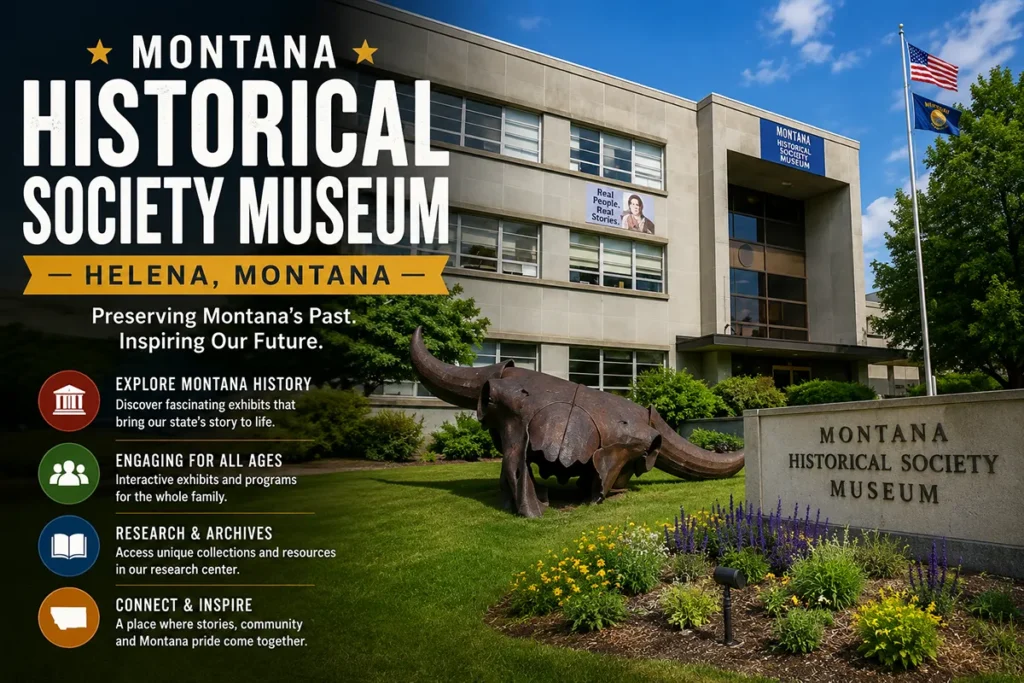
The state’s official history repository, housing tens of thousands of artifacts spanning Native American material culture from the Blackfeet, Salish, and other tribes, territorial-era firearms, mining equipment, and the preserved Original Governor’s Mansion.
This is the single best one-stop primer on Montana history in the state, and it’s a natural pairing with a walk through Helena’s historic downtown and the Montana State Capitol a few blocks away.
Individual guide: Montana Historical Society Museum in Helena — read now.
8. World Museum of Mining — Butte
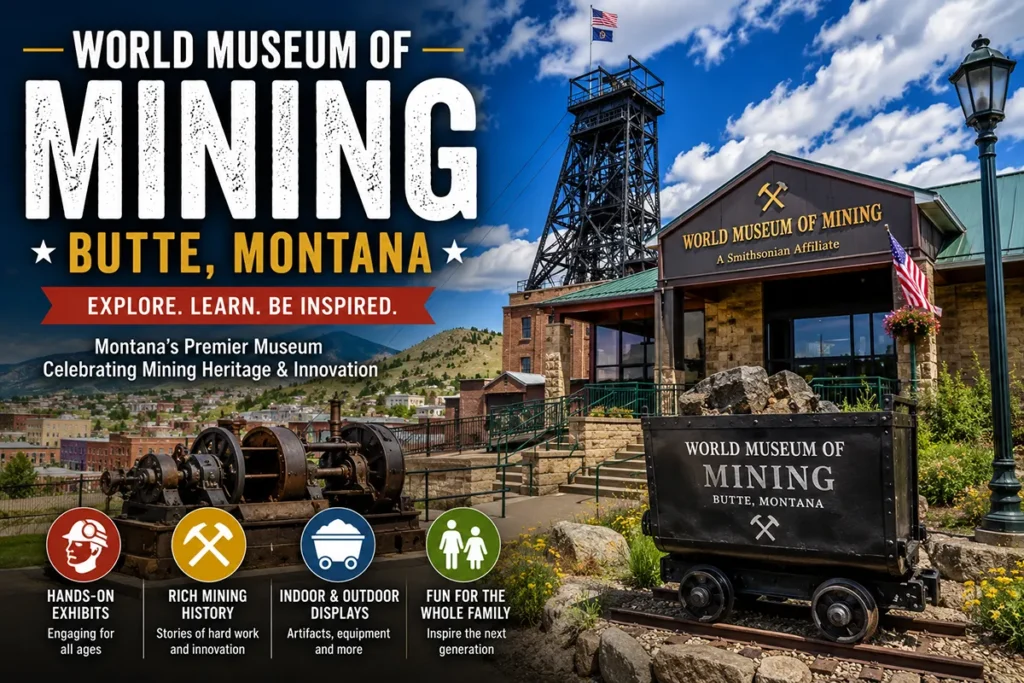
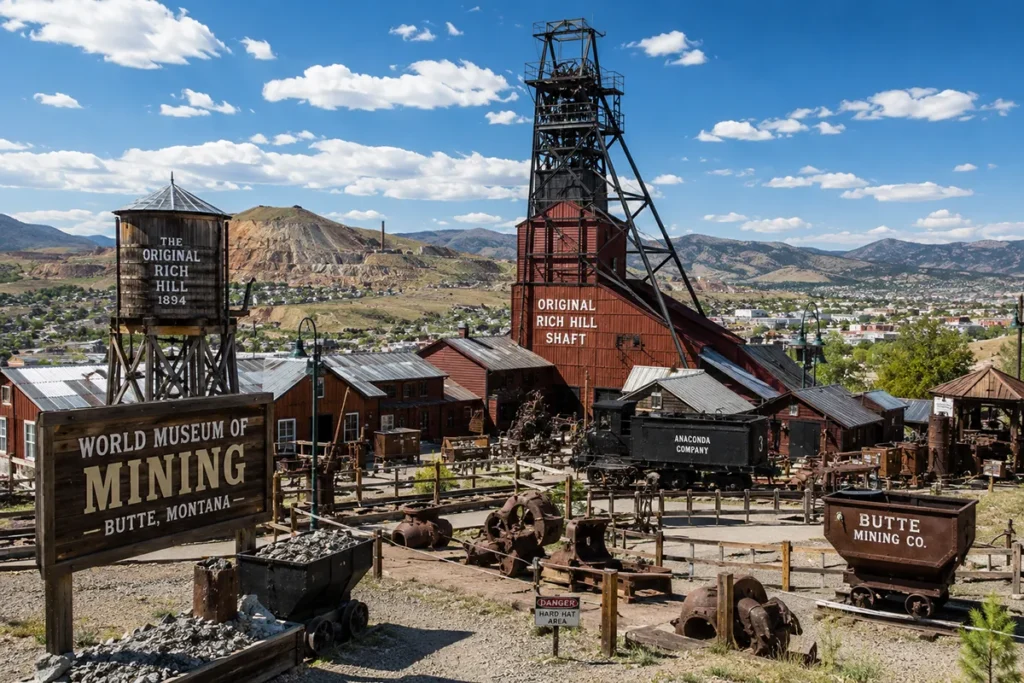
Built on an actual mining yard above the Orphan Girl Mine, this is one of the only Montana museums where the “museum” is mostly outdoors and underfoot. The underground mine tour drops you 100 feet down into real mine workings — not a re-creation.
Hell Roarin’ Gulch, a replica mining town built from roughly 15 original historic structures moved onto the property, is worth an hour on its own.
A memorial here lists roughly 2,500 miners who died in Butte-area mining accidents since the 1860s, a sober reminder of what copper cost this town. Pair this with our Butte things-to-do guide for a full day in the Mining City.
Individual guide: World Museum of Mining in Butte — read now.
9. Miracle of America Museum — Polson
Often nicknamed the “Smithsonian of the West,” and for once the nickname undersells it. With north of 340,000 objects — antique motorcycles, wooden boats, military gear, farm equipment, sculpture — this is the most sprawling, chaotic, and genuinely fun museum on this list.
It’s less curated than the Museum of the Rockies and more like wandering through the world’s best-organized barn sale. Give yourself two hours minimum, and don’t skip the outdoor equipment yards.
Individual guide: Miracle of America Museum in Polson — read now.
10. Range Riders Museum — Miles City
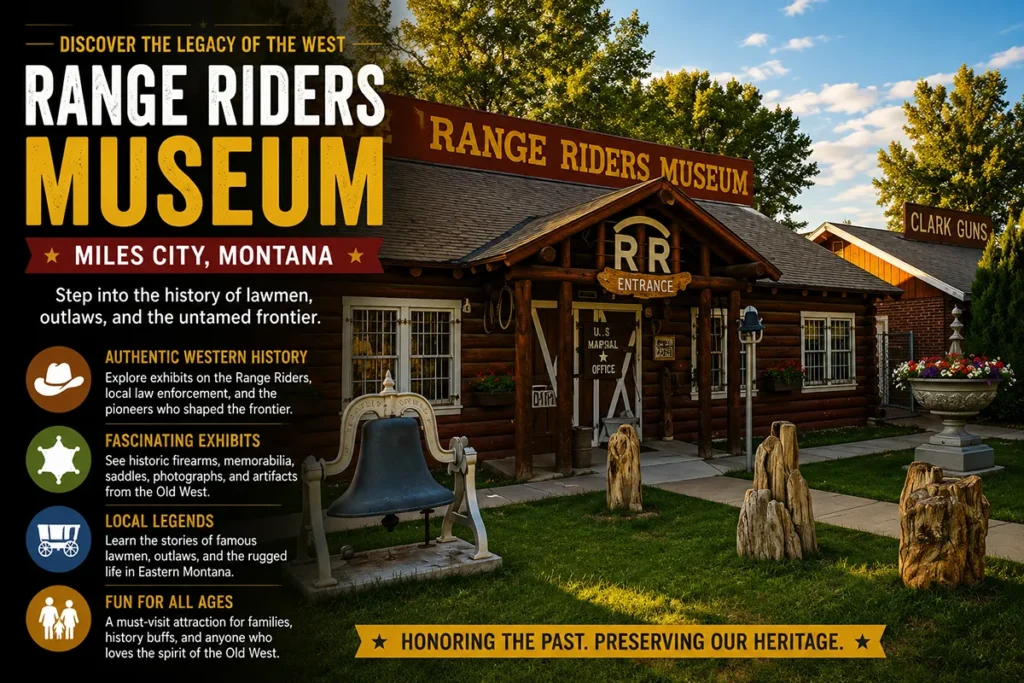
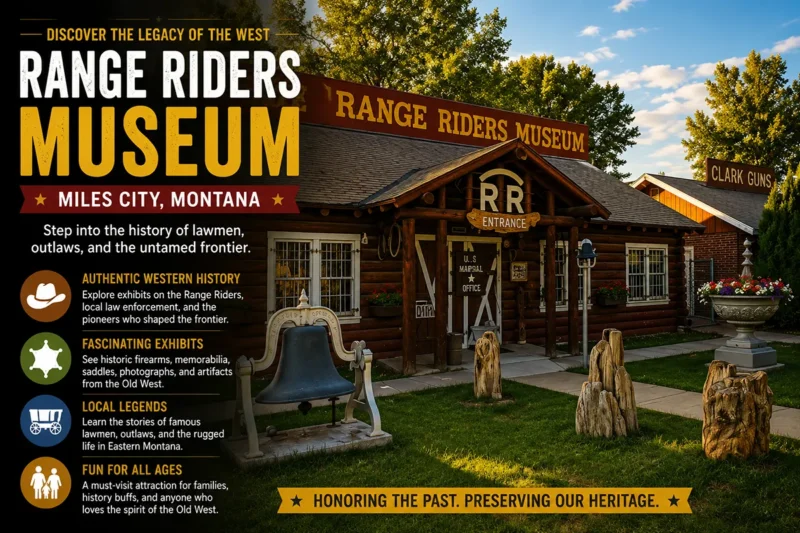
A sprawling, family-built complex covering Montana’s open-range cattle era through original saddles, arrowheads, antique firearms, and homestead-era furniture.
It’s seasonal — open roughly April through October depending on weather — so this is not a stop to plan for a January road trip. Pair it with our things to do in Miles City guide.
Individual guide: Range Riders Museum in Miles City — read now.
Native American Heritage and Battlefield Museums
No honest account of Montana’s museum scene can lead only with cowboy art and mining relics. Some of the most important cultural institutions in the state exist specifically to preserve Indigenous history — and a few sit directly on the sites of forced land loss, treaty violations, and armed conflict.
I try to send readers to these with the same weight the subject deserves, not as a footnote after the dinosaurs.
11. Museum of the Plains Indian — Browning
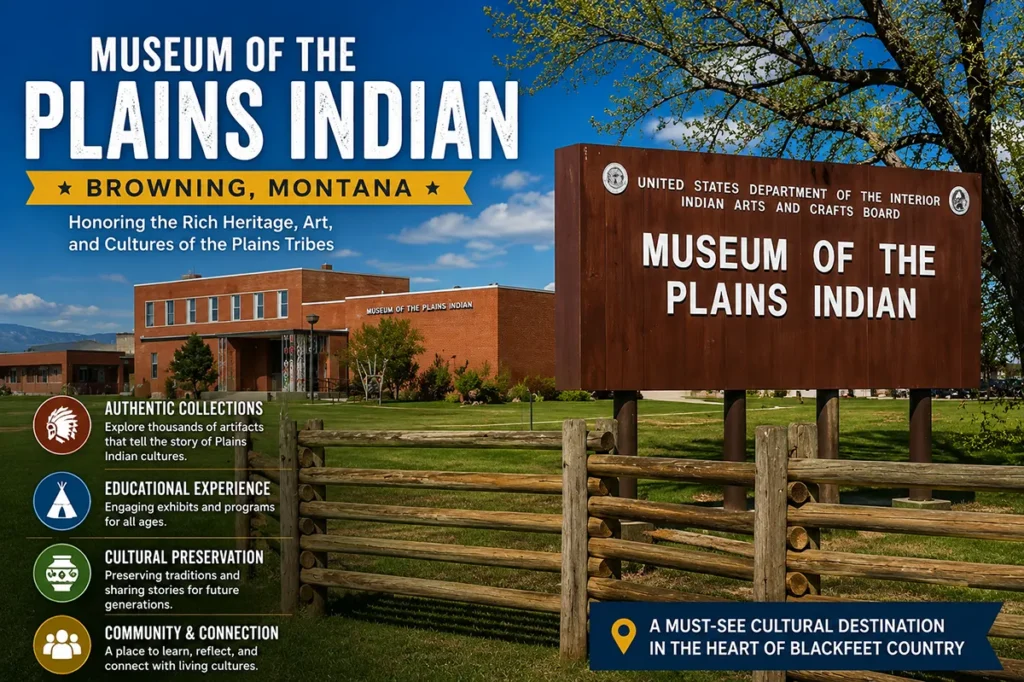
Operated in partnership with the U.S. Department of the Interior’s Indian Arts and Crafts Board, this museum sits in the heart of the Blackfeet Nation near Glacier National Park’s eastern entrance.
Founded in 1941, it holds historic clothing, horse gear, weapons, and household items from the Blackfeet, Crow, Northern Cheyenne, Assiniboine, Nez Perce, and several other Northern Plains tribes, alongside rotating contemporary art sales that directly support living Native artists.
Photography isn’t permitted inside, which I actually appreciate — it keeps visitors looking rather than filming.
Hours shift seasonally (roughly 9 a.m.–4:45 p.m. in summer, more limited in winter), and the museum is free to Blackfeet tribal members with ID.
Individual guide: Museum of the Plains Indian in Browning — read now.
12. Little Bighorn Battlefield National Monument — Crow Agency
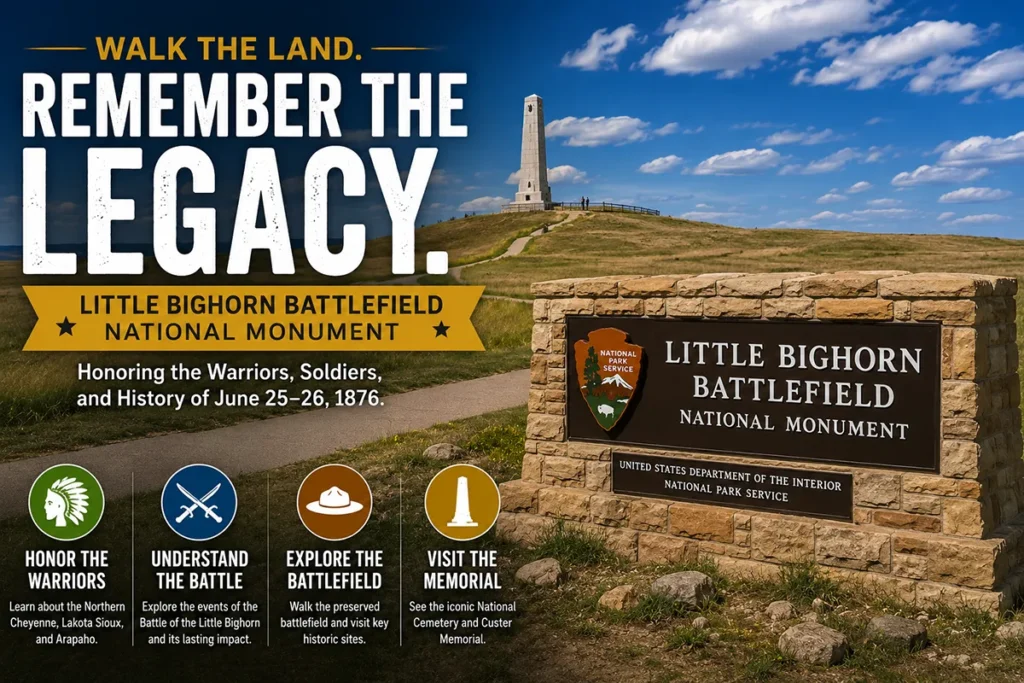
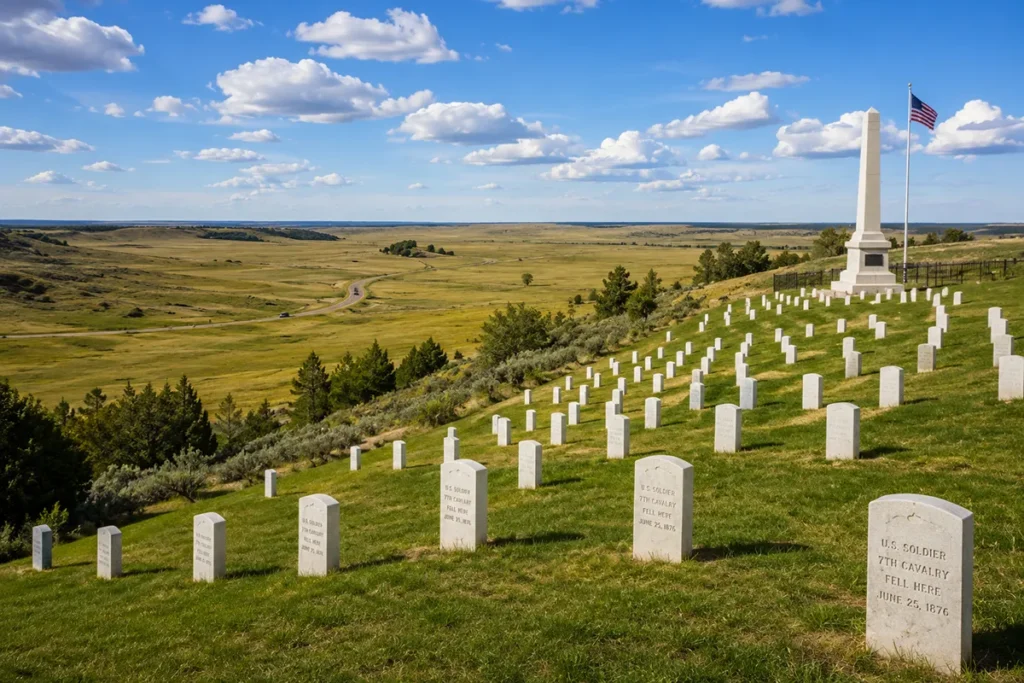
The site of the 1876 battle between the U.S. 7th Cavalry and a combined force of Lakota, Northern Cheyenne, and Arapaho warriors — one of the most consequential events in the Northern Plains Indian Wars.
The visitor center and museum present the battle from multiple perspectives, including the Indian Memorial, dedicated in 2003 specifically to honor the Native American lives lost defending their way of life.
This is one of the most-visited historic sites in Montana, and it’s a genuine omission that it doesn’t show up on most “best museums” roundups at all.
Individual guide: Little Bighorn Battlefield — read now.
13. Bear Paw Battlefield — near Chinook
The site of the final battle and surrender of Chief Joseph and the Nez Perce in 1877, roughly 40 miles from the Canadian border they were trying to reach.
It’s an open, windswept prairie site with interpretive markers rather than an indoor museum — go with the Blaine County Museum in Chinook for the fuller historical context.
14. Ninepipes Museum of Early Montana — Charlo
Located on the Flathead Indian Reservation, Ninepipes blends natural history, Salish and Kootenai culture, and early pioneer settlement into one collection, giving a fuller regional picture of the Mission Valley than most single-topic museums attempt.
Art Museums Worth the Detour
Montana’s art scene splits between Western and cowboy art (Russell country) and a genuinely strong contemporary and regional art community that surprises a lot of first-time visitors.
15. Yellowstone Art Museum — Billings
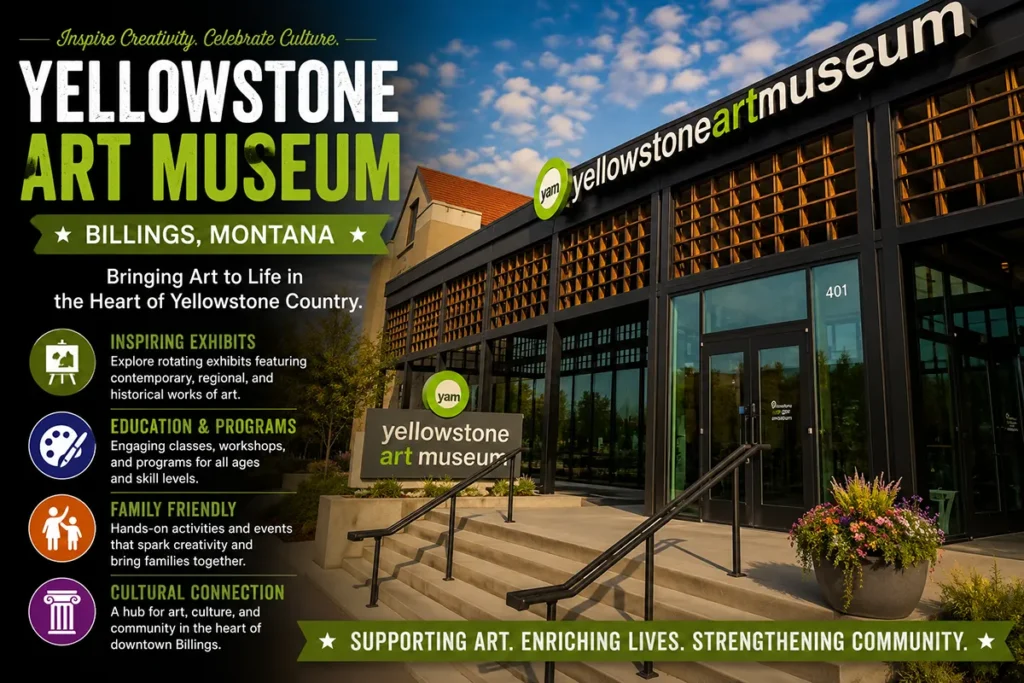
Housed in a striking building that was originally the Yellowstone County Jail, YAM focuses on regional contemporary art from Montana and the broader Northern Rockies.
The Visible Vault lets you see storage-held pieces not currently on display — a rare bit of curatorial transparency.
Pair with the Western Heritage Center, a few blocks away, for a full Billings culture day alongside our Billings city guide.
Individual guide: Yellowstone Art Museum in Billings — read now.
16. Glacier Art Museum (formerly Hockaday Museum of Art) — Kalispell
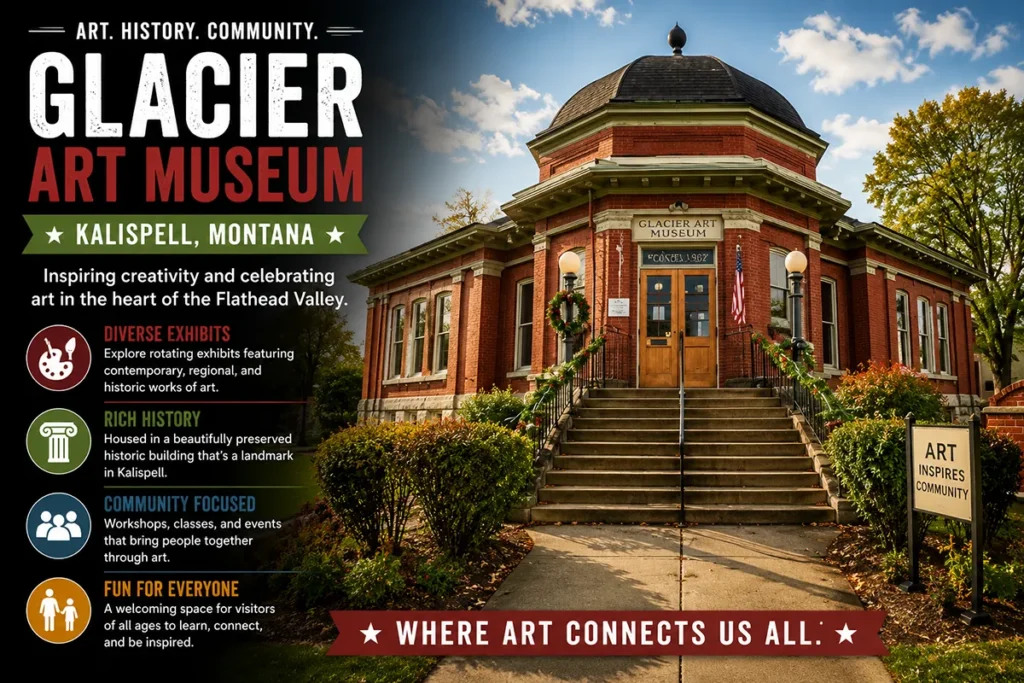
A compact but well-regarded gallery close to Glacier National Park, focused on Montana and regional Western art. Renamed from the Hockaday Museum of Art in September 2024 to better reflect its regional reach and Glacier National Park connection. Given its location, it’s an easy add-on to a Kalispell trip or a rainy-day detour before or after Glacier.
Individual guide: Glacier Art Museum in Kalispell — read now.
17. Holter Museum of Art — Helena
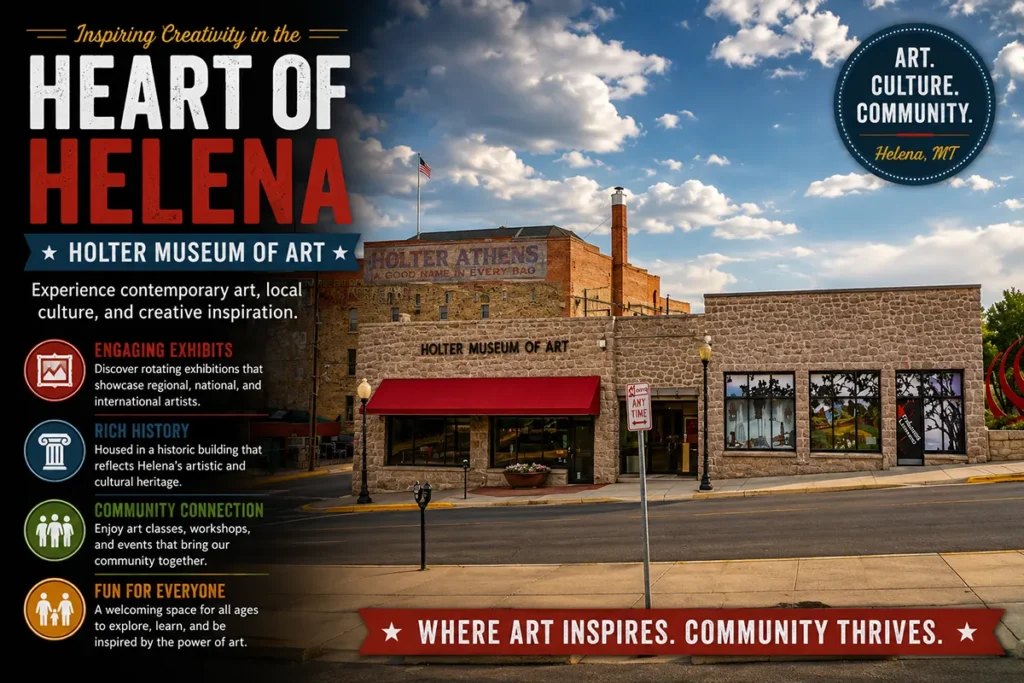
Contemporary regional art in Montana’s capital city, with rotating exhibitions that lean more experimental than the state’s Western-art-heavy museums.
Individual guide: Holter Museum of Art in Helena — read now.
18. Paris Gibson Square Museum of Art — Great Falls
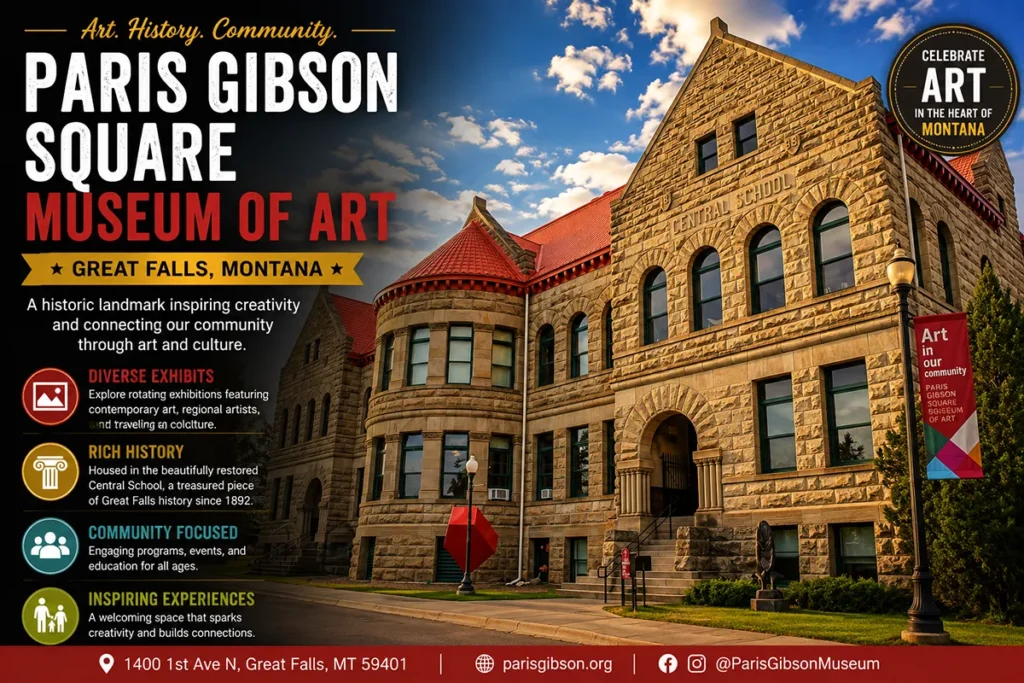
Housed in a repurposed 1896 schoolhouse — one of six museums in Great Falls — this is a solid contemporary art stop to pair with the C.M. Russell Museum for a full day of art in the same town.
Individual guide: Paris Gibson Square Museum of Art — read now.
19. Missoula Art Museum — Missoula
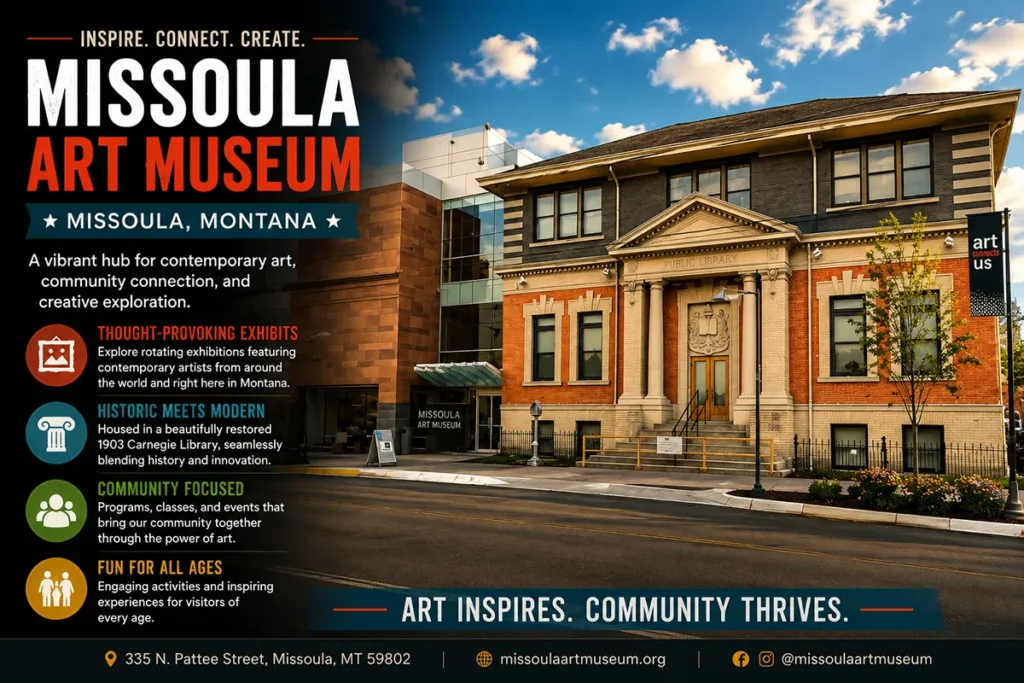
Free admission, downtown location, and a genuinely ambitious contemporary program for a city this size — MAM regularly punches above its weight for a museum in a state with under a million residents. Great pairing with our Missoula hotel guide if you’re basing a weekend there.
Individual guide: Missoula Art Museum — read now.
Military and Aviation History
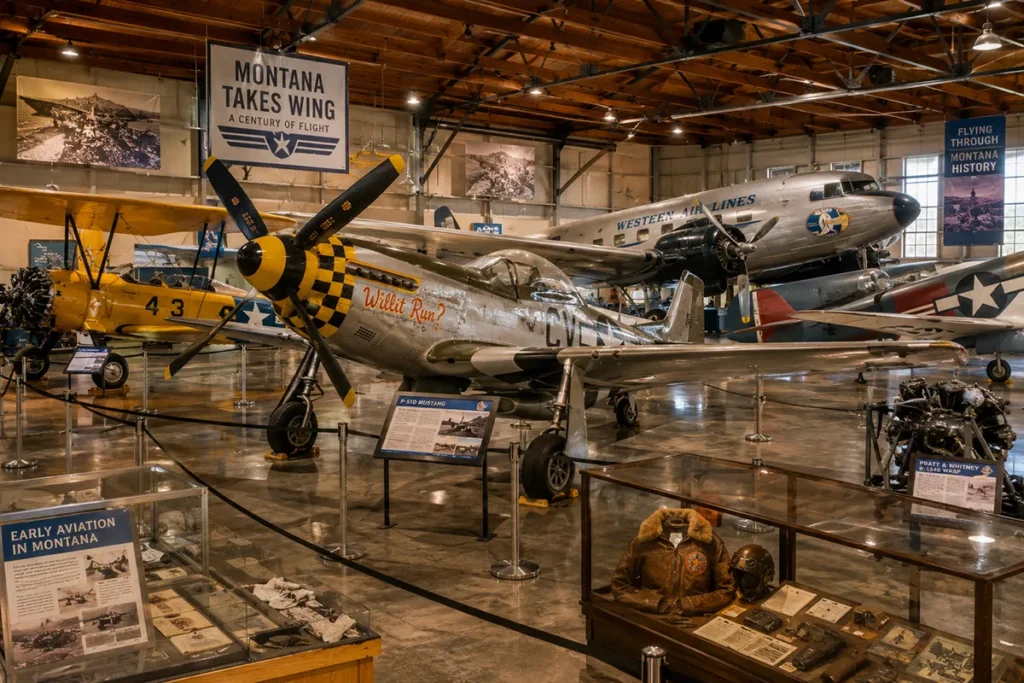
A quieter thread in Montana’s museum scene, but a rich one, especially given the state’s history as a Cold War missile-defense outpost and a training ground for early aviators.
20. Museum of Mountain Flying — Missoula
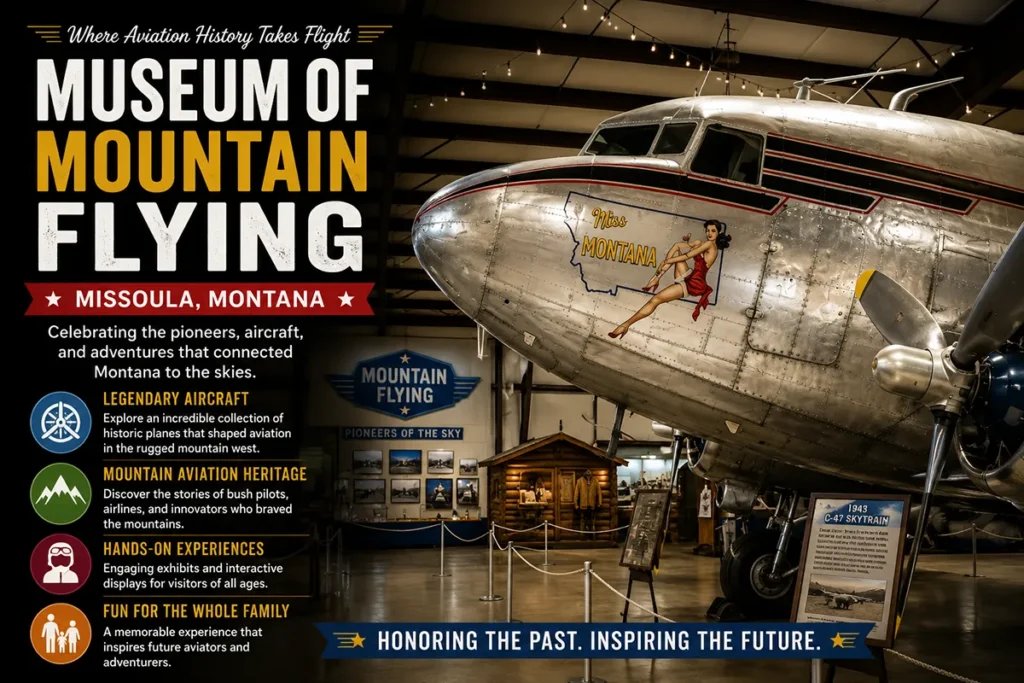
Dedicated to the specific and genuinely dangerous discipline of flying in mountainous terrain, with historic aircraft including a Ford Trimotor used in early smokejumper and backcountry operations.
Individual guide: Museum of Mountain Flying in Missoula — read now.
21. Malmstrom AFB Heritage Museum — Great Falls
Tells the story of Montana’s role in the Cold War as home to a Minuteman missile field — one of the largest in the country. Access typically requires advance coordination since it sits on an active Air Force base. [verify current public access requirements]
22. Rocky Mountain Museum of Military History — Missoula
A volunteer-run collection covering U.S. military history from the Revolutionary War through recent conflicts, with a notable focus on Montana veterans’ personal stories.
23. Montana Military Museum — Helena
Located at Fort William Henry Harrison, this covers Montana National Guard history alongside broader state military history.
Wonderfully Weird: Montana’s Offbeat Museums
These are the stops that don’t fit a tidy category, and they’re often the ones people remember longest.
24. American Computer & Robotics Museum — Bozeman
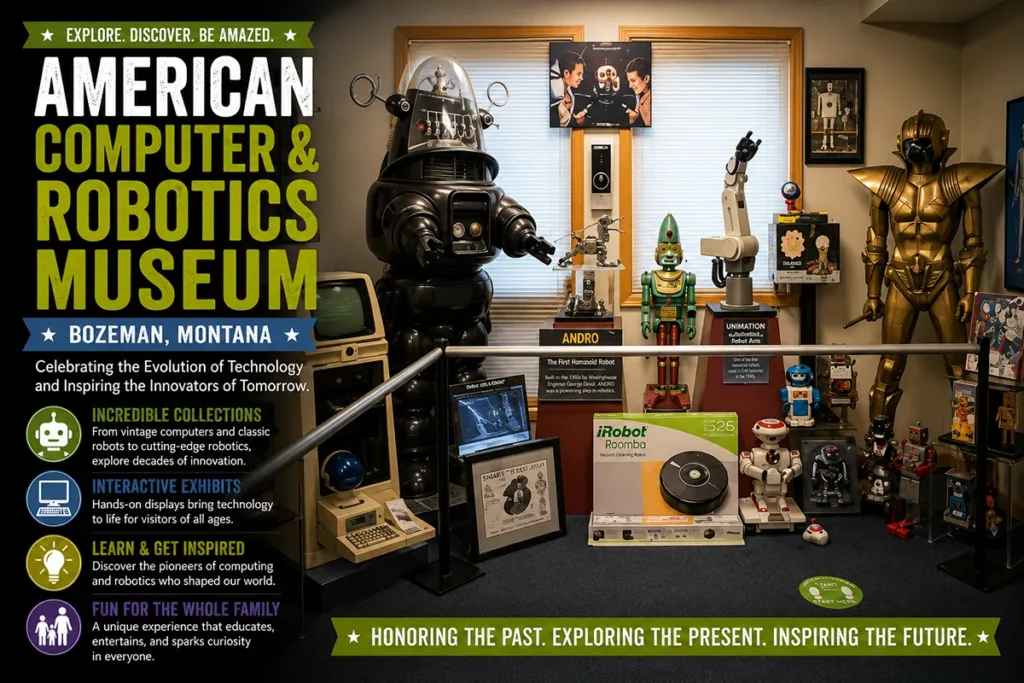
Founded in 1990 by George Keremedjiev, this free museum traces information technology across roughly 4,000 years — from stone tablets to Apollo-era guidance computers to modern AI.
It’s an unexpectedly deep collection for a museum most visitors stumble into by accident while in Bozeman for the dinosaurs.
Individual guide: American Computer & Robotics Museum in Bozeman — read now.
25. Havre Beneath the Streets — Havre
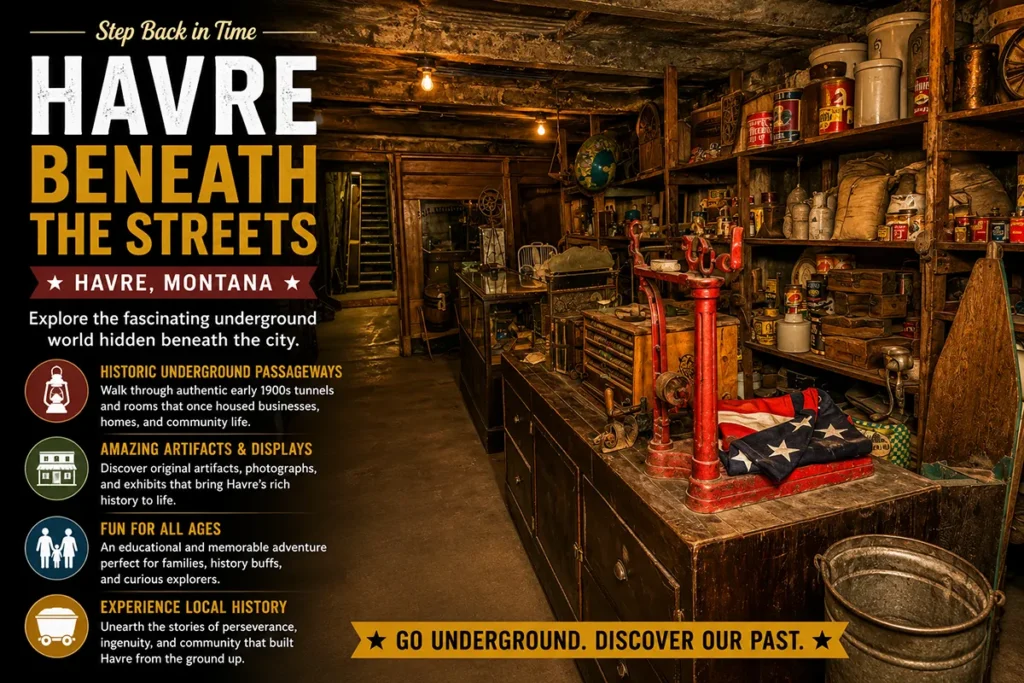
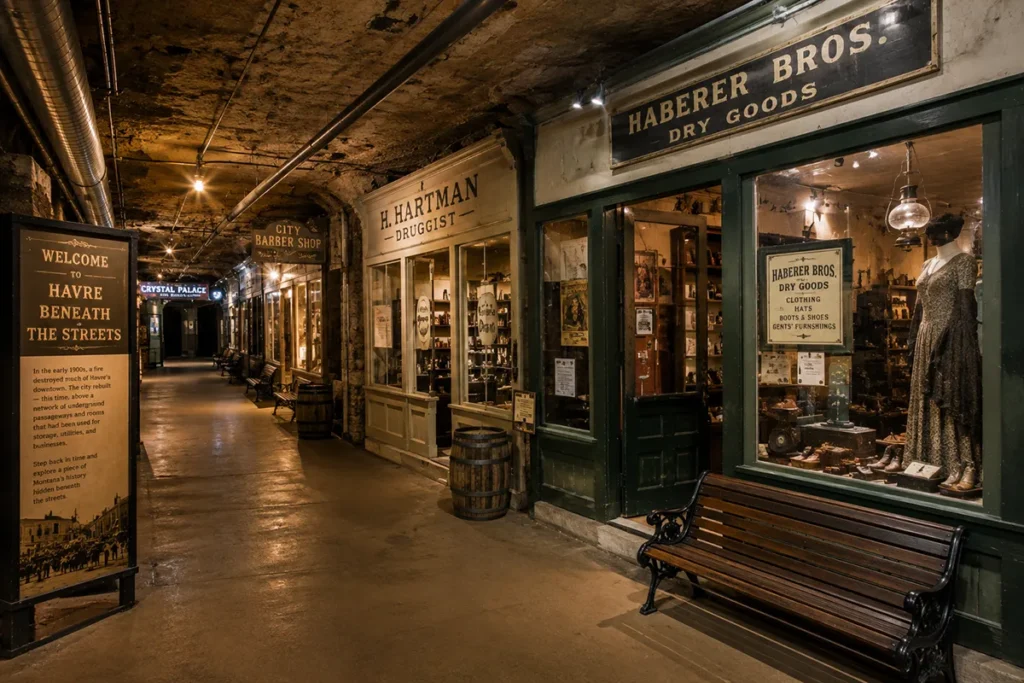
A guided tour through an actual network of underground rooms beneath downtown Havre, used historically as businesses, a bordello, and living quarters after a 1904 fire pushed commerce underground temporarily. It’s part museum, part walking tour, and unlike anything else on this list.
Individual guide: Havre Beneath the Streets — read now.
26. The Dumas Brothel Museum — Butte
One of the longest continuously operating brothels in the United States before its 1982 closure, now preserved as a museum documenting Butte’s rowdy mining-boom social history, including the experiences of the women who worked there. It’s a frank, unsanitized piece of Montana history rather than a novelty stop.
27. Earth Science Museum — Loma
A small roadside museum built around rocks, minerals, and fossils collected largely from the surrounding badlands — easy to miss, worth the five-minute detour if you’re on Highway 87.
28. Bair Family Museum — Martinsdale
The preserved home and collection of Charles Bair, a sheep baron who amassed one of Montana’s great early-20th-century fortunes, filled with Native American art, French tapestries, and Tiffany glass — an odd, wealthy counterpoint to the homestead-poverty story told at most rural Montana museums.
Small-Town Museums by Region
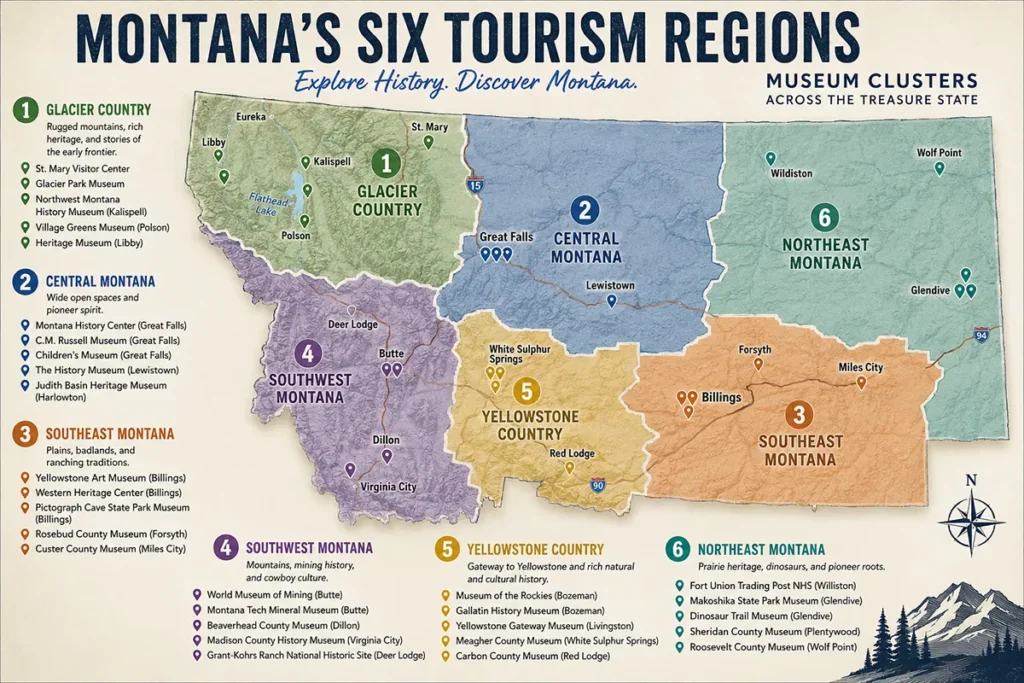
This is where Montana’s museum density really shows. I’m organizing these by the state’s six official tourism regions so you can build them into a road trip rather than treating them as a random list. Most of these are volunteer-run and seasonal — call ahead in shoulder season.
Glacier Country (Northwest Montana)
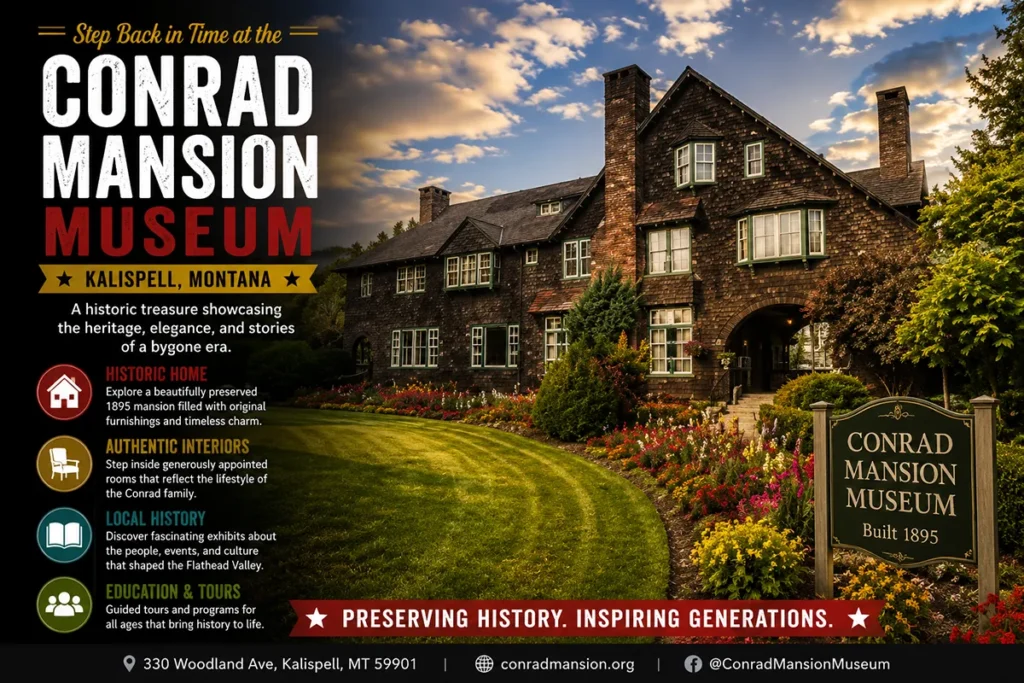
Conrad Mansion Museum (Kalispell) — a preserved Victorian mansion belonging to Kalispell’s founder.
Daly Mansion (Hamilton) — the Bitterroot Valley copper-baron estate, worth pairing with our Hamilton guide.
Northwest Montana History Museum, housed in Kalispell’s historic 1894 Central School building. Historical Museum at Fort Missoula.
Missoula’s spectrUM Discovery Area (hands-on science for kids) and Montana Natural History Center.
Heritage Museum in Libby — pairs well with our Libby travel guide. Tobacco Valley Historical Village in Eureka.
Central Montana
The bulk of the Dinosaur Trail lives here, plus Central Montana Museum (Lewistown), Judith Basin County Museum (Stanford), Castle Museum (White Sulphur Springs), and Hobson Museum. This region rewards slow driving on backroads more than almost anywhere else in the state.
Missouri River Country (Northeast Montana)
Fort Peck Interpretive Center, MonDak Heritage Center (Sidney), Daniels County Museum & Pioneer Town (Scobey), Valley County Pioneer Museum (Glasgow), and Culbertson Museum.
This is Montana’s least-visited region by tourists, which makes its museums some of the quietest, most personal visits you’ll have anywhere on this list.
Southeast Montana
Frontier Gateway Museum (Glendive), O’Fallon Historical Museum (Baker), WaterWorks Art Museum (Miles City), Prairie County Museum (Terry), and Powder River Historical Museum (Broadus). Makoshika State Park near Glendive doubles as both Montana’s largest state park and an active dinosaur fossil site.
Southwest Montana
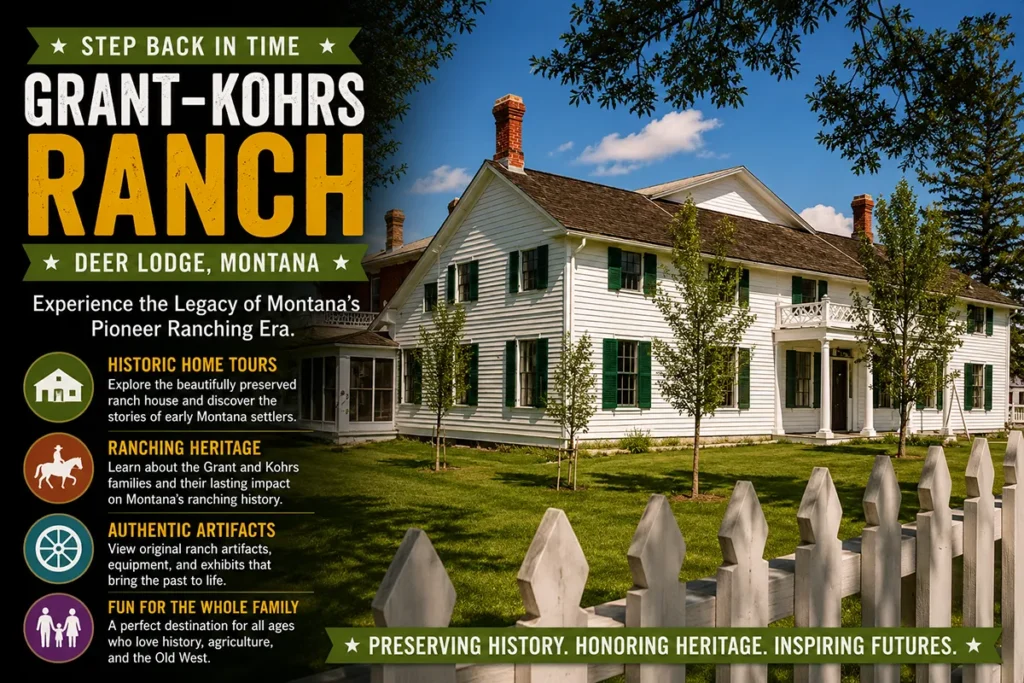
Beaverhead County Museum (Dillon), Grant-Kohrs Ranch National Historic Site (Deer Lodge) — a National Park Service-run working cattle ranch that pairs naturally with our Montana ranches guide — the Old Prison Museum complex and Montana Auto Museum (also Deer Lodge, both under one admission), Jefferson County Museum (Clancy), Granite County Museum (Philipsburg), and the MBMG Mineral Museum in Butte, a genuine must for anyone into our Montana gemstones and rockhounding guide.
Individual guide: Grant-Kohrs Ranch National Historic Site — read now.
Yellowstone Country
Gallatin History Museum (Bozeman), Crail Ranch Homestead Museum (Big Sky), Yellowstone Gateway Museum (Livingston) — see our Livingston things-to-do guide — Fly Fishing Discovery Center (Livingston), Museum of the Yellowstone and Yellowstone Historic Center (both West Yellowstone, and both worth combining with a stop at the Grizzly & Wolf Discovery Center), and the Crazy Mountain Museum in Big Timber.
What Other Montana Travel Guides Miss
A few patterns I keep seeing in competitor “best museums” content, and what I’ve done differently here:
- The Dinosaur Trail gets ignored entirely. It’s one of Montana’s most distinctive tourism assets — an official, passport-stamped, 14-stop statewide trail — and most guides don’t mention it exists.
- Seasonal hours get glossed over or skipped. A huge share of Montana’s small-town museums close for the winter. Guides that don’t flag this send readers to locked doors.
- Battlefield and Indigenous heritage sites get buried or omitted. Little Bighorn Battlefield is one of the most historically significant and most-visited sites in the state, and it’s frequently missing from “best museums” roundups entirely.
- Lists stop at ten and stay there. Montana has 140-plus museums. A top-ten list is a fine starting point, but it leaves out entire regions of the state, particularly Missouri River Country and Southeast Montana, which get essentially no coverage anywhere.
- Fees, hours, and hard numbers get stated with false precision. Museum admission and object counts change. I’ve flagged anything time-sensitive with [verify] rather than pretending I have current pricing memorized.
Personal Tips: What I Wish I Knew
A few things that would’ve saved me time and gas money on my own museum-hopping trips:
- Call small-town museums before you drive out of your way. Volunteer-run museums sometimes close for a funeral, a harvest, or just because the one person with the key is out of town. A five-minute call saves a wasted detour.
- The shoulder seasons (May and September) are the sweet spot. Most seasonal museums are open, but you won’t be sharing the Museum of the Rockies parking lot with three tour buses.
- Bring cash for the smallest museums. Some rural, volunteer-run stops still don’t take cards, especially donation-based ones.
- The Dinosaur Trail passport is genuinely worth picking up even if you’re not trying to complete all 14 stops — it’s a nice keepsake and gives you a reason to detour toward a museum you’d otherwise drive past.
- Photography rules vary a lot. The Museum of the Plains Indian, for instance, doesn’t allow interior photography — check before you assume you can shoot everything for your trip blog.
- Pair museums with the town, not just the attraction. Miles City, Havre, and Ekalaka are genuinely interesting small towns in their own right, not just a parking lot next to a museum.
Practical Info: Planning Your Montana Museum Trip
| Best time to visit | May–September for full access to seasonal rural museums; year-round for urban museums (Bozeman, Missoula, Billings, Helena, Great Falls) |
| Typical rural museum hours | Memorial Day–Labor Day, often 10 a.m.–5 p.m.; many close or go appointment-only October–April |
| Entry fees | Range from free (Missoula Art Museum, American Computer & Robotics Museum) to $15–20 for flagship stops like Museum of the Rockies [verify current pricing] |
| What to bring | Cash for small/donation-based museums, a Dinosaur Trail passport if you’re chasing the trail, layers — many rural museums aren’t climate-controlled |
| Difficulty/accessibility | Most museums are fully accessible; a few historic homes (Moss Mansion, Daly Mansion, Conrad Mansion) have stairs-only upper floors on tour |
| Nearby pairing ideas | Things to do in Montana, Montana history overview, city hub guides for each museum town |
Final Thoughts
Montana’s museum scene rewards the same thing the rest of the state does: slowing down and getting off the interstate.
The flagship stops earn their reputation, but the real texture of this state — the mining deaths memorialized in Butte, the Blackfeet artists demonstrating their craft in Browning, the volunteer who turns the lights on just for you in Rudyard — lives in the museums nobody puts on a top-ten list.
I’ll be building out individual guides to the stops linked above over the coming months, so bookmark this page and check back as the Montana Dinosaur Trail, the flagship museums, and the regional directory each get their own deep dive.
Pin this guide for your Montana trip planning, and if there’s a museum I’ve missed that deserves a spot here, drop it in the comments — I’m always looking for the next reason to take a backroad detour.