I once skied four Montana resorts in five days — from Big Sky’s Lone Peak Tram to a single-T-bar volunteer operation where the guy running the lift also fixed my binding in his truck.
- Montana has 18 ski resorts, ranging from Big Sky (the largest in North America by acreage) to community T-bars with $25 lift tickets and zero crowds
- For powder: Whitefish, Big Sky, Bridger Bowl, and Lost Trail average 300+ inches a year
- For value: Lost Trail, Maverick, Turner, and Bear Paw deliver real terrain for under $55
- For families: Whitefish, Discovery, Red Lodge, and Blacktail balance learning terrain with views
- Peak season: mid-January through early March; March is the locals’ sweet spot
- Two of the 18 are unusual: Beartooth Basin opens only in summer; Yellowstone Club is private/members-only
- Book Big Sky and Whitefish lodging 2–3 months out for peak weeks; the other 16 rarely require advance planning
- The right trip if you want light powder, genuine isolation, and a family-owned operation; the wrong trip if you want amenities, weekend skiing every weekend, or paved parking
Liked this article?
Add Roaming Montana as a preferred source so you see more of our articles and guides on Google.
Why I Wrote This Guide (And Why It Has 18 Montana Ski Resorts, Not 16)
Most “complete guides” to Montana skiing top out at 13 resorts. Wikipedia lists 18. The difference matters — because the resorts that get dropped from the abbreviated lists are often the most interesting ones to actually visit.
I’ve spent the better part of a decade skiing, driving, and writing about Montana mountains. I’ve ridden the Lone Peak Tram at Big Sky on a -20°F morning. I’ve helped push a stranger’s car out of the parking lot at Turner Mountain near Libby.
I’ve eaten a $9 chili-cheese-fries at Maverick that I still think about. This guide reflects that — not a press kit, not a roundup of stock photos, but what these mountains are actually like.
A quick note on what makes the full 18: alongside the well-known resorts, this list includes Beartooth Basin (a summer-only ski area on the Wyoming–Montana border), Yellowstone Club (the famous private resort outside Big Sky), Moonlight Basin (now operationally folded into Big Sky but historically distinct), and Lookout Pass (which straddles the Idaho–Montana border at exit 0 of I-90).
Whether they appear on a “best of” list or not, they’re part of Montana’s ski landscape, and you should know they exist.
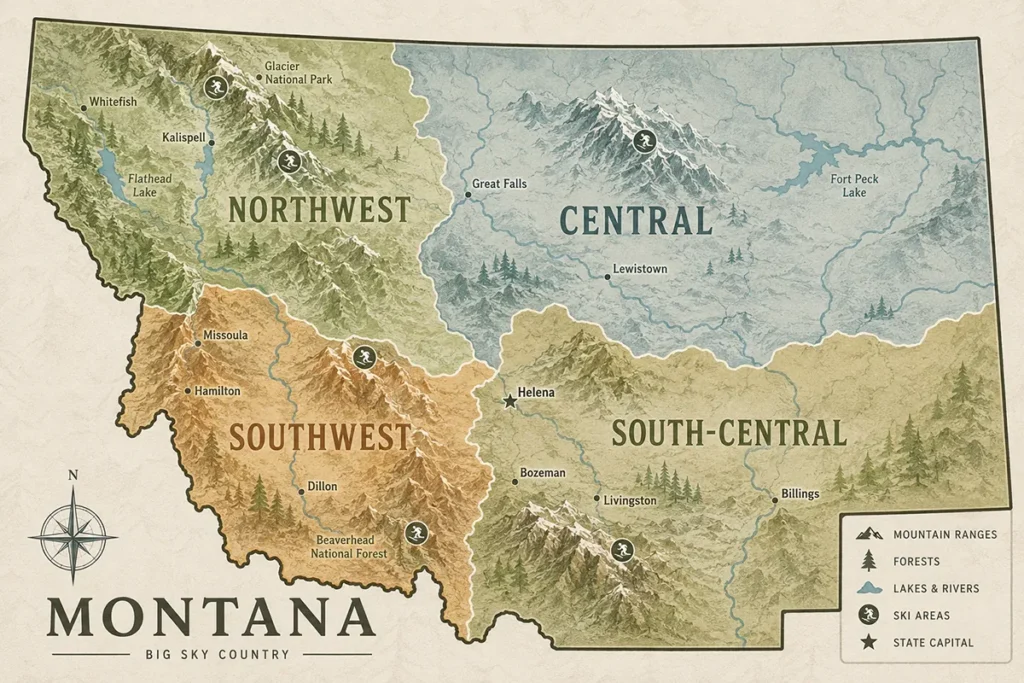
Montana’s Ski Geography: Four Regions, 18 Mountains
Before we get into individual resorts, it helps to understand how Montana’s ski terrain is laid out. Skiing here clusters into four loose regions, and your trip strategy should match where you’re flying in.
Northwest Montana (Glacier Country)
This region catches the most Pacific moisture and produces the deepest, heaviest snow in the state. Whitefish Mountain Resort is the anchor, with Blacktail Mountain, Turner Mountain, and Lookout Pass all within a couple of hours. If you’re flying into Glacier Park International (FCA) in Kalispell, this is your territory.
Southwest Montana (Gold West Country)
Old-school skiing along the Idaho border. Discovery, Maverick Mountain, Lost Trail, Montana Snowbowl, and Great Divide sit in this region. Locals outnumber visitors at every one of them. Missoula International (MSO) is the gateway.
South-Central Montana (Yellowstone Country)
Home to Montana’s two biggest names: Big Sky Resort and Bridger Bowl, plus Moonlight Basin (now part of Big Sky), the private Yellowstone Club, Red Lodge Mountain, and the summer-only Beartooth Basin. Bozeman Yellowstone International (BZN) is the main airport.
Central & North-Central Montana (Russell Country / Hi-Line)
The road-trip region. Showdown Montana in the Little Belt Mountains, Teton Pass on the Rocky Mountain Front, and Bear Paw Ski Bowl out on the Hi-Line. You won’t fly in for any of these specifically — but if you’re crossing the state, they’re worth a stop.
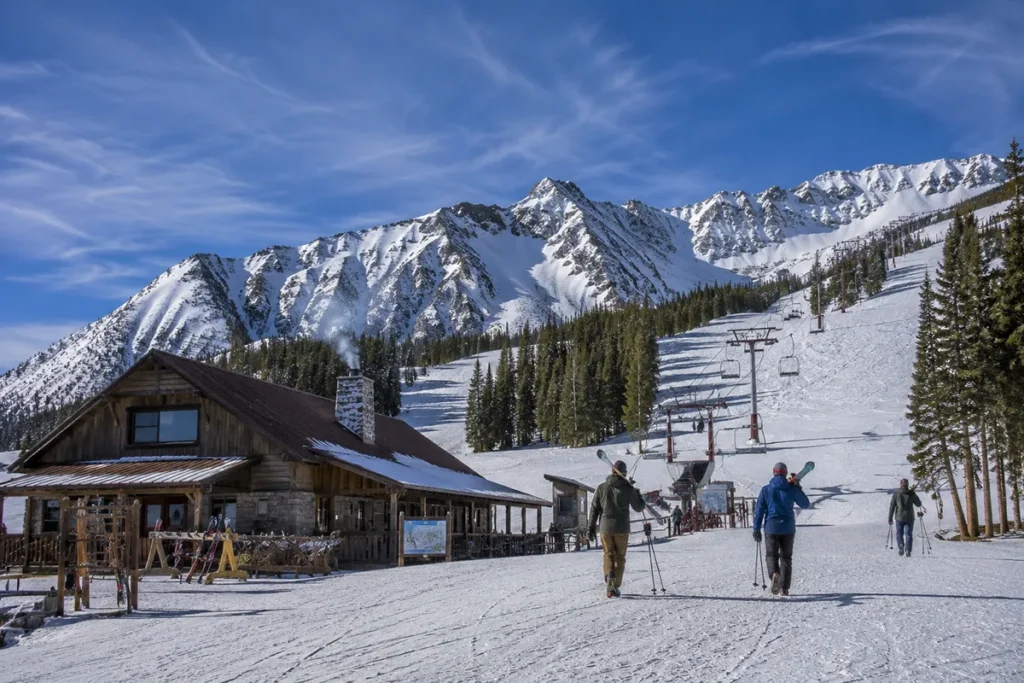
Complete Montana Ski Resorts Breakdown: All 18 Montana Ski Areas
I’ve organized the breakdown by region rather than by size, because that’s how you’ll actually plan a trip. Each section gives you the stats, my honest take, and a link to the full deep-dive guide where it exists.
Northwest Montana Ski Resorts
1. Whitefish Mountain Resort
| Vertical Drop | 2,353 feet |
|---|---|
| Skiable Acres | 3,000 |
| Annual Snowfall | ~300 inches |
| Lift Ticket (2025–26) | $110–$139 [verify current price] |
| Pass Affiliation | not on Ikon, Epic, or Indy |
| Best For | All abilities, families, ski-town culture |
If I had to pick a single Montana resort to recommend to a first-timer, it would be Whitefish. The combination of legitimate ski terrain, an authentic ski town that exists for reasons other than tourism, and prices that don’t require a second mortgage is genuinely rare in the modern ski industry.
I spent four days here last January during a Pacific storm cycle. We got 26 inches overnight, and I spent the morning in Hellroaring Basin making first tracks through old-growth cedar and larch.
The snow texture is heavier than Colorado powder but unbelievable in trees. That afternoon, I walked from the base lodge to a brewery in town in 12 minutes. Try doing that at Big Sky.
The town of Whitefish itself does a lot of heavy lifting here. Craft breweries, real restaurants, locals who actually live here year-round.
Night skiing runs until 9 PM on select dates — I love doing afternoon-into-evening sessions with a dinner break in town. For more on the town itself, see my guide to Whitefish in winter and where to stay in Whitefish.
Honest downside: Pacific weather brings low visibility days. If you’re chasing bluebird, this isn’t your mountain.
➤ Read the full guide: Whitefish Mountain Resort: A Local’s Complete Guide

2. Blacktail Mountain
| Vertical Drop | 1,440 feet |
|---|---|
| Skiable Acres | 1,000 |
| Annual Snowfall | ~250 inches |
| Lift Ticket | $54 [verify current price] |
| Pass Affiliation | Indy Pass partner [verify current season] |
| Best For | Families, beginners, Flathead Lake views |
Blacktail does something unusual: you park at the top and ski down. The lodge and parking sit at the summit, and the views across Flathead Lake to the Mission Mountains hit you the moment you step out of the car.
I brought my nephew here for his first ski experience last season — gentle, long runs from the top, no fighting uphill lift lines between attempts.
Blacktail isn’t a destination resort. It’s a community mountain that happens to have one of the best views of any ski area in Montana. I’ve spent entire lunch breaks just sitting on the deck staring at Flathead.
➤ Read the full guide: Blacktail Mountain Ski Area Guide
3. Turner Mountain
| Vertical Drop | 2,110 feet |
|---|---|
| Skiable Acres | 640 |
| Annual Snowfall | ~250 inches |
| Lift Ticket | $25 [verify current price] |
| Pass Affiliation | Independent |
| Best For | Adventurous budget skiers, steeps junkies |
Turner Mountain near Libby delivers more vertical drop per dollar than any chair-served ski area in Montana. A single T-bar, genuinely steep terrain, 2,110 feet of vertical, and a $25 ticket. I drove four hours from Missoula specifically to ski Turner and I’d do it again next month.
The catch: it operates on a limited schedule, runs on volunteer power, and there’s basically nothing in the way of amenities. Call ahead, bring snacks, and be ready to ski hard. The views toward the Cabinet Mountains are spectacular.
➤ Read the full guide: Turner Mountain Ski Area Near Libby MT
4. Lookout Pass Ski Area
| Vertical Drop | 1,650 feet |
|---|---|
| Skiable Acres | 1,023 |
| Annual Snowfall | ~400 inches |
| Lift Ticket | [verify current price — typically $60–$75] |
| Pass Affiliation | Indy Pass partner [verify current season] |
| Best For | I-90 road-trippers, intermediate variety, powder days |
Lookout Pass sits literally on the Idaho–Montana state line at exit 0 of I-90. You ski on both sides of the border in the same afternoon. The resort gets some of the most consistent snow in the state because of how the Pacific weather rolls through this gap in the Bitterroots — locals will tell you Lookout is the first place in the region to be skiable each season.
Expanded terrain on Eagle Peak over recent years gave Lookout some legitimate intermediate and advanced runs to go with its long-standing reputation as a family mountain. The free kids’ learn-to-ski program here is one of the longest-running in the country.
➤ Read the full guide: Lookout Pass Ski and Recreation Area
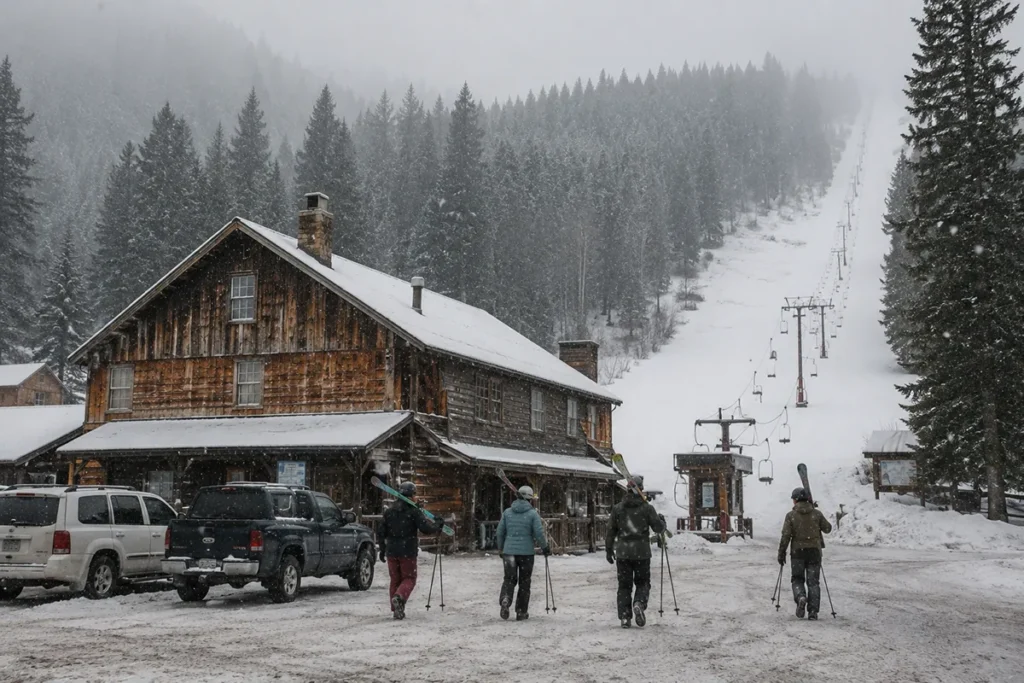
Southwest Montana Ski Resorts
5. Discovery Ski Area
| Vertical Drop | 2,388 feet |
|---|---|
| Skiable Acres | 2,200 |
| Annual Snowfall | ~215 inches |
| Lift Ticket | $59 [verify current price] |
| Pass Affiliation | Indy Pass partner [verify current season] |
| Best For | Value seekers, intermediate variety, hidden expert terrain |
Discovery might be Montana’s best-kept secret, and I almost hesitate to write about it. When I visited on a powder day last winter, I had runs to myself that would have drawn crowds of hundreds at any Colorado resort.
What surprised me on my first visit was the terrain variety. Discovery spreads across multiple bowls and ridges. Rumsey Basin and Limelight Mountain on the backside hide legitimate steeps that most destination skiers never even know exist. At $59 for a full-day ticket, the value is absurd.
Stay in Anaconda or Philipsburg — both are quirky Montana towns worth a day in their own right.
➤ Read the full guide: Discovery Ski Area Montana: A Local’s Hidden Gem Guide
6. Lost Trail Powder Mountain
| Vertical Drop | 1,800 feet |
|---|---|
| Skiable Acres | 1,800 |
| Annual Snowfall | ~350 inches |
| Lift Ticket | $54 [verify current price] |
| Pass Affiliation | Indy Pass partner [verify current season] |
| Operating Days | Thursday–Sunday + major holidays |
| Best For | Powder hounds, solitude seekers |
Lost Trail sits directly on the Montana–Idaho border at Chief Joseph Pass, and it catches powder like few places in the Northern Rockies. The name doesn’t lie. I once arrived during a storm cycle that had dropped 40 inches in three days. I skied with maybe 50 other people total.
Getting there requires commitment — 90 minutes from Missoula, or 45 minutes from Salmon, Idaho. The Thursday–Sunday operating schedule keeps it uncrowded by design. The lack of crowds means powder lasts for days, not hours.
➤ Read the full guide: Lost Trail Powder Mountain Guide
7. Montana Snowbowl
| Vertical Drop | 2,600 feet |
|---|---|
| Skiable Acres | 1,000 |
| Annual Snowfall | ~300 inches |
| Lift Ticket | $67 [verify current price] |
| Pass Affiliation | Indy Pass partner [verify current season] |
| Best For | Experts, University of Montana students, Missoula day trips |
Snowbowl delivers legitimate expert terrain 12 miles from downtown Missoula. The University of Montana connection brings an energetic, young vibe to the place. TV Mountain’s steep faces and Lolo Peak’s lift-accessed backcountry attract serious skiers.
Honest tradeoff: Snowbowl has more variable snow than other Montana resorts. Lower elevation and southern aspects create crusty conditions between storms. Time your visit right — within a day or two of a storm — and the steep terrain is incredible. Show up at the wrong moment and you’ll find ice.
Stay in Missoula and enjoy the town’s craft-beverage and food scene. For more on Missoula, see things to do in Missoula.
➤ Read the full guide: Montana Snowbowl Ski Area Guide
8. Maverick Mountain
| Vertical Drop | 2,120 feet |
|---|---|
| Skiable Acres | 200 |
| Annual Snowfall | ~200 inches |
| Lift Ticket | $40 [verify current price] |
| Pass Affiliation | Indy Pass partner [verify current season] |
| Operating Days | Thursday–Sunday |
| Best For | Budget skiers, nostalgia, intermediate cruising |
Maverick Mountain is tiny by any standard — one double chair, 200 acres, and a base lodge that hasn’t changed much since the 1960s. I love it completely. At $40, Maverick is the cheapest chair-served ticket in Montana.
When I pulled up to Maverick on a Thursday morning, exactly three other cars sat in the lot. I skied with the owner, who still operates the lift himself some days.
Dillon, about 30 miles north, has the nearest lodging and services. The Elkhorn Hot Springs is 15 minutes down the road and makes a perfect end to a Maverick ski day.
➤ Read the full guide: Maverick Mountain Ski Area Guide
9. Great Divide Ski Area
| Vertical Drop | 1,500 feet |
|---|---|
| Skiable Acres | 1,600 |
| Annual Snowfall | ~150 inches |
| Lift Ticket | $50 [verify current price] |
| Pass Affiliation | Indy Pass partner [verify current season] |
| Best For | Helena-area families, early/late season, terrain variety |
Great Divide sits 25 minutes northwest of Helena and punches above its weight. The mountain spreads across multiple peaks with surprisingly diverse terrain — gentle slopes near the base and legitimate steeps on the upper mountain. The spread-out layout prevents crowding.
Great Divide is also notable for being one of the first Montana resorts to open each season, sometimes in mid-November when most of the state is still bare. Limited on-mountain lodging means most visitors commute from Helena, which is a comfortable arrangement.
➤ Read the full guide: Great Divide Ski Area Guide
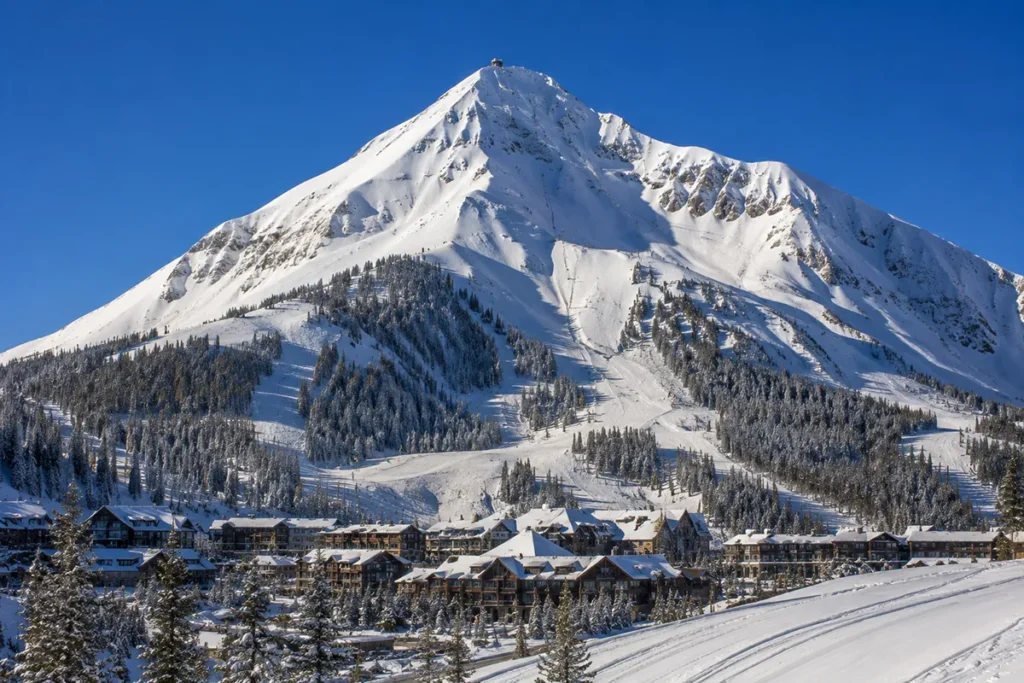
South-Central Montana Ski Resorts
10. Big Sky Resort
| Vertical Drop | 4,350 feet |
|---|---|
| Skiable Acres | 5,850 |
| Annual Snowfall | ~400 inches |
| Lift Ticket | $200–$280+ [verify current price] |
| Pass Affiliation | Ikon Pass [verify current season] |
| Best For | Advanced skiers, resort amenities, big-mountain terrain |
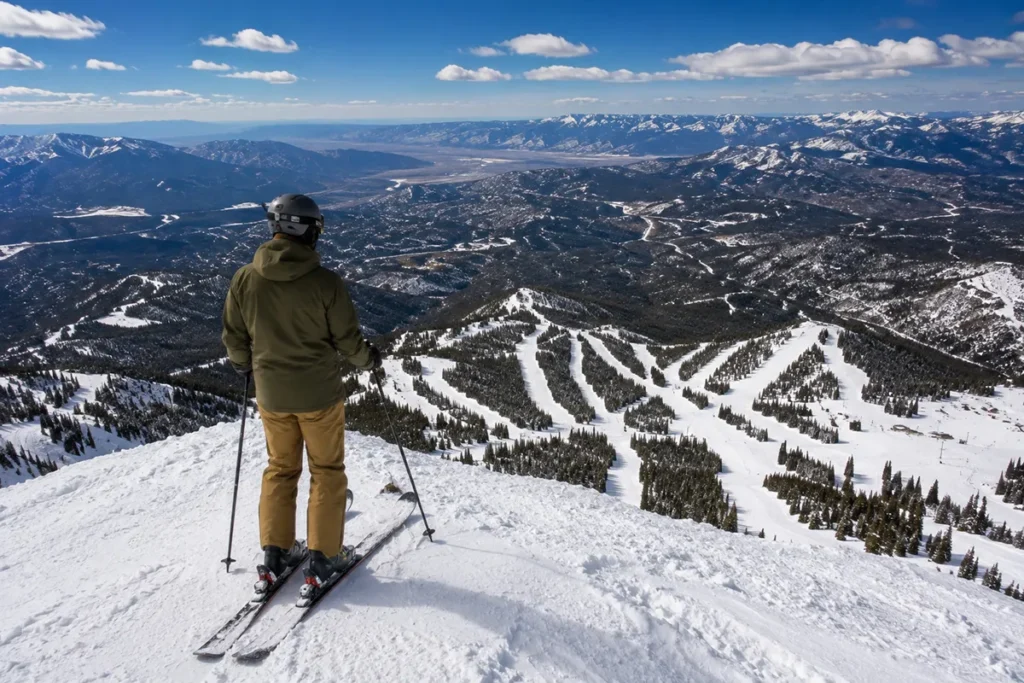
Big Sky is Montana’s behemoth — the largest ski resort in North America by skiable acreage. I’ve visited at least a dozen times and I still find new terrain every trip. The Lone Peak Tram accesses some of the most challenging lift-served terrain in the country.
Last March, I finally worked up the courage to drop into the Big Couloir. The 50-degree pitch and mandatory 15-foot cliff had my legs shaking before I pushed off. I came out the bottom completely changed. That terrain genuinely exists in only a handful of places in North America.
What the marketing won’t tell you: Big Sky’s base village still feels engineered compared to organic ski towns like Whitefish or Red Lodge. It’s improved a lot since my first visit in 2016 — better restaurants, better lodging — but it’s still a built-for-skiing village, not a real Montana town.
My move is staying in Bozeman (45 minutes away) for the real food and culture and driving in. For more on Bozeman, see things to do in Bozeman.
➤ Read the full guide: Big Sky Resort: A Local’s Honest Guide
11. Moonlight Basin
| Vertical Drop | 4,150 feet (shared) |
|---|---|
| Skiable Acres | Now part of Big Sky’s 5,850 |
| Annual Snowfall | ~400 inches |
| Lift Ticket | Included on Big Sky ticket |
| Pass Affiliation | Ikon Pass (via Big Sky) |
| Best For | Quieter alternative to Big Sky’s main side |
Moonlight Basin used to be its own resort. Big Sky bought it, and the terrain is now lift-accessible on the standard Big Sky ticket — but it still feels distinctly different from the Mountain Village side. Quieter, more spread out, mountainside homes instead of base-village hotels.
If you’re staying at Big Sky and want a less-crowded morning of skiing, head over to the Moonlight Basin lifts before the rest of the resort wakes up. The Moonlight side often holds untracked snow longer because most visitors stay on the Mountain Village side.
➤ Read the full guide: Moonlight Basin Montana: The Quieter Side of Big Sky
12. Yellowstone Club
| Vertical Drop | 2,700 feet |
|---|---|
| Skiable Acres | 2,900 |
| Annual Snowfall | ~300 inches |
| Lift Ticket | Members only — initiation fees in the hundreds of thousands |
| Pass Affiliation | Private |
| Best For | A look at the most exclusive skiing in America |
I have not, to be transparent, ever skied Yellowstone Club. Almost no one has. The Yellowstone Club is a fully private members-only resort directly adjacent to Big Sky, with a reported initiation fee in the hundreds of thousands of dollars and tightly limited membership.
What’s worth knowing as a Montana ski traveler: the terrain is genuinely excellent, the snow is the same that falls on Big Sky and Moonlight (they share a ridgeline), and the runs are kept obsessively pristine because the skier density is microscopic.
From the public Big Sky terrain, you can sometimes see Yellowstone Club lifts running across the boundary. That’s the closest most of us will ever get, and that’s fine. The resort exists; ignoring it would be incomplete.
➤ Read the full guide: Yellowstone Club: The Most Exclusive Ski Resort in America
13. Bridger Bowl
| Vertical Drop | 2,700 feet |
|---|---|
| Skiable Acres | 2,000 |
| Annual Snowfall | ~350 inches |
| Lift Ticket | ~$85 [verify current price] |
| Pass Affiliation | Powder Alliance, Indy Pass partner [verify] |
| Best For | Expert terrain, locals’ mountain, “cold smoke” powder |
Bridger Bowl operates as a nonprofit, which explains both its affordable prices and its fiercely loyal local following. Montana State University sits 16 miles down the road in Bozeman, and the energy at Bridger is half college town, half ski-bum lifer.
The “cold smoke” powder at Bridger is legendary. The east-facing slopes catch dry, light snow that floats more than falls. I’ve experienced it firsthand — it genuinely feels different from snow at Whitefish or Big Sky.
The ridge terrain accessed from Schlasman’s lift requires an avalanche transceiver, and the runs from the top (The Nose, The Fingers) rival anything in North America.
Honest criticism: the base facilities feel dated, and crowded weekends mean lift lines that locals will openly complain about. Go midweek if you can.
➤ Read the full guide: Bridger Bowl Ski Area Guide
14. Red Lodge Mountain
| Vertical Drop | 2,400 feet |
|---|---|
| Skiable Acres | 1,635 |
| Annual Snowfall | ~250 inches |
| Lift Ticket | [verify current price — typically $80–$100] |
| Pass Affiliation | Indy Pass partner [verify current season] |
| Best For | Families, intermediates, Beartooth country access |
Red Lodge Mountain punches above its modest reputation. Sitting at the foot of the Beartooth Range southeast of Billings, this mountain delivers 2,400 feet of vertical — more than most visitors expect — spread across terrain that genuinely suits every ability level.
My favorite run is Broadway, a long cruising groomer that winds through open terrain with the Beartooth Plateau looming above. On a clear morning last January, the view from the top nearly stopped me mid-run.
The new high-speed detachable quad dramatically reduced wait times over recent seasons, and the base lodge renovation means you’re not sitting in a cafeteria from 1978.
The town of Red Lodge itself is one of Montana’s most charming small towns — historic main street, good restaurants, a craft brewery, real western character. I always stay in town rather than seeking on-mountain lodging.
Red Lodge is also the northern gateway to the Beartooth Highway (US-212), which opens in late May or June and climbs to over 10,000 feet — one of the most dramatic drives in America.
➤ Read the full guide: Red Lodge Mountain Ski Area Guide
15. Beartooth Basin Summer Ski Area
| Vertical Drop | 900 feet |
|---|---|
| Skiable Acres | ~600 |
| Operating Season | Memorial Day weekend through early July (snow dependent) |
| Lift Ticket | [verify current price — typically $70–$100] |
| Pass Affiliation | Independent |
| Best For | Summer skiing, racing camps, bragging rights |
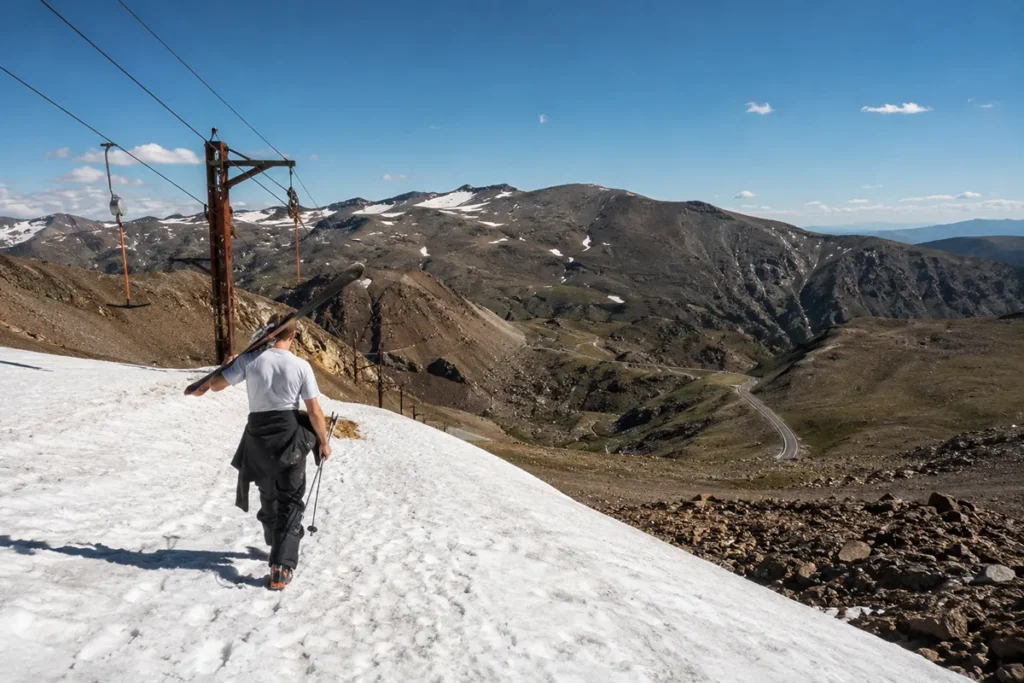
Beartooth Basin is genuinely unique. It’s a summer-only ski area sitting at over 10,000 feet on the Beartooth Highway, operating roughly Memorial Day weekend through early July depending on how the snowpack holds. There is no winter operation at all — the highway itself doesn’t open until late spring.
I drove up to ski Beartooth Basin on a Saturday in mid-June a few years back. Wore shorts to the car, then layered into ski gear in the parking lot.
The terrain is two surface lifts on a permanent snowfield, used heavily by ski racing camps in the early summer. Going from sweating in shorts at the trailhead to skiing on a glacier in three hours is the kind of thing you can only do in Montana.
If you’re planning a summer Montana road trip, this is a uniquely linkable experience to build into the itinerary alongside Yellowstone wolf watching and Lamar Valley.
➤ Read the full guide: Beartooth Basin: Skiing Montana in July
Central & North-Central Montana Ski Resorts
16. Showdown Montana
| Vertical Drop | 1,400 feet |
|---|---|
| Skiable Acres | 640 |
| Annual Snowfall | ~245 inches |
| Lift Ticket | $55 [verify current price] |
| Pass Affiliation | Indy Pass partner [verify current season] |
| Best For | Central Montana base, intermediate cruising, road-trippers |
Showdown sits in the Little Belt Mountains, making it the only real skiing option for travelers crossing central Montana. Great Falls is about 90 minutes north. The terrain suits cruising and intermediate skiers — long groomers wind through open bowls, and the lack of crowds means you can actually carry speed.
I stopped at Showdown during a Hi-Line road trip last winter. The snow surprised me — better than expected for central Montana — and the emptiness felt almost eerie. There were genuinely entire groomers I had to myself for a full top-to-bottom run.
➤ Read the full guide: Showdown Montana Ski Area Guide
17. Teton Pass Ski Area
| Vertical Drop | 1,010 feet |
|---|---|
| Skiable Acres | 400 |
| Annual Snowfall | ~250 inches |
| Lift Ticket | $35 [verify current price] |
| Pass Affiliation | Independent |
| Best For | Rocky Mountain Front access, families |
Teton Pass sits along the Rocky Mountain Front northwest of Choteau, providing the only alpine skiing access to this stunning region where the Great Plains crash into the Front Range.
The mountain rises abruptly from the plains here, creating dramatic scenery that genuinely doesn’t exist anywhere else in the state.
Don’t confuse this with Wyoming’s famous Teton Pass — Montana’s version is much smaller and lower-key. But that’s exactly the appeal.
I visited Teton Pass primarily to scout a backcountry ski tour into the nearby Bob Marshall Wilderness, and the resort made a perfect warm-up day before heading into the bigger mountains.
➤ Read the full guide: Teton Pass Ski Area Guide
18. Bear Paw Ski Bowl
| Vertical Drop | 900 feet |
|---|---|
| Skiable Acres | 240 |
| Annual Snowfall | ~120 inches |
| Lift Ticket | $25 [verify current price] |
| Pass Affiliation | Independent |
| Operating Days | Saturdays, Sundays + select holidays |
| Best For | Hi-Line travelers, community skiing |
Bear Paw serves the isolated Hi-Line region south of Havre. It’s a true community ski area — locals volunteer to run it, and Havre families have been learning to ski here for generations.
I stopped at Bear Paw while driving Highway 2 and found exactly what I expected: a humble T-bar operation with friendly locals and uncrowded slopes.
Don’t expect resort amenities. Do expect genuine hospitality and a glimpse at what skiing looked like in this country 50 years ago. Bear Paw operates a limited weekend schedule — call before you drive out.
➤ Read the full guide: Bear Paw Ski Bowl Guide
Which Montana Ski Resort Should You Choose?
After 18 resort breakdowns, the obvious next question is: which one do I actually book? Here’s a decision framework based on what your trip is actually for.
If you’re a first-time Montana skier and want one resort to do it all:
Whitefish Mountain Resort. It has the best balance of terrain, town, and accessibility. Skiable for every level, real ski-town culture, and Glacier National Park as a bonus. Fly into Glacier Park International (FCA).
If you’re an advanced skier chasing the biggest terrain in the country:
Big Sky Resort. Nowhere else in the lower 48 lets you ski 5,850 acres and 4,350 vertical feet from one ticket. The Lone Peak Tram is its own attraction. Fly into Bozeman (BZN).
If you’re a powder skier who hates crowds:
Lost Trail or Whitefish during a Pacific storm cycle. Lost Trail’s Thursday–Sunday schedule and remote location mean powder lasts for days. Whitefish gets the dumps; pick your storm and you can have legitimate first tracks well into the day.
If you’re on a tight budget but want real terrain:
Turner Mountain ($25 ticket, 2,110 ft vertical) or Maverick Mountain ($40, 2,120 ft vertical). Nowhere else in America delivers this much vertical at this price point.
If you’re traveling with kids who are still learning:
Whitefish, Blacktail, Discovery, or Red Lodge. Whitefish has the best ski school infrastructure. Blacktail and Discovery have the gentlest learning terrain. Red Lodge has a charming town to retreat to when little legs are done.
If you want a real Montana ski town, not a built-for-skiing village:
Whitefish, Red Lodge, or Bozeman (skiing at Bridger). All three are real towns where people live year-round. Big Sky’s Mountain Village is the opposite — it exists because of the ski resort.
If you’re road-tripping across Montana and want to ski opportunistically:
Use the regional map above. Showdown and Great Divide sit on natural east-west crossing routes. Bear Paw is the play if you’re driving the Hi-Line. Lookout Pass is a 10-minute detour off I-90.
If you want to ski multiple resorts on one pass:
Look at the Indy Pass — most Montana resorts (Bridger Bowl, Discovery, Red Lodge, Lost Trail, Maverick, Showdown, Great Divide, Lookout Pass, Snowbowl, Blacktail) are partners in recent seasons. The Indy Pass usually costs less than 3–4 single-day tickets at any of those mountains. [Verify current Indy Pass partner list each season — partnerships change.]
If you want to see what private skiing for billionaires looks like:
Yellowstone Club. Buy a really expensive house first.
What I Wish I Knew Before Skiing Montana
After visiting all 18 ski areas across multiple seasons, here’s the accumulated wisdom I keep sharing with every friend who asks me about a Montana ski trip.
Powder moves fast at the big resorts but lasts for days at the small ones. At Big Sky on a powder morning, untracked snow in popular zones disappears within two hours. At Lost Trail or Maverick, I’ve found untracked lines two full days after a storm. If fresh tracks are your priority, think small.
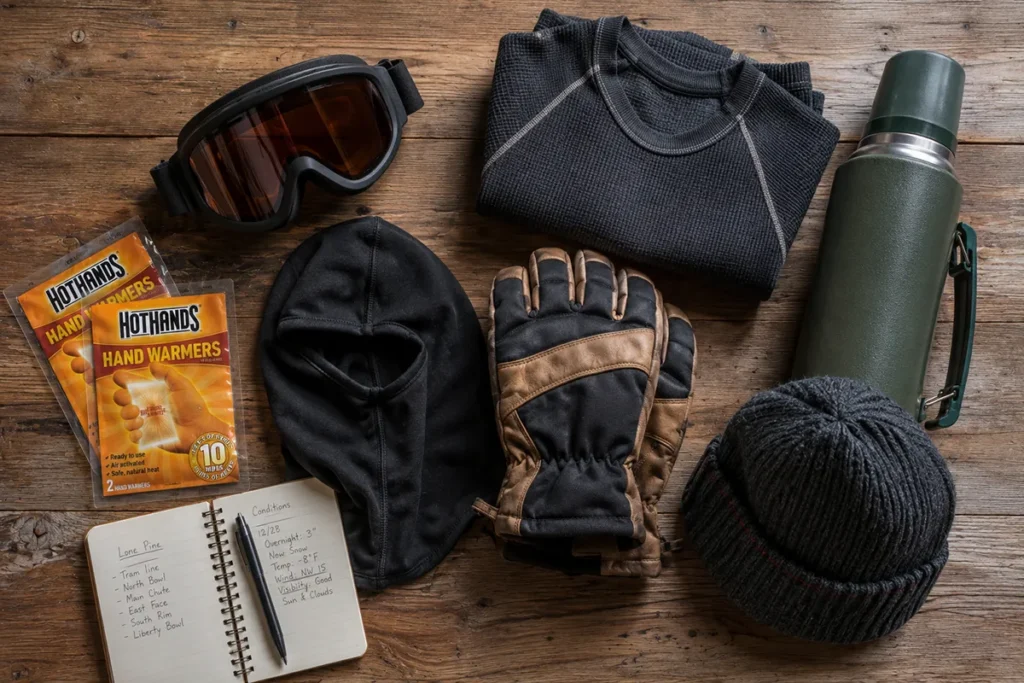
The cold is real, and it’s different from Colorado cold. Montana sits further north, and some resorts hit wind chills of -20°F to -30°F in January. I learned the hard way at Bridger Bowl one February morning. My hands went numb through gloves rated to -10°F. Bring hand warmers, always. Bring a balaclava, not just a neck gaiter. For more on what to expect, see how cold Montana actually gets.
Midweek skiing is dramatically better — even at Big Sky. I’ve skied Big Sky on a holiday Saturday and waited 45 minutes for the Lone Peak Tram. I’ve skied it on a Thursday in February and lapped the tram four times without stopping. The difference is enormous.
Don’t sleep on March. March is my favorite Montana ski month. The snowpack is at its deepest, days are longer, temperatures moderate slightly, and the light turns golden. I’ve had some of my greatest Montana ski days in mid-March at Whitefish and Discovery. For more on timing, see the best time to visit Montana.
Cell service blackouts are real. Many Montana resorts sit in valleys and canyons with zero coverage. Download offline maps, tell someone your itinerary, and charge devices fully before heading out.
Renting gear in town beats renting at the resort. Bozeman, Missoula, and Whitefish all have excellent rental shops that typically run 20–30% cheaper than resort counters, and the staff takes more time to fit you correctly. Reserve online in advance during peak weeks.
The drive to remote resorts is part of the experience. The 90-minute drive to Lost Trail through the Bitterroot Valley, the winding canyon road up to Turner Mountain — these aren’t inconveniences. They’re Montana. Pull over when an elk herd crosses the road. Stop at the small-town gas station for coffee.
Snow tires + AWD aren’t optional in January and February. I’ve watched rental cars on summer tires fail to make it up resort access roads. If you’re flying in, pay for the AWD upgrade and confirm winter tires. The Montana winter driving guide covers the rest.
Montana Ski Resorts: At-a-Glance Comparison
Use this table to quickly compare all 18 of Montana’s ski areas across the criteria that matter most for trip planning.
| Resort | Vertical | Acres | Avg. Snow | Day Ticket | Best For | Nearest Town |
|---|---|---|---|---|---|---|
| Big Sky | 4,350 ft | 5,850 | 400 in | $200–$280+ | Expert terrain, big-mountain skiing | Bozeman (45 min) |
| Whitefish | 2,353 ft | 3,000 | 300 in | $110–$139 | All abilities, ski-town culture | Whitefish (3 mi) |
| Bridger Bowl | 2,700 ft | 2,000 | 350 in | ~$85 | Expert, “cold smoke” powder | Bozeman (16 mi) |
| Discovery | 2,388 ft | 2,200 | 215 in | $59 | Value, hidden terrain | Anaconda/Philipsburg |
| Red Lodge | 2,400 ft | 1,635 | ~250 in | [verify] | Families, Beartooth access | Red Lodge (6 mi) |
| Lost Trail | 1,800 ft | 1,800 | 350 in | $54 | Powder solitude, Thu–Sun only | Hamilton (90 min) |
| Snowbowl | 2,600 ft | 1,000 | 300 in | $67 | Expert, Missoula day trip | Missoula (12 mi) |
| Lookout Pass | 1,650 ft | 1,023 | ~400 in | [verify] | I-90 stop, family skiing | Wallace, ID (5 mi) |
| Great Divide | 1,500 ft | 1,600 | 150 in | $50 | Helena families, early season | Helena (25 min) |
| Blacktail Mtn | 1,440 ft | 1,000 | 250 in | $54 | Beginners, Flathead views | Lakeside (7 mi) |
| Showdown | 1,400 ft | 640 | 245 in | $55 | Central MT road-trippers | Great Falls (90 min) |
| Turner Mountain | 2,110 ft | 640 | 250 in | $25 | Best $/vertical in MT | Libby (20 mi) |
| Maverick Mtn | 2,120 ft | 200 | 200 in | $40 | Budget, nostalgia | Dillon (30 mi) |
| Teton Pass | 1,010 ft | 400 | 250 in | $35 | Rocky Mtn Front access | Choteau (15 mi) |
| Bear Paw | 900 ft | 240 | 120 in | $25 | Hi-Line community skiing | Havre (20 mi) |
| Moonlight Basin | 4,150 ft* | (shared) | 400 in | (Big Sky ticket) | Quieter Big Sky side | Big Sky |
| Yellowstone Club | 2,700 ft | 2,900 | ~300 in | Members only | Private/exclusive | Big Sky area |
| Beartooth Basin | 900 ft | ~600 | n/a (summer) | [verify] | Summer skiing (May–Jul) | Red Lodge (60 min) |
Lift ticket prices reflect recent seasons and change annually — always verify current pricing on each resort’s website before your trip.
Practical Trip Planning Info
Best overall time to visit: Mid-January through early March for peak snow conditions.
March is the sweet spot for combining deep snowpack, longer days, and moderate temperatures. Avoid holiday weeks (Christmas–New Year’s, Presidents’ Day weekend) at Big Sky and Whitefish unless you book 3–4 months out.
Getting there:
| Airport | Code | Best for |
|---|---|---|
| Bozeman Yellowstone International | BZN | Big Sky, Bridger Bowl, Moonlight, Yellowstone Club |
| Glacier Park International | FCA | Whitefish, Blacktail, Turner (via long drive) |
| Missoula International | MSO | Snowbowl, Lost Trail, Discovery, Lookout Pass |
| Billings Logan International | BIL | Red Lodge, Showdown, Beartooth Basin (summer) |
| Great Falls International | GTF | Showdown, Teton Pass, Bear Paw |
What to bring:
- Base layers (merino wool or synthetic — never cotton)
- Insulated mid-layer (puffy or fleece)
- Waterproof shell jacket and pants
- Goggles with two lenses (bright light + low light)
- Balaclava or face mask (mandatory at Turner, Bear Paw, Bridger in January)
- Hand and toe warmers (pack more than you think you need)
- Offline maps downloaded before departure
- Car emergency kit (blanket, jumper cables, sand or kitty litter for traction)
For the full clothing breakdown, see my Montana winter clothing guide and Montana winter boots guide.
Driving in Montana winter: All-wheel or 4-wheel drive with snow tires is strongly recommended. Mountain passes can close without warning. Check Montana Road Conditions at 511.mt.gov before every drive day. More in the Montana winter driving guide.
Where to stay: For lodging strategies beyond the resort towns, see winter Airbnbs in Montana and the regional guides for Bozeman, Whitefish, and Red Lodge.
Altitude note: Big Sky’s Lone Peak summit reaches 11,166 feet. Visitors coming from sea level or low elevations should hydrate aggressively, limit alcohol the first night, and plan a gentler first ski day.
Final Thoughts on Montana Skiing
I’ve watched the ski industry change dramatically over the past decade — lift tickets cracking $300 at Vail, mega-pass consolidation squeezing out independent mountains, base villages that feel more like outdoor malls than ski towns. Montana has largely stayed outside that trajectory.
The 18 ski areas in this guide range from a world-class resort with 5,850 acres to a volunteer-run community T-bar where nobody knows your name but everyone acts like they do.
What they share is something harder to define than vertical feet or snowfall totals: a sense that skiing here is still about the act of skiing itself. The mountain, the snow, the friends you drag along, the burger at the base lodge, the drive home talking about that one run.
If you’re planning your first Montana ski trip, my advice is simple: pick one major resort as your anchor (Whitefish or Big Sky depending on whether you want ski-town culture or pure terrain volume), then build a day trip to one of the smaller mountains into your itinerary. That day — at Discovery, Turner, Lost Trail, or Lookout Pass — is often the one people remember longest.
Pin this guide before your trip planning kicks into gear, and drop your questions in the comments below.
I read every single one and will point you in the right direction for your specific situation — whether you’re a first-timer deciding between Big Sky and Bridger Bowl, or an expert chasing powder at the spots the ski magazines never write about.
Montana’s winters are long and the mountains are waiting. Go ski them.
Frequently Asked Questions
What is the best time to ski in Montana for optimal snow conditions?
Mid-January through early March is when Montana ski resorts hit their peak — deepest snowpack, most consistent conditions, and temperatures generally between 15°F and 30°F. March is my personal favorite for the combination of deep snow, longer days, and more forgiving temperatures. Most major resorts (Whitefish, Big Sky, Bridger Bowl) receive 300+ inches annually.
How many ski resorts are there in Montana?
Montana has 18 ski areas total. That includes 16 lift-served winter resorts, plus Beartooth Basin (a summer-only ski area on the Wyoming–Montana border) and Yellowstone Club (a private members-only resort adjacent to Big Sky). The 16 publicly accessible winter resorts range from Big Sky (the largest in North America by acreage) to small community operations like Bear Paw Ski Bowl and Turner Mountain.
What’s the difference between Big Sky and Whitefish?
Big Sky is bigger, steeper, and more expensive, with engineered base-village amenities and the most aggressive terrain in Montana. Whitefish is smaller (still 3,000 acres), more affordable, and pairs with a real Montana town that exists for reasons other than skiing. For first-time Montana visitors who want the full experience, I usually recommend Whitefish. For expert skiers chasing the biggest terrain, Big Sky.
How much does a ski trip to Montana cost compared to Colorado or Utah?
Montana ski resorts are meaningfully more affordable. Lift tickets average $80–$140 at the major resorts (Big Sky is the exception at $200+), compared to $200+ at most major Colorado destinations. Lodging in towns like Whitefish or Bozeman typically runs $150–$250/night versus $400+ in Vail or Park City. Budget around $200–$300 per person per day for lift tickets, rentals, food, and mid-range accommodations.
Which Montana ski resort is best for beginners and families?
Whitefish is my top all-around pick for families because it has the strongest ski school infrastructure plus terrain everyone in the family can grow into. For pure beginner-friendliness on a budget, Discovery, Blacktail, and Showdown all have gentle terrain, uncrowded slopes, and lift tickets under $60. Red Lodge is also excellent for families and has a charming town to retreat to.
Are Montana ski resorts on the Ikon or Epic Pass?
Big Sky is on the Ikon Pass. Most of the smaller and mid-sized Montana resorts (Bridger Bowl, Discovery, Red Lodge, Lost Trail, Maverick, Snowbowl, Showdown, Great Divide, Lookout Pass, Blacktail) are partners in the Indy Pass in recent seasons. No Montana resort is on the Epic Pass. [Verify current season pass affiliations on each resort’s website — partnerships change annually.]
How far are Montana ski resorts from major airports?
Big Sky Resort is about 45 miles from Bozeman Yellowstone International Airport (BZN), roughly a one-hour drive. Whitefish Mountain sits just 30 miles from Glacier Park International Airport (FCA), making it one of the most accessible Montana resorts. For remote gems like Lost Trail Powder Mountain, expect drives of 90 minutes to 2 hours from Missoula International Airport (MSO).
Can I combine a Montana ski trip with visiting Yellowstone or Glacier National Park?
Yes, and it’s one of the best uses of a Montana winter trip. Big Sky Resort is just an hour from Yellowstone’s north entrance, where you can book snowcoach tours to see wildlife and geothermal features in the snow. Whitefish Mountain is 30 miles from Glacier National Park’s west entrance — most park roads close in winter, but cross-country skiing and snowshoeing are incredible there.
Is Yellowstone Club open to the public?
No. Yellowstone Club is a private members-only resort with a reported initiation fee in the hundreds of thousands of dollars. It is not accessible to non-members, day-pass guests, or even hotel guests. Members include some of the most recognizable names in tech, finance, and media. From adjacent terrain at Big Sky, you can occasionally see Yellowstone Club lifts across the boundary — that’s the closest most of us will ever get.
When does Beartooth Basin open and close?
Beartooth Basin operates only in summer — typically Memorial Day weekend through early July, depending on the snowpack. There is no winter operation, because the Beartooth Highway itself doesn’t open until late spring. It’s one of the only places in the lower 48 where you can ski in shorts weather.