I’ve spent years tracking down obscure corners of Montana — hidden waterfalls, abandoned mining camps, vanished homesteads. But no place I’ve ever searched for has stopped me cold quite like Langville.
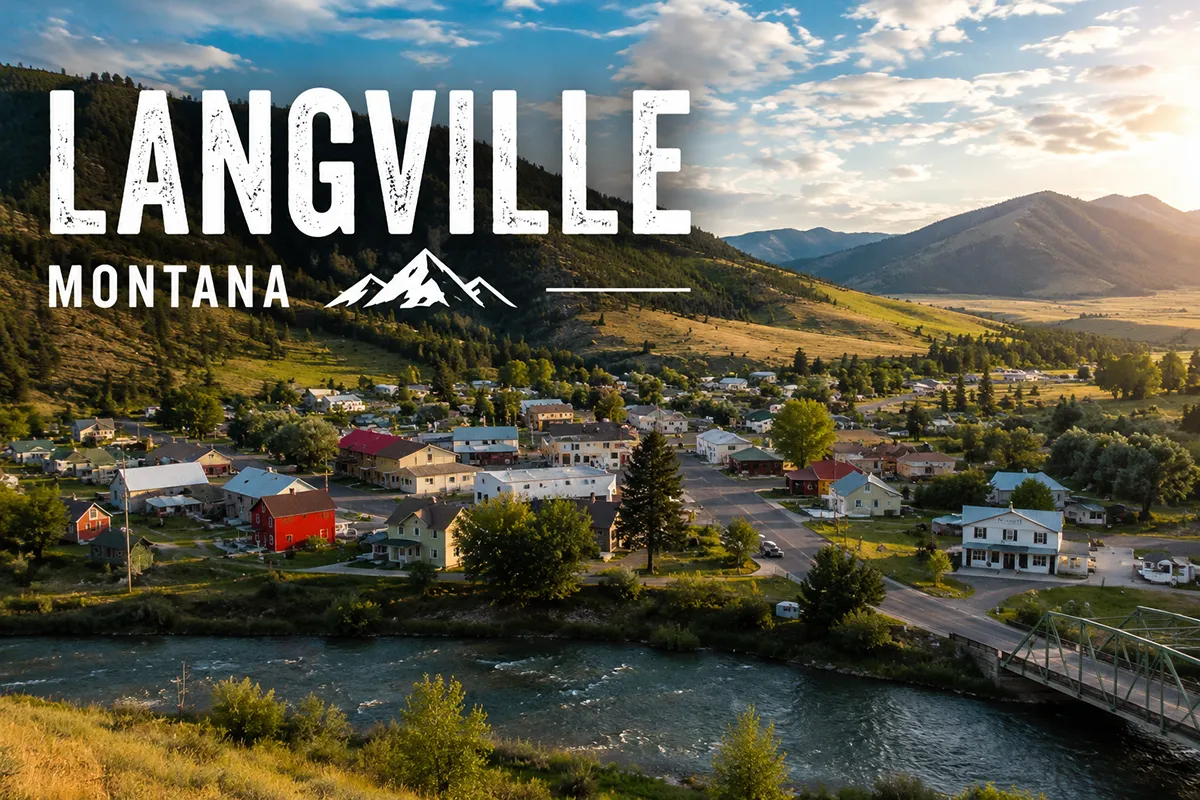
Langville, Montana is an internet urban legend — a town that supposedly vanished overnight, leaving no photos, no historical records, and no physical trace. The legend gained major traction after a single throwaway line in the 2016 Ghostbusters reboot. There is no credible evidence Langville ever existed. But the way the story grew, spread, and refuses to die is genuinely fascinating — and it says a lot about how digital folklore works in the modern age. This post covers the full legend, its timeline, the Ghostbusters connection, the psychology of why people believe it, and how Langville stacks up against Montana’s very real ghost towns.
Liked this article?
Add Roaming Montana as a preferred source so you see more of our articles and guides on Google.
The Town Nobody Can Find — And Everybody’s Heard Of
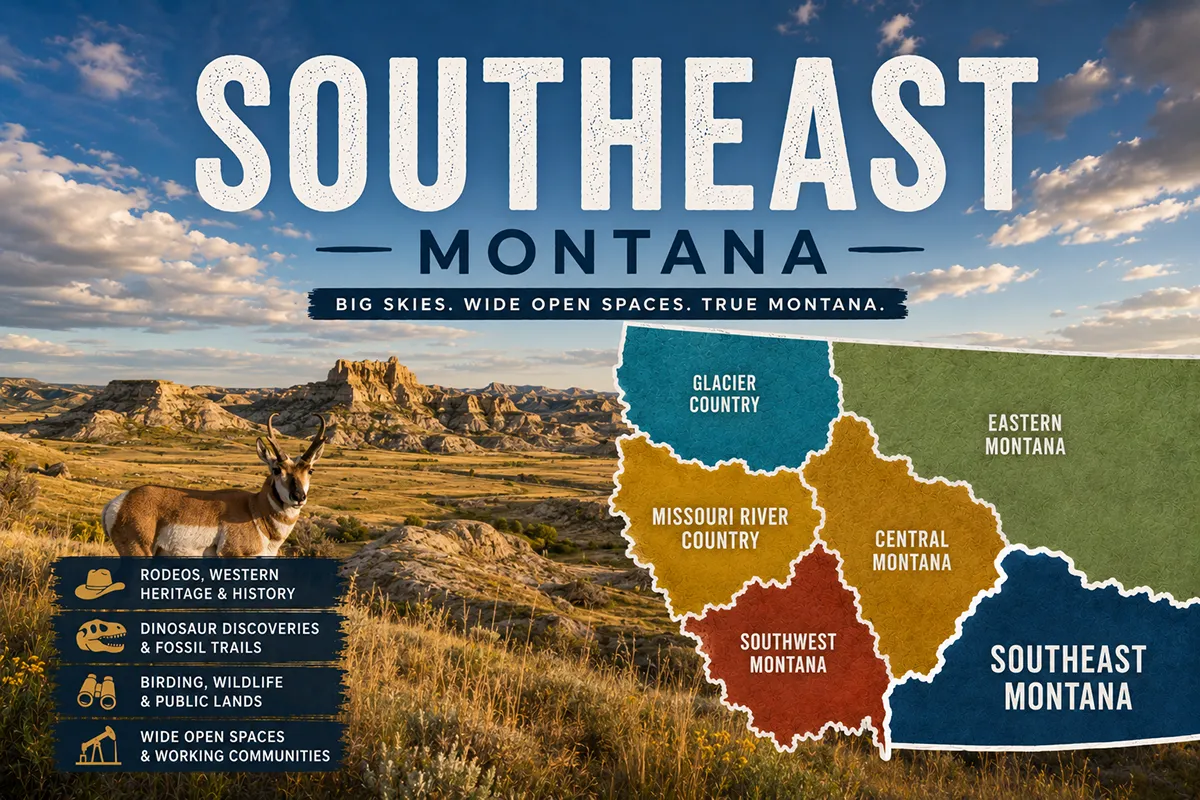
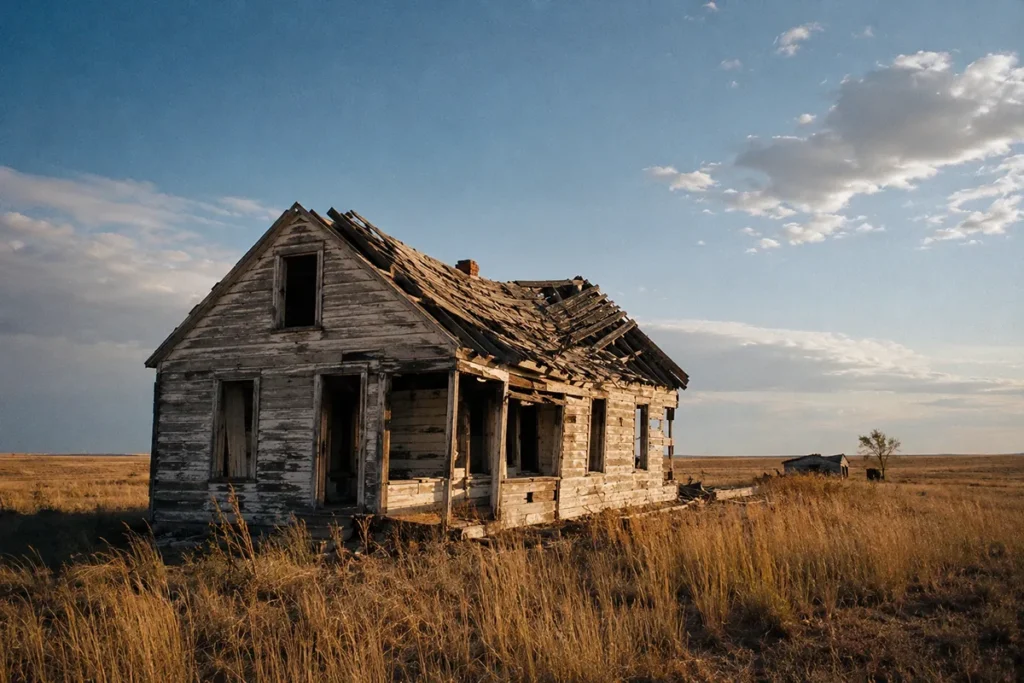
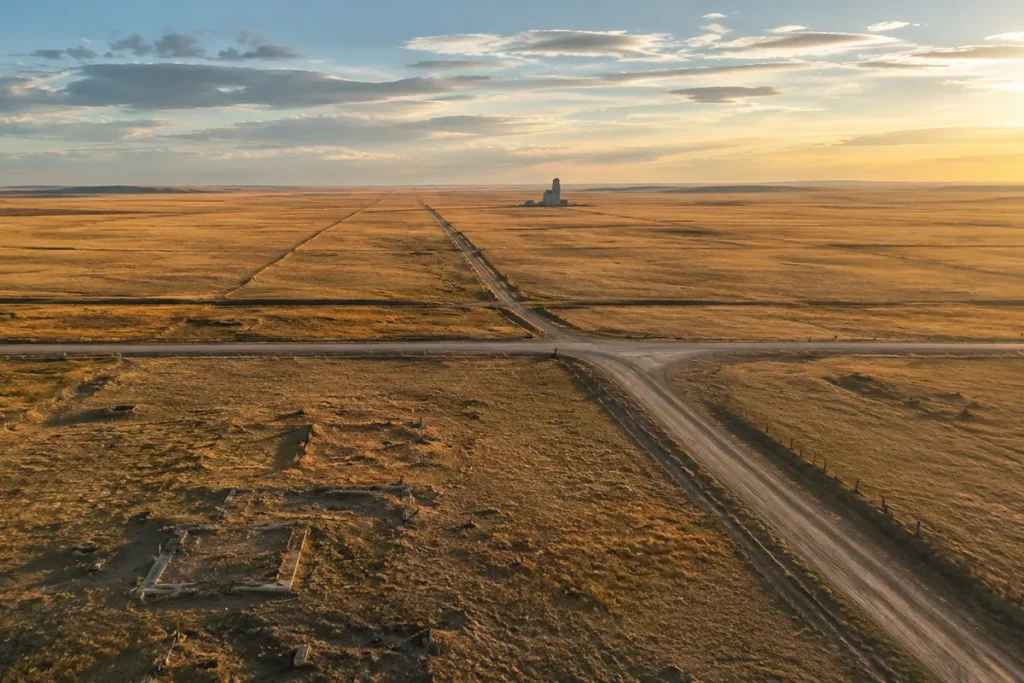
I drove the eastern Montana plains one August looking for a story. Miles and miles of golden prairie grass, grain elevators, hawk-dotted skies, and the occasional blink-and-miss-it town with a gas station and a diner that closed at two in the afternoon.
Eastern Montana is genuinely one of the loneliest stretches of land in the Lower 48 — vast in ways that rearrange something in your chest.
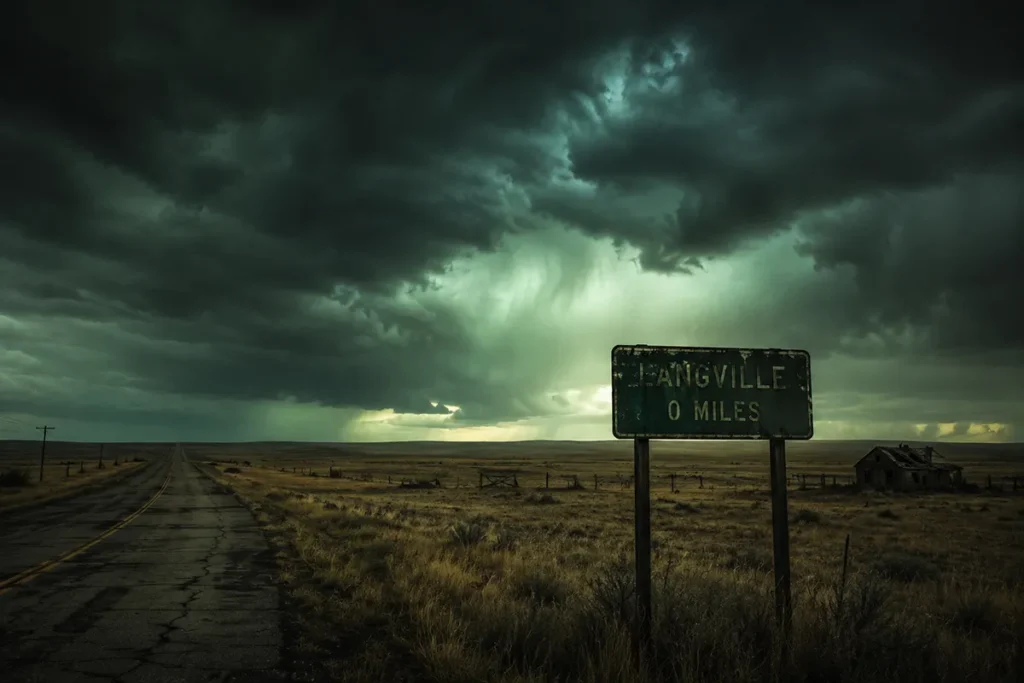
It’s the kind of place where you could imagine a small rural town quietly disappearing. Where you’d half-expect a faded sign on the roadside for a community that Google Maps hasn’t caught up with yet. Which is exactly why the story of Langville, Montana lands the way it does.
Langville is — depending on who you ask — either a real town that vanished without a trace sometime in the early 2000s, or one of the internet’s more cleverly self-sustaining urban legends. There are no photographs of it.
It appears in no historical atlas of Montana’s cities and towns. No newspaper archives mention it. No Montana old-timer I’ve spoken to has a clear memory of it. Yet millions of people have searched for it, and some swear they remember it.
The Treasure State has always been fertile ground for mystery. From gold rush boomtowns that appeared and vanished in a decade to a frontier history built on isolation, hard winters, and communities that sometimes simply stopped existing — Montana is the right backdrop for a story like this. Let’s dig in.
The Core Legend: What Are People Actually Claiming?
The basic shape of the Langville legend goes like this:
There was once a small, rural town somewhere on the eastern plains of Montana. At some point — the timeline shifts depending on the telling, ranging from “the early 1900s” to “sometime before the 2000s” — something catastrophic happened there.
The most widely circulated version of the story claims the residents were mysteriously “turned inside out,” after which the town was abandoned and then, somehow, erased.
Not just physically erased — digitally erased. The legend claims that Langville’s name once appeared in Google search autocomplete and in Google Maps street views, only to yield zero results when clicked. It’s been dubbed “the town the internet wants you to forget.”
Believers claim that some entity — the government is the usual suspect — scrubbed all evidence of Langville’s existence from both the landscape and the internet.
The search queries that have circulated over the years include:
- “Langville, Montana Incident”
- “Langville, Montana Disappeared”
- “Langville, Montana Turned Inside Out”
Each one, the legend claims, once generated results — and then nothing. The meta-recursive nature of the story is part of what makes it stick: even the discussions of Langville are supposed to disappear.
To be crystal clear: there is no credible historical, geographic, or archival evidence that Langville, Montana ever existed as a real town. What makes the story worth examining is not whether it’s true — it almost certainly isn’t — but why it persists and how it grew.
A Chronological Timeline: How the Langville Legend Actually Grew
Most coverage of Langville treats the legend as if it arrived fully formed. It didn’t. Here’s the actual documented timeline of how this story evolved:
Pre-2016 — The Whisper Phase
The Langville legend appears to predate the Ghostbusters reboot, at least in a quiet way. There are references to Google autocomplete suggestions for “Langville Montana” from as early as the early 2010s that led nowhere — which may have been the original seed of the story.
A small number of online forum posts in spaces like Reddit’s r/mystery reference the town from before 2016, though the volume was low and the tone speculative.
Whether the legend genuinely predated the Ghostbusters movie or was retroactively invented to seem older is one of those things that’s now impossible to verify — which is, of course, entirely on-brand for how internet folklore works.
2016 — The Ghostbusters Moment
The single event that lit the legend on fire was a single line of dialogue in the Ghostbusters reboot directed by Paul Feig. In a scene set in the New York mayor’s office (Chapter 11, around the 1h 13m mark), Homeland Security Agent Rorke reels off a list of incidents the government has quietly buried:
“Sheriff in New Mexico reports a UFO encounter. The crew of the S.S. Ourang Medan dies mysteriously. The entire town of Langville, Montana goes missing.”
The mayor then confirms that the town’s people were “turned inside out,” clarifying helpfully: “Their skin is on the inside of their body because their organs are on the outside.”
That’s it. That’s the entire Langville content in the film. A throwaway gag in a 2016 comedy — and it planted a seed that has been growing ever since. According to some sources, more than 7 million internet searches for “Langville Montana” have been logged since the film’s release.
(Side note for context: the S.S. Ourang Medan is itself a real maritime urban legend — a Dutch cargo ship supposedly found drifting in the late 1940s with its entire crew dead under mysterious circumstances.
No documentation of the ship has ever been verified. The screenwriters clearly had a taste for this type of folklore.)
2016–2020 — The Legend Expands
After the film, online communities began filling in the gaps. Reddit threads appeared. Paranormal blogs picked up the story. The “turned inside out” detail from the movie became a cornerstone of the expanded legend.
New layers were added: the Google Maps sightings, the government cover-up, the idea that all prior online discussions of Langville were themselves being erased. The story became self-sealing — any absence of evidence was reframed as evidence of the cover-up.
2022–Present — Mainstream Pickup and TikTok
By 2022, the story had reached mainstream travel and curiosity sites. TikTok gave it a new audience unfamiliar with the Ghostbusters origin.
Some younger viewers encountering the legend on social media had no awareness of the film connection and took the story at face value. The legend is still circulating actively as of 2026.
The Ghostbusters Connection: Clever Marketing or Genuine Folklore?
Here’s a theory worth taking seriously: the filmmakers may have deliberately chosen a name with no verifiable history in order to create a kind of self-sustaining ARG (alternate reality game) around the movie’s release.
Montana was a well-chosen backdrop — its rural character, vast geography, and relative mystery to non-residents made it a believable setting for a town that “nobody noticed was gone.”
The screenplay was co-written by Paul Feig and Katie Dippold. Feig has a documented history of layering pop culture references and in-jokes into his work.
Whether “Langville” was a pre-existing piece of internet lore they nodded to, or a name they invented knowing it would become one, is genuinely uncertain.
What’s interesting is that the other two incidents Agent Rorke mentions alongside Langville — the New Mexico UFO and the Ourang Medan — are both real pre-existing urban legends with documented internet histories. Langville sits in that company deliberately.
It’s framed as part of a list of “things the government has already suppressed.” The implication is: these are things people almost remember but can’t quite pin down. That framing is psychologically very smart.
For Montana’s relationship with Hollywood, this is actually a notable moment — the state was used as a canvas for an entirely fictional piece of mythology, which then circled back and became part of how people think about Montana’s identity.
The Mandela Effect: Why Some Montanans “Remember” Langville
The Mandela Effect is a psychological phenomenon in which a large group of people shares a false memory of an event that either didn’t happen or happened differently than they recall.
The name comes from the widespread false memory that Nelson Mandela died in prison in the 1980s — when in fact he lived until 2013.
With Langville, the Mandela Effect angle works like this: after the Ghostbusters movie and subsequent viral coverage, some Montanans — particularly those from the eastern plains region — began to report vague memories of a small community by that name.
The memories are consistently non-specific: “I think I passed through there once,” or “I’m sure I’ve heard my grandparents mention it.” Nothing verifiable, nothing anchored.
This is actually predictable from what we know about memory formation. Repeated exposure to a place name, even in a fictional context, can create a sense of familiarity that the brain misinterprets as a genuine memory.
When you combine that with the sheer size and sparseness of Montana’s eastern plains — where small unincorporated communities genuinely do come and go — the conditions for false recognition are unusually favorable.
Montana has hundreds of real communities that most people have never heard of. The state’s town and city history is full of places that existed for one railroad season, or one mining boom, and then quietly ceased to function.
The framework for “a small town that nobody noticed disappear” is historically grounded — even if Langville specifically is not.
Langville vs. Real Montana Ghost Towns: The Key Difference
Here’s what separates the Langville legend from Montana’s actual ghost towns, and why the distinction matters to anyone researching this topic.
Montana’s real ghost towns — and there are many — all share one thing: physical evidence. They leave something behind.
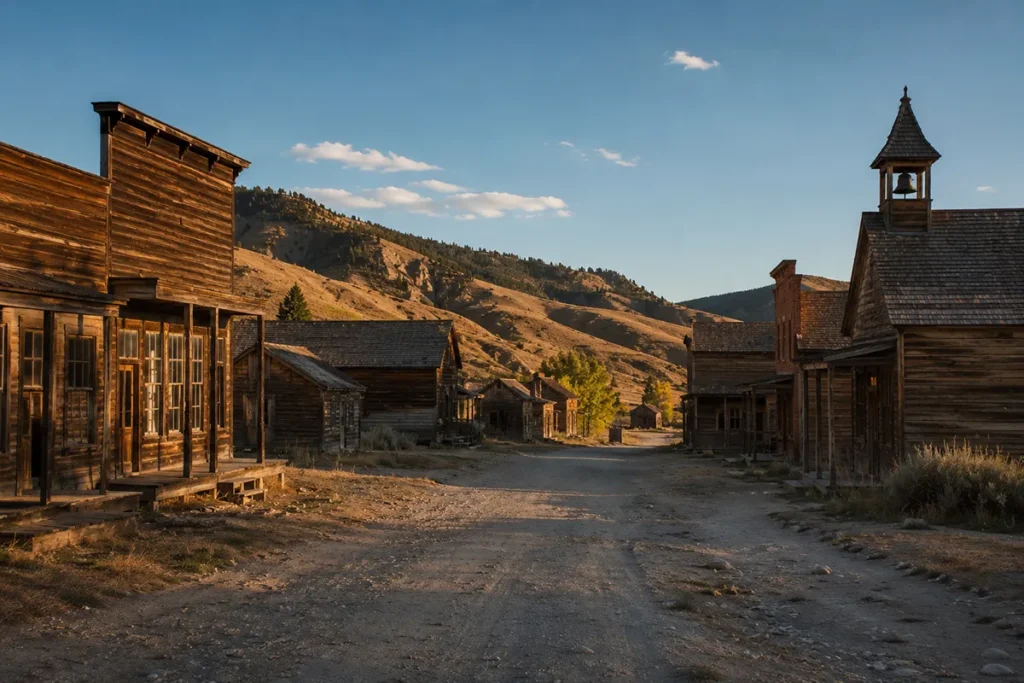
Bannack — Montana’s first territorial capital, established in 1862 during the gold rush, now a fully preserved state park near Dillon. You can walk through its original buildings, hotel, church, and masonic lodge. Real. Visitable. Thoroughly documented.
Virginia City — One of Montana’s most celebrated historic destinations, Virginia City was a roaring gold rush boomtown in the 1860s. Today it’s a state-operated historic district where you can walk the original boardwalks. The complete opposite of Langville.
Garnet — A well-documented gold and silver mining ghost town in the mountains east of Missoula, managed by the Bureau of Land Management. Dozens of original structures still stand. Maps show it. Rangers staff it in summer.
Philipsburg — Not a full ghost town, but a historic silver mining town in the Flint Creek Valley that has been carefully preserved. Real buildings, real history, real people still living there.
Every single real Montana ghost town has this in common: records. Census records. Newspaper archives. Mine claim filings. Plat maps. Photographs. Letters home.
The reason Montana’s gold rush towns can be documented is precisely because that era of Montana history generated paperwork — federal land surveys, railroad route documentation, territorial government records.
Langville has none of this. Not because the records were suppressed — but because there were never any records to suppress.
Similar “Vanished Town” Legends Across America
Langville is not unique. Internet folklore has a well-established template for the “vanished town” subgenre, and several similar legends exist across the country:
Doveland, Wisconsin — Perhaps the closest analogue to Langville. A supposedly real Wisconsin town that allegedly “disappeared” and of which no photographic or historical evidence survives. The legend circulates on the same paranormal forums as Langville, using nearly identical framing.
Ashley, Kansas — Another claimed “disappeared town,” situated on the American plains, with residents who supposedly “went insane” and vanished. Again, no historical documentation exists.
The pattern is consistent across all three: vague geographic placement on sparsely populated plains states, a catastrophic event that’s never precisely dated, a government cover-up narrative, and a total absence of verifiable evidence.
Montana, Wisconsin, and Kansas share the common characteristic of having large, rural, underpopulated regions where the general public will accept that a small community could have existed without leaving a widely-known footprint.
The internet has given this particular genre of legend a remarkable new life. Before the age of searchable databases and Google autocomplete, the absence of information about a place was unremarkable.
In the search engine era, that same absence has been reframed as suspicious. It’s an elegant inversion — and it’s part of why these legends are so sticky.
Could a Montana Town Actually Just Disappear?
The most honest answer is: yes, kind of — but not the way the legend describes.
Montana’s rich settlement history is full of communities that rose and fell within a single generation. The gold rush era produced dozens of boomtowns that appeared on maps in the 1860s and 1870s and were functionally abandoned by the 1890s.
The homestead era of the early 1900s brought thousands of settlers to the eastern plains who platted towns, built post offices and grain elevators, and then abandoned them when the rains failed and the economics collapsed.
Many of these communities exist today as nothing more than a name on a county road map, a line in a historical atlas, or a faded entry in a 1920 census record.
Some don’t even have that. The postal service discontinued hundreds of Montana post offices across the twentieth century as rural populations declined.
But none of them disappeared overnight. None of them were “scrubbed from history.” The paper trail is thin, sometimes barely there — but it exists. Montana’s documented history simply doesn’t have gaps the size that the Langville legend requires.
What’s true is that eastern Montana — the great plains region that stretches across the state’s midsection — has shed population steadily since the mid-twentieth century.
Towns that had 500 people in 1950 have 80 today. Some have ceased to function entirely. The landscape of rural Montana genuinely does contain the ghosts of communities that most Americans have never heard of. That historical reality is the soil in which the Langville legend grew.
What I’ve Heard from Montanans About Langville
I’ve asked the question directly — in diners, at gas stations, at campgrounds across eastern Montana. Most Montanans who grew up in the state, particularly older residents, have never heard of Langville at all. That by itself is significant.
In a state where communities are small and interconnected, where people know their county’s history going back generations, the total absence of any organic “oh yeah, I think I know the place you mean” is telling.
The people who “remember” Langville tend to be younger — in their twenties and thirties — and their memory of it correlates with having seen the Ghostbusters movie or having encountered the legend online. That’s the Mandela Effect at work, not genuine recollection.
A rancher I spoke with near Jordan, Montana — deep in the Garfield County emptiness that is the most plausible geographic setting for the legend — had never heard of Langville. “There’s not much out here,” he told me, gesturing at about ten thousand square miles of prairie, “but I’d know if there was a town nobody could find.”
That’s about as authoritative a source as you’re going to get for this one.
Frequently Asked Questions About Langville, Montana
Was Langville, Montana a real town?
No. There is no credible historical, cartographic, or archival evidence that Langville, Montana ever existed as a real town. No census records, no plat maps, no newspaper archives, and no verified photographs of the community have ever surfaced.
Where was Langville, Montana supposed to be located?
The most commonly cited version of the legend places Langville somewhere on Montana’s eastern plains — a broad region that covers roughly the eastern third of the state. No specific coordinates, county, or road location have ever been identified.
Who started the Langville, Montana legend?
The story likely predates it slightly in small internet forums, but the legend was catapulted into mainstream awareness by a single line of dialogue in the 2016 Ghostbusters reboot, in which Agent Rorke mentions that “the entire town of Langville, Montana goes missing.”
What happened to the people of Langville, Montana?
According to the legend — which is not based in fact — the residents were “turned inside out” by a mysterious force. This detail comes directly from the Ghostbusters movie’s mayor character, who delivers it as a punchline in the film.
Is Langville, Montana connected to the Mandela Effect?
Yes, in the sense that some people report vague “memories” of Langville that appear to have been created by repeated exposure to the name in fictional and internet contexts, rather than by any genuine experience of a real place.
Are there real ghost towns in Montana?
Absolutely. Montana has dozens of real, documented ghost towns including Bannack, Virginia City, Garnet, Comet, and many others. These all have physical remains and documented historical records, which is precisely what Langville lacks.
Personal Tips: Tracking Down Montana’s Real Mysteries
If the Langville story has you curious about Montana’s actual abandoned places and historical mysteries, here’s where I’d point you:
Visit Bannack State Park — About an hour southwest of Dillon, this is the most complete ghost town experience in the state. The buildings are original, the setting is dramatic, and the history — including the vigilante justice era that shaped early Montana — is genuinely strange and compelling.
Drive the eastern plains seriously — Take US-2 or US-12 across central and eastern Montana. You will pass through communities that are barely hanging on. You’ll see grain elevators with no grain, churches with no congregation, and main streets with one open business. It’s sobering and beautiful. Places like Jordan, Ekalaka, and Wibaux are real — and far stranger in their own way than anything Langville’s legend offers.
Dig into real Montana history — The Montana Historical Society maintains genuinely remarkable archives. If Langville had ever existed, this is where the evidence would be. It isn’t there.
Check Montana’s fun and strange facts — Because honestly, the real history of this state is already so wild that it doesn’t need embellishment. Montana is one of the most fascinating states in the country on its own terms.
Practical Info
Type: Internet urban legend / Montana folklore
Status: No credible evidence of existence
Origin of legend: Likely pre-2016 internet forums; mainstreamed by 2016 Ghostbusters reboot
Claimed location: Eastern plains of Montana (unspecified)
Key elements: Town “disappeared,” residents “turned inside out,” digital records allegedly erased
Related real Montana history: Gold rush ghost towns, homestead-era abandoned communities
Best comparable real destination: Bannack State Park (Beaverhead County), Virginia City State Historic Site
Nearest real towns to explore: Jordan, Ekalaka, Wibaux, Miles City
Is it worth “searching” for Langville? No. It doesn’t exist. But the eastern Montana plains are absolutely worth driving.
The Verdict: The Town That Never Was — But Should Have Been
Here’s the thing about Langville. The legend is almost certainly fictional — a screenwriter’s clever invention that the internet turned into folklore. But the feeling it taps into? That’s completely real.
Eastern Montana is genuinely one of the emptiest, most disorienting stretches of landscape in America. The wide open biomes of the high plains have a way of making you feel like things could disappear — like the horizon swallows whatever you point at long enough.
Montana’s history is genuinely full of communities that rose and fell so fast that most Americans have no idea they existed. The state has always had a slightly unsettled relationship with its own past.
So when a story like Langville circulates — a town that vanished without leaving so much as a fence post — it doesn’t feel completely impossible. That dissonance between what the landscape looks like it could hold and what history actually records is the gap the legend lives in.
My advice: skip the Langville rabbit hole. Drive east instead. Find one of the real small towns out on the plains that’s hanging on by a thread, eat a burger at a counter diner, and talk to the person next to you.
You’ll come away with better stories than any internet legend could manufacture — and you’ll be doing your part to keep Montana’s real, living history from disappearing.
Now that would be a shame.
Have you fallen down the Langville rabbit hole? Drop your take in the comments — are you a believer or a skeptic? And if you’re planning a real Montana road trip through the eastern plains, pin this post for your trip planning.